DNA Gotland, Gutland / Gotland, OUR ANCESTORS, Uncategorized

CLAN CARRUTHERS-THE BEAST OF GUTLAND/GOTLAND

CLAN CARRUTHERS INT SOCIETY CCIS                    PROMPTUS ET FIDELIS

cropped-wider-banner-light-blue-1.jpg

The Beast of Gotland

beastofgotlandmenHere we start back in Gotland again.

If you do not understand what that means, please read the previous blogs.

Were the men of Gotland considered Beasts?

Oh hell yes!  And they were very nice and very good at it!

We have learned, the unforgettable memory, of these giants of men, ravaging and pillaging all of Europe, and wearing kilts, possibly so they can easily take it off, and fight in the buff.

Did you remember that our ancestors were generally accepted to have originated the  heiti for”men (of the tribe)”, with the literal meaning “they who pour their seed”.  This is one of the oldest mention of men from the same tribe or clan, or family who went off to battle together.

The Killing Beast

The short form of Gautigoths was the Old Norse Gautar, which originally referred to just the inhabitants of Västergötland, or the western parts of today’s Götaland, a meaning which is retained in some Icelandic and Norse sagas.

Beowulf is one of those Norse sagas, along with Gautar and Widsith.   Beowulf and the Norse sagas describe several battles, such as a raid into Frisia, ca 516, which is described in Beowulf, along with the events related in this epic, some described the Geats as a nation which was “bold, and quick to engage in war”.

Not only in the Story of Beowulf were they giants in battle, but the Gotalanders, were making a lot of gold for killing Romans, and protecting Romans.  They were developing a reputation for being quick to the fight!

labro

There remain picture stones of Gotland.  Hundreds of memorial stones were produced from the local limestone, in pre-viking and Viking times, which became richly informative. General themes are easily recognized: ships on a journey, men fighting in battle or defending a house, a warrior being welcomed home or into Valhalla, often by a woman who offers him a drinking horn, stories of gods and heroes.

These stones were the written stories of all the men that were lost, those that came home, and all that fought bravely.

One very interesting stone has been given the name Ardre VIII.   It stands about 7 feet tall, and is round at the top and is broken into different sections that depict some of the stories of battles.  There are two other stones to look into Larbro I, and the Klinte Hunninge.

They might have been Bold, and Quick to engage in war, but they were Ready and Faithful to the Heiti or tribe, they were the Beasts of Gotland.

Beauty and the Beast

The Grimm Brothers wrote many tales. Their tales were the first to be written of the beasts, but were stories orally told over and over again for centuries. Like playing telephone, and the stories change a bit here and there.   The Grimm Fairy tales were a collection of tales and stories told of old. The old monsters and beasts who lived on the land.

These stories were of big monsters, and mean women who ate little children.  Wicked people who were deep in the forest, and took children far away never to be seen from again.  Most of these stories carried through for hundreds of years, all telling of the Beasts of Gotland.

gulliver

Thankfully, along came Walt Disney and romanticized these stories.  Cinderella, Snow White and Hansel and Gretel. Well, Walt Disney did tame the beast and made the stories easier to experience than the Grimms Tales, but there are scenes in each one that can have us sitting on the edge of the chair. All stories of the terrible beasts that were from Gotland.  Finally, a good story about the beasts, Beauty and the Beast, and let us not forget Gulliver’s Travels.

The Beast become a Symbol 

gotlandwood

Our ancestors were experts in carving in wood and the beast is designed into many of their stylings.

They were the shipbuilders for most of Europe, but their own ships were decorated with beautiful hand carvings, most of which were that of beasts. Sometimes a different beast was used for a group of ships leaving for one war, or one battle.  Similar to a team of players all wearing the same ship and design.

beastofgotlandship

And of course, as early as 200 – 300 A.C.E. runic inscriptions are found on memorial stones and jewelry as well. These ancestors came through the stone age, the bronze age, the iron age and such, and their designs of the beasts come through their designs of jewelry.  One of my favorite of these rune memorial stones is found at Lund, and shows Hyrokkin riding on her wolf, and includes the wonderful serpent reins that she used to control the great beast.

hyroken

Viking Art has become very popular, and there are many different types of Viking Art, but the Urnes style has lasted through out the centuries.  You can see the BEAST, a symbol actually representing all the generations of Gotlanders who fought bravely for home, and yes for gold, but most importantly for their family in many works today.

beastofgotland

Every year in August, the people of Gotland dress in pre-viking and Viking garb, and you will see the flag of The Beast of Gotland, flying proudly throughout their villages.

Carruthers crest on flag-v2 (1)

OFFICIAL AND REGISTEREDL CLAN CARRUTHERS CCIS SINCE 1983-CLAN OF OUR ANCESTORS

SCOTTISH CLAN – IRISH CLAN – NORSE CLAN

Kingof the Goths, or Gutland

Preserving Our Past!    Recording Our Present!  Informing Our Future!

The Ancient and Honorable Carruthers Clan International Society LLC

carruthersclan1@gmail.com                carrothersclan@gmail.com

cropped-wider-banner-light-blue-1.jpg

CLAN CARRUTHERS INT SOCIETY CCIS HISTORIAN AND GENEALOGIST

You can find us on our main facebook pages at :

SILVER WINGS-https://www.facebook.com/CarruthersClanLLC/

GOLD WINGS – https://www.facebook.com/carrutherscarrothers.pat.9

CLAN CARRUTHERS FAMILY HISTORY – https://www.facebook.com/CarruthersClan

CLAN CARRUTHERS CCIS – https://www.facebook.com/groups/3878691252182714

CLAN CARRUTHERS INT SOCIETY- https://www.facebook.com/groups/394653845137709

CLAN CARRUTHERS – BORDER REIVERS – https://www.facebook.com/groups/434959914239094

Disclaimer Ancient and Honorable Carruthers Clan International Societ
Gutland / Gotland, The History of Gutland, Uncategorized

GUTLAND /GOTLAND ARTIFACTS – CLAN CARRUTHERS CCIS

Subscribe to continue reading

Subscribe to get access to the rest of this post and other subscriber-only content.

Gutland / Gotland, OUR ANCESTORS, The Viking Age

1,100-YEAR OLD CEREMONIAL CIKING SHIELD – CLAN CARRUTHERS CCIS

cropped-wide-banner-with-new-crest

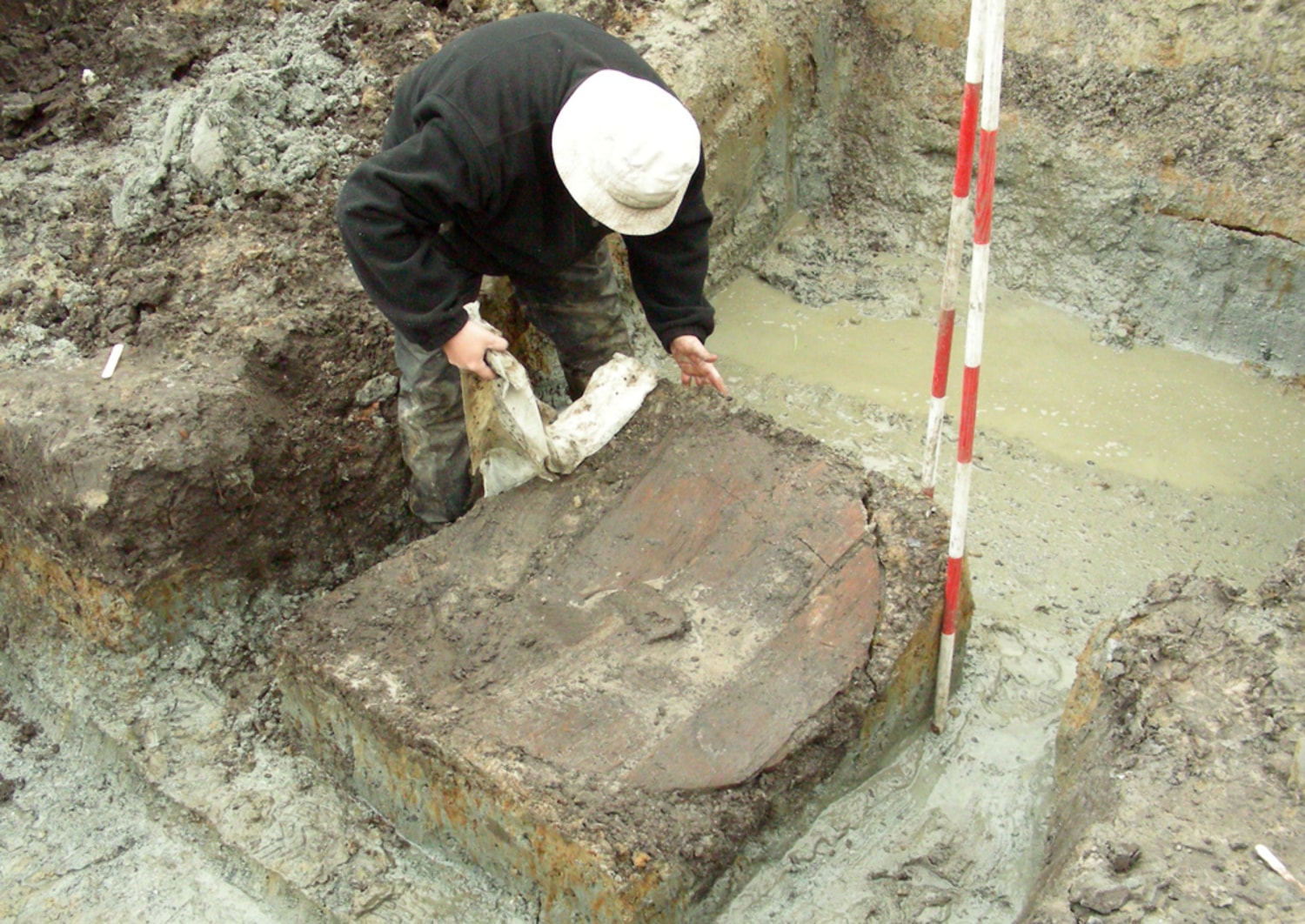
1,100-year-old ‘ceremonial’ Viking shields were actually used in battle, study suggests

Dozens of Viking round shields from a famous ship burial unearthed in Norway were not strictly ceremonial as long thought; instead they may have protected warriors in battle, a new study finds.

1,000-year-old Viking shield found in Denmark

1000 YEAR OLD SHIELD FOUND IN DENMARK.   CARRUTHERS ANCESTORS WERE MAINLY DANISH VIKINGS.

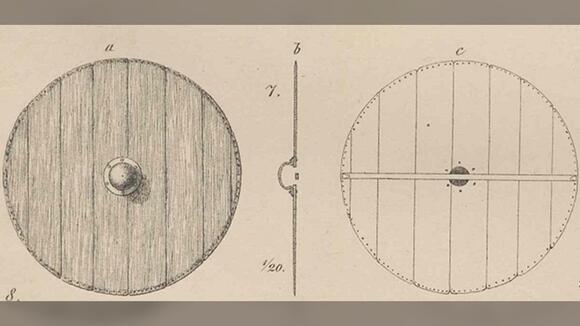
A reanalysis of the wooden shields, which were unearthed in the Gokstad ship in southern Norway in 1880, suggests they may have once been covered with rawhide (untanned cattle skin) and used in hand-to-hand combat, according to a new study published on March 24 in the journal Arms and Armour.

file

“The [Gokstad] shields are generally in accordance with our understanding of shields that have been used in combat,” study author Rolf Warming , a doctoral student of archaeology at Stockholm University, told Live Science in an email. “The craftsmanship is in the tradition of the Germanic flat round shield tradition, which is a widespread weaponry technology in Scandinavia between the early 3rd to late 13th centuries.”

https://img.particlenews.com/image.php?url=47IROa_0lgbENg800

A drawing of a reconstructed shield from the Gokstad ship, adapted from the original 1882 report of the discovery. (Image credit: Nicolaysen et al, 1882)

A total of 64 shields — possibly one for each of the crew on board, Warming said — were tied along the top edge of the hull of the ship, just above its oar-holes.

The vessel was once used at sea, probably for warfare, trade and transportation. But about 900, it was dragged onto land and used for the burial of a Viking king .

Carruthers crest on flag-v2 (1)

OFFICIAL AND OLDEST SCOTTISH  CLAN CARRUTHERS

 SINCE 1983-CLAN OF OUR ANCESTORS

MERITED TO CHIEF CAROTOCUS  10AD

PRESENT CHIEF :  PAT E CARROTHERS USA

cropped-wide-banner-with-new-crestnorse

TAMMY WISE CHS

CLAN CARRUTHERS  HISTORIAN AND GENEALOGIST

59ef7250711564a8761d3a0b23bc2353

New Blog Banner 05

Preserving Our Past, Recording Our Present, Informing Our Future

Ancient and Honorable Clan Carruthers

   clancarruthers1@gmail.com

You can find us on our main facebook pages at :

SILVER WINGS-https://www.facebook.com/CarruthersClanLLC/

GOLD WINGS – https://www.facebook.com/carrutherscarrothers.pat.9

COPPER WINGS    https://www.facebook.com/ClanCarruthers1/

CLAN CARRUTHERS FAMILY HISTORY – https://www.facebook.com/CarruthersClan

CLAN CARRUTHERS CCIS – https://www.facebook.com/groups/3878691252182714

CLAN CARRUTHERS INT SOCIETY- https://www.facebook.com/groups/394653845137709

CLAN CARRUTHERS – BORDER REIVERS – https://www.facebook.com/groups/434959914239094

Disclaimer Ancient and Honorable Carruthers Clan International Soci
OUR ANCESTORS, The History of Gutland, The Viking Age

THE Úlfhéðnar: The Untold Story Of Forgotten Viking Wolf Warriors – CLAN CARRUTHERS CCIS

cropped-wide-banner-with-new-crest

The Úlfhéðnar: The Untold Story Of Forgotten Viking Wolf Warriors


The Vikings are known for their ferocity in battle, but among their ranks were a group of elite warriors known as the Úlfhéðnar or wolf warriors. The Úlfhéðnar were a special breed of Viking warrior who were feared and revered by their enemies. They were known for their savagery in battle, their use of wolf skins and their ability to channel the power of the Norse god Odin.


https://img.particlenews.com/image.php?url=164vRU_0lb5Gp2s00

Photo by BRAYDEN  


The term Úlfhéðnar translates to “wolf coat” in Old Norse, and it is said that these warriors wore the hides of wolves into battle. The Úlfhéðnar were renowned for their berserker rage, a state of mind that allowed them to fight with incredible ferocity and disregard for their own safety. It was said that in this state, they were immune to pain and were driven by an intense desire to kill their enemies.

The origins of the Úlfhéðnar are shrouded in mystery, but it is believed that they were a select group of warriors who were chosen for their strength and bravery. They were often associated with the god Odin, who was known as the god of war and death. It was said that Odin himself would select the warriors who would become Úlfhéðnar and that he would visit them in their dreams, offering them his protection and guidance.


The Úlfhéðnar were not just skilled warriors, but also practiced shamanism and were believed to have the ability to shape-shift into wolves. This belief was strengthened by their use of wolf skins, which they wore into battle as a symbol of their connection to the spirit of the wolf. Some accounts even suggest that the Úlfhéðnar would go into battle without weapons, relying solely on their wolf-like strength and ferocity to overpower their enemies.

Despite their fearsome reputation, the Úlfhéðnar were not invincible. In fact, it is believed that their berserker rage could sometimes lead to their downfall. In this state, they would often lose all sense of reason and would attack anyone in their path, including their own comrades. This could lead to confusion and disarray on the battlefield, and many Úlfhéðnar were killed as a result.


The stories of the Úlfhéðnar have been largely forgotten over time, but their legend lives on in Norse mythology and in the annals of Viking history. It is believed that the Úlfhéðnar were present at many of the most important battles of the Viking age, including the Battle of Stamford Bridge in 1066, where they fought against the English army.

It is interesting to note that the practice of wearing wolf skins in battle was not unique to the Úlfhéðnar. In fact, it was a common practice among many Viking warriors, who believed that it would give them strength and protection in battle. This belief was based on the idea that the spirit of the animal would inhabit the warrior and imbue them with its strength and ferocity.

The use of berserker rage was also not unique to the Úlfhéðnar. It was a practice that was common among many Viking warriors, who believed that it would give them an advantage in battle. The berserker rage was often induced through the use of drugs or alcohol, which would alter the warrior’s state of mind and make them more susceptible to the influence of the Norse gods.


Today, the Úlfhéðnar have become a symbol of Viking strength and bravery, and their legacy can be seen in modern depictions of Vikings in popular culture. The use of wolf skins and the portrayal of berserker rage can be seen in movies, television shows, and video games that depict Vikings and their way of life.

In conclusion, the Úlfhéðnar were a unique and fearsome group of Viking warriors who were respected and feared by their enemies. Their use of wolf skins and their ability to channel the power of Odin made them a force to be reckoned with on the battlefield. While their stories may be shrouded in mystery, their legend lives on as a testament to the strength and bravery of the Viking people.

Carruthers crest on flag-v2 (1)

OFFICIAL AND OLDEST SCOTTISH  CLAN CARRUTHERS

 SINCE 1983-CLAN OF OUR ANCESTORS

MERITED TO CHIEF CAROTOCUS  10AD

PRESENT CHIEF :  PAT E CARROTHERS USA


cropped-wide-banner-with-new-crestnorse

NEWSBREAK
 

TAMMY WISE CHS

                                             DR PATRICIA CARROTHERS 


CLAN CARRUTHERS  HISTORIAN AND GENEALOGIST

59ef7250711564a8761d3a0b23bc2353

New Blog Banner 05

Preserving Our Past, Recording Our Present, Informing Our Future

Ancient and Honorable Clan Carruthers

   clancarruthers1@gmail.com

You can find us on our main facebook pages at :

SILVER WINGS-https://www.facebook.com/CarruthersClanLLC/

GOLD WINGS – https://www.facebook.com/carrutherscarrothers.pat.9

COPPER WINGS    https://www.facebook.com/ClanCarruthers1/

CLAN CARRUTHERS FAMILY HISTORY – https://www.facebook.com/CarruthersClan

CLAN CARRUTHERS CCIS – https://www.facebook.com/groups/3878691252182714

CLAN CARRUTHERS INT SOCIETY- https://www.facebook.com/groups/394653845137709

CLAN CARRUTHERS – BORDER REIVERS – https://www.facebook.com/groups/434959914239094

Disclaimer Ancient and Honorable Carruthers Clan International Soci
Gutland / Gotland, The History of Gutland

HERRGARDSKLING : FORTIFIED HILL-SITE ON GOTLAND – CLAN CARRUTHERS CCIS

cropped-wide-banner-with-new-crest

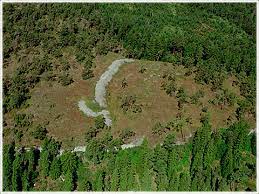
HERRGARDSKLING : FORTIFIED HILL-SITE ON GOTLAND

In this article, the author argues that the Gotlandic hilltop complex, Herrgårdsklint,
should be viewed as a fortiied hill-site (Sw. befäst höjdbosättning). This phenomenon
occured mainly on the East Middle Swedish mainland, where the fortiied hill-sites were
constructed by the late Early Iron Age period (AD 0–550) élite. The complex comprises
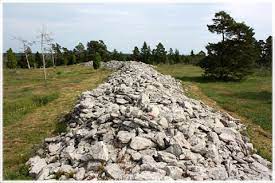
a 120 metre long and 2.5 metres high dry-stone wall of limestone built on a large cliff
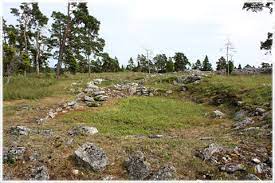
and encloses an area of c. 1.5 ha, in which several signiicant house foundations of
limestone are visible even today. It was once given the antiquarian designation “clifffort”
(Sw. klintborg), a term which has contributed to a rather simplistic approach
from scholars. In past archaeological research, Herrgårdsklint, with the rest of the
constructions categorized as cliff-forts, has often been seen merely as a “temporary
refuge in times of unrest.” This perception has been challenged, however, by a new
approach that puts Herrgårdsklint in the spotlight of eastern Gotland during the Roman
Iron Age/Migration Period. A recently initiated project, which aims to remedy the weak
empirical situation regarding the diverse Gotlandic cliff-forts, has carried out new
analyses of the pottery and animal bone material found in a 1940s excavation of a
couple of the house foundations. Together with the observation of the architecturally
advanced stone wall’s entrance construction (which the author suggests is an imitation
of a clavicula-entrance of a sort used by the Imperial Roman army), the results indicate
that Herrgårdsklint should be viewed as a strongly fortiied permanent/semi-permanent
settlement, which controlled a large hinterland that specialized in beef production and
shows signs of close connections to R oman ideas.
288 Runsa Borg – Representative Life on a Migration Period Hilltop Site
Herrgårdsklint revisited: a fortiied hill-site on Gotland

GOTLANDHILL

Introduction
Situated on a remote clif in the eastern part of
the Baltic island of Gotland, a hilltop complex
built sometime during the late Early Iron Age
(AD 0–550) commands a view over what is
today a great woodland territory (ig. 2). An area
of c. 1.5 ha is enclosed by vertical precipices up
to 15 metres steep in the north, east and west,
as well as a 120 metre-long and 2.5 metre-high
transverse dry-stone wall in the south (igs. 1 and
8). Within this area, the remains of a number
of substantial stone-house foundations, similar
to those of the late Early Iron Age landscapes
of the rest of Gotland and the adjacent island,
Öland, are visible even today. his complex
is known as Herrgårdsklint (en. Clif of the
manor) and was once given the antiquarian

designation “clif-fort” (Sw. klintborg), a term
which will be shown to be anything but simple,
and seems to have been somewhat forgotten by
archaeologists. he following article is based
on results obtained from a recently initiated
archaeological project1, the aim of which is to
remedy the weak empirical situation and create
a more nuanced image of the diverse Gotlandic
clif-forts2. Below, I will argue that there
are several indications that Herrgårdsklint
might constitute a fortiied hill-site (Sw. befäst
höjdbosättning); a phenomenon that has
recently attracted archaeological attention,
formerly being mainly known, in Scandinavian
research, on the East Middle Swedish mainland.
If so, this hilltop complex would have been
central to the Gotlandic Early Iron Age élite.
Before a discussion of Herrgårdsklint in the
centuries following A.D. can begin, however, a
brief review of past research focuses within the
discourse, as well as a study of the terminology,
is necessary.

GOTLANDHILLFORTY

To deconstruct a cliff-fort
Traditionally, Gotland’s hill-forts have
been divided into three subgroups; clifforts
(Sw. klintborgar), lat ground-forts (Sw.
latmarksborgar) and bog-forts (Sw. myrborgar)
(Stenberger 1940a: 66). he irst subgroup
consists of remains which can be described as
the general idea of how a hill-fort is supposed
to be; great stone walls erected on an elevated
position which together completely enclose
an area (e.g. Torsburgen). But such an old
term also conceals constructions which are
made up of nothing more than a single row
of stones which seems to encircle a clif or a
hilltop in an almost symbolic way (e.g. Lärbro
RAÄ 17). Since few of the Gotlandic hill-forts

have been archaeologically excavated, the idea
that topographic and geographic location is
synonymous with function and dating has been
popular in modern archaeological research
(e.g. Cassel 1998, 2008). Furthermore, the
sheer absence of clif-forts afected by large
contract archaeological projects, usually the
result of the often extensive empirical data
associated with the types of investigations that
also serve as a catalyst for continued research
interest (Olausson 1995), simply do not exist.
his lack of empirical data might be one
factor contributing to why traditional ideas
concerning the clif-forts have been, for the
most part, unchallenged.
here have been two main ields of research
interest within the discourse. For the majority
of the 1900s, interpretations of the so-called

forts were dominated by expositions
of military strategies and various sorts of
fortiication, as a rule often combined with
accounts of the supposed unrest during
Roman Iron Age/Migration Period (e.g.
Nihlén and Boëthius 1933, Stenberger 1945;
1964, Lundström 1955, Manneke 1979,
Engström 1984). It was not until the 1990s
and early 2000s, as postmodern theories
began to inluence archaeological studies, that
alternative interpretations started to dispute the
“clif-fort as strictly a fort” paradigm. Instead
of accentuating the military aspects of the
constructions, they came to advocate an
understanding based on more symbolic
premises of the monuments. hus, the mental
and ritual nature of the clif-forts became the
focal point (e.g. Cassel 1998, 2008; Hegardt
1991a, 1991b; Swedish mainland material: see

Johansen 1997, Carlsson 2001, 2005, Wall
2003). Although these studies can be described
as a breath of fresh air in a ield of research
which, with few exceptions (e.g. Olausson
1995), can be described as stagnant for quite
some time, they had a tendency to theorize
outside the framework of the empirical data,
which, although meagre, nevertheless existed.
As I have previously shown, (Bornfalk-Back
2011) there are great variations within the
long-assumed homogeneous category of
“clif-fort”, and all attempts to come up with
a general explanation of these 28 Gotlandic
hilltop monuments have been fairly hopeless,

regardless of the theoretical approach (ig. 3).
Evidently, it is the generally weak empirical
knowledge that has contributed to these rather
one-dimensional attitudes towards the hilltop
sites. As a necessary start to a newly aware
discourse, then, it is critical to appreciate the
fact that within the antiquarian term “clif-fort”
(and indeed “hill-fort”!), there are a number
of diverse remains with various functions and
various dating (Bornfalk-Back 2011).
With this discussion in mind, the very
term clif-fort must be said to be poor as it
linguistically implies a construction associated
with fortiication and war, which might be true
for some of the remains, but far from all. I hope
to return with a more thorough terminological
discussion within the hill-fort ield elsewhere
and thus will here conine myself to the
suggestion that the most suitable term for
Herrgårdsklint is, for the moment, fortiied
hill-site, a descriptively acceptable term which
has been used for a special kind of defendable
aristocratic hilltop settlement from the late
Early Iron Age in the East Middle Swedish
mainland (see below).


GOTLANDHILLFORT1
Herrgårdsklint in previous
archaeological research
he stone wall and house foundations on the
clif are presently one of a kind on Gotland,
and the remains were noticed early by
antiquarians. he Swedish cultural historian
C.G.G. Hilfeling (1740–1823) paid a visit to
Herrgårdsklint in the 1790s and in addition to
documenting the dimensions of the remains,
he also suggested that the hilltop complex was
probably a place of refuge in times of unrest
(Hilfeling 1994: 236–7). he next visit nearly

80 years later, however, can be described as the
true birth of modern Swedish archaeological
hill-fort discourse. he archaeologist Fredrik
Nordin (1852–1920) not only described
Herrgårdklint and other clif-forts, but also
divided them into subgroups which resulted
in the publication Om Gotlands fornborgar
(1881). He visited Herrgårdsklint twice and
the eminent scholar stated that, based on the
substantial house foundations, the hilltop
complex was erected “not merely for the
moment” (Nordin 1881: 32).
Two minor archaeological excavations have
been carried out at Herrgårdsklint. In 1940,
the Swedish archaeologist Mårten Stenberger
excavated what turned out to be two of the
at least six stone house foundations (ig. 4),
whose wall dimensions (up to 1.75 metres in
width and a current height of up to 0.80 m)
appeared to be similar to those of other late
Early Iron Age house foundations across the
island, most of which date to AD 200–600
(Stenberger 1940b; Burenhult 1999:224).
Aside from two larger hearths, about 1500
sherds of plain Early Iron Age period pottery
and more than 18 kg of animal bone material
were found (Stenberger 1940b). A bridle,
probably from later re-use of the site, was
also found and could be dated to late Iron
Age (Biörnstad 1955: 949). In the beginning
of the 1980s, a smaller trench was put right
where the wall would have continued in the
south if it were not for modern removal of
stone for building material. he wall proved
to be constructed mostly of limestone, but no
datable artefacts were found (Engström 1982:
172, 1984:3).

GOTLANDHILLFORT3

Surprisingly little has been written about
Herrgårdsklint over the years, and I would argue
that what has been printed is not satisfactory,
but rather has had a tendency to simplify this
unique monument. For instance, the long widespread
idea that the Gotlandic clif-forts
were impermanent in character contributed to
the demotion of the at least six massive stone
house foundations to the status of simple wind
breakers (Biörnstad 1955: 916). his naturally
made the site less exciting to researchers overall.
Also, no one has ever studied Herrgårdsklint
from a local viewpoint, but rather as a mere
member of the artiicially constructed “cliffort
mass” (e.g. Cassel 1998: 132, 144; 2008:
90–93) or as a secondary element to other
archaeological phenomenon; e.g. part of a lank
defence to the gigantic hill-fort Torsburgen
(Engström 1984: 106). I would like to suggest
that a new approach that puts Herrgårdsklint
in the spotlight of eastern Gotland during late
Early Iron Age might bring together the site not
only with the surrounding landscape, but also
with the East Middle Swedish mainland.

A brief glance at
the Swedish mainland, and beyond…
As mentioned above, it is necessary to recognize
the diferences among constructions within
the “clif-fort mass”, and in the term fortiied
hill-site there are some speciic characteristics
which can be mentioned here. hese hilltop
complexes are all heavily defended by great
walls and inside the enclosure there are
buildings which were permanently inhabited.
It seems, at least in East Middle Sweden, that
these sites were established sometime during
the later part of the Early Iron Age (c. AD
200–550), though the precise nature of the sites,

as well as their relation to the surrounding
settlements, is still debatable. Although few
have been archaeologically excavated, there
are some constructions almost exclusively in
the East Middle Swedish mainland which
have been identiied as fortiied hill-sites,
which include sites around Mälaren (e.g.
Runsa, Darsgärde, Broborg), Södertörn (e.g.
Fållnäs) and Östergötland (e.g. Gullborg,
Boberget). One must keep in mind that even
if these constructions should be viewed as élite
residences, their function within society need
not have been identical in all matters (Olausson
2011a: 19).
Runsa borg is a very well fortiied hill-site in
Uppland, slightly north of Stockholm, and
through extensive excavations an aristocratic
milieu has been exposed with a hall building
and areas of handcraft, e.g. bronze casting, with
inds of, for instance, fragments of glass with
possible provincial Roman origin (Olausson
2011a, 2011b, 2009, 1996). he animal bone
material indicates luxury consumption and
since during the centuries following AD Runsa
borg was situated on a small island divided
from the mainland by a narrow inlet, the hillsite
was dependent on the control of a large
agrarian hinterland for goods and supplies
(Risberg 2011; Olausson 2011b: 237–8).
In the province of Östergötland, the existence
of fortiied hill-sites has also been recognized.
For instance, within the 350 metre-long and up
to 15 metre-wide dry-stone wall in Borgberget,
Kimstad parish, two substantial stone house
foundations have been observed. During a
minor excavation in the 1960s, inds such
as spindle whorls, whetstone and pots

herds date the remains to the late Early Iron Age
(Lindahl 1963). Another illustrative example
from Östergötland is the site Gullborg. Just
as at Runsa borg, extraordinary inds such as
an imported beaker from the Black Sea area
and a Roman glass bottle indicate a upper
class environment (Nordén 1938: 280–284;
Nielsen 1996: 87 with ref.). he occurrence
of imported Roman/Continental artefacts in
settings similar to Herrgårdsklint might be a
critical observation for the understanding of
the Gotlandic hill-site, which so far has no high
status inds.
At last, a region that would be exceptionally
exciting to study within the discourse is the
eastern part of the Baltic Sea area. If fortiied
hill-sites such as the ones recognized in East
Middle Sweden and now Gotland can be
identiied in this area, a whole new dimension
to the study of these remarkable remains would
be gained.

GOTLANDHILLFORT33
A revisit to Herrgårdsklint
A crucial task of the study of Herrgårdsklint
must, at this stage, be more precise dating. Until
new archaeological excavations are carried out,
the pottery inds from the 1940s excavation are
the only material available. However, it seems
to be diicult to get a speciic dating, other than
late Early Iron Age, from the plain fragmental
pieces (Stenberger 1955: 1173; Biörnstad 1955:
949). Still, other aspects are able to be clariied
by a new pottery analysis, since the original
one merely established the simple nature of
the sherds. Vessels for storage, preparations as
well as serving could be identiied among the
material. Several of the identiied lower parts
of the pots show evidence of an open angle 

which would have been suitable for food,
which, in contrast to vessels used for storage
alone, were to be visualized and consumed
at once (Eriksson 2009: 160). Also, based on
reconstructions of the mouth diameter, several
pots had the mouth measurements of 25 cm,
and hence might have had the potential to
accommodate up to 20 litres of luid (Eriksson
2009: 83). he smaller pots should most likely be
understood as vessels used in food preparation.
Since there are indications that these fortiied
hill-sites were rather short lived, perhaps as
brief as only 3–4 generations as Runsa borg
(Olausson 2011b: 239), the total amount of
pottery (1500 sherds/c. 7 kg) combined with
the total amount of bone material (c. 18 kg)
found in the two houses suggest quite intensive
activity at Herrgårdsklint compared to the
material found in similar house foundations
on Gotland (e.g. Lundberg 1937, Stenberger
[ed.] 1955a: 100–254; 1955b: 863–976). hus,
based on the pottery, the overall picture must
at present be said to indicate that everyday
domestic chores such as cooking, serving and
the storage of food dominated these buildings,

which, based on the quantity, should be viewed
as intensely inhabited.
The animals from Herrgårdsklint
Osteologist Lisa Hartzell’s project performed a
thorough analysis of the animal bone material
found in two of the house foundations. he
majority of the material consists of an equal
amount of cattle, sheep and goat inds, with
single inds of horse and dog. he most striking
result was that while the bones of the sheep
and goats were consistent with the meat-rich
parts of the animals, as well as the waste, the
cattle bones found were 99 % waste material
(Bornfalk-Back 2013). his suggests that the
sheep and goats were slaughtered and consumed
at the site while the cattle was slaughtered and
dismembered at Herrgårdsklint, but then
consumed elsewhere. Where the consumption
took place is, of course, a central question.
Was the beef transported to a nearby location
for consumption or was it sold or traded
and, if so, to where and to whom? Another
important aspect to consider: the bone
material might give greater insight into the
question of the permanence of the settlement
at Herrgårdsklint. Based on the fragmentary,
yet rather large, animal bone material, a
cautious conclusion is that the site was perhaps
at least seasonally inhabited, since it would
seem that people found it meaningful to bring
cattle to the site with the intent of engaging in
specialized beef production.
To locate areas of more intense activity at
Herrgårdsklint a soil phosphate analysis
(citronsyrametoden) was carry out on the
site (Bornfalk Back 2013). East and south
of the house foundations no or extremely

thin soil layer prevented the sampling, which
concentrated to the northern parts of the
clif. he elevated values of the soil phosphate
sampling indicate activity in three places
within the sampling area . Obviously,
to clarify the nature of activity archaeological
excavations are necessary.
The Roman inluences
It is clear that people from what is today East
Middle Sweden interacted, to various degrees,
with the Roman Empire during the early
centuries AD. hrough trade and service within
the Roman military apparatus, ighting against
Roman troops, and indirect contact via non-
Roman people living close to Limes, new ideas
and artefacts found their way to Scandinavia
(e.g. Andersson 1991; Axboe 1991; Jørgensen et
al [red] 2003; Kalif and Sundqvist 2004). For
Gotland’s part, inds of Roman glass, solidi,
gold bracteates, as well as a recently recovered
Roman oicer’s parade mask dating to the
later part of 200 AD (Widerström 2012: 31)
tell us of intense contact between members of
the élite of the island and the Roman Empire.
Although there is an absence, at the moment,
of high status inds related to the settlement
on the clif, it is possible to distinguish other
features, which suggests that the architect of
Herrgårdsklint was an individual of means and,
for the region, a unique know-how. Bearing the
discussion of Roman connections in mind, the
best way to understand the extensive entrance
construction of the only opening to the stone
wall of Herrgårdsklint might be through the
“home-comer’s perspective”. he unusual
construction is made up of a curved wall section
continuing from the main wall of the eastern
part of the more than three metre-wide entrywith an opening in the west  his once
dry-stone structure seems to have had the same
dimensions as the sections of the main wall (c.
4 metres wide), and a rectangular open space.
I would like to suggest that this architectural
construction indicates that the architects of
Herrgårdsklint were quite familiar with the
engineering methods used by the Imperial
Roman army.
he Roman castra (marching camps) were a
central part of the invasion tactic, and although
they could vary in size and layout, they were
all strongly fortiied, sometimes, especially
during the 1st and 2nd centuries A.D., with a
sort of defendable entrance construction called
clavicula (Johnson 1983: 50; Frere 1987: 211).
A clavicula was an arched extension of the defensive rampart and could be either external
or internal (ig. 7). he idea was to prohibit a
direct frontal assault at the gate by forcing the
enemy through a sideway where they were thus
more exposed to the defenders. It can also be
mentioned as a proof of its eiciency that this
defensive construction was utilized by the later
Byzantine army. It was not only described by
the emperor Maurices (A.D. 582–602) in his
Strategikon (trans. Dennis 1984: 164), but also
recommended by Byzantine military leaders
as late as in the tenth century A.D., as can be
seen in contemporary military texts (trans.
Dennis 1985: 251, 257–260). It is obvious that
the entrance construction at Herrgårdsklint
displays remarkable similarities to a Roman
clavicula in layout, and I would argue that
this particular defensive structure could only
be built with the help of the advanced level
of expertise that could only be provided by
a Germanic soldier returning from years of
service in the Roman military apparatus.
Previous discussions (Herschend 1985) of
constructional details of the entrances to the
Eketorp ring-fort on the island of Öland have
pointed towards Roman examples. Although
these ring-forts, which more or less can be
described as fortiied villages, and the fortiied
hill-sites are two separate phenomena, they
were in part contemporary with each other and
a cautious comparison is motivated. However,
it is crucial to emphasize that Herrgårdsklint
should not be viewed as an attempt to imitate a
castra in either function or design, nor should
one necessarily see the defendable nature of the
entrance construction as the key motivation.
Essential, I would say, is the Roman aspect:
by demonstrating a unique knowledge in
fortiication techniques obtained from thecontinent, additional prestige was gained,
justifying the lord of the clif’s position in the
social hierarchy.

GOTLANDHILLFORT44
Herrgårdsklint was built on a remote clif
relatively far from other Early Iron Age
settlement, with no cultivated land nearby
(ig. 2), and thus a signiicant question is:
why? At this stage, any ideas on the matter
must be described as speculative, but one
thought worth mentioning is the importance
of Herrgårdsklint potentially superb location
from a communicative standpoint. Since the
new results indicate that Herrgårdsklint was at
least semi-permanently inhabited, the people
living on the clif were dependent on a steady
supply of food and other goods from elsewhere,
much like Runsa Borg (see above). his, in
turn, implies that a large hinterland must have
been under the control of the residents of the
clif to secure this provision. Herrgårdsklint
is today situated only 5 km from Gotland’s
eastern coast, where good locations of Iron Age
ports have been discussed (Engström 1984:
99–103). Since a large part of Gotland’s lakes
and rivers were drained during the 1800s and
early 1900s for agricultural purposes, a possible
explanation worth studying is the occurrence
of now vanished navigable waterways. If these
were to connect Herrgårdsklint with the coast,
and a potential port, it would not have been
diicult to provide the site with both foodstuf
and commodities.

Future questions
Although the initiation of this project has
proven to be a productive irst step in the task of
generating a more solid empirical foundation,
as well as challenging traditional ideas withrespect to Gotlandic clif-forts, it has merely
scratched the surface. A central future task is to
obtain a more precise dating of Herrgårdsklint
and its phases. his can only be achieved by way
of new archaeological excavations. Questions
concerning precise time of establishment,
abandonment, re-use, relation to other
contemporary settlements in the area, the exact
nature of dwelling (permanent/seasonal use)
etc. can only be answered via such excavations.
From a local viewpoint, an exciting thought
is whether Herrgårdsklint is the only hill-site

on Gotland, and, if this is the case,
what does this mean for the island as a whole
during late Early Iron Age? In addition, the
relation between Herrgårdsklint and other
fortiied hill-sites on the Swedish mainland is
an interesting matter for future study. Also, if
fortiied hill-sites were to be identiied in the
adjacent eastern Baltic, it would be a crucial
task to study the relationship between areas
with the same aristocratic tradition.

Many thanks to homas Eriksson (SHM) for
making the pottery material available.

Carruthers crest on flag-v2 (1)

OFFICIAL AND OLDEST SCOTTISH  CLAN CARRUTHERS

 SINCE 1983-CLAN OF OUR ANCESTORS

MERITED TO CHIEF CAROTOCUS  10AD

PRESENT CHIEF :  PAT E CARROTHERS USA


cropped-wide-banner-with-new-crestnorse

Anders Bornfalk Back  –  ACADEMIA
 

TAMMY WISE CHS


CLAN CARRUTHERS  HISTORIAN AND GENEALOGIST

59ef7250711564a8761d3a0b23bc2353

New Blog Banner 05

Preserving Our Past, Recording Our Present, Informing Our Future

Ancient and Honorable Clan Carruthers

   clancarruthers1@gmail.com

You can find us on our main facebook pages at :

SILVER WINGS-https://www.facebook.com/CarruthersClanLLC/

GOLD WINGS – https://www.facebook.com/carrutherscarrothers.pat.9

COPPER WINGS    https://www.facebook.com/ClanCarruthers1/

CLAN CARRUTHERS FAMILY HISTORY – https://www.facebook.com/CarruthersClan

CLAN CARRUTHERS CCIS – https://www.facebook.com/groups/3878691252182714

CLAN CARRUTHERS INT SOCIETY- https://www.facebook.com/groups/394653845137709

CLAN CARRUTHERS – BORDER REIVERS – https://www.facebook.com/groups/434959914239094

Disclaimer Ancient and Honorable Carruthers Clan International Soci
Uncategorized

EARL HAAKON AND THE JOMS VIKINGS – CLAN CARRUTHERS CCIS

cropped-wide-banner-with-new-crest

EARL HAAKON AND THE JOMSVIKINGS

Chief among the nobles of Haakon the Good, of Norway, was Earl Sigurd of Hlade; and first among those who followed him was Earl Haakon, Sigurd’s son. After the death of Haakon the Good, the sons of Gunhild became the masters of Norway, where they ruled like tyrants, murdering Sigurd, whom they most feared. This made the young Earl Haakon their bitter foe.

A young man then, of twenty-five, handsome, able in mind and body, kindly in disposition, and a daring warrior, he was just the man to contend with the tyrant murderers. When he was born Haakon the Good had poured water on his head and named him after himself and he was destined to live to the level of the honor thus given him.

It is not our purpose to tell how, with the aid of the king of Denmark, he drove the sons of Gunhild from the realm, and how, as the sagas tell, the wicked old queen was enticed to Denmark by the king, under promise of marriage, and by his orders was drowned in a swamp. Her powers of sorcery did not avail her then, if this story is true.

Haakon ruled Norway as a vassal of Harald Bluetooth, king of Denmark, to whom he agreed to pay tribute. He also consented to be baptized as a Christian and to introduce the Christian faith into Norway. But a heathen at heart and a Norseman in spirit, he did not intend to keep this promise. After a meeting with the Danish king in which his baptism took place, he sailed for his native land with his ship well laden with priests. But the heathen in him now broke out. With bold disdain of King Harald, he put the priests on shore, and sought to counteract the effect of his baptism by a great feast to the old gods, praying for their favor and their aid in the war that was sure to follow. He looked for an omen, and it came in the shape of two ravens, which followed his ships with loud clucking cries. These were the birds sacred to Odin and he hailed their coming with delight. The great deity of the Norsemen seemed to promise him favor and success.

Turning against the king to whom he had promised to act as a vassal, he savagely ravaged the Danish coast lands. Then he landed on the shores of Sweden, burnt his ships, and left a track of fire and blood as he marched through that land. Even Viken, a province of Norway, was devastated by him, on the plea of its being under a Danish ruler. Then, having done his utmost to show defiance to Denmark and its king, he marched northward to Drontheim, where he ruled like a king, though still styling himself Earl Haakon.

Harald Bluetooth was not the man to be defied with impunity, and though he was too old to take the field himself, he sought means to punish his defiant vassal. Men were to be had ready and able to fight, if the prize offered them was worth the risk, and men of this kind Harald knew where to seek.

[Illustration] from Historical Tales - Scandinavian by Charles Morris

BUSY FARMERS IN A HILLSIDE FIELD ABOVE ARE, SWEDEN.

In the town of Jomsborg, on the island of Wollin, near the mouth of the Oder, dwelt a daring band of piratical warriors known as the Jomsvikings, who were famed for their indomitable courage. War was their trade, rapine their means of livelihood, and they were sworn to obey the orders of their chief, to aid each other to the utmost, to bear pain unflinchingly, dare the extremity of danger, and face death like heroes. They kept all women out of their community, lest their devotion to war might be weakened, and stood ready to sell their swords to the highest bidder.

To this band of plunderers Harald appealed and found them ready for the task. Their chief, Earl Sigvalde, brought together a great host of warriors at a funeral feast to his father, and there, while ale and mead flowed abundantly, he vowed, flagon in hand, that he would drive Earl Haakon from the Norse realm or perish in the attempt. His viking followers joined him in the vow. The strong liquor was in their veins and there was no enterprise they were not ready to undertake. When their sober senses returned with the next morning, they measured better the weight of the enterprise; but they had sworn to it and were not the men to retreat from a vow they had taken.

Erik, an unruly son of Earl Haakon, had fled from his father’s court in disgrace and was now in Viken, and here the rumor of the vikings’ oath reached his ears. At once, forgetting his quarrel with his father, he hastened north with all the men he could gather to Earl Haakon’s aid, preceding the Jomsvikings, who were sailing slowly up the shores of Norway, plundering as they went in their usual fashion. They had a fleet of sixty ships and a force of over seven thousand well-trained warriors. Haakon, warned by his son, met them with three times their number of ships, though these were smaller and lighter craft. On board were about ten thousand men. Such were the forces that met in what the sagas call the greatest battle that had ever been fought in Norway.

Soon the embattled ships met and the conflict grew fast and furious, hurtling weapons filling the air and men falling on all sides. Great was the carnage and blood flowed in streams on the fighting ships. Earl Haakon stood in the prow of his ship in the heat of the fight, arrows and spears whirling around him in such numbers that his shirt of mail became so torn and rent that he threw it off as useless. The high ships of the vikings gave them an advantage which told heavily against their antagonists, spears and arrows being poured down from their sides.

In the height of the battle Earl Haakon disappeared. As the legends tell he went ashore with his youngest son Erling, whom he sacrificed to the heathen gods to win their aid in the battle. Hardly had he done this deed of blood when a dense black cloud arose and a violent hail-storm broke over the ships, the hail-stones weighing each two ounces and beating so fiercely in the faces of the Jomsvikings as nearly to blind them. Some say that the Valkyries, the daughters of Odin, were seen in the prow of the earl’s ship, filling the air with their death-dealing arrows.

Despite the storm and the supernatural terrors that they conjured up, the Jomsvikings continued to fight, though their decks were slippery with blood and melting hail. Only one coward appeared among them, their chief Earl Sigvalde, who suddenly turned his ship and fled. When Vagn Aakesson, the most daring of the Jomsvikings, saw this recreant act he was frantic with rage.

“You ill-born hound,” he cried, “why do you fly and leave your men in the lurch? Shame on you, and may shame cling to you to your death!”

A spear hurtled from his hand and pierced the man at the helm, where Sigvalde had stood a moment before. But the ship of the dastard earl kept on and a general panic succeeded, all the ships in the fleeing earl’s line following his standard. Only Vagn Aakesson and Bue the Big were left to keep up the fight.

Yet they kept it up in a way to win them fame. When Earl Haakon’s ship drew up beside that of Bue, two of the viking champions, Haavard the Hewer and Aslak Rock-skull, leaped on deck and made terrible havoc. In the end an Icelander picked up an anvil that was used to sharpen their spears and hurled it at Aslak, splitting his skull, while Haavard had both legs cut off. Yet the indomitable viking fought on, standing on his knees.

The onset of the Jomsvikings was so terrific in this last fierce fight that the earl’s men gave back, and might have been all slain had not his son Erik boarded Bue’s ship at this crisis and made an irresistible charge. A terrible cut across the face severed Bue’s nose.

“Now,” he cried, “the Danish maidens will kiss me no more.”

Seeing that all was at an end, he seized two chests of gold to prevent their capture by the victors, and sprang with them into the sea, shouting:

“Overboard all Bue’s men!”

On Vagn’s ship a similar fierce fight was taking place, ending only when all but thirty of the vikings were slain.

Then a savage scene was enacted, one worthy only of those barbarous times. The captives were taken ashore and seated on a long log, their feet bound, their hands free. At the funeral feast in Sigvalde’s hall Vagn had boasted that he would kill Thorkill Laiva, one of Erik’s chief warriors, and this threatened man was now chosen as executioner.

At the captives he rushed, with uplifted axe, and savagely struck off their heads, one after another. Vagn was to be left to the last, that he might suffer from fear, but instead of this he sat joking and laughing with his men. One of them sang and laughed so loudly that Erik asked him if he would like to live.

“That depends on who it is that asks me.”

“He who offers has the power to grant. I am Earl Erik.”

“Then I gladly accept.”

Another made a pun which so pleased the earl that he, too, was set free.

One of the captives had long, beautiful hair, and as Thorkill came near him on his bloody errand he twisted his hair into a coil and asked the executioner not to soil it with his blood. To humor him Thorkill asked one of the bystanders to hold the coil while he struck. The man did so, but as the axe came down the captive jerked his head aside so that the axe fell on the wrists of the coil-holder, both his hands being cut off.

“Some of the Jomsvikings are still alive,” laughed the captive.

“Who are you?” asked Erik.

“I am said to be a son of Bue.”

“Do you wish to live?”

“What other choice have I?”

At Erik’s command he, too, was released.

Angry at being thus robbed of his prey, Thorkill now sprang towards Vagn, determined that at least his special enemy should fall. As he came near, however, one of the men on the log threw himself forward in such a way that Thorkill stumbled over him and dropped his axe. In an instant Vagn was on his feet, seized the axe, and dealt Thorkill a deadly blow. His boast was kept; Thorkill had fallen by his hand.

Erik saw the bold feat with such admiration that he ordered Vagn to be freed, and the prisoners who remained alive were also set free at his order.

While this was going on Earl Haakon sat apart conversing with his chieftains. As they did so they heard a bow-string twang, and before a hand could be raised a keen-pointed arrow pierced the body of Gissur the White, one of the chiefs, and he fell over dead. The arrow had come from the ship of Bue the Big, and thither men ran in haste. What they saw was Haavard the Hewer, still standing on his knees, though his blood flowed freely.

“Tell me,” he cried, “did any one fall at the tree yonder?”

“Yes; Gissur the White.”

“Then luck failed me, for that arrow was aimed for Earl Haakon.”

And he fell over on the deck, with death at his heart-strings. The viking had sent a herald on before, to announce his coming at Odin’s court.

It was Haakon who had ordered the murder of the captives, and Erik his son who gave life to so many of them. The time was near at hand when the earl was to meet the bloody fate which he had dealt out to others. Though Erik had done so much to help him in the battle, he was furious with his son for sparing the life of Vagn Aakesson. As a result they parted in anger, Erik going south again. Here Vagn joined him and from that day forward the two were warm friends and comrades.

But Haakon fell into ways of vice as he grew older, and at length he did a deed that led him to a shameful death. He had his men bring by force to his palace the wife of a rich peasant, and sent them for another, who was famed for her beauty. Orm, her husband, refused to let her go and sent news of the outrage to all the peasants in the valley. From farm to farm flew the tidings, and the peasants, furious at the shameful deeds of the earl, seized their arms and gathered in a great band, which marched upon him at Medalhus.

Earl Haakon was taken by surprise. He had not dreamed of a revolt and only a few men were with him. These he dismissed and fled for safety, only one man, his old servant Kark, going with him. Reaching the Gaul River in his flight, he rode his horse into a deep hole and left his cloak on the ice, so that his pursuers, finding the dead horse and the cloak, might think he was drowned.

From there he sought the nearby home of Thora of Rimul, a faithful woman friend, told her of the hot pursuit and begged her to hide him from his furious enemies. The only hiding place she could provide was a deep ditch under her pig-sty, and in this filthy hole the great earl was hidden, with food, candles, and bedding. Then boards were laid over the ditch and covered with earth and upon this the pigs were driven.

To Rimul the peasants soon came, filled with fury, and with them came a man of note who had just landed and was seeking to win the throne. This was Olaf, a great-grandson of Harold the Fair-Haired, whose claim to the crown of Norway was far better than that of Haakon. Thinking that Thora had hidden the fleeing earl the pursuers searched the whole place. The fugitive not being found, Olaf stood on a large stone near the pig-sty and called the peasants around him, loudly announcing that any man who should find and slay Earl Haakon would be given a large reward.

His words were plainly heard in the damp and unpleasant underground den where Haakon sat shivering. He looked at Kark, the thrall, whose face showed that he, too, had heard the promise of reward.

“What ails you?” asked the earl. “Your face changes from pale to dark and gloomy. Do you propose to betray me?”

“No,” said Kark.

“We were born on the same night, and if one of us dies the other will soon follow,” said the earl warningly.

For a long time they sat, listening to the sounds above. At length all grew still and they felt that the night had come. Kark fell asleep, but the earl sat awake, watching him in deep distrust. The slumbering thrall tossed about as if in pain and the earl wakened him, asking of what he had dreamt.

“I dreamed that you and I were on shipboard and that I was at the helm.”

“That means that you rule over both our lives. Therefore, Kark, you must be true and faithful to me, as duty bids you. Better days will soon come to us both and then you shall be richly rewarded.”

Again the thrall fell asleep and again he seemed to dream. The earl woke him again.

“Of what did you dream?” he asked.

“I dreamed that I was at Hlade and that Olaf Tryggvesson put a golden ring around my neck.”

“That means,” said the earl, “that if you seek Olaf he will put a red ring [a ring of blood] around your neck. Beware of him, Kark, and trust in me. Be faithful to me and you will find in me a faithful friend.”

The night dragged slowly on. The earl dared not let himself sleep, but sat staring at Kark, who stared back at him. When morning was near at hand weariness lay so heavily on the earl that he could no longer keep awake. But his sleep was sorely disturbed by the terrors of that dreadful night. He tossed about and screamed out in distress and at length rose on his knees with the horrors of nightmare in his face.

Then Kark, who had all night been meditating treachery, killed him with a thrust of his knife. Cutting off his head, he broke out of the dark den and sought Olaf, with the grisly trophy in his hand.

Olaf heard his story with lowering face. It was not to traitors like this that he had offered reward. In the end, burning with indignation at the base deed, he ordered the thrall’s head to be struck off. Thus Kark’s dream, as interpreted by Haakon, came true. The ring put by Olaf around his neck was not one of gold, but one of blood.
Carruthers crest on flag-v2 (1)

OFFICIAL AND OLDEST SCOTTISH  CLAN CARRUTHERS

 SINCE 1983-CLAN OF OUR ANCESTORS

MERITED TO CHIEF CAROTOCUS  10AD

PRESENT CHIEF :  PAT E CARROTHERS USA

cropped-wide-banner-with-new-crestnorse

TAMMY WISE CHS

DR PATRICIA CARRUTHERS CHS

CLAN CARRUTHERS  HISTORIAN AND GENEALOGIST
59ef7250711564a8761d3a0b23bc2353

New Blog Banner 05

Preserving Our Past, Recording Our Present, Informing Our Future

Ancient and Honorable Clan Carruthers

   clancarruthers1@gmail.com

You can find us on our main facebook pages at :

SILVER WINGS-https://www.facebook.com/CarruthersClanLLC/

GOLD WINGS – https://www.facebook.com/carrutherscarrothers.pat.9

COPPER WINGS    https://www.facebook.com/ClanCarruthers1/

CLAN CARRUTHERS FAMILY HISTORY – https://www.facebook.com/CarruthersClan

CLAN CARRUTHERS CCIS – https://www.facebook.com/groups/3878691252182714

CLAN CARRUTHERS INT SOCIETY- https://www.facebook.com/groups/394653845137709

CLAN CARRUTHERS – BORDER REIVERS – https://www.facebook.com/groups/434959914239094

Disclaimer Ancient and Honorable Carruthers Clan International Soci
Gutland / Gotland, OUR ANCESTORS, The History of Gutland, Uncategorized

HAAKON THE GOOD – CLAN CARRUTHERS CCIS

cropped-wide-banner-with-new-crest

HAAKON THE GOOD AND THE SONS OF GUNHILD


CARRUTHERS ANCESTOR


We have told how King Haakon succeeded his brother, Erik Blood-Axe, on the throne, and how, from his kindly and gentle nature, people called him Haakon the Good. There were other sons and several grandsons of Harold the Fair-Haired in the kingdom, but the new king treated them with friendliness and let them rule as minor kings under him.

KINGHAAKONTHEGOOD


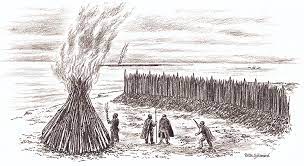
He dealt with the peasants also in the same kindly spirit, giving them back their lands and relieving them of the tax which Harold had laid. But he taxed them all in another way, dividing the country into marine districts, each of which was required to supply the king, on his demand, with a fully equipped warship. Yet as this was for the defence of the country, the people did not look on it as oppressive. And as Norway had a long mountainous coast, and important events were often long in becoming known, he gave orders that the approach of an enemy should be made known by signal fires lighted all along the coast.

Haakon made other wise laws, in which he took the advice of the ablest men of the kingdom. But now we have to speak of the most striking event in the new king’s career. Norway at that time was a haunt of idolatry. Men worshipped Odin and a host of other gods, and there was not a Christian in the whole land except the king himself, who had been brought up in the new faith by his foster-father, King Athelstan of England.

An earnest Christian, he looked with sorrow on the rude worship and heathen belief of his people, but not until he had been many years on the throne did he venture to interfere with it. Then, about 950, when he had won the love of them all, he took steps to carry out his long-cherished desire.

Sending to England for a bishop and a number of priests, the king issued a decree in which the people were forbidden to make sacrifices to the old gods and ordered to accept the Christian faith.

This came like a thunderbolt to the worshippers of the old gods. To bid a whole nation to give up at a word the religion which they had cherished from childhood and which their fathers had held for generations before them was too much to demand. The king brought together a concourse of the people and spoke to them of his wish and purpose, but they had no answer to make except that the matter must be settled by their legal assembly.

When the thing, or assembly, was called into session, a great body of the people were present, for never had so important a question been laid before them. Earnest and imploring was the speech made by the king, in which he warmly asked them to accept the God of the Christians and give up their heathen idols of wood and stone.

These words were followed by an angry murmur from the multitude, and many dark looks were bent upon the rash monarch. Then a peasant leader, Aasbjörn of Medalhus, stepped out from the throng and spoke:

“When you, King Haakon, first called us here before you and we took you for our king, it was with deep gladness, as if heaven had opened to us. But was it liberty we gained, or do you wish to make thralls of us once more, that you ask us to give up the faith of our fathers and forefathers for the new and unknown one you offer? Sturdy men they were, and their faith did well for them and has done well for us. We have learned to love you well and have always kept and will always keep the laws made by you and accepted by us. But in this thing which you now demand we cannot follow. If you are so resolved upon it that your mind cannot be changed, then we shall be forced to part from you and choose a new chief who will support us in worshipping our fathers’ gods. Choose, O king, what you will do, before this assembly has dispersed.”

So loud were the shouts of approval with which this speech was greeted that not a word could be heard. Then, when quiet reigned again, Earl Sigurd, who had spoken aside with Haakon, rose and said that the king had no wish to lose their friendship and would yield to their wishes. This was not enough to overcome the distrust of the peasants. They next demanded that he should take part in the sacrifices to be given and in the feast to follow. This he felt obliged to do, though he quieted his conscience by making the sign of the cross.

When the next Yuletide sacrifice came Haakon was required to eat horse-flesh at the feast and this time was forbidden to make the sign of the cross when he drank the usual toasts to the ancient gods of Norway. This was a humiliation that cut the proud monarch deeply and it was with an angry soul he left, saying to his attendants that when he came back it would be with an army to punish those who had thus insulted his faith. Back he did not come, for new troubles were gathering around him.

To learn the source of these troubles we must return to the story of Erik Blood-Axe and Gunhild, his wicked wife. After Erik’s death that mischief-loving woman sought Denmark with her sons, who grew up to become brave warriors and daring viking rovers, infesting the coast of Norway and giving its king and earls all the trouble they could. At length, backed by Harold Bluetooth, the king of Denmark, their piratical raids changed to open war, and they invaded Norway, hoping to win their father’s old kingdom for themselves.

A crisis came in 955. In that year the sons of Erik appeared so suddenly with a large fleet that they took King Haakon by surprise. He had with him only a small force, the signal fires had not been lighted, and the enemy were close at hand before he could prepare to meet them.

“What shall we do?” he asked his men. “Shall we stay and fight, or draw back and gather men?”

The answer came from an old peasant, Egil Woolsack:

“Often have I fought, King Haakon, with King Harold, your father. Whether the foe was stronger or weaker the victory was always his. Never did he ask his friends if he should run; nor need you, for we are ready to fight and think that we have a brave chieftain for our leader.”

“You speak well and wisely, Egil,” said the king. “It is not my wish to run, and with your aid I am ready to face the foe.”

“Good words those!” cried Egil joyously. “It has been so long since I saw the flash of sword that I feared I would die in my bed of old age, though it has been my hope to fall in battle at my chieftain’s back. Now will my wish be gained.”

To land came the sons of Erik, having six men to Haakon’s one. Seeing how great were the odds, old Egil tried strategy, leading ten standard-bearers to a hidden spot in the rear of the hostile army and leaving them there in ambush. When the armies had met and the fighting was under way, he led these men up a sloping hill until the tops of their standards could be seen above its summit. He had placed them far apart, so that when the Danes saw the waving banners it looked like a long line of new troops coming upon them. With sudden alarm and a cry of terror they fled towards their ships.

Gamle, their leader, was quick to discover the stratagem, and called on them to stop, that it was all a trick; but nothing could check their panic flight, and he was swept along with them to the beach. Here a stand was made, but Haakon rushed upon them in a furious attack in which old Egil had his wish, for he fell in the storm of sword blows, winning the death he craved. Victory rested on the king’s banners and his foes fled to their ships, Gamle, their leader, being drowned in the flight.

For six years after this the land lay at peace. King Haakon continued a Christian and many of his friends joined him in the new faith. But he was too wise and gentle to attempt again to force his belief upon his people and the worship of the heathen gods went on. All the people, nobles and peasants alike, loved their king dearly and he would have ended his reign in a peaceful old age but for his foes without the kingdom. This is the way in which the end came.

In the summer of the year 961, when Haakon had been twenty-six years on the throne, he with many guests was at feast in the royal mansion of Fitje, in Hördaland. While at table a sentinel brought in the alarming news that a large fleet of ships was sailing up the fiord.

By the king’s side sat Eyvnid, his nephew, who was a famous scald, or bard. They rose and looked out on the fiord.

“What ships are they, of friends or of foes?” asked the king.

The scald replied in a verse, in which he sang that the sons of Erik were coming again.

“Once more they take us unawares,” said Haakon to his men. “They are many and we are few. Never yet have we faced such odds. The danger lies before you. Are you ready to meet it? I am loath to flee before any force, but I leave it to the wise among you to decide.”

Eyvnid sang another verse, to the effect that it would be ill counsel to advise a man like King Haakon to flee from the sons of Gunhild the sorceress.

“That is a man’s song,” cried the king, “and what you say is what I wish.”

All around him the warriors shouted their war-cry, and while they ran for their weapons he put on his armor, seized his sword and shield, and placed on his head a golden helmet that shone brightly in the sun. Never had he looked more like a born king, with his noble and inspired countenance and the bright hair streaming down from under his helmet.

The battle that followed was fierce and bloody. Harold, Gunhild’s third son, commanded the invaders, who far outnumbered Haakon’s small force. And now there was no Egil to defeat the foe by stratagem, but the battle was hand to hand and face to face, with stroke of sword and thrust of spear, the war-shout of the fighters and the death-wail of the fallen.

King Haakon that day showed himself a true and heroic warrior. As the battle grew fiercer his spirit rose higher, and when Eyvnid the scald greeted him with a warlike verse, he answered with another. But the midsummer heat growing hard to bear, he flung off his armor and fought with only his strong right arm for shield. The arrows had now been all shot, the spears all hurled, and the ranks met hand to hand and sword to sword, in desperate affray.

In the front rank stood the king, his golden helmet making him a shining mark for the warriors of the foe.

“Your helmet makes you a target for the Danish spears,” cried Eyvnid, and he drew a hood over it to hide its gleam. Skreyja, Harold’s uncle, who was storming onward towards the king, now lost sight of him and cried out:

“Where is the Norse king? Has he drawn back in fear? Is he of the golden helmet a craven?”

“Keep on as you are coming, if you wish to meet the Norsemen’s king,” shouted Haakon, throwing down his shield and grasping his sword with both hands, as he sprang out before them all. Skreyja bounded towards him and struck a furious blow, but it was turned aside by a Norse warrior and at the same instant Haakon’s sword cleft the foeman’s head down to the shoulders.

This kingly stroke gave new spirit to the Norsemen and they rushed with double fury upon the foe, whom the fall of their best warrior filled with fear. Back to the beach they were pressed, many being slain, many drowned, a few only, Harold among them, reaching the ships by swimming.

The Norsemen had won against fearful odds, but their king was in deadly peril. In the pursuit he had been struck in the right arm by an arrow with an oddly-shaped head, and do what they would, the flow of blood could not be stopped. It was afterwards said that Gunhild the sorceress had bewitched the arrow and sent it with orders to use it only against King Haakon.

In those days it was easy to have men believe tales like that, but, witchcraft or not, the blood still ran and the king grew weaker. As night came death seemed at hand and one of his friends offered to take his body to England, after his death, that he might be laid in Christian soil.

“Not so,” said Haakon. “Heathen are my people and I have lived among them like a heathen. See then that I am laid in the grave like a heathen.”

Thus he died, and he was buried as he wished, while all men mourned his death, even his foes; for before breathing his last he bade his men to send a ship after the sons of Gunhild; asking them to come back and rule the kingdom. He had no sons, he said, and his daughter could not take the throne.

Thus death claimed the noblest of the Norsemen, at once heathen and Christian, but in his life and deeds as in his death a great and good man.

Carruthers crest on flag-v2 (1)

OFFICIAL AND OLDEST SCOTTISH  CLAN CARRUTHERS

 SINCE 1983-CLAN OF OUR ANCESTORS

MERITED TO CHIEF CAROTOCUS  10AD

PRESENT CHIEF :  PAT E CARROTHERS USA

cropped-wide-banner-with-new-crestnorse


Dr Tim Fraser SCOTLAND CHS

Reviewed by : Tammy Wise  USA  CHS

CLAN CARRUTHERS  HISTORIAN AND GENEALOGIST
59ef7250711564a8761d3a0b23bc2353

New Blog Banner 05

Preserving Our Past, Recording Our Present, Informing Our Future

Ancient and Honorable Clan Carruthers

   clancarruthers1@gmail.com

You can find us on our main facebook pages at :

SILVER WINGS-https://www.facebook.com/CarruthersClanLLC/

GOLD WINGS – https://www.facebook.com/carrutherscarrothers.pat.9

COPPER WINGS    https://www.facebook.com/ClanCarruthers1/

CLAN CARRUTHERS FAMILY HISTORY – https://www.facebook.com/CarruthersClan

CLAN CARRUTHERS CCIS – https://www.facebook.com/groups/3878691252182714

CLAN CARRUTHERS INT SOCIETY- https://www.facebook.com/groups/394653845137709

CLAN CARRUTHERS – BORDER REIVERS – https://www.facebook.com/groups/434959914239094

Disclaimer Ancient and Honorable Carruthers Clan International Soci

SEA KINGS AND ROVERS

THE SEAKINGS AND THEIR DARING FEATS – CLAN CARRUTHERS CCIS

cropped-wide-banner-with-new-crest

THE SEAKINGS AND ALL THEIR DARING FEATS


31df11519d59af5ea79330640603dcaa


From the word vik, or bay, comes the word viking, long used to designate the sea-rovers of the Northland, the bold Norse wanderers who for centuries made their way to the rich lands of the south on plundering raids. Beginning by darting out suddenly from hiding places in bays or river mouths to attack passing craft, they in the end became daring scourers of the seas and won for themselves kingdoms and dominions in the settled realms of the south.

Nothing was known of them in the early days. The people of southern Europe in the first Christian centuries hardly knew of the existence of the race of fair-skinned and light-haired barbarians who dwelt in the great peninsula of the north. It was not until near the year 800 B.C. that these bold brigands learned that riches awaited those who dared seize it on the shores of France, England, and more southern lands. Then they came in fleets and spread terror wherever they appeared. For several centuries the realms of civilization trembled before their very name.

“From the fury of the Northmen, Good Lord deliver us!” prayed the priests, and the people joined fervently in the prayer.

Long before this period the sea was the favorite hunting ground of the daring sons of the north, but the small chiefs of that period preyed upon each other, harrying their neighbors and letting distant lands alone. But as the power of the chiefs, and their ability to protect themselves increased, this mode of gaining wealth and fame lost its ease and attraction and the rovers began to rove farther afield.

Sea-kings they called themselves. On land the ruler of a province might be called either earl or king, but the earl who went abroad with his followers on warlike excursions was content with no less name than king, and the chiefs who set out on plundering cruises became from the first known as sea-kings. Pirates and freebooters we would call them to-day, but they were held in high distinction in their native land, and some of the most cruel of them, on their return home, became men of influence, with all the morality and sense of honor known in those early days. Their lives of ravage and outrage won them esteem at home and the daring and successful sea-king ranked in fame with the noblest of the home-staying chiefs. We have seen how King Erik began his career as a viking and ended it in the same pursuit; how Rollo, a king’s son, adopted the same profession; and from this it may be seen that the term was one of honor instead of disgrace.

From all the lands of the north they came, these dreaded sons of the sea, from Norway, Sweden, and Denmark alike, fierce heathens they who cared nought for church or priest, but liked best to rob chapels and monasteries, for there the greatest stores of gold and silver could be found. When the churches were plundered they often left them in flames, as they also did the strong cities they captured and sacked. The small, light boats with which they dared the sea in its wrath were able to go far up the rivers, and wherever these fierce and bloodthirsty rovers appeared wild panic spread far around. So fond were they of sword-thrust and battle that one viking crew would often challenge another for the pure delight of fighting. A torment and scourge they were wherever they appeared.

The first we hear in history of the sea-kings is in the year 787, when a small party of them landed on the English coast. In 794 came another flock of these vultures of the sea, who robbed a church and a monastery, plundering and killing, and being killed in their turn when a storm wrecked their ships and threw them on shore. As a good monk writes of them: “The heathen came from the northern countries to Britain like stinging wasps, roamed about like savage wolves, robbing, biting, killing not only horses, sheep, and cattle, but also priests, acolytes, monks, and nuns.”

The Norsemen had found a gold mine in the south and from this time on they worked it with fierce hands. Few dared face them, and even in the days of the great Charlemagne they ravaged the coast lands of France. Once, when the great emperor was in one of his cities on the Mediterranean coast, a fleet of the swift viking ships, known by their square sails, entered the harbor. Soon word was brought that they had landed and were plundering. Who they were the people knew not, some saying that they were Jews, others Africans, and others that they were British merchants.

“No merchants they,” said the emperor. “Those ships do not bring us goods, but fierce foes, bloody fighters from the north.”

The warriors around him at once seized their weapons and hurried to the shore, but the vikings had learned that the great emperor was in the city and, not daring to face him, had sought their ships and spread their sails again. Tears came to the eyes of Charlemagne as he watched them in their outward flight. He said to those around him:

“It is not for fear that these brigands can do me any harm that I weep, but for their daring to show themselves on this coast while I am alive. Their coming makes me foresee and fear the harm they may do to my descendants.”

This story may be one of those legends which the monks were fond of telling, but it serves to show how the dread Norsemen were feared. France was one of their chief fields of ravage and slaughter. First coming in single ships, to rob and flee, they soon began to come in fleets and grew daring enough to attack and sack cities. Hastings, one of the most renowned of them all, did not hesitate to attack the greatest cities of the south.

In 841 this bold freebooter sailed up the Loire with a large fleet, took and burned the city of Amboise, and laid siege to Tours. But here the inhabitants, aided, it is said, by the bones of their patron saint, drove him off. Four years later he made an attack on Paris, and as fortune followed his flag he grew so daring that he sought to capture the city of Rome and force the Pope to crown him emperor.

For an account of this remarkable adventure of the bold Hastings see the article, “The Raids of the Sea-Rovers,” in the German volume of “Historical Tales.” In that account are also given the chief exploits of the vikings in France and Germany. We shall therefore confine ourselves in the remainder of this article to their operations in other lands, and especially in Ireland.

This country was a common field for the depredations of the Norse rovers. For some reason not very clear to us the early vikings did not trouble England greatly, but for many years they spread terror through the sister isle, and in the year 838 Thorgisl, one of their boldest leaders, came with a fleet of one hundred and twenty ships, with which he attacked and captured the city of Dublin, and afterwards, as an old author tells us, he conquered all Ireland, securing his conquest with stone forts surrounded with deep moats.

But the Irish at length got rid of their conqueror by a stratagem. It was through love that the sea-king was lost. Bewitched with the charms of the fair daughter of Maelsechnail, one of the petty kings of the land, he bade this chieftain to send her to him, with fifteen young maidens in her train. He agreed to meet her on an island in Loch Erne with as many Norsemen of high degree.

Maelsechnail obeyed, but his maidens were beardless young men, dressed like women but armed with sharp daggers. Thorgisl and his men, taken by surprise, were attacked and slain. The Irish chief had once before asked Thorgisl how he should rid himself of some troublesome birds that had invaded the island. “Destroy their nests,” said the Norseman. It was wise advice, and Maelsechnail put it in effect against the nests of the conquerors, destroying their stone strongholds, and killing or driving them away, with the aid of his fellow chieftains.

Thus for a time Ireland was freed. It was conquered again by Olaf the White, who in 852 defeated some Danes who had taken Dublin, and then, like Thorgisl, began to build castles and tax the people. Two other viking leaders won kingdoms in Ireland, but Olaf was the most powerful of them all, and the kingdom founded by him lasted for three hundred and fifty years. From Dublin Olaf sailed to Scotland and England, the booty he won filling two hundred ships.

The sea-rovers did not confine their voyages to settled lands. Bold ocean wanderers, fearless of man on shore and tempest on the waves, they visited all the islands of the north and dared the perils of the unknown sea. They rounded the North Cape and made their way into the White Sea as early as 750. The Faroe, the Orkney and the Shetland Islands were often visited by them after 825, and in 874 they discovered Iceland, which had been reached and settled by Irishmen or Scots about 800. The Norsemen found here only some Irish hermits and monks, and these, disturbed in their peaceful retreat by the turbulent newcomers, made their way back to Ireland and left the Norsemen lords of the land. From Iceland the rovers reached Greenland, which was settled in 986, and about the year 1000 they discovered North America, at a place they named Vinland.

Such is, briefly told, the story of the early Norse wanderers. They had a later tale, of which we have told part in their conquest of Ireland. Though at first they came with a few ships, and were content to attack a town or a monastery, they soon grew more daring and their forces larger. A number of them would now fortify themselves on some coast elevation and make it a centre for plundering raids into the surrounding country. At a later date many of them ceased to pose as pirates and took the rôle of invaders and conquerors, storming and taking cities and founding governments in the invaded land.

Such was the work of Thorgisl and Olaf in Ireland and of Rollo in Normandy. England was a frequent field of invasion after 833, which continued until 851, when King Ethelwulf defeated them with great slaughter. Fifteen years later they came again, these new invaders being almost all Danes. During all his reign Alfred the Great fought with them, but in spite of his efforts they gained a footing in the island, becoming its masters in the north and east. A century later, in 1016, Canute, the king of Denmark, completed the conquest and became king of all England.

This is not the whole story of the sea-kings, whose daring voyages and raids made up much of the history of those centuries. One of the most important events in viking history took place in 862, when three brother chiefs, probably from Sweden, who had won fame in the Baltic Sea, were invited by the Russian tribes south of Lake Ladoga to come and rule over them. They did so, making Novgorod their capital. From this grew the empire of Russia, which was ruled over by the descendants of Rurik, the principal of these chiefs, until 1598.

Other vikings made their way southward through Russia and, sailing down the Dnieper, put Constantinople in peril. Only a storm which scattered their fleet saved the great city from capture. Three times later they appeared before Constantinople, twice (in 904 and 945) being bought off by the emperors with large sums of money. Later on the emperors had a picked body-guard of Varangians, as they called the Northmen, and kept these till the fall of the city in 1453. It was deemed a great honor in the north to serve in this choice cohort at Myklegaard (Great City), and those who returned from there doubtless carried many of the elements of civilization to the Scandinavian shores.

To some of these Varangians was due the conquest of Sicily by the Northmen. They were in the army sent from Constantinople to conquer that island, and seeing how goodly a land it was they aided in its final conquest, which was made by Robert Guiscard, a noble of Normandy, whose son Roger took the title of “King of Sicily and Italy.” Thus it was that the viking voyages led within a few centuries to the founding of kingdoms under Norse rulers in England, Ireland, Sicily, Russia, and Normandy in France.

Carruthers crest on flag-v2 (1)


OFFICIAL AND OLDEST SCOTTISH  CLAN CARRUTHERS

 SINCE 1983-CLAN OF OUR ANCESTORS

MERITED TO CHIEF CAROTOCUS  10AD

PRESENT CHIEF :  PAT E CARROTHERS USA

cropped-wide-banner-with-new-crestnorse


Dr Tim Fraser SCOTLAND CHS

 Tammy Wise  USA  CHS

CLAN CARRUTHERS  HISTORIAN AND GENEALOGIST

59ef7250711564a8761d3a0b23bc2353

New Blog Banner 05

Preserving Our Past, Recording Our Present, Informing Our Future

Ancient and Honorable Clan Carruthers

   clancarruthers1@gmail.com

You can find us on our main facebook pages at :

SILVER WINGS-https://www.facebook.com/CarruthersClanLLC/

GOLD WINGS – https://www.facebook.com/carrutherscarrothers.pat.9

COPPER WINGS    https://www.facebook.com/ClanCarruthers1/

CLAN CARRUTHERS FAMILY HISTORY – https://www.facebook.com/CarruthersClan

CLAN CARRUTHERS CCIS – https://www.facebook.com/groups/3878691252182714

CLAN CARRUTHERS INT SOCIETY- https://www.facebook.com/groups/394653845137709

CLAN CARRUTHERS – BORDER REIVERS – https://www.facebook.com/groups/434959914239094

Disclaimer Ancient and Honorable Carruthers Clan International Soci



Gutland / Gotland, OUR ANCESTORS, The Viking Age, Uncategorized

ERIC BLOODAXE AND EGIL THE ICELANDER – CLAN CARRUTHERS CCIS

cropped-wide-banner-with-new-crest

ERIC BLOODAXE AND EGIL THE ICELANDER

CARRUTHERS ANCESTOR

ERICBLOODAXEIn the year 900 Harold the Fair-Haired, the famous monarch who made a kingdom of Norway, passed a law which was to work mischief for centuries to come. Erik, his favorite son, was named overlord of the kingdom, but with the proviso that his other sons should bear the kingly title and rule over provinces, while the sons of his daughters were to be made earls. Had the wise Harold dreamed of the trouble this unwise law was to make he would have cut off his right hand before signing it. It was to give rise to endless rebellions and civil wars which filled the kingdom with ruin and slaughter for many reigns and at last led to its overthrow and long disappearance from among the separate nations of the earth.

A bold and daring prince was Erik, with the old viking blood in his veins. When only twelve years of age his father gave him five ships, each with a sturdy crew of Norsemen, and sent him out to ravage the southern lands, in the manner of the sea-kings of those days. Many were the perilous exploits of the young viking admiral and when he came back to his father’s halls and told him of his daring deeds, the old king listened with delight. So fierce and fatal were many of his fights that he won the name of Blood-Axe, but for this his father loved him all the more and chose him to be his successor on the throne.

[Illustration] from Historical Tales - Scandinavian by Charles Morris

HOME OF PEASANTS, NORWAY

Before his father died Erik had shown what was in him, by attacking and killing two of his brothers. But despite all that, when the old king was eighty years of age he led Erik to the throne and named him as his successor. Three years later Harold died and Norway fell under the young sea-king’s hand—a brave, handsome, stately ruler; but haughty, cruel, and pitiless in his wrath, and with the old viking wildness in his blood.

He had married a woman whom men called a witch—cruel, treacherous, loving money and power, and with such influence over him that she killed all the good in his soul and spurred him on to evil deeds.

Strange stories are told of the wicked Queen Gunhild. It was said that she had been sent to Finland to learn the arts of sorcery, in which the Finns of those days were well versed. Here Erik met her in one of his wanderings, and was taken captive by her bold beauty. She dwelt with two sorcerers, both bent on marrying her, while she would have neither of them. Prince Erik was a suitor more to her liking and she hid him in her tent, begging him to rescue her from her troublesome lovers.

This was no easy task, for sorcerers have arts of their own, but Erik proved equal to it, cut his way through all the difficulties in his path and carried Gunhild away to his ships, where he made her his wife. In her he had wed a dragon of mischief, as his people were to learn.

She was of small size but of wonderful beauty, and with sly, insinuating ways that fitted her well to gain the mastery over strong men. But all her arts were used for evil, and she won the hatred of the people by speaking words of ill counsel in her husband’s ears. The treachery and violence he showed were said to be the work of Gunhild the witch, and the nobles and people soon grew to hate Erik Blood-Axe and his cruel wife, and often broke out in rebellion against them.

His brothers, who had been made kings of provinces, were not ready to submit to his harsh rule, and barely was old King Harold dead before Halfdan the Swarthy—who bore the name of his grandfather—claimed to be monarch in Tröndelag, and Olaf, another brother, in Viken. Death came suddenly to Halfdan—men whispered that he had been poisoned by the queen—but his brother Sigfrid took his place and soon the flame of rebellion rose north and south. Erik proved equal to the difficulty. Sigfrid and Olaf were in Tunsberg, where they had met to lay plans to join their forces, when Erik, whose spies told him of their movements, took the town by surprise and killed them both.

Thus, so far, Erik Blood-Axe was triumphant. He had killed four of his brothers—men said five—and every one thought that Gunhild would not be content until all King Harold’s brood except her own husband were in the grave.

Trouble next came from a region far away, the frost-king’s land of Iceland in the northern seas, which had been settled from Norway in the early reign of Harold the Fair-Haired, some sixty years before. Here lived a handsome and noble man named Thorolf, who had met Erik in his viking days. He was the son of the stern old Icelander Bald Grim, and nephew of the noble Thorolf who had been basely slain by King Harold.

Bald Grim hated Harold and all his race, but Thorolf grew to admire Erik for his daring and made him a present of a large and beautiful ship. Thus Erik became his friend, and when Thorolf came to Norway the young prince begged his father to let him dwell there in peace. When he at length went home to Iceland he took with him an axe with a richly carved handle, which Erik had sent as a present to his father.

Old Bald Grim was not the man to be bought over by a present. The hate he felt for Harold he transferred to his son, and when Thorolf set sail again for Norway his father bade him take back the axe to the king and sang an insulting song which he bade him repeat to Erik. Thorolf did not like his errand. He thought it best to let the blood-feud die, so he threw the axe into the sea and when he met the king gave him his father’s thanks for the fine gift. If Thorolf had had his way the trouble would have been at an end, but with him came Egil, his younger brother, a man of different character.

Stern old Bald Grim seemed born again in his son Egil. A man of great size, swarthy face, harsh of aspect, and of fierce temper, in him was the old, tameless spirit of the Norse sea-kings, turbulent, passionate, owning no man master, he bent his strong soul to no man’s rule. Rash and adventurous, he had a long and stormy career, while nature had endowed him with a rich gift of song, which added to his fame. Such was the type of men who in those days made all Europe tremble before the Norsemen’s wrath, and won dominion for the viking warriors in many lands.

Thorold when in Norway before had gained powerful friends in the great nobles, Thore Herse and Björn the Yeoman. On this visit the brothers became Thore’s guests, and Egil and Arinbjörn, Thore’s son, became warm friends. The young Icelander’s hot temper soon brewed trouble. Sickness kept him from going with Thorolf to the house of Björn the Yeoman, whose daughter, Aasgard, he was to marry; but he soon got well and went on a visit to Baard, a steward of the king. As fortune decreed he met there King Erik and Queen Gunhild.

Egil was not the man to play the courtier and his hot blood was under little control. When Baard neglected him in favor of his royal visitor, he broke into such a rage that the queen, to quiet him, tried one of her underhand arts. She bade Baard to mix sleeping herbs with his beer.

Suspecting treachery from the taste of the beer Egil flung his flagon to the floor, struck Baard dead in his fury, and, fleeing for his life, swam to an island in the neighboring stream. When men were sent to search the island and capture him he killed some of them, seized their boat, and made his escape.

King Erik was furious, but Thore Herse got him to accept a money payment for Baard’s death—as was then the custom of the land—and he agreed to let Egil dwell in Norway unharmed.

This was not to the queen’s liking. She was fond of Baard and was deeply incensed at Egil for his murderous act, and she stormed at the king for his mildness of temper till he broke out:

“You are forever egging me on to acts of violence; but now you must hold your peace, for I have given my kingly word and cannot break it.”

Gunhild, thus repulsed, sought other means of revenge. A great feast of sacrifice to the old heathen gods was to be held at the temple of Gaule, and at her instigation her brother, Eyvind Skreyja, agreed to kill one of Bald Grim’s sons. Finding no opportunity for this, he killed one of Thorolf’s men, for which act Erik outlawed him.

The remainder of the story of Egil’s career is largely that of a viking, that is, a piratical rover, bent on spoil and plunder and the harrying of sea-coast lands. With Thorolf he took to the sea and cruised about in quest of wealth and glory, finally landing in England and fighting in a great battle under the banner of King Athelstan. He made his mark here, but Thorolf was slain, so Egil went back to Norway, married his brother’s widow, and sailed for his old home in Iceland, which he had not seen for twelve years.

Iceland was too quiet a land to hold the stirring sea-king long and news from Norway soon made him take ship again. Björn the Yeoman, his wife’s father, had died, and Queen Gunhild had given his estate to Berg-Anund, one of her favorites. Storming with rage, he reached Norway and hotly pleaded his claim to the estate before the assembly or thing at Gula, Erik and Gunhild being present. He failed in his purpose, the thing breaking up in disorder; and Egil, probably finding Norway too hot to hold him, went back to Iceland.

If King Erik now fancied he was rid of the turbulent Icelander he was mistaken. Rankling with a sense of injury and borne onward by his impetuous temper, Egil was soon in Norway again, sought the Björn estate, surprised and killed Berg-Anund, and went so far in his daring as to kill Ragnvald, the king’s son, who was visiting Berg. Carried to extremes by his unruly temper he raised what was called a shame-pole, or pole of dishonor, on a cliff top, to the king and queen. On it he thrust the head of a dead horse, crying out:

“I turn this dishonor against all the land-spirits of this land, that they may all stray bewildered and none of them find his home until they have driven King Erik and Queen Gunhild out of this land.”

This message of defiance he cut in runes—the letters of the Northland—into the pole, that all might read it, and then sailed back to Iceland.

Egil had not long to wait for his curse to take effect, for Erik’s reign was soon threatened from a new source. He had not killed all his brothers. In the old days of King Harold, when near seventy years old, he had married a new wife, who bore him a son whom he named Haakon,—destined in later life to reign with the popular title of Haakon the Good. This boy, perhaps for his safety, had been sent to England and given over to King Athelstan, who brought him up almost as his own son.

Erik had been four years on the throne when Haakon came back to Norway, a handsome, noble youth, kind of heart and gentle in disposition, and on all sides hailed with joy, for Erik and his evil-minded wife had not won the love of the people. Great nobles and many of the people gathered around Haakon, men saying that he was like King Harold come back again, gentler and nobler than of old and with all his old stately beauty and charm.

The next year he was crowned king. Erik tried to raise an army, but none of the people were willing to fight for him, and he was forced to flee with his wife and children. Only a few of his old friends went with him, but among them was Arinbjörn, Egil’s former friend.

Sudden had been King Erik’s fall. Lately lord of a kingdom, he had now not a foot of land he could call his own, and he sailed about as a sea-robber, landing and plundering in Scotland and England. At length, to rid himself of this stinging hornet of the seas, King Athelstan made him lord of a province in Northumberland, with the promise that he would fight for it against other vikings like himself. He was also required to be baptized and become a Christian.

Meanwhile Egil dwelt in Iceland, but in bitter discontent. He roamed about the strand, looking for sails at sea and seeming to care little for his wife and children. Men said that Gunhild had bewitched him, but more likely it was his own unquiet spirit. At any rate the time came when he could bear a quiet life no longer and he took ship and sailed away to the south.

Misfortune now went with him. A storm drove his ship ashore on the English coast at the mouth of the Humber, the ship being lost but he and his thirty men reaching shore. Inquiring in whose land he was, people told him that Erik Blood-Axe ruled that region.

Egil’s case was a desperate one. He was in the domain of his deadly foe, with little hope of escape. With his usual impetuous spirit, he made no attempt to flee, but rode boldly into York, where he found his old friend Arinbjörn. With him he went straight to Erik, like the reckless fellow he was.

“What do you expect from me?” asked Erik. “You deserve nothing but death at my hands.”

“Death let it be, then,” said the bold viking, in his reckless manner.

Gunhild on seeing him was eager for his blood. She had hated him so long that she hotly demanded that he should be killed on the spot. Erik, less bloodthirsty, gave him his life for one night more, and Arinbjörn begged him to spend the night in composing a song in Erik’s honor, hoping that in this way he might win his life.

Egil promised to do so and his friend brought him food and drink, bidding him do his best. Anxious to know how he was progressing Arinbjörn visited him in the night.

“How goes the song?” he asked.

“Not a line of it is ready,” answered Egil. “A swallow has been sitting in the window all the night, screaming and disturbing me, and do what I would I could not drive it away.”

At that Arinbjörn darted into the hall, where he saw in the dim light a woman running hastily away. Going back he found that the swallow had flown. He was sure now that Queen Gunhild had changed herself into a swallow by sorcery, and for the remainder of the night he kept watch outside that the bird should not return. When morning broke he found that Egil had finished his song.

Determined to save his friend’s life if he could, he armed himself and his men and went with Egil to the palace of the king, where he asked Erik for Egil’s life as a reward for his devotion to him when others had deserted him.

Erik made no reply, and then Arinbjörn cried out:

“This I will say. Egil shall not die while I or one of my men remain alive.”

“Egil has well deserved death,” replied Erik, “but I cannot buy his death at that price.”

As he stopped speaking Egil began to sing, chanting his ode in tones that rang loudly through the hall. Famed as a poet, his death song was one of the best he had ever composed, and it praised Erik’s valor in all the full, wild strains of the northern verse.

Erik heard the song through with unmoved face. When it was done he said:

“Your song is a noble one, and your friend’s demand for your life is nobler still. Nor can I be the dastard to kill a man who puts himself of his own will into my hands. You shall depart unharmed. But do not think that I or my sons forgive you, and from the moment you leave this hall never come again under my eyes or the eyes of my sons.”

Egil thus won his life by his song, which became known as the “Ransom of the Head.” Another of his songs, called “The Loss of the Son,” is held to be the most beautiful in all the literature of Iceland. He afterwards lived long and had many more adventures, and in the end died in his bed in Iceland when he was over ninety years of age. Erik died in battle many years earlier, and Gunhild then went to Denmark with her sons. She was to make more trouble for Norway before she died.

Carruthers crest on flag-v2 (1)

OFFICIAL AND OLDEST SCOTTISH  CLAN CARRUTHERS

 SINCE 1983-CLAN OF OUR ANCESTORS

MERITED TO CHIEF CAROTOCUS  10AD

PRESENT CHIEF :  PAT E CARROTHERS USA

cropped-wide-banner-with-new-crestnorse

CHARLES MORRIS

TAMMY WISE CHS USA

CLAN CARRUTHERS  HISTORIAN AND GENEALOGIST

59ef7250711564a8761d3a0b23bc2353

New Blog Banner 05

Preserving Our Past, Recording Our Present, Informing Our Future

Ancient and Honorable Clan Carruthers

   clancarruthers1@gmail.com

You can find us on our main facebook pages at :

SILVER WINGS-https://www.facebook.com/CarruthersClanLLC/

GOLD WINGS – https://www.facebook.com/carrutherscarrothers.pat.9

COPPER WINGS    https://www.facebook.com/ClanCarruthers1/

CLAN CARRUTHERS FAMILY HISTORY – https://www.facebook.com/CarruthersClan

CLAN CARRUTHERS CCIS – https://www.facebook.com/groups/3878691252182714

CLAN CARRUTHERS INT SOCIETY- https://www.facebook.com/groups/394653845137709

CLAN CARRUTHERS – BORDER REIVERS – https://www.facebook.com/groups/434959914239094

Disclaimer Ancient and Honorable Carruthers Clan International Soci
Gutland / Gotland, OUR ANCESTORS, Uncategorized

GORM THE OLD – CLAN CARRUTHERS CCIS

cropped-wide-banner-with-new-crest

GORM THE OLD – DENMARKS FIRST KING

CARRUTHERS ANCESTOR

PinterestIn ancient times Denmark was not a kingdom, but a multitude of small provinces ruled over by warlike chiefs who called themselves kings. It was not until the ninth century that these little king-ships were combined into one kingdom, this being done by a famous chieftain, known by the Danes as Gorm den Gamle, or Gorm the Old. A great warrior he was, a viking of the vikings, and southern Europe felt his heavy hand. A famous story of barbarian life is that of Gorm, which well deserves to be told.

He was the son of a fierce pagan of Norway, Hardegon, who was of royal blood, being a grandson of the half-fabulous Ragnar Lodbrok. A prince with only his sword for kingdom, Hardegon looked around for a piece of land to be won by fighting, and fixed upon Lejre, in the fruitful Danish island of Sjölland, which was just then in a very inviting state for the soldier of fortune. Some time before it had fallen into the hands of a Swedish fortune-seeker named Olaf, who left it to his two sons. These in turn had just been driven out by Siegric, the rightful king, when Hardegon descended upon it and seized it for himself. Dying, he left it to his son Gorm.

It was a small kingdom that Gorm had fallen heir to. A lord’s estate we would call it to-day. But while small in size, it stood high in rank, for it was here that the great sacrifices to Odin, the chief Scandinavian deity, were held, and it was looked upon as one of the most sacred of spots. Hither at Yuletide came the devotees of Odin from all quarters to worship at his shrine, and offer gifts of gold and silver, precious stones and costly robes, to the twelve high priests of whom the king of Lejre was the chief. And every worshipper, whether rich or poor, was expected to bring a horse, a dog, or a cock, these animals being sacred to Odin and sacrificed in large numbers annually at his shrine. In the special nine-year services, people came in great numbers, and it is probable that on these occasions human sacrifices were made, captives taken in war or piratical excursions being saved for this purpose.

As one may see, the king of Lejre had excellent opportunity to acquire wealth, and young Gorm, being brave, clever, and ambitious, used his riches to increase his landed possessions. At least, the Danish historians tell us that he began by buying one bit of land, getting another by barter, seizing on one district, having another given him, and so on. But all this is guess-work, and all we actually know is that Gorm, the son of a poor though nobly-born sea-rover, before his death gained control of all Denmark, then much larger than the Denmark of to-day, and changed the small state with which he began into a powerful kingdom, bringing all the small kings under his sway.

The ambitious chief did not content himself with this. Long before his kingdom was rounded and complete he had become known as one of the most daring and successful of the viking adventurers who in those days made all Europe their prey.

Early in his reign he made a plundering cruise along the shores of the Baltic and joined in a piratical invasion of Russia, penetrating far inward and pillaging as he went. We hear of him again in 882 as one of the chiefs of a daring band which made a conquering raid into Germany, intrenched itself on the river Maas, sallied forth on plundering excursions whose track was marked by ruined fields and burnt homesteads, villages and towns, and even assailed and took Aix-la-Chapelle, one of the chief cities of the empire of Charlemagne and the seat of his tomb. The reckless freebooters stalled their horses in the beautiful chapel in which the great emperor lay buried and stripped from his tomb its gilded and silvered railings and everything of value which the monks had not hidden.

The whole surrounding country was similarly ravaged and desolated by the ruthless heathens, monasteries were burned, monks were killed or captured, and the emperor, Charles the Fat, was boldly defied. When Charles brought against the plunderers an army large enough to devour them, he was afraid to strike a blow against them, and preferred to buy them off with a ransom of two thousand pounds of gold and silver, all he got in return being their promise to be baptized.

Finding that they had a timid foe to deal with, the rapacious Norsemen asked for more, and when they finally took to their ships two hundred transports were needed to carry away their plunder. The cowardly Charles, indeed, was so wrought upon by fear of the pagan Danes that he even passed the incredible law that any one who killed a Norseman should have his eyes put out and in some cases should lose his life.

All this was sure to invite new invasions. A wave of joy passed through the north when the news spread of the poltroonery of the emperor and the vast spoil awaiting the daring hand. Back they came, demanding and receiving new ransom, and in 885 there began a great siege of Paris by forty thousand Danes.

King Gorm was one of the chiefs who took part in this, and when Henry of Neustria, whom the emperor had sent with an army against them, was routed and driven back, it was Gorm who pursued the fugitives into the town of Soissons, where many captives and a great booty were taken.

The dastard emperor again bought them off with money and freedom to ravage Burgundy, Paris being finally rescued by Count Eudes. In 891 they were so thoroughly beaten by King Arnulf, of Germany, that their great leaders fell on the field and only a remnant of the Norsemen escaped alive, the waters of the river Dyle running red with the blood of slain thousands.

Gorm was one of the chiefs who took part in this disastrous battle of Louvaine and was one of the fortunate few who lived to return to their native land. Apparently it was not the last of his expeditions, his wife, Queen Thyra, taking care of the kingdom in his many long absences.

Thyra needed ability and resolution to fitly perform this duty, for those were restless and turbulent times, and the Germans made many incursions into Sleswick and Jutland and turned the borderlands on the Eyder into a desert. This grew so hard to bear that the wise queen devised a plan to prevent it. Gathering a great body of workmen from all parts of Denmark, she set them to building a wall of defense from forty-five to seventy-five feet high and eight miles long, crossing from water to water on the east and west. This great wall, since known as the Dannevirke, took three years to build. There were strong watch-towers at intervals and only one gate, and this was well protected by a wide and deep ditch, crossed by a bridge that could readily be removed.

For ages afterwards the Danes were grateful to Queen Thyra for this splendid wall of defense and sang her praises in their national hymns, while they told wonderful tales of her cleverness in ruling the land while her husband was far away. Fragments of Thyra’s rampart still remain and its remains formed the groundwork of all the later border bulwarks of Denmark.

Queen Thyra, while a worshipper of the northern gods, showed much favor to the Christians and caused some of her children to be signed with the cross. But King Gorm was a fierce pagan and treated his Christian subjects so cruelly that he gained the name of the “Church’s worm,” being regarded as one who was constantly gnawing at the supports of the Church. Henry I. the Fowler, the great German emperor of that age, angry at this treatment of the Christians, sent word to Gorm that it must cease, and when he found that no heed was paid to his words he marched a large army to the Eyder, giving Gorm to understand that he must mend his ways or his kingdom would be overrun.

Gorm evidently feared the loss of his dominion, for from that time on he allowed the Archbishop of Bremen to preach in his dominions and to rebuild the churches which had been destroyed, while he permitted his son Harald, who favored the Christians, to be signed with the cross. But he kept to the faith of his forefathers, as did his son Knud, known as “Dan-Ast,” or the “Danes’-joy.”

The ancient sagas tell us that there was little love between Knud and Harald; and that Gorm, fearing ill results from this, swore an oath that he would put to death any one who attempted to kill his first-born son, or who should even tell him that Knud had died.

While Harald remained at home and aided his mother, Knud was of his father’s fierce spirit and for years attended him on his viking expeditions. On one of these he was drowned, or rather was killed while bathing, by an arrow shot from one of his own ships. Gorm was absent at the time, and Thyra scarcely knew how the news could be told him without incurring the sworn penalty of death.

Finally she put herself and her attendants into deep mourning and hung the chief hall of the palace with the ashy-grey hangings used at the grave-feasts of Northmen of noble birth. Then, seating herself, she awaited Gorm’s return. On entering the hall he was struck by these signs of mourning and by the silence and dejection of the queen, and broke out in an exclamation of dismay:

“My son, Knud, is dead!”

“Thou hast said it, and not I, King Gorm,” was the queen’s reply. The news of the death had thus been conveyed to him without any one incurring the sworn penalty. Soon after that—in 936—King Gorm died, and the throne of Denmark was left to his son Harald, a cruel and crafty man whom many of the people believed to have caused the murder of his brother.

Carruthers crest on flag-v2 (1)

OFFICIAL AND OLDEST SCOTTISH  CLAN CARRUTHERS

 SINCE 1983-CLAN OF OUR ANCESTORS

MERITED TO CHIEF CARATOCUS  10AD

PRESENT CHIEF :  PAT E CARROTHERS USA

cropped-wide-banner-with-new-crestnorse


CHARLES MORRIS 

TAMMY WISE CHS USA

CLAN CARRUTHERS  HISTORIAN AND GENEALOGIST

59ef7250711564a8761d3a0b23bc2353

New Blog Banner 05

Preserving Our Past, Recording Our Present, Informing Our Future

Ancient and Honorable Clan Carruthers

   clancarruthers1@gmail.com

You can find us on our main facebook pages at :

SILVER WINGS-https://www.facebook.com/CarruthersClanLLC/

GOLD WINGS – https://www.facebook.com/carrutherscarrothers.pat.9

COPPER WINGS    https://www.facebook.com/ClanCarruthers1/

CLAN CARRUTHERS FAMILY HISTORY – https://www.facebook.com/CarruthersClan

CLAN CARRUTHERS CCIS – https://www.facebook.com/groups/3878691252182714

CLAN CARRUTHERS INT SOCIETY- https://www.facebook.com/groups/394653845137709

CLAN CARRUTHERS – BORDER REIVERS – https://www.facebook.com/groups/434959914239094

Disclaimer Ancient and Honorable Carruthers Clan International Soci
Gutland / Gotland, OUR ANCESTORS, The History of Gutland, The Viking Age

HAROLD FAIR HAIR – CLAN CARRUTHERS CCIS

cropped-wide-banner-with-new-crest

HAROLD FAIR HAIRED FOUNDS THE KINGDOM OF NORWAY

CARRUTHERS ANCESTOR


To the far-off island of Iceland we must go for the story of the early days of Norway. In that frosty isle, not torn by war or rent by tumult, the people, sitting before their winter fires, had much time to think and write, and it is to Iceland we owe the story of the gods of the north and of the Scandinavian kings of heathen times. One of these writers, Snorri Sturlasson by name, has left us a famous book, “The Sagas of the Kings of Norway,” in which he tells of a long line of ancient kings, who were descended from the gods. Here are some of their names, Aun the Old, Ingjald Ill-Ruler, Olaf the Wood-Cutter, Halfdan Whiteleg, and Halfdan the Swarthy. There were others whom we need not name, and of these mentioned the names must suffice, for all we know of them is legend, not truth.

In those times there was no kingdom of Norway, but a number of petty provinces, ruled over by warriors who are spoken of as kings, but whose rule was not very wide. Most powerful among them was Halfdan the Swarthy, who was only a year old in 810 when his father was killed in battle.

He lived for many years, and he and his wife Ragnhild had strange dreams. The queen dreamed that a thorn which she took out of her clothes grew in her hands until one end of it took root in the ground and the other shot up into the air. It kept on growing until it was a great tree, so high that she could barely see its top. The lower part of it was blood-red, higher up it was bright green, and the spreading branches were white as snow. So widely they spread that they seemed to shade the whole country of Norway.

King Halfdan did not like it that his wife had such strange dreams and he had none. He asked a sage why this was so, and was told that if he wanted to have dreams as strange he must sleep in a pig-sty. A queer recipe for dreams, one would think, but the king tried it, and dreamed that his hair grew long and beautiful and hung in bright locks over his shoulders, some of them down to his waist, and one, the brightest and most beautiful of all, still farther down.

When he told the sage of this dream, the wise man said it meant that from him was to come a mighty race of kings, one of whom should be the greatest and most glorious of them all. This great hero, Snorri tells us, was supposed to be Olaf the Saint, who reigned two hundred years later, and under whom Christianity first flourished in Norway.

Soon after these dreams a son was born to the queen, who was named Harold. A bright, handsome lad he grew to be, wise of mind and strong of body and winning the favor of all who knew him. Many tales which we cannot believe are told of his boyhood. Here is one of them. Once when the king was seated at the Yuletide feast all the meats and the ale disappeared from the table, leaving an empty board for the monarch and his guests. There was present a Finn who was said to be a sorceror, and him the king put to the torture, to find out who had done this thing. Young Harold, displeased with his father’s act, rescued the Finn from his tormentors and went with him to the mountains.

On they went, miles and leagues away, until they came to a place where a Finnish chief was holding a great feast. Harold stayed there until spring, when he told his host that he must return to his father’s halls. Then the chief said:

“King Halfdan was very angry when I took his meat and ale from him last winter, and now I will reward you with good tidings for what you did. Your father is dead and his kingdom waits for you to inherit. And some day you will rule over all Norway.”

Harold found it to be as the Finn had said, and thus in 860, when he was only ten years old, he came to the throne. He was young to be at the head of a turbulent people and some ambitious men there were who sought to take advantage of his youth, but his uncle guardian fought for him and put them all down. Harold was now the greatest among the petty kings of Norway and a wish to be ruler of the whole land grew up in his soul.

Here comes in a story which may not be all true, but is pretty enough to tell. It is to the effect that love drove Harold to strive for the kingdom. Old Snorri tells the story, which runs this way.

King Erik of Hördaland had a fair daughter named Gyda, the fame of whose beauty reached Harold’s ears and he sent messengers to win her for himself. But the maid was proud and haughty and sent back word:

“Tell your master that I will not yield myself to any man who has only a few districts for his kingdom. Is there no king in the land who can conquer all Norway, as King Erik has conquered Sweden and King Gorm Denmark?”

This was all the answer she had for the heralds, though they pleaded for a better answer, saying that King Harold was surely great enough for any maid in the land.

“This is my answer to King Harold,” she said. “I will promise to become his wife if for my sake he shall conquer all Norway and rule it as freely as King Erik and King Gorm rule their kingdoms. Only when he has done this can he be called the king of a people.”

When the heralds returned they told the king of their ill success and advised him to take the girl by force.

“Not so,” Harold replied. “The girl has spoken well and deserves thanks instead of injury. She has put a new thought into my mind which had not come to me before. This I now solemnly vow and call God to witness, that I will not cut or comb my hair until the day when I shall have made myself king of all Norway. If I fail in this, I shall die in the attempt.”

[Illustration] from Historical Tales - Scandinavian by Charles Morris

HOUSE OF PARLIAMENT, NORWAY

Such is the legend of Gyda and the vow. What history tells us is that the young king set out to bring all Norway under his rule and prospered in the great enterprise. One after another, the small kings yielded to his power, and were made earls or governors under him. They collected taxes and administered justice in his name. All the land of the peasants was declared to be the property of the king, and those who had been free proprietors were now made the king’s tenants and were obliged to pay taxes if they wished to hold their lands. These changes angered many and there were frequent rebellions against the king, but he put them all down, and year after year came nearer the goal of his ambition. And his hair continued to grow uncut and uncombed, and got to be such a tangled mass that men called him Harold Lufa, or Frowsy-Head.

There was one great and proud family, the Rafnistas, who were not easily to be won. To one of them, Kveld-Ulf, or Night-Wolf, Harold sent envoys, asking him to enter his service, but the chief sent back word that he was too old to change. Then he offered Bald Grim, old Night-Wolf’s son, high honors if he would become his vassal. Bald Grim replied that he would take no honors that would give him rank over his father.

Harold grew angry at this, and was ready to use force where good words would not prevail, but in the end the old chief agreed that his second son Thorolf might be the king’s man if he saw fit. This he agreed to do, and as he was handsome, intelligent and courtly the king set much store by him.

Not only with the Norway chiefs, but with the king of Sweden, Harold had trouble. While he was busy in the south King Erik invaded the north, and Harold had to march in haste to regain his dominions. But the greatest danger in his career came in 872, when a number of chiefs combined against him and gathered a great fleet, which attacked Harold’s fleet in Halfrs-Fjord. Then came the greatest and hottest fight known to that day in Norway. Loudly the war-horns sounded and the ships were driven fiercely to the fray, Harold’s ship being in the front wherever the fight waxed hottest. Thorolf, the son of Night-Wolf, stood in its prow, fighting with viking fury, and beside him stood two of his brothers, matching him blow with blow.

Yet the opposing chiefs and their men were stout fighters and the contest long seemed doubtful, many brave and able men falling on both sides. Arrows hissed in swift flight through the air, spears hurtled after them, stones were hurled by strong hands, and those who came hand to hand fought like giants. At length Harold’s berserkers—men who fought without armor, replacing it with fury of onslaught—rushed forward and boarded the hostile ships, cutting down all who opposed them. Blood ran like water and the chieftains and their men fell or fled before this wild assault. The day was won for Harold, and with it the kingdom, for after that fatal fray none dared to stand up before him.

His vow accomplished, all Norway now his, Harold at last consented to the cutting of his hair, this being done by Ragnvald, the earl of Möre. The tangled strands being cut and the hair deftly combed, those who saw it marvelled at its beauty, and from that day the king was known as Harold the Fair-Haired. As for Gyda, the maid, the great task she set having been accomplished, she gave her hand to Harold, a splendid marriage completing the love romance of their lives.

This romance, however, is somewhat spoiled by the fact that Harold already had a wife, Aasa, the daughter of Earl Haakon, and that he afterwards married other wives. He had his faults and weaknesses, one of these being that he was not faithful to women and he was jealous of men who were growing in greatness. One of the men whom he began to fear or hate was Thorolf, who had aided him so mightily in battle and long stood highest in his favor.

Thorolf married a rich wife and grew very wealthy, living like a prince, and becoming profuse in his hospitality. He was gracious and liberal and won hosts of friends, while he aided the king greatly in collecting taxes from the Finns, who were not very willing to part with their money. Despite this service Harold grew to distrust Thorolf, or to hate him for other reasons, and the time came when this feeling led to a tragedy.

Thorolf had been made bailiff of Haalogaland, and when Harold came to this province his bailiff entertained him with a splendid feast, to which eight hundred guests were invited, three hundred of them being the king’s attendants.

Yet, through all the hilarity of the feast, Harold sat dark and brooding, much to his host’s surprise. He unbent a little at the end and seemed well pleased when Thorolf presented him with a large dragon ship, fully equipped. Yet not long afterwards he took from him his office of bailiff, and soon showed himself his deadly foe, slandering him as a pretext for attacking him on his estate.

The assailants set fire to Thorolf’s house and met him with a shower of spears when he broke out from the burning mansion. Seeing the king among them Thorolf rushed furiously towards him, cut down his banner-bearer with a sword blow, and was almost within touch of the king when he fell from his many wounds, crying: “By three steps only I failed.”

It is said that Harold himself gave the death blow, yet he looked sadly on the warrior as he lay dead at his feet, saying, as he saw a man bandaging a slight wound: “That wound Thorolf did not give. Differently did weapons bite in his hand. It is a pity that such men must die.”

This would indicate that King Harold had other reasons than appears from the narrative for the slaughter of his former friend. It must be borne in mind that he was engaged in founding a state, and had many disorderly and turbulent elements with which to deal, and that before he had ended his work he was forced to banish from the kingdom many of those who stood in his way. We do not know what secret peril to his plans led him to remove Thorolf from his path.

However that be, the killing of the chief sent his father to his bed sick with grief, and he grew content only when he heard that the king’s hand had slain him and that he had fallen on his face at his slayer’s feet. For when a dying man fell thus it was a sign that he would be avenged.

But the old man was far too weak to attack Harold openly, and was not willing to dwell in the same kingdom with him; so he, with his son Bald Grim and all his family and wealth, took ship and set sail for Iceland. But long he lingered on Norway’s coast, hoping for revenge on some of Harold’s blood, and chance threw in his way a ship containing two cousins of the king. This he attacked, killed the king’s cousins, and captured the ship. Then Bald Grim, full of exultation, sang a song of triumph on the ship’s prow, beginning with:

“Now is the Hersir’s vengeance

On the king fulfilled;

Wolf and eagle tread on

Yngling’s children.”

There were other chieftains who sought refuge abroad from Harold’s rule, men who were bitterly opposed to the new government he founded, with its system of taxation and its strict laws. They could not see why the old system of robbing and plundering within Norway’s confines should be interfered with or their other ancient privileges curtailed, and several thousand sailed away to found new homes in the Orkneys, the Hebrides, and Iceland.

One of the chief of these, Rolf, or Rollo, son of the king’s friend, Ragnvald of Möre, defied Harold’s laws and was declared an outlaw. His high birth made the king more determined to punish him, as an example to others, and no influence could win forgiveness for Rolf the Walker, as men called him, saying that he was so tall and heavy that no horse could carry him.

We must follow the outlaw in his journey, for it was one destined to lead to great events. Setting sail with a fleet and a large number of followers, he made his way to the coast of France, and fixed himself there, plundering the people for several years. Charles the Simple, king of France, finding that he could not drive the bold Norseman off, at length gave him a large province on condition that he would become a Christian, and hold his land as a vassal of the king. The province was given the name of Normandy, and from Rollo descended that sturdy race of kings one of whom conquered England in the following century. Thus the exile of Rollo led to events of world-wide importance.

When the proud Norseman was asked to kiss King Charles’s foot in token of fealty to him, he answered: “I will never bend my knee before any man, nor will I kiss any man’s foot.”

He could hardly be persuaded to let one of his men kiss the king’s foot as a proxy for him. The man chosen strode sturdily forward, seized the foot of the king, who was on horseback, and lifted it to his lips so roughly that the poor king turned a somersault from his horse. The Norsemen laughed in derision while the king’s followers stood by grim and silent.

But despite his unruliness at home, Rollo, when he got a kingdom of his own, ruled it with all the sternness of King Harold, hanging all robbers that fell into his hands, and making his kingdom so secure that the peasants could leave their tools in the fields at night without fear of loss. Five generations after him came to the throne William the Conqueror, who won himself the kingdom of England.

To go back to Harold, the builder of the kingdom of Norway, we shall only say in conclusion that he built his rule on sure foundations and kept a court of high splendor, and died without a rebel in his realm in 933, seventy-three years after he succeeded his father as ruler of a province.

Carruthers crest on flag-v2 (1)

OFFICIAL AND OLDEST SCOTTISH  CLAN CARRUTHERS

 SINCE 1983-CLAN OF OUR ANCESTORS

MERITED TO CHIEF CARATOCUS  10AD

PRESENT CHIEF :  PAT E CARROTHERS USA

cropped-wide-banner-with-new-crest


CHARLES MORRIS

TAMMY WISE CHS


CLAN CARRUTHERS  HISTORIAN AND GENEALOGIST

59ef7250711564a8761d3a0b23bc2353

New Blog Banner 05

Preserving Our Past, Recording Our Present, Informing Our Future

Ancient and Honorable Clan Carruthers

   clancarruthers1@gmail.com

You can find us on our main facebook pages at :

SILVER WINGS-https://www.facebook.com/CarruthersClanLLC/

GOLD WINGS – https://www.facebook.com/carrutherscarrothers.pat.9

COPPER WINGS    https://www.facebook.com/ClanCarruthers1/

CLAN CARRUTHERS FAMILY HISTORY – https://www.facebook.com/CarruthersClan

CLAN CARRUTHERS CCIS – https://www.facebook.com/groups/3878691252182714

CLAN CARRUTHERS INT SOCIETY- https://www.facebook.com/groups/394653845137709

CLAN CARRUTHERS – BORDER REIVERS – https://www.facebook.com/groups/434959914239094

Disclaimer Ancient and Honorable Carruthers Clan International Soci