

DNA Gotland, OUR ANCESTORS, The Viking Age, Uncategorized

RAGNAR LODBROK HIS WIVES AND SONS – CLAN CARRUTHERS CCIS

cropped-wide-banner-with-new-crest.jpg

Ragnar Lodbrok and His Wives and Sons

CARRUTHERS ANCESTORS

Vikings ORIGINAL Ragnar Lothbrok Graphite Art & Collectibles  jan-takayama.comThe old sagas, or hero tales of the north, are full of stories of enchantment and strange marvels. We have told one of these tales in the record of King Rolf ( Rollo ) and Princess Torborg. We have now to tell that of Ragnar Lodbrok, a hero king of the early days, whose story is full of magical incidents. That this king reigned and was a famous man in his days there is no reason to doubt, but around his career gathered many fables, as was apt to be the case with the legends of great men in those days. To show what these tales were like we take from the sagas the marvellous record of Ragnar and his wives.

In East Gothland in the ancient days there lived a mighty jarl, or earl, named Herröd, who was descended from the gods. He had a daughter named Tora, who was famed for her beauty and virtue, but proved as hard to win for a wife as Princess Torborg had been. She dwelt in a high room which had a wall built around it like a castle, and was called Castle Deer, because she surpassed all other women in beauty as much as the deer surpasses all other animals.

Her father, who was very fond of her, gave her as a toy a small and wonderfully beautiful snake which he had received in a charmed egg in Bjarmaland. It proved to be an unwelcome gift. The snake was at first coiled in a little box, but soon grew until the box would not hold it, and in time was so big that the room would not hold it. So huge did it become in the end that it lay coiled in a ring around the outer walls, being so long that its head and tail touched.

It got to be so vicious that no one dared come near it except the maiden and the man who fed it, and his task was no light one, for it devoured an ox at a single meal. The jarl was sorry enough now that he had given his daughter such a present. It was one not easy to get rid of, dread of the snake having spread far and wide, and though he offered his daughter with a great dower to the man who should kill it, no one for a long time ventured to strive for the reward. The venom which it spat out was enough to destroy any warrior.

At length a suitor for the hand of the lovely princess was found in Ragnar, the young son of Sigurd Ring, then one of the greatest monarchs of the age, with all Sweden and Norway under his sway, as the sagas tell. Ragnar, though still a boy, had gained fame as a dauntless warrior, and was a fit man to dare the venture with the great snake, though for a long time he seemed to pay no heed to the princess.

But meanwhile he had made for himself a strange coat. It was wrought out of a hairy hide, which he boiled in pitch, drew through sand, and then dried and hardened in the sun. The next summer he sailed to East Gothland, hid his ships in a small bay, and at dawn of the next day proceeded toward the maiden’s bower, spear in hand and wearing his strange coat.

There lay the dreaded serpent, coiled in a ring round the wall. Ragnar, nothing daunted, struck it boldly with his spear, and before it could move in defence struck it a second blow, pressing the spear until it pierced through the monster’s body. So fiercely did the snake struggle that the spear broke in two, and it would have destroyed Ragnar with the venom it poured out if he had not worn his invulnerable coat.

The noise of the struggle and the fierceness of the snake’s convulsions, which shook the whole tower, roused Tora and her maids, and she looked from her window to see what it meant. She saw there a tall man, but could not distinguish his features in the grey dawn. The serpent was now in its death throes, though this she did not know, and she called out:

“Who are you, and what do you want?”

Ragnar answered in this verse:

“For the maid fair and wise

I would venture my life.

The scale-fish got its death wound

From a youth of fifteen!”

Then he went away, taking the broken handle of the spear with him. Tora listened in surprise, for she learned from the verse that a boy of fifteen had slain the great monster, and she marvelled at his great size for his years, wondering if he were man or wizard. When day came she told her father of the strange event, and the jarl drew out the broken spear from the snake, finding it to be so heavy that few men could have lifted it.

Who had killed the serpent and earned the reward? The jarl sent a mandate throughout his kingdom, calling all men together, and when they came he told them the story of the snake’s death, and bade him who possessed the handle of the spear to present it, as he would keep his word with any one, high or low.

Ragnar and his men stood on the edge of the throng as the broken head of the spear was passed round, no one being able to present the handle fitting it. At length it came to Ragnar, and he drew forth the handle from his cloak, showing that the broken ends fitted exactly. A great feast for the victor was now given by Jarl Herröd, and when Ragnar saw the loveliness of Tora, he was glad to ask her for his queen, while she was equally glad to have such a hero for her spouse. A splendid bridal followed and the victor took his beautiful bride home.

This exploit gave Ragnar great fame and he received the surname of Lodbrok, on account of the strange coat he had worn. Ragnar and Tora lived happily together but not to old age, for after some years she took sick and died, leaving two sons, Erik and Agnar, who grew up to be strong and beautiful youths. Ragnar had loved her greatly and after her death said he would marry no other woman. Nor could he comfort himself at home but began to wander abroad on warlike voyages, that he might drive away his sorrow.

Leaving Ragnar Lodbrok to his travels, let us take up the strange story of another fair maiden, who was to have much to do with his future life. She was named Aslög and was the daughter of King Sigurd Fafnisbane, of Germany. Soon after she was born enemies of her father killed him and her mother and all of his race they could find. Her life was saved by Heimer, foster-father to her mother, who to get her away from the murderers had a large harp made with a hollow frame, in which he hid the child and all the treasure he could find.

Then he wandered far as a travelling harper, letting the child out when they came to solitary woods, and when she wept and moaned silencing her by striking the strings of the harp. After long journeying he came to a cottage in Norway called Spangerhed, where lived a beggar and his wife. Seeing a gold bracelet under Heimer’s rags, and some rich embroidery sticking from the harp, the beggar and his wife killed him during the night and broke open the harp. They found in it the wealth they sought, but the discovery of the pretty little girl troubled them.
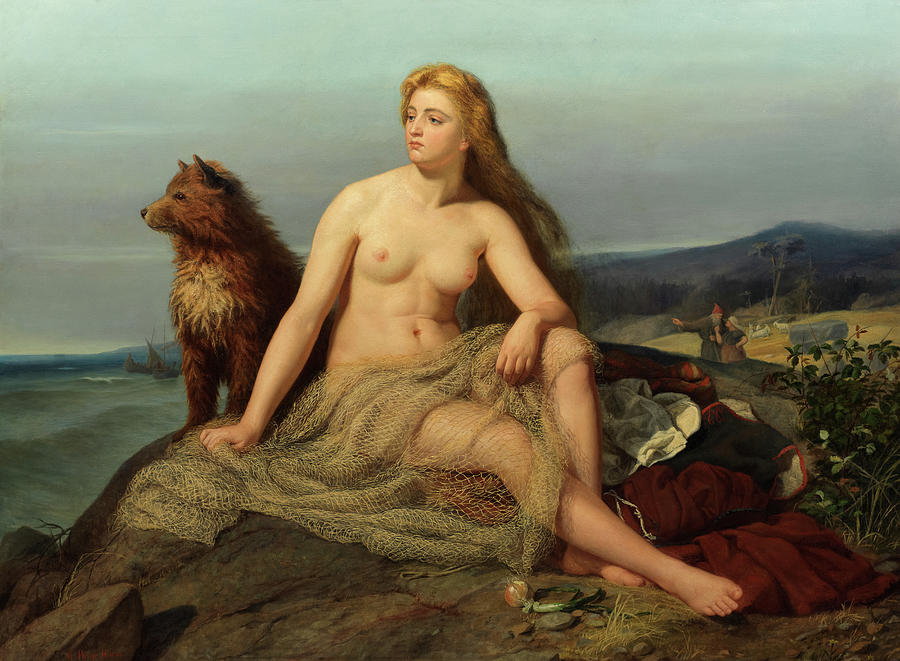
Kraka Painting by Marten Eskil Winge

KRAKA

“What shall we do with this child?” he asked.

“We will bring her up as our own, and name her Kraka, after my mother,” said his wife.

“But no one will believe that ugly old people like us can have so fair a daughter.”

“Let me manage it,” said the wife. “I will put tar on her head so that her hair will not be too long, and keep her in ragged clothes and at the hardest work.”
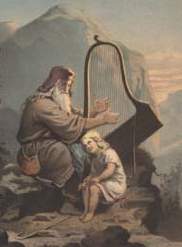
File:Aslaug.JPG - Wikimedia CommonsThis they did and little Aslög grew up as a beggar’s child. And as she kept strangely silent, never speaking, all people thought her dumb.

One day, when Aslög was well grown, Ragnar Lorbrok came that way, cruising along the Norway coast. The crew was out of bread and men were sent ashore to bake some at a house they saw in the distance. This house was Spangerhed, where Kraka dwelt.

She had seen the ships come up and the men land, and was ashamed to be seen by strangers as she was, so she washed herself and combed her hair, though she had been bidden never to do so. So long and thick had her hair grown that it reached to the ground and covered her completely.

When the cooks came to bake their bread they were so surprised at the beauty of the maiden that they let the loaves burn while looking at her, and on being blamed for this carelessness on their return to the ship said they could not help it, for they had been bewitched by the face of the loveliest maiden they had ever gazed upon.

“She cannot be as lovely as Tora was,” said Ragnar.

“There was never a lovelier woman,” they declared, and Ragnar was so struck by their story that he sent messengers ashore to learn if they were telling the truth. If it were so, he said, if Kraka were as beautiful as Tora, they were bidden to bring her to him neither dressed nor undressed, neither fasting nor satisfied, neither alone nor in company. The messengers found the maiden as fair as the cooks had said and repeated the king’s demand.

“Your king must be out of his mind, to send such a message,” said the beggar’s wife; but Kraka told them that she would come as their king wished, but not until the next morning.

The next day she came to the shore where the ship lay. She was completely covered with her splendid hair, worn like a net around her. She had eaten an onion before coming, and had with her the old beggar’s sheep dog; so that she had fulfilled Ragnar’s three demands.

Her wit highly pleased Ragnar and he asked her to come on board, but she would not do so until she had been promised peace and safety. When she was taken to the cabin Ragnar looked at her in delight. He thought that she surpassed Tora in beauty, and offered a prayer to Odin, asking for the love of the maiden. Then he took the gold-embroidered dress which Tora had worn and offered it to Kraka, saying in verse, in the fashion of those times:

“Will you have Tora’s robe? It suits you well.

Her white hands have played upon it.

Lovely and kind was she to me until death.”

Kraka answered, also in verse:

“I dare not take the gold-embroidered robe which adorned Tora the fair.

It suits not me. Kraka am I called in coal-black baize.

I have ever herded goats on the stones by the sea-shore.”

“And now I will go home,” she added. “If the king’s mind does not change he can send for me when he will.”

Then she went back to the beggar’s cottage and Ragnar sailed in his ship away.

Ragnar Lothbrok: A Fearless Warrior of the Vikings with His True Story -  NSF - Music Magazine

Of course every one knows without telling what came from such an invitation. It was not long before Ragnar was back with his ship and he found Kraka quite ready to go with him. And when they reached his home a splendid entertainment was given, during which the marriage between Ragnar and Kraka took place, everything being rich and brilliant and all the great lords of the kingdom being present. It will be seen that, though the Princess Aslög pretended to be dumb during her years of youthful life in the beggar’s cottage, she found her voice and her wits with full effect when the time came to use them.

ArtStation - Aslaug, Arkenstellar *

She was now the queen of a great kingdom, and lived for many years happily with her husband Ragnar. And among her children were two sons who were very different from other men. The oldest was called Iwar. He grew up to be tall and strong, though there were no bones in his body, but only gristle, so that he could not stand, but had to be carried everywhere on a litter. Yet he was very wise and prudent. The second gained the name of Ironside, and was so tough of skin that he wore no armor in war, but fought with his bare body without being wounded. To the people this seemed the work of magic. There were two others who were like other men.

Since the older brothers, the sons of Tora, had long been notable as warriors, the younger brothers, when they grew up, became eager to win fame and fortune also, and they went abroad on warlike expeditions, fighting many battles, winning many victories, and gaining much riches.
Ivar the Boneless Biography - Facts, Childhood, Family Life, Achievements &  Timeline

IWAR THE BONELESS

But Iwar, the boneless one, was not satisfied with this common fighting, but wanted to perform some great exploit, that would give them a reputation everywhere for courage. There was the town of Hvitaby (now Whitby, in Yorkshire, England), which many great warriors had attacked, their father among them, but all had been driven back by the power of magic or necromancy. If they could take this stronghold it would give them infinite honor, said Iwar, and to this his brothers agreed.

To Hvitaby they sailed, and leaving their younger brother Ragnwald in charge of the ships, because they thought him too young to take part in so hard a battle, they marched against the town. The place was ably defended, not only by men but by two magical heifers, their charm being that no man could stand before them or even listen to their lowing. When these beasts were loosed and ran out towards the troops, the men were so scared by the terrible sound of their voices that Ironside had all he could do to keep them from a panic flight, and many of them fell prostrate. But Iwar, who could not stand, but was carried into battle upon shields, took his bow and sent his arrows with such skill and strength that both the magic heifers were slain.

Who Was Viking Warrior Ivar the Boneless? | HowStuffWorks

Then courage came back to the troops and the townsmen were filled with terror. And in the midst of the fighting Ragnwald came up with the men left to guard the ships. He was determined to win some of the glory of the exploit and attacked the townsmen with fury, rushing into their ranks until he was cut down. But in the end the townsmen were defeated and the valiant brothers returned with great honor and spoil, after destroying the castle. Thus it was that the sons of Kraka gained reputation as valiant warriors.

But meanwhile Kraka herself was like to lose her queenly station, for Ragnar visited King Osten of Upsala who had a beautiful daughter named Ingeborg. On seeing her, his men began to say that it would be more fitting for their king to have this lovely princess for his wife, instead of a beggar’s daughter like Kraka. Ragnar heard this evil counsel, and was so affected by it that he became betrothed to Ingeborg. When he went home he bade his men to say nothing about this betrothal, yet in some way Kraka came to know of it. That night she asked Ragnar for news and he said he had none to tell.

“If you do not care to tell me news,” said Kraka, “I will tell you some. It is not well done for a king to affiance himself to one woman when he already has another for his wife. And, since your men chose to speak of me as a beggar’s daughter, let me tell you that I am no such thing, but a king’s daughter and of much higher birth than your new love Ingeborg.”

“What fable is this you tell me?” said Ragnar. “Who, then, were your parents?”

“My father was King Sigurd Fafnisbane and my mother was the Amazon Brynhilda, daughter of King Budle.”

“Do you ask me to believe that the daughter of these great people was named Kraka and brought up in a peasant’s hut?”

The queen now told him that her real name was Aslög and related all the events of her early life. And as a sign that she spoke the truth, she said that her next child, soon to be born, would be a son and would have a snake in his eye.

It came out as she said, the boy, when born, having the strange sign of which she had spoken, so that he was given a name that meant Sigurd Snake-in-Eye. So rejoiced was Ragnar at this that he ceased to think of Ingeborg and all his old love for Kraka, or Aslög as she was now called, came back.

The remainder of the lives of Ragnar and Aslög and of their warlike sons is full of valiant deeds and magic arts, far too long to be told here, but which gave them a high place in the legendary lore of the north, in which Ragnar Lodbrok is one of the chief heroes. At length Ragnar was taken prisoner by King Ethelred of England and thrown into a pit full of serpents, where he died. Afterwards Iwar and his brothers invaded England, conquered that country, and avenged their father by putting Ethelred to death by torture. Iwar took England for his kingdom and the realms of the north were divided among his brothers, and many more were the wars they had, until death ended the career of these heroes of northern legend.

Carruthers crest on flag-v2 (1)

OFFICIAL AND REGISTEREDL CLAN CARRUTHERS CCIS SINCE 1983-CLAN OF OUR ANCESTORS

SCOTTISH CLAN – IRISH CLAN – NORSE CLAN

Preserving Our Past!    Recording Our Present!  Informing Our Future!

The Ancient and Honorable Carruthers Clan International Society LLC

carruthersclan1@gmail.com                carrothersclan@gmail.com

WIDE BANNER with NEW CREST


SCANDINAVIAN HISTORY #9
CHARLES MORRIS

CLAN CARRUTHERS INT SOCIETY CCIS HISTORIAN AND GENEALOGIST


You can find us on our main facebook pages at :

SILVER WINGS-https://www.facebook.com/CarruthersClanLLC/

GOLD WINGS – https://www.facebook.com/carrutherscarrothers.pat.9

CLAN CARRUTHERS FAMILY HISTORY – https://www.facebook.com/CarruthersClan

CLAN CARRUTHERS CCIS – https://www.facebook.com/groups/3878691252182714

CLAN CARRUTHERS INT SOCIETY- https://www.facebook.com/groups/394653845137709

CLAN CARRUTHERS – BORDER REIVERS – https://www.facebook.com/groups/434959914239094

Disclaimer Ancient and Honorable Carruthers Clan International Societ
OUR ANCESTORS, SEA KINGS AND ROVERS, The Viking Age, Uncategorized, Varangians

THE RAIDS OF THE SEA KINGS – CLAN CARRUTHERS CCIS

cropped-wide-banner-with-new-crestnorse

SEA KINGS

RAIDS OF THE SEA ROVERS

While Central and Southern Europe was actively engaged in wars by land, Scandinavia, that nest of pirates, was as actively engaged in wars by sea, sending its armed galleys far to the south, to plunder and burn wherever they could find footing on shore. Not content with plundering the coasts, they made their way up the streams, and often suddenly appeared far inland before an alarm could be given. Wherever they went, heaps of the dead and the smoking ruins of habitations marked their ruthless course. They did not hesitate to attack fortified cities, several of which fell into their hands and were destroyed. They always fought on foot, but such was their strength, boldness, and activity that the heavy-armed cavalry of France and Germany seemed unable to endure their assault, and was frequently put to flight. If defeated, or in danger of defeat, they hastened back to their ships, from which they rarely ventured far and rowed away with such speed that pursuit was in vain. For a long period they kept the Atlantic and Mediterranean coasts of Europe in such terror that prayers were publicly read in the churches for deliverance from them, and the sight of their dragon beaked ships filled the land with terror.

On This Day In History: 'Sea King' Ragnar Lodbrok Seizes Paris - On March  28, 845 - Ancient Pages

SEA KINGS SEIZE PARIS

In 845 a party of them assailed and took Paris, from which they were bought off by the cowardly and ineffective method of ransom, seven thousand pounds of silver being paid them. In 853 another expedition, led by a leader named Hasting, one of the most dreaded of the Norsemen, again took Paris, marched into Burgundy, laying waste the country as he advanced, and finally took Tours, to which city much treasure had been carried for safe-keeping. Charles the Bald, who had bought off the former expedition with silver, bought off this one with gold, offering the bold adventurer a bribe of six hundred and eighty-five pounds of the precious metal, to which he added a ton and a half of silver, to leave the country.

River Kings — were the Vikings really violent? | Financial Times

From France, Hasting set sail for Italy, where his ferocity was aided by a cunning which gives us a deeper insight into his character. Rome, a famous but mystical city to the northern pagans, whose imaginations invested it with untold wealth and splendor, was the proposed goal of the enterprising Norseman, who hoped to make himself fabulously wealthy from its plunder. With a hundred ships, filled with hardy Norse pirates, he swept through the Strait of Gibraltar and along the coasts of Spain and France, plundering as he went till he reached the harbor of Lucca, Italy.

As to where and what Rome was, the unlettered heathen had but the dimmest conception. Here before him lay what seemed a great and rich city, strongly fortified and thickly peopled. This must be Rome, he told himself; behind those lofty walls lay the wealth which he so earnestly craved; but how could it be obtained? Assault on those strong fortifications would waste time, and perhaps end in defeat. If the city could be won by stratagem, so much the better for himself and his men.

The shrewd Norseman quickly devised a promising plan within the depths of his astute brain. It was the Christmas season, and the inhabitants were engaged in the celebration of the Christmas festival, though, doubtless, sorely troubled in mind by that swarm of strange-shaped vessels in their harbor, with their stalwart crews of blue-eyed plunderers.

Word was sent to the authorities of the city that the fleet had come thither from no hostile intent, and that all the mariners wished was to obtain the favor of an honorable burial-place for their chieftain, who had just died. If the citizens would grant them this, they would engage to depart after the funeral without injury to their courteous and benevolent friends. The message—probably not expressed in quite the above phrase—was received in good faith by the unsuspecting Lombards, who were glad enough to get rid of their dangerous visitors on such cheap terms, and gratified to learn that these fierce pagans wished Christian burial for their chief. Word was accordingly sent to the ships that the authorities granted their request, and were pleased with the opportunity to oblige the mourning crews.

Not long afterwards a solemn procession left the fleet, a coffin, draped in solemn black, at its head, borne by strong carriers. As mourners there followed a large deputation of stalwart Norsemen, seemingly unarmed, and to all appearance lost in grief. With slow steps they entered the gates and moved through the streets of the city, chanting the death-song of the great Hasting, until the church was reached, and they had advanced along its crowded aisle to the altar, where stood the priests ready to officiate at the obsequies of the expired freebooter.

The coffin was set upon the floor, and the priests were about to break into the solemn chant for the dead, when suddenly, to the surprise and horror of the worshippers, the supposed corpse sprang to life, leaped up sword in hand, and with a fierce and deadly blow struck the officiating bishop to the heart. Instantly the seeming mourners, who had been chosen from the best warriors of the fleet, flung aside their cloaks and grasped their arms, and a carnival of death began in that crowded church.

It was not slaughter, however, that Hasting wanted, but plunder. Rushing from the church, the Norsemen assailed the city, looting with free hand, and cutting down all who came in their way. No long time was needed by the skilful freebooters for this task, and before the citizens could recover from the mortal terror into which they had been thrown, the pagan plunderers were off again for their ships, laden with spoil, and taking with them as captives a throng of women and maidens, the most beautiful they could find.

This daring affair had a barbarous sequel. A storm arising which threatened the loss of his ships, the brutal Hasting gave orders that the vessels should be lightened by throwing overboard plunder and captives alike. Saved by this radical method, the sea-rovers quickly repaid themselves for their losses by sailing up the Rhone, and laying the country waste through many miles of Southern France.

The end of this phase of Hasting’s career was a singular one. In the year 860 he consented to be baptized as a Christian, and to swear allegiance to Charles the Bald of France, on condition of receiving the title of Count of Chartres, with a suitable domain. It was a wiser method of disarming a redoubtable enemy than that of ransoming the land, which Charles had practised with Hasting on a previous occasion. He had converted a foe into a subject, upon whom he might count for defence against those fierce heathen whom he had so often led to battle.

Viking Sea King Photograph by Granger

While France, England, and the Mediterranean regions formed the favorite visiting ground of the Norsemen, they did not fail to pay their respects in some measure to Germany, and during the ninth century, their period of most destructive activity, the latter country suffered considerably from their piratical ravages. Two German warriors who undertook to guard the coasts against their incursions are worthy of mention. One of these, Baldwin of the Iron Arm, Count of Flanders, distinguished himself by seducing Judith, daughter of Charles the Bald of France, who, young as she was, was already the widow of two English kings, Ethelwolf and his son Ethelbold. Charles was at first greatly enraged, but afterwards accepted Baldwin as his son-in-law, and made him lord of the district. The second was Robert the Strong, Count of Maine, a valiant defender of the country against the sea-kings. He was slain in a bloody battle with them, near Anvers, in 866. This distinguished warrior was the ancestor of Hugh Capet, afterwards king of France.

For some time after his death the Norsemen avoided Germany, paying their attentions to England, where Alfred the Great was on the throne. About 880 their incursions began again, and though they were several times defeated with severe slaughter, new swarms followed the old ones, and year by year fresh fleets invaded the land, leaving ruin in their paths.

Up the rivers they sailed, as in France, taking cities, devastating the country, doing more damage each year than could be repaired in a decade. Aix-la-Chapelle, the imperial city of the mighty Charlemagne, fell into their hands, and the palace of the great Charles, in little more than half a century after his death, was converted by these marauders into a stable. Well might the far-seeing emperor have predicted sorrow and trouble for the land from these sea-rovers, as he is said to have done, on seeing their many-oared ships from a distance. Yet even his foresight could scarcely have imagined that, before he was seventy years in the grave, the vikings of the north would be stabling their horses in the most splendid of his palaces.

1,846 Viking Raid Stock Photos, Pictures & Royalty-Free Images - iStock

The rovers attacked Metz, and Bishop Wala fell while bravely fighting them before its gates. City after city on the Rhine was taken and burned to the ground. The whole country between Liege, Cologne, and Mayence was so ravaged as to be almost converted into a desert. The besom of destruction, in the hands of the sea-kings, threatened to sweep Germany from end to end, as it had swept the greater part of France.

The impunity with which they raided the country was due in great part to the indolent character of the monarch. Charles the Fat, as he was entitled, who had the ambitious project of restoring the empire of Charlemagne, and succeeded in combining France and Germany under his sceptre, proved unable to protect his realm from the pirate rovers. Like his predecessor, Charles the Bald of France, he tried the magic power of gold and silver, as a more effective argument than sharpened steel, to rid him of these marauders. Siegfried, their principal leader, was bought off with two thousand pounds of gold and twelve thousand pounds of silver, to raise which sum Charles seized all the treasures of the churches. In consideration of this great bribe the sea-rover consented to a truce for twelve years. His brother Gottfried was bought off in a different method, being made Duke of Friesland and vassal of the emperor.

These concessions, however, did not put an end to the depredations of the Norsemen. There were other leaders than the two formidable brothers, and other pirates than those under their control, and the country was soon again invaded, a strong party advancing as far as the Moselle, where they took and destroyed the city of Treves. This marauding band, however, dearly paid for its depredations. While advancing through the forest of Ardennes, it was ambushed and assailed by a furious multitude of peasants and charcoal-burners, before whose weapons ten thousand of the Norsemen fell in death.

This revengeful act of the peasantry was followed by a treacherous deed of the emperor, which brought renewed trouble upon the land. Eager to rid himself of his powerful and troublesome vassal in Friesland, Charles invited Gottfried to a meeting, at which he had the Norsemen treacherously murdered, while his brother-in-law Hugo was deprived of his sight. It was an act sure to bring a bloody reprisal. No sooner had news of it reached the Scandinavian north than a fire of revengeful rage swept through the land, and from every port a throng of oared galleys put to sea, bent upon bloody retribution. Soon in immense hordes they fell upon the imperial realm, forcing their way in mighty hosts up the Rhine, the Maese, and the Seine, and washing out the memory of Gottfried’s murder in torrents of blood, while the brand spread ruin far and wide.

Vikings: Re-writing the legend of Ragnar for the TV age

The chief attack was made on Paris, which the Norsemen invested and besieged for a year and a half. The march upon Paris was made by sea and land, the marauders making Rouen their place of rendezvous. From this centre of operations Rollo—the future conqueror and Duke of Normandy, now a formidable sea-king—led an overland force towards the French capital, and on his way was met by an envoy from the emperor, no less a personage than the Count of Chartres, the once redoubtable Hasting, now a noble of the empire.

“Valiant sirs,” he said to Rollo and his chiefs, “who are you that come hither, and why have you come?”

( Rollo is a Carruthers Ancestor, and we have a large number of ancestors in Gutland, and they were considered Danes.   Gutland and Jutland were one in the same, and had land that connected them, now is water)

“We are Danes,” answered Rollo, proudly; “all of us equals, no man the lord of any other, but lords of all besides. We are come to punish these people and take their lands. And you, by what name are you called?”

23 Viking ship ideas | viking ship, vikings, norse vikings

“Have you not heard of a certain Hasting,” was the reply, “a sea-king who left your land with a multitude of ships, and turned into a desert a great part of this fair land of France?”

“We have heard of him,” said Rollo, curtly. “He began well and ended badly.”

“Will you submit to King Charles?” asked the envoy, deeming it wise, perhaps, to change the subject.

“We will submit to no one, king or chieftain. All that we gain by the sword we are masters and lords of. This you may tell to the king who has sent you. The lords of the sea know no masters on land.”

Hasting left with his message, and Rollo continued his advance to the Seine. Not finding here the ships of the maritime division of the expedition, which he had expected to meet, he seized on the boats of the French fishermen and pursued his course. Soon afterwards a French force was met and put to flight, its leader, Duke Ragnold, being killed. This event, as we are told, gave rise to a new change in the career of the famous Hasting. A certain Tetbold or Thibaud, of Northman birth, came to him and told him that he was suspected of treason, the defeat of the French having been ascribed to secret information furnished by him. Whether this were true, or a mere stratagem on the part of his informant, it had the desired effect of alarming Hasting, who quickly determined to save himself from peril by joining his old countrymen and becoming again a viking chief. He thereupon sold his countship to Tetbold, and hastened to join the army of Norsemen then besieging Paris. As for the cunning trickster, he settled down into his cheaply bought countship, and became the founder of the subsequent house of the Counts of Chartres.

The siege of Paris ended in the usual manner of the Norseman invasions of France,—that of ransom. Charles marched to its relief with a strong army, but, instead of venturing to meet his foes in battle, he bought them off as so often before, paying them a large sum of money, granting them free navigation of the Seine and entrance to Paris, and confirming them in the possession of Friesland. This occurred in 887. A year afterwards he lost his crown, through the indignation of the nobles at his cowardice, and France and Germany again fell asunder.

44 photos et images de Ragnar Vikings - Getty Images

The plundering incursions continued, and soon afterwards the new emperor, Arnulf, nephew of Charles the Fat, a man of far superior energy to his deposed uncle, attacked a powerful force of the piratical invaders near Louvain, where they had encamped after a victory over the Archbishop of Mayence. In the heat of the battle that followed, the vigilant Arnulf perceived that the German cavalry fought at a disadvantage with their stalwart foes, whose dexterity as foot-soldiers was remarkable. Springing from his horse, he called upon his followers to do the same. They obeyed, the nobles and their men-at-arms leaping to the ground and rushing furiously on foot upon their opponents. The assault was so fierce and sudden that the Norsemen gave way, and were cut down in thousands, Siegfried and Gottfried—a new Gottfried apparently—falling on the field, while the channel of the Dyle, across which the defeated invaders sought to fly, was choked with their corpses.

This bloody defeat put an end to the incursions of the Norsemen by way of the Rhine. Thenceforward they paid their attention to the coast of France, which they continued to invade until one of their great leaders, Rollo, settled in Normandy as a vassal of the French monarch, and served as an efficient barrier against the inroads of his countrymen.

As to Hasting, he appears to have returned to his old trade of sea-rover, and we hear of him again as one of the Norse invaders of England, during the latter part of the reign of Alfred the Great.

Carruthers crest on flag-v2 (1)

OFFICIAL AND REGISTEREDL CLAN CARRUTHERS CCIS SINCE 1983-CLAN OF OUR ANCESTORS

SCOTTISH CLAN – IRISH CLAN – NORSE CLAN

Preserving Our Past!    Recording Our Present!  Informing Our Future!

The Ancient and Honorable Carruthers Clan International Society LLC

carruthersclan1@gmail.com                carrothersclan@gmail.com

WIDE BANNER with NEW CREST

GERMANIC HISTORICAL FILES #5

CLAN CARRUTHERS INT SOCIETY CCIS HISTORIAN AND GENEALOGIST

You can find us on our main facebook pages at :

SILVER WINGS-https://www.facebook.com/CarruthersClanLLC/

GOLD WINGS – https://www.facebook.com/carrutherscarrothers.pat.9

CLAN CARRUTHERS FAMILY HISTORY – https://www.facebook.com/CarruthersClan

CLAN CARRUTHERS CCIS – https://www.facebook.com/groups/3878691252182714

CLAN CARRUTHERS INT SOCIETY- https://www.facebook.com/groups/394653845137709

CLAN CARRUTHERS – BORDER REIVERS – https://www.facebook.com/groups/434959914239094

Disclaimer Ancient and Honorable Carruthers Clan International Societ
OUR ANCESTORS, The Viking Age, Uncategorized

ALL THE SONS OF HARALD FAIRHAIR

cropped-wide-banner-with-new-crestnorse

ALL THE SONS OF HARALD FAIRHAIR

HARALD HARALDSSON “FAIRHEADED” I

CARRUTHERS ANCESTOR

Harald Fairhair, the legendary ruler of Norway who succeeded for the first
time in uniting all the petty fiefdoms of his nation, inherited his father’s
kingdom at a young age and proceeded to live an extraordinarily long and
active life. During his time as a good looking adult with famously beautiful
hairlocks, he wooed women from all different regions of Norway and
produced many children accordingly
Harald Haraldsson 'Fairheaded' IHARALD HARALDSSON – Ringerrike Norway
.
Although he cannot compete in importance with his Danish contemporary Ragnar Lodbrok, the list of his descendants is equally long and impressive. It includes among others,
Ivan the Terrible of Russia, the Sun King Louis XIV of France and, via the
House of Sachsen-Billung, our own Leopold II of Belgium.
Halfdan Guldtand Gold ToothThe Black Haraldsson (King of Sweden) SOLVARSSON King of Sweden
(HALFDAN)

Halfdan Guldtand Gold Tooth The Black Haraldsson (King of Sweden) SOLVARSSON King of Sweden  590-650

Spouse no. 1 Ása Haakonsdotter
In Chapter IX of his Heimskringla text, the Icelandic historian Snorri
Sturluson, mentions that Harald eventually settled in Trondheim, which he
always called his home, and where he built a very large establishment
called Hladir (now Lade). That is where he met Aasa, the daughter of the
important Jarl Haakon “the Rich” Grjotgardsson, who had nominal control
over Trondelag and Halogaland. Harald and Hakon came to an agreement
dividing Norway between them except for the completely unruly
Vestland3
. This first (political) marriage produced four sons, listed by
name by Snorri In chapter XVII of the Heimskringla text:
“Then he began to have children. Harald and Àsa had these sons : Guthorm was the
eldest, Halfdan svarti (the Black), Halfdan hviti (the White) – they were twins – the
fourth Sigfròdr. They were all brought up in Trondheim in great honour”4
Then Harald went after the Vikings of Vestland in Hafrsfjord whom he
defeated in a great naval battle in AD 872.
Rollo Vikings Wallpapers - Top Free Rollo Vikings Backgrounds -  WallpaperAccess
It is probably not a coincidence that the Viking Rollo, (Carruthers ancestor )  who was presumably
born at Maere and who was a contemporary of Harald Fairhair,
immediately after 872 what is since called Normandy. Many other Vikings,
who did not want to be subjected to Harald, followed him there.
We can safely assume that Harald’s four children with Aasa were all born
between the naval battles of 865 and 872.
Guthorm Halvdan svarte Halvdan hvite Sigfròdr
(865-895) (868-932) (868-925) (872-?)
The eldest son Guthorm was named after Halfdan the Black’s best friend
and right arm, Duke Guthorm, who took young Fairhair under his wings
when he inherited the kingdom at the age of ten. After Duke Guthorm
died of sickness ca. 890, Harald made his own son Guthorm king over
Raanrike, which he had wrested from the Swedes, and gave him the
responsibility of defending this south east region of Norway against his
neighbor. However, Guthorm fell in a later fierce battle with the sea-king5
Solve Klove in 895, whose own father had been killed by Harald at the First
Battle of Solskjel.
Halfdan II “the Black” (named after his grandfather) later inherited the
kingdom of Tróndelag. He may therefore have considered himself the
rightful successor to his father as the king of whole Norway and must have
been disappointed when Harald gave preference to the younger son Eric.
Halfdan III “the White”, shared Trondelag with his darker twin brother. He
fell in Eistland in 925, i.e. ten years before Harald’s death.
Sigfròdr is not mentioned again. We do not know what happened to him.

Spouse no. 2 Svanhild Eysteinsdotter of Heidmark
After defeating the Vikings of Vestland, Harald turned his attention to
Vestfold in Östland.
Svanhild was the daughter of Eystein “the Noisy” of Vestfold, who was
also the grandfather of the before mentioned Rollo, the founder of
Normandy. She was probably also chosen for political reasons.

Glumra Ivarsson - Historical records and family trees - MyHeritage

Image of Eystein “Glumra” the Noisy
Svanhild provided Harald Fairhair with three additional sons:
Olaf “Geirstadaalfer” Björn”formann” Ragnar “rykkill”
(Elf of Geirstadir) (the Merchant) (the Snatcher)
(870- 932) (875- 932) (878-932)
Svanhild possibly also died young because nothing is heard of her after
880. Björn the Merchent would later succeed his grandfather Eystein as
king of Vestfold, and his brother Olaf succeeded him after his death,
while Sigurd inherited Trondheim from his father.

Spouse no. 3 Gyda Eiriksdotter of Hardaland
Around AD 870, when Harald was approaching the age of twenty, he
started thinking of taking a young mistress. This was probably before
his marriage with Asa. Harald had heard of beautiful Gyda, the
daughter of king Eirik of Hardaland, who was being fostered in Valdres
and he sent his men to fetch her6
. However, she sent them back with
the message that she would not sacrifice her virginity to take as
husband a king who had no more of a realm than a few districts to
administer. She might only agree to be his wife if he would first subject
the whole of Norway.
This seems to have had a stimulating effect on Harald who swore to
God not to cut or comb his fancy hair until he became ruler over all of
Norway. It would take him another ten years to fulfill this ambition, but
when he had completed his project, he remembered beautiful but
proud Gyda. So tells Snorri in chapter XX of Heimskringla:
King Haraldr had now become sole ruler of all Norway. Then he called to mind
what that proud girl had said to him. He then sent men for her and had her
brought to him and made her his mistress. That were their children :
Hroerekr Sigtrygg Frodi Torgils
(880- 932) (882-932) (885-938) (890-932)
All four sons were born in Bergen, but both Frodi and Torgils are said to
have died in Dublin.

Spouse no. 4 Snaefrid “Snowfair” Svasisdotter the Finn
In chapter XXV of Heimskringla, Snorri recounts the following story:
King Haraldr went one winter to attend banquets through Uppland and had a Yule
banquet prepared for himself in Poptor. One Yule-eve Svási came to the door while the
king was sitting at table, and sent the king a message that he was to come out to him.
The King went out reluctantly and agreed to go to his home with him. There Svasi’s
daughter Snaefridr, a most beautiful woman, rose and served the king a goblet full of
mead, and he took all into his grasp, including her hand, and it was immediately as if a
fiery heat came into his flesh, and he wanted to have her straight away that night. But
Svasi said that it should not be unless the king betrothed himself to Snaefridr and
married her and got her lawfully. And the king betrothed himself to Snaefridr and
married her and loved her so madly that his kingdom and all his duties he then
neglected. They had four sons :
Sigurd “hrisi” Halvdan ”hàleggr” Gudród “ljami” Ragnvald “rettilbeini”
(the Grey) (Longlegs) (Gleam) (Straightleg)
(890-937) (891-?) (893-?) (895-?)
Then Snaefrid died and according to Snorri, Harald was inconsolable and
sat over her continually hoping that she would return to life.
Sigurd later became king of Hadafylke and was the ancestor of other
notable kings, such as Harald Hardraade, who ruled Norway successfully
from 1046 to 1066, but failed in his attempt to invade England just before
William the Conqueror made his own landing at Hastings.

Spouse no. 5 Ragnhild “the Mighty” of Jutland

Ragnhild was born ca. 880 as daughter of King Eirik of Jutland and
would bear Harald’s most notorious son Eric (900-954) upon whom
posterity bestowed the epithet “Bloodaxe”, presumably because he
proceeded to eliminate his half-brothers in order to obtain the
succession7
. However, careful reading of Snorri’s Chapters 41-43
reveals a different story:
King Harald was now 80 years of age; he now became so infirm that he felt he
could not travel by land or manage the royal affairs. Then he took his son Eric to his
high seat and gave him rule over the whole country. But when King Harold’s other
sons heard about this, the Halfdan sorti set himself on the king’s high seat. He then
took the whole of Trondheim to rule over. All the Traendis backed him in his course
of action. Two years later, Halfdan svarti died suddenly inland in Trondheim at
some banquet, and it was rumored that Gunhilde (Eric’s wife) had bribed a warrior
skilled in magic to make him a poison drink. After that the Prendi’s took Sigurd as
king.

Haakon Haakonson brought to safety by the Birchlegs, 1200s (Photos  Prints...) #5880927HAAKON – Carruthers ancestor

All this shows is that Eric did not have an easy time taking hold of the
situation, and that he was king by name only between 930 and 933.
When in 934 his younger rival Haakon arrived from England to take
over the situation, Eric did not resist and moved to the Orkney Islands,
which were already colonized by Norway. The English King Aethelstan,
who had fostered Haakon and equipped his expedition, then entrusted
Northumberland to Eric as under-king. Numismatic evidence found as
recently as 2014 attests to his title as king of York between 952 and
954.
Aethelstan’s successor Eadred put an end to his reign, and when Eric
was travelling back to the Orkneys with his brother Ragnald and his son
Haerekr, they were ambushed at Stainmore and all killed

Coin of Eric as King of York AD 952-54

So who were the brothers who were supposedly killed by violent Eric?
1. Halfdan svarti : we already saw that his death was caused by
poisoning, no bloody ax involved. Halfdan had it coming by taking
over Trondheim, the jewel in his father’s crown and had attempted
himself first to kill Eric by burning down the house where he was
staying. Eric managed to get out and went to see his father with
news of these events. We cannot therefore exclude the possibility
that it was Harald himself who ordered Halfdan’s poisoning as
punishment.
2. Bjòrn formann: succeeded his grandfather on his mother’s side as
king of Vestfold. He was considered an intelligent person and very
moderate and it seemed he might make a great ruler. However,
Snorri recounts in chapter 41 of his book that when Eric returned
from the eastern Baltic in 930, he visited Bjòrn to demand the
revenues which were due to King Harald whlle he was still alive. It
was when Bjòrn refused to pay, that he was killed in battle by Eric.

3. Olaf : after the fall of Bjòrn, his brother Olaf took rule over Vestfold
and adopted Bjòrn’s son Gudròdr. When the Vikverjar heard that
Harold had taken Eric as supreme king, they took Olaf as supreme
king in the Vik, and he kept that kingdom. Eric was very displeased
at this. The same Spring, Eric calls out a great army and ships and
turns east to Vik. He had a much larger force and gained victory.
Olaf and Sigurd both fell there8
.
4. Sigurd : this was probably Sigfródr, son of the first marriage of
Harald with Àsa.
So there is no mention of direct murder by Eric of any of his halfbrothers. They had all four revolted against their father’s decision and
bore the consequences. Maybe their father, while he was still alive, did
not disapprove of their forceful elimination. It is interesting to read
that according to the Saga in which Eric figures, after his death he is
welcomed by Odin without any criticism of the killings of his brothers.
When the other gods question Odin why he still welcomed Eric, Odin
answers, “well, he has traveled a lot and has seen many countries”
9
.
Sounds modern, does it not?

King Dag "the Great" Halvdansson of Ringerike (c.478 - d.) - Genealogy

Spouse no. 6 Alshild Ringsdotter of Ringerike
Ring Dag Gudród “Skirja”
(882-?) (883-?) (890-965)
Alshild was a princess from the prestigious kingdom of Hringaríkei (now
Ringerike near Oslo). Snorri mentions that when King Harald married her,
she proudly named her sons after her own father (Ring), grandfather (Dag)
and ancestor (Gudród). Their son Dag later became king of Hedmark and
Gudbrandsdal.

At The Gates

Spouse no. 7 Thora Mosterstang
When Fairhair reached the age of seventy, he retired to one of his farms in
Hordaland where he is credited with impregnating beautiful Tora, who
may have been only a handmaid. At the age of ten, her son Haakon was
sent for safekeeping to the court of the English king Aethelstan where
many sons of European princes were welcome to be taught the noble arts
of statesmanship10
. King Aethelstan is said to have loved him more than
his own kin. Hákon was baptized there and taught the true faith and good
morality and all kinds of courtly behavior.
In 934, Hákon was invited by dissident nobles in his home country to take
over the throne of Norway. Aethelstan equipped him with ships and men
and Hákon was able to expel his unpopular half-brother Eric Bloodaxe,
who conceded without a fight and fled to the Orkney Islands
Haakon proved to be a good and pragmatic king and reigned until 960
when he had to face an attack at Fitjur by five sons of Eric. He won the
battle, but was wounded and died shortly thereafter.
Three sons of Eric took over the kingdom and were able to fulfill the
dynastic designs of their grandfather.

Conclusion
By impregnating so many women from all parts of his kingdom, Harald
may have had political considerations in mind. It was his way of obtaining
the support of so many previously independent smaller kings who might
otherwise have been reluctant to accept him as over-king. His marriages
to a Danish and a Finnish princess may also be interpreted as protection
against over-zealous neighbors. The only missing piece in his political
puzzle was a princess from hostile Sweden.
I think Martin Arnold11 is right when he suggests that Harald’s governing
style of usurping traditional inheritance rights had to lead to civil war. His
son Eric was not only contested by his brothers, but also by the regional
lords. Maybe if Harald had gradually shared power with his designated
successor at an earlier period, the transition might have been successful.
SUMMARY TABLE All the sons of Harald Fairhair
———————————————————————————————-
Mothers Sons
Àsa Haakonsdotter Guthorm, Halfdan II, Halfdan III , Sigurd
Svanhild Eysteinsdotter Bjorn, Olaf, Ragnar
Gyda Eiriksdotter Hroerekr, Sigtrygg, Frodi, Torgils
Snaefrid Snausdotter Sigurd “Hrise”, Halfdan, Gudród, Ragnvald
Ragnhild Eiriksdotter Eric “Bloodaxe”
Alvhild Ringsdottir Ring, Dag and Gudród
Thora Mosterstang Haakon “the Good”

***  I did not put Carruthers Ancestor for all the ancestors, because a mother or father with a son is obvious.

Carruthers crest on flag-v2 (1)

OFFICIAL AND REGISTEREDL CLAN CARRUTHERS CCIS SINCE 1983-CLAN OF OUR ANCESTORS

SCOTTISH CLAN – IRISH CLAN – NORSE CLAN

Preserving Our Past!    Recording Our Present!  Informing Our Future!

The Ancient and Honorable Carruthers Clan International Society LLC

carruthersclan1@gmail.com                carrothersclan@gmail.com

WIDE BANNER with NEW CREST

 WILLY CAN RYCHERGHEM

CLAN CARRUTHERS INT SOCIETY CCIS HISTORIAN AND GENEALOGIST

You can find us on our main facebook pages at :

SILVER WINGS-https://www.facebook.com/CarruthersClanLLC/

GOLD WINGS – https://www.facebook.com/carrutherscarrothers.pat.9

CLAN CARRUTHERS FAMILY HISTORY – https://www.facebook.com/CarruthersClan

CLAN CARRUTHERS CCIS – https://www.facebook.com/groups/3878691252182714

CLAN CARRUTHERS INT SOCIETY- https://www.facebook.com/groups/394653845137709

CLAN CARRUTHERS – BORDER REIVERS – https://www.facebook.com/groups/434959914239094

Disclaimer Ancient and Honorable Carruthers Clan International Societ
References
1
Cf. Marcia Lee Liaklev, The Seven Wives of Harald Fairhair (2013). Wikipedia says he had eight wives,
and there may have been more. The Icelandic historian Snorri Sturluson says that when Harald wed
Ragnhild of Jutland, he sent away nine of his previous wives!.
2
Snorri Sturluson mentions that Harald succeeded his father when he was “ten winters old”. Image is
from the Icelandic Flateyarbok of 1394.
3
Gary Dean Petersson : Vikings and Goths (2016) divides Norway into four basic regions : the Eastern
and Central provinces, Östland, Vestland and Trondelag. Trondelag with its capital Trondheim was the
most prosperous due to good farmland and its thriving commerce with the Frisians.
4
Snorri understandably never mentions any dates. However, his list of sons from Àsa comes right after
his description of the First Battle of Solskjel which we know took place in 863.
5
Sea-kings were the original Vikings.
6
Snorri Sturluson : Heimskringla, Chapters three and four
7
Some sources claim that he killed all of his surviving brothers. See e.g. the BBC version of events on
http://www.bbc.co.uk/history/ancient/vikings/bloodaxe_01.shtml::“Harald’s kingdom was not sufficient to
provide much an inheritance for so many sons, and Eric secured the succession for himself by gradually
murdering all of his brothers in turn.” This is absolutely untrue
8
Quoted from Snorri, op. cit. Chapters 41 and 42.
9
Peter Munch : Legends of Gods and Heroes
10 Aethelstan “the Glorious” was king of England from 924 to 939. Wikipedia estimates Hàkons year of
birth ca. 918. If this is correct, Hàkon arrived at Aethelstan’s court in 928.
OUR ANCESTORS, The History of Gutland, The Viking Age, Uncategorized

KING GORM III “THE OLD” DE GAMEL OF DENMARK – CLAN CARRUTHERS CCIS

cropped-wide-banner-with-new-crestnorse

KING GORM III “THE OLD” DE GAMEL OF DENMARK

CARRUTHERS ANCESTOR

In ancient times Denmark was not a kingdom, but a multitude of small provinces ruled over by warlike chiefs who called themselves kings. It was not until the ninth century that these little king-ships were combined into one kingdom, this being done by a famous chieftain, known by the Danes as Gorm den Gamle, or Gorm the Old. A great warrior he was, a viking of the vikings, and southern Europe felt his heavy hand. A famous story of barbarian life is that of Gorm, which well deserves to be told.

KING GORM “THE OLD”

He was the son of a fierce pagan of Norway, Hardegon, who was of royal blood, being a grandson of the half-fabulous Ragnar Lodbrok. A prince with only his sword for kingdom, Hardegon looked around for a piece of land to be won by fighting, and fixed upon Lejre, in the fruitful Danish island of Sjölland, which was just then in a very inviting state for the soldier of fortune. Some time before it had fallen into the hands of a Swedish fortune-seeker named Olaf, who left it to his two sons. These in turn had just been driven out by Siegric, the rightful king, when Hardegon descended upon it and seized it for himself. Dying, he left it to his son Gorm.

It was a small kingdom that Gorm had fallen heir to. A lord’s estate we would call it to-day. But while small in size, it stood high in rank, for it was here that the great sacrifices to Odin, the chief Scandinavian deity, were held, and it was looked upon as one of the most sacred of spots. Hither at Yuletide came the devotees of Odin from all quarters to worship at his shrine, and offer gifts of gold and silver, precious stones and costly robes, to the twelve high priests of whom the king of Lejre was the chief. And every worshipper, whether rich or poor, was expected to bring a horse, a dog, or a cock, these animals being sacred to Odin and sacrificed in large numbers annually at his shrine. In the special nine-year services, people came in great numbers, and it is probable that on these occasions human sacrifices were made, captives taken in war or piratical excursions being saved for this purpose.

As one may see, the king of Lejre had excellent opportunity to acquire wealth, and young Gorm, being brave, clever, and ambitious, used his riches to increase his landed possessions. At least, the Danish historians tell us that he began by buying one bit of land, getting another by barter, seizing on one district, having another given him, and so on. But all this is guess-work, and all we actually know is that Gorm, the son of a poor though nobly-born sea-rover, before his death gained control of all Denmark, then much larger than the Denmark of to-day, and changed the small state with which he began into a powerful kingdom, bringing all the small kings under his sway.

The ambitious chief did not content himself with this. Long before his kingdom was rounded and complete he had become known as one of the most daring and successful of the viking adventurers who in those days made all Europe their prey.

Early in his reign he made a plundering cruise along the shores of the Baltic and joined in a piratical invasion of Russia, penetrating far inward and pillaging as he went. We hear of him again in 882 as one of the chiefs of a daring band which made a conquering raid into Germany, intrenched itself on the river Maas, sallied forth on plundering excursions whose track was marked by ruined fields and burnt homesteads, villages and towns, and even assailed and took Aix-la-Chapelle, one of the chief cities of the empire of Charlemagne and the seat of his tomb. The reckless freebooters stalled their horses in the beautiful chapel in which the great emperor lay buried and stripped from his tomb its gilded and silvered railings and everything of value which the monks had not hidden.

The whole surrounding country was similarly ravaged and desolated by the ruthless heathens, monasteries were burned, monks were killed or captured, and the emperor, Charles the Fat, was boldly defied. When Charles brought against the plunderers an army large enough to devour them, he was afraid to strike a blow against them, and preferred to buy them off with a ransom of two thousand pounds of gold and silver, all he got in return being their promise to be baptized.

Finding that they had a timid foe to deal with, the rapacious Norsemen asked for more, and when they finally took to their ships two hundred transports were needed to carry away their plunder. The cowardly Charles, indeed, was so wrought upon by fear of the pagan Danes that he even passed the incredible law that any one who killed a Norseman should have his eyes put out and in some cases should lose his life.

All this was sure to invite new invasions. A wave of joy passed through the north when the news spread of the poltroonery of the emperor and the vast spoil awaiting the daring hand. Back they came, demanding and receiving new ransom, and in 885 there began a great siege of Paris by forty thousand Danes.

King Gorm was one of the chiefs who took part in this, and when Henry of Neustria, whom the emperor had sent with an army against them, was routed and driven back, it was Gorm who pursued the fugitives into the town of Soissons, where many captives and a great booty were taken.

The dastard emperor again bought them off with money and freedom to ravage Burgundy, Paris being finally rescued by Count Eudes. In 891 they were so thoroughly beaten by King Arnulf, of Germany, that their great leaders fell on the field and only a remnant of the Norsemen escaped alive, the waters of the river Dyle running red with the blood of slain thousands.

RUNE STONES OF KING GORM

Gorm was one of the chiefs who took part in this disastrous battle of Louvaine and was one of the fortunate few who lived to return to their native land. Apparently it was not the last of his expeditions, his wife, Queen Thyra, taking care of the kingdom in his many long absences.

Thyra needed ability and resolution to fitly perform this duty, for those were restless and turbulent times, and the Germans made many incursions into Sleswick and Jutland and turned the borderlands on the Eyder into a desert. This grew so hard to bear that the wise queen devised a plan to prevent it. Gathering a great body of workmen from all parts of Denmark, she set them to building a wall of defense from forty-five to seventy-five feet high and eight miles long, crossing from water to water on the east and west. This great wall, since known as the Dannevirke, took three years to build. There were strong watch-towers at intervals and only one gate, and this was well protected by a wide and deep ditch, crossed by a bridge that could readily be removed.

For ages afterwards the Danes were grateful to Queen Thyra for this splendid wall of defense and sang her praises in their national hymns, while they told wonderful tales of her cleverness in ruling the land while her husband was far away. Fragments of Thyra’s rampart still remain and its remains formed the groundwork of all the later border bulwarks of Denmark.

QUEEN THYRA

Queen Thyra, while a worshipper of the northern gods, showed much favor to the Christians and caused some of her children to be signed with the cross. But King Gorm was a fierce pagan and treated his Christian subjects so cruelly that he gained the name of the “Church’s worm,” being regarded as one who was constantly gnawing at the supports of the Church. Henry I. the Fowler, the great German emperor of that age, angry at this treatment of the Christians, sent word to Gorm that it must cease, and when he found that no heed was paid to his words he marched a large army to the Eyder, giving Gorm to understand that he must mend his ways or his kingdom would be overrun.

Gorm evidently feared the loss of his dominion, for from that time on he allowed the Archbishop of Bremen to preach in his dominions and to rebuild the churches which had been destroyed, while he permitted his son Harald, who favored the Christians, to be signed with the cross. But he kept to the faith of his forefathers, as did his son Knud, known as “Dan-Ast,” or the “Danes’-joy.”

Harald I 'Bluetooth' Gornsson b 911, King of Denmark – Black Family

HARALD BLUETOOTH GORMSSON = CARRUTHERS ANCESTOR

The ancient sagas tell us that there was little love between Knud and Harald; and that Gorm, fearing ill results from this, swore an oath that he would put to death any one who attempted to kill his first-born son, or who should even tell him that Knud had died.

While Harald remained at home and aided his mother, Knud was of his father’s fierce spirit and for years attended him on his viking expeditions. On one of these he was drowned, or rather was killed while bathing, by an arrow shot from one of his own ships. Gorm was absent at the time, and Thyra scarcely knew how the news could be told him without incurring the sworn penalty of death.

Finally she put herself and her attendants into deep mourning and hung the chief hall of the palace with the ashy-grey hangings used at the grave-feasts of Northmen of noble birth. Then, seating herself, she awaited Gorm’s return. On entering the hall he was struck by these signs of mourning and by the silence and dejection of the queen, and broke out in an exclamation of dismay:

“My son, Knud, is dead!”

“Thou hast said it, and not I, King Gorm,” was the queen’s reply. The news of the death had thus been conveyed to him without any one incurring the sworn penalty. Soon after that—in 936—King Gorm died, and the throne of Denmark was left to his son Harald, a cruel and crafty man whom many of the people believed to have caused the murder of his brother.

Carruthers crest on flag-v2 (1)

OFFICIAL AND REGISTEREDL CLAN CARRUTHERS CCIS SINCE 1983-CLAN OF OUR ANCESTORS

SCOTTISH CLAN – IRISH CLAN – NORSE CLAN

Preserving Our Past!    Recording Our Present!  Informing Our Future!

The Ancient and Honorable Carruthers Clan International Society LLC

carruthersclan1@gmail.com                carrothersclan@gmail.com

WIDE BANNER with NEW CREST


SCANDINAVIAN HISTORY #9
CHARLES MORRIS

CLAN CARRUTHERS INT SOCIETY CCIS HISTORIAN AND GENEALOGIST


You can find us on our main facebook pages at :

SILVER WINGS-https://www.facebook.com/CarruthersClanLLC/

GOLD WINGS – https://www.facebook.com/carrutherscarrothers.pat.9

CLAN CARRUTHERS FAMILY HISTORY – https://www.facebook.com/CarruthersClan

CLAN CARRUTHERS CCIS – https://www.facebook.com/groups/3878691252182714

CLAN CARRUTHERS INT SOCIETY- https://www.facebook.com/groups/394653845137709

CLAN CARRUTHERS – BORDER REIVERS – https://www.facebook.com/groups/434959914239094

Disclaimer Ancient and Honorable Carruthers Clan International Societ
Gutland / Gotland, Uncategorized

CLAN CARRUTHERS – FIRST CHURCHES OF GOTLAND

CLAN CARRUTHERS INT SOCIETY CCIS

cropped-wider-banner-light-blue-1.jpg

First Churches of Gotland


The upper Christian social group did apparently still not have suffcient means to self-enforce that a Gotlandic Church is accepted. However, there are Byzantine-Christian motives in the tomb and from this period such as necklaces and painted eggs of clay found in graves on Gotland, on Helgö and on Björkö from the second half of the 800s. The first Gotlander, who built a Christian church on Gotland was, according to ‘Guta Saga’, Botair from Akebäck. But the time was not yet ripe and the Gutna Althingi had it burnt.
Image result for akeback
The Church that stands in Akeback now
The place where the church had been built was thus named Kulstäde,i.e. the charcoal place. Akebäck, where the first church on Gotland is said to have been located, is in Dede Thing. It is one of the most important Things on Gotland.
Gotland Roma 03.jpg
Within its borders lies not only Visby, which apparently is the Thing’s original harbour, but also Roma, which is an important central place in the middle of Gotland and the place for the Gutna Althingi.
Through Dede Thing goes the old main road from Roma over Akebäck and Träkumla straight to Visby. The antiquity of the road is confirmed by the chain of Iron Age tombs lining the road between Träkumlaand Visby.
“Some time later, it was sacrifice in Visby. There he built a second church. What is depicted in this section is not a local incident linked to Visby, but an event of decisive importance in the Gotlandic history, namely the last final battle for and against Christianity. On the Christian side is Botair of Akebäck, one of the leaders in Dede Thing, who against the Gutna Althingi defends his newly built church in Vi. He may thereby be supported by his father in law Likkair, who might have been ‘landsdomare’ i.e. leader of the Gutna Althingi,as it is said about him: ‘He ruled most at that time’.
Sankt Olofs kyrka i Gamla hamn.JPG
The ruins of the small church or chapel traditionally called the Church of Saint Olaf are quite small, the remains of the wall not reaching higher than c. 0.6 metres (2.0 ft). Adjacent to the church ruins lie the remains of a cemetery. 
Image result for stenkyrka
He had most to say on Gotland. Perhaps he pointed out that the church stood in a holy place – it was in Vi – where violence was not allowed to be committed. We know that several religions were allowed on Gotland. This meant that the church could remain.“Some time after that, his father-in-law Likkair Snielli had himself baptised, together with his wife,his children, and all his household, and he built a church on his farm, in the place now called Stenkyrka.
Hamlingbo kyrka.JPG
It was the first church on the island up in the northern most third. After the Gotlanders saw the customs of Christian people, they then obeyed God’s command and the teaching of priests. Then they received Christianity generally, of their own free will, without duress. No one forced them into  Christianity. After the general acceptance of Christianity, a church was built in Atlingbo. It was the first in the middle third.
 Then a third was built in Fardhemin the southernmost third. From those, church

es spread everywhere in Gotland, since men built themselves churches for greater convenience.Both the events described by the final decision, that the Church would remain, are apparently linked to one time and one place, namely Visby. If we dare connect it to the Patriarc Photius circular letter of 867, the Kulstäde incident should have taken place in the 870s, and the church in Vi built in 897, as

ow sets the founding of Visby to that year.
( Portal from the original church)
St Per och St Hans.JPGThe decision can thus be compared with the later Icelandic Althing decision of the year 1000, when Christianity was offcially introduced in Iceland. The seafaring Arab al-Tartûschî visited Hedeby, Visby, about the year 973 and says that there were a few Christians and a small church. He should have recognized this for he came nearest from Christian countries. Didal-Tartûschî , Botair’s church?
Ruins of St Pers and St Hans which was the name given to Botair Church.
Solberga kloster.JPG
Solberga Abbey  was a Cistercian nunnery, founded circa 1246. It was the only nunnery on Gotland. It remains unclear when the nuns abandoned the convent, but they did so at latest at the time of the Reformation. Nearby a medieval cross marks the spot of the Battle of Visby, fought in 1361
 What al-Tartûschîmeans by big city seems to indicate that he calls a monastery, Fulda, in the Frankish country, for a large city. Fulda consisted of several houses and was walled, fenced. He describes Hedeby as a large but poor city in the world ocean’s outer edge. He took particular note of the good supply of drinking water, the women’s free status and that a number of the inhabitants were Christian.
One of the reasons why Visby grew was the good supply of drinking water. Some researchers have presumed it to be Schleswig. However, Ansgar had already in 849 got permission to build a church in Sliaswic. It is more logical that it is Hejdeby on Gotland. Hejdeby stretches to Visby and no one knows the name of the place for the sacrifcial place (Vi)in the Viking Age.At the outermost edge of the world ocean’ fits better in with the place Vi, Visby, than with Slie storp,the name of the place in Frankish royal annals from the year 804, founded latest in 770 CE. Sliestorp-Schleswig-Sliaswic is located inland and notated the extreme edge of the ocean, while Visby may well seem to. 

Cemetery finds


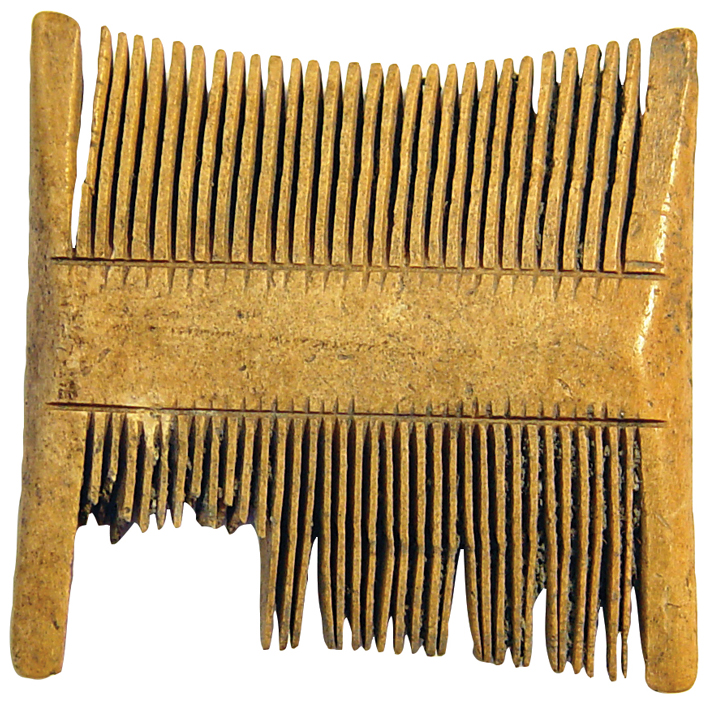
On Gotland is a find category, called cemetery finds. Since the 1800s, on a wide range of Gotland’s more than 90 rural cemeteries, the grave digging and excavation for lightning conductors, etc. have come across skeletons of corpses. These have been buried with full sets of costume buckles and other jewelry, combs, knives, keys, etc., all in late Viking Age forms. This find category has puzzled the scientific researchers. However the cemetery finds on Gotland seem to be Christian, as evidenced by the fact that one can observe a strict separation of the graves of women north of the church, and the men in the south. This can not be done until there has been a church building.Similar tombs are found on Björkö, usually locally separated from the usual non-Christian graves.


List of church ruins on Gotland

There are in total nineteen known ruined churches on the Swedish island of Gotland, in the Baltic Sea twelve of which lie in Visby, the island’s main town. Of these, ten lie within the medieval city walls. Three additional church ruins in Visby are known through written sources, but today completely vanished.

Gotland began to gradually abandon Norse religion and adopt Christianity during the 11th century. While the earliest churches were wooden, construction of stone churches began during the 12th century. The church building period was fairly short; in the countryside stone churches were erected between the early 12th and mid-14th centuries, while in Visby the last churches were inaugurated during the 15th century.

Some of these churches have since fallen into ruin. Of the 94 medieval parish churches in the countryside, 91 are still in use. Three were abandoned following the Reformation, when parishes were merged, and some churches became superfluous. There are in addition three chapel ruins, or ruins of small churches, in the countryside. There are also the ruins of two Cistercian abbeys, one in the countryside and one just outside the city wall of Visby.

Although the exact number of churches that existed in Visby during the Middle Ages is unknown, there were certainly more than in any other Swedish city, and at least twelve within the city walls. Visby grew to become an important trading port during the Middle Ages, and most of the churches in the city were built during the 12th and 13th centuries.The churches were not, as in the countryside, only parish churches. Some belonged to abbeys, alms houses or served groups of traders of a specific nationality, such as the Russian Church or present-day Visby Cathedral, which was originally a church used by German traders.

Following the Black Death, the invasion of Gotland by Valdemar IV of Denmark and the Battle of Visby in 1361, and a general decrease in trade, Gotland entered a period of decline. From about 1361, building activity therefore dropped. The inauguration of Sankta Karin in 1412 marks the end of church building activity in Visby. When troops from Lübeck pillaged the city in 1525, and probably damaged several of the churches, the social and economic rationale for sustaining them had vanished. With the advent of the Reformation soon afterwards, the religious rationale to sustain the upkeep of the many churches also permanently disappeared. All monasteries were abolished and all churches within the city walls except one (present-day Visby Cathedral) were abandoned and left to decay. During the following centuries, some church ruins were used as quarries. In 1805 the church ruins were protected by law and in 1863 the Swedish state for the first time allocated money for their conservation.

Gunfiauns kapell (Ardre ödekyrka) - kmb.16001000151626.jpgArdre Church Ruin, also known as the chapel of Gunfjaun, was built during the 14th century in the medieval marketplace. According to tradition, the church was built in memory of Gunfjaun, the son of a local chieftain named Hafder. It is doubtful whether the church building ever was completed


Bara odekyrka Gotland Sverige (15).jpgBara Church Ruin seems to have been abandoned already in the 16th century. In 1588 the local population demanded that it should be re-opened and repaired. The parish was however merged with that of Hörsne Church and Bara Church left to decay. The church was built in the 13th century and shares some characteristics with Anga Church.


Ellinghem02.jpg

Ellinghem Church Ruin consists of the remains of a 13th-century church. The medieval altar has been preserved in place, and in 1923–24 the remains of the baptismal font were found during an archaeological excavation of the church. It is not known when the church was abandoned, but this probably happened at the beginning of the 17th century.


Ganns ödekyrka 10.jpgGann Church Ruin is a well-preserved ruin of a church probably abandoned during the 16th century. The choir and nave of the ruined church date from the middle of the 13th century, while the tower was added slightly later (late 13th century). The remains were renovated in 1924.
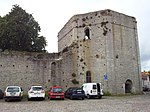


Helgeands ruin 2012-09-23 11-29-57.jpgThe ruins of the church dedicated to the Holy Spirit are one of the most unusual of the church ruins in Visby. They consists of an octagonal two-storeyed nave and a protruding choir. The church was erected during the 13th century. According to one theory, the church was built for Bishop Albert of Riga, who is known to have been on Gotland in the early 13th century to gather crusaders and missionaries to go with him to Livonia. The church became the almshouse of Visby in 1532, but by the early 17th century was apparently in a ruinous state and used as a barn.
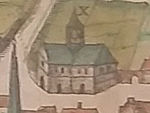
 

Detail from map of Visby.jpgNo visible remains exist above ground of the so-called Russian Church. Archaeological excavations carried out in 1971 revealed the foundations of a small church under the floor of a house on Södra kyrkogatan street. It may have been one of possibly two churches for Russian traders in Visby during the Middle Ages


Sankta Karin Visby Gotland Sverige (6).jpgThe church of Saint Catherine was the church of a Franciscan convent. The convent was founded in 1233 and a first construction period took place c. 1235–1250. During the early 14th century reconstruction work on the church began, and was not finished until 1412, when the church was re-inaugurated. The abbey was disbanded during the 1520s, and the buildings were for a short while used as an almshouse before being completely abandoned.


Sankt Clemens Visby Gotland Sverige (4).jpgThe church dedicated to Saint Clement was probably erected during the middle of the 13th century, but its history remains opaque. It was probably preceded by a smaller, 12th-century church. In its present state, it is still considered a typical representative of 13th-century Visby churches


Ruine St.Drotten 2.jpgThe church was dedicated to the Holy Trinity but called Drotten after an old Norse word meaning Lord or King, i.e. referring to God. It is similar to Sankt Clemens but smaller and probably older. It seems to have been constructed mainly during the 13th and 14th centuries


Ruined church (3875572734).jpgThe church of Saint Nicholas was the abbey church of a Dominican abbey, founded before 1230. Its most famous prior was Petrus de Dacia. The church is possibly older than the abbey; the monks may have acquired an already existing church, or one under construction. Enlargement and reconstruction works were carried out until the late 14th century. The church and abbey were probably destroyed by troops from Lübeck in 1525


Sta Gertrud Visby.JPG

This small church or chapel was dedicated to Saint Gertrude of Nivelles. It is the smallest of the former churches in Visby. An excavation carried out in 1935 determined that it dates from the second half of the 15th century.


S-t Görans ruin 2012-09-23 11-14-35.jpgThe church was dedicated to Saint George and lies about 300 metres (980 ft) outside the city walls. It was originally tied to an almshouse for lepers nearby. The church is lacking in decorative elements and has therefore been difficult to date.   The choir and nave probably date from different periods. The choir is the oldest, perhaps from the late 12th or early 13th century, and the nave may date from the 13th century. The almshouse was shut down in 1542, but the cemetery continued to be used occasionally, e.g. during an outbreak of plague in 1711–12 and following an outbreak of cholera in the 1850s.


St Lars kyrkoruin.JPGThe patron saint of the church was Saint Lawrence. Construction of the church began during the second quarter of the 13th century. It was built by local stonemasons but in an unusual, cross-shaped form. Inspiration for this form probably came from Byzantine architecture and may have reached Gotland following the siege of Constantinople in 1204.


St Olofs kyrka.jpg


Three walls of a medieval chapel dedicated to Saint Olaf have been incorporated into a 19th-century barn. North east of the church a memorial cross was erected in 1959


Sankt Olofs kyrkoruin, Botaniska Trädgården, Visby.jpg

Very little remains of the church once dedicated to Saint Olaf in Visby.   It was probably a basilica built at the beginning of the 13th century


Preserving Our Past, Recording Our Present, Informing Our Future

Ancient and Honorable Clan Carruthers Int Society CCIS  LLc

carruthersclan1@gmail.com                   carrothersclan@gmail.com


cropped-coagraywide.jpg


You can find us on facebook at :

https://www.facebook.com/carrutherscarrothers.pat.9

https://www.facebook.com/CarruthersClan/

https://www.facebook.com/CarruthersClanLLC


Disclaimer Ancient and Honorable Carruthers Clan International Society CCIS LLC is the official licensed and registered Clan of the Carruthers Family.  This Clan is presently registered in the United States and Canada, and represents members worldwide.  All content provided on our web pages is for family history use only.  The CCIS is the legal owner of all websites, and makes no representation as to the accuracy or completeness of any information on these sites or by following any link provided. The CCIS will not be responsible for any errors or omissions or availability of any information. The CCIS will not be liable for any losses, injuries, or damages from the display or use of this information. We do not sell, trade or transfer to outside parties any personal identifications. For your convenience, we may provide links to various outside parties that may be of interest to you. The content on CCIS is design to support your research in family history.      ( CCIS -LLC copyright 2017 - 2020)


Uncategorized

CLAN CARRUTHERS – 13 HORRIFYING GOTLAND CHRISTMAS TROLLS – THE YULE LADS

cropped-wide-banner-with-new-crest.jpg

13 Horrifying Gotland Christmas Trolls

yule lads

They leave the nice children gifts and the naughty children ROTTING POTATOES.

Stekkjarstaur (Sheep Cote Clod)

Sheep Cote Clod gets his name because of his affinity for harassing sheep. He’s easily identified by his stiff peg legs.

Fear Level: Standing over a subway grate.

Giljagaur (Gully Gawk)

Giljagaur (Gully Gawk) | Community Post: The 13 Horrifying Christmas Trolls Of Iceland

Gully Gawk is famous for hiding in gullies and waiting for his chance to sneak into the cowshed to steal milk.

Fear Level: Running into an ex.

Stúfur (Stubby)

Icelandic Santa Claus - the 13 Yule Lads - Iceland with a View

He’s called Stubby because he’s really short. But what he’s really known for is stealing pans to eat the crust out of them.

Fear Level: Watching Pee-Wee Herman’s Big Adventure.

Þvörusleikir (Spoon Licker)

Guess who might be passing by your window tonight? ⠀ Þvörusleikir (Spoon-Licker) is on his way to town and estimated time of arrival is unknown! 😛⠀ ⠀ He steals "Þvörur" or some sorts of wooden spoons to lick. Poor guy is extremely thin due to malnutrition. So, if you want to be nice, you should just give him a wooden spoon if you have one with your open heart 💓⠀ ⠀ It's Christmas after all right? 🎄Image via Brian Pilkinton from the book The Yule Lads •⠀ •⠀ •⠀ •⠀ #Iceland #Icelandic #inspiredby

This sticky-fingered troll steals wooden spoons for the purpose of licking them. He’s easily identified by his malnourished appearance.

Fear Level: Waking up right before your alarm goes off.

Pottaskefill (Pot Licker)

<img class="aligncenter" src="https://i.pinimg.com/236x/60/b4/9d/60b49d9989099a36e73e2f046caadc9c.jpg&quot; alt="They leave the nice children gifts and the naughty children ROTTING POTATOES.” width=”574″ height=”435″>

Not to be confused with Spoon Licker, Pot Licker steals leftovers out of pots. Also not to be confused with Stubby, who steals PANS.

Fear Level: Jaywalking.

Askasleikir (Bowl Licker)

Askasleikir (Bowl Licker) | Community Post: The 13 Horrifying Christmas Trolls Of Iceland

Not to be confused with Spoon Licker or Pot Licker, Bowl Licker hides under your bed until you put your bowl down. Then he steals it and then, presumably, licks it.

Fear Level: Waiting for test results.

Hurðaskellir (Door Slammer)

7. Hurðaskellir - door slammer

He slams doors. Especially at night.

Fear Level: Doors slamming. Especially at night.

Skyrgámur (Skyr Gobbler)

<img class="aligncenter" src="https://i.pinimg.com/236x/d5/cf/d2/d5cfd27b2b4d70b40840f3d5e2489b67.jpg&quot; alt="They leave the nice children gifts and the naughty children ROTTING POTATOES.” width=”526″ height=”414″>

Skyr is a traditional Icelandic dairy product similar to strained yogurt.

Fear Level: Broken escalators.

Bjúgnakrækir (Sausage Swiper)

Bjúgnakrækir (Sausage Swiper) | Community Post: The 13 Horrifying Christmas Trolls Of Iceland

Sausage Swiper hides in the rafters and pilfers pork links while they’re smoking.

Fear Level: Standing under scaffolding.

Gluggagægir (Window Peeper)

Gluggagægir (Window Peeper)

This troll looks through your windows in search of things to steal. Pretty sure this is a felony.

Fear Level: Driving with the doors unlocked.

Gáttaþefur (Doorway Sniffer)

Gáttaþefur (Doorway Sniffer)

Easily identified by his abnormally large nose, Doorway Sniffer uses his acute sense of smell to find Laufabrauo, a traditional Icelandic bread.

Fear Level: Sniff-testing the milk.

Ketkrókur (Meat Hook)

#12. Iceland Christmas troll arrives Dec. 23 - Meat Hook - he steals meat with his hook.

Meat Hook uses a hook to steal meat. Pretty self explanatory.

Fear Level: Standing really close to a large animal.

Kertasníkir (Candle Stealer)

Kertasníkir (Candle Stealer)

This troll follows children so he can steal their candles and then eat them. Pretty sure this is also a felony.

Fear Level: Clowns.

Have a Very Happy Holiday and Be Good…

Or Gryla, the mother of all the Yule Lads, will abduct you!  And EAT YOU!

YOU CAN READ ABOUT GRYLA AT :  https://clancarruthers.home.blog/2018/12/15/clan-carruthers-gryla-the-gruesome-christmas-witch/

Carruthers crest on flag-v2 (1)

Preserving Our Past, Recording Our Present, Informing Our Future

Ancient and Honorable Carruthes Clan Int Society LLC

carruthersclan1@gmail.com

cropped-wide-banner-with-new-crest.jpg

ALL PICTURES FROM PINTEREST

Uncategorized

Saxons, Goths, Gauls, Scoti and all

Clan Carruthers Int Society CCIS                               Promptus et Fidelis

ESSAY ON THE

Countries, Religion, Learning, Numbers, Forms of Government, and the chief’ Cause of the Succefles of| the Nations,

By which the ROMAN EMPIRE Was pulled Down.


This was written in 1714, and though interesting, not accurate as the information that we have today.


TH E Saxom, having been by the Greeks and Romans reckoned Superiour to all other barbarous Nations, as they were pleased to call them, for Wit, for Strength of Body, and the Enduring of the Toils of War, I should be unjust to our Ancestors, if I did not give them the Precedency here.

They were Originally a People in the CmIncus Cbersotiefus, and did live all along the Eastern Coast of the German, and the Southern Coast of the Baltick Seas. They were divided into several Nations, as the Attgliy who lived in the Country where the City of Slefwick Sleswick is now; the Juta, the Heruli, the Vemi, the Vandali, the Longobardi; and to which, the tfcofi, may, I believe, be added.

The Saxons having more Wit and Courage than their Neighbours, might think it hard that the wisest and bravest Men should have the worst Countries; so they invaded the Frifijt and having made themselves Masters of their Country, which was, Freezland, Holland, slanders, &c. or of all the Sea Coast at least, they wisely incorporated themselves with that Nation, and by that means they became stronger than they were before. And which the greatest Conquests do never make any People, but rather the Weaker, if the Natives be totally destroy’d, or drove away, or be preserved, but still as a distinct People, from those that conquered them.

The Saxons finding, that the employing of their Strength by Land against their Neighbours the Gauls, who were supported by the Romans, did turn to no Account, they applied themselves wholly to the Sea, of which they had now a very long Coast. And on that Element, Orofius saith, they were terrible, both for their Courage and their Agility; and being absolute Masters at Sea, they frequently visited the Coasts of Gaul and Britain; where having made Descents, they plundred the Country, returned Home, laden den with Spoils. And tho’ they now and then met with Blows ashore, at Sea they were in no Danger but from Storms j by this Means the Sea-Coast of Britain was better known to the Saxons than to the Britains themselves, long before they were invited by the Britains into it.

Of all the Saxons, or at least of all those that conquered the Southern Part of Britain, the Angli were the most considerable; and which Conquest, was, for that Reason called England, after their Name.

Celtic Warriors.


The Scoti are generally believed to be Irish, and to have come from Ireland into Britain. But tho’ it is certainly true of the High-Land Scots, who to this Day speak the Irijb Language, the Low-Land Scots do seem to have been a Saxon, or German, and not an Irish Nation. And that for three Reasons:

The First is, Its being manifest from the Notitia Imperii, that there was a German Nation called Acchaeni, and who are by Ammianus Marce Bintts said to have together with the Scoti much molested Britain. Now, besides the Affinity which there is betwixt these two Names, the Scoti and Acchaeni are spoke of by that Contemporary Learned Historian, as Neighbours and Confederates.

Secondly, The Scoti are by Giraldus Cam’ Irenfis, believing them to be a German People, called Goths.   (  *** Carruthers  *** )

ArtStation - Senons gaul warriors, Jose Daniel Cabrera Peña-French museum illustrations- Jose Daniel Cabrera Peña

Goth Warrior

But the Last, and chief Reason is, The Saxon Language being spoken all over the Low-lands of Scotland, to the most Northern Part of the Ifland. The very Name Scotland, and the Names of its Metropolis, and of its other great Towns and Counties, are plainly Saxon; and which could not have been, if that Country had not been Peopled by a Saxon Nation; no, not if they had conquered it, if they had not peopled it too: For tho* a Conquering Sword can change the Religion, the Government, and the Laws in its Conquests, their Languages will not be changed by it, whilst the Conquered do continue to be the Body of the People. So the Britains having been all either destroyed, or driven into a Corner of the Ifland, and their Country Peopled by Saxons, the Saxon Language came of course into it; whereas the Normans, who did likewise conquer England, and did all that was in their Power to have brought the French Language into it, were not able to do it; and the Reason was, because the English did, under the Norman Government, still continue to be the Body of the Nation; few Normans, besides those that were in their Armies, having come to settle themselves in England.

Celtic Warrior


So,for the same Reason the Goths, sandals, and Suevi, tho’ they conquered Spain, were not able to bring their Language into it ;. nor the Franci into Gaul, nor the Longobardi into Italy, their Languages, in defiance of their Swords, having been vanquished so by the Languages which they found in those Countries, as to be quite lost in the Second Generation. And in truth, the Saxons were the only Conquerors that brought their Language to be the Language of their Conquests, and to which they gave their Name also; as all the rest have done, except the Gcthi and Suevi. Gaul having been called France, from the Franks; the Southern Part of Spain, Andalufia, or Vandalufia, from the Vandals; the Cisalpine Gaul, Lombard) from the Longobards; one Part of Pannonia, Hungary, from the Huns; and another Part of it Sclavonia, from the Sclavi: The Normans likewise gave the Name of Normandy to that Part of France which they conquered, but were not able to change the Name of England. The Saxons gave the Name of Walish, that is Gaulish, to the Britains that remained, and from thence they came to be called Welch, and their Country Wales. The same Name was given to the Cisalpine Gauls by the Lombards when they conquered them ; and to this Day the People of that Country are called Walsh by the Germans,

But if the Britains were by the Saxons called Welch, or WaUaish, to signifie they were Foreigners or Strangers, as many say they were; it is a notable Instance of how I i little little a Superiour Power is concerned, whether what it saith be reasonable or not.


                                Goth Lowland Warrior

Tho’ we are not told when the Low-lands of Scotland were Conquered and Peopled by a Saxon Nation, call’d Scoti; yet since \*e do no where read of the Saxons, by whom the Southern Parts of Britain were Conquered, having ever Conquered, and much less Peopled those Northern Parts of it; there is great Reason to believe that it must have been done before the Time of that Southern Saxon Conquest; and that the Scoti spoken of in Britain before that time, were those Saxons who having destroy’d the Ficli, whom I do reckon to have been the Northern Britains, did, in process of time possess themselves of those Low lands.

Neither is Ireland having been formerly called Scotia Major, any Proof to the contrary: For as it is by later Historians that Ireland is called so, (o it is most probable that Ireland in latter times had that Name given it to distinguish it from the Scots High-lands which retained its Language, Habit, and Customs, and which having been conquered, tho* not Peopled by the Scoti, had come to be called Scotland.  ( The Carruthers ancestors of Gutland/Gotland are now know to have lived and battled in Ireland, Scotia Major and Lowlands of Scotland, Scoti prior to 400 A. D.)

But tho’ I am at present fully perswaded that this is the true Account of the Origine ot the Low land Scots; yet if any of the Learned Persons that are of another Opinion, will but (hew’ how the Saxon Language could be brought into that Country without its having been Peopled by Saxons, it will go a great way towards the bringing me over to them. The Time when the Scott came first into the Low-lanJs, and the Irish into the High-lands being unknown to me, I shall leave the Settling of that time to those who have looked into the Ancient Records of that Kingdom; tho’ I cannot but say, that Genuin Records, reaching to their Origine, are scarce Commodities in all Nations, tho’ there are few or none that do not pretend to have them.

(*** The Carruthers ancestors came before the time of the Saxons )

The Goths were a People of Scythia, on the North-side of the Euxine Sea; but having in Process of Time flitted, or removed from thence to Boryflenis, and the Mouths of the Ifter, they were there divided into Ostro-Gotbi, or Eastem-Goths, and Vifi-Gothi, or WellernGoths; and having been driven from those Seats by the Huns and Alans, they had leave from the Emperor Valence to settle themselves in Thracia and the adjacent Countries, as Confederates of the Roman Empire 5 and it was out of those Parts that the Goths did come, who made that Name so Famous by their great Conquests. I know there is a Royal Argument for the Conquering Goths having been a People of Denmark, and of Sweden, and of the adjacent Islands. The Sovereign Princes of those two Kingdoms, having upon that Supposition, taken upon I i z them the Title of the King of the Goths. But tho’ Crowns are great Things, Truth is greater, and which being more likely to be found in Contemporary Historians, than in Heralds, it must not, being met with in them, be sacrificed to any Deferences: Not that there might not be a People in those Northern Countries which were called Goths; but supposing there was, it is pretty certain that they were not the Famous Goths who erected the Great Monarchy in Spain and Gaul; and of this Magma Got bus was so sensible, that without any tolerable Authority he. will have his Country Gothsy to have Conquered and Peopled Scythia to^he very Palus Meotis, and to have been the Ancestors of the Goths, which came many Ages after from those Parts, and did raise that Name so high. Besides, that there is no Authority for all this, it has a natural Improbability in it, that renders it almost incredible: Which is, That People should go so sar, and toil and fight so much for no other purpose, but that they might settle themselves in worse Countries than their own, which they left. And if Gotht be a Corruption of Getœ, as probably it is, their first Country will be found about the Euxine, and not near the Baltick Sea, notwithstanding the Island that is in it, and the Country that is near it, called Gotland, or Gutland, for so they are called by their Inhabitants. Now, whether Goty or

Gut, Gut, in the beginning of those Names, was derived from the Goths, or from some other Word, I shall leave to the Enquiry of those who understand the SweJi/h Tongue: But this I am sure of, that in English there are Names that begin with Goth and Got, as Gotheridge, Gothill, and Gotacre, that were not called so from that People, but were, I suppose, called so from the Word God, or the Word Good.

The Vandals, of whom the two fore-mentioned Princes do likewise stile themselves • Kings, were not of any of their Countries, tho’ they were much nearer to them than the Goths; the Vandals being a Nation of the Saxens, and did all live on the South Side of the Baltick Sea.

The Franci were several German Nations, who lived on the East-fide of the Lower-Rhine; and who having Confederated together, did all take upon them the Name of Franci, or Freemen; thereby declaring, That they were resolved to perish, rather.than become Tributaries to the Romans, as their Neighbours the Gauls were.

The Suevi were a great German People oil the Upper-Rhine; reaching from the top of that River, to the River Albis; they and their neighbouring Nations did take on them the Name of Alamans, much about the same time, and with the same generous Intention that the German Nations on the Lower-Rine, took on them the Name of Fraud; and as , if they reckoned, that a conquered People did not deserve the Name of Men, by that new Name of Alamans, or All men, they declared they would die, rather than be conquered.

The Longobardi, called so by the Romans, for their Long Beards, were a Saxon Nation, who lived in that Country which is now called Brandenburg; and who having in Italy conquered G a Ilia Cisalpina, did give it the Name of Longobardi, now Lombardy.

Besides these I have mentioned, there were Twenty German Nations more, but which having all long ago funk into some of the fore-mentioned, I thought it was needless to name them here.

The Sclavi were a People that lived in the Countries, which are now called Poland and Lithuania; and it is very plain from their Language, and which is spoke to this Day in those Countries, that they were no German Nation; in process of time they either conquered, or dipt into Sclavonia, and the Countries about it; when the former Inhabitants had left them in a manner, and were gone with the Goth in quest of better Countries: Many of the Sclavi having been taken, and made Bond-men in the Time of Charles the Great, did in France, and in other Parts, give the Name of Slaves to- all Bond’ men.

The

The Huns were an Afiatick Scythian Nation, who lived beyond the Palus Mœotis, as did the Alans also, who having been beat by the • Huns, joyned with them when they swarmed into the European Scythia • where driving the Gotbs before them, they advanced as sar as Fannonia, and having fixed their Seat there, did give it the Name of Hungary.

Gallic cavalry charging into battleThe Gauls were for Numbers and Extent of Land, the greatest People we read of any where; for of that Nation I do reckon the Spaniards, Britains and Irish, to have been, no less than the Inhabitants of the two GalHas, one of which is now called Lombardy, and the other which is now called France, did reach from the Atlantick Ocean, to the Western Banks of the Rhine. And whose Language is spoke no where now but in Wales, Ireland^ and the Highlands of Scotland, and in those Countries in Dialects so different, that I am told the Welsh and Irish do not understand one another.

[ocr errors]

Of the Religion and Learning of these Countries.

SU C H of these Nations as Were German, did all speak the same Language, and worship the same Gods 5 the Memory of four of which Gods is still preserved, in all Parts where the German Tongue is spoke, in the Names of Four of the Days of the Week; to wit, Tuesday, Wednesday, Thursday and Friday. Verfi ‘tgan will have the other three Days of the Week to have had their Names likewise from the Three German Gods, Sun, Moon and Seater: But considering, that these Days among the Romans, did bear the Names of the same Three Gods; it is more probable that the Germans had those Names from the Romans, than that the Romans had them from the Germans.

In their Worship they were all involved in the Inhumanity of offering Men, Women and Children alive in Sacrifice to their Gods,• in which, tho’ it was an abominable Barbarity, they were so sar from being singular, that it was the Practice of the Gauls likewise, and at one time or another of all the Idolatrous Nations on the Earth; and we fee that to keep the Jews from it, was not an easy Matter.

For Learning it does not appear that they had any, no not so much as the Knowledge of Letters; tho’ a certain Romantick Writer, will have them to have been great Masters in the Vithagorean Philosophy; but tho* they had among them no Clergy or Learning, it appears from their excellent Constitution of Government, that they wanted not Mother-Wit, or true Wisdom. The Laws brought by them into their Conquests, which were the Feudal, are likewise a plain Proof, that tho’ they wanted Learning, and for that Reason were called Barbarians, by the4 Nations that abounded with it; yet that they wanted not Policy.

The Huns and Alans who were A/iaticks, are by Jornandes said to have had no Religion nor Superstition, or if they did worship any God, that it was their Sword to which, sticking it in the Ground, they did use to pay some Reverences.

The First of these Nations that turned Christian, were the Goths and Suevi; but they having been converted to that Faith by Arian Bishops, sent to them by the Emperor Vaknsy who was himself an. Arian, did long adhere to that Heresy, but were converted from it about an hundred Years before their great Monarchy in Spain was destroy’d by the Moors. The Franks were likewise converted early, and in Process of Time the Saxws, and all the rest of these Nations; and notwithstanding before several of their Conversions, Christianity was corrupted with a Mixa Mixture of divers Heathenish Superstitions; its true and genuine Doctrines, were nevertheless so powerful, as to mollifie their natural Ferity and Savagenefs very much, and to civilize their Manners in all the Relations of Life.

Of these Nations great Numbers.

IT has been long a Matter of some Wonder, how the barren Countries out of which the Swarms of Men came, that lighted lo heavy on the Roman Empire, should then be so much more fertil of People, than they have ever been since; and this prodigious Fertility having been looked on as a thing certain, there have been divers Speculations about the Causes of it. It is by Mariana attributed to two Things, the one is the Northern People being, by reason of the Cold of their Climate, more prolifick than the Southern; and the other is promiscuous Veneries having been in use among them. The First is no Realon at all, for those Countries being then more populous than they are now, the Climate being still the same, and as cold as ever it was. And the Second, however it may appear in Speculation, does seem to have Experience against it. The Countries in which Plurality of Wives, and pro: promiscuous Venery are allowed, being observed not to be so populous, as the Countries where both those Liberties are prohibited.

It was the finding it not to be easy, to give a satissactory Reason for this supposed extraordinary Fertility, that first led me to examine the Evidences upon which it has been so generally believed; and upon as severe an Enquiry as I was able to make, those Evidences did not appear to me to be strong enough, to make that Matter indubitable, and that for the three following Reasons.

First, Because unless we knew the certain Bounds of those Countries, and which we are very sar from knowing, we cannot judge by the great Armies that went out of them, whether they were extraordinary populous, or no: For tho’ a Country that is certainly known to be small, having sent forth great Armies, is a Proof of its being very populous at that Time; it is no Evidence at all, of a vast Country’s being so.

Secondly, Because tho the chief Nation in those Expeditions did bear the Name of the whole, yet since several neighbouring Nations, the Extent of whose Lands is not known, might joyn with them in the forming of those great Armies; as in Fact they did, their having cast such great Swarms, can be no Evidence of their having been extraordinary populous.

Thirdly, If in tjiose Countries, all that were fit to bear Arms went into the Armies, as it is very probable they did, their Armies might be as great ,as any of them are said to have been, and yet their Countries not have been very populous: Considering, how by reason of their simple, rustick, and frousy Way of living, they had few or no Artificers or Trades-men among them; and who in polite Countries, are a great Part of the People; so that they had none among them, that had Strength enough to carry Arms, that were not fit to use them; having been all bred up to Hunting, and to other man-like Exercises, which fitted them for Soldiers. Besides, great Multitudes of Women, and who are said to have been as warlike as the Men, went along with those Armies; and who, whether they fought or not, would to the Eye make them look more numerous, than they would have looked otherwise. Neither have we any Reason to think, that the Persons from whom we have the Accounts of the Numbers that were in those Armies, did ever either muster them, or tell them, but did guess at their Numbers by their own, or other Peoples Eyes; and there is not any thing our Eyes so grofly impose on us in, as in Numbers, which if great, are judged by the Eye to be double to what they are. Now adding to all this, that those Countries have in them at this Time, many great great Cities and Towns, filled with Artificers and Trades-Men, and which they had not then; one may, I think, venture to affirm, that it was not unlikely that they have more People in them now, than they had in those Days, tho’ not so many that are fit for Soldiers: For it must be no great Country now, that has not zooooo Men in it, strong enough to carry Arms, and that was the Number of one of the greatest of thoseeA.rmies, and which we have Reason to believe was taken by the Eye, and not by the Poll, and that Provinces were emptied so by their having gone out of them, that if double that Number of People went out of the lame Provinces now, they would leave more behind them. So the High-lands of Scotland, tho’ they are by much the least populous Parts of that Kingdom, yet by Reason of the same simple and course way of Living, and their Peoples being bred up to the same Exercises, will in Proportion to their Numbers, presently furnish more that are fit to be Soldiers, than the more populous Low-lands; and it is for the same Reason the same with the Irish, and the Provinces in which they are planted.

MICHAEL GEDDES, L. L.D. and Chancellor of the Church of Sarum.
written in 1714
DNA Gotland, Uncategorized

POSTMORTEN DNA: GUTLAND/GOTLAND ANCESTORS

Clan Carruthers Int Society CCIS                                        Promptus et Fidelis

cropped-wide-banner-with-new-crest.jpg

** Once again we need to thank the group of Carruthers who worked on the 15 years Carruthers DNA project.  Without their foresight we would never be as far ahead in our DNA work.   Working with Forensic DNA is light years beyond many who have not had such relatives to do that initial DNA project**


The understanding of postmortem  DNA, and how it applies to ancient DNA , has enabled the development of methods that statistically identifies ancient DNA sequences . Using this methodology, we assessed the damage distribution within large amounts of ‘clone’ sequences generated by GS FLX-sequencing, in order to compile the sequences that have high probabilities of being ancient into mitochondrial HVS1 consensus sequences. We generated HVS1 sequences from 20 Neolithic farmers and hunter–gatherers from present-day Sweden (six from TRB, one from BAC and 13 from PWC contexts). The human remains came from two sample sets. The first set (the samples from Öland, n = 7) was generated for this study. The second set comprised ‘clones’ generated previously (the samples from Västergötland, Östergötland and Gotland, n = 13 . Here, we analyse this second dataset in detail using the c-statistic framework and present the sequence data from these samples for the first time. With this method, we also improved the haplogroup resolution for 10 previously published PWC individuals . We identified authentic sequence motifs in ‘clones’ from up to 14 amplicons per individual that derived from independent DNA extracts and retrieved coherent haplotypes. We also investigated sporadic human DNA contamination in negative controls. These typically displayed contradictory results and could not be used to generate complete HVS1 sequences (electronic supplementary material, text). These sequence data were analysed together with 124 mtDNA sequences from farmers (Neolithic), and hunter–gatherers (Neolithic and Mesolithic) from three geographical regions (Scandinavia, Central Europe and Iberia) .

Even though there was some overlap in haplogroup distribution between TRB and PWC (for haplogroups K, T and H), other haplogroups were unique to either TRB (J1d5 and J2b1a), BAC (N1a1a1a) or to PWC (U4, U4a1, U5, U5a and U5b1. The high frequency of U and K haplotypes in PWC individuals from both Gotland and Öland is in accordance with previous observations from human remains associated with PWC  and similar to a wide range of Mesolithic hunter–gatherers from Scandinavia, Central Europe, Iberia and Russia. The U and K haplogroups are rare in Scandinavian TRB and Central European LBK farmers, but more common among individuals from the late Neolithic Treilles culture excavated in France, in Neolithic Iberian farmers and in Neolithic individuals from the Blätterhöhle cave in Germany . The haplogroups seen in TRB (H, T, J and K) are also found in other farmer communities . It has been hypothesized that communal Megalithic burials may represent specific individuals that are related to, or belong to, a certain strata of the community. As eight distinct haplotypes were found among nine individuals from two different Megalithic burial structures, a close maternal kinship among several of the individuals can be ruled out. That these individuals represent more than a close family is further supported by isotopic studies (strontium, Sr) of migration patterns which have shown that as many as 25% of the buried in the megalithic burial structures were of non-local birth . Interestingly, the BAC individual (N1a1a1a) did not share haplogroup affiliation with previously published Corded Ware associated individuals from Central Europe but rather with individuals associated with LBK .
The Neolithic farmers analysed in this study differ significantly from the contemporaneous PWC hunter–gatherers, but show a close affinity to LBK individuals (figures . It has recently been shown not only that the TRB individuals investigated in this study, but also other Early and Middle Neolithic cultures in Central Europe, are genetically similar to the LBK [38]. Interestingly, both Scandinavian and Central European farmers are differentiated from the Iberian farmers , however, mtDNA indicates that the population history in Iberia is complex during the Neolithic and that the haplogroup composition differ from that found in North/Central Europe as well as between different areas in Iberia . It has further been suggested that the mode of the Neolithic expansion may have been different in geographically distinct regions [65], although alternative explanations could relate to continuity from Mesolithic populations or admixture with North African groups. However, even though the Iberian individuals span from the early to the late Neolithic, they are much more homogeneous than the other investigated farmer groups, which would contradict admixture .

We show that the PWC hunter–gatherers of Neolithic Scandinavia do group with Mesolithic hunter–gatherers . Our data further support genetic homogeneity of the hunter–gatherer complexes of Scandinavia and Central Europe  which has been previously indicated . However, the genetic picture of Mesolithic Europe is still incomplete, and open questions specifically related to Scandinavia include the relationship between PWC and the Ertebølle communities. In addition to their apparent mtDNA affinity to each other, the hunter–gatherer groups in both Scandinavia and Central Europe show significantly lower within-group mtDNA diversity than farmer groups in the same regions . This could be a consequence of a number of previously hypothesized historical processes, such as reduction in the size of the ancestral hunter–gatherer population in the Late Pleistocene, long-term small effective population sizes in the small and probably dispersed hunter–gatherer bands, or a greater degree of admixture in migrating farming groups . To what extent this reduced genetic diversity is also seen in the autosomal genome and the Y-chromosome is an interesting topic that will require further studies.

In a previous mitochondrial study, we found that the observed genetic differentiation between PWC and extant Scandinavians was inconsistent with complete population continuity . To give a more precise upper bound of possible PWC ancestry in extant Scandinavians, we modeled extant Scandinavians as the result of gene flow between the PWC group and an unknown population. We found that the maximum direct demographic contribution consistent with the data is 60% . This is consistent with previous modelling of admixture proportions in Scandinavians using low-coverage genome-wide data . However, note that we could not reject any level of contribution from TRB to extant Scandinavians, suggesting that our data are compatible with a scenario spanning from a complete replacement of the PWC to a scenario of admixture up to 60% from PWC into the population that eventually lead to modern-day Scandinavians.

To conclude, the observations that: (i) mtDNA of the farmers of the TRB community at the northern fringe of the Neolithic expansion closely resemble that of early Central European farmers, (ii) do not resemble contemporaneous PWC hunter–gatherers, but (iii) the mtDNA of these PWC hunter–gatherers’ resemble the Mesolithic groups of continental Europe, suggest a key role for migration in association with in the Neolithization process. A more detailed and nuanced picture will no doubt be achieved by analysis of nuclear DNA and for a greater number of individuals from a larger timespan in the region and in other parts of western Eurasia.

This is part of a study I have been working on.  You can edit out what does not pertain to you.

For your ancestors, it means your numbers are as follows.  Remember, This is on ancient DNA findings, and we can not narrow it down to one number, like we did for the United Kingdom data.   This study started with a different data testing system, and they can not combine to one number, or one unit yet.  They will someday.

MtDNA haplogroup affiliation of new and previously published HVS1 sequences from Neolithic Scandinavian samples.

Ajv4 grave 4 Ajvide Gotland 5000–4400 cal BP PWC U4 16093C 16356C this studya
Fri24 grave 24 Fridtorp Gotland 5000–4400 cal BP PWC U4 16093C 16356C this studya
Ire5 grave 5 Ire Gotland 5000–4400 cal BP PWC U4 16356C this studya
Ire4 grave 4 Ire Gotland 5000–4400 cal BP PWC U4 16356C this studya
Ajv29B grave 29B Ajvide Gotland 5000–4400 cal BP PWC HV0 16298C this studya
Vis30B grave 30B Visby Gotland 5000–4400 cal BP PWC U5b1 16189C 16192 T 16270T 16362C this studya
Fri28 grave 28 Fridtorp Gotland 5000–4400 cal BP PWC K1a1 16093C 16224C 16311C this studya
Vis32 grave 32 Visby Gotland 5000–4400 cal BP PWC U5a 16192T 16256 T 16270T this studya
Vis7B grave 7B Visby Gotland 5000–4400 cal BP PWC K1a1 16093C 16224C 16311C this studya
Ajv70 grave 70 Ajvide Gotland 5000–4400 cal BP PWC U4bc 16093C 16356C [22]
Ajv66 grave 66 Ajvide Gotland 5000–4400 cal BP PWC U4b 16093C 16356C [22]
Ajv52B grave 52B Ajvide Gotland 5000–4400 cal BP PWC U4b 16093C 16356C [22]
Ire8 grave 8 Ire Gotland 5000–4400 cal BP PWC U4b 16093C 16356C [22]
Ire9 grave 9 Ire Gotland 5000–4400 cal BP PWC K1a1 16093C 16224C 16242 T 16311C [22]
Ire6B grave 6B Ire Gotland 5000–4400 cal BP PWC T2b 16126C 16294 T 16296T 16304C [22]
Ajv19 grave 19 Ajvide Gotland 5000–4400 cal BP PWC H/R 16311C [22]
Ajv14 grave 14 Ajvide Gotland 5000–4400 cal BP PWC H/R 16311C [22]
Ajv52A grave 52A Ajvide Gotland 5000–4400 cal BP PWC HV0c 16298C [22]
Fri15 grave 15 Fridtorp Gotland 5000–4400 cal BP PWC U4b 16356C [22]
Ajv13 grave 13 Ajvide Gotland 5000–4400 cal BP PWC U4b 16260T 16356C [22]
Ire3 grave 3 Ire Gotland 5000–4400 cal BP PWC U4b 16356C [22]
Fri22 grave 22 Fridtorp Gotland 5000–4400 cal BP PWC U4b 16356C [22]
Ajv54 grave 54 Ajvide Gotland 5000–4400 cal BP PWC U5 16270T [22]
Ajv36 grave 36 Ajvide Gotland 5000–4400 cal BP PWC U5 16270T 16362C [22]
Fri4 grave 4 Fridtorp Gotland 5000–4400 cal BP PWC U5 16270T [22]
Ajv29A grave 29A Ajvide Gotland 5000–4400 cal BP PWC U5a 16256T 16270T [22]
Fri27 grave 27 Fridtorp Gotland 5000–4400 cal BP PWC U5a 16256T 16270T [22]
Ajv5 grave 5 Ajvide Gotland 5000–4400 cal BP PWC U5a 16256T 16270T

The Ashman / Carruthers are definately a U4 group and still U1 – U4.   Also a PWC which puts them in a group for hunters and gatherers.  NIce word for warrior and retail merchant.

Any number  that  is in the PWC group then a U4 and then starts with 16  is your ancestors.   This material is more than 5000 years old that is being tested, and this is the closest we can get at this time.
UPDATE:    We are so excited to announce that we have gone a lot farther than when this article was writte.  Clan Carruthers Int Society CCIS, now is the first clan to submit their forensic CTS Carruthers genome, and it was matched with our Norse ancestors and their 75,000 and older DNA CTS Varagian or Norse number.  If interested in the Clan Carruthers Int Society path you can read it at:  https://clancarruthers.home.blog/2020/05/29/haplogroup-1-carruthers-dna-path-cts11603-cts6364/
Carruthers crest on flag

Preserving Our Past, Recording Our Present, Informing Our Future

Ancient and Honorable Clan Carruthers Int Society CCIS  Llc

carruthersclan1@gmail.com

COAGRAYwide

Gutland / Gotland, The History of Gutland, The Viking Age, Uncategorized

Hoards of the Vikings From Gutland

Clan Carruthers Int Society CCIS                                        Promptus et Fidelis


Hoards of the Vikings


There were various waves of Aachen-men or Ashmen that carried the Carruthers DNA markers that came from Gutland to Scotland, one wave in 450 AD and one 900 AD.  This article gives you a good idea of what their life was like based on archaeological findings.

Evidence of trade, diplomacy, and vast wealth on an unassuming island in the Baltic Sea.

The accepted image of the Vikings as fearsome marauders who struck terror in the hearts of their innocent victims has endured for more than 1,000 years. Historians’ accounts of the first major Viking attack, in 793, on a monastery on Lindisfarne off the northeast coast of England, have informed the Viking story. “The church of St. Cuthbert is spattered with the blood of the priests of God,” wrote the Anglo-Saxon scholar Alcuin of York, “stripped of all its furnishings, exposed to the plundering of pagans….Who is not afraid at this?” The Vikings are known to have gone on to launch a series of daring raids elsewhere in England, Ireland, and Scotland. They made inroads into France, Spain, and Portugal. They colonized Iceland and Greenland, and even crossed the Atlantic, establishing a settlement in the northern reaches of Newfoundland.


But these were primarily the exploits of Vikings from Norway and Denmark. Less well known are the Vikings of Sweden. Now, the archaeological site of Fröjel on Gotland, a large island in the Baltic Sea around 50 miles east of the Swedish mainland, is helping advance a more nuanced understanding of their activities. While they, too, embarked on ambitious journeys, they came into contact with a very different set of cultures—largely those of Eastern Europe and the Arab world. In addition, these Vikings combined a knack for trading, business, and diplomacy with a willingness to use their own brand of violence to amass great wealth and protect their autonomy.


Gotland Viking Frojel Site

(Daniel Weiss)

At Fröjel, a Viking Age site on the west coast of Gotland, archaeologists search for evidence of a workshop that included a silver-smelting operation.

Gotland today is part of Sweden, but during the Viking Age, roughly 800 to 1150, it was independently ruled. The accumulation of riches on the island from that time is exceptional. More than 700 silver hoards have been found there, and they include around 180,000 coins. By comparison, only 80,000 coins have been found in hoards on all of mainland Sweden, which is more than 100 times as large and had 10 times the population at the time. Just how an island that seemed largely given over to farming and had little in the way of natural resources, aside from sheep and limestone, built up such wealth has been puzzling. Excavations led by archaeologist Dan Carlsson, who runs an annual field school on the island through his cultural heritage management company, Arendus, are beginning to provide some answers.


Traces of around 60 Viking Age coastal settlements have been found on Gotland, says Carlsson. Most were small fishing hamlets with jetties apportioned among nearby farms. Fröjel, which was active from around 600 to 1150, was one of about 10 settlements that grew into small towns, and Carlsson believes that it became a key player in a far-reaching trade network. “Gotlanders were middlemen,” he says, “and they benefited greatly from the exchange of goods from the West to the East, and the other way around.”


Hoards of the Vikings

Gotland Viking Brooch

Situated between the Swedish mainland and the Baltic states, Gotland was a natural stopping-off point for trading voyages, and Carlsson’s excavations at Fröjel have turned up an abundance of materials that came from afar: antler from mainland Sweden, glass from Italy, amber from Poland or Lithuania, rock crystal from the Caucasus, carnelian from the East, and even a clay egg from the Kiev area thought to symbolize the resurrection of Jesus Christ. And then, of course, there are the coins. Tens of thousands of the silver coins found in hoards on the island came from the Arab world.


Many Gotlanders themselves plied these trade routes. They would sail east to the shores of Eastern Europe and make their way down the great rivers of western Russia, trading and raiding along the way at least as far south as Constantinople, the capital of the Byzantine Empire, via the Black Sea. Some reports suggest that they also crossed the Caspian Sea and traveled all the way to Baghdad, then the capital of the Abbasid Caliphate.


Entire Viking families are believed to have made their way east. “In the beginning, we thought it was just for trading,” says Carlsson, “but now we see there was a kind of settlement. You find Viking cemeteries far away from the main rivers, in the uplands.” Other evidence of Scandinavian presence in the region is plentiful. As early as the seventh century, there was a Gotlandic settlement at Grobina in Latvia, just inland from the point on the coast closest to Gotland. Large numbers of Scandinavian artifacts have been excavated in northwest Russia, including coin hoards, brooches, and other women’s bronze jewelry. The Rus, the people that gave Russia its name, were made up in part of these Viking transplants. The term’s origins are unclear, but it may have been derived from the Old Norse for “a crew of oarsmen” or a Greek word for “blondes.”


Gotland Viking Comb

(Courtesy Dan Carlsson)

Combs such as this one, excavated at Fröjel, were made locally of antler imported from mainland Sweden.

To investigate the links between the Gotland Vikings and the East, Carlsson turned his attention to museum collections and archaeological sites in northwest Russia. “It is fascinating how many artifacts you find in every small museum,” he says. “If they have a museum, they probably have Scandinavian artifacts.” For example, at the museum in Staraya Ladoga, east of St. Petersburg, Carlsson found a large number of Scandinavian items, oval brooches from mainland Sweden, combs, beads, pendants, and objects with runic inscriptions, and even three brooches in the Gotlandic style dating to the seventh and eighth centuries. Scandinavians were initially drawn to the area to obtain furs from local Finns, particularly miniver, the highly desirable white winter coat of the stoat, which they would then trade in Western Europe. As time went on, Staraya Ladoga served as a launching point for Viking forays to the Black and Caspian Seas.

Gotland Viking Spillings Hoard

These journeys entailed a good deal of risk. The route south from Kiev toward Constantinople along the Dnieper River was particularly hazardous. A mid-tenth-century document by the Byzantine emperor Constantine VII Porphyrogenitus tells of Vikings traveling this stretch each year after the spring thaw, which required portaging around a series of dangerous rapids and fending off attacks by local bandits known as the Pechenegs. The name of one of these rapids—Aifur, meaning “ever-noisy” or “impassable”—appears on a runestone on Gotland dedicated to the memory of a man named Hrafn who died there.

People from the East may have traveled back to Gotland with the Vikings as well. At Fröjel, Carlsson has uncovered two Viking Age cemeteries, one dating from roughly 600 to 900, and the other from 900 to 1000. In all, Carlsson has excavated around 60 burials there, and isotopic analysis has shown that some 15 percent of the people whose graves have been excavated—all buried in the earlier cemetery—came from elsewhere, possibly the East.


In their voyages, the Vikings of Gotland are thought to have traded a broad range of goods such as furs, beeswax, honey, cloth, salt, and iron, which they obtained through a combination of trade and violent theft. This activity, though, doesn’t entirely account for the wealth that archaeologists have uncovered. In recent years, Carlsson and other experts have begun to suspect that a significant portion of their trade may have consisted of a commodity that has left little trace in the archaeological record: slaves. “We still have some problems in explaining what made this island so rich,” says Carlsson. “We know from written Arabic sources that the Rus—the Scandinavians in Russia—were transporting slaves. We just don’t know how big their trading in slaves was.”


According to an early tenth-century account by Ibn Rusta, a Persian geographer, the Rus were nomadic raiders who would set upon Slavic people in their boats and take them captive. They would then transport them to Khazaria or Bulgar, a Silk Road trading hub on the Volga River, where they were offered for sale along with furs. “They sell them for silver coins, which they set in belts and wear around their waists,” writes Ibn Rusta. Another source, Ibn Fadlan, a representative of the Abbasid Caliph of Baghdad who traveled to Bulgar in 921, reports seeing the Rus disembark from their boats with slave girls and sable skins for sale. The Rus warriors, according to his account, would pray to their gods: “I would like you to do me the favor of sending me a merchant who has large quantities of dinars and dirhams [Arab coins] and who will buy everything that I want and not argue with me over my price.” Whenever one of these warriors accumulated 10,000 coins, Ibn Fadlan says, he would melt them down into a neck ring for his wife.


It is unclear whether the Vikings transported Slavic slaves back to Gotland, but the practice of slavery appears to have been well established there. The Guta Lag, a compendium of Gotlandic law thought to have been written down in 1220 includes rules regarding purchasing slaves, or thralls. “The law says that if you buy a man, try him for six days, and if you are not satisfied, bring him back,” says Carlsson. “It sounds like buying an ox or a cow.” Burials belonging to people who came from places other than Gotland are generally situated on the periphery of the graveyards with fewer grave goods, suggesting that they may have occupied a secondary tier of society—perhaps as slaves.

Gotland Arab Coin VerticalFor the Gotland Vikings, accumulation of wealth in the form of silver coins was clearly a priority, but they weren’t interested in just any coins. They were unusually sensitive to the quality of imported silver and appear to have taken steps to gauge its purity. Until the mid-tenth century, almost all the coins found on Gotland came from the Arab world and were around 95 percent pure. According to Stockholm University numismatist Kenneth Jonsson, beginning around 955, these Arab coins were increasingly cut with copper, probably due to reduced silver production. Gotlanders stopped importing them. Near the end of the tenth century, when silver mining in Germany took off, Gotlanders began to trade and import high-quality German coins. Around 1055, coins from Frisia in northern Germany became debased, and Gotlanders halted imports of all German coins. At this juncture, ingots from the East became the island’s primary source of silver.
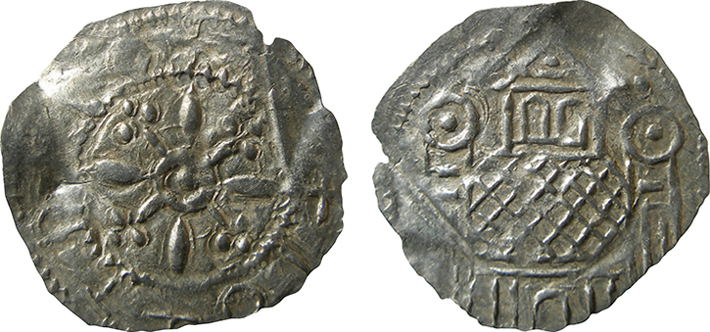
 

Interestingly, when a silver source from the Arab or German world slipped in quality, Jonsson points out, and the Gotlanders rapidly cut off the debased supplies, their contemporaries on mainland Sweden and in areas of Eastern Europe did not. “Word must have spread around the island, saying, ‘Don’t use these German coins anymore!’” says Jonsson. To test imported silver, Gotlanders would shave a bit of the metal with a knife so its contents could be assessed based on color and consistency, says Ny Björn Gustafsson of the Swedish National Heritage Board. He notes that many imported silver items found on Gotland were “pecked” in this way, and that Gotlanders may also have tested imported coins by bending them. By contrast, silver items thought to have been made on Gotland—including heavy arm rings with a zigzag pattern pressed into them—were not generally pecked or otherwise tested. “My interpretation,” Gustafsson says, “is that this jewelry acted as a traditional form of currency and was assumed to contain pure silver.”


These arm rings are among the most commonly found items in Gotland’s hoards, along with coins, and experts had long assumed they were made on the island, but no evidence of their manufacture had been found until Carlsson’s team uncovered a workshop area at Fröjel. “We found the artifacts exactly where they had been dropped,” says Carlsson. There are precious stones: amber, carnelian, garnet. There are half-finished beads, cracked during drilling and discarded. There is elk antler for crafting combs. There is also a large lump of iron, as well as rivets for use in boats, coffins, and storage chests. And, providing evidence of a smelting operation, there are drops of silver.


Researchers found that the metalworkers of Fröjel used an apparatus called a cupellation hearth to transform a suspect source of imported silver, such as coins or ingots, into jewelry or decorated weapons with precisely calibrated silver content. They would melt the silver source with lead and blow air over the molten mélange with a bellows, causing the lead and other impurities to oxidize, separate from the silver, and attach to the hearth lining. The resulting pure silver would then be combined with other metals to produce a desired alloy. The cupellation technique is known from classical times, says Gustafsson, but so far this is the first and only time such a hearth has been found on Gotland. Only one other intact example from the Viking Age has been found in Sweden, at the mainland settlement of Sigtuna.


Gotland Viking Imported Silver

(Photo by: Ny Björn Gustafsson/The Swedish History Museum)

This imported silver piece found on Gotland shows signs of “pecking,” where a bit of metal was gouged out to test its purity.

Traces of lead and other impurities were found embedded in pieces of the cupellation hearth among the material excavated from the workshop area at Fröjel. The hearth has been radiocarbon dated to around 1100. Also unearthed from the workshop area were fragments of molds imprinted with the zigzag patterns found on Gotlandic silver arm rings, establishing that they were, in fact, made on the island—and that the workshop was the site of the full chain of production, from metal refinement to casting. “We have these silver arm rings in many hoards all over Gotland,” says Carlsson. “But we never before saw exactly where they were making them.”


During the Viking Age, Gotland seems to have been a more egalitarian society than mainland Sweden, which had a structure of nobles led by a king dating from at least the late tenth century. On Gotland, by contrast, farmers and merchants appear to have formed the upper class and, while some were more prosperous than others, they shared in governance through a series of local assemblies called things, which were overseen by a central authority called the Althing. According to the Guta Saga, the saga of the Gotlanders, which was written down around 1220, an emissary from Gotland forged a peace treaty with the Swedish king, ending a period of strife with the mainland Swedes. The treaty, believed to have been established in the eleventh century, required Gotland to pay an annual tax in exchange for continued independence, protection, and freedom to travel and trade.

Stratification did increase on the island as time passed, though. Archaeologists have found that, throughout the ninth and tenth centuries, silver hoards were distributed throughout Gotland, suggesting that wealth was more or less uniformly shared among the island’s farmers. But around 1050, this pattern shifted. “In the late eleventh century, you start to have fewer hoards overall, but, instead, there are some really massive hoards, usually found along the coast, containing many, many thousands of coins,” says Jonsson. This suggests that trading was increasingly controlled by a small number of coastal merchants.


This stratification accelerated near the end of the Viking Age, around 1140, when Gotland began to mint its own coins, becoming the first authority in the eastern Baltic region to do so. “Gotlandic coins were used on mainland Sweden and in the Baltic countries,” says Majvor Östergren, an archaeologist who has studied the island’s silver hoards. Whereas Gotlanders had valued foreign coins based on their weight alone, these coins, though hastily hammered out into an irregular shape, had a generally accepted value. More than eight million of these early Gotlandic coins are estimated to have been minted between 1140 and 1220, and more than 22,000 have been found, including 11,000 on Gotland alone.


Gotland Minted Coin Horizontal

(Nanouschka Myrberg Burström)

An example of one of the earliest silver coins minted on Gotland (obverse, left; reverse, right) dates from around 1140.


Gotland is thought to have begun its coinage operation to take advantage of new trading opportunities made possible by strife among feuding groups on mainland Sweden and in western Russia. This allowed Gotland to make direct trading agreements with the Novgorod area of Russia and with powers to the island’s southwest, including Denmark, Frisia, and northern Germany. Gotland’s new coins helped facilitate trade between its Eastern and Western trading partners, and brought added profits to the island’s elite through tolls, fees, and taxes levied on visiting traders. In order to maintain control over trade on the island, it was limited to a single harbor, Visby, which remains the island’s largest town. As a result, the rest of Gotland’s trading harbors, including Fröjel, declined in importance around 1150.


Gotland remained a wealthy island in the medieval period that followed the Viking Age, but, says Carlsson, “Gotlanders stopped putting their silver in the ground. Instead, they built more than 90 stone churches during the twelfth and thirteenth centuries.” Although many archaeologists believe that the Gotland Vikings stashed their wealth in hoards for safekeeping, Carlsson thinks that, just as did the churches that were built later, they served a devotional purpose. In many cases, he argues, hoards do not appear to have been buried in houses but rather atop graves, roads, or borderlands. Indeed, some were barely buried at all because, he argues, others in the community knew not to touch them. “These hoards were not meant to be taken up,” he says, “because they were meant as a sort of sacrifice to the gods, to ensure a good harvest, good fortune, or a safer life.” In light of the scale, sophistication, and success of the Gotland Vikings’ activities, these ritual depositions may have seemed to them a small price to pay.


Daniel Weiss

Preserving Our Past, Recording Our Present, Informing Our Future

Ancient and Honorable Clan Carruthers Int Society CCIS  LLc

carruthersclan1@gmail.com


cropped-coagraywide.jpg


Disclaimer Ancient and Honorable Carruthers Clan International Society CCIS LLC is the official licensed and registered Clan of the Carruthers Family.  This Clan is presently registered in the United States and Canada, and represents members worldwide.  All content provided on our web pages is for family history use only.  The CCIS is the legal owner of all websites, and makes no representation as to the accuracy or completeness of any information on these sites or by following any link provided. The CCIS will not be responsible for any errors or omissions or availability of any information. The CCIS will not be liable for any losses, injuries, or damages from the display or use of this information. We do not sell, trade or transfer to outside parties any personal identifications. For your convenience, we may provide links to various outside parties that may be of interest to you. The content on CCIS is design to support your research in family history.      ( CCIS -LLC copyright 2017 - 2020)


Gutland / Gotland, The History of Gutland, The Viking Age, Uncategorized

CLAN CARRUTHERS – ANCIENT HISTORY OF GUTLANDERS/ CARRUTHERS

CLAN CARRUTHERS INT SOCIETY CCIS

cropped-wider-banner-light-blue-1.jpg

Ancient History of Gutlanders / Carruthers

3swords


There is strong evidence that one group of Swedish/ Gutland predecessors were migratory Thracians, an aggressive refugee “boat-people” who came from the ancient city of Troy.  Located in northwest Asia Minor (present-day northwest Turkey), the ruins of Troy were discovered in 1870.  In the period beginning about 2500 BC, Troy was populated by an “invasion of peoples on the sea” according to the Egyptians.  These people were called Thracians by the Greeks, and were early users of ships, iron weapons and horses.  Troy (also called Troi, Toas or Ilium) was known as a center of ancient civilizations.  Its inhabitants became known as Trojans (also Trajans/Thracians, later called Dardanoi by Homer, Phrygians or Anatolians by others), and their language was Thracian or Thraco-Illyrian.  Evidence shows the city of Troy endured years of war, specifically with Greek and Egyptian armies.  The famous Trojan War was fought between the Greeks and Trojans with their allies.  Troy was eventually laid in ruins after 10 years of fighting with the Greeks, traditionally dated from around 1194 to 1184 BC, and is historically referred to as the Fall of Troy.  The city was completely devastated, which is verified by the fact that the city was vacant to about 700 BC.

Thousands of Trojans left Troy immediately after the war, beginning about 1184 BC.  Others remained about 30 to 50 years after the war, when an estimated 30,000 Trojans/Thracians suddenly abandoned the city of Troy, as told by Homer (Greek writer/poet, eighth century BC) and various sources (Etruscan, Merovingian, Roman and later Scandinavian).  The stories corroborate the final days of Troy, and describe how, after the Greeks sacked the city, the remaining Trojans eventually emigrated.  Over half of them went up the Danube river and crossed over into Italy, establishing the Etruscan culture (the dominating influence on the development of Rome), and later battled the Romans for regional dominance.  The remaining Trojans, mainly chieftains and warriors, about 12,000 in all with their clans, went north across the Black Sea into the Mare Moetis or “shallow sea” where the Don River ends (Caucasus region in southern Russia), and established a kingdom called Sicambria about 1150 BC.  The Romans would later refer to the inhabitants as Sicambrians.  The locals (nomadic Scythians) named these Trojan conquerors the “Iron people,” or the Aes in their language.  The Aes (also As, Asa, Asas, Asen, Aesar, Aesir, Aesire, Æsir or Asir) soon built their famous fortified city Aesgard or Asgard, described as “Troy in the north.”  Various other sources collaborate this, stating the Trojans landed on the eastern shores with their superior weaponry, and claimed land.  The area became known as Asaland (Land of the Aesir) or Asaheim (Home of the Aesir). 

Some historians suggest that Odin, who was later worshipped as a god by pagan Vikings, was actually a Thracian/Aesir leader who reigned in the Sicambrian kingdom and lived in the city of Asgard in the first century BC.  He appointed chieftains after the pattern of Troy, establishing rulers to administer the laws of the land, and he drew up a code of law like that in Troy and to which the Trojans had been accustomed.  Tradition knows these Aesir warriors as ancient migrants from Troy, formidable fighters who inspired norse mythology and as the ancestors of the Vikings.  They were feared for their warships, as well as their ferocity in battle, and thus quickly dominated the northern trades using the Don river as their main route to the north.

Historians refer to the Aesir people as the Thraco-Cimmerians, since the Trojans were of Thracian ancestry.  The Cimmerians were an ancient people who lived among Thracians, and were eventually absorbed into Thracian culture.  Greek historian Herodotus of Halicarnassus noted about 440 BC that the Thracians were the second most numerous people in the world, outnumbered only by the (East) Indians, and that the Thracian homeland was huge.  Ancient maps describe the region as Thrace or Thracia, present-day southeast Europe and northeast Greece.  Thracian homelands included the Ukrainian steppes and much of the Caucasus region.  According to Flavius Josephus, Jewish & Roman historian in the 1st century AD, the descendants of Noah’s grandson Tiras were called Tirasians.  They were known to the Romans as Thirasians.  The Greeks called them Thracians and later Trajans, the original people of the city of Troas (Troy), whom they feared as marauding pirates.  History attests that they were indeed a most savage race, given over to a perpetual state of “tipsy excess”, as one historian put it.  They are also described as a “ruddy and blue-eyed people.”  World Book Encyclopedia states they were “…savage Indo-Europeans, who liked warfare and looting.”  Russian historian Nicholas L. Chirovsky describes the arrival of the Thracians, and how they soon dominated the lands along the eastern shores of the river Don.  These people were called Aes locally, according to Chirovsky, and later the Aesir (plural).

Evidence that the Aesir (Iron people) were Trojan refugees can be confirmed from local and later Roman historical sources, including the fact that the inner part of the Black Sea was renamed from the Mare Maeotis to the “Iron Sea” or “Sea of Aesov”, in the local tongue.  The name remains today as the Sea of Azov, an inland sea in southern European Russia, connected with the Black Sea.  The Aesir were known for their fighting with iron weapons.  They were feared for their warships, as well as their ferocity in battle, and thus quickly dominated the northern trades, using the Don river as their main route for trading. 

The Aesir people dominated the area around the Sea of Azov for nearly 1000 years, though the surrounding areas to the north and east were known as the lands of the Scythians.  The Aesir fought with the Scythians for regional dominance, but eventually made peace.  They established trade with the Scythians, and even strong cultural ties, becoming united in religion and law.  The Aesir began trading far to the north as well. 

The land far north was first described about 330 BC by the Greek explorer Pytheas of Massalia.  He called the region “Thule,” which was described as the outermost of all countries, probably part of the Norwegian coast, where the summer nights were very short.  Pytheas translated Thule as “the place where the Sun goes to rest”, which comes from the Germanic root word “Dhul-” meaning “to stop in a place, to take a rest.”  Pytheas described the people as barbarians (Germanic/Teutonic tribes) having an agricultural lifestyle, using barns and threshing their grains.  These people had already established trade with the Aesir who later began migrating north around 90 BC from the Caucasus region, during the time of Roman expansion in Europe.  The Germanic/Teutonic tribes first made a name for themselves about 100 BC after aggressively fighting against the Romans.  Not much is known about the Germanic tribes prior to this.  When writing the “Gallic Wars,” Julius Caesar described encounters with those Germanic peoples and distinguishes them from the Celts.  During this time period, many Germanic tribes were migrating out of Scandinavia to Germany and the Baltic region, placing continuous stress on Roman defenses. 

Migrating groups were normally smaller groups of different people or tribes, often following a strong leader.  The “nationality” of the leaders would usually appear as the nationality of the migrating group, until later when the group was separated again.  The migrations could take place over several decades, and often when the Germanic tribes were mentioned in the written sources, the Romans had only met raiding groups occupying warriors or mercenaries operating far away from their people.

Around the same time, about 90 BC, the Aesir began their exodus from the Black Sea/Caucasus region.  Their arrival at the Baltic Sea in Scandinavia has been supported by several scholars and modern archaeological evidence.  As told by Snorri Sturluson (a 13th century Nordic historiographer) and confirmed by other data, the Aesir felt compelled to leave their land to escape Roman invasions by Pompeius, and local tribal wars.  Known as Thracian warrior tribes, the aggressive Indo-European nomadic Aesir came north, moving across Europe, bringing all their weapons and belongings in their boats on the rivers of Europe, in successive stages.  Historians note that Odin, who was a very popular Thracian ruler, led a migration about 70 BC with thousands of followers from the Black Sea region to Scandinavia.  It is also told that another Thracian tribe came along with them, a people called the Vanir (also Vaner ,Vans, Vanargians or Varangians).  Odin’s first established settlement became known as Odense (Odin’s Sanctuary or Odin’s Shrine), inspiring religious pilgrimages to the city through the Middle Ages.  These tribes first settled in present-day Denmark, and then created a power-center in what is now southern Sweden / Gutland.  About 800 years later during the Viking era, Odin, the Aesir and Vanir had become gods, and Asgard/Troy was the home of those gods—the foundation for Viking religion.  The Aesir warrior gods, and the religious deities of Odin (also Odinn, Wodan, Woden, Wotan Vodin) and Thor, were an integral part of the warlike nature of the Vikings, even leading them back down the waterways of Europe to their tribal origins along the Black Sea and Asia Minor. 

Aesir became the Old Norse word for the divine (also, the Old Teutonic word “Ase” was a common word for “god”), and “Asmegir” was the Icelandic term for “god maker”—a human soul on its way to becoming divine in the course of evolution.  The Vanir represented fertility and peace gods.  Not unlike Greeks and Romans, the Scandinavians also deified their ancestors.  The Egyptians adopted the practice of deifying their kings, just as the Babylonians had deified Nimrod.  The same practice of ancestor worship was passed on to the Greeks and Romans and to all the pagan world, until it was subdued by Christianity.

Snorri Sturluson wrote the Prose Edda (Norse history and myths) about 1223 AD, where he made an interesting comparison with the Viking Aesir gods to the people in Asia Minor (Caucasus region), particular to the Trojan royal family .  The Prose Edda is one of the first attempts to devise a rational explanation for mythological and legendary events of the Scandinavians.  Unfortunately, many historians acknowledge only what academia accepts as history, often ignoring material that might be relevant.  For example, Snorri wrote that the Aesir had come from Asia Minor, and he compared the Ragnarok (Norse version of the first doom of the gods and men) with the fall of Troy.  Sturluson noted that Asgard, home of the gods, was also called Troy.  Although Snorri was a Christian, he treated the ancient religion with great respect.  Snorri was writing at the time when all of Scandinavia (including Iceland) had converted to Christianity by 11th century, and he was well aware of classical Greek and Roman mythology.  Stories of Troy had been known from antiquity in many cultures.  The Trojan War was the greatest conflict in Greek mythology, a war that was to influence people in literature and arts for centuries.  Snorri mentioned God and the Creation, Adam and Eve, as well as Noah and the flood.  He also compared a few of the Norse gods to the heroes at the Trojan War. 

The Aesir/Asir were divided into several clans that in successive stages emigrated to their new Scandinavian homeland.  Entering the Baltic Sea, they sailed north to the Scandinavian shores, only to meet stubborn Germanic tribes who had been fighting the Romans.  The prominent Germanic tribes in the region were the Gutar, also known as the GutaGutansGautsGotarne or Goths by Romans.  These Germanic tribes were already known to the Aesir, as trade in the Baltic areas was well established prior to 100 BC.  The immigrating Aesir had many clans and tribes, and one prominent tribe that traveled along with them were the Vanir (the Vanir later became known as the Varangians, and subsequently the Guts, Guta, GutansGautsGotarne or Goths , who settled in what is now present-day Gutland).  They were, the most prominent clan to travel with the Asir , the Eril warriors or the “Erilar,” meaning “wild warriors.”  The Asir sent Erilar (or Irilar) north as seafaring warriors to secure land and establish trade (these warriors were called “Earls” in later Scandinavian society, then became known as JarlarEruls and Erils or Heruls and Heruli by Romans, also Eruloi or Elouroi by Greek historian Dexippos, and Heruler, Erullia and Aerulliae by others).  The clans of Erilar enabled the Asir clans (later called Svi, SviarSvea, Svear or Svioner by Romans) to establish settlements throughout the region, but not without continuous battles with other migrating Germanic tribes.  The Eruls/Heruls eventually made peace with those who ruled the region.  The tribes of Svear, Vanir, and Heruli soon formed their own clans and dominated the Baltic/Scandinavian region.  The Gothic historian Jordanes (or Jordanis), who was a notary of Gothic kings, told about 551 AD that the Erils were from the same stock as the Svear, both taller and fairer than any other peoples of the North.  He called the Svear, “Sve’han.”

The Svear population flourished, and with the Heruls and Goths, formed a powerful military alliance of well-known seafarers.  The Svear and Heruls then gradually returned to their ancestral land, beginning in the 2nd century AD.  Sometimes sailing with the Goths, they terrorized all of the lands and peoples of the Black Sea and parts of the Mediterranean, even the Romans.  They were the pre-Vikings.  Roman annals tell of raids of Goths and Heruli in 239-266 AD in the territory of Dacia (where the Danube river runs into the Black Sea).  Having built a fleet of 500 sailing ships, the Heruls completed their raids in 267-268 AD, and controlled all of the Roman-occupied\ Black Sea and parts of the eastern Mediterranean.  There are several accounts about how the Herul warriors returned to ravage the shores of the Black Sea and the Mediterranean, alone and together with the Goths.  The Romans noted that “the Heruls, a Scandinavian people, together with the Goths, were, from the 3rd century AD, ravaging the Black Sea, Asia Minor and the Mediterranean.”  While the the Romans called the Scandinavian region “Thule” (after Pytheas), the Greeks called it “Scandia” (from ancient times), and others called the area “Scandza.”  The term Scandia comes from the descendants of Ashkenaz (grandson of Noah in the Bible).  Known as the Askaeni, they were the first peoples to migrate to northern Europe, naming the land Ascania after themselves.  Latin writers and Greeks called the land Scandza or Scandia (now Scandinavia).  The peoples in that region would be called Scandians or Scandinavians.  Germanic tribes, such as the Teutons and Goths, are considered the descended tribes of the Askaeni and their first settlements.

The first time Thule (Scandinavia) was mentioned in Roman written documents was in the 1st century (79 AD) by the Roman citizen Plinius senior.  He wrote about an island peninsula in the north populated by “Sviar,” “Sveonerna” or “Svearnas” people, also called “Sveons,” Svianar,””Svetidi or Suetidi” by others.  Later in 98 AD the learned civil servant Cornelius Tacitus wrote about northern Europe.  Tacitus writes in the Latin book Germania about tribes of “Sviones” or “Suiones” (Latin Sviones was derived from Sviar) in Scandinavia, who live off the ocean, sailing in large fleets of boats with a prow at either end, no sail, using paddles, and strong, loyal, well-armed men with spikes in their helmets.  They drove both the Goths and Lapps out of Scandinavia.  Archaeological finds have provided a vivid record of the evolution of their longships from about the 4th century BC.  Tacitus further wrote, “And thereafter, out in the ocean comes Sviones (also “Svionernas” or “Svioner”) people, which are mighty not only in manpower and weaponry but also by its fleets”.  He also mentions that “the land of Svionerna is at the end of the world.”  In the 2nd century (about 120 AD) the first map was created where Scandinavia (Baltic region) could be viewed.  Greek-Egyptian astronomer and geographer Ptolemaios (Ptolemy of Alexandria) created the map, and at the same time wrote a geography where he identified several different people groups, including the “Gotarne,” “Heruls,” “Sviar” and “Finnar” who lived on peninsula islands called “Scandiai.”  During the Roman Iron Age (1-400 AD), evidences are convincing for a large Baltic seafaring culture in what is now Sweden, Denmark, Finland and Estonia.

Many clans of Aesir and Germanic peoples were united by settlements.  For example, the Aesir clan Suevi (also Suebi) settled among Germanic peoples in a region called Swabia (named after themselves), which is now southwest Germany.  Those clans became known as the Alemanni, first mentioned about 213 AD after attacking the Romans.  Called Suevic tribes by historians, they formed an alliance for mutual protection against other Germanic tribes and the Romans, and retained their tribal designation until the late Middle Ages.  They settled as far south as present-day Spain and Portugal.

By the 5th century, the Aesir Heruls were in great demand as soldiers in the Roman Imperial Guards.  The Romans were impressed with the war-like Heruls, and recruited them to fight as mercenaries in the Roman Army.  About 459 AD Bishop Hydatius (Idacius) of the Roman province of Gallaecia (present day Spain and Portugal) wrote that the Heruls were Vikings (from Viking raids on the coast of Spain).  Herul factions were making settlements throughout Europe, fighting and battling everywhere they went.  Their pay in gold coins tell of their Scandinavian history, even battling Attila the Hun.  In the late 5th century, the Heruls formed a state in upper Hungary under the Roman ruler Cæsar Anastasius (491-518 AD).  Later they attacked the Lombards, but were beaten, according to Greek-Roman author Prokopios (born at the end of the 5th century).  He was a lawyer in Constantinople and from the year 527 private secretary to the Byzantine military commander Belisarius on his campaigns against the Ostrogoths.  Prokopios says by the early 6th century (about 505), the remaining Heruls in upper Hungary were forced to leave.  Some of them crossed the Danube into Roman territory, where Anastasius allowed them to settle.  Historians mention that remaining clans of Heruls (Herulians) sailed northwards, back to Thule to reunite with their Svear brethren.  Prokopios noted that there were 13 populous tribes in Thule (the Scandinavian peninsula), each with its own king.  He said, “A populous tribe among them was the Goths, next to where the returning Heruls settled.”  Prokopios also mentions that “the Heruls sent some of their most distinguished men to the island Thule in order to find and if possible bring back a man of royal blood.  When they came to the island they found many of royal blood.” 

Evidence of their existence during this time period can be found on the frequent appearance of runic inscriptions with the name ErilaR “the Herul.”  While it is thought that the ancient Scandinavian alphabet, called futhork or runes, is of Latin origin, the evidence suggests that it was used far to the northeast of Rome where Roman influence did not reach.  The runes are a corruption of an old Greek alphabet, used by Trojans along the northwest coast of the Black Sea.  From examples of Etruscan, Greek, and early Roman scripts, it is not difficult to see that earlier runes resemble archaic Greek and Etruscan rather than Latin.  The Heruls used runes in the same way their ancestors did, which have been discovered throughout Europe and Scandinavia.  Scandinavian sagas tell us that the Scandinavian languages began when men from central Asia settled in the north.  Sometime after 1300 AD runes were adjusted to the Roman alphabet.

The Heruls brought with them a few Roman customs, one being the Julian calendar, which is known to have been introduced to Scandinavia at this time, the early 6th century AD.  When the Heruls returned to join again with the Svear in Scandinavia, the Svear state with its powerful kings suddenly emerges.  Their ancestors were the warring bands of Aesir (sometimes called Eastmen) who became known as the Svear or Suines.  They became the dominant power and waged war with the Goths, winning rule over them.  By the middle of the 6th century, the first all-Swedish kings emerged.  This royal dynasty became immensely powerful and dominated not only Sweden but also neighboring countries.  Gothic historian Jordanes writes of the Suines or Suehans (Sve’han) of Scandinavia, with fine horses, rich apparel and trading in furs around 650 AD.  The Swedish nation has its roots in these different kingdoms, created when the king of the Svenonians (Svears) assumed kingship over the Goths.  The word Sweden comes from the Svenonians, as Sverige or Svearike means “the realm of the Svenonians”.  The English form of the name is probably derived from an old Germanic form, Svetheod, meaning the Swedish people. 

By the 7th century, the Svear and Goth populations dominated the areas of what is now Sweden, Denmark and Norway.  However, the term Norway came later.  Latin texts from around 840 AD called the area Noruagia, and Old English texts from around 880 AD used Norweg.  The oldest Nordic spelling was Nuruiak, written in runes on a Danish stone from around 980 AD.  The Old Norse (Old Scandinavian) spelling became Nordvegr, meaning “the country in the north” or “the way to the north,” and the people were called Nordes.  All of the names were given by people south of Norway to signify a place far to the north.  The people of Norway now call themselves Nynorsk, a name decided by linguists in the 1880s.  The name Denmark originated from the people called the Vanir (or Vaner) who settled the region with the Aesir in the first century BC.  The Vanir were later called Danir (or Daner), and eventually Danes.  By the 9th century AD, the name Danmark (Dan-mörk, “border district of the Danes”) was used for the first time.  In Old Norse, mörk meant a “forest,” and forests commonly formed the boundaries of tribes.  In Modern Danish, mark means a “field,” “plain,” or “open country.”   Hence, Denmark once meant  literally “forest of the Danes.”  During this period, their language Dönsk tunga (Danish tongue) was spoken throughout northern Europe, and would later be called Old Norse or Old Scandinavian during the Viking period.  Old Norse was spoken by the people in Denmark, Norway, Sweden, Iceland, and parts of Germany.

The ancestor of all modern Scandinavian languages, beginning with the Germanic form, was developed from the languages of the Aesir (Thracian tribes) and Goths (Germanic tribes).  When the Aesir integrated with the people of the lands, their families became so numerous in Scandinavia and Germany that their language became the language of all the people in that region.  The linguistic and archaeological data seem to indicate that the final linguistic stage of the Germanic languages took place in an area which has been located approximately in southern Sweden, southern Norway, Denmark and the lower Elbe river which empties into the North Sea on the northwest coast of Germany.  Germanic tribes began arriving in the area about 1000 BC.  Later, the Aesir brought their language to the north of the world, to Norway, Sweden, Denmark and Germany.  The future rulers of Sweden, Denmark, Norway and Iceland trace their names and genealogies back to the Aesir.  The most ancient inscriptions in Old Norse/Scandinavian are from the 3rd and 5th century centuries AD, with other inscriptions dating up to the 12th century.  They were short signs written in the futhork runic alphabet, which had 24 letters (though many variations were used throughout the region).  By the end of the Viking era (11th century AD), the Old Norse language dialect varieties grew stronger until two separate languages appeared, Western Scandinavian, the ancestor of Norwegian and Icelandic, and Eastern Scandinavian, the the ancestor of Swedish and Danish.  Many Old Norse words were borrowed by English, and even the Russian language, due to expansion by Vikings.

The next Svear conquests began in the early 8th century.  By 739 AD the Svear and Goths dominated the Russian waterways, and together they were called Varyagans or Varangians, according to written records of the Slavs near the Sea of Azov.  Like their ancestors, the Svear lived in large communities where their chiefs would send out maritime warriors to trade and plunder.  Those fierce warriors were called the Vaeringar, which meant literally “men who offer their service to another master”.  We later know them by their popularized name, the Vikings.  Thus began the era known as the Viking Age, spanning more than 300 years from about 700 AD to 1066 AD.  Once again the Svear began returning to the places of their Thracian ancestors in the Caucasus region, sailing rivers which stretched deep into Russia and the Black Sea, establishing trading stations and principalities.  They often navigated the Elbe river, one of the major waterways of central Europe.  They also navigated, as a primary route, the Danube river, a vital connection between Germany and the Black Sea.  Their ships were the best in all of Europe—sleek, durable and could travel by both sail or oars.  To the east of the Elbe they were known as Varangians, and west of the Elbe they were called Vikings.  Many called them Norse, Norsemen or Northmen—those from the Scandinavian countries, which consisted of Sweden, Norway and Denmark.  In northern France they would later be called Normans, eventually recognized as the rulers of what became Normandy.  In England they were known as Danes, although some may well have been from Norway, where they became rulers of the Danelaw.  Vikings raids in western Europe and the British Isles are noted in this Old English prayer:  “A furore Normannorum libra nos, Domine” (From the fury of the Northmen deliver us, Oh Lord). 

Vikings never called themselves Vikings.  Unlike Varangian, the term Viking probably originated from Frankish chroniclers who first called them “Vikverjar” (travelers by sea), Nordic invaders who attacked the city of Nantes (in present-day France) in 843 AD.  The word “vik” or “vic” (from “wic”) meant river estuary, bay or fjord in Old Norse (a popular avenue for attack), and later meant “one who came out from or frequented inlets to the sea”.  Viking and Varangian eventually became synonymous, meaning “someone who travels or is passing through,” whether merchant, mercenary, or marauder.  Their activities consisted of trading, plundering and making temporary settlements .  Finnish peoples referred to the Swedish voyagers as RuotsiRotsi or Rus in contrast with Slavic peoples, which was derived from the name of the Swedish maritime district in Uppland, called “Roslagen,” and its inhabitants, known as “Rodskarlar.”  Rodskarlar or Rothskarlar meant “rowers” or “seamen.”  Those Swedish conquerors settled in eastern Europe, adopted the names of local tribes, integrated with the Slavs, and eventually the word “Rusi,” “Rhos” or “Rus” came to refer to the inhabitants.  The Arab writer Ibn Dustah wrote that Swedish Vikings were brave and valiant, utterly plundering and vanquishing all people they came against.  Later, the Arabic diplomat Ibn Fadlan, while visiting Bulgar (Bulgaria) during the summer of 922 AD, saw the Swedish Vikings (Rus) arrive, and he wrote:  “Never before have I seen people of more perfect physique; they were tall like palm trees, blonde, with a few of them red.  They do not wear any jackets or kaftaner (robes), the men instead wear dress which covers one side of the body but leaves one hand free.  Every one of them brings with him an ax, a sword and a knife.”  Their descriptions mirror the physique, dress and armor of Trojan warriors—the Viking ancestors.  The various ancestors of the Vikings included the Thracian tribes (Asir) and the Gutland tribes (Goths).

The Vikings included many tribes and kingdoms from around the Baltic Sea, including the Svear from Sweden, the Norde from Norway, the Danes from Denmark, the Jutes from Juteland (now part of Denmark), the Goths from Gotland (now part of Sweden), the Alands from Åland (now part of Finland), the Finns from Finland, and others.  The Svear Vikings traveled primarily east to the Mediterranean (what is now Russia and Turkey), where they had been returning regularly since leaving the region 900 years earlier.  Subsequent Viking raids and expeditions covered areas deep into Russia, the Middle East, Europe and America, ending in the 11th century (about 1066 AD) after the introduction of Christianity around the year 1000 AD.  Dudo of Saint Quentin, a Norman historian, wrote between 1015 and 1030 AD “The History of the Normans” where he called the Vikings “cruel, harsh, destructive, troublesome, wild, ferocious, lustful, lawless, death-dealing, arrogant, ungodly and more monstrous than all the rest.”  When Christianity ended the Viking Age, kingships and provinces of Sweden combined to form one country.  The dominant king during the Viking Age was from the Erik family of Uppsala.  One of the first Swedish monarchs in recorded history was Olof Skotkonung, a descendant of the Erik family.  Olof and his descendants ruled Sweden from about 995 to 1060 AD.  Sweden’s first archbishop arrived in the 12th century (1164).                          http://www.osterholm.net

*** Not to make this article too long, we are stopping here since we do know that the Carruthers DNA shows two large groups came to Scotland, one in the 400 AD and one in the 900 AD.


Preserving Our Past, Recording Our Present, Informing Our Future

Ancient and Honorable Carruthers Clan Int Society CCIS

carruthersclan1@gmail.com


COAGRAYwide

Disclaimer Ancient and Honorable Carruthers Clan International Society CCIS LLC is the official licensed and registered Clan of the Carruthers Family.  This Clan is presently registered in the United States and Canada, and represents members worldwide.  All content provided on our web pages is for family history use only.  The CCIS is the legal owner of all websites, and makes no representation as to the accuracy or completeness of any information on these sites or by following any link provided. The CCIS will not be responsible for any errors or omissions or availability of any information. The CCIS will not be liable for any losses, injuries, or damages from the display or use of this information. We do not sell, trade or transfer to outside parties any personal identifications. For your convenience, we may provide links to various outside parties that may be of interest to you. The content on CCIS is design to support your research in family history.      ( CCIS -LLC copyright 2017 - 2020)