


Gotland: Pearl of the Baltic Sea

medieval walls of Visby, Gotland
We spotted the towers of Visby’s medieval cathedral as we approached Sweden’s island of Gotland. We were there to see the Old Town, a medieval Viking and Hanseatic trading post with a ring wall, towers, and moat. It is so well preserved that it seems to have come to life from a fairy tale.

Today, Visby is a modern municipality and cultural center, a fusion of the best of the old and new. You can shop for innovative local goods and modern Scandinavian designs in historic buildings along winding 13th century cobbled lanes.

The medieval city is well tended by the affluent residents who treasure the historic sites and ensure an abundance of cultural, gastronomic, entertainment, and recreational options. Visby has the most restaurants per capita of all towns of Sweden.

Artists and musicians flourish. Locals and visitors alike enjoy the attractions and party atmosphere that radiates from the main street, Strandgatan.

Gotland, the largest island in the Baltic, is about 56 miles off the east coast of Sweden. It was ideally situated to rise to greatness as a center of trade between Russia and Western Europe.
Its history is a tale of Viking traders, German merchants, riches, buried treasures, churches, kings, pirates and knights. In 1995 it was named a UNESCO World Heritage Site.

Known as the Pearl of the Baltic Sea, Gotland is one of Sweden’s best places to live and top vacation destinations. It has the most hours of sun of all of Sweden and a milder climate the mainland.
Gotland is a little larger than Rhode Island, but has only about 5% of the population. As an island, it has an abundance of beaches, stunning seascapes, and soaring cliffs with spectacular views.
Limestone outcroppings are often carpeted in flowers. Many, like the over forty kinds of orchids, are not found in other parts of Sweden. Taxonomist Carl Linnaeus was here in 1741.
Gotland’s main industry, agriculture, makes for a bucolic countryside. Little wonder tourism is the next largest segment of the economy. About a million people visit each year, mostly between June and August.
Gotland is flat, making it ideal for walking or cycling along its paths. It’s eco-friendly, with electricity-generating windmills in the southern part of the island.
History: Location, location, location
In the 8th and 9th centuries, Viking was a name used to describe the farmers, tradesmen, and fishermen who lived here in wooden houses in Gotland’s protected bay, or vik. Viking traders journeyed through Russia to Byzantium and the Caliphate, trading things like Greenland furs for silver, silks, and glass. Visby enjoyed great prosperity as a transit town and merchants’ hub.
Visby joined the medieval Hanseatic League (Hansa) to consolidate power and interests with the German merchants who expanded into the Baltic, and by the 12th century, Visby was the center of Hanseatic League trade. With all Baltic commercial routes passing through here, the 12th to 14th centuries are considered to be Visby’s Golden Age.
Construction boomed when German and other wealthy merchants expanded their interests and came to live in Visby. They tore down the simple wooden buildings and built stone guild houses and stately homes.


However, resentment was brewing. Visby merchants had rejected their long-standing Gotlandic union for the laws of Hanseatic League. In 1288 a civil war erupted between people inside and outside the wall.
Word of Gotland’s wealth also attracted raiders and plunderers. Treasures buried for safekeeping continue to be discovered in fields and gardens throughout the island. Over 700 Viking Age hoards of Arabic and European coins and silver have been found.
In the 14th century, a series of disastrous events occurred. The island was struck by the Black Death in 1350. In 1361, King Valdemar Atterdag of Denmark attacked, slaughtering the people of the countryside, demanding vast ransom from the horrified people within the walls, and declaring himself King of Gotland.
By the end of the century, the Baltic pirates and former mercenaries known as the Vitalie brothers took control of the island. They were ousted by the next occupiers, the Teutonic knights. In 1525 Visby was attacked and the northern part of town was burned by an army from Lübeck in present-day Germany.
When Gotland reverted to Swedish rule, the Danes blew up Visborg Castle before leaving. In the 17th century, women convicted in Europe’s witch trials were imprisoned here.
By the 18th century, trade and industry returned. Gotland has continued to prosper happily ever after.
What to See

Visby, City of Roses and Ruins, is known for fragrant gardens and remains that include twenty-three churches and abbeys.

garden lanes, Visby, Gotland
The ring wall, ringmuren, is one of the best preserved in the world. When it was constructed along the shore in 1221 existing structures were built right into it.

The wall was rebuilt around 1300 to its present height and towers were added. The wall is strongest on the side facing the rest of the island, designed to keep those in the countryside out and extract tolls from those allowed in.

There are over 200 medieval stone warehouses and merchants’ homes inside Visby’s city walls. Most are limestone, tall and rectangular, with the gabled end facing the street. Designs are simple, with perhaps quoins, brick or stepped gables. There are also charming little 17th and 18th century wooden houses, all of which seem to have with colorful flower gardens.
One of the best preserved buildings is Gamla Apoteket, the Old Pharmacy on Strandvagan, which has a medieval well and an example of Visby’s state-of-the-art latrine system in the cellar. The 17th century Burmeister House, also on Strandvagan, is worth a stop to see its elaborately painted burgher interior.

Almedalen, or Elm Tree Park, Visby, Gotland
The area known as Almedalen, or Elm Tree Park, is in the filled-in old medieval harbor. This was a protected bay and trading center when Visby was a Hanseatic partner. It is a meticulously landscaped setting for special events, picnics, and a summer amusement park.
The 35 meter high Gun Powder Tower, Kruttornet, was built into the ring wall. This fortress is thought to be from the mid-12th century, making it one of the oldest secular buildings in Scandinavia.
Legend has it that a wealthy merchant’s daughter was walled up alive in Jungfrutornet–(Maiden’s Tower). It is said she betrayed the town by falling in love with a Danish king.

Visby Cathedral, now known as St. Mary’s Church, was built by the Germans and has a carved walnut pulpit from Lübeck. It is the only medieval church in Visby still used for worship.
The Gotland Museum houses treasures from the Stone Age, Viking Age, and Middle Ages to the present. It’s a place to see unique picture stones, gold, and silver.
Visby’s Botanical Garden has specimens from around the world and over 200 kinds of roses. It is one of best botanical gardens in Sweden.
There are many shopping areas in the walled city offering local art, brightly painted wooden handicrafts, ceramics, and woolen throws. Local specialties include lamb with local herbs, smoked fish, ice cream or coffee and pastry. Or make your own picnic of limpa (rye) bread, lingonberry or cloudberry jam, fall truffles, and dill-flavored cheeses.
Outside Visby
At Tofta, about 1 1/2 hours from the city, there are small restaurants, sandy beaches and a recreation of a Viking village. The village is a place to learn crafts, prepare food, or try a competitive sport, all Viking-style. The shoreline is a popular spot for camping.

Fishing villages dot the coast. In the 19th century, island farmers built cabins by the sea for their farm employees to use during the busy autumn fishing season. These cabins are now popular vacation rentals.
Christianity was brought to Gotland in the 1st century, by its own residents, and, yet because of generational differences, it took fifty or sixty years spread throughout the island. This was a time when wealthy farmers ruled, and each built a church, often with a defense tower. There are 92 churches from the 12th and 13th centuries here, all in good condition, that continue to be used for ceremonies like marriages and funerals.

Fröjel Socken’s “saddle style” church, Gotland
We visited Fröjel Socken’s “saddle style” church, so named for the 12th century Roman-style area in the middle. Its defense tower was built around the same time as the Powder Tower in Visby. In the mid-13th century, a Gothic-style section with windows was added.

Gannarve ship grave, Gotland
There are over 300 historic ship graves on Gotland, and we stopped at one known as Gannarve. Bronze Age people of importance were buried in stone coffins with food, weapons, and tools for the afterlife. Stones outline the gravesite in the shape of a ship sailing to a new life.
A royal crown marks the entrance to Fridhem, the former summer home of Princess Eugenie, daughter of Swedish King Oscar I. Health concerns brought her here for the fresh air and mild climate beginning in the summer of 1860. She welcomed writers and painters and made this a cultural time for Gotland. Fridhem is now a hotel. A youth hostel and rental cottages have been added.

traditional red stuga, Gotland
Our ride through the countryside took us past sheep farms, modern houses and charming traditional red and white houses known as stugas. There were people picking small Gotland berries for jam. Swedes enjoy a typically egalitarian policy known as allamansrätt, “all man’s right”, which allows everyone the right to roam private land to picnic, pick wild mushrooms and berries and such, so long as they leave the land as they found it and respect privacy.
With more time
There are many leisure attractions like Kneippbyn’s Summer & Waterland with Villekulla Cottage. The cottage was used in a television series and movies based on Astrid Lindgren’s Pippi Longstocking books.
Lummelunda Cave, just a mile north of Visby, has underground lakes and rivers.
With Gotland’s mild climate, it is often possible to play golf year-round.
Just north of Gotland is Fårö, the tiny island where Ingmar Bergman lived and filmed some of his movie scenes.
Events
The twenty-seventh week of each year is known as Almedalen Week. Representatives of Sweden’s major political parties participate in political forums and give speeches in Almedalen Park.
The highlight of the year is Medieval Week, held the first week of August. Visby reverts to its medieval roots with jousting tournaments, knights on on horseback, fairy tales, crafts, a medieval market, pageants, lectures, educational events, banquets, theater, and concerts from hurdy-gurdy to classical in the old ruins. Step back to the Middle Ages and the sights and sounds of Hanseatic League days. Wear a medieval costume if you like. Book well in advance and be prepared to pay high-season prices.

flag of Gotland
Linda Fasteson
Preserving Our Past, Recording Our Present, Informing Our Future
Ancient and Honorable Carruthers Clan Int Society LLC
carruthersclan1@gmail.com





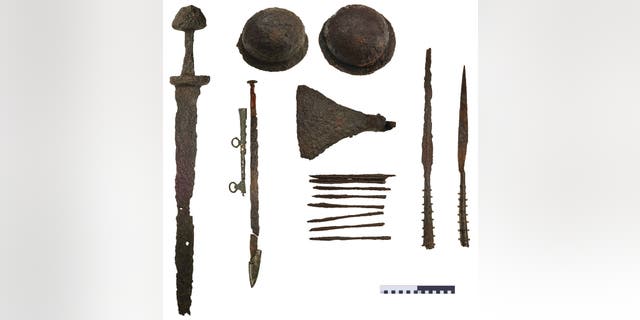
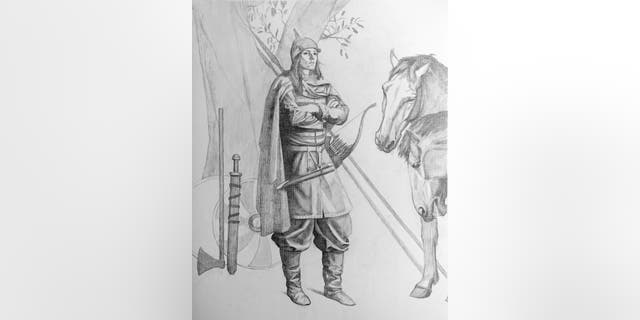
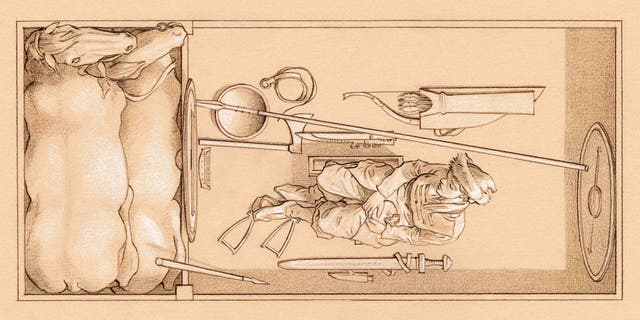
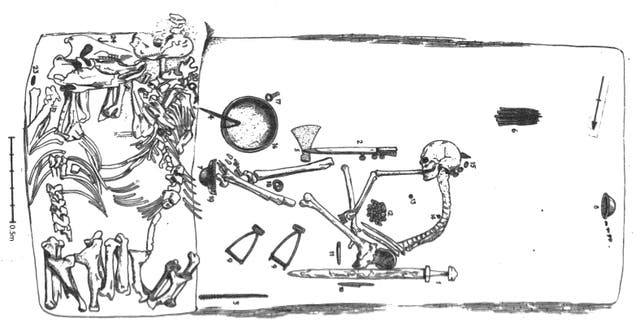
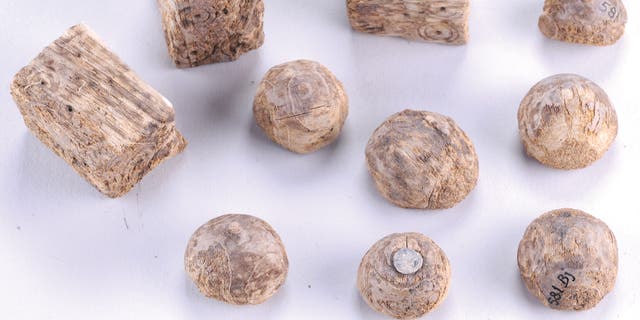

 t is thought that Pictish kings may have dominated Dál Riada into the early 800s, with Caustantín mac Fergusa (793–820) ( Carruthers DNA Marker ), perhaps placing his son Domnall on the throne of Dál Riada from 811. It appears that the Scots-Gaels of Dál Riada became allies of the Picts against the Vikings. Amongst those killed during the earliest Viking invasions were the two most powerful men in the former kingdoms; the Pictish leader, Eógan mac Óengusa, and the leader of Dál Riada, Áed mac Boanta, who were both among the dead after the Vikings in 839 delivered a major defeat to the united forces of Picts and Scots-Gaels.
 This process culminated in the rise of Kenneth MacAlpin in the 840s. ( He carries the Carruthers DNA Marker ) Kenneth is known as the first combined King of Scots and Picts and died on the 13th February 858 from a tumour. Upon his death, Kenneth is recorded as being King of Picts, with the terms Alba and Scotland still not in use.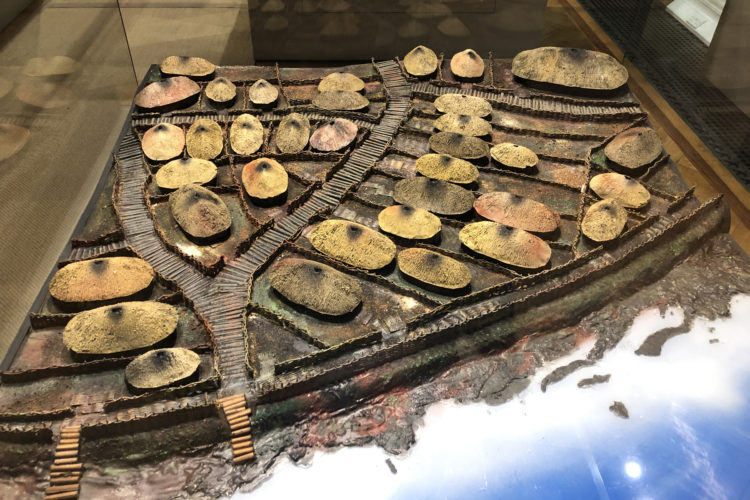
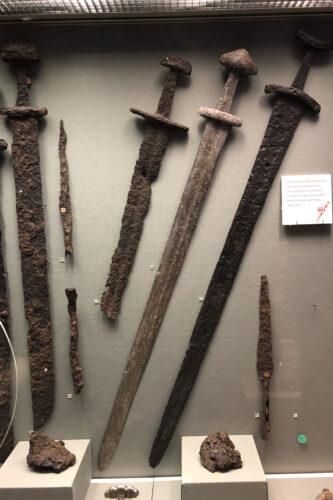 Over one hundred fifty hoards have been found from Viking Era Ireland, comprising mostly silver and bronze items. Along with the burial goods these folk were consigned to their graves with, and accidental losses now recovered, rich and diverse material remains provide vivid glimpses into the ways these mostly Norwegian raiders both changed and were changed by the Irish they settled amongst.
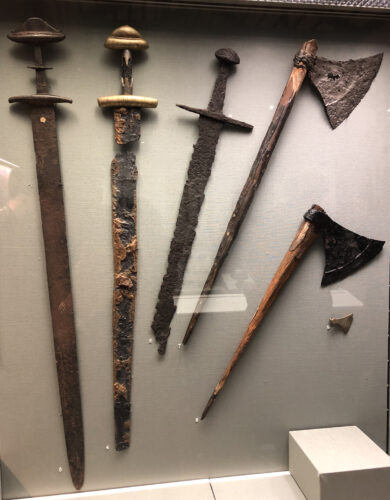 The Viking incursion into Ireland meant a huge influx of silver was carried into the island – silver dirhams and Kufic coins from trade originating in Islamic lands, and masses of hack silver (broken bits of jewellery, coin fragments, slices cut from simple silver rods) brought as booty from pillaging targets along the shores of Frankland.
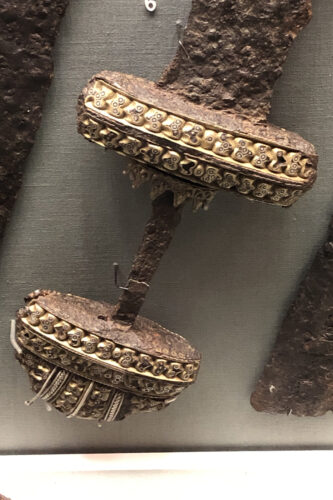 Irish workers in precious metals, already amongst the most highly skilled on Earth, where quick to adopt Scandinavian motifs into their work. Great penannular pins and brooches featuring bosses, thistles, kite-shaped pins, arm rings, and silver mesh work appeared for the first time in Ireland, adapted from Norse models.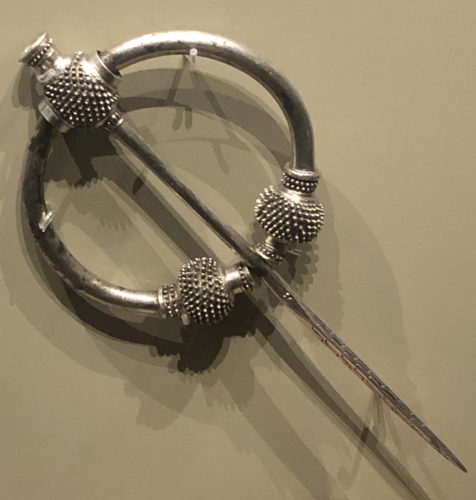
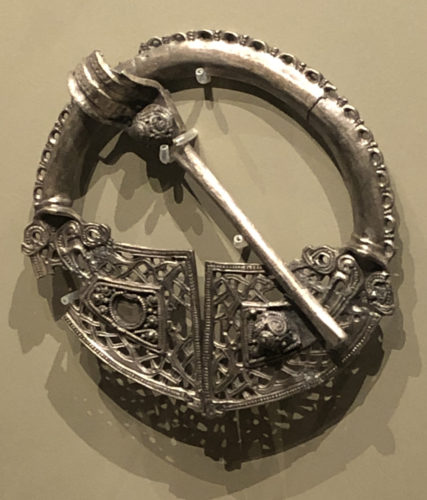
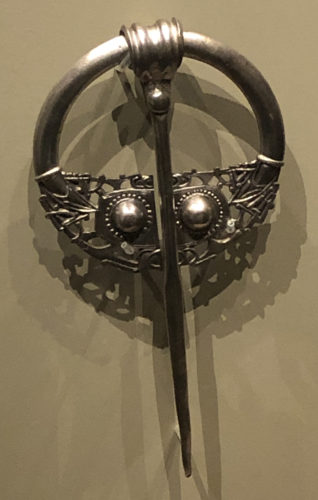
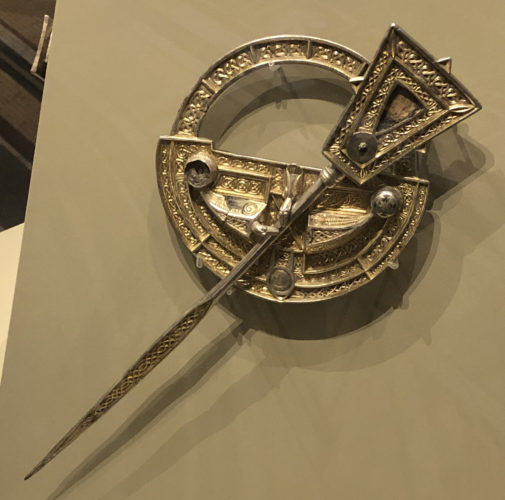
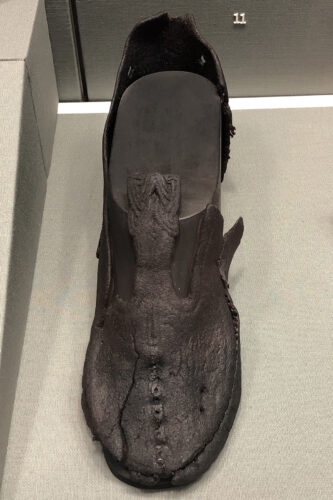 The anaerobic nature of Irish peat bogs has yielded many finds of organic materials in a high state of preservation. I had seen the stray 9th or 10th century shoe on display at Jorvik or the National Museums of Denmark or Sweden; here was a whole array of them, along with leather shoulder bags, water (or ale/wine) bags, and a jaw-dropping leather knife scabbard.
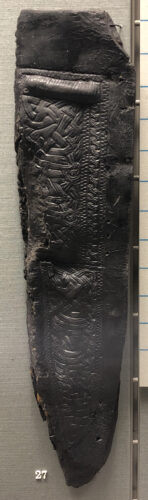 Leather knife scabbard. Sublime example, thanks to preservation in peat.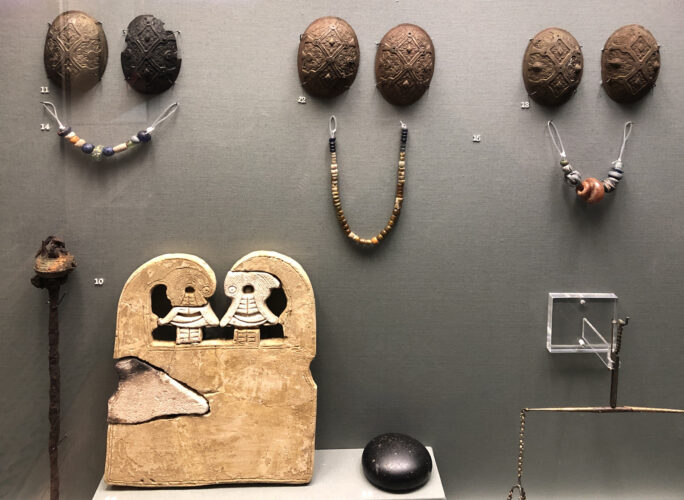

 CLAN CARRUTHERS - OUR NORSE ANCESTORS