Ancient & Honorable Clan Carruthers – Promptus et Fidelis -Since 1983
Author: ClanCarruthers
After studying the history, the stories and even the tears of the Carruthers Journey, it is time to start writing them down so all the Carruthes can read them.
Preserving the Past
Recording the Present
Informing the Future!
Promptus Et Fidelis
CARRUTHERS – GOTLAND TO SCOTLAND- FROM ASHMEN OR AACHENMAN
Carruthers – Gotland – Ashman
In the last two blogs, it was mentioned that all the Carruthers ancestors, no matter how it is spelled, have the same 32-36 DNA markers, and our earliest location is Gotland. The same DNA takes us to 500 BC on the island of Gotland.
Gotland was in a perfect position to be a destination that people traveling would stop at. Its position in the middle of the Baltic Sea made the island a natural hub for contact between West and East. However, being an island also meant developing along different paths, creating special traditions and legends.
An island off the southwestern coast of what is now Sweden.
Traces of around 60 coastal settlements have been found on Gotland, says Dan Carlsson. Most were small fishing hamlets with jetties apportioned among nearby farms. Fröjel, which was active up until 1150, was one of about 10 settlements that grew into small towns, and Carlsson believes that it became a key player in a far-reaching trade network. “Gotlanders were middlemen,” he says, “and they benefited greatly from the exchange of goods from the West to the East, and the other way around.”
There is no doubt that Gotland served as a central meeting point in the Baltic Sea. Commerce took place among people from widespread areas, both near and far. Objects found in excavations include artefacts from Continental Europe and the Arabian caliphate. Since they found artifacts from the Arabian countries, does that mean we raped and pillaged our way down there. OH, you bet we did! And we were damn good at it too!
Most astounding of all are the great silver treasures, which have become well-known throughout the world. The huge number of” silver hordes” finds bears witness to wealth found nowhere else at our latitude. They have found in excess of 180,000 coins on Gotland, in comparison to 80,000 coins in all of Sweden and Norway. The coins show the extent of Gotland’s contact with the outside world and the trade that helped make the island so rich. Ornamental metalwork is often found in burials but also comes from hoards and bog finds. Our ancestors were great “metal spinners”. Findinsg in iron, copper, and silver are numerous. Besides the coins, the gold is found in the form of thin, disk-shaped pendants stamped on one side (known as bracteates), sword pommels, scabbard mounts, and large, extravagantly decorated collars with applied decoration.
Fishing and hunting of wild animals, including moose, bear, and reindeer as well as small mammals and birds, remained important throughout the Late Iron Age, along with agriculture based on raising cattle, hogs, sheep, and goats and growing barley, rye, oats, and flax on arable land as the climate allowed. Gotland was the most agriculturally rich areas. In the far north, there were reindeer herders . The hunters, fisherman and farmers were the upper class on Gotland, during the iron age.
Characteristic house types were long rectangular houses like those known at Vallhagar near the west coast of Gotland, dating to the sixth century, apparently similar to later Viking Age halls of indigenous longhouse type that are described in saga literature.
Earlier than that in the Iron Age, hillforts dot the landscape of the west coast of Gotland. In coastal areas, they seem to provide refuge from sea attacks and protect waterways. Stone forts were built on the Baltic Islands, including Torsburgen on Gotlands.
The huge number of” silver hordes” finds bears witness to wealth found nowhere else at our latitude. They have found in excess of 180,000 coins on Gotland, in comparison to 80,000 coins in all of Sweden and Norway. The coins show the extent of Gotland’s contact with the outside world and the trade that helped make the island so rich.Hoards of Roman solidi (gold coins) deposited on the Baltic Islands from the late fifth century through the mid-sixth century also reflect unrest in this period.
Because of the fact that our ancestors were such master of metal spinning, the helmets they made were of course the best. They had the only metal helmet made with a protector for their nose. Roman had helmets, but they did not know how to have any protecting over their face.
Burials include both inhumation and cremation during the Late Iron Age, with single mounds gradually replacing mound groups yet with great variation in grave types. At 500 AD ornamental gold and bronze fragments were discovered and shown to be damaged by a cremation fire. The ancestors were quite ritualistic. They held elaborate funerals.
Many families had their own graveyard, and they would build the outline of a ship around were all their immediate family was buried. These were called barrow graves.
Our Ancestors were fierce shipbuilders. Because of their metal spinning craftsmanship, they could create the tools needed. They made ships mainly out of Ash Trees, which became a very sacred tree to them. When a new life was created or one had left this world they always planted an ash tree. When people from other regions saw the boats, they would put their order in, and thus it was quite profitable for the Ancestors. This is where they made the most of their money. Boats and ships were a major importance in everyday life and they were a symbol of wealth and power. Our ancestors were advanced in wood carpentry and it is mentioned often that these ships were lighter, slimmer, stronger and faster.
Because of the importance and sacredness of the Ash Tree, used for personal rituals and for making these excellent ships, we were referred to as Ashman. That was our name on Gotland, before coming to Scotland. You will still see that name, mainly in Europe and what is interesting to me that many of the people who write books about ships, shipping, and in the shipping business are Ashman.
Before we were Carruthers, we were Ashman, AACHENMEN !
Carruthers Clan Int Society CCIS Promptus et Fidelis
500B.C.
Immediately I want to thank Dr. Tim Frasier and Dan Carlson RPA for all their work they have done, and are continuing to do. Dr. Tim Frasier, from Brisbane Australia, has been my direct link and when I talked to him about sharing this information with the Carruthers line of people he asked me to wait until after St. Patricks Day, and so I did.
People do not like to read 15 page detailed manuscripts, for we are in a world of short and quick. So each blog I will try to remember that, and keep things short and quick. If I went over something a little too quickly just ask for more and I will be happy to write more on that point.
Let us begin with DNA. Deoxyribonucleic acid. You may be familiar with swabbing the inside of someone’s cheek for a paternity test. Times are advancing, and that is still done, but not current. For more than 10 years they use digital DNA testing, all you need is a breath, a relic, soil samples now and you can test DNA.
Dr Tim Frasier worked on an archeological dig as a student almost 15 years ago, and has been involved in the continuous findings since. He was able to match them up to findings from a dig in 1840 from Lancaster, England. Then the Lancaster England project was matched up to a dig in Fjale farmstead project. This went on and on with matching up DNA markers from various sites.
DNA markers are guides, similar to finger prints, that usually do not match up. But these did. In fact, they were finding 37 DNA markers that were matching up all the time. No one expected this at all.
These DNA markings ended around 100 A.D.
What do they do with this information? They want to find a match. Dr. Tim Frasier, needed a sampling of DNA to match up with his findings. Samples had to be living samples. After many years, and I am taking the liberty to make this short, he found over 6800 samples, and all 37 DNA markers matched the Carruthers.
There are very few families were each member has 37 markers that match. Some even more, which helps determination of geography too. They tested various artifacts from museums, and letters written by Carruthers. Edward 1723 was tested, John Carothers 1725, Crothers 1834, Bobby Cruthirds, Christopher 1822, Nathaniel 1760, Robert 1668, James 1791, David 1749, James 1695, John 1725 and many more. Every one tested were all related, all the same DNA markers.
It does not matter where you live, where your ancestors lived, every one of the Carruthers tested and being tested have 37 markers. Not all DNA testing that you can get publicly does all 37 markers.
We are all related! The family is tested back to 500 BC.
We all originated in one spot. One tiny island.
This means that every one of the “Carruthers” on this planet are all from Gotlund, and lived there until 400 AD.
The Carruthers Clan Int Society is for all Carruthers, all 200 plus variations in the spelling. We are governed by a Chief and Chieftains, along with a Board of Directors. We have taken the extra steps to become a registered corporation, updated the Crest and the Coat of Arms so it can be proudly used by all members.
Carruthers Clan Chief : Pat E Carrothers
Carruthers Clan Chieftains : Keith Carrothers, Canada Harold J Carruthers, Canada Jeff Carrothers, United States Chris Carruthers, Canada
HAPLOGROUP l1 : CARRUTHERS DNA PATH CTS11603 – CTS6364
Proof that the Carruthers are from Gutland/Gotland
Distribution of Haplogroup I1 in Europe
Haplogroup I1 is the most common I subclade in northern Europe. It is found mostly in Scandinavia and Finland, where it typically represent over 35% of the male Y-chromosomes. Associated with the Norse ethnicity, I1 is found in all places
invaded by ancient Germanic tribes and the Vikings. Other parts of Europe speaking Germanic languages come next in frequency. Germany, Austria, the Low Countries, England and the Scottish Lowlands all have between 10% and 20% of I1
lineages
ORIGINS AND HISTORY
Haplogroup I is the oldest major haplogroup in Europe and in all probability the only one that originated there (apart from very minor haplogroups like C6 and deep subclades of other haplogroups). It is thought to have arrived from the Middle East as haplogroup IJ sometime between 45,000 and 50,000 years ago, and developed into haplogroup I approximately 40,000 years ago. It has now been confirmed by ancient DNA test that Cro-Magnons, the first Homo sapiens to colonize Europe 45,000 years ago, belonged to haplogroups BT, CT, C, F, IJ and I.
The I1 branch is estimated to have split away from the rest of haplogroup I some 27,000 years ago. I1 is defined by over 300 unique mutations, which indicates that this lineage experienced a serious population bottleneck. Most of the Late Glacial and Mesolithic remains tested to date belonged to haplogroup I* or I2. It is not yet clear in which part of Europe I1 originated. It has been speculated that I1 evolved in isolation in Scandinavia during the late Upper Paleolithic and Mesolithic periods, when hunter-gatherers from southern Europe recolonised the northern half of the continent from their LGM refugia. The oldest attested evidence of postglacial resettlement of Scandinavia dates from 11,000 BCE with the appearance of the Ahrensburg culture . However, five Y-DNA samples from Mesolithic Sweden, dating from c. 5800 to 5000 BCE and tested by Lazaridis et al. 2013 and Haak et al. 2015 all turned out to belong to haplogroup I2.
The earliest sign of haplogroup I1 emerged from the testing of Early Neolithic Y-DNA from western Hungary (SzécsényiNagy et al. 2014 ). A single I1 sample was identified alongside a G2a2b sample, both from the early Linear Pottery (LBK)
culture , which would later diffuse the new agricultural lifestyle to most of Poland, Germany and the Low Countries. This means that haplogroup I1 was present in central Europe at the time of the Neolithic expansion.
I
t is therefore possible that I1 lineages were among the Mesolithic European hunter-gatherers assimilated by the wave of East Mediterranean Neolithic farmers (represented chiefly by Y-haplogroup G2a). There is also evidence from the Neolithic samples of the Early Neolithic Starčevo and Cardium Pottery cultures that haplogroup I2a lived alongside G2a farmers
both in south-east and south-west Europe.
The most likely hypothesis at present is that I1 and I2 lineages were dispersed around Europe during the Mesolithic, and that some branches prospered more than others thanks to an early adoption of agriculture upon contact with the Near Eastern
farmers who were slowly making their way across the Balkans and the Mediterranean shores. The small group of farmers from the early LBK culture from Hungary might have formed a blend of I1 and G2a men. Yet distinct families would have
spread in different directions and met varying successes in their expansion. It would appear that a founder effect in the northern LBK population led to a sudden explosion of I1 lineages, perhaps in part thanks to their better knowledge of the Central European terrain and fauna (since hunting was typically practised side by side to agriculture to complement the farmers’ diet). I1 would later have spread to Scandinavia from northern Germany.
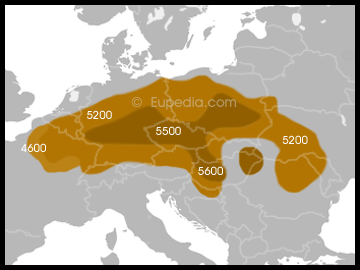
This data is consistent with a Neolithic dispersal of I1 from Hungary with the LBK culture and the subsequent Funnelbeaker culture (4000-2700 BCE) in northern Germany and southern Scandinavia. One Swedish sample from the late Mesolithic
Pitted Ware culture (3200-2300 BCE) also turned out to belong to I2a1 and not I1.
PIC: FUNNELBEAKER CULTURE
Both the Funnelbeaker and Pitted Ware cultures represent a merger between the Neolithic (farming) and Mesolithic (huntergatherer) lifestyles. Neolithic farmers from Germany penetrated late into Scandinavia and in small numbers. There is archeological evidence that Neolithic farmers settled in southern Scandinavia and lived side by side with hunter-gatherers for several centuries during the Funnelbeaker culture.
Skoglund et al. 2012 tested and compared the DNA of one Neolithic farmer and three hunter-gatherers from Sweden ( GOTLAND ) dating from 5,000 years ago. It turned out that the farmer was much closer genetically to modern Mediterranean people, especially the Sardinians, who are generally considered the best proxy population to Neolithic European farmers. The hunter-gatherers’s DNA resembled that of modern Northeast Europeans, and perhaps even more that of the Finns and Samis than Scandinavians.
Scandinavian hunter-gatherers would have adopted the new Neolithic lifestyle little by little, using pottery and keeping domesticated animals (sheep, cattle, pigs and goats) to complement their traditional diet of fishing and game hunting. The
cultivation of wheat, barley and legumes was fairly limited due to the cold climate. The cold climate was actually a barrier to the expansion of farmers from the continent. This is why Scandinavians retained a greater percentage of Mesolithic ancestry
than virtually all other Europeans, apart from the Samis, Finns, Balts and Russians.
No ancient Y-DNA from the Funnelbeaker culture in Scandinavia has been tested to date, but it is likely that I1 really started gathering momentum toward the end of the Funnelbeaker period. It might also have been among the Funnelbeaker lineages
that were most successfully assimilated by Proto-Indo-European invaders during the Corded Ware culture (aka Battle-Axe culture in Scandinavia). Most I1 individuals today share a common ancestor around the time of the transition between the
Funnelbeaker and Corded Ware periods.
CARRUTHERS DNA PATH
If you have been following any of the Carruthers Genome paths, then you will remember that one of our first sub clave groups was : L22+ (aka S142+) which is the main Nordic subclade. It is also very common in Britain and Scotland, especially on the east coast where the Vikings settled most heavily, in the Low Countries and Normandy (also doubtlessly the heritage of the Danish Viking), as well as in Poland and Russia (Swedish Vikings).
We do have DNA matchings at this point to a landing at winchester/cinchester around 400 AD, and one on the eastern coast around 800 AD.
2. Another Carruthers sub clave group was : P109+ A mostly southern Scandinavian subclade, with a presence in all the regions settled by the Danish Vikings. It has been found sporadically in many parts of Europe, such as western Iberia, northern Italy, the Balkans, Lithuania and Russia.
3. M253 came through as another Carruthers genome marker, is also know as L1 Haplogroup. The haplogroup L1 reaches its peak frequencies in Sweden (52 percent of males in Västra Götaland County) and western Finland (more than 50 percent in Satakunta province). In terms of national averages, I-M253 is found in 35–38 per cent of Swedish males, 32.8% of Danish males, about 31.5% of Norwegian males, and about 28% of Finnish males.
4. With the last Carruthers DNA CTS research project, we were able to pinpoint the Carruthers individual genome marker as CTS11603. Every Carruthers would have this genome in their DNA to date.
5. Our Z2337 genome shows that we are of a Northern Nordic Cluster, east of Sweden, a 52% finding of GOTLAND. We also do not have DNA that supports the Swedish or Norwegian findings.
6. Continuing this project we are able to link CTS11603 to our nordic forensic genome of CTS6364. We were not called Carruthers in this time frame, we were Ashmen, Aachenmen, and today we share this Nordic genome with people with the name Ashman, which is more prevalent in eastern Europe. In theory we knew about this in 2017, but we were asked not to report this until further studies were done.
These results show 30 generational markers past R1b, which puts us beyond 75,000 years in DNA studies.
There are two other Scottish Clans, that we have been helping, find their results for their family members. We wish everyone the best on continuing their family history.
OFFICIAL AND REGISTEREDL CLAN CARRUTHERS CCIS SINCE 1983-CLAN OF OUR ANCESTORS
CLAN CARRUTHERS INT SOCIETY CCIS PROMPTUS ET FIDELIS
THE VIKING ISLAND – GOTLAND
We have many Clan Carruthers members wishing to see and understand their ancestors who came from Gutland/Gotland. Our genetic genealogist were able to tell us that there is DNA proof that the Carruthers were from Gotland and landed in Scotland in a wave about 450 AD. Further DNA shows individuals coming to Scotland prior to that, but not in a large grouping.
For all the people interested in what they will see and why in Gotland today, we hope you enjoy.
The Baltic isle of Gotland, forty-five kilometres from Stockholm, is indeed almost another little country. It is an unspoiled island with pine and spruce forests, hay meadows full of wildflowers, wide deserted beaches, old farmsteads, a profusion of country churches and a capital city, Visby, with charming medieval houses and one of the best preserved ring walls in Europe.
What makes it special, however, is that it offers an unparalleled way to experience a sense of history while still benefiting from the twenty-first century’s conveniences and comforts. Here on Gotland, for example, the same beer is brewed as was drunk all over Europe in the Middle Ages while at the same time you can find locally produced art and craft items of modern, cutting-edge design.
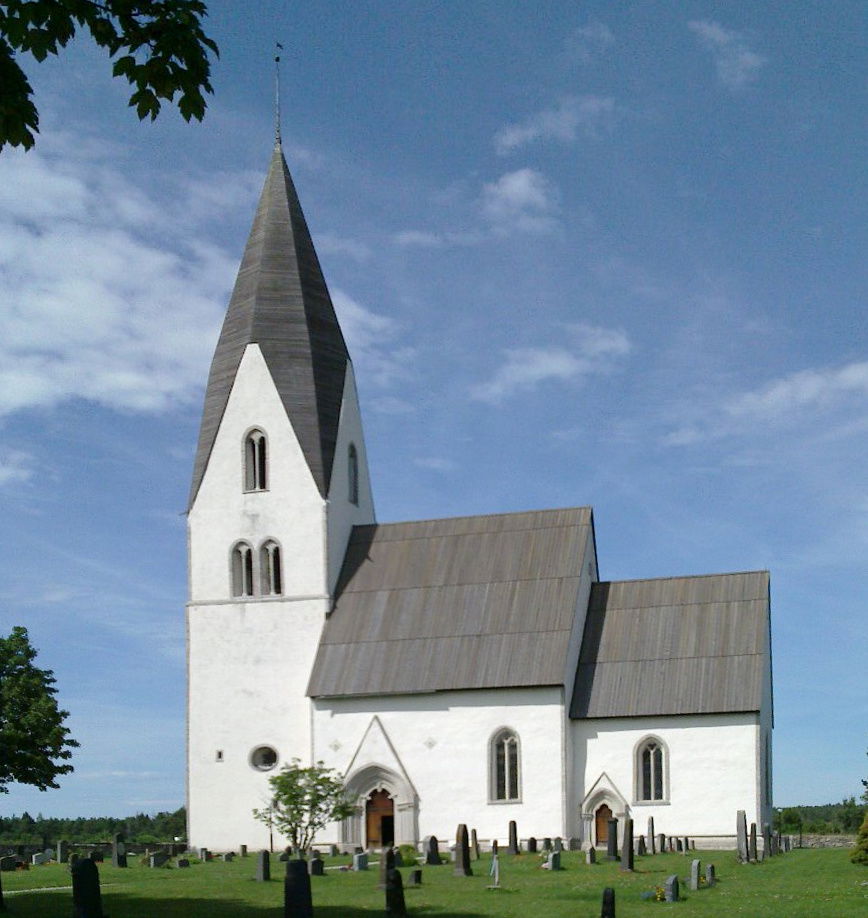
Tofta Church, one of the island’s many iconic, well-preserved medieval churches.
A brief overview of the island’s history explains why you can feel as though you have stepped back in time. That it is a very ancient land as is evidenced by discovery of fossils, some over 400 million years old. There are traces of the Tjelvar, or Palaeolithic, people who arrived 7,000 years ago. From the Bronze Age there are almost 400 cairns and 350 stone ship-settings (boulders set out in the shape of a ship symbolizing death as a voyage to the unknown) together with large numbers of prehistoric grave fields, house foundations, hill forts and rune stones – an incredible total of 3,100 registered sites make this the richest archaeological region in Sweden.
The island was powerful during the early Viking age. Archaeological research revealed that not only Visby but around forty other harbours and trading centres existed at this time. The island was effectively an independent republic of seafaring farmers and its situation at the meeting point of east and west made it one of the centres of world trade. In the eighth and ninth centuries the Mediterranean had come under Muslim domination and a new trade route through the Baltic linking northern Europe with the Orient via rivers became an alternative to the Mediterranean route.
The early Hanseatic League developed around the Baltic Sea and the Gotlanders, who had already explored along the Russian rivers and established a trading station at Novgorod, bought furs, wax, tar and timber, some of which they sold to the English kings. Wealth continued to accumulate: huge hoards of silver have been and are still being found all over the island.
With the advent of Christianity came a spate of church building – the presence of ninety-two magnificent parish churches in such a small island (120 km long and 56 km wide) are further evidence of its wealth. Gradually however, power had moved from the seafaring farmers to the burghers of Visby. The Germans, mainly from Lübeck, arrived in the 1150s and built their own church, St Mary’s, which was used both for religious and commercial purposes. It was here that the chest containing the Hanseatic trading agreements was kept, the annual opening of which marked the start of the trading year. In the thirteenth century the small wooden houses of the city were rebuilt as the beautiful large stone buildings we see today. Some thirteen new churches were erected and the streets were paved with limestone. Visby was then the most modern town in northern Europe and it remains one of the most perfect examples of Hanseatic architecture.
St Mary’s Church is still in use (it is now the cathedral) and picturesque ivy-covered ruins of eleven other medieval churches remain – some used in summer for open-air concerts and plays. There are over 200 medieval houses in the city: on Strandgatan, previously occupied by the wealthiest merchants, there are some wonderful old stone warehouses, including the Galma Apotek with its hoist beams tucked under corbie-stepped gables through which the merchandize was hauled up to different storeys. The city wall built around 1280, is 3.5 km long and 11m high; it has a parapet walk, three gates and over fifty towers, all in good condition.
During the last years of the thirteenth century however, Gotland lost its importance. In 1259 the Germans had established their own Hanseatic Kontor in Novgorod and so no longer needed the Gotlanders. Meanwhile Denmark, which had also seen a diminution of strength at the hands of the Germans, was seeking, under its newly crowned king Valdemar Atterdag, to increase its power. In 1361 Valdemar invaded and conquered Gotland.
This marked the end of Gotland’s glory days. What had been the foundation of the island’s prosperity, the sea, became a drawback. Having been sacked and occupied first by pirates, then by The Order of Teutonic Knights, Visby gradually became a backwater and by the sixteenth century all the churches except St Mary’s were abandoned and the settlement was in decay.
In 1645 Gotland became Swedish but its isolation meant that industrialization came late to the island – but its poverty did ensure that the old medieval buildings were not torn down and replaced with newer more fashionable edifices. This, however, together with the fact that it retained its agricultural, building and craft traditions – and even its distinctive folk-speech – make it the unique place we can enjoy today. Visby became a UNESCO World Heritage Site in 1995.
Museums outside Visby include a limeworks museum at Bläse, and an open-air museum at Bunge with farm buildings from the sixteenth to the nineteenth centuries.
There are also unusual out-of-museum experiences for the history-lover. In Visby you can stay in a medieval house, the Medieval Hotel, furnished and decorated with an interior inspired by the fourteenth century; swim between medieval columns in the pool below the Wisby Hotel or attend the Medieval Week which takes place every August. Strangatan is crowded with market stalls and you encounter costumed smiths, cobblers, barbers and traders selling newly plucked hens, eggs, herbs and spices. Musicians play flutes and fiddles, jesters play the fool and merchants stroll around decked in their finery. Carts, horses, sheep and hens jostle the crowds. Three camps attended by people from all over the world prepare for the tournaments by fashioning swords and armour. During the week hundreds of events take place: mystery plays, masses, tournaments, concerts, displays, archery competitions as well as lectures and guided walks. The culmination occurs when, after dark, a re-enactment of the invasion of Valdemar Atterdag, is staged. The King rides into town to plunder the wealth of the townspeople. The maiden who betrayed the town is then led in procession to be walled into the tower by the sea. Gotlanders see no irony in thus celebrating a defeat/
Gotland’s Medieval Week however, is no tasteless mish-mash: the past is researched in a scholarly fashion, and in winter the local people attend evening classes given by historians to learn about every aspect of fourteenth-century life and then set about making their costumes in, as nearly as possible, the old way. There is even a class for making medieval shoes.
At other times of year at the Chapter House in Visby, you can still see herbs and vegetables growing as they used to and try your hand at medieval handicrafts. You can play the ancient Gotlandish game club kayles, fire a catapult machine known as a trebuchet or sample food prepared according to old manuscripts.
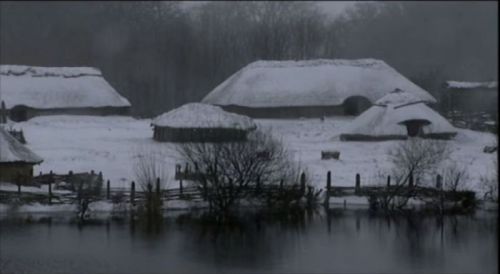
Historical activities are not confined to Visby, there are numerous ancient sites to visit throughout the island. There are old or reconstructed farms in Burgsvik, Gothem and Sjonhem, Fjäle. There is a reconstructed Viking Village at Tofta which evokes farming life in the ninth century. You can see rune stones still standing on their original site (most have been removed to museums) at Ange in Butte. Then there is the Bulkverket, a strange and unique wooden platform-like construction sunk in the middle of Lake Tingstäde, the purpose of which is not yet fully understood. Those interested in field archaeology will want to know about the Viking Discovery Programme, whose first phase, the excavation of the west-coast port at Frojel, was completed in 2005. In the summer of 2007 the second phase, scheduled to last three years, will begin, excavating a number of Viking-age farms. The project will consists of two or three-week courses with lectures and fieldwork and is open to students and volunteers.
History aside, modern Gotland has much to offer; good hotels, a chain of gourmet restaurants, antique shops, modern trendy designer boutiques and little cafes in which you can sit and reflect on the passing of the centuries while enjoying a coffee and the local delicacy safranspannaka served with cream and Gotland’s own salmberry jam.
Delicious!
The Goths were a number of Germanic tribes in the Migration Period, which appeared in written history in the third century in the areas north of the Black Sea between the rivers Danube and Don. Except for frequent raids, they invaded the Roman Empire first time in 268 AD, and later in 376 AD. The Western Goths settled a few years in the Garonne valley in France until they conquered a kingdom, which included Spain and the South of France. In France, they were displaced by the Franks after a few years, and Spain was in 711 AD conquered by Muslim invaders – but the Goths descendants took the country back in the Middle Ages. The Eastern Goths established a thriving kingdom in Italy, but after only 67 years, they were defeated by armies sent by the emperor in Constantinople.
A map of Europe showing the Germanic kingdoms that were established after the downfall of the Western Roman Empire. After numerous battles and long migrations, the Western Goths managed to settle in Spain and the Eastern Goths to take possession of Italy. However, it did not last forever. From ancientweb.org.
An artistic reconstruction of the Western Goths in battle with Attila’s Huns at Chalons. From ancientweb.org.
When the first Goths arrived at the northern coast of the Black Sea about 170 AD, the climate was still influenced by the Roman Warm Period, which, however, ended about 400 AD. The Vandals crossed the frozen Rhine new year’s eve 406 AD, thus commencing the Migration time and heralding the downfall of the Western Roman Empire. The fact that the Rhine was frozen, testifies to a rather cold climate. I do not recall the Rhine has been frozen in modern times. From then on, until the disaster at Guadalete in Spain in 711 AD, when the Western Goths were defeated by invading Muslims, the climate was cold with snowy winters in northern and central Europe.
GOTHS ARE FROM GOTLAND
JUTLAND WAS GOTLAND
Goths can be traced further back in history to today’s northern Poland, and even in the distant past to their origins in Scandinavia and the Baltic area.
Thus Jutland through thousand years was called Gotland.
Paul the Deacon tells about how the Langobards migrated from their original island in the ocean: “Now when the people living there had multiplied to such a number that they could no longer live together, they divided, it is told, their whole people into three parts and decided by casting lots, which of those, who were to leave the homeland and seek new places of residence.” Dudo confirmed many years later that it was a traditional way of solving problems of overpopulation in Scandinavia.
Also, the Gotland Gute Saga says that some of the people were taken for emigration by casting lot: “After a long time, the people have so increased that the country was not able to feed them all. So the land was distributed, on which every third tilled, each of these was allowed to keep and bring and take away everything, which he in his life had acquired.”
Pliny the Elder (23-79 AD) wrote: “Pytheas says that the Gutones, ( plural for Goths ) a people of Germania, inhabits the shores of an estuary of the Ocean called Mentonomon, their territory extending a distance of six thousand stadia; that, at one day’s sail from this territory, is the Isle of Abalus, upon the shores of which, amber is thrown up by the waves in spring, it being an excretion of the sea in a concrete form; as, also, that the inhabitants use this amber by way of fuel, and sell it to their neighbours, the Teutones.”
*** THROUGH ALL THE DNA AND GENEALOGY WE DO NOT FIND ANY EVIDENCE THAT THE GOTHS WERE GERMANIC. THE LIGHTER GREEN COLOR IS GOTLAND NO EARLIER THAN 200 AD. YOU CAN SEE HOW IT WAS JUST A SMALL TRIBUTARY THAT THEY NAVIGATED THROUGH. THE RED LINE WITH ARROW SHOWS THE NORTHERN BORDER OF GOTLAND. ***
Plinius wrote: “Pytheas says that the Gutones, a people of Germany, inhabit the shores of an estuary of the Ocean called Mentonomon, their territory extending a distance of six thousand stadia.” Other ancient writers also believed that the Baltic Sea and inner Danish waters was a major estuary.
Procopius wrote about the returning Heruls: “After these, they passed by the nations of the Dani, without suffering violence at the hands of the barbarians there. Coming thence to the ocean, they took to the sea, and putting in at Thule, remained there on the island.” – “And one of their most numerous nations is the Gauti, and it was opposite (next to?) them that the incoming Eruli settled at the time in question.” We must believe that Procopius shared the ancient authors believe that the Danish waters and the Baltic Sea was a large estuary, in which case it “opposite the Goths” can be understood: on the opposite side of the estuary. Alternatively, it should be translated “next to the Goths.” However, in both cases, suggesting that the Heruls were not Goths.
** WE KNOW THAT THE HERULS WERE RELATED TO THE GOTHS, THEY WERE THE ANCIENT PREDESSESORS TO THE GOTHS. WE DO HAVE THE CARRUTHERS GENEALOGY TRACED BACK TO THE HERULS THROUGH BOTH DNA AND GENEALOGY. **
There is some uncertainty about how long a stadium was, the proposals vary between 160 and 192 m. That means that the coastline, which was inhabited by Gutones, was between 960 and 1.152 km. long. That gives a range from Skagen to the Vistula estuary at Gdansk.
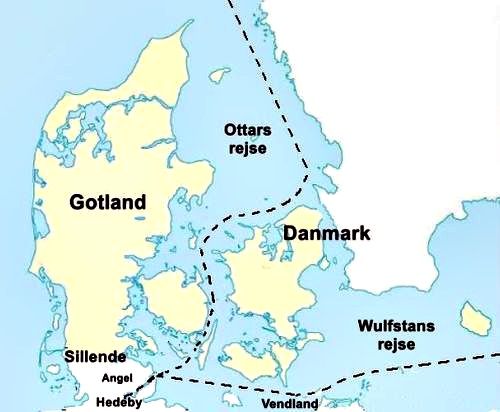
It suits very well with that the Jutland peninsula before the Viking Age was called Gotland, as it is the case in Ottar’s travelogue, added in Alfred the Great’s translation of Orosius’ Roman history from about 850 AC: “When he sailed there from Skíringssal (at Oslo), Denmark was on the port side and to starboard for three days was the open sea. And then, two days before he came to Hedeby, Gotland was to starboard (him wæs on þæt steorbord Gotland), and Sillende and many islands. The Angles dwelt in that area before they came here to this land.”
Since the area was inhabited by Gutones in time before Christ – according to Pytheas – and as part of it still was called Gotland 800-900 AD, it is reasonable to assume that at least the coast along Kattegat and the Baltic Sea were the Goth’s original homeland.
*** DNA SHOWS THAT THERE WERE TWO LARGE ARRIVALS TO SCOTLANDS SOIL IN APPROXIMATELY 400 AD AND 850 AD. NOW THAT YOU CAN SEE THAT JUTLAND WAS GOTLAND, YOU CAN SEE HOW EASY IT WAS FOR THEM TO GO TO SCOTLAND. THEY PROBABLY WENT MANY MORE TIMES THAT JUST THE TWO. ***
Ottar’s and Wulfstan’s travels according to additions in Alfred the Great’s translation of Orosius’ Roman history. Both Jutland and the island in the Baltic Sea are called Gotland. (The island of Gotland is not shown on this map).
That will indicate that Cimbri, Teutons, Angles and all other tribes, who lived along this coastline, and whose names we are not sure about, all originally have thought of themselves as kinds of Goths speaking the same language, namely Gothic.
Some believe that the Gutones on the densely populated Jutland east coast very early crossed the Kattegat and gradually populated West and East Gøta Land – and from there the island of Gotland in the Baltic Sea, which is what we see today.
In Alfred the Great’s translation of Orosius’ Roman history is also added Wulfstan’s travel report from a voyage from Hedeby to Truso in Vistula’s delta from about 850 AC, which reads: “Wulfstan said that he traveled from Hedeby, and that he was in Truso in seven days and nights, and that the ship all the way went under sail. Wendland was on his starboard side and to port, he had Langeland, Lolland, Falster and Scania. These countries all belong to Denmark. So we had Bornholm to port, and they have their own king. So after Bornholm we had the countries named first Blekinge, More, Oland and Gotland to port (and Gotland on bæcbord), and these countries belong to the Swedes. And we had Wendland to starboard all the way to the Vistula river mouth.” By Gotland is here obviously meant the island of Gotland or maybe the coast of Eastern Gøtaland.
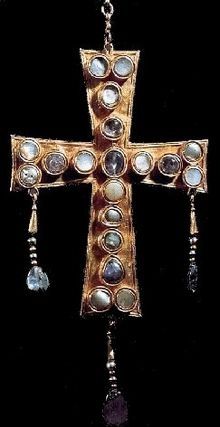
Gothic cross found in Spain perhaps from 700’s.
Ptolemy placed the people Goutai on the island of Skandia and the Gudones by the Vistula river.
The Roman historian Cornelius Tacitus described the location of the Gotones as: “Beyond the Lugii is the monarchy of the Gotones: The hand upon the reins closes somewhat tighter here than among the other tribes of Germans, but not so tight yet as to destroy freedom. Then immediately following them and on the ocean are the Rugii and Lemovii. The distinguishing features of all these tribes are round shields, short swords, and a submissive bearing before their kings.” This means that Gotones, who was ruled by powerful kings, lived north or northeast of the Lugii and further inland than the Rugii and Lemovii, which he explicitly stated as residing at the sea. Perhaps Gotones lived at the Vistula river.
Jordanes located the peoples Ostro-Goths, Ewa-Greutingis and Gaiti-Goths on the island of Scandia. Gauti-Goths were “a race of men bold and quick to fight”, he wrote, and further, “But still another race dwells there, the Sweans, who like the Thuringos, having splendid horses.” With the term “another race” he must have meant that they were not Goths. “All these nation surpassed the Germans in size and spirit, and fought with the cruelty of wild beasts”, he concluded the description of the peoples on the Scandinavian peninsula.
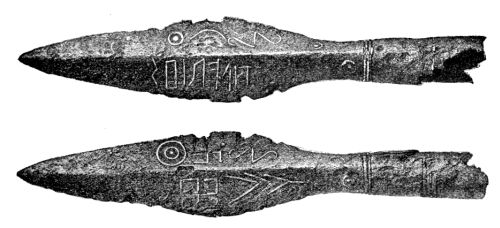
Right and left side of a lance head with runic inscription found near Kovel in the Northwest corner of Ukraine. The runic inscription to be read from right to left “Tilarids”. It has been identified as likely East Germanic, most likely Gothic because of the nominative s-suffix. It is from the beginning of the third century. From Wikipedia.
He mentions different tribes of Goths, who lived on the island of Skandia, including Greutingis and Ostro-Goths, which names we later recognize for Gothic peoples on the Danube and in Italy. This makes it likely that it is true that the Goths, who attacked the Roman Empire, originally came from Scandinavia and the coasts of the Baltic Sea. Furthermore, there are several areas of southern Scandinavia, which have been called, or still are named as Gotland with different spellings, which also support the theory that this region was the original homeland of the Goths. In his report on the Gothic war in Italy, Procopius mentions the Rugi, as part of the Goths in Italy; they are also referred to by Jordanes as one of Skandia’s indigenous tribes. They are also mentioned in other ancient sources.
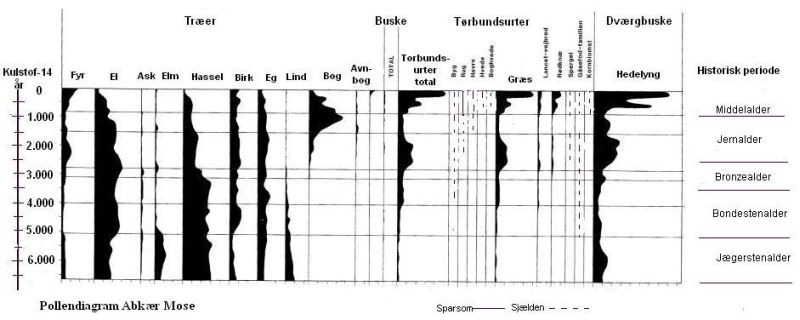
Pollen analysis from Abkjær Mose at Vojens. It appears that forest, especially beech and ash, increases sharply and herbs typical of open land, grass and heather decrease immediately after the migration time around 500 AD indicating that the forest returned to areas that previously were pastures for cattle. Similar studies in other parts of the country show the same pattern. It is reasonable to interpret that this could be due to emigration.
Also, Procopius reports on the returning Heruls suggests that Scandinavia was quite thinly populated. For how could they just “settle down”, as if they came to an untouched prairie? If not the country had been relatively sparsely populated.
However, when large parts of the original population had turned their back to good pastures, it may not only have been hunger and misery that drove them to emigrate.
It is known that for several hundred years of the late Imperial time the Roman legions were mostly populated with various Germanic soldiers since the Roman Empire’s own citizens did not seem to have been suitable. You could say that every Roman legion was a sort of Foreign Legion, in which also many young men from the South Scandinavian region must have served. Therefore the tribes around the Baltic Sea may have concluded that they were the best and the bravest – and therefore deserved to rule. Such attitudes among the Germanic tribes were most likely critical to the doom of the Western Roman Empire.
All these ancient authors wrote before official correct spelling was invented; they wrote in different languages with different alphabets and over a period of several hundred years. They reproduced words for Goths that often for them were in an unfamiliar language, besides most likely Gothic by this time had already developed in several dialects. It is quite understandable that they spelled it in so many different ways, and we do not have to connect any deeper meaning in the different spellings.
Like other Germanic peoples the Goths lived spread out over farmland in small villages with each may be about 8-10 houses and farms.
In Book III of Justinian’s wars, Procopius wrote about the Goths’ early history: “Now while Honorius was holding the imperial power in the West, barbarians took possession of his land; and I shall tell, who they were and in what manner, they did so. There were many Gothic nations in earlier times, just as also at the present, but the greatest and most important of all are the Goths, Vandals, Visigoths, and Gepaedes. In ancient times, however, they were named Sauromatae and Melanchlaeni; and there were some too, who called these nations Getic. All these, while they are distinguished from one another by their names, as has been said, do not differ in anything else at all. For they all have white bodies and fair hair and are tall and handsome to look upon, and they use the same laws and practice a common religion. For they are all of the Arian faith (Christians ) , and have one language called Gothic; and, as it seems to me, they all came originally from one tribe, and were distinguished later by the names of those who led each group.”
Procopius is undoubtedly correct that most Germanic migrations peoples were a kind of Goths; they resembled each other and spoke largely the same language. But then they must originally have come from the same tribe, as he wrote. That is, we must believe that they all came more or less directly from the original Gothic area along the Baltic Sea, the Danish waters and from the southern part of the Scandinavian Peninsula. Procopius believed that also the Vandals and Gepids were kinds of Goths, although they were not generally named as such.
Moreover, in Denmark are clear indications of a big drop in population density in Germanic Iron Age relative to the Roman Iron Age, which indicates a considerable migration.
*** TORE GANNAHORN HAS DONE SOME EXTENSIVE RESEARCH INTO GOTLAND. ONE BASIC ITEM HE FOUND OUT FOR US WAS THE GOTHS THAT TRAVELED TO THE EAST OF GOTLAND, TRAVELED DOWN THE RIVERS TO WHAT IS TODAY UKRAINE, THROUGH ROMANIA AND SUCH. MANY ARE FINDING A DNA LINK TO ROMANIA, AND THIS IS WHY. THE GOTHS THAT TRAVELED WEST, WERE THE ONES WHO WENT TO IRELAND , SCOTLAND, WALES AND BRITTAN. ***
Preserving the Past, Recording the Present, Informing the Future
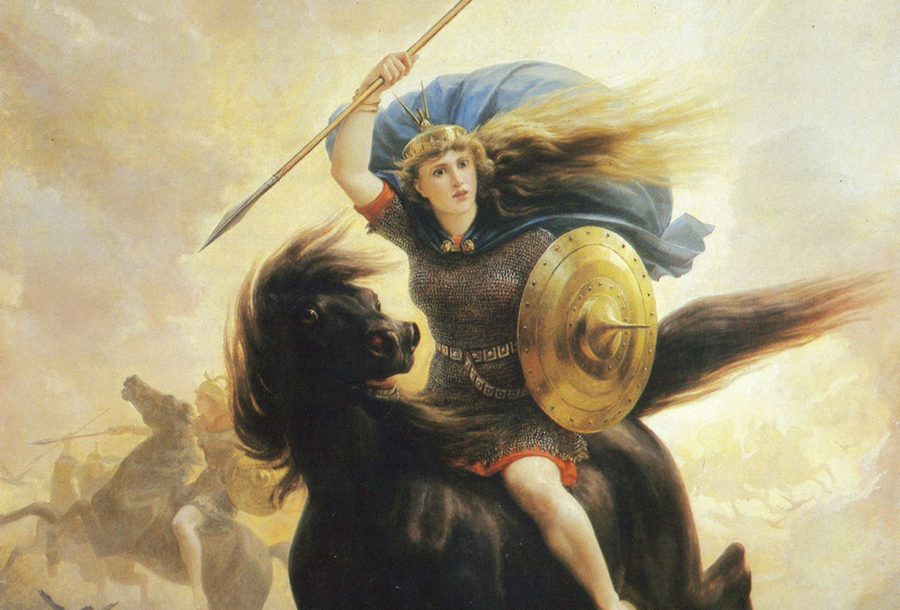
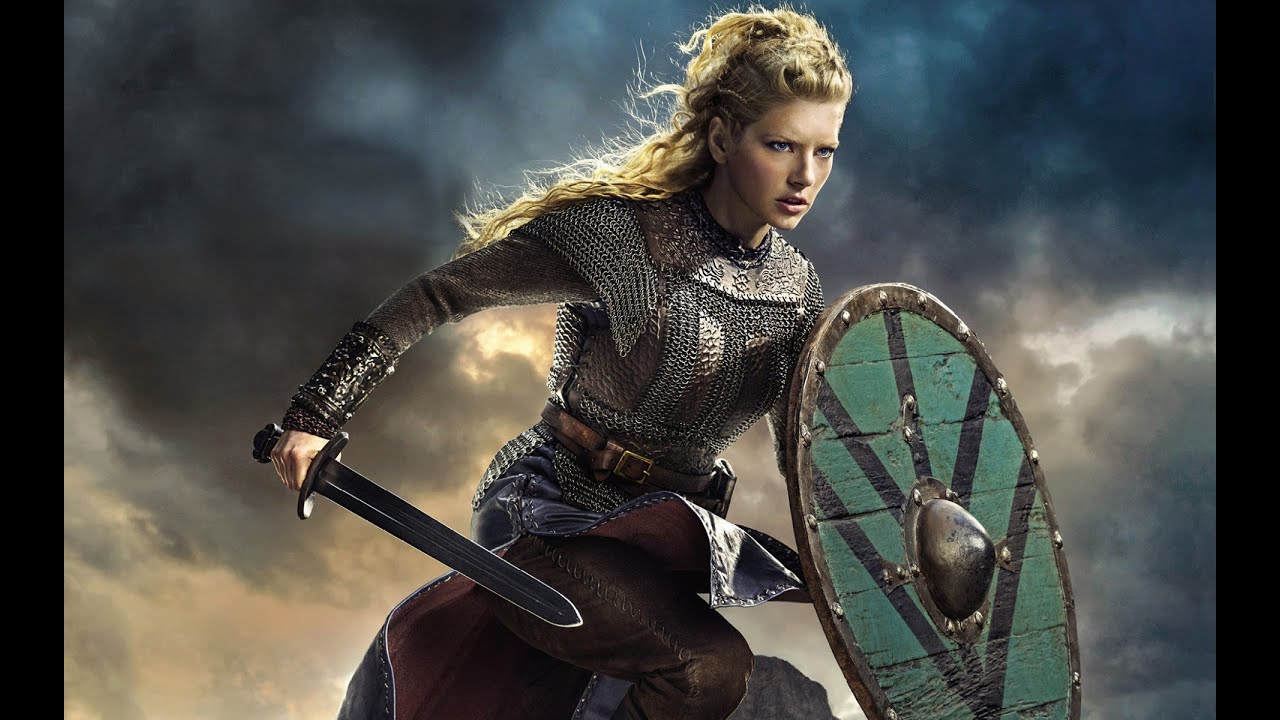
Warrior women appear frequently in Scandinavian folklore, whether as pirates, fighters, leaders of armies or avengers. In sagas and poetry, women who chose to live as warriors were called ‘warrior women’. These were women who had chosen to stand outside the traditional gender role, and they seem to have been an accepted part of Old Norse society. In many of the stories and the poems they are referred to a ‘shield maidens’, meaning young women who had chosen to work as warriors. This expression is often used in the texts without further explanation, which suggests that the readers and listeners were well acquainted with the phenomenon The shield maidens must not be confused with the Valkyries, who were divine beings associated with the battlefield.
The question is whether warrior women are literary fantasies, myths, or a historical reality. Warrior women are not mentioned in any contemporary Nordic rune inscriptions, but that is perhaps not so surprising if they comprised only a small part of the Scandinavian warrior groups. Also, we know that rune stones often functioned as documentary records of inheritance and were usually raised by widows or mothers of fallen husbands and sons. Nor are warrior women named in French and Anglo-Saxon annals and chronicles.13 They are not mentioned either in the Irish chronicles in connection with the Vikings, but the phenomenon was not unfamiliar to the Irish themselves. The most famous were the protagonists Scáthach and Aífe, who probably had Scottish-Celtic origins and lived in the 5th or 6th century.
Several older sources claim that warrior women were found in northern Europe and Scandinavia around the time of Christ’s birth. Historians such as Strabo and Plutarch (1st century BC), Dio Cassius (49 AD) and Tacitus (100 AD) all say that there were warrior women among the tribes in northern and eastern Europe. In the 1st century AD, Saxon men and women were regarded by the Romans as of equal value. According to Tacitus, when a man married he gave to the woman oxen and a horse with its bridle, together with shield, spear and sword. She gave him the weapons back. Such reports, probably based on witness observation, surely contributed to reinforcing the Romans’ view of Germanic women as warlike. Such a ritual does not automatically imply that all women fought in war, or that all women bore weapons, but it can mean that Saxon men and women had shared responsibility for defending their nearest and dearest if necessary, and that fighting was part of life.
Two particular features recur in all Roman descriptions of the Germans: their appearance, with powerful bodies and reddish-blond hair and beard; and their women. According to the sources, the women supported their men in war and sometimes took part in the battles themselves.
Roman war reports regularly told of warrior women being found among the enemy’s dead. This can mean that some of the women fought in war, especially if the reports are from conflicts where the Romans were attacked, but it can also mean that women defended themselves with weapons when the tribe was attacked, just as Saxon women apparently did. As we do not know what types of conflict were being described, it is difficult to distinguish if these were warrior women who attacked the Romans, or whether they were taking part in a defence, or if they did both.
At the end of the 3rd century AD, 30 captured ‘Gothic warrior women’ were paraded in front of the populace when Emperor Aurelian (emperor 270–275 AD) held a triumphal procession in Rome. It is quite possible that these women really were warrior women, but the Roman triumphal processions were theatre and these ‘Gothic warrior women’ may also have just been the result of the Romans wishing that such women did exist. The Romans, with their severe and puritanical view of women and their double moral standards regarding sex, must have been terrified and aroused at the same time by the thought that they could be attacked by women. Such emotions certainly led to many stories and fantasies being played out in the gladiatorial arenas and the triumphal processions.
Eastern Roman historians also mention warrior women among their European enemies. In Procopius’ account of the war against the Goths (535–552) there is a story about an English princess who led an invasion of Jutland and captured the young king, Radigis, because he had deceived her. This story is characteristic of Saga material, and it can hardly be used as a reliable source to prove the existence of the warrior woman. On the other hand, another Byzantine historian, Johannes Skylitzes, tells in his historical writing from the 12th century that warrior women took part in the fighting when Prince Svjatoslav of Kiev lost a battle against the Byzantines in Bulgaria in 971. He says that the Byzantines were amazed when they found armed women among the fallen warriors.
Even though Skylitzes was writing 200 years after the events, it is possible that he had access to contemporary archives. Just like the West Romans, the East Romans were prolific writers of reports. In this context, we must also consider the social structures among the rus. Svjatoslav and his warriors were almost nomadic. They could be absent from Kiev for years, and therefore would have their women, female slaves and children with them when they went raiding. It may have been these women who were killed in the battles, as they tried to defend themselves and their families.
Nearly all the descriptions of warrior women are in texts from the Middle Ages. They were written several centuries after the events they describe. Some of these reports are of events said to have taken place in the time of tribal migrations, which was even more remote.
The Fornalder sagas (‘Sagas of Earlier Times’) comprise a collection of legendary sagas which were gathered together at the end of the 14th century. Among others, they include Hervor’s and Hedrek’s Saga, which is about the magic sword, Tyrfing, with the action taking place in the 5th century. Hervor, Angantyr’s daughter, dressed like a man and learned to use weapons in her youth, and went on plundering raids in search of valuables.
In Rolf Gautreksons Saga, which was written down in the 13th century, we find Torbjørg the shield-maiden. She was daughter of a King Erik in Uppsala and preferred to spend her days in fighting and athletic activities than in womanly activities. She even had her own guard troops. In oral tradition she was known as ‘King Torberg’.
A number of women warriors also appear in Saxo’s 13th-century Gesta Danorum (‘Chronicle of the Danes’). It is important to note that all the warrior women in the Fornalder sagas and in Saxo’s writings are upper-class women. In fact, this makes the stories appear more authentic. Even if they had wanted to do so, women from other layers of society would not have had the same opportunity to distinguish themselves in masculine arenas. In theory, upper-class women had the time and the authority to be able to assert themselves outside the wholly traditional role model.
According to Saxo, the warrior women were so numerous that he needed to explain to the reader why this was so. In Book Seven, which mainly deals with events at the end of the 8th century and beginning of the 9th, he says that he will explain how some women behaved in older times:
In olden days there were among the Danes, women who dressed like men and used nearly every moment of their time in battle-training so as not to run the risk that the sickness of luxurious life would drain away their courage. They hated luxury, preferring to harden both body and soul with toil and endurance (…) they forced their womanly nature to act with manly ruthlessness. And they absorbed the art of warfare with such zeal that one would not believe they were women any longer. It was especially those with a strong personality or a tall, handsome body who chose such a life.
After his introduction, Saxo turns back to the story itself, which is an account of the line of Danish kings. Warrior women appear again in Book Eight. In the battle of Brävall, between the Danish King Harald Hildetann and the Swedish King Ring, there are among the leaders of the Danish army two woman warriors, Hede and Visna, ‘to whom nature has given manly courage in women’s bodies’. These two women led a force from Slesvig in the battle. Visna carried the unit’s banner and is described by Saxo as ‘a tough woman with good knowledge of the arts of warfare’. Hede led Harald’s right flank.
Vebjørg was another woman warrior who took part on the Danish side. She led a group of ‘battlethirsty men’ and was herself a feared warrior. She felled a giant called Sote during the battle, but when she began to challenge further warriors to individual combat she was killed by a well-aimed arrow. The other women were all killed in the battle too. Among other wounds, Visna had her hand chopped off. On King Ring’s side, it is mentioned briefly among other things that Gerd den glade (‘Gerd the Happy’) fought for him together with a group of warriors from Värmland.
There is nothing in the reports to indicate that a warrior woman lost her femininity in the eyes of men. In the written sources it appears that the warrior women were desired by men and that they married and had children.
Saxo’s histories are exciting reading and good entertainment, but most people agree that his presentation of historic facts cannot be relied upon as accurate. He wrote in ponderous Latin and was inspired by classical texts, and many of his female characters have classic precedents, such as the Amazons and Camilla in The Aeneid. However, Saxo’s warrior women are not just classic models transferred to a Scandinavian scene. Saxo based his material on Scandinavian sources, mainly Icelandic. He himself says that he had copied much of this material in his presentation, especially from the heroic poetry. Many of Saxo’s stories about the warrior women have literary parallels in the heroic poems in The Older Edda and elsewhere. The events in these lays are mostly supposed to have taken place in the time of the tribal migrations, and they are preserved in Icelandic parchment manuscripts from the 13th and 14th centuries.
A good example of such parallel stories is Saxo’s account of Hagbart, who in his struggle to win Signe pretended to be a woman warrior, and the story of Helge in Det andre kvadet om Helge Hundingsbane (‘The second poem about Helge Hundingsbane’). In Saxo’s account, Hagbart is asked why he is so masculine. ‘She’ replies that it is not usual for warrior women to concern themselves with feminine arts. In The Older Edda, Helge is asked the same question when he pretends to be a slave girl. His patron explains that the slave girl is so masculine because she was previously a warrior woman from a noble family:
The grinding-stone groans
On the grinding-bench
When a prince’s daughter
Turns the quern.
Once she rode
Above the clouds;
Ventured to fight
Like a Viking;
Until Helge
Captured her;
Sister is she
To Sigar and Hognes;
Quick and sharp-eyed,
Our quern-girl.
We don’t know who wrote these poems, but they are thought to be survivals from an oral folk tradition that existed for hundreds of years before the Viking Age. We know them from early written sources including excavations at Bryggen in Bergen where a number of runic inscriptions from the 12th century have been found, containing verses from the Edda poems. They are also found in fragments of the German Hildebrandslied (‘Song of Hildebrand’) from the 9th century.
Do the Roman and Norse stories reflect an actual reality, namely that warrior women existed in Germanic tribal culture in northern Europe and Scandinavia until well into the Viking Age? Alternatively, are the stories of warrior women just based on misunderstanding, or are they pure literary fantasy?
Women also feature outside their established roles in the Old Norse sagas about events in Iceland; not directly as warrior women, but as women who take up arms. Here, however, they are often punished for this, or have to tolerate social criticism. In the Laksdøla Saga we hear about Aud, who attacked her husband, Tord, with a sword. She was called Broka-Aud (‘Trousered Aud’) because she preferred to wear men’s clothes rather than skirts. This led to Tord divorcing her, because her lack of femininity offended his manly honour. She herself didn’t think there was anything noteworthy or dishonourable in wearing trousers. When Tord found himself a new woman, Aud took the sword and wounded him as an act of revenge. In Gisle Surson’s Saga, Tordis took upon herself the role of avenger when her family was offended. She wielded a sword against Øyolv and injured him to avenge the killing of her brother.
FROYDIS AND ELORFIN
In The Greenland Saga and Eirik Raude’s Saga we meet Frøydis, who was Eirik Raude’s daughter. She was a very determined woman who didn’t hesitate to take up a weapon. She killed five women with an axe after first having their men killed. In Vinland she grasped a sword and displayed her breasts and pregnant abdomen to show the Indian warriors that she was a woman. She hit herself on the breasts with the flat of a sword when they attacked the new settlements. Frøydis’s aim in doing this was probably not to fight with the Indians, but first and foremost to demonstrate that she was a woman and pregnant, and that she was prepared to defend herself and her child.
Neither Aud, Tordis nor Frøydis were warrior women, but as participants in these dramas they were in a theatre where it was considered legitimate for women to handle weapons. These women were also to a certain extent upper-class women. They were married to independent farmers. In Iceland, where there was no king, the free farmers constituted the upper class and the landless, the tenant farmers, the freed serfs and the slaves made up the lower classes. It is possible that the Icelandic family sagas are pure fiction and should really be regarded as intended to combine the telling of good stories with imparting to the readers the kind of behaviour that was accepted in Icelandic society in the Middle Ages.
Gender roles in Viking times were clearly defined and separated. Men and women each related to their symbolic world of rights, values and attributes. A free man had weapons as his symbol, with which to defend himself and his family. The woman held the keys to the rooms and storage chests on the farm. Another symbolic distinction of both sex and status was clothing and appearance. One Icelandic legal decision specified that women who wore men’s clothing, cut their hair or carried weapons could be condemned as outlaws, and the same applied to men who wore women’s clothes. The distinction was most acute in the social milieu of the warriors, which promoted a purely masculine culture.
In the daily toil on the farm, by contrast, many of the areas of responsibility overlapped. The gender distinctions were manifested instead in cultural practices and symbolism.
Marriage between a man and a woman was one of the most important social institutions of the Viking Age. Getting married was a symbolically important decision which affected the whole extended family, and a man had to consult his friends and relatives before he could choose a bride. In theory the woman had no say in the matter but in practice it was probably usual for both bride and groom to give their consent. Women in the aristocratic classes, though, differed from farming-class women in being largely pawns in the game of politics.
A description of a marriage ceremony tells us that the man gave the family sword to the woman as a wedding present, to be passed on thereafter to a male heir. She also received and gave to the man gifts of weapons, as the Germanic women had done in Tacitus’s time.
Weaponry in female burials
Remains of weapons have been found in many sites of female burial from Roman, Germanic migration and Viking times. In some instances, where there is evidence of more than one weapon, this could be interpreted as indicating that the weapons were actually used by the women. There are several female burials in northern Germany which contain evidence of military gear, shields, spears and swords. Two of these are dated between 450 and 650 AD. More usually, however, the graves contain a single weapon rather than the whole equipment. Moreover, it is often difficult to be certain that the surviving artefacts really are the remains of a weapon.
In 1867 a Scandinavian female burial from the Viking Age was found in Norfolk, England. In addition to a pair of oval brooches this contained an object resembling a sword. This obviously made headlines, but it is equally likely that it was a weaving shuttle.
Weapons have been found with greater certainty in other burials from Viking times. In 1981, during an excavation in the neighbourhood of the village of Gerdrup in Denmark, a female skeleton was found buried with a needle-case, an iron knife and a spear. This grave dates from the beginning of the 9th century. It has been suggested that she was either a warrior woman or a woman with ‘man-status’, serving as head of a household which lacked a man to fulfil this role. In such circumstances it was legitimate for a woman to be buried with symbols of manhood. But this does not tell us anything about whether she actually fought with the spear.
In Sountaka (Hämne) in Finland a decorated sword has been found associated with a female burial dated to the 10th century. Perhaps here too we have a woman carrying out a manly role? However, later investigations seem to connect the sword to a secondary grave and not the female burial. Weapons have also been found in two female burials from Kaupang in Norway. In a boat burial from the last quarter of the 9th century, an axe, eight knives, a quiver for holding arrows and a whetstone were found in addition to a pair of oval brooches and other feminine accessories. In addition to these two, nearly 20 burials have been found in Norway containing both women’s and men’s equipment. Many of these were excavated during the 19th and early 20th centuries and are therefore not so well documented as the Gerdrup and Kaupang graves. As documentation is scantly or entirely lacking, we cannot be sure whether there was more than one skeleton in each of these graves. So they cannot be used as a source.
In the light of corresponding finds, it is not unthinkable that many of these Norwegian ‘undocumented’ burials were single female burials with a weapon. The finds are obviously not evidence that these women were warrior women, but they are evidence that women and weaponry were not incompatible in the Viking Age.
Was it possible for women in the Viking Age to appear as warriors in the battle line alongside men? Even though the Edda poems and many sagas should perhaps be interpreted as allegories conveying moral values in the form of parables rather than as factual accounts, and the warrior women should be seen as fictitious, there are many archaeological finds which associate women with weapons. As we have seen, such finds of weapons can be explained other than as weapons for use by women in battle. We have also seen that the gender roles in Viking society were normally kept strictly separate, and that it was associated with shame and dishonour to break those boundaries, though it was still possible for men and woman to break out of such bonds if the conditions were right.
It is however difficult to say anything about why some women in Viking society wanted to appear as warriors and about how some of them seem to have acquired the right to do so. There is much research still to be done in this area, but the preliminary conclusion is that women warriors would probably have represented too big a deviation from the gender roles of the Viking Age.
OFFICIAL AND REGISTERED CLAN CARRUTHERS CCIS -1983-CLAN OF OUR ANCESTORS SCOTTISH CLAN, IRISH CLAN, NORSE CLAN
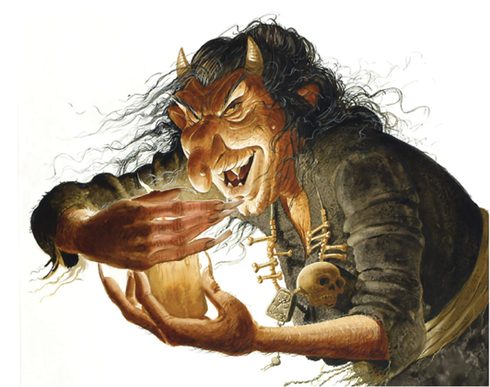
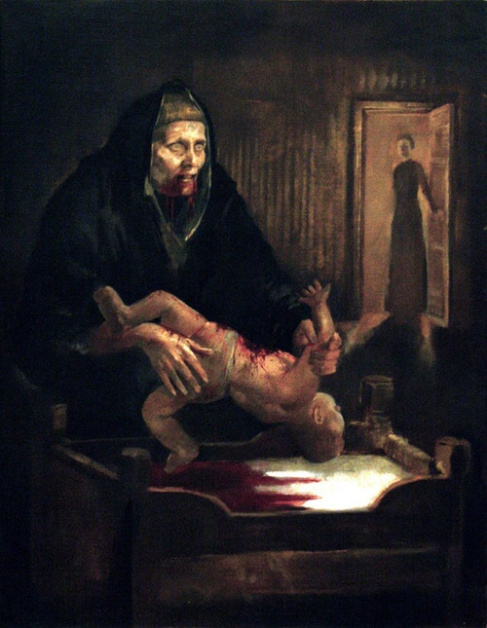
The Icelandic answer to Santa is sure to put a chill in people’s bones! Grýla, also referred to as “the Christmas Witch”, has a colorful and gory history.
Krampus’s sour seasonal antics may have gotten their own movie but some think Grýla would do equally well as a horror villain. She’s been known about since roughly the 13th century, when tales of her exploits spread via word of mouth. The name Grýla translates as “Growler”, making her even scarier.
Smithsonian quotes a historic passage about the tinsel-hating troll: “Down comes Grýla from the outer fields / With forty tails / A bag on her back, a sword in her hand, / Coming to carve out the stomachs of the children / Who cry for meat during Lent.” Certainly a contrast to “Sleigh bells ring, are you listening?”
Actually she didn’t become associated with Christmas till several centuries later, when the idea of a rampaging witch punishing naughty children fused with the yuletide atmosphere. Jól (Yule) is the title often given to an Icelandic Christmas. Smithsonian describes this ancient take on the festival as “a time not only to bring together relatives, living and deceased, but also elves, trolls and other magical and spooky creatures believed to inhabit the landscape.” Grýla definitely fits into that category. She’s called an “ogress” by some, though presumably not to her face.
Speaking of her face, what exactly does she look like? Accounts, such as they are, vary. “One rhyme says she has 15 tails, each of which holds 100 bags with 20 children in each bag, doomed to be a feast for the troll’s family”, according to Mental Floss, who highlight the bleak yet mind-boggling folk history.
Poems “describe eyes in the back of her head, ears that hang so long that they hit her in the nose, a matted beard, blackened teeth, and hooves.” Safe to say, should an unlucky reveller run into Grýla, they wouldn’t forget her in a hurry.
Is this seasonal savage really so different to the mortals she preys on? There’s a case that she isn’t, as evidenced by her family. For starters someone agreed to marry this twisted creature! She “comes down from her cave in the mountains to gather up ill-behaved kids for her and her lazy and browbeaten husband Leppalúði to make into stew”.
And Leppalúði wasn’t the only man to slide a ring onto that wizened finger. “She ate one of her husbands when she got bored with him,” reveals Terry Gunnell of the University of Iceland, talking to Smithsonian.
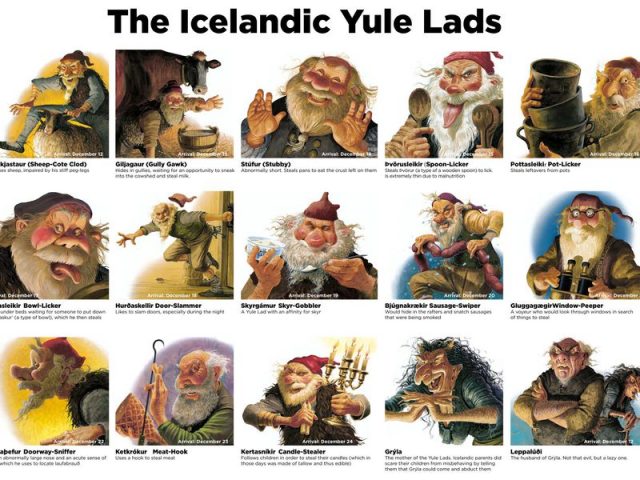
Then there are the Yule Lads. This bizarre band of brothers existed in their own right to begin with. Gradually however they were incorporated into Grýla’s legend, to form a clan of child catchers and festive buzz killers. Gunnell thinks of them as “looking like aged Hell’s Angels without bikes”. There was a Santa-oriented makeover, but the grittier approach appears to be taking hold again in the Icelandic consciousness.
The fearsome fam even have pets. Lovers of felines may be surprised to hear about the Jólakötturinn, or Yule Cat. Seems there’d be one hell of a flap to accommodate this malevolent moggy!
Merriment aside, institutions such as the National Museum view Grýla as an essential part of Iceland’s cultural history, one that can be easily forgotten about with all those baubles and “yo ho ho”s. And even though America loves Saint Nick, a TV show recently brought the amoral antics of the Christmas witch to life.
Netflix’s Chilling Adventures of Sabrina included her in the special episode A Midwinter’s Tale. This saw the Yule Lads arrive in Greendale, with the literal mother from hell on hand to rein them in. Billed as Grýla’s first ever appearance onscreen, the role was played by Heather Doerksen.
She’s a menace to society at Christmas, yet it’s clear without the likes of Grýla the holiday season would be a bit too sickly to bear.
Ragnarr Loðbrók, to give his name the proper spelling, has become America’s favorite badass Viking, thanks to the History Channel’s exciting series, “The Vikings.” But who was he really? Dr. Elizabeth Ashman Rowe has the answers. Rowe is University Lecturer in Scandinavian History of the Medieval Period at the University of Cambridge in England and author of a scholarly study published in 2012, Vikings in the West: The Legend of Ragnarr Loðbrók and His Sons.
In the preface, she writes: “The Viking king Ragnarr Loðbrók and his sons feature in a variety of medieval stories, all of them highly dramatic.” In a French version, he is a noble king in Denmark, father of a fearsome Viking who ravages France. In an English story, he “wickedly inflames” his three sons with envy for the English King Edmund, provoking the Danish invasion of England and Edmund’s martyrdom.
Snorri Sturluson, subject of my book Song of the Vikings, wrote one of the 32 known Icelandic tales about Ragnarr. To Snorri, Ragnarr was famous as the first Norwegian king to keep a court poet, or skald. He was “the conqueror who established the definitive boundaries of the Scandinavian kingdoms,” Rowe writes, “and the symbol of the ancient heroism that would be eclipsed by the new heroism of the Icelanders.”
Concludes Rowe, “In short, Ragnarr and his sons were ciphers to which almost any characterization could be attached”–as the History Channel has effectively proved.
Was there a real Ragnarr Loðbrók? Rowe says no: “I do not think that there was ever a historical figure known as ‘Ragnarr Loðbrók.’” Mostly it’s the nickname she’s leery of, noting that “the deeds and fate” of an “extraordinarily ferocious” Danish Viking known as Reginheri, who attacked Paris in 845, hanged 111 Christians, and died of illness soon afterwards, “may have given rise to stories about someone named Ragnarr, but there is absolutely no contemporary evidence that he was nicknamed Loðbrók.”
He didn’t get his nickname until after he died–Loðbrók first appears in two sources, one Icelandic and one from France, in about 1120–and there are several explanations of what it means.
An English writer in about 1150 said it meant “loathesome brook”–just what it sounds like.
But in Old Norse, the nickname would have been understood as “hairy breeches” or “shaggy trousers.” The Icelander who wrote Ragnar’s Saga in the 13th century explained that Ragnarr got his nickname from the pants he put on to protect himself when fighting a poison-breathing serpent (or dragon): cowhide pants boiled in pitch and rolled in sand.
Professor Rowe has a better explanation. As I’ve mentioned, the real Ragnarr Loðbrók, the ferocious Reginheri, died of illness soon after attacking Paris in 845. And not just any illness. Reginheri died of dysentery. As one account in Latin explains, after Ragnarr returned to the Danish court of King Horik he suffered terribly from diarrhea: “diffusa … sunt omnia viscera ejus in terram” (which Rowe helpfully translates: “all his entrails spilled onto the ground.”)
Concludes Rowe: “I suggest that it was a similar report–one describing his diarrhea in terms of his feces-stained breeches–that gave rise to the posthumous nickname loðbrók. Ragnar’s Saga’s explanation ot the nickname loðbrók as derived from garments boiled in pitch comes startlingly close to reality, for one can imagine an onlooker at the court of King Horik telling someone later that Reginheri’s breeches looked black and sticky, as though they had been boiled in pitch.”
PRESENTLY THIS IS A PASSWORD PROTECTED SITE, ONLY AVAILABLE TO CLAN CARRUTHERS CCIS VIP SOCIETY MEMBERS. IF YOU WOULD LIKE MORE INFORMATION ON OUR VIP SOCIETY PLEASE WRITE TO US AT CARRUTHERSCLAN1@GMAIL.COM
Robert I Rollo “The Viking” Prince of Norway & Duke of Normandy “Count of Rouen” Ragnvaldsson 846–932
BIRTH14 OCT 846•Maer, Jutland, Nord-Trondelag, Norway
DEATH17 DEC 932•Rouen, Seine, Maritime, Haute-Normandy, France
Robert is mainly a germanic translation of his original name Hrodebert. This was pronounced Ro-Ho. Thus his last name of Rollo. They really did not have a first and last name then.
To date the DNA for Robert I Rollo is U 1 – 5. You can tell that this is primative testing since it has only one letter in it.
2. Son of Robert I Rollo was:
William I Longsword Guillaume (Count of Rouen 2nd Duke of Normandy) DeNormandy 891–942
BIRTH891•Rouen, Seine-Maritime, Haute-Normandie, France
DEATH17 DEC 942•Island Picquigny, Somme River, Normandy
3. Son of William I Longsworth
Richard I “The Fearless” “Sans Peur” Duke of Normandy DE NORMANDIE
933–996
BIRTH28 AUG 933•Fécamp, Seine-Maritime, Haute-Normandie, France
DEATH20 NOV 996•Fécamp, Seine-Maritime, Haute-Normandie, France
4. Son of Richard I
Richard (‘The Good Duke’ First William of le Bon Archbishop Rouen Robert Normandy ‘The 4th Duke of Normandy’) De Normandie
958–1027
BIRTH20 NOVEMBER 0958•Rouen, Seine-Maritime, Haute-Normandie, France
DEATH28 AUG 1027•Fécamp, Seine-Maritime, Haute-Normandie, France
5. Son of Richard ( The Good Duke)
Robert I ‘the Magnificent’ FitzRichard Duke of Normandy
1003–1035
BIRTH04 OCT 1003•Falaise, Calvados, Normandy, France
DEATH22 JUL 1035•Nice, Alpes-Maritimes, Provence-Alpes-Cote d’Azur, France
6. Son of Robert I ” The Magnificent”
William I De Normandie, Duk Beauclerc (‘The Conqueror’ King of England) ‘The Bastard’ Guillaume Peverel)
1024–1087
BIRTH14 OCT 1024•Falaise, Calvados, Basse-Normandie, France
DEATH9 SEP 1087•Rouen, Seine-Maritime, Haute-Normandie, France
7. Son of William I De Normandi
King Henry I “Lion of Justice” Beauclerc
1068–1135
BIRTH1 SEPTEMBER 1068•Selby, Yorkshire, England
DEATH1 DECEMBER 1135•St Denis, Cher, Centre, France
Married :
Matilda (Edith) “Good Maud” Aetheling Caenmore Duchess of Normandy, Princess of Scotland, Queen Consort of England 1079–1118
BIRTH1 JUNE 1079•Dunfermline, Fife, Scotland
DEATH1 MAY 1118•Westminster, Middlesex, England
Matilda Aehtheling Caenmore carries the Carruthers genome of CTS-11603
her father is :
Malcolm III (“Long Neck” Canmore King of Scotland) MacDonnchada Canmore, Dunkheld King of Scotland 1031–1093
BIRTH26 MAR 1031•Blair Atholl, Perthshire, Scotland
DEATH13 NOV 1093•Malcolms Cross, Killed in battle whilst besieging Alnwick Castle, Northumberland, by the English King of, Scotland
He too was tested and carrys the Carruthers genome of CTS-11603
IF YOU NEED ANY HELP WITH YOUR FAMILY HISTORY SEARCH, PLEASE CONTACT US AT CARRUTHERSCLAN1@GMAIL.COM OR CARROTHERSCLAN@GMAIL.COM







 I
I


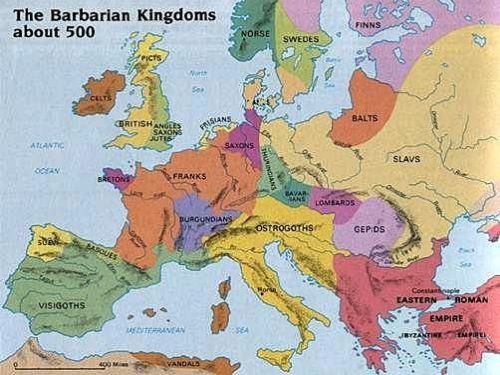 A map of Europe showing the Germanic kingdoms that were established after the downfall of the Western Roman Empire. After numerous battles and long migrations, the Western Goths managed to settle in Spain and the Eastern Goths to take possession of Italy. However, it did not last forever. From ancientweb.org.
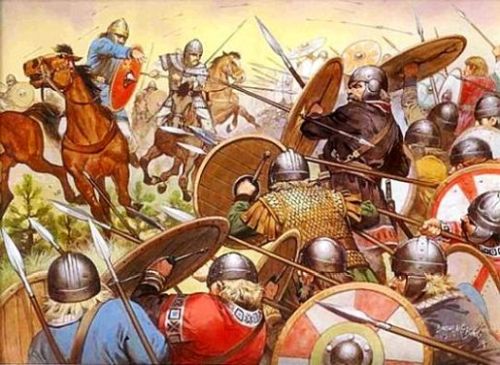 An artistic reconstruction of the Western Goths in battle with Attila’s Huns at Chalons. From ancientweb.org.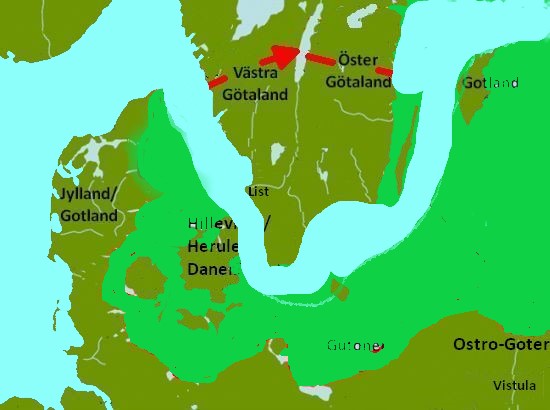










 But in Old Norse, the nickname would have been understood as “hairy breeches” or “shaggy trousers.” The Icelander who wrote Ragnar’s Saga in the 13th century explained that Ragnarr got his nickname from the pants he put on to protect himself when fighting a poison-breathing serpent (or dragon): cowhide pants boiled in pitch and rolled in sand.

 CLAN CARRUTHERS - OUR NORSE ANCESTORS