
Subscribe to continue reading
Subscribe to get access to the rest of this post and other subscriber-only content.


CLAN CARRUTHERS – OUR NORSE ANCESTORS
Ancient & Honorable Clan Carruthers – Promptus et Fidelis -Since 1983

Subscribe to get access to the rest of this post and other subscriber-only content.

EARL HAAKON AND THE JOMSVIKINGS
Chief among the nobles of Haakon the Good, of Norway, was Earl Sigurd of Hlade; and first among those who followed him was Earl Haakon, Sigurd’s son. After the death of Haakon the Good, the sons of Gunhild became the masters of Norway, where they ruled like tyrants, murdering Sigurd, whom they most feared. This made the young Earl Haakon their bitter foe.
A young man then, of twenty-five, handsome, able in mind and body, kindly in disposition, and a daring warrior, he was just the man to contend with the tyrant murderers. When he was born Haakon the Good had poured water on his head and named him after himself and he was destined to live to the level of the honor thus given him.
It is not our purpose to tell how, with the aid of the king of Denmark, he drove the sons of Gunhild from the realm, and how, as the sagas tell, the wicked old queen was enticed to Denmark by the king, under promise of marriage, and by his orders was drowned in a swamp. Her powers of sorcery did not avail her then, if this story is true.
Haakon ruled Norway as a vassal of Harald Bluetooth, king of Denmark, to whom he agreed to pay tribute. He also consented to be baptized as a Christian and to introduce the Christian faith into Norway. But a heathen at heart and a Norseman in spirit, he did not intend to keep this promise. After a meeting with the Danish king in which his baptism took place, he sailed for his native land with his ship well laden with priests. But the heathen in him now broke out. With bold disdain of King Harald, he put the priests on shore, and sought to counteract the effect of his baptism by a great feast to the old gods, praying for their favor and their aid in the war that was sure to follow. He looked for an omen, and it came in the shape of two ravens, which followed his ships with loud clucking cries. These were the birds sacred to Odin and he hailed their coming with delight. The great deity of the Norsemen seemed to promise him favor and success.
Turning against the king to whom he had promised to act as a vassal, he savagely ravaged the Danish coast lands. Then he landed on the shores of Sweden, burnt his ships, and left a track of fire and blood as he marched through that land. Even Viken, a province of Norway, was devastated by him, on the plea of its being under a Danish ruler. Then, having done his utmost to show defiance to Denmark and its king, he marched northward to Drontheim, where he ruled like a king, though still styling himself Earl Haakon.
Harald Bluetooth was not the man to be defied with impunity, and though he was too old to take the field himself, he sought means to punish his defiant vassal. Men were to be had ready and able to fight, if the prize offered them was worth the risk, and men of this kind Harald knew where to seek.
![[Illustration] from Historical Tales - Scandinavian by Charles Morris](https://www.heritage-history.com/books/morris/scandinavian/zpage080.gif "[Illustration] from Historical Tales - Scandinavian by Charles Morris") BUSY FARMERS IN A HILLSIDE FIELD ABOVE ARE, SWEDEN. |
In the town of Jomsborg, on the island of Wollin, near the mouth of the Oder, dwelt a daring band of piratical warriors known as the Jomsvikings, who were famed for their indomitable courage. War was their trade, rapine their means of livelihood, and they were sworn to obey the orders of their chief, to aid each other to the utmost, to bear pain unflinchingly, dare the extremity of danger, and face death like heroes. They kept all women out of their community, lest their devotion to war might be weakened, and stood ready to sell their swords to the highest bidder.
To this band of plunderers Harald appealed and found them ready for the task. Their chief, Earl Sigvalde, brought together a great host of warriors at a funeral feast to his father, and there, while ale and mead flowed abundantly, he vowed, flagon in hand, that he would drive Earl Haakon from the Norse realm or perish in the attempt. His viking followers joined him in the vow. The strong liquor was in their veins and there was no enterprise they were not ready to undertake. When their sober senses returned with the next morning, they measured better the weight of the enterprise; but they had sworn to it and were not the men to retreat from a vow they had taken.
Erik, an unruly son of Earl Haakon, had fled from his father’s court in disgrace and was now in Viken, and here the rumor of the vikings’ oath reached his ears. At once, forgetting his quarrel with his father, he hastened north with all the men he could gather to Earl Haakon’s aid, preceding the Jomsvikings, who were sailing slowly up the shores of Norway, plundering as they went in their usual fashion. They had a fleet of sixty ships and a force of over seven thousand well-trained warriors. Haakon, warned by his son, met them with three times their number of ships, though these were smaller and lighter craft. On board were about ten thousand men. Such were the forces that met in what the sagas call the greatest battle that had ever been fought in Norway.
Soon the embattled ships met and the conflict grew fast and furious, hurtling weapons filling the air and men falling on all sides. Great was the carnage and blood flowed in streams on the fighting ships. Earl Haakon stood in the prow of his ship in the heat of the fight, arrows and spears whirling around him in such numbers that his shirt of mail became so torn and rent that he threw it off as useless. The high ships of the vikings gave them an advantage which told heavily against their antagonists, spears and arrows being poured down from their sides.
In the height of the battle Earl Haakon disappeared. As the legends tell he went ashore with his youngest son Erling, whom he sacrificed to the heathen gods to win their aid in the battle. Hardly had he done this deed of blood when a dense black cloud arose and a violent hail-storm broke over the ships, the hail-stones weighing each two ounces and beating so fiercely in the faces of the Jomsvikings as nearly to blind them. Some say that the Valkyries, the daughters of Odin, were seen in the prow of the earl’s ship, filling the air with their death-dealing arrows.
Despite the storm and the supernatural terrors that they conjured up, the Jomsvikings continued to fight, though their decks were slippery with blood and melting hail. Only one coward appeared among them, their chief Earl Sigvalde, who suddenly turned his ship and fled. When Vagn Aakesson, the most daring of the Jomsvikings, saw this recreant act he was frantic with rage.
“You ill-born hound,” he cried, “why do you fly and leave your men in the lurch? Shame on you, and may shame cling to you to your death!”
A spear hurtled from his hand and pierced the man at the helm, where Sigvalde had stood a moment before. But the ship of the dastard earl kept on and a general panic succeeded, all the ships in the fleeing earl’s line following his standard. Only Vagn Aakesson and Bue the Big were left to keep up the fight.
Yet they kept it up in a way to win them fame. When Earl Haakon’s ship drew up beside that of Bue, two of the viking champions, Haavard the Hewer and Aslak Rock-skull, leaped on deck and made terrible havoc. In the end an Icelander picked up an anvil that was used to sharpen their spears and hurled it at Aslak, splitting his skull, while Haavard had both legs cut off. Yet the indomitable viking fought on, standing on his knees.
The onset of the Jomsvikings was so terrific in this last fierce fight that the earl’s men gave back, and might have been all slain had not his son Erik boarded Bue’s ship at this crisis and made an irresistible charge. A terrible cut across the face severed Bue’s nose.
“Now,” he cried, “the Danish maidens will kiss me no more.”
Seeing that all was at an end, he seized two chests of gold to prevent their capture by the victors, and sprang with them into the sea, shouting:
“Overboard all Bue’s men!”
On Vagn’s ship a similar fierce fight was taking place, ending only when all but thirty of the vikings were slain.
Then a savage scene was enacted, one worthy only of those barbarous times. The captives were taken ashore and seated on a long log, their feet bound, their hands free. At the funeral feast in Sigvalde’s hall Vagn had boasted that he would kill Thorkill Laiva, one of Erik’s chief warriors, and this threatened man was now chosen as executioner.
At the captives he rushed, with uplifted axe, and savagely struck off their heads, one after another. Vagn was to be left to the last, that he might suffer from fear, but instead of this he sat joking and laughing with his men. One of them sang and laughed so loudly that Erik asked him if he would like to live.
“That depends on who it is that asks me.”
“He who offers has the power to grant. I am Earl Erik.”
“Then I gladly accept.”
Another made a pun which so pleased the earl that he, too, was set free.
One of the captives had long, beautiful hair, and as Thorkill came near him on his bloody errand he twisted his hair into a coil and asked the executioner not to soil it with his blood. To humor him Thorkill asked one of the bystanders to hold the coil while he struck. The man did so, but as the axe came down the captive jerked his head aside so that the axe fell on the wrists of the coil-holder, both his hands being cut off.
“Some of the Jomsvikings are still alive,” laughed the captive.
“Who are you?” asked Erik.
“I am said to be a son of Bue.”
“Do you wish to live?”
“What other choice have I?”
At Erik’s command he, too, was released.
Angry at being thus robbed of his prey, Thorkill now sprang towards Vagn, determined that at least his special enemy should fall. As he came near, however, one of the men on the log threw himself forward in such a way that Thorkill stumbled over him and dropped his axe. In an instant Vagn was on his feet, seized the axe, and dealt Thorkill a deadly blow. His boast was kept; Thorkill had fallen by his hand.
Erik saw the bold feat with such admiration that he ordered Vagn to be freed, and the prisoners who remained alive were also set free at his order.
While this was going on Earl Haakon sat apart conversing with his chieftains. As they did so they heard a bow-string twang, and before a hand could be raised a keen-pointed arrow pierced the body of Gissur the White, one of the chiefs, and he fell over dead. The arrow had come from the ship of Bue the Big, and thither men ran in haste. What they saw was Haavard the Hewer, still standing on his knees, though his blood flowed freely.
“Tell me,” he cried, “did any one fall at the tree yonder?”
“Yes; Gissur the White.”
“Then luck failed me, for that arrow was aimed for Earl Haakon.”
And he fell over on the deck, with death at his heart-strings. The viking had sent a herald on before, to announce his coming at Odin’s court.
It was Haakon who had ordered the murder of the captives, and Erik his son who gave life to so many of them. The time was near at hand when the earl was to meet the bloody fate which he had dealt out to others. Though Erik had done so much to help him in the battle, he was furious with his son for sparing the life of Vagn Aakesson. As a result they parted in anger, Erik going south again. Here Vagn joined him and from that day forward the two were warm friends and comrades.
But Haakon fell into ways of vice as he grew older, and at length he did a deed that led him to a shameful death. He had his men bring by force to his palace the wife of a rich peasant, and sent them for another, who was famed for her beauty. Orm, her husband, refused to let her go and sent news of the outrage to all the peasants in the valley. From farm to farm flew the tidings, and the peasants, furious at the shameful deeds of the earl, seized their arms and gathered in a great band, which marched upon him at Medalhus.
Earl Haakon was taken by surprise. He had not dreamed of a revolt and only a few men were with him. These he dismissed and fled for safety, only one man, his old servant Kark, going with him. Reaching the Gaul River in his flight, he rode his horse into a deep hole and left his cloak on the ice, so that his pursuers, finding the dead horse and the cloak, might think he was drowned.
From there he sought the nearby home of Thora of Rimul, a faithful woman friend, told her of the hot pursuit and begged her to hide him from his furious enemies. The only hiding place she could provide was a deep ditch under her pig-sty, and in this filthy hole the great earl was hidden, with food, candles, and bedding. Then boards were laid over the ditch and covered with earth and upon this the pigs were driven.
To Rimul the peasants soon came, filled with fury, and with them came a man of note who had just landed and was seeking to win the throne. This was Olaf, a great-grandson of Harold the Fair-Haired, whose claim to the crown of Norway was far better than that of Haakon. Thinking that Thora had hidden the fleeing earl the pursuers searched the whole place. The fugitive not being found, Olaf stood on a large stone near the pig-sty and called the peasants around him, loudly announcing that any man who should find and slay Earl Haakon would be given a large reward.
His words were plainly heard in the damp and unpleasant underground den where Haakon sat shivering. He looked at Kark, the thrall, whose face showed that he, too, had heard the promise of reward.
“What ails you?” asked the earl. “Your face changes from pale to dark and gloomy. Do you propose to betray me?”
“No,” said Kark.
“We were born on the same night, and if one of us dies the other will soon follow,” said the earl warningly.
For a long time they sat, listening to the sounds above. At length all grew still and they felt that the night had come. Kark fell asleep, but the earl sat awake, watching him in deep distrust. The slumbering thrall tossed about as if in pain and the earl wakened him, asking of what he had dreamt.
“I dreamed that you and I were on shipboard and that I was at the helm.”
“That means that you rule over both our lives. Therefore, Kark, you must be true and faithful to me, as duty bids you. Better days will soon come to us both and then you shall be richly rewarded.”
Again the thrall fell asleep and again he seemed to dream. The earl woke him again.
“Of what did you dream?” he asked.
“I dreamed that I was at Hlade and that Olaf Tryggvesson put a golden ring around my neck.”
“That means,” said the earl, “that if you seek Olaf he will put a red ring [a ring of blood] around your neck. Beware of him, Kark, and trust in me. Be faithful to me and you will find in me a faithful friend.”
The night dragged slowly on. The earl dared not let himself sleep, but sat staring at Kark, who stared back at him. When morning was near at hand weariness lay so heavily on the earl that he could no longer keep awake. But his sleep was sorely disturbed by the terrors of that dreadful night. He tossed about and screamed out in distress and at length rose on his knees with the horrors of nightmare in his face.
Then Kark, who had all night been meditating treachery, killed him with a thrust of his knife. Cutting off his head, he broke out of the dark den and sought Olaf, with the grisly trophy in his hand.
Olaf heard his story with lowering face. It was not to traitors like this that he had offered reward. In the end, burning with indignation at the base deed, he ordered the thrall’s head to be struck off. Thus Kark’s dream, as interpreted by Haakon, came true. The ring put by Olaf around his neck was not one of gold, but one of blood.
OFFICIAL AND OLDEST SCOTTISH CLAN CARRUTHERS
SINCE 1983-CLAN OF OUR ANCESTORS
MERITED TO CHIEF CAROTOCUS 10AD
PRESENT CHIEF : PAT E CARROTHERS USA

TAMMY WISE CHS
DR PATRICIA CARRUTHERS CHS


Preserving Our Past, Recording Our Present, Informing Our Future

GOLD WINGS – https://www.facebook.com/carrutherscarrothers.pat.9
COPPER WINGS https://www.facebook.com/ClanCarruthers1/
CLAN CARRUTHERS FAMILY HISTORY – https://www.facebook.com/CarruthersClan
CLAN CARRUTHERS CCIS – https://www.facebook.com/groups/3878691252182714
CLAN CARRUTHERS INT SOCIETY- https://www.facebook.com/groups/394653845137709
CLAN CARRUTHERS – BORDER REIVERS – https://www.facebook.com/groups/434959914239094
Disclaimer Ancient and Honorable Carruthers Clan International Soci
HAAKON THE GOOD AND THE SONS OF GUNHILD
CARRUTHERS ANCESTOR
We have told how King Haakon succeeded his brother, Erik Blood-Axe, on the throne, and how, from his kindly and gentle nature, people called him Haakon the Good. There were other sons and several grandsons of Harold the Fair-Haired in the kingdom, but the new king treated them with friendliness and let them rule as minor kings under him.
He dealt with the peasants also in the same kindly spirit, giving them back their lands and relieving them of the tax which Harold had laid. But he taxed them all in another way, dividing the country into marine districts, each of which was required to supply the king, on his demand, with a fully equipped warship. Yet as this was for the defence of the country, the people did not look on it as oppressive. And as Norway had a long mountainous coast, and important events were often long in becoming known, he gave orders that the approach of an enemy should be made known by signal fires lighted all along the coast.
Haakon made other wise laws, in which he took the advice of the ablest men of the kingdom. But now we have to speak of the most striking event in the new king’s career. Norway at that time was a haunt of idolatry. Men worshipped Odin and a host of other gods, and there was not a Christian in the whole land except the king himself, who had been brought up in the new faith by his foster-father, King Athelstan of England.
An earnest Christian, he looked with sorrow on the rude worship and heathen belief of his people, but not until he had been many years on the throne did he venture to interfere with it. Then, about 950, when he had won the love of them all, he took steps to carry out his long-cherished desire.
Sending to England for a bishop and a number of priests, the king issued a decree in which the people were forbidden to make sacrifices to the old gods and ordered to accept the Christian faith.
This came like a thunderbolt to the worshippers of the old gods. To bid a whole nation to give up at a word the religion which they had cherished from childhood and which their fathers had held for generations before them was too much to demand. The king brought together a concourse of the people and spoke to them of his wish and purpose, but they had no answer to make except that the matter must be settled by their legal assembly.
When the thing, or assembly, was called into session, a great body of the people were present, for never had so important a question been laid before them. Earnest and imploring was the speech made by the king, in which he warmly asked them to accept the God of the Christians and give up their heathen idols of wood and stone.
These words were followed by an angry murmur from the multitude, and many dark looks were bent upon the rash monarch. Then a peasant leader, Aasbjörn of Medalhus, stepped out from the throng and spoke:
“When you, King Haakon, first called us here before you and we took you for our king, it was with deep gladness, as if heaven had opened to us. But was it liberty we gained, or do you wish to make thralls of us once more, that you ask us to give up the faith of our fathers and forefathers for the new and unknown one you offer? Sturdy men they were, and their faith did well for them and has done well for us. We have learned to love you well and have always kept and will always keep the laws made by you and accepted by us. But in this thing which you now demand we cannot follow. If you are so resolved upon it that your mind cannot be changed, then we shall be forced to part from you and choose a new chief who will support us in worshipping our fathers’ gods. Choose, O king, what you will do, before this assembly has dispersed.”
So loud were the shouts of approval with which this speech was greeted that not a word could be heard. Then, when quiet reigned again, Earl Sigurd, who had spoken aside with Haakon, rose and said that the king had no wish to lose their friendship and would yield to their wishes. This was not enough to overcome the distrust of the peasants. They next demanded that he should take part in the sacrifices to be given and in the feast to follow. This he felt obliged to do, though he quieted his conscience by making the sign of the cross.
When the next Yuletide sacrifice came Haakon was required to eat horse-flesh at the feast and this time was forbidden to make the sign of the cross when he drank the usual toasts to the ancient gods of Norway. This was a humiliation that cut the proud monarch deeply and it was with an angry soul he left, saying to his attendants that when he came back it would be with an army to punish those who had thus insulted his faith. Back he did not come, for new troubles were gathering around him.
To learn the source of these troubles we must return to the story of Erik Blood-Axe and Gunhild, his wicked wife. After Erik’s death that mischief-loving woman sought Denmark with her sons, who grew up to become brave warriors and daring viking rovers, infesting the coast of Norway and giving its king and earls all the trouble they could. At length, backed by Harold Bluetooth, the king of Denmark, their piratical raids changed to open war, and they invaded Norway, hoping to win their father’s old kingdom for themselves.
A crisis came in 955. In that year the sons of Erik appeared so suddenly with a large fleet that they took King Haakon by surprise. He had with him only a small force, the signal fires had not been lighted, and the enemy were close at hand before he could prepare to meet them.
“What shall we do?” he asked his men. “Shall we stay and fight, or draw back and gather men?”
The answer came from an old peasant, Egil Woolsack:
“Often have I fought, King Haakon, with King Harold, your father. Whether the foe was stronger or weaker the victory was always his. Never did he ask his friends if he should run; nor need you, for we are ready to fight and think that we have a brave chieftain for our leader.”
“You speak well and wisely, Egil,” said the king. “It is not my wish to run, and with your aid I am ready to face the foe.”
“Good words those!” cried Egil joyously. “It has been so long since I saw the flash of sword that I feared I would die in my bed of old age, though it has been my hope to fall in battle at my chieftain’s back. Now will my wish be gained.”
To land came the sons of Erik, having six men to Haakon’s one. Seeing how great were the odds, old Egil tried strategy, leading ten standard-bearers to a hidden spot in the rear of the hostile army and leaving them there in ambush. When the armies had met and the fighting was under way, he led these men up a sloping hill until the tops of their standards could be seen above its summit. He had placed them far apart, so that when the Danes saw the waving banners it looked like a long line of new troops coming upon them. With sudden alarm and a cry of terror they fled towards their ships.
Gamle, their leader, was quick to discover the stratagem, and called on them to stop, that it was all a trick; but nothing could check their panic flight, and he was swept along with them to the beach. Here a stand was made, but Haakon rushed upon them in a furious attack in which old Egil had his wish, for he fell in the storm of sword blows, winning the death he craved. Victory rested on the king’s banners and his foes fled to their ships, Gamle, their leader, being drowned in the flight.
For six years after this the land lay at peace. King Haakon continued a Christian and many of his friends joined him in the new faith. But he was too wise and gentle to attempt again to force his belief upon his people and the worship of the heathen gods went on. All the people, nobles and peasants alike, loved their king dearly and he would have ended his reign in a peaceful old age but for his foes without the kingdom. This is the way in which the end came.
In the summer of the year 961, when Haakon had been twenty-six years on the throne, he with many guests was at feast in the royal mansion of Fitje, in Hördaland. While at table a sentinel brought in the alarming news that a large fleet of ships was sailing up the fiord.
By the king’s side sat Eyvnid, his nephew, who was a famous scald, or bard. They rose and looked out on the fiord.
“What ships are they, of friends or of foes?” asked the king.
The scald replied in a verse, in which he sang that the sons of Erik were coming again.
“Once more they take us unawares,” said Haakon to his men. “They are many and we are few. Never yet have we faced such odds. The danger lies before you. Are you ready to meet it? I am loath to flee before any force, but I leave it to the wise among you to decide.”
Eyvnid sang another verse, to the effect that it would be ill counsel to advise a man like King Haakon to flee from the sons of Gunhild the sorceress.
“That is a man’s song,” cried the king, “and what you say is what I wish.”
All around him the warriors shouted their war-cry, and while they ran for their weapons he put on his armor, seized his sword and shield, and placed on his head a golden helmet that shone brightly in the sun. Never had he looked more like a born king, with his noble and inspired countenance and the bright hair streaming down from under his helmet.
The battle that followed was fierce and bloody. Harold, Gunhild’s third son, commanded the invaders, who far outnumbered Haakon’s small force. And now there was no Egil to defeat the foe by stratagem, but the battle was hand to hand and face to face, with stroke of sword and thrust of spear, the war-shout of the fighters and the death-wail of the fallen.
King Haakon that day showed himself a true and heroic warrior. As the battle grew fiercer his spirit rose higher, and when Eyvnid the scald greeted him with a warlike verse, he answered with another. But the midsummer heat growing hard to bear, he flung off his armor and fought with only his strong right arm for shield. The arrows had now been all shot, the spears all hurled, and the ranks met hand to hand and sword to sword, in desperate affray.
In the front rank stood the king, his golden helmet making him a shining mark for the warriors of the foe.
“Your helmet makes you a target for the Danish spears,” cried Eyvnid, and he drew a hood over it to hide its gleam. Skreyja, Harold’s uncle, who was storming onward towards the king, now lost sight of him and cried out:
“Where is the Norse king? Has he drawn back in fear? Is he of the golden helmet a craven?”
“Keep on as you are coming, if you wish to meet the Norsemen’s king,” shouted Haakon, throwing down his shield and grasping his sword with both hands, as he sprang out before them all. Skreyja bounded towards him and struck a furious blow, but it was turned aside by a Norse warrior and at the same instant Haakon’s sword cleft the foeman’s head down to the shoulders.
This kingly stroke gave new spirit to the Norsemen and they rushed with double fury upon the foe, whom the fall of their best warrior filled with fear. Back to the beach they were pressed, many being slain, many drowned, a few only, Harold among them, reaching the ships by swimming.
The Norsemen had won against fearful odds, but their king was in deadly peril. In the pursuit he had been struck in the right arm by an arrow with an oddly-shaped head, and do what they would, the flow of blood could not be stopped. It was afterwards said that Gunhild the sorceress had bewitched the arrow and sent it with orders to use it only against King Haakon.
In those days it was easy to have men believe tales like that, but, witchcraft or not, the blood still ran and the king grew weaker. As night came death seemed at hand and one of his friends offered to take his body to England, after his death, that he might be laid in Christian soil.
“Not so,” said Haakon. “Heathen are my people and I have lived among them like a heathen. See then that I am laid in the grave like a heathen.”
Thus he died, and he was buried as he wished, while all men mourned his death, even his foes; for before breathing his last he bade his men to send a ship after the sons of Gunhild; asking them to come back and rule the kingdom. He had no sons, he said, and his daughter could not take the throne.
Thus death claimed the noblest of the Norsemen, at once heathen and Christian, but in his life and deeds as in his death a great and good man.
OFFICIAL AND OLDEST SCOTTISH CLAN CARRUTHERS
SINCE 1983-CLAN OF OUR ANCESTORS
MERITED TO CHIEF CAROTOCUS 10AD
PRESENT CHIEF : PAT E CARROTHERS USA
Dr Tim Fraser SCOTLAND CHS
Reviewed by : Tammy Wise USA CHS
Preserving Our Past, Recording Our Present, Informing Our Future
GOLD WINGS – https://www.facebook.com/carrutherscarrothers.pat.9
COPPER WINGS https://www.facebook.com/ClanCarruthers1/
CLAN CARRUTHERS FAMILY HISTORY – https://www.facebook.com/CarruthersClan
CLAN CARRUTHERS CCIS – https://www.facebook.com/groups/3878691252182714
CLAN CARRUTHERS INT SOCIETY- https://www.facebook.com/groups/394653845137709
CLAN CARRUTHERS – BORDER REIVERS – https://www.facebook.com/groups/434959914239094
Disclaimer Ancient and Honorable Carruthers Clan International Soci
ERIC BLOODAXE AND EGIL THE ICELANDER
CARRUTHERS ANCESTOR
 In the year 900 Harold the Fair-Haired, the famous monarch who made a kingdom of Norway, passed a law which was to work mischief for centuries to come. Erik, his favorite son, was named overlord of the kingdom, but with the proviso that his other sons should bear the kingly title and rule over provinces, while the sons of his daughters were to be made earls. Had the wise Harold dreamed of the trouble this unwise law was to make he would have cut off his right hand before signing it. It was to give rise to endless rebellions and civil wars which filled the kingdom with ruin and slaughter for many reigns and at last led to its overthrow and long disappearance from among the separate nations of the earth.
A bold and daring prince was Erik, with the old viking blood in his veins. When only twelve years of age his father gave him five ships, each with a sturdy crew of Norsemen, and sent him out to ravage the southern lands, in the manner of the sea-kings of those days. Many were the perilous exploits of the young viking admiral and when he came back to his father’s halls and told him of his daring deeds, the old king listened with delight. So fierce and fatal were many of his fights that he won the name of Blood-Axe, but for this his father loved him all the more and chose him to be his successor on the throne.
![[Illustration] from Historical Tales - Scandinavian by Charles Morris](https://www.heritage-history.com/books/morris/scandinavian/zpage050.gif "[Illustration] from Historical Tales - Scandinavian by Charles Morris") HOME OF PEASANTS, NORWAY |
Before his father died Erik had shown what was in him, by attacking and killing two of his brothers. But despite all that, when the old king was eighty years of age he led Erik to the throne and named him as his successor. Three years later Harold died and Norway fell under the young sea-king’s hand—a brave, handsome, stately ruler; but haughty, cruel, and pitiless in his wrath, and with the old viking wildness in his blood.
He had married a woman whom men called a witch—cruel, treacherous, loving money and power, and with such influence over him that she killed all the good in his soul and spurred him on to evil deeds.
Strange stories are told of the wicked Queen Gunhild. It was said that she had been sent to Finland to learn the arts of sorcery, in which the Finns of those days were well versed. Here Erik met her in one of his wanderings, and was taken captive by her bold beauty. She dwelt with two sorcerers, both bent on marrying her, while she would have neither of them. Prince Erik was a suitor more to her liking and she hid him in her tent, begging him to rescue her from her troublesome lovers.
This was no easy task, for sorcerers have arts of their own, but Erik proved equal to it, cut his way through all the difficulties in his path and carried Gunhild away to his ships, where he made her his wife. In her he had wed a dragon of mischief, as his people were to learn.
She was of small size but of wonderful beauty, and with sly, insinuating ways that fitted her well to gain the mastery over strong men. But all her arts were used for evil, and she won the hatred of the people by speaking words of ill counsel in her husband’s ears. The treachery and violence he showed were said to be the work of Gunhild the witch, and the nobles and people soon grew to hate Erik Blood-Axe and his cruel wife, and often broke out in rebellion against them.
His brothers, who had been made kings of provinces, were not ready to submit to his harsh rule, and barely was old King Harold dead before Halfdan the Swarthy—who bore the name of his grandfather—claimed to be monarch in Tröndelag, and Olaf, another brother, in Viken. Death came suddenly to Halfdan—men whispered that he had been poisoned by the queen—but his brother Sigfrid took his place and soon the flame of rebellion rose north and south. Erik proved equal to the difficulty. Sigfrid and Olaf were in Tunsberg, where they had met to lay plans to join their forces, when Erik, whose spies told him of their movements, took the town by surprise and killed them both.
Thus, so far, Erik Blood-Axe was triumphant. He had killed four of his brothers—men said five—and every one thought that Gunhild would not be content until all King Harold’s brood except her own husband were in the grave.
Trouble next came from a region far away, the frost-king’s land of Iceland in the northern seas, which had been settled from Norway in the early reign of Harold the Fair-Haired, some sixty years before. Here lived a handsome and noble man named Thorolf, who had met Erik in his viking days. He was the son of the stern old Icelander Bald Grim, and nephew of the noble Thorolf who had been basely slain by King Harold.
Bald Grim hated Harold and all his race, but Thorolf grew to admire Erik for his daring and made him a present of a large and beautiful ship. Thus Erik became his friend, and when Thorolf came to Norway the young prince begged his father to let him dwell there in peace. When he at length went home to Iceland he took with him an axe with a richly carved handle, which Erik had sent as a present to his father.
Old Bald Grim was not the man to be bought over by a present. The hate he felt for Harold he transferred to his son, and when Thorolf set sail again for Norway his father bade him take back the axe to the king and sang an insulting song which he bade him repeat to Erik. Thorolf did not like his errand. He thought it best to let the blood-feud die, so he threw the axe into the sea and when he met the king gave him his father’s thanks for the fine gift. If Thorolf had had his way the trouble would have been at an end, but with him came Egil, his younger brother, a man of different character.
Stern old Bald Grim seemed born again in his son Egil. A man of great size, swarthy face, harsh of aspect, and of fierce temper, in him was the old, tameless spirit of the Norse sea-kings, turbulent, passionate, owning no man master, he bent his strong soul to no man’s rule. Rash and adventurous, he had a long and stormy career, while nature had endowed him with a rich gift of song, which added to his fame. Such was the type of men who in those days made all Europe tremble before the Norsemen’s wrath, and won dominion for the viking warriors in many lands.
Thorold when in Norway before had gained powerful friends in the great nobles, Thore Herse and Björn the Yeoman. On this visit the brothers became Thore’s guests, and Egil and Arinbjörn, Thore’s son, became warm friends. The young Icelander’s hot temper soon brewed trouble. Sickness kept him from going with Thorolf to the house of Björn the Yeoman, whose daughter, Aasgard, he was to marry; but he soon got well and went on a visit to Baard, a steward of the king. As fortune decreed he met there King Erik and Queen Gunhild.
Egil was not the man to play the courtier and his hot blood was under little control. When Baard neglected him in favor of his royal visitor, he broke into such a rage that the queen, to quiet him, tried one of her underhand arts. She bade Baard to mix sleeping herbs with his beer.
Suspecting treachery from the taste of the beer Egil flung his flagon to the floor, struck Baard dead in his fury, and, fleeing for his life, swam to an island in the neighboring stream. When men were sent to search the island and capture him he killed some of them, seized their boat, and made his escape.
King Erik was furious, but Thore Herse got him to accept a money payment for Baard’s death—as was then the custom of the land—and he agreed to let Egil dwell in Norway unharmed.
This was not to the queen’s liking. She was fond of Baard and was deeply incensed at Egil for his murderous act, and she stormed at the king for his mildness of temper till he broke out:
“You are forever egging me on to acts of violence; but now you must hold your peace, for I have given my kingly word and cannot break it.”
Gunhild, thus repulsed, sought other means of revenge. A great feast of sacrifice to the old heathen gods was to be held at the temple of Gaule, and at her instigation her brother, Eyvind Skreyja, agreed to kill one of Bald Grim’s sons. Finding no opportunity for this, he killed one of Thorolf’s men, for which act Erik outlawed him.
The remainder of the story of Egil’s career is largely that of a viking, that is, a piratical rover, bent on spoil and plunder and the harrying of sea-coast lands. With Thorolf he took to the sea and cruised about in quest of wealth and glory, finally landing in England and fighting in a great battle under the banner of King Athelstan. He made his mark here, but Thorolf was slain, so Egil went back to Norway, married his brother’s widow, and sailed for his old home in Iceland, which he had not seen for twelve years.
Iceland was too quiet a land to hold the stirring sea-king long and news from Norway soon made him take ship again. Björn the Yeoman, his wife’s father, had died, and Queen Gunhild had given his estate to Berg-Anund, one of her favorites. Storming with rage, he reached Norway and hotly pleaded his claim to the estate before the assembly or thing at Gula, Erik and Gunhild being present. He failed in his purpose, the thing breaking up in disorder; and Egil, probably finding Norway too hot to hold him, went back to Iceland.
If King Erik now fancied he was rid of the turbulent Icelander he was mistaken. Rankling with a sense of injury and borne onward by his impetuous temper, Egil was soon in Norway again, sought the Björn estate, surprised and killed Berg-Anund, and went so far in his daring as to kill Ragnvald, the king’s son, who was visiting Berg. Carried to extremes by his unruly temper he raised what was called a shame-pole, or pole of dishonor, on a cliff top, to the king and queen. On it he thrust the head of a dead horse, crying out:
“I turn this dishonor against all the land-spirits of this land, that they may all stray bewildered and none of them find his home until they have driven King Erik and Queen Gunhild out of this land.”
This message of defiance he cut in runes—the letters of the Northland—into the pole, that all might read it, and then sailed back to Iceland.
Egil had not long to wait for his curse to take effect, for Erik’s reign was soon threatened from a new source. He had not killed all his brothers. In the old days of King Harold, when near seventy years old, he had married a new wife, who bore him a son whom he named Haakon,—destined in later life to reign with the popular title of Haakon the Good. This boy, perhaps for his safety, had been sent to England and given over to King Athelstan, who brought him up almost as his own son.
Erik had been four years on the throne when Haakon came back to Norway, a handsome, noble youth, kind of heart and gentle in disposition, and on all sides hailed with joy, for Erik and his evil-minded wife had not won the love of the people. Great nobles and many of the people gathered around Haakon, men saying that he was like King Harold come back again, gentler and nobler than of old and with all his old stately beauty and charm.
The next year he was crowned king. Erik tried to raise an army, but none of the people were willing to fight for him, and he was forced to flee with his wife and children. Only a few of his old friends went with him, but among them was Arinbjörn, Egil’s former friend.
Sudden had been King Erik’s fall. Lately lord of a kingdom, he had now not a foot of land he could call his own, and he sailed about as a sea-robber, landing and plundering in Scotland and England. At length, to rid himself of this stinging hornet of the seas, King Athelstan made him lord of a province in Northumberland, with the promise that he would fight for it against other vikings like himself. He was also required to be baptized and become a Christian.
Meanwhile Egil dwelt in Iceland, but in bitter discontent. He roamed about the strand, looking for sails at sea and seeming to care little for his wife and children. Men said that Gunhild had bewitched him, but more likely it was his own unquiet spirit. At any rate the time came when he could bear a quiet life no longer and he took ship and sailed away to the south.
Misfortune now went with him. A storm drove his ship ashore on the English coast at the mouth of the Humber, the ship being lost but he and his thirty men reaching shore. Inquiring in whose land he was, people told him that Erik Blood-Axe ruled that region.
Egil’s case was a desperate one. He was in the domain of his deadly foe, with little hope of escape. With his usual impetuous spirit, he made no attempt to flee, but rode boldly into York, where he found his old friend Arinbjörn. With him he went straight to Erik, like the reckless fellow he was.
“What do you expect from me?” asked Erik. “You deserve nothing but death at my hands.”
“Death let it be, then,” said the bold viking, in his reckless manner.
Gunhild on seeing him was eager for his blood. She had hated him so long that she hotly demanded that he should be killed on the spot. Erik, less bloodthirsty, gave him his life for one night more, and Arinbjörn begged him to spend the night in composing a song in Erik’s honor, hoping that in this way he might win his life.
Egil promised to do so and his friend brought him food and drink, bidding him do his best. Anxious to know how he was progressing Arinbjörn visited him in the night.
“How goes the song?” he asked.
“Not a line of it is ready,” answered Egil. “A swallow has been sitting in the window all the night, screaming and disturbing me, and do what I would I could not drive it away.”
At that Arinbjörn darted into the hall, where he saw in the dim light a woman running hastily away. Going back he found that the swallow had flown. He was sure now that Queen Gunhild had changed herself into a swallow by sorcery, and for the remainder of the night he kept watch outside that the bird should not return. When morning broke he found that Egil had finished his song.
Determined to save his friend’s life if he could, he armed himself and his men and went with Egil to the palace of the king, where he asked Erik for Egil’s life as a reward for his devotion to him when others had deserted him.
Erik made no reply, and then Arinbjörn cried out:
“This I will say. Egil shall not die while I or one of my men remain alive.”
“Egil has well deserved death,” replied Erik, “but I cannot buy his death at that price.”
As he stopped speaking Egil began to sing, chanting his ode in tones that rang loudly through the hall. Famed as a poet, his death song was one of the best he had ever composed, and it praised Erik’s valor in all the full, wild strains of the northern verse.
Erik heard the song through with unmoved face. When it was done he said:
“Your song is a noble one, and your friend’s demand for your life is nobler still. Nor can I be the dastard to kill a man who puts himself of his own will into my hands. You shall depart unharmed. But do not think that I or my sons forgive you, and from the moment you leave this hall never come again under my eyes or the eyes of my sons.”
Egil thus won his life by his song, which became known as the “Ransom of the Head.” Another of his songs, called “The Loss of the Son,” is held to be the most beautiful in all the literature of Iceland. He afterwards lived long and had many more adventures, and in the end died in his bed in Iceland when he was over ninety years of age. Erik died in battle many years earlier, and Gunhild then went to Denmark with her sons. She was to make more trouble for Norway before she died.
OFFICIAL AND OLDEST SCOTTISH CLAN CARRUTHERS
SINCE 1983-CLAN OF OUR ANCESTORS
MERITED TO CHIEF CAROTOCUS 10AD
PRESENT CHIEF : PAT E CARROTHERS USA
CHARLES MORRIS
TAMMY WISE CHS USA
Preserving Our Past, Recording Our Present, Informing Our Future
GOLD WINGS – https://www.facebook.com/carrutherscarrothers.pat.9
COPPER WINGS https://www.facebook.com/ClanCarruthers1/
CLAN CARRUTHERS FAMILY HISTORY – https://www.facebook.com/CarruthersClan
CLAN CARRUTHERS CCIS – https://www.facebook.com/groups/3878691252182714
CLAN CARRUTHERS INT SOCIETY- https://www.facebook.com/groups/394653845137709
CLAN CARRUTHERS – BORDER REIVERS – https://www.facebook.com/groups/434959914239094
Disclaimer Ancient and Honorable Carruthers Clan International Soci
GORM THE OLD – DENMARKS FIRST KING
CARRUTHERS ANCESTOR
In ancient times Denmark was not a kingdom, but a multitude of small provinces ruled over by warlike chiefs who called themselves kings. It was not until the ninth century that these little king-ships were combined into one kingdom, this being done by a famous chieftain, known by the Danes as Gorm den Gamle, or Gorm the Old. A great warrior he was, a viking of the vikings, and southern Europe felt his heavy hand. A famous story of barbarian life is that of Gorm, which well deserves to be told.
He was the son of a fierce pagan of Norway, Hardegon, who was of royal blood, being a grandson of the half-fabulous Ragnar Lodbrok. A prince with only his sword for kingdom, Hardegon looked around for a piece of land to be won by fighting, and fixed upon Lejre, in the fruitful Danish island of Sjölland, which was just then in a very inviting state for the soldier of fortune. Some time before it had fallen into the hands of a Swedish fortune-seeker named Olaf, who left it to his two sons. These in turn had just been driven out by Siegric, the rightful king, when Hardegon descended upon it and seized it for himself. Dying, he left it to his son Gorm.
It was a small kingdom that Gorm had fallen heir to. A lord’s estate we would call it to-day. But while small in size, it stood high in rank, for it was here that the great sacrifices to Odin, the chief Scandinavian deity, were held, and it was looked upon as one of the most sacred of spots. Hither at Yuletide came the devotees of Odin from all quarters to worship at his shrine, and offer gifts of gold and silver, precious stones and costly robes, to the twelve high priests of whom the king of Lejre was the chief. And every worshipper, whether rich or poor, was expected to bring a horse, a dog, or a cock, these animals being sacred to Odin and sacrificed in large numbers annually at his shrine. In the special nine-year services, people came in great numbers, and it is probable that on these occasions human sacrifices were made, captives taken in war or piratical excursions being saved for this purpose.
As one may see, the king of Lejre had excellent opportunity to acquire wealth, and young Gorm, being brave, clever, and ambitious, used his riches to increase his landed possessions. At least, the Danish historians tell us that he began by buying one bit of land, getting another by barter, seizing on one district, having another given him, and so on. But all this is guess-work, and all we actually know is that Gorm, the son of a poor though nobly-born sea-rover, before his death gained control of all Denmark, then much larger than the Denmark of to-day, and changed the small state with which he began into a powerful kingdom, bringing all the small kings under his sway.
The ambitious chief did not content himself with this. Long before his kingdom was rounded and complete he had become known as one of the most daring and successful of the viking adventurers who in those days made all Europe their prey.
Early in his reign he made a plundering cruise along the shores of the Baltic and joined in a piratical invasion of Russia, penetrating far inward and pillaging as he went. We hear of him again in 882 as one of the chiefs of a daring band which made a conquering raid into Germany, intrenched itself on the river Maas, sallied forth on plundering excursions whose track was marked by ruined fields and burnt homesteads, villages and towns, and even assailed and took Aix-la-Chapelle, one of the chief cities of the empire of Charlemagne and the seat of his tomb. The reckless freebooters stalled their horses in the beautiful chapel in which the great emperor lay buried and stripped from his tomb its gilded and silvered railings and everything of value which the monks had not hidden.
The whole surrounding country was similarly ravaged and desolated by the ruthless heathens, monasteries were burned, monks were killed or captured, and the emperor, Charles the Fat, was boldly defied. When Charles brought against the plunderers an army large enough to devour them, he was afraid to strike a blow against them, and preferred to buy them off with a ransom of two thousand pounds of gold and silver, all he got in return being their promise to be baptized.
Finding that they had a timid foe to deal with, the rapacious Norsemen asked for more, and when they finally took to their ships two hundred transports were needed to carry away their plunder. The cowardly Charles, indeed, was so wrought upon by fear of the pagan Danes that he even passed the incredible law that any one who killed a Norseman should have his eyes put out and in some cases should lose his life.
All this was sure to invite new invasions. A wave of joy passed through the north when the news spread of the poltroonery of the emperor and the vast spoil awaiting the daring hand. Back they came, demanding and receiving new ransom, and in 885 there began a great siege of Paris by forty thousand Danes.
King Gorm was one of the chiefs who took part in this, and when Henry of Neustria, whom the emperor had sent with an army against them, was routed and driven back, it was Gorm who pursued the fugitives into the town of Soissons, where many captives and a great booty were taken.
The dastard emperor again bought them off with money and freedom to ravage Burgundy, Paris being finally rescued by Count Eudes. In 891 they were so thoroughly beaten by King Arnulf, of Germany, that their great leaders fell on the field and only a remnant of the Norsemen escaped alive, the waters of the river Dyle running red with the blood of slain thousands.
Gorm was one of the chiefs who took part in this disastrous battle of Louvaine and was one of the fortunate few who lived to return to their native land. Apparently it was not the last of his expeditions, his wife, Queen Thyra, taking care of the kingdom in his many long absences.
Thyra needed ability and resolution to fitly perform this duty, for those were restless and turbulent times, and the Germans made many incursions into Sleswick and Jutland and turned the borderlands on the Eyder into a desert. This grew so hard to bear that the wise queen devised a plan to prevent it. Gathering a great body of workmen from all parts of Denmark, she set them to building a wall of defense from forty-five to seventy-five feet high and eight miles long, crossing from water to water on the east and west. This great wall, since known as the Dannevirke, took three years to build. There were strong watch-towers at intervals and only one gate, and this was well protected by a wide and deep ditch, crossed by a bridge that could readily be removed.
For ages afterwards the Danes were grateful to Queen Thyra for this splendid wall of defense and sang her praises in their national hymns, while they told wonderful tales of her cleverness in ruling the land while her husband was far away. Fragments of Thyra’s rampart still remain and its remains formed the groundwork of all the later border bulwarks of Denmark.
Queen Thyra, while a worshipper of the northern gods, showed much favor to the Christians and caused some of her children to be signed with the cross. But King Gorm was a fierce pagan and treated his Christian subjects so cruelly that he gained the name of the “Church’s worm,” being regarded as one who was constantly gnawing at the supports of the Church. Henry I. the Fowler, the great German emperor of that age, angry at this treatment of the Christians, sent word to Gorm that it must cease, and when he found that no heed was paid to his words he marched a large army to the Eyder, giving Gorm to understand that he must mend his ways or his kingdom would be overrun.
Gorm evidently feared the loss of his dominion, for from that time on he allowed the Archbishop of Bremen to preach in his dominions and to rebuild the churches which had been destroyed, while he permitted his son Harald, who favored the Christians, to be signed with the cross. But he kept to the faith of his forefathers, as did his son Knud, known as “Dan-Ast,” or the “Danes’-joy.”
The ancient sagas tell us that there was little love between Knud and Harald; and that Gorm, fearing ill results from this, swore an oath that he would put to death any one who attempted to kill his first-born son, or who should even tell him that Knud had died.
While Harald remained at home and aided his mother, Knud was of his father’s fierce spirit and for years attended him on his viking expeditions. On one of these he was drowned, or rather was killed while bathing, by an arrow shot from one of his own ships. Gorm was absent at the time, and Thyra scarcely knew how the news could be told him without incurring the sworn penalty of death.
Finally she put herself and her attendants into deep mourning and hung the chief hall of the palace with the ashy-grey hangings used at the grave-feasts of Northmen of noble birth. Then, seating herself, she awaited Gorm’s return. On entering the hall he was struck by these signs of mourning and by the silence and dejection of the queen, and broke out in an exclamation of dismay:
“My son, Knud, is dead!”
“Thou hast said it, and not I, King Gorm,” was the queen’s reply. The news of the death had thus been conveyed to him without any one incurring the sworn penalty. Soon after that—in 936—King Gorm died, and the throne of Denmark was left to his son Harald, a cruel and crafty man whom many of the people believed to have caused the murder of his brother.
OFFICIAL AND OLDEST SCOTTISH CLAN CARRUTHERS
SINCE 1983-CLAN OF OUR ANCESTORS
MERITED TO CHIEF CARATOCUS 10AD
PRESENT CHIEF : PAT E CARROTHERS USA
CHARLES MORRIS
TAMMY WISE CHS USA
Preserving Our Past, Recording Our Present, Informing Our Future
GOLD WINGS – https://www.facebook.com/carrutherscarrothers.pat.9
COPPER WINGS https://www.facebook.com/ClanCarruthers1/
CLAN CARRUTHERS FAMILY HISTORY – https://www.facebook.com/CarruthersClan
CLAN CARRUTHERS CCIS – https://www.facebook.com/groups/3878691252182714
CLAN CARRUTHERS INT SOCIETY- https://www.facebook.com/groups/394653845137709
CLAN CARRUTHERS – BORDER REIVERS – https://www.facebook.com/groups/434959914239094
Disclaimer Ancient and Honorable Carruthers Clan International Soci
HOW KING ROLF WON HIS WIFE
At one time very many centuries ago, we cannot say just when, for this was in the days of the early legends, there reigned over Upsala in Sweden a king named Erik. He had no son and only one daughter, but this girl was worth a dozen sons and daughters of some kings. Torborg she was named, and there were few women so wise and beautiful and few men so strong and valiant. She cared nothing for women’s work, but was the equal of any man of the court in riding, fighting with sword and shield, and other athletic sports. This troubled King Erik very much, for he thought that the princess should sit in her maiden chamber like other kings’ daughters; but she told him that when she came to succeed him on the throne she would need to know how to defend her kingdom, and now was the time for her to learn.
That she might become the better fitted to rule, she asked him to give her some province to govern, and this he did, making her queen of a third of his kingdom, and giving her an army of stout and bold warriors. Her court was held at Ulleraker in Upland, and here she would not let any one treat her as a woman, dressing always in men’s clothing and bidding her men to call her King Torborg. To fail in this would be at risk of their heads. As her fame spread abroad, there were many who came to court her, for she was at once very beautiful and the heiress of a great kingdom. But she treated all such with laughter and contempt. It is even said that she put out the eyes of some, and cut off the hands and feet of others, but this we do not like to believe. At any rate, she drove away those who troubled her too much with lance and spear. So it was plain that only a strong and bold man could win this warlike maiden for his wife.
At that time King Götrik who ruled in Gothland, a country in southern Sweden, had sent his younger son Rolf to be brought up at the court of his foster-brother King Ring of Denmark. His elder son Kettil he kept at home, but did not love him much on account of his pride and obstinacy. So it happened that when Götrik was very old and like to die, he decided that Rolf, who was very tall and strong, and very fit and able, should succeed him, though he was the younger son. All agreed to this, even Kettil, so Rolf was sent for and made king of Gothland, which he ruled with skill and valor.
One day Rolf and Kettil, who loved each other as brothers should, were talking together, and Kettil said that one thing was wanting to the glory and honor of Rolf’s rule, and that was a queen of noble birth and goodly presence.
“And whom have you in mind?” asked Rolf.
“There is Torborg, the king of Upsala’s daughter. If you can win her for wife it will be the greatest marriage in the north.”
To this advice Rolf would not listen. He had heard of how the shrewish Torborg treated her suitors, and felt that wooing her would be like taking a wild wolf by the ears. So he stayed unmarried for several years more, though Kettil often spoke of the matter, and one day said to him contemptuously:
“Many a man has a large body with little courage, and I fear you are such a one; for though you stand as a man, you do not dare to speak to a woman.”
“I will show you that I am a man,” said Rolf, very angry at these words.
He sent to Denmark for his foster-brother Ingiald, son of King Ring, and when he came the two set out with sixty armed men for the court of King Erik in Upsala.
One morning, about this time, Queen Ingerd of Upsala awoke and told King Erik of a strange dream she had dreamed. She had seen in her sleep a troop of wolves running from Gothland towards Sweden, a great lion and a little bear leading them; but these, instead of being fierce and shaggy, were smooth-haired and gentle.
“What do you think it means?” asked the king.
“I think that the lion is the ghost of a king, and that the white bear is some king’s son, the wolves being their followers. I fancy it means that Rolf of Gothland and Ingiald of Denmark are coming hither, bent on a mission of peace, since they appear so tame. Do you think that King Rolf is coming to woo our daughter, Torborg?”
“Nonsense, woman; the king of so small a realm would show great assurance to seek for wife so great a princess as our daughter.”
So when Rolf and his followers came to Upsala King Erik showed his displeasure, inviting him to his table but giving him no seat of honor at the feast. Rolf sat silent and angry at this treatment, but when Erik asked him why he had come, he told him courteously enough the reason of his visit.
“I know how fond you Goths are of a joke,” said Erik, with a laugh. “You have a way of saying one thing when you mean another. But I can guess what brings you. Gothland is little and its revenues are small and you have many people to keep and feed. Food is now scarce in Gothland, and you have come here that you may not suffer from hunger. It was a good thought for you to come to Upsala for help, and you are welcome to go about my kingdom with your men for a month; then you can return home plump and well fed.”
This jesting speech made Rolf very angry, though he said little in reply. But when the king told Queen Ingerd that evening what he had said she was much displeased.
“King Rolf may have a small kingdom,” she said, “but he has gained fame by his courage and ability, and is as powerful as many kings with a wider rule. You did not well to mock him.”
The next day Erik, thus admonished, begged Rolf’s pardon, saying that the ale had made him speak foolishly, and thus he became reconciled with his guest. As for Rolf’s desire to win his daughter, he would first have to gain Torborg’s consent, which would be no easy matter. The king promised not to interfere but would do no more.
Soon after this Rolf and his men arrived at Ulleraker, reaching there when the whole of Torborg’s court were assembled in the great hall. Fearing a hostile reception, Rolf took wary precautions. He choose twelve of his stoutest men, with himself and Ingiald at their head, to enter the court with drawn swords in their hands. If they were attacked, they were to go out backward fighting, but they were bidden to conduct themselves like men and let nothing alarm them. The others remained outside, keeping the horses in readiness to mount.
When the party entered the hall, Rolf at their head, all there were struck with his great size and noble aspect. No one assailed them and he walked up the hall, on whose high seat at the front he saw what seemed a tall and finely formed man, dressed in royal robes. Knowing that this must be the haughty princess whose hand he had come to seek, he took off his helmet, bowed low before her, and began to tell what brought him to her court.
He had scarcely begun when she stopped him. She said that he must be joking; that she knew his real errand was to get food and that this she would give him; but he must apply for it to the chief of the kitchen, not to her.
Rolf had not come so far to be laughed out of the court, and he sturdily went on with what he had to say, speaking to her as a woman, and demanding her hand in marriage. At this she changed her jesting manner, her cheeks grew red with anger, and springing up, she seized her weapons and called upon her men to lay hold upon and bind the fool that had dared affront their monarch. Shouting and confusion followed and a sharp attack was made on the intruders, but Rolf put on his helmet and bade his men to retire, which they did in good order. He walked backward through the whole hall, shield on arm and sword in hand, parrying and dealing blows, so that when he left the room, though no blade had touched him, a dozen of the courtiers lay bleeding. But being greatly overmatched, he ordered his men to mount, and they rode away unscathed.
Back to West Gothland they went and told Kettil how poorly they had fared.
“You have suffered a sore insult and affront at a woman’s hand,” said Kettil, “and my advice is that it be speedily avenged,” but Rolf replied that he was not yet ready to act.
Torborg had not taken the trouble to ask the name of her wooer, but when she learned who it was she knew very well that the matter had not reached its end and that her would-be lover would return stronger than before. As she did not want him or any man for husband she made great preparations for an attack, gathering a large body of warriors and having a wall of great strength and the finest workmanship built round the town. It was so high and thick that no battering ram could shake it, while water-cisterns were built into it to put out the fire if any one sought to burn it. From this we may judge that the wall was of wood. This done, Torborg made merry with her court, thinking that no lover in the wide world would now venture to annoy her.
She did not know the kind of man she had to deal with in King Rolf. He had fought with men and fancied he was fit to conquer a woman. The next summer he had a battle with Asmund, son of the king of Scotland, and when it was over they became friends and foster-brothers and went on viking cruises together. Next spring Rolf armed and manned six ships and, taking Kettil and Ingiald and Asmund with him, set sail for Upsala. He proposed now to woo the warrior princess in another fashion.
Queen Ingerd about this time dreamed again, her dream being the same as before, except that this time there were two white bears, and a hog which was small but spiteful, its bristles pointing forward and its mouth snarling as if ready to bite anything that came before it. And the bears did not look as gentle as before, but seemed irritated.
She interpreted this dream to mean that Rolf was coming again to avenge the affront he had received, and that the fierce hog must stand for Kettil, of whose character she had been told.
When Rolf now arrived King Erik received him with honor, and again agreed to remain his friend, no matter how stormy a courtship he might have. From Upsala he set out for Ulleraker and sent a herald to Princess Torborg, asking speech with her. She presented herself at the top of the wall, surrounded by armed men. King Rolf renewed his suit, and told her plainly that if she did not accept his proposal he had come to burn the town and slay every man within its walls.
“You shall first serve as a goatherd in West Gothland before you get any power over me and mine,” answered Torborg haughtily.
Rolf lost no time in assailing the walls, but found them stoutly defended. The Swedes within poured boiling water and hot pitch on their assailants, threw down stones and beams, and hurled spears and arrows from the wall. For fourteen days the siege continued without effect, until the Goths, weary of their hard fighting and the mockery of the defenders, began to complain and wanted to return home. The townspeople derided them by showing costly goods from the ramparts and bidding them come and take them, and ridiculed them in many other ways.
King Rolf now saw that he must take other measures. He had a cover constructed of boards and brushwood and supported by stout beams, making a strong roof which was set against the wall and defied all the boiling water and missiles of the Swedes. Under its shelter a hole was dug through the wall and soon the Goths were in the queen’s citadel.
To their surprise they found it empty. Not a soul was to be seen, but in every room they found well-cooked food and many articles of value.
“This is a fine capture,” said Kettil. “Let us enjoy ourselves and divide the spoil.”
“Not so,” said Rolf. “It is a lure to draw us off. I will not rest till I have the princess in my power.”
They sought the palace through and through, but no one was there. Finally a secret passage was discovered, leading underground, and the king entered it, the others following. They emerged in a forest where they found Torborg and all her men and where a sharp battle began. No warrior could have fought more bravely than the man-like princess, and her men stood up for her boldly, but they gradually gave way before the onset of Rolf and his tried warriors.
Rolf now bade Kettil to take Torborg prisoner, but not to wound her, saying that it would be shameful to use arms against a woman. Kettil sprang forward and gave the princess a sharp blow with the flat of his sword, reviling her at the same time with rude words. In return, Torborg gave him so hard a blow on the ear with her battle-axe that he fell prostrate, with his heels in the air.
“That is the way we treat our dogs when they bark too loud,” she said.
Kettil sprang up, burning with anger, but at the same moment Rolf rushed forward and grasped the warlike princess in his powerful arms, so that she was forced to surrender.
He told her that she was his prisoner, but that he did not wish to win a wife in the viking manner and that he would leave it to her father to judge what should be done. Taken captive in his arms, there was nothing else for her to do, and she went with him to Upsala, where King Erik was delighted at Rolf’s success. As for the warlike princess, she laid down her arms at her father’s feet, put on a woman’s garments, and seemed glad enough to have been won as a bride in so warlike a manner and by so heroic a wooer.
Soon after this the marriage took place, the festivities being the grandest the court could afford and lasting for fourteen days, after which Rolf and his followers returned home, his new queen with him. The sagas say, as we can well believe after so strenuous a wooing, that afterwards King Rolf and Queen Torborg lived a long and happy life.
OFFICIAL AND OLDEST SCOTTISH CLAN CARRUTHERS
SINCE 1983-CLAN OF OUR ANCESTORS
MERITED TO CHIEF CARATOCUS 10AD
PRESENT CHIEF : PAT E CARROTHERS USA
Preserving Our Past, Recording Our Present, Informing Our Future
GOLD WINGS – https://www.facebook.com/carrutherscarrothers.pat.9
COPPER WINGS https://www.facebook.com/ClanCarruthers1/
CLAN CARRUTHERS FAMILY HISTORY – https://www.facebook.com/CarruthersClan
CLAN CARRUTHERS CCIS – https://www.facebook.com/groups/3878691252182714
CLAN CARRUTHERS INT SOCIETY- https://www.facebook.com/groups/394653845137709
CLAN CARRUTHERS – BORDER REIVERS – https://www.facebook.com/groups/434959914239094
Disclaimer Ancient and Honorable Carruthers Clan International Soci

GUDRID THE FAR TRAVELER
THE VIKING WOMAN WHO SAILED TO AMERICA AND WALKED TO ROME
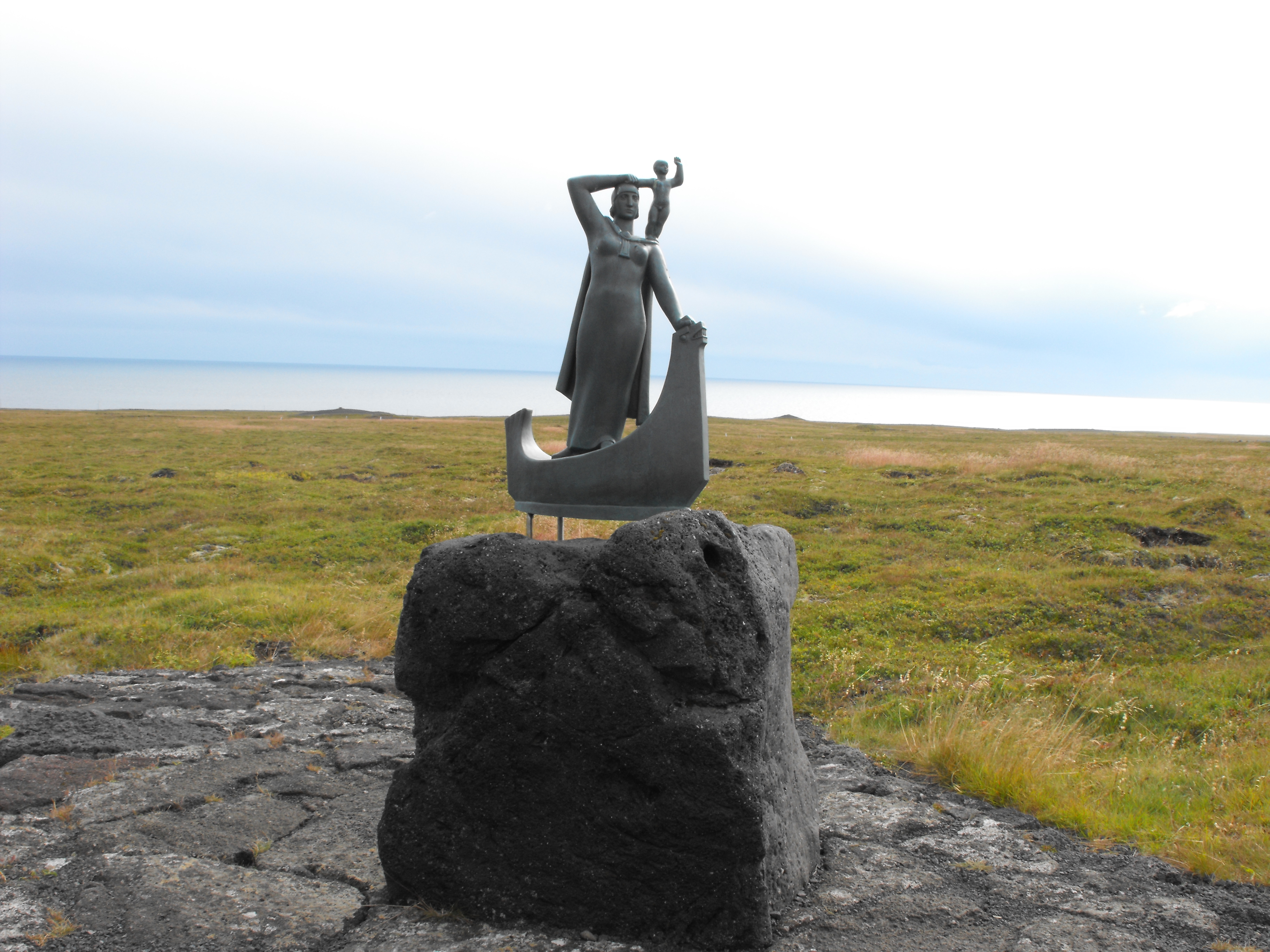
Move over Erik the Red and Leif Erikson, and make room for Gudrid the Far-Traveled. She was the first European woman to give birth in America, as well as the first nun in Iceland. She roamed Vinland (in modern Canada) and visited Rome. No medieval woman traveled further than her.
he’s been called “the greatest female explorer of all time,” and the “best-traveled woman of the Middle Ages.” Just after the year 1000 AD, she gave birth to the first European baby in North America. And she concluded her global odyssey with a pilgrimage on foot to Rome. Yet few today can name this extraordinary Viking lady, even if they have heard of Erik the Red and Leif Erikson, her father- and brother-in-law.
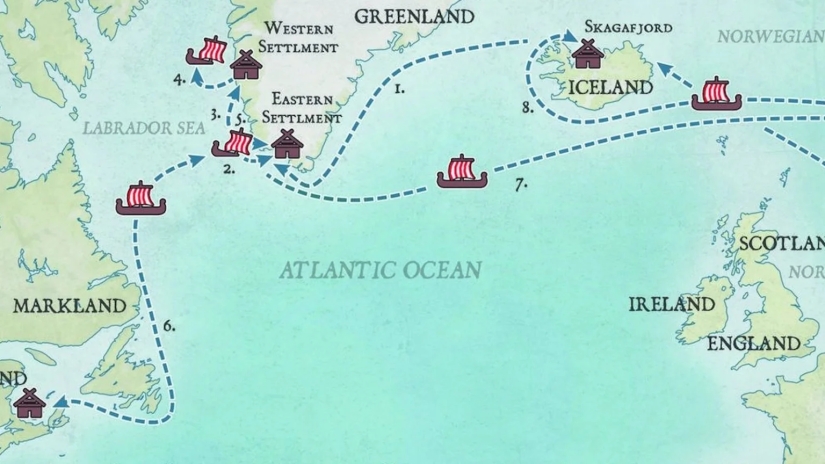
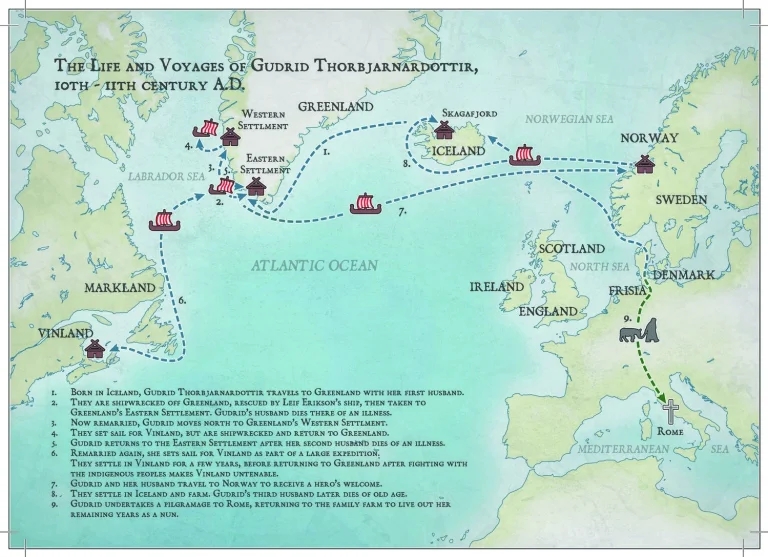
Her full name, in modern Icelandic, is Guðríður víðförla Þorbjarnardóttir — Gudrid the Far-Traveled, daughter of Thorbjorn. She was born around 985 AD on the Snæfellsnes peninsula in western Iceland and died around 1050 AD at Glaumbær in northern Iceland. This map shows the extraordinary extent of her travels in between those dates and places. In all, she made eight Atlantic sea voyages, at a time when those were very dangerous and often deadly.
What little we know of her comes from the Saga of Erik the Red and the Saga of the Greenlanders. These are collectively known as the Vinland Sagas, as they describe the Viking exploration and attempted settlement of North America — part of which the explorers called “Vinland,” after the wild grapes that grew there.
These sagas were told and retold from memory until they were committed to paper in the 13th century. Due to those 200 years of oral transmission, they likely contain numerous inconsistencies; Gudrid was married twice according to one saga, three times in the other, for example.
Gudrid’s spindle?
Also, they freely mix fact with fiction. Their pages crawl with dragons, trolls, and other things supernatural. But the central tenet of the sagas has been proven by archaeology: In the 1960s, the remains of a Viking outpost were dug up at L’Anse aux Meadows, on the northern tip of Newfoundland. Among the rubble was found a spindle, used for spinning yarn, which was typical women’s work and thus possibly handled by Gudrid herself.
Her character is so central to the Saga of Erik the Red that some have suggested it should rather be called Gudrid’s Saga. And in the Saga of the Greenlanders, Gudrid is called “a woman of striking appearance and wise as well, who knew how to behave among strangers.” That’s a trait that may have come in handy when dealing with the Native tribes of North America, whom the other Vikings dismissively called skrælings (“weaklings,” “barbarians”).
gudrid
The length and breadth of Gudrid’s travels: as far west as Canada, as far east as Rome — and all just after the year 1000. (Credit: Richard Thomson / Richard Thomson Imagery)
Gudrid’s remarkable story starts when she is around 15, when she travels to Greenland with her father. According to one of the sagas, she is with her first husband Thorir, who died there the following winter (#1 on the map).
The emigrants suffer terribly on the way to Greenland, with half dying en route and the remainder shipwrecked on a small island off the mainland (#2). They are rescued by Leif Erikson, son of Erik the Red — a friend of her father’s, as it happens. It is from this event that Leif gets the nickname “Leif the Lucky.” (To this day, Icelanders believe that sea rescues bring the rescuers good luck.)
Gudrid then settles in Greenland (#3) and eventually marries Thorstein Erikson, brother of Leif and son of Erik. Leif has just returned from a strange new land he discovered across the ocean, and according to one saga, Gudrid joins Thorstein on an unsuccessful trip over to the other side (#4).
Back in Greenland, the newlyweds spend a winter with Thorstein the Black and his wife Grimhild, whose settlement is decimated by a plague. Gudrid’s husband is among those carried off by the disease, but his corpse rises from its deathbed to foretell her future: She will marry an Icelander, with whom she will have many children and a long life; she will leave Greenland, visit Norway, make a pilgrimage south, and return to Iceland.
Gudrid returns to Greenland’s Eastern Settlement (#5) and marries Thorfinn Karlsefni, a merchant from Iceland. At her urging, the two lead an attempt to settle Vinland with a party of 60 men, five women, and some livestock (#6). In Vinland, Gudrid gives birth to Snorri Thorfinnsson, the first reported birth of a European in the New World. The year is uncertain, however: anywhere between 1005 and 1013 AD.
The attempt at settlement in America lasts just three years. Harsh conditions, isolation, and hostile relations with the Natives cause the Vikings to pull back. When Snorri is three, the family leaves Vinland for Europe. They receive a hero’s welcome at the royal court in Norway (#7), get rich from selling their exotic goods, and settle in Iceland at Glaumbær farm in Skagafjord (#8).
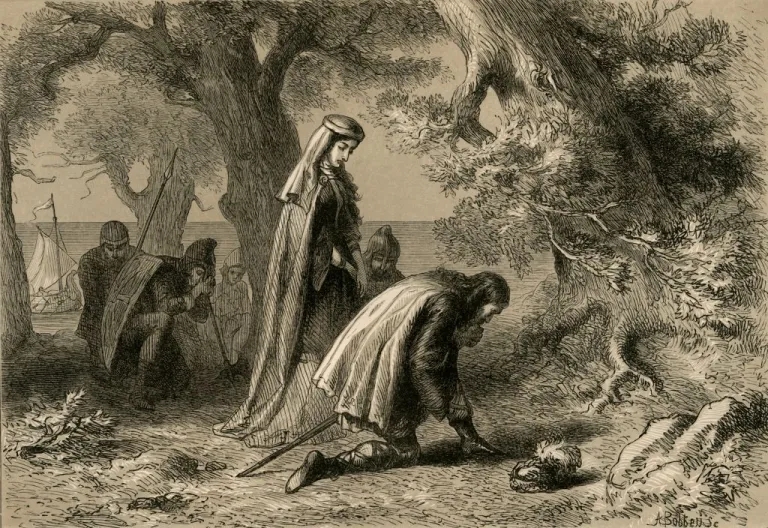
Gudrid and Thorfinn in Vinland, as imagined in Our Country: a Household History for All Readers (1877) by Benson J. Lossing. (Art by Albert Bobbett.) (Credit: The Print Collector / Getty Images)
The family leads a peaceful, prosperous life. Thorfinn dies of old age. When Snorri marries, Gudrid goes on a pilgrimage to Rome (#9), apparently by herself and mainly on foot. When Gudrid returns from her last great voyage to Rome, she finds Snorri has built a church for her, as she requested. Here, she lives out the remainder of her life in solitude and contemplation: the first nun in Iceland, a final achievement in a unique life.
It is not known when exactly Gudrid died, but she did not die in obscurity. She established a powerful and influential family. Among her illustrious progeny were three early bishops of Iceland and a 14th-century compiler of Icelandic sagas, including the Saga of Erik the Red, which mentions his famous ancestor.
Fluid multiculturalism in the North Atlantic
Gudrid’s own ancestors were Gaelic servants of Unn the Wise, a former Viking queen of Dublin who fled to Iceland around 900 AD and settled her followers in an empty valley, Gudrid’s grandfather among them. It is possible this female pioneer was an example for Gudrid’s own attempt at group emigration.
Two anecdotes from the sagas shed some light on the fluid multiculturalism in the North Atlantic around the year 1000.
At that time, Christianity was starting to make inroads into Viking communities, which however remained largely pagan. It seems Gudrid herself was an early Christian convert, but not an inflexible one. At the home of a family friend, Gudrid is the only woman present who knows a “weird song” that will help the prophetess Thorbjorg perform a magic ritual. At first, Gudrid refuses to sing it, as she is a Christian woman. But she is easily convinced that it will help everybody present and not harm her status as a Christian. And it turns out she has a beautiful singing voice.
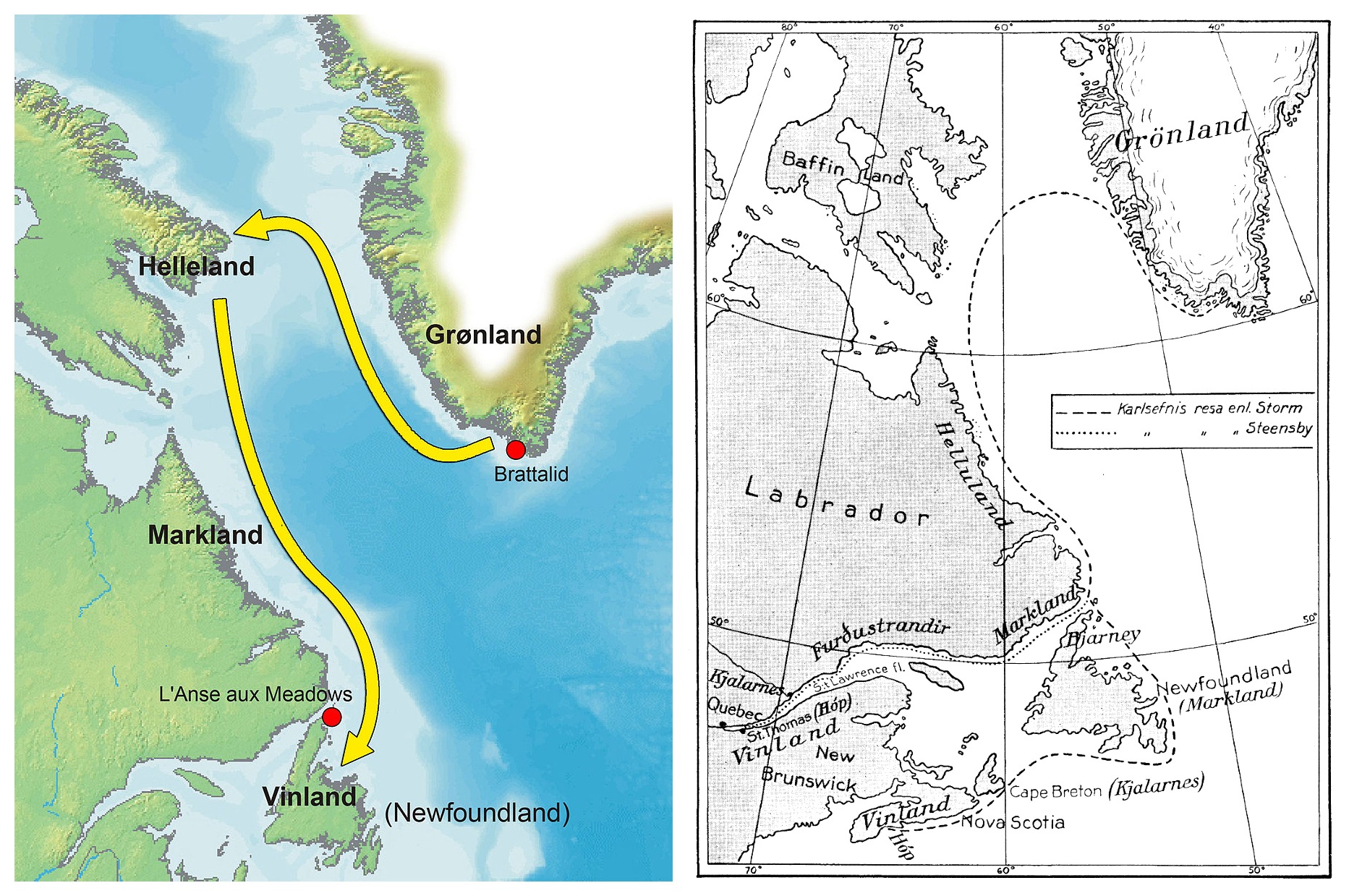
Another story from the sagas that has mystified readers for centuries because it mentions two “Gudrids” and has traditionally been dismissed as a ghost story could in fact be the earliest recorded conversation between a European and an American. The incident is set in the second winter of the expedition, when the Viking settlement is again approached by Natives coming to trade. Gudrid is inside the palisades with her year-old son, Snorri. Then:
“a shadow fell upon the door, and a woman in black entered. She was short and wore a shawl over her head. Her hair was light red-brown, she was pale and her eyes were larger than any ever seen in a human head. She came to where Gudrid was sitting and said: ‘What is your name?’
“’My name is Gudrid,’ answered Gudrid, ‘but what is yours?’ To which the other woman replied: ‘My name is Gudrid.’ Gudrid, the mistress of the house, then motioned the other woman to sit down beside her, but at that very moment a great crash was heard and the woman disappeared.”
The story might not be as spooky as first reported. A more recent reading of events suggests the possibility of an encounter between Gudrid and a woman of the Beothuk, the main tribe in Newfoundland at the time. Perhaps the Native woman was merely repeating what the Viking woman said: Ek heiti Gudridr (“My name is Gudrid”). This is often what happens first between people who don’t speak each other’s language.
A statue of Gudrid, created for the 1939 New York World’s Fair, now stands at Glaumbær. The female explorer peers out over the bow of a ship, with the young boy Snorri on her shoulder. There are two copies of the statue, one at Laugarbrekka (on the Snæfellsnes peninsula), the other in the lobby of the National Archives of Canada in Ottawa.
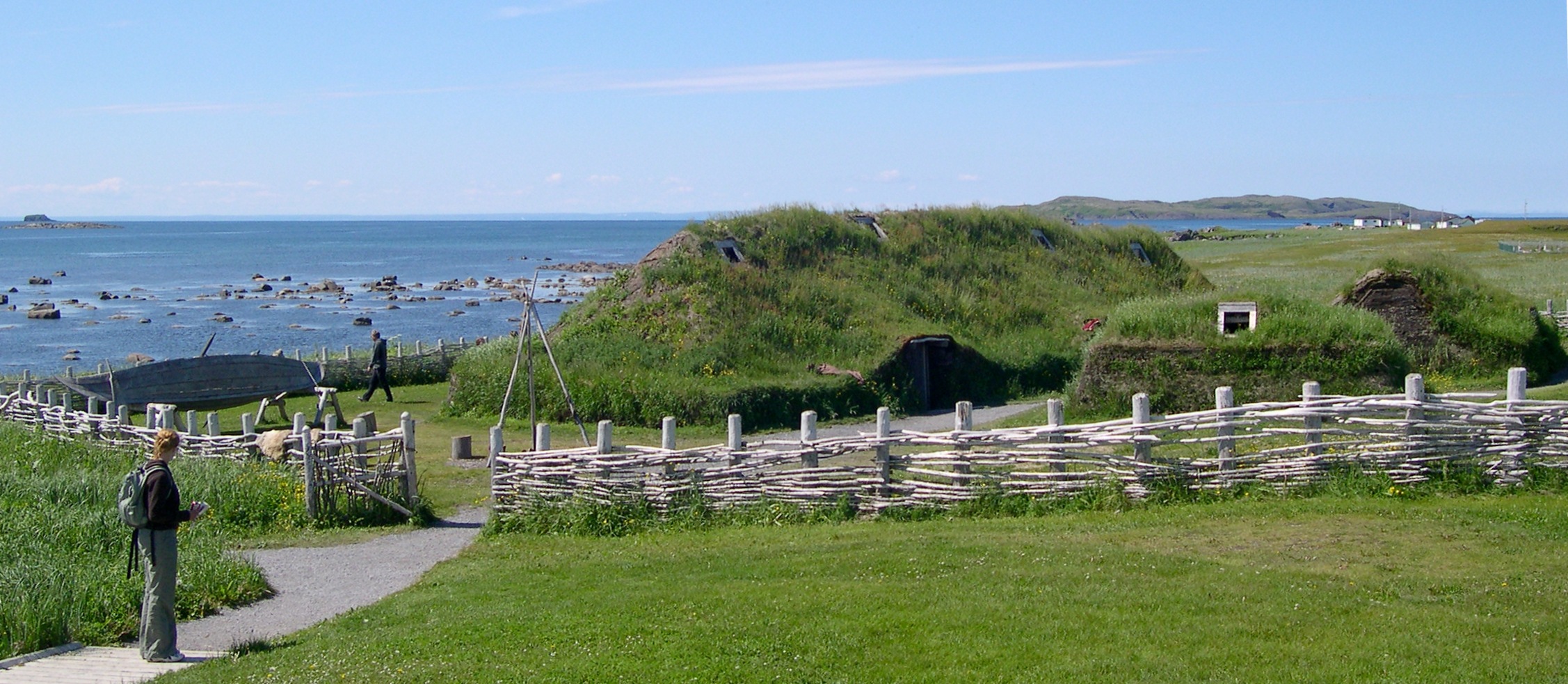
OFFICIAL AND OLDEST SCOTTISH CLAN CARRUTHERS
SINCE 1983-CLAN OF OUR ANCESTORS
MERITED TO CHIEF CARATOCUS 10AD
PRESENT CHIEF : PAT E CARROTHERS USA

Preserving Our Past, Recording Our Present, Informing Our Future
GOLD WINGS – https://www.facebook.com/carrutherscarrothers.pat.9
COPPER WINGS https://www.facebook.com/ClanCarruthers1/
CLAN CARRUTHERS FAMILY HISTORY – https://www.facebook.com/CarruthersClan
CLAN CARRUTHERS CCIS – https://www.facebook.com/groups/3878691252182714
CLAN CARRUTHERS INT SOCIETY- https://www.facebook.com/groups/394653845137709
CLAN CARRUTHERS – BORDER REIVERS – https://www.facebook.com/groups/434959914239094
Disclaimer Ancient and Honorable Carruthers Clan International Soci
For more on Gudrid the Far-Traveled, check out:
“Found Home of the Legendary Viking Woman Who Crossed the Atlantic 500 Years Before Columbus” in Arkeonews
“The Mystery of the Two Gudrids: A Transcript of First Contact” in American Indian Magazine
The Far Traveler: Voyages of a Viking Woman by Nancy Marie Brown
“Gudrid Thorbjarnadóttir, ca. 985-1050” at Wander Women Project
The Far Traveler (TV documentary, Danish/English) at DR.TV
“A Short Biography of Gudrid Thorbjarnardóttir for Bostonians,” from McSweeney’s

BIRTH 1272 • Carrick bay, Dumfries and Galloway
DEATH 13 APR 1358 • Bergen, Bergen, Hordaland, Norway
Isabel Bruce (Isabella de Brus or Isobail a Brus, or Isabella Robertsdotter Brus) (c. 1272–1358) was Queen of Norway as the wife of King Eric II.
 Isabel was born in Carrick, Scotland. Her parents were Robert de Brus, 6th Lord of Annandale and Marjorie, Countess of Carrick. Her brothers included Robert the Bruce, King of Scots, and Edward Bruce who briefly was High King of Ireland. In 1293 at the age of 21, she traveled to Norway with her father and was married at Bergen to King Eric. Her dowry for the marriage was recorded at the time by Norwegian nobleman Audun Hugleiksson who noted she brought: precious clothes, 2 golden boiler, 24 silver plate, 4 silver salt cellars and 12 two-handled soup bowls (scyphus) to the marriage.
 Other historian note that Isabel was captured by enemies of her brother Robert, and was kept in a hanging cage for several years, and King Eric came to her aid, took her out of that cage, and brought her to Norway.
Isabel was king Erik’s second wife, he having previously been married to the daughter of King Alexander III of Scotland, Margaret of Scotland, who died in childbirth in 1283. Upon the death of King Alexander three years later, his granddaughter, Eric’s daughter Margaret, Maid of Norway became heir to the throne of Scotland. King Eric arranged the marriage of his daughter to the English King Edward I’s son Edward, which became moot upon the child’s death in 1290. The death of Queen Margaret left Scotland without a monarch, and at the mercy of Edward I of England.
Soon, John Balliol tried to take the Scottish crown with the aid of John Comyn, the Red Comyn. The Bruce family captured strongholds in Galloway, and fighting in the name of the Maid of Norway (Margaret), suppressed the rebellion with many important families like the Stewards supporting them. At the time of Isabel’s marriage in 1293, her brother was one of the claimants to the Scottish throne. The Bruces were aligned with King Edward against King John Balliol and his Comyn allies. In 1306, Robert the Bruce was chosen to be King of Scotland. Scottish historian G.W.S. Barrow observed that King Eric’s renewed contacts with Scotland “increased the ties of friendship which bound him to the English king.
 Isabel was widowed, at age 26, at the death of King Eric in 1299. Erik was succeeded by his brother, King Haakon V of Norway who reigned until his own death in 1319. Isabel never remarried, despite surviving her husband by 59 years. Their marriage did not produce a male heir, though it did produce a daughter, Ingeborg Eriksdottir of Norway, who, having firstly been engaged to Jon II, Earl of Orkney, married Valdemar Magnusson of Sweden, Duke of Finland, in 1312. Isabel herself arranged both engagements.
She did not return to Scotland, but lived in Bergen, Norway, the rest of her life, and died there. As a queen consort, there is little information about her life, but her life as a queen dowager is better documented. Queen Isabel participated in many official events and ceremonies and did not lack influence. She was present with the royal couple at the inauguration in 1305 of Bishop Arne Sigurdssön, the new Bishop of Bergen. She had a good relationship with the clerical powers in Bergen, made donations and in 1324, received several houses from the church. It has been suggested, that she participated as a mediator in the negotiations between Norway and Scotland regarding Orkney and Shetland during 1312 under which the Treaty of Perth was reaffirmed. In 1339, the king pardoned a prisoner at her request. She exchanged letters with her sister Christina Bruce and sent soldiers in her support. In 1357, she was one of the heirs of her daughter Ingebjorg, Duchess of Uppland, Öland and Finland

OFFICIAL AND OLDEST SCOTTISH CLAN CARRUTHERS
SINCE 1983-CLAN OF OUR ANCESTORS
SCOTTISH CLAN – IRISH CLAN – NORSE CLAN
Dr Patricia Carrothers CHS
Reviewed by : Tammy Wise CHS
Preserving Our Past, Recording Our Present, Informing Our Future
GOLD WINGS – https://www.facebook.com/carrutherscarrothers.pat.9
COPPER WINGS https://www.facebook.com/ClanCarruthers1/
CLAN CARRUTHERS FAMILY HISTORY – https://www.facebook.com/CarruthersClan
CLAN CARRUTHERS CCIS – https://www.facebook.com/groups/3878691252182714
CLAN CARRUTHERS INT SOCIETY- https://www.facebook.com/groups/394653845137709
CLAN CARRUTHERS – BORDER REIVERS – https://www.facebook.com/groups/434959914239094
Disclaimer Ancient and Honorable Carruthers Clan International Soci

CARRUTHERS ANCESTOR
 Randver was a legendary Danish king. In Nordic legends, according to Sögubrot and the Lay of Hyndla, he was the son of Ráðbarðr the king of Garðaríki and Auðr the Deep-Minded, the daughter of the Danish-Swedish ruler Ivar Vidfamne. In these two sources, Auðr had Randver’s brother, Harald Wartooth, in a previous marriage.
One of the genealogies in Hversu Noregr Byggðist seems to say that he is the son of Hrœrekr slöngvanbaugi and the brother of Harald Wartooth. Hrœrekr was, according to Sögubrot, a Danish king on Zealand who was killed by Ivar Vidfamne.
According to Hervarar saga both Randver and Harald Wartooth were the sons of Valdar and Alfhild, the daughter of Ivar Vidfamne. This saga relates that Ivar appointed Valdar as the king of Denmark, and when Valdar died, he was succeeded by Randver. Randver married Åsa Haraldsdottir of Agder (in other sagas said to be the wife of Gudrød the Hunter of Vestfold), who gave birth to a son, Sigurd Hring. After his brother Harald had reclaimed Götaland (or Gotland depending on the manuscript), Randver fell in battle in England.
The Hervarar saga says that Randver was succeeded as Danish king by his son Sigurd Hring (probably as Harald’s viceroy). However, Sögubrot says that Harald Wartooth elevated Sigurd Hring as sub-king of Sweden and Västergötland.The Danish chronicle of Saxo Grammaticus (c. 1200) does not clearly mention Randver, but rather asserts that Hring was the son of the Swedish king Ingjald and an unnamed sister of Harald Wartooth.
The Danish scholar Gudmund Schütte drew a parallel between the pair Ráðbarðr – Randver in Langfeðgatal and the pair Rædhere – Rondhere that is mentioned in line 123 in the Anglo-Saxon poem Widsith (7th century?). Schütte’s argument was that lists of heroic figures found in Widsith were reflected in the ordering of names in some later medieval sagas and chronicles.
OFFICIAL AND OLDEST SCOTTISH CLAN CARRUTHERS
SINCE 1983-CLAN OF OUR ANCESTORS
SCOTTISH CLAN – IRISH CLAN – NORSE CLAN

Preserving Our Past, Recording Our Present, Informing Our Future

GOLD WINGS – https://www.facebook.com/carrutherscarrothers.pat.9
COPPER WINGS https://www.facebook.com/ClanCarruthers1/
CLAN CARRUTHERS FAMILY HISTORY – https://www.facebook.com/CarruthersClan
CLAN CARRUTHERS CCIS – https://www.facebook.com/groups/3878691252182714
CLAN CARRUTHERS INT SOCIETY- https://www.facebook.com/groups/394653845137709
CLAN CARRUTHERS – BORDER REIVERS – https://www.facebook.com/groups/434959914239094
Disclaimer Ancient and Honorable Carruthers Clan International Soci
CARRUTHERS ANCESTOR
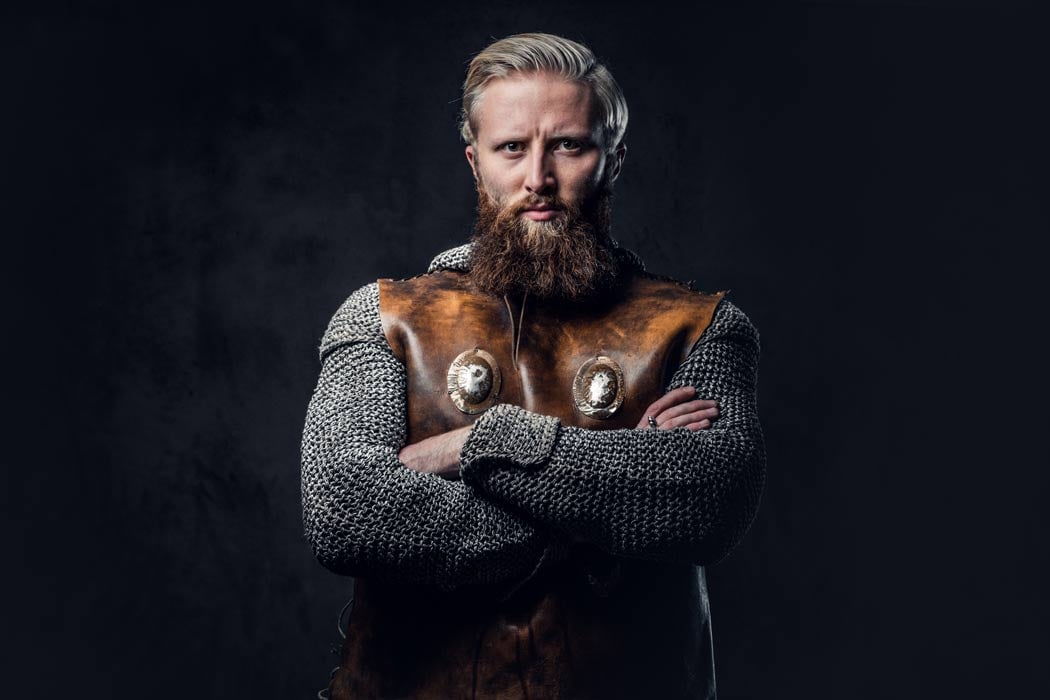
Bjorn Ironside was a famous Viking leader who legends say ruled Sweden as the first king from the House of Munsö. He lived during the 9th century AD and his father was the legendary Ragnar Lodbrok. Ironside followed family tradition in raiding and he used his skills to trick his way into the Eternal City, which he promptly looted.
King Bjorn “Ironside” Ragnarsson of Sweden was born in Denmark to Aslaug “Kraaka” (die Krähe) “Randalin” (Schildmaid) Sigurdsdatter “Königin von Dänemark” and Ragnar Lodbrok Von Dänemark Und Schweden. He died in 859 in Stockholm, Stockholm, Sweden.
According to The Saga of Ragnar Lodbrok and His Sons , Bjorn Ironside was the son of Ragnar Lodbrok and Aslaug. Bjorn had an older brother, Ivar the Boneless, and two younger ones, Hvitserk (speculated by some to have been the nickname of Halfdan Ragnarsson) and Sigurd Snake-in-the-Eye. He also had several half-brothers, including Eirik and Agnar.
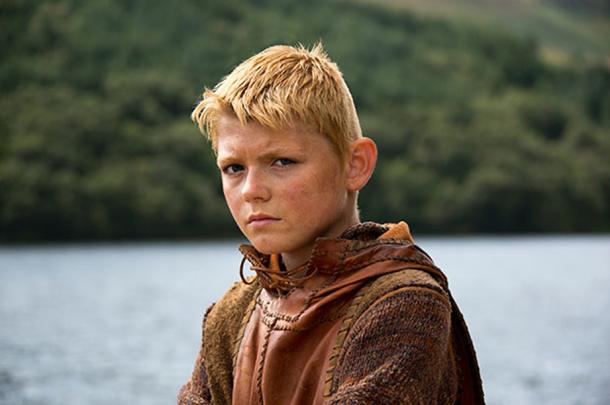
History’s ‘Vikings’ version of a young Bjorn Ironside. ( CC BY SA )
Like their father, the sons of Ragnar Lodbrok conducted raids around Europe. In The Saga of Ragnar Lodbrok and His Sons , it is stated that Bjorn Ironside and his brothers continued their father’s raiding activities, and terrorized the areas of England, Normandy, France, and Lombardy.
It is also written that the furthest that the brothers got to was Luni, an Italian town on the border of Liguria and Tuscany. The story goes that the Vikings had heard of the wealth contained in the Eternal City and were bent on raiding it. Therefore, Bjorn teamed up with another Viking leader, Hastein, to launch an expedition into the Mediterranean.
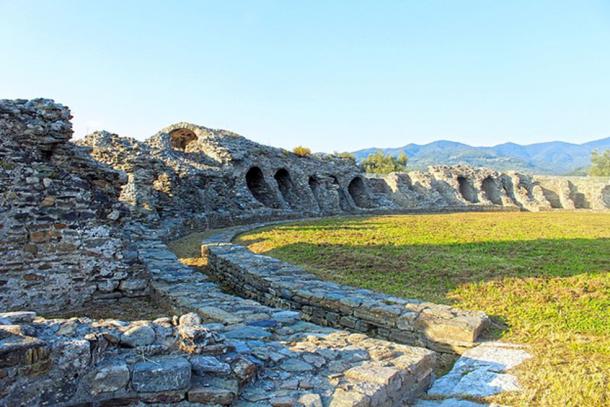
View of the Roman amphitheater in Luni, Italy.
The Vikings sailed along the Atlantic coast of the Iberian Peninsula, though their raids met with little success in both Christian and Muslim territories. When they arrived in the Strait of Gibraltar, however, their luck changed, and they are recorded to have sacked several cities on both the North African coast as well as the southern part of the Iberian Peninsula. Sailing and raiding along the southern coast of the Frankish Empire, the Vikings eventually arrived on the northwestern coast of Italy. The first town that was sacked was Luni, which the Vikings had mistaken for Rome.
Trickery Works Where Sieging Fails
As the Vikings began to besiege Luni, they realized that the town’s fortifications were so sturdy, and foresaw that the siege would drag on for some time. Realizing that it would be futile to try to take the town by brute force, the Vikings resorted to trickery. There are two main versions of the story…
According to one, Bjorn (or Hastein) sent messengers to the bishop of Luni to inform him of their leader’s death. On his deathbed, however, he had converted to Christianity, and it was his dying wish to be buried on consecrated ground. Believing this to be true, the bishop allowed several Vikings to bring the body of their leader into the town. Once they entered Luni, Bjorn jumped out of his coffin, fought his way to the town’s gates, and opened it, thus allowing the Vikings to capture Luni. In a variation of the tale, Bjorn did not pretend to be dead, but rather that he was seriously ill, and intended to convert to Christianity before he died.
Bjorn Ironside Returns North
Having sacked Luni, Bjorn and his Vikings continued inland, sailing up the River Arno, and laying waste to Pisa and Fiesole. The Vikings’ movement become a little uncertain after this, and they are rumored to have sailed to the Eastern Mediterranean.
They reappear off the coast of the Iberian Peninsula, where they are recorded to have been defeated by a Muslim force whilst heading back home. As many as 40 Viking ships are said to have been destroyed by the Muslims, though Bjorn survived, and managed to bring home most of his loot.
Finally, The Saga of Ragnar Lodbrok and His Sons mentions that “Bjorn Ironside got Uppsala and central Sweden and all the lands that belong to that,” Thus, it has been claimed that Bjorn was a king of Sweden, and the founder of the House of Munsö.
During the 18th century, a barrow was discovered on the island of Munsö and antiquarians claimed that it belonged to Bjorn, thus naming his dynasty after this island.
OFFICIAL AND OLDEST SCOTTISH CLAN CARRUTHERS
SINCE 1983-CLAN OF OUR ANCESTORS
SCOTTISH CLAN – IRISH CLAN – NORSE CLAN
Preserving Our Past, Recording Our Present, Informing Our Future
GOLD WINGS – https://www.facebook.com/carrutherscarrothers.pat.9
COPPER WINGS https://www.facebook.com/ClanCarruthers1/
CLAN CARRUTHERS FAMILY HISTORY – https://www.facebook.com/CarruthersClan
CLAN CARRUTHERS CCIS – https://www.facebook.com/groups/3878691252182714
CLAN CARRUTHERS INT SOCIETY- https://www.facebook.com/groups/394653845137709
CLAN CARRUTHERS – BORDER REIVERS – https://www.facebook.com/groups/434959914239094
Disclaimer Ancient and Honorable Carruthers Clan International Soci
 CLAN CARRUTHERS - OUR NORSE ANCESTORS