


Gutland / Gotland, The History of Gutland

CLAN CARRUTHERS – GOTLAND – LANDSCAPE GENEALOGY

WIDE BANNER with NEW CREST

 THE LANDSCAPE GENEALOGY OF GOTLAND

Landscape Genealogy is the study of what was happening on various pieces of land.   One can study the landscape genealogy of the house and land ones owns.  Here we study, through the ages, the place where the Carruthers Ancestors lived.   From about 3500 BC to 1000 AD you can see the different era the ancestors lived and survived.

The Indo-Germanic immigration

 There have been a few waves of immigration to Gotland which can be seen in the archaeological material. One wave arrived about 3500 BCE. It was a civilization that corresponded to the megalitic culture, but designed under different conditions and
 with other practices. It was probably conict and upheaval, and finally a cultural fusion. One partic-
ular tribe, who were skilled astronomers, came evidently to Gotland. The Pitted Ware culture, which
flourished on Gotland from about 3500 to 2800 BCE had begun

 Astronomical calendars

 
Already with Astronomical calendars 5000 years ago the Gotlanders showed that they were special. We can follow how they absorbed developments from all over the world.

Bronze Age about 1800 – 500 BCE

 The extensive trade relations convey inuences from outside. From southern cultural centers – Egypt,Crete, Mycenae – spiritual impulses stretched their effects also to the Baltic Sea region and Gotland. Both the external design of the graves and the lavish burial gifts bear witness to a rich and self conscious upper class.

The large, higharched cairns from the Bronze Age group up with predilection along Gotland’s shores.Close to them lie stone ships rom the Late Bronze Ageand the oldest Iron Age. It is the most magnificenttomb orm rom prehistoric time that Gotland has tooffer. Te map prepared on the basis o the NationalHeritage Board antiquarian stocktaking on Gotland1938-40Source: Det forntida Gotland 2nd PicturePart of the depository find from Eskelhem’s rec-tory. top bit to bridle with cheek bars. In the middle pierced disc with rattle sheets, bottom right round reinornation. Photo Ivar Andersson

Late Bronze Age, 1000-500 BCE

Late Bronze Age culture occurs suddenly and is very similar to Phoenician culture as well as Mycenaean. During the Late Bronze Age, which occurred around 1000-500 BCE, the Gotlandic trade was intensified. Many of those of Gotlandic design inherent objects are reminiscent of a large number of foreign products imported in the Early Bronze Age. 
 This provides a perspective of far greater scope. Trade had become what we in modern
guage would call international. Not that the Gotlandic merchants always personally visited the areas where these objects have been produced. By their own and others activities and initiatives they had been members of the mercantile community, in a business eager with merchant wagon loads and crafts, that were busy to crisscross Europe. It was not only with its neighbors to the west, south and east and the nearest outside those located business circles the Gotlanders were connected. We also have in the Volga region from the late Bronze Age and early Iron Age the old Achmulova grave field, 
 Capuan bronze bowl from Sojvide, Sjonhem

The coming of the Iron Age

There is a new culture that emerges with modest Iron Age graves. It had its roots in the south, but especially in the southwest, in northern Germany , where the iron at that time came into general  use in the manufacture of small tools and jewelry. This culture was based heavily on influences from the Hallstatt culture in the heart of the continent, but was strongly locally colored. It is from this north German circuit the Gotlanders become familiar with the most important of all metal techniques, namely the way to process iron.
Probably they imported the metal first as pig iron.
Gotland’s oldest Iron Age culture should be considered to have been simultaneous with Bronze Age period VI.
Snakehead armring of gold, type B from a treasure nd at Burs in Källunge.
Gotlands Museum

Gotlandic trade expansion

 As a monument from this Gotlandic trade expansion can be found in Estonia and Latvia as well asin the Västervik area in Sweden stone ships of Gotlandic type. The Gotlanders were, from what we can read from the archaeological material, present with their Merchant Emporiums there and further down towards the Vistula area when the Gothic federation was formed. Probably the Gotlanders played a signicant role in this formation, hence we have the

same name for Gotlanders and Goths, Gutar andGutans, Guthiuda.

Celtic Iron Age 300 BCE to zero

During the Celtic Iron Age 300 BCE to zero there seams to be close Gotlandic commercial relations with the Celtic empire. The equipment that the Gotlandic warrior wore was, however, virtually the same as the East Germanic tribes on the continent in the Vistula area had. It had little in common with Celtic weapons.
Drinking Horn Fittings of bronze. These seizures
sat on the horn end of the clip. The use of horns as drinkingvessels were a Germanic custom. In the Roman workshopsthey made even drinking horns of glass for sale to the Ger- 
manics. The Roman prole rings on the rod ends alter the
course of the Roman Iron Age, and one can therefore use these
in chronological typology. Many of these seizures are in the
 ground from the Roman Empire, but some may also have
been made on Gotland, where seizures are widely distributed

Celtic La Tène artefacts

 The Gotlandic artefact population is at this time Celtic La Tène characterized and exhibit almost excessively rich ornamentation, especially characterized by hemispherical rivet heads differently grooved and cross ornated with pearl lines and grooved surfaces of plates and other items. Everything is made with superior technology, both in bronze as in iron. It is particularly the belt garniture ( group C about 50 BCE – zero), which changed design.
It may be due to late inuence from Schleswig-Holstein in parallel with the previous group B ( 
c. 100-50 BCE), where ring types dominate. Now are the artificial combinations of iron cast in bronze gone, and in many cases the rough technical procedure. It should be recognized, however, that there are good works also from time Group B, but these can not be matched with subsequent group.

Roman contacts, First century

 The Gotlanders seem to have controlled the amber trade with trading Emporiums in the Vistula area. Roman contacts with the Gotlanders during the first century is also evident in the picture stones.

Roots of the oldest picture stones are dated by archaeologists to this particular time.
Provincial Roman wine ladle with strainer, pottery
and bronze ttings for two drinking horns from woman’s grave
 from the early Roman Iron Age at Skällhorns, Källunge parish. 

The Stavgard area

 with its old harbour at Bandelunda in Burs was for a long time the center for this part of Gotland and with continuity can be dated back to the Stone AGe.  The Stavgard district includes the largest known building foundations from the Roman Iron Age ‘Stavar’s house’ ( 
67×11 metres), an ancient harbour which at least goes back to the beginning of our era and the in 1984 excavated burial mound ‘Gods-backen’ ( see ‘Cairns’ above ), which from the Neolithic period has functioned as a grave mausoleum.

 The Baltic Sea Region

In the history of Gotland are some of the key threads in the development of the entire Baltic Sea region gathered. This is a meeting place for Gotlanders, Curonians, Kievan Rus’, Danes, Slavs, Svear and later Germans. Gotland has through its position as a continental outpost in the north or Nordic outpost to the south, on the border between Eastand West, a cultural key position. Gotland plays a similar role for the Baltic Sea region as Cyprus and Sicily have played as intersections for the Mediterranean countries’ trade relations and cultures.

Markomannic influence

During the first two centuries CE the Marcomannis
developed into a leading Germanic cultural area in Central Europe, who in good agreement with the Romans maintained vibrant mercantile relations with the Roman provinces in the south and became cultural mediators between the Roman Empire and the rest of the Germanic world including Gotland.
There was an important trade route along the Elbe which brought lots of Roman industrial products, especially precious vessels of silver and bronze, up to the North.

Gotlandic Early picture stones

 The earlier Gotlandic picture stones are mostly connected with the Iberian peninsula and southern France. The Ibero-Celts are the most likely bearers of the pictorial agenda that is introduced on Got-land for the earlier picture stones. In the Iberian peninsula, the Vadenienses, an old Ibero-Celtic people have left very special grave-stones, decorated with blades of ivy, corn ears and specially designed horses. It was a people of fighters and horsemen, who to every horse had two warriors, one to ride and the other to fight on foot to help protect the horse and knight. Their most common form of grave decoration during the pre-Christian Roman period is exactly of the same character as the early stones on Gotland. They contain a lot of signs that could be understood as sun and moon.
The moon is often made as bulls horns. This whole style is unique for the Iberian peninsula
and depends probably on Celtic inuence among the Romans.

Picture stones showing travel

During the 700s and 800s the picture stone art had its heyday. The mighty monuments, some over three metres high, now depict in horizontal sequences an epic content. It might be an episode from the deceased’s life or a passage from a Nordic hero poem, Helge Hundings banes saga or Brage the Olds Ragnars drapa or something else. There are many suggested interpretations. The pictures appear in very poor relief, which was initially enhanced by painting in vivid colors. The style is rigorously ornamental-ly decorative but lives together with a fascinating expressionism. For the Gotlandic art history these picture stones have an outstanding importanceas fragments from the ancient art we have had in wood and fabric, but that time has claimed.

Macedonian Renaissance

 The most authoritative source on the first ofcial Christianization of the Rhos is an encyclical letter from the Patriarch Photius, datable to early 867.Refering to the Rhos-Byzantine War of 860-861Photius informs the Oriental patriarchs and bishops that, after the Bulgars turned to Christ in 864,the Rhos followed suit so zealously that he found it prudent to send to their land a bishop. Photius remembers the invasion upon the Empire by the race which in cruelty and blood thirstiness left all other peoples far behind, the so-called Rhos, and adds that now indeed, even they have changed their Hellenic and godless religion for the pure and unadultered faith of the Christians, and have placed themselves under the protection of the Empire, becoming good friends instead of continuing their recent robbery and daring adventures.
Photius’ letter allows us to fix more exactly the time of the appeal by the Rhos to Byzantium. He mentions Rhos’ affairs just after stating that the Bulgarians adopted Christianity. The baptism of the Bulgarian King Boris took place in 864, but his envoys had already been baptized in Constantinople at the end of the year 863.
It is interesting to note that at that time the Gotlandic Varangian Ingr’s daughter Indrina becomes the mistress of Emperor Michael III and married to future Emperor Basil I. On 19 September 866 Michael and Indrina had ason Leo, the later Leo VI.
 According to Constantine VII Porphyrogennetos, grandson to Indrina, (905-959), who wrote a

biography of his grandfather, Basil I the Macedonian(867-886), it was his ancestor who persuaded the Rhos to abandon their pagan ways. He narrates how the Byzantines galvanized the Rhos into conversion by their persuasive words and rich presents, including gold, silver, and precious tissues. He also repeats a traditional story that the pagans were particularly impressed by a miracle. A gospel book was thrown by the archbishop into an oven and was not damaged. The Gotlanders are accordingly present in Miklagarðr from the beginning of the Macedonian Renaissance, that resulted in the Macedonian art, a period in Byzantine developement of art which began following the death of Emperor Theophilus in 842 and the lifting of the ban on icons, iconoclasm.
 The Gotlanders are the first to make crucixes in wood from crucifixes made in ivory in Miklagar∂r (Constantinople). And the first Baptismal fonts in stone are also made in Gotland. The Gotlandic Merchant Republic was an independant republic ruled by Gutna althingi, and not part of Scandinavia.

 To sum up the Byzantine influence

In the sense of its cultural development Gotland is in the 800s-1100s very closely linked to the Byzan-tine Macedonian Renaissance art ( 867- 1056 ).
 The Gotlandic merchants in Miklagar∂r have in 866 so eagerly conversed to Christianity that the patriarch Photios found it necessary to send a bishop to Gotland. In 911 the Gotlandic Varangians obtained a very favourable document that confirmed their living quarters in Miklagar∂r. This was confirmation of an earlier trade agreement from the 860s. It was signed by Emperor Leo VI, who was the grandson to the Gotlandic Varangian Ingr, and 15 named

Gotlandic merchants. In 912 the Arabic author al-Marwazi writes that now had the Gotlandic merchants fully embraced the Christian faith and abandoned their wild pagan ways and raids.
 The Gotlander’s stay in Miklagar∂r coincides with the Macedonian Renaissance. It sets its mark on the early Gotlandic churches in the 900s and 1000s. We know from the Patriarch Photios, in his cir-cular letter in 867 to the eastern bishops, that the Gotlanders had, after the Bulgarians, accepted the Christian faith.

Jordanes writes

:“The same mighty sea has also in its arctic region, that is in the north, a great island named Scandza, from which my tale ( by God’s grace ) shall take its beginning. For the race whose origin you ask to know burst forth like a swarm of bees from the midst of this island and came into the land of Europe. But how or in what wise we shall explain hereafter, if it be the Lord’s will.“ “And at the farthest bound of its western expanseit has another island named THULE, of which the Mantuan bard makes mention: And Farthest THULE shall serve thee.” It was not just in the sense of national pride that he could say “Scandza insula quasi ofcina gentium aut certe velut vagina nationum” ( 
Scandza, as from a hive of races or a womb of nations ).It is as much a telling characteristic of a world history that says that the Goths came from the island Gothi scandza or just Scandza which is straight ou tof the Vistula mouth and looks like a lemon leave. In addition, he says that ‘Gothiscandza’ was located at the side of THULE.
Carruthers crest on flag-v2 (1)

Preserving the Past, Recording the Present, Informing the Future

Ancient and Honorable Carruthers Clan Int Society 

carruthersclan1@gmail.com     carrothersclan@gmail.com

cropped-wide-banner-with-new-crest.jpg

Tore Gannholm

Reviewed by Tammy Wise CHS- Indiana USA

Landscape Genealogy Chairman – Susan Beattie – Ontario Canada

CLAN SEANACHAIDHI

CLAN CARRUTHERS INT SOCIETY CCIS HISTORIAN AND GENEALOGIST

You can find us on facebook at :

https://www.facebook.com/carrutherscarrothers.pat.9

https://www.facebook.com/CarruthersClan/

https://www.facebook.com/CarruthersClanLLC

Disclaimer Ancient and Honorable Carruthers Clan International Society

I

The History of Gutland, The Viking Age

CLAN CARRUTHERS – GOTLAND HOME OF THE VARAGIANS

cropped-wide-banner-with-new-crest.jpg

GOTLAND – HOME OF THE

VARANGIANS

 CARRUTHERS ANCESTORS

gutlandmap1000ad

*** Let us remember that the lighter color green along with the army green was Gutland/Gotland.  The blue is the estuary of water that was a major tradeway highway of people.  This is one reason they made the long boats.  It ws easier to travel back and forth, from one end of their homeland to another on the long boats. ***

Gotland the home of the Varangians was an independent Merchant Farmers’ Republic, and the hub of the Baltic Sea region, which from time immemorial had its relations mainly east and south.

From the archaeological findings we can establish that trade relations between Gotland and the Roman Empire were intense. The early history is a piece of myth, oral tradition  and fragmentary records. From all this can suddenly emerge a pattern, the outline of a process that may

not be scientifically inviolable, which it never really can be. Yet it is nearer the truth than you could ever reach with ‘scientific accuracy’.

If you take the Guta Saga, written down about 1220,and the Beowulf Epos, written down in the 700s, as serious as Snorri Sturluson’s ‘Nordiska kungasagor’, written down about 1220, has been honored – i.e. as evidence in lack of better sources, there will open up a new, breathtaking perspective regarding Gotlandic, Swedish and Scandinavian history during the Roman time of the emperors and the Migration Period. Yes also that of Europe. 

Already in the Bronze Age and early Iron Age there are signs of Gotlandic trading Emporiums on the east coast of the Baltic Sea and all the way to the river Volga. Trade, especially amber trade, experiences in the Bronze Age a large bloom. The Gotlanders seem to have controlled the amber trade with trading Emporiums in the Kaliningrad-Vistula area.


The extensive trade relations convey inuences from outside. From southern cultural centers, Egypt, Crete, Mycenae, spiritual impulses stretched their effects also to the Baltic Sea region and Gotland. A new way of burial appears in the Lake Mälar area in the 500s, as well as the introduction of the Roman calendar.If we accept that the Heruli settle in the Lake Mälararea at this time, as mentioned by Procopius, it explains a lot. Actually this in fact explains the rise of the Vendelera, which in the Lake Mälar area starts first half of the 500s and continues until the beginning of the Middle Ages.

On Gotland it starts about 50 years earlier and is explained by the Gotlanders’ close contacts with Theoderic’s Gothic kingdom. With the discovery that the Beowulf epos is about the Gotlanders in combination with the Heruls immigration to the Lake Mälar area we have been able to shed new light on the Gotlandic history. Indeed the history of the whole Baltic Sea region has come in a whole new light. We now have a link between the Beowulf epos, Guta Saga and the archaeological finds from the 400s and 500s. 

*** Some of these finds is where the first “Grouping” of Carruthers CTS11603 genome was found.  Cinchester was one location that they know a group of Carruthers-Gotlanders came ashore, and then on the east coast of Ireland, and then to the Clyde River in Scotland. ***

Roman gold coins known as solidi have been found on the three Baltic Sea islands: Bornholm, 150,Öland 298, Gotland 270 + 47 on the Gotlandic market place Helgö in Mälaren. The latter have been intended as raw material and are according to the researchers most likely derived from Gotland. It is obvious here to see Helgö and then Birka as Gotlandic trading venues, as implied by the archaeological sources. Gotland’s importance for trade and culture in the

Baltic Sea region during the first millennium can also be illustrated by the coin ands in Gotland.

Kingof the Goths, or GutlandKing of the Goths or Gotland/Gutland

From the 500s until the 1000s the Gotlanders have, according to Swedish researchers, been considered to rarely be mentioned in ancient sources. They are, however, well known in Arabic and Byzantine sources as al-Rus’ and Varangian merchants. 

The word Varangian was used by Arabs, Greeks and Kievan Rus’ for the merchants from the islandin the Baltic Sea region ( the Gotlanders ). It probably came from the old Norse word ‘vár’, which means‘ union through promise’, and was used by a group of men to keep them together in an association, and under oath observe certain obligations to support each other in good faith and to share the resulting  profits.

It was a common word, when trading adventures were undertaken by Gotlandic tradesmen on the Russian rivers. They closed a business contract with each other and pledged to defend each other. Another meaning of the word was for the Gotlanders who acted as mercenary soldiers to the rulers ofKhazaria, Miklagarðr ( Constantinople ) and GarðaríkiKievan Rus’). The Gotlandic Varangian Guard became an elite unit of the Byzantine army formed under emperor Basil II in 988.

 At that time was also the official Christianization of the Kievan Rus’ by Vladimir I of Kiev. There were no Vikings in the Baltic Sea region. The word Viking is not known there. The Vikings were warriors from Denmark, the west of Sweden and Norway, and the Viking Age starts with the attackon Lindisfarne in 793. There is a clear line in the river Elbe between Vikings and Varangians .

East of the river Elbe there is no mention of Vikings, only Varangians. In the Baltic Sea region the Gotlanders, after the signing of the trade and peace treaty in the 550s,controlled the trade under Svea protection on the areas controlled by the Svear. End 700s when silver from the Islamic Caliphate started to flow, the Gotlanders entered the Russian rivers all the way to river Volga and the Kaspian Sea. The Gotlandic Merchant Farmers were on the Russian rivers called Varangians and al-Rus’ ( expeditions of rowing ships ). It is documented in Byzantine sources that from late 800s and forward there were larger Gotlandic contingents stationed in Miklagarðr. As mentioned above, it is only in the early 500s that sources start to talk about some powerful people in the Lake Mälar area, except for Tacitus Sitones who he considers degenerated as they were ruled by a woman.

1st. Prokopios tells us about the Heruli or Earls who settle next to the Gauti.

2nd. Snorri tells us about the Asia men who introduce a new religion and settle in Sigtuna.

The excavations at Old Sigtuna reveal major changes in the early 500s with large increase in people and horses.

3rd. The Beowulf epos talks about the conditions in the Baltic

Sea region and the antagonism betweenthe immigrant Svear and the Gotlanders.

The real name of the island in the Baltic Sea is Gutland or the island of the Gutar. In the trade treaties from the 1100s it is called ‘Gutniska kusten( Gotlandish coast), and the people are called Gutar. The Couronians called the Gotlanders for Gudi. Jordanes talks about Gothi scandza as the linguists have translated with the ‘Gotlandic coast’, or the coast where the Gotlandic trading colonies were located on the southern shores of the Baltic Sea.

The word Scandza means just the coast, later ‘Gutniska kusten’, which is the island Gotland. The word Gotland is a Latin form that alludes to the Roman name for the Goths, who called them-selves Guthiuda and Gutans.

 The Gotlanders were thus independent until the end of the 1300s and then self-governing

 first under pirates ( including removed foreign kings ).From 1530 until 1645 Gotland was a tributary state under the Danish king. All that time the Gotlandic Merchant Farmers’ Republic functions de jure

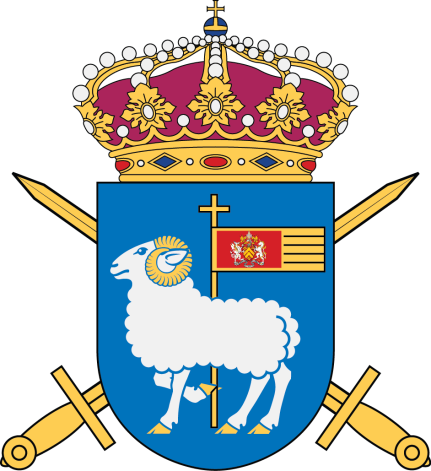
The Gotlanders choose things judges and the large Gotlandic ‘national seal’ with the ewe is used until they later in the 1500s do not want to acknowledge a too uncomfortable Danish decision. Instead they explain that the seal has been lost. On paper the Gotlandic Merchant Farmers’ Re-public exists until the beginning of the 1600s but is gradually abolished. 

 The Gotlandic Merchant Farmers’ counted their birth position and their social class socially higher than burghers and peasants of other nations. The difference can obviously be explained, that they were aware, that they had a higher form of freedom, namely to be free from land lords and liability to taxation. The Gotlandic society before the 1600s was considered to be an ‘ethnie’, a group with a perceived common origin, language and history.  The governor of Tobolsk, Siberia’s capital, Count Matjev Gagarin ( 1711-1719 ) was considered to be of Varangian origin and higher than  Tsar Peter who was just a Romanov.

The Gotlanders had early close contact with the Byzantine Ortodox Church and a trade agreement was signed with the Emperor in Miklagarðr ( Constantinople ) dated in the year 911. The document was signed by the Emperor Leo VIand Karl, Ingjald, Farulf, Vermund, Hrollaf, Gun-nar, Harold, Kami, Frithleif, Hroarr, Angantyr, Throand, Leithulf, Fast, and Steinvith. The treaty regulates the status of the colony of the Gotlandic Varangian merchants in Constantinople.

The text testifies that they settled in the quarter of Saint Mamas. No one was able to force their will on the Gotlanders, not even the Catholic Church.  The Gotlanders are one of the few peoples who themselves determined the conditions for the con-nection to the Pope and the Catholic Church.

It is important that we are aware that the Gotlanders had experience of many Christian and non-Christian doctrines of faith. Åke Ohlmarks, among others, believes that there is evidence of Arian-Christian graves on Gotland as early as the 500s. The Bishop in Linköping, who the Gotlanders con-cluded contracts with, “because he was closest to them”, seems not to have been able to interfere in the decision making in the Gotlandic Church. He was only contracted to perform dedication ceremonies and tours of inspection as required. He did not even have a say in the selection of priests, although he protested to Rome.  Even the compensation, that the bishop received, was decided by the Gotlanders.  As earlier mentioned the Gotlandic Merchant Farmers’ counted their birth position and their social class socially higher than burghers and peasants of other nations.

Carruthers crest on flag-v2 (1)

Preserving the Past, Recording the Present, Informing the Future

Ancient and Honorable Carruthers Clan Int Society 

carruthersclan1@gmail.com     carrothersclan@gmail.com

cropped-wide-banner-with-new-crest.jpg

Tore Gannholm

Reviewed by Tammy Wise CHS

CLAN SEANACHAIDHI

CLAN CARRUTHERS INT SOCIETY CCIS HISTORIAN AND GENEALOGIST

Information about Tore Gannholm, whose work has been valued by all researchers at Clan Carruthers CCIS

I have researched the Gotlandic history since 1990 when I came with my first book “Gutarnas historia”.At that time it said in Swedish history books: “Gotland is seldom mentioned in the written sources why it was considered that Gotland had no real history, as there lived only peasants.We still suffer badly from earlier generations ’‘Swedish – centered’ historical research. History was always written by the victors. The ‘history’ of the defeated and that of conquered territories is usually being ignored or even misinterpreted. This is true, not only for Gotland but for all those landscapes which were conquered in the 1600s and also, mutatis mutandis, for those parts of the old Sweden which were lost. Who now knows anything about the Middle Ages of Karelia or of Ingermanland or, for that matter, of Finland? When Gotland was annexed by Sweden in 1679 it was the winners history that became ruling. Gotlandic history became irrelevant. To understand the history of Gotland, one must fully realize that Gotland was an independent Merchant Farmers’ Republic, and the hub of the Baltic Sea region, which from time immemorial had its relations mainly east and south. The Gotlandic history is misleading and difficult to understand if it is bundled with the Swedish history, which so far has been done. They both have their separate history. There are some deadlocks in Swedish history which have blocked the view for a broader perspective. I here think of the Roman sources about the Baltic Sea region. In the 1600s when Sweden was a super-power they had to give it a story that matched its position in the world and when they in the Roman sources found peoples and places that started with an ‘S’ they immediately concluded that it must be ‘Svear’ and the ‘Scandinavian peninsula’. The Roman name for the Scandinavian peninsula was, however, still in the 500s THULE. This historical picture was created by Johannes Magnus, and continued by Olof Rudbeck in ‘Atlantica’. Still today many writers without thought are copying these old delusions that the Roman writers would have written about some mighty Svear at the beginning of our era.It is not possible to study Gotlandic history or Gotlandic world-uniqe churches in any Swedish university as there are no such subjects. However on internet I have over the years been able to discuss history with scholars in various countries. As regards the world-unique Gotlandic Medieval churches Professor Emeritus Jan Svanberg has been my mentor since early 1990s and I have followed him on various excursions to churches in Gotland, in Sweden, in Russia and in southern Europe. I have also arranged excursions with Jan as guide to Gotlandic churches. After the book-release of “Gotland the Pearl of the Baltic Sea” in august 2013 I started with the project of the Gotlandic churches with Jan Svanberg as my mentor. I realized something was wrong with the dating and could soon prove that they were up to 200 years older that available research showed. I worked 8 hours a day seven days a week for two years. I used three computers to access my research material that  I had scanned and is available in pdf on my server. I had book release on ”The Gotlandic Merchant Republic and its Medieval Churches”.

You can find us on facebook at :

https://www.facebook.com/carrutherscarrothers.pat.9

https://www.facebook.com/CarruthersClan/

https://www.facebook.com/CarruthersClanLLC

Disclaimer Ancient and Honorable Carruthers Clan International Society
Gutland / Gotland, The Viking Age, Uncategorized

CLAN CARRUTHERS- TJELVARS

CLAN CARRUTHERS INT SOCIETY CCIS                  PROMPTUS ET FIDELIS

cropped-wide-banner-with-new-crest.jpg


A Bronze Age Burial Steeped in Legend: What Makes the Ship-Shaped Tjelvar’s Grave Unique?


Gotland, Sweden’s largest island, is home to medieval churches, cathedral ruins, as well as numerous pre-historic sites. The archaeological and historical sites that pepper this land make up a timeline of Gotland’s past.

One such site is known as Tjelvar’s grave. It is a ship-shaped stone setting found on the eastern coast of the island. Sites of this type can be found all over Scandinavia, they are typically dated to the early Viking Age, circa the late 8th century AD.

The “ship” has the length of 18 metres and a width of 5 metres. Nearby are also the remains of two Iron Age forts. From Slite drive south on the road 146 towards Gothem and look for the signs on the right hand side of the road.

However, Tjelvar’s grave can be dated all the way back to pre- Bronze Age, predating the other sites by nearly 2000 years. From the Bronze Age to the Viking Age, to our present age, this style has been resurrected and replicas continue to be built around Gotland and Scandinavia.

When excavated in the 1930’s the robbed cist revealed some cremated bones and pot sherds. The earliest skeleton found on Gotland so far has been dated to 8000 years ago.

The legend of Tjelvar being the first to discover Gotland has been interwoven with the existance of this Bronze Age ship burial site over the millenia. Just north of Aminne you pass through Tjälder and a few hundred metres further north take the gravel lane west towards Bäl and Bjärs. The site is approximately 2 kilometres down this lane. References: Riksantikvarieämbetet Fornsök: Boge 28:1; Site 66 Tjelvar’s Grave.

Since ancient times, Gotland has been the obvious link between the present and the past. Everywhere on the island you can still find traces from hundreds of years back in time. Gotland is a modern destination with a fascinating living history in a world heritage site.


Preserving Our Past, Recording Our Present, Informing Our Future

Ancient and Honorable Carruthers Clan Society International

carruthersclan1@gmail.com      carrothersclan@gmail.com

cropped-wider-banner-light-blue-1.jpg


MARK STEWART    LONDON ENGLAND

Clan Carruthers Int Society CCIS  Historian and Genealogist

You can find us on facebook at :

https://www.facebook.com/carrutherscarrothers.pat.9

https://www.facebook.com/CarruthersClan/

https://www.facebook.com/CarruthersClanLLC