CLAN CARRUTHERS INT SOCIETY CCIS PROMPTUS ET FIDELIS
TARTANS AND GUTLAND OR GOTLAND
History of the Tartan
2020 YEAR OF THE TARTAN
According to the textile historian E. J. W. Barber, the Hallstatt culture of Central Europe, which is linked with ancient Celtic populations and flourished between the 8th and 6th centuries BC, produced tartan-like textiles. Some of them were discovered in 2004, remarkably preserved, in the Hallstatt salt mines near Salzburg, Austria. Textile analysis of fabric from the Tarim mummies in Xinjiang, northwestern China has also shown it to be similar to that of the Iron Age Hallstatt culture. Tartan-like leggings were found on the “Chechen Man”, a 3,000-year-old mummy found in the Taklamakan Desert. Similar finds have been made in central Europe and Scandinavia. The earliest documented tartan in Britain, known as the “Falkirk” tartan, dates from the 3rd century AD. It was uncovered at Falkirk in Stirlingshire, Scotland, about 400 meters north-west of the Antonine Wall. The fragment was stuffed into the mouth of an earthenware pot containing almost 2,000 Roman coins. The Falkirk tartan has a simple check design, of natural light and dark wool. Early forms of tartan like this are thought to have been invented in pre-Roman times, and would have been popular among the inhabitants of the northern Roman provinces as well as in other parts of Northern Europe such as Gutland, where the same pattern was prevalent. There is evidence of weaving looms in Gutland that date back to the 4th century. Many of the Vikings from Gotland were buried with a piece of tartan in their mouth.
If someone says that tartans were not around until the 1400’s or 1600’s, you know this is wrong. They are most likely reading off of a merchandisers website, who wants to sell you something.
Our Gutland ancestors wore tartans as early as 8BC.
Wearing A Tartan
As each century passed, and the development of clothing evolved you will see a continuing change in the checks and designs of each tartan. Martin Martin, in A Description of the Western Islands of Scotland, published in 1703, wrote that Scottish tartans could be used to distinguish the inhabitants of different regions. He expressly wrote that the inhabitants of various islands and the mainland of the Highlands were not necessarily all dressed alike, but that the setts and colors of the various tartans did varied from isle to isle.
For many centuries, the patterns were loosely associated with the weavers of a particular area This might have been the start of families wearing the same cloth. A 1587 charter granted to Hector Maclean of Duart requires feu duty on land paid as 60 ells of cloth of white, black and green colours. A witness of the 1689 Battle of Killiecrankie describes “McDonnell’s men in their triple stripes.
Many setts were given fancy names for their tartans, such as the Robin Hood tartan, but did not use their name to describe a tartan. Regimental or Military tartans started 1730.
There was always a distinction to each color and pattern of a tartan, depending on where you lived, what sett you were in, and even what regimental tartan you agreed on adopting.
Color of Your Tartan.
Most of what is recorded about tartans, has to do with battles, and the tartan that was worn for a particular battle. Men wore tartans as a regiment, a distinguishable sign of your “team”. Similar to wearing the same t-shirts for competitions today.
As we know from the last blog, our ancestors liked to fight in the buff! Scary thought.
Pic: Clan Carruthers Ancient Tartan, made with dyes from the earth. This is one of the more traditional tartans for the Carruthers Clan. There is also a version called the Carruthers modern, where the colors are more red and yellow. USA Kilts is a wonderful company to work with.
When our group of ancestors went off to battle, approximately 1080, during the times of the crusades, William the Conqueror was the King, and he gave the colors of red and yellow to our ancestors. There is also evidence that King David also gave or reinforced the colors of red and gold for use of the Carruthers Clan. They would use these colors on their clothing, amour, flags and such. Some interpret the color red was used as “battle tartans”, designed so they would not show blood. The yellow color might be that of gold, a sign of royalty, since it is said that William the Lion and King David both gave us those colors to wear proudly. Some will say that various colors associated with families is a modern idea, but I do not agree.
Many people could not read or write, but they could tell a clan by their colors and their symbols. All those who fought with King William of Scotland used the Royal Rampart as their symbol. He was not known as King William “The Lion” until after his death.
The colors of red (natural rust) and yellow (gold), have been carried through centuries associated with the Carruthers Family.
Popularity Of The Bruce Clan
At one time it was proposed that Robert de Brus, fought with our ancestors.
There is no evidence to support a claim that a member of the family, Robert de Brus, this we can find no justification for, except that both families fought side by side, with King William and as a Knight Templar.
We now know, through DNA, that David Etherington, Robert de Brus, father and his grandson Robert de Brus, carries the Carruthers CTSDNA genome. There has not been any testing done on any of Davids children, including Robert. We do know that both Roberts married Carruthers women. So the Carruthers, again with various names were here on this planet prior to Robert de Brus.
This is a picture of William Wallace Tartan and it was very common for that time. Notice the mutted colors of hand dyed material, where the dyes came from Mother Nature. The more mutted the colors the older the clan.
Today you can get a tartan in various dyes.
The shades of color in tartan can be altered to produce variations of the same tartan. The resulting variations are termed: modern, ancient, and muted. These terms refer to color only.
Modern represents a tartan that is colored using chemical dye, as opposed to natural dye. In the mid-19th century natural dyes began to be replaced by chemical dyes which were easier to use and were more economic for the booming tartan industry. Chemical dyes tended to produce a very strong, dark color compared to the natural dyes. In modern colors, setts made up of blue, black and green tend to be obscured.
Ancient refers to a lighter shade of tartan. These shades are meant to represent the colors that would result from fabric aging over time.
Muted refers to tartan which is shade between modern and ancient. This type of tartan is very modern, dating only from the early 1970s. This shade is said to be the closest match to the shades attained by natural dyes used before the mid-19th century.
Merchandizers
In 2003, many of the oldest records were destroyed in a fire in Scotland. The Tartan Museum in Franklin, North Carolina USA, holds more records than anyone right now. Because of this fire, I do believe that merchandisers feel they can and will say whatever they need to, in order to sell their product. In reality, you can wear whatever you wish. Military and Regimental tartans. Sections of Scotland have territorial tartans. Some parts of Canada have adopted territorial tartans.
Anyone can go and have a tartan designed and call it what they want. They can list it, and register it (similar to a patent) and collect money from it. Tartans can be marketed in any way they wish, to get you to buy it.
I would recommend if you are considering a tartan that you talk to other family members and agree on one.
You come from an ancient and honorable family and possibly the traditional red and yellow is right for you. You should be proud to use the oldest tartan of the Carruthers Clan, as were all that went before us.
CARRUTHERS – GOTLAND TO SCOTLAND- FROM ASHMEN OR AACHENMAN
Carruthers – Gotland – Ashman
In the last two blogs, it was mentioned that all the Carruthers ancestors, no matter how it is spelled, have the same 32-36 DNA markers, and our earliest location is Gotland. The same DNA takes us to 500 BC on the island of Gotland.
Gotland was in a perfect position to be a destination that people traveling would stop at. Its position in the middle of the Baltic Sea made the island a natural hub for contact between West and East. However, being an island also meant developing along different paths, creating special traditions and legends.
An island off the southwestern coast of what is now Sweden.
Traces of around 60 coastal settlements have been found on Gotland, says Dan Carlsson. Most were small fishing hamlets with jetties apportioned among nearby farms. Fröjel, which was active up until 1150, was one of about 10 settlements that grew into small towns, and Carlsson believes that it became a key player in a far-reaching trade network. “Gotlanders were middlemen,” he says, “and they benefited greatly from the exchange of goods from the West to the East, and the other way around.”
There is no doubt that Gotland served as a central meeting point in the Baltic Sea. Commerce took place among people from widespread areas, both near and far. Objects found in excavations include artefacts from Continental Europe and the Arabian caliphate. Since they found artifacts from the Arabian countries, does that mean we raped and pillaged our way down there. OH, you bet we did! And we were damn good at it too!
Most astounding of all are the great silver treasures, which have become well-known throughout the world. The huge number of” silver hordes” finds bears witness to wealth found nowhere else at our latitude. They have found in excess of 180,000 coins on Gotland, in comparison to 80,000 coins in all of Sweden and Norway. The coins show the extent of Gotland’s contact with the outside world and the trade that helped make the island so rich. Ornamental metalwork is often found in burials but also comes from hoards and bog finds. Our ancestors were great “metal spinners”. Findinsg in iron, copper, and silver are numerous. Besides the coins, the gold is found in the form of thin, disk-shaped pendants stamped on one side (known as bracteates), sword pommels, scabbard mounts, and large, extravagantly decorated collars with applied decoration.
Fishing and hunting of wild animals, including moose, bear, and reindeer as well as small mammals and birds, remained important throughout the Late Iron Age, along with agriculture based on raising cattle, hogs, sheep, and goats and growing barley, rye, oats, and flax on arable land as the climate allowed. Gotland was the most agriculturally rich areas. In the far north, there were reindeer herders . The hunters, fisherman and farmers were the upper class on Gotland, during the iron age.
Characteristic house types were long rectangular houses like those known at Vallhagar near the west coast of Gotland, dating to the sixth century, apparently similar to later Viking Age halls of indigenous longhouse type that are described in saga literature.
Earlier than that in the Iron Age, hillforts dot the landscape of the west coast of Gotland. In coastal areas, they seem to provide refuge from sea attacks and protect waterways. Stone forts were built on the Baltic Islands, including Torsburgen on Gotlands.
The huge number of” silver hordes” finds bears witness to wealth found nowhere else at our latitude. They have found in excess of 180,000 coins on Gotland, in comparison to 80,000 coins in all of Sweden and Norway. The coins show the extent of Gotland’s contact with the outside world and the trade that helped make the island so rich.Hoards of Roman solidi (gold coins) deposited on the Baltic Islands from the late fifth century through the mid-sixth century also reflect unrest in this period.
Because of the fact that our ancestors were such master of metal spinning, the helmets they made were of course the best. They had the only metal helmet made with a protector for their nose. Roman had helmets, but they did not know how to have any protecting over their face.
Burials include both inhumation and cremation during the Late Iron Age, with single mounds gradually replacing mound groups yet with great variation in grave types. At 500 AD ornamental gold and bronze fragments were discovered and shown to be damaged by a cremation fire. The ancestors were quite ritualistic. They held elaborate funerals.
Many families had their own graveyard, and they would build the outline of a ship around were all their immediate family was buried. These were called barrow graves.
Our Ancestors were fierce shipbuilders. Because of their metal spinning craftsmanship, they could create the tools needed. They made ships mainly out of Ash Trees, which became a very sacred tree to them. When a new life was created or one had left this world they always planted an ash tree. When people from other regions saw the boats, they would put their order in, and thus it was quite profitable for the Ancestors. This is where they made the most of their money. Boats and ships were a major importance in everyday life and they were a symbol of wealth and power. Our ancestors were advanced in wood carpentry and it is mentioned often that these ships were lighter, slimmer, stronger and faster.
Because of the importance and sacredness of the Ash Tree, used for personal rituals and for making these excellent ships, we were referred to as Ashman. That was our name on Gotland, before coming to Scotland. You will still see that name, mainly in Europe and what is interesting to me that many of the people who write books about ships, shipping, and in the shipping business are Ashman.
Before we were Carruthers, we were Ashman, AACHENMEN !
Carruthers Clan Int Society CCIS Promptus et Fidelis
500B.C.
Immediately I want to thank Dr. Tim Frasier and Dan Carlson RPA for all their work they have done, and are continuing to do. Dr. Tim Frasier, from Brisbane Australia, has been my direct link and when I talked to him about sharing this information with the Carruthers line of people he asked me to wait until after St. Patricks Day, and so I did.
People do not like to read 15 page detailed manuscripts, for we are in a world of short and quick. So each blog I will try to remember that, and keep things short and quick. If I went over something a little too quickly just ask for more and I will be happy to write more on that point.
Let us begin with DNA. Deoxyribonucleic acid. You may be familiar with swabbing the inside of someone’s cheek for a paternity test. Times are advancing, and that is still done, but not current. For more than 10 years they use digital DNA testing, all you need is a breath, a relic, soil samples now and you can test DNA.
Dr Tim Frasier worked on an archeological dig as a student almost 15 years ago, and has been involved in the continuous findings since. He was able to match them up to findings from a dig in 1840 from Lancaster, England. Then the Lancaster England project was matched up to a dig in Fjale farmstead project. This went on and on with matching up DNA markers from various sites.
DNA markers are guides, similar to finger prints, that usually do not match up. But these did. In fact, they were finding 37 DNA markers that were matching up all the time. No one expected this at all.
These DNA markings ended around 100 A.D.
What do they do with this information? They want to find a match. Dr. Tim Frasier, needed a sampling of DNA to match up with his findings. Samples had to be living samples. After many years, and I am taking the liberty to make this short, he found over 6800 samples, and all 37 DNA markers matched the Carruthers.
There are very few families were each member has 37 markers that match. Some even more, which helps determination of geography too. They tested various artifacts from museums, and letters written by Carruthers. Edward 1723 was tested, John Carothers 1725, Crothers 1834, Bobby Cruthirds, Christopher 1822, Nathaniel 1760, Robert 1668, James 1791, David 1749, James 1695, John 1725 and many more. Every one tested were all related, all the same DNA markers.
It does not matter where you live, where your ancestors lived, every one of the Carruthers tested and being tested have 37 markers. Not all DNA testing that you can get publicly does all 37 markers.
We are all related! The family is tested back to 500 BC.
We all originated in one spot. One tiny island.
This means that every one of the “Carruthers” on this planet are all from Gotlund, and lived there until 400 AD.
HAPLOGROUP l1 : CARRUTHERS DNA PATH CTS11603 – CTS6364
Proof that the Carruthers are from Gutland/Gotland
Distribution of Haplogroup I1 in Europe
Haplogroup I1 is the most common I subclade in northern Europe. It is found mostly in Scandinavia and Finland, where it typically represent over 35% of the male Y-chromosomes. Associated with the Norse ethnicity, I1 is found in all places
invaded by ancient Germanic tribes and the Vikings. Other parts of Europe speaking Germanic languages come next in frequency. Germany, Austria, the Low Countries, England and the Scottish Lowlands all have between 10% and 20% of I1
lineages
ORIGINS AND HISTORY
Haplogroup I is the oldest major haplogroup in Europe and in all probability the only one that originated there (apart from very minor haplogroups like C6 and deep subclades of other haplogroups). It is thought to have arrived from the Middle East as haplogroup IJ sometime between 45,000 and 50,000 years ago, and developed into haplogroup I approximately 40,000 years ago. It has now been confirmed by ancient DNA test that Cro-Magnons, the first Homo sapiens to colonize Europe 45,000 years ago, belonged to haplogroups BT, CT, C, F, IJ and I.
The I1 branch is estimated to have split away from the rest of haplogroup I some 27,000 years ago. I1 is defined by over 300 unique mutations, which indicates that this lineage experienced a serious population bottleneck. Most of the Late Glacial and Mesolithic remains tested to date belonged to haplogroup I* or I2. It is not yet clear in which part of Europe I1 originated. It has been speculated that I1 evolved in isolation in Scandinavia during the late Upper Paleolithic and Mesolithic periods, when hunter-gatherers from southern Europe recolonised the northern half of the continent from their LGM refugia. The oldest attested evidence of postglacial resettlement of Scandinavia dates from 11,000 BCE with the appearance of the Ahrensburg culture . However, five Y-DNA samples from Mesolithic Sweden, dating from c. 5800 to 5000 BCE and tested by Lazaridis et al. 2013 and Haak et al. 2015 all turned out to belong to haplogroup I2.
The earliest sign of haplogroup I1 emerged from the testing of Early Neolithic Y-DNA from western Hungary (SzécsényiNagy et al. 2014 ). A single I1 sample was identified alongside a G2a2b sample, both from the early Linear Pottery (LBK)
culture , which would later diffuse the new agricultural lifestyle to most of Poland, Germany and the Low Countries. This means that haplogroup I1 was present in central Europe at the time of the Neolithic expansion.
I
t is therefore possible that I1 lineages were among the Mesolithic European hunter-gatherers assimilated by the wave of East Mediterranean Neolithic farmers (represented chiefly by Y-haplogroup G2a). There is also evidence from the Neolithic samples of the Early Neolithic Starčevo and Cardium Pottery cultures that haplogroup I2a lived alongside G2a farmers
both in south-east and south-west Europe.
The most likely hypothesis at present is that I1 and I2 lineages were dispersed around Europe during the Mesolithic, and that some branches prospered more than others thanks to an early adoption of agriculture upon contact with the Near Eastern
farmers who were slowly making their way across the Balkans and the Mediterranean shores. The small group of farmers from the early LBK culture from Hungary might have formed a blend of I1 and G2a men. Yet distinct families would have
spread in different directions and met varying successes in their expansion. It would appear that a founder effect in the northern LBK population led to a sudden explosion of I1 lineages, perhaps in part thanks to their better knowledge of the Central European terrain and fauna (since hunting was typically practised side by side to agriculture to complement the farmers’ diet). I1 would later have spread to Scandinavia from northern Germany.
This data is consistent with a Neolithic dispersal of I1 from Hungary with the LBK culture and the subsequent Funnelbeaker culture (4000-2700 BCE) in northern Germany and southern Scandinavia. One Swedish sample from the late Mesolithic
Pitted Ware culture (3200-2300 BCE) also turned out to belong to I2a1 and not I1.
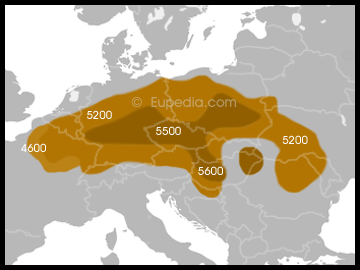
PIC: FUNNELBEAKER CULTURE
Both the Funnelbeaker and Pitted Ware cultures represent a merger between the Neolithic (farming) and Mesolithic (huntergatherer) lifestyles. Neolithic farmers from Germany penetrated late into Scandinavia and in small numbers. There is archeological evidence that Neolithic farmers settled in southern Scandinavia and lived side by side with hunter-gatherers for several centuries during the Funnelbeaker culture.
Skoglund et al. 2012 tested and compared the DNA of one Neolithic farmer and three hunter-gatherers from Sweden ( GOTLAND ) dating from 5,000 years ago. It turned out that the farmer was much closer genetically to modern Mediterranean people, especially the Sardinians, who are generally considered the best proxy population to Neolithic European farmers. The hunter-gatherers’s DNA resembled that of modern Northeast Europeans, and perhaps even more that of the Finns and Samis than Scandinavians.
Scandinavian hunter-gatherers would have adopted the new Neolithic lifestyle little by little, using pottery and keeping domesticated animals (sheep, cattle, pigs and goats) to complement their traditional diet of fishing and game hunting. The
cultivation of wheat, barley and legumes was fairly limited due to the cold climate. The cold climate was actually a barrier to the expansion of farmers from the continent. This is why Scandinavians retained a greater percentage of Mesolithic ancestry
than virtually all other Europeans, apart from the Samis, Finns, Balts and Russians.
No ancient Y-DNA from the Funnelbeaker culture in Scandinavia has been tested to date, but it is likely that I1 really started gathering momentum toward the end of the Funnelbeaker period. It might also have been among the Funnelbeaker lineages
that were most successfully assimilated by Proto-Indo-European invaders during the Corded Ware culture (aka Battle-Axe culture in Scandinavia). Most I1 individuals today share a common ancestor around the time of the transition between the
Funnelbeaker and Corded Ware periods.
CARRUTHERS DNA PATH
If you have been following any of the Carruthers Genome paths, then you will remember that one of our first sub clave groups was : L22+ (aka S142+) which is the main Nordic subclade. It is also very common in Britain and Scotland, especially on the east coast where the Vikings settled most heavily, in the Low Countries and Normandy (also doubtlessly the heritage of the Danish Viking), as well as in Poland and Russia (Swedish Vikings).
We do have DNA matchings at this point to a landing at winchester/cinchester around 400 AD, and one on the eastern coast around 800 AD.
2. Another Carruthers sub clave group was : P109+ A mostly southern Scandinavian subclade, with a presence in all the regions settled by the Danish Vikings. It has been found sporadically in many parts of Europe, such as western Iberia, northern Italy, the Balkans, Lithuania and Russia.
3. M253 came through as another Carruthers genome marker, is also know as L1 Haplogroup. The haplogroup L1 reaches its peak frequencies in Sweden (52 percent of males in Västra Götaland County) and western Finland (more than 50 percent in Satakunta province). In terms of national averages, I-M253 is found in 35–38 per cent of Swedish males, 32.8% of Danish males, about 31.5% of Norwegian males, and about 28% of Finnish males.
4. With the last Carruthers DNA CTS research project, we were able to pinpoint the Carruthers individual genome marker as CTS11603. Every Carruthers would have this genome in their DNA to date.
5. Our Z2337 genome shows that we are of a Northern Nordic Cluster, east of Sweden, a 52% finding of GOTLAND. We also do not have DNA that supports the Swedish or Norwegian findings.
6. Continuing this project we are able to link CTS11603 to our nordic forensic genome of CTS6364. We were not called Carruthers in this time frame, we were Ashmen, Aachenmen, and today we share this Nordic genome with people with the name Ashman, which is more prevalent in eastern Europe. In theory we knew about this in 2017, but we were asked not to report this until further studies were done.
These results show 30 generational markers past R1b, which puts us beyond 75,000 years in DNA studies.
There are two other Scottish Clans, that we have been helping, find their results for their family members. We wish everyone the best on continuing their family history.
OFFICIAL AND REGISTEREDL CLAN CARRUTHERS CCIS SINCE 1983-CLAN OF OUR ANCESTORS
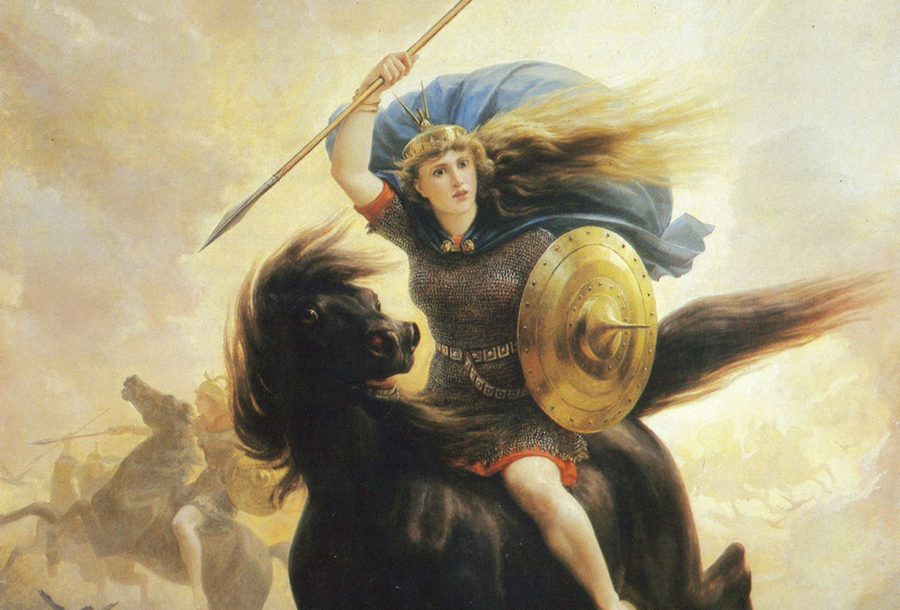
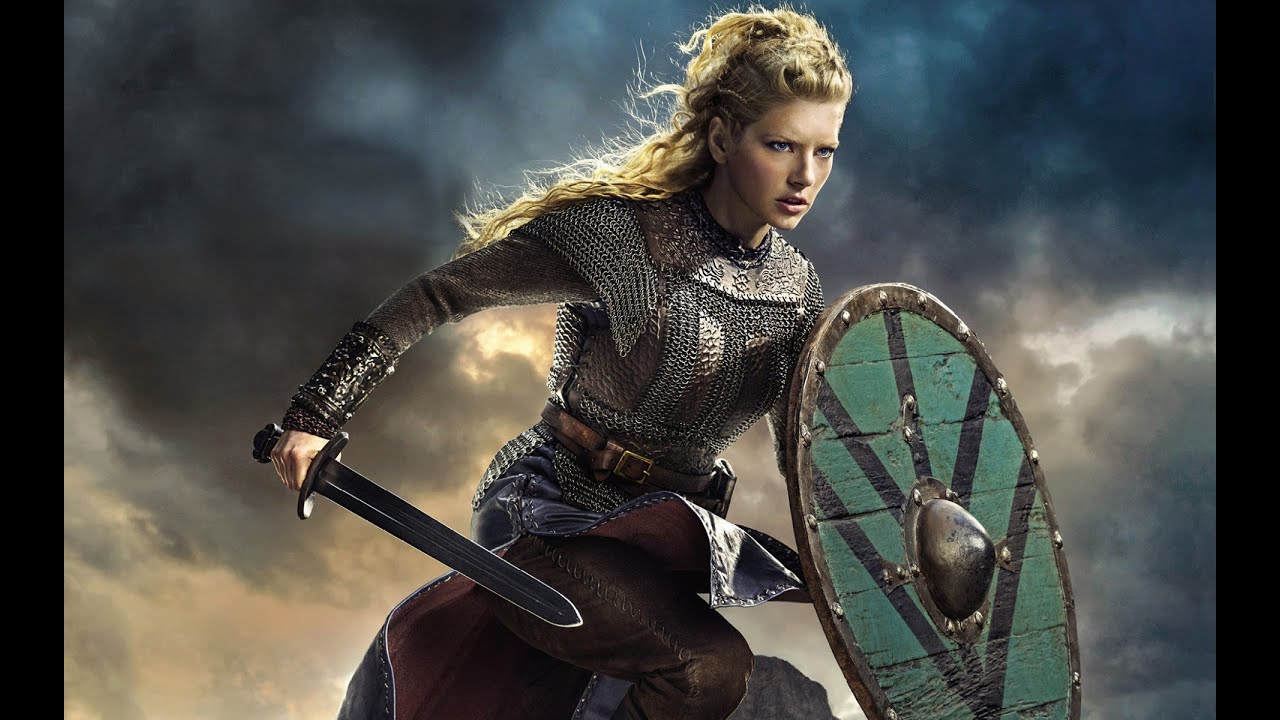
Warrior women appear frequently in Scandinavian folklore, whether as pirates, fighters, leaders of armies or avengers. In sagas and poetry, women who chose to live as warriors were called ‘warrior women’. These were women who had chosen to stand outside the traditional gender role, and they seem to have been an accepted part of Old Norse society. In many of the stories and the poems they are referred to a ‘shield maidens’, meaning young women who had chosen to work as warriors. This expression is often used in the texts without further explanation, which suggests that the readers and listeners were well acquainted with the phenomenon The shield maidens must not be confused with the Valkyries, who were divine beings associated with the battlefield.
The question is whether warrior women are literary fantasies, myths, or a historical reality. Warrior women are not mentioned in any contemporary Nordic rune inscriptions, but that is perhaps not so surprising if they comprised only a small part of the Scandinavian warrior groups. Also, we know that rune stones often functioned as documentary records of inheritance and were usually raised by widows or mothers of fallen husbands and sons. Nor are warrior women named in French and Anglo-Saxon annals and chronicles.13 They are not mentioned either in the Irish chronicles in connection with the Vikings, but the phenomenon was not unfamiliar to the Irish themselves. The most famous were the protagonists Scáthach and Aífe, who probably had Scottish-Celtic origins and lived in the 5th or 6th century.
Several older sources claim that warrior women were found in northern Europe and Scandinavia around the time of Christ’s birth. Historians such as Strabo and Plutarch (1st century BC), Dio Cassius (49 AD) and Tacitus (100 AD) all say that there were warrior women among the tribes in northern and eastern Europe. In the 1st century AD, Saxon men and women were regarded by the Romans as of equal value. According to Tacitus, when a man married he gave to the woman oxen and a horse with its bridle, together with shield, spear and sword. She gave him the weapons back. Such reports, probably based on witness observation, surely contributed to reinforcing the Romans’ view of Germanic women as warlike. Such a ritual does not automatically imply that all women fought in war, or that all women bore weapons, but it can mean that Saxon men and women had shared responsibility for defending their nearest and dearest if necessary, and that fighting was part of life.
Two particular features recur in all Roman descriptions of the Germans: their appearance, with powerful bodies and reddish-blond hair and beard; and their women. According to the sources, the women supported their men in war and sometimes took part in the battles themselves.
Roman war reports regularly told of warrior women being found among the enemy’s dead. This can mean that some of the women fought in war, especially if the reports are from conflicts where the Romans were attacked, but it can also mean that women defended themselves with weapons when the tribe was attacked, just as Saxon women apparently did. As we do not know what types of conflict were being described, it is difficult to distinguish if these were warrior women who attacked the Romans, or whether they were taking part in a defence, or if they did both.
At the end of the 3rd century AD, 30 captured ‘Gothic warrior women’ were paraded in front of the populace when Emperor Aurelian (emperor 270–275 AD) held a triumphal procession in Rome. It is quite possible that these women really were warrior women, but the Roman triumphal processions were theatre and these ‘Gothic warrior women’ may also have just been the result of the Romans wishing that such women did exist. The Romans, with their severe and puritanical view of women and their double moral standards regarding sex, must have been terrified and aroused at the same time by the thought that they could be attacked by women. Such emotions certainly led to many stories and fantasies being played out in the gladiatorial arenas and the triumphal processions.
Eastern Roman historians also mention warrior women among their European enemies. In Procopius’ account of the war against the Goths (535–552) there is a story about an English princess who led an invasion of Jutland and captured the young king, Radigis, because he had deceived her. This story is characteristic of Saga material, and it can hardly be used as a reliable source to prove the existence of the warrior woman. On the other hand, another Byzantine historian, Johannes Skylitzes, tells in his historical writing from the 12th century that warrior women took part in the fighting when Prince Svjatoslav of Kiev lost a battle against the Byzantines in Bulgaria in 971. He says that the Byzantines were amazed when they found armed women among the fallen warriors.
Even though Skylitzes was writing 200 years after the events, it is possible that he had access to contemporary archives. Just like the West Romans, the East Romans were prolific writers of reports. In this context, we must also consider the social structures among the rus. Svjatoslav and his warriors were almost nomadic. They could be absent from Kiev for years, and therefore would have their women, female slaves and children with them when they went raiding. It may have been these women who were killed in the battles, as they tried to defend themselves and their families.
Nearly all the descriptions of warrior women are in texts from the Middle Ages. They were written several centuries after the events they describe. Some of these reports are of events said to have taken place in the time of tribal migrations, which was even more remote.
The Fornalder sagas (‘Sagas of Earlier Times’) comprise a collection of legendary sagas which were gathered together at the end of the 14th century. Among others, they include Hervor’s and Hedrek’s Saga, which is about the magic sword, Tyrfing, with the action taking place in the 5th century. Hervor, Angantyr’s daughter, dressed like a man and learned to use weapons in her youth, and went on plundering raids in search of valuables.
In Rolf Gautreksons Saga, which was written down in the 13th century, we find Torbjørg the shield-maiden. She was daughter of a King Erik in Uppsala and preferred to spend her days in fighting and athletic activities than in womanly activities. She even had her own guard troops. In oral tradition she was known as ‘King Torberg’.
A number of women warriors also appear in Saxo’s 13th-century Gesta Danorum (‘Chronicle of the Danes’). It is important to note that all the warrior women in the Fornalder sagas and in Saxo’s writings are upper-class women. In fact, this makes the stories appear more authentic. Even if they had wanted to do so, women from other layers of society would not have had the same opportunity to distinguish themselves in masculine arenas. In theory, upper-class women had the time and the authority to be able to assert themselves outside the wholly traditional role model.
According to Saxo, the warrior women were so numerous that he needed to explain to the reader why this was so. In Book Seven, which mainly deals with events at the end of the 8th century and beginning of the 9th, he says that he will explain how some women behaved in older times:
In olden days there were among the Danes, women who dressed like men and used nearly every moment of their time in battle-training so as not to run the risk that the sickness of luxurious life would drain away their courage. They hated luxury, preferring to harden both body and soul with toil and endurance (…) they forced their womanly nature to act with manly ruthlessness. And they absorbed the art of warfare with such zeal that one would not believe they were women any longer. It was especially those with a strong personality or a tall, handsome body who chose such a life.
After his introduction, Saxo turns back to the story itself, which is an account of the line of Danish kings. Warrior women appear again in Book Eight. In the battle of Brävall, between the Danish King Harald Hildetann and the Swedish King Ring, there are among the leaders of the Danish army two woman warriors, Hede and Visna, ‘to whom nature has given manly courage in women’s bodies’. These two women led a force from Slesvig in the battle. Visna carried the unit’s banner and is described by Saxo as ‘a tough woman with good knowledge of the arts of warfare’. Hede led Harald’s right flank.
Vebjørg was another woman warrior who took part on the Danish side. She led a group of ‘battlethirsty men’ and was herself a feared warrior. She felled a giant called Sote during the battle, but when she began to challenge further warriors to individual combat she was killed by a well-aimed arrow. The other women were all killed in the battle too. Among other wounds, Visna had her hand chopped off. On King Ring’s side, it is mentioned briefly among other things that Gerd den glade (‘Gerd the Happy’) fought for him together with a group of warriors from Värmland.
There is nothing in the reports to indicate that a warrior woman lost her femininity in the eyes of men. In the written sources it appears that the warrior women were desired by men and that they married and had children.
Saxo’s histories are exciting reading and good entertainment, but most people agree that his presentation of historic facts cannot be relied upon as accurate. He wrote in ponderous Latin and was inspired by classical texts, and many of his female characters have classic precedents, such as the Amazons and Camilla in The Aeneid. However, Saxo’s warrior women are not just classic models transferred to a Scandinavian scene. Saxo based his material on Scandinavian sources, mainly Icelandic. He himself says that he had copied much of this material in his presentation, especially from the heroic poetry. Many of Saxo’s stories about the warrior women have literary parallels in the heroic poems in The Older Edda and elsewhere. The events in these lays are mostly supposed to have taken place in the time of the tribal migrations, and they are preserved in Icelandic parchment manuscripts from the 13th and 14th centuries.
A good example of such parallel stories is Saxo’s account of Hagbart, who in his struggle to win Signe pretended to be a woman warrior, and the story of Helge in Det andre kvadet om Helge Hundingsbane (‘The second poem about Helge Hundingsbane’). In Saxo’s account, Hagbart is asked why he is so masculine. ‘She’ replies that it is not usual for warrior women to concern themselves with feminine arts. In The Older Edda, Helge is asked the same question when he pretends to be a slave girl. His patron explains that the slave girl is so masculine because she was previously a warrior woman from a noble family:
The grinding-stone groans
On the grinding-bench
When a prince’s daughter
Turns the quern.
Once she rode
Above the clouds;
Ventured to fight
Like a Viking;
Until Helge
Captured her;
Sister is she
To Sigar and Hognes;
Quick and sharp-eyed,
Our quern-girl.
We don’t know who wrote these poems, but they are thought to be survivals from an oral folk tradition that existed for hundreds of years before the Viking Age. We know them from early written sources including excavations at Bryggen in Bergen where a number of runic inscriptions from the 12th century have been found, containing verses from the Edda poems. They are also found in fragments of the German Hildebrandslied (‘Song of Hildebrand’) from the 9th century.
Do the Roman and Norse stories reflect an actual reality, namely that warrior women existed in Germanic tribal culture in northern Europe and Scandinavia until well into the Viking Age? Alternatively, are the stories of warrior women just based on misunderstanding, or are they pure literary fantasy?
Women also feature outside their established roles in the Old Norse sagas about events in Iceland; not directly as warrior women, but as women who take up arms. Here, however, they are often punished for this, or have to tolerate social criticism. In the Laksdøla Saga we hear about Aud, who attacked her husband, Tord, with a sword. She was called Broka-Aud (‘Trousered Aud’) because she preferred to wear men’s clothes rather than skirts. This led to Tord divorcing her, because her lack of femininity offended his manly honour. She herself didn’t think there was anything noteworthy or dishonourable in wearing trousers. When Tord found himself a new woman, Aud took the sword and wounded him as an act of revenge. In Gisle Surson’s Saga, Tordis took upon herself the role of avenger when her family was offended. She wielded a sword against Øyolv and injured him to avenge the killing of her brother.
FROYDIS AND ELORFIN
In The Greenland Saga and Eirik Raude’s Saga we meet Frøydis, who was Eirik Raude’s daughter. She was a very determined woman who didn’t hesitate to take up a weapon. She killed five women with an axe after first having their men killed. In Vinland she grasped a sword and displayed her breasts and pregnant abdomen to show the Indian warriors that she was a woman. She hit herself on the breasts with the flat of a sword when they attacked the new settlements. Frøydis’s aim in doing this was probably not to fight with the Indians, but first and foremost to demonstrate that she was a woman and pregnant, and that she was prepared to defend herself and her child.
Neither Aud, Tordis nor Frøydis were warrior women, but as participants in these dramas they were in a theatre where it was considered legitimate for women to handle weapons. These women were also to a certain extent upper-class women. They were married to independent farmers. In Iceland, where there was no king, the free farmers constituted the upper class and the landless, the tenant farmers, the freed serfs and the slaves made up the lower classes. It is possible that the Icelandic family sagas are pure fiction and should really be regarded as intended to combine the telling of good stories with imparting to the readers the kind of behaviour that was accepted in Icelandic society in the Middle Ages.
Gender roles in Viking times were clearly defined and separated. Men and women each related to their symbolic world of rights, values and attributes. A free man had weapons as his symbol, with which to defend himself and his family. The woman held the keys to the rooms and storage chests on the farm. Another symbolic distinction of both sex and status was clothing and appearance. One Icelandic legal decision specified that women who wore men’s clothing, cut their hair or carried weapons could be condemned as outlaws, and the same applied to men who wore women’s clothes. The distinction was most acute in the social milieu of the warriors, which promoted a purely masculine culture.
In the daily toil on the farm, by contrast, many of the areas of responsibility overlapped. The gender distinctions were manifested instead in cultural practices and symbolism.
Marriage between a man and a woman was one of the most important social institutions of the Viking Age. Getting married was a symbolically important decision which affected the whole extended family, and a man had to consult his friends and relatives before he could choose a bride. In theory the woman had no say in the matter but in practice it was probably usual for both bride and groom to give their consent. Women in the aristocratic classes, though, differed from farming-class women in being largely pawns in the game of politics.
A description of a marriage ceremony tells us that the man gave the family sword to the woman as a wedding present, to be passed on thereafter to a male heir. She also received and gave to the man gifts of weapons, as the Germanic women had done in Tacitus’s time.
Weaponry in female burials
Remains of weapons have been found in many sites of female burial from Roman, Germanic migration and Viking times. In some instances, where there is evidence of more than one weapon, this could be interpreted as indicating that the weapons were actually used by the women. There are several female burials in northern Germany which contain evidence of military gear, shields, spears and swords. Two of these are dated between 450 and 650 AD. More usually, however, the graves contain a single weapon rather than the whole equipment. Moreover, it is often difficult to be certain that the surviving artefacts really are the remains of a weapon.
In 1867 a Scandinavian female burial from the Viking Age was found in Norfolk, England. In addition to a pair of oval brooches this contained an object resembling a sword. This obviously made headlines, but it is equally likely that it was a weaving shuttle.
Weapons have been found with greater certainty in other burials from Viking times. In 1981, during an excavation in the neighbourhood of the village of Gerdrup in Denmark, a female skeleton was found buried with a needle-case, an iron knife and a spear. This grave dates from the beginning of the 9th century. It has been suggested that she was either a warrior woman or a woman with ‘man-status’, serving as head of a household which lacked a man to fulfil this role. In such circumstances it was legitimate for a woman to be buried with symbols of manhood. But this does not tell us anything about whether she actually fought with the spear.
In Sountaka (Hämne) in Finland a decorated sword has been found associated with a female burial dated to the 10th century. Perhaps here too we have a woman carrying out a manly role? However, later investigations seem to connect the sword to a secondary grave and not the female burial. Weapons have also been found in two female burials from Kaupang in Norway. In a boat burial from the last quarter of the 9th century, an axe, eight knives, a quiver for holding arrows and a whetstone were found in addition to a pair of oval brooches and other feminine accessories. In addition to these two, nearly 20 burials have been found in Norway containing both women’s and men’s equipment. Many of these were excavated during the 19th and early 20th centuries and are therefore not so well documented as the Gerdrup and Kaupang graves. As documentation is scantly or entirely lacking, we cannot be sure whether there was more than one skeleton in each of these graves. So they cannot be used as a source.
In the light of corresponding finds, it is not unthinkable that many of these Norwegian ‘undocumented’ burials were single female burials with a weapon. The finds are obviously not evidence that these women were warrior women, but they are evidence that women and weaponry were not incompatible in the Viking Age.
Was it possible for women in the Viking Age to appear as warriors in the battle line alongside men? Even though the Edda poems and many sagas should perhaps be interpreted as allegories conveying moral values in the form of parables rather than as factual accounts, and the warrior women should be seen as fictitious, there are many archaeological finds which associate women with weapons. As we have seen, such finds of weapons can be explained other than as weapons for use by women in battle. We have also seen that the gender roles in Viking society were normally kept strictly separate, and that it was associated with shame and dishonour to break those boundaries, though it was still possible for men and woman to break out of such bonds if the conditions were right.
It is however difficult to say anything about why some women in Viking society wanted to appear as warriors and about how some of them seem to have acquired the right to do so. There is much research still to be done in this area, but the preliminary conclusion is that women warriors would probably have represented too big a deviation from the gender roles of the Viking Age.
OFFICIAL AND REGISTERED CLAN CARRUTHERS CCIS -1983-CLAN OF OUR ANCESTORS SCOTTISH CLAN, IRISH CLAN, NORSE CLAN
CLAN CARRUTHERS INT SOCIETY CCIS PROMPTUS ET FIDELIS
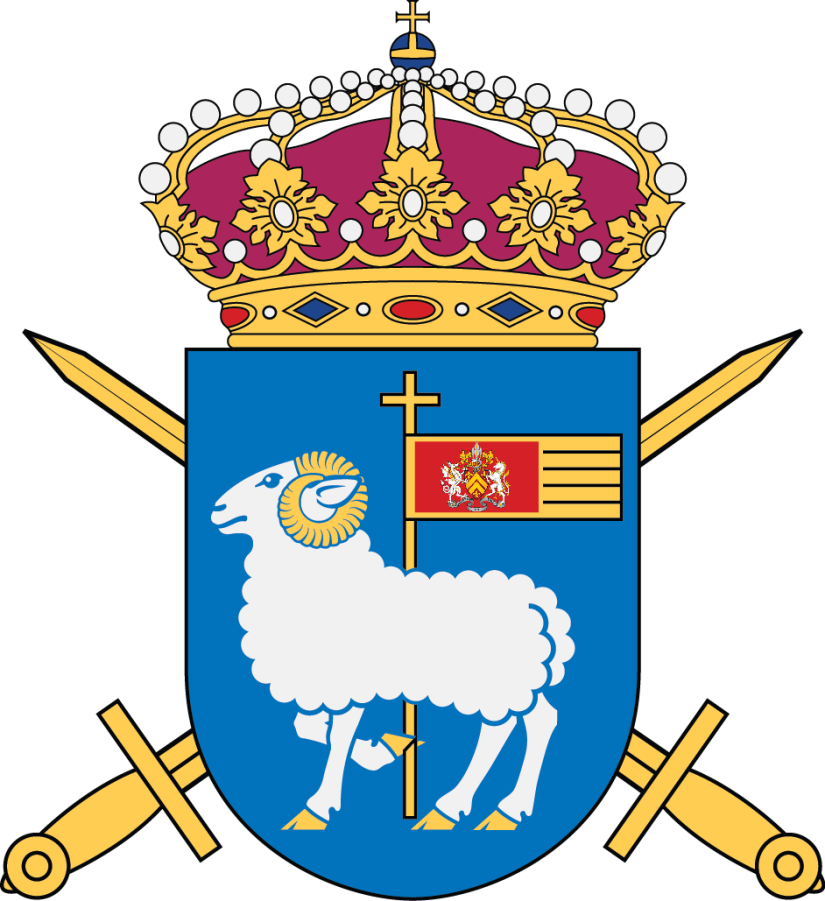
The Beast of Gotland
Here we start back in Gotland again.
If you do not understand what that means, please read the previous blogs.
Were the men of Gotland considered Beasts?
Oh hell yes! And they were very nice and very good at it!
We have learned, the unforgettable memory, of these giants of men, ravaging and pillaging all of Europe, and wearing kilts, possibly so they can easily take it off, and fight in the buff.
Did you remember that our ancestors were generally accepted to have originated the heiti for”men (of the tribe)”, with the literal meaning “they who pour their seed”. This is one of the oldest mention of men from the same tribe or clan, or family who went off to battle together.
The Killing Beast
The short form of Gautigoths was the Old Norse Gautar, which originally referred to just the inhabitants of Västergötland, or the western parts of today’s Götaland, a meaning which is retained in some Icelandic and Norse sagas.
Beowulf is one of those Norse sagas, along with Gautar and Widsith. Beowulf and the Norse sagas describe several battles, such as a raid into Frisia, ca 516, which is described in Beowulf, along with the events related in this epic, some described the Geats as a nation which was “bold, and quick to engage in war”.
Not only in the Story of Beowulf were they giants in battle, but the Gotalanders, were making a lot of gold for killing Romans, and protecting Romans. They were developing a reputation for being quick to the fight!
There remain picture stones of Gotland. Hundreds of memorial stones were produced from the local limestone, in pre-viking and Viking times, which became richly informative. General themes are easily recognized: ships on a journey, men fighting in battle or defending a house, a warrior being welcomed home or into Valhalla, often by a woman who offers him a drinking horn, stories of gods and heroes.
These stones were the written stories of all the men that were lost, those that came home, and all that fought bravely.
One very interesting stone has been given the name Ardre VIII. It stands about 7 feet tall, and is round at the top and is broken into different sections that depict some of the stories of battles. There are two other stones to look into Larbro I, and the Klinte Hunninge.
They might have been Bold, and Quick to engage in war, but they were Ready and Faithful to the Heiti or tribe, they were the Beasts of Gotland.
Beauty and the Beast
The Grimm Brothers wrote many tales. Their tales were the first to be written of the beasts, but were stories orally told over and over again for centuries. Like playing telephone, and the stories change a bit here and there. The Grimm Fairy tales were a collection of tales and stories told of old. The old monsters and beasts who lived on the land.
These stories were of big monsters, and mean women who ate little children. Wicked people who were deep in the forest, and took children far away never to be seen from again. Most of these stories carried through for hundreds of years, all telling of the Beasts of Gotland.
Thankfully, along came Walt Disney and romanticized these stories. Cinderella, Snow White and Hansel and Gretel. Well, Walt Disney did tame the beast and made the stories easier to experience than the Grimms Tales, but there are scenes in each one that can have us sitting on the edge of the chair. All stories of the terrible beasts that were from Gotland. Finally, a good story about the beasts, Beauty and the Beast, and let us not forget Gulliver’s Travels.
The Beast become a Symbol
Our ancestors were experts in carving in wood and the beast is designed into many of their stylings.
They were the shipbuilders for most of Europe, but their own ships were decorated with beautiful hand carvings, most of which were that of beasts. Sometimes a different beast was used for a group of ships leaving for one war, or one battle. Similar to a team of players all wearing the same ship and design.
And of course, as early as 200 – 300 A.C.E. runic inscriptions are found on memorial stones and jewelry as well. These ancestors came through the stone age, the bronze age, the iron age and such, and their designs of the beasts come through their designs of jewelry. One of my favorite of these rune memorial stones is found at Lund, and shows Hyrokkin riding on her wolf, and includes the wonderful serpent reins that she used to control the great beast.
Viking Art has become very popular, and there are many different types of Viking Art, but the Urnes style has lasted through out the centuries. You can see the BEAST, a symbol actually representing all the generations of Gotlanders who fought bravely for home, and yes for gold, but most importantly for their family in many works today.
Every year in August, the people of Gotland dress in pre-viking and Viking garb, and you will see the flag of The Beast of Gotland, flying proudly throughout their villages.
OFFICIAL AND REGISTEREDL CLAN CARRUTHERS CCIS SINCE 1983-CLAN OF OUR ANCESTORS
IF YOU ARE A CARRUTHERS YOU ARE IN THE HAPLOGROUP l1 GROUP
IF YOU ARE IN THE HAPLOGROUP l1 YOU ARE A VIKING
GEOGRAPHIC DISTRIBUTION MAP
Distribution of haplogroup I1 in Europe Haplogroup I1 is the most common I subclade in northern Europe. It is found mostly in Scandinavia and Finland, where it typically represent over 35% of the male Y-chromosomes. Associated with the Norse ethnicity, I1 is found in all places invaded by ancient Germanic tribes and the Vikings. Other parts of Europe speaking Germanic languages come next in frequency. Germany, Austria, the Low Countries, England and the Scottish Lowlands all have between 10% and 20% of I1 lineages.
Haplogroup I is the oldest major haplogroup in Europe and in all probability the only one that originated there (apart from very minor haplogroups like C6 and deep subclades of other haplogroups).
It is thought to have arrived from the Middle East as haplogroup IJ sometime between 45,000 and 50,000 years ago, and developed into haplogroup I approximately 40,000 years ago.
It has now been confirmed by ancient DNA test that Cro-Magnons, the first Homo sapiens to colonize Europe 45,000 years ago, belonged to haplogroups BT, CT, C, F, IJ and I. The I1 branch is estimated to have split away from the rest of haplogroup I some 27,000 years ago. I1 is defined by over 300 unique mutations, which indicates that this lineage experienced a serious population bottleneck. Most of the Late Glacial and Mesolithic remains tested to date belonged to haplogroup I* or I2. It is not yet clear in which part of Europe I1 originated.
( THE CARRUTHERS BEING IN THE HAPLOGROUP l1, KNOW THAT THEY WERE IN THE HAPLOGROUP 1 PRIOR TO THAT, MORE THAN 30,000 YEARS. )
It has been speculated that I1 evolved in isolation in Scandinavia during the late Upper Paleolithic and Mesolithic periods, when hunter-gatherers from southern Europe recolonised the northern half of the continent from their LGM refugia. The oldest attested evidence of postglacial resettlement of Scandinavia dates from 11,000 BCE with the appearance of the Ahrensburg culture .
However, five Y-DNA samples from Mesolithic Sweden, dating from c. 5800 to 5000 BCE and tested by Lazaridis et al. 2013 and Haak et al. 2015 all turned out to belong to haplogroup I2. The earliest sign of haplogroup I1 emerged from the testing of Early Neolithic Y-DNA from western Hungary (SzécsényiNagy et al. 2014 ). A single I1 sample was identified alongside a G2a2b sample, both from the early Linear Pottery (LBK) culture , which would later diffuse the new agricultural lifestyle to most of Poland, Germany and the Low Countries. This means that haplogroup I1 was present in central Europe at the time of the Neolithic expansion.
( THE FIRST CARRUTHERS DNA STUDY WAS INSTRUMENTAL IN MATCHING US (CARRUTHERS) TO THE EARLY NEOLITHIC Y-DNA STUDY FROM WESTERN HUNGARY. THE NEOLITHIS REVOLUTION WAS ALSO CALLED THE FIRST AGRICULTURAL PERIOD, WHEN MANY OF OUR ANCESTORS WENT FROM HUNTERS-GATHERERS TO FARMERS. )
LINEAR POTTERY CULTURE 5600-4025 BCE
It is therefore possible that I1 lineages were among the Mesolithic European hunter-gatherers assimilated by the wave of East Mediterranean Neolithic farmers (represented chiefly by Y-haplogroup G2a).
There is also evidence from the Neolithic samples of the Early Neolithic Starčevo and Cardium Pottery cultures that haplogroup I2a lived alongside G2a farmers both in south-east and south-west Europe. The most likely hypothesis at present is that I1 and I2 lineages were dispersed around Europe during the Mesolithic, and that some branches prospered more than others thanks to an early adoption of agriculture upon contact with the Near Eastern farmers who were slowly making their way across the Balkans and the Mediterranean shores.
The small group of farmers from the early LBK culture from Hungary might have formed a blend of I1 and G2a men. Yet distinct families would have spread in different directions and met varying successes in their expansion. It would appear that a founder effect in the northern LBK population led to a sudden explosion of I1 lineages, perhaps in part thanks to their better knowledge of the Central European terrain and fauna (since hunting was typically practised side by side to agriculture to complement the farmers’ diet). I1 would later have spread to Scandinavia from northern Germany.
( CARRUTHERS ANCESTORS WERE PAID TO FIGHT. SOMETIMES THEY FOUGHT WITH THE ROMANS, AND SOMETIMES AGAINST. THESE ARE THE MEN WHO ARE ACCREDITED WITH SPREADING THEIR DNA ACROSS EUROPE)
This data is consistent with a Neolithic dispersal of I1 from Hungary with the LBK culture and the subsequent Funnelbeaker culture (4000-2700 BCE) in northern Germany and southern Scandinavia. One Swedish sample from the late Mesolithic Pitted Ware culture (3200-2300 BCE) also turned out to belong to I2a1 and not I1.
FUNNELBEAKER CULTURE MAP
Both the Funnelbeaker and Pitted Ware cultures represent a merger between the Neolithic (farming) and Mesolithic (huntergatherer) lifestyles. Neolithic farmers from Germany penetrated late into Scandinavia and in small numbers.
There is archeological evidence that Neolithic farmers settled in southern Scandinavia and lived side by side with hunter-gatherers for several centuries during the Funnelbeaker culture. Skoglund et al. 2012 tested and compared the DNA of one Neolithic farmer and three hunter-gatherers from Sweden dating from 5,000 years ago. It turned out that the farmer was much closer genetically to modern Mediterranean people, especially the Sardinians, who are generally considered the best proxy population to Neolithic European farmers. The hunter-gatherers’s DNA resembled that of modern Northeast Europeans, and perhaps even more that of the Finns and Samis than Scandinavians.
( MANY MIGHT GET A L300 RESULT ON THEIR DNA. PRIOR TO THE CARRUTHERS COMING FROM GUTLAND/GOTLAND, MANY LIVED IN FINLAND.) Scandinavian hunter-gatherers ( CARRUTHERS IN GUTLAND) would have adopted the new Neolithic lifestyle little by little, using pottery and keeping domesticated animals (sheep, cattle, pigs and goats) to complement their traditional diet of fishing and game hunting. The cultivation of wheat, barley and legumes was fairly limited due to the cold climate. The cold climate was actually a barrier to the expansion of farmers from the continent. This is why Scandinavians retained a greater percentage of Mesolithic ancestry than virtually all other Europeans, apart from the Samis, Finns, Balts and Russians. No ancient Y-DNA from the Funnelbeaker culture in Scandinavia has been tested to date, but it is likely that I1 really started gathering momentum toward the end of the Funnelbeaker period. It might also have been among the Funnelbeaker lineages that were most successfully assimilated by Proto-Indo-European invaders during the Corded Ware culture (aka Battle-Axe culture in Scandinavia).
Most I1 individuals today share a common ancestor around the time of the transition between the Funnelbeaker and Corded Ware periods.
OFFICIAL AND REGISTEREDL CLAN CARRUTHERS CCIS SINCE 1983-CLAN OF OUR ANCESTORS
Eric Magnusson (1268 – 15 July 1299) (Old Norse: Eiríkr Magnússon; Norwegian: Eirik Magnusson) was the King of Norway from 1280 until 1299. CARRUTHERS DNA ANCESTOR
Eirik was the eldest surviving son of King Magnus the Lawmender of Norway, and his wife Ingeborg Eriksdatter, daughter of King Eric IV of Denmark. In 1273, when he was 5 years old, he was given the title of king, alongside his father, who planned to hold a coronation for Eirik as his subordinate co-ruler in the summer of 1280. However, King Magnus died before this could be arranged, and Eirik became sole king and was crowned as such in Bergen in the summer of 1280. During his minority, the kingdom was ruled by a royal council consisting of prominent barons and probably also his mother, the dowager queen Ingeborg. After Eirik came of age in 1282, this royal council is still thought to have had a major influence over his reign. [2] His brother, Haakon, was in 1273 given the title “Duke of Norway”, and from 1280 ruled a large area around Oslo in Eastern Norway and Stavanger in the southwest, subordinate to King Eirik. The king’s main residence was in Bergen in Western Norway. [2]
Eirik married princess Margaret of Scotland, (Carruthers DNA Ancestor) daughter of King Alexander III (Carruthers DNA Ancestor) of Scotland in Bergen in 1281. Margaret died two years later in childbirth, giving birth to Margaret, Maid of Norway, who was to be Queen of Scotland, but she died in 1290. Her death sparked the disputed succession which led to the Wars of Scottish Independence. [3] Eirik briefly and unsuccessfully laid claim to the Scottish crown as inheritance from his daughter. [2]
Eirik later married Isabel Bruce, ( Carruthers DNA Ancestor ) sister of King Robert I of Scotland. ( Carruthers DNA Ancestor) Isabel was one of the Bruce Women who were kept in cages for several years. When Isabel was released Erik went and brought her to Norway. Their marriage did not produce a surviving male heir, though it did produce a daughter, Ingeborg Eriksdottir of Norway, who married Valdemar Magnusson of Sweden, Duke of Finland, in 1312. Ingeborg Eriksdotter was styled Duchess of Öland. [4]
Reign
Seal of Eric in known use 1289–98, with obverse (left) and reverse (right).
A prominent feature of Eirik’s reign was the war with Denmark, called the War of the Outlaws (De fredløses krig), which was waged on and off from 1289 until 1295. A major motivation for this warfare was Eirik’s claim on his mother’s Danish inheritance. In 1287, he entered into an alliance with a group of Danish nobles, most prominently Jacob Nielsen, Count of Halland and Stig Andersen Hvide, who were outlawed in Denmark for allegedly murdering the Danish king Eric V. Eirik gave the outlaws sanctuary in Norway in 1287. King Eirik himself led a large Norwegian fleet which, along with the Danish outlaws, attacked Denmark in 1289, burning Elsinore and threatening Copenhagen. Renewed naval attacks on Denmark were made in 1290 and 1293, before peace was made in 1295. [5]
Eirik received the nickname “Priest Hater” from his unsuccessful relations with the church.
As Eirik died without sons, he was succeeded by his brother, as Haakon V of Norway. He was buried in the old cathedral of Bergen, which was demolished in 1531. Its site is marked by a memorial, in present-day Bergenhus Fortress. [6] [7]
Name in native language
Eiríkr II prestahatari Magnússon
Date of birth
4 October 1268
Norway
Date of death
15 July 1299
Bergen
Place of burial
Bergen Cathedral
Country of citizenship
Norway
Occupation
sovereign
Position held
Monarch of Norway (1280–1299)
Family
House of Sverre
Father
Magnus VI of Norway
Mother
Ingeborg of Denmark, Queen of Norway
Sibling
Haakon V of Norway
Child
Margaret, Maid of Norway
Ingeborg Eriksdottir of Norway
Spouse
Margaret of Scotland (1281–)
Isabel Bruce
OFFICIAL AND REGISTEREDL CLAN CARRUTHERS CCIS SINCE 1983-CLAN OF OUR ANCESTORS




 Most of what is recorded about tartans, has to do with battles, and the tartan that was worn for a particular battle. Men wore tartans as a regiment, a distinguishable sign of your “team”. Similar to wearing the same t-shirts for competitions today.


 I
I





 Here we start back in Gotland again.





 FUNNELBEAKER CULTURE MAP


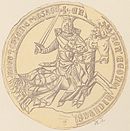 Seal of Eric in known use 1289–98, with obverse (left) and reverse (right).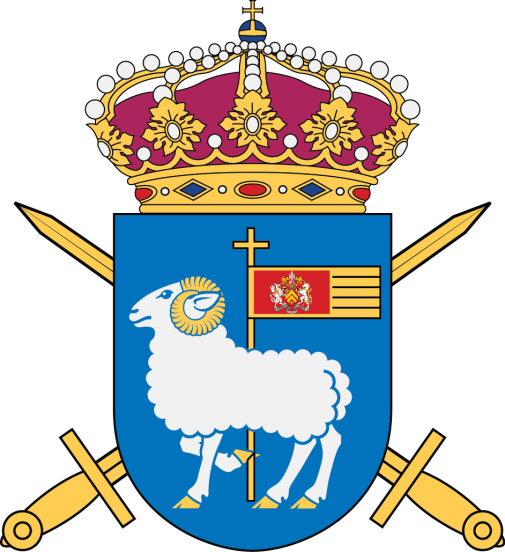

 CLAN CARRUTHERS - OUR NORSE ANCESTORS