Gutland / Gotland, The History of Gutland, The Viking Age, Uncategorized

VIKING ARTIFACTS – CLAN CARRUTHERS CCIS

cropped-wide-banner-with-new-crestnorse

VIKING ARTIFACTS


Shown here are four nice examples of the Urnes style of Norse decoration, which was the last major type to emerge in the Viking Period. I’d suggest that the earliest artifacts which can fairly be described as Urnes were made during the early 11th century, and the latest perhaps in the middle of the 12th century.
 
No photo description available.
It was characterized by fine and sometimes delicate tendrils in an interlaced form. Generally, the design was created in an asymmetrical shape, and often suggested a beast entwined or trapped in tentacle-like bonds.
The largest item is an openwork stirrup mount, which was used to fasten the stirrup to the leather strap leading to the saddle of a mounted rider. It still retains traces of a silver overlay which highlighted the G-clef shaped beast in the middle of the design.
The artifact at the top left was likely a belt buckle using a separate latch, featuring two beasts intertwined, which could have been loosened or tightened slightly for the comfort of the wearer.
The middle item was a brooch—with remains of a pin element and catchplate on the back, showing a fairly abstract beast head at the top right of the piece, and an entwined body.
The final artifact is a sturdy-looking mount which probably was fastened to a belt or strap, and might have been used to suspend another item from it.
All of these artifacts were cast in bronze, which would have required some really sophisticated metal-working skill, and all of them were found in England.
 
Carruthers crest on flag-v2 (1)


CLAN CARRUTHERS SINCE 1983


Preserving the Past, Recording the Present, Informing the Future

Ancient and Honorable Carruthers Clan Int Society 

carruthersclan1@gmail.com     carrothersclan@gmail.com

cropped-wide-banner-with-new-crest.jpg


Reviewed by Tammy Wise CHS- CHAIRMAN – Indiana USA

CLAN SEANACHAIDHI

CLAN CARRUTHERS INT SOCIETY CCIS HISTORIAN AND GENEALOGIST

You can find us on facebook at :

https://www.facebook.com/carrutherscarrothers.pat.9

https://www.facebook.com/CarruthersClan/

https://www.facebook.com/CarruthersClanLLC

Disclaimer Ancient and Honorable Carruthers Clan International Society
 

I

 
Gutland / Gotland, The History of Gutland

Unusual Iron Age Burial With Warrior And Sword Discovered In Gotland – Clan Carruthers CCIS


Unusual Iron Age Burial With Warrior And Sword Discovered In Gotland


Archaeology students from the Uppsala University have uncovered the remains of an Iron Age warrior in Sweden.


The find made during excavations in Buttle Änge on the Swedish island Gotland has been described as “rather unusual” and the deceased may not have been from Scandinavia.

Unusual Iron Age Burial With Warrior And Sword Discovered On Gotland, Sweden - Was He From The Roman Empire? - Ancient Pages

The man who scientists think may have served in the Roman army was discovered in the midst of a limestone burial.

“I was present when the femur and a piece of the hip bone were excavated. You have to be very careful when digging this type of material so we had to carefully remove the soil with brushes. Eventually, we found spurs down at the feet. And when we brushed at the belly of this individual, it appeared as a piece of bronze that we carefully continued to brush forward”, student Gustav Randér told the newspaper Dagens Nyheter, describing the situation as “absolutely fantastic”.


The man who scientists think may have served in the Roman army was discovered in the midst of a limestone burial.

At the site there was also an 80-centimeter-long bronze sword with bronze fittings. In addition, part of the sword sheath was also preserved in the form of wood remains on both the top and bottom of the bronze sword. At the bottom is a decoration on the ski that has the shape of an acorn.

According to Alexander Andreeff Högfeldt, a doctor of archeology at Uppsala University the sword seems to be inspired by those used on the continent, and the object reveals interesting details about the life of the sword bearer.

“We know from written sources from the Mediterranean world that Germans, that is Scandinavians, served in the Roman army. So it is very possible that this person learned weapons technology from the Romans”, Alexander Andreeff Högfeldt mused.

Andreeff Högfeldt described the find as “rather unusual” and said that warrior skeletons like this may be found once every 30 years

he details about the owner of the sword, however, remain scarce. He appears to be a man with a strong jaw and solid bone structure, who lived sometime during the 300s-500s.

Scientists have announced further investigations and research will be carried out in the future.


Preserving the Past, Recording the Present, Informing the Future

Ancient and Honorable Carruthers Clan Int Society 

carruthersclan1@gmail.com     carrothersclan@gmail.com

cropped-wide-banner-with-new-crest.jpg


Jan Bartek

Reviewed by Tammy Wise CHS- Indiana USA

CLAN SEANACHAIDHI

CLAN CARRUTHERS INT SOCIETY CCIS HISTORIAN AND GENEALOGIST

You can find us on facebook at :

https://www.facebook.com/carrutherscarrothers.pat.9

https://www.facebook.com/CarruthersClan/

https://www.facebook.com/CarruthersClanLLC

Disclaimer Ancient and Honorable Carruthers Clan International Society
 

I

 
Gutland / Gotland, The Viking Age

RAIDERS OR TRADERS – CLAN CARRUTHERS CCIS

cropped-wide-banner-with-new-crest.jpg

RAIDERS OR TRADERS

A replica Viking vessel sailing the North Sea has helped archaeologists figure out what the stalwart Norsemen were really up to

Sea Stallion

From his bench toward the stern of the Sea Stallion from Glendalough, Erik Nielsen could see his crewmates’ stricken faces peering out of bright-red survival suits. A few feet behind him, the leather straps holding the ship’s rudder to its side had snapped. The 98-foot vessel, a nearly $2.5 million replica of a thousand-year-old Viking ship, was rolling helplessly atop waves 15 feet high.

With the wind gusting past 50 miles an hour and the Irish Sea just inches from the gunwales, “I thought we’d be in the drink for sure,” says Nielsen, now 63, a retired Toronto geologist.

It was August 6, 2007, and the Sea Stallion’s crew of 63 had been underway for five weeks, sailing from Roskilde, Denmark, to Dublin, Ireland, on a voyage that would culminate 35 years’ research—“the best living-archaeology experiment ever conducted anywhere,” Pat Wallace, director of the National Museum of Ireland, calls it.

As Nielsen and some of his crewmates struggled to keep the Sea Stallion upright, four others went to work at the stern. Kneeling on the ship’s heaving, rain-slicked deck, they hauled the 11-foot rudder out of the water, replaced the broken leather straps with jury-rigged nylon ones and reattached the new assembly.

Reducing the sail to a minimum, the crew proceeded at nine knots. As the ship plowed from wave to wave, a full third of the Sea Stallion’s hull was often out of the water. Ahead lay the Isle of Man, 15 hours away.

Two weeks later, its crew exhausted, the Sea Stallion limped into the port of Dublin for a nine-month refurbishment in dry dock at the National Museum of Ireland. In July 2008, it sailed, relatively uneventfully, back to Denmark. Ever since, researchers have been poring over reams of data from both voyages, gathered from electronic sensors on the ship, to learn more about the Vikings’ sailing prowess. Their findings will follow a host of recent discoveries by historians, archaeologists and even biologists that have led to a new understanding of the Vikings as a people who were as adept at trading as they were at raiding.

Norsemen have been seen as intrepid seafarers and fierce warriors—a sort of Hell’s Angels of the early Middle Ages—since A.D. 793, when they raided the rich island monastery at Lindisfarne off the northeastern coast of England. “The ravages of heathen men miserably destroyed God’s church on Lindisfarne,” according to the annals known as the Anglo-Saxon Chronicle. ( This may be in error, since the oldest crucifix and cross were unearth on Gutland )  In 845, the Viking raider and extortionist extraordinary Ragnar Lothbrok slipped up the Seine with 120 ships—an estimated 5,000 men—to Paris, where King Charles the Bald paid him 7,000 pounds of gold and silver to leave in peace. (A contemporary wrote that “never had [Ragnar] seen, he said, lands so fertile and so rich, nor ever a people so cowardly.”)

Viking raiders traveled thousands of miles to the east and south: across the Baltic, onto the rivers of modern-day Russia and across the Black Sea to menace Constantinople in 941. “Nobody imagines they were there to capture the city,” says Cambridge University historian Simon Franklin. “It was more terroristic—all about instilling fear and extracting concessions for trade.”

At the same time, the new research suggests that the Vikings pouring out of Denmark, Sweden and Norway 1,200 years ago had more than raiding on their minds. Buying and selling goods from places as distant as China and Afghanistan, they also wove a network of trade and exploration from Russia to Turkey to Canada. “They were people without boundaries,” says Wladyslaw Duczko, an archaeologist at the Institute of Anthropology and Archaeology in Pultusk, Poland. “I think that’s why Vikings are so popular in America.”

Recent climate research has led Duczko and others to posit that a warming trend around the ninth century led to a population boom in Scandinavia, causing more and more landless young Norsemen to seek their fortunes elsewhere. Not everyone agrees. The National Museum of Ireland’s Wallace says the Vikings may have had a simpler motive: “They had the best iron in the world, trees to cut down and build ships, the best swords and edges on their blades. All the factors were there. They could do it, and they did.”

Whatever the causes for the Vikings’ explorations, evidence of the range of their trading networks began turning up about 150 years ago, when their elaborate burial mounds were first excavated. Well-preserved graves in Birka, Sweden, for example, contained fragments of Chinese silk, and in Norway, the ships in which wealthy Vikings were customarily buried were painted with pigments that may have come from India and the Middle East.

In the 1970s, archaeologists in Dublin found a Viking settlement spread over several acres—and in it more than 3,000 pieces of amber that were probably imported from Denmark. Excavation at Staraya Ladoga, outside St. Petersburg, unearthed a multiethnic settlement that included Viking jewelry, weapons and tools buried amid 1,000-year-old houses. And elsewhere in Russia, archaeologists have uncovered hundreds of Scandinavian graves containing artifacts from the Viking era; in 2006, they found one in the province of Kaliningrad, 500 miles from Norway.

Almost all these sites share a common artifact: thin, silver coins called dirhams. Most of them were made in Baghdad, which was the center of the Arab world from 750 to 950, and they were usually stamped with the year they were minted. Vikings apparently traded furs, amber, ivory and slaves for dirhams, which they then carried with them on their ships. As a result, the coins mark Viking trade routes like shiny silver bread crumbs.

In January 2007, metal-detector hobbyists in Harrogate, England, uncovered a treasure worth millions of dollars that one or more Vikings buried around 927; it included 617 coins, 15 of which were dirhams. Thousands of dirhams dating from 780 to 1050 were found at Viking sites near St. Petersburg. In Poland, archaeologists excavating a Viking settlement near Gdansk found nearly 800 coins dating from 780 to 840, almost all of them Arabic. Other Arabic coins made their way to France, Ireland, Iceland and Greenland. “What we’re seeing is the remnants of an extremely intricate network of barter trade,” says historian Jonathan Shepard of St. Kliment Ohrid University in Sofia, Bulgaria. “It’s a weird combination of coercion and tribute side by side and intermingled with bartering.”

By the 11th century, Vikings began adopting the languages and customs of local peoples, even settling in and intermarrying from Ireland to Russia. Researchers at the universities of Leicester and Nottingham, in England, found that up to half the DNA from men in northwest England matches Scandinavian genetic types.

Sea Stallion

All that wandering would have been impossible without ships—which is where Erik Nielsen and the rest of the Sea Stallion’s crew come in. For much of the 20th century, archaeologists assumed that Viking ships all resembled a vessel excavated in Norway in 1880. Known as the Gokstad ship, for the farm on which it was found, it dated to the year 900. The ship was “clinker-built,” meaning it was constructed of overlapping planks, which made it stout, flexible and light, with a sail and room for 32 oarsmen. In 1893, Magnus Andersen sailed a replica from Norway to Chicago for the World’s Fair. “Gokstad was thought to be universal, whether trader or raider,” says Niels Lund, a Viking historian at the University of Copenhagen. But a 1962 discovery forced researchers to abandon the idea that the Vikings had only one kind of ship.

At the bottom of a fjord near Roskilde, archaeologists found remnants of five Viking ships piled one atop the other. Dubbed the Skuldelev ships, for a nearby town, each had had a specialized role. One had been a fishing boat; two were cargo ships, so easy to handle that a crew of eight or nine could move 20-ton loads; and one was a warship that could carry about 30 people. The fifth ship, a raider named the Skuldelev, was the largest.

It was 98 feet long but just 12 feet wide. Its keel reached just three feet below the surface, and its masts and sail could be lowered so the ship could approach fortifications and settlements with stealth. It could accommodate 65 armed men. “This is a boat for warriors,” says Soren Nielsen, head boat builder at the Viking Ship Museum in Roskilde.

Because only about 20 percent of the Skuldelev 2 could be recovered, the only way to determine its capabilities for certain was to reconstruct it and put it to sea. In 2000, Nielsen and his colleagues at the ship museum began working with scientists to build an accurate replica. They used thousand-year-old methods and reproductions of tools from that time, which meant carving each of the ship’s 90 oak planks with axes, wedges and hammers. After four years and almost $2.5 million, the eight builders had their replica. They called it Sea Stallion From Glendalough for the Irish village where Vikings used to procure oak for their ships. With its narrow beam and shallow draft, the Sea Stallion could navigate just about any river in Europe. But how would it fare on the open sea?

In the summer of 2006, the Sea Stallion sailed under sunny skies and gentle winds to Norway and back in four weeks—a virtual pleasure cruise. A test sail in May 2007 around the Roskilde Fjord enjoyed similar conditions. “We like to say we’ve been cursed with good weather,” said Carsten Hvid, the Sea Stallion’s skipper. But the six-week voyage that began in July 2007— from Roskilde north to Norway, west to Scotland and south to Dublin—proved a tougher test. Fully loaded, the ship weighed 24 tons—eight of ship, eight of rock for ballast and eight of crew and gear. In ideal conditions, the Sea Stallion could travel 160 nautical miles in a day; it could sprint at 13 knots, or almost 15 miles an hour. (A high-tech America’s Cup racer might hit 20 knots.) “It ranks as one of the fastest warships in history,” says Anton Englert, an archaeologist at the ship museum.

For the July 2007 voyage, the ship set sail under dark skies that presaged Northern Europe’s coldest and wettest summer in decades. Nighttime temperatures plunged into the 30s. Three days into the voyage, two crew members had to be treated for hypothermia, and, to stay on schedule, Hvid had to accept a 24-hour tow across part of the North Sea because of weak winds. “It kept on raining and raining and raining,” says crew member Henrik Kastoft, in his day job a spokesman for the United Nations Development Program. “There were so many nights I just sat there shivering for hours.” Each crew member had about eight square feet of space. “I really suffered from being so close to people for so long. I got edgy, cranky,” says Erik Nielsen. “Maybe the modern analogue would be a submarine.”

Carruthers crest on flag-v2 (1)

Preserving the Past, Recording the Present, Informing the Future

Ancient and Honorable Clan Carruthers

Official and Oldest Scottish  Clan of Our Ancestors – 1983

clancarruthers1@gmail.com

carruthersclan1@gmail.com     carrothersclan@gmail.com

cropped-wide-banner-with-new-crest.jpg

LISA JOHNSON

CLAN SEANACHAIDHI

CLAN CARRUTHERS INT SOCIETY CCIS HISTORIAN AND GENEALOGIST

New Blog Banner 05

You can find us on facebook at :

https://www.facebook.com/carrutherscarrothers.pat.9

https://www.facebook.com/CarruthersClan/

https://www.facebook.com/CarruthersClanLLC

Disclaimer Ancient and Honorable Carruthers Clan International Society
OUR ANCESTORS, Uncategorized, Varangians

THE SEA KINGS – CLAN CARRUTHERS CCIS

cropped-wide-banner-with-new-crestnorse

THE SEA KINGS

The Sea-Kings and their Daring Feats

From the word vik, or bay, comes the word viking, long used to designate the sea-rovers of the Northland, the bold Norse wanderers who for centuries made their way to the rich lands of the south on plundering raids. Beginning by darting out suddenly from hiding places in bays or river mouths to attack passing craft, they in the end became daring scourers of the seas and won for themselves kingdoms and dominions in the settled realms of the south.

Nothing was known of them in the early days. The people of southern Europe in the first Christian centuries hardly knew of the existence of the race of fair-skinned and light-haired barbarians who dwelt in the great peninsula of the north. It was not until near the year 800 B.C. that these bold brigands learned that riches awaited those who dared seize it on the shores of France, England, and more southern lands. Then they came in fleets and spread terror wherever they appeared. For several centuries the realms of civilization trembled before their very name.

“From the fury of the Northmen, Good Lord deliver us!” prayed the priests, and the people joined fervently in the prayer.

Long before this period the sea was the favorite hunting ground of the daring sons of the north, but the small chiefs of that period preyed upon each other, harrying their neighbors and letting distant lands alone. But as the power of the chiefs, and their ability to protect themselves increased, this mode of gaining wealth and fame lost its ease and attraction and the rovers began to rove farther afield.

Sveidi 'Sveiði' “The Sea King” HEYTIRSSON – The Lives of my Ancestors

Sea-kings they called themselves. On land the ruler of a province might be called either earl or king, but the earl who went abroad with his followers on warlike excursions was content with no less name than king, and the chiefs who set out on plundering cruises became from the first known as sea-kings. Pirates and freebooters we would call them to-day, but they were held in high distinction in their native land, and some of the most cruel of them, on their return home, became men of influence, with all the morality and sense of honor known in those early days. Their lives of ravage and outrage won them esteem at home and the daring and successful sea-king ranked in fame with the noblest of the home-staying chiefs. We have seen how King Erik began his career as a viking and ended it in the same pursuit; how Rollo, a king’s son, adopted the same profession; and from this it may be seen that the term was one of honor instead of disgrace.

From all the lands of the north they came, these dreaded sons of the sea, from Norway, Sweden, and Denmark alike, fierce heathens they who cared nought for church or priest, but liked best to rob chapels and monasteries, for there the greatest stores of gold and silver could be found. When the churches were plundered they often left them in flames, as they also did the strong cities they captured and sacked. The small, light boats with which they dared the sea in its wrath were able to go far up the rivers, and wherever these fierce and bloodthirsty rovers appeared wild panic spread far around. So fond were they of sword-thrust and battle that one viking crew would often challenge another for the pure delight of fighting. A torment and scourge they were wherever they appeared.

Ivar Halfdansson + Thyra Eysteinsdoittir

The first we hear in history of the sea-kings is in the year 787, when a small party of them landed on the English coast. In 794 came another flock of these vultures of the sea, who robbed a church and a monastery, plundering and killing, and being killed in their turn when a storm wrecked their ships and threw them on shore. As a good monk writes of them: “The heathen came from the northern countries to Britain like stinging wasps, roamed about like savage wolves, robbing, biting, killing not only horses, sheep, and cattle, but also priests, acolytes, monks, and nuns.”

The Norsemen had found a gold mine in the south and from this time on they worked it with fierce hands. Few dared face them, and even in the days of the great Charlemagne they ravaged the coast lands of France. Once, when the great emperor was in one of his cities on the Mediterranean coast, a fleet of the swift viking ships, known by their square sails, entered the harbor. Soon word was brought that they had landed and were plundering. Who they were the people knew not, some saying that they were Jews, others Africans, and others that they were British merchants.

“No merchants they,” said the emperor. “Those ships do not bring us goods, but fierce foes, bloody fighters from the north.”

The warriors around him at once seized their weapons and hurried to the shore, but the vikings had learned that the great emperor was in the city and, not daring to face him, had sought their ships and spread their sails again. Tears came to the eyes of Charlemagne as he watched them in their outward flight. He said to those around him:

“It is not for fear that these brigands can do me any harm that I weep, but for their daring to show themselves on this coast while I am alive. Their coming makes me foresee and fear the harm they may do to my descendants.”

This story may be one of those legends which the monks were fond of telling, but it serves to show how the dread Norsemen were feared. France was one of their chief fields of ravage and slaughter. First coming in single ships, to rob and flee, they soon began to come in fleets and grew daring enough to attack and sack cities. Hastings, one of the most renowned of them all, did not hesitate to attack the greatest cities of the south.

In 841 this bold freebooter sailed up the Loire with a large fleet, took and burned the city of Amboise, and laid siege to Tours. But here the inhabitants, aided, it is said, by the bones of their patron saint, drove him off. Four years later he made an attack on Paris, and as fortune followed his flag he grew so daring that he sought to capture the city of Rome and force the Pope to crown him emperor.

For an account of this remarkable adventure of the bold Hastings see the article, “The Raids of the Sea-Rovers,”  https://clancarruthers.home.blog/2022/01/12/the-raids-of-the-sea-kings-clan-carruthers-ccis/

In that account are also given the chief exploits of the vikings in France and Germany. We shall therefore confine ourselves in the remainder of this article to their operations in other lands, and especially in Ireland.

This country was a common field for the depredations of the Norse rovers. For some reason not very clear to us the early vikings did not trouble England greatly, but for many years they spread terror through the sister isle, and in the year 838 Thorgisl, one of their boldest leaders, came with a fleet of one hundred and twenty ships, with which he attacked and captured the city of Dublin, and afterwards, as an old author tells us, he conquered all Ireland, securing his conquest with stone forts surrounded with deep moats.

Sveide Sveidasson - Historical records and family trees - MyHeritage

But the Irish at length got rid of their conqueror by a stratagem. It was through love that the sea-king was lost. Bewitched with the charms of the fair daughter of Maelsechnail, one of the petty kings of the land, he bade this chieftain to send her to him, with fifteen young maidens in her train. He agreed to meet her on an island in Loch Erne with as many Norsemen of high degree.

Maelsechnail obeyed, but his maidens were beardless young men, dressed like women but armed with sharp daggers. Thorgisl and his men, taken by surprise, were attacked and slain. The Irish chief had once before asked Thorgisl how he should rid himself of some troublesome birds that had invaded the island. “Destroy their nests,” said the Norseman. It was wise advice, and Maelsechnail put it in effect against the nests of the conquerors, destroying their stone strongholds, and killing or driving them away, with the aid of his fellow chieftains.

Thus for a time Ireland was freed. It was conquered again by Olaf the White, who in 852 defeated some Danes who had taken Dublin, and then, like Thorgisl, began to build castles and tax the people. Two other viking leaders won kingdoms in Ireland, but Olaf was the most powerful of them all, and the kingdom founded by him lasted for three hundred and fifty years. From Dublin Olaf sailed to Scotland and England, the booty he won filling two hundred ships.

The sea-rovers did not confine their voyages to settled lands. Bold ocean wanderers, fearless of man on shore and tempest on the waves, they visited all the islands of the north and dared the perils of the unknown sea. They rounded the North Cape and made their way into the White Sea as early as 750. The Faroe, the Orkney and the Shetland Islands were often visited by them after 825, and in 874 they discovered Iceland, which had been reached and settled by Irishmen or Scots about 800. The Norsemen found here only some Irish hermits and monks, and these, disturbed in their peaceful retreat by the turbulent newcomers, made their way back to Ireland and left the Norsemen lords of the land. From Iceland the rovers reached Greenland, which was settled in 986, and about the year 1000 they discovered North America, at a place they named Vinland.

Such is, briefly told, the story of the early Norse wanderers. They had a later tale, of which we have told part in their conquest of Ireland. Though at first they came with a few ships, and were content to attack a town or a monastery, they soon grew more daring and their forces larger. A number of them would now fortify themselves on some coast elevation and make it a centre for plundering raids into the surrounding country. At a later date many of them ceased to pose as pirates and took the rôle of invaders and conquerors, storming and taking cities and founding governments in the invaded land.

The Sea King | Art UK

( The Carrruthers have many ancestors who were Sea Kings, as far back as 200 AD.  In our line we only know of the King or Chief , of a large group of big men who wore a lot of chain male.  They were identified as big, tall, huge men with no roof.   We had ancestors later on who were  called Varigians.)

Such was the work of Thorgisl and Olaf in Ireland and of Rollo in Normandy. England was a frequent field of invasion after 833, which continued until 851, when King Ethelwulf defeated them with great slaughter. Fifteen years later they came again, these new invaders being almost all Danes. During all his reign Alfred the Great fought with them, but in spite of his efforts they gained a footing in the island, becoming its masters in the north and east. A century later, in 1016, Canute, the king of Denmark, completed the conquest and became king of all England.

This is not the whole story of the sea-kings, whose daring voyages and raids made up much of the history of those centuries. One of the most important events in viking history took place in 862, when three brother chiefs, probably from Sweden, who had won fame in the Baltic Sea, were invited by the Russian tribes south of Lake Ladoga to come and rule over them. They did so, making Novgorod their capital. From this grew the empire of Russia, which was ruled over by the descendants of Rurik, the principal of these chiefs, until 1598.

Other vikings made their way southward through Russia and, sailing down the Dnieper, put Constantinople in peril. Only a storm which scattered their fleet saved the great city from capture. Three times later they appeared before Constantinople, twice (in 904 and 945) being bought off by the emperors with large sums of money. Later on the emperors had a picked body-guard of Varangians, as they called the Northmen, and kept these till the fall of the city in 1453. It was deemed a great honor in the north to serve in this choice cohort at Myklegaard (Great City), and those who returned from there doubtless carried many of the elements of civilization to the Scandinavian shores.

To some of these Varangians was due the conquest of Sicily by the Northmen. They were in the army sent from Constantinople to conquer that island, and seeing how goodly a land it was they aided in its final conquest, which was made by Robert Guiscard, a noble of Normandy, whose son Roger took the title of “King of Sicily and Italy.” Thus it was that the viking voyages led within a few centuries to the founding of kingdoms under Norse rulers in England, Ireland, Sicily, Russia, and Normandy in France.

Carruthers crest on flag-v2 (1)

OFFICIAL AND REGISTEREDL CLAN CARRUTHERS CCIS SINCE 1983-CLAN OF OUR ANCESTORS

SCOTTISH CLAN – IRISH CLAN – NORSE CLAN

Preserving Our Past!    Recording Our Present!  Informing Our Future!

The Ancient and Honorable Carruthers Clan International Society LLC

carruthersclan1@gmail.com                carrothersclan@gmail.com

WIDE BANNER with NEW CREST

 SCANDINAVIAN HISTORY
CHARLES MORRIS

CLAN CARRUTHERS INT SOCIETY CCIS HISTORIAN AND GENEALOGIST

You can find us on our main facebook pages at :

SILVER WINGS-https://www.facebook.com/CarruthersClanLLC/

GOLD WINGS – https://www.facebook.com/carrutherscarrothers.pat.9

CLAN CARRUTHERS FAMILY HISTORY – https://www.facebook.com/CarruthersClan

CLAN CARRUTHERS CCIS – https://www.facebook.com/groups/3878691252182714

CLAN CARRUTHERS INT SOCIETY- https://www.facebook.com/groups/394653845137709

CLAN CARRUTHERS – BORDER REIVERS – https://www.facebook.com/groups/434959914239094

Disclaimer Ancient and Honorable Carruthers Clan International Societ
Uncategorized

CLAN CARRUTHERS-PINE BARK BREAD

cropped-wider-banner-light-blue-1.jpg


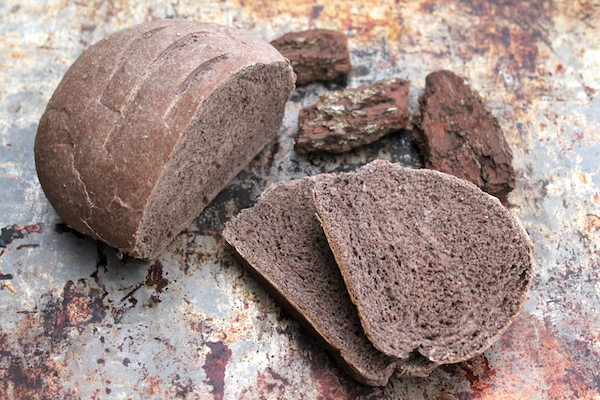
PINE BARK BREAD


~ TRADITIONAL SCANDINAVIAN RECIPE


When you hear “eating bark” your mind probably jumps to a pretty dire survival situation, but historically that’s not the case.  Bark, specifically pine bark and birch bark, have been used for centuries to flavor food and boost nutrition, even in times of plenty.

Pine Bark Bread

Bark breads are a staple of Nordic indigenous cuisine.  The Sami of northern Sweden harvested pine bark and mixed it with reindeer milk in their traditional breads.  Since the richest sami had the most reindeer, they’re also the ones that harvested the most pine bark.  It wasn’t out of desperation, but out of a quest for flavor.

In the case of birch bark, the historical evidence is clear that the papery outer bark was used to make food storage vessels, while the nutritious inner bark was ground into birch bark flour.  In the case of pine bark, the records are a bit less clear.  There are some sources that say only the inner bark was used, and others that claim only the outer bark was used.  Since I’ve been able to find recipes using both, I’ll share them all with you.

Pine Bark Bread Dough

PINE BARK FLOUR USING OUTER BARK

The outer bark of a tree is mostly there to protect the tree from the elements and doesn’t contain much in the way of calories.  Calories aren’t the only reason to eat something, and pine outer bark seems to have other benefits.  Pine outer bark may contain compounds that help keep food from spoiling or important nutrients that were scarce in a northern climate.

According to Nordic Food Lab,  though pine outer bark is not calorie rich, it does “contain condensed tannins called procyanidins that are being researched for potential health benefits. Aromatic hydrocarbons such as terpenes and phenols which give pine its distinctive warm, woody scent also deliver antimicrobial properties, perhaps useful for blending with other flours to preserve their shelf life.”

Ground Pine Bark Flour for Bark Bread

These days, nutritional supplements are made from pine bark, and you can buy bags of powdered pine bark online which claim that “Pine Bark is used worldwide for its antioxidants and anti-inflammatory properties. When used regularly, pine bark may support healthier cardiovascular and circulatory function.”

The outer bark was harvested from a section of the tree to create a “window pane” of exposed cambium.  Over time, the bark slowly healed over the wound, and since the inner cambium was not harvested the tree continued to grow.  Such trees could be harvested multiple times over the course of their life.  There’s evidence of window panning on 700+-year-old pine trees in northern Sweden.

Harvesting Pine Bark for Bark Bread

Obviously, if you’re going to harvest the bark of a tree, know that you are damaging the tree in a way that will impact it for hundreds of years.  This particular pine tree has a partially dead top, and it’s very near our wind turbine.  It’s going to be cut in the spring, so it’s a good candidate for bark harvest.

I started out using a draw knife, but it’s actually pretty difficult to use one just on the surface without really digging into the cambium.  Since I only needed a small amount of pine bark flour, I was able to just use my hand to flake off chunks of shaggy exterior bark from a large pine tree growing on our land.  No need to window pane a tree and cause it damage in any case.

Harvesting edible Pine Bark for flour

Initially, I tried to grind the pine bark flour in a food processor, but it was in vain.  The exterior bark is quite hard, but not brittle enough to fly apart.  After several minutes the motor was heating up and had almost no pine bark flour to show for it.  The bark, even exterior bark, needs to be dried out thoroughly before grinding.

I put the bark chips in the oven at 350 for about 45 minutes.  The house smelled nice and toasty, like the warm scents of the high desert pine forests of my youth.  Once the bark was toasted it ground much more easily.  It would be possible to dry the bark out over a low fire in a similar way, which would make it much easier to grind by hand.  When the pine bark was dried, I put it back into the food processor for grinding.

Grinding Pine Bark Flour

This recipe for pine bark bread using the outer bark comes from Laila Spik, a Sami elder and indigenous ambassador from Northern Sweden.  It was printed in A Boreal Herbal, which I found to be a great resource for foragers in Northern climates like myself.

While it’s called “bread” it’s actually crisp crackers that are completely unleavened.  The dough is formed using a mixture of pine outer bark flour and whole wheat flour, and then it’s rolled thin on a baking sheet.  The pine bark crakers cook for about 4 minutes in a 500-degree F oven.

Pine Bark Bread Rolled Out

Pine Bark Bread (with outer bark)

This recipe for pine bark bread comes from Sweden and uses the outer bark of a pine tree ground into a fine flour.  The resulting bread is more like what most people would consider crackers.

Ingredients

  • 7/8 cup Pine Bark Flour 200ml
  • 3 3/4 cup whole wheat flour 900ml
  • 1 tsp salt 5ml
  • 1 3/4 cup cold water 400 ml

Instructions

  1. Preheat oven to as hot as it goes, around 500 degrees for mine.

  2. Mix all ingredients to form a dough.  Adjust with more water or flour if it is either too sticky or dry.

  3. Roll the bark flour cracker dough into very thin sheets and prick it every inch or so with a fork.  Cut it into bite-sized pieces and place them on an oiled baking sheet.
  4. Bake for about 3 minutes, turning the sheets halfway through.  When the crackers come out of the oven they’ll have a soft texture, but they’ll be crisp once the cool.

So how did the finished pine bark crackers taste?  Honestly, absolutely horrible.  I know, you’re probably not shocked, but I was.  When I made birch bark flour, it was delicious.

Maybe it’s a cultural thing.  Maybe I’m just horrible at making crackers.  I baked up half the dough into a tray of crackers, but I saved the second half of the dough for experimentation.

Pine Bark Bread Crackers

At this point, I had a mass of unleavened dough, but it’s not hard to incorporate a bit of yeast after the fact.  One of my favorite bread books makes whole grain bread using a slow fermentation technique.  The method starts out with two different starters, one with yeast and one without.  They’re then kneaded separately before being chopped into tiny pieces and then kneaded together.  That allows you to seamlessly add yeast to a mass of unleavened dough.

I used this technique to turn the remaining pine bark bread dough into a yeasted loaf.  After about 35 minutes in the oven, my tiny bark bread loaf was done.  My 3-year-old daughter, the bread fiend that she is, was eager to try it and she stole the first piece.  It met with her approval, and she handed it to me for a taste.  The verdict…It’s shockingly good.  It tastes quite a bit like any dark brown bread, but with the same warm notes of pine forest that I smelled when the bark was originally toasting.

Wild Foraged Pine Bark Bread made with Pine Bark Flour

The inner bark of pine trees is much milder, and actually contains calories (instead of just nutrients).  I now have high hopes for making a really tasty loaf with pine cambium flour…

PINE BARK FLOUR USING INNER BARK

Unlike the outer bark of pine trees, the inner bark of pine trees contains a surprising amount of calories.  According to The Nordic Cookbook, Pine bark flour made from the phloem (inner bark) “contains about 80 calories per 100 grams, compared with wheat flour, which contains well over 800 calories per 100g.”

Beyond just the caloric content, studies show that pine bark flour may have been an important source of vitamin C for the Sami people.  Similarly, Nordic Food lab notes that “The phloem of the pine is rich in ascorbic acid (Vitamin C), which during the 1800s helped the Sami of the interior of Norway and Sweden avoid the scurvy that was at the time devastating the coastal populations of non-Sami farmers.” 

Again, the flour from the inner bark, similar to the flour from the outer bark, was not just a famine food.  A type of rye bread known as pettuleipä is still eaten in Finland in Modern times. The Nordic Cookbooknotes that pine bark flour is available at some health food stores in Scandinavia, and “Especially in Finland, breads baked with pine bark had a strong tradition and historically have been eaten on a regular basis, not just when grains were not plentiful enough to last through the winter.”

The author provides a recipe for traditional pettuleipä which is a full page of text (with small font!) and requires 4 full days of slow fermentation.  Starting with a very wet batter and yeast starter, increasing amounts of rye and pine bark flour are added to the dough each day.  The author notes how the bread should look at each stage of the slow fermentation, and at the end of day 3, the bread should be “frothing” and asks you to taste it to make sure that it’s tart from the activity of abundant lactobacilli (lactic acid bacteria as in yogurt).

I had hoped to make this bread, but when I went out to harvest pine phloem the temps were too cold.  Traditionally pine bark is harvested in late spring or early summer, with the peak harvest in June.  Likely that has to do with the fact that there will be more sugars in the phloem when the tree is actively growing, but it’s also a matter of practicality.  Trying to harvest pine bark in freezing temperatures is just impractical, and the phloem just flaked away in shards rather than coming off in clean sheets.  So much for pine bark being a winter survival food.

I should note that harvesting the inner bark from a tree can kill it, and this should only be done with trees that are slated to be cut down anyway (as mine was).  Alternatively, you can harvest the inner bark from pine branches that you’ve cut off for that purpose.

OTHER WAYS TO EAT BARK

Beyond grinding it into flour, the inner cambium can be eaten as it is.

The author of A Boreal Herbal notes, The inner bark (cambium layer) has long been used as a survival food and can also be eaten in raw slices.I like to use the soft, moist, white inner bark for making pesto.Most pesto recipes call for pine nuts.But one day, when I was making pesto I didn’t have any around.Remembering the flavor of the pine’s inner bark, I thought, why not?I’ll try it.It was wonderful— I haven’t used pine nuts since.  The inner bark contains lots of starch and many sugars and can be boiled or ground and then added to soups and stews.”

Though not quite pine, Tamarack is a related conifer.  In Rogers Herbal Manual, Herbalist Robert Rogers gives a recipe for tamarack bread: “Scrape off the softwood and inner bark of tamarack, mix with water, and ferment into a dough to be mid with rye meal.Bury under the snow for a day.As fermentation begins, the dough can be cooked as a camp bread or as dumplings, the sweet wood pulp acts as a sugar for the yeast in the rye.”

So there you have it, yet another way to eat a pine tree.  Pine nuts are tasty, their needles are edible, the sap is medicinal and now you know how to eat pine bark.

Wild Foraged Pine Bark Bread ~ Traditional Scandinavian Recipe for bread made with the bark of pine trees.  Historical evidence shows it has been eaten for hundreds of years, and it's still made today. #bread #recipe #pine #bark #foraged #foraging #edible #homemade


Preserving Our Past, Recording Our Present, Informing Our Future

Ancient and Honorable Carruthers Clan Society Int CCIS

carruthersclan1@gmail.com      carrothersclan@gmail.com

coacarrutehrs


DOUGLAS CARRUTHERS, ORKNEY SCOTLAND

CLAN CARRUTHERS INT SOCIETY CCIS   HISTORIAN AND GENEALOGIST

You can find us on facebook at :

https://www.facebook.com/carrutherscarrothers.pat.9

https://www.facebook.com/CarruthersClan/

https://www.facebook.com/CarruthersClanLLC


Disclaimer Ancient and Honorable Carruthers Clan International Society CCIS L


Gutland / Gotland, OUR ANCESTORS, SEA KINGS AND ROVERS, The History of Gutland, Uncategorized

THE SIX WIVES HARALD FAIRHAIR CLAN CARRUTHERS CCIS

WIDE BANNER with NEW CREST


ALL THE SONS OF HARALD FAIRHAIR

King Haraldr had many wives and many children- Haralds Saga – and a Carruthers ancestor.

Harald Fairhair, the legendary ruler of Norway who succeeded for the first time in uniting all the petty fiefdoms of his nation, inherited his father’s kingdom at a young age and proceeded to live an extraordinarily long and active life. During his time as a good looking adult with famously beautiful hairlocks, he wooed women from all different regions of Norway and produced many children accordingly,

.Although he cannot compete in importance with his Danish contemporary Ragnar Lodbrok, the list of his descendants is equally long and impressive. It includes among others, Ivan the Terrible of Russia, the Sun King Louis XIV of France and, via the House of Sachsen-Billung, our own Leopold II of Belgium.

Halfdan the Black handing over his kingdom to Harald ca. AD 860

Spouse no. 1    Ása    Haakonsdotter

In Chapter IX of his Heimskringla text, the Icelandic historian Snorri Sturluson, mentions that Harald eventually settled in Trondheim , which heal ways called his home, and where he built a very large establishment called Hladir (now Lade). That is where he met Aasa, the daughter of the important Jarl Haakon “the Rich” Grjotgardsson, who had nominal control over Trondelag and Halogaland.

Harald and Hakon came to an agreement dividing Norway between them except for the completely unruly Vestland. This first (political) marriage produced four sons, listed byname by Snorri In chapter XVII of the Heimskringla text:

“Then he began to have children. Harald and Àsa had these sons : Guthorm was the eldest, Halfdan svarti (the Black), Halfdan hviti (the White)–they were twins– the fourth Sigfròdr. They were all brought up in Trondheim in great honour”

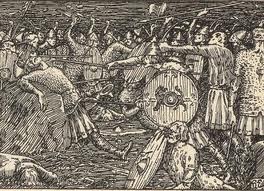
Then Harald went after the Vikings of Vestland in Hafrsfjord whom hedefeated in a great naval battle in AD 872.

It is probably not a coincidence that the Viking Rollo, who was presumably born at Maere and who was a contemporary of Harald Fairhair, immediately after 872 what is since called Normandy. Many other Vikings, who did not want to be subjected to Harald, followed him there.

Image of the great battle of Hafrsfjord in 872

We can safely assume that Harald’s four children with Aasa were all born between the naval battles of 865 and 872.

Guthorm  (865-895)    Halvdan svarte ( (868-932)Halvdan hvite  (868-925)   Sigfrodr(872-?)

The eldest son Guthorm was named after Halfdan the Black’s best friend and right arm, Duke Guthorm, who took young Fairhair under his wings when he inherited the kingdom at the age of ten. After Duke Guthorm died of sickness ca. 890, Harald made his own son Guthorm king over Raanrike, which he had wrested from the Swedes, and gave him the responsibility of defending this south east region of Norway against his neighbor. However, Guthorm fell in a later fierce battle with the sea-king Solve Klove in 895, whose own father had been killed by Harald at the First Battle of Solskjel.

HalfdanII “the Black (named after his grandfather) later inherited the kingdom of Tróndelag. He may therefore have considered himself the rightful successor to his father as the king of whole Norway and must have been disappointed when Harald gave preference to the younger son Eric.

Halfdan III “the White”, shared Trondelag with his darker twin brother. He
fell in Eist land in 925, i.e. ten years before Harald’s death.
Sigfròdr is not mentioned again. We do not know what happened to him.

Spouse no. 2 Svanhild  Eysteinsdotter of Heidmark

After defeating the Vikings of Vestland, Harald turned his attention to Vestfold in Östland.Svanhild was the daughter of Eystein “the Noisy ” of Vestfold, who was also the grandfather of the before mentioned Rollo, the founder of Normandy. She was probably also chosen for political reasons.

Image of Eystein “Glumra” the Noisy Svanhild provided Harald Fairhair with three additional sons:

Olaf “Geirstadaalfer”                         Björn”formann”                     Ragnar“rykkill” 
(Elf of Geirstadir)                               (the merchant)                        (the Snatcher)
  (870- 932)                                         (875- 932)                                (878-932)

Svanhild possibly also died young because nothing is heard of her after 880. Björn the Merchent would later succeed his grandfather Eystein asking of Vestfold, and his brother Olaf succeeded him after his death ,while Sigurd inherited Trondheim from his father.

Spouse no. 3  Gyda   Eiriksdotter   of Hardaland

Around AD 870, when Harald was approaching the age of twenty, he started thinking of taking a young mistress. This was probably before his marriage with Asa. Harald had heard of beautiful Gyda, the daughter of king Eirik of Hardaland, who was being fostered in Valdres and he sent his men to fetch her.

However, she sent them back with the message that she would not sacrifice her virginity to take as husband a king who had no more of a realm than a few districts to administer. She might only agree to be his wife if he would first subject the whole of Norway.

This seems to have had a stimulating effect on Harald who swore to God not to cut or comb his fancy hair until he became ruler over all of Norway. It would take him another ten years to fulfill this ambition, but when he had completed his project, he remembered beautiful but proud Gyda. So tells Snorri in chapter XX of Heimskringla:

King Haraldr had now become sole ruler of all Norway. Then he called to mind what that proud girl had said to him. He then sent men for her and had her brought to him and made her his mistress. That were their children :

Hroerekr                Sigtrygg                 Frodi                 Torgils
(880- 932)            (882-932)              (885-938)             (890-932)

All four sons were born in Bergen, but both Frodi and Torgils are said tohave died in Dublin.

Spouse no. 4  Snaefrid“    Snowfair ”   Svasisdotter the Finn

In chapter XXV of Heimskringla, Snorri recounts the following story:

King Haraldr went one winter to attend banquets through Uppland and had a Yule banquet prepared for himself in Poptor. One Yule-eve Svási came to the door while the king was sitting at table, and sent the king a message that he was to come out to him.The King went out reluctantly and agreed to go to his home with him.

Snaefrid Swasisdottir - Historical records and family trees - MyHeritage

There Svasi’s daughter Snaefridr, a most beautiful woman, rose and served the king a goblet full of mead, and he took all into his grasp, including her hand, and it was immediately as if a fiery heat came into his flesh, and he wanted to have her straight away that night. But Svasi said that it should not be unless the king betrothed himself to Snaefridr and married her and got her lawfully. And the king betrothed himself to Snaefridr and married her and loved her so madly that his kingdom and all his duties he then neglected. They had four sons :

Sigurd “hrsi”          Halvdan”hàleggr”          Gudród“ljami”      Ragnvald“rettilbeini”
 
(the Grey)                (long legs)                     “Gleam”              (Straightleg)
(890-937)                (891-?)                            (893-?)                (895-?)

Then Snaefrid died and according to Snorri, Harald was inconsolable and sat over her continually hoping that she would return to life.Sigurd later became king of Hadafylke and was the ancestor of other notable kings, such as Harald Hardraade, who ruled Norway successfully from 1046 to 1066, but failed in his attempt to invade England just before William the Conqueror made his own landing at Hastings.

Spouse no. 5   Ragnhild           the Mighty” of Jutland”

(Jutland and Gutland were one in the same)

Ragnhild was born ca. 880 as daughter of King Eirik of Jutland and would bear Harald’s
most notorious son Eric (900-954) upon whom posterity bestowed the epithet “Bloodaxe”,
 presumably because he proceeded to eliminate his half-brothers in order to obtain the succession.
Ragnhild Sigurdsdotter - Wikipedia
 However, careful reading of Snorri’s Chapters 41-43reveals a different story:
King Harald was now 80 years of age; he now became so infirm that he felt he could not travel by land or manage the royal affairs. Then he took his son Eric to his high seat and gave him rule over the whole country. But when King Harold’s other sons heard about this, the Halfdan sorti set himself on the king’s high seat.
He then took the whole of Trondheim to rule over. All the Traendis backed him in his course of action. Two years later, Halfdan svarti died suddenly inland in Trondheim at some banquet, and it was rumored that Gunhilde (Eric’s wife) had bribed a warriors killed in magic to make him a poison drink. After that the Prendi’s took Sigurd as king.

All this shows is that Eric did not have an easy time taking hold of the situation, and that he was king by name only between 930 and 933.When in 934 his younger rival Haakon arrived from England to takeover the situation, Eric did not resist and moved to the Orkney Islands, which were already colonized by Norway. The English King Aethelstan, who had fostered Haakon and equipped his expedition, then entrusted Northumberland to Eric as under-king. Numismatic evidence found as recently as 2014 attests to his title as king of York between 952 and954.
Aethelstan’s successor Eadred put an end to his reign, and when Eric was travelling back to the Orkneys with his brother Ragnald and his son Haerekr, they were ambushed at Stainmore and all killed.

Coin of Eric as King of York AD 952-54

So who were the brothers who were supposedly killed by violent Eric?

1.South of Vinland: Norwegian History: Halfdanr Svarti (810-860), King of  Vestfold.


Halfdan svarti : we already saw that his death was caused by poisoning, no bloody ax involved. Halfdan had it coming by takingover Trondheim, the jewel in his father’s crown

 and had attempted himself first to kill Eric by burning down the house where he was staying. Eric managed to get out and went to see his father with news of these events. We cannot therefore exclude the possibility that it was Harald himself who ordered Halfdan’s poisoning as punishment

.2.


Bjòrn formann: succeeded his grandfather on his mother’s side as king of Vestfold. He was considered an intelligent person and very moderate and it seemed he might make a great ruler. However,Snorri recounts in chapter 41 of his book that when Eric returned from the eastern Baltic in 930, he visited Bjòrn to demand the revenues which were due to King Harald whlle he was still alive. It was when Bjòrn refused to pay, that he was killed in battle by Eric

3.
Olaf : after the fall of Bjòrn, his brother Olaf took rule over Vestfold and adopted Bjòrn’s son Gudròdr. When the Vikverjar heard that Harold had taken Eric as supreme king, they took Olaf as supreme king in the Vik, and he kept that kingdom. Eric was very displeased at this. The same Spring, Eric calls out a great army and ships and turns east to Vik. He had a much larger force and gained victory. Olaf and Sigurd both fell there
.4.
Sigurd: this was probably Sigfródr, son of the first marriage of Harald with Àsa

So there is no mention of direct murder by Eric of any of his half-brothers.
They had all four
revolted against their father’s decision and bore the consequences. Maybe their father, while he was still alive, did not disapprove of their forceful elimination. It is interesting to read that according to the Saga in which Eric figures, after his death he is welcomed by Odin without any criticism of the killings of his brothers.  When the other gods question Odin why he still welcomed Eric, Odin answers, well, he has traveled a lot and has seen many countries”  Sounds modern, does it not?

Spouse no. 6           Alshild   Ringsdotter   of Ringerike

Ring                     Dag                Gudród “Skirja”
(882-?)                (883-?)              (890-965)

Alshild was a princess from the prestigious kingdom of Hringaríkei (nowRingerike near Oslo). Snorri mentions that when King Harald married her, she proudly named her sons after her own father (Ring), grandfather (Dag)and ancestor (Gudród). Their son Dag later became king of Hedmark and Gudbrandsdal.

Beautiful Hedmark

Spouse no. 7   Thora  Mosterstang


When Fairhair reached the age of seventy, he retired to one of his farms in Hordaland where he is credited with impregnating beautiful Tora, who may have been only a handmaid. At the age of ten, her son Haakon wassent for safekeeping to the court of the English king Aethelstan where many sons of European princes were welcome to be taught the noble arts of statesmanship

 King Aethelstan is said to have loved him more than his own kin. Hákon was baptized there and taught the true faith and good morality and all kinds of courtly behavior. In 934, Hákon was invited by dissident nobles in his home country to takeover the throne of Norway. Aethelstan equipped him with ships and men and Hákon was able to expel his unpopular half-brother Eric Bloodaxe, who conceded without a fight and fled to the Orkney Islands Haakon proved to be a good and pragmatic king and reigned until 960when he had to face an attack at Fitjur by five sons of Eric. He won the battle, but was wounded and died shortly there after.Three sons of Eric took over the kingdom and were able to fulfill the dynastic designs of their grandfather.

Conclusion

By impregnating so many women from all parts of his kingdom, Harald may have had political considerations in mind. It was his way of obtaining the support of so many previously independent smaller kings who might otherwise have been reluctant to accept him as over-king. His marriages to a Danish and a Finnish princess may also be interpreted as protection against over-zealous neighbors. The only missing piece in his political puzzle was a princess from hostile Sweden. I think Martin Arnold is right when he suggests that Harald’s governing style of usurping traditional inheritance rights had to lead to civil war. Hisson Eric was not only contested by his brothers, but also by the regional lords. Maybe if Harald had gradually shared power with his designated successor at an earlier period, the transition might have been successful.

Carruthers crest on flag-v2 (1)

OFFICIAL AND OLDEST SCOTTISH  CLAN CARRUTHERS

 SINCE 1983-CLAN OF OUR ANCESTORS

SCOTTISH CLAN – IRISH CLAN – NORSE CLAN

WIDE BANNER with NEW CREST

Willy van Ryckeghem

REKNOWNED NORSE HISTORIAN

REVIEWED BY TAMMY WISE CHS

CLAN CARRUTHERS CCIS HISTORIAN AND GENEALOGIST

Preserving Our Past, Recording Our Present, Informing Our Future

Ancient and Honorable Clan Carruthers

   clancarruthers1@gmail.com

You can find us on our main facebook pages at :

SILVER WINGS-https://www.facebook.com/CarruthersClanLLC/

GOLD WINGS – https://www.facebook.com/carrutherscarrothers.pat.9

CLAN CARRUTHERS FAMILY HISTORY – https://www.facebook.com/CarruthersClan

CLAN CARRUTHERS CCIS – https://www.facebook.com/groups/3878691252182714

CLAN CARRUTHERS INT SOCIETY- https://www.facebook.com/groups/394653845137709

CLAN CARRUTHERS – BORDER REIVERS – https://www.facebook.com/groups/434959914239094

Disclaimer Ancient and Honorable Carruthers Clan International Socie
OUR ANCESTORS, The Viking Age, Uncategorized

CANUTE THE GREAT, KING OF SIX NATIONS-CLAN CARRUTHERS CCIS

cropped-wide-banner-with-new-crest.jpg

Canute the Great, King of Six Nations

CARRUTHERS ANCESTOR

CNUT Knut Canute Knud I “The GREAT” Svendsson Sweynsson – KING of DENMARK, ENGLAND and NORWAY   994 – 1035

BIRTH 994  Ringerike, Busherud, Norway

DEATH 12 NOV 1035  Shaftesbury, United Kingdom

Harald Harold

A famous old king of Denmark, known as Harald Blaatand or Bluetooth, ( Carruthers ancestor, wife Tove) had many sons, of whom only one, Svend or Sweyn, outlived him. While Harald was a Christian, Sweyn was a pagan, having been brought up in the old faith by a noble warrior Palnatoke, to whom his father had sent the boy to teach him the use of arms.

Svend I Tveskaeg Svreyn Sveyn Sweyn

When the king found that the boy was being made a pagan he tried to withdraw him from Palnatoke, but Sweyn would not leave his friend, whereupon the crafty king sought to destroy the warrior. We speak of this, for there is a very interesting story connected with it. Every one has read of how the Austrian governor Gessler condemned the Swiss peasant William Tell to shoot with an arrow an apple from his son’s head, but few know that a like story is told of a Danish king and warrior four hundred years earlier. This is the story, as told for us by an old historian.

Svend I Tveskaeg Svreyn Sveyn Sweyn “Forkbeard” Gormsson or Haraldsson – KING of DENMARK, NORWAY and ENGLAND

One day, while Palnatoke was boasting in the king’s presence of his skill as an archer, Harald told him that, in spite of his boasts, there was one shot he would not dare to try. He replied that there was no shot he was afraid to attempt, and the king then challenged him to shoot an apple from the head of his son. Palnatoke obeyed, and the apple fell, pierced by the arrow. This cruel act made Palnatoke the bitter foe of King Harald, and gathering around him a band of fierce vikings he founded a brotherhood of sea-rovers at Jomsborg, and for long years afterwards the Jomsborgers, or Jomsborg vikings, were a frightful scourge to all Christian lands on the Baltic Sea. In former tales we have told some of their exploits.

It is said that Sweyn himself, in a later war, killed his father on the battlefield, while Palnatoke stood by approving, though in after years the two were bitter foes. All we need say further of these personages is that Sweyn invaded England with a powerful force in the time of Ethelred the Unready and drove this weak king from the island, making himself master of great part of the kingdom. He died at Gainsborough, England, in 1014, leaving his son Knud, then a boy of fourteen, to complete the conquest. It is this son, known in England as Canute the Great, and the mightiest of all the Danish kings, with whose career we have to deal.

England did not fall lightly into Canute’s hands; he had to win it by force of arms. Encouraged by the death of Sweyn and the youth of Canute, the English recalled Ethelred and for a time the Danes lost the kingdom which their king Sweyn had won. Canute did not find a throne awaiting him in Denmark. His younger brother Harald had been chosen king by the Danes and when Canute asked him for a share in the government, Harald told him that if he wished to be a king he could go back and win England for himself. He would give him a few ships and men, but the throne of Denmark he proposed to keep.

Nothing loth, Canute accepted the offer and the next year returned to England with a large and well appointed force, whose work of conquest was rapidly performed. Ethelred died and great part of England was surrendered without resistance to the Danes. But Edmond, Ethelred’s son, took the field with an army and in three months won three victories over the invaders.

CNUT Knut Canute Knud I

A fourth battle was attempted and lost and Edmond retreated to the Severn, swiftly followed by Canute. The two armies here faced each other, with the fate of England in the balance, when a proposal in close accord with the spirit of the times was made. This was to settle the matter by single combat between the kings. Both were willing. While Edmond had the advantage in strength, Canute was his superior in shrewdness. For when the champions met in deadly fray and Canute was disarmed by his opponent, the wily Dane proposed a parley, and succeeded in persuading Edmond to divide the kingdom between them. The agreement was accepted by the armies and the two kings parted as friends—but the death of Edmond soon after had in it a suspicious appearance of murder by poison.

CANUTE

On the death of Edmond, Canute called a meeting of the popular assembly of the nation and was acknowledged king of all England. Not long afterwards Harald of Denmark died and the Danes chose him, under his home name of Knud, as their king also. But he stayed in Denmark only long enough to settle the affairs of the Church in that realm. He ordered that Christianity should be made the religion of the kingdom and the worship of Odin should cease; and put English bishops over the Danish clergy. He also brought in English workmen to teach the uncivilized Danes. Thus, Dane as Canute was, he preferred the religion and conditions of his conquered to those of his native kingdom, feeling that it was superior in all the arts and customs of civilization.

A great king was Canute, well deserving the title long given him of Canute the Great. Having won England by valor and policy, he held it by justice and clemency. He patronized the poets and minstrels and wrote verses in Anglo-Saxon himself, which were sung by the people and added greatly to his popularity. Of the poems written by him one was long a favorite in England, though only one verse of it now remains. This was preserved by the monks of Ely, since they were its theme. Thus it runs, in literal translation:

“Merrily sung the monks within Ely

When Canute King rowed by;

Row, knights, near the land,

And hear we these monks’ song.”

It is said that the verse was suggested to the king when rowing with his chiefs one day in the river Nene, near Ely Minster, by the sweet and solemn music of the monastery choir that floated out to them over the tranquil water. The monks of Ely, to whom we owe much of our knowledge of King Canute, tell us that he had a strong affection for the fen country and for their church, and gave the following story in that connection. It is at once picturesque and humorous.

One year, at the festival of the Purification, when King Canute proposed to pay his usual visit to Ely, the weather was very severe and all the streams and other waters were frozen. The courtiers advised the king to keep the holy festival in some other godly house, which he might reach without danger of drowning under broken ice, but such was his love for the abbot and monks of Ely that he would not take this advice.

Canute proposed to cross the ice by way of Soham Mere, then an immense body of water, saying that if any one would go before and show him the way he would be the first to follow. The soldiers and courtiers hesitated at this suggestion, and looked at one another with doubt and dread. But standing among the crowd was one Brithmar, a churl or serf, who was nicknamed Budde, or Pudding, from his stoutness. He was a native of the island of Ely and doubtless familiar with its waters, and when the courtiers held back he stepped forward and said he would go before and show the way.

“Go on then, in the name of our Lady,” said Canute, “and I will follow; for if the ice on Soham Mere can bear a man so large and fat as thou art, it will not break under the weight of a small thin man like me.”

So the churl went forward, and Canute the Great followed him, and after the king came the courtiers, one by one, with spaces between; and they all got safely over the frozen mere, with no mishaps other than a few slips and falls on the smooth ice; and Canute, as he had proposed, kept the festival of the Purification with the monks of Ely.

As a reward to the fat churl Brithmar for his service, he was made a freeman and his little property was also made free. “And so,” the chronicle concludes, “Brithmar’s posterity continued in our days to be freemen and to enjoy their possessions as free by virtue of the grant made by the king to their forefather.”

There is another and more famous story told of King Canute, one showing that his great Danish majesty had an abundant share of sound sense. Often as this story has been told it will bear retelling. The incident occurred after his pilgrimage to Rome in the year 1030; made, it is said, to obtain pardon for the crimes and bloodshed which paved his way to the English throne.

After his return and when his power was at its height, the courtiers wearied him by their fulsome flatteries. Disgusted with their extravagant adulations he determined to teach them a lesson. They had spoken of him as a ruler before whom all the powers of nature must bend in obedience, and one day he caused his golden throne to be set on the verge of the sea-shore sands as the tide was rolling in with its resistless might. Seating himself on the throne, with his jewelled crown on his head, he thus addressed the ocean:

“O thou Ocean! Know that the land on which I sit is mine and that thou art a part of my dominion; therefore rise not, but obey my commands, and do not presume to wet the edge of my royal robe.”

He sat as if awaiting the sea to obey his commands, while the courtiers stood by in stupefaction. Onward rolled the advancing breakers, each moment coming nearer to his feet, until the spray flew into his face, and finally the waters bathed his knees and wet the skirts of his robe. Then, rising and turning to the dismayed flatterers, he sternly said:

“Confess now how vain and frivolous is the might of an earthly king compared with that Great Power who rules the elements and says unto the ocean, ‘Thus far shalt thou go and no farther!'”

The monks who tell this story, conclude it by saying that Canute thereupon took off his crown and deposited it within the cathedral of Winchester, never wearing it again.

After his visit to Rome, Canute ruled with greater mildness and justice than ever before, while his armies kept the turbulent Scotch and Welsh and the unquiet peoples of the north in order. In the latter part of his reign he could boast that the English, the Scotch, the Welsh, the Danes, the Swedes, and the Norwegians were his subjects, and he was called in consequence “The King of the Six Nations,” and looked upon throughout Europe as the greatest of sovereigns; none of the kings and emperors of that continent being equal in power, wealth and width of dominion to King Canute, a descendant of the vikings of Denmark.

Canute spent the most of his life in England, but now and then visited his northern realm, and there are some interesting anecdotes of his life there. Though a devout Christian and usually a self-controlled man, the wild passions of his viking ancestry would at times break out, and at such times he spared neither friend nor foe and would take counsel from no man, churchman or layman. But when his anger died out his remorse was apt to be great and he would submit to any penance laid upon him by the Church. Thus when he had killed one of his house servants for some slight offense, he made public confession of his crime and paid the same blood-fine as would have been claimed from a man of lower rank.

The most notable instance of these outbursts of uncontrollable anger was that in which he murdered his old friend and brother-in-law Ulf, who, after rebelling against him, had saved him from complete defeat by the Swedes, by coming to his rescue just as the royal fleet was nearly swamped by the opening of the sluices which held back the waters of the Swedish river Helge-aae. Ulf took Canute on board his own ship and brought him in safety to a Danish island, while leaving his men to aid those of Canute in their escape from the Swedes. Yet the king bore a grudge against the earl, and this was its cause.

Cnut

At one time Ulf ruled over Denmark as Canute’s regent and made himself greatly beloved by the people from his just rule. Queen Emma, Canute’s wife, wished to have her little son Harthaknud—or Hardicanute, as he was afterwards called in England—made king of Denmark, but could not persuade her husband King Canute to accede to her wishes. She therefore sent letters privately to Ulf, saying that the king wished to see the young prince on the throne, but did not wish to do anything the people might not like. Ulf, deceived by her story, had the boy crowned king, and thereby won Canute’s ill-will.

The king, however, showed no signs of this, nor of resentment against Ulf for his rebellion, but, after his escape from the Swedes, asked the earl to go with him to his palace at Roeskilde, and on the evening of their arrival offered to play chess with him. During the game Canute made a false move so that Ulf was able to take one of his knights, and when the king refused to let this move count and wanted his man back again the earl jumped up and said he would not go on with the game. Canute, in a burst of anger, cried out:

“The coward Norwegian Ulf Jarl is running away.”

“You and your coward Danes would have run away still faster at the Helge-aae if I and my Nowegians had not saved you from the Swedes, who were making ready to beat you all like a pack of craven hounds!” ejaculated the angry earl.

Those hasty words cost Ulf his life. Canute, furious at the insult, brooded over it all night, and the next morning, still in a rage, called to one of the guards at the door of his bed-chamber:

“Go and kill Ulf Jarl.”

“My Lord King, I dare not,” answered the man. “Ulf Jarl is at prayer before the altar of the church of St. Lucius.”

The king, after a moment’s pause, turned to a young man-at-arms who had been in his service since his boyhood and cried angrily:

“I command you, Olaf, to go to the church and thrust your sword through the Jarl’s body.”

Olaf obeyed, and Ulf was slain while kneeling before the altar rails of St. Lucius’ church.

Then, as usual with King Canute, his passion cooled and he deeply lamented his crime, showing signs of bitter remorse. In way of expiation he paid to his sister Estrid, Ulf’s widow, a large sum as blood-fine, and gave her two villages which she left at her death to the church in which her husband had been slain. He also brought up Ulf’s eldest son as one of his own children. The widowed Estrid afterwards married Robert, Duke of Normandy, father of William the Conqueror, who in 1066 became master of England.

King Canute died in 1035, at thirty-six years of age, and his son Harald reigned after him in England for four years, and afterwards his son Harthaknud, or Hardicanute, for three years, when England again came under an Anglo-Saxon king—to fall under the power of William of Normandy, a conqueror of Norwegian descent, twenty-four years later.

Carruthers crest on flag-v2 (1)

OFFICIAL AND REGISTEREDL CLAN CARRUTHERS CCIS SINCE 1983-CLAN OF OUR ANCESTORS

SCOTTISH CLAN – IRISH CLAN – NORSE CLAN

Preserving Our Past!    Recording Our Present!  Informing Our Future!

The Ancient and Honorable Carruthers Clan International Society LLC

carruthersclan1@gmail.com                carrothersclan@gmail.com

WIDE BANNER with NEW CREST

SCANDINAVIAN HISTORY #9
CHARLES MORRIS

CLAN CARRUTHERS INT SOCIETY CCIS HISTORIAN AND GENEALOGIST

You can find us on our main facebook pages at :

SILVER WINGS-https://www.facebook.com/CarruthersClanLLC/

GOLD WINGS – https://www.facebook.com/carrutherscarrothers.pat.9

CLAN CARRUTHERS FAMILY HISTORY – https://www.facebook.com/CarruthersClan

CLAN CARRUTHERS CCIS – https://www.facebook.com/groups/3878691252182714

CLAN CARRUTHERS INT SOCIETY- https://www.facebook.com/groups/394653845137709

CLAN CARRUTHERS – BORDER REIVERS – https://www.facebook.com/groups/434959914239094

Disclaimer Ancient and Honorable Carruthers Clan International Societ
OUR ANCESTORS, The History of Gutland, The Viking Age, Uncategorized

KING GORM III “THE OLD” DE GAMEL OF DENMARK – CLAN CARRUTHERS CCIS

cropped-wide-banner-with-new-crestnorse

KING GORM III “THE OLD” DE GAMEL OF DENMARK

CARRUTHERS ANCESTOR

In ancient times Denmark was not a kingdom, but a multitude of small provinces ruled over by warlike chiefs who called themselves kings. It was not until the ninth century that these little king-ships were combined into one kingdom, this being done by a famous chieftain, known by the Danes as Gorm den Gamle, or Gorm the Old. A great warrior he was, a viking of the vikings, and southern Europe felt his heavy hand. A famous story of barbarian life is that of Gorm, which well deserves to be told.

KING GORM “THE OLD”

He was the son of a fierce pagan of Norway, Hardegon, who was of royal blood, being a grandson of the half-fabulous Ragnar Lodbrok. A prince with only his sword for kingdom, Hardegon looked around for a piece of land to be won by fighting, and fixed upon Lejre, in the fruitful Danish island of Sjölland, which was just then in a very inviting state for the soldier of fortune. Some time before it had fallen into the hands of a Swedish fortune-seeker named Olaf, who left it to his two sons. These in turn had just been driven out by Siegric, the rightful king, when Hardegon descended upon it and seized it for himself. Dying, he left it to his son Gorm.

It was a small kingdom that Gorm had fallen heir to. A lord’s estate we would call it to-day. But while small in size, it stood high in rank, for it was here that the great sacrifices to Odin, the chief Scandinavian deity, were held, and it was looked upon as one of the most sacred of spots. Hither at Yuletide came the devotees of Odin from all quarters to worship at his shrine, and offer gifts of gold and silver, precious stones and costly robes, to the twelve high priests of whom the king of Lejre was the chief. And every worshipper, whether rich or poor, was expected to bring a horse, a dog, or a cock, these animals being sacred to Odin and sacrificed in large numbers annually at his shrine. In the special nine-year services, people came in great numbers, and it is probable that on these occasions human sacrifices were made, captives taken in war or piratical excursions being saved for this purpose.

As one may see, the king of Lejre had excellent opportunity to acquire wealth, and young Gorm, being brave, clever, and ambitious, used his riches to increase his landed possessions. At least, the Danish historians tell us that he began by buying one bit of land, getting another by barter, seizing on one district, having another given him, and so on. But all this is guess-work, and all we actually know is that Gorm, the son of a poor though nobly-born sea-rover, before his death gained control of all Denmark, then much larger than the Denmark of to-day, and changed the small state with which he began into a powerful kingdom, bringing all the small kings under his sway.

The ambitious chief did not content himself with this. Long before his kingdom was rounded and complete he had become known as one of the most daring and successful of the viking adventurers who in those days made all Europe their prey.

Early in his reign he made a plundering cruise along the shores of the Baltic and joined in a piratical invasion of Russia, penetrating far inward and pillaging as he went. We hear of him again in 882 as one of the chiefs of a daring band which made a conquering raid into Germany, intrenched itself on the river Maas, sallied forth on plundering excursions whose track was marked by ruined fields and burnt homesteads, villages and towns, and even assailed and took Aix-la-Chapelle, one of the chief cities of the empire of Charlemagne and the seat of his tomb. The reckless freebooters stalled their horses in the beautiful chapel in which the great emperor lay buried and stripped from his tomb its gilded and silvered railings and everything of value which the monks had not hidden.

The whole surrounding country was similarly ravaged and desolated by the ruthless heathens, monasteries were burned, monks were killed or captured, and the emperor, Charles the Fat, was boldly defied. When Charles brought against the plunderers an army large enough to devour them, he was afraid to strike a blow against them, and preferred to buy them off with a ransom of two thousand pounds of gold and silver, all he got in return being their promise to be baptized.

Finding that they had a timid foe to deal with, the rapacious Norsemen asked for more, and when they finally took to their ships two hundred transports were needed to carry away their plunder. The cowardly Charles, indeed, was so wrought upon by fear of the pagan Danes that he even passed the incredible law that any one who killed a Norseman should have his eyes put out and in some cases should lose his life.

All this was sure to invite new invasions. A wave of joy passed through the north when the news spread of the poltroonery of the emperor and the vast spoil awaiting the daring hand. Back they came, demanding and receiving new ransom, and in 885 there began a great siege of Paris by forty thousand Danes.

King Gorm was one of the chiefs who took part in this, and when Henry of Neustria, whom the emperor had sent with an army against them, was routed and driven back, it was Gorm who pursued the fugitives into the town of Soissons, where many captives and a great booty were taken.

The dastard emperor again bought them off with money and freedom to ravage Burgundy, Paris being finally rescued by Count Eudes. In 891 they were so thoroughly beaten by King Arnulf, of Germany, that their great leaders fell on the field and only a remnant of the Norsemen escaped alive, the waters of the river Dyle running red with the blood of slain thousands.

RUNE STONES OF KING GORM

Gorm was one of the chiefs who took part in this disastrous battle of Louvaine and was one of the fortunate few who lived to return to their native land. Apparently it was not the last of his expeditions, his wife, Queen Thyra, taking care of the kingdom in his many long absences.

Thyra needed ability and resolution to fitly perform this duty, for those were restless and turbulent times, and the Germans made many incursions into Sleswick and Jutland and turned the borderlands on the Eyder into a desert. This grew so hard to bear that the wise queen devised a plan to prevent it. Gathering a great body of workmen from all parts of Denmark, she set them to building a wall of defense from forty-five to seventy-five feet high and eight miles long, crossing from water to water on the east and west. This great wall, since known as the Dannevirke, took three years to build. There were strong watch-towers at intervals and only one gate, and this was well protected by a wide and deep ditch, crossed by a bridge that could readily be removed.

For ages afterwards the Danes were grateful to Queen Thyra for this splendid wall of defense and sang her praises in their national hymns, while they told wonderful tales of her cleverness in ruling the land while her husband was far away. Fragments of Thyra’s rampart still remain and its remains formed the groundwork of all the later border bulwarks of Denmark.

QUEEN THYRA

Queen Thyra, while a worshipper of the northern gods, showed much favor to the Christians and caused some of her children to be signed with the cross. But King Gorm was a fierce pagan and treated his Christian subjects so cruelly that he gained the name of the “Church’s worm,” being regarded as one who was constantly gnawing at the supports of the Church. Henry I. the Fowler, the great German emperor of that age, angry at this treatment of the Christians, sent word to Gorm that it must cease, and when he found that no heed was paid to his words he marched a large army to the Eyder, giving Gorm to understand that he must mend his ways or his kingdom would be overrun.

Gorm evidently feared the loss of his dominion, for from that time on he allowed the Archbishop of Bremen to preach in his dominions and to rebuild the churches which had been destroyed, while he permitted his son Harald, who favored the Christians, to be signed with the cross. But he kept to the faith of his forefathers, as did his son Knud, known as “Dan-Ast,” or the “Danes’-joy.”

Harald I 'Bluetooth' Gornsson b 911, King of Denmark – Black Family

HARALD BLUETOOTH GORMSSON = CARRUTHERS ANCESTOR

The ancient sagas tell us that there was little love between Knud and Harald; and that Gorm, fearing ill results from this, swore an oath that he would put to death any one who attempted to kill his first-born son, or who should even tell him that Knud had died.

While Harald remained at home and aided his mother, Knud was of his father’s fierce spirit and for years attended him on his viking expeditions. On one of these he was drowned, or rather was killed while bathing, by an arrow shot from one of his own ships. Gorm was absent at the time, and Thyra scarcely knew how the news could be told him without incurring the sworn penalty of death.

Finally she put herself and her attendants into deep mourning and hung the chief hall of the palace with the ashy-grey hangings used at the grave-feasts of Northmen of noble birth. Then, seating herself, she awaited Gorm’s return. On entering the hall he was struck by these signs of mourning and by the silence and dejection of the queen, and broke out in an exclamation of dismay:

“My son, Knud, is dead!”

“Thou hast said it, and not I, King Gorm,” was the queen’s reply. The news of the death had thus been conveyed to him without any one incurring the sworn penalty. Soon after that—in 936—King Gorm died, and the throne of Denmark was left to his son Harald, a cruel and crafty man whom many of the people believed to have caused the murder of his brother.

Carruthers crest on flag-v2 (1)

OFFICIAL AND REGISTEREDL CLAN CARRUTHERS CCIS SINCE 1983-CLAN OF OUR ANCESTORS

SCOTTISH CLAN – IRISH CLAN – NORSE CLAN

Preserving Our Past!    Recording Our Present!  Informing Our Future!

The Ancient and Honorable Carruthers Clan International Society LLC

carruthersclan1@gmail.com                carrothersclan@gmail.com

WIDE BANNER with NEW CREST


SCANDINAVIAN HISTORY #9
CHARLES MORRIS

CLAN CARRUTHERS INT SOCIETY CCIS HISTORIAN AND GENEALOGIST


You can find us on our main facebook pages at :

SILVER WINGS-https://www.facebook.com/CarruthersClanLLC/

GOLD WINGS – https://www.facebook.com/carrutherscarrothers.pat.9

CLAN CARRUTHERS FAMILY HISTORY – https://www.facebook.com/CarruthersClan

CLAN CARRUTHERS CCIS – https://www.facebook.com/groups/3878691252182714

CLAN CARRUTHERS INT SOCIETY- https://www.facebook.com/groups/394653845137709

CLAN CARRUTHERS – BORDER REIVERS – https://www.facebook.com/groups/434959914239094

Disclaimer Ancient and Honorable Carruthers Clan International Societ
Uncategorized

CLAN CARRUTHERS – 13 HORRIFYING GOTLAND CHRISTMAS TROLLS – THE YULE LADS

cropped-wide-banner-with-new-crest.jpg

13 Horrifying Gotland Christmas Trolls

yule lads

They leave the nice children gifts and the naughty children ROTTING POTATOES.

Stekkjarstaur (Sheep Cote Clod)

Sheep Cote Clod gets his name because of his affinity for harassing sheep. He’s easily identified by his stiff peg legs.

Fear Level: Standing over a subway grate.

Giljagaur (Gully Gawk)

Giljagaur (Gully Gawk) | Community Post: The 13 Horrifying Christmas Trolls Of Iceland

Gully Gawk is famous for hiding in gullies and waiting for his chance to sneak into the cowshed to steal milk.

Fear Level: Running into an ex.

Stúfur (Stubby)

Icelandic Santa Claus - the 13 Yule Lads - Iceland with a View

He’s called Stubby because he’s really short. But what he’s really known for is stealing pans to eat the crust out of them.

Fear Level: Watching Pee-Wee Herman’s Big Adventure.

Þvörusleikir (Spoon Licker)

Guess who might be passing by your window tonight? ⠀ Þvörusleikir (Spoon-Licker) is on his way to town and estimated time of arrival is unknown! 😛⠀ ⠀ He steals "Þvörur" or some sorts of wooden spoons to lick. Poor guy is extremely thin due to malnutrition. So, if you want to be nice, you should just give him a wooden spoon if you have one with your open heart 💓⠀ ⠀ It's Christmas after all right? 🎄Image via Brian Pilkinton from the book The Yule Lads •⠀ •⠀ •⠀ •⠀ #Iceland #Icelandic #inspiredby

This sticky-fingered troll steals wooden spoons for the purpose of licking them. He’s easily identified by his malnourished appearance.

Fear Level: Waking up right before your alarm goes off.

Pottaskefill (Pot Licker)

<img class="aligncenter" src="https://i.pinimg.com/236x/60/b4/9d/60b49d9989099a36e73e2f046caadc9c.jpg&quot; alt="They leave the nice children gifts and the naughty children ROTTING POTATOES.” width=”574″ height=”435″>

Not to be confused with Spoon Licker, Pot Licker steals leftovers out of pots. Also not to be confused with Stubby, who steals PANS.

Fear Level: Jaywalking.

Askasleikir (Bowl Licker)

Askasleikir (Bowl Licker) | Community Post: The 13 Horrifying Christmas Trolls Of Iceland

Not to be confused with Spoon Licker or Pot Licker, Bowl Licker hides under your bed until you put your bowl down. Then he steals it and then, presumably, licks it.

Fear Level: Waiting for test results.

Hurðaskellir (Door Slammer)

7. Hurðaskellir - door slammer

He slams doors. Especially at night.

Fear Level: Doors slamming. Especially at night.

Skyrgámur (Skyr Gobbler)

<img class="aligncenter" src="https://i.pinimg.com/236x/d5/cf/d2/d5cfd27b2b4d70b40840f3d5e2489b67.jpg&quot; alt="They leave the nice children gifts and the naughty children ROTTING POTATOES.” width=”526″ height=”414″>

Skyr is a traditional Icelandic dairy product similar to strained yogurt.

Fear Level: Broken escalators.

Bjúgnakrækir (Sausage Swiper)

Bjúgnakrækir (Sausage Swiper) | Community Post: The 13 Horrifying Christmas Trolls Of Iceland

Sausage Swiper hides in the rafters and pilfers pork links while they’re smoking.

Fear Level: Standing under scaffolding.

Gluggagægir (Window Peeper)

Gluggagægir (Window Peeper)

This troll looks through your windows in search of things to steal. Pretty sure this is a felony.

Fear Level: Driving with the doors unlocked.

Gáttaþefur (Doorway Sniffer)

Gáttaþefur (Doorway Sniffer)

Easily identified by his abnormally large nose, Doorway Sniffer uses his acute sense of smell to find Laufabrauo, a traditional Icelandic bread.

Fear Level: Sniff-testing the milk.

Ketkrókur (Meat Hook)

#12. Iceland Christmas troll arrives Dec. 23 - Meat Hook - he steals meat with his hook.

Meat Hook uses a hook to steal meat. Pretty self explanatory.

Fear Level: Standing really close to a large animal.

Kertasníkir (Candle Stealer)

Kertasníkir (Candle Stealer)

This troll follows children so he can steal their candles and then eat them. Pretty sure this is also a felony.

Fear Level: Clowns.

Have a Very Happy Holiday and Be Good…

Or Gryla, the mother of all the Yule Lads, will abduct you!  And EAT YOU!

YOU CAN READ ABOUT GRYLA AT :  https://clancarruthers.home.blog/2018/12/15/clan-carruthers-gryla-the-gruesome-christmas-witch/

Carruthers crest on flag-v2 (1)

Preserving Our Past, Recording Our Present, Informing Our Future

Ancient and Honorable Carruthes Clan Int Society LLC

carruthersclan1@gmail.com

cropped-wide-banner-with-new-crest.jpg

ALL PICTURES FROM PINTEREST

Gutland / Gotland, The History of Gutland, The Viking Age, Uncategorized

CLAN CARRUTHERS – ANCIENT HISTORY OF GUTLANDERS/ CARRUTHERS

CLAN CARRUTHERS INT SOCIETY CCIS

cropped-wider-banner-light-blue-1.jpg

Ancient History of Gutlanders / Carruthers

3swords


There is strong evidence that one group of Swedish/ Gutland predecessors were migratory Thracians, an aggressive refugee “boat-people” who came from the ancient city of Troy.  Located in northwest Asia Minor (present-day northwest Turkey), the ruins of Troy were discovered in 1870.  In the period beginning about 2500 BC, Troy was populated by an “invasion of peoples on the sea” according to the Egyptians.  These people were called Thracians by the Greeks, and were early users of ships, iron weapons and horses.  Troy (also called Troi, Toas or Ilium) was known as a center of ancient civilizations.  Its inhabitants became known as Trojans (also Trajans/Thracians, later called Dardanoi by Homer, Phrygians or Anatolians by others), and their language was Thracian or Thraco-Illyrian.  Evidence shows the city of Troy endured years of war, specifically with Greek and Egyptian armies.  The famous Trojan War was fought between the Greeks and Trojans with their allies.  Troy was eventually laid in ruins after 10 years of fighting with the Greeks, traditionally dated from around 1194 to 1184 BC, and is historically referred to as the Fall of Troy.  The city was completely devastated, which is verified by the fact that the city was vacant to about 700 BC.

Thousands of Trojans left Troy immediately after the war, beginning about 1184 BC.  Others remained about 30 to 50 years after the war, when an estimated 30,000 Trojans/Thracians suddenly abandoned the city of Troy, as told by Homer (Greek writer/poet, eighth century BC) and various sources (Etruscan, Merovingian, Roman and later Scandinavian).  The stories corroborate the final days of Troy, and describe how, after the Greeks sacked the city, the remaining Trojans eventually emigrated.  Over half of them went up the Danube river and crossed over into Italy, establishing the Etruscan culture (the dominating influence on the development of Rome), and later battled the Romans for regional dominance.  The remaining Trojans, mainly chieftains and warriors, about 12,000 in all with their clans, went north across the Black Sea into the Mare Moetis or “shallow sea” where the Don River ends (Caucasus region in southern Russia), and established a kingdom called Sicambria about 1150 BC.  The Romans would later refer to the inhabitants as Sicambrians.  The locals (nomadic Scythians) named these Trojan conquerors the “Iron people,” or the Aes in their language.  The Aes (also As, Asa, Asas, Asen, Aesar, Aesir, Aesire, Æsir or Asir) soon built their famous fortified city Aesgard or Asgard, described as “Troy in the north.”  Various other sources collaborate this, stating the Trojans landed on the eastern shores with their superior weaponry, and claimed land.  The area became known as Asaland (Land of the Aesir) or Asaheim (Home of the Aesir). 

Some historians suggest that Odin, who was later worshipped as a god by pagan Vikings, was actually a Thracian/Aesir leader who reigned in the Sicambrian kingdom and lived in the city of Asgard in the first century BC.  He appointed chieftains after the pattern of Troy, establishing rulers to administer the laws of the land, and he drew up a code of law like that in Troy and to which the Trojans had been accustomed.  Tradition knows these Aesir warriors as ancient migrants from Troy, formidable fighters who inspired norse mythology and as the ancestors of the Vikings.  They were feared for their warships, as well as their ferocity in battle, and thus quickly dominated the northern trades using the Don river as their main route to the north.

Historians refer to the Aesir people as the Thraco-Cimmerians, since the Trojans were of Thracian ancestry.  The Cimmerians were an ancient people who lived among Thracians, and were eventually absorbed into Thracian culture.  Greek historian Herodotus of Halicarnassus noted about 440 BC that the Thracians were the second most numerous people in the world, outnumbered only by the (East) Indians, and that the Thracian homeland was huge.  Ancient maps describe the region as Thrace or Thracia, present-day southeast Europe and northeast Greece.  Thracian homelands included the Ukrainian steppes and much of the Caucasus region.  According to Flavius Josephus, Jewish & Roman historian in the 1st century AD, the descendants of Noah’s grandson Tiras were called Tirasians.  They were known to the Romans as Thirasians.  The Greeks called them Thracians and later Trajans, the original people of the city of Troas (Troy), whom they feared as marauding pirates.  History attests that they were indeed a most savage race, given over to a perpetual state of “tipsy excess”, as one historian put it.  They are also described as a “ruddy and blue-eyed people.”  World Book Encyclopedia states they were “…savage Indo-Europeans, who liked warfare and looting.”  Russian historian Nicholas L. Chirovsky describes the arrival of the Thracians, and how they soon dominated the lands along the eastern shores of the river Don.  These people were called Aes locally, according to Chirovsky, and later the Aesir (plural).

Evidence that the Aesir (Iron people) were Trojan refugees can be confirmed from local and later Roman historical sources, including the fact that the inner part of the Black Sea was renamed from the Mare Maeotis to the “Iron Sea” or “Sea of Aesov”, in the local tongue.  The name remains today as the Sea of Azov, an inland sea in southern European Russia, connected with the Black Sea.  The Aesir were known for their fighting with iron weapons.  They were feared for their warships, as well as their ferocity in battle, and thus quickly dominated the northern trades, using the Don river as their main route for trading. 

The Aesir people dominated the area around the Sea of Azov for nearly 1000 years, though the surrounding areas to the north and east were known as the lands of the Scythians.  The Aesir fought with the Scythians for regional dominance, but eventually made peace.  They established trade with the Scythians, and even strong cultural ties, becoming united in religion and law.  The Aesir began trading far to the north as well. 

The land far north was first described about 330 BC by the Greek explorer Pytheas of Massalia.  He called the region “Thule,” which was described as the outermost of all countries, probably part of the Norwegian coast, where the summer nights were very short.  Pytheas translated Thule as “the place where the Sun goes to rest”, which comes from the Germanic root word “Dhul-” meaning “to stop in a place, to take a rest.”  Pytheas described the people as barbarians (Germanic/Teutonic tribes) having an agricultural lifestyle, using barns and threshing their grains.  These people had already established trade with the Aesir who later began migrating north around 90 BC from the Caucasus region, during the time of Roman expansion in Europe.  The Germanic/Teutonic tribes first made a name for themselves about 100 BC after aggressively fighting against the Romans.  Not much is known about the Germanic tribes prior to this.  When writing the “Gallic Wars,” Julius Caesar described encounters with those Germanic peoples and distinguishes them from the Celts.  During this time period, many Germanic tribes were migrating out of Scandinavia to Germany and the Baltic region, placing continuous stress on Roman defenses. 

Migrating groups were normally smaller groups of different people or tribes, often following a strong leader.  The “nationality” of the leaders would usually appear as the nationality of the migrating group, until later when the group was separated again.  The migrations could take place over several decades, and often when the Germanic tribes were mentioned in the written sources, the Romans had only met raiding groups occupying warriors or mercenaries operating far away from their people.

Around the same time, about 90 BC, the Aesir began their exodus from the Black Sea/Caucasus region.  Their arrival at the Baltic Sea in Scandinavia has been supported by several scholars and modern archaeological evidence.  As told by Snorri Sturluson (a 13th century Nordic historiographer) and confirmed by other data, the Aesir felt compelled to leave their land to escape Roman invasions by Pompeius, and local tribal wars.  Known as Thracian warrior tribes, the aggressive Indo-European nomadic Aesir came north, moving across Europe, bringing all their weapons and belongings in their boats on the rivers of Europe, in successive stages.  Historians note that Odin, who was a very popular Thracian ruler, led a migration about 70 BC with thousands of followers from the Black Sea region to Scandinavia.  It is also told that another Thracian tribe came along with them, a people called the Vanir (also Vaner ,Vans, Vanargians or Varangians).  Odin’s first established settlement became known as Odense (Odin’s Sanctuary or Odin’s Shrine), inspiring religious pilgrimages to the city through the Middle Ages.  These tribes first settled in present-day Denmark, and then created a power-center in what is now southern Sweden / Gutland.  About 800 years later during the Viking era, Odin, the Aesir and Vanir had become gods, and Asgard/Troy was the home of those gods—the foundation for Viking religion.  The Aesir warrior gods, and the religious deities of Odin (also Odinn, Wodan, Woden, Wotan Vodin) and Thor, were an integral part of the warlike nature of the Vikings, even leading them back down the waterways of Europe to their tribal origins along the Black Sea and Asia Minor. 

Aesir became the Old Norse word for the divine (also, the Old Teutonic word “Ase” was a common word for “god”), and “Asmegir” was the Icelandic term for “god maker”—a human soul on its way to becoming divine in the course of evolution.  The Vanir represented fertility and peace gods.  Not unlike Greeks and Romans, the Scandinavians also deified their ancestors.  The Egyptians adopted the practice of deifying their kings, just as the Babylonians had deified Nimrod.  The same practice of ancestor worship was passed on to the Greeks and Romans and to all the pagan world, until it was subdued by Christianity.

Snorri Sturluson wrote the Prose Edda (Norse history and myths) about 1223 AD, where he made an interesting comparison with the Viking Aesir gods to the people in Asia Minor (Caucasus region), particular to the Trojan royal family .  The Prose Edda is one of the first attempts to devise a rational explanation for mythological and legendary events of the Scandinavians.  Unfortunately, many historians acknowledge only what academia accepts as history, often ignoring material that might be relevant.  For example, Snorri wrote that the Aesir had come from Asia Minor, and he compared the Ragnarok (Norse version of the first doom of the gods and men) with the fall of Troy.  Sturluson noted that Asgard, home of the gods, was also called Troy.  Although Snorri was a Christian, he treated the ancient religion with great respect.  Snorri was writing at the time when all of Scandinavia (including Iceland) had converted to Christianity by 11th century, and he was well aware of classical Greek and Roman mythology.  Stories of Troy had been known from antiquity in many cultures.  The Trojan War was the greatest conflict in Greek mythology, a war that was to influence people in literature and arts for centuries.  Snorri mentioned God and the Creation, Adam and Eve, as well as Noah and the flood.  He also compared a few of the Norse gods to the heroes at the Trojan War. 

The Aesir/Asir were divided into several clans that in successive stages emigrated to their new Scandinavian homeland.  Entering the Baltic Sea, they sailed north to the Scandinavian shores, only to meet stubborn Germanic tribes who had been fighting the Romans.  The prominent Germanic tribes in the region were the Gutar, also known as the GutaGutansGautsGotarne or Goths by Romans.  These Germanic tribes were already known to the Aesir, as trade in the Baltic areas was well established prior to 100 BC.  The immigrating Aesir had many clans and tribes, and one prominent tribe that traveled along with them were the Vanir (the Vanir later became known as the Varangians, and subsequently the Guts, Guta, GutansGautsGotarne or Goths , who settled in what is now present-day Gutland).  They were, the most prominent clan to travel with the Asir , the Eril warriors or the “Erilar,” meaning “wild warriors.”  The Asir sent Erilar (or Irilar) north as seafaring warriors to secure land and establish trade (these warriors were called “Earls” in later Scandinavian society, then became known as JarlarEruls and Erils or Heruls and Heruli by Romans, also Eruloi or Elouroi by Greek historian Dexippos, and Heruler, Erullia and Aerulliae by others).  The clans of Erilar enabled the Asir clans (later called Svi, SviarSvea, Svear or Svioner by Romans) to establish settlements throughout the region, but not without continuous battles with other migrating Germanic tribes.  The Eruls/Heruls eventually made peace with those who ruled the region.  The tribes of Svear, Vanir, and Heruli soon formed their own clans and dominated the Baltic/Scandinavian region.  The Gothic historian Jordanes (or Jordanis), who was a notary of Gothic kings, told about 551 AD that the Erils were from the same stock as the Svear, both taller and fairer than any other peoples of the North.  He called the Svear, “Sve’han.”

The Svear population flourished, and with the Heruls and Goths, formed a powerful military alliance of well-known seafarers.  The Svear and Heruls then gradually returned to their ancestral land, beginning in the 2nd century AD.  Sometimes sailing with the Goths, they terrorized all of the lands and peoples of the Black Sea and parts of the Mediterranean, even the Romans.  They were the pre-Vikings.  Roman annals tell of raids of Goths and Heruli in 239-266 AD in the territory of Dacia (where the Danube river runs into the Black Sea).  Having built a fleet of 500 sailing ships, the Heruls completed their raids in 267-268 AD, and controlled all of the Roman-occupied\ Black Sea and parts of the eastern Mediterranean.  There are several accounts about how the Herul warriors returned to ravage the shores of the Black Sea and the Mediterranean, alone and together with the Goths.  The Romans noted that “the Heruls, a Scandinavian people, together with the Goths, were, from the 3rd century AD, ravaging the Black Sea, Asia Minor and the Mediterranean.”  While the the Romans called the Scandinavian region “Thule” (after Pytheas), the Greeks called it “Scandia” (from ancient times), and others called the area “Scandza.”  The term Scandia comes from the descendants of Ashkenaz (grandson of Noah in the Bible).  Known as the Askaeni, they were the first peoples to migrate to northern Europe, naming the land Ascania after themselves.  Latin writers and Greeks called the land Scandza or Scandia (now Scandinavia).  The peoples in that region would be called Scandians or Scandinavians.  Germanic tribes, such as the Teutons and Goths, are considered the descended tribes of the Askaeni and their first settlements.

The first time Thule (Scandinavia) was mentioned in Roman written documents was in the 1st century (79 AD) by the Roman citizen Plinius senior.  He wrote about an island peninsula in the north populated by “Sviar,” “Sveonerna” or “Svearnas” people, also called “Sveons,” Svianar,””Svetidi or Suetidi” by others.  Later in 98 AD the learned civil servant Cornelius Tacitus wrote about northern Europe.  Tacitus writes in the Latin book Germania about tribes of “Sviones” or “Suiones” (Latin Sviones was derived from Sviar) in Scandinavia, who live off the ocean, sailing in large fleets of boats with a prow at either end, no sail, using paddles, and strong, loyal, well-armed men with spikes in their helmets.  They drove both the Goths and Lapps out of Scandinavia.  Archaeological finds have provided a vivid record of the evolution of their longships from about the 4th century BC.  Tacitus further wrote, “And thereafter, out in the ocean comes Sviones (also “Svionernas” or “Svioner”) people, which are mighty not only in manpower and weaponry but also by its fleets”.  He also mentions that “the land of Svionerna is at the end of the world.”  In the 2nd century (about 120 AD) the first map was created where Scandinavia (Baltic region) could be viewed.  Greek-Egyptian astronomer and geographer Ptolemaios (Ptolemy of Alexandria) created the map, and at the same time wrote a geography where he identified several different people groups, including the “Gotarne,” “Heruls,” “Sviar” and “Finnar” who lived on peninsula islands called “Scandiai.”  During the Roman Iron Age (1-400 AD), evidences are convincing for a large Baltic seafaring culture in what is now Sweden, Denmark, Finland and Estonia.

Many clans of Aesir and Germanic peoples were united by settlements.  For example, the Aesir clan Suevi (also Suebi) settled among Germanic peoples in a region called Swabia (named after themselves), which is now southwest Germany.  Those clans became known as the Alemanni, first mentioned about 213 AD after attacking the Romans.  Called Suevic tribes by historians, they formed an alliance for mutual protection against other Germanic tribes and the Romans, and retained their tribal designation until the late Middle Ages.  They settled as far south as present-day Spain and Portugal.

By the 5th century, the Aesir Heruls were in great demand as soldiers in the Roman Imperial Guards.  The Romans were impressed with the war-like Heruls, and recruited them to fight as mercenaries in the Roman Army.  About 459 AD Bishop Hydatius (Idacius) of the Roman province of Gallaecia (present day Spain and Portugal) wrote that the Heruls were Vikings (from Viking raids on the coast of Spain).  Herul factions were making settlements throughout Europe, fighting and battling everywhere they went.  Their pay in gold coins tell of their Scandinavian history, even battling Attila the Hun.  In the late 5th century, the Heruls formed a state in upper Hungary under the Roman ruler Cæsar Anastasius (491-518 AD).  Later they attacked the Lombards, but were beaten, according to Greek-Roman author Prokopios (born at the end of the 5th century).  He was a lawyer in Constantinople and from the year 527 private secretary to the Byzantine military commander Belisarius on his campaigns against the Ostrogoths.  Prokopios says by the early 6th century (about 505), the remaining Heruls in upper Hungary were forced to leave.  Some of them crossed the Danube into Roman territory, where Anastasius allowed them to settle.  Historians mention that remaining clans of Heruls (Herulians) sailed northwards, back to Thule to reunite with their Svear brethren.  Prokopios noted that there were 13 populous tribes in Thule (the Scandinavian peninsula), each with its own king.  He said, “A populous tribe among them was the Goths, next to where the returning Heruls settled.”  Prokopios also mentions that “the Heruls sent some of their most distinguished men to the island Thule in order to find and if possible bring back a man of royal blood.  When they came to the island they found many of royal blood.” 

Evidence of their existence during this time period can be found on the frequent appearance of runic inscriptions with the name ErilaR “the Herul.”  While it is thought that the ancient Scandinavian alphabet, called futhork or runes, is of Latin origin, the evidence suggests that it was used far to the northeast of Rome where Roman influence did not reach.  The runes are a corruption of an old Greek alphabet, used by Trojans along the northwest coast of the Black Sea.  From examples of Etruscan, Greek, and early Roman scripts, it is not difficult to see that earlier runes resemble archaic Greek and Etruscan rather than Latin.  The Heruls used runes in the same way their ancestors did, which have been discovered throughout Europe and Scandinavia.  Scandinavian sagas tell us that the Scandinavian languages began when men from central Asia settled in the north.  Sometime after 1300 AD runes were adjusted to the Roman alphabet.

The Heruls brought with them a few Roman customs, one being the Julian calendar, which is known to have been introduced to Scandinavia at this time, the early 6th century AD.  When the Heruls returned to join again with the Svear in Scandinavia, the Svear state with its powerful kings suddenly emerges.  Their ancestors were the warring bands of Aesir (sometimes called Eastmen) who became known as the Svear or Suines.  They became the dominant power and waged war with the Goths, winning rule over them.  By the middle of the 6th century, the first all-Swedish kings emerged.  This royal dynasty became immensely powerful and dominated not only Sweden but also neighboring countries.  Gothic historian Jordanes writes of the Suines or Suehans (Sve’han) of Scandinavia, with fine horses, rich apparel and trading in furs around 650 AD.  The Swedish nation has its roots in these different kingdoms, created when the king of the Svenonians (Svears) assumed kingship over the Goths.  The word Sweden comes from the Svenonians, as Sverige or Svearike means “the realm of the Svenonians”.  The English form of the name is probably derived from an old Germanic form, Svetheod, meaning the Swedish people. 

By the 7th century, the Svear and Goth populations dominated the areas of what is now Sweden, Denmark and Norway.  However, the term Norway came later.  Latin texts from around 840 AD called the area Noruagia, and Old English texts from around 880 AD used Norweg.  The oldest Nordic spelling was Nuruiak, written in runes on a Danish stone from around 980 AD.  The Old Norse (Old Scandinavian) spelling became Nordvegr, meaning “the country in the north” or “the way to the north,” and the people were called Nordes.  All of the names were given by people south of Norway to signify a place far to the north.  The people of Norway now call themselves Nynorsk, a name decided by linguists in the 1880s.  The name Denmark originated from the people called the Vanir (or Vaner) who settled the region with the Aesir in the first century BC.  The Vanir were later called Danir (or Daner), and eventually Danes.  By the 9th century AD, the name Danmark (Dan-mörk, “border district of the Danes”) was used for the first time.  In Old Norse, mörk meant a “forest,” and forests commonly formed the boundaries of tribes.  In Modern Danish, mark means a “field,” “plain,” or “open country.”   Hence, Denmark once meant  literally “forest of the Danes.”  During this period, their language Dönsk tunga (Danish tongue) was spoken throughout northern Europe, and would later be called Old Norse or Old Scandinavian during the Viking period.  Old Norse was spoken by the people in Denmark, Norway, Sweden, Iceland, and parts of Germany.

The ancestor of all modern Scandinavian languages, beginning with the Germanic form, was developed from the languages of the Aesir (Thracian tribes) and Goths (Germanic tribes).  When the Aesir integrated with the people of the lands, their families became so numerous in Scandinavia and Germany that their language became the language of all the people in that region.  The linguistic and archaeological data seem to indicate that the final linguistic stage of the Germanic languages took place in an area which has been located approximately in southern Sweden, southern Norway, Denmark and the lower Elbe river which empties into the North Sea on the northwest coast of Germany.  Germanic tribes began arriving in the area about 1000 BC.  Later, the Aesir brought their language to the north of the world, to Norway, Sweden, Denmark and Germany.  The future rulers of Sweden, Denmark, Norway and Iceland trace their names and genealogies back to the Aesir.  The most ancient inscriptions in Old Norse/Scandinavian are from the 3rd and 5th century centuries AD, with other inscriptions dating up to the 12th century.  They were short signs written in the futhork runic alphabet, which had 24 letters (though many variations were used throughout the region).  By the end of the Viking era (11th century AD), the Old Norse language dialect varieties grew stronger until two separate languages appeared, Western Scandinavian, the ancestor of Norwegian and Icelandic, and Eastern Scandinavian, the the ancestor of Swedish and Danish.  Many Old Norse words were borrowed by English, and even the Russian language, due to expansion by Vikings.

The next Svear conquests began in the early 8th century.  By 739 AD the Svear and Goths dominated the Russian waterways, and together they were called Varyagans or Varangians, according to written records of the Slavs near the Sea of Azov.  Like their ancestors, the Svear lived in large communities where their chiefs would send out maritime warriors to trade and plunder.  Those fierce warriors were called the Vaeringar, which meant literally “men who offer their service to another master”.  We later know them by their popularized name, the Vikings.  Thus began the era known as the Viking Age, spanning more than 300 years from about 700 AD to 1066 AD.  Once again the Svear began returning to the places of their Thracian ancestors in the Caucasus region, sailing rivers which stretched deep into Russia and the Black Sea, establishing trading stations and principalities.  They often navigated the Elbe river, one of the major waterways of central Europe.  They also navigated, as a primary route, the Danube river, a vital connection between Germany and the Black Sea.  Their ships were the best in all of Europe—sleek, durable and could travel by both sail or oars.  To the east of the Elbe they were known as Varangians, and west of the Elbe they were called Vikings.  Many called them Norse, Norsemen or Northmen—those from the Scandinavian countries, which consisted of Sweden, Norway and Denmark.  In northern France they would later be called Normans, eventually recognized as the rulers of what became Normandy.  In England they were known as Danes, although some may well have been from Norway, where they became rulers of the Danelaw.  Vikings raids in western Europe and the British Isles are noted in this Old English prayer:  “A furore Normannorum libra nos, Domine” (From the fury of the Northmen deliver us, Oh Lord). 

Vikings never called themselves Vikings.  Unlike Varangian, the term Viking probably originated from Frankish chroniclers who first called them “Vikverjar” (travelers by sea), Nordic invaders who attacked the city of Nantes (in present-day France) in 843 AD.  The word “vik” or “vic” (from “wic”) meant river estuary, bay or fjord in Old Norse (a popular avenue for attack), and later meant “one who came out from or frequented inlets to the sea”.  Viking and Varangian eventually became synonymous, meaning “someone who travels or is passing through,” whether merchant, mercenary, or marauder.  Their activities consisted of trading, plundering and making temporary settlements .  Finnish peoples referred to the Swedish voyagers as RuotsiRotsi or Rus in contrast with Slavic peoples, which was derived from the name of the Swedish maritime district in Uppland, called “Roslagen,” and its inhabitants, known as “Rodskarlar.”  Rodskarlar or Rothskarlar meant “rowers” or “seamen.”  Those Swedish conquerors settled in eastern Europe, adopted the names of local tribes, integrated with the Slavs, and eventually the word “Rusi,” “Rhos” or “Rus” came to refer to the inhabitants.  The Arab writer Ibn Dustah wrote that Swedish Vikings were brave and valiant, utterly plundering and vanquishing all people they came against.  Later, the Arabic diplomat Ibn Fadlan, while visiting Bulgar (Bulgaria) during the summer of 922 AD, saw the Swedish Vikings (Rus) arrive, and he wrote:  “Never before have I seen people of more perfect physique; they were tall like palm trees, blonde, with a few of them red.  They do not wear any jackets or kaftaner (robes), the men instead wear dress which covers one side of the body but leaves one hand free.  Every one of them brings with him an ax, a sword and a knife.”  Their descriptions mirror the physique, dress and armor of Trojan warriors—the Viking ancestors.  The various ancestors of the Vikings included the Thracian tribes (Asir) and the Gutland tribes (Goths).

The Vikings included many tribes and kingdoms from around the Baltic Sea, including the Svear from Sweden, the Norde from Norway, the Danes from Denmark, the Jutes from Juteland (now part of Denmark), the Goths from Gotland (now part of Sweden), the Alands from Åland (now part of Finland), the Finns from Finland, and others.  The Svear Vikings traveled primarily east to the Mediterranean (what is now Russia and Turkey), where they had been returning regularly since leaving the region 900 years earlier.  Subsequent Viking raids and expeditions covered areas deep into Russia, the Middle East, Europe and America, ending in the 11th century (about 1066 AD) after the introduction of Christianity around the year 1000 AD.  Dudo of Saint Quentin, a Norman historian, wrote between 1015 and 1030 AD “The History of the Normans” where he called the Vikings “cruel, harsh, destructive, troublesome, wild, ferocious, lustful, lawless, death-dealing, arrogant, ungodly and more monstrous than all the rest.”  When Christianity ended the Viking Age, kingships and provinces of Sweden combined to form one country.  The dominant king during the Viking Age was from the Erik family of Uppsala.  One of the first Swedish monarchs in recorded history was Olof Skotkonung, a descendant of the Erik family.  Olof and his descendants ruled Sweden from about 995 to 1060 AD.  Sweden’s first archbishop arrived in the 12th century (1164).                          http://www.osterholm.net

*** Not to make this article too long, we are stopping here since we do know that the Carruthers DNA shows two large groups came to Scotland, one in the 400 AD and one in the 900 AD.


Preserving Our Past, Recording Our Present, Informing Our Future

Ancient and Honorable Carruthers Clan Int Society CCIS

carruthersclan1@gmail.com


COAGRAYwide

Disclaimer Ancient and Honorable Carruthers Clan International Society CCIS LLC is the official licensed and registered Clan of the Carruthers Family.  This Clan is presently registered in the United States and Canada, and represents members worldwide.  All content provided on our web pages is for family history use only.  The CCIS is the legal owner of all websites, and makes no representation as to the accuracy or completeness of any information on these sites or by following any link provided. The CCIS will not be responsible for any errors or omissions or availability of any information. The CCIS will not be liable for any losses, injuries, or damages from the display or use of this information. We do not sell, trade or transfer to outside parties any personal identifications. For your convenience, we may provide links to various outside parties that may be of interest to you. The content on CCIS is design to support your research in family history.      ( CCIS -LLC copyright 2017 - 2020)

Design a site like this with WordPress.com
Get started