High Ancient Funeral Pyre Reflected High Social Status
Die as a true and brave warrior and you will go to Valhalla, the kingdom of the great Norse god Odin. That was the ultimate goal of every Viking. It was also the reason why warriors never feared, but rather embraced death
Fire played a central role in spectacular burial rituals practiced by the Vikings.
When a great Viking chieftain died, he received a ship burial. This involved placing the deceased on the ship, sail him out to sea and set the Viking ship on fire. People could watch flames dance high in the air as they embraced the mighty warrior on his way to the afterlife.
By modern standards it might sound crude, but Viking burials were intended to be a spectacular ritual. Viking funeral traditions involved burning ships and complex ancient rituals.
Ship Burial Was Reserved For Great Viking Warriors
Based on discovered archaeological evidence it seems that the funeral boat or wagon was a practice reserved for the wealthy.
This type of burial was not common however, and was likely reserved for sea captains, noble Vikings and the very wealthy. In Old Norse times, boats proper boats took several months to construct and would not have been wasted without a valid cause or a suitable amount of status.
Very few could receive a Viking ship burial. Image credit: Anne Burgess/Wikimedia
Another option was that the Viking was burned and cremation was rather common during the early Viking Age. Ashes were later spread over the waters. The vast majority of the burial finds throughout the Viking world are cremations.
High Funeral Pyre Was A Symbol Of High Status
A high funeral pyre reflected high social status. By putting together, a wooden pyre, ten by twenty meters, reaching two meters up into the sky, one could be certain the blaze was burning bright.
Famous Vikings like Ragnar Lodbrok would receive a Viking ship burial.
“They used much more wood than was necessary—a few cubic meters would have been enough, but it was intended to be a spectacular ritual.
The number of symbolic gifts, such as beads, silver, and gold increases with the size of the fire. The common denominator is that the dead is cremated, then you sift through the remains, and occasionally it was sealed with a mound,” says archaeologist Mogens Bo Henriksen from Odense City Museums.
Open Fire Was Used To Follow The Transformation And Say Farewell To The Deseaced
Henriksen’s research shows that special plants and woods were deliberately added to the fire to create smoke and smells. The cremation process was meant to activate all of our senses.
Vikings used open fire because people wanted to follow the transformation involved with the fire. It was an important part of the process of saying farewell to the dead.
Burial Rituals Took Place At Carefully Selected Locations
According to Henriksen, the pyres did not happen randomly or at random places. It was a carefully selected location.
It wasn’t about choosing the place where it was easiest to get firewood, but where the deceased should be buried,” he says.
The rituals were extensive and did not simply end with after the pyre had burnt down.
“There was more than burning going on here. There was preparation of food, bone material was deposited in the ground, and animals and weapons sacrificed as offerings. The graves are sealed and reopened. It wasn’t just a place where you burnt and buried people. The place represents the transition from the living to the dead. There’s a highly developed mind-set behind these processes,” says Henriksen.
Henriksen has been excavating graves and the remains of pyres for the past three decades, which led to his research in cremation. During this time, he has discovered that ancient Viking tombs were dynamic.
I’ve looked at bones, urns, gifts. But I began to think about the ritual itself. More and more, I think that this was central,” says the archaeologist.
What we call a tomb today is a static thing or concept that represents a one-time treatment where the body is present in its entirety. But in ancient times, a tomb was a dynamic thing, says Henriksen.
“It could be opened, things could be placed there or taken out, and closed again. A body could be split up,” he says. “We know that significant events took place after the cremation. The cremated remains are divided into portions, some are placed [in the tomb] while others are missing.”
Incredible Up Helly Aa Festival – Experience A Viking Ship Burial In Modern Times
During the Up Helly Aa festival in Lerwick, Shetland Islands one can experience the sacrifice of a longship.
The annual festival began in 1870. It celebrates the influence of the Scandinavian Vikings in the Shetland Islands. Shetland and neighboring island Orkney were ruled by the Norse for about 500 years until they became part of Scotland in 1468.
Up Helly Aa is an incredible experience that cannot be easily forgotten. Several thousand people work the whole year to organize this fantastic event that takes place on the last Tuesday of January each year.
Vikings’ Unicorn Bluff Fooled Europeans For Hundreds Of Years
Vikings were famous for their raids and conquests of new lands, but they had also other ‘talents’. The Norse warriors were cunning businessmen who were not always completely honest.
Actually, Vikings managed to fool Europeans with their unicorn bluff for hundreds of years.
When famous Viking Erik the Red and his men colonized Greenland, they encountered the narwhal, a medium-sized toothed whale that possesses a large “tusk” from a protruding canine tooth.
The tooth reminded of an alicorn, a horn of a unicorn, a mythical animal described in myths, legends and mentioned in the Hebrew Bible as a re’em or ox. During the Middle Ages most people believed in the existence of the unicorn in Western Europe. People were convinced that the horn of the unicorn possessed many healing properties and could be used as medicine to treat poison.
How the Vikings’ came with the idea to start selling narwhal’s tooth as a unicorn horn, is unknown, but they sold it to very high prices to many merchants and princes throughout Europe.
Image of narwhal from Brehms Tierleben (1864–1869).
It was a bluff and the Vikings knew it of course, but this didn’t prevent them form earning money. They had the advantage that their secret was safe because no-one, expect the Vikings themselves had seen a narwhal on Greenland.
For 500 years no travelers reached Greenland and the Vikings could keep their secret and continue selling their faked unicorn horn”.
In 1577, British seaman and privateer Sir Martin Frobisher (1535-1594) reached the Christopher Hall Island, a Baffin Island located in the Canadian Arctic Archipelago in the territory of Nunavut. There, he and his men discovered a dead narwhal on the beach. They had never seen this kind of animal before, but its horn looked familiar and they gave the animal the name sea-unicorn.
One of these is real. From Pierre Pomet’s Historie Generale Des Drouges, Traitant Des Plantes, Des Animaux & Des Minearuc. Paris, 1694. Credit: New York Academy of Medicine
In his journal, Sir Frobisher wrote, “Upon another small island here, was also found a great dead fish, which, as it would seem, had been embayed with ice, and was in proportion round like to a porpoise, being about twelve foot long, and in bigness answerable, having a horn of two yards long growing out of the snout or nostrils. This horn is wreathed and straight, like in fashion to a taper made of wax, and may truly thought to be the sea-unicorn.”
Sir Frobisher was familiar with stories about the unicorn from the Bible and he was convinced he had found something truly precious. When Sir Frobisher returned back to England, he gave the horn of the sea-unicorn to Queen Elizabeth I of England (1533-1603), who kept the treasure together with her crown jewels. In those days, there was nothing more valuable than a unicorn horn and Elizabeth I was said to have paid 10,000 pounds for a unicorn horn, the price of a castle.
Sir Frobisher hoped this gift could convince the queen to finance more of his expeditions.
The gentle and pensive maiden has the power to tame the unicorn, fresco, probably by Domenico Zampieri, c. 1602 (Palazzo Farnese, Rome)
In Europe, Scandinavian merchants continued to sell faked unicorns, but what had turned into a lucrative business ended in 1638 when Danish scientist Ole Worm studied the alleged unicorn horn in detail and exposed the bluff.
Worm who was a respected scientist revealed the so-called unicorn horn people bought was in fact the tooth of a narwhal.
News about Worm’s research spread across the Europe and the interest in the faked unicorn horn faded.
So, as we have seen, Vikings were not only sarcastic jokers, but they could be dishonest businessmen as well.
What many people also didn’t know at the time was that the unicorn in the Bible was an oryx. It was all an ancient translation mistake.
Mystery Of The Gotland Grooves – Ancient Astronomical Observatory?
There are about 3,600 known prehistoric grooves on stones scattered throughout the island of Gotland in Sweden. As many as 700 of them are scored directly into the limestone bedrock, the rest are found on about 800 stones.
Gotland Grooves
What do they mean? Were the mysterious Gotland grooves once part of an ancient astronomical observatory?
Gotland is very old place. It has Neolithic structures dating approximately 3600 BC may be more. Several of these can be categorized as complexes. They often include dolmens, and stone rows or circles.
Most have been found to have astronomical alignments. Some have to do with the Moon, but others are also aligned to major events of the Sun, and have possible connections to planets, stars and constellations.
The length of the grooves varies from about 0.5 to 1 meter. They are between 5 cm to 10 cm wide and 1 cm to 10 cm in depth. The most important feature of the grooves appears to be in their alignment. Studies reveal that the grooves on a stone are not parallel. Instead they are oriented in several directions, some grooves crossing other grooves. Yet on any particular stone, the grooves are not randomly oriented, but seem to follow a prescribed orientation, although that orientation may change slightly from grove to grove.
Researchers have analyzed them and say that 1,256 grooves are aligned with certain positions of the celestial bodies, like the sun or the moon. Most of them are oriented east to west.
Most known archeoastronomy sites are far more geographically confined than these stones. Who were the mysterious builders of the stones? Were the creators nomads that wandered the island and created new stones where ever they went? The reason for so many of these stones scattered across many square miles has been completely lost in time.
Interestingly, there are other ancient sites where we encounter similar stones. Alfred Watkins (1855 – 1935), an English author, self-taught amateur archaeologist, antiquarian and businessman said that he knew of several examples of vertically grooved stones ‘Most amazing of all, are those like the ‘Queen stone’ (Right), near Symonds Yat on the Wye, which have deep grooves running down them,” he said.
Many believe the markings are naturally formed by rain water, but there also researchers who believe they must be artificially cut and Watkins is among them.
‘Queen Stone’ markings are from 5 to 7 inches deep and only 2 to 2.5 inches wide, and suddenly ceasing near the base of the stone. Mysterious grooves found on many of stone slabs lying on the ground in Cornwall, southwest of England are also a big mystery. It is not known what kind of tools made these grooves or other strange, thousands of years old marks in the stones. Most of them are result of very sophisticated practices impossible to achieve by hand.
Prehistoric stonemasons left a mysterious legacy in form of incised stones that can be found in many countries around the world.
Could the ancient stone masters form stone as we today give forms and shapes to a piece of clay?
Ancient records reveal one of the secrets of the enigmatic stone builders. It is said that they used a decomposing substance obtained from certain kinds of grass, which had an unusual ability to soften stones into malleable clay-like material. What kind of prehistoric machine may be responsible for these strange markings on the stones? Their meaning is obscure until today.
Ancient and Honorable Carruthers Clan Society Int LLC
carruthersclan1@gmail.com
Disclaimer Ancient and Honorable Carruthers Clan International Society CCIS LLC is the official licensed and registered Clan of the Carruthers Family. This Clan is presently registered in the United States and Canada, and represents members worldwide. All content provided on our web pages is for family history use only. The CCIS is the legal owner of all websites, and makes no representation as to the accuracy or completeness of any information on these sites or by following any link provided. The CCIS will not be responsible for any errors or omissions or availability of any information. The CCIS will not be liable for any losses, injuries, or damages from the display or use of this information. We do not sell, trade or transfer to outside parties any personal identifications. For your convenience, we may provide links to various outside parties that may be of interest to you. The content on CCIS is design to support your research in family history. ( CCIS -LLC copyright 2017 - 2020)
When the Vikings arrived in Ireland they were the first influx of new people to the island since the Celts arrival during the Iron Age Period. Now, the Celts were the ancestors from Gutland. We know our ancestors from Gutland came to Scotland in a large wave in approximatley 400 AD. They were hired to fight! This we just learn a few years ago, and now we know more that the Carruthers DNA was in Ireland and Scotland way before 400 AD. Yes, we were Celts, Guts, Goths, and more names as mentioned in a previous blog. Around 700 AD, the Celts, Guths and all were now called Vikings.
For over 8 centuries Ireland was left untouched from external attacks unlike neighboring Britain who faced conquests from the Romans and Germanic people.
The first Vikings to arrive in Ireland were from the Norse or Scandinavian Countries who were out to discover new lands and create settlements. They had also settled in Scotland and, like Ireland, they began to settle within the local population. In Scotland these people became known as The Gallowglasses who would later arrive Ireland as hired mercenaries. As said along the way of the Carruthers Path, they got paid to fight for whoever paid them the most.
The arrival of Vikings in Ireland
The first attack by the Vikings in Ireland was recorded to have happened in 795AD by Irish monks in the Annals of Ulster. This does not mean these were the first Vikings to be in Ireland, but this was the time the educated Monks started to record it.
It is believed Rechru was referring to an attack on the monastery at Rathlin island which is located on the north eastern coast of Ireland. For the next 30 – 40 years Viking attacks on Ireland remained low with only one or two attacks each year. The Irish natives resisted such Viking attacks on a few occasions and in 811 the Ulaidh slaughtered the Vikings attempting to raid Ulster but in 823 the Vikings returned to attack and pillage Bangor, they repeated such attacks the following year.
Viking Settlements in Ireland
At first the Vikings in Ireland stayed within 20 miles of the coast unsure what lay ahead inland so they kept their attacks along the coast targeting Irish monasteries. They made more permanent settlements with their first “wintering over” located at Lough Neagh during 840 AD and 841 AD. The following year Viking settlements were established in Dublin (named Dubhlinn), Cork and Waterford (named Vadrefjord).
Between 849-852 AD saw the arrival of a new Viking, the Danes, who were named by the Irish as the dark foreigners. The more settled Vikings in Ireland, the Norse, named the new arrivals the fair foreigners and before long they both battled in the Irish Sea and Strangford Lough.
Viking attacks on Irish towns
The Vikings start their attack on IrelandIn 860 AD the Vikings of Waterford attacked the King of Israige but were slaughtered and attacks against the Vikings in Ireland increased. 6 years later the settlement longphort was destroyed and the King of Northern Uí Néill managed to rid the Vikings from Ulster. In 887AD the Connacht men slaughtered the Vikings of Limerick and by 892 AD Vikings in Wexford, Waterford and St Mullins were also slaughtered.
For the next ten years the Vikings focused their attacks elsewhere in Europe but with less opportunities they returned to Ireland in 914 AD but with a much larger force than before, Vikings of Britain also joined the attacks by sailing across the Irish Sea in their Viking ships.
After the death of Niall Glundubh in 919 AD Ulster became vulnerable with the Viking raiding Tír Conaill and Armagh. 5 years later in 924 AD over 32 ships entered Lough Foyle and the Vikings returned to Lough Erne setting up their fleets. Once again Ireland became enslaved by the over whelming power of the Vikings but would not last very long.
Irish Monasteries a target for Vikings in Ireland
Irish monasteries lacked defences from Viking attacks even though they had faced attacks from the Irish previous to the arrival of the Vikings. A new form of building was constructed known as ‘round towers’ built by stone and proved strong in defence. It had a unique feature of having only one entrance to the round tower that was at least 10ft from the ground so a ladder was needed to gain entry. Round towers can still be seen today dotted around the Irish countryside and their unique features still standing strong.
The Irish rebel against Viking invasions
An Axe used by the IrishNiall Glundubh’s son, Muircertach, took revenge in setting up attacks from his base, Grianan of Aileach in County Dongeal, which still stands today and is a perfect example of round forts in Ireland. Muircertach won victories over the Vikings in battles such in 926 AD on Strangford Lough and in Dublin in 939 AD. He went onto the Scottish Isles with his Ulster fleet attacking Viking settlements in 941 but died in Combat in 943 AD.
Brian Boru of Dál Cais became King of Munster and called himself the High King of All Ireland after his brother was killed during battle. With the help of the Uí Néill, Brian Boru slaughtered the Vikings of Dublin and was recognised as the High King in 1002.
If you cant beat them join them, just as the Vikings did
One of the main reasons the Vikings failed to take full control of the island is that they made the mistake of getting involved with Ireland’s internal affairs which seen many clans battle with each other for control of different regions. The Vikings joined forces with the clan of Leciester to defeat Brian Boru and called on forces to come to Ireland from all over the Viking Kingdom.
On Good Friday 1014 the Viking fleet arrived in Dublin bay to battle with Brian Boru. Brian’s Army consisted of his Munster army and the Limerick and Waterford Vikings, who had joined forces with Brian Boru. Although Brian was killed, at an age of 70, as he prayed in his tent for victory the Vikings were driven back to the Viking ships with many being slaughtered on the coast of Clontarf which would see Viking power in Ireland lost forever.
Although the Viking power was taken away it is well known they helped the Irish progress in terms of technology in building warships, weapons and battle tactics and also built the first towns such as Dublin, Cork and Waterford. Many Vikings still lived on in Ireland and married into Irish families which would help shape many future generations.
With the invasion of the Vikings and internal disputes the Church in Ireland was reduced and its influence abroad was dramatically smaller than previous years. Rome was quite worried that Ireland was losing touch with Christianity and the country would need reformed and disciplined yet again. Malachy of Armagh, aged 29, would be appointed Bishop of Down and Connor in the North East.
(Picture is of Viking Settlement in Cork IRE)
Time line of Vikings in Ireland
795AD – The Vikings arrived in Ireland and performed small raids
806AD – The Vikings raided Iona Abbey, all 68 occupants were killed
832AD – 120 Viking ships arrived in Ireland’s north eastern coasts
836AD – The Vikings began to attack deeper inland
841AD – Dubhlinn (Dublin) was created as a Viking settlement
856AD – The Vikings created a settlement near Cork
848AD – The Viking army are defeated in Sligo, Kildare, Cashel and Cork
850AD – The Vikings created the settlement of Waterford
851AD – Battle at Dundalk bay between Norse and Danish Vikings takes place
852AD – Armagh is destroyed by Vikings
869AD – King of Connaught defeated the Norwegian Vikings near Drogheda
902AD – The Irish attacked and drove the Vikings from Dublin into Wales
914AD – Large Viking Fleets arrived at Waterford. Settlements in Limerick and Wexford were built
915AD – The Vikings attacked Dublin and regained control from the Irish
928AD – Viking Massacre at Dunmore Cave in Kilkenny
976AD – Brian Boru becomes King of Munster
980AD – The Battle of Tara
999AD – Brian Boru defeats the Vikings
1002AD – Brian Boru becomes High King of Ireland
1005AD – Máel Mórda mac Murchada begins to rebel against Brian Boru
1014AD – Battle of Clontarf – Brian Boru & Máel Mórda mac Murchada are killed
Circa 5th century BC, the Greeks considered The Celtic Gots as one of the four great ‘barbarian’ people; with their independent realms extending all the way from the Iberian peninsula to the frontiers of upper Danube. From the cultural perspective, these Celtic Gots bands posed the antithesis to the so-presumed Mediterranean ideals, with their distinctive approach to religion and warfare. But of course beyond the misleading ‘barbarian’ tag, there was more to the historical scope of the ancient Celtic Gots and their warriors.
High chieftains, nobles and ‘magistrates’
Like most tribal scopes of ancient times, the basic framework of the Celtic Gots society was composed of extended families and clans who were based within their particular territorial confines. These collective groups were ruled by kings or high chieftains, with power being sometimes shared by dual authorities. Over time, by circa 1st century BC, some of the Gots, especially in Gaul, were ruled by elected ‘magistrates’ (similar to Roman consuls) – though these figureheads only wielded nominal power. The real decision making was bolstered by the assembly of free-men, while the orders (like raiding and conquests) were still put forth by an even smaller group of nobles, among whom the kings and chieftains were chosen.
This brings us the basic hierarchy of the ancient Celtic Gots, where the nobles obviously formed the minority of elites. They were followed by the aforementioned free-men of the society, who often formed the warbands and retainers of their chiefs. But the majority of the common Gots or Guts, people were probably of ‘unfree’ origin, whom Julius Caesar likened to as slaves. Now from the practical perspective, this was an oversimplification, since the Gots were not really depended on slaves for the functioning of their social and economic affairs, as opposed to their Mediterranean neighbors. However the Celtic Gots (especially the elites) actually depended on the trading of slaves (whom they rounded up in raids), and these captured men and women were often bartered in return for luxury goods from Rome and distant Greece.
The ‘men of art’
Interestingly enough, in spite of their (often misleading) ‘barbarian’ tag, the Celtic Gots society held the so-categorized ‘men of art’ in high regard. In fact, in ancient Ireland, the Druids were called forth as ‘men of art’ and accorded special privileges from the ruling class. Similarly bards, artisans, blacksmiths and metalworkers were often heralded as men of art, given their contributions to the crafting of morale-boosting songs, ostentatious jewelry and most importantly mass weapons – ‘items’ that had high value in the Celtic society.
In fact, the categorization of ‘men of art’ was so important that the nobles often endowed themselves with similar titles. This was complemented by their patronizing of various types of craftsmen, who in turn were responsible for furnishing special apparels and accouterments for their chosen lords and leaders. In essence, the flourishing and encouragement of art was an integral part of the Celtic society, with status being used to both fuel and associate itself to the ‘men of art’.
The scope of clientage
We fleetingly mentioned how the Celtic or Goth society could be basically divided into three groups – the rich nobles, the free-men retainers and the majority of common folks (who enjoyed better standards than Mediterranean slaves). Intriguingly enough, the entire societal scope was structured in a way that allowed these three groups to be connected to each other, and the system was based on clientage. Simply put, like the later feudal times, the ambit of clients meant that the lower ranking group pledged allegiance to their political superiors in return for security (like the common folks) and employment (like the free-men). On the other hand, the number of retainers (or clients) a noble had mirrored his standing within the society; with higher number of followers obviously reflecting the elite’s greater prestige and power. It should be also noted that many nobles were depended on the free-men for support during times of war and confrontations.
Now while this interconnected system was based on practicality, it was strengthened by vows of loyalty that were not taken lightly – and thus had rigorous consequences for those who broke such established ties. Moreover, given the importance of familial ties in the Celtic society, the client system was sometimes reinforced with the exchange of hostages and fostering of children. And in desperate situations, clientage even extended to entire tribes, as was the case during Caesar’s Gaul campaign when the Aedui called upon their allied clients for battle.
Low intensity warfare and mercenaries
As one can comprehend from the earlier entries, one of the intrinsic parameters of an ancient Celtic or Gots society was based on the mutual appreciation of physical security, which in turn endowed the nobles with the power of ‘providing’ the security. And the scope of security was needed quite regularly since the Celts were often involved in ‘aggressive’ activities, ranging from cattle rustling, slave raiding and trading to even clan-based vendettas and warfare. In fact, these bunch of so-termed low intensity conflicts rather prepared the young Got warrior for actual warfare, not only psychologically (since courage was not seen as a virtue but rather viewed as expected behavior), but also tactically, like honing his weapon-handling, and most importantly demonstrating his martial reputation as a warrior.
One of the ways to gain such reputation was to join the mercenary bands that operated in many geographical locations dotted around ancient Europe and the Mediterranean. A pertinent example would obviously entail the Celtic mercenaries employed by the great Hannibal. Among the Carthaginian general’s Celtic contingent, the heavy horsemen were especially held in high regard due to their effectiveness in close-combat and elite status (often led by noblemen). The Celtic Gots also proved their value as mercenaries in the armies of Syracuse and even the Diadochi (Successor) Kingdoms of Alexander, with one intriguing example relating how they operated as elite infantrymen in the military of the Ptolemies of Egypt (pictured above).
Many of these mercenary bands acted as pseudo-brotherhoods, with their army fraternity codes being distinct from the ‘ordinary’ soldiers of the numerous clans and tribes. Polybius noted how the Celtic mercenaries who arrived from the north to aid their Cisalphine Gaul brethren at the Battle of Telamon (against the Romans) were called the Gaesatae or simply ‘spearmen’. However the term itself may have been derived from the Celtic word geissi, which roughly translated to bonds or sacred rules of conduct.
The ‘solution’ of wealth and prestige
The hierarchy of the ancient Celtic society was partially inspired by the prestige of the leader or the chieftain. And this ambit of prestige in turn was determined by the wealth he had acquired through numerous endeavors, ranging from raiding, warring to even trading. In essence, the war-chiefs understood that the greater wealth they acquired, the bigger chance that they will have to retain their clients and thus wield power. One of the by-effects of this simple economic system was mentioned in the earlier entry, where selected groups of warrior Gots became mercenaries, thus gathering riches and spoils from the distant lands of Greece, Egypt and even Rome; thus enhancing their prestige in their native lands.
Another interesting example would pertain to the trading of slaves. While rounding up slaves was relatively easy for the Celtic Gots war-bands given the loose structure of many fringe villages and settled lands (when compared to their Mediterranean counterparts), these slaves were often not integrated into the Celtic society. Instead they were traded for luxury goods like wine and gold coins. Now while for a Mediterranean merchant the deal was seen as being ‘too easy’ – since slaves were often more profitable than mere fixed commodities, the trade was practical for a Celtic Got warlord. That is because the acquisition of wines (and luxury goods) and their distribution among his retainers would actually reinforce his standing within the tribe structure.
Feasting and raiding
Much like their Germanic neighbors to the south, the ancient Celtic Gots gave special significance to the scope of feasting. These social gatherings, patronized by the nobles, almost took a ritualistic route, with a variety of ceremonial features and hospitality codes. At the same time, the participants themselves often became drunk and wild, and their furor was accompanied by bard songs and even parodies that praised or made sarcastic remarks about their lineage and courage.
But beyond drunkenness and revelry such feasts also mirrored the social standing of the patrons and the guests, with seating arrangements reflecting their statuses within the community . Furthermore, even the meat cuts reflected the stature and prominence of the guest, with the choicest pieces being given to the favorite warriors. This champion’s portion could even be disputed by other warriors, which led to arguments and even fighting among the guests.
Furthermore the feasts also served the practical purpose entailing military planning, because such social gatherings attracted many of the notable elites and influential retainers. So while drinking and feasting, any warrior could boast of his planned raid for plundering and gathering spoils – and he could ask other followers to join him. The scope once again reverted to prestige; war-chiefs with greater social standing had more clients to support him in a quest to gather even more riches – thus alluding to a cyclic economy based on warfare.
Otherworld
Till now we had been talking about the social aspects of the ancient Celtic Gots. However a big part of Celtic culture was based on the spiritual and supernatural scope. As a matter of fact, Celtic warriors tended to associate supernatural properties to many natural parameters, including bogs, rivers, lakes, mountains and even trees. The spiritual scope and its characteristics also extended to certain animals and birds, like horses, wild boars, dogs and ravens. To that end, many of the Gots considered the tangible realm of man to be co-existing with the Otherworld where the gods and dead resided. At times the boundary between these two realms was judged to be ‘thinned’, and as such few of the human sacrifices (like the Lindow Man) were possibly made to ‘send’ a messenger into this fantastical Otherworld.
The eminence of their spirituality stemmed from their alleged capacity to ‘link’ and interpret the Otherworld. Their very name, the name before we were known as Carruthers was Ashman, is derived from the cognate for Ash trees; with the sacred grove of Ash trees, that grew all over Gutland, being used for important rituals and ceremonies. In that regard, while Druids were more popular in ancient Gaul and Britain, men with high social status who acted as the guardians of tribal traditions were fairly common in the Celtic world (even in distant Galatia in Asia Minor).
Bearing of arms and deployment
All the free-men of the ancient Celtic society had the right (and sometimes duty) to bear arms, as opposed to the ‘unfree’ majority. The weapons they carried though were relatively uncomplicated with the spears and shields combination being the norm. The nobility however tended to showcase their swords as instruments of prestige, while also incorporating helmets and mail shirts as part of their battle panoply. Interestingly enough, other than sword, the spear was also viewed as an esteemed (and practical) weapon of a warrior. Greek author Strabo described how the ancient Gots often carried two types of spear – a bigger, heavier one for thrusting; and a smaller, flexible one for throwing and (sometimes) using in close combat.
With the all the talk about weapons, we must understand that warfare was an intrinsic part of the Celtic society. So while popular notions and Hollywood dismiss them as ‘barbarians’ who preferred to mass up and chaotically charge their enemies, the historicity is far more complex. In fact, Polybius himself mentioned how the Gots were no mere ‘column of mob’. Instead they probably deployed themselves in the battlefield based on tribal affiliations. And almost mirroring their societal scope, the formations of the army were inspired by the hierarchy. For example, the chosen and noble warriors boasting their reputation and courage, were positioned in the front lines, surrounded by groups of other soldiers (who had their morale boosted by these champions). These ‘super-groups’ with tribal affiliations carried forth their own standards and banners, often replete with religious symbolism (like guardian deities). And on a practical level, these standards were also used for rallying the front-line soldiers, with contingents vying for supremacy and prestige on the battlefield.
The contrast of rich clothes and ritual nudity
Pausinias talked about the Galatians (Galatae) and how they preferred to wear embroidered tunics and breeches with rich colors, often accompanied by cloaks striped with various tints. Archaeological evidences from Celtic graves and tombs also support such a notion, with wool and linen clothing fragments often showcasing different hues. The nobles complemented by their fashionable styles with opulence, including the use of gold threads and silk. Furthermore the wealthy Gotts (both men and women) also had a penchant for wearing jewelry items, like bracelets, rings, necklaces, torcs and even entire corselets made of gold.
On the other hand, Polybius had this to say about the fierce Celts, circa 2nd century BC –
The Romans…were terrified by the fine order of the Celtic host, and the dreadful din, for there were innumerable horn-blowers and trumpeters, and…the whole army were shouting their war-cries…Very terrifying too were the appearance and the gestures of the naked warriors in front, all in the prime of life and finely built men, and all in the leading companies richly adorned with gold torcs and armlets.
So in contrast to ostentatious clothing items, few Celtic warriors willingly plunged into the battlefield while being naked. Now on closer inspection of the ancient accounts, one could discern that these ‘naked warriors’ mostly belonged to the mercenary groups, which we had earlier described as being prestigious organizations. Simply put, some of the warriors in such groups, bound by codes and rituals, dedicated themselves to martial pursuits dictated by symbolism. Viewing themselves as ardent followers of gods of war (like Camulos in Gaul), these adherents possibly felt protected by divine entities, and thus boisterously eschewed the use of body armor. However the naked warrior did carry his shield because that particular item was considered as an integral part of his warrior panoply.
The frenzied charge and cacophony
For the ancient Celtic Gots, in a sense, a battle was seen as an opportunity to proves one’s ‘value’ in front of the tribe and gods. So while the tactics of warfare evolved throughout the centuries in ancient Europe, a Celtic Gots warrior’s psychological approach to warfare largely remained unchanged. And accompanying his psyche was the purposeful use of noise, ranging from battle-cries, songs, chants, taunts, insults to even specialized instruments like carnyx. This latter mentioned object was usually a sort of a war-horn that was shaped like an animal (often a boar), and its primary purpose was to terrify the enemy with ‘harsh sounds and tumults of war’ (as described by Diodorus Siculus).
Interestingly enough, the very word ‘slogan’ is derived from the late-Medieval term slogorne, which in turn originates from Gaelic sluagh-ghairm (sluaghmeaning ‘army’;gairmpertaining to ‘cry’), the battle-cry used by the Scottish and Irish Celts. The Celtic warbands were sometimes also accompanied by Druids and ‘banshee’ women who made their presence known by shouting and screeching curses directed at their foes.
Apart from psychologically afflicting the enemy, the ‘auditory accompaniment’ significantly drummed up the courage and furor of the Celtic warriors. By this time (in the beginning phase of the battle), the challenge was issued where their champions emerged forth to duel with their opponents. And once the single combats were performed, the Celts were driven into their battle-frenzy – and thus they charged at the enemy lines with fury. As Julius Caesar described one of the frenzied charges made by the Nervii at the Battle of the Sambre (in Gallic War Book II)-
…they suddenly dashed out in full force and charged our cavalry, easily driving them back and throwing them into confusion. They then ran down to the river with such incredible speed that it seemed to us as if they were at the edge of the wood, in the river, and on top of us almost all in the same moment. Then with the same speed they swarmed up the opposite hill towards our camp and attacked the men who were busy fortifying it……
Lime-washed hair
Diodorus Siculus, along with other ancient authors, also mentions how the Celts used to artificially ‘whiten’ their hair with lime-water. This practice probably alluded to a ritual where the warrior adopted the horse as his totem, and thus aspired for the blessings and protection of Eponia, the horse goddess. Interestingly enough, the lime-washing possibly even hardened the hair to some degree (though overuse caused the hair to fall out), which could have offered slight protection against the fluky slashes directed towards the head.
CLAN CARRUTHERS INT SOCIETY CCIS PROMPTUS ET FIDELIS
TARTANS AND GUTLAND OR GOTLAND
History of the Tartan
2020 YEAR OF THE TARTAN
According to the textile historian E. J. W. Barber, the Hallstatt culture of Central Europe, which is linked with ancient Celtic populations and flourished between the 8th and 6th centuries BC, produced tartan-like textiles. Some of them were discovered in 2004, remarkably preserved, in the Hallstatt salt mines near Salzburg, Austria. Textile analysis of fabric from the Tarim mummies in Xinjiang, northwestern China has also shown it to be similar to that of the Iron Age Hallstatt culture. Tartan-like leggings were found on the “Chechen Man”, a 3,000-year-old mummy found in the Taklamakan Desert. Similar finds have been made in central Europe and Scandinavia. The earliest documented tartan in Britain, known as the “Falkirk” tartan, dates from the 3rd century AD. It was uncovered at Falkirk in Stirlingshire, Scotland, about 400 meters north-west of the Antonine Wall. The fragment was stuffed into the mouth of an earthenware pot containing almost 2,000 Roman coins. The Falkirk tartan has a simple check design, of natural light and dark wool. Early forms of tartan like this are thought to have been invented in pre-Roman times, and would have been popular among the inhabitants of the northern Roman provinces as well as in other parts of Northern Europe such as Gutland, where the same pattern was prevalent. There is evidence of weaving looms in Gutland that date back to the 4th century. Many of the Vikings from Gotland were buried with a piece of tartan in their mouth.
If someone says that tartans were not around until the 1400’s or 1600’s, you know this is wrong. They are most likely reading off of a merchandisers website, who wants to sell you something.
Our Gutland ancestors wore tartans as early as 8BC.
Wearing A Tartan
As each century passed, and the development of clothing evolved you will see a continuing change in the checks and designs of each tartan. Martin Martin, in A Description of the Western Islands of Scotland, published in 1703, wrote that Scottish tartans could be used to distinguish the inhabitants of different regions. He expressly wrote that the inhabitants of various islands and the mainland of the Highlands were not necessarily all dressed alike, but that the setts and colors of the various tartans did varied from isle to isle.
For many centuries, the patterns were loosely associated with the weavers of a particular area This might have been the start of families wearing the same cloth. A 1587 charter granted to Hector Maclean of Duart requires feu duty on land paid as 60 ells of cloth of white, black and green colours. A witness of the 1689 Battle of Killiecrankie describes “McDonnell’s men in their triple stripes.
Many setts were given fancy names for their tartans, such as the Robin Hood tartan, but did not use their name to describe a tartan. Regimental or Military tartans started 1730.
There was always a distinction to each color and pattern of a tartan, depending on where you lived, what sett you were in, and even what regimental tartan you agreed on adopting.
Color of Your Tartan.
Most of what is recorded about tartans, has to do with battles, and the tartan that was worn for a particular battle. Men wore tartans as a regiment, a distinguishable sign of your “team”. Similar to wearing the same t-shirts for competitions today.
As we know from the last blog, our ancestors liked to fight in the buff! Scary thought.
Pic: Clan Carruthers Ancient Tartan, made with dyes from the earth. This is one of the more traditional tartans for the Carruthers Clan. There is also a version called the Carruthers modern, where the colors are more red and yellow. USA Kilts is a wonderful company to work with.
When our group of ancestors went off to battle, approximately 1080, during the times of the crusades, William the Conqueror was the King, and he gave the colors of red and yellow to our ancestors. There is also evidence that King David also gave or reinforced the colors of red and gold for use of the Carruthers Clan. They would use these colors on their clothing, amour, flags and such. Some interpret the color red was used as “battle tartans”, designed so they would not show blood. The yellow color might be that of gold, a sign of royalty, since it is said that William the Lion and King David both gave us those colors to wear proudly. Some will say that various colors associated with families is a modern idea, but I do not agree.
Many people could not read or write, but they could tell a clan by their colors and their symbols. All those who fought with King William of Scotland used the Royal Rampart as their symbol. He was not known as King William “The Lion” until after his death.
The colors of red (natural rust) and yellow (gold), have been carried through centuries associated with the Carruthers Family.
Popularity Of The Bruce Clan
At one time it was proposed that Robert de Brus, fought with our ancestors.
There is no evidence to support a claim that a member of the family, Robert de Brus, this we can find no justification for, except that both families fought side by side, with King William and as a Knight Templar.
We now know, through DNA, that David Etherington, Robert de Brus, father and his grandson Robert de Brus, carries the Carruthers CTSDNA genome. There has not been any testing done on any of Davids children, including Robert. We do know that both Roberts married Carruthers women. So the Carruthers, again with various names were here on this planet prior to Robert de Brus.
This is a picture of William Wallace Tartan and it was very common for that time. Notice the mutted colors of hand dyed material, where the dyes came from Mother Nature. The more mutted the colors the older the clan.
Today you can get a tartan in various dyes.
The shades of color in tartan can be altered to produce variations of the same tartan. The resulting variations are termed: modern, ancient, and muted. These terms refer to color only.
Modern represents a tartan that is colored using chemical dye, as opposed to natural dye. In the mid-19th century natural dyes began to be replaced by chemical dyes which were easier to use and were more economic for the booming tartan industry. Chemical dyes tended to produce a very strong, dark color compared to the natural dyes. In modern colors, setts made up of blue, black and green tend to be obscured.
Ancient refers to a lighter shade of tartan. These shades are meant to represent the colors that would result from fabric aging over time.
Muted refers to tartan which is shade between modern and ancient. This type of tartan is very modern, dating only from the early 1970s. This shade is said to be the closest match to the shades attained by natural dyes used before the mid-19th century.
Merchandizers
In 2003, many of the oldest records were destroyed in a fire in Scotland. The Tartan Museum in Franklin, North Carolina USA, holds more records than anyone right now. Because of this fire, I do believe that merchandisers feel they can and will say whatever they need to, in order to sell their product. In reality, you can wear whatever you wish. Military and Regimental tartans. Sections of Scotland have territorial tartans. Some parts of Canada have adopted territorial tartans.
Anyone can go and have a tartan designed and call it what they want. They can list it, and register it (similar to a patent) and collect money from it. Tartans can be marketed in any way they wish, to get you to buy it.
I would recommend if you are considering a tartan that you talk to other family members and agree on one.
You come from an ancient and honorable family and possibly the traditional red and yellow is right for you. You should be proud to use the oldest tartan of the Carruthers Clan, as were all that went before us.
CARRUTHERS – GOTLAND TO SCOTLAND- FROM ASHMEN OR AACHENMAN
Carruthers – Gotland – Ashman
In the last two blogs, it was mentioned that all the Carruthers ancestors, no matter how it is spelled, have the same 32-36 DNA markers, and our earliest location is Gotland. The same DNA takes us to 500 BC on the island of Gotland.
Gotland was in a perfect position to be a destination that people traveling would stop at. Its position in the middle of the Baltic Sea made the island a natural hub for contact between West and East. However, being an island also meant developing along different paths, creating special traditions and legends.
An island off the southwestern coast of what is now Sweden.
Traces of around 60 coastal settlements have been found on Gotland, says Dan Carlsson. Most were small fishing hamlets with jetties apportioned among nearby farms. Fröjel, which was active up until 1150, was one of about 10 settlements that grew into small towns, and Carlsson believes that it became a key player in a far-reaching trade network. “Gotlanders were middlemen,” he says, “and they benefited greatly from the exchange of goods from the West to the East, and the other way around.”
There is no doubt that Gotland served as a central meeting point in the Baltic Sea. Commerce took place among people from widespread areas, both near and far. Objects found in excavations include artefacts from Continental Europe and the Arabian caliphate. Since they found artifacts from the Arabian countries, does that mean we raped and pillaged our way down there. OH, you bet we did! And we were damn good at it too!
Most astounding of all are the great silver treasures, which have become well-known throughout the world. The huge number of” silver hordes” finds bears witness to wealth found nowhere else at our latitude. They have found in excess of 180,000 coins on Gotland, in comparison to 80,000 coins in all of Sweden and Norway. The coins show the extent of Gotland’s contact with the outside world and the trade that helped make the island so rich. Ornamental metalwork is often found in burials but also comes from hoards and bog finds. Our ancestors were great “metal spinners”. Findinsg in iron, copper, and silver are numerous. Besides the coins, the gold is found in the form of thin, disk-shaped pendants stamped on one side (known as bracteates), sword pommels, scabbard mounts, and large, extravagantly decorated collars with applied decoration.
Fishing and hunting of wild animals, including moose, bear, and reindeer as well as small mammals and birds, remained important throughout the Late Iron Age, along with agriculture based on raising cattle, hogs, sheep, and goats and growing barley, rye, oats, and flax on arable land as the climate allowed. Gotland was the most agriculturally rich areas. In the far north, there were reindeer herders . The hunters, fisherman and farmers were the upper class on Gotland, during the iron age.
Characteristic house types were long rectangular houses like those known at Vallhagar near the west coast of Gotland, dating to the sixth century, apparently similar to later Viking Age halls of indigenous longhouse type that are described in saga literature.
Earlier than that in the Iron Age, hillforts dot the landscape of the west coast of Gotland. In coastal areas, they seem to provide refuge from sea attacks and protect waterways. Stone forts were built on the Baltic Islands, including Torsburgen on Gotlands.
The huge number of” silver hordes” finds bears witness to wealth found nowhere else at our latitude. They have found in excess of 180,000 coins on Gotland, in comparison to 80,000 coins in all of Sweden and Norway. The coins show the extent of Gotland’s contact with the outside world and the trade that helped make the island so rich.Hoards of Roman solidi (gold coins) deposited on the Baltic Islands from the late fifth century through the mid-sixth century also reflect unrest in this period.
Because of the fact that our ancestors were such master of metal spinning, the helmets they made were of course the best. They had the only metal helmet made with a protector for their nose. Roman had helmets, but they did not know how to have any protecting over their face.
Burials include both inhumation and cremation during the Late Iron Age, with single mounds gradually replacing mound groups yet with great variation in grave types. At 500 AD ornamental gold and bronze fragments were discovered and shown to be damaged by a cremation fire. The ancestors were quite ritualistic. They held elaborate funerals.
Many families had their own graveyard, and they would build the outline of a ship around were all their immediate family was buried. These were called barrow graves.
Our Ancestors were fierce shipbuilders. Because of their metal spinning craftsmanship, they could create the tools needed. They made ships mainly out of Ash Trees, which became a very sacred tree to them. When a new life was created or one had left this world they always planted an ash tree. When people from other regions saw the boats, they would put their order in, and thus it was quite profitable for the Ancestors. This is where they made the most of their money. Boats and ships were a major importance in everyday life and they were a symbol of wealth and power. Our ancestors were advanced in wood carpentry and it is mentioned often that these ships were lighter, slimmer, stronger and faster.
Because of the importance and sacredness of the Ash Tree, used for personal rituals and for making these excellent ships, we were referred to as Ashman. That was our name on Gotland, before coming to Scotland. You will still see that name, mainly in Europe and what is interesting to me that many of the people who write books about ships, shipping, and in the shipping business are Ashman.
Before we were Carruthers, we were Ashman, AACHENMEN !
HAPLOGROUP l1 : CARRUTHERS DNA PATH CTS11603 – CTS6364
Proof that the Carruthers are from Gutland/Gotland
Distribution of Haplogroup I1 in Europe
Haplogroup I1 is the most common I subclade in northern Europe. It is found mostly in Scandinavia and Finland, where it typically represent over 35% of the male Y-chromosomes. Associated with the Norse ethnicity, I1 is found in all places
invaded by ancient Germanic tribes and the Vikings. Other parts of Europe speaking Germanic languages come next in frequency. Germany, Austria, the Low Countries, England and the Scottish Lowlands all have between 10% and 20% of I1
lineages
ORIGINS AND HISTORY
Haplogroup I is the oldest major haplogroup in Europe and in all probability the only one that originated there (apart from very minor haplogroups like C6 and deep subclades of other haplogroups). It is thought to have arrived from the Middle East as haplogroup IJ sometime between 45,000 and 50,000 years ago, and developed into haplogroup I approximately 40,000 years ago. It has now been confirmed by ancient DNA test that Cro-Magnons, the first Homo sapiens to colonize Europe 45,000 years ago, belonged to haplogroups BT, CT, C, F, IJ and I.
The I1 branch is estimated to have split away from the rest of haplogroup I some 27,000 years ago. I1 is defined by over 300 unique mutations, which indicates that this lineage experienced a serious population bottleneck. Most of the Late Glacial and Mesolithic remains tested to date belonged to haplogroup I* or I2. It is not yet clear in which part of Europe I1 originated. It has been speculated that I1 evolved in isolation in Scandinavia during the late Upper Paleolithic and Mesolithic periods, when hunter-gatherers from southern Europe recolonised the northern half of the continent from their LGM refugia. The oldest attested evidence of postglacial resettlement of Scandinavia dates from 11,000 BCE with the appearance of the Ahrensburg culture . However, five Y-DNA samples from Mesolithic Sweden, dating from c. 5800 to 5000 BCE and tested by Lazaridis et al. 2013 and Haak et al. 2015 all turned out to belong to haplogroup I2.
The earliest sign of haplogroup I1 emerged from the testing of Early Neolithic Y-DNA from western Hungary (SzécsényiNagy et al. 2014 ). A single I1 sample was identified alongside a G2a2b sample, both from the early Linear Pottery (LBK)
culture , which would later diffuse the new agricultural lifestyle to most of Poland, Germany and the Low Countries. This means that haplogroup I1 was present in central Europe at the time of the Neolithic expansion.
I
t is therefore possible that I1 lineages were among the Mesolithic European hunter-gatherers assimilated by the wave of East Mediterranean Neolithic farmers (represented chiefly by Y-haplogroup G2a). There is also evidence from the Neolithic samples of the Early Neolithic Starčevo and Cardium Pottery cultures that haplogroup I2a lived alongside G2a farmers
both in south-east and south-west Europe.
The most likely hypothesis at present is that I1 and I2 lineages were dispersed around Europe during the Mesolithic, and that some branches prospered more than others thanks to an early adoption of agriculture upon contact with the Near Eastern
farmers who were slowly making their way across the Balkans and the Mediterranean shores. The small group of farmers from the early LBK culture from Hungary might have formed a blend of I1 and G2a men. Yet distinct families would have
spread in different directions and met varying successes in their expansion. It would appear that a founder effect in the northern LBK population led to a sudden explosion of I1 lineages, perhaps in part thanks to their better knowledge of the Central European terrain and fauna (since hunting was typically practised side by side to agriculture to complement the farmers’ diet). I1 would later have spread to Scandinavia from northern Germany.
This data is consistent with a Neolithic dispersal of I1 from Hungary with the LBK culture and the subsequent Funnelbeaker culture (4000-2700 BCE) in northern Germany and southern Scandinavia. One Swedish sample from the late Mesolithic
Pitted Ware culture (3200-2300 BCE) also turned out to belong to I2a1 and not I1.
PIC: FUNNELBEAKER CULTURE
Both the Funnelbeaker and Pitted Ware cultures represent a merger between the Neolithic (farming) and Mesolithic (huntergatherer) lifestyles. Neolithic farmers from Germany penetrated late into Scandinavia and in small numbers. There is archeological evidence that Neolithic farmers settled in southern Scandinavia and lived side by side with hunter-gatherers for several centuries during the Funnelbeaker culture.
Skoglund et al. 2012 tested and compared the DNA of one Neolithic farmer and three hunter-gatherers from Sweden ( GOTLAND ) dating from 5,000 years ago. It turned out that the farmer was much closer genetically to modern Mediterranean people, especially the Sardinians, who are generally considered the best proxy population to Neolithic European farmers. The hunter-gatherers’s DNA resembled that of modern Northeast Europeans, and perhaps even more that of the Finns and Samis than Scandinavians.
Scandinavian hunter-gatherers would have adopted the new Neolithic lifestyle little by little, using pottery and keeping domesticated animals (sheep, cattle, pigs and goats) to complement their traditional diet of fishing and game hunting. The
cultivation of wheat, barley and legumes was fairly limited due to the cold climate. The cold climate was actually a barrier to the expansion of farmers from the continent. This is why Scandinavians retained a greater percentage of Mesolithic ancestry
than virtually all other Europeans, apart from the Samis, Finns, Balts and Russians.
No ancient Y-DNA from the Funnelbeaker culture in Scandinavia has been tested to date, but it is likely that I1 really started gathering momentum toward the end of the Funnelbeaker period. It might also have been among the Funnelbeaker lineages
that were most successfully assimilated by Proto-Indo-European invaders during the Corded Ware culture (aka Battle-Axe culture in Scandinavia). Most I1 individuals today share a common ancestor around the time of the transition between the
Funnelbeaker and Corded Ware periods.
CARRUTHERS DNA PATH
If you have been following any of the Carruthers Genome paths, then you will remember that one of our first sub clave groups was : L22+ (aka S142+) which is the main Nordic subclade. It is also very common in Britain and Scotland, especially on the east coast where the Vikings settled most heavily, in the Low Countries and Normandy (also doubtlessly the heritage of the Danish Viking), as well as in Poland and Russia (Swedish Vikings).
We do have DNA matchings at this point to a landing at winchester/cinchester around 400 AD, and one on the eastern coast around 800 AD.
2. Another Carruthers sub clave group was : P109+ A mostly southern Scandinavian subclade, with a presence in all the regions settled by the Danish Vikings. It has been found sporadically in many parts of Europe, such as western Iberia, northern Italy, the Balkans, Lithuania and Russia.
3. M253 came through as another Carruthers genome marker, is also know as L1 Haplogroup. The haplogroup L1 reaches its peak frequencies in Sweden (52 percent of males in Västra Götaland County) and western Finland (more than 50 percent in Satakunta province). In terms of national averages, I-M253 is found in 35–38 per cent of Swedish males, 32.8% of Danish males, about 31.5% of Norwegian males, and about 28% of Finnish males.
4. With the last Carruthers DNA CTS research project, we were able to pinpoint the Carruthers individual genome marker as CTS11603. Every Carruthers would have this genome in their DNA to date.
5. Our Z2337 genome shows that we are of a Northern Nordic Cluster, east of Sweden, a 52% finding of GOTLAND. We also do not have DNA that supports the Swedish or Norwegian findings.
6. Continuing this project we are able to link CTS11603 to our nordic forensic genome of CTS6364. We were not called Carruthers in this time frame, we were Ashmen, Aachenmen, and today we share this Nordic genome with people with the name Ashman, which is more prevalent in eastern Europe. In theory we knew about this in 2017, but we were asked not to report this until further studies were done.
These results show 30 generational markers past R1b, which puts us beyond 75,000 years in DNA studies.
There are two other Scottish Clans, that we have been helping, find their results for their family members. We wish everyone the best on continuing their family history.
OFFICIAL AND REGISTEREDL CLAN CARRUTHERS CCIS SINCE 1983-CLAN OF OUR ANCESTORS
Warrior women appear frequently in Scandinavian folklore, whether as pirates, fighters, leaders of armies or avengers. In sagas and poetry, women who chose to live as warriors were called ‘warrior women’. These were women who had chosen to stand outside the traditional gender role, and they seem to have been an accepted part of Old Norse society. In many of the stories and the poems they are referred to a ‘shield maidens’, meaning young women who had chosen to work as warriors. This expression is often used in the texts without further explanation, which suggests that the readers and listeners were well acquainted with the phenomenon The shield maidens must not be confused with the Valkyries, who were divine beings associated with the battlefield.
The question is whether warrior women are literary fantasies, myths, or a historical reality. Warrior women are not mentioned in any contemporary Nordic rune inscriptions, but that is perhaps not so surprising if they comprised only a small part of the Scandinavian warrior groups. Also, we know that rune stones often functioned as documentary records of inheritance and were usually raised by widows or mothers of fallen husbands and sons. Nor are warrior women named in French and Anglo-Saxon annals and chronicles.13 They are not mentioned either in the Irish chronicles in connection with the Vikings, but the phenomenon was not unfamiliar to the Irish themselves. The most famous were the protagonists Scáthach and Aífe, who probably had Scottish-Celtic origins and lived in the 5th or 6th century.
Several older sources claim that warrior women were found in northern Europe and Scandinavia around the time of Christ’s birth. Historians such as Strabo and Plutarch (1st century BC), Dio Cassius (49 AD) and Tacitus (100 AD) all say that there were warrior women among the tribes in northern and eastern Europe. In the 1st century AD, Saxon men and women were regarded by the Romans as of equal value. According to Tacitus, when a man married he gave to the woman oxen and a horse with its bridle, together with shield, spear and sword. She gave him the weapons back. Such reports, probably based on witness observation, surely contributed to reinforcing the Romans’ view of Germanic women as warlike. Such a ritual does not automatically imply that all women fought in war, or that all women bore weapons, but it can mean that Saxon men and women had shared responsibility for defending their nearest and dearest if necessary, and that fighting was part of life.
Two particular features recur in all Roman descriptions of the Germans: their appearance, with powerful bodies and reddish-blond hair and beard; and their women. According to the sources, the women supported their men in war and sometimes took part in the battles themselves.
Roman war reports regularly told of warrior women being found among the enemy’s dead. This can mean that some of the women fought in war, especially if the reports are from conflicts where the Romans were attacked, but it can also mean that women defended themselves with weapons when the tribe was attacked, just as Saxon women apparently did. As we do not know what types of conflict were being described, it is difficult to distinguish if these were warrior women who attacked the Romans, or whether they were taking part in a defence, or if they did both.
At the end of the 3rd century AD, 30 captured ‘Gothic warrior women’ were paraded in front of the populace when Emperor Aurelian (emperor 270–275 AD) held a triumphal procession in Rome. It is quite possible that these women really were warrior women, but the Roman triumphal processions were theatre and these ‘Gothic warrior women’ may also have just been the result of the Romans wishing that such women did exist. The Romans, with their severe and puritanical view of women and their double moral standards regarding sex, must have been terrified and aroused at the same time by the thought that they could be attacked by women. Such emotions certainly led to many stories and fantasies being played out in the gladiatorial arenas and the triumphal processions.
Eastern Roman historians also mention warrior women among their European enemies. In Procopius’ account of the war against the Goths (535–552) there is a story about an English princess who led an invasion of Jutland and captured the young king, Radigis, because he had deceived her. This story is characteristic of Saga material, and it can hardly be used as a reliable source to prove the existence of the warrior woman. On the other hand, another Byzantine historian, Johannes Skylitzes, tells in his historical writing from the 12th century that warrior women took part in the fighting when Prince Svjatoslav of Kiev lost a battle against the Byzantines in Bulgaria in 971. He says that the Byzantines were amazed when they found armed women among the fallen warriors.
Even though Skylitzes was writing 200 years after the events, it is possible that he had access to contemporary archives. Just like the West Romans, the East Romans were prolific writers of reports. In this context, we must also consider the social structures among the rus. Svjatoslav and his warriors were almost nomadic. They could be absent from Kiev for years, and therefore would have their women, female slaves and children with them when they went raiding. It may have been these women who were killed in the battles, as they tried to defend themselves and their families.
Nearly all the descriptions of warrior women are in texts from the Middle Ages. They were written several centuries after the events they describe. Some of these reports are of events said to have taken place in the time of tribal migrations, which was even more remote.
The Fornalder sagas (‘Sagas of Earlier Times’) comprise a collection of legendary sagas which were gathered together at the end of the 14th century. Among others, they include Hervor’s and Hedrek’s Saga, which is about the magic sword, Tyrfing, with the action taking place in the 5th century. Hervor, Angantyr’s daughter, dressed like a man and learned to use weapons in her youth, and went on plundering raids in search of valuables.
In Rolf Gautreksons Saga, which was written down in the 13th century, we find Torbjørg the shield-maiden. She was daughter of a King Erik in Uppsala and preferred to spend her days in fighting and athletic activities than in womanly activities. She even had her own guard troops. In oral tradition she was known as ‘King Torberg’.
A number of women warriors also appear in Saxo’s 13th-century Gesta Danorum (‘Chronicle of the Danes’). It is important to note that all the warrior women in the Fornalder sagas and in Saxo’s writings are upper-class women. In fact, this makes the stories appear more authentic. Even if they had wanted to do so, women from other layers of society would not have had the same opportunity to distinguish themselves in masculine arenas. In theory, upper-class women had the time and the authority to be able to assert themselves outside the wholly traditional role model.
According to Saxo, the warrior women were so numerous that he needed to explain to the reader why this was so. In Book Seven, which mainly deals with events at the end of the 8th century and beginning of the 9th, he says that he will explain how some women behaved in older times:
In olden days there were among the Danes, women who dressed like men and used nearly every moment of their time in battle-training so as not to run the risk that the sickness of luxurious life would drain away their courage. They hated luxury, preferring to harden both body and soul with toil and endurance (…) they forced their womanly nature to act with manly ruthlessness. And they absorbed the art of warfare with such zeal that one would not believe they were women any longer. It was especially those with a strong personality or a tall, handsome body who chose such a life.
After his introduction, Saxo turns back to the story itself, which is an account of the line of Danish kings. Warrior women appear again in Book Eight. In the battle of Brävall, between the Danish King Harald Hildetann and the Swedish King Ring, there are among the leaders of the Danish army two woman warriors, Hede and Visna, ‘to whom nature has given manly courage in women’s bodies’. These two women led a force from Slesvig in the battle. Visna carried the unit’s banner and is described by Saxo as ‘a tough woman with good knowledge of the arts of warfare’. Hede led Harald’s right flank.
Vebjørg was another woman warrior who took part on the Danish side. She led a group of ‘battlethirsty men’ and was herself a feared warrior. She felled a giant called Sote during the battle, but when she began to challenge further warriors to individual combat she was killed by a well-aimed arrow. The other women were all killed in the battle too. Among other wounds, Visna had her hand chopped off. On King Ring’s side, it is mentioned briefly among other things that Gerd den glade (‘Gerd the Happy’) fought for him together with a group of warriors from Värmland.
There is nothing in the reports to indicate that a warrior woman lost her femininity in the eyes of men. In the written sources it appears that the warrior women were desired by men and that they married and had children.
Saxo’s histories are exciting reading and good entertainment, but most people agree that his presentation of historic facts cannot be relied upon as accurate. He wrote in ponderous Latin and was inspired by classical texts, and many of his female characters have classic precedents, such as the Amazons and Camilla in The Aeneid. However, Saxo’s warrior women are not just classic models transferred to a Scandinavian scene. Saxo based his material on Scandinavian sources, mainly Icelandic. He himself says that he had copied much of this material in his presentation, especially from the heroic poetry. Many of Saxo’s stories about the warrior women have literary parallels in the heroic poems in The Older Edda and elsewhere. The events in these lays are mostly supposed to have taken place in the time of the tribal migrations, and they are preserved in Icelandic parchment manuscripts from the 13th and 14th centuries.
A good example of such parallel stories is Saxo’s account of Hagbart, who in his struggle to win Signe pretended to be a woman warrior, and the story of Helge in Det andre kvadet om Helge Hundingsbane (‘The second poem about Helge Hundingsbane’). In Saxo’s account, Hagbart is asked why he is so masculine. ‘She’ replies that it is not usual for warrior women to concern themselves with feminine arts. In The Older Edda, Helge is asked the same question when he pretends to be a slave girl. His patron explains that the slave girl is so masculine because she was previously a warrior woman from a noble family:
The grinding-stone groans
On the grinding-bench
When a prince’s daughter
Turns the quern.
Once she rode
Above the clouds;
Ventured to fight
Like a Viking;
Until Helge
Captured her;
Sister is she
To Sigar and Hognes;
Quick and sharp-eyed,
Our quern-girl.
We don’t know who wrote these poems, but they are thought to be survivals from an oral folk tradition that existed for hundreds of years before the Viking Age. We know them from early written sources including excavations at Bryggen in Bergen where a number of runic inscriptions from the 12th century have been found, containing verses from the Edda poems. They are also found in fragments of the German Hildebrandslied (‘Song of Hildebrand’) from the 9th century.
Do the Roman and Norse stories reflect an actual reality, namely that warrior women existed in Germanic tribal culture in northern Europe and Scandinavia until well into the Viking Age? Alternatively, are the stories of warrior women just based on misunderstanding, or are they pure literary fantasy?
Women also feature outside their established roles in the Old Norse sagas about events in Iceland; not directly as warrior women, but as women who take up arms. Here, however, they are often punished for this, or have to tolerate social criticism. In the Laksdøla Saga we hear about Aud, who attacked her husband, Tord, with a sword. She was called Broka-Aud (‘Trousered Aud’) because she preferred to wear men’s clothes rather than skirts. This led to Tord divorcing her, because her lack of femininity offended his manly honour. She herself didn’t think there was anything noteworthy or dishonourable in wearing trousers. When Tord found himself a new woman, Aud took the sword and wounded him as an act of revenge. In Gisle Surson’s Saga, Tordis took upon herself the role of avenger when her family was offended. She wielded a sword against Øyolv and injured him to avenge the killing of her brother.
FROYDIS AND ELORFIN
In The Greenland Saga and Eirik Raude’s Saga we meet Frøydis, who was Eirik Raude’s daughter. She was a very determined woman who didn’t hesitate to take up a weapon. She killed five women with an axe after first having their men killed. In Vinland she grasped a sword and displayed her breasts and pregnant abdomen to show the Indian warriors that she was a woman. She hit herself on the breasts with the flat of a sword when they attacked the new settlements. Frøydis’s aim in doing this was probably not to fight with the Indians, but first and foremost to demonstrate that she was a woman and pregnant, and that she was prepared to defend herself and her child.
Neither Aud, Tordis nor Frøydis were warrior women, but as participants in these dramas they were in a theatre where it was considered legitimate for women to handle weapons. These women were also to a certain extent upper-class women. They were married to independent farmers. In Iceland, where there was no king, the free farmers constituted the upper class and the landless, the tenant farmers, the freed serfs and the slaves made up the lower classes. It is possible that the Icelandic family sagas are pure fiction and should really be regarded as intended to combine the telling of good stories with imparting to the readers the kind of behaviour that was accepted in Icelandic society in the Middle Ages.
Gender roles in Viking times were clearly defined and separated. Men and women each related to their symbolic world of rights, values and attributes. A free man had weapons as his symbol, with which to defend himself and his family. The woman held the keys to the rooms and storage chests on the farm. Another symbolic distinction of both sex and status was clothing and appearance. One Icelandic legal decision specified that women who wore men’s clothing, cut their hair or carried weapons could be condemned as outlaws, and the same applied to men who wore women’s clothes. The distinction was most acute in the social milieu of the warriors, which promoted a purely masculine culture.
In the daily toil on the farm, by contrast, many of the areas of responsibility overlapped. The gender distinctions were manifested instead in cultural practices and symbolism.
Marriage between a man and a woman was one of the most important social institutions of the Viking Age. Getting married was a symbolically important decision which affected the whole extended family, and a man had to consult his friends and relatives before he could choose a bride. In theory the woman had no say in the matter but in practice it was probably usual for both bride and groom to give their consent. Women in the aristocratic classes, though, differed from farming-class women in being largely pawns in the game of politics.
A description of a marriage ceremony tells us that the man gave the family sword to the woman as a wedding present, to be passed on thereafter to a male heir. She also received and gave to the man gifts of weapons, as the Germanic women had done in Tacitus’s time.
Weaponry in female burials
Remains of weapons have been found in many sites of female burial from Roman, Germanic migration and Viking times. In some instances, where there is evidence of more than one weapon, this could be interpreted as indicating that the weapons were actually used by the women. There are several female burials in northern Germany which contain evidence of military gear, shields, spears and swords. Two of these are dated between 450 and 650 AD. More usually, however, the graves contain a single weapon rather than the whole equipment. Moreover, it is often difficult to be certain that the surviving artefacts really are the remains of a weapon.
In 1867 a Scandinavian female burial from the Viking Age was found in Norfolk, England. In addition to a pair of oval brooches this contained an object resembling a sword. This obviously made headlines, but it is equally likely that it was a weaving shuttle.
Weapons have been found with greater certainty in other burials from Viking times. In 1981, during an excavation in the neighbourhood of the village of Gerdrup in Denmark, a female skeleton was found buried with a needle-case, an iron knife and a spear. This grave dates from the beginning of the 9th century. It has been suggested that she was either a warrior woman or a woman with ‘man-status’, serving as head of a household which lacked a man to fulfil this role. In such circumstances it was legitimate for a woman to be buried with symbols of manhood. But this does not tell us anything about whether she actually fought with the spear.
In Sountaka (Hämne) in Finland a decorated sword has been found associated with a female burial dated to the 10th century. Perhaps here too we have a woman carrying out a manly role? However, later investigations seem to connect the sword to a secondary grave and not the female burial. Weapons have also been found in two female burials from Kaupang in Norway. In a boat burial from the last quarter of the 9th century, an axe, eight knives, a quiver for holding arrows and a whetstone were found in addition to a pair of oval brooches and other feminine accessories. In addition to these two, nearly 20 burials have been found in Norway containing both women’s and men’s equipment. Many of these were excavated during the 19th and early 20th centuries and are therefore not so well documented as the Gerdrup and Kaupang graves. As documentation is scantly or entirely lacking, we cannot be sure whether there was more than one skeleton in each of these graves. So they cannot be used as a source.
In the light of corresponding finds, it is not unthinkable that many of these Norwegian ‘undocumented’ burials were single female burials with a weapon. The finds are obviously not evidence that these women were warrior women, but they are evidence that women and weaponry were not incompatible in the Viking Age.
Was it possible for women in the Viking Age to appear as warriors in the battle line alongside men? Even though the Edda poems and many sagas should perhaps be interpreted as allegories conveying moral values in the form of parables rather than as factual accounts, and the warrior women should be seen as fictitious, there are many archaeological finds which associate women with weapons. As we have seen, such finds of weapons can be explained other than as weapons for use by women in battle. We have also seen that the gender roles in Viking society were normally kept strictly separate, and that it was associated with shame and dishonour to break those boundaries, though it was still possible for men and woman to break out of such bonds if the conditions were right.
It is however difficult to say anything about why some women in Viking society wanted to appear as warriors and about how some of them seem to have acquired the right to do so. There is much research still to be done in this area, but the preliminary conclusion is that women warriors would probably have represented too big a deviation from the gender roles of the Viking Age.
OFFICIAL AND REGISTERED CLAN CARRUTHERS CCIS -1983-CLAN OF OUR ANCESTORS SCOTTISH CLAN, IRISH CLAN, NORSE CLAN
Ragnarr Loðbrók, to give his name the proper spelling, has become America’s favorite badass Viking, thanks to the History Channel’s exciting series, “The Vikings.” But who was he really? Dr. Elizabeth Ashman Rowe has the answers. Rowe is University Lecturer in Scandinavian History of the Medieval Period at the University of Cambridge in England and author of a scholarly study published in 2012, Vikings in the West: The Legend of Ragnarr Loðbrók and His Sons.
In the preface, she writes: “The Viking king Ragnarr Loðbrók and his sons feature in a variety of medieval stories, all of them highly dramatic.” In a French version, he is a noble king in Denmark, father of a fearsome Viking who ravages France. In an English story, he “wickedly inflames” his three sons with envy for the English King Edmund, provoking the Danish invasion of England and Edmund’s martyrdom.
Snorri Sturluson, subject of my book Song of the Vikings, wrote one of the 32 known Icelandic tales about Ragnarr. To Snorri, Ragnarr was famous as the first Norwegian king to keep a court poet, or skald. He was “the conqueror who established the definitive boundaries of the Scandinavian kingdoms,” Rowe writes, “and the symbol of the ancient heroism that would be eclipsed by the new heroism of the Icelanders.”
Concludes Rowe, “In short, Ragnarr and his sons were ciphers to which almost any characterization could be attached”–as the History Channel has effectively proved.
Was there a real Ragnarr Loðbrók? Rowe says no: “I do not think that there was ever a historical figure known as ‘Ragnarr Loðbrók.’” Mostly it’s the nickname she’s leery of, noting that “the deeds and fate” of an “extraordinarily ferocious” Danish Viking known as Reginheri, who attacked Paris in 845, hanged 111 Christians, and died of illness soon afterwards, “may have given rise to stories about someone named Ragnarr, but there is absolutely no contemporary evidence that he was nicknamed Loðbrók.”
He didn’t get his nickname until after he died–Loðbrók first appears in two sources, one Icelandic and one from France, in about 1120–and there are several explanations of what it means.
An English writer in about 1150 said it meant “loathesome brook”–just what it sounds like.
But in Old Norse, the nickname would have been understood as “hairy breeches” or “shaggy trousers.” The Icelander who wrote Ragnar’s Saga in the 13th century explained that Ragnarr got his nickname from the pants he put on to protect himself when fighting a poison-breathing serpent (or dragon): cowhide pants boiled in pitch and rolled in sand.
Professor Rowe has a better explanation. As I’ve mentioned, the real Ragnarr Loðbrók, the ferocious Reginheri, died of illness soon after attacking Paris in 845. And not just any illness. Reginheri died of dysentery. As one account in Latin explains, after Ragnarr returned to the Danish court of King Horik he suffered terribly from diarrhea: “diffusa … sunt omnia viscera ejus in terram” (which Rowe helpfully translates: “all his entrails spilled onto the ground.”)
Concludes Rowe: “I suggest that it was a similar report–one describing his diarrhea in terms of his feces-stained breeches–that gave rise to the posthumous nickname loðbrók. Ragnar’s Saga’s explanation ot the nickname loðbrók as derived from garments boiled in pitch comes startlingly close to reality, for one can imagine an onlooker at the court of King Horik telling someone later that Reginheri’s breeches looked black and sticky, as though they had been boiled in pitch.”
PRESENTLY THIS IS A PASSWORD PROTECTED SITE, ONLY AVAILABLE TO CLAN CARRUTHERS CCIS VIP SOCIETY MEMBERS. IF YOU WOULD LIKE MORE INFORMATION ON OUR VIP SOCIETY PLEASE WRITE TO US AT CARRUTHERSCLAN1@GMAIL.COM







 Gotland Grooves


 Circa 5th century BC, the Greeks considered The Celtic Gots as one of the four great ‘barbarian’ people; with their independent realms extending all the way from the Iberian peninsula to the frontiers of upper Danube. From the cultural perspective, these Celtic Gots bands posed the antithesis to the so-presumed Mediterranean ideals, with their distinctive approach to religion and warfare. But of course beyond the misleading ‘barbarian’ tag, there was more to the historical scope of the ancient Celtic Gots and their warriors.


 Most of what is recorded about tartans, has to do with battles, and the tartan that was worn for a particular battle. Men wore tartans as a regiment, a distinguishable sign of your “team”. Similar to wearing the same t-shirts for competitions today.


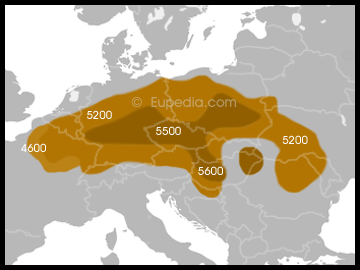
 I
I

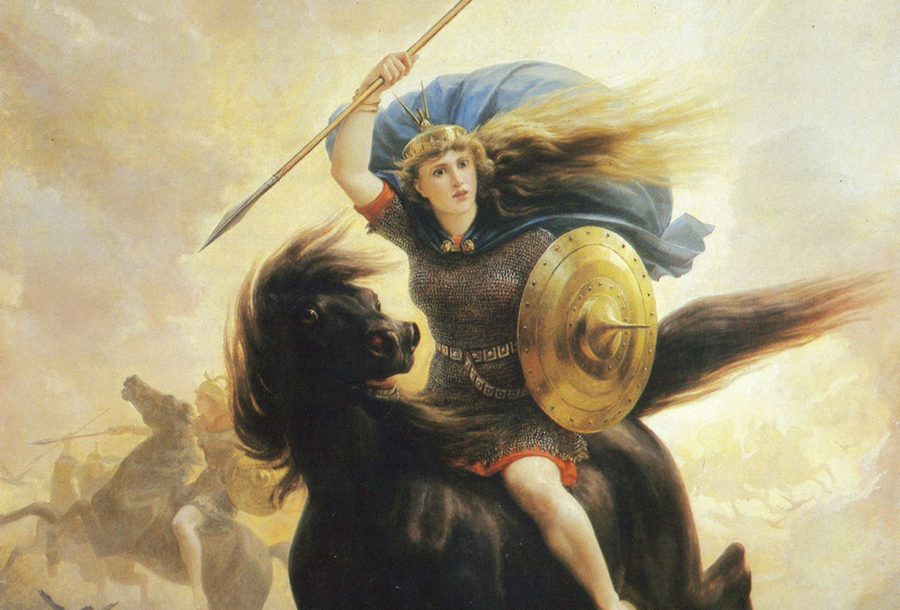

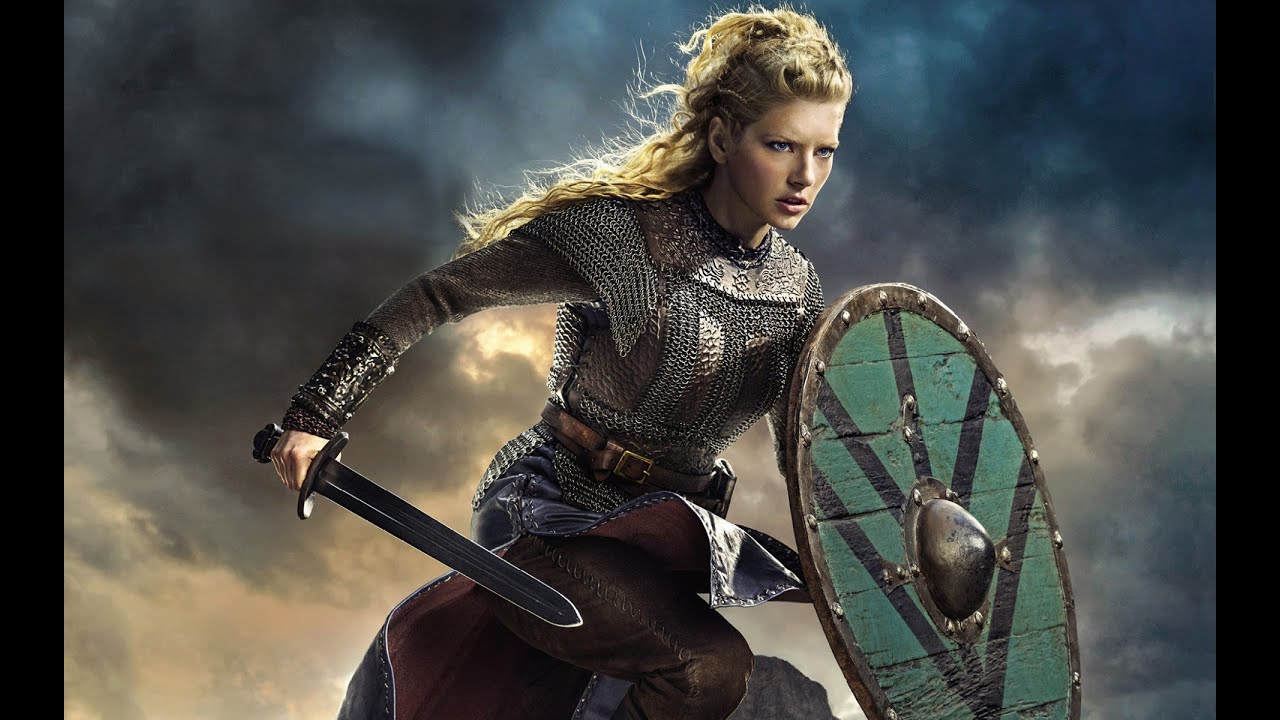





 But in Old Norse, the nickname would have been understood as “hairy breeches” or “shaggy trousers.” The Icelander who wrote Ragnar’s Saga in the 13th century explained that Ragnarr got his nickname from the pants he put on to protect himself when fighting a poison-breathing serpent (or dragon): cowhide pants boiled in pitch and rolled in sand.

 CLAN CARRUTHERS - OUR NORSE ANCESTORS