Clan Carruthers Int Society CCIS PROMPTUS ET FIDELIS

THE VIKINGS IN SCOTLAND AND IRELAND IN THE NINTH CENTURY
 This study attempts to provide a new framework for ninth-century Irish
and Scottish history. Viking Scotland, known as Lothlend, Laithlinn, Lochlainn and
comprising the Northern and Western Isles and parts of the mainland, especially
Caithness, Sutherland and Inverness, and Scotland Lowlands, was settled by Norse Vikings in the early ninth century. By the mid-century it was ruled by an effective royal dynasty that was not connected to Norwegian/Norse Vestfold. In the second half of the century it made Dublin its headquarters, engaged in warfare with Irish kings, controlled most Viking activity in Ireland, and imposed its overlordship and its tribute on Pictland and
Strathclyde. When expelled from Dublin in 902 it returned to Scotland and from there
it conquered York and re-founded the kingdom of Dublin in 917.
I propose to reconsider the Viking attack on Scotland and Ireland
and I argue that the most plausible and economical interpretation of the historical
record is as follows. A substantial part of Scotland—the Northern and Western Isles
and large areas of the coastal mainland from Caithness and Sutherland to Argyle—
was conquered by the Vikings in the first quarter of the ninth century and a Viking
kingdom was set up there earlier than the middle of the century. The occupation of
this part of Scotland corresponds chronologically to what I call the prelude to the
Viking wars in Ireland (from c.795 to c.825). This involved raids on Ireland directly
from south-western Norway and, very likely, some from settlements in Scotland in the
later part of that period. The main thrust of the ninth-century Viking attack on Ireland
(c.825 to c.850) was mounted from Scotland, Laithlinn was the name of Viking
Scotland, and the dynasty that imposed itself on Dublin, and that later dominated
York and threatened to dominate England, originated in Viking Scotland. This, it
itself, is not a novel idea. It has been suggested in a somewhat vague way, amongst others, by R. H. M. Dolley, but he was thinking mainly of the tenth century.
Professor Peter Sawyer largely concurs and he has explicitly rejected the notion (put forward, for example, by N. K. Chadwick) that the ninth-century attack on Ireland was planned and implemented from south-western Norway by the king of Lochlainn.
Professor A. A. M. Duncan pushes the Scottish argument much further and surmises that the Olaf who came to Dublin in 853 was `the son of Hebridean chief’, but he cites no
evidence. That evidence is complex and will bear re-examination.
The first thing that must be done is to detach the Viking dynasty of Scotland and
Ireland from Norway itself. Historians, for over a century and a half—perhaps
longer—have been keen to attach the Viking kings whose names are mentioned in the
ninth-century Irish annals to the genealogy of the kings of Vestfold in Norway. The
Vestfold genealogies that historians in the past have compiled are based on
the Ynglingasaga, but they tend to flesh them out by adding materials
from ( f) :Íslendingabók, Landnámabók and Heimskringla, Old-Norse historical and
literary works of the twelfth century and later. Effectively, since the days of
Todd, the hypothesis had been advanced that Amlaíb, called Amlaíb Conung, from
Old Norse konungr `king’ in F, is identical with Óláfr in hvíti of Íslendingabók and
Óláfr Guðrøðarson of Ynglingasaga. This view is expressed eloquently (and with
complicated genealogical tables) by Professor A. P. Smyth and he
cites Landnámabók as the source that gives the fullest account of him.
I quote Smyth’s translation of Landnámabók: Óláfr inn hvíti harried in the Western Seas and he won Dublin in Ireland and the district of Dublin, and there he established himself as king. He married Auðr inn djúpauðga, the daughter of Ketill flatnefr. Their son was called Þhosteinn rauðr. Óláfr fell in battle in Ireland, but Auðr and Þorsteinn went to the Hebrides. … Þorsteinn became a warrior-king. He entered into an alliance with jarl Sigurðr inn ríki [of Orkney] the son of Eysteinn glumra. They won Caithness and Sutherland, Ross and Moray, and more than half of Scotland. Þorsteinn became king over that region, but the Scots soon slew him and he fell there in battle.
This narrative may appear legendary—even fantastic—but if Óláfr’s descent is
historical the Dublin dynasty was directly descended from the Norwegian Vestfold
kings, and the direct connection with Norwegian/Norse royalty is genuine. However, as
Smyth and others admit, there are formidable chronological problems about this.
Nonetheless, he affirms that `there can be no doubt that the so-called Óláfr inn hvíti of
Icelandic sources was the same king as Amlaíbh, the ninth-century ruler of Dublin’ 104
.
Jón Steffensen examined these genealogies in careful detail and he concluded that
they are a chronological morass. Nonetheless, he still tried—in vain, I think—to save them for history. The link between the Old-Norse genealogies and the Irish annals is
provided by an annal in ( F) Fragmentary Irish Annals, but it is not reliable. This sole
connection, the genealogy found in F §401—Iomhar mc. Gothfraidh mc. Ragnaill mc.
Gothfraidh Conung mc Gofraidh—has no independent value: it is merely another
variant of the Icelandic material, and this is not the only fragment of its kind in F. It is
likely that the father of Amlaíb (Óláfr) and Ímar (Ívarr) is Gothfraidh (Guðrøðr) and
that he is a historical person and dynastic ancestor (see table 1), but his genealogical
ascent is a construct without historical value.
 In the matter of possible dynastic connections between the dynasty of Dublin and
Norwegian dynasties important historiographical progress was made in the early
nineties, and this provides a new critical context for the analysis of the problem. Dr
Claus Krag has shown that the Ynglingatal (once believed to have been composed a
little before AD 900, and thus early and intrinsically valuable) is not much older or
more authoritative than Ynglingasaga, that it reflects concepts current in the twelfth
century, that the genealogies are qualitative rather than chronological, and that they
come in 14-generation sequences like the Anglo-Saxon ones (both based formally on
the structure of Matthew’s genealogy of Christ). In his view, these are `products of the
imagination, the extant texts are remnants of the historical literature of the 12th and
13th centuries, concerning what were held to be the ancestors of what was then the
Norwegian royal house … the idea that the Norwegian kings descend from Harald
hárfagri and the monarchy was held to the property of his dynasty, is no more than a
construction … the conclusion is that the Yngling tradition is entirely a part of the
historicising method, partly cast in artistic form, which Icelandic learned men
developed’.
Peter Sawyer has argued convincingly that Ynglingasaga is fiction, not
history, but a fiction whose learned creators drew on what they knew (or thought they
knew) of Scandinavian history in the tenth and eleventh centuries. Kings who may
originally have ruled Norwegian Oppland are transformed into kings of Vestfold and
dubious king-lists are turned into genealogies. We find the historian Ari Þorgilsson
doing just this in early twelfth century: he derives his own descent from a variant of
this very genealogy.14 So much for the Dublin dynasty’s genealogical background in
Vestfold.
The early raids on Ireland seem to have been aristocratic free enterprise, and named
leaders appear in the Irish annals—Saxolb (So[hook]xulfr) in 837, Turges (Þurgestr,
not Þorgisl or ÞorgeRR) in 845, Agonn (Hákon) in 847. Only towards the middle of
the ninth century was there any attempt by any Viking kings to coordinate attacks and
settlement in Ireland, and these kings appear to belong in the Viking settlements in
Scotland.
Three important annalistic entries record the activity of Viking royals in Ireland in
848, 849 and 853. All three have connections with a kingdom
called Lothlend, Laithlind, Laithlinn, later Lochlainn. The first occurs in the Annals of
Ulster: U 848. Bellum re nOlcobur, ri Muman, & re Lorggan m. Cellaig co Laighniu for
gennti ecc Sciaith Nechtain in quo ceciderunt Tomrair erell, tanise righ Laithlinne, &
da cet dec imbi `A battle was won by Ólchobar king of Munster and Lorcán m.
Cellaig with the Leinstermen against the pagans at Sciath Nechtain in which fell
Tomrair (Þórir) the earl, heir-designate of the king of Laithlind and 1200 about him’.
This took place at a strategic place, Castledermot, Co Kildare, not far from Dublin
where a Viking settlement had been established in 841-42. The Irish leaders were
amongst the most powerful provincial kings in the country, the troops involved were
numerous, and the slaughter was immense. Þórir the earl17 was evidently a very
important person, even if the identity of the king whose heir-designate he was remains
unclear . He was leading a large army. This was a battle of major
significance, even if we take the annalist’s estimate of the slain (as we ought) to be
merely a conventional expression for a very large number.
The next entry that has reference to an overseas `king of the Foreigners’ occurs in
849: Muirf[.]echt .uii.xx. long di muinntir righ Gall du thiachtain du tabairt
greamma forsna Gaillu ro badur ara ciunn co commascsat hErinn n-uile iarum `A
sea-going expedition of 140 ships of the people of the king of the Foreigners came to
exercise authority over the Foreigners who were in Ireland before them and they upset
all Ireland afterwards’.
Evidently, this was a violent attempt by a King/Chief of the Vikings, using large forces, to
compel the independent Vikings in Ireland to submit to royal authority, and it was
fiercely resisted.
The next and final entry in this series occurs four years later: U 853.2. Amhlaim m. righ Laithlinde do tuidhecht a nErinn coro giallsat Gaill Erenn
dó & cis o Goidhelaib `Amlaíb (Óláfr) son of the king of Laithlind came to Ireland
and the Foreigners of Ireland gave him hostages and he got tribute from the Irish’.
The differing treatment of Irish and Viking as tribute payers and hostage givers
respectively may be significant. Within the conventions of Irish politics, the Viking
settlers are treated as free, the Irish as a subject population.It is likely that only a
small number of Irish kingdoms submitted to Viking overlordship.
An entry in F evidently refers to these same events and contains some
supplementary information. This appears well-founded and the source of F may be
taken to be reliable on the whole in regard to these events.
F §239. Isin mbliadain-si bhéos .i. in sexto anni regni Maoil Seaclainn, tainig
Amhlaoibh Conung .i. mac rígh Lochlainne i nEirinn & tug leis erfhuagra cíosa &
canadh n-imdha ó a athair & a fagbhail-sidhe go h-obann. Tainig dno Iomhar an
brathair ba sóo ‘na deaghaidh-sidhe do thobhach na ccios ceadna `Also in this year,
i.e. the sixth year of the reign of Mael Sechnaill, Amlaíb Conung (Óláfr konungr), son
of the king of Lochlainn, came to Ireland, and he brought with him a proclamation
imposing many tributes and taxes from his father, and he left suddenly. Then his
younger brother Ímar (Ívarr), came after him to levy the same tributes.

The expression `also in this year’ could be taken to refer back to F §238 which is
firmly dated to 849. However, this does not fit well with `the sixth year of the reign of
Mael Sechnaill’. His predecessor Niall Caille died in 846 and certainly by 847 (if not
by 846) Mael Sechnaill was recognised as king of Tara—and this would tend to place
these events in 852/53. This dating fits well with U and is to be preferred.
11. All these entries refer to major expeditions to Ireland by leaders who were
recognized as royal by the Irish annalists. Very large numbers of troops and ships
were involved and their purpose was conquest, control of the Vikings already settled
in Ireland, and the imposition of taxes on Irish kingdoms. All are associated with the
kingdom of Lothlend, Laithlind or Lochlainn whose king appears to be directing the
operations.
There are other references to Lothlend/Laithlind. One that belongs certainly to the
ninth century occurs in a well-known poem—quoted so often that it has become
trite—preserved uniquely as a marginal entry in Sankt Gallen, Stiftsbibliothek, MS
904, a copy of Priscian’s Institutiones grammaticae, heavily glossed in Old Irish.
According to Bruno Güterbock, this manuscript was written in Ireland in the midninth century: he dates it by reference to marginal notes that he thinks were written in
845 or 856.22 Robin Flower dated it more closely to the years 845-46
Professor David Dumville has recently re-examined the dating criteria and, whilst he is agnostic about many things, the central ninth-century date stands: he thinks that it was written after the death of St Diarmait ua Aeda Róin of Castledermot in 825 and before its
appearance in Cologne some time anterior to 859, and he holds with Traube and
Gerard Murphy that the book is to be associated with the circle of Sedulius Scottus
who was active on the Continent between the 840s and the 860s.
However, his suggestion, on slight palaeographical grounds, that the manuscript was written on the Continent `where its associations might be with Liège or Cologne, with Sankt Gallen, or even with northern Italy’ is speculative and the quatrain must be located in an Irish context unless more convincing evidence to the contrary can be produced.
Is acher in gaíth in-nocht
fu-fúasna fairggæ findf[.]olt;
ní ágor réimm mora minn
dond láechraid lainn úa Lothlind27
The wind is fierce to-night
it tosses the sea’s white mane
I do not fear the coursing of a quiet sea
by the fierce warriors of Lothlend.
A second example occurs in a verse appended to the entry in the Annals of the Four
Masters on the battle of Cell Ua nDaigri (Killineer, at Drogheda on the Boyne) in 868.
Here the king of Tara, Aed Finnliath mac Néill (r. 862-79), defeated the kings of
Brega and Leinster and a large Viking force (of which one of the leaders was Carlus,
son of Amlaíb of Dublin).28
Dos-fail dar Findabhair find
fiallach grinn dond Laithlind luind—
as ar chédaibh rimhter Goill—
do cath fri righ nEtair n-uill.29
There comes over fair Findabair
a keen host from fierce Laithlind—
the Foreigners are counted in hundreds—
to do battle against the king of great Étar.
Whether this quatrain had to with this battle originally may, one could argue, be a
little uncertain. However, one can read rí Étair as a kenning for king of Tara (i.e. Aed
Finnliath) and Findabair is probably Findabair na n-Ingen, now Fennor in the parish of
Donore at Drogheda and quite near to Killineer. For what it is worth, F states that the Vikings had arrived at the mouth of the Boyne with a great fleet and they were
induced by the king of Brega to join in the attack on the king of Tara.
Where, then, is Lothlend, Laithlinn, later Lochlainn? Heinrich Zimmer thought it
was Lolland (Låland), the Danish island, but Alexander Bugge decisively disproved
that unlikely hypothesis in 1900. A decade or so later, Carl Marstrander suggested
that it derived from Rogaland, the district about Stavanger in Norway—and we know
from good archaeological evidence that the early Viking raids on Ireland originated
here.
For phonological reasons he had to posit that the forms Lothlend and Lochlann existed side by side, though only the first is attested for the ninth century.33 By 1915 he had come to have serious reservations about this, but the distinguished Norwegian linguist Alf Sommerfelt continued to accept it as late as 1950.
There are two main objections to this etymology: there is no other example of
inital r becoming l in an Irish borrowing from Old Norse, and loth- not loch- is the
earliest form. It was left to David Greene to reject Marstrander’s etymology firmly,
but his suggestion that loth/lath is from the Irish word meaning `quagmire, marsh’, is
to say least weak, as Greene freely admits. One should, perhaps, posit an Old-Norse
rather than an Old-Irish name. The second element is likely to be -land`land’ (which
would develop regularly into -lann and -lainn). Is it possible that the first element
is loð- (which would regularly give Irish *loth) `shaggy, woolly, covered with or thick
with long grass and that the term is, in origin, simply a geographical descriptive,
appropriate to the fertile Orkneys and north-eastern Scottish mainland?

In time, folk etymology may have replaced loth-, laith- with loch-, and Lochlainn may have been understood as `land of sea-loughs’, a fair description of the Western and Northern Isles and west coast of Scotland. There may have been no Irish name for
Scandinavia or its parts. In Greene’s view, `We must conclude that the Irish had no
specific word for Norway until the eleventh century when Lochlann comes to be
specialised in that meaning. … For the first two centuries of contact with the Vikings,
there is no strong evidence that the Irish learned much about Scandinavia proper; this
need not surprise us, since the connections of the Vikings of Ireland were
predominantly with the Atlantic area rather than with the homeland’.
Lothlend/Laithlind is Viking Scotland (and probably includes Man) and I believe
one can deduce this from a close reading of a reliable and dated Irish source: the
account of the battle of Clontarf in the Annals of Ulster.
U 1014. Sloghud la Brian m. Cenneitigh m. Lorcain, la righ n-Erenn, & la Mael
Sechlainn m. Domnaill, la righ Temhrach, co h-Ath Cliath. Laighin uile do leir i tinol
ar a cinn & Gaill Atha Cliath & a coimlin do Ghallaib Lochlainne leó. .i. x.c. luirech.
Gnithir cath crodha etorra … In quo bello cecidit ex adhuersa caterua Gallorum Mael Mordha m. Murchada ri Laigen, & Domnall m. Fergaile rí na Fortuath: cecidit
uero a Gallis Dubghall m. Amlaim, Siuchraidh m. Loduir iarla Innsi Orcc, & Gilla
Ciarain m. Gluin Iairnn rigdomna Gall, & Oittir Dub, & Suartgair, & Donnchad h.
Eruilb, & Grisene, & Luimne, & Amlaim m. Laghmaind, & Brotor qui occidit Brian,
.i. toisech na loingsi Lochlannaighi, & .ui. mile iter marbad & bathad `Brian son of
Cennétig son of Lorcán, king of Ireland, and Mael Sechnaill son of Domnall, king of
Tara, led an army to Dublin. All the Leinstermen were assembled to meet them and
the Foreigners of Dublin and an equal number of the Foreigners of Lochlainn i.e. 1000
mail-clad men. A valiant battle was fought between them … In this battle there fell on
the side of the opposing troop of the Foreigners Mael Mórda son of Murchad king of
Leinster and Domnall son of Fergal king of the Fortuatha; of the Foreigners there fell
Dubgall son of Amlaíb, Sigurðr son of Hlo[hook]ðver jarl of the Orkneys, and Gilla
Ciaráin son of Glún Iairn heir-designate of the Foreigners, and Ottir Dub and
Suartgair and Donnchad ua Eruilb and Griséne and Luimne and Amlaíb son of
Lagmann and Broðar who killed Brian, commander of the fleet of the Lochlannaig,
and 6000 who were killed and drowned’.
The argument turns on the identification of leading persons killed on the Viking side
(other than those who were self-evidently Irish kings). Dubgall m. Amlaim was the
son of Amlaíb Cuarán, king of Dublin. Amlaíb Cuarán, otherwise Óláfr Sigtriggson
Kváran, ruled as king of Dublin from 945 to his abdication after the battle of Tara in
980. He died in religious retirement in Iona in 981. Dubgall was brother of Sitric
Silkenbeard, otherwise Sigtryggr Óláfsson Silkiskeggi, king of Dublin from 989 until
his deposition in 1036. Siuchraidh m. Loduir iarla Innsi Orcc is Sigurðr digri son of
Hlo[hook]ðver, earl of Orkney—the first earl for whom we have a precise date (that
of his death)—and of whom there are detailed accounts in the sagas (though these are
probably not reliable). Gilla Ciarain m. Gluin Iairnn rígdomna Gall is son of Glún
Iairn (otherwise Járnkné Óláfsson, king of Dublin, who ruled from 980 to 989),
grandson of Amlaíb Cuarán, and nephew of Sitric Silkenbeard. In Brjáns
saga (which survives in Njáls saga, dates to within a few years of 1100, and belongs
to Viking Dublin) the associations of Brotor, otherwise Bróðir, the commander of
the loinges Lochlannach `the Viking fleet’ (Lochlannach is simply an adjective
fromLochlainn) are with the Isle of Man.Cogad (which also dates to c.1100) links
him with Amlaíb mac ri Locland `son of the king of Lochlainn’, and states that both
were earls of York and of all the north of England—and though this is wildly
anachronistic it firmly connects both with the British Isles while retaining some vague
memory of the Dublin-Viking kingship of York in the early tenth century.
Donnchad ua Eruilb is probably not Viking. Marstrander derived Erulb from Old
Norse Heriulfr rather than Hio[hook]rulfr or Hiorulfr. There is, however, a
historical objection to this derivation: the eponymous Erulb belonged to Cenél Eogain and he was grandson of Mael Dúin (ÿar788), king of Ailech, and son of Murchad,
king of Ailech, who was deposed in 823. He was born, then, in the early ninth
century, far too to early to bear an Old-Norse name. Meyer suggests that the name is
derived from Old English Herewulf, Herulf and the implication is that it had been
borrowed before the Viking wars began. Suartgair derives from Old Norse *Suartgeirr, *Suartgarr which corresponds to Old English Sweartgar.
In Cogad Suartgair (miswritten Snadgair) is represented as one
of the four king’s deputies and admirals of the Vikings (cetri irrig Gall & cetri toisig
longsi)—the others being Oittir Dub, Grisene and Luimne. If these are `king’s
deputies’, they are likely to be deputies of the king of Dublin—no other Viking king is
known to have been involved. Oittir, a name well attested in the Irish annals in the
tenth century, derives from Old Norse Óttarr.

His Irish soubriquet Dub `the Black’ points to an Irish or Scottish background. Grisine, better Grísín(e) is the Old Norse personal name Gríss with the Irish diminutive ending -ín, -íne -éne, and this indicates that he belonged to Gaelic-speaking Ireland or Scotland. In Marstrander’s view, the use of such diminutives is `a fact that throws an extraordinary light on the close linguistic and social connections between Norsemen and Irishmen at the outset of the eleventh century’. The provenance of Luimne (Lummin, Luiminin in Cogad) is uncertain: Marstrander and Stokes do not suggest an Old Norse etymology and it may be Irish Lommíne.
Amlaim mac Laghmaind belongs to the Hiberno-Norse world of the Isles and
Man. Lagmann is derived from Old-Norse lo[hook]gmaðr `lawman’. This name of a
profession became a personal name in the Orkneys (and, as we know from the Irish
annals, in the Hebrides), but not in Scandinavia proper.It is attested (in the
plural, Lagmainn) as the name of an aristocratic kindred or group in the Hebrides in
962 who engaged in late Viking attacks on Ireland. The same Lagmainn, led by
Magnus mac Arailt, lord of the Isles, again appeared as raiders in Ireland in 974. It
must, therefore, have become a personal name some generations earlier. It also occurs
as a personal name among the descendants of Godred Crovan, king of Man and the
Isles. And it is attested in the twelfth century amongst the Uí Duib Dírma, a minor
branch of the Northern Uí Néill, who were lords of a petty kingdom called In Brétach
in Inis Eogain. The Scottish surnames Lamont and MacLamond derive from it..
Not one of the leaders of `the Foreigners of Lochlainn’ can be shown to have come
from Scandinavia. They all belong in the Northern and Western Isles, Scotland, Man
and Ireland, yet all have Norse names. This is precisely what the Annals of Inisfallen say of Brian’s opponents slain in the battle: ocus ar Gall Iarthair Domain isin chath chetna `and the Foreigners of the Western World were slaughtered in the same battle’ at 1014 AD.
In the usage of the Irish annalists, the term `Western World’ refers to the Gaelic world and does not extend in any case beyond the British Isles. It has long been recognised that Cogad adds names from much later and indeed fictional literary sources but
when we weed out a few of the more improbable ones we have the following as the
principal foreign confederate forces at Clontarf:
Ro tochured cucu dna Siucraid mac Lotair, iarla Insi Orc & na nInnsi archena, &
comtionol sloig buirb barbarda dicheillid dochisc dochomaind do Gallaib Insi Orc &
Insi Cat, a Manaind & a Sci & a Leodus, a Cind Tiri agus a hAirer Goedel … `They
invited to them also Sigurðr son of Hlo[hook]ðver, earl of Orkney and the Hebrides as
well, and an assembled host of uncouth, barbarous, berserk, stubborn, treacherous
Foreigners from Orkney, Shetland, Man, Skye, Lewis, Kintyre and Argyle …’
This fits well with what we know of the leadership from U and confirms one in the
impression that, for the contemporary annalist, Laithlinn/Lochlainn meant no more
than the Norse Viking settlements in the British Isles, and more particularly
those in Scotland and Man.
This conclusion is supported by two literary texts. The first is Cath Maige
Tuired, a text dated in essentials to the ninth century, and very probably to the
second half. The surviving text is not unitary. There is general agreement that §§1-7,
9-13 are late and derive from the historicist text, Lebor Gabála;
fragment §8 is not the beginning of an independent tale and is hardly integral to the text; and the tale breaks off imperfectly.66 No evidence cited here is taken from these interpolations.
Some difficulties about dating and interpretation remain. T. F. O’Rahilly argued that
`the extant text of Cath Maige Tuired, though doubtless based on and incorporating
the earlier account, is comparatively late, for it contains some loan-words from Norse
and applies the name Insi Gall to the Hebrides’—late enough to indicate that its author
may have belonged to the late tenth century. This date may have been suggested to
O’Rahilly by the first contemporary annalistic attestation of Insi Gall as a term for the
Hebrides in 989,68 and buttressed by the Norse/English borrowings in the text. Of
these, there is one clear Old-Norse borrowing: fuindeóc (§133) `window’, from OldNorse vindauga.
 Two other borrowed words, scildei, scitle, scilte(§§28-30) `coins’
(<scill) and bossán (§28) `purse’ (<púse) derive from Old English, not Old
Norse, and while one cannot say that they had not been borrowed into Irish before
the Viking period they fit well with the expanding commercial activity of Viking
Ireland and the increased circulation of coin. The linguistic evidence and the historical
references to Insi Gall and Lochlainn indicate that the text was written at a point when
the Vikings had made a serious impression on Ireland. A terminus ante quem is
provided by Cormac’s Glossary, which excerpted the text and which dates to
c.900. Incidentally, the paganism of the Vikings and its treatment in a fictional
manner enabled the creator of the text to make full use of what he knew (or thought he
knew) of mythology and pagan practices. However, while using the Tuatha Dé in a
subtly allusive way to represent the Irish and while presenting their magic as benevolently defensive, he expressly distances himself from pagan mythology by
depicting the Dagda as a gross figure of fun, a scandalous and unsavoury Father of the
Gods, whose licentious behaviour is offensive to good christians—and this contains
a conscious christian programmatic aspect that may be read as ridicule of paganism in
general, and of that of the Vikings in particular.
As Dr Gray has pointed out, `the Fomorian threat is described as if it were a vast
alliance among various Scandinavian forces, all bent upon the conquest of
Ireland’. Dr Carey has argued cogently that the text was written in the second half of
the ninth century—possibly in the reigns of Mael Sechnaill (r. 846-62) and Aed
Finnliath (r. 862-79)—and that it represents (amongst other things) a reaction,
expressed in symbolic literary terms, to the Viking attack and he sees no need to take
the references to Insi Gall as the work of a later interpolator.
I agree. One might add hat the sea-inlets, lakes, and rivers of Ireland, whose waters the cupbearers of the Tuatha Dé promise to hide from the Fomoire, have (with few exceptions) a clear contemporary reference—the Shannon and its lakes and estuary, the Bann and Lough Neagh, the Boyne, the Liffey, the Munster Blackwater, and Strangford, Belfast Lough and Lough Foyle were amongst the principal areas of ninth-century Viking activity.
However, the important passage for our purposes is:
Faíthius íar sin cusan trénfer, co Balor húa Néitt, co rígh na n-Innsi, & co hIndech
mac Dé Domnand, co ríg Fomoire; & nos-taireclamsat-side do neoch buí ó Lochlainn
síar do slúag doqum n-Érenn, do astad a císa & a rígi ar éigin foruib, gur’ba
háondroichet long ó Insdib Gallad co hÉirinn leo. Ní tánic doqum n-Érenn drem bud
mó gráin nó adhúath indá in slóg-sin na Fomoiridhi. Ba combág ogond fir o Sgiathia
Lochlaindi & a hInnsib Gall immon slógad-sin `Thereafter he sent him to the
champion, to Balor grandson of Nét, the king of the Hebrides and to Indech son of Dé
Domnand, the king of the Fomoire and these gathered all the forces
from Lochlainn westwards into Ireland to impose their tribute and their rule over them
[i.e. Tuatha Dé] by force, so that they made one bridge of ships from the Hebrides to
Ireland. No host ever came to Ireland that was more hateful or more terrifying than
that host of the Fomuire. The man from Skye of Lochlainn and the man from Insi
Gall were rivals over that expedition.
The text artfully merges the Fomuire and the Vikings, and places the Fomuire in the
Scottish territories of the Vikings, as ninth-century Ireland knew them. Sciathia of the
text is a learned latinisation of Scí `Skye’ (nom. Scí, gen. Sceth, Old-Norse Skíð), and
it is clear that it is part of Lochlainn. The final sentence conveys that there was rivalry
between the king of Skye (who would have controlled the Inner Hebrides) and the
king of Insi Gall, which we can read as the Outer Hebrides in the present context. It is,
of course, quite uncertain whether there is anything historical in this, perhaps a reference to rivalry amongst Viking sub-kings in Scandinavian Scotland that would
have made good sense to contemporaries, but historicity cannot be ruled out.
The literary reflexes of the battle of Clontarf and of other aspects of Viking history
in Ireland in the saga Cath Ruis na Ríg bear out the equation of Lochlainn with
Scandinavian Scotland. We owe the first thorough discussion of this text, and an
edition and translation of the relevant passage, to the pioneering work of Heinrich
Zimmer.
Thurneysen dated it to the first third of the twelfth century and would
attribute the Book of Leinster Táin bó Cúailgne and Mesca Ulad to the same author.
Áine de Paor reached like conclusions about authorship. However, Dr Uaitéar Mac
Gearailt argues convincingly against common authorship and dates the text `possibly
mid way through the second half of the twelfth century’. The opening of the tale is as
follows: after the overthrow of the Ulaid in Táin bó Cuailgne, king Conchobar fell
into a decline and languished because of his defeat. His druid urged him to send for
his absent friends to help him, and to resume the struggle. His overseas friends divide
into two groups: the Ulster warrior Conall Cernach who is levying tribute abroad, and
the Viking forces of Scotland.

Acus faítti fessa & tecta uaitsiu chena cot chairdib écmaissi .i. co Conall crúaid
coscorach commaidmech cathbuadach claidebderg co airm i fail ac tobuch a chisa &
a chanad i crichaib Leódús i n-insib Cadd & i n-Insib Or[c]. & i críchaib Scithia &
Dacia & Gothia & Northmannia ac tastel Mara Ict & Mara Torrián & ic slataigecht
sliged Saxan. & faítte fessa & tecta uait no cot chairddib écmaisse co iathaib
Gallecda co Gallíathaib na nGall .i. co Amlaíb uel Ólaib hua Inscoa rig Lochlainne,
co Findmór mac Rofhir co ríg sechtmad rainne de Lochlainn, co Báre na Sciggire co
dunud na Piscarcarla, co Brodor Roth & co Brodor Fiúit, & co Siugraid Soga [co]
ríg Súdiam, co Sortabud Sort co ríg Insi Orc. Co secht maccaib Romrach (co hIl, co
hÍle, co Mael, co Muile, co Abram mac Romrach, co Cet mac Romrach, co Celg mac
Romrach), co Mod mac Herling, co Conchobar coscarach mac Artuir meic Bruide
meic Dungail, co mac ríg Alban `Let tidings and messages be sent from you forthwith
to your absent friends, namely, to Conall, the stern, the triumphant, the exultant, the
victorious, the red-sworded, to where he is raising his tax and tribute in the territories
of Lewis, in the Shetlands and in the Orkneys, and in the lands of Scythia, Dacia,
Gothia, and Northmannia, voyaging the Ictian Sea and the Tyrrhenian Sea, and
plundering the ways of the Saxons. Let tidings and messages be sent from you, too, to
your absent friends to the lands of the Foreigners, to the foreign lands of the
Foreigners, namely, to Amlaíb (or Ólaib) ua Inscoa, king of Lochlainn, to Findmór
son of Hróarr, king of the seventh part of Lochlainn, to Báre of the Faroe Islands, that
is, to the fortress of the Piscarcarla, to Brotor Roth and Brotor Fiúit, and to Siugraid
Soga, king of the Hebrides, to Sortabud Sort, king of the Orkneys, to the seven sons of
Romra (to Il, to Íle, to Mael, to Muile, to Abram mac Romrach, to Cet mac Romrach,to Celg mac Romrach), to Mod mac Herling, to Concobar the Victorious son of
Arthur, son of Brude, son of Dúngal, the son of the king of Scotland’.
The heroic Conall Cernach is levying tribute, firstly in Viking Scotland (Lewis,
Shetlands, and Orkneys), and secondly, in more distant parts of Europe (Scythia,
Dacia, Gothia, and Northmannia).
One may take Scythia to be Svealand (Sweden), Dacia to be Denmark, Gothia to be Gotland and Northmannia to be Norway: they are listed with the English Channel and the Mediterranean and the author is concerned to represent Conall Cernach as putting the most remote lands under tribute. If these are to be understood as continental Scandinavia, it is interesting that Latin-derived learned names are used for these regions and, evidently, in the mind of the writer, they are quite different from the Lochlainn of which Amlaíb ua Inscoa is king.
The Viking allies, with the exception of Báre of the Faroes, all belong
in Lochlainn or in places identifiable as being in Scotland. Siugraid Soga, Old
Norse Sigrøðr sugga (`big, strong man’), a clear reflex of Sigurðr digri `the Stout’
son of Hlo[hoook]ðver, is called rí Súdiam, a place name that derives from OldNorse Suðrøyjom, the dative plural of Suðrøyjar, the normal name for the Hebrides,
usually called Inse Gall in Irish. The historical Sigurðr was earl of Orkney and
apparently was overlord of the Hebrides as well. Sortadbud Sort, in Old
Norse Suarthofuð86 suartr, is represented as king of Orkney—and this personage
seems unhistorical. Brotor Roth (Old Norse Bróðir rauðr) and Brotor Fiúit (Old
Norse Bróðir hvítr) are a duplicated reflex of the historical Brotor who slew king
Brian.
The seven sons of Romra (Il, Íle, Mael, Muile, Abram, Cet and Celg) are
puzzling, and appear to have place-name aetiologies: Trácht Romra is said to be the
Solway Firth and some of them seem to be eponyms of places (Islay, Mull of
Kintire) in Scotland. Findmór son of Rofher, king of the seventh part of Lochlainn,
looks odd but this term may reflect the division of Scotland into sevenths in De situ
Albanie and may refer to Viking Caithness: Septima enim pars est Cathanesia citra
montem et ultra montem; quia mons Mound diuidit Katanesiam per medium `The
seventh part is Caithness, to this side of the mountain and beyond the mountain;
because the mountain of Mound divides Caithness through the middle’.88 Caithness
was, of course, heavily settled by the Vikings. The most important figure in this text,
however, is Amlaíb uel Ólaib hua Inscoa rí Lochlainne who is a literary reflex of
Amlaíb Cuarán. Inscoa is a rendering of Old-Norse Skórinn `the shoe’ (with postposed
article) and corresponds to Irish cúarán `shoe, slipper’, the by-name of Amlaíb
Cuarán, father of Sitric Silkenbeard. Amlaíb Cuarán was well-known by his Irish
name in Norse-speaking circles (see, for example, `er var með Óláfi kvarán í
Dyflinni’ in Landnámabók) but the Old-Norse form Skór, Skórinn can be readily
reconstructed from the Irish and therefore was used by speakers of Old Norse.
It passed from them to the author of Cath Ruis na Ríg, who turned it to literary purposes, and the name recurs in the twelfth-century Acallam na senórach: Aiffi ingen
Ailb (vl. Alaib) meic Scoa, ingen rig Lochlainn atuaid. The historical Amlaíb
Cuarán was king of York for a brief period c.943 before his reign as king of Dublin
(945-80), and has a direct connection with Gotland. All the associations of the
derived literary persona constructed from the historical figure are with Viking
Scotland, and rí Lochlainne in Cath Ruis na Ríg must mean, for its author, king of
Viking Scotland. One notes, too, that when Conall Cernach musters the troops of
this alliance, he does so at Lewis in the Hebrides. Furthermore, as Sophus Bugge
suggests, on the basis of the Old-Norse forms of names of people and places in the
mustering of the Viking fleet, it is very likely that the author of Cath Ruis na Ríg is
drawing on a pre-existing historical tale in Old Norse, inspired by Irish-Viking history
and the battle of Clontarf, and circulating in Dublin and in Viking Scotland in the
twelfth century. And it is likely that this Old-Norse tale existed in written form.
The earliest precisely datable historical example of Lochlainn meaning `Norway or Norse’ occurs in a chronological poem of 58 quatrains by Gilla Cóemáin mac Gilla
Samthainde, `Annálad anall uile’.
This poem was written in 1072: the author gives
the date of writing in quatrains 6-7, 56-57—and he gives the ferial for the year twice.
§55
Dá bliadain—ní bréc i ngliaid—
ó éc Donnchada meic Briain
cath Saxan—seól co nglaine—
i torchair rí Lochlainne.
`Two years—it is no falsehood in battle—
from the death of Donnchad son of Brian
to the battle of the Saxons—pure course—
in which fell the king of Lochlainn.

Donnchad mac Briain, king of Munster and claimant to the kingship of Ireland, went
on pilgrimage to Rome in 1064 and died there in that year. The `battle of the Saxons
… in which fell the king of Lochlainn’ refers, of course, to the victory of Harold II
Godewinesson at Stamford Bridge, on 25 September 1066 and the death in that battle
of Harald harðráði, king of Norway, whom Marianus Scottus called `rex
Normanndorum’.
The next example is provided by the Annals of Ulster: 1102.7: Maghnus ri Lochlainni co longais moir do thuidhecht i Manainn & sith mbliadhna do denum doibh & do feraib Erenn `Magnus king of Lochlainn came with a
great fleet to Man and a year’s peace was made by them and the men of Ireland’. A third example occurs in Magnus’s death notice in the same annals:
1103.6: Maghnus ri Lochlainni do marbad for creich i nUlltaib `Magnus, king of
Lochlainn, was killed on a raid in Ulster’.
These entries refer to Magnus III berfœttr, king of Norway (r. 1093-1103) and his
famous expeditions to the West.97 Magnus was son of Óláfr kyrri and grandson of
Harald harðráði. In 1098, perhaps profiting from several years of disorder in Man and
the Isles, which included intervention by Muirchertach Ua Briain, king of
Ireland, Magnus came west and established his overlordship there—over the
Orkneys, and perhaps over Kintyre, Galloway and, briefly, Gwynedd. He harried the
Ulster coast and not altogether successfully, for he apparently lost three ships and
about 120 men. Magnus left his son Sigurðr in Orkney, and returned to Norway in
the spring. He came back to the west, perhaps in 1101, certainly by 1102, and he
caused a great deal of anxiety.
The Irish annals report that he had come to capture Ireland, and here they agree with such later sources as Ordericus Vitalis and the Norse sagas. Magnus occupied Man and meddled in Irish and Norman politics. The Annals of the Four Masters state that `the men of Ireland made a hosting to Dublin against Magnus’. `Men of Ireland’ refers to Ua Briain and his supporters, and the context suggests that Ua Briain felt under serious threat. Soon after that a truce was agreed. Magnus and Muirchertach exchanged hostages and a marriage alliance was arranged.
The peace with Magnus looks very much like a holding operation on Ua Briain’s part
until he decided how to cope with this emergency. I believe that Cogad Gáedel re
Gallaib, an eloquent historicist assertion of Ua Briain power, addressed to the
Dubliners and to other political opponents, including Mac Lochlainn who was king of
the North and Ua Briain’s chief rival, belongs to this period of crisis.
It is evident that Laithlind/Lochlainn took on the new meaning `Norway’ only
when there were kings of Norway and when these posed a serious military threat in
the British Isles. Effective control of the Northern and Western Isles would inevitably
be a pre-condition of that threat, and the change of meaning evidently took place in
that context.

We now return to the ninth century. The evidence of the Irish annals is that there
was a king of Viking Scotland whose heir-designate, Tomrair or Thórir, was in
Ireland with a very large army in 848, and he fell battling against two of the most
powerful Irish provincial kings. In 849 this king sent a fleet of 140 ships to establish
his authority over the Vikings in Ireland, and upset the whole country. In 851 the Irish
annals report another dramatic development: Danish Vikings came to Dublin,
slaughtered the Vikings of Dublin and plundered their fortress. They tried to do the
same to the Viking settlement at Annagassan, but they were heavily defeated and
many of them were killed.102 According to the Welsh annals, Anglesey was plundered by Danes (perhaps the same force) in 853 or so.103 What may be a reply from Viking
Scotland to the Danish attacks in Ireland came in 852: 160 ships and their crews came
to Carlingford Lough to do battle with the Danes but the Danes won, and their
opponents abandoned their ships to them.
Two Norse Viking leaders are mentioned: Stain who fled and Iercne who was beheaded. And next year, Amlaíb, `son of the king of Laithlind’, came to Ireland and got the submission of the Vikings of Ireland and he received taxes from the Irish. From now on, Amlaíb and Ímar (with their brother, Auisle (Auisl), first mentioned in 863, and murdered by his brothers in 867) evidently ruled in Dublin and engaged in significant wars with the Irish kings.
We now need to consider the homeland and origins of these kings. The written
sources reveal little. In 795 Skye and Iona were attacked, in 798 there were `great
incursions both in Ireland and in Alba’. However, as far as Scotland is concerned,
there is no indigenous record for the early ninth century—silence only. Apart from the
raids on Iona (802, 806 and the final reported raid in 825, when Blathmac was
martyred) nothing much is known of any Viking raids on any Scottish churches in
the early ninth century, apart from a raid by Danari (probably Danes, hardly
Norwegian Vikings from the Western Isles) as far as Dunkeld in the reign of Cináed
mac Ailpín or Kenneth I (r. 843-58), reported in the Scottish Chronicle.
That is not to say that such raids did not take place. Evidently, Iona came to an early
understanding with the new power in the Western and Northern Isles: the only
untoward ecclesiastical incident reported for the rest of the ninth century is that the
shrine and halidoms of Columba were brought to Ireland `in flight before the Vikings’
in 878. Only for Ireland are there details of the early years of Viking raiding. We can
only guess that northern Britain had similar experiences. Hardly anything is known
about raids on England from the plundering of a Northumbrian monastery in
794 and the churches of Hartness and Tynemouth in 800 until the raid on
Sheppey in 835.
 ( Viking settlement on Orkney, Scotland)
When and how the Vikings conquered and occupied the Isles is unknown, perhaps
unknowable. To my mind, occupation and colonization are different (if often
sequential) processes. The first involves the establishment of lordly or royal control
over a subject population and very often the imposition of a new aristocracy. The
second involves settlement of the land and the dispossession or part dispossession of
the previous occupiers. Some areas may have been occupied, others (for example the
Shetlands and the Orkneys) were colonised. Dr Myhre has re-opened the question
of possible settlement (and here colonisation seems to be in question) of
Scandinavians in the Northern and Western Isles in the eighth century and, indeed, the
much disputed matter of early settlement as a whole.
Sommerfelt cites linguistic evidence for contact between the Picts and the Scandinavians before AD 700, but this is no evidence for settlement or indeed for the kind of raiding that is characteristic of the Viking Age. This problem is perhaps beyond satisfactory solution. Given the lack of written records, scholars must depend mainly on archaeology, but archaeology cannot give dates as refined as decades, unless one is lucky with dendrochronology or writing in the form of coin hoards. The other fall-back is toponomy, but toponomy is a surly, inarticulate and ambiguous witness, even in the hands of the best counsel. Add to this the rebarbative Scottish indigenous written sources for the ninth century and chronology becomes very difficult. Given the evidence of the few contemporary Irish annals and inferences one can make from the pattern of raiding on Ireland, the likeliest course of events is that the Isles—Northern and Western—and their
contiguous mainland territories were occupied between 790 and 825 (towards the
earlier part of this time-span).
This period corresponds to the prelude to the Viking wars in Ireland. One detailed annalistic entry in U points to a significant development n Scotland: in 839 the Vikings inflicted a crushing defeat on Fortriu and killed the most important Scottish leaders.What Fortriu was at this time is the subject of some recent discussion, but it is likely that it is identical with Southern Pictland, Pictland south of the Mounth. One possible interpretation of the defeat of 839 is that the Vikings were by now fully in possession of the Northern and Western Isles, and were attacking South Pictland because they had already established themselves over North Pictland or, at least, had placed it under tribute. I believe the attacking Vikings were the Norse Vikings of the Isles, and not Danes. And this lone annalistic entry is likely to be a mere pointer to long-term and intense Viking pressure on the central lowlands of Scotland.
Meanwhile, in Ireland, the prelude to the Viking attack proper is marked by
desultory coastal raiding that slowly becomes more frequent. The annals do not, of
course, report all raids and acts of violence, nor does anyone expect them to do so, but
it is probably right to take the annals to be a reliable general indication of what
happened. First came the attacks on Rathlin and Skye in 795. These were followed in
798 by the burning of the church on St Patrick’s Island (off Skerries), and the bórime
na crích `cattle-tribute of the territories’ taken by the Vikings must refer to a forced
levy for provisions on the mainland nearby. In the same entry the annalist refers in a
general way to great incursions in Ireland and in Britain. In 807, raiders rounded the
north coast of Ireland and attacked western coastal monasteries—Inishmurray off the
Sligo coast and Roscam in the inner waters of Galway Bay. For the first time, the
annals begin to report fighting between the Irish and the Vikings—skirmishes rather
than battles: 811 (a defeat of the Vikings by the Ulaid), 812 (their defeat by the
Éoganacht Locha Léin in the south-west), later in 812 (their defeat by Fir Umaill, near
Clew Bay), followed by a slaughter of Conmaicne of west Galway by the Vikings.
Small groups of two or three ships apiece may have been active on the west coast.
They were back in 813 when they slaughtered Fir Umaill on the west coast and killed
their king.
By now, the Vikings had learned all they needed to know about most of Ireland’s
coastline and its possibilities for plunder, occupation or colonization, but suddenly
there is silence. There are no reports of activities on the west coast or anywhere else in
Ireland for eight years. Attacks begin to be reported again in 821 in the Irish Sea
(raids on Howth and on the churches in the islets of Wexford Harbour) and on the
south coast, Cork and Inis Doimle in 822. In the distant south-west, Vikings raided the
remote monastery of Skellig, 14 kilometres off the Kerry coast and so ill-treated its
superior that he died as their prisoner. In the north-east, there were concerted attacks
on coastal monasteries of the Ulaid: Bangor was struck in 823 and savagely plundered
in 824. In 825 Down and Moville were hit, and the Ulaid defeated those who had
attacked the most prestigious of their monasteries. From this point, there are terse
annalistic reports of severe attacks along the east coast on churches and local coastal
kingdoms and significant engagements with local kings. The prelude was over: the
first Viking Age proper had begun. It is possible that the earliest raids, those that
occur up to the second decade of the ninth century, were mounted from south-west
Norway. The more vigorous and destructive attacks in 821 and later, evidently made
by larger and better organised forces, are a different matter. Because of the logistical
problem of bringing large fleets from Norway and because of the large numbers one
can infer from their activities, these probably came from nearby, and the Viking
settlements in the Northern and Western Isles of Scotland are the most likely bases. It
is possible that the time of calm in Ireland between 813 and 821 corresponds to a
period of intense activity in Scotland.

In the 830s, the raids on Ireland became more ominous and from 836 large-scale
attacks began with `the first prey of the pagans from Southern Brega [south Co
Meath] … and they carried off many prisoners and killed many and took very many
captives’. In the autumn, the annalist reports `a most cruel devastation of all the lands
of Connacht by the pagans’. Clonmore, Co Carlow—a monastery patronised by the
dynasty of south Leinster—was burned on Christmas Eve, and many captives were
taken. Mid-winter raiding for slaves proves that the Vikings were already overwintering, possibly on islands, and could hold numerous prisoners. The Life of St Fintan of Rheinau indicates that they were already slaving, and taking captives for
sale in mid-century.
In 837, a fleet of sixty ships appeared on the Boyne and another on the Liffey—
very likely from the Scottish settlements—each bringing about 1500 men. They
ravaged the east-coast kingdoms. Though the Uí Néill kings routed them at first, they
were soon defeated `in a countless slaughter’. The Vikings now began to appear
regularly on the inland waterways—the Shannon, Lough Derg, the Erne, the Boyne,
Lough Neagh and the Bann. They overwintered on Lough Neagh for the first time in
840-41. They now began to build longphoirt, fortresses that protected them and their ships, and some of these became permanent. There was one at Linn Dúachaill
(Annagassan, Co Louth) by 841 and another at Duiblinn (on the Liffey at or near
Dublin). From Annagassan they raided deep into the midlands, from Dublin they
attacked Leinster and Uí Néill. They first overwintered in Dublin in 841-42.
These large-scale raids—the beginning of the occupation of the Irish east
midlands—were mounted from Scandinavian Scotland, apparently by aristocratic
freebooters and adventurers, some of whom (as we have seen) are named in the Irish
annals. This may be a re-run of what one infers happened in Scotland a generation
earlier. First, small exploratory raids, then heavy plundering and slaving to break the
resistance of the population, and finally occupation and colonization. However,
sometime before the mid-ninth century, a kingship of Viking Scotland had come into
being and, as we have seen, that kingdom began to exercise authority over the Vikings
and their settlements in Ireland, though not of course over all, for the annals continue
to report the activities of freewheeling adventurers. And this brings us back to Amlaíb
and Ímar, who took control of the kingdom of Dublin, certainly from 853.
Some time in the 850s or early 860s the dynasty moved its main operations to
Dublin. We find Amlaíb, Ímar and their brother Auisle (he is first mentioned in the
Irish annals in 863), extremely active in Ireland, engaging in warfare and politics with
the major Irish kings. Only two aspect of their activities will be considered here:
their dealings with the Gall-Goídil `Foreigner-Irish’ and their impact on monastic
raiding.
The Gall-Goídil `Viking-Irish’ make their appearance in the Irish annals in the
period 856-58, and then disappear from the record just as suddenly. It is likely that
they originated in Viking Scotland, and were war bands aristocratically led by men of
mixed Scottish and Viking descent, operating independently of the dynasty and
adventuring on their own account in Ireland. By the middle of the ninth century, a
generation (and perhaps a second generation) of such aristocrats would have come to
military age in Scotland. The interpolator of F is particularly interested in them, and
his preoccupations—and his views—have been ill-advisedly shared by some modern
historians. The interpolator is extremely hostile to them:
… Scuit íad, & daltai do Normainnoibh íad, & tan ann adbearar cid Normainnigh
friú. Maidhidh forra ré nd-Aodh, & cuirthear a ndeargár na nGall-Ghaoidheal, &
cinn imdha do bhreith do Aodh leis; & ra dhlighsiot na hEireannaigh an marbhadh
soin, uair amhail do-nidis na Lochlannaig, do-nidis-siomh `… they are Gaels and
foster-children of the Vikings, and sometimes they are even called Vikings. Aed
defeated them and slaughtered the Gall-Goídil, and Aed brought many heads away
with him; and the Irish were entitled to do that killing for as the Vikings did, so also
did they [the Gall-Goídil]’.
Elsewhere, in an addition to the account of the expedition of Mael Sechnaill, king of
Tara, to Munster in 858, he accuses them of being apostates and of being much more
hostile to the church than the Vikings themselves:
Gen go ttíosadh Maol Seachlainn an turus so do ghabháil ríghe Mumhan do fén, ro
bo thuidheachta do mharbadh an ro marbadh do Ghall-Ghaoidhealaibh ann, úair
daoíne ar ttregadh a mbaiste iad-saidhe, & ad-bertais Normannaigh friú, uair bés
Normannach aca, & a n-altrum forra, & ger bó olc na Normannaigh bunaidh dona heaglaisibh, bá measa go mór iad-saidhe, .i. an lucht sa, gach conair fo Eirinn a
mbidís `Although Mael Sechnaill did not make this expedition to take the kingship of
Munster for himself, it was worth coming to kill what he killed of Gall-Goídil there,
for these were people who had forsaken their baptism, and they were called Vikings
because they behaved like Vikings and they had been fostered by them; and though
the real Vikings were evil towards the churches, these were much worse wherever
they were in Ireland’.

None of this moralising occurs in the uninterpolated annals. Here the Gall-Goídil first
appear as the allies of Mael Sechnaill, king of Tara, against the Vikings, evidently
those led by Ímar and Amlaíb, kings of Dublin: Cocadh mor etir gennti & Mael
Sechlainn co nGall-Goidhelaibh lais `Great warfare between the Vikings and Mael
Sechnaill, who was supported by the Gall-Goídil’. In the same year, they were in
the north, where Aed Finnliath mac Néill, king of Ailech, heavily defeated them far
inland at Glenn Foichle (Glenelly, in the barony of Upper Strabane). They may
have come from Lough Neagh and the Bann. In 857, a leader of theirs, Caitill Find
(whose name is appropriately partly Old Norse, partly Old Irish), is mentioned: he
was routed in battle by Ímar and Amlaíb in Munster.This enmity continued into the
next year. The Gall-Goídil allied with Cenél Fiachach (a sub-kingdom of Southern Uí
Néill) and both were defeated by Ímar of Dublin and Cerball, king of Osraige in Araid
Tíre (to the east of Lough Derg and the Shannon in Co Tipperary). Evidently, the
kings of Dublin did not like free-wheeling Vikings (or look-alikes) in their space.
36. In fact, they made serious attempts to exercise royal control. This appears in a new
pattern in the Viking plundering of Irish monasteries. This change has often been
noted and has been the subject of a recent study that seeks to show that the fall off
in monastic plundering in the second half of the ninth century is due, in large part, to a
marked decline in annalistic recording, though some real decrease in raiding may have
occurred. However, a more plausible explanation suggests itself. The large-scale
plundering of monasteries stops quite suddenly about the time that the dynasty
established itself in Dublin. In the fifteen years between 855 and the end of 870 the
annals report ten incidents that can be regarded as attacks on monasteries (Lusk and
Slane 856, Leighlin c.864, Clonfert 866, Lismore 867, Armagh and Castledermot 869,
the islands of Lough Ree and the surrounding lands, where there were many monasteries c.873, Kilmore near Armagh 874, and the capture of the superior and
lector of Armagh in 879, which is not conclusive evidence for a raid).

Of these, at east three were carried out by the royal dynasty itself: the assault on Lismore in 867, Amlaíb’s major attack on Armagh in 869 (which can be understood as revenge on the Northern Uí Néill, the patrons of Armagh, for the death of his son at the battle of Cell
Ua nDaigri the year before), and Barid’s plundering of Lough Ree and its
surroundings. Between 881 and 902, the annals report some fourteen attacks on
monasteries. Of these, three were certainly done by the royal dynasty: Duleek 881,
Lismore 883 and Armagh 895. Nine others are likely, given their nearness to Dublin:
Kildare (886), Ardbracken, Donaghpatrick, Dulane and Glendalough (all in 890) and
Kildare and Clonard in 891. Some monastic raiding by Vikings evidently not under
the control of Dublin occurs mainly in the periphery, for example, the attack on
Cloyne in 888. And there is another consideration: plundering monasteries is a crude
and cost-inefficient method of generating income from rich and politically subservient
institutions: regular payments of fixed tribute are much more effective and suit both
sides better, but this will occur only if the dynasty exercises real control. This appears
to be the case, and monastic plundering by the dynasty occurs as political punishment
(for example Armagh in 869), or when arrangements for the payment of tribute broke
down (perhaps Lismore in 867), or when there is strife amongst the branches of the
dynasty as happened towards the end of the ninth century.
The annalistic record is, of course, partial and incomplete; there are changes over time in its nature, and some diminution in its extent. However, it does indicate a general trend that fits well with the emergence of kingly power amongst the Vikings in Ireland. Kings and their henchmen do not like professional trouble-makers competing for the same scarce resources in their area of jurisdiction and causing general disorder and loss. Evidently the dynasty kept good control for the most part and was usually (though not always) able to exclude independent operators in the later ninth century, certainly from its own central areas of interest.
Important evidence for the move of the dynastic centre to Ireland is to be found in
Dublin’s dealings with Scotland, as reported in the Irish annals. And this evidence is
corroborated by the Scottish Chronicle.
U 866.1: Amlaiph & Auisle do dul i Fortrenn co nGallaib Erenn & Alban cor innriset
Cruithentuaith n-uile & tucsat a ngiallo `Amlaíb and Auisle went to Fortriu with the
Foreigners of Ireland and Scotland and they ravaged the whole of Pictland and took
their hostages’.
The meaning of this entry is clear enough. The Dublin dynasty, commanding the
Vikings of Ireland and Scotland, invaded Southern Pictland, ( Southern Lowlands )then plundered the whole of Pictland, and took hostages as overkings should when enforcing their political authority over other kings. This leaves no room for independent kings: Constantine I (r. 862-76), called `rex Pictorum’ in his obit, will have given hostages
with the rest. One infers that, as part of this operation, they imposed a tribute on
Pictland-and this inference is supported by F §328: `they took many hostages with
them as a pledge for tribute; for a long time afterwards they continued to pay them
tribute’. This attack is recorded independently and accurately in the annals in
the Scottish Chronicle:
ac post duos annos uastauít Amlaib cum gentibus suis Pictauíam et habitauit eam a
kl’. Ianuar’ usque ad festum sancti Patricíí `And two years later Amlaíb and his
gentiles plundered Pictland and occupied it from the first of January to the feast of St
Patrick’.
It is clear from the annals that they returned to Dublin, and for the next four years
there is a fairly detailed account of their activities-enough to show that Dublin was
their base of operations. In 866 Aed Finnliath, king of Tara, destroyed
the longphoirt of the Vikings all along the north coast of Ireland and defeated them in
battle at Lough Foyle-and here he may have taken advantage of the absence of much
of the Viking manpower in Scotland. The annals tell us nothing of the relationship
of these settlements to the Dublin dynasty but, given their strategic position in the
direct line of communication between the Western Isles and Ireland and their location
on the littoral of the most powerful kingdoms in the north, it is likely that they were
under the direct control of Dublin. In 867 there was a struggle within the dynasty:
Auisle was murdered by his brothers and this conflict may have been the occasion for
an Irish attack. A force led by Cennétig mac Gaíthéne, king of Loígis, burned the
fortress of Amlaíb at Clondalkin near Dublin (it was within the monastic enclosure)
and killed 100 of his followers. They followed this up with a successful attack on
Dublin itself. Some time in the same year, Amlaíb committed (in the words of the
annalist) `treachery on Lismore’137—as if he had broken an agreement of immunity in
return for tribute. As we have seen, the Dublin dynasty played a role in the battle of
Cell Ua nDaigri in 868 in which Aed Finnliath king of Tara defeated the Uí Néill of
Brega and killed their king who had the Leinstermen and the Vikings of Dublin as
allies. Carlus, son of Amlaíb of Dublin, was amongst the slain. In reply, Amlaíb
raided Armagh in 869 and burned its oratories; a great deal of plunder was taken and
1000 of its inhabitants were either killed or taken prisoner. In effect, this was a
proxy attack on Aed Finnliath whose dynasty saw itself as the protector of Armagh.

However, in 870-71 the Dublin leadership turned again to Scotland.
U 870.6. Obsesio Ailech Cluathe a Norddmannis .i. Amlaiph & Imhar, duo reges
Norddmannorum obsederunt arcem illum & distruxerunt in fine .iiii. mensium arcem
& praedauerunt `The siege of Dumbarton by the Nordmanni i.e. Amlaíb and Ímar the two kings of the Nordmanni besieged that fortress and at the end of four months they
destroyed the fortress and plundered it’.
U 871.2. Amhlaiph & Ímar do thuidecht afrithisi du Ath Cliath a Albain dibh cetaibh
long & praeda maxima hominum Anglorum & Britonum & Pictorum deducta est
secum ad Hiberniam in captiuitate `Amlaíb and Ímar came back to Dublin from
Scotland with 200 ships and they brought with them in captivity to Ireland a great
prey of Angles, Britons and Picts’.
In any reckoning, this was a major military and political event. A siege of four months
was a most unusual undertaking in the ninth century, and the plunder taken from
Scotland was vast. The Dublin kings smashed the power of the Strathclyde Britons
and established their authority over them. Given the captives they took, they may also
have re-asserted their authority over Pictland as a whole and, if the Anglian captives
were taken in their homeland, they may have been raiding some of Lothian as well.
Effectively, this was the beginning of the end for the Strathclyde dynasty.
In 872 Artgal, king of the Stathclyde Britons, was killed at the instigation of Constantine I
who, whatever about his own precarious position as king of South Pictland under
Viking overlordship, clearly took advantage of the defeat of Strathclyde to further his
own interests. Artgal’s son, Rhun, is the last name in the genealogy of the Strathclyde
dynasty. This Rhun was married to a daughter of Constantine and their son Eochaid
was joint king of the Scots from 878 to 889, at a period of segmentary dislocation
brought on by the Viking attack and at a time when Scotland was still under Viking
tribute. After him, the Strathclyde dynasty disappears from the record and rulers of
the sub-kingdom of Strathclyde in the tenth century belong to the Scottish royal
dynasty.
A plausible account of the events leading to the further involvement of Amlaíb
with Scotland and his death can be pieced together if one reads Lochlainn as Viking
Scotland.
F §400. Amhlaoibh do dhol a hEirinn i Lochlainn do chogadh ar Lochland-achaibh &
do cognamh rá a athair, .i. Gofridh, uair ra bhattar na Loch-lannaigh ag cogadh ‘na
cheann-saidhe, ar ttiachtain ó a athair ara cheann `Amlaíb went from Ireland to
Lochlainn to fight the Vikings and to help his father, Gofraidh, for the the Vikings
were warring against him, his father having sent for him’.
This entry is undated in F. However, an approximate date can be worked out. Amlaíb
had returned after the sacking of Dumbarton in 871, and probably early in that year if
we may judge by the position of the annal in U. The entry (§401) immediately
following the one in F cited above states that `in the tenth year of the reign of Aed
Finnliath, Ímar … and the son of the man who left Ireland (i.e. Amlaíb) plundered Ireland from east to west and from north to south’. The `son of Amlaíb’ in question
here is almost certainly Oistin who was killed in 875. The tenth year of Aed
Finnliath’s reign is 871 (counting inclusively) or 872. In fact, the annals report a good
deal of Viking activity in Ireland in 871-72. It is likely, then, that Amlaíb had left
Ireland by 872, summoned by his father to Viking Scotland to help put down a revolt
against himself. This entry has led to many speculations, some wilder than others but
since nearly all depend on equating Lochlainn with Norway and linking the kings of
Dublin to the Vestfold dynasty, there is no great need to discuss them in detail here.
Amlaíb is next and finally mentioned in the Scottish Chronicle in an entry that
appears to be corrupt:
Tercio iterum anno Amlaíb trahens centum a Constantino occisus est.
There are several difficulties with this. For tercio one may read tercio decimo on the
assumption that the scribe dropped .x. from the .xiii. of his exemplar—the third year
of Constantine is 865/66 and Amlaíb was certainly alive long after that. If one may
accept this emendation and count inclusively (as the writer certainly does in the next
entry in the Scottish Chronicle) one arrives at the very likely date 874. The
expression trahens centum seems corrupt and the emendation trahens censum,
`levying tribute’, while apt is uncertain. One may possibly interpret the entry as
follows: Amlaíb was killed by Constantine I in 874, very likely whilst levying or reimposing tribute on Southern Pictland/ Lowlands of Scotland. The next entry in the Scottish Chronicle is firmly dated to 875: the battle of Dollar between the Danish Vikings and the Scots, in which the Scots were driven in defeat to Atholl. The date is confirmed by an independent entry in U for 875:Congressio Pictorum fri Dubghallu & strages magna
Pictorum facta est `An encounter of the Picts and the Danish Vikings and there was a
great slaughter of the Picts’ (despite the terminology of U, the Scots are here intended
and both entries refer to the same event). Now the Norwegian Vikings of the West
evidently took a hand in events and profited from the Danish victory: Normanni
annum integrum degerunt in Píctavía `the Norwegian Vikings spent a whole year in
Pictland’. This fits well into the year 875/76 and one may infer that their activities
in Scotland led to the death of Constantine I in 876 (the date is that of U), as reported
in regnal list D: Constantinus mac Kynat. xv a. reg. et interemptus est a
Noruagensibus in bello de Merdo fatha et sepultus est in Iona insula `Constantine
mac Cináeda ruled for fifteen years and he was killed by the Norwegian Vikings in
the battle of de Merdo fatha and he was buried in the island of Iona’.One other
unique entry in F appears to bear on the death of Gøðrøðr:
F §409. Ég righ Lochlainne .i. Gothfraid do tedmaimm grána opond. Sic quod placuit
Deo `The death of the king of Lochlainn i.e. Gothfraid of a sudden and horrible fit. So
it pleased God’.
This entry has caused a great deal of trouble for historians: for example, Radner
suggests that the text is in error, and Ímar (a873) of Dublin is meant; and Hunter
Blair thinks that the entry is seriously misplaced and refers to Gothfrid ua hÍmair
(a934). First, the date. The marginal date of 873 is an editorial conjecture but
probably a sound one. It follows two entries that are dated in more or less satisfactory
ways. The first (§407) recounts a successful Viking expedition to Slieve Bloom, and a
virtually identical text of this entry occurs in M which dates it to 872. The second
(§408) is an account of the placing of a fleet on Loch Ree on the Shannon by the
Viking leader Barith and his plundering of that area. It is dated to the eleventh year of
Aed Finnliath, that is, 872 (counting inclusively) or 873, but since the entry is unique
there is no independent confirmation of these precise events from other annals.
However, there is some contextual support for a dating to 873: M records `the
plundering of Munster by the Vikings of Dublin’ in 873 and I relates that `Barid went
with a great fleet from Dublin westwards by sea and plundered Ciarraige
Luachra’. His activities on Lough Ree may have been an extension of his expedition
to Ciarraige Luachra into the Shannon and its lakes. The year 873 looks plausible
enough, though the case is not helped by the fact that the entry is followed in F by a
short undated entry (§410) that could at a pinch be taken to refer to events in Wales in
876-77 and then a large chasm in the text. This much-emended entry appears to be
the death notice of Gøðrøðr, king of the Vikings in Scotland, and father of Ímar and
Amlaíb. This is no chronological impossibility: his sons first appeared in Ireland 25
years before, very likely in their twenties or younger, and we may infer from this that
he may have been in his sixties when he died.

Ímar had continued to rule in Dublin and when he died in 873, his annalistic death
notice is as follows:
U 873.3. Imhar rex Nordmannorum totius Hibernie[hook] & Brittanie uitam
finiuit `Ímar king of the Norwegians/ Norse of the whole of Ireland and Britain ended his life.
There is no good reason why this entry cannot be taken literally as meaning that Ímar
was overking of all the Norwegian/Norse Vikings in Ireland and Britain. Though one cannot be absolutely certain what `Brittania’ meant for the annalist, the examples in U
indicate that it meant the island of Britain as a whole. His brother, Amlaíb, had
returned to the homeland in Scotland and was now involved in local events there. One
may infer from the terms used in this obit that Dublin had come to be regarded as the
dynastic caput. The evidence suggests that Dublin was the capital of a sea-kingdom:
Man and Viking Scotland in the narrower sense-the Orkneys, Caithness, Sutherland,
the Western Isles and Argyle and the coastline of Inverness and Ross and Cromarty. It
also included overlordship of Pictland and of the Strathclyde Britons. It is probable
that Galloway and Cumbria from the Solway Firth to the Mersey formed part of the
same overlordship. Generally, the extent of Norse settlement in Galloway is disputed;the evidence of place-names is, as usual, ambiguous, and it is best to think that the
area was British in population with strong Irish, Hebridean and Anglian influences
and probably Dublin-Norse overlordship. The connection between Galloway and
the Gall-Goídil (Old-Norse Gaddgeðlar) is uncertain: the word is the same, the people
need not be. The role of the Dublin Vikings as colonists in Cumbria is obscure, but it
is likely that many settlers in the Wirrall came from Dublin, its hinterland and
dependencies. Wainwright thought there was a great colonising movement that led
to intense and largely peaceful settlement from the Dee to the Solway and beyond,
and eastwards towards Yorkshire north of the Humber. The problem is chronology, and only a vague answer can be given.
When Dublin was fell to Irish attack in 902 and when its dynasty was expelled,
some of the Dubliners went to Anglesea, and from there to Chester. They may
have been going to their own kinsmen. If so, the settlement in Cumbria must be at
least as early as the later ninth century.
The members of the dynasty went to Scotland, back to where they started from
and to territories that had long been their dependencies. In 903 we next find them not
in the Isles and in the west of Scotland (where, one assumes, their control remained
effective), but engaged in warfare in Southern Pictland. As the Scottish
Chronicle relates:
Constantinus filius Edii tenuit regnum .xl. annos. Cujus tertio anno Normanni
predaverunt Duncalden, omnemque Albaniam. In sequenti utique anno occisi sunt in
Sraithherni Normanni … `Constantine son of Aed ruled for 40 years. In his third year
[903], the Norwegian/Norse Vikings plundered Dunkeld and the whole of Albania. In the
following year [904] the Norwegian Vikings were slaughtered at Strathearn’.

The attack on Dunkeld is nothing less than an attack on the king of South Pictland,
Constantine II (r. 900-43), the most important ruler in Scotland. Very likely, he had
been considered a dependent king by the dynasty of Dublin, and the fall of Dublin was
the signal for his revolt. The presence of the Dublin dynasty in Scotland is confirmed
by the Irish records. In 904 Ímar grandson of Ímar, the king of Dublin until his
expulsion, was killed by the men of South Pictland with great slaughter, but this
setback did not halt the Dublin dynasty. In the same year, Ead, whom the annalist
calls rí Cruithentuaithe `king of Pictland’, was killed by two grandsons of Ímar and
one Ketill with a loss of 500 men. Evidently, the Dublin dynasty was fighting for
control of South Pictland. Some time between 904 and about 914 (when historical
sources again become available), the exiled Dublin dynasty reached what one could
call critical mass in North Britain and embarked on another career of conquest, in
northern England and Ireland. Professor Alfred P. Smyth has thrown a flood of light
on these and subsequent events that led to the re-establishment of the Viking kingdom of Dublin, the taking of York by the same dynasty, and the establishment of close
relationships between Dublin, York and northern England generally.
In Ireland, the second Viking age began suddenly with `the arrival of a great seafleet of pagans in Waterford Harbour’ in 914. In 917 two leaders of the exiled Dublin
dynasty joined in the renewed attack and, though their relationship to the Waterford
fleets of 914-15 is not clear, they took control of Viking activities in Ireland. Ragnall
grandson of Ímar who is called rí Dubgall `king of the Danes’ because he had made
himself king of Danish Northumbria, came with a fleet to Waterford. His kinsman,
Sitric Caech, defeated the Leinstermen in 917, re-captured Dublin, and re-established
the Viking kingdom. In 918 Ragnall led his Waterford fleet to North Britain and made
himself king of York and ruler of Northumbria and probably of Cumbria. He died in
921 and in his obit he is called ri Finngall & Dubgall `king of the Norse and the
Danes’—an accurate description of his mixed Scandinavian kingdom. The DublinYork axis that was to have such influence in Ireland and England for over half a
century, had been established, and the dynasty of Dublin was now more powerful than
ever.
Viking Scotland, known variously as Lothlend, Laithlind, Laithlinn, Lochlainn in
Irish literary and historical sources, played a major if unsung role in the history of
Britain and Ireland in the ninth and tenth centuries. While Norwegian/Norse in origin, its dynasty cannot be convincing attached to any Norwegian/Norse royal line. The sagas and genealogies that do so belong to twelfth century or later, and have little value for the
early Viking age. Much of the raiding on Ireland in the first half of the ninth century
was mounted from Viking Scotland, and in the middle of that century the kings that
controlled Viking Scotland made Dublin their headquarters. Though they had limited
success in winning land in Ireland, they were overlords of far-flung dependencies in
Scotland , Wales and England, some of which they ruled indirectly through dependent
kings. From these they extracted tribute and military service. When the kings of
Dublin were expelled in 902 they returned to Scotland where they engaged in the reconquest of Southern Pictland and the taking of Northumbria. From here, they again
attacked Ireland and re-established the kingdom of Dublin.
Preserving Our Past, Recording Our Present, Informing Our Future
Ancient and Honorable Clan Carruthes Int Society CCIS LLc
carruthersclan1@gmail.com carrothersclan@gmail.com
Donnchadh Ó Corráin, Department of History, University College, Cork , Ireland
Clan Carruthers Int Society CCIS
You can find us on facebook at :
https://www.facebook.com/CarruthersClan/
Disclaimer Ancient and Honorable Carruthers Clan International Society CCIS LL



 Most visitors come by car ferry to Visby, Gotland`s provincial capital, on the west coast. This beautiful walled city is a mixture of medieval ramparts and towers, skeleton-like ruins of once great cathedrals, and red-roofed cottages lining cobblestone streets. The climate is mild compared with the rest of Sweden, so roses bloom in December in the gardens of Visby`s picturesque homes. ”The city of ruins and roses” is what Swedes call Visby. Off-season, this town of 20,000 is a sleeping beauty. Having arrived at dawn one day in April while it was still slumbering, my husband and I decided to have coffee in a shop at the harbor while waiting for the town to wake.
 Other early risers crowded the casual coffee shop. A blond waitress, wearing a red polka-dot apron, was ladling hearty portions of oatmeal porridge as dock workers waited in line. Two policemen sat talking, bent over steaming coffee, their radios buzzing on the table. A loudspeaker above our heads was bellowing out the morning news. As a Stockholmer, I had a hard time following the announcer`s melodious Gotland accent.
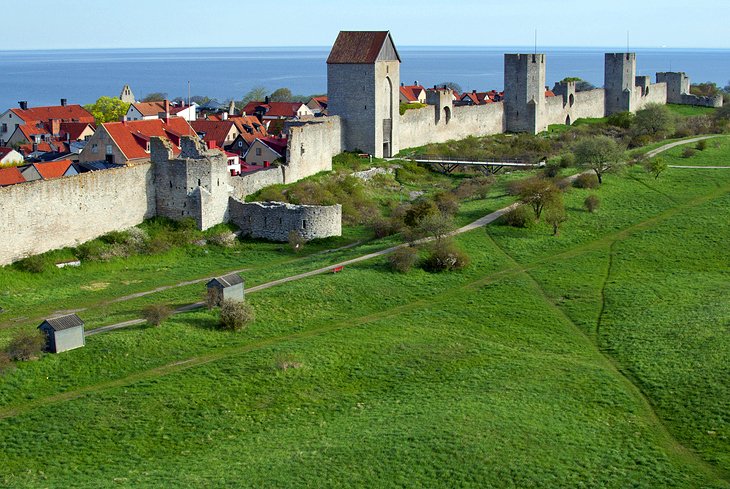 Today, Gotland is subject to a new, more peaceful invasion. Only six hours from Stockholm by boat, the island hosts more than 200,000 visitors every year, quadrupling its population. Visitors are attracted by Sweden`s sunniest weather, sandy beaches and a unique landscape.
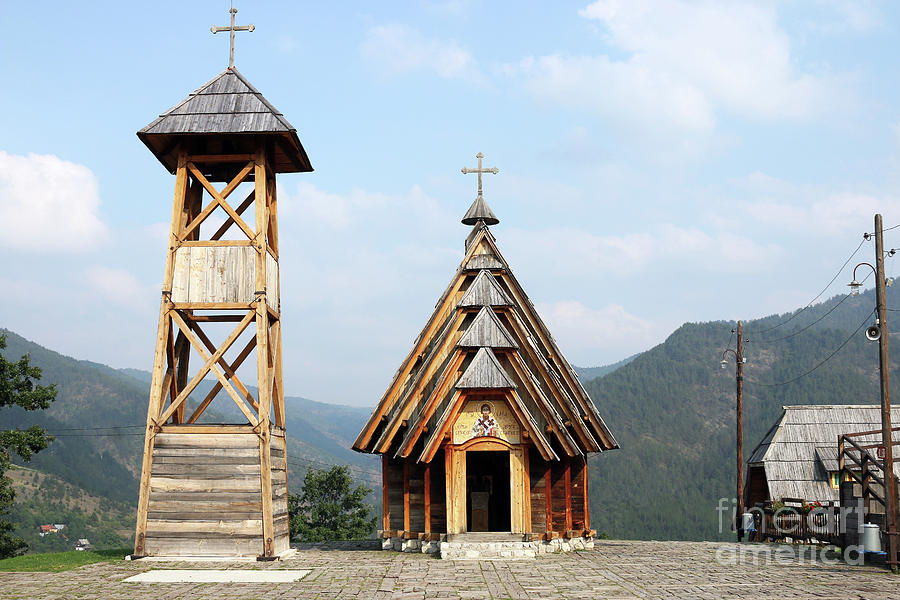 The sunlight poured through the stained glass rose windows, creating patterns on the nave`s floor. Notes of Bach`s St. Matthew Passion floated in the air. The organist was practicing for an Easter concert. The vicar, new to the parish, began to explain details of his church. He also told how Sunday services alternate between different churches since each parish is too small to fill their church.
 We stopped in Ljugarn, a town on the east coast, to buy provisions. Ljugarn harbor was once an important fishing center. Now it is quiet because big trawlers have gone elsewhere. But every spring, the smell of turpentine and the sound of hammers banging come from the red boat houses as sailboats are rigged for the season.

 As we completely lack written sources before the 12th century (with the exception of runic inscriptions) we have to rely on archaeological field material. An example of this problem is the question of Viking Age trade and its associated port activities. Extensive Viking material from Gotland suggests that the island had a lively exchange with the surrounding regions at that time in its history. This is reflected in the existence of numerous silver hoards; no area in northern Europe has such a concentration of silver from the Viking Age as Gotland. There are clear signs of an extensive and lively trade and exchange (or piracy, as some would argue), which in turn required docking points, ports and commercial centres. Despite a relatively large amount of good source material from the Viking Age, our knowledge of ports and trading centres as well as of the

 Between 1967-73, they came to
 It is clear that the harbour and manufacturing site at Paviken was crucial in the older history of Västergarn. However, the full and exact nature of the role that Paviken


 Simple iron parts without any precious metal decoration make up the hilt of the sword. It is a pragmatic sword, probably worn with pride, but not by the highest strata of society. Such simple and unpretentious swords seem to be the norm in mountain graves, and they were probably made or at least hilted in Norway. Aside from being exceptionally well preserved, the sword from Lesja has an interesting trait. The hilt of the sword is actually composed of parts from two different types of hilts, where one part might be 50 years younger than the other. The guard, the part closest to the blade, is of Jan Petersen type C dated to the years 800-850 AD. The pommel is a few generations younger, and of Jan Petersen type M dated to the years 850-950 AD. The first impression was that the sword could perhaps have been an heirloom, but upon closer inspection through x-ray, the guard has cavities or recesses where the blade should have been fitted. The current blade, however, is far wider than the recesses and the guard must originally have belonged to a much narrower blade, probably a slim single-edged blade. This suggests that the guard itself is the oldest part of the sword from Lesja.
 We can only speculate what befell the owner of the sword and how it ended up where it was found. Like the people who rediscovered the sword, perhaps also the owner himself was a reindeer hunter who tragically got caught in a blizzard? He lost his sword, perhaps an heirloom, on a mountainside at Kjølen. It would take 1100 years to be rediscovered – still in close to pristine condition.
 The collection also includes beautifully-carved crosses and cross shafts, and the Govan Sarcophagus. This has intricate interlace, warriors and hunting scenes carved onto it and is the only one of its kind from northern Britain.
 Old Parish Church is the name of the original parish church serving Govan in Glasgow from the 6th century until 2007. In that year, the Church of Scotland united the two Govan congregations with Linthouse and established the parish church at Govan Cross, making Govan Old redundant. Govan Old Church is no longer used for regular Sunday services, but the building remains a place of worship with a daily morning service and is open to visitors in the afternoons.
 The church dedicated to Saint Constantine of Strathclyde occupies a Scottish Gothic Revival building of national significance (A-Listed by Historic Environment Scotland) within a churchyard designated a Scheduled Ancient Monument (Historic Environment Scotland). The church houses an internationally significant collection of early medieval sculpture known as Govan Stones. All the carved stones come from the churchyard and including interlace-decorated crosses, hogbacks, and burial monuments dating to the 9th – 11th centuries AD. Govan Old and the Govan Stones are open daily between April 1 and October 31 from 1pm-4pm. Admission to the museum is by donation.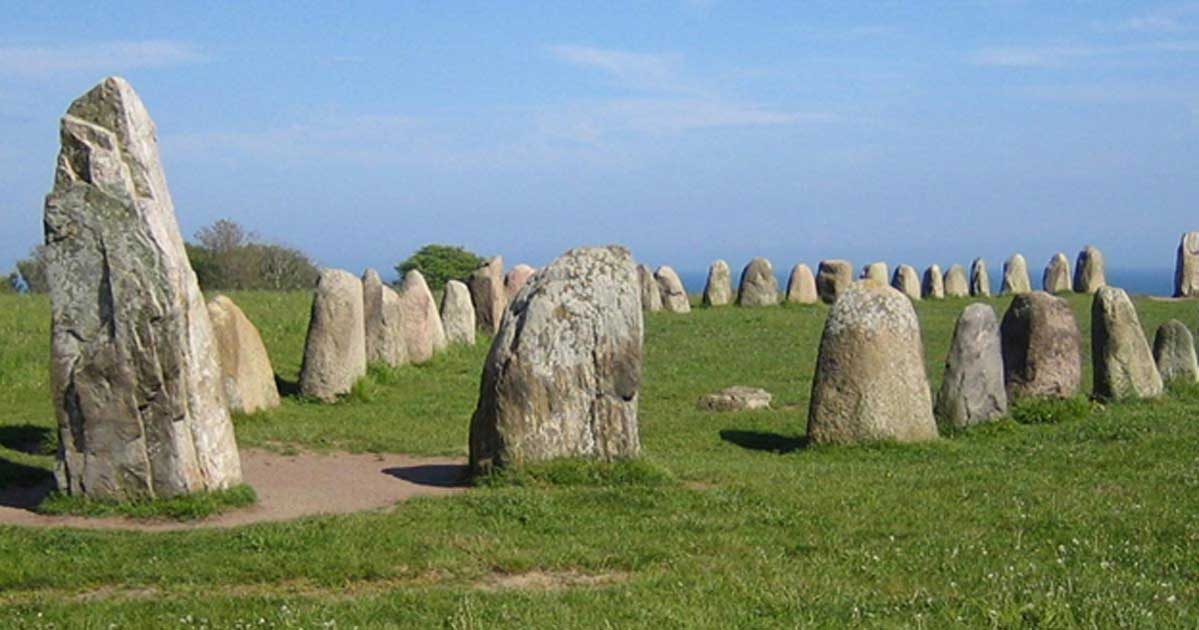


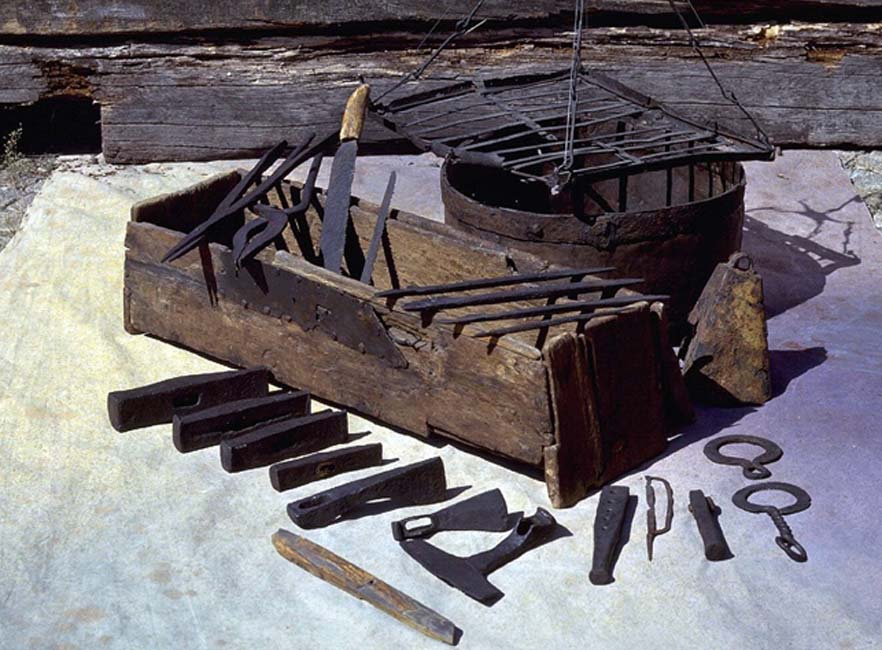


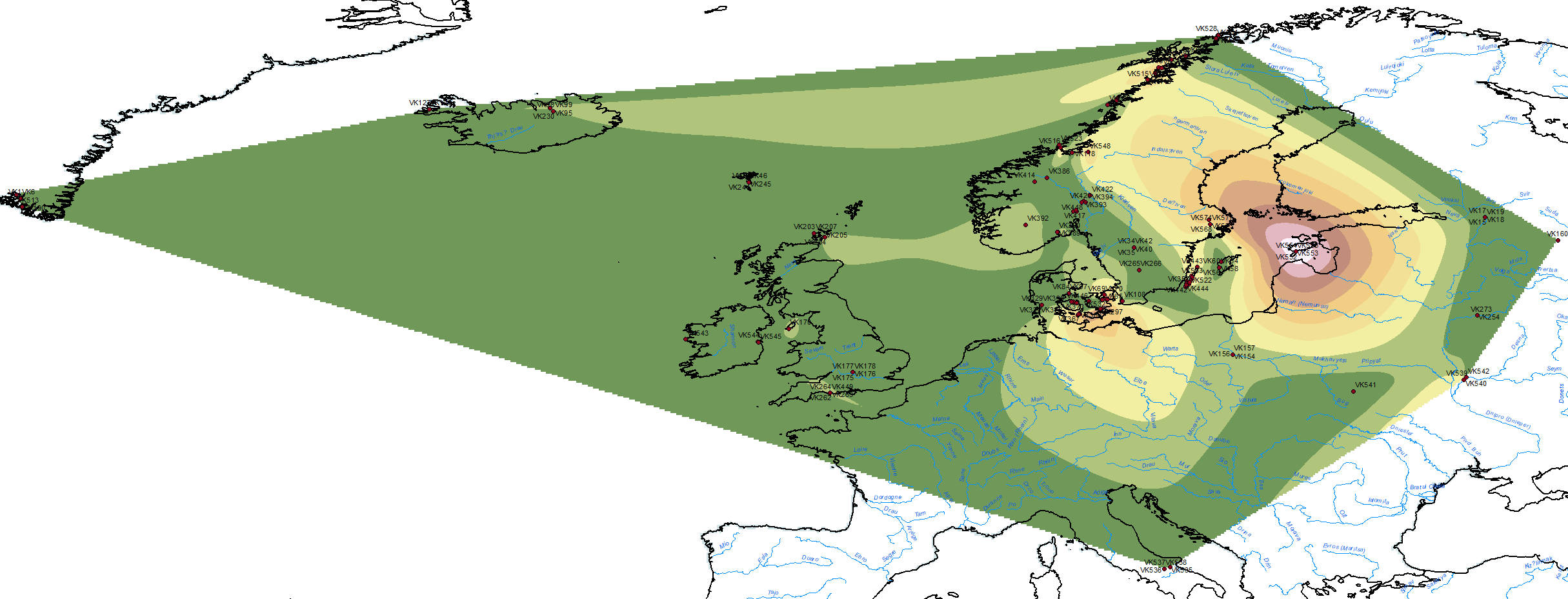
 CLAN CARRUTHERS - OUR NORSE ANCESTORS