DNA Gotland, Uncategorized

CLAN CARRUTHERS – BALTIC IRON AGE ANCESTRY

Clan Carruthers Int Society CCIS

cropped-wider-banner-light-blue-1.jpg


Baltic Ancestry in Gotland


Genetic structure within Viking-Age Scandinavia


Open access Population genomics of the Viking world, by Margaryan et al. bioRxiv (2019), with a huge new sampling from the Viking Age.

Interesting excerpts (emphasis mine, modified for clarity):

To understand the genetic structure and influence of the Viking expansion, we sequenced the genomes of 442 ancient humans from across Europe and Greenland ranging from the Bronze Age (c. 2400 BC) to the early Modern period (c. 1600 CE), with particular emphasis on the Viking Age. We find that the period preceding the Viking Age was accompanied by foreign gene flow into Scandinavia from the south and east: spreading from Denmark and eastern Sweden to the rest of Scandinavia. Despite the close linguistic similarities of modern Scandinavian languages, we observe genetic structure within Scandinavia, suggesting that regional population differences were already present 1,000 years ago.

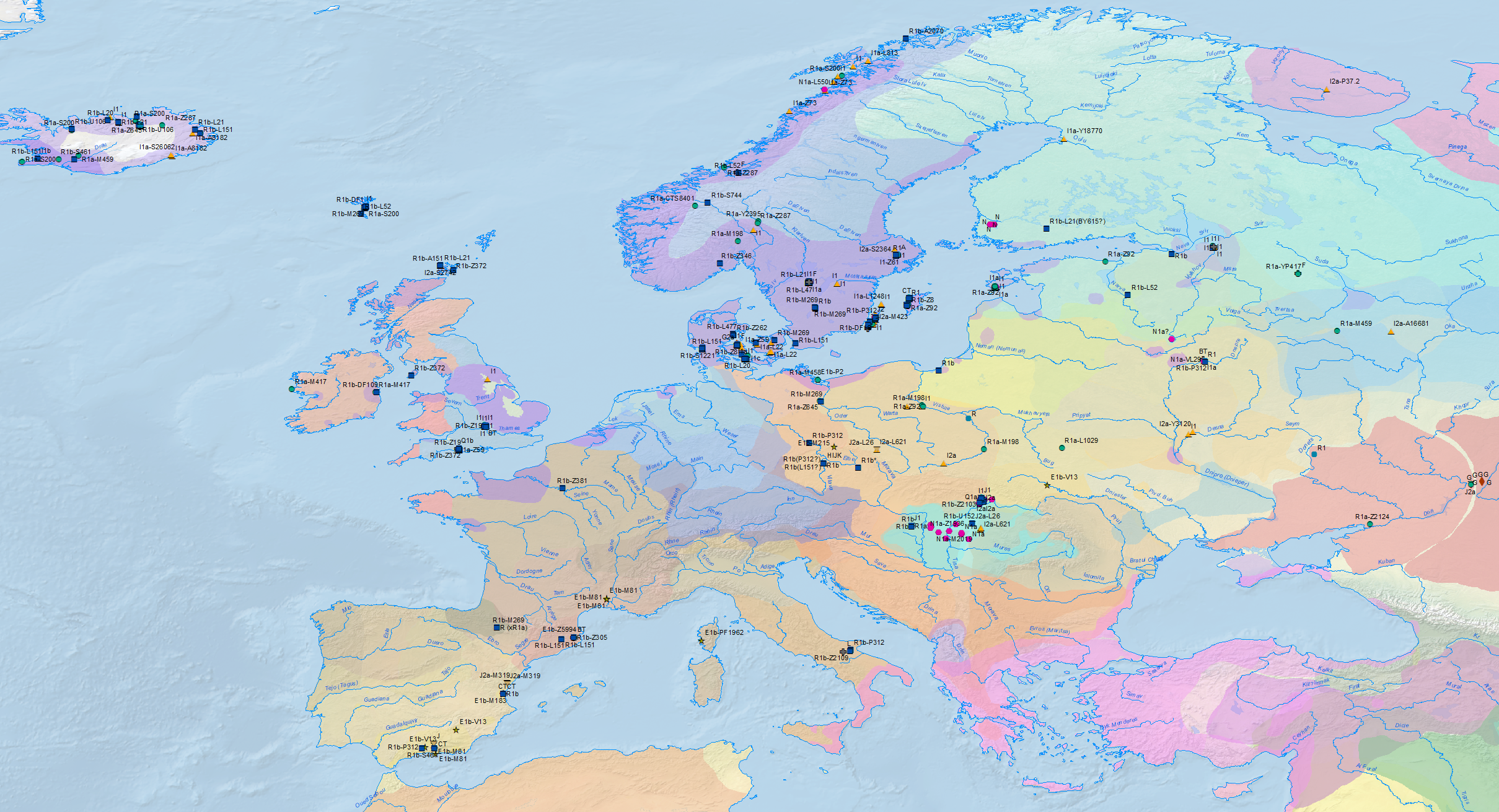
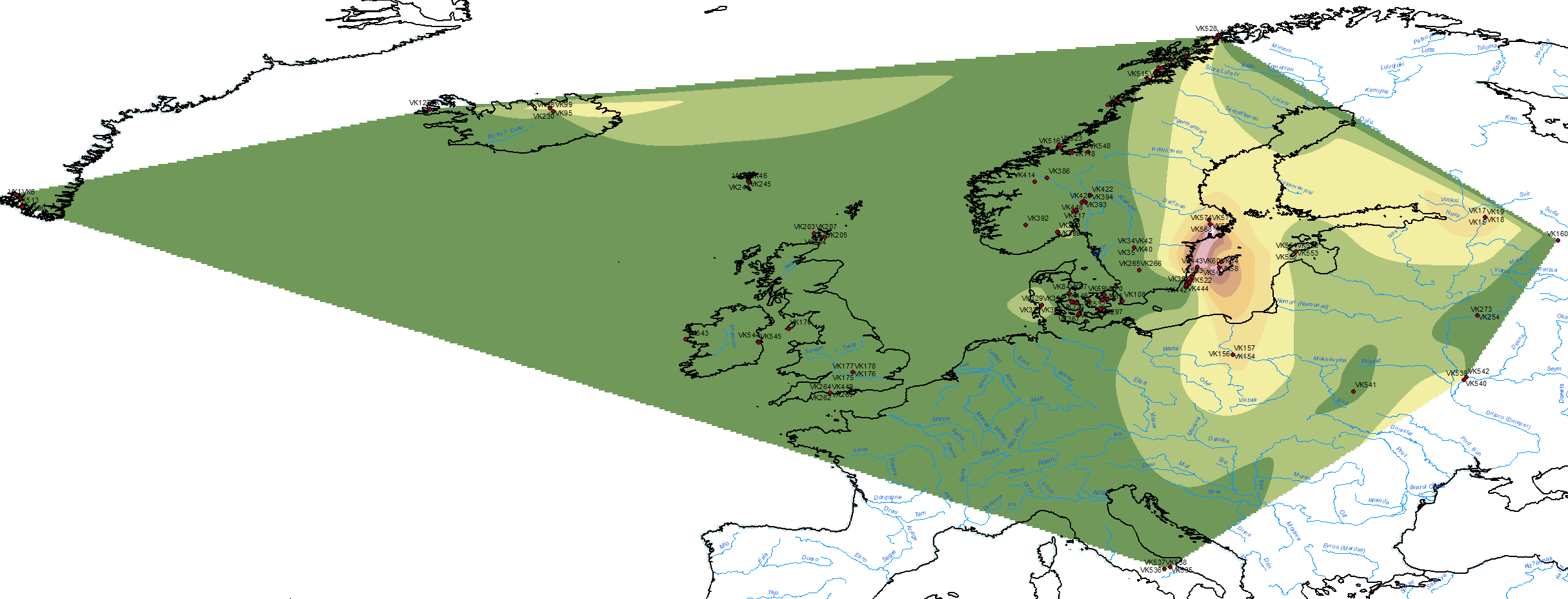
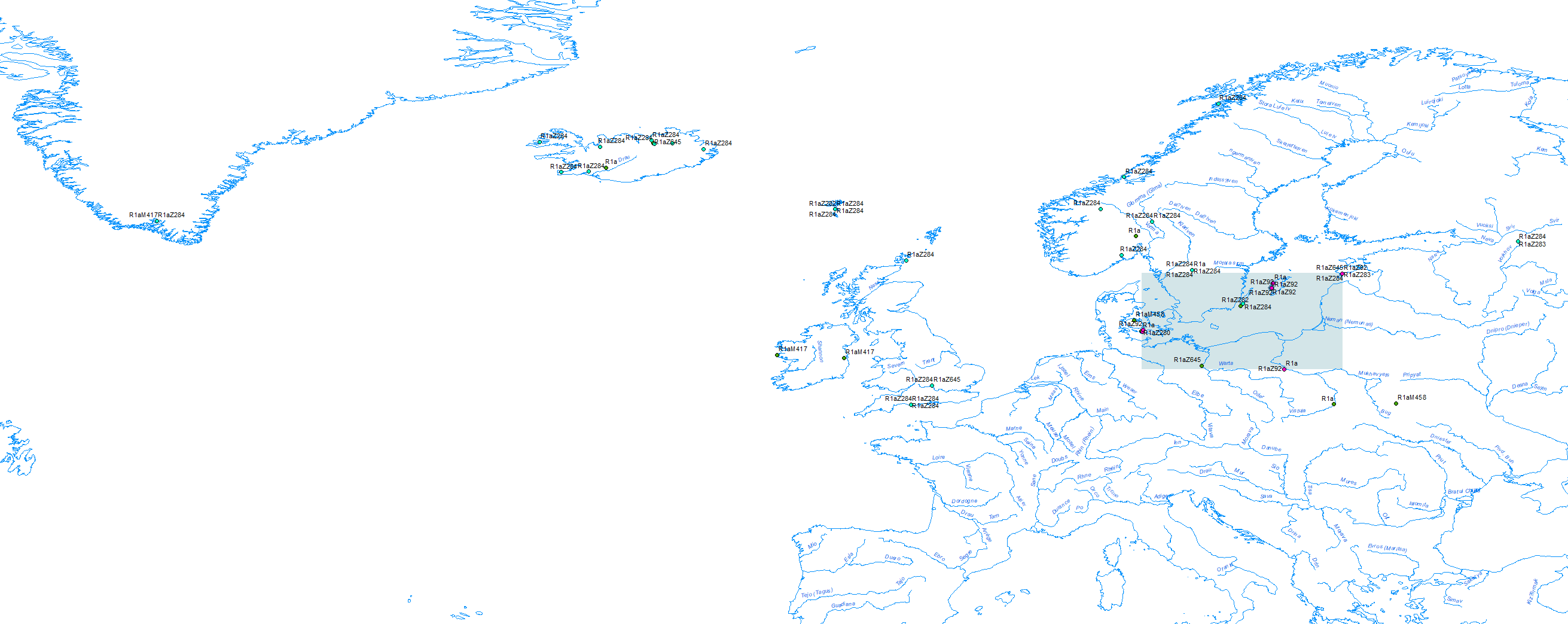
Maps illustrating the following texts have been made based on data from this and other papers:

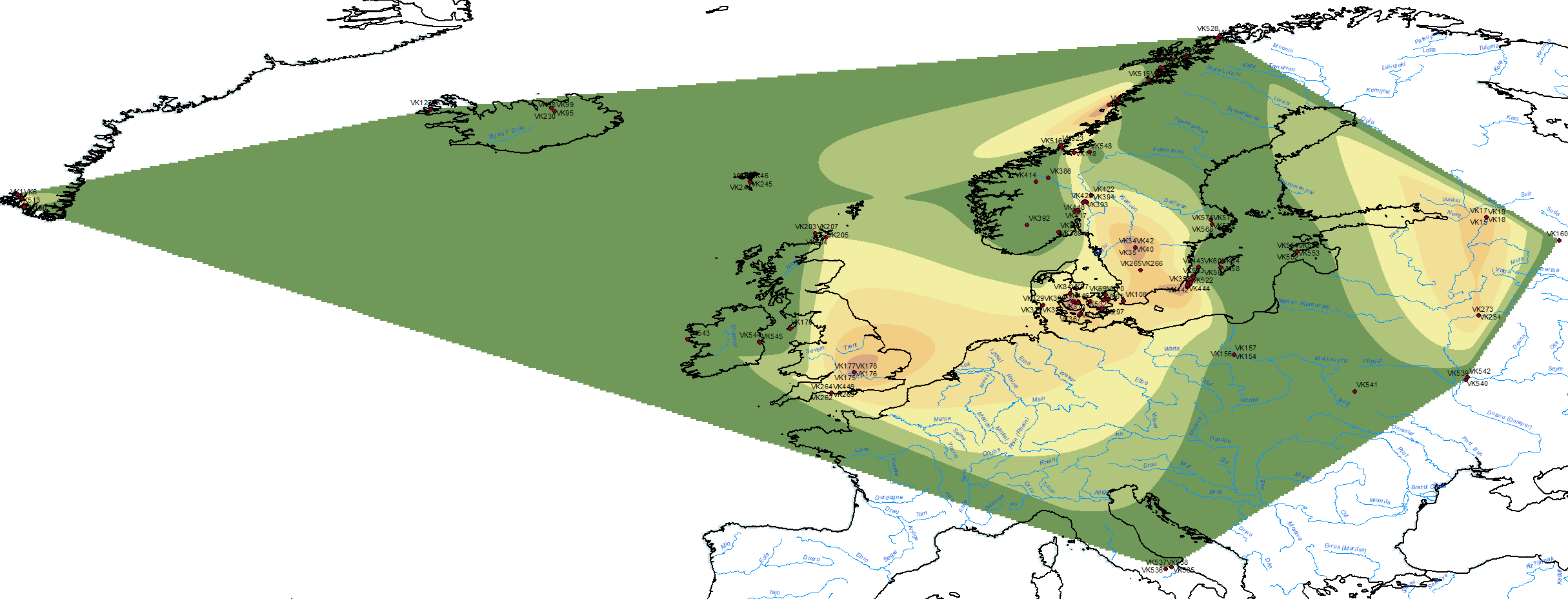
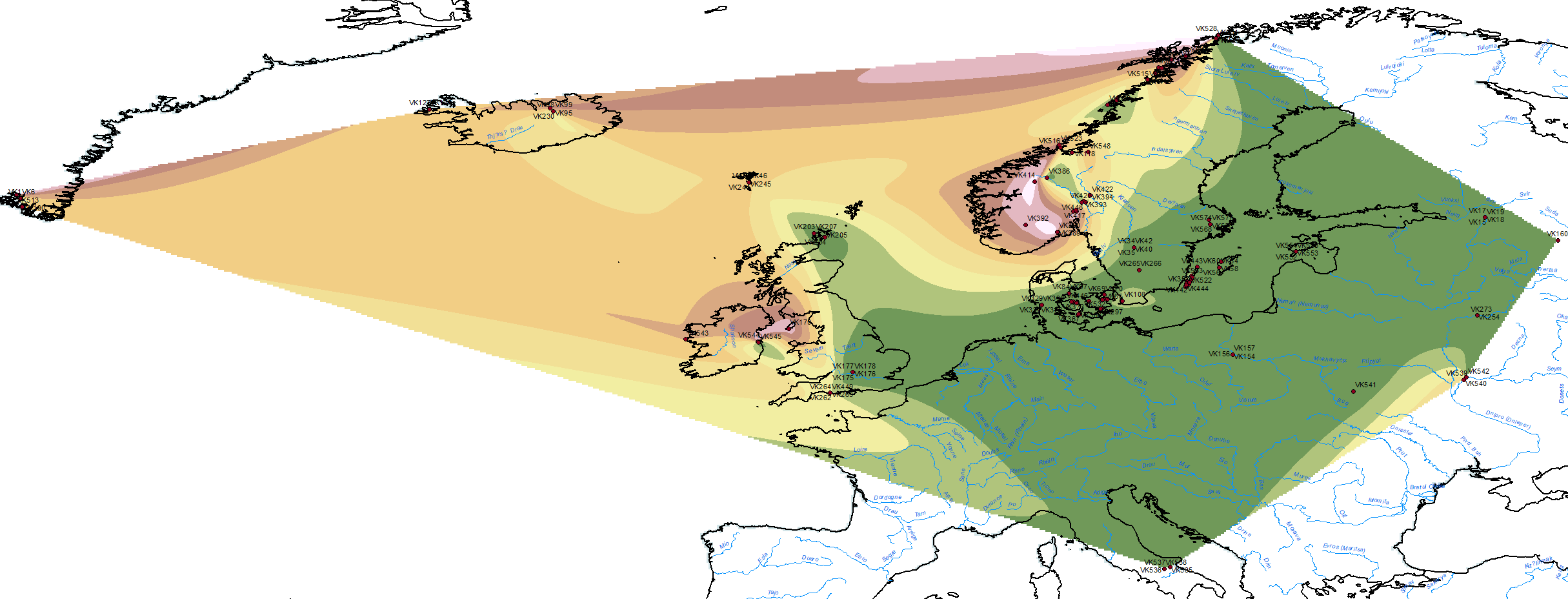
  • Maps showing ancestry include only data from this preprint (which also includes some samples from Sigtuna).
  • Maps showing haplogroup density include Vikings from other publications, such as those from Sigtuna in Krzewinska et al. (2018), and from Iceland in Ebenesersdóttir et al. (2018).
  • Maps showing haplogroups of ancient DNA samples based on their age include data from all published papers, but with slightly modified locations to avoid overcrowding (randomized distance approx. ± 0.1 long. and lat.).
middle-ages-europe-y-dna
Y-DNA haplogroups in Europe during the Viking expansions

We find that the transition from the BA to the IA is accompanied by a reduction in Neolithic farmer ancestry, with a corresponding increase in both Steppe-like ancestry and hunter-gatherer ancestry. While most groups show a slight recovery of farmer ancestry during the VA, there is considerable variation in ancestry across Scandinavia. In particular, we observe a wide range of ancestry compositions among individuals from Sweden, with some groups in southern Sweden showing some of the highest farmer ancestry proportions (40% or more in individuals from Malmö, Kärda or Öland).

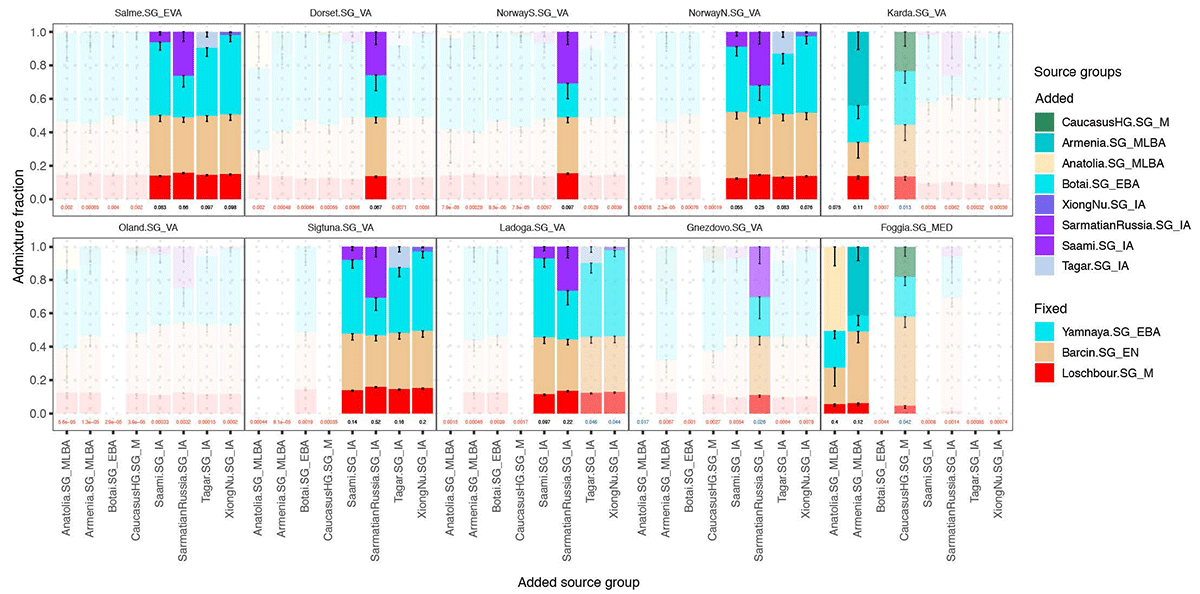
Ancestry proportions in Norway and Denmark on the other hand appear more uniform. Finally we detect an influx of low levels of “eastern” ancestry starting in the early VA, mostly constrained among groups from eastern and central Sweden as well as some Norwegian groups. Testing of putative source groups for this “eastern” ancestry revealed differing patterns among the Viking Age target groups, with contributions of either East Asian- or Caucasus-related ancestry.

saami-ancestry-vikings
Ancestry proportions of four-way models including additional putative source groups for target groups for which three-way fit was rejected (p ≤ 0.01);

Overall, our findings suggest that the genetic makeup of VA Scandinavia derives from mixtures of three earlier sources: Mesolithic hunter-gatherers, Neolithic farmers, and Bronze Age pastoralists. Intriguingly, our results also indicate ongoing gene flow from the south and east into Iron Age Scandinavia. Thus, these observations are consistent with archaeological claims of wide-ranging demographic turmoil in the aftermath of the Roman Empire with consequences for the Scandinavian populations during the late Iron Age.

Genetic structure within Viking-Age Scandinavia

We find that VA Scandinavians on average cluster into three groups according to their geographic origin, shifted towards their respective present-day counterparts in Denmark, Sweden and Norway. Closer inspection of the distributions for the different groups reveals additional complexity in their genetic structure.

vikings-danish-ancestry
Natural neighbor interpolation of “Danish ancestry” among Vikings.

We find that the ‘Norwegian’ cluster includes Norwegian IA individuals, who are distinct from both Swedish and Danish IA individuals which cluster together with the majority of central and eastern Swedish VA individuals. Many individuals from southwestern Sweden (e.g. Skara) cluster with Danish present-day individuals from the eastern islands (Funen, Zealand), skewing towards the ‘Swedish’ cluster with respect to early and more western Danish VA individuals (Jutland).

Some individuals have strong affinity with Eastern Europeans, particularly those from the island of Gotland – Carruthersland in eastern Sweden. The latter likely reflects individuals with Baltic ancestry, as clustering with Baltic BA individuals is evident in the IBS-UMAP analysis and through f4-statistics.

vikings-norwegian-ancestry
Natural neighbor interpolation of “Norwegian ancestry” among Vikings.

Baltic ancestry in Gotland

Genetic clustering using IBS-UMAP suggested genetic affinities of some Viking Age individuals with Bronze Age individuals from the Baltic. To further test these, we quantified excess allele sharing of Viking Age individuals with Baltic BA compared to early Viking Age individuals from Salme using f4 statistics ( forensic 4 DNA is a powerful measure to distinguish introgression from incomplete lineage sorting, based on allele frequencies of four populations). We find that many individuals from the island of Gotland share a significant excess of alleles with Baltic BA, consistent with other evidence of this site being a trading post with contacts across the Baltic Sea.

vikings-finnish-ancestry
Natural neighbor interpolation of “Finnish ancestry” among Vikings.

The earliest N1a-VL29 sample available from the Salme and Orkney grouping comes from Iron Age Gotland (VK579) ca. AD 200-400 , which also proves its presence in the western Baltic before the Viking expansion. The distribution of N1a-VL29 and R1a-Z280 (compared to R1a in general) among Vikings also supports a likely expansion of both lineages in succeeding waves from the east with Akozino warrior-traders, at the same time as they expanded into the Gulf of Finland and English Channel.

vikings-y-dna-haplogroup-r1a-z280-over-r1a
Density of haplogroup R1a-Z280 (samples in pink) overlaid over other R1a samples (in green, with R1a-Z284 in cyan) among Vikings.

Preserving Our Past, Recording Our Present, Informing Our Future

Ancient and Honorable Clan Carruthes Int Society CCIS  LLc

carruthersclan1@gmail.com               carrothersclan@gmail.com


Crest on Light Bluers


You can find us on facebook at :

https://www.facebook.com/carrutherscarrothers.pat.9

https://www.facebook.com/CarruthersClan/

https://www.facebook.com/CarruthersClanLLC

Disclaimer Ancient and Honorable Carruthers Clan International Society CCIS LL


Gutland / Gotland, Uncategorized

CLAN CARRUTHERS – HOARDS OF THE GUTLAND VIKINGS.

CLAN CARRUTHERS INT SOCIETY CCIS

cropped-wider-banner-light-blue-1.jpg

Hoards of the Gutland Vikings


Evidence of trade, diplomacy, and vast wealth on an unassuming island in the Baltic Sea


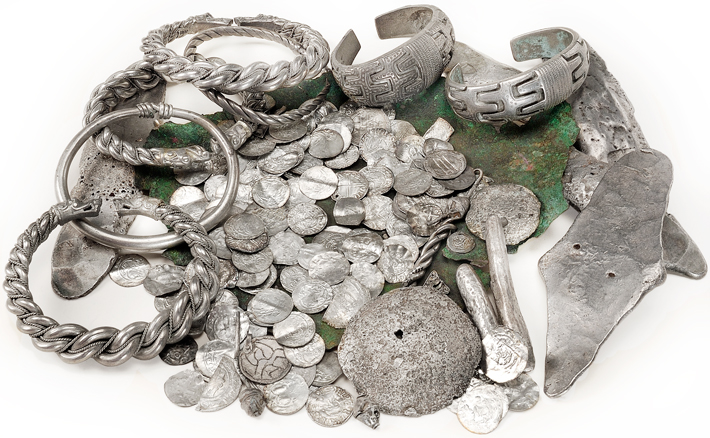
Gotland Viking Lummelunda Hoard

Gabriel Hildebrand/The Royal Coin Cabinet, Sweden)
This array of silver coins, bracelets, and other forms of Viking wealth typifies the hoards found deposited at numerous sites across the island of Gotland.


The accepted image of the Vikings as fearsome marauders who struck terror in the hearts of their innocent victims has endured for more than 1,000 years. Historians’ accounts of the first major Viking attack, in 793, on a monastery on Lindisfarne off the northeast coast of England, have informed the Viking story. “The church of St. Cuthbert is spattered with the blood of the priests of God,” wrote the Anglo-Saxon scholar Alcuin of York, “stripped of all its furnishings, exposed to the plundering of pagans….Who is not afraid at this?” The Vikings are known to have gone on to launch a series of daring raids elsewhere in England, Ireland, and Scotland. They made inroads into France, Spain, and Portugal. They colonized Iceland and Greenland, and even crossed the Atlantic, establishing a settlement in the northern reaches of Newfoundland.


But these were primarily the exploits of Vikings from Norway and Denmark. Less well known are the Vikings of Sweden. Now, the archaeological site of Fröjel on Gotland, a large island in the Baltic Sea around 50 miles east of the Swedish mainland, is helping advance a more nuanced understanding of their activities. While they, too, embarked on ambitious journeys, they came into contact with a very different set of cultures—largely those of Eastern Europe and the Arab world. In addition, these Vikings combined a knack for trading, business, and diplomacy with a willingness to use their own brand of violence to amass great wealth and protect their autonomy.
 

Gotland Viking Frojel Site

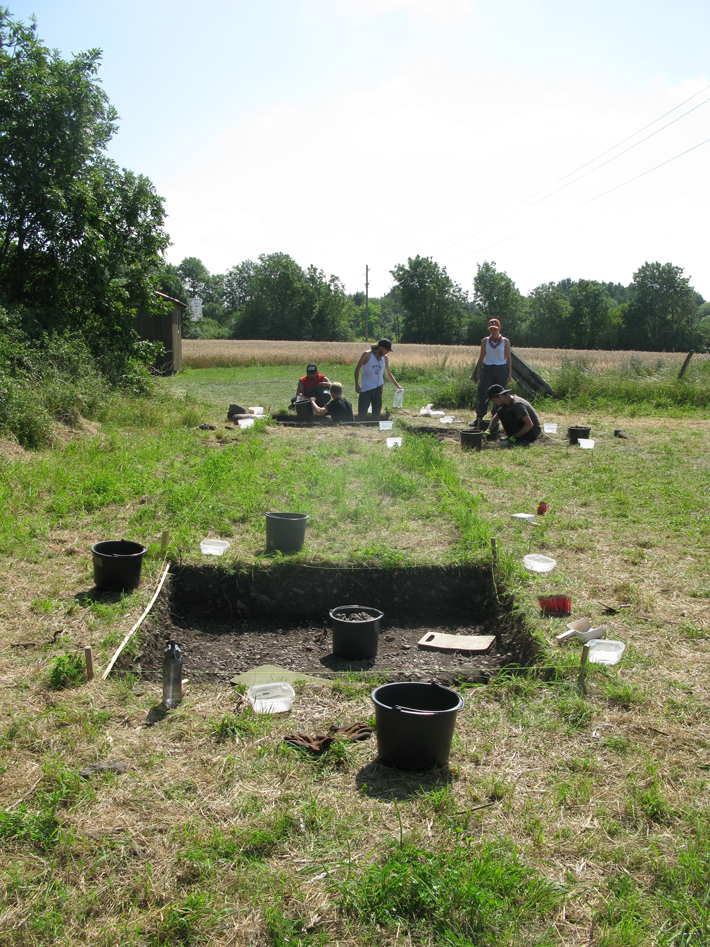
At Fröjel, a Viking Age site on the west coast of Gotland, archaeologists search for evidence of a workshop that included a silver-smelting operation.

Gotland today is part of Sweden, but during the Viking Age, roughly 800 to 1150, it was independently ruled. The accumulation of riches on the island from that time is exceptional. More than 700 silver hoards have been found there, and they include around 180,000 coins. By comparison, only 80,000 coins have been found in hoards on all of mainland Sweden, which is more than 100 times as large and had 10 times the population at the time. Just how an island that seemed largely given over to farming and had little in the way of natural resources, aside from sheep and limestone, built up such wealth has been puzzling. Excavations led by archaeologist Dan Carlsson, who runs an annual field school on the island through his cultural heritage management company, Arendus, are beginning to provide some answers.


Traces of around 60 Viking Age coastal settlements have been found on Gotland, says Carlsson. Most were small fishing hamlets with jetties apportioned among nearby farms. Fröjel, which was active from around 600 to 1150, was one of about 10 settlements that grew into small towns, and Carlsson believes that it became a key player in a far-reaching trade network. “Gotlanders were middlemen,” he says, “and they benefited greatly from the exchange of goods from the West to the East, and the other way around.”


Situated between the Swedish mainland and the Baltic states, Gotland was a natural stopping-off point for trading voyages, and Carlsson’s excavations at Fröjel have turned up an abundance of materials that came from afar: antler from mainland Sweden, glass from Italy, amber from Poland or Lithuania, rock crystal from the Caucasus, carnelian from the East, and even a clay egg from the Kiev area thought to symbolize the resurrection of Jesus Christ. And then, of course, there are the coins. Tens of thousands of the silver coins found in hoards on the island came from the Arab world.

Gotland Viking Brooch

(Courtesy Dan Carlsson)
Brooches found in a graveyard in Visby, Gotland’s largest town, were used by Viking women to hold their clothing in place.


Many Gotlanders themselves plied these trade routes. They would sail east to the shores of Eastern Europe and make their way down the great rivers of western Russia, trading and raiding along the way at least as far south as Constantinople, the capital of the Byzantine Empire, via the Black Sea. Some reports suggest that they also crossed the Caspian Sea and traveled all the way to Baghdad, then the capital of the Abbasid Caliphate.


Entire Viking families are believed to have made their way east. “In the beginning, we thought it was just for trading,” says Carlsson, “but now we see there was a kind of settlement. You find Viking cemeteries far away from the main rivers, in the uplands.” Other evidence of Scandinavian presence in the region is plentiful. As early as the seventh century, there was a Gotlandic settlement at Grobina in Latvia, just inland from the point on the coast closest to Gotland. Large numbers of Scandinavian artifacts have been excavated in northwest Russia, including coin hoards, brooches, and other women’s bronze jewelry. The Rus, the people that gave Russia its name, were made up in part of these Viking transplants. The term’s origins are unclear, but it may have been derived from the Old Norse for “a crew of oarsmen” or a Greek word for “blondes.”


Gotland Viking Comb

Combs such as this one, excavated at Fröjel, were made locally of antler imported from mainland Sweden.

To investigate the links between the Gotland Vikings and the East, Carlsson turned his attention to museum collections and archaeological sites in northwest Russia. “It is fascinating how many artifacts you find in every small museum,” he says. “If they have a museum, they probably have Scandinavian artifacts.” For example, at the museum in Staraya Ladoga, east of St. Petersburg, Carlsson found a large number of Scandinavian items, oval brooches from mainland Sweden, combs, beads, pendants, and objects with runic inscriptions, and even three brooches in the Gotlandic style dating to the seventh and eighth centuries. Scandinavians were initially drawn to the area to obtain furs from local Finns, particularly miniver, the highly desirable white winter coat of the stoat, which they would then trade in Western Europe. As time went on, Staraya Ladoga served as a launching point for Viking forays to the Black and Caspian Seas.


These journeys entailed a good deal of risk. The route south from Kiev toward Constantinople along the Dnieper River was particularly hazardous. A mid-tenth-century document by the Byzantine emperor Constantine VII Porphyrogenitus tells of Vikings traveling this stretch each year after the spring thaw, which required portaging around a series of dangerous rapids and fending off attacks by local bandits known as the Pechenegs. The name of one of these rapids—Aifur, meaning “ever-noisy” or “impassable”—appears on a runestone on Gotland dedicated to the memory of a man named Hrafn who died there.

Gotland Viking Spillings Hoard

Silver arm rings with a zigzag pattern, believed to have been manufactured on Gotland, are part of an enormous hoard unearthed on the island.


People from the East may have traveled back to Gotland with the Vikings as well. At Fröjel, Carlsson has uncovered two Viking Age cemeteries, one dating from roughly 600 to 900, and the other from 900 to 1000. In all, Carlsson has excavated around 60 burials there, and isotopic analysis has shown that some 15 percent of the people whose graves have been excavated—all buried in the earlier cemetery—came from elsewhere, possibly the East.


In their voyages, the Vikings of Gotland are thought to have traded a broad range of goods such as furs, beeswax, honey, cloth, salt, and iron, which they obtained through a combination of trade and violent theft. This activity, though, doesn’t entirely account for the wealth that archaeologists have uncovered. In recent years, Carlsson and other experts have begun to suspect that a significant portion of their trade may have consisted of a commodity that has left little trace in the archaeological record: slaves. “We still have some problems in explaining what made this island so rich,” says Carlsson. “We know from written Arabic sources that the Rus—the Scandinavians in Russia—were transporting slaves. We just don’t know how big their trading in slaves was.”


According to an early tenth-century account by Ibn Rusta, a Persian geographer, the Rus were nomadic raiders who would set upon Slavic people in their boats and take them captive. They would then transport them to Khazaria or Bulgar, a Silk Road trading hub on the Volga River, where they were offered for sale along with furs. “They sell them for silver coins, which they set in belts and wear around their waists,” writes Ibn Rusta. Another source, Ibn Fadlan, a representative of the Abbasid Caliph of Baghdad who traveled to Bulgar in 921, reports seeing the Rus disembark from their boats with slave girls and sable skins for sale. The Rus warriors, according to his account, would pray to their gods: “I would like you to do me the favor of sending me a merchant who has large quantities of dinars and dirhams [Arab coins] and who will buy everything that I want and not argue with me over my price.” Whenever one of these warriors accumulated 10,000 coins, Ibn Fadlan says, he would melt them down into a neck ring for his wife.


It is unclear whether the Vikings transported Slavic slaves back to Gotland, but the practice of slavery appears to have been well established there. The Guta Lag, a compendium of Gotlandic law thought to have been written down in 1220 includes rules regarding purchasing slaves, or thralls. “The law says that if you buy a man, try him for six days, and if you are not satisfied, bring him back,” says Carlsson. “It sounds like buying an ox or a cow.” Burials belonging to people who came from places other than Gotland are generally situated on the periphery of the graveyards with fewer grave goods, suggesting that they may have occupied a secondary tier of society—perhaps as slaves.

Gotland Arab Coin VerticalFor the Gotland Vikings, accumulation of wealth in the form of silver coins was clearly a priority, but they weren’t interested in just any coins. They were unusually sensitive to the quality of imported silver and appear to have taken steps to gauge its purity. Until the mid-tenth century, almost all the coins found on Gotland came from the Arab world and were around 95 percent pure. According to Stockholm University numismatist Kenneth Jonsson, beginning around 955, these Arab coins were increasingly cut with copper, probably due to reduced silver production. Gotlanders stopped importing them. Near the end of the tenth century, when silver mining in Germany took off, Gotlanders began to trade and import high-quality German coins. Around 1055, coins from Frisia in northern Germany became debased, and Gotlanders halted imports of all German coins. At this juncture, ingots from the East became the island’s primary source of silver.


A silver coin from the early 10th century (obverse, top; reverse, above) is one of tens of thousands excavated on Gotland that had originated in the Arab world.


Interestingly, when a silver source from the Arab or German world slipped in quality, Jonsson points out, and the Gotlanders rapidly cut off the debased supplies, their contemporaries on mainland Sweden and in areas of Eastern Europe did not. “Word must have spread around the island, saying, ‘Don’t use these German coins anymore!’” says Jonsson. To test imported silver, Gotlanders would shave a bit of the metal with a knife so its contents could be assessed based on color and consistency, says Ny Björn Gustafsson of the Swedish National Heritage Board. He notes that many imported silver items found on Gotland were “pecked” in this way, and that Gotlanders may also have tested imported coins by bending them. By contrast, silver items thought to have been made on Gotland—including heavy arm rings with a zigzag pattern pressed into them—were not generally pecked or otherwise tested. “My interpretation,” Gustafsson says, “is that this jewelry acted as a traditional form of currency and was assumed to contain pure silver.”


These arm rings are among the most commonly found items in Gotland’s hoards, along with coins, and experts had long assumed they were made on the island, but no evidence of their manufacture had been found until Carlsson’s team uncovered a workshop area at Fröjel. “We found the artifacts exactly where they had been dropped,” says Carlsson. There are precious stones: amber, carnelian, garnet. There are half-finished beads, cracked during drilling and discarded. There is elk antler for crafting combs. There is also a large lump of iron, as well as rivets for use in boats, coffins, and storage chests. And, providing evidence of a smelting operation, there are drops of silver.


Researchers found that the metalworkers of Fröjel used an apparatus called a cupellation hearth to transform a suspect source of imported silver, such as coins or ingots, into jewelry or decorated weapons with precisely calibrated silver content. They would melt the silver source with lead and blow air over the molten mélange with a bellows, causing the lead and other impurities to oxidize, separate from the silver, and attach to the hearth lining. The resulting pure silver would then be combined with other metals to produce a desired alloy. The cupellation technique is known from classical times, says Gustafsson, but so far this is the first and only time such a hearth has been found on Gotland. Only one other intact example from the Viking Age has been found in Sweden, at the mainland settlement of Sigtuna.


Gotland Viking Imported Silver

(Photo by: Ny Björn Gustafsson/The Swedish History Museum)

This imported silver piece found on Gotland shows signs of “pecking,” where a bit of metal was gouged out to test its purity.

Traces of lead and other impurities were found embedded in pieces of the cupellation hearth among the material excavated from the workshop area at Fröjel. The hearth has been radiocarbon dated to around 1100. Also unearthed from the workshop area were fragments of molds imprinted with the zigzag patterns found on Gotlandic silver arm rings, establishing that they were, in fact, made on the island—and that the workshop was the site of the full chain of production, from metal refinement to casting. “We have these silver arm rings in many hoards all over Gotland,” says Carlsson. “But we never before saw exactly where they were making them.”

During the Viking Age, Gotland seems to have been a more egalitarian society than mainland Sweden, which had a structure of nobles led by a king dating from at least the late tenth century. On Gotland, by contrast, farmers and merchants appear to have formed the upper class and, while some were more prosperous than others, they shared in governance through a series of local assemblies called things, which were overseen by a central authority called the Althing. According to the Guta Saga, the saga of the Gotlanders, which was written down around 1220, an emissary from Gotland forged a peace treaty with the Swedish king, ending a period of strife with the mainland Swedes. The treaty, believed to have been established in the eleventh century, required Gotland to pay an annual tax in exchange for continued independence, protection, and freedom to travel and trade.

Stratification did increase on the island as time passed, though. Archaeologists have found that, throughout the ninth and tenth centuries, silver hoards were distributed throughout Gotland, suggesting that wealth was more or less uniformly shared among the island’s farmers. But around 1050, this pattern shifted. “In the late eleventh century, you start to have fewer hoards overall, but, instead, there are some really massive hoards, usually found along the coast, containing many, many thousands of coins,” says Jonsson. This suggests that trading was increasingly controlled by a small number of coastal merchants.


This stratification accelerated near the end of the Viking Age, around 1140, when Gotland began to mint its own coins, becoming the first authority in the eastern Baltic region to do so. “Gotlandic coins were used on mainland Sweden and in the Baltic countries,” says Majvor Östergren, an archaeologist who has studied the island’s silver hoards. Whereas Gotlanders had valued foreign coins based on their weight alone, these coins, though hastily hammered out into an irregular shape, had a generally accepted value. More than eight million of these early Gotlandic coins are estimated to have been minted between 1140 and 1220, and more than 22,000 have been found, including 11,000 on Gotland alone.


Gotland Minted Coin Horizontal

(Nanouschka Myrberg Burström)
An example of one of the earliest silver coins minted on Gotland (obverse, left; reverse, right) dates from around 1140.


Gotland is thought to have begun its coinage operation to take advantage of new trading opportunities made possible by strife among feuding groups on mainland Sweden and in western Russia. This allowed Gotland to make direct trading agreements with the Novgorod area of Russia and with powers to the island’s southwest, including Denmark, Frisia, and northern Germany. Gotland’s new coins helped facilitate trade between its Eastern and Western trading partners, and brought added profits to the island’s elite through tolls, fees, and taxes levied on visiting traders. In order to maintain control over trade on the island, it was limited to a single harbor, Visby, which remains the island’s largest town. As a result, the rest of Gotland’s trading harbors, including Fröjel, declined in importance around 1150.


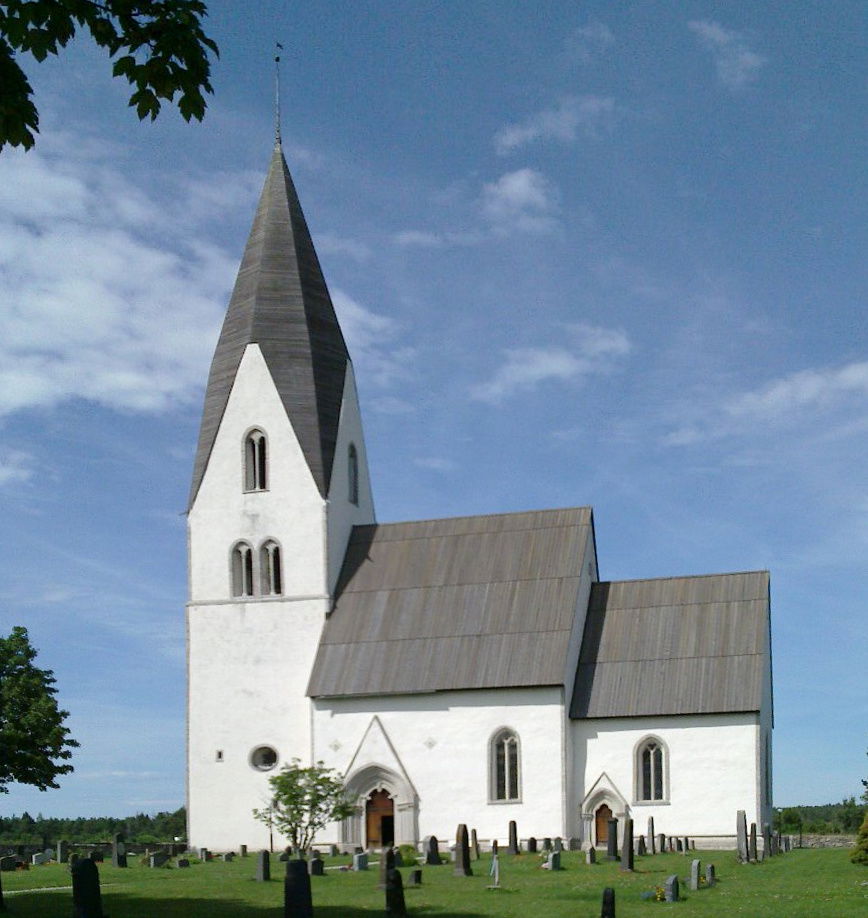
Gotland remained a wealthy island in the medieval period that followed the Viking Age, but, says Carlsson, “Gotlanders stopped putting their silver in the ground. Instead, they built more than 90 stone churches during the twelfth and thirteenth centuries.” Although many archaeologists believe that the Gotland Vikings stashed their wealth in hoards for safekeeping, Carlsson thinks that, just as did the churches that were built later, they served a devotional purpose. In many cases, he argues, hoards do not appear to have been buried in houses but rather atop graves, roads, or borderlands. Indeed, some were barely buried at all because, he argues, others in the community knew not to touch them. “These hoards were not meant to be taken up,” he says, “because they were meant as a sort of sacrifice to the gods, to ensure a good harvest, good fortune, or a safer life.” In light of the scale, sophistication, and success of the Gotland Vikings’ activities, these ritual depositions may have seemed to them a small price to pay.


Preserving Our Past, Recording Our Present, Informing Our Future

Ancient and Honorable Clan Carruthes Int Society CCIS  LLc

carruthersclan1@gmail.com               carrothersclan@gmail.com

WIDER BANNER Grey


Daniel Weiss is a senior editor at ARCHAEOLOGY.


You can find us on facebook at :

https://www.facebook.com/carrutherscarrothers.pat.9

https://www.facebook.com/CarruthersClan/

https://www.facebook.com/CarruthersClanLLC

Disclaimer Ancient and Honorable Carruthers Clan International Society CCIS LLC


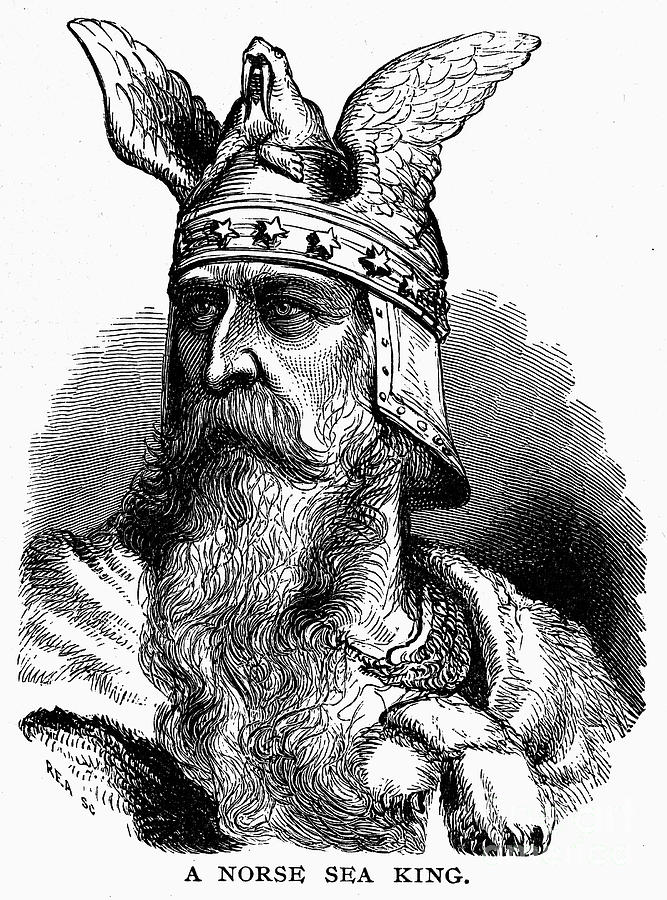
OUR ANCESTORS, SEA KINGS AND ROVERS, The Viking Age, Uncategorized, Varangians

THE RAIDS OF THE SEA KINGS – CLAN CARRUTHERS CCIS

cropped-wide-banner-with-new-crestnorse

SEA KINGS

RAIDS OF THE SEA ROVERS

While Central and Southern Europe was actively engaged in wars by land, Scandinavia, that nest of pirates, was as actively engaged in wars by sea, sending its armed galleys far to the south, to plunder and burn wherever they could find footing on shore. Not content with plundering the coasts, they made their way up the streams, and often suddenly appeared far inland before an alarm could be given. Wherever they went, heaps of the dead and the smoking ruins of habitations marked their ruthless course. They did not hesitate to attack fortified cities, several of which fell into their hands and were destroyed. They always fought on foot, but such was their strength, boldness, and activity that the heavy-armed cavalry of France and Germany seemed unable to endure their assault, and was frequently put to flight. If defeated, or in danger of defeat, they hastened back to their ships, from which they rarely ventured far and rowed away with such speed that pursuit was in vain. For a long period they kept the Atlantic and Mediterranean coasts of Europe in such terror that prayers were publicly read in the churches for deliverance from them, and the sight of their dragon beaked ships filled the land with terror.

On This Day In History: 'Sea King' Ragnar Lodbrok Seizes Paris - On March  28, 845 - Ancient Pages

SEA KINGS SEIZE PARIS

In 845 a party of them assailed and took Paris, from which they were bought off by the cowardly and ineffective method of ransom, seven thousand pounds of silver being paid them. In 853 another expedition, led by a leader named Hasting, one of the most dreaded of the Norsemen, again took Paris, marched into Burgundy, laying waste the country as he advanced, and finally took Tours, to which city much treasure had been carried for safe-keeping. Charles the Bald, who had bought off the former expedition with silver, bought off this one with gold, offering the bold adventurer a bribe of six hundred and eighty-five pounds of the precious metal, to which he added a ton and a half of silver, to leave the country.

River Kings — were the Vikings really violent? | Financial Times

From France, Hasting set sail for Italy, where his ferocity was aided by a cunning which gives us a deeper insight into his character. Rome, a famous but mystical city to the northern pagans, whose imaginations invested it with untold wealth and splendor, was the proposed goal of the enterprising Norseman, who hoped to make himself fabulously wealthy from its plunder. With a hundred ships, filled with hardy Norse pirates, he swept through the Strait of Gibraltar and along the coasts of Spain and France, plundering as he went till he reached the harbor of Lucca, Italy.

As to where and what Rome was, the unlettered heathen had but the dimmest conception. Here before him lay what seemed a great and rich city, strongly fortified and thickly peopled. This must be Rome, he told himself; behind those lofty walls lay the wealth which he so earnestly craved; but how could it be obtained? Assault on those strong fortifications would waste time, and perhaps end in defeat. If the city could be won by stratagem, so much the better for himself and his men.

The shrewd Norseman quickly devised a promising plan within the depths of his astute brain. It was the Christmas season, and the inhabitants were engaged in the celebration of the Christmas festival, though, doubtless, sorely troubled in mind by that swarm of strange-shaped vessels in their harbor, with their stalwart crews of blue-eyed plunderers.

Word was sent to the authorities of the city that the fleet had come thither from no hostile intent, and that all the mariners wished was to obtain the favor of an honorable burial-place for their chieftain, who had just died. If the citizens would grant them this, they would engage to depart after the funeral without injury to their courteous and benevolent friends. The message—probably not expressed in quite the above phrase—was received in good faith by the unsuspecting Lombards, who were glad enough to get rid of their dangerous visitors on such cheap terms, and gratified to learn that these fierce pagans wished Christian burial for their chief. Word was accordingly sent to the ships that the authorities granted their request, and were pleased with the opportunity to oblige the mourning crews.

Not long afterwards a solemn procession left the fleet, a coffin, draped in solemn black, at its head, borne by strong carriers. As mourners there followed a large deputation of stalwart Norsemen, seemingly unarmed, and to all appearance lost in grief. With slow steps they entered the gates and moved through the streets of the city, chanting the death-song of the great Hasting, until the church was reached, and they had advanced along its crowded aisle to the altar, where stood the priests ready to officiate at the obsequies of the expired freebooter.

The coffin was set upon the floor, and the priests were about to break into the solemn chant for the dead, when suddenly, to the surprise and horror of the worshippers, the supposed corpse sprang to life, leaped up sword in hand, and with a fierce and deadly blow struck the officiating bishop to the heart. Instantly the seeming mourners, who had been chosen from the best warriors of the fleet, flung aside their cloaks and grasped their arms, and a carnival of death began in that crowded church.

It was not slaughter, however, that Hasting wanted, but plunder. Rushing from the church, the Norsemen assailed the city, looting with free hand, and cutting down all who came in their way. No long time was needed by the skilful freebooters for this task, and before the citizens could recover from the mortal terror into which they had been thrown, the pagan plunderers were off again for their ships, laden with spoil, and taking with them as captives a throng of women and maidens, the most beautiful they could find.

This daring affair had a barbarous sequel. A storm arising which threatened the loss of his ships, the brutal Hasting gave orders that the vessels should be lightened by throwing overboard plunder and captives alike. Saved by this radical method, the sea-rovers quickly repaid themselves for their losses by sailing up the Rhone, and laying the country waste through many miles of Southern France.

The end of this phase of Hasting’s career was a singular one. In the year 860 he consented to be baptized as a Christian, and to swear allegiance to Charles the Bald of France, on condition of receiving the title of Count of Chartres, with a suitable domain. It was a wiser method of disarming a redoubtable enemy than that of ransoming the land, which Charles had practised with Hasting on a previous occasion. He had converted a foe into a subject, upon whom he might count for defence against those fierce heathen whom he had so often led to battle.

Viking Sea King Photograph by Granger

While France, England, and the Mediterranean regions formed the favorite visiting ground of the Norsemen, they did not fail to pay their respects in some measure to Germany, and during the ninth century, their period of most destructive activity, the latter country suffered considerably from their piratical ravages. Two German warriors who undertook to guard the coasts against their incursions are worthy of mention. One of these, Baldwin of the Iron Arm, Count of Flanders, distinguished himself by seducing Judith, daughter of Charles the Bald of France, who, young as she was, was already the widow of two English kings, Ethelwolf and his son Ethelbold. Charles was at first greatly enraged, but afterwards accepted Baldwin as his son-in-law, and made him lord of the district. The second was Robert the Strong, Count of Maine, a valiant defender of the country against the sea-kings. He was slain in a bloody battle with them, near Anvers, in 866. This distinguished warrior was the ancestor of Hugh Capet, afterwards king of France.

For some time after his death the Norsemen avoided Germany, paying their attentions to England, where Alfred the Great was on the throne. About 880 their incursions began again, and though they were several times defeated with severe slaughter, new swarms followed the old ones, and year by year fresh fleets invaded the land, leaving ruin in their paths.

Up the rivers they sailed, as in France, taking cities, devastating the country, doing more damage each year than could be repaired in a decade. Aix-la-Chapelle, the imperial city of the mighty Charlemagne, fell into their hands, and the palace of the great Charles, in little more than half a century after his death, was converted by these marauders into a stable. Well might the far-seeing emperor have predicted sorrow and trouble for the land from these sea-rovers, as he is said to have done, on seeing their many-oared ships from a distance. Yet even his foresight could scarcely have imagined that, before he was seventy years in the grave, the vikings of the north would be stabling their horses in the most splendid of his palaces.

1,846 Viking Raid Stock Photos, Pictures & Royalty-Free Images - iStock

The rovers attacked Metz, and Bishop Wala fell while bravely fighting them before its gates. City after city on the Rhine was taken and burned to the ground. The whole country between Liege, Cologne, and Mayence was so ravaged as to be almost converted into a desert. The besom of destruction, in the hands of the sea-kings, threatened to sweep Germany from end to end, as it had swept the greater part of France.

The impunity with which they raided the country was due in great part to the indolent character of the monarch. Charles the Fat, as he was entitled, who had the ambitious project of restoring the empire of Charlemagne, and succeeded in combining France and Germany under his sceptre, proved unable to protect his realm from the pirate rovers. Like his predecessor, Charles the Bald of France, he tried the magic power of gold and silver, as a more effective argument than sharpened steel, to rid him of these marauders. Siegfried, their principal leader, was bought off with two thousand pounds of gold and twelve thousand pounds of silver, to raise which sum Charles seized all the treasures of the churches. In consideration of this great bribe the sea-rover consented to a truce for twelve years. His brother Gottfried was bought off in a different method, being made Duke of Friesland and vassal of the emperor.

These concessions, however, did not put an end to the depredations of the Norsemen. There were other leaders than the two formidable brothers, and other pirates than those under their control, and the country was soon again invaded, a strong party advancing as far as the Moselle, where they took and destroyed the city of Treves. This marauding band, however, dearly paid for its depredations. While advancing through the forest of Ardennes, it was ambushed and assailed by a furious multitude of peasants and charcoal-burners, before whose weapons ten thousand of the Norsemen fell in death.

This revengeful act of the peasantry was followed by a treacherous deed of the emperor, which brought renewed trouble upon the land. Eager to rid himself of his powerful and troublesome vassal in Friesland, Charles invited Gottfried to a meeting, at which he had the Norsemen treacherously murdered, while his brother-in-law Hugo was deprived of his sight. It was an act sure to bring a bloody reprisal. No sooner had news of it reached the Scandinavian north than a fire of revengeful rage swept through the land, and from every port a throng of oared galleys put to sea, bent upon bloody retribution. Soon in immense hordes they fell upon the imperial realm, forcing their way in mighty hosts up the Rhine, the Maese, and the Seine, and washing out the memory of Gottfried’s murder in torrents of blood, while the brand spread ruin far and wide.

Vikings: Re-writing the legend of Ragnar for the TV age

The chief attack was made on Paris, which the Norsemen invested and besieged for a year and a half. The march upon Paris was made by sea and land, the marauders making Rouen their place of rendezvous. From this centre of operations Rollo—the future conqueror and Duke of Normandy, now a formidable sea-king—led an overland force towards the French capital, and on his way was met by an envoy from the emperor, no less a personage than the Count of Chartres, the once redoubtable Hasting, now a noble of the empire.

“Valiant sirs,” he said to Rollo and his chiefs, “who are you that come hither, and why have you come?”

( Rollo is a Carruthers Ancestor, and we have a large number of ancestors in Gutland, and they were considered Danes.   Gutland and Jutland were one in the same, and had land that connected them, now is water)

“We are Danes,” answered Rollo, proudly; “all of us equals, no man the lord of any other, but lords of all besides. We are come to punish these people and take their lands. And you, by what name are you called?”

23 Viking ship ideas | viking ship, vikings, norse vikings

“Have you not heard of a certain Hasting,” was the reply, “a sea-king who left your land with a multitude of ships, and turned into a desert a great part of this fair land of France?”

“We have heard of him,” said Rollo, curtly. “He began well and ended badly.”

“Will you submit to King Charles?” asked the envoy, deeming it wise, perhaps, to change the subject.

“We will submit to no one, king or chieftain. All that we gain by the sword we are masters and lords of. This you may tell to the king who has sent you. The lords of the sea know no masters on land.”

Hasting left with his message, and Rollo continued his advance to the Seine. Not finding here the ships of the maritime division of the expedition, which he had expected to meet, he seized on the boats of the French fishermen and pursued his course. Soon afterwards a French force was met and put to flight, its leader, Duke Ragnold, being killed. This event, as we are told, gave rise to a new change in the career of the famous Hasting. A certain Tetbold or Thibaud, of Northman birth, came to him and told him that he was suspected of treason, the defeat of the French having been ascribed to secret information furnished by him. Whether this were true, or a mere stratagem on the part of his informant, it had the desired effect of alarming Hasting, who quickly determined to save himself from peril by joining his old countrymen and becoming again a viking chief. He thereupon sold his countship to Tetbold, and hastened to join the army of Norsemen then besieging Paris. As for the cunning trickster, he settled down into his cheaply bought countship, and became the founder of the subsequent house of the Counts of Chartres.

The siege of Paris ended in the usual manner of the Norseman invasions of France,—that of ransom. Charles marched to its relief with a strong army, but, instead of venturing to meet his foes in battle, he bought them off as so often before, paying them a large sum of money, granting them free navigation of the Seine and entrance to Paris, and confirming them in the possession of Friesland. This occurred in 887. A year afterwards he lost his crown, through the indignation of the nobles at his cowardice, and France and Germany again fell asunder.

44 photos et images de Ragnar Vikings - Getty Images

The plundering incursions continued, and soon afterwards the new emperor, Arnulf, nephew of Charles the Fat, a man of far superior energy to his deposed uncle, attacked a powerful force of the piratical invaders near Louvain, where they had encamped after a victory over the Archbishop of Mayence. In the heat of the battle that followed, the vigilant Arnulf perceived that the German cavalry fought at a disadvantage with their stalwart foes, whose dexterity as foot-soldiers was remarkable. Springing from his horse, he called upon his followers to do the same. They obeyed, the nobles and their men-at-arms leaping to the ground and rushing furiously on foot upon their opponents. The assault was so fierce and sudden that the Norsemen gave way, and were cut down in thousands, Siegfried and Gottfried—a new Gottfried apparently—falling on the field, while the channel of the Dyle, across which the defeated invaders sought to fly, was choked with their corpses.

This bloody defeat put an end to the incursions of the Norsemen by way of the Rhine. Thenceforward they paid their attention to the coast of France, which they continued to invade until one of their great leaders, Rollo, settled in Normandy as a vassal of the French monarch, and served as an efficient barrier against the inroads of his countrymen.

As to Hasting, he appears to have returned to his old trade of sea-rover, and we hear of him again as one of the Norse invaders of England, during the latter part of the reign of Alfred the Great.

Carruthers crest on flag-v2 (1)

OFFICIAL AND REGISTEREDL CLAN CARRUTHERS CCIS SINCE 1983-CLAN OF OUR ANCESTORS

SCOTTISH CLAN – IRISH CLAN – NORSE CLAN

Preserving Our Past!    Recording Our Present!  Informing Our Future!

The Ancient and Honorable Carruthers Clan International Society LLC

carruthersclan1@gmail.com                carrothersclan@gmail.com

WIDE BANNER with NEW CREST

GERMANIC HISTORICAL FILES #5

CLAN CARRUTHERS INT SOCIETY CCIS HISTORIAN AND GENEALOGIST

You can find us on our main facebook pages at :

SILVER WINGS-https://www.facebook.com/CarruthersClanLLC/

GOLD WINGS – https://www.facebook.com/carrutherscarrothers.pat.9

CLAN CARRUTHERS FAMILY HISTORY – https://www.facebook.com/CarruthersClan

CLAN CARRUTHERS CCIS – https://www.facebook.com/groups/3878691252182714

CLAN CARRUTHERS INT SOCIETY- https://www.facebook.com/groups/394653845137709

CLAN CARRUTHERS – BORDER REIVERS – https://www.facebook.com/groups/434959914239094

Disclaimer Ancient and Honorable Carruthers Clan International Societ
Gutland / Gotland, Uncategorized

CLAN CARRUTHERS – FIRST CHURCHES OF GOTLAND

CLAN CARRUTHERS INT SOCIETY CCIS

cropped-wider-banner-light-blue-1.jpg

First Churches of Gotland


The upper Christian social group did apparently still not have suffcient means to self-enforce that a Gotlandic Church is accepted. However, there are Byzantine-Christian motives in the tomb and from this period such as necklaces and painted eggs of clay found in graves on Gotland, on Helgö and on Björkö from the second half of the 800s. The first Gotlander, who built a Christian church on Gotland was, according to ‘Guta Saga’, Botair from Akebäck. But the time was not yet ripe and the Gutna Althingi had it burnt.
Image result for akeback
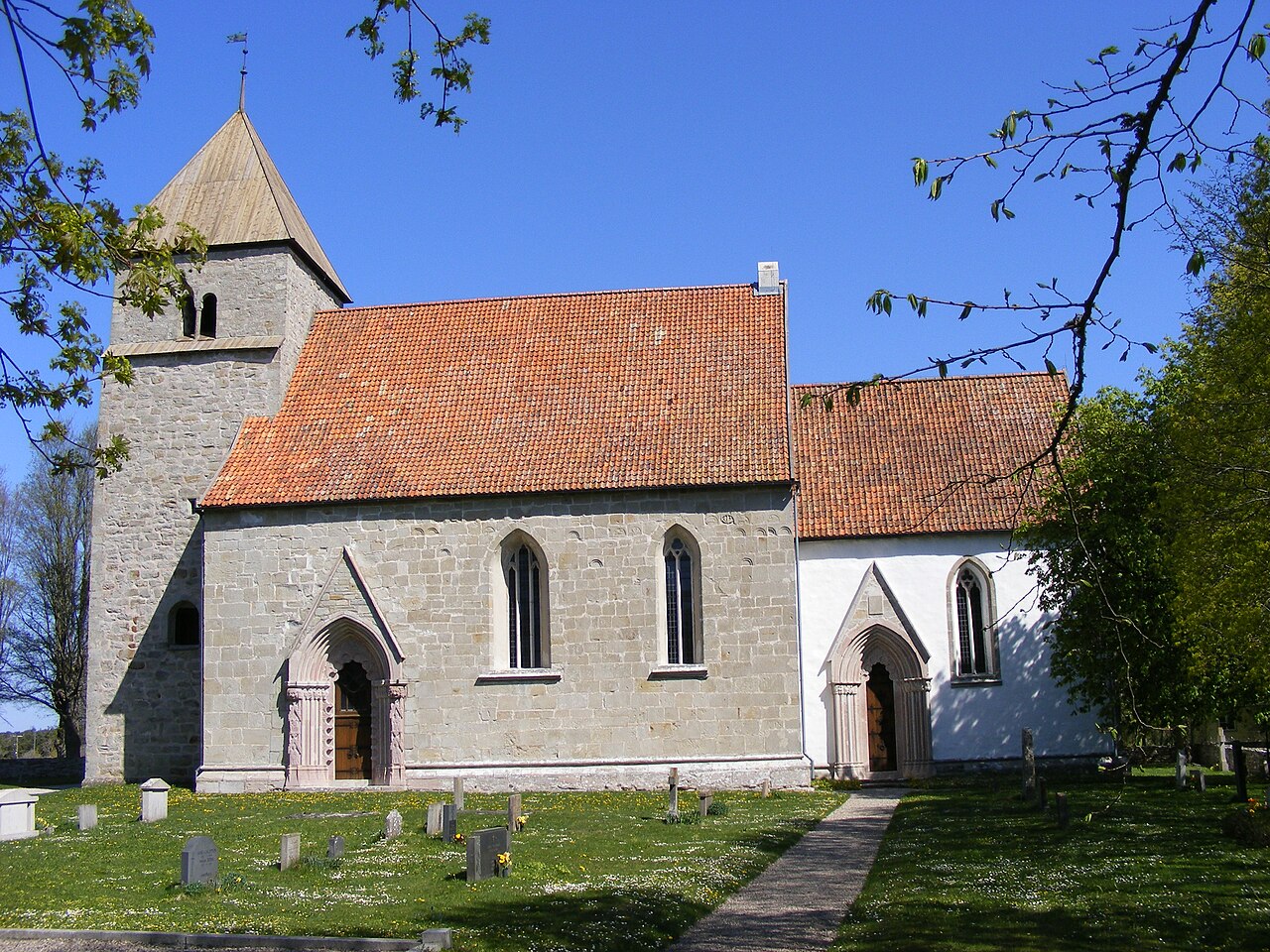
The Church that stands in Akeback now
The place where the church had been built was thus named Kulstäde,i.e. the charcoal place. Akebäck, where the first church on Gotland is said to have been located, is in Dede Thing. It is one of the most important Things on Gotland.
Gotland Roma 03.jpg
Within its borders lies not only Visby, which apparently is the Thing’s original harbour, but also Roma, which is an important central place in the middle of Gotland and the place for the Gutna Althingi.
Through Dede Thing goes the old main road from Roma over Akebäck and Träkumla straight to Visby. The antiquity of the road is confirmed by the chain of Iron Age tombs lining the road between Träkumlaand Visby.
“Some time later, it was sacrifice in Visby. There he built a second church. What is depicted in this section is not a local incident linked to Visby, but an event of decisive importance in the Gotlandic history, namely the last final battle for and against Christianity. On the Christian side is Botair of Akebäck, one of the leaders in Dede Thing, who against the Gutna Althingi defends his newly built church in Vi. He may thereby be supported by his father in law Likkair, who might have been ‘landsdomare’ i.e. leader of the Gutna Althingi,as it is said about him: ‘He ruled most at that time’.
Sankt Olofs kyrka i Gamla hamn.JPG
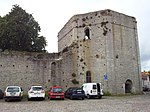
The ruins of the small church or chapel traditionally called the Church of Saint Olaf are quite small, the remains of the wall not reaching higher than c. 0.6 metres (2.0 ft). Adjacent to the church ruins lie the remains of a cemetery. 
Image result for stenkyrka
He had most to say on Gotland. Perhaps he pointed out that the church stood in a holy place – it was in Vi – where violence was not allowed to be committed. We know that several religions were allowed on Gotland. This meant that the church could remain.“Some time after that, his father-in-law Likkair Snielli had himself baptised, together with his wife,his children, and all his household, and he built a church on his farm, in the place now called Stenkyrka.
Hamlingbo kyrka.JPG
It was the first church on the island up in the northern most third. After the Gotlanders saw the customs of Christian people, they then obeyed God’s command and the teaching of priests. Then they received Christianity generally, of their own free will, without duress. No one forced them into  Christianity. After the general acceptance of Christianity, a church was built in Atlingbo. It was the first in the middle third.
 Then a third was built in Fardhemin the southernmost third. From those, church

es spread everywhere in Gotland, since men built themselves churches for greater convenience.Both the events described by the final decision, that the Church would remain, are apparently linked to one time and one place, namely Visby. If we dare connect it to the Patriarc Photius circular letter of 867, the Kulstäde incident should have taken place in the 870s, and the church in Vi built in 897, as

ow sets the founding of Visby to that year.
( Portal from the original church)
St Per och St Hans.JPGThe decision can thus be compared with the later Icelandic Althing decision of the year 1000, when Christianity was offcially introduced in Iceland. The seafaring Arab al-Tartûschî visited Hedeby, Visby, about the year 973 and says that there were a few Christians and a small church. He should have recognized this for he came nearest from Christian countries. Didal-Tartûschî , Botair’s church?
Ruins of St Pers and St Hans which was the name given to Botair Church.
Solberga kloster.JPG
Solberga Abbey  was a Cistercian nunnery, founded circa 1246. It was the only nunnery on Gotland. It remains unclear when the nuns abandoned the convent, but they did so at latest at the time of the Reformation. Nearby a medieval cross marks the spot of the Battle of Visby, fought in 1361
 What al-Tartûschîmeans by big city seems to indicate that he calls a monastery, Fulda, in the Frankish country, for a large city. Fulda consisted of several houses and was walled, fenced. He describes Hedeby as a large but poor city in the world ocean’s outer edge. He took particular note of the good supply of drinking water, the women’s free status and that a number of the inhabitants were Christian.
One of the reasons why Visby grew was the good supply of drinking water. Some researchers have presumed it to be Schleswig. However, Ansgar had already in 849 got permission to build a church in Sliaswic. It is more logical that it is Hejdeby on Gotland. Hejdeby stretches to Visby and no one knows the name of the place for the sacrifcial place (Vi)in the Viking Age.At the outermost edge of the world ocean’ fits better in with the place Vi, Visby, than with Slie storp,the name of the place in Frankish royal annals from the year 804, founded latest in 770 CE. Sliestorp-Schleswig-Sliaswic is located inland and notated the extreme edge of the ocean, while Visby may well seem to. 

Cemetery finds


On Gotland is a find category, called cemetery finds. Since the 1800s, on a wide range of Gotland’s more than 90 rural cemeteries, the grave digging and excavation for lightning conductors, etc. have come across skeletons of corpses. These have been buried with full sets of costume buckles and other jewelry, combs, knives, keys, etc., all in late Viking Age forms. This find category has puzzled the scientific researchers. However the cemetery finds on Gotland seem to be Christian, as evidenced by the fact that one can observe a strict separation of the graves of women north of the church, and the men in the south. This can not be done until there has been a church building.Similar tombs are found on Björkö, usually locally separated from the usual non-Christian graves.


List of church ruins on Gotland

There are in total nineteen known ruined churches on the Swedish island of Gotland, in the Baltic Sea twelve of which lie in Visby, the island’s main town. Of these, ten lie within the medieval city walls. Three additional church ruins in Visby are known through written sources, but today completely vanished.

Gotland began to gradually abandon Norse religion and adopt Christianity during the 11th century. While the earliest churches were wooden, construction of stone churches began during the 12th century. The church building period was fairly short; in the countryside stone churches were erected between the early 12th and mid-14th centuries, while in Visby the last churches were inaugurated during the 15th century.

Some of these churches have since fallen into ruin. Of the 94 medieval parish churches in the countryside, 91 are still in use. Three were abandoned following the Reformation, when parishes were merged, and some churches became superfluous. There are in addition three chapel ruins, or ruins of small churches, in the countryside. There are also the ruins of two Cistercian abbeys, one in the countryside and one just outside the city wall of Visby.

Although the exact number of churches that existed in Visby during the Middle Ages is unknown, there were certainly more than in any other Swedish city, and at least twelve within the city walls. Visby grew to become an important trading port during the Middle Ages, and most of the churches in the city were built during the 12th and 13th centuries.The churches were not, as in the countryside, only parish churches. Some belonged to abbeys, alms houses or served groups of traders of a specific nationality, such as the Russian Church or present-day Visby Cathedral, which was originally a church used by German traders.

Following the Black Death, the invasion of Gotland by Valdemar IV of Denmark and the Battle of Visby in 1361, and a general decrease in trade, Gotland entered a period of decline. From about 1361, building activity therefore dropped. The inauguration of Sankta Karin in 1412 marks the end of church building activity in Visby. When troops from Lübeck pillaged the city in 1525, and probably damaged several of the churches, the social and economic rationale for sustaining them had vanished. With the advent of the Reformation soon afterwards, the religious rationale to sustain the upkeep of the many churches also permanently disappeared. All monasteries were abolished and all churches within the city walls except one (present-day Visby Cathedral) were abandoned and left to decay. During the following centuries, some church ruins were used as quarries. In 1805 the church ruins were protected by law and in 1863 the Swedish state for the first time allocated money for their conservation.

Gunfiauns kapell (Ardre ödekyrka) - kmb.16001000151626.jpgArdre Church Ruin, also known as the chapel of Gunfjaun, was built during the 14th century in the medieval marketplace. According to tradition, the church was built in memory of Gunfjaun, the son of a local chieftain named Hafder. It is doubtful whether the church building ever was completed


Bara odekyrka Gotland Sverige (15).jpgBara Church Ruin seems to have been abandoned already in the 16th century. In 1588 the local population demanded that it should be re-opened and repaired. The parish was however merged with that of Hörsne Church and Bara Church left to decay. The church was built in the 13th century and shares some characteristics with Anga Church.


Ellinghem02.jpg

Ellinghem Church Ruin consists of the remains of a 13th-century church. The medieval altar has been preserved in place, and in 1923–24 the remains of the baptismal font were found during an archaeological excavation of the church. It is not known when the church was abandoned, but this probably happened at the beginning of the 17th century.


Ganns ödekyrka 10.jpgGann Church Ruin is a well-preserved ruin of a church probably abandoned during the 16th century. The choir and nave of the ruined church date from the middle of the 13th century, while the tower was added slightly later (late 13th century). The remains were renovated in 1924.


Helgeands ruin 2012-09-23 11-29-57.jpgThe ruins of the church dedicated to the Holy Spirit are one of the most unusual of the church ruins in Visby. They consists of an octagonal two-storeyed nave and a protruding choir. The church was erected during the 13th century. According to one theory, the church was built for Bishop Albert of Riga, who is known to have been on Gotland in the early 13th century to gather crusaders and missionaries to go with him to Livonia. The church became the almshouse of Visby in 1532, but by the early 17th century was apparently in a ruinous state and used as a barn.


Detail from map of Visby.jpgNo visible remains exist above ground of the so-called Russian Church. Archaeological excavations carried out in 1971 revealed the foundations of a small church under the floor of a house on Södra kyrkogatan street. It may have been one of possibly two churches for Russian traders in Visby during the Middle Ages


Sankta Karin Visby Gotland Sverige (6).jpgThe church of Saint Catherine was the church of a Franciscan convent. The convent was founded in 1233 and a first construction period took place c. 1235–1250. During the early 14th century reconstruction work on the church began, and was not finished until 1412, when the church was re-inaugurated. The abbey was disbanded during the 1520s, and the buildings were for a short while used as an almshouse before being completely abandoned.


Sankt Clemens Visby Gotland Sverige (4).jpgThe church dedicated to Saint Clement was probably erected during the middle of the 13th century, but its history remains opaque. It was probably preceded by a smaller, 12th-century church. In its present state, it is still considered a typical representative of 13th-century Visby churches


Ruine St.Drotten 2.jpgThe church was dedicated to the Holy Trinity but called Drotten after an old Norse word meaning Lord or King, i.e. referring to God. It is similar to Sankt Clemens but smaller and probably older. It seems to have been constructed mainly during the 13th and 14th centuries


Ruined church (3875572734).jpgThe church of Saint Nicholas was the abbey church of a Dominican abbey, founded before 1230. Its most famous prior was Petrus de Dacia. The church is possibly older than the abbey; the monks may have acquired an already existing church, or one under construction. Enlargement and reconstruction works were carried out until the late 14th century. The church and abbey were probably destroyed by troops from Lübeck in 1525


Sta Gertrud Visby.JPG

This small church or chapel was dedicated to Saint Gertrude of Nivelles. It is the smallest of the former churches in Visby. An excavation carried out in 1935 determined that it dates from the second half of the 15th century.


S-t Görans ruin 2012-09-23 11-14-35.jpgThe church was dedicated to Saint George and lies about 300 metres (980 ft) outside the city walls. It was originally tied to an almshouse for lepers nearby. The church is lacking in decorative elements and has therefore been difficult to date.   The choir and nave probably date from different periods. The choir is the oldest, perhaps from the late 12th or early 13th century, and the nave may date from the 13th century. The almshouse was shut down in 1542, but the cemetery continued to be used occasionally, e.g. during an outbreak of plague in 1711–12 and following an outbreak of cholera in the 1850s.


St Lars kyrkoruin.JPGThe patron saint of the church was Saint Lawrence. Construction of the church began during the second quarter of the 13th century. It was built by local stonemasons but in an unusual, cross-shaped form. Inspiration for this form probably came from Byzantine architecture and may have reached Gotland following the siege of Constantinople in 1204.


St Olofs kyrka.jpg


Three walls of a medieval chapel dedicated to Saint Olaf have been incorporated into a 19th-century barn. North east of the church a memorial cross was erected in 1959


Sankt Olofs kyrkoruin, Botaniska Trädgården, Visby.jpg

Very little remains of the church once dedicated to Saint Olaf in Visby.   It was probably a basilica built at the beginning of the 13th century


Preserving Our Past, Recording Our Present, Informing Our Future

Ancient and Honorable Clan Carruthers Int Society CCIS  LLc

carruthersclan1@gmail.com                   carrothersclan@gmail.com


cropped-coagraywide.jpg


You can find us on facebook at :

https://www.facebook.com/carrutherscarrothers.pat.9

https://www.facebook.com/CarruthersClan/

https://www.facebook.com/CarruthersClanLLC


Disclaimer Ancient and Honorable Carruthers Clan International Society CCIS LLC is the official licensed and registered Clan of the Carruthers Family.  This Clan is presently registered in the United States and Canada, and represents members worldwide.  All content provided on our web pages is for family history use only.  The CCIS is the legal owner of all websites, and makes no representation as to the accuracy or completeness of any information on these sites or by following any link provided. The CCIS will not be responsible for any errors or omissions or availability of any information. The CCIS will not be liable for any losses, injuries, or damages from the display or use of this information. We do not sell, trade or transfer to outside parties any personal identifications. For your convenience, we may provide links to various outside parties that may be of interest to you. The content on CCIS is design to support your research in family history.      ( CCIS -LLC copyright 2017 - 2020)


Uncategorized

Saxons, Goths, Gauls, Scoti and all

Clan Carruthers Int Society CCIS                               Promptus et Fidelis

ESSAY ON THE

Countries, Religion, Learning, Numbers, Forms of Government, and the chief’ Cause of the Succefles of| the Nations,

By which the ROMAN EMPIRE Was pulled Down.


This was written in 1714, and though interesting, not accurate as the information that we have today.


TH E Saxom, having been by the Greeks and Romans reckoned Superiour to all other barbarous Nations, as they were pleased to call them, for Wit, for Strength of Body, and the Enduring of the Toils of War, I should be unjust to our Ancestors, if I did not give them the Precedency here.

They were Originally a People in the CmIncus Cbersotiefus, and did live all along the Eastern Coast of the German, and the Southern Coast of the Baltick Seas. They were divided into several Nations, as the Attgliy who lived in the Country where the City of Slefwick Sleswick is now; the Juta, the Heruli, the Vemi, the Vandali, the Longobardi; and to which, the tfcofi, may, I believe, be added.

The Saxons having more Wit and Courage than their Neighbours, might think it hard that the wisest and bravest Men should have the worst Countries; so they invaded the Frifijt and having made themselves Masters of their Country, which was, Freezland, Holland, slanders, &c. or of all the Sea Coast at least, they wisely incorporated themselves with that Nation, and by that means they became stronger than they were before. And which the greatest Conquests do never make any People, but rather the Weaker, if the Natives be totally destroy’d, or drove away, or be preserved, but still as a distinct People, from those that conquered them.

The Saxons finding, that the employing of their Strength by Land against their Neighbours the Gauls, who were supported by the Romans, did turn to no Account, they applied themselves wholly to the Sea, of which they had now a very long Coast. And on that Element, Orofius saith, they were terrible, both for their Courage and their Agility; and being absolute Masters at Sea, they frequently visited the Coasts of Gaul and Britain; where having made Descents, they plundred the Country, returned Home, laden den with Spoils. And tho’ they now and then met with Blows ashore, at Sea they were in no Danger but from Storms j by this Means the Sea-Coast of Britain was better known to the Saxons than to the Britains themselves, long before they were invited by the Britains into it.

Of all the Saxons, or at least of all those that conquered the Southern Part of Britain, the Angli were the most considerable; and which Conquest, was, for that Reason called England, after their Name.

Celtic Warriors.


The Scoti are generally believed to be Irish, and to have come from Ireland into Britain. But tho’ it is certainly true of the High-Land Scots, who to this Day speak the Irijb Language, the Low-Land Scots do seem to have been a Saxon, or German, and not an Irish Nation. And that for three Reasons:

The First is, Its being manifest from the Notitia Imperii, that there was a German Nation called Acchaeni, and who are by Ammianus Marce Bintts said to have together with the Scoti much molested Britain. Now, besides the Affinity which there is betwixt these two Names, the Scoti and Acchaeni are spoke of by that Contemporary Learned Historian, as Neighbours and Confederates.

Secondly, The Scoti are by Giraldus Cam’ Irenfis, believing them to be a German People, called Goths.   (  *** Carruthers  *** )

ArtStation - Senons gaul warriors, Jose Daniel Cabrera Peña-French museum illustrations- Jose Daniel Cabrera Peña

Goth Warrior

But the Last, and chief Reason is, The Saxon Language being spoken all over the Low-lands of Scotland, to the most Northern Part of the Ifland. The very Name Scotland, and the Names of its Metropolis, and of its other great Towns and Counties, are plainly Saxon; and which could not have been, if that Country had not been Peopled by a Saxon Nation; no, not if they had conquered it, if they had not peopled it too: For tho* a Conquering Sword can change the Religion, the Government, and the Laws in its Conquests, their Languages will not be changed by it, whilst the Conquered do continue to be the Body of the People. So the Britains having been all either destroyed, or driven into a Corner of the Ifland, and their Country Peopled by Saxons, the Saxon Language came of course into it; whereas the Normans, who did likewise conquer England, and did all that was in their Power to have brought the French Language into it, were not able to do it; and the Reason was, because the English did, under the Norman Government, still continue to be the Body of the Nation; few Normans, besides those that were in their Armies, having come to settle themselves in England.

Celtic Warrior


So,for the same Reason the Goths, sandals, and Suevi, tho’ they conquered Spain, were not able to bring their Language into it ;. nor the Franci into Gaul, nor the Longobardi into Italy, their Languages, in defiance of their Swords, having been vanquished so by the Languages which they found in those Countries, as to be quite lost in the Second Generation. And in truth, the Saxons were the only Conquerors that brought their Language to be the Language of their Conquests, and to which they gave their Name also; as all the rest have done, except the Gcthi and Suevi. Gaul having been called France, from the Franks; the Southern Part of Spain, Andalufia, or Vandalufia, from the Vandals; the Cisalpine Gaul, Lombard) from the Longobards; one Part of Pannonia, Hungary, from the Huns; and another Part of it Sclavonia, from the Sclavi: The Normans likewise gave the Name of Normandy to that Part of France which they conquered, but were not able to change the Name of England. The Saxons gave the Name of Walish, that is Gaulish, to the Britains that remained, and from thence they came to be called Welch, and their Country Wales. The same Name was given to the Cisalpine Gauls by the Lombards when they conquered them ; and to this Day the People of that Country are called Walsh by the Germans,

But if the Britains were by the Saxons called Welch, or WaUaish, to signifie they were Foreigners or Strangers, as many say they were; it is a notable Instance of how I i little little a Superiour Power is concerned, whether what it saith be reasonable or not.


                                Goth Lowland Warrior

Tho’ we are not told when the Low-lands of Scotland were Conquered and Peopled by a Saxon Nation, call’d Scoti; yet since \*e do no where read of the Saxons, by whom the Southern Parts of Britain were Conquered, having ever Conquered, and much less Peopled those Northern Parts of it; there is great Reason to believe that it must have been done before the Time of that Southern Saxon Conquest; and that the Scoti spoken of in Britain before that time, were those Saxons who having destroy’d the Ficli, whom I do reckon to have been the Northern Britains, did, in process of time possess themselves of those Low lands.

Neither is Ireland having been formerly called Scotia Major, any Proof to the contrary: For as it is by later Historians that Ireland is called so, (o it is most probable that Ireland in latter times had that Name given it to distinguish it from the Scots High-lands which retained its Language, Habit, and Customs, and which having been conquered, tho* not Peopled by the Scoti, had come to be called Scotland.  ( The Carruthers ancestors of Gutland/Gotland are now know to have lived and battled in Ireland, Scotia Major and Lowlands of Scotland, Scoti prior to 400 A. D.)

But tho’ I am at present fully perswaded that this is the true Account of the Origine ot the Low land Scots; yet if any of the Learned Persons that are of another Opinion, will but (hew’ how the Saxon Language could be brought into that Country without its having been Peopled by Saxons, it will go a great way towards the bringing me over to them. The Time when the Scott came first into the Low-lanJs, and the Irish into the High-lands being unknown to me, I shall leave the Settling of that time to those who have looked into the Ancient Records of that Kingdom; tho’ I cannot but say, that Genuin Records, reaching to their Origine, are scarce Commodities in all Nations, tho’ there are few or none that do not pretend to have them.

(*** The Carruthers ancestors came before the time of the Saxons )

The Goths were a People of Scythia, on the North-side of the Euxine Sea; but having in Process of Time flitted, or removed from thence to Boryflenis, and the Mouths of the Ifter, they were there divided into Ostro-Gotbi, or Eastem-Goths, and Vifi-Gothi, or WellernGoths; and having been driven from those Seats by the Huns and Alans, they had leave from the Emperor Valence to settle themselves in Thracia and the adjacent Countries, as Confederates of the Roman Empire 5 and it was out of those Parts that the Goths did come, who made that Name so Famous by their great Conquests. I know there is a Royal Argument for the Conquering Goths having been a People of Denmark, and of Sweden, and of the adjacent Islands. The Sovereign Princes of those two Kingdoms, having upon that Supposition, taken upon I i z them the Title of the King of the Goths. But tho’ Crowns are great Things, Truth is greater, and which being more likely to be found in Contemporary Historians, than in Heralds, it must not, being met with in them, be sacrificed to any Deferences: Not that there might not be a People in those Northern Countries which were called Goths; but supposing there was, it is pretty certain that they were not the Famous Goths who erected the Great Monarchy in Spain and Gaul; and of this Magma Got bus was so sensible, that without any tolerable Authority he. will have his Country Gothsy to have Conquered and Peopled Scythia to^he very Palus Meotis, and to have been the Ancestors of the Goths, which came many Ages after from those Parts, and did raise that Name so high. Besides, that there is no Authority for all this, it has a natural Improbability in it, that renders it almost incredible: Which is, That People should go so sar, and toil and fight so much for no other purpose, but that they might settle themselves in worse Countries than their own, which they left. And if Gotht be a Corruption of Getœ, as probably it is, their first Country will be found about the Euxine, and not near the Baltick Sea, notwithstanding the Island that is in it, and the Country that is near it, called Gotland, or Gutland, for so they are called by their Inhabitants. Now, whether Goty or

Gut, Gut, in the beginning of those Names, was derived from the Goths, or from some other Word, I shall leave to the Enquiry of those who understand the SweJi/h Tongue: But this I am sure of, that in English there are Names that begin with Goth and Got, as Gotheridge, Gothill, and Gotacre, that were not called so from that People, but were, I suppose, called so from the Word God, or the Word Good.

The Vandals, of whom the two fore-mentioned Princes do likewise stile themselves • Kings, were not of any of their Countries, tho’ they were much nearer to them than the Goths; the Vandals being a Nation of the Saxens, and did all live on the South Side of the Baltick Sea.

The Franci were several German Nations, who lived on the East-fide of the Lower-Rhine; and who having Confederated together, did all take upon them the Name of Franci, or Freemen; thereby declaring, That they were resolved to perish, rather.than become Tributaries to the Romans, as their Neighbours the Gauls were.

The Suevi were a great German People oil the Upper-Rhine; reaching from the top of that River, to the River Albis; they and their neighbouring Nations did take on them the Name of Alamans, much about the same time, and with the same generous Intention that the German Nations on the Lower-Rine, took on them the Name of Fraud; and as , if they reckoned, that a conquered People did not deserve the Name of Men, by that new Name of Alamans, or All men, they declared they would die, rather than be conquered.

The Longobardi, called so by the Romans, for their Long Beards, were a Saxon Nation, who lived in that Country which is now called Brandenburg; and who having in Italy conquered G a Ilia Cisalpina, did give it the Name of Longobardi, now Lombardy.

Besides these I have mentioned, there were Twenty German Nations more, but which having all long ago funk into some of the fore-mentioned, I thought it was needless to name them here.

The Sclavi were a People that lived in the Countries, which are now called Poland and Lithuania; and it is very plain from their Language, and which is spoke to this Day in those Countries, that they were no German Nation; in process of time they either conquered, or dipt into Sclavonia, and the Countries about it; when the former Inhabitants had left them in a manner, and were gone with the Goth in quest of better Countries: Many of the Sclavi having been taken, and made Bond-men in the Time of Charles the Great, did in France, and in other Parts, give the Name of Slaves to- all Bond’ men.

The

The Huns were an Afiatick Scythian Nation, who lived beyond the Palus Mœotis, as did the Alans also, who having been beat by the • Huns, joyned with them when they swarmed into the European Scythia • where driving the Gotbs before them, they advanced as sar as Fannonia, and having fixed their Seat there, did give it the Name of Hungary.

Gallic cavalry charging into battleThe Gauls were for Numbers and Extent of Land, the greatest People we read of any where; for of that Nation I do reckon the Spaniards, Britains and Irish, to have been, no less than the Inhabitants of the two GalHas, one of which is now called Lombardy, and the other which is now called France, did reach from the Atlantick Ocean, to the Western Banks of the Rhine. And whose Language is spoke no where now but in Wales, Ireland^ and the Highlands of Scotland, and in those Countries in Dialects so different, that I am told the Welsh and Irish do not understand one another.

[ocr errors]

Of the Religion and Learning of these Countries.

SU C H of these Nations as Were German, did all speak the same Language, and worship the same Gods 5 the Memory of four of which Gods is still preserved, in all Parts where the German Tongue is spoke, in the Names of Four of the Days of the Week; to wit, Tuesday, Wednesday, Thursday and Friday. Verfi ‘tgan will have the other three Days of the Week to have had their Names likewise from the Three German Gods, Sun, Moon and Seater: But considering, that these Days among the Romans, did bear the Names of the same Three Gods; it is more probable that the Germans had those Names from the Romans, than that the Romans had them from the Germans.

In their Worship they were all involved in the Inhumanity of offering Men, Women and Children alive in Sacrifice to their Gods,• in which, tho’ it was an abominable Barbarity, they were so sar from being singular, that it was the Practice of the Gauls likewise, and at one time or another of all the Idolatrous Nations on the Earth; and we fee that to keep the Jews from it, was not an easy Matter.

For Learning it does not appear that they had any, no not so much as the Knowledge of Letters; tho’ a certain Romantick Writer, will have them to have been great Masters in the Vithagorean Philosophy; but tho* they had among them no Clergy or Learning, it appears from their excellent Constitution of Government, that they wanted not Mother-Wit, or true Wisdom. The Laws brought by them into their Conquests, which were the Feudal, are likewise a plain Proof, that tho’ they wanted Learning, and for that Reason were called Barbarians, by the4 Nations that abounded with it; yet that they wanted not Policy.

The Huns and Alans who were A/iaticks, are by Jornandes said to have had no Religion nor Superstition, or if they did worship any God, that it was their Sword to which, sticking it in the Ground, they did use to pay some Reverences.

The First of these Nations that turned Christian, were the Goths and Suevi; but they having been converted to that Faith by Arian Bishops, sent to them by the Emperor Vaknsy who was himself an. Arian, did long adhere to that Heresy, but were converted from it about an hundred Years before their great Monarchy in Spain was destroy’d by the Moors. The Franks were likewise converted early, and in Process of Time the Saxws, and all the rest of these Nations; and notwithstanding before several of their Conversions, Christianity was corrupted with a Mixa Mixture of divers Heathenish Superstitions; its true and genuine Doctrines, were nevertheless so powerful, as to mollifie their natural Ferity and Savagenefs very much, and to civilize their Manners in all the Relations of Life.

Of these Nations great Numbers.

IT has been long a Matter of some Wonder, how the barren Countries out of which the Swarms of Men came, that lighted lo heavy on the Roman Empire, should then be so much more fertil of People, than they have ever been since; and this prodigious Fertility having been looked on as a thing certain, there have been divers Speculations about the Causes of it. It is by Mariana attributed to two Things, the one is the Northern People being, by reason of the Cold of their Climate, more prolifick than the Southern; and the other is promiscuous Veneries having been in use among them. The First is no Realon at all, for those Countries being then more populous than they are now, the Climate being still the same, and as cold as ever it was. And the Second, however it may appear in Speculation, does seem to have Experience against it. The Countries in which Plurality of Wives, and pro: promiscuous Venery are allowed, being observed not to be so populous, as the Countries where both those Liberties are prohibited.

It was the finding it not to be easy, to give a satissactory Reason for this supposed extraordinary Fertility, that first led me to examine the Evidences upon which it has been so generally believed; and upon as severe an Enquiry as I was able to make, those Evidences did not appear to me to be strong enough, to make that Matter indubitable, and that for the three following Reasons.

First, Because unless we knew the certain Bounds of those Countries, and which we are very sar from knowing, we cannot judge by the great Armies that went out of them, whether they were extraordinary populous, or no: For tho’ a Country that is certainly known to be small, having sent forth great Armies, is a Proof of its being very populous at that Time; it is no Evidence at all, of a vast Country’s being so.

Secondly, Because tho the chief Nation in those Expeditions did bear the Name of the whole, yet since several neighbouring Nations, the Extent of whose Lands is not known, might joyn with them in the forming of those great Armies; as in Fact they did, their having cast such great Swarms, can be no Evidence of their having been extraordinary populous.

Thirdly, If in tjiose Countries, all that were fit to bear Arms went into the Armies, as it is very probable they did, their Armies might be as great ,as any of them are said to have been, and yet their Countries not have been very populous: Considering, how by reason of their simple, rustick, and frousy Way of living, they had few or no Artificers or Trades-men among them; and who in polite Countries, are a great Part of the People; so that they had none among them, that had Strength enough to carry Arms, that were not fit to use them; having been all bred up to Hunting, and to other man-like Exercises, which fitted them for Soldiers. Besides, great Multitudes of Women, and who are said to have been as warlike as the Men, went along with those Armies; and who, whether they fought or not, would to the Eye make them look more numerous, than they would have looked otherwise. Neither have we any Reason to think, that the Persons from whom we have the Accounts of the Numbers that were in those Armies, did ever either muster them, or tell them, but did guess at their Numbers by their own, or other Peoples Eyes; and there is not any thing our Eyes so grofly impose on us in, as in Numbers, which if great, are judged by the Eye to be double to what they are. Now adding to all this, that those Countries have in them at this Time, many great great Cities and Towns, filled with Artificers and Trades-Men, and which they had not then; one may, I think, venture to affirm, that it was not unlikely that they have more People in them now, than they had in those Days, tho’ not so many that are fit for Soldiers: For it must be no great Country now, that has not zooooo Men in it, strong enough to carry Arms, and that was the Number of one of the greatest of thoseeA.rmies, and which we have Reason to believe was taken by the Eye, and not by the Poll, and that Provinces were emptied so by their having gone out of them, that if double that Number of People went out of the lame Provinces now, they would leave more behind them. So the High-lands of Scotland, tho’ they are by much the least populous Parts of that Kingdom, yet by Reason of the same simple and course way of Living, and their Peoples being bred up to the same Exercises, will in Proportion to their Numbers, presently furnish more that are fit to be Soldiers, than the more populous Low-lands; and it is for the same Reason the same with the Irish, and the Provinces in which they are planted.

MICHAEL GEDDES, L. L.D. and Chancellor of the Church of Sarum.
written in 1714
Gutland / Gotland, The History of Gutland, The Viking Age, Uncategorized

Hoards of the Vikings From Gutland

Clan Carruthers Int Society CCIS                                        Promptus et Fidelis


Hoards of the Vikings


There were various waves of Aachen-men or Ashmen that carried the Carruthers DNA markers that came from Gutland to Scotland, one wave in 450 AD and one 900 AD.  This article gives you a good idea of what their life was like based on archaeological findings.

Evidence of trade, diplomacy, and vast wealth on an unassuming island in the Baltic Sea.

The accepted image of the Vikings as fearsome marauders who struck terror in the hearts of their innocent victims has endured for more than 1,000 years. Historians’ accounts of the first major Viking attack, in 793, on a monastery on Lindisfarne off the northeast coast of England, have informed the Viking story. “The church of St. Cuthbert is spattered with the blood of the priests of God,” wrote the Anglo-Saxon scholar Alcuin of York, “stripped of all its furnishings, exposed to the plundering of pagans….Who is not afraid at this?” The Vikings are known to have gone on to launch a series of daring raids elsewhere in England, Ireland, and Scotland. They made inroads into France, Spain, and Portugal. They colonized Iceland and Greenland, and even crossed the Atlantic, establishing a settlement in the northern reaches of Newfoundland.


But these were primarily the exploits of Vikings from Norway and Denmark. Less well known are the Vikings of Sweden. Now, the archaeological site of Fröjel on Gotland, a large island in the Baltic Sea around 50 miles east of the Swedish mainland, is helping advance a more nuanced understanding of their activities. While they, too, embarked on ambitious journeys, they came into contact with a very different set of cultures—largely those of Eastern Europe and the Arab world. In addition, these Vikings combined a knack for trading, business, and diplomacy with a willingness to use their own brand of violence to amass great wealth and protect their autonomy.


Gotland Viking Frojel Site

(Daniel Weiss)

At Fröjel, a Viking Age site on the west coast of Gotland, archaeologists search for evidence of a workshop that included a silver-smelting operation.

Gotland today is part of Sweden, but during the Viking Age, roughly 800 to 1150, it was independently ruled. The accumulation of riches on the island from that time is exceptional. More than 700 silver hoards have been found there, and they include around 180,000 coins. By comparison, only 80,000 coins have been found in hoards on all of mainland Sweden, which is more than 100 times as large and had 10 times the population at the time. Just how an island that seemed largely given over to farming and had little in the way of natural resources, aside from sheep and limestone, built up such wealth has been puzzling. Excavations led by archaeologist Dan Carlsson, who runs an annual field school on the island through his cultural heritage management company, Arendus, are beginning to provide some answers.


Traces of around 60 Viking Age coastal settlements have been found on Gotland, says Carlsson. Most were small fishing hamlets with jetties apportioned among nearby farms. Fröjel, which was active from around 600 to 1150, was one of about 10 settlements that grew into small towns, and Carlsson believes that it became a key player in a far-reaching trade network. “Gotlanders were middlemen,” he says, “and they benefited greatly from the exchange of goods from the West to the East, and the other way around.”


Hoards of the Vikings
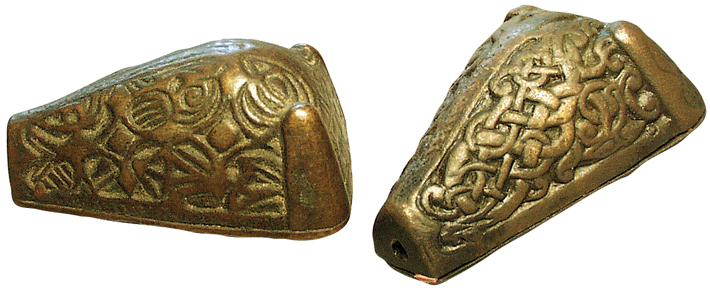
Gotland Viking Brooch

Situated between the Swedish mainland and the Baltic states, Gotland was a natural stopping-off point for trading voyages, and Carlsson’s excavations at Fröjel have turned up an abundance of materials that came from afar: antler from mainland Sweden, glass from Italy, amber from Poland or Lithuania, rock crystal from the Caucasus, carnelian from the East, and even a clay egg from the Kiev area thought to symbolize the resurrection of Jesus Christ. And then, of course, there are the coins. Tens of thousands of the silver coins found in hoards on the island came from the Arab world.


Many Gotlanders themselves plied these trade routes. They would sail east to the shores of Eastern Europe and make their way down the great rivers of western Russia, trading and raiding along the way at least as far south as Constantinople, the capital of the Byzantine Empire, via the Black Sea. Some reports suggest that they also crossed the Caspian Sea and traveled all the way to Baghdad, then the capital of the Abbasid Caliphate.


Entire Viking families are believed to have made their way east. “In the beginning, we thought it was just for trading,” says Carlsson, “but now we see there was a kind of settlement. You find Viking cemeteries far away from the main rivers, in the uplands.” Other evidence of Scandinavian presence in the region is plentiful. As early as the seventh century, there was a Gotlandic settlement at Grobina in Latvia, just inland from the point on the coast closest to Gotland. Large numbers of Scandinavian artifacts have been excavated in northwest Russia, including coin hoards, brooches, and other women’s bronze jewelry. The Rus, the people that gave Russia its name, were made up in part of these Viking transplants. The term’s origins are unclear, but it may have been derived from the Old Norse for “a crew of oarsmen” or a Greek word for “blondes.”
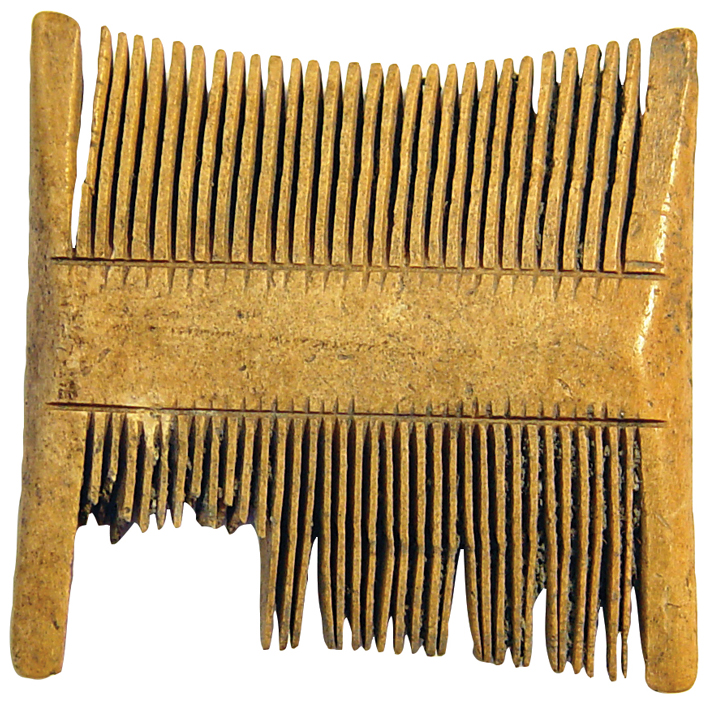
 

Gotland Viking Comb

(Courtesy Dan Carlsson)

Combs such as this one, excavated at Fröjel, were made locally of antler imported from mainland Sweden.

To investigate the links between the Gotland Vikings and the East, Carlsson turned his attention to museum collections and archaeological sites in northwest Russia. “It is fascinating how many artifacts you find in every small museum,” he says. “If they have a museum, they probably have Scandinavian artifacts.” For example, at the museum in Staraya Ladoga, east of St. Petersburg, Carlsson found a large number of Scandinavian items, oval brooches from mainland Sweden, combs, beads, pendants, and objects with runic inscriptions, and even three brooches in the Gotlandic style dating to the seventh and eighth centuries. Scandinavians were initially drawn to the area to obtain furs from local Finns, particularly miniver, the highly desirable white winter coat of the stoat, which they would then trade in Western Europe. As time went on, Staraya Ladoga served as a launching point for Viking forays to the Black and Caspian Seas.
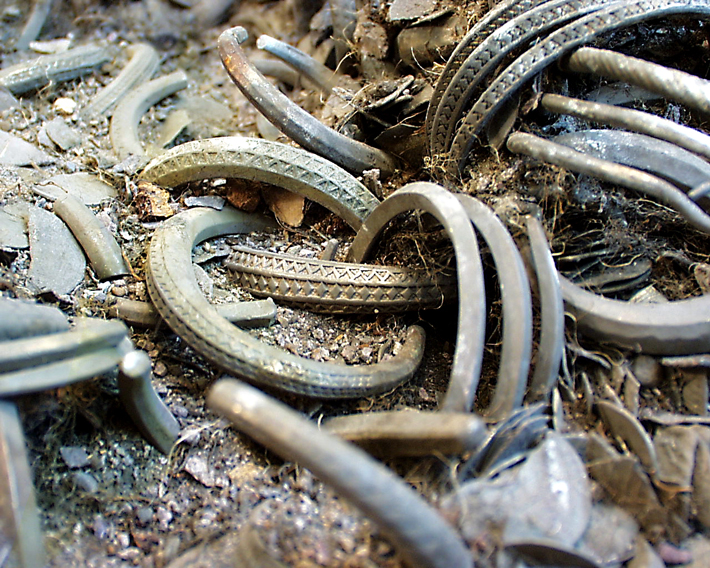
Gotland Viking Spillings Hoard

These journeys entailed a good deal of risk. The route south from Kiev toward Constantinople along the Dnieper River was particularly hazardous. A mid-tenth-century document by the Byzantine emperor Constantine VII Porphyrogenitus tells of Vikings traveling this stretch each year after the spring thaw, which required portaging around a series of dangerous rapids and fending off attacks by local bandits known as the Pechenegs. The name of one of these rapids—Aifur, meaning “ever-noisy” or “impassable”—appears on a runestone on Gotland dedicated to the memory of a man named Hrafn who died there.

People from the East may have traveled back to Gotland with the Vikings as well. At Fröjel, Carlsson has uncovered two Viking Age cemeteries, one dating from roughly 600 to 900, and the other from 900 to 1000. In all, Carlsson has excavated around 60 burials there, and isotopic analysis has shown that some 15 percent of the people whose graves have been excavated—all buried in the earlier cemetery—came from elsewhere, possibly the East.


In their voyages, the Vikings of Gotland are thought to have traded a broad range of goods such as furs, beeswax, honey, cloth, salt, and iron, which they obtained through a combination of trade and violent theft. This activity, though, doesn’t entirely account for the wealth that archaeologists have uncovered. In recent years, Carlsson and other experts have begun to suspect that a significant portion of their trade may have consisted of a commodity that has left little trace in the archaeological record: slaves. “We still have some problems in explaining what made this island so rich,” says Carlsson. “We know from written Arabic sources that the Rus—the Scandinavians in Russia—were transporting slaves. We just don’t know how big their trading in slaves was.”


According to an early tenth-century account by Ibn Rusta, a Persian geographer, the Rus were nomadic raiders who would set upon Slavic people in their boats and take them captive. They would then transport them to Khazaria or Bulgar, a Silk Road trading hub on the Volga River, where they were offered for sale along with furs. “They sell them for silver coins, which they set in belts and wear around their waists,” writes Ibn Rusta. Another source, Ibn Fadlan, a representative of the Abbasid Caliph of Baghdad who traveled to Bulgar in 921, reports seeing the Rus disembark from their boats with slave girls and sable skins for sale. The Rus warriors, according to his account, would pray to their gods: “I would like you to do me the favor of sending me a merchant who has large quantities of dinars and dirhams [Arab coins] and who will buy everything that I want and not argue with me over my price.” Whenever one of these warriors accumulated 10,000 coins, Ibn Fadlan says, he would melt them down into a neck ring for his wife.


It is unclear whether the Vikings transported Slavic slaves back to Gotland, but the practice of slavery appears to have been well established there. The Guta Lag, a compendium of Gotlandic law thought to have been written down in 1220 includes rules regarding purchasing slaves, or thralls. “The law says that if you buy a man, try him for six days, and if you are not satisfied, bring him back,” says Carlsson. “It sounds like buying an ox or a cow.” Burials belonging to people who came from places other than Gotland are generally situated on the periphery of the graveyards with fewer grave goods, suggesting that they may have occupied a secondary tier of society—perhaps as slaves.
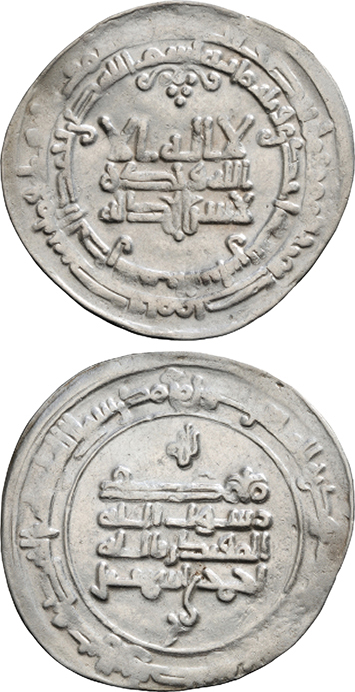
Gotland Arab Coin VerticalFor the Gotland Vikings, accumulation of wealth in the form of silver coins was clearly a priority, but they weren’t interested in just any coins. They were unusually sensitive to the quality of imported silver and appear to have taken steps to gauge its purity. Until the mid-tenth century, almost all the coins found on Gotland came from the Arab world and were around 95 percent pure. According to Stockholm University numismatist Kenneth Jonsson, beginning around 955, these Arab coins were increasingly cut with copper, probably due to reduced silver production. Gotlanders stopped importing them. Near the end of the tenth century, when silver mining in Germany took off, Gotlanders began to trade and import high-quality German coins. Around 1055, coins from Frisia in northern Germany became debased, and Gotlanders halted imports of all German coins. At this juncture, ingots from the East became the island’s primary source of silver.


Interestingly, when a silver source from the Arab or German world slipped in quality, Jonsson points out, and the Gotlanders rapidly cut off the debased supplies, their contemporaries on mainland Sweden and in areas of Eastern Europe did not. “Word must have spread around the island, saying, ‘Don’t use these German coins anymore!’” says Jonsson. To test imported silver, Gotlanders would shave a bit of the metal with a knife so its contents could be assessed based on color and consistency, says Ny Björn Gustafsson of the Swedish National Heritage Board. He notes that many imported silver items found on Gotland were “pecked” in this way, and that Gotlanders may also have tested imported coins by bending them. By contrast, silver items thought to have been made on Gotland—including heavy arm rings with a zigzag pattern pressed into them—were not generally pecked or otherwise tested. “My interpretation,” Gustafsson says, “is that this jewelry acted as a traditional form of currency and was assumed to contain pure silver.”


These arm rings are among the most commonly found items in Gotland’s hoards, along with coins, and experts had long assumed they were made on the island, but no evidence of their manufacture had been found until Carlsson’s team uncovered a workshop area at Fröjel. “We found the artifacts exactly where they had been dropped,” says Carlsson. There are precious stones: amber, carnelian, garnet. There are half-finished beads, cracked during drilling and discarded. There is elk antler for crafting combs. There is also a large lump of iron, as well as rivets for use in boats, coffins, and storage chests. And, providing evidence of a smelting operation, there are drops of silver.


Researchers found that the metalworkers of Fröjel used an apparatus called a cupellation hearth to transform a suspect source of imported silver, such as coins or ingots, into jewelry or decorated weapons with precisely calibrated silver content. They would melt the silver source with lead and blow air over the molten mélange with a bellows, causing the lead and other impurities to oxidize, separate from the silver, and attach to the hearth lining. The resulting pure silver would then be combined with other metals to produce a desired alloy. The cupellation technique is known from classical times, says Gustafsson, but so far this is the first and only time such a hearth has been found on Gotland. Only one other intact example from the Viking Age has been found in Sweden, at the mainland settlement of Sigtuna.
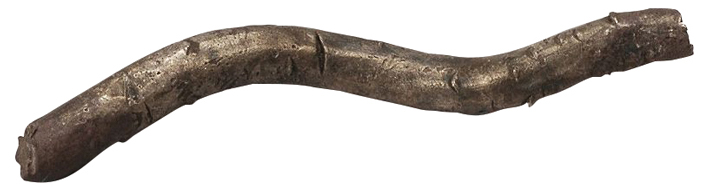
 

Gotland Viking Imported Silver

(Photo by: Ny Björn Gustafsson/The Swedish History Museum)

This imported silver piece found on Gotland shows signs of “pecking,” where a bit of metal was gouged out to test its purity.

Traces of lead and other impurities were found embedded in pieces of the cupellation hearth among the material excavated from the workshop area at Fröjel. The hearth has been radiocarbon dated to around 1100. Also unearthed from the workshop area were fragments of molds imprinted with the zigzag patterns found on Gotlandic silver arm rings, establishing that they were, in fact, made on the island—and that the workshop was the site of the full chain of production, from metal refinement to casting. “We have these silver arm rings in many hoards all over Gotland,” says Carlsson. “But we never before saw exactly where they were making them.”


During the Viking Age, Gotland seems to have been a more egalitarian society than mainland Sweden, which had a structure of nobles led by a king dating from at least the late tenth century. On Gotland, by contrast, farmers and merchants appear to have formed the upper class and, while some were more prosperous than others, they shared in governance through a series of local assemblies called things, which were overseen by a central authority called the Althing. According to the Guta Saga, the saga of the Gotlanders, which was written down around 1220, an emissary from Gotland forged a peace treaty with the Swedish king, ending a period of strife with the mainland Swedes. The treaty, believed to have been established in the eleventh century, required Gotland to pay an annual tax in exchange for continued independence, protection, and freedom to travel and trade.

Stratification did increase on the island as time passed, though. Archaeologists have found that, throughout the ninth and tenth centuries, silver hoards were distributed throughout Gotland, suggesting that wealth was more or less uniformly shared among the island’s farmers. But around 1050, this pattern shifted. “In the late eleventh century, you start to have fewer hoards overall, but, instead, there are some really massive hoards, usually found along the coast, containing many, many thousands of coins,” says Jonsson. This suggests that trading was increasingly controlled by a small number of coastal merchants.


This stratification accelerated near the end of the Viking Age, around 1140, when Gotland began to mint its own coins, becoming the first authority in the eastern Baltic region to do so. “Gotlandic coins were used on mainland Sweden and in the Baltic countries,” says Majvor Östergren, an archaeologist who has studied the island’s silver hoards. Whereas Gotlanders had valued foreign coins based on their weight alone, these coins, though hastily hammered out into an irregular shape, had a generally accepted value. More than eight million of these early Gotlandic coins are estimated to have been minted between 1140 and 1220, and more than 22,000 have been found, including 11,000 on Gotland alone.
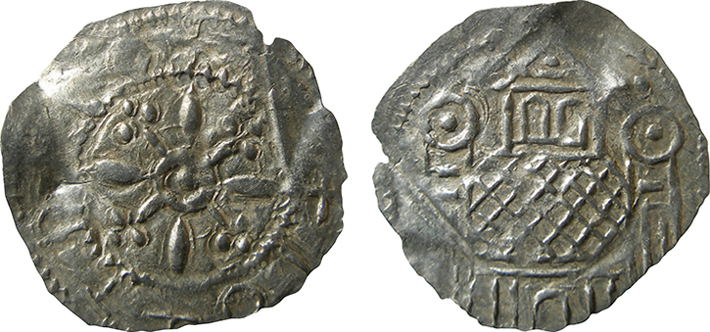
 

Gotland Minted Coin Horizontal

(Nanouschka Myrberg Burström)

An example of one of the earliest silver coins minted on Gotland (obverse, left; reverse, right) dates from around 1140.


Gotland is thought to have begun its coinage operation to take advantage of new trading opportunities made possible by strife among feuding groups on mainland Sweden and in western Russia. This allowed Gotland to make direct trading agreements with the Novgorod area of Russia and with powers to the island’s southwest, including Denmark, Frisia, and northern Germany. Gotland’s new coins helped facilitate trade between its Eastern and Western trading partners, and brought added profits to the island’s elite through tolls, fees, and taxes levied on visiting traders. In order to maintain control over trade on the island, it was limited to a single harbor, Visby, which remains the island’s largest town. As a result, the rest of Gotland’s trading harbors, including Fröjel, declined in importance around 1150.


Gotland remained a wealthy island in the medieval period that followed the Viking Age, but, says Carlsson, “Gotlanders stopped putting their silver in the ground. Instead, they built more than 90 stone churches during the twelfth and thirteenth centuries.” Although many archaeologists believe that the Gotland Vikings stashed their wealth in hoards for safekeeping, Carlsson thinks that, just as did the churches that were built later, they served a devotional purpose. In many cases, he argues, hoards do not appear to have been buried in houses but rather atop graves, roads, or borderlands. Indeed, some were barely buried at all because, he argues, others in the community knew not to touch them. “These hoards were not meant to be taken up,” he says, “because they were meant as a sort of sacrifice to the gods, to ensure a good harvest, good fortune, or a safer life.” In light of the scale, sophistication, and success of the Gotland Vikings’ activities, these ritual depositions may have seemed to them a small price to pay.


Daniel Weiss

Preserving Our Past, Recording Our Present, Informing Our Future

Ancient and Honorable Clan Carruthers Int Society CCIS  LLc

carruthersclan1@gmail.com


cropped-coagraywide.jpg


Disclaimer Ancient and Honorable Carruthers Clan International Society CCIS LLC is the official licensed and registered Clan of the Carruthers Family.  This Clan is presently registered in the United States and Canada, and represents members worldwide.  All content provided on our web pages is for family history use only.  The CCIS is the legal owner of all websites, and makes no representation as to the accuracy or completeness of any information on these sites or by following any link provided. The CCIS will not be responsible for any errors or omissions or availability of any information. The CCIS will not be liable for any losses, injuries, or damages from the display or use of this information. We do not sell, trade or transfer to outside parties any personal identifications. For your convenience, we may provide links to various outside parties that may be of interest to you. The content on CCIS is design to support your research in family history.      ( CCIS -LLC copyright 2017 - 2020)



Gutland / Gotland, Uncategorized

CLAN CARRUTHERS – GYMIR

CLAN CARRUTHERS INT SOCIETY CCIS                    PROMPTUS ET FIDELIS


cropped-wide-banner-with-new-crest.jpg


GYMIR

The giant Gymir lives in the sheltered mountain range of western Jotunbok,  His hall is surrounded by a wall of flames to keep out the intruders , as he is extremely wealthy.  He is one of the giants who trade regularly with Vanaheim, and the fact that his daughter is married to Frey, one of the Lords of the Vanir, helps him a great deal in his trading.  He is a doting and permissive father, and a canny businessman.


According to the Eddic poems Skírnismál and Hyndluljóð, Gymir and his wife Aurboða are Gerð’s and her brother Beli’s parents. He is also listed as a distinct cousin to Thjazi. In the Prose Edda, Snorri Sturluson gave this information in Gylfaginning but in a list of kennings in Skáldskaparmál equates Gymir with the god and giant Ægir, citing a verse by Hofgarða-Refr Gestsson where the kenning in question probably simply substitutes one giant-name for another. Gymir is also equated with Ægir in the prose introduction to Lokasenna; however, the Nafnaþulur added later to the Prose Edda list him among the giants.

He is credited to live in a great house in Jotunheim surrounded by dogs. Gymir has usually been interpreted as a sea-giant, but Magnus Olsen regarded him as an earth giant in connection with his interpretation of Skírnismál in light of the hieros gamos and he has also been seen as a chthonic deity. Suggestions as to the etymology and meaning of his name include ‘earthman’, ‘the wintry one’, ‘the protector’ and ‘the bellower’.

According to John Lindow, one source calls Gerð’s father Geysir.


Perserving the Past, Recording the Present, Informing the Future

Ancient and Honorable Carruthers Clan Int Society LLC

carruthersclan1@gmail.com   carrothersclan@gmail.com

cropped-wider-banner-light-blue-1.jpg


You can find us on facebook at :

https://www.facebook.com/carrutherscarrothers.pat.9

https://www.facebook.com/CarruthersClan/

https://www.facebook.com/CarruthersClanLLC


Disclaimer Ancient and Honorable Carruthers Clan International Societ


DNA Gotland, Gutland / Gotland, OUR ANCESTORS, Uncategorized

OUR NORSE DNA CONNECTION – CLAN CARRUTHERS CCIS

cropped-wide-banner-with-new-crestnorse

OUR NORSE DNA CONNECTION

HAPLOGROUP l1 : CARRUTHERS DNA PATH CTS11603 – CTS6364

Proof that the Carruthers are from Gutland/Gotland

Distribution of Haplogroup I1 in Europe

Haplogroup I1 is the most common I subclade in northern Europe. It is found mostly in Scandinavia and Finland, where it typically represent over 35% of the male Y-chromosomes. Associated with the Norse ethnicity, I1 is found in all places
invaded by ancient Germanic tribes and the Vikings. Other parts of Europe speaking Germanic languages come next in frequency. Germany, Austria, the Low Countries, England and the Scottish Lowlands all have between 10% and 20% of I1
lineages

ORIGINS AND HISTORY

Haplogroup I is the oldest major haplogroup in Europe and in all probability the only one that originated there (apart from very minor haplogroups like C6 and deep subclades of other haplogroups). It is thought to have arrived from the Middle East as haplogroup IJ sometime between 45,000 and 50,000 years ago, and developed into haplogroup I approximately 40,000 years ago. It has now been confirmed by ancient DNA test that Cro-Magnons, the first Homo sapiens to colonize Europe 45,000 years ago, belonged to haplogroups BT, CT, C, F, IJ and I.
The I1 branch is estimated to have split away from the rest of haplogroup I some 27,000 years ago. I1 is defined by over 300 unique mutations, which indicates that this lineage experienced a serious population bottleneck. Most of the Late Glacial and Mesolithic remains tested to date belonged to haplogroup I* or I2. It is not yet clear in which part of Europe I1 originated. It has been speculated that I1 evolved in isolation in Scandinavia during the late Upper Paleolithic and Mesolithic periods, when hunter-gatherers from southern Europe recolonised the northern half of the continent from their LGM refugia. The oldest attested evidence of postglacial resettlement of Scandinavia dates from 11,000 BCE with the appearance of the Ahrensburg culture . However, five Y-DNA samples from Mesolithic Sweden, dating from c. 5800 to 5000 BCE and tested by Lazaridis et al. 2013 and Haak et al. 2015 all turned out to belong to haplogroup I2.
The earliest sign of haplogroup I1 emerged from the testing of Early Neolithic Y-DNA from western Hungary (SzécsényiNagy et al. 2014 ). A single I1 sample was identified alongside a G2a2b sample, both from the early Linear Pottery (LBK)
culture , which would later diffuse the new agricultural lifestyle to most of Poland, Germany and the Low Countries. This means that haplogroup I1 was present in central Europe at the time of the Neolithic expansion.

download (2)I

t is therefore possible that I1 lineages were among the Mesolithic European hunter-gatherers assimilated by the wave of East Mediterranean Neolithic farmers (represented chiefly by Y-haplogroup G2a). There is also evidence from the Neolithic samples of the Early Neolithic Starčevo and Cardium Pottery cultures that haplogroup I2a lived alongside G2a farmers
both in south-east and south-west Europe.
The most likely hypothesis at present is that I1 and I2 lineages were dispersed around Europe during the Mesolithic, and that some branches prospered more than others thanks to an early adoption of agriculture upon contact with the Near Eastern
farmers who were slowly making their way across the Balkans and the Mediterranean shores. The small group of farmers from the early LBK culture from Hungary might have formed a blend of I1 and G2a men. Yet distinct families would have
spread in different directions and met varying successes in their expansion. It would appear that a founder effect in the northern LBK population led to a sudden explosion of I1 lineages, perhaps in part thanks to their better knowledge of the Central European terrain and fauna (since hunting was typically practised side by side to agriculture to complement the farmers’ diet). I1 would later have spread to Scandinavia from northern Germany.
This data is consistent with a Neolithic dispersal of I1 from Hungary with the LBK culture and the subsequent Funnelbeaker culture (4000-2700 BCE) in northern Germany and southern Scandinavia. One Swedish sample from the late Mesolithic
Pitted Ware culture (3200-2300 BCE) also turned out to belong to I2a1 and not I1.

PIC: FUNNELBEAKER CULTURE

Both the Funnelbeaker and Pitted Ware cultures represent a merger between the Neolithic (farming) and Mesolithic (huntergatherer) lifestyles. Neolithic farmers from Germany penetrated late into Scandinavia and in small numbers. There is archeological evidence that Neolithic farmers settled in southern Scandinavia and lived side by side with hunter-gatherers for several centuries during the Funnelbeaker culture.

Skoglund et al. 2012 tested and compared the DNA of one Neolithic farmer and three hunter-gatherers from Sweden ( GOTLAND ) dating from 5,000 years ago. It turned out that the farmer was much closer genetically to modern Mediterranean people, especially the Sardinians, who are generally considered the best proxy population to Neolithic European farmers. The hunter-gatherers’s DNA resembled that of modern Northeast Europeans, and perhaps even more that of the Finns and Samis than Scandinavians.
Scandinavian hunter-gatherers would have adopted the new Neolithic lifestyle little by little, using pottery and keeping domesticated animals (sheep, cattle, pigs and goats) to complement their traditional diet of fishing and game hunting. The
cultivation of wheat, barley and legumes was fairly limited due to the cold climate. The cold climate was actually a barrier to the expansion of farmers from the continent. This is why Scandinavians retained a greater percentage of Mesolithic ancestry
than virtually all other Europeans, apart from the Samis, Finns, Balts and Russians.

No ancient Y-DNA from the Funnelbeaker culture in Scandinavia has been tested to date, but it is likely that I1 really started gathering momentum toward the end of the Funnelbeaker period. It might also have been among the Funnelbeaker lineages
that were most successfully assimilated by Proto-Indo-European invaders during the Corded Ware culture (aka Battle-Axe culture in Scandinavia). Most I1 individuals today share a common ancestor around the time of the transition between the
Funnelbeaker and Corded Ware periods.

CARRUTHERS DNA PATH

  1.  If you  have been following any of the Carruthers Genome paths, then you will remember that one of our first sub clave groups was : L22+ (aka S142+) which is the main Nordic subclade. It is also very common in Britain and Scotland, especially on the east coast where the Vikings settled most heavily, in the Low Countries and Normandy (also doubtlessly the heritage of the Danish Viking), as well as in Poland and Russia (Swedish Vikings).

We do have DNA matchings at this point to a landing at winchester/cinchester around 400 AD, and one on the eastern coast around 800 AD.

2.  Another Carruthers sub clave group was :  P109+ A mostly southern Scandinavian subclade, with a presence in all the regions settled by the Danish Vikings. It has been found sporadically in many parts of Europe, such as western Iberia, northern Italy, the Balkans, Lithuania and Russia.

3.  M253 came through as another Carruthers genome marker, is also know as L1 Haplogroup.  The haplogroup L1 reaches its peak frequencies in Sweden (52 percent of males in Västra Götaland County) and western Finland (more than 50 percent in Satakunta province).  In terms of national averages, I-M253 is found in 35–38 per cent of Swedish males,  32.8% of Danish males,  about 31.5% of Norwegian males,  and about 28% of Finnish males.

4.  With the last Carruthers DNA CTS research project, we were able to pinpoint the Carruthers individual genome marker as CTS11603.  Every Carruthers would have this genome in their DNA to date.

5.  Our Z2337 genome shows that we are of a Northern Nordic Cluster, east of Sweden, a 52% finding of GOTLAND.  We also do not have DNA that supports the Swedish or Norwegian findings.

6.  Continuing this project we are able to link CTS11603 to our nordic forensic genome of CTS6364.  We were not called Carruthers in this time frame, we were Ashmen, Aachenmen, and today we share this Nordic genome with people with the name Ashman, which is more prevalent in eastern Europe.   In theory we knew about this in 2017, but we were asked not to report this until further studies were done.

These results show 30 generational markers past R1b, which puts us beyond 75,000 years in DNA studies.

There are two other Scottish Clans, that we have been helping, find their results for their family members.  We wish everyone the best on continuing their family history.

I1-tree-top

gold lion-v3

OFFICIAL AND REGISTEREDL CLAN CARRUTHERS CCIS SINCE 1983-CLAN OF OUR ANCESTORS

SCOTTISH CLAN – IRISH CLAN – NORSE CLAN

Preserving Our Past, Recording Our Present, Informing Our Future

Ancient and Honorable Clan Carruthers Int Society CCIS  LLc

carruthersclan1@gmail.com              carrothersclan@gmail.com

cropped-wider-banner-light-blue-1.jpg

Dr. Patricia Carrothers

     Dr. Gail Carruthers Bohannan Gray

CLAN CARRUTHERS CCIS HISTORIAN AND GENEALOGIST

New Blog Banner 02

You can find us on our main facebook pages at :

SILVER WINGS-https://www.facebook.com/CarruthersClanLLC/

GOLD WINGS – https://www.facebook.com/carrutherscarrothers.pat.9

CLAN CARRUTHERS FAMILY HISTORY – https://www.facebook.com/CarruthersClan

CLAN CARRUTHERS CCIS – https://www.facebook.com/groups/3878691252182714

CLAN CARRUTHERS INT SOCIETY- https://www.facebook.com/groups/394653845137709

CLAN CARRUTHERS – BORDER REIVERS – https://www.facebook.com/groups/434959914239094

Disclaimer Ancient and Honorable Carruthers Clan International Soci

		
DNA Gotland, Gutland / Gotland, The Viking Age, Uncategorized

CLAN CARRUTHERS – THE VIKING ISLAND OF GOTLAND

CLAN CARRUTHERS INT SOCIETY CCIS                                 PROMPTUS ET FIDELIS

cropped-wider-banner-light-blue-1.jpg


THE VIKING ISLAND – GOTLAND

We have many Clan Carruthers members wishing to see and understand their ancestors who came from Gutland/Gotland.  Our genetic genealogist were able to tell us that there is DNA proof that the Carruthers were from Gotland and landed in Scotland in a wave about 450 AD.   Further DNA shows individuals coming to Scotland prior to that, but not in a large grouping.

For all the people interested in what they will see and why in Gotland today, we hope  you enjoy.

The Baltic isle of Gotland, forty-five kilometres from Stockholm, is indeed almost another little country. It is an unspoiled island with pine and spruce forests, hay meadows full of wildflowers, wide deserted beaches, old farmsteads, a profusion of country churches and a capital city, Visby, with charming medieval houses and one of the best preserved ring walls in Europe.

What makes it special, however, is that it offers an unparalleled way to experience a sense of history while still benefiting from the twenty-first century’s conveniences and comforts. Here on Gotland, for example, the same beer is brewed as was drunk all over Europe in the Middle Ages while at the same time you can find locally produced art and craft items of modern, cutting-edge design.

Tofta Church, one of the island's many iconic, well-preserved medieval churches.

Tofta Church, one of the island’s many iconic, well-preserved medieval churches.


A brief overview of the island’s history explains why you can feel as though you have stepped back in time. That it is a very ancient land as is evidenced by discovery of fossils, some over 400 million years old. There are traces of the Tjelvar, or Palaeolithic, people who arrived 7,000 years ago. From the Bronze Age there are almost 400 cairns and 350 stone ship-settings (boulders set out in the shape of a ship symbolizing death as a voyage to the unknown) together with large numbers of prehistoric grave fields, house foundations, hill forts and rune stones – an incredible total of 3,100 registered sites make this the richest archaeological region in Sweden.

The island was powerful during the early Viking age.  Archaeological research revealed that not only Visby but around forty other harbours and trading centres existed at this time. The island was effectively an independent republic of seafaring farmers and its situation at the meeting point of east and west made it one of the centres of world trade. In the eighth and ninth centuries the Mediterranean had come under Muslim domination and a new trade route through the Baltic linking northern Europe with the Orient via rivers became an alternative to the Mediterranean route.

The early Hanseatic League developed around the Baltic Sea and the Gotlanders, who had already explored along the Russian rivers and established a trading station at Novgorod, bought furs, wax, tar and timber, some of which they sold to the English kings. Wealth continued to accumulate: huge hoards of silver have been and are still being found all over the island.

With the advent of Christianity came a spate of church building – the presence of ninety-two magnificent parish churches in such a small island  (120 km long and 56 km wide) are further evidence of its wealth. Gradually however, power had moved from the seafaring farmers to the burghers of Visby. The Germans, mainly from Lübeck, arrived in the 1150s and built their own church, St Mary’s, which was used both for religious and commercial purposes. It was here that the chest containing the Hanseatic trading agreements was kept, the annual opening of which marked the start of the trading year.  In the thirteenth century the small wooden houses of the city were rebuilt as the beautiful large stone buildings we see today. Some thirteen new churches were erected and the streets were paved with limestone. Visby was then the most modern town in northern Europe and it remains one of the most perfect examples of Hanseatic architecture.

St Mary’s Church is still in use (it is now the cathedral) and picturesque ivy-covered ruins of eleven other medieval churches remain – some used in summer for open-air concerts and plays. There are over 200 medieval houses in the city: on Strandgatan, previously occupied by the wealthiest merchants, there are some wonderful old stone warehouses, including the Galma Apotek with its hoist beams tucked under corbie-stepped gables through which the merchandize was hauled up to different storeys. The city wall built around 1280, is 3.5 km long and 11m high; it has a parapet walk, three gates and over fifty towers, all  in good condition.

During the last years of the thirteenth century however, Gotland lost its importance. In 1259 the Germans had established their own Hanseatic Kontor  in Novgorod and so no longer needed the Gotlanders. Meanwhile Denmark, which had also seen a diminution of strength at the hands of the Germans, was seeking, under its newly crowned king Valdemar Atterdag, to increase its power. In 1361 Valdemar invaded and conquered Gotland.

This marked the end of Gotland’s glory days. What had been the foundation of the island’s prosperity, the sea, became a drawback. Having been sacked and occupied first by pirates, then by The Order of Teutonic Knights, Visby gradually became a backwater and by the sixteenth century all the churches except St Mary’s were abandoned and the settlement was in decay.

In 1645 Gotland became Swedish but its isolation meant that industrialization came late to the island – but its poverty did ensure that the old medieval buildings were not torn down and replaced with newer more fashionable edifices. This, however, together with the fact that it  retained its agricultural, building and craft traditions – and even its distinctive folk-speech – make it the unique place we can enjoy today. Visby became a UNESCO World Heritage Site in 1995.

Museums outside Visby include a limeworks museum at Bläse, and an open-air ­museum at Bunge with farm buildings from the sixteenth to the nineteenth centuries.

There are also unusual out-of-museum experiences for the history-lover. In Visby you can stay in a medieval house, the Medieval Hotel, furnished and decorated with an interior inspired by the fourteenth century; swim between medieval columns in the pool below the Wisby Hotel or attend the Medieval Week which takes place every August. Strangatan  is crowded with market stalls and you encounter costumed smiths, cobblers, barbers and traders selling newly plucked hens, eggs, herbs and spices. Musicians play flutes and fiddles, jesters play the fool and merchants stroll around decked in their  finery. Carts, ­horses, sheep and hens jostle the crowds. Three camps attended by people from all over the world prepare for the tournaments by fashioning swords and armour. During the week hundreds of events take place: mystery plays, masses, tournaments, concerts, displays, archery competitions as well as lectures and guided walks. The culmination occurs when, after dark, a re-enactment of the invasion of Valdemar Atterdag, is staged. The King rides into town to plunder the wealth of the townspeople. The ­maiden who betrayed the town is then led in procession to be walled into the tower by the sea. Gotlanders see no irony in thus celebrating a defeat/

Gotland’s Medieval Week however, is no tasteless mish-mash: the past is researched in a scholarly fashion, and in winter the local people attend evening classes given by historians to learn about every aspect of  fourteenth-century life and then set about making their costumes in, as nearly as possible, the old way. There is even a class for making medieval shoes.

At other times of year at the Chapter House in Visby, you can still see herbs and vegetables growing as they used to and try your hand at medieval handicrafts. You can play the ancient Gotlandish game club kayles, fire a catapult machine known as a trebuchet or  sample food prepared according to old manuscripts.

Historical activities are not confined to Visby, there are numerous ancient sites to visit throughout the island. There are old or reconstructed farms  in Burgsvik, Gothem and Sjonhem, Fjäle. There is a reconstructed Viking Village at Tofta which evokes farming life in the ninth century. You can see rune stones still standing on their original site (most have been removed to museums) at Ange in Butte. Then there is the Bulkverket, a strange and unique wooden platform-like construction sunk in the middle of Lake Tingstäde, the purpose of which is not yet fully understood. Those interested in field archaeology  will want to know about the Viking Discovery Programme, whose first phase, the excavation of the west-coast port at Frojel, was completed in 2005. In the summer of 2007 the second phase, scheduled to last three years, will begin, excavating a number of Viking-age farms. The project will consists of two or three-week courses with lectures and fieldwork and is open to students and volunteers.

History aside, modern Gotland has much to offer; good hotels, a chain of gourmet restaurants, an­tique shops, modern trendy designer boutiques and little cafes in which you can sit and reflect on the passing of the centuries while enjoying a coffee and the local delicacy safranspannaka served with cream and Gotland’s own salmberry jam.
Delicious!


Preserving Our Past, Recording Our Present, Informing Our Future

Ancient and Honorable Clan Carruthers Int Society CCIS  LLc

carruthersclan1@gmail.com              carrothersclan@gmail.com

cropped-wider-banner-light-blue-1.jpg


Patricia Carruthers Peck


You can find us on facebook at :

https://www.facebook.com/carrutherscarrothers.pat.9

https://www.facebook.com/CarruthersClan/

https://www.facebook.com/CarruthersClanLLC


Disclaimer Ancient and Honorable Carruthers Clan International Society CCI
The Viking Age, Uncategorized

LET’S SEE IF RAGNAR LOTHBROK WAS REAL..

cropped-wide-banner-with-new-crest.jpg

LET’S SEE IF RAGNAR LOTHBROK WAS REAL..

Ragnarr Loðbrók, to give his name the proper spelling, has become America’s favorite badass Viking, thanks to the History Channel’s exciting series, “The Vikings.” But who was he really? Dr. Elizabeth Ashman Rowe has the answers. Rowe is University Lecturer in Scandinavian History of the Medieval Period at the University of Cambridge in England and author of a scholarly study published in 2012, Vikings in the West: The Legend of Ragnarr Loðbrók and His Sons. 

In the preface, she writes: “The Viking king Ragnarr Loðbrók and his sons feature in a variety of medieval stories, all of them highly dramatic.” In a French version, he is a noble king in Denmark, father of a fearsome Viking who ravages France. In an English story, he “wickedly inflames” his three sons with envy for the English King Edmund, provoking the Danish invasion of England and Edmund’s martyrdom.

Snorri Sturluson, subject of my book Song of the Vikings, wrote one of the 32 known Icelandic tales about Ragnarr. To Snorri, Ragnarr was famous as the first Norwegian king to keep a court poet, or skald. He was “the conqueror who established the definitive boundaries of the Scandinavian kingdoms,” Rowe writes, “and the symbol of the ancient heroism that would be eclipsed by the new heroism of the Icelanders.”

Concludes Rowe, “In short, Ragnarr and his sons were ciphers to which almost any characterization could be attached”–as the History Channel has effectively proved.

Was there a real Ragnarr Loðbrók? Rowe says no: “I do not think that there was ever a historical figure known as ‘Ragnarr Loðbrók.’” Mostly it’s the nickname she’s leery of, noting that “the deeds and fate” of an “extraordinarily ferocious” Danish Viking known as Reginheri, who attacked Paris in 845, hanged 111 Christians, and died of illness soon afterwards, “may have given rise to stories about someone named Ragnarr, but there is absolutely no contemporary evidence that he was nicknamed Loðbrók.”

He didn’t get his nickname until after he died–Loðbrók first appears in two sources, one Icelandic and one from France, in about 1120–and there are several explanations of what it means.

An English writer in about 1150 said it meant “loathesome brook”–just what it sounds like.

But in Old Norse, the nickname would have been understood as “hairy breeches” or “shaggy trousers.” The Icelander who wrote Ragnar’s Saga in the 13th century explained that Ragnarr got his nickname from the pants he put on to protect himself when fighting a poison-breathing serpent (or dragon): cowhide pants boiled in pitch and rolled in sand.
Professor Rowe has a better explanation. As I’ve mentioned, the real Ragnarr Loðbrók, the ferocious Reginheri, died of illness soon after attacking Paris in 845. And not just any illness. Reginheri died of dysentery. As one account in Latin explains, after Ragnarr returned to the Danish court of King Horik he suffered terribly from diarrhea: “diffusa … sunt omnia viscera ejus in terram” (which Rowe helpfully translates: “all his entrails spilled onto the ground.”)

Concludes Rowe: “I suggest that it was a similar report–one describing his diarrhea in terms of his feces-stained breeches–that gave rise to the posthumous nickname loðbrók. Ragnar’s Saga’s explanation ot the nickname loðbrók as derived from garments boiled in pitch comes startlingly close to reality, for one can imagine an onlooker at the court of King Horik telling someone later that Reginheri’s breeches looked black and sticky, as though they had been boiled in pitch.”

MORE INFORMATION ON THE CONNECTION OF RAGNOR AND THE CARRUTHERS CAN BE VIEWED AT : https://clancarruthers.home.blog/2021/02/05/clan-carruthers-ragnar-lodbrok-van-danemark/

PRESENTLY THIS IS A PASSWORD PROTECTED SITE, ONLY AVAILABLE TO CLAN CARRUTHERS CCIS VIP SOCIETY MEMBERS.  IF YOU WOULD LIKE MORE INFORMATION ON OUR VIP SOCIETY PLEASE WRITE TO US AT CARRUTHERSCLAN1@GMAIL.COM

Carruthers crest on flag-v2 (1)

CLAN CARRUTHERS CCIS – SINCE 1983

Preserving Our Past, Recording Our Present, Informing Our Future

Ancient and Honorable Clan Carruthers Int Society CCIS LLc

carruthersclan1@gmail.com

COAGRAYwide

DR PATRICIA CARROTHERS

TAMMY WISE CHS

CLAN SEANACHAIDHI

CLAN CARRUTHERS INT SOCIETY CCIS HISTORIAN AND GENEALOGIST

You can find us on facebook at :

https://www.facebook.com/carrutherscarrothers.pat.9

https://www.facebook.com/CarruthersClan/

https://www.facebook.com/CarruthersClanLLC

Disclaimer Ancient and Honorable Carruthers Clan International Society