

Gutland / Gotland, The History of Gutland, Uncategorized

MEGALITHIC GRAVE ON GOTLAND-CLAN CARRUTHERS CCIS

WIDE BANNER with NEW CREST

The Megalith Grave at Ansarve, Tofta Parish,Gotland

A megalith structure can be described as a collective grave built of large stones usually erected on end, close together, and covered with one or more capstones, thus forming an inner chamber where corpses were deposited. They were collective graves for an extended family or corporate decent group, and used over an extensive period. Such graves are found mainly in Western and Northern Europe (Portugal, Spain, France, Britain, Ireland, West Germany, Denmark and Sweden). They are often located close to the coast, and in Scandinavia they are often associated with a Neolithic way of life, including cultivation, domesticated animals and a certain type of pottery (Funnel Beaker Pottery). They usually have initial dates to the Scandinavian Early Neolithic3400–3300 BC.
The only megalith construction on Gotland (Fig. 3) which archaeological excavations confirm as being such a structure is located on the western part of the Island, in Tofta Parish, about 20km south of Visby. Due to shore line displacement and isostatic uplift ,it is situated about 1km from the current coastline, beside the road leading to the old fishing campsite at Gnisvärd (Fig. 2). When it was built and used, it was located directly on the shore. Today, the grave consists of four 1.2 metre high granite blocks. Three stones make up the wall of the chamber on the northern side (Fig. 4). Approximately 1.5m to the south stands a single large block, which comprises the southern wall of the same chamber. There are vertical entrance stones on the east corner side of the chamber, and the grave is bounded by a rectangular outline of limestone slabs bordering a stone pavement which surrounds the chamber stones. Based on its typological features, this structure is interpreted as a rectangular dolmen dating to the end of the Scandinavian Early Neolithic
c.3400–3300 BC(Bägerfeldt 1992.7)
Tab. 1. The Neolithic in Scandinavia (calibrated values). 
Fig. 1. Map of Gotland Island during the Scandinavian Early Neolithic, with the location of the An- sarvemegalith, the possible megalith at Licksarve, and other Funnel Beaker Settlements.
Despite the archaeological excavations and their conclusive results, the structure is still not entirely
recognised as being a megalith. It is situated close to two of the largest Bronze Agestone ship settings on the Island, which makes up one of Gotland’s main archaeological tourist sites. The County Administration
have set up a board which gives information about the stone ship settings and Bronze Age society, and as a small remark at the end of the text, the ‘possible’ mega-lith structure situated on the other side of the narrow road is mentioned: “…if it really is a Megalith, it is the most Eastern mega-lith structure found in Northern Europe”.In the Swedish archaeological digital site inventory, FMIS (hosted by the National Board of Antiquities), the grave is described as a ‘stone setting’, with a cist/chamber, and it is not indicated as a dolmen. The description was written in 1976, is vague, and has not been updated since, although earlier (1912) and subsequent (1984)archaeological investigations have been carried out at the site.
TOP – Fig. 2. Location of the ‘Tof-tadösen’ megalith situated  at the current 15 masl line.The light soil areas of Got-land indicated in white.
BOTTOM- The current state of the megalith at Ansarve(photo Paul Wallin)
Several archaeological excavations have been carried out on both the megalith and the stone ship set-tings at this important prehistoric site, but the results have not really been placed in a context together, since the structures have been treated separately, due to their disparate chronology. In a way, the narrow road which divides the large stone ship set-tings and the megalith structure today also divide this site, even though the remains are only thirty metres apart. However, the site, including all the re-mains, is collectively known as Ansarve hage (pastureland). It must have been an important ritual site, since monuments of a ritual nature from various periods are located here, and re-use of the dolmen is also indicated. It appears as if the stone ship settings are ‘moored’ at the megalith structure, and in doing so, they are both attached to an ancient important place, but also, due to the monumentality of the ships, distract attention from the older site.

The megalith: discovery, description, excavations and results
The megalith was first ‘discovered’ in the early 1900sby an army doctor
 Karl Bolin. He and a head-teacher, Hans Hansson, excavated the site in 1912. They excavated (scooped out!) (Fig. 5) the chamber and found three human lower jaw bones, which according to Nils Lithberg (1914.94 ) they collected from this excavation. They also mentioned a smaller cistin side the chamber made from sandstone plates (Lithberg 1914.94 ). Such internal structures are common in megalithic graves on the mainland (Blom- qvist 1989). Based on the geographical dispersal of flint artefacts on the Island of Lithberg, it was concluded that “As regards finding such megalithic graves on this island, this is the ultimate spot 
(Lith- berg 1914.94 ).
A few notes on the excavation from 1912 are inclu-ded in Lithberg’s dissertation Gotlands stenåder
(The Stone Age of Gotland, 1914), and additional in-formation on bone remains from the site was disco- vered by Lindqvist in 1990s (1997 ).
We recently rediscovered a note on these bones in a museum store-room, which states, “
Tofta parish, Ansarve hage, 3 graves with unburned bones (1717 and 2511 grams) and one grave divided in three divisions of (29, 38 and 76 grams). Found at excavation in1903. No osteological analysis. Stored in box 6818 
”.The 1903 date is nine years earlier than the excavation by Bolin and Hansson, which might indicate that an earlier excavation may have been carried out by Bolin and Hansson, or possibly Oscar Wennersten, who was active at that time. However, this is speculation, and the date may simply be a later error.
It was not until 1984 that the next archaeological investigation was carried out at the site. A rexcavation was initiated by Göran Burenhult within the project ‘Archaeological prospecting methods’, which was linked to Inger Österholm’s project ‘Stone Age Gotland’. The excavation was carried out by students from Stockholm University, including the authors of this paper (Wallin and Martinsson-Wallin 1997 ).The aim of the investigation was to “shed light on whether the megalith tradition had been adopted on Gotland ” (Bägerfeldt 1992.7 ).
The structure consisted of a rectangular chamber(approx. 1.5 x 3m) of four granite boulders on edge

One of the side stones and the cap stone are missing, but according to oral tradition, at least, the cap stone was removed to a nearby farm, probably during the second half of the 19th century (Lith- berg 1914.94 ).
The chamber is surrounded by a rectangular frame (approx. 5 x 7m) of limestone slabs on edge (Fig. 4). The structure was interpreted as a rectangular dolmen which on typological grounds was dated to the late Early Neolithic to Middle Neo-lithic,c.3600–2900 BC (Lang 1985.38–39; Bäger-  feldt 1992.7–22; Wallin and Martinsson-Wallin1997.23
). It has been suggested that the impetus to build such a monument (or a group of immigrants carrying this tradition) came from the nearby Island of Öland to the south, directly from Western Scania, or possibly from Schleswig-Holstein in North Germany
Among the interesting features found in situ in the structure are two lime stones placed on edge, indicating an entrance facing east (Fig. 6). A rectangular slab of sandstone with zigzag ornamentation was also found close to the short side enclosure (Bäger-  fält 1992.22)
. The artefacts from this excavaion consist of 249 flint flakes, of which three are of south Scandinavian flint (one scraper), four stone axes (trindyxor), and four amber fragments, of which two were found in the chamber. A bronze tutulus dated to Montelius period II (c.1500–1300 BC), was also found inside the chamber.
The main bulk of the bone remains recovered in the1984 excavation derived from the ‘scoop-out’ in the1912 excavation, found outside the chamber in the north to north-eastern sectors of the structure (Fig.5). Thus there is no way of knowing in what posi-tions the bodies were placed in the grave. The boneremains recovered in the excavation consisted of 547 teeth, and 5950 bone fragments, with the total weight of the latter being about 23kg (Wallin and  Martinsson 1986; 1992; Wallin and Martinsson- Wallin 1997 
).
These remains were osteologically analysed and were shown to derive from a total of thirty-one individuals, of whom sixteen were adults, four juveniles, eight infants II, and three infants I. Of the adults, four could be determined as female and three male. The dental condition was generally good: only five teeth had caries, although tartar was found more frequently, and heavily abraded teeth were very common. Only a few fragments were identified as faunal remains: pig (1), seal (8), dog (3), and fish(4) (
Wallin and Martinsson-Wallin 1997 )
A subsequent inventory in the store at The Historical Museum in Stockholm in the 1990s, yielded 4371grams of bone remains (SHM inv. 31173), which were analysed by Lindqvist (
1997.362
). This bone material consisted of fourteen teeth and 246 bone fragments, with the total weight of this material be-ing 4371 grams. Lindqvist did not mention or question the discrepancy regarding the years of discovery – 1903 was indicated for these bones, as mentioned above – but took for granted that the mate-rial came from the 1912 excavation. All types of bone from the human body are represented, but fragments of the large bones are most common, and small bones such as finger and toe bones are under-represented. Lindqvist (
1997.362
) was able to identify at least eight individuals among these bones. However, judging from the total MNI, this does not necessarily mean that there are individuals in addition to the thirty-one that the previous investigation indicated. The estimation is that the megalith was a collective burial site for between thirty to thirty-five individuals of both sexes and all age groups. The bones were generally in good condition, but ostephytis was found on vertebrae, scapulae and phalangespedis. A clavicle has a cut which had healed, and some of the cranial bones are unusually thick, which according to Lindqvist (
1997.364 
) could indicate an aemia due to tapeworm, for example, which that cause loss of vitamin B–12.
To the east of the chamber, but still within the out-line of the rectangular demarcation, a complete hu

man skeleton was discovered in the pavement. The remains are of a woman, aged approx. 40 years (Fig.8). She was on her back, and the remains differed from others in that her dental condition was poor –three molars showed traces of caries; all the lower molars on the left side were missing (pre-mortem),since the alveolus had re-ossified (closed). During re-construction of the crushed cranium, a rounded hole was noted in the left side of the parietal bone (Fig.9). The suggestion is that this was a trepanation, with signs of an ongoing infected healing process, which may have caused death. The skeleton was
14
C analysed, and dated to the late Bronze Age; if correct, this makes the burial an anomaly, since cremation was the prevailing method of disposing of the dead in this period. Trepanations occurred in Scandinavia
TOP:  Sandstone with zig zag pattern
MIDDLE  Skeleton of woman found in the pavement outside the chamber
BOTTOM :  Possible trepanation and infection area onthe skull of a woman found in the pavement out- side the chamber (photo Paul Wallin).
during the Neolithic, but as far as we know, they are not known in Bronze Age settings. This needs to be investigated further, and further dating of this skEleton is needed to verify the Bronze Age connection, since the date had a range of ±230 years, and may be erroneous. If the woman has a Bronze Age con-nection, this monument may have been re-used when the stone ship settings were being erected in the vicinity. The find of the bronze tutuli and the combined dating of bones from the chamber (c.1980–1400 BC) are also indicative of subsequent re-use of the site. The dating of the megalith is based on six bone samples that have been radiocarbon da-ted. Three were carried out by conventional 14C following the 1984 excavation, and three additional AMS-dates were carried out by Lindqvist on the earlier excavated material. The earliest date on mixed bone material from the 1984 excavation indicate a date to the early Bronze Age, a date in line with the bronze tutulus. A bone from the female outside the chamber indicates the late Bronze Age, which is inline with the stone ship settings erected directly adjacent to the megalith. A charcoal sample from under one of the stones indicates a date to around AD500, but seems to be out of context. However, the later AMS dates show great agreement with the typo-logical dating of the grave type, and all three dates fall within the time frame 3300–2900 BC cal. 2 sig-ma. The date of the bones indicates a late Early Neo-lithic or early Middle Neolithic initial phase of the structure (Lindqvist 1997.356 ). These bones also show 13C values that indicate a higher intake of terrestrial food in comparison with the analysed skeletal remains from the Pitted Ware burials (Eriksson 2004 ).
The investigations thus suggest that this site was utilised as a burial site, and possibly for ceremonial/ritual activities from the Late Early Neolithic/ Middle Neolithic until the Late Bronze Age. At least, the Bronze Age connection is reinforced by a stray find in the vicinity of another Bronze Age tutulus (Mn945, SHM inv. 6207) and an Early Bronze Age cairn situated in the vicinity. This gives us another perspective on the characteristics and complexity of this site that goes beyond the scope of this paper, and which has been discussed elsewhere.
Other possible megalith structures on Gotland –a detective story…
In the early 20th century, the archaeological literature on Stone Age sites on Gotland indicates that there may have been another megalith, situated at Licksarve farm (Fig. 1) approx. 3.5km north-east of the Ansarve site
( Lithberg 1914 ).
The following was written on a photo taken by the archaeologist O. Wennersten, which we found in the Gotland Museum archives: “A Dolmen at Tofta, Lixarve” . Further investigations in the archives and also a recent site visit have indicated that it is very likely that this was a megalith originally containing at least sixteen individuals of both sexes and various age groups (Sigvallius 2001; Wallin 2010).
TOP   Picture from the possible megalith at Licksarve (photo Gotland Museum Archives).
BOTTOM  Drawing of the possible megalith at Lick- sarve (from a letter sent to The Board of National An-tiquities – ATA, Antiquarian Topographic Archive).
In the site inventory, it is described as a destroyed stone ship setting (FMIS), which are very common on Got-land, whereas megaliths are not. Documents also indicate that a farmer requested permission to remove the structure to make way for a barn, and compensation if not granted permission. The Board of National Antiquities denied his request, and compensation, but since the barn was built the farmer probably moved the burials found at the structure and placed them in a heap of stones some 10–15m south of the megalith stones. Due to road works in 1999, the heap was excavated, revealing the skeletal remains of sixteen individuals.
The bones were analysed and found to come from both sexes and various age groups, thus fitting the megalith concept of a burial site for an extended family or corporate decent group. The bones have not yet been dated, but dating could solve the puzzle. Itis very likely that the farmer dared not move the actual stones, but moved the bones and surrounding pavement and heap of soil that is indicated to have been part of the structure. That the stones were sur-rounded by a heap of soil is indicated by a drawing in the letter to the authorities requesting the removal of the grave   This discovery also poses further questions regarding other sites that feature stones of megalith dimensions that have nevertheless been classified as destroyed stone ship settings. Dating the bones from this site and re-dating the bones from the Ansarve site – as well as an inventory of ‘suspicious’ stone ship settings – are on the agenda for further research
Megaliths and the Neolithic transition on Gotland Island
To conclude: it has now been established that there is one definite, and another very probable, megalith structure on Gotland Island, as well as at least ten locations with Funnel Beaker pottery. Both of these features are linked to the Neolithic process in Scandinavia. However, it is also possible that a complete Neolithic transition may not have occurred on Got-land, and due to the isolation of the place and the natural landscape and resources, it is likely that marine subsistence was important throughout prehistory. A combination of husbandry, small-scale farming and a hunting and gathering strategy probably prevailed even up to historical times. Gotland was populated c.9000 years ago, but we do not know  where these groups actually originated, and if the descendants of these original settlers were still in the majority on Gotland during the Neolithic and the Bronze Age. The finds from Gotland and the ancient DNA from people who lived on the Island in the mid-Neolithic point to the fact that Gotland had various contacts and interactions throughout prehistory. So far, it has been a matter of debate as to whether the Western Megalith Culture actually did spread to Gotland, but it has been established that this way of life did so, and that it probably originated from Öland, South Eastern Scania, or the German Baltic coastal areas. There might be other locations with megaliths that could feature destroyed structures that erroneously have been defined as destroyed stone ship settings. A new inventory of this type of site is also of interest in order to carry out more de-tailed osteological analyses, radiocarbon dating, isotope analyses and ancient DNA sampling on excava-ted bone material excavated from the Mesolithic and Neolithic, and the Bronze Age. This is needed to obtain in-depth understandings of the internal and external relationships of the people who populated Gotland and to see the importance of this island in the Baltic Sea region
Carruthers crest on flag-v2 (1)

OFFICIAL AND REGISTERED CLAN CARRUTHERS SINCE 1983

Preserving the Past, Recording the Present, Informing the Future

Ancient and Honorable Carruthers Clan Int Society 

carruthersclan1@gmail.com     carrothersclan@gmail.com

cropped-wide-banner-with-new-crest.jpg

Helene Martinsson-Wallin, Paul Wallin
Department of Archaeology and Osteology – Gotland University, SE

Reviewed by Tammy Wise CHS- CHAIRMAN – Indiana USA

CLAN SEANACHAIDHI

CLAN CARRUTHERS INT SOCIETY CCIS HISTORIAN AND GENEALOGIST

You can find us on facebook at :

https://www.facebook.com/carrutherscarrothers.pat.9

https://www.facebook.com/CarruthersClan/

https://www.facebook.com/CarruthersClanLLC

Disclaimer Ancient and Honorable Carruthers Clan International Society
Gutland / Gotland, The History of Gutland, The Viking Age, Uncategorized

VIKING ARTIFACTS – CLAN CARRUTHERS CCIS

cropped-wide-banner-with-new-crestnorse

VIKING ARTIFACTS


Shown here are four nice examples of the Urnes style of Norse decoration, which was the last major type to emerge in the Viking Period. I’d suggest that the earliest artifacts which can fairly be described as Urnes were made during the early 11th century, and the latest perhaps in the middle of the 12th century.
 
No photo description available.
It was characterized by fine and sometimes delicate tendrils in an interlaced form. Generally, the design was created in an asymmetrical shape, and often suggested a beast entwined or trapped in tentacle-like bonds.
The largest item is an openwork stirrup mount, which was used to fasten the stirrup to the leather strap leading to the saddle of a mounted rider. It still retains traces of a silver overlay which highlighted the G-clef shaped beast in the middle of the design.
The artifact at the top left was likely a belt buckle using a separate latch, featuring two beasts intertwined, which could have been loosened or tightened slightly for the comfort of the wearer.
The middle item was a brooch—with remains of a pin element and catchplate on the back, showing a fairly abstract beast head at the top right of the piece, and an entwined body.
The final artifact is a sturdy-looking mount which probably was fastened to a belt or strap, and might have been used to suspend another item from it.
All of these artifacts were cast in bronze, which would have required some really sophisticated metal-working skill, and all of them were found in England.
 
Carruthers crest on flag-v2 (1)


CLAN CARRUTHERS SINCE 1983


Preserving the Past, Recording the Present, Informing the Future

Ancient and Honorable Carruthers Clan Int Society 

carruthersclan1@gmail.com     carrothersclan@gmail.com

cropped-wide-banner-with-new-crest.jpg


Reviewed by Tammy Wise CHS- CHAIRMAN – Indiana USA

CLAN SEANACHAIDHI

CLAN CARRUTHERS INT SOCIETY CCIS HISTORIAN AND GENEALOGIST

You can find us on facebook at :

https://www.facebook.com/carrutherscarrothers.pat.9

https://www.facebook.com/CarruthersClan/

https://www.facebook.com/CarruthersClanLLC

Disclaimer Ancient and Honorable Carruthers Clan International Society
 

I

 
Gutland / Gotland, The History of Gutland

Unusual Iron Age Burial With Warrior And Sword Discovered In Gotland – Clan Carruthers CCIS


Unusual Iron Age Burial With Warrior And Sword Discovered In Gotland


Archaeology students from the Uppsala University have uncovered the remains of an Iron Age warrior in Sweden.


The find made during excavations in Buttle Änge on the Swedish island Gotland has been described as “rather unusual” and the deceased may not have been from Scandinavia.

Unusual Iron Age Burial With Warrior And Sword Discovered On Gotland, Sweden - Was He From The Roman Empire? - Ancient Pages

The man who scientists think may have served in the Roman army was discovered in the midst of a limestone burial.

“I was present when the femur and a piece of the hip bone were excavated. You have to be very careful when digging this type of material so we had to carefully remove the soil with brushes. Eventually, we found spurs down at the feet. And when we brushed at the belly of this individual, it appeared as a piece of bronze that we carefully continued to brush forward”, student Gustav Randér told the newspaper Dagens Nyheter, describing the situation as “absolutely fantastic”.


The man who scientists think may have served in the Roman army was discovered in the midst of a limestone burial.

At the site there was also an 80-centimeter-long bronze sword with bronze fittings. In addition, part of the sword sheath was also preserved in the form of wood remains on both the top and bottom of the bronze sword. At the bottom is a decoration on the ski that has the shape of an acorn.

According to Alexander Andreeff Högfeldt, a doctor of archeology at Uppsala University the sword seems to be inspired by those used on the continent, and the object reveals interesting details about the life of the sword bearer.

“We know from written sources from the Mediterranean world that Germans, that is Scandinavians, served in the Roman army. So it is very possible that this person learned weapons technology from the Romans”, Alexander Andreeff Högfeldt mused.

Andreeff Högfeldt described the find as “rather unusual” and said that warrior skeletons like this may be found once every 30 years

he details about the owner of the sword, however, remain scarce. He appears to be a man with a strong jaw and solid bone structure, who lived sometime during the 300s-500s.

Scientists have announced further investigations and research will be carried out in the future.


Preserving the Past, Recording the Present, Informing the Future

Ancient and Honorable Carruthers Clan Int Society 

carruthersclan1@gmail.com     carrothersclan@gmail.com

cropped-wide-banner-with-new-crest.jpg


Jan Bartek

Reviewed by Tammy Wise CHS- Indiana USA

CLAN SEANACHAIDHI

CLAN CARRUTHERS INT SOCIETY CCIS HISTORIAN AND GENEALOGIST

You can find us on facebook at :

https://www.facebook.com/carrutherscarrothers.pat.9

https://www.facebook.com/CarruthersClan/

https://www.facebook.com/CarruthersClanLLC

Disclaimer Ancient and Honorable Carruthers Clan International Society
 

I

 
Gutland / Gotland, The History of Gutland, The Viking Age

CLAN CARRUTHERS CCIS-BEOWULF AND THE GUTA SAGA

cropped-wide-banner-with-new-crest.jpg

CONNECTING BEOWULF AND THE GUTA SAGA


In 2017 Clan Carruthers CCIS started part 2 of the Carruthers DNA projects.  For almost 15 years people have been contributing their DNA samples to make connections.    We took that data, and other data people had, to see where it took us.  At this point we found Forensic DNA would give us what we need, with a price of $800.00 – $1500.00 per test.  
 
We were interested in the Scottish line, but the Genetic Genealogist told us we were connected to the Beowulf Vikings.  Here we are 4 years later working on the Norse DNA project. 
 
There is something called the Beowulf epos, from the beginning of the 500s, which is the oldest known Germanic epos, by some regarded as the Germa-nic-speaking peoples counterpart to the Greek Iliad and Odyssey.
Historians and linguists have tried in various ways to interpret and t the epic
into the Swedish history without much success. However, it is now proven that it has its home in the Gotlandic history. Together with the Gotlandic picture stones and Guta Saga the Beowulf epos
constitutes Gotland’s nest historical records.
 The Gotlandic picture stones indicate intensive contacts with the literary world of the time. From these sources you can also read the historical relationship between the Gotlanders and they in the beginning of the 500s immigrating Heruls (Svear). The Beowulf epos is the ancient Germanic world’s great epic poem. 
 
According to professor Björn Collinder: “The Beowulf Epos argues well its place among epics in world literature. And it contains lyrical passages of great beauty”. ”A fastidious reader discovers in the Beowulf epos some contradicto-ry details. But the contradictions are not worse than those found in the Gospels and the Acts.”
 
“The Beowulf epos contains much that is difficult for contemporary people to
understand. The Epos writer could make do with hints when it came to events and inherited legends which were renowned for his audience. ”“To understand and appreciate the Beowulf epos we must put ourselves in the ancient Germanic view on life and death, danger and glory, and it should not be entirely impracticable.
Since several people, who figure in Beowulf, are also mentioned in other independent tales, we must assume that they are historical, and if so should the rest of the characters also be historical. From Gregory of Tours reference in Historia Francorum, we know that Hygelak died in battle in Friesland about the year 521. Although we have no other source that says that Beowulf has lived, it should still have been so. His name was probably not Beowulf but, according to Collinder, rather Älf-here (Alvar, Avair). He is the prototype of a Scandinavian hero, stronger and braver than any of the fighters of his time and wiser than most, and he is a good king, with all that it implies.
 The Sagas refer briefly to the wars between Gotlanders and Danes, and Gotlanders and Frisians, between Skilngs (Svear) and Danes, the Danes and Frisians and Danes and Heathobards. The only conflict told in detail is between Gotlanders and Skilngs (Svear),
 which is described in a story inside another story. Interestingly, in the verses 2472- 2473 it says: “There was hostility and strife
between Skilfings (Svear) and Gotlanders, discord and violence across wide
 waters.”
 
beastofgotlandmen

 We can now connect Beowulf with the Guta Saga
“Many kings fought against Gutland while it was thought to be heathen; the Gotlanders, however, always held the victory and constantly protected their rights. Later the Gotlanders sent a large number of messengers to the Svear, but none
of them could make peace before Avair Strabain from Alva. He made the first
peace with the king of the Svear. When the Gotlanders begged him to go he answered: “you know that I am now most doomed and ill-fated. Grant me then, if you wish me to expose myself to such peril, three wergilds ( “Mansbotwergild’, fines according to the old Nordic law was paid by a murderer or his kin to the slain family, which then declined to exact blood vengeance”), one for myself, a second for my begotten son and a third for my wife.’ Because he was wise and skilled in many things, just as the tales go about him. ”Beowulf has historically been dated to the beginning of the 500s.
 
 The battles between the Svear and Gotlanders should have been in the first
half of the 500s. Procopius information that the Heruls (Svear) would have
immigrated to the Lake Mälar area about the year 512 .
 
By comparing the various testimonies I have dated Avair Strabain to mid 500s.
In the Beowulf epos the geographical framing is Denmark and the land of the
Geats (older source Geta) Gotland. The main characters are Beowulf and to some extent, his uncle Hygelak, Rex Getarum.
 
The story begins by describing
the monster Grendel who haunts the Danish king. Then it tells how Beowulf decides to help the Danish king and makes his way on a two-day voyage across
the open sea, after which he kills Grendel. The story continues to talk about the wars between the Geats and the Svear, who are still at that time not known
as Svear but Skilfings, and ends with a description of the death of Beowulf
 when he tried to rob a grave
 
In the story it is presupposed that the audienceis familiar with contemporary history. Many people and events mentioned in
 This by wide waters has been difcult for previous researchers to explain as
they have not been aware that this was with the Gotlanders. However, if we talk about Svear and Gotlanders it falls completely natural. In addition, it says in verse 2954, when the Svear talk about the Gotlanders: “toresist the men from the sea.”
 

 Thus the audience was expected to know how Hama some hundred years earlier and in another part of the world had stolen the Brisinga jewel from the Gothic King Ermanarik. This suggests that the Geats stood in close relation to the Goths. Even the
Goths’ rich culture has given the Gotlanders a lot of new injections, reflected
in the Gotlandic society, when the Goths moved on to the Black Sea.
 
The archaeological and linguistic testimony suggests that the Goths, the oldest name is Gutans and their kingdom Gutthiuda, had close relationship with the Gotlanders. In addition, we must not forget that the Gotlanders, along with the tribal kinsmen the Ostro-goths were Christians of the Arian faith, and that parts of their bible are now preserved in Uppsala, the Silver Bible. It is therefore very likely that  Gotlanders were familiar with Christian doctrine already at this time. Even, according to several archaeologists, some contemporary burial customs on Gotland suggest Christian elements. It is interesting to note that the Bible was translated into Gotlandic by the Goths 1200 years before it was translated into Swedish. Since the Beowulf poem holds quite some Christian expressions
and thoughts, it did not fit into the idealized image of the Swedish pre-Chris
tian times that among others, Tegnér tried to produce. This should be a cause to the poor circulation of what we then thought was a Swedish epos. The Heruls (Svear) had at their immigration early 500s the Æsir belief and would therefore be promoted as ‘barbaric’. The archaeologist Gad Rausing has attacked the problem with Beowulf and the Geats in a very conscientious way. He has, as probably the only researcher,
actually traveled ‘Beowulf’s way’ and identied the geographic characteristics. He has published his findings in Fornvännen 80 (1985) . Already Grundtvig, Danish cultural personality from 1783 to 1872, guessed at
the time that the Geats in the Beowulf epos could be the same as the Gotland-ers. ( *** We now know that they are DNA matches ) Since he did not elaborate on this assumption and did not come with good reasons for this conclusion, other scholars regarded it as uninteresting. It was at that time the scholars had decided that the Geats ought to be the Götar in Västergötland. However, some scholars protested to this Västgöta position as it clearly says in the Beowulf epos that the battle between Svear and Geats occurred over open water and the Geats also were called the men from the sea. As we know, there are not any open water between the Lake Mälar area and Skara in Västergötland. We have, however, vast waters between Gotland and the Lake Mälar area.
 
210881934_1091563418036508_62323767751641818_n


“The lay of Beowulf describes the court of king Hrothgar, who resided in
the largest and most magnicent of halls, who rewarded his warriors with golden rings and with magnificent arms, among which ring-swords are specifically
mentioned (verse 2042), in terms which suggest the Roman Iron Age or the Migration Period.
 
 Apparently the Sköldunga kings had conquered Denmark some generations
earlier and the dynasty appeared well established when an enemy, Grendel, attacked. “So Grendel became ruler”. The war lasted for a long time, twelve years being mentioned. Finally Beowulf, with fourteen companions, came from  Geatland to Hrothgar’s aid. The description of his voyage and of his landfall is quite clear: Away she went over the wavy ocean, boat like a bird, breaking seas, wind-wet-ted, white-throated, till the curved prow had ploughed so far – the sun standing right on the second day that they might see land loom on the skyline, then the shimmer of cliffs, sheer fells behind, reaching capes.
 
Apparently they sailed across the open sea, making their landfall as planned onthe second day out on a coast of high white cliffs with capes reaching far outinto the sea. Modern commentators have always found this description incom-
patible with their ideas of Danish geography and topography, the site of He
orot usually thought to have been Leire, far inland from a coast conspiciouslylacking in cliffs and headlands.Few commentators, if any, have been sailors familiar with northern waters and
few, if any, appear to be familiar with Danish topography. The passage has been
taken to be a late addition to the saga, since it appears to describe a crossing
of the North Sea and a landing beneath the white cliffs of Dover. Actually, the
passage proves that the waters crossed were not to have been the Channel, andthus strongly suggests that the poem was not composed in Britain.
Either you cross at Dover, where the Channel is narrow and the crossing a
matter of hours, even in an open row-boat, to land beneath the famous cliffs,or you cross elsewhere, either north or south of the narrows, where the passagemight require two days, but where there are no white cliffs.
Can any conclusion be drawn from the actual distribution of the Danish archa
eological material of the Iron Age, in conjunction with the geographical features described in Beowulf? Obviously, mere map-reading is not good enough.
 
For any conclusion to be valid the observations must have been made in the
field or at sea. The geographical features being seen as Iron-Age man saw them,
on foot, from horse-back or from a comparatively small, open boat.
In Denmark, the richest burials of the early Iron Age are concentrated in the
southern part of Lolland island. This concentration of wealth probably mar-ked the political center of the country or, at least, the territory of the politically and economically dominant families.
In the Later Roman Iron Age, the fourth and fifth centuries, the rich burials
 were concentrated in south-east Sjaelland, with Himlingøje as the type locality, with seven ‘royal’ mounds and a great number of rich burials without mounds. There is a number of rich cemeteries in the area, such as Valløby, Varpelev and others. The same district, centering on Stevns, appears to have remained the
richest part of Denmark all through the Migration Period, 500s and 600s. At
least, it has yielded the greatest number of gold objects of this period, inclu-
ding the largest of all gold rings known from Denmark, found at Hellested on
Stevns. The numerous paved roads and fords which cross the valley and thestream almost separating Stevns from the rest of Sjaelland also indicate that thearea was of special importance, nothing similar having been found anywhereelse in Scandinavia. The center of economic and, probably also of political
power shifting from Lolland to east Sjaelland may have been caused by the first appearance of the Danes in the country. According to the sagas, they came
from central Sweden, where they can be traced in many placenames, such as
Dannemora, Danderyd and even Danmark, now a parish in Uppland.
 
Beowulf is silent on this point, even though Hrothgar only belonged to the
fifth generation of the Sköldunga family, (i.e.the fth generation after the con-quest?) and ve generations cover no more than 100-150years.
 
However, the riches described do t what we know of economic conditions on Stevns in late
Roman Times or in the early part of the Migration Period. Everything suggests that, at this time, the royal residence had not yet been moved to Leire but was still somewhere in southeast Sjaelland. The description of Beowulf’s landfall and of his subsequent march to Heorot leaves little doubt:… the shimmer of cliffs, sheer fells behind, reaching capes. A coastguard, usually posted on these cliffs, met the hero on the beach and accompanied him and his companions to Heorot. Paved Roman roads being still in use in 700s England, there would have been no particular reason for mentioning them, had the poem been composed in that country.
 
Denmark was different. There, paved roads of Iron Age date are few indeed,  

and there is but one single area in Scandinavia, corresponding to the description: high white cliffs jutting into the sea, a neighbouring beach for landing, a paved road leading to the royal residence of late Roman times or of the early part of the Migration Period: Stevns Klint in Denmark. The white chalk cliffs of Stevns rise straight out of the sea, more than 40 m high, facing east. Behind them stretch down, bordered in the west by a river valley about 500 m wide, running almost the whole way from Køge Bay to Faxe Bay, separating Stevns peninsula from the rest of Sjaelland. This valley and its river is crossed by a number of prehistoric paved roads and fords, those at Varpelev, Elverhøj, Harlevand Kari-se I dating from the end of the Late Roman Iron Age and the beginning of the
Migration Period.
 
Down one of these marched Beowulf and his companions
on their way to king Hrothgar.“There was stone paving on the path that brought the war band on its way.” This passage also proves that the scene can not have been set on Rügen, the only other place where white chalk cliffs face the Baltic Sea, since it lacks the paved roads and the rich Iron Age of Beowulf’s tale.
 The description fits the picture of the Iron Age settlement pattern outlined by
Nylén, a situation where sea-borne attacks might be expected at any moment and where, in consequence, farms and settlements were always at some distance from the shore 
 
But what conclusions can be drawn as to the land of the Geats, Beowulf’s country? As mentioned previously, the account of the voyage has been taken to describe a crossing of the North Sea and a landfall in Britain. The factual evidence of the saga having been thus disposed of, the land of the Geats could be located anywhere in south Sweden or in Denmark and it has even been suggested that the waters separating the land of the Geats from that of the Swedes might have been lake Vänern and the lakes of central Sweden.  But if we accept the description of the actual voyage, with the wind directions prevalent in the South Baltic Sea in early summer, and the time stated, a different explanation appears more plausible.
 
Apparently, Beowulf made his land fallon the second day out from the land of the Geats. It is expressly stated that he used sail. There is no indication as to the size of the ship. However, since the band comprised but fifteen men, the vessel must have been quite small, nothing
to compare with the Nydam boat or with the Sutton Hoo ship. The Nydam vessel, some 25 m between perpendiculars, and close on 18 m on the waterline,
appears to have had fifteen pairs of oars. The minimum crew must then have
been 62 men, two watches of 30 oarsmen and one helmsman each.
 
 The Sutton Hoo vessel appears to have had 20 pairs of oars, and consequently a minimum crew of 82.Beowulfs vessel must have been very much smaller, presumably a square-rigged boat with 3 pairs of oars, with an overall length in the order of 10 m. Such a boat would have had a waterline of about 7-7.5 m. The distance from Cape Hoburgen, the southern tip of Gotland, around the southern tip of Öland and Utklippan island, between the Hammers of Scaniaand of Bornholm, the latter a high cape visible from a great distance, and onwards, along the Scanian coast but largely out of sight of it, to the cliffs at Stevns, is 229 nautical miles. For this distance to be covered in 48 hours, an average speed of no more than 4.8 knots is required, well within the capability of a Gotlandic sixern (tremänning) of today in the prevailing fresh easter lies of early summer ,
 
However, when returning home, Beowulf is reported first to have sighted the
“cliffs of the Geats”, probably cape Hoburgen and the ”raukar” at its foot.  If Beowulf calculated his landfall as do modern sailors, i. e. from the moment
the 36 m high Hoburgen sank into the sea to the moment he raised 40 m high
cape Stevns and his eye-level, in an open boat, was about 2 m above the water-line, his sailed distance was no more than 198 nautical miles and the required average speed no more than 4.1 knots. It thus appears likely that the island of Gotland was the land of the Geats. Today, the natives of Gotland, in high Swedish the ‘Gotlänningar’, call them-selves ‘Gutar’.
 
 
In the early Middle Ages, the spelling of Guta lagh, the Gotland Law, proves the pronunciation to have been “Gutar”, without “au” diphtong. This has been taken to prove that the name “Geats” can not have referred to the Gutar but only to old norse ‘gautar’, modern high swedish ‘götar’, the peo-ple by the ‘Gautelfr’ in modern Västergötland. This may be true – but we do not know how Beowulf himself pronounced the word written ‘geat’. This spelling, which indicates a diphtong, is recorded from the Beowulf manuscript, whereas the Liber Monstrorum, also from an Anglo-Saxon scriptorium but older by 200 years, has ‘Getae’, without a diphtong. The scribes spelled the names as they, themselves, pronounced them, in their own local dialect. We can not draw any conclusion as to how the Geats of the early sixth centu-ry pronounced their name or that of their country from the way west-Saxonscribes of the eighth and tenth centuries spelled them.In Scandinavia, summer nights are very short and never quite dark. Even so, in
the days before light-houses, any prudent sailor would schedule his passage soas to pass cape Öland, Utklippan and the Hammers in daylight.
 
2396504-ss_warofthevikings.1920x1080.004_0
 
This means setting out from cape Hoburgen in the late afternoon, spending the rst night at
sea between Gotland and Öland, passing cape Öland and Utklippan in daylight, with a second night between Utklippan and the Hammers, passing the latter in the early morning hours and making a landfall at Stevns in the afternoon of the second day, at the expected time, “the sun standing right on the second day”. There are numerous large mounds and cairns on Gotland, mostly dating from
the Bronze Age. However, Ugglehaug in Stenkyrka parish dates from the Migration period and so probably also do the mounds at Havor in Hablingbo and
a few others, all of a size to compare favourably with the contemporary royal
mounds of Sweden, those of the Ynglinga kings, thus testifying to the power and wealth of the families who built them. There are but three kinds of men: the living, the dead and those who sail the
sea. After his final battle, lying mortally wounded on Earnanes, the cape of the
eagles, the childless Beowulf felt no ties to the living. He chose to rest where his monument could be seen from afar and where he would be remembered by his equals, those who sailed the sea, rather than being buried inland, close to the settlements, as was the usual custom. He ordered young Wiglaf.
Bid men of battle build me a tomb fair after fire, on the foreland by the sea
that shall stand as a reminder of me to my people, towering high above Hronesnes so that ocean travellers shall afterwards name it Beowulf’s barrow ,bending in the distance their masted ships through the mists upon the sea. Today, one of the southern parishes on Gotland is named Rone. Beowulf’s‘Hronesnes’ has been taken to be derived from Anglo-Saxon ‘hron’, whale. This word is not known from any other Germanic language. Although whalingis usually associated with the Atlantic, until recent times it played a very import-ant part in the economy of south Scania, of Öland and of Gotland. The dolphins, (Phocaena phocaena, L.) who enter the Baltic Sea in spring and leave in the autumn, were netted by the thousands. Their meat, fat, bone and hides were all utilized.
 
 The derivation of the name ‘Rone’ is not known. It appears as ‘Ronum’ and‘Rone’ in the fourteenth century (Karl Inge Sandred, pers. comm. 10.2.1984).It may be no more than a coincidence, there being no linguistic evidence either way: can possibly ‘Rone’ be derived from ‘hron’ as ‘the place where dolphinsare caught?’ It is suggestive that a hill on the next headland to the north, now called cape Nabbu, called Arnkull, Eagle Hill.
Carruthers crest on flag-v2 (1)

Preserving the Past, Recording the Present, Informing the Future

Ancient and Honorable Carruthers Clan Int Society 

carruthersclan1@gmail.com     carrothersclan@gmail.com

cropped-wide-banner-with-new-crest.jpg


Tore Gannholm

Reviewed by Tammy Wise CHS- Indiana USA

CLAN SEANACHAIDHI

CLAN CARRUTHERS INT SOCIETY CCIS HISTORIAN AND GENEALOGIST

You can find us on facebook at :

https://www.facebook.com/carrutherscarrothers.pat.9

https://www.facebook.com/CarruthersClan/

https://www.facebook.com/CarruthersClanLLC

Disclaimer Ancient and Honorable Carruthers Clan International Society
 

I

 
Gutland / Gotland, The History of Gutland, The Viking Age

CLAN CARRUTHERS CCIS – THE VIKING SHIP

WIDE BANNER with NEW CREST

THE VIKING SHIP

Most archaeological studies on Viking Age vessels focus on technological a aspects, on building and using the ships. While such questions are basic to the understanding of the ship itself it should be supplemented with the cognitive representations of those who used it, not only by sailing it but also as a metaphor and a symbol. There are a number of salient angles, e.g.anthropological, religious, pictorial, linguistic and literary, some of which have been treated before. This paper concentrates on three aspects: the horse and the ship, the significance of the sail and stories of portage in literature.

Introduction

The ship/boat is indeed at the origin of any cognitive aspect of the humans who use it, not only an extension of their corporeal means. This is a com-plex topic generally worthy of study. In this case pagan ideas may be as re-levant as Christian ones, since we are at a transitional period. A first impression could be that neither before nor afterwards had ships in Scandinavia been as important as during the Viking Age (e.g. in Wes-terdahl 1993). This would be based on the emblematic long ship shaping the post-mortem picture of the extensive journeys of the Viking Age. The significance of the boat to ordinary people is, therefore, underplayed. Judit Jesch put it in these words:

 Although the words `viking´ and `ships´ so often seem to go together, ships were not necessarily more important to the Scandinavians in the Viking Age than in any other time in their history. The Viking Age may just have been when other nations became more keenly aware of Scandinavian nautical prowess” (Jesch 2001: 275).

In the literary aftermath of that heroic age the ship is always in focus. The following conclusion is from a review by the Swedish historian Erik Lönn- Christer Westerdahl 

The Viking Ship in Your Mind: Some comments on its cognitive roles

by F.G. Bengtsson; Lönnroth 1961/1959/ the conclusion):

It is a magnificent testimony that the scalds offer on the spirit of the Viking Age. Butit is monotonous and its meaning is terrible. Behind the gorgeous imagery is a sea and a world as desolate as the empty eyes of the dragon heads, where the long ships rested as little as wind, waves and the rapaciousness of men. (my translation)

Who were the Vikings?

The Vikings, in the popular sense, were pirates, robbers and fought for payment as mercenaries in the service of lords, their own or foreign ones. There may have been a small streak of the tradesman in them, but that is may be just another side of the same rapacity, negotiation being simply a gesture of necessity. If you cannot rob you trade. In fact this transition iseven recorded in some historical sources (e.g. Arab sources on the Majjus  ,translations in Birkeland 1954).

The reason why we study the Viking Age so intensely and thereby exaltit as being more interesting than other periods is also relevant. Another confrontational issue to address could be the reason why we call it the Vi-king Age. Presumably there were other salient historical processes during this period which has been bound up with the current concept Viking.

THE VIKING AGE

The Viking Age is part of the European Middle Ages but in its context it represents the final centuries of the Iron Age. It is interesting as a transitional period, in certain important dimensions, which while mainly connected with power are all interconnected with each other, such as Christianization and the all-pervading appearance of kings, sea and land, in rudimentary kinds of realms (not states), what Hodges (1989: 187)calls `cyclical chiefdoms´(which could, just as well be called `cyclical king-doms´).This line of thought points to the periods before (Merovingian/ Vendel,c. AD 550-800) and after (Early Nordic Middle Ages c. AD 1050-1150),of which we should know much more after so many years of study. The processes of the 12th century may have much more to on the primary growth of royal power and organization as well as the internal colonisation of new lands and population growth. There are, from the beginning, nationalist and romanticist ideas be-hind this exaltation of Vikings. This Age was probably the only niche in European history when the North played a role of primary initiators. This is the basic reason for Nordic nostalgia around it. The term Viking Age appears above all as an ethnocentric niche  in the history of the European orbit(Westerdahl 2004: 27). This dynamic role has made us believe that Nordic institutions started there, built on local foundations. It could be shown that many of the elements unfolding in the North during the 11th-12thcenturies were more or less European phenomena and must often be understood against that background rather than an exclusively indigenous one (the huseby phenomenon; cf Westerdahl and Stylegar 2004).

Of even greater interest is how this European connection enables us to contrast and capture the interplay between events played out on both the large and small stages. Curiously this line has perhaps been avoided by some scholars as it would show more effectively that the Viking Age itself was a rather isolated event, never to be repeated. The first step towards social progress in the continental sense, Europeanization, may, however, have started there and not earlier. In a sense the traditional direction of thinking about Vikings is logical and follows the research material at hand.

The sources at hand, historical, literary and archaeological, pinpoint exactly those strata in Nordic societies from which were recruited the “Vikings”. In other words we mean those possessing the resources to equip expeditions and crews, to colonize and to trade their surplus goods with others. They were certainly a minority in a repressive and highly hierarchical society. They are the personalactors (rather than agents) of the Viking Age in more than one sense.

But,then curiously enough, most of the authors, mostly Icelanders and Norwegians, who describe the situation during the Viking Age lived in another, different, age, the 12th-13th centuries. This text will not be about what we do have or what we do know, since there are so many authors who have treated the subject much more competently and also more in detail than I could ever do.

For example Judith Jesch has made a critical and very valuable study of scaldic and runic texts  on ships and men during the late Viking Age (Jesch 2001).Certain elements in any assessment of the role of the ship are more self-evident than others. By way of their mastery of their ships and boats the Viking Age Norse were able to expand as “Vikings”. This means that the ship´s social significance, in that sense, was self-evident. But, perhaps less obviously, an array of symbolic aspects will show how society and social aspects were intertwined with human cognition. In fact they possibly give you a better measure of the degree of human significance of the ship, both as a metaphor and as a reality. This includes the metaphor of a ship-shape society, of the leding type and its probable ancestors (e.g. Varenius 1992: 27f; 1998: 36f; 2002: 254f; cf. also Lund 1996: 245f and passim). This is conducive to the potential application of the symbolic principle of pars-  pro-toto, the part (stands) for the whole,´ displayed in texts, language,iconography including graffiti, and in ritualized behaviour of almost any detail of the ship: the keel, the stem (figures 1 and 2), the stern, the sail and the area around the mast, maybe even the weathervane, so typical of the Viking Age (Falk 1955 [1912]: 55; Westerdahl 1995: 46).

We know less about the immaterial associations, in living language and parlance, but they certainly must have been as strong as the material ones. The poetical versions are obvious. Thus, the Viking Age was not the only period when ships had a particular social and symbolic significance in Northern Europe, nor was that small section of society, that we call the Vikings, the only part of society that was dependent on ships and boats. Nonetheless there is plenty of information in both history and archaeology on the importance of the vessels during the Viking Age (and before and later). Waterways were the primary networks for any communication and maritime culture was ap-parent everywhere: transport, fishing, hunting sea mammals, grazing cattle and exploiting sea-fowl.
The procurement of the wood for the ships, the bog finds of ship parts, the role of the boat houses and the meaning of boat launching should be mentioned. A general, but partly functionalist and fairly traditionalist, overview on ships, waterways and sea routes was made in Swedish (Westerdahl 1993), stressing the maritime character, but also the river traffic, of the Viking Age of the North.

The general significance of vessels

That said, it must, however, be admitted that the ships are a special case ,simply because the culture of the North in general was maritime. Perhaps one should call it a maritime civilization rather than a maritime culture. Gunilla Larsson uses maritime ideology as an over-arching concept for the Central Swedish Iron Age (Larsson 2007). That realization does not stem only from the use of the warships but also from the already mentioned necessities. This part of society we only meet in the occasional mention of competition between chieftains or the exploitation of subjects. Maritime warfare is characterized by Björn Varenius as an organizing principle in the North from the Viking Age onward (Varenius 2002).There must be something particular about the Nordic ship: the ship-formed stone settings point to this. They are multiperiod, but common also during the Viking Age (Capelle 1986; 1995), sometimes even made of wood, e.g. in the boat-grave field of Valsgärde, Sweden (cf Arwidsson1942, 1954). There are numerous bog finds of vessels or parts of vessels(e.g. Shetelig/ johannessen 1929).

Some have undoubtedly been put there for preservation. Another probable explanation is that some were parsprototo offerings. There are ships carved on picture stones and on runic stones in various contexts (on context Andrén 1993; Crumlin-Pedersen 1991b: 183 fig 2; Lindquist 1941-42; Varenius 1992: 51f, 86f;1995; Imer 2003).The evidence of the ritual use of ships, especially in graves, burnt or unburnt, is striking (Müller-Wille 1970; 1974; 1995). Many questions arise, that are still fundamentally unaddressed and unanswered. They may concern, for example, the ship form as a grave. Is a symbolic transfer of vessel from water to land intended? Is it a question of the space of the vessel, or the proportions of the boat? Others relate to the plunder of these graves. What are the meanings of this haugbrót ? (e.g. Brendalsmo og Röthe1992). Why were not more burials with valuables (of any kind) plundered? Were these ships/containers, if they were thought of as that, considered more protective than other containers? We can be fairly sure that the grave-plunderers were not after the boats in the grave. Or were they? Is the burning of the deceased and his/her vessel a way of avoiding haugbrot ?

Such questions are relevant in this context, but they will not be treated fur-ther in this text.

The Horse and The Ship as Metaphors

By other authors the horse was recently supposed to be a kind of tool to help cross cognitive borders (Oma 2000; Opedal 2005: 78). Other scholars see the horse as a psychopomp , and some view the ship in the same light(esp. Ellmers 1986; 1995: 169f). Their twin-like appearance together, the counterparts in mythology probably being Sleipnir and Skiðblaðnir , on picture stones is possibly a good contemporary guide (figures 3a and 4; e.g.Crumlin-Pedersen 1995: 94; Ellmers 1995: 168 mentions Naglfarthe vessel of the dead).

The present author agrees with the idea that the horse and the ship are related in some way in the prehistoric pagan psyche, butt here is a further aspect to it. In my recent research, I refer to both as

liminal agents 

(Westerdahl 2005a: 8f; 2005b: 26f). According to this perspective they appear in the maritime sphere to incarnate land and sea,respectively.

Figure 1. Graffiti on a loose deck plank from the Oseberg ship: a horsefight (cf figure 4) and a ship stem. After Shetelig 1917: 317.

It is suggested that the ethnohistorical material in maritime culture il-lustrates a structural opposition between sea and land. I have partly gathered this material myself recently by carrying out interviews in the field. This dual relationship is marked by the transition, the shore, which appears as a liminal area. The border between a social compulsion for different behaviour is drawn here. This compulsion is at work immediately on board the boat lying on the shore and from there out at sea. It is taboo to name things in the same way as on land.

This goes for things, living creatures, weather phenomena as well as place names. The best documentation and analysis of the Nordic area, including Estonia, was made by Solheim (1940). An earlier regional survey is, for example, Jakobsen´s striking dictionary from Shetland (1921). Normally this is nowadays, in its presumably fragmented state, referred to as “prejudice” and “superstition” .Perhaps it has rather been a consistent system of belief.

Figure 2. Gaming piece, reverse side, with ship stem and weathervane, 13th century AD,Lödöse, Sweden. Foto: Ola Erikson, Vänersborgs museum/Västarvet.

Figure 2. Gaming piece, reverse side, with ship stem and weathervane, 13th century AD,Lödöse, Sweden. Foto: Ola Erikson, Vänersborgs museum/Västarvet

The shore area, or the area aligned with it, is the main location in the North for the remains of

a number of prehistoric ritual activities, including rock carvings, burial cairns 

and in later, historical, times by stone mazes. 

 A probable inference would be that this recurrent dual cognitive set, sea to land, was present also in prehistory. One of several cognitive equivalents to the abstract division between sea and land appear to be the horse and ship in agrarian cultures. Both are strongly represented as symbols in depictions on rock carvings and standing stones. The predecessors in hunting and gathering groups would have applied the boats, sea mammals, seals and whales, and above all the elk

Figure 3b. The bracing hanfot system of the ship depiction on a picture stone from Smiss I in Stenkyrka parish, Gotland. Probably the deceased person to which the erection of the stone is devoted is sitting at the stern. It seems that all crew members are holding the ends of the braces. After Nylén & Lamm 1988: 109  (figure 5, note the ship) and to some extent the stag, in the same cognitive roles.

Fragments of other ethnohistorical material reflect related conceptions.This cosmology is not the only possible one. Symbols are notoriously polysemic, or polyvocal, i.e. they represent different cognitive factors at different times and to different people. In this case the solar cosmology (Kaul 1998; Kaul 2004) of the Bronze Age certainly belongs to the ruling class, coloured as it is by foreign prestige-laden elements, but the under-lying magic and ritual modelled on the liminal shore and its two elementsis presumably indigenous, with deep roots in the past. The first ship formed graves appear
before the Bronze Age. 

Figure 4. Two parts to put together: Both sides of the Häggeby picture stone, at the parish church, Uppland, Sweden. A horse-fight (cf fig 1) and a rowing ship (cf depictions of Gotlandic Early Migration Age rowing ships). This is the only picture stone of the Swedish mainland from this time. Photos: the author 1972

 It could even be maintained that the subsequent behaviour was in itself an expression of a counter-ideology of the underdog maritime people to the ruling powers on land.  The dual structure unfolds in two-sided representations of fundamental opposites in human culture, between which interaction strengthens their application: such as gender, male to female, fundamentals, life to death, even colours such as black to white.

In Gaelic cosmology we find Tír na nÓg, `the land of Youth,´ as the realm of death out in the WesternSea (Rolleston 2004: 105 and passim).

Figure 5. A small stone amulet with depictions on both sides, a ship and an elk (stag?). They have been brought together to the same side by Hans Drake, Stockholm after two prototype drawings by Werner Karrasch, the Viking Ship Museum, Roskilde. Observe the weathervane of the ship and cf fig. 10 of c. 800 AD. The amulet was found on the beach at Karlby,Djursland (E. Jutland), Denmark.

It is to be observed that fairly recent folklore identifies precisely these opposites are associated with sea and land, respectively. The Mermaid is the mistress of the sea; black is the colour of the land and must not appear on board. Between them transfer is most obviously made in the case of life to death by the main liminal agents in the Bronze and Iron Age, the ship and the horse. The ritual or ceremonial transfer of the ship and its form to land has, so far, no such direct archaeological parallel with a transfer of the horse to the sea, except in the striking application of horse´s heads to ships brow.

Figure 6. The Bronze Age rock carving of Brandskog, Boglösa, Uppland, Sweden. Its length is c. 4,8 ms. Observe the horseheads on the stem and stern, the paddlers and “the boat-lifting feat” (Ohlmarks 1946) to the right. This scene recurs in a considerable number of rock car-vings and not only in this area, but in the west as well. It seems that it could not be a miniature boat model since the paddlers are onboard. A mythological portage or a transfer to land of the boat as symbol? Drawing by the author

This is seen most clearly in ship depictions of the Bronze Age and Early Iron Age (figure 6). Perhaps this is the background for the problematic names of the legendary Saxon invaders of Britain,
Hengist (stallion) and his brother Horsa (horse) (Ward 1949; Turville-Petre 1956). Weshould remember from the saga literature the defiant act of Egil Skalla-grimsson when he puts a horse head on a pole as a nid stong turned towards land, explicitly to scare the land vættir
(Egils Saga 1933: 171f). Very likely, this is an expression of age-old magic. But in recent folklore the naming of land forms such as (the) Horse, in different languages, is also a strong factor indicating still largely unknown and unexplored fields (Beck 1973: 119f).

Hydroliminality, the extension of the possible, and indeed probable, significance of the sea to all forms of water is an intriguing problem to be discussed further. There are also problems of interpretation to be analysed inconnection with the cognitive function of, for example,
the horse-fight (fig-ures 1 and 4). Perhaps is best to suggest at this stage that the cosmological universe was multi-layered, and that the dual components ultimately were also individualized more or less as divine, with accompanying complex rituals expressing myth and rituals explained by myths.

Human beings seemingly interceded in the same way between opposites, passed the border, and could be considered as liminal agents. Normally we refer to them as shamans or wizards, but other categories may also be considered in this light. It is interesting to note that two of themost infamous wizard groups at sea were the Finns and the Saamis. Thenotoriety in this regard of the Finns was recorded in Europe already at thebeginning of the 13th
century (Saint Olaf´s Saga, in Heimskringla 1964:VIII: 121; De Anna 1992; Toivanen 1993; Toivanen 1995). The Saamisemerged as wizards at least as early in Nordic texts. In such a capacity they are mentioned possibly before 1200 (Historia Norvegie 2003: IV, 59ff).The reason may be that they were both, in popular representations, very much anchored to the land, being inland peoples and belonging to moun-tains and forests. This idea was and is still incorrect but still alive. But thiscould have been the reason why they were thought to be stronger at sea than all other people.

Figure 7. The Roman ship carved in a cattle bone thrown in the river Weser, Germany,dated to the 5
th
century AD. Legible runes of the 24-type variety tell us (probably) that “we are coaxing them (the Romans?) here.” After Pieper 1989, Abb. 29: 117, remade by the author: the object is rounded (a bone) and the figure unites three of the illustrated four sides

The Sail as metaphor
The present state of archaeological research tells us that the sail was adop-ted first during the Viking Age in the North. In 1995 I published a texton the possible consequences of this apparent fact (Westerdahl 1995).Some further comments will be made in retrospect. Especially interesting was the question as to why the sail was adopted so late and seemingly he-sitantly by the peoples of the North (not only North Germanic groups).The technical advantages of sail to oar propulsion appears so obvious to our time and our context. The North was well aware of the existence of the sail, even its technicalities, among the Romans (figure 7).In 1995 I suggested three contextual ideas as explanations, two were functional and made mainly military sense: the first maintained that the kind of society under consideration was still certainly very much a martial one, but its basis was surprise raids where you did not want to be seen in advance. A sail would spoil stealth. The second was the apparent need for coordination in such raids, which you could not expect in a fleet driven by fickle winds (figure 8). Rowing time could nearly always be computed, especially provided with a high degree of technical sophistication in the process of rowing, something that can be safely assumed for this period. The transition from the other method of manual propulsion, paddling, may have taken place a thousand year searlier, since it is difficult to find an adequate ancient word for `paddling´and `paddle´ in the Scandinavian languages (Sandström 2015).The third was a strong social and cognitive conservatism: to be part of a particular rowing crew, a comitatus-type segment of a fundamentally rowing society owing allegiance to a chieftain; one man, one oar, one row-lock. In the ships of Nydam c. AD 400 it appears that all rowlocks are individually made, perhaps even the oars (generally Rieck 1995; Rieck 2002: 76, 77, 80; the standard work Rieck et al. 2013).

Maybe the depiction of the first sails on some Gotlandic picture stones of a
hanfot system of braces (figure 3b) in the hands of almost all the members of the crew is a nostalgic remembrance of rowing as a social act?I suggested further in my paper that during the Viking Age, the sought-for legitimacy of the new royal rulers paved the way for a new paradigm
where the leaders wanted to be seen,
where the display of large fleets was a prerequisite for intimidation and enforced domination of a totally differ-ent kind than what came out of former hit-and-run (row) tactics.

Figure 8.
Two parts to put together:
Contrasting rowing (Nydam) and sailing ships (Gok- stad). Drawing: Sune Villum- Nielsen. After Westerdahl 1995: 44-45, Fig. 4.

The metaphor of rowing must, however, have been strong even in the days of sail. In much later medieval provincial laws, attempting to implement efficient taxation, a metaphorical rowing ship society is conjured upas its basis, very probably petrified and archaized, but still functional as such. We know that ships, basically meant to be rowed, were in fact still used as
leding  vessels into the 14th and 15th  centuries in some cases. Arable lands in the Nordic countries were divided by the kingdoms into units corresponding to the “archaic” principle of one man, one oar, one bench.

Hå/ hamna (and equivalents) which literally meant rowlock and fastening for the oar in the ledung of the medieval provincial laws, was the smallest unit, a couple of farmsteads, sometimes a hamlet. This complex has resulted in an extensive literature (for references, see Lund 1996; 1997;2002; Varenius 2002; Sandström 2015).

But this metaphor need not hark back entirely to the period before the Viking Age. Crumlin-Pedersen(1997b: 189f) has pointed out that the drastic widening of ship beams to provide stability in the first period of the sail was followed by a return to pre-Viking long and slender warships (in combination with sails) precisely to maximize the effect of rowing in the last period of the Viking Age (10th-11th centuries).

Variations of size and function are pointed out as well by the same author (Crumlin-Pedersen 2002).In a sailing ship the crew is inactive, sails propelling the ships. The winds are governed by superior powers rather than men. Only kings would thrive in such a system. And in fact they do, according to the imagery of royal court poetry (e.g. Malmros 2002; 2010). Only they would depend on chance and a divine intervention, or on Grace from the Lord himself. The last major ship find without any arrangement for a mast are the sacrificial Kvalsund boats of West Norway, cal 14C AD 690, probably indi-cating their use well into the 8th century. A later find, but obviously from the last part of the same century is the burial ship of Storhaug, Karmøy, Rogaland, but still without a mast arrangement (Opedal 1998: 40f; fore-seen by Christensen 1998; dating in Bonde and Stylegar 2009). The first find with a mast-step, although rather a weak one, is the famous burial ship of Oseberg of Vestfold, South-eastern Norway, dendrochronologically dated to AD 815-820, but deposited AD 834. The burial chambers of the ship finds of Oseberg, Gokstad and Tune were dated in 1993(Bonde and Christensen 1993a & b). All agree that the oldest depictions of sailing ships in the North are thoseof the Gotlandic picture stones (a late group of them: figure 3a and 3b).Less known abroad seems, irritatingly, to be that Varenius’ (1992: 80ff) re-dating of the scheme once offered by Lindquist (1941-42, part I: 108ff)has been confirmed and made even younger by way of research by Imer(2003). None of these works are available in English, except relevant sum-maries.

The groups of Gotlandic picture stones with sails all belong to the Viking Age
; whether it started AD 750 or AD 800 is still an open question. But it is still quite common in literature that the alleged datings of thesesailing ships and boats still bring us back to the 6th and 7th centuries AD(Thier 2003: 184 still cites Lindqvist 1941-42).Thus, despite efforts to put the innovation back in time among theNorth Germanic peoples this seems to be the generally accepted opinion.I still stand by my explanations. However, some of my other ideas in thearticle (1995: 47f) on the use of the sail as a medium for symbols and he-raldic figures have faded into relative obscurity, although still applicable in the case of the cross on the sail of the Sparlösa stone (figure 10; Wester-dahl 1996; 2011:33f). On the Carolingian background and function of this cross see Horstmann 1971. But it is obvious that the Gotlandic de-pictions of sails (figure 3a and 3b) contain information of a symbolic char-acter from the very beginning. If they connote the divine ship – parallelin this context to the divine horse Sleipnir –that ship may indeed bethought of as Skiðblaðnir, always provided with a fair wind (Westerdahl1995: 46).Critics have approached the dating of the first Nordic sail by archaeo-logy in different ways.

Sailing enthusiasts of modern times are sceptical(e.g.Gifford & Gifford 1999 on Saxon ships). The Sutton Hooship in the 7th century, they claim, could have been sailed. Timm Weski thinks thatthe journeys of the Saxon invaders of Britain could not reasonably have been made only by rowing, despite the testimony of Procopius (c AD 550;Prokop 1978: 870f). He points to a very early find: a hole in a rib in thestem part of the Lecker Au find of Dithmarschen in Northern Germany,a log boat, 14C 1790 BP=ca AD 160, a long (c 13,5 m) and slender construction (Weski 1998: 68). However, the general character of this findand its context makes it rather improbable. A step for a hauling pole in these shallow and narrow canals seems fairly appropriate. Other voices point to alleged Saxon sailing mentioned during the 5th and 6th centuries AD (Haywood 1991: 62f; cf Thier 2003: 184). But these details are found only in a few (three) fairly obscure texts, and only one seems at all possible. The others appear to use such ambiguous meanings as could be applied to sailing as a general term for `travelling at sea´ or`using a boat´. Another possible way of approach would be the dating of the appea-rance of a mast stone in the middle of a stone setting of a ship. Such casesare known, but appear to be at least Late Iron Age or rather Viking Age(Capelle 1986: 29, Abb. 18, p 31; on Bronze Age ship settings in Capelle1995). However, the objection weighs heavily, I think, that a symbolicship in the ground might have had cosmological connotations where thecentre of “vessel” space could be marked for other reasons.The Irish hermits using hide boats, curraghs, could have been, in fact,the first to use sail in the area (on the undated Broighter model see Farrell and Penney 1975; see Marcus 1980 part I: 3ff on these pioneers).Maybe their type of large hide boats were easier to adapt to sailing thanthe existing types of slender, wooden rowing boats? An informed philolo-gical discussion on the introduction of the Germanic word sail has been provided by Katrin Thier (2003: 187) where she points to a possible transfer from Celtic-speaking areas along the Rhine. But nothing new on the dating of the sail in the North has come out of this. The state of the present research remains.

Thus, any human conception of ships must have been heavily influenced by the introduction of the sail in the period AD 750-820. It could be rewarding to look at the re-action of by-standers to this development, which might have been fairly rapid. In the North, Saamis recorded Nordic ships in recently found rock carvings in inland mountains in Northern Sweden (Mulk and Bayliss Smith 2006). These motives (figure 9) are, so far, unique in their setting,and it has been suggested by me that they belong to an early part of the Viking Age (cf the ship of the Sparlösa runic stone of Västergötland datedc. 800, figure 10) (Westerdahl 1996; 2011: 33f) and thus that the first sail-ing ships truly were thought remarkable by the Saamis. The coastal Saamis were experienced in boat culture long before that. The magic use of ship depictions may have a background not only in the Saami cultural world on its own, but also in the attitude of the Norse towards them: their aura of (inland) wizards at sea (above and Westerdahl 2005: 17ff).The Viking Age sails were made of wool (Andersen and Andersen 1989; Andersen, Milland and Myhre 1989; Andersson 2007; Möller-Wiering 2003, 2007, Rast-Eicher and Bender Jørgensen 2013 on the use of woolin the European Bronze and Iron Age; cf Waetzoldt 2007 on the material for other purposes in Mesopotamia). It is obvious that a prerequisite for sailing was a large-scale surplus production of wool. The technology of

this production and the refinement of such cloth was indeed not created overnight. It is probable that the original coastal heather landscapes of western Scandinavia and other parts of northern Europe – the grazing lands of sheep – are a result of this. Some 14C datings of the first burning of the coastal heaths in Western Norway point to the middle of the 8th century AD (Bender Jørgensen 2005; 2012; Cooke & Christiansen 2003;Zagal-Mach 2013).

The immediate candidates for an innovation from the outside are the Frisian sailing merchants (Lebecq 1983: 177ff). Their appearance coincides with the rise of the first preurban sites in the North, i.e. Ribe c. AD710-20 and Birka, Hedeby and Kaupang following suit rapidly. On theother hand the sailing arrangements of the North – keelson with mast step –and the terminology of the Northerners were accepted as loan words elsewhere in Western Europe, as far as we know in a different way as compared to what we know about Frisian ships (though very little is known).I

f so, the idea may have been received from Frisians but the actual shaping of it was at least partly a native one. It is probably less likely that sails of the river boats of the East were taken over by Scandinavians. But of course the possibility exists of a two-way process (Larsson 2000; 2007: 97ff on possible Byzantine mushroom-shape sail forms on early Gotlandic picture stones with Russian parallels).

Even though the production of sails took some time to be efficient for large fleets the time for sails may have been ripe in another way: it has been noted that both of the Kvalsund finds, up to now almost the last known rowing ships/boats, had developed a Nordic T-formed keel, which is normally considered an important step towards reducing leeway (She-telig and Johannessen 1929; figure 11).The kind of sail adopted was the square sail. What it looked like in the beginning and the veracity of iconographic sources has been a matter of debate in recent years (Kastholm 2009a; 2009b; Crumlin-Pedersen 2010).In northern Europe the square sail on one mast would reign supreme intothe Late Middle Ages. To put this into perspective: in the (Eastern) Medi-terranean the square sail had existed since at least the 3rd millennium BC.Then the lateen sail was adopted a little earlier than the square sail in theNorth. During the 7th century AD it seems to have been used in Egypt(Basch 1997). But it is interesting to note that it took at least 600 years before the Mediterranean maritime cultures reintroduced the square sailin earnest, this time together with other innovations from the Northerncog, such as the stern rudder.


Figure10. The Sparlösa picture stone, carved on all four sides, also with an extensive runic inscription, the ship and rider scene with a house on top resemble the structure of severalGotlandic stones. The archaeological dating is c AD 800. Note the cross on the sail, and the weathervane, cf fig 5. Photo: the author 1999.

Portage as a metaphor
I have chosen to treat yet another interesting metaphoric issue, partly based on my own specialties. It is not specifically related to the Viking Age, but is documented by medieval records referring to that period. The phenomenon of portage is still of current interest to me, since my conference on this theme in 2004 (Westerdahl (ed.) 2006a). Portages are mentioned several times in medieval sources, mostly in connection with military tactics. Place names indicating transport over land, sometimes explicitly with boats carried or dragged are prolific. An everyday practice certainly existed into our own times with smaller vessels, both at the coastand inland (Westerdahl 2006b: 44). It is even possible that there has been an ancient ritual or mythological side to it, to judge from depictions of a man carrying a boat in a number of rock carvings (figure 6). The transfer of a boat or ship form to land is, as mentioned above, not just a metaphor but was a living reality in the past: it occurs in ship graves, offerings, ship settings and rock carvings. As the obligatory ancestral introduction to the Orkneyinga saga, (Ork-neyinga saga, transl. Pálsson & Edwards 1978: 23-26) we meet a medie-val romance of the fornaldar saga type. Two brothers, called Nor & Gor, descended from a primeval king of Finland called Fornjot, set out to find their sister, who has disappeared. Nor and Gor appear to be entirely invented rhyming names, Nor (maybe Gor as well?) presumably being part of the literary etymology for Norvegr, Norway. They explore the whole of the North. Gor goes south by ship, searching the islands down to Denmark. Nor walks across the watershed of Scandinavia, the
Kilir, to Norway. Now they divide the peninsula. “Nor was to have all the mainland and Gor the islands, wherever a ship with a fixed rudder could be sailed between them and the mainland.” (Orkneyinga saga, 1978: 25). Gor thus became a Sea King and begat two aggressive Viking type sons. One of them was Beiti, who came up with a ruse based on the agreement:
Beiti sailed for plunder up Trondheim Fjord. He used to anchor his ships at a place called Beitstad, or Beitstadfjord. He had one of his ships hauled over from Beitstadnorth across Namdalseid to Namsen on the far side, with Gor sitting aft, his hand on the tiller. So he laid claim to all the land lying to port, a sizeable area with many settlement. (Orkneyinga saga 1978: 26)
This has indeed a lot of the ingredients of a lygisaga (lie saga). But as Bruce

Lincoln (1995) demonstrates by way of Gautrek´s and Rolf´s saga, there is a medieval cognitive world to be explored in the structures of these sagas. The land that is connected to the mainland by the long “portage” valley of Namdalseid would refer to the peninsula of Fosen, a fairly large and to a certain extent well-settled area in the Iron Age. 

This resembles the Scottish adventures of Magnus Barefot (figure 12).He uses the same ruse (but no agreement is mentioned there). According to the Heimskringla (here in English translation, Snorri Sturluson 1961[1930]), using sources which are close to the event, such as the Morkinskinnams c AD 1210, Magnus sailed west from Norway with a strong fleet in AD 1098. He went to Orkney and further south, conquering Anglesey after successfully fighting “Breton” (of course rather Norman: earls, those of Chester and Shrewsbury) earls in the Menai strait: 

Now when King Magnus came north to Kintire, he had a skiff drawn over the neckat Kintire and shipped the rudder of it. The king himself sat in the stern-sheets, and held the tiller; and thus he appropriated to himself the land that lay on the larboard side. Kintire is a great district, better than the best of the southern Isles of the Hebrides, excepting Man; and there is a small neck of land between it and the mainland of Scotland, over which long-ships are often drawn. (Saga of Magnus Barefoot, SnorriSturluson 1961: 264.)

***  The Carruthers CTS DNA matched with King Magnus.   Eric II, King of Norway, Magnus, married Isobel , Queen consort of Norway, de Bruce, on 25 Sept 1293. Isabel du Bruce died 13 Apr 1358, Bergen Hordland, Norway.  Margaret, King consort of Scotland, Dunkeld also married Eric II.  I bring this up because King Magnus might have gone to Scotland many times. ***

The peninsula of Kintyre has one of the most well-known Tarbert(appx `portage´) sites of Scotland (MacCullough 2000; Phillips 2004; 2006).But it seems that the gesture of king Magnus, if it really took place like this, was an empty one. The king of Scots did not alienate Kintyre and there are virtually no signs of Norse settlement on the peninsula (Cheape1984: 213, 217). But even if the event was without actual political importance at the time it obviously had symbolic implications, as a prophecy for the future (below).In the case of Kintyre it might be that the domination of Kintyre, often understood or referred to as an island rather than as a peninsula, was a metaphor for the dominance of the entire island world of Scotland? Thusas Gor would have it, the Norwegian islands.

Already in 1796 the Scottish historian David MacPherson indicated a direct connection with another portage to sustain a similar claim, that made by King Robert Bruce in or around the year AD 1315. Bruce had then succeeded in beating back the English at the famous battle of Ban-nockburn close to Stirling: “The tradition of this event probably produ-ced the prophecy, that the isles should be subdued by him, who should sail

Figure 12. King Magnus Barfot is hauled in his ship across the Kintyre peninsula in Western Scotland in AD 1098. Drawing by Christian Krogh from illustrated versions of Heimskringla/Norges Kongesagaer 1979: 233.

across the Tarbat; to fulfil which king Robert I had his vessels with sails hoisted dragged over into the western loch.”(i.e. the bay of the sea; Mac-Pherson quoted after Cheape 1984: 209). The prophecy was that of John Barbour, the author of the patriotic epic The Bruce (finished c AD 1375;Cheape 1984: 214). According to this poem Bruce ordered sails to be seton his galleys (plural in contrast to the other cases) to take advantage of a good wind blowing in the right direction. A striking local tradition adds that one ship was even blown off course and foundered at a place called in Gaelic Lag na Luinge `The Hollow of the Ship´, Cheape 1984: 215).

There are several interesting reflections to be made. The point is made above in the quotation that the ship in both Norse cases has to be used in a functional way, with a fixed rudder. The kings are holding the rudder dur-ing the haul. A side-rudder that is still in its functional position requiressome draught in this case in the air. The Bruce story uses sails and transports more or less a whole fleet over land. This may be understood as a symbolic reflection of the truly royal claim of the past. Another fleeting reflection must be made on the watershed in the first,case of the Orkneyinga saga.

This watershed is called Kilir, the Keel(s),which is still Kjølen (Kölen) in Norwegian or Swedish. It means that this mountain ridge (and several others, in fact; cf Lindberg 1941) could have been likened in common cognition to an upturned boat´s keel At least it must be asked whether all these stories mean that by inference any vessel in a metaphorical sense could mark a border-line. At leastthe portage appears as a metaphor, for the claims of a sea king in the three cases of Namdalseid and Kintyre. Obviously a new territorial border can be demarcated by a moving vessel across a portage/valley.

By definition this is found at the lowest land.However, the watershed Kilir runs along the length of the Scandinavian Peninsula, following the exact opposite, the protruding and highest land. An additional difference between these two would be that in most cases the portages run right through the land and across its watersheds. On the other hand, a portage could be a watershed, sometimes in a transferred sense.The notion of a boat being used to demarcate a border in a much smaller context is proposed by Gunilla Larsson in her recent thesis (Larsson2007: 298, 359). In the early Viking Age towns the area of the specialtownship jurisdiction had to be marked.

The low rampart or the shallow ditch that we know from Birka or Ribe would reasonably serve no effi-cient defence purposes. They would rather demarcate the “lawful” area of the town. The rampart of Hedeby is of course more substantial, but maybe because it was more or less a part of the Danevirke defence wall system ,built before the Viking Age. In the symbolic ramparts of Birka were in fact found three unburnt boats. Two had no connection with a grave, but one may have. They could have been put there as fill, as if they were actually forming the barriers of sailing routes, where they certainly served a defensive purpose (which seemingly they did not in this diminutive bank). However, these boat shad been placed in the rampart almost complete and not in pieces, which would have been more functional if they were only complements to the earth. Larsson finds that it is quite plausible that the boats had a particular significance in this border, which perhaps only could be crossed with a payment/customs due. In her text, Larsson mentions other markings of borders, of sanctity, territory etc (Larsson 2007: 298, 359). An even less empirically based idea is that of a certain sequential building structure of the vessel as describing a border. Mary Helms finds that constructing the shell, or planking first, which is the only procedure known in prehistory, e.g. in Bronze Age Britain or in the Nordic area much later, may express the basic integrity of the shell of the boat as a boundary form in and of itself (Helms 2009).On the contrary the Romano-Celtic (Gallo-Roman) boats were built skeleton, i.e. frame, first. This is an early and isolated instance of what during the later Middle Ages and Early Modern Times will be dominant:

These contrasting approaches to boatbuilding are not trivial differences. They seem to imply two fundamentally different perspectives regarding basic principles of construction that may well go beyond boat building per se to express contrasts in fundamental principles relative to the ordering of space and experience, including even landscape organization and cosmic construction (such as enclosures, henges etc). The Romano-Celtic boat seems to signify an `internal´ mode of building in which inter-ior structural forms are primary, while the Bronze Age sewn plank boat gives primacy to creation of a barrier that will separate and distinguish between interior space and exterior space, that which is within from that which is without. (Helms 2009: 154)

A particular jurisdiction on board ship was known in Nordic provinciallaws in connection with the leding. There are many markings of “extra-territoriality” for trading and shipping in societies similar to that of the Viking Age (e.g. Westerdahl 2003).In this case the trading settlers may also have secured divine sanction for breach of the market peace. Thus her interpretation could touch on Crumlin-Pedersen´s idea on the tradition of the ship as an icon of the divinepagan family of the Vanir in connection with the origins of boat burial(Crumlin-Pedersen 1991a; Crumlin-Pedersen 1995; see Ingstad 1995:253f on the association with Freya in the Oseberg find). Another interpretation referred to is my own concept above of liminal agent , the boat passing the two elements of sea and land and acquiring particular magic strength from this transition (Westerdahl 2005: 8f; 2008:21f), which in fact is done often during the life-time of a boat (Larsson2007: e.g. 297f).The portages, on the other hand, appear to have been transit places inmore than one sense (figure 13). They could, for example, be characteri-zed generally as monuments in the landscape – landscape portals (at leastsome), transit points in transport zones, meeting places, nodes of powerand control of transportation, catalysts of the adaptation of transport vessel types and sizes and techniques and finally as watersheds (borders) of the cognitive world of mobile Man (Westerdahl 2006a).


Figure 13. The portage of Listeid in Vest-Agder, Southern Norway. By way of this important passage the exposed seaboard of the dangerously shallow peninsula of Lista can be avoided.The protected course from the west can be followed to the other important portage of Spange- reid in the same fylke. Photo: the author 2004.

If a portage or watershed is used as a metaphor it could allude to any of these aspects. Probably the territorial and topographical border is still a natural association, even though the current line may run along or transverse to the run of transport.In the age of established kings during the latter part of the Viking Age,it seems plausible that the ship, as a means of power, has been given placein stories on making borders. In earlier contexts personal allegiance wouldbe more interesting than territorial boundaries. The ships of the Viking Age carried sails for the first time in the North and they are contemporary with the rise of kingship in the whole of Scandinavia. Thus, sailing fleetsappear to be more associated with kings than any former chieftainship(Westerdahl 1995: 45f). These ideas apply well to our stories that is of the Orkneyinga saga as well as the two stories of the Kintyre Tarbert.

Carruthers crest on flag-v2 (1)

Preserving the Past, Recording the Present, Informing the Future

Ancient and Honorable Carruthers Clan Int Society 

carruthersclan1@gmail.com     carrothersclan@gmail.com

cropped-wide-banner-with-new-crest.jpg

Christer Westerdahl 

Reviewed by Tammy Wise CHS- Indiana USA

CLAN SEANACHAIDHI

CLAN CARRUTHERS INT SOCIETY CCIS HISTORIAN AND GENEALOGIST

You can find us on facebook at :

https://www.facebook.com/carrutherscarrothers.pat.9

https://www.facebook.com/CarruthersClan/

https://www.facebook.com/CarruthersClanLLC

Disclaimer Ancient and Honorable Carruthers Clan International Society

I

Oma, Kristin: 2000.
Hesten i nordisk jernalder. Ei kontekstuell analyse avden symbolske sfære kontra den materielle røynda.
Upublisert hoved-fagsopgave, unpublished MA Diss. Universitetet i Oslo.Opedal, Arnfrid: 1998.
De glemte skipsgravene. Makt og myter på Avalds- nes.
 AmS-Småtrykk 47. Stavanger.Opedal, Arnfrid: 2005. Båten og det maritime i religiöse forestillinger frayngre jernalder. In: Selsing, L. et al eds:
Fra Galta till Geitungen. Kyst- kultur og fjæresteinsarkeologi i Sørvest-Norge: 
76-80. Ams-Nettpubli-kationer nr 7: 76-80. Stavanger. Net publication.
Orkneyinga saga. The History of the Earls of Orkney.
Transl. by HermannPálsson & Paul Edwards. Penguin. Harmondsworth 1981 (1978).Phillips, Christine: 2004.
Route-ways and History: Portages in early Medie- val Scotland.
Unpubl. MA diss, Department of Archaeology, Univ.of York.Phillips, Christine: 2006. Portages in Early Medieval Scotland. The GreatGlen route and the Forth-Clyde Isthmus. In: Westerdahl, C.(ed)1995: 191-198. Oxford.Pieper, P.: 1989.
Die Weser-Runenknochen. Neue Untersuchungen zur Pro- blematik: Original oder Fälschung.
 Archäologische Mitteilungen audNordwestdeutschland Beiheft 2 1989. Oldenburg.Prokop. 1978 [1966].
Gotenkriege.
Griechisch-Deutsch ed. Otto Veh. Hei-meran Verlag, München.Rast-Eicher, A. & L. Bender-Jørgensen: 2013. Sheep wool in Bronze Ageand Iron Age Europe. In:
 Journal of Archaeological Science 40 (2013):
1224-1241.Rieck, Flemming: 1995. Ships and Boats in the Bog Finds of Scandina via. In: Crumlin-Pedersen/ Munch Thye 1995: 125-129.Rieck, Flemming: 2002. The Iron Age Ships from Nydam- Age, Equip-ment and Capacity. In: Nørgård Jørgensen, A, J.Pind, L. Jørgensen& B. Blausen:
Maritime Warfare in Northern Europe. Technology,organisation, logistics and asdministration 500 BC-1500 AD.
Publi-cations of the National Museum. Studies in Archaeology & HistoryVol. 6, Copenhagen: 73-81.Rieck, F. (et al): 2013.
Nydam mose 4. Die Schiffe. Beiträge zu Form, Tech- nik und Historie.
 Jysk Arkæologisk Selskab, skrifter 78. Højbjerg.Rolleston, T.W.: 2004.
Myths and Legends of the Celtic Race.
CRW Pub-lishing, London.
Sandström, Åke: 2015.
Hå och hamna. Ordhistoriska och ordgeografiskastudier av paddlingens och roddens äldsta terminologi i Norden.
 Acta Academiæ Regæ Gustavi Adolphi CXXXV. Studier till en svenskdialektgeografisk atlas 8. Uppsala. Diss.Saxo Grammaticus Books X-XVI. Vol I: Books X, XI, XII and XIII. BARInt. Ser. 84, 1980. Vol II. Books XIV, XV and XVI. Text and Trans-lation Eric Christiansen. BAR Int. Ser 118(I) 1981. Vol III: Books XIV, XV and XVI. Commentary and Notes. BAR Int Ser 118 (II)1981. Oxford.Shetelig, Haakon: 1917. Skipet. In:
Oseberg-funnet I.
Kristiania.Shetelig, Haakon/ Fredrik Johannessen: 1929.
Kvalsundsfunnet og andrenorske myrfund av fartøier.
Bergens Museums Skrifter Ny Rekke BindII Nr 2. Bergen.Snorri Sturluson: 1961 (1930).
Heimskringla: Saga of the Norse Kings.
Transl. By Samuel Lang, revised with introd & notes by Peter Foote.Everyman`s Library 847. Dent & Dutton, London.Solheim, Svale: 1940. Nemningsfordommer ved fiske. Det Norske Vi-denskaps Akademi. Oslo. Diss.Thier, Katrin.: 2003. Sails in the North- New Perspectives on an OldProblem. In:
International Journal of Nautical Archaeology Vol 32,No. 2:
182-190.Toivanen, Pekka: 1993. Wind Merchants, Storm raisers and Birds of IllFortune. I:
Nautica Fennica 1993: 
88-91. Helsinki.Toivanen, Pekka: 1995. Vindsäljare, stormbesvärjare och olyckskorpar. Definländska sjömännen i litteraturen. I: Ala-Pöllänen, A.(red):
De nor- diska sjöfartsmuseernas 14:e samarbetsmöte i Finland, Helsingfors och Åbo den 15-17 augusti 1994: 
33-49.Turville-Petre, Joan: 1956. Hengest and Horsa. In:
Saga-Book of the VikingSociety 14, 1955-56: 
273-90.Varenius, Björn: 1992.
Det nordiska skeppet. Teknologi och samhällsstrategii vikingatid och medeltid.
Stockholms Studies in Archaeology 10.Hft, 219 s. Diss.Varenius, Björn: 1998.
Han ägde bo och skeppslid.
Studia ArchaeologicaUniversitatis Umensis 10. Umeå.Varenius, Björn: 2002. Maritime warfare as an organising principle inScandinavian society 1000-1300 AD. In: Nørgård Jørgensen (et al.,eds): 2002: 249-256.
68
 Waetzoldt, Hartmut. 2007. The Use of Wool for the Production ofStrings, Ropes, Braided Mats and Similar Fabrics. Gillis , C./M-L B.Nosch (eds):
 Ancient Textiles. Production, Craft and Society.
Proceed-ings of the First International Conference on Ancient Textiles, heldin Lund, Sweden, and in Copenhagen, Denmark, on March 19-23,2003: 112-121. Oxbow, Oxford: Ward, G.: 1949.
Hengest. An Historical Study of his Danish Origins and ofhis Campaigns in Frisia and South-East England.
The Anglo-DanishPublishing Co. London. Weski, Timm. 1998. Anmerkungen zum Wasserverkehr während derrömischen Kaiserzeit im Odergebiet und auf der Ostsee. In:
Beiträgezum Oder-Projekt 5.
Deutsches Archäologisches Institut. Römisch-Germanische Kommission: 59-74. Berlin. Westerdahl, Christer. 1993. Skepp och Farleder. In: Lund, N (red):
Norden og Europa i vikingetid og tidlig middelalder.
København 1993:69-90. Fransk övers Les Bateux des Vikings. Les Journées maritimesinternationaux, Musée de la Marine, Paris 1993. Westerdahl, Christer. 1995. Society and Sail. On symbols as specificsocial values and ships as catalysts of social units. In: Crumlin-Pedersen, Ole/ Munch Thye, Birgitte (eds) 1995: 41-50. Copen-hagen. Westerdahl, Christer. 1996, Sparlösa-stenen. Symboler och “politiska”attityder i tidig vikingatid, I:
Västgötabygden 
51, 5, 16-21. Skara. Westerdahl, Christer. 2003. Holy, profane and political. Territoriality-extraterritoriality. A problem with borders. Some notes and reflec-tions. In: Bäärnhielm, G (et al., ed.):
 Accurata descriptio. Studier ikartografi, numismatik, orientalistik och biblioteksväsen tillägnade UllaEhrensvärd.
Kungliga Biblioteket, Stockholm 2002: 467-495. Westerdahl, Christer. 2004. Scando-Baltic Contacts during during theViking Age. In. Litwin, Jerzy (Ed.):
Baltic Sea Identity. Common Sea- Common Culture? First Cultural Heritage Forum. Gdansk 3 
rd 
-6 
th 
 April2003 at the Polish Maritime Museum in Gdansk: 
27-34 . Westerdahl, Christer. 2005a. Seal on Land, Elk at Sea. Notes on and Applications of the Ritual Landscape at the Seaboard. In:
Internatio- nal Journal of Nautical Archaeology (IJNA) 34.1. 2005: 
2-23. Westerdahl, Christer. 2005b. Maritime cosmology and archaeology. In:
Deutsches Schiffahrtsarchiv 28, 2005: 
7-54. Westerdahl, Christer. 2006a. On the Significance of Portages. A survey ofa new research theme. In: Westerdahl, C.(ed): 2006b: 15-51.
Westerdahl, C.(ed). 2006b.
The Significance of Portages.
Proceedings ofthe First International Conference on the Significance of Portages,29
th
Sept-2
nd
Oct. 2004. British Archaeological Reports (BAR) Inter-national Series 1499: 15-51. Oxford. Westerdahl, Christer. 2008. Boats Apart. Building and Equipping an Iron- Age and Early-Medieval Ship in Northern Europe. In:
The Inter- national Journal of Nautical Archaeology 2008 37.1: 
17-31. Westerdahl, Christer. 2011. Sparlösa, Rök och Kälvesten. Symboler ochsamhälle. In:
Västgötalitteratur. Föreningen för Västgötalitteratur: 
13-50. Westerdahl, Christer og Frans-Arne Stylegar. 2004. Husebyene i Norden.In:
Viking 
2004: 101-138.Zagal-Mach, Ulla Isabel. 2013.
Grasping Technology, Assessing craft. Deve- loping a Research Method for the Study of Craft Tradition.
 Acta Archaeologica Lundensia Ser. in 8:o, N. 63. Lund. Diss.
Gutland / Gotland, The History of Gutland

CLAN CARRUTHERS – GOTLAND – LANDSCAPE GENEALOGY

WIDE BANNER with NEW CREST

 THE LANDSCAPE GENEALOGY OF GOTLAND

Landscape Genealogy is the study of what was happening on various pieces of land.   One can study the landscape genealogy of the house and land ones owns.  Here we study, through the ages, the place where the Carruthers Ancestors lived.   From about 3500 BC to 1000 AD you can see the different era the ancestors lived and survived.

The Indo-Germanic immigration

 There have been a few waves of immigration to Gotland which can be seen in the archaeological material. One wave arrived about 3500 BCE. It was a civilization that corresponded to the megalitic culture, but designed under different conditions and
 with other practices. It was probably conict and upheaval, and finally a cultural fusion. One partic-
ular tribe, who were skilled astronomers, came evidently to Gotland. The Pitted Ware culture, which
flourished on Gotland from about 3500 to 2800 BCE had begun

 Astronomical calendars

 
Already with Astronomical calendars 5000 years ago the Gotlanders showed that they were special. We can follow how they absorbed developments from all over the world.

Bronze Age about 1800 – 500 BCE

 The extensive trade relations convey inuences from outside. From southern cultural centers – Egypt,Crete, Mycenae – spiritual impulses stretched their effects also to the Baltic Sea region and Gotland. Both the external design of the graves and the lavish burial gifts bear witness to a rich and self conscious upper class.

The large, higharched cairns from the Bronze Age group up with predilection along Gotland’s shores.Close to them lie stone ships rom the Late Bronze Ageand the oldest Iron Age. It is the most magnificenttomb orm rom prehistoric time that Gotland has tooffer. Te map prepared on the basis o the NationalHeritage Board antiquarian stocktaking on Gotland1938-40Source: Det forntida Gotland 2nd PicturePart of the depository find from Eskelhem’s rec-tory. top bit to bridle with cheek bars. In the middle pierced disc with rattle sheets, bottom right round reinornation. Photo Ivar Andersson

Late Bronze Age, 1000-500 BCE

Late Bronze Age culture occurs suddenly and is very similar to Phoenician culture as well as Mycenaean. During the Late Bronze Age, which occurred around 1000-500 BCE, the Gotlandic trade was intensified. Many of those of Gotlandic design inherent objects are reminiscent of a large number of foreign products imported in the Early Bronze Age. 
 This provides a perspective of far greater scope. Trade had become what we in modern
guage would call international. Not that the Gotlandic merchants always personally visited the areas where these objects have been produced. By their own and others activities and initiatives they had been members of the mercantile community, in a business eager with merchant wagon loads and crafts, that were busy to crisscross Europe. It was not only with its neighbors to the west, south and east and the nearest outside those located business circles the Gotlanders were connected. We also have in the Volga region from the late Bronze Age and early Iron Age the old Achmulova grave field, 
 Capuan bronze bowl from Sojvide, Sjonhem

The coming of the Iron Age

There is a new culture that emerges with modest Iron Age graves. It had its roots in the south, but especially in the southwest, in northern Germany , where the iron at that time came into general  use in the manufacture of small tools and jewelry. This culture was based heavily on influences from the Hallstatt culture in the heart of the continent, but was strongly locally colored. It is from this north German circuit the Gotlanders become familiar with the most important of all metal techniques, namely the way to process iron.
Probably they imported the metal first as pig iron.
Gotland’s oldest Iron Age culture should be considered to have been simultaneous with Bronze Age period VI.
Snakehead armring of gold, type B from a treasure nd at Burs in Källunge.
Gotlands Museum

Gotlandic trade expansion

 As a monument from this Gotlandic trade expansion can be found in Estonia and Latvia as well asin the Västervik area in Sweden stone ships of Gotlandic type. The Gotlanders were, from what we can read from the archaeological material, present with their Merchant Emporiums there and further down towards the Vistula area when the Gothic federation was formed. Probably the Gotlanders played a signicant role in this formation, hence we have the

same name for Gotlanders and Goths, Gutar andGutans, Guthiuda.

Celtic Iron Age 300 BCE to zero

During the Celtic Iron Age 300 BCE to zero there seams to be close Gotlandic commercial relations with the Celtic empire. The equipment that the Gotlandic warrior wore was, however, virtually the same as the East Germanic tribes on the continent in the Vistula area had. It had little in common with Celtic weapons.
Drinking Horn Fittings of bronze. These seizures
sat on the horn end of the clip. The use of horns as drinkingvessels were a Germanic custom. In the Roman workshopsthey made even drinking horns of glass for sale to the Ger- 
manics. The Roman prole rings on the rod ends alter the
course of the Roman Iron Age, and one can therefore use these
in chronological typology. Many of these seizures are in the
 ground from the Roman Empire, but some may also have
been made on Gotland, where seizures are widely distributed

Celtic La Tène artefacts

 The Gotlandic artefact population is at this time Celtic La Tène characterized and exhibit almost excessively rich ornamentation, especially characterized by hemispherical rivet heads differently grooved and cross ornated with pearl lines and grooved surfaces of plates and other items. Everything is made with superior technology, both in bronze as in iron. It is particularly the belt garniture ( group C about 50 BCE – zero), which changed design.
It may be due to late inuence from Schleswig-Holstein in parallel with the previous group B ( 
c. 100-50 BCE), where ring types dominate. Now are the artificial combinations of iron cast in bronze gone, and in many cases the rough technical procedure. It should be recognized, however, that there are good works also from time Group B, but these can not be matched with subsequent group.

Roman contacts, First century

 The Gotlanders seem to have controlled the amber trade with trading Emporiums in the Vistula area. Roman contacts with the Gotlanders during the first century is also evident in the picture stones.

Roots of the oldest picture stones are dated by archaeologists to this particular time.
Provincial Roman wine ladle with strainer, pottery
and bronze ttings for two drinking horns from woman’s grave
 from the early Roman Iron Age at Skällhorns, Källunge parish. 

The Stavgard area

 with its old harbour at Bandelunda in Burs was for a long time the center for this part of Gotland and with continuity can be dated back to the Stone AGe.  The Stavgard district includes the largest known building foundations from the Roman Iron Age ‘Stavar’s house’ ( 
67×11 metres), an ancient harbour which at least goes back to the beginning of our era and the in 1984 excavated burial mound ‘Gods-backen’ ( see ‘Cairns’ above ), which from the Neolithic period has functioned as a grave mausoleum.

 The Baltic Sea Region

In the history of Gotland are some of the key threads in the development of the entire Baltic Sea region gathered. This is a meeting place for Gotlanders, Curonians, Kievan Rus’, Danes, Slavs, Svear and later Germans. Gotland has through its position as a continental outpost in the north or Nordic outpost to the south, on the border between Eastand West, a cultural key position. Gotland plays a similar role for the Baltic Sea region as Cyprus and Sicily have played as intersections for the Mediterranean countries’ trade relations and cultures.

Markomannic influence

During the first two centuries CE the Marcomannis
developed into a leading Germanic cultural area in Central Europe, who in good agreement with the Romans maintained vibrant mercantile relations with the Roman provinces in the south and became cultural mediators between the Roman Empire and the rest of the Germanic world including Gotland.
There was an important trade route along the Elbe which brought lots of Roman industrial products, especially precious vessels of silver and bronze, up to the North.

Gotlandic Early picture stones

 The earlier Gotlandic picture stones are mostly connected with the Iberian peninsula and southern France. The Ibero-Celts are the most likely bearers of the pictorial agenda that is introduced on Got-land for the earlier picture stones. In the Iberian peninsula, the Vadenienses, an old Ibero-Celtic people have left very special grave-stones, decorated with blades of ivy, corn ears and specially designed horses. It was a people of fighters and horsemen, who to every horse had two warriors, one to ride and the other to fight on foot to help protect the horse and knight. Their most common form of grave decoration during the pre-Christian Roman period is exactly of the same character as the early stones on Gotland. They contain a lot of signs that could be understood as sun and moon.
The moon is often made as bulls horns. This whole style is unique for the Iberian peninsula
and depends probably on Celtic inuence among the Romans.

Picture stones showing travel

During the 700s and 800s the picture stone art had its heyday. The mighty monuments, some over three metres high, now depict in horizontal sequences an epic content. It might be an episode from the deceased’s life or a passage from a Nordic hero poem, Helge Hundings banes saga or Brage the Olds Ragnars drapa or something else. There are many suggested interpretations. The pictures appear in very poor relief, which was initially enhanced by painting in vivid colors. The style is rigorously ornamental-ly decorative but lives together with a fascinating expressionism. For the Gotlandic art history these picture stones have an outstanding importanceas fragments from the ancient art we have had in wood and fabric, but that time has claimed.

Macedonian Renaissance

 The most authoritative source on the first ofcial Christianization of the Rhos is an encyclical letter from the Patriarch Photius, datable to early 867.Refering to the Rhos-Byzantine War of 860-861Photius informs the Oriental patriarchs and bishops that, after the Bulgars turned to Christ in 864,the Rhos followed suit so zealously that he found it prudent to send to their land a bishop. Photius remembers the invasion upon the Empire by the race which in cruelty and blood thirstiness left all other peoples far behind, the so-called Rhos, and adds that now indeed, even they have changed their Hellenic and godless religion for the pure and unadultered faith of the Christians, and have placed themselves under the protection of the Empire, becoming good friends instead of continuing their recent robbery and daring adventures.
Photius’ letter allows us to fix more exactly the time of the appeal by the Rhos to Byzantium. He mentions Rhos’ affairs just after stating that the Bulgarians adopted Christianity. The baptism of the Bulgarian King Boris took place in 864, but his envoys had already been baptized in Constantinople at the end of the year 863.
It is interesting to note that at that time the Gotlandic Varangian Ingr’s daughter Indrina becomes the mistress of Emperor Michael III and married to future Emperor Basil I. On 19 September 866 Michael and Indrina had ason Leo, the later Leo VI.
 According to Constantine VII Porphyrogennetos, grandson to Indrina, (905-959), who wrote a

biography of his grandfather, Basil I the Macedonian(867-886), it was his ancestor who persuaded the Rhos to abandon their pagan ways. He narrates how the Byzantines galvanized the Rhos into conversion by their persuasive words and rich presents, including gold, silver, and precious tissues. He also repeats a traditional story that the pagans were particularly impressed by a miracle. A gospel book was thrown by the archbishop into an oven and was not damaged. The Gotlanders are accordingly present in Miklagarðr from the beginning of the Macedonian Renaissance, that resulted in the Macedonian art, a period in Byzantine developement of art which began following the death of Emperor Theophilus in 842 and the lifting of the ban on icons, iconoclasm.
 The Gotlanders are the first to make crucixes in wood from crucifixes made in ivory in Miklagar∂r (Constantinople). And the first Baptismal fonts in stone are also made in Gotland. The Gotlandic Merchant Republic was an independant republic ruled by Gutna althingi, and not part of Scandinavia.

 To sum up the Byzantine influence

In the sense of its cultural development Gotland is in the 800s-1100s very closely linked to the Byzan-tine Macedonian Renaissance art ( 867- 1056 ).
 The Gotlandic merchants in Miklagar∂r have in 866 so eagerly conversed to Christianity that the patriarch Photios found it necessary to send a bishop to Gotland. In 911 the Gotlandic Varangians obtained a very favourable document that confirmed their living quarters in Miklagar∂r. This was confirmation of an earlier trade agreement from the 860s. It was signed by Emperor Leo VI, who was the grandson to the Gotlandic Varangian Ingr, and 15 named

Gotlandic merchants. In 912 the Arabic author al-Marwazi writes that now had the Gotlandic merchants fully embraced the Christian faith and abandoned their wild pagan ways and raids.
 The Gotlander’s stay in Miklagar∂r coincides with the Macedonian Renaissance. It sets its mark on the early Gotlandic churches in the 900s and 1000s. We know from the Patriarch Photios, in his cir-cular letter in 867 to the eastern bishops, that the Gotlanders had, after the Bulgarians, accepted the Christian faith.

Jordanes writes

:“The same mighty sea has also in its arctic region, that is in the north, a great island named Scandza, from which my tale ( by God’s grace ) shall take its beginning. For the race whose origin you ask to know burst forth like a swarm of bees from the midst of this island and came into the land of Europe. But how or in what wise we shall explain hereafter, if it be the Lord’s will.“ “And at the farthest bound of its western expanseit has another island named THULE, of which the Mantuan bard makes mention: And Farthest THULE shall serve thee.” It was not just in the sense of national pride that he could say “Scandza insula quasi ofcina gentium aut certe velut vagina nationum” ( 
Scandza, as from a hive of races or a womb of nations ).It is as much a telling characteristic of a world history that says that the Goths came from the island Gothi scandza or just Scandza which is straight ou tof the Vistula mouth and looks like a lemon leave. In addition, he says that ‘Gothiscandza’ was located at the side of THULE.
Carruthers crest on flag-v2 (1)

Preserving the Past, Recording the Present, Informing the Future

Ancient and Honorable Carruthers Clan Int Society 

carruthersclan1@gmail.com     carrothersclan@gmail.com

cropped-wide-banner-with-new-crest.jpg

Tore Gannholm

Reviewed by Tammy Wise CHS- Indiana USA

Landscape Genealogy Chairman – Susan Beattie – Ontario Canada

CLAN SEANACHAIDHI

CLAN CARRUTHERS INT SOCIETY CCIS HISTORIAN AND GENEALOGIST

You can find us on facebook at :

https://www.facebook.com/carrutherscarrothers.pat.9

https://www.facebook.com/CarruthersClan/

https://www.facebook.com/CarruthersClanLLC

Disclaimer Ancient and Honorable Carruthers Clan International Society
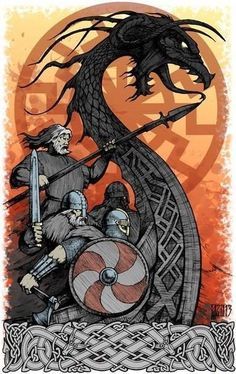
I

Gutland / Gotland, The History of Gutland, The Viking Age

CLAN CARRUTHERS-ROMANS AND GOTHS ON THE DANUBE AND BLACK SEA

cropped-wide-banner-with-new-crest.jpg

Romans and Goths on the Danube and Black Sea

It is said that around the year 245 AD the Ostro-Goths lived near the Danube estuary into the Black Sea led by their first king of the Amal lineage, Ostrogotha, who was famous for his patience. In any case, he was famous, his reputation reached all the way to England as he is mentioned in the famous Widsith poem from about 800 AD: “East-Gotan frodne and godue, fæder Unweness”. Jordanes calls, however, his son Hunuil.

Roman provinces on 
Balkan

Dacia was a Roman province in the early Roman Empire, which stretched north of the Danube. Most of its area belongs to Romania today. Dacia was conquered by Emperor Trajan 101-106 AD but already in 270 AD Emperor Aurelian chose to evacuate Dacia and pull the border of the Roman Empire back to the Danube, which was far easier – and less expensive, to defend. Some sources say that the Romans effectively lost Dacia already around 250 AD – Dacia was fairly quickly taken over by the Western Goths, among which the Visi-Goths were the dominant tribe. Then, Moesia, Thracia and Macedonia became targets for Gothic plunder. Beroe and Abrittus are marked in red.

It is also said that the Goths through twenty years received an annual sum of money to protect the Roman border against the Sarmatians. But Emperor Philippus Arabs, who ruled 244-249 AC stopped payments, prompting the patient king Ostrogotha to lose patience and lead his Goths into the nearby Roman provinces, Dacia, Moesia and Thracia in order to loot.

In 249 AD the Roman general Decius made rebellion against Emperor Philippus and had himself declared emperor by his troops. Philippus was killed in a battle near Verona. Goths under King Cniva took advantage of the prevailing chaos and were preparing to lay siege to Nicopolis on the Danube, when they were surprised by the freshly made emperor and had to escape through the difficult terrain of Balkans, however, here they received reinforcements and turned surprisingly against their pursuers and attacked and plundered their camp near Beroe, which today is called Stara Zagora, and then it was the Romans, who had to flee. It was the first time a Roman emperor fled in a confrontation with the Gothic barbarians.

Then the Goths conquered Philippopolis, which today is called Plovdiv and returned to their homeland laden with booty and important prisoners.

Detail of the Ludovisi sarcophagusDetail of the Ludovisi sarcophagusDetail of the Ludovisi sarcophagusDetail of the Ludovisi sarcophagus

Details from the Ludovisi sarcophagus, a Roman sarcophagus found in a grave near Porta Tiburtina in Rome. It is dated to around 250 AD. It was discovered in 1621 and named after its first modern owner, Ludovico Ludovisi. The sarcophagus is now displayed in Palazzo Altemps in Rome, which is a part of the National Museum in Rome. The motive is a Roman victory over barbarians, in all likelihood Goths. Note their curly hair; both Sidonius Apollinaris and Jordanes mention that the Goths had curly hair. All the Goths have beards. Photo Wikipedia.
From upper left to lower right:
A Goth is mortally wounded by a spear in the chest.
A Roman lifts the head of a dying Goth by the beard. Above a Got lifts his sword, he is wearing a kind of hat.
A Goth is struggling desperately against superior forces surrounded by fallen comrades.
A heap of fallen Goths in the bottom of the motive, all dressed in tight pants and with curly hair and beard.

Emperor Decius and his son Herennius Etruscus soon sought to wash away the humiliation at Beroe by moving their troops across the Danube and attack the Goths. The decisive battle took place in 251 AD on the swampy terrain of the small town, Abrittus, which today is called Razgrad, in northeastern Bulgaria. The Roman writer Sextus Aurelius Victor recounts: “After he had ruled for two years Decius and his son Abrittus died because of treason while pursuing the barbarians over the Danube. Many reports tell that his son fell in battle, while he pushed in a too daring attack; the father, however, strenuously argued that the loss of a single soldier seemed him too little to matter. And then he resumed the fight and died violently struggling in a similar way.” His body was never found. Decius was the first Roman emperor, who died in battle against the kingdom’s external enemies.

The Byzantine theologian and historian Zonaras narrated: ” – he and his son and a large number of Romans fell into the marshland; all of them perished there, none of their bodies to be found, as they were covered by the mud.”

Detail of the Portonaccio 
sarcophagusDetail of the Portonaccio 
sarcophagus

Details from the Portonaccio sarcophagus, which is a Roman sarcophagus found in the Portonaccio neighborhood of Rome It is dated 180-190 AD and can be seen in Museo Nazionale Romano.
Top: A barbarian woman with one breast exposed. In several columns and reliefs, Germanic women are shown with one breast exposed and the hair in disorder. It may be thought to have been a particularly advanced Germanic fashion from the Migration Period, but it is more likely that it should demonstrate the harsh treatment that the legionaries gave the subdued’s women, as a symbol of the Roman armies’ omnipotence.
Bottom: A barbarian warrior and his horse are in trouble in the bottom of the battle. All Germans, Goths and Dacians are shown with curly hair and beard. – Wikipedia.

The Romans raised an outcry when it became known that Gallus – the new emperor after the disaster at Abrittus – paid the Goths to keep the peace. However – unfaithful to their leaders’ agreements – some groups of Goths continued to loot in the Roman province Elyria (Albania). However, they were quickly beaten by a general named Aemilianus, who then was proclaimed emperor. Gallus was murdered by his own soldiers, who then joined the usurper’s army; but soon after he too was murdered, and the empire came into the hands of Valerian and his son Gallienus. But in 260 AD Valerian led a daring expedition in the war against the Persians and never came back.
Gothic warrior on the Portonaccio sarcophagus

Battle scene between Romans and Germans on the Portonaccio sarcophagus. One of the Germans, Dacian or possibly Gothic warriors is still standing. He could be a typical Gothic warrior armed with spear and shield – with curly beard and hair, dressed in tight pants held up by a belt, like the typical Germanic trousers found in Thorsbjerg Mose near Slesvig. Photo: Wikipedia.

During these fifteen years from Ostrogotha’s raids into Moesia and Thracia until Emperor Decius’ death in the battle of Abrittus, other Goths along with other barbarians conducted massacres and looting many places in the Roman Empire. Heruls, Goths and Eudoses, which probably also were Goths, from Crimea sailed across the Black Sea and captured the great city of Trebizond, where they abducted a large number of prisoners and took a big prey. The same fate befell the large and splendid cities of Bithynia, Chalcedon and Nicomedia. It is said that they were all fortified with strong garrisons, but for fear of Gothic terror, resistance was rarely attempted.

However, the most known and infamous Gothic raid was the conquest and looting of Athens in 262 AD. A fleet of five hundred ships – it is said – led a large army of Goths and Heruls through the Bosphorus and Hellespont. On their way to Athens, they destroyed the city of Cyzicus, which stood at the coast of Asia Minor between the Bosphorus and Hellespont, and they burned down the famous Temple of Diana in Ephesos, with its hundreds of tall marble columns and many beautiful statues – one of the ancient Seven Wonders.

Then the Gothic pirates crossed the Aegean Sea, anchored off Athens and plundered the famous city – Plato and Socrates’ birthplace – completely. But at least they did not burn the city, and we know that they left many distinguished and beautiful buildings and artworks, which first would be destroyed by the Turks many years later.

Gothic warrior on Portonaccio
sarcophagus

Battle scene between Romans and Goths on the Portonaccio sarcophagus. A bearded bareheaded Gothic warrior armed with shield and spear in battle against a similarly bearded Roman legionary equipped with helmet and sword. As several other Goths, he is wearing a cape held together by a buckle on the chest. Photo: Wikipedia.

When they had finished looting of Greece, they went to the coast of the Adriatic Sea. Maybe they thought of invading Italy. But however, Emperor Gallienus, Valerian’s son, had finally woken up to action and led a large army against them. The expedition leaders began to quarrel among themselves, and one of the Heruli leaders, Naulobatus, went into Roman service with all his men. He was very well received by the emperor, who gave him the rank of consul. The remaining Goths divided into two groups. One group went to Greece’s east coast and from there by ship to Thracia, and from there they traveled over land home to their villages. The other group continued to ravage Moesia another year without meeting significant resistance because of continued rivalry between the Roman generals.

In 268 AD, Emperor Gallienus was assassinated, and Claudius was appointed to emperor. In his time Greece was attacked by an invading army of thousands of Goths, who had emigrated from the area near the mouth of Dniester at the Black Sea, bringing their wives and children. The invasion army landed near Thessalonica and was soon engaged in grueling battles with Claudius forces. Thousands of Gothic prisoners were sold as slaves; many young men were enrolled in the imperial armies. A plague ravaged both Goths and Romans. The rest of the Goths fled into the Balkan mountains. For this victory, Emperor Claudius earned his name of honour, Gothicus.

The barbarian peoples along
the borders of the Roman Empire in the fourth century

The barbarian peoples along the borders of the Roman Empire in the fourth century by Peter Heather: “The Fall of the Roman Empire – A new history”. Jordanes narrated that after the Goths had arrived in the Black Sea area, they divided themselves into two groups, which usually are called respectively Tervingi – Visigoths – Western Goths and Greutungi – Ostrogoths – Eastern Goths. But the most likely is that there were many Gothic tribes, who had emigrated from the overpopulated original Gothic area in South Scandinavia and around the Baltic. Tervingi and Greutungi were only the names of dominant tribes. It is not even sure that for example, Tervingi and Visigoths represented the same tribe. We know, for example, that also Eudoses and Rugi were part of the exodus. Moreover, as Procopius writes about the barbaric peoples, he had met: “All these, while they are distinguished from one another by their names, as has been said, do not differ in anything else at all. For they all have white bodies and fair hair and are tall and handsome to look upon, and they use the same laws and practice a common religion.” Vandals, Gepids, Scirii, Burgundians and Angles talked all a dialect of Gothic and also resembled each other, so technically one could call them all a kind of Goths.

On His deathbed, Claudius appointed a young man named Aurelian as emperor. Very soon the empire was again attacked by new hordes of Goths led by a chief named Cannabaudes. Aurelian concluded a settlement with the Goths so that the province of Dacia, which today mainly is made up by Romania and the eastern part of Pannonia, which is today’s Hungary, was finally abandoned to the Goths against that they provided two thousand cavalries to the Roman army, and sent young men and women of noble families to the Roman Empire as hostages. The result of these agreements were the Goths lived in peace with the Roman Empire in the following fifty years.

Captive Goth

A Goth – or could it be a Persian – is taken away captive of the Roman cavalry – Motif on Constantine’s mother Helena’s sarcophagus in Pio-Clementine Vatican Museum in Rome. He has curled hair and beard and is dressed in robe and pants. However, these pants are unusual being knee short – Wikipedia.

The Goths broke the peace in 322 AD when a unified army of Eastern and Western Goths and several Slavic tribes led by King Aliquaca invaded the Roman provinces south of Danube. But however, Emperor Constantine, who later earned the name of honour, “the Great,” responded by crossing the Danube and defeat them on their own territory. The emperor offered however honorable peace terms, the Goths were allowed to keep all their possessions and privileges against that the king should send his son as a hostage to Constantinople, and that Gothic forces should participate in the Imperial Army. When Constantine a year later fought the decisive battle against his rival, Licenius at Hadrianople, he was therefore assisted by a large Gothic army under Aliquaca. The victory at Hadrianople gave Konstantin power throughout the Roman Empire and made it possible that he could declare Christianity as the religion of the state.

Around 350 AD the Goths on the banks of the River Dnieper chose Ermanaric of the Amal lineage as king. Not since Ostrogotha, they had had an Amal as king. Ermanaric made no attempt to invade the provinces of the Roman Empire, but he made his Gothic kingdom to the center of a great empire. The Roman Ammianus Marcellinus wrote that he ruled “extensive large and fertile areas”; Jordanes wrote that he ruled the country Oium and compared him with Alexander the Great. Through many generations, his fame survived in Scandinavian, German and Anglo-Saxon sagas and poems. In “The saga of Hervarar and Kong Heidrek” the Goths’ capital is called Arheimar and located at the Danpar river, which is the Dnieper. The name Árheimar has been interpreted as Oium, as place names with the suffix -heim in many cases have been reduced to -um.
Hjalmar's farewell to Orvar
Odd after the fight on Samsø

Scene from Heidreks Saga – Hjalmar’s farewell to Orvar Odd after the fight on Samsø. Painted by Mårten Eskil Winge – Wikipedia.

In this saga, Heidrek unfairly usurps the throne of Reidgotaland. He kidnaps the Hunnish princess Sifka, rapes her and sends her pregnant back to the Huns, her son with Heidrek is given the name Hlød. When Heidrek dies in the Carpathians, he is succeeded by his son Angantyr. But his second son Hlød, who had grown up among the Huns, requires his heritage and attacks with a great Hunnish army of mounted warriors. The Goths are assisted by the old Geatian King Gissur, and the war ends in an epic battle on the plains of the Danube, where Angantyr kills his brother Hlød.

We can understand from sagas and poems that Ermanaric was admired as a great conqueror and ruler, but he was also bitterly hated by the subjugated peoples as a cruel tyrant.

In the western part of the Gothic area along the Black Sea, King Athanaric of the Western Goths reigned. Since the time of Constantine the Great, they had faithfully complied with the agreement to protect the empire’s eastern border and to send several thousand soldiers to the Roman army each year. However, Athanaric made the mistake to support the wrong emperor. A general named Procopius rebelled against Emperor Valens, and temporary he got the power in Constantinople. Athanaric sent his Gothic troops to Thrace to support Procopius in the belief that he was the real emperor. However, Valens came back strongly, overcame his rival and his Gothic troops, whom he reportedly sold as slaves. Moreover, Valens then went over the Danube with his legions and made war and plunder on the Goths, however, without he was able to win a decisive victory.

After three years of war between the Western Goths and the Romans King Athanaric met with Emperor Valens in 369 AD on a barge on the Danube and agreed to peace terms; among others, Valens agreed to Athanaric’s requirement to deliver the Gothic Christians, who had sought refuge in Constantinople.

Preserving the Past, Recording the Present, Informing the Future

Ancient and Honorable Carruthers Clan Int Society 

carruthersclan1@gmail.com     carrothersclan@gmail.com

cropped-wide-banner-with-new-crest.jpg

Dr Patricia Carrothers

Reviewed by Tammy Wise CHS

CLAN SEANACHAIDHI

CLAN CARRUTHERS INT SOCIETY CCIS HISTORIAN AND GENEALOGIST

You can find us on facebook at :

https://www.facebook.com/carrutherscarrothers.pat.9

https://www.facebook.com/CarruthersClan/

https://www.facebook.com/CarruthersClanLLC

Disclaimer Ancient and Honorable Carruthers Clan International Society
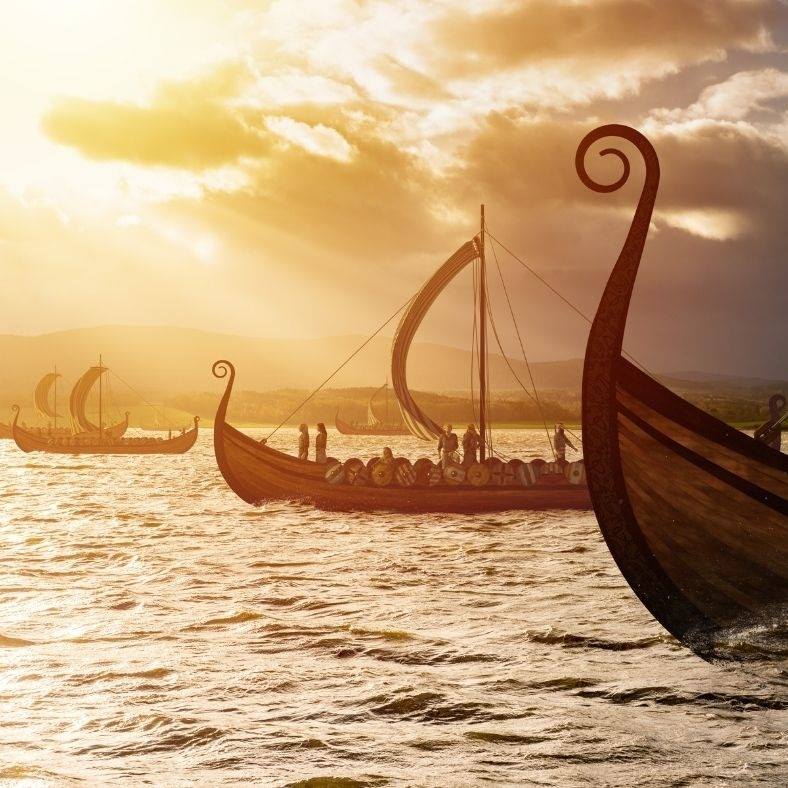
Gutland / Gotland, OUR ANCESTORS, The History of Gutland, The Viking Age

CLAN CARRUTHERS – HOW DID THE GOTHS OR GOTS LOOK?

cropped-wide-banner-with-new-crest.jpg

HOW DID THE GOTS OR GOTHS LOOK?

The Roman writer and diplomat Sidonius Apollinaris described the Gothic king Theoderic in a letter to his brother in law Agricola:

“You have often begged a description of Theodoric, the Gothic king, whose gentle breeding fame commends to every nation; you want him in his quantity and quality, in his person, and the manner of his existence. I gladly accede, as far as the limits of my page allow, and highly approve so fine and ingenious a curiosity.”

“Well, he is a man worth knowing, even by those who cannot enjoy his close acquaintance, so happily have Providence and Nature joined to endow him with the perfect gifts of fortune; his way of life is such that not even the envy which lies in wait for kings can rob him of his proper praise. And first as to his person.

Olof Palme as a young man

Olof Palme as a young man – It is no easy task that Sidonius gives us. When we look around, we notice that short-skulled types with round heads may have stoop nose, and long-skulled types with narrow faces can have eagle nose. However, a short-skulled type with round head and eagle nose is almost an impossibility. Olof Palme seems to be little long-skulled, but not much, and has a slightly curved nose. Sidonius’ Goths may have looked something like that.

“He is well set up, in height above the average man, but below the giant. His head is round, with curled hair retreating somewhat from brow to crown. His nervous neck is free from disfiguring knots. The eyebrows are bushy and arched; when the lids droop, the lashes reach almost half-way down the cheeks. The upper ears are buried under overlying locks, after the fashion of his race. The nose is finely aquiline; the lips are thin and not enlarged by undue distension of the mouth. Every day the hair springing from his nostrils is cut back; that on the face springs thick from the hollow of the temples, but the razor has not yet come upon his cheek, and his barber is assiduous in eradicating the rich growth on the lower part of the face. Chin, throat, and neck are full, but not fat, and all of fair complexion; seen close, their colour is fresh as that of youth; they often flush, but from modesty, and not from anger. His shoulders are smooth, the upper- and forearms strong and hard; hands broad, breast prominent; waist receding. The spine dividing the broad expanse of back does not project, and you can see the springing of the ribs; the sides swell with salient muscle, the well-girt flanks are full of vigour. His thighs are like hard horn; the knee-joints firm and masculine; the knees themselves the comeliest and least wrinkled in the world. A full ankle supports the leg, and the foot is small to bear such mighty limbs.”

He does not mention anything about how the rank and file Goths look like, but in the middle of the description he switches to plural; then we must believe that they have resembled their king.

In a letter to a senator named Catullinus, Sidonius tells about how it felt like for a Roman to be surrounded by barbarians: “Why – even supposing I had the skill – do you bid me compose a song dedicated to Venus the lover of Fescennine (city in Etruria known for scurrilous and joking verses) mirth, placed as I am among long-haired hordes, having to endure German speech, praising oft with vry face the song of the gluttonous Burgundian who spreads rancid butter on his hair? Do you want me to tell you what Tecks all poetry? Driven away by barbarian thrumming the Muse has spurned the six-footed exercise ever since she beheld these patrons seven feet high. I am fain to call your eyes and ears happy, happy too your nose, for you do not have a reek of garlic and foul onions discharged upon you at early morning from ten breakfast, and you are not invaded even before dawn, like an old grandfather or a foster-father, by a crowd of giants, so many and so big that not even the kitchen of Alcinous could support them (Alcinous supplied Jason and the Argonauts with food on their return from Colchis).”

Young Germans sign up for
service in the Roman legions

The drawing could imagine young Goths, who got paid to serve in the Roman legions – Throughout the late Roman Empire, the real Roman combat troops consisted of the Huns, Alans, Goths and other Germans. One could say that they were a kind of foreign legions. Units with soldiers recruited within the Roman Empire were largely reduced to perform secondary tasks, such as guarding.

Sidonius says nothing about his Goths’ hair and eye color, so we can believe that it has been the usual in Gaul at this time. Maybe their hair had different medium and dark blonde shades, as is the case with many of today’s Scandinavians. It is not because Sidonius was not interested in eye colors, it can be seen from one of his poems. But maybe he did not find it opportune to irritate the king by dwelling too much by the fact that many Goths had this unattractive blue eye color.

The Romans did not think that it was nice to have blue eyes. They often used the term “threatening blue eyes”.

Motive from the Ludovisi sarcophagus

Motive from the Ludovisi sarcophagus, showing dying Goths in the bottom of the battle. They all have curly hair and beard. – Wikipedia.

Sidonius was allowed to keep his estates after the Western Goths had taken over the South of France. In gratitude, he wrote a little poem to King Euric. He wrote it allegedly for his friend Lampridius, but certainly with the ulterior motive that he would show the poem to the King: “We see in his courts the blue-eyed Saxon, lord of the seas, but a timid landsman here. – We see thee, aged Sygambrian (poetic name for the Franks) warrior, the back of the head shaven in sign of thy defeat – Here strolls the Herulian with his glaucous cheeks, inhabitant of Ocean’s furthest shore, and of a complexion with its weedy deeps. Here the Burgundian bends his seven feet of stature on suppliant knee, imploring peace. – And here, O Roman, thou also seekest thy protection – “.

The reason why that perhaps not all Goths had blue eyes, we can find in Ammianus, who wrote about the Western Goths’ initial looting in Thrace a few hundred years before: “For without distinction of age or sex all places were ablaze with slaughter and great fires, sucklings were torn from the very breasts of their mothers and slain, matrons and widows, whose husbands had been killed before their eyes, were carried off, boys of tender or adult age were dragged away over the dead bodies of their parents. Finally, many aged men, crying that they had lived long enough after losing their possessions and their beautiful women, were led into exile with their arms pinioned behind their backs, and weeping over the glowing ashes of their ancestral homes – .” All these matrons, widows and boys would probably have been used for something; they got Gothic children, not all had blue eyes.

Procopius also wrote about the appearance of the Goths in his book on the Justinian Wars: “All these, while they are distinguished from one another by their names (Goths and other migration people), as has been said, do not differ in anything else at all. For they all have white bodies and fair hair, and are tall and handsome to look upon, and they use the same laws and practise a common religion. For they are all of the Arian faith, and have one language called Gothic; and, as it seems to me, they all came originally from one tribe, and were distinguished later by the names of those who led each group.”

Motive from the  Arcadius column in Konstantinopel

Motive from the Arcadius column in Konstantinopel. It shows Gothic prisoners taken away pinioned by Roman soldiers. The men have beard and half-long hair. They are dressed in traditional Germanic coats and pants. The woman is wearing a dress without sleeves over a kind of skirt. The dress is in disorder and shows her one bared breast, like on the Marcus Aurelius column in Rome. The hair is hanging loose. Perhaps these bared breasts and loose hair symbolize something, for example rape, as a demonstration of the Roman Empire’s power.
The Arcadius column in Constantinople was erected to celebrate the Emperor Arcadius’ victory over the Goths under king Gainas around the year 400 AD. The Goths, who are pictured on the column, was dressed in pants and Tunic very similar to the clothing, which was taken from Thorbjerg Mose near the city of Slesvig. The women are shown dressed in sleeveless clothes and with hair in disorder.

Jordanes tells about Deceneus, who was a sort of philosopher and sage for a group of early Goths: “But he ordered them to call the rest of their race Capillati (hairy, ie, long-haired, them with curls). This name the Goths accepted and prized highly, and they retain it on the day to day in their songs (Jordanes).” And indeed, on many depictions, the Western Goths are shown with curly hair.

Carruthers crest on flag-v2 (1)

Preserving the Past, Recording the Present, Informing the Future

Ancient and Honorable Carruthers Clan Int Society 

carruthersclan1@gmail.com     carrothersclan@gmail.com

cropped-wide-banner-with-new-crest.jpg

Dr Patricia Carrothers

Reviewed by Tammy Wise CHS

CLAN SEANACHAIDHI

CLAN CARRUTHERS INT SOCIETY CCIS HISTORIAN AND GENEALOGIST

You can find us on facebook at :

https://www.facebook.com/carrutherscarrothers.pat.9

https://www.facebook.com/CarruthersClan/

https://www.facebook.com/CarruthersClanLLC

Disclaimer Ancient and Honorable Carruthers Clan International Society

OUR ANCESTORS

MANGUS III OF SWEDEN – CARRUTHERS ANCESTOR – CLAN CARRUTHERS CCIS

cropped-wide-banner-with-new-crest.jpg

MANGUS III OF SWEDEN

CARRUTHERS ANCESTOR

Magnus III (Swedish: Magnus Birgersson/Magnus Ladulås; ca. 1240 – 18 December 1290) was King of Sweden from 1275 until his death in 1290.[1]  He is a direct DNA match to the Carruthers line.

He was the “first Magnus” to rule Sweden for any length of time, not generally regarded as a usurper or a pretender (but third Magnus to have been proclaimed Sweden’s king and ruled there). Later historians ascribe his epithet “Ladulås” – Barnlock – to a royal decree of 1279 or 1280 freeing the yeomanry from the duty to provide sustenance for travelling nobles and bishops (“Peasants! Lock your barns!”); another theory is that it’s a corruption of Ladislaus, which could possibly have been his second name, considering his Slavic heritage. (Magnus’s maternal great-grandmother was Sophia of Minsk, a Rurikid princess.) This king has also been referred to as Magnus I, but that is not recognized by any Swedish historians today.[2]

Magnus III Barnlock of Sweden as Duke bust 2009 Skara (2).jpg

Magnus, whose birth year has never been confirmed in modern times, was probably the second son of Birger Jarl (1200–66) and Princess Ingeborg, herself the sister of the childless King Eric XI and daughter of King Eric X. Thus, Valdemar Birgersson (1239–1302) was the eldest son and ruled as Valdemar, King of Sweden from 1250–1275, succeeding King Eric, their maternal uncle who ruled until 1250. Birger Jarl had designated Magnus as Jarl, henceforth titled Duke of Sweden, and as Valdemar’s successor. Even after Valdemar’s coming of age in 1257, Birger Jarl kept his grip over the country. After Birger’s death in 1266 Valdemar came into conflict with Magnus who wanted the throne for himself. [3]

In 1275, Duke Magnus started a rebellion against his brother with Danish help, and ousted him from the throne. Valdemar was deposed by Magnus after the Battle of Hova in the forest of Tiveden on June 14, 1275. Magnus was elected king at the Stones of Mora (Mora stenar). In 1276, Magnus allegedly married a second wife Helwig, daughter of Gerard I of Holstein. Through her mother, Elizabeth of Mecklenburg, Helwig was a descendant of Christina, the putative daughter of King Sverker II. A papal annulment of Magnus’ alleged first marriage and a dispensation for the second (necessary because of consanguinity) were issued ten years later, in 1286. Haelwig later acted as regent, probably 1290–1302 and 1320–1327.[4] [5]

The deposed King Valdemar managed, with Danish help in turn, to regain provinces in Gothenland (Gotland) in the southern part of the kingdom, and Magnus had to recognize that in 1277. However, Magnus regained them about 1278 and assumed the additional title rex Gothorum, King of the Goths, starting the tradition of “King of the Swedes and the Goths”.

King Magnus’s youngest brother, Benedict (1254–1291), then archdeacon, acted as his Lord High Chancellor of Sweden, and in 1284 Magnus rewarded him with the Duchy of Finland.[6]

Magnus died when his sons were yet underage. Magnus ordered his kinsman Thurchetel Canuteson, the Lord High Constable of Sweden as the guardian of his heir, the future King Birger, who was about ten years old at father’s death.

Carruthers crest on flag-v2 (1)

CLAN CARRUTHERS CCIS – SINCE 1983

Preserving the Past, Recording the Present, Informing the Future

Ancient and Honorable Carruthers Clan Int Society 

carruthersclan1@gmail.com     carrothersclan@gmail.com

cropped-wide-banner-with-new-crest.jpg

Dr Patricia Carrothers

Reviewed by Tammy Wise CHS

CLAN SEANACHAIDHI

CLAN CARRUTHERS INT SOCIETY CCIS HISTORIAN AND GENEALOGIST

You can find us on facebook at :

https://www.facebook.com/carrutherscarrothers.pat.9

https://www.facebook.com/CarruthersClan/

https://www.facebook.com/CarruthersClanLLC

Disclaimer Ancient and Honorable Carruthers Clan International Society

References
Ulf Sundberg (1999). “Magnus Birgersson “Ladulås””. pennanochsvardet.se. Retrieved January 1, 2019.
John E. Morby, “The Sobriquets of Medieval European Princes”, Canadian Journal of History, 13:1 (1978), p. 12.
“Valdemar Birgersson, kung av Sverige”. KulturNav. Retrieved January 1, 2019.
“Mora Stenar”. knivstashistoria.se. Retrieved January 1, 2019.
“Magnus Ladulås (ca 1240–1290)”. Biografiskt lexikon för Finland. Retrieved January 1, 2019.
Sten Engström. “Bengt Birgersson”. Svenskt biografiskt lexikon. Retrieved January 1, 2019.
“Wrong persons found in King’s tomb”. Stockholm News. 9 December 2011. Archived from the original on 26 January 2012. Retrieved 17 December 2011.

Gutland / Gotland, The Viking Age

RAIDERS OR TRADERS – CLAN CARRUTHERS CCIS

cropped-wide-banner-with-new-crest.jpg

RAIDERS OR TRADERS

A replica Viking vessel sailing the North Sea has helped archaeologists figure out what the stalwart Norsemen were really up to

Sea Stallion

From his bench toward the stern of the Sea Stallion from Glendalough, Erik Nielsen could see his crewmates’ stricken faces peering out of bright-red survival suits. A few feet behind him, the leather straps holding the ship’s rudder to its side had snapped. The 98-foot vessel, a nearly $2.5 million replica of a thousand-year-old Viking ship, was rolling helplessly atop waves 15 feet high.

With the wind gusting past 50 miles an hour and the Irish Sea just inches from the gunwales, “I thought we’d be in the drink for sure,” says Nielsen, now 63, a retired Toronto geologist.

It was August 6, 2007, and the Sea Stallion’s crew of 63 had been underway for five weeks, sailing from Roskilde, Denmark, to Dublin, Ireland, on a voyage that would culminate 35 years’ research—“the best living-archaeology experiment ever conducted anywhere,” Pat Wallace, director of the National Museum of Ireland, calls it.

As Nielsen and some of his crewmates struggled to keep the Sea Stallion upright, four others went to work at the stern. Kneeling on the ship’s heaving, rain-slicked deck, they hauled the 11-foot rudder out of the water, replaced the broken leather straps with jury-rigged nylon ones and reattached the new assembly.

Reducing the sail to a minimum, the crew proceeded at nine knots. As the ship plowed from wave to wave, a full third of the Sea Stallion’s hull was often out of the water. Ahead lay the Isle of Man, 15 hours away.

Two weeks later, its crew exhausted, the Sea Stallion limped into the port of Dublin for a nine-month refurbishment in dry dock at the National Museum of Ireland. In July 2008, it sailed, relatively uneventfully, back to Denmark. Ever since, researchers have been poring over reams of data from both voyages, gathered from electronic sensors on the ship, to learn more about the Vikings’ sailing prowess. Their findings will follow a host of recent discoveries by historians, archaeologists and even biologists that have led to a new understanding of the Vikings as a people who were as adept at trading as they were at raiding.

Norsemen have been seen as intrepid seafarers and fierce warriors—a sort of Hell’s Angels of the early Middle Ages—since A.D. 793, when they raided the rich island monastery at Lindisfarne off the northeastern coast of England. “The ravages of heathen men miserably destroyed God’s church on Lindisfarne,” according to the annals known as the Anglo-Saxon Chronicle. ( This may be in error, since the oldest crucifix and cross were unearth on Gutland )  In 845, the Viking raider and extortionist extraordinary Ragnar Lothbrok slipped up the Seine with 120 ships—an estimated 5,000 men—to Paris, where King Charles the Bald paid him 7,000 pounds of gold and silver to leave in peace. (A contemporary wrote that “never had [Ragnar] seen, he said, lands so fertile and so rich, nor ever a people so cowardly.”)

Viking raiders traveled thousands of miles to the east and south: across the Baltic, onto the rivers of modern-day Russia and across the Black Sea to menace Constantinople in 941. “Nobody imagines they were there to capture the city,” says Cambridge University historian Simon Franklin. “It was more terroristic—all about instilling fear and extracting concessions for trade.”

At the same time, the new research suggests that the Vikings pouring out of Denmark, Sweden and Norway 1,200 years ago had more than raiding on their minds. Buying and selling goods from places as distant as China and Afghanistan, they also wove a network of trade and exploration from Russia to Turkey to Canada. “They were people without boundaries,” says Wladyslaw Duczko, an archaeologist at the Institute of Anthropology and Archaeology in Pultusk, Poland. “I think that’s why Vikings are so popular in America.”

Recent climate research has led Duczko and others to posit that a warming trend around the ninth century led to a population boom in Scandinavia, causing more and more landless young Norsemen to seek their fortunes elsewhere. Not everyone agrees. The National Museum of Ireland’s Wallace says the Vikings may have had a simpler motive: “They had the best iron in the world, trees to cut down and build ships, the best swords and edges on their blades. All the factors were there. They could do it, and they did.”

Whatever the causes for the Vikings’ explorations, evidence of the range of their trading networks began turning up about 150 years ago, when their elaborate burial mounds were first excavated. Well-preserved graves in Birka, Sweden, for example, contained fragments of Chinese silk, and in Norway, the ships in which wealthy Vikings were customarily buried were painted with pigments that may have come from India and the Middle East.

In the 1970s, archaeologists in Dublin found a Viking settlement spread over several acres—and in it more than 3,000 pieces of amber that were probably imported from Denmark. Excavation at Staraya Ladoga, outside St. Petersburg, unearthed a multiethnic settlement that included Viking jewelry, weapons and tools buried amid 1,000-year-old houses. And elsewhere in Russia, archaeologists have uncovered hundreds of Scandinavian graves containing artifacts from the Viking era; in 2006, they found one in the province of Kaliningrad, 500 miles from Norway.

Almost all these sites share a common artifact: thin, silver coins called dirhams. Most of them were made in Baghdad, which was the center of the Arab world from 750 to 950, and they were usually stamped with the year they were minted. Vikings apparently traded furs, amber, ivory and slaves for dirhams, which they then carried with them on their ships. As a result, the coins mark Viking trade routes like shiny silver bread crumbs.

In January 2007, metal-detector hobbyists in Harrogate, England, uncovered a treasure worth millions of dollars that one or more Vikings buried around 927; it included 617 coins, 15 of which were dirhams. Thousands of dirhams dating from 780 to 1050 were found at Viking sites near St. Petersburg. In Poland, archaeologists excavating a Viking settlement near Gdansk found nearly 800 coins dating from 780 to 840, almost all of them Arabic. Other Arabic coins made their way to France, Ireland, Iceland and Greenland. “What we’re seeing is the remnants of an extremely intricate network of barter trade,” says historian Jonathan Shepard of St. Kliment Ohrid University in Sofia, Bulgaria. “It’s a weird combination of coercion and tribute side by side and intermingled with bartering.”

By the 11th century, Vikings began adopting the languages and customs of local peoples, even settling in and intermarrying from Ireland to Russia. Researchers at the universities of Leicester and Nottingham, in England, found that up to half the DNA from men in northwest England matches Scandinavian genetic types.

Sea Stallion

All that wandering would have been impossible without ships—which is where Erik Nielsen and the rest of the Sea Stallion’s crew come in. For much of the 20th century, archaeologists assumed that Viking ships all resembled a vessel excavated in Norway in 1880. Known as the Gokstad ship, for the farm on which it was found, it dated to the year 900. The ship was “clinker-built,” meaning it was constructed of overlapping planks, which made it stout, flexible and light, with a sail and room for 32 oarsmen. In 1893, Magnus Andersen sailed a replica from Norway to Chicago for the World’s Fair. “Gokstad was thought to be universal, whether trader or raider,” says Niels Lund, a Viking historian at the University of Copenhagen. But a 1962 discovery forced researchers to abandon the idea that the Vikings had only one kind of ship.

At the bottom of a fjord near Roskilde, archaeologists found remnants of five Viking ships piled one atop the other. Dubbed the Skuldelev ships, for a nearby town, each had had a specialized role. One had been a fishing boat; two were cargo ships, so easy to handle that a crew of eight or nine could move 20-ton loads; and one was a warship that could carry about 30 people. The fifth ship, a raider named the Skuldelev, was the largest.

It was 98 feet long but just 12 feet wide. Its keel reached just three feet below the surface, and its masts and sail could be lowered so the ship could approach fortifications and settlements with stealth. It could accommodate 65 armed men. “This is a boat for warriors,” says Soren Nielsen, head boat builder at the Viking Ship Museum in Roskilde.

Because only about 20 percent of the Skuldelev 2 could be recovered, the only way to determine its capabilities for certain was to reconstruct it and put it to sea. In 2000, Nielsen and his colleagues at the ship museum began working with scientists to build an accurate replica. They used thousand-year-old methods and reproductions of tools from that time, which meant carving each of the ship’s 90 oak planks with axes, wedges and hammers. After four years and almost $2.5 million, the eight builders had their replica. They called it Sea Stallion From Glendalough for the Irish village where Vikings used to procure oak for their ships. With its narrow beam and shallow draft, the Sea Stallion could navigate just about any river in Europe. But how would it fare on the open sea?

In the summer of 2006, the Sea Stallion sailed under sunny skies and gentle winds to Norway and back in four weeks—a virtual pleasure cruise. A test sail in May 2007 around the Roskilde Fjord enjoyed similar conditions. “We like to say we’ve been cursed with good weather,” said Carsten Hvid, the Sea Stallion’s skipper. But the six-week voyage that began in July 2007— from Roskilde north to Norway, west to Scotland and south to Dublin—proved a tougher test. Fully loaded, the ship weighed 24 tons—eight of ship, eight of rock for ballast and eight of crew and gear. In ideal conditions, the Sea Stallion could travel 160 nautical miles in a day; it could sprint at 13 knots, or almost 15 miles an hour. (A high-tech America’s Cup racer might hit 20 knots.) “It ranks as one of the fastest warships in history,” says Anton Englert, an archaeologist at the ship museum.

For the July 2007 voyage, the ship set sail under dark skies that presaged Northern Europe’s coldest and wettest summer in decades. Nighttime temperatures plunged into the 30s. Three days into the voyage, two crew members had to be treated for hypothermia, and, to stay on schedule, Hvid had to accept a 24-hour tow across part of the North Sea because of weak winds. “It kept on raining and raining and raining,” says crew member Henrik Kastoft, in his day job a spokesman for the United Nations Development Program. “There were so many nights I just sat there shivering for hours.” Each crew member had about eight square feet of space. “I really suffered from being so close to people for so long. I got edgy, cranky,” says Erik Nielsen. “Maybe the modern analogue would be a submarine.”

Carruthers crest on flag-v2 (1)

Preserving the Past, Recording the Present, Informing the Future

Ancient and Honorable Clan Carruthers

Official and Oldest Scottish  Clan of Our Ancestors – 1983

clancarruthers1@gmail.com

carruthersclan1@gmail.com     carrothersclan@gmail.com

cropped-wide-banner-with-new-crest.jpg

LISA JOHNSON

CLAN SEANACHAIDHI

CLAN CARRUTHERS INT SOCIETY CCIS HISTORIAN AND GENEALOGIST

New Blog Banner 05

You can find us on facebook at :

https://www.facebook.com/carrutherscarrothers.pat.9

https://www.facebook.com/CarruthersClan/

https://www.facebook.com/CarruthersClanLLC

Disclaimer Ancient and Honorable Carruthers Clan International Society

Design a site like this with WordPress.com
Get started