The Viking Age, Uncategorized

CLAN CARRUTHERS – VIKINGS IN IRELAND- PART III

CLAN CARRUTHERS INT SOCIETY CCIS                             PROMPTUS ET FIDELIS

cropped-wider-banner-light-blue-1.jpg

VIKINGS IN IRELAND

795 – 1014

PART III


The Vikings in Wales

One side effect of the strength of Irish resistance was to increase Viking interest in Wales. At its closest points, Wales was only a day’s sail away from Dublin, Waterford and Wexford, and from the Viking colony in the Isle of Man, but despite this had so far suffered relatively little from Viking raids. A combination of strong military rulers such as Rhodri Mawr (r. 844 – 78) of Gwynedd, difficult mountainous terrain, and Wales’ poverty compared to England, Ireland and Francia, seem to have deterred any major Viking invasions in the ninth century. Only a dozen Viking raids are recorded in the period 793 – 920, compared to over 130 in Ireland in the same period. This was fewer than the number of English invasions of Wales in the same period. Place-name evidence points to areas of Viking settlement in the south-west, in Pembrokeshire and Gower, but, as they are undocumented, it is not known when they were made. There was also a small area of Viking settlement in the far north-east, modern Flintshire, most probably by refugees from Dublin following its capture by the Irish in 902. This was probably overspill from the successful Viking colony a few miles away across the estuary of the River Dee in Wirral.

In the first half of the tenth century, Wales was dominated by Hywel Dda (r. 915-50), the king of Deheubarth in the south-west. During his long reign Hywel came close to uniting all of Wales under his rule but his death in 950 was followed by a civil war and the break-up of his dominion. This was a signal to Vikings based in Ireland, the Isle of Man and the Hebrides to launch a wave of attacks on Wales. The area most exposed to Viking raiding was the large and fertile island of Anglesey off the coast of North Wales, which lay only 70 miles due east of Dublin and just 45 miles south of the Isle of Man: raids are recorded in 961, 971, 972, 979, 980, 987 and 993. Another place hit hard was St David’s monastery on the Pembrokeshire coast, Wales’ most important ecclesiastical centre. Founded c. 500 by St David, the monastery became the seat of the archbishops of Wales in 519. Only 60 miles from Wexford, St David’s was first sacked by Vikings in 967, then again in 982, 988 and 998, when they killed archbishop Morgeneu. St David’s would be sacked at least another six times before the end of the eleventh century. In 989 the raids had become so bad that King Maredudd of Deheubarth paid tribute to the Vikings at the rate of one silver penny for each of his subjects. Viking raids declined quickly after 1000, perhaps because the Viking towns in Ireland had come under the control of Irish rulers, but raids from the Hebrides and Orkney continued into the twelfth century. Vikings from Ireland also continued to come to Wales, but they did so mainly as mercenaries signing on with Welsh kings to fight in their wars with one another and with the English.

The Rock of Cashel

The end of Ireland’s Viking Age is traditionally associated with the rise of the O’Brien (Ua Briain) dynasty of Munster, and of its greatest king Brian Boru (r. 976 – 1014) in particular. Brian’s career certainly had an epic quality about it. Brian was a younger son of Cennétig mac Lorcáin (d. 951), king of the Dál Cais, whose kingdom, which was roughly equivalent to modern County Clare, was subject to the kings of Munster. As a younger son Brian probably never expected to rule and his early life was spent in the shadow of his elder brother Mathgamain. Even Brian’s date of birth is uncertain. Some Irish sources claim that he was eighty-eight when he died in 1014, which would mean he was born in 926 or 927, but other sources give dates as early as 923 and as late as 942. Brian’s first experience of war came in 967 when he fought alongside his brother at the Battle of Sulcoit against Ivar, king of the Limerick Vikings. The following year the brothers captured and sacked Limerick, executing all male prisoners of fighting age. The rest were sold as slaves. Ivar, however, escaped to Britain and in 969 he returned with a new fleet and regained control of Limerick only to be expelled again by the Dal Cais in 972.

Probably in 970, Mathgamain expelled his nominal overlord, Máel Muad the king of Munster, from his stronghold on the Rock of Cashel. The rock is a natural fortress, a craggy limestone hill rising abruptly and offering a magnificent view over the fertile plains of County Tipperary. The rock is now crowned by the ruins of a medieval cathedral and one of Ireland’s tallest surviving round towers, so little evidence of earlier structures survives. In legend, Máel Muad’s ancestor Conall Corc made Cashel the capital of Munster after two swineherds told him of a vision in which an angel prophesised that whoever was the first to light a bonfire on the rock would win the kingship of Munster. Conall needed no more encouragement and had hurried to Cashel and lit a fire. This was supposed to have happened around sixty years before St Patrick visited around 453 and converted Munster’s then king Óengus to Christianity. During the baptismal ceremony the saint accidentally pierced Óengus’ foot with the sharp end of his crozier. The king, thinking it was part of the ritual, suffered in silence.

Mathgamain’s success in capturing Cashel promised to make the Dál Cais a major power as Munster was one of the most important of Ireland’s over-kingdoms, covering the whole of the south-west of the island. However, before Mathgamain could win effective control of Munster, Máel Muad murdered him and recaptured Cashel. Brian now unexpectedly found himself king of the Dál Cais and quickly proved himself to be a fine soldier. After his expulsion from Limerick in 972, Ivar established a new base on Scattery Island, close to the mouth of the Shannon, from where he could still easily threaten Dál Cais. This sort of tactic had served Vikings well since the 840s, but no more. Brian had learned the importance of naval power from the Vikings and in 977 he led a fleet to Scattery Island, surprising and killing Ivar. A year later Brian defeated and killed his brother’s murderer to regain control of Cashel. Very shortly afterwards he defeated his last serious rival for control of Munster, Donnubán of the Uí Fidgente, and the remnants of the Limerick Vikings under Ivar’s son Harald. Both Donnubán and Harald were killed. This spelled the end of Viking Limerick. The town now effectively became the capital of Dál Cais, but Brian allowed its Norse inhabitants to remain in return for their valuable military and naval support. In the years that followed, Brian also became overlord of the Viking towns of Cork, Wexford and Waterford.

Now secure in his control of Munster, Brian began to impose his authority on the neighbouring provinces of Connacht and Leinster. Brian’s ambitions inevitably brought him into conflict with Dublin’s overlord, Máel Sechnaill. Almost every year, Brian campaigned in either Leinster, Meath or Connacht. Limerick and other Viking towns provided Brian with fleets, which he sent up the River Shannon to ravage the lands of Connacht and Meath on either side. When Donchad mac Domnaill, the king of Leinster, submitted to Brian in 996 Máel Sechnaill recognised him as overlord of all of the southern half of Ireland, including Dublin. Brian almost immediately faced a rebellion by Donchad’s successor in Leinster, Máel Morda, and the king of Dublin, Sihtric Silkbeard (r. 989 – 1036). Sihtric was another son of Olaf Cuarán, by his second wife Gormflaith, who was Máel Morda’s sister. Brian’s crushing victory over the allies at the battle of Glen Mama in 999 left him unchallenged in the south. Brian dealt generously with Sihtric, allowing him to remain king, and marrying Gormflaith, so making him his son-in-law. There was a brief peace before Brian, his sights now set on the high kingship itself, went back onto the offensive against Máel Sechnaill. Sihtric played a full part in these campaigns, providing troops and warships. Finally defeated in 1002, Máel Sechnaill resigned his title in favour of Brian and accepted him as his overlord: it was the first time that anyone other than an Uí Néill had been high king. Two more years of campaigning and every kingdom in Ireland had become tributary to Brian, hence his nickname bóraime, ‘of the tributes’.

mi-battle-of-clontarf-painting

The Battle of Clontarf

Brian’s achievement was a considerable one but he did not in any meaningful sense unite Ireland: outside his own kingdom of Dál Cais, Brian exercised authority indirectly, through his tributary kings, and he created no national institutions of government. Nor was the obedience of Brian’s tributaries assured: he faced, and put down, several rebellions. The most serious of these rebellions began in 1013 when Máel Mórda of Leinster renewed his alliance with Sihtric Silkbeard, who, despite Brian’s conciliatory approach, still hoped to recover Dublin’s independence. To strengthen Dublin’s forces, Sihtric called in an army of Vikings under Sigurd the Stout, the jarl of Orkney, and Brodir, a Dane from the Isle of Man, which arrived at Dublin just before Easter 1014. Brian quickly raised an army that included several of his tributary kings, including Maél Sechnaill, and a contingent of Vikings under Brodir’s brother Óspak. The two armies met in battle at Clontarf, a few miles north of Dublin on Good Friday (23 April) 1014. Neither Brian nor Sihtric fought in the battle. Sihtric watched the battle from the walls of Dublin, where he had remained with a small garrison to defend the city if the battle was lost. Now in his seventies or eighties, Brian was too frail to take any part in the fighting and spent the battle in his tent. The exact size of the rival armies is unknown but Brian’s was probably the larger of the two.

The battle opened around daybreak in heroic style with a single combat between two champion warriors, both of whom died in a deadly embrace, their swords piercing one another’s hearts. The fighting was exceptionally fierce but Brian’s army eventually gained the upper hand and began to inflict severe casualties on the Vikings and the Leinstermen. Brian’s son and designated successor, Murchad, led the attack and was said personally to have killed 100 of the enemy, fifty holding his sword in his right hand and fifty holding his sword in his left hand, before he was himself cut down and killed. Among Murchad’s victims was jarl Sigurd. Of the Dublin Vikings fighting in the army, only twenty are said to have survived the battle and the Leinster-Dublin army as a whole suffered as many as 6,000 casualties. By evening, the Leinster-Dublin army was disintegrating in flight and many Vikings drowned as they tried desperately to reach their ships anchored in Dublin Bay. At this moment of victory, Brodir and a handful of Viking warriors broke through the enemy lines and killed Brian as he prayed in his tent. Brodir’s men were quickly killed by Brian’s bodyguards and, according to Icelandic saga traditions, Brodir was captured and put to a terrible death. His stomach was cut open and he was walked round and round a tree until all his entrails had been wound out. Máel Mórda and one of his tributary kings were also killed in the fighting, as too were two tributary kings on Brian’s side.

For the anonymous author of the Cogadh Gaedhel re Gallaibh, Clontarf was the decisive battle of Ireland’s Viking wars, but this exaggerates its importance. The author of the Coghad was essentially a propagandist for Brian Boru’s Ua Briain dynasty and he intended, by glorifying his achievements, to bolster his descendents’ claim to the high kingship of Ireland, which they contested with the Uí Néills. The true impact of the battle was rather different. The deaths of Brian and Murchad caused a succession crisis in Dál Cais that brought the rise of the Ua Briain dynasty to a crashing halt. Brian’s hard-won hegemony immediately disintegrated, Cashel reverted to its traditional rulers, and Máel Sechnaill reclaimed the high kingship. Sihtric found himself back where he had started his reign, a sub-king to Máel Sechnaill. There could have been no clearer way to demonstrate how far gone in decline Viking power in Ireland already was. Sihtric continued to take part in Ireland’s internecine conflicts but his defeats outnumbered his successes, and Dublin’s decline into political and military irrelevance continued. Dublin continued to prosper as Ireland’s most important port, however, making Sihtric a wealthy ruler. In 1029 he ransomed his son Olaf, who had been captured by the king of Brega, for 1,200 cows, 120 Welsh ponies, 60 ounces (1.7 kg) of gold, 60 ounces of silver, hostages, and another eighty cattle for the man who had conducted the negotiations. Though he was quite willing to sack monasteries when it suited him, Sihtric was a devout Christian and in 1028 he made a pilgrimage to Rome. Such journeys were primarily penitential and, as an active Viking, Sihtric no doubt had much to be penitential about. On his return to Dublin he founded Christ Church cathedral but pointedly placed it under the authority of the Archbishopric of Canterbury in England, then ruled by the Danish King Cnut. It was not until 1152 that the diocese of Dublin became part of the Irish church. His alliance with Cnut briefly resurrected Dublin as a power in the Irish Sea, but Cnut’s death in 1035 left Sihtric in a weak position. In 1036 Echmarcach mac Ragnaill, a Norse-Gaelic king of the Hebrides, captured Dublin and forced Sihtric into exile: he died in 1042, possibly murdered during another pilgrimage to Rome.

Echmarcach never succeeded in securing his hold on Dublin and in 1052 he was expelled by Diarmait mac Máel, the king of Leinster, who ruled the city directly as an integral part of his kingdom. For the next century Dublin became a prize to be fought over by rival Irish dynasties interspersed with periods of rule by Norse kings from the Isle of Man, the Hebrides, and even Norway.

Ostman Dublin

By the eleventh century the Viking towns had become fully integrated into Irish political life, accepted for the trade they brought and the taxes they paid on it, and their fleets of warships, which made them valuable allies in the wars of the Irish kings. Pagan burial customs had died out during the second half of the tenth century so it is likely that by now the Irish Vikings were mostly converted to Christianity. It was not only kings like Sihtric Silkbeard who had taken Irish wives, and in many cases the children of these mixed marriages were Gaelic speaking. It is even possible that people of Norse descent were minorities in the Viking towns among a population of slaves, servants, labourers and craftsmen that was mostly Irish. The Irish Vikings had become sufficiently different from ‘real’ Scandinavians to have acquired a new name, the Ostmen, meaning ‘men of the east’ (of Ireland). The name seems to have been coined by the English, who by this time had had ample opportunities to learn how to distinguish between different types of Scandinavian.

viking dublin – Google Sök

In its general appearance, Ostman Dublin was probably much like other Viking towns of the period, such as York or Hedeby in Denmark. In the tenth century the site was divided up by post-and-wattle fences into long narrow plots along streets. Sub-rectangular houses built of wood, wattles, clay and thatch were built end-on to the streets, with doors at both ends. Though the houses were often rebuilt, the boundaries of the plots themselves remained unchanged for centuries. Irish kings used these plots as the basic unit for levying tribute on Dublin, as Máel Sechnaill did in 989 when he levied an ounce (28 g) of gold for every plot. Paths around the houses were covered with split logs, or gravel and paving slabs. The streets of Ostman Dublin lie under the modern streets, so it is not known what they were surfaced with, but split logs were used in other Viking towns like York. Different quarters of the town were assigned to different activities. Comb-makers and cobblers were concentrated in the area of High Street, while wood-carvers and merchants occupied Fishamble Street, for example. Other crafts, like blacksmithing and shipbuilding, were probably carried out outside the town. The wreck of a Viking longship discovered at Skuldelev near Roskilde in Denmark proved to have been built of oak felled near Glendalough, 22 miles south of Dublin, in 1042.

Le Dublin Viking Festival, est un événement qui se tient chaque année dans la ville de Dublin. On y célèbre le patrimoine Viking de la ville, au travers d'un marché artisanal, ainsi que d'une reconstitution de combats.

The town was surrounded by an earth rampart, which was probably surmounted by a wooden palisade. By 1000, Dublin had begun to spread outside its walls and a new rampart was built to protect the new suburbs. By 1100 it had proved necessary to extend the defences again, this time with a stone wall that was up to 12 feet high. This was such a novelty that a poem of 1120 considered Dublin to be one of the wonders of Ireland. Dublin probably lacked any impressive public buildings – even the cathedral founded by Sihtric Silkbeard was built of wood and it would not be rebuilt in stone until the end of the twelfth century. Dublin’s four other known churches were probably also wooden structures. The basic institution of Dublin’s government, as in all Viking Age Scandinavian communities, was the thing, the meeting of all freemen. The thing met at the 40-foot (12 m) high thingmote (‘thing mound’), which was sited near the medieval castle. This survived until 1685, when it was levelled to make way for new buildings. Of the other Ostman towns, only Waterford has seen extensive archaeological investigations. Like Dublin it was a town of wooden buildings laid out in orderly plots within stout defences.

The end of Viking Dublin

Viking Dublin was finally brought to an end not by the Irish but by the Anglo-Normans. In 1167, Diarmait MacMurchada, exiled to England from his kingdom of Leinster, recruited a band of Anglo-Norman mercenaries to help him win back his kingdom. Reinforcements arrived in Leinster in 1169 and, with their help, Diarmait captured the Ostman town of Wexford. In 1170, Richard Fitzgilbert de Clare, popularly known as Strongbow, the earl of Pembroke, brought an army of 200 knights and 1,000 archers to support Diarmait, and within days he had captured another Ostman town, Waterford. On 21 September in the same year, Diarmait and Strongbow captured Dublin. The city’s last Norse king Asculf Ragnaldsson (r. 1160 – 71) fled to Orkney where he raised an army to help him win it back. In June 1171, Asculf returned with a fleet of sixty ships and attempted to storm Dublin’s east gate. The Norman garrison sallied out on horseback and scattered Asculf’s men. Asculf was captured as he fled back to his ships. The Normans generously offered to release Asculf if he paid a ransom, but when he foolishly boasted that he would return next time with a much larger army, they thought better of it and chopped his head off instead. Cork was the last Ostman town to fall to the Anglo-Normans, following the defeat of its fleet in 1173.

Viking Longship Replica (by Emma Groeneveld) -- The 'Sea Stallion', a replica based on the remains of the Viking longship known as Skuldelev 2 built in the 11th century CE in Dublin, but found sunk É

The Anglo-Norman conquest was a far more decisive event in Irish history than the advent of the Vikings. Despite their long presence in the country, the Viking impact on Ireland was surprisingly slight. Viking art styles influenced Irish art styles, and the Irish adopted Viking weapons and shipbuilding methods, and borrowed many Norse words relating to ships and seafaring into the Gaelic language, but that was about it. The Vikings certainly drew Ireland more closely into European trade networks and by the tenth century this had stimulated the development of regular trade fairs at the monastic towns. However, on the eve of the Anglo-Norman conquest, the Viking towns were still Ireland’s only fully developed urban communities. In contrast over fifty new towns were founded in the century after the Anglo-Norman conquest. Sihtric Silkbeard was the first ruler in Ireland to issue coinage in c. 997, but no native Irish ruler imitated his example: coinage only came into common use in Ireland after the Anglo-Norman conquest. The impact of Viking raiding did accelerate the slow process of political centralisation in Ireland, but even in 1169 the country still lacked any national government institutions. The high kings still exercised authority outside their personal domains indirectly through their tributary kings (though there were many fewer of them than when the Vikings had first arrived). A true national kingship would likely have emerged eventually, but the Anglo-Norman conquest brought this internal process to a sudden end. English governmental institutions were imposed in those areas controlled by the Anglo-Normans, while in those areas still controlled by the Irish, kingship degenerated into warlordism. There were no more high kings.

Dublin prospered after the Anglo-Norman conquest, becoming the centre of English rule in Ireland. England’s King Henry II (r. 1154 – 89) granted Dublin a charter of liberties based on those of the important English West Country port of Bristol. This gave Dublin privileged access to Henry’s vast British and French lands, spurring a period of rapid growth. One of Henry’s edicts took the Ostmen of Dublin and the other Norse towns under royal protection: their skills as merchants and seafarers made them far too useful to expel (though some chose to leave voluntarily). An influx of English settlers gradually made the Ostmen a minority in the city, however. The Ostmen also found that they did not always receive the privileges they had been granted because of the difficulty in distinguishing so many of them from the native Irish. In 1263, the dissatisfied Ostmen appealed to the Norwegian king Håkon IV to help them expel the English, but the collapse of Norse power that followed his death later that year ended any possibility that Dublin would recover its independence. Norse names soon fell out of use and by c. 1300, the Ostmen had been completely assimilated with either the native Irish or the immigrant English communities. A last vestige of the Viking domination of the city survives in the suburb of Oxmantown, a corruption of Ostmantown.


Preserving Our Past, Recording Our Present, Informing Our Future

Ancient and Honorable Carruthers Clan Int Society LLC

carrothersclan@gmail.com   CARRUTHERSCLAN1@GMAIL.COM

cropped-wider-banner-light-blue-1.jpg


You can find us on facebook at :

https://www.facebook.com/carrutherscarrothers.pat.9

https://www.facebook.com/CarruthersClan/

https://www.facebook.com/CarruthersClanLLC


Disclaimer Ancient and Honorable Carruthers Clan International Society CCIS LLC


The Viking Age, Uncategorized

CLAN CARRUTHERS – THE VIKINGS IN IRELAND – PART II

CLAN CARRUTHERS INT SOCIETY CCIS                               PROMPTUS ET FIDELIS

cropped-wider-banner-light-blue-1.jpg

THE VIKINGS IN IRELAND

795 – 1014

PART II


The Viking slave trade

Archaeological evidence indicates that by 902 Dublin had begun to outgrow the longphort and become a true town rather than an armed camp. Significantly, following the Irish conquest in that year, Dublin was not abandoned: there is clear evidence of continuity of settlement through to its recapture by the Norse in 917. That there was an exodus of Scandinavians from Ireland at that time is not in doubt, so this is probably evidence that Dublin had a significant Irish population living alongside the Norse and that they were allowed to remain: they may even have been the majority because genetic studies have found scant evidence of Scandinavian DNA in the modern Irish population.

Dublin owed its transformation to a town to trade. Pre-Viking Ireland did not play a large part in international trade so it had no trading towns to compare with the likes of Dorestad or York. Coinage was not used either. Ireland was not poor, however. The hoards of magnificent gold and silver liturgical vessels from Ardagh and Derrynaflan stand testimony to the wealth of Ireland’s monasteries in the early Middle Ages. Major Irish monasteries like Armagh or Clonmacnoise were much more than communities of monks, they were also centres of political power and economic activity. Secular communities of craftsmen and merchants grew up around the more important monasteries and by the eighth century a few were becoming small towns. Kings, seeking the authority and safety that close association with the saints was believed to confer, often had residences, treasuries and garrisons in these monastic towns. All of this was more than enough to justify the Vikings’ attentions, but their main interest was in Ireland’s people.

Crude estimates based on a count of known settlements suggest that Ireland’s population was about half a million when the Viking Age began. Thanks to the country’s mild winters, cool summers and reliable rainfall, grass grew all year round so cattle and sheep did not have to be kept inside during the winter. The Irish did not bother to gather hay in the summer as it was so rarely necessary. Despite occasional famines caused by cattle epidemics and severe weather, the Irish population was generally well nourished and very few people were desperately poor. The Vikings rounded up these people in their thousands to be ransomed or sold as slaves according to their wealth and status. Slavery was rare in pre-Viking Ireland – it was used mainly as a form of debt bondage – so there was no slave trade. Plundering in wars between the Irish was usually confined to cattle rustling, so Viking slaving added a new form of suffering to the experience of warfare. Perhaps inevitably, Irish kings soon began to take captives during their wars and sell them to the Vikings. Irish captives who were not lucky enough to be ransomed by their relatives could expect to be sold abroad. Anglo-Saxon England and the Frankish kingdoms both had active slave trades but most Irish captives probably finished up in Scandinavia or the Moorish kingdoms in Spain and North Africa. Through developing the slave trade, the Vikings drew Ireland into fuller participation in the international trade networks. This is usually presented as one of the positive impacts that the Vikings had on Ireland, but it is unlikely that their victims were quite so sanguine about it.

***  OUR THEORY ON FEMALE SLAVES THAT WERE TAKEN AS WIVES IS, OUR GOTLANDER ANCESTORS ONLY TOOK THE MOST BEAUTIFUL WOMEN FOR THEIR WIVES.  THAT IS WHY TODAY, THE CARRUTHERS WOMEN ARE BEAUTIFUL.  IF NOT, THEY MAY NOT BE A CARRUTHERS***

We know enough about the horrors of the trans-Atlantic slave trade of the eighteenth century to guess at the human misery Viking slaving must have caused. Its economic impact is harder to estimate but it is likely that Vikings targeted the young and healthy rather than infants and the elderly. The kidnapping and breaking-up of communities of learned monks must have had a far more serious impact on Ireland’s flourishing monastic culture than ever the destruction of books, sacred vessels and buildings did. As mere commodities, the voices of slaves are rarely heard in the historical record, but two remarkable accounts have survived about the experiences of Irishmen who were captured by Viking slavers. One relates to a Leinsterman called Findan whose sister was captured by Viking raiders some time around the middle of the ninth century. Findan’s father sent him to the Vikings to arrange his sister’s ransom, but they immediately clapped him in irons and carried him off to their ship too. After keeping him without food and water for two days, the Vikings discussed what to do with him. Luckily, his captors decided that it was wrong to capture people who had come to pay ransom, no doubt because it would discourage others from doing so, and they let him, and presumably his sister, go. A short time afterwards Findan got caught up in another Viking raid but evaded capture by hiding behind the door of a hut. For Findan it was third time unlucky, because in his next encounter with the Vikings he was taken prisoner and sold into slavery. After changing hands several times, Findan finished up on a ship bound for Scandinavia. Findan gained his owner’s confidence by helping the crew fight off some pirates and he was released from his leg irons. When his owner made a stop-over in Orkney, Findan seized the opportunity to jump ship and escape. Findan eventually made his way to Rome as a pilgrim and ended his life as a monk at the monastery of Rheinau in Switzerland: one of his fellow monks recorded his life story shortly after he died.

The second story concerns an Irishman called Murchad, a married man with a daughter, who was captured by Vikings and taken to Northumbria, where he was sold as a slave to a nunnery, with comical consequences. After he had seduced several of the nuns and turned the nunnery into a brothel, Murchad was expelled and cast adrift on the sea in a boat without oars or a sail as a punishment for his impiety. Murchad was rescued by Vikings, who took him to Germany and sold him to a roguish widow, who paid for him with counterfeit money. Murchad seduced her too, of course. After many more adventures, Murchad eventually returned to Ireland, was reunited with his family, and took up a career teaching Latin grammar. How much real history there is in this tale is hard to tell; perhaps it is really about making the best of hard times. It is unlikely that many captives were as lucky as Findan and Murchad but neither is it likely that all came to bad ends: most of the thousands of Irish slaves who were taken to Iceland later in the ninth century were eventually freed and became tenant farmers, for example.

Division is strength

By the early tenth century, Vikings had conquered and colonised substantial parts of England, Scotland and Francia, as well as the uninhabited Faeroe Islands and Iceland. Yet for all the fury of their onslaught, in Ireland the Vikings had not even been able to retain a toehold. Appearances can be deceptive. Ireland’s divisions might have been a handicap in combating plundering raids but they also made it all but impossible for the Vikings to conquer and hold territory. On the face of it, it would have seemed that Ireland’s disunity should have made it more vulnerable to conquest by the Vikings than England, which was divided into only four powerful centralised kingdoms. In fact the opposite was true. In early medieval Europe it was always the centralised kingdoms that got conquered most easily. After the ‘Great Army’ of Danish Vikings invaded England in 865, the kingdoms of Northumbria and East Anglia both collapsed as soon as their kings had been killed in battle. Mercia too collapsed when its king decided he would prefer not to get killed and fled the country. Only Wessex survived to prevent England becoming Daneland. The centralised nature of the Anglo-Saxon kingdoms meant that it was relatively easy for the Vikings to destroy the small ruling class and take over; just one battle might do the trick, as it did, more or less, in 1066. Little trouble would then be expected from the leaderless peasantry. Ireland, however, had dozens of kings and even more lineages from which new kings could be chosen. No victory, therefore, could ever have the decisive knockout effect it could in a country like England. Nor was there much chance of a lasting peace agreement with so many kings to negotiate with because what one agreed was not binding on the others.

The military resources of the Irish should not be underestimated either. Most Irish local kingdoms could raise armies of around 300 men. This was inadequate to deal with anything but a small Viking raiding party, but there were a great many local kingdoms. Local kings owed military service to their over-kings, so an over-king who could enforce the obedience of his vassals could raise a very large army indeed. However, in a clash of shield walls an Irish warrior was no match for a well-equipped Viking. The Irish fought almost naked without armour or iron helmets, armed with spears and using only bucklers (small round shields) for protection. The Irish recognised the superiority of the Viking warrior and they usually avoided formal battle in favour of irregular tactics, harassing raiding parties and wearing them down with sudden ambushes before melting away into the woods and bogs. In this kind of fighting, their lack of armour was an advantage to the Irish, making them more agile than a mail-clad Viking. A weary Viking raiding party returning home burdened with loot, captives and stolen cattle would have been particularly vulnerable to these tactics.

The Irish countryside was scattered with as many as 50,000 ringforts, but these were probably less of a hindrance to Viking raiders than Ireland’s warriors. Ringforts varied in size according to the status of their inhabitants. An over-king might have a substantial stone structure like the Grianán of Aileach in Donegal, a stronghold of the Northern Uí Néill dynasty. Built in the eighth century, the Grianán’s 15 foot (4.5 m) thick stone walls enclose an area 75 feet (23 m) in diameter. But although it is an impressive structure, modern experiments have shown that it would not have been at all easy to defend so it may have been built mainly as a ceremonial centre rather than to withstand a siege. Local kings and aristocrats had more modest forts, sometimes as little as 30 feet (9 m) in diameter, with earth ramparts and a palisade, containing its owner’s house and ancillary buildings. The ramparts of these small forts were primarily markers of status, for they were barely adequate for keeping livestock in, never mind keeping raiders out. More secure were crannogs, high status dwellings built on artificial islands in the middle of lakes. Communal fortifications like the English burhs, intended to provide refuges for the general population, were unknown.

During the course of the Viking Age, monks began to provide their monasteries with tall, slender, stone round towers. These were primarily used as bell towers and treasuries but they were also refuges against Viking raids. Over eighty round towers are known to have been built: the tallest surviving round tower, at Kilmacduagh in Galway, is 113 feet (34.5 m) tall. The towers’ entrances were set well above ground level so that they could only be entered with a ladder. The entrances of some towers show signs of fire damage, which is likely a result of Viking attacks. Having no source of water, or battlements from which to fight off attackers, round towers could not withstand a long siege but a small Viking raiding party could not really afford any delay.

The Vikings return

During Ireland’s ‘Forty Years’ Rest’, the bulk of Viking forces were busying themselves plundering England and Francia. By the first decade of the tenth century, the English and Franks were finally getting the measure of the Vikings so Ireland once more began to look attractive to them. In 914 Ragnald, a grandson of Ivar I, appeared in the Irish Sea and defeated a rival Viking leader in a sea battle off the coast of the Isle of Man before going to set up a longphort at Waterford in south-east Ireland. The Vikings were back and with a vengeance. In 917, Ragnald’s brother Sihtric Cáech (‘squinty’) recaptured Dublin and in 919 smashed an Irish counter-attack at Islandbridge, killing the Úi Néill High King Niall Glúndubh and five other kings. In 922, Tomar mac Ailche (Thormódr Helgason) re-established Viking occupation at Limerick and around the same time other Viking leaders established themselves at Cork and Wexford. As was the case in the ninth century, the Vikings made no extensive territorial conquests or settlements outside their heavily fortified towns. Dublin came to control the most extensive territory: known as Dyflinnarskíri or ‘Dublinshire’, it extended along the coast from Wicklow (Vikinglo) in the south to Skerries (from Old Norse sker meaning a ‘reef’) in the north, and as far inland as Leixlip (Old Norse lax hlaup meaning ‘salmon leap’) on the River Liffey. A dearth of Norse place-names in the countryside of Dublinshire supports the conclusion that there was little or no Viking settlement outside Dublin and its immediate environs.

The history of the revived Viking kingdom of Dublin is frequently entangled with that of the Viking kingdom of York across the Irish Sea. While the Norse had been exiled from Ireland, Ragnald had briefly held power in York and now he wanted it back. Using Dublin as a base to campaign in northern England, Ragnald recaptured York in 919. York must have seemed a greater prize than Dublin because when Ragnald died in 921, Sihtric gave up the kingship of Dublin to another brother, Guthfrith, and took up the kingship of York. An aggressive ruler, Guthfrith immediately launched a furious campaign of plundering and slaving raids against the Irish, culminating in a curiously respectful sack of Armagh in November. Guthfrith spared the monks, the sick and the monastic buildings, ‘save for a few dwellings which were burned through carelessness.’ It may be that Guthfrith was a Christian. If so, Guthfrith’s show of respect for St Patrick did him no good because he was intercepted on his way home by Muirchertach of the Leather Cloaks (r. 919 – 43), the king of the Northern Uí Néill, and heavily defeated. This set the tone for Ireland’s second Viking Age: the days when Vikings might criss-cross Ireland without meeting serious opposition were gone. Muirchertach won another victory over the Dublin Vikings at Carlingford Lough in 925, when 200 of them were captured and beheaded, and the following year he killed Guthfrith’s son Alpthann (Halfdan) in another battle at Linn Duchaill. Muirchertach besieged the survivors in the longphort there until Guthfrith brought an army north from Dublin to rescue them. The longphort was afterwards permanently abandoned.

What had changed since Ireland’s first Viking Age? The shock of Viking raiding had forced change upon the Irish. Irish society became increasingly militarised and those kings who offered the most effective military leadership against the Vikings enhanced their status and power and, as they tightened their grip over their sub-kings, they could raise larger armies and enhance their power even more. It was the same virtuous circle of success that was driving political centralisation and state formation in contemporary Scandinavia. Irish kingship was gradually becoming more territorial and many local kings found themselves reduced to the status of local chieftains. At the same time, the Irish had learned from the Vikings, making greater use of swords and axes in battle. Though they still lacked armour, this went some way to evening the odds on the battlefield. War was also waged with a new ruthlessness, against both the Vikings and other Irish kingdoms. Ravaging and burning had been rare before the Viking Age, but now Irish kings used it routinely as a weapon against their foes irrespective of whether they were Irish or Norse.

After Sihtric’s death in 927, Guthfrith went to York, whether to claim the throne for himself or to support his brother’s son Olaf Cuarán is not known. Both were quickly expelled by Æthelstan of Wessex. Guthfrith returned to lay siege to York, but was forced to surrender to Æthelstan, who allowed him to return to Dublin, which he ruled until his death in 934. Guthfrith’s son and successor, Olaf Guthfrithsson, established dominance over all the Norse in Ireland when he defeated the Limerick Vikings in a naval battle on Lough Ree in 937. It was in the same year that he allied with the Scots and the Welsh of Strathclyde in another attempt to win the kingdom of York only to be defeated by Æthelstan at the Battle of Brunanburh (see p. 124). Muirchertach sacked Dublin the following year, taking advantage of its weakness after Olaf’s defeat in England. However, Æthelstan’s death in 939 finally gave Olaf the chance to seize York and unite it with Dublin in a single kingdom. Olaf did not enjoy his success for long: he died shortly after raiding the Northumbrian monasteries at Tyninghame and Auldhame in 941, a victim, it was said, of divine displeasure. A tenth-century Viking burial discovered in the monastic cemetery at Auldhame almost certainly belongs to a high-status Viking who was involved in these raids. It has been speculated that the burial was even that of Olaf himself. As Olaf was married to the daughter of King Constantine II of Scotland he must have been at least a nominal Christian. The king might therefore have been buried on consecrated ground as a posthumous act of penance. Following Olaf’s death his cousin Olaf Cuarán became king of York, while his brother Blácaire succeeded him at Dublin.

Blácaire was an active raider. On 26 February 943 he defeated and killed Muirchertach at the Battle of Glas Liatháin and five days later sacked Armagh. Muirchertach’s death was mourned by the Irish, the Annals of Ulster described him as ‘the Hector of the western world’ and lamented that his death had left the ‘land of the Irish orphaned’. Irish retaliation was swift. The following year, the newly acknowledged High King Congalach Cnogba captured and burned Dublin, carrying away a vast amount of booty. Four hundred Vikings were said to have been killed in the fighting and Blácaire fled into exile. In his absence, Congalach installed Olaf Cuarán, recently expelled from York by the English, as king of Dublin. Olaf’s dependence on Congalach was such that when the pair were defeated by a rival for the high kingship in 947, Blácaire was able to depose him and reclaim his throne. After his death in battle against Congalach in 948, Blácaire was succeeded by his cousin Godfred, another son of Sihtric Cáech. In 951 Godfred led an enormously successful expedition in the Irish midlands, plundering half a dozen monasteries including Kells. According to the Annals of Ulster, ‘three thousand men or more were taken captive and a great spoil of cattle and horses and gold and silver was taken away’. Divine vengeance followed swiftly, of course. A severe epidemic, described in the annals as dysentery and leprosy, broke out in Dublin on Godfred’s return and the king was one of its victims.

While Godfred had been plundering in Ireland his brother Olaf had briefly regained control of York before being expelled by the Norwegian Erik Bloodaxe in 952. Olaf now succeeded as king of Dublin but the dream of uniting Dublin and York was dead. The Dublin Vikings would never be a power in England again. It is doubtful that a Dublin-York axis was ever really viable in the long term. York is much more remote from Dublin than a casual glance at a map would suggest. As York could only be reached by ship from the North Sea, sailing there from Dublin involved a long, dangerous and time-consuming voyage around the north of Britain. The only alternative would have been to sail from Dublin to north-west England and then trek across the Pennine Hills to York. However, it is far from clear how much, if any, control the kings of York actually exercised west of the Pennines. And, fighting off the English and the Irish at the same time must have been way beyond the resources of the Dublin Vikings.

Olaf was not a peaceable king but neither was he a traditional freebooting Viking, as he rarely raided unless he was acting in alliance with an Irish king. Olaf was also closely linked to Irish dynasties by marriage – made possible by his baptism in England as part of a peace deal with king Edmund in 943. Olaf’s first wife was Dúnlaith, the sister of the high king Domnall ua Néill (r. 956 – 80) and, after her death, he married Gormflaith, daughter of Murchad mac Finn, king of Leinster.

** GENEALOGICALLY THE CARRUTHES ARE LINKED TO KING DONMALL UA NEILL. **

Olaf seems to have gained little, if any, political advantage from his marriages because his reign was dominated by conflicts with Domnall and with successive kings of Leinster (some of whom Olaf held hostage in Dublin). On Domnall’s death in 980, Dúnlaith’s son by an earlier marriage, Máel Sechnaill mac Domnall, the king of Meath, succeeded his uncle as high king. Máel Sechnaill clearly had no love lost for his stepfather as he had begun his reign as king of Meath in 975 with an attack on Dublin, in which he burned ‘Thor’s Wood’ (a pagan sacred grove) outside the city. Shortly after becoming high king, Máel Sechnaill heavily defeated a force of Vikings from Dublin, Man and the Hebrides in battle at the Hill of Tara, the traditional inauguration place of the high kings. Máel Sechnaill followed up his victory by laying siege to Dublin, which surrendered after three days. Máel Sechnaill imposed a heavy tribute on the citizens and deposed Olaf, who went into retirement as a monk on Iona, where he died soon afterwards. In his place, Máel Sechnaill appointed his half-brother Jarnkné (‘iron knee’) (r. 980 – 9), Olaf’s son by Dúnlaith, as tributary king. There was no disguising Dublin’s loss of independence.

Preserving Our Past, Recording Our Present, Informing Our Future

Ancient and Honorable Carruthers Clan Int Society LLC

carrothersclan@gmail.com   CARRUTHERSCLAN1@GMAIL.COM

cropped-wider-banner-light-blue-1.jpg


You can find us on facebook at :

https://www.facebook.com/carrutherscarrothers.pat.9

https://www.facebook.com/CarruthersClan/

https://www.facebook.com/CarruthersClanLLC


Disclaimer Ancient and Honorable Carruthers Clan International Society CCIS LLC


Gutland / Gotland, Uncategorized

CLAN CARRUTHERS-ENGLISH TREASURE ON GOTLAND

CLAN CARRUTHERS INT SOCIETY  CCIS                                    PROMPTUS ET FIDELIS

cropped-wider-banner-light-blue-1.jpg


English Treasure on Gotland


And Irish treasure And Frankish treasure. And German treasure. And Arabic – most especially Arabic.

Through the Carruthers DNA studies, the Genetic Genealogist have shown us that our CTS DNA genome has shown up in two large waves of coming ashore in England and Scotland.  We are sure there have been more, but it takes a lot of money for testing.  One wave was in the middle to late 450 AD, in Winchester or Cinchester,   Dunbarton and along the Clyde River, and on the east coast of Scotland, around 850 AD.

The Carruthers Historians along with Mark Stewart, and Douglas Stewart, have shown possible travel routes between Scotland and Ireland for these same time periods.

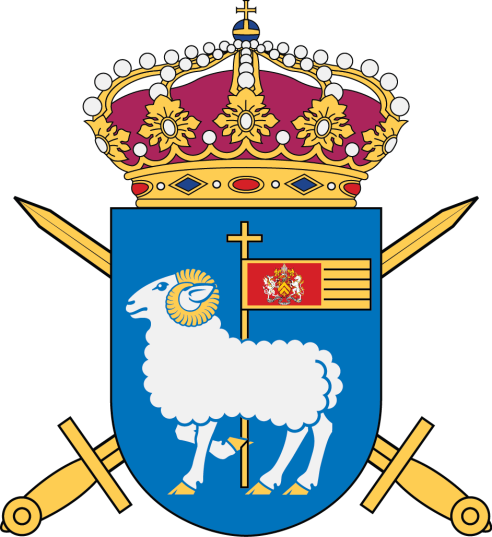
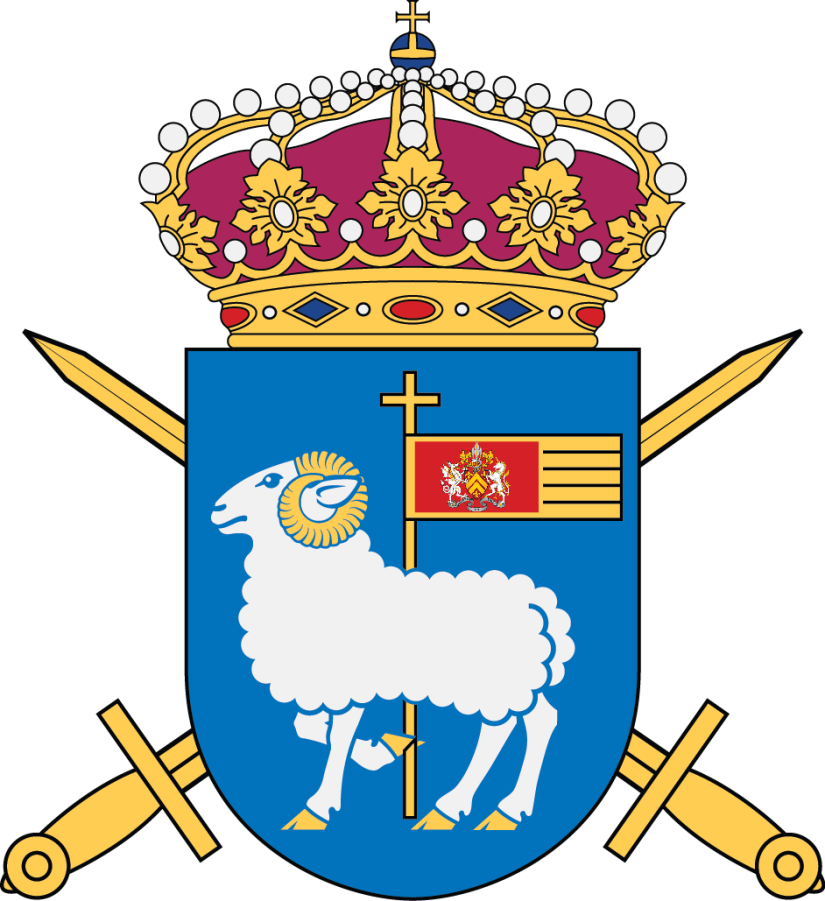
Gotland vapen


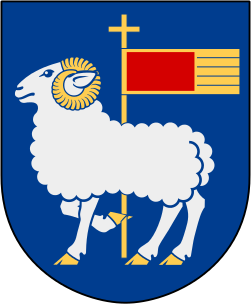
Gotland coat of arms; sheep, called
on Gotland “lamm” have always
been important to the local economy


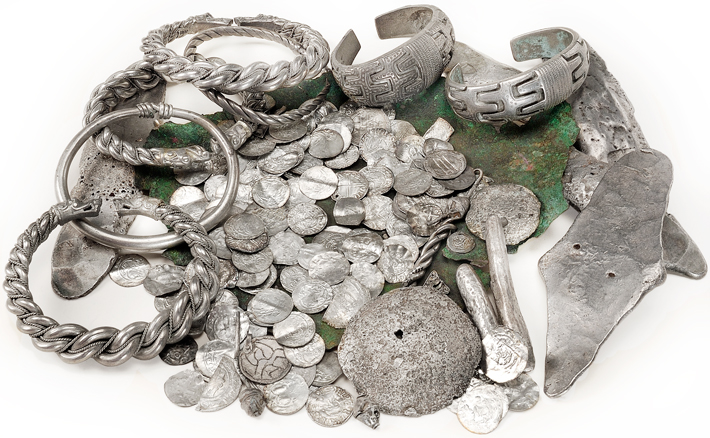
More than 700 purposefully assembled collections, or hoards, of silver treasure have been found on the Baltic island of Gotland, most deposited in the ground for safe keeping during the Viking age (9th through mid-11th centuries).

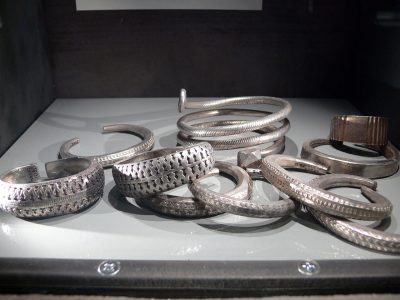
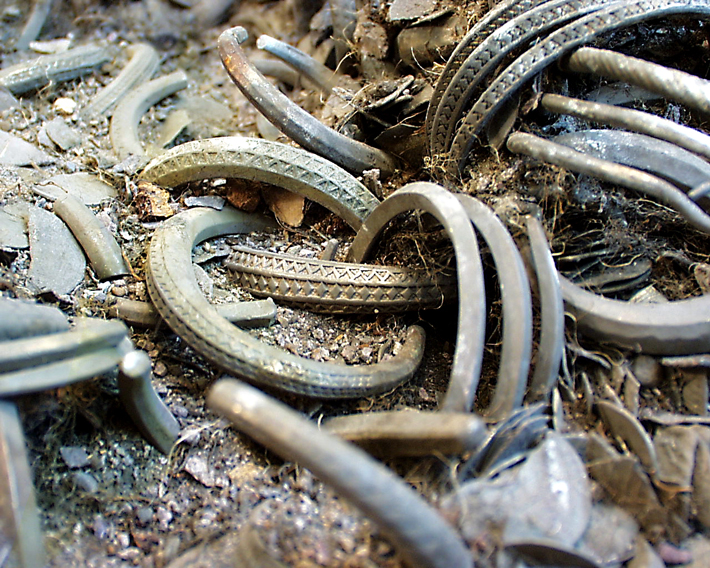
A few of these hoards are of unequalled size, including the largest ever found. The Spillings Hoard, unearthed by a farmer in his field in north-eastern Gotland in July 1999, contains more than 14,300 silver coins, and much silver jewellery: hundreds of armlets, and numerous finger rings, as well as silver ingots, coils of rolled silver, and hack-silver, pieces of broken jewellery and cut-up coinage.

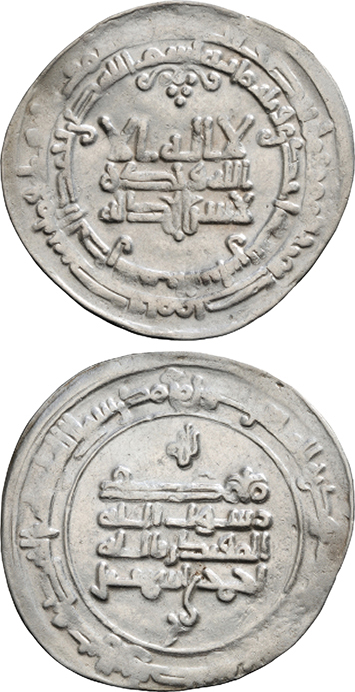
The Spillings Hoard was buried under the floorboards of a farmhouse about 881 CE, as the latest coin is dated to then. The house quite possibly was that belonging to a metalsmith – always a prosperous member of society in medieval times – judging by the other metal remains found on site. The earliest coins in the hoard are 6th c Sasanian. The vast majority of the coins are Arabic dirhams, not brought to the island as plunder but rather through the extensive trade around the Baltic basin that connected Gotland with the Silk Road and its fabled riches of silk, furs, and spices. The area where the Spillings Hoard was found abounded in well-to-do savers; a hoard was found in the same field in 1883 and numbered 5,922 coins.

Fornsalen - Silberschatz von Spelling

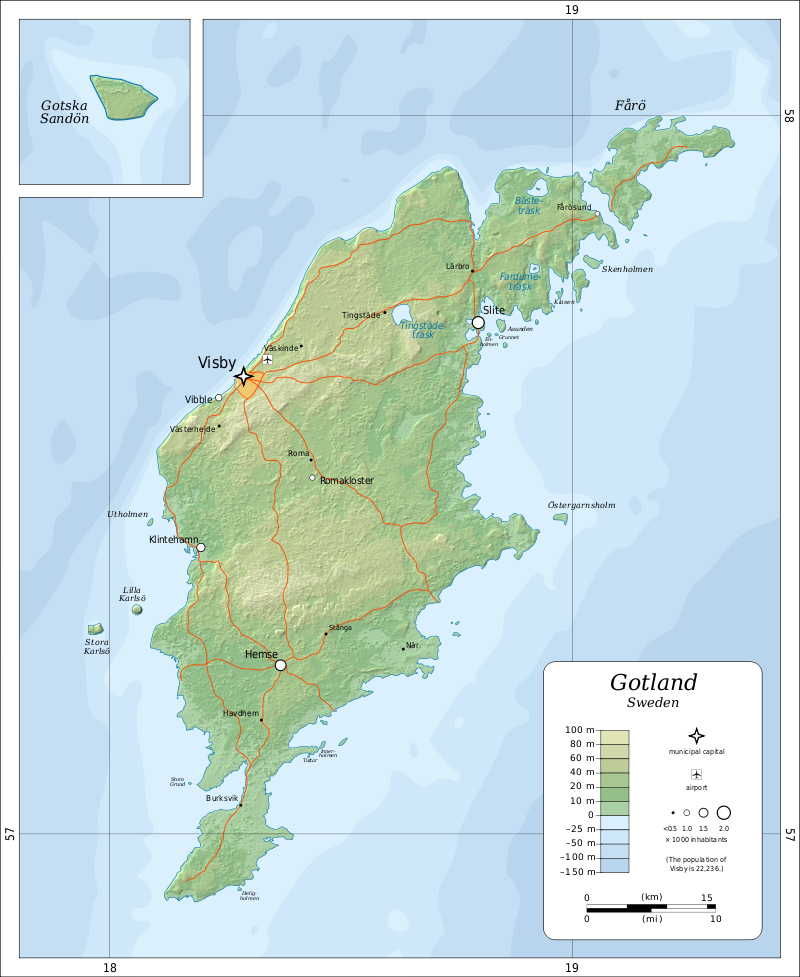
Gotland is an island 109 miles long and 32 miles wide in the Baltic sea, and today is home to some 58,000 residents. An independent nation until captured by the Danish King Valdemar Atterdag in 1361, Gotland did not become part of Sweden until 1645.

Topographic map of Gotland

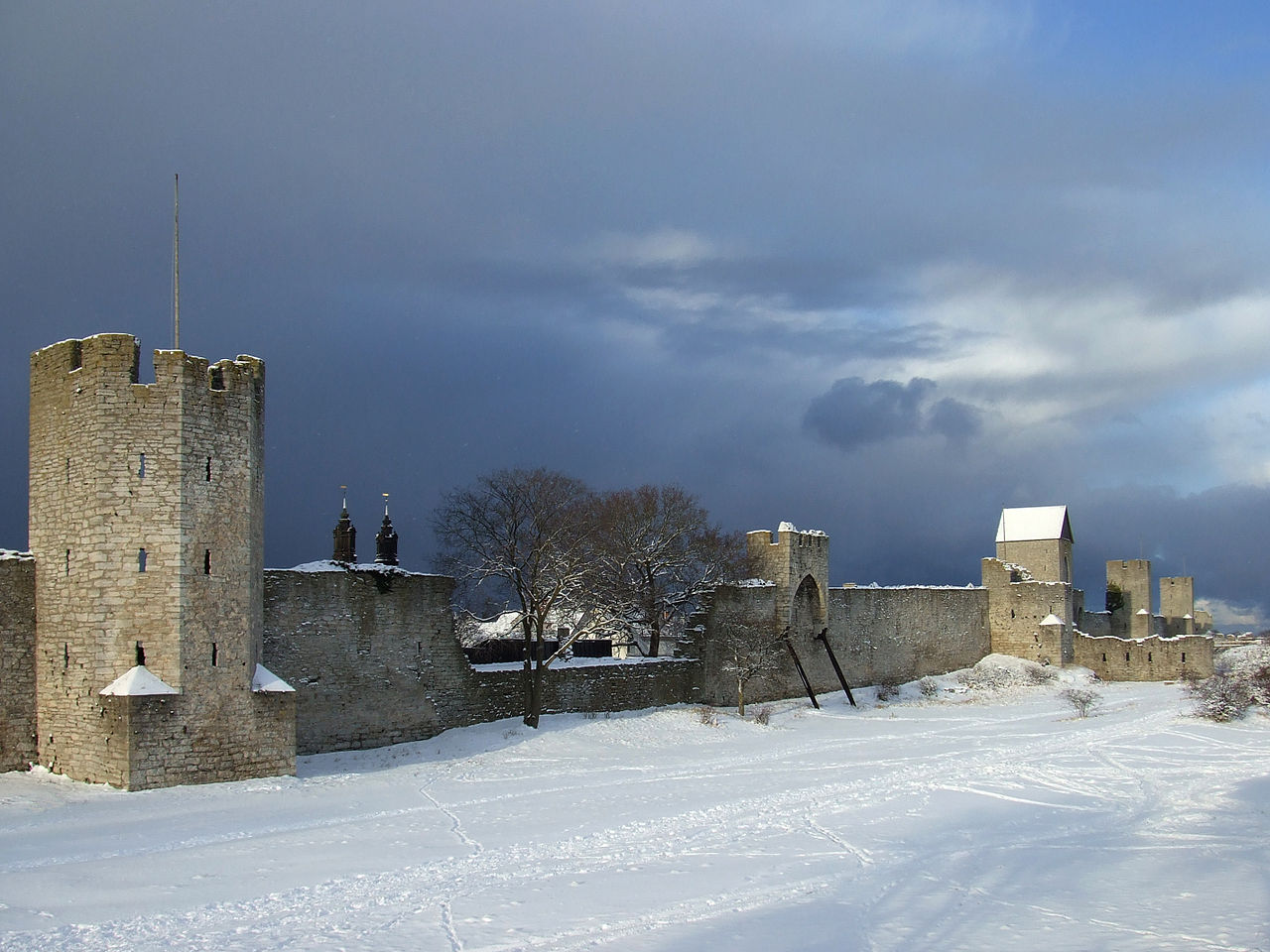
The walled capital city of Visby, on the eastern coast, grew immensely rich in the later middle ages as part of the Hanseatic League, leaving it and all of Gotland dotted with impressive medieval buildings, including the 94 parish churches it is justly famed for.

Visby ringmur östra delen norrut

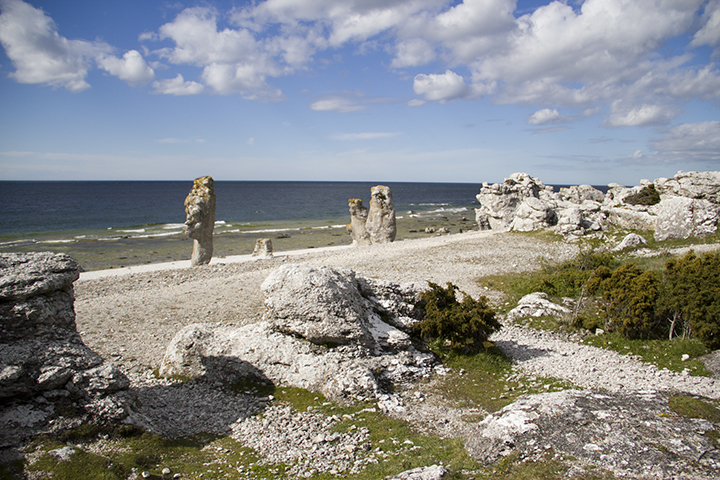
It is a place of exceptional beauty, its extensive coast and many inlets dotted with rauk – wind- and water-swept limestone rock formations – and blessed with the sunniest location of all Sweden. The name “Gotland” – Gutland in Gutnish, the original language of the settlers, is “Goth-land”, land of the Goths. Although the official language politically is Swedish, Gutnish is still spoken amongst some residents, although sadly barely survives in written form. Swedish friends living and studying on Gotland tell me that when they overhear Gutnish it is unintelligible to them, so distinct a language it is.

Nearly 200,000 old coins have been found on Gotland, including more late Anglo-Saxon coins than have been found in Britain itself. Yes: more late Anglo-Saxon coins have been found on this small distant island than in England itself. Many of these English coins were almost certainly plunder, and from the payment of thousands of pounds of danegeld (the payments paid by Anglo-Saxon rulers to stave off the predations of the Vikings). But the Gotlanders themselves were not “Vikings” – they were prosperous and peaceful farmers and traders, highly independent, pragmatic, and successful. Gotland’s location in the Baltic Sea made it perfect for trading runs across to the eastern and southern shores, where tribes such as the Polanie, Pomerani, and Prus ran Summer trading posts. These connected to trade routes heading further East deep into Russia, South to present day Iraq and Uzbekistan, and West to the great trading towns of the Svear (Swedes) such as Birka, and Aros (Aarhus) of the Danes.

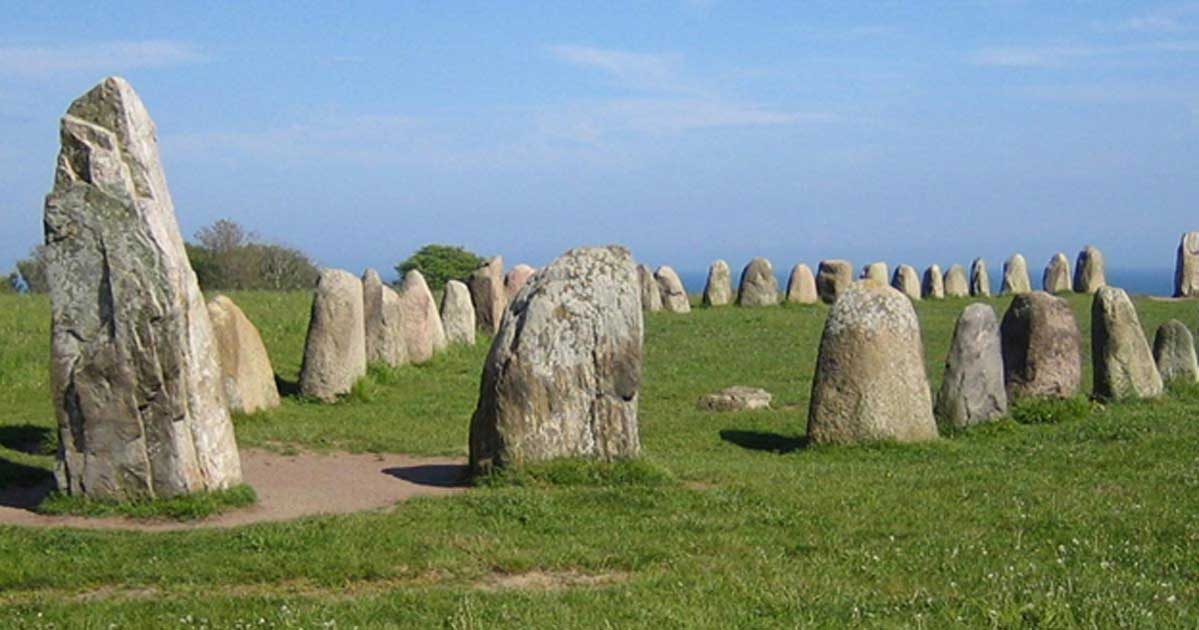
The Spillings Hoard, along with much more treasure and examples of Gotland’s famed standing memorial stones, are on view in Visby at the Gotlands Museum. An excellent book is available on the Hoard: The Spillings Hoard: Gotland’s Role in Viking Age World Trade, Visby, Gotlands Museum, 2009.


Fårö Rauk (limestone sea-stacks) at Langhammar


Preserving Our Past, Recording Our Present, Informing Our Future

Ancient and Honorable Clan Carruthers Int Society CCIS  LLc

carruthersclan1@gmail.com              carrothersclan@gmail.com

cropped-wider-banner-light-blue-1.jpg


Octavia Randolph


You can find us on facebook at :

https://www.facebook.com/carrutherscarrothers.pat.9

https://www.facebook.com/CarruthersClan/

https://www.facebook.com/CarruthersClanLLC


Disclaimer Ancient and Honorable Carruthers Clan International Society CCI
Gutland / Gotland, OUR ANCESTORS, SEA KINGS AND ROVERS, The History of Gutland, Uncategorized

THE SIX WIVES HARALD FAIRHAIR CLAN CARRUTHERS CCIS

WIDE BANNER with NEW CREST


ALL THE SONS OF HARALD FAIRHAIR

King Haraldr had many wives and many children- Haralds Saga – and a Carruthers ancestor.

Harald Fairhair, the legendary ruler of Norway who succeeded for the first time in uniting all the petty fiefdoms of his nation, inherited his father’s kingdom at a young age and proceeded to live an extraordinarily long and active life. During his time as a good looking adult with famously beautiful hairlocks, he wooed women from all different regions of Norway and produced many children accordingly,

.Although he cannot compete in importance with his Danish contemporary Ragnar Lodbrok, the list of his descendants is equally long and impressive. It includes among others, Ivan the Terrible of Russia, the Sun King Louis XIV of France and, via the House of Sachsen-Billung, our own Leopold II of Belgium.

Halfdan the Black handing over his kingdom to Harald ca. AD 860

Spouse no. 1    Ása    Haakonsdotter

In Chapter IX of his Heimskringla text, the Icelandic historian Snorri Sturluson, mentions that Harald eventually settled in Trondheim , which heal ways called his home, and where he built a very large establishment called Hladir (now Lade). That is where he met Aasa, the daughter of the important Jarl Haakon “the Rich” Grjotgardsson, who had nominal control over Trondelag and Halogaland.

Harald and Hakon came to an agreement dividing Norway between them except for the completely unruly Vestland. This first (political) marriage produced four sons, listed byname by Snorri In chapter XVII of the Heimskringla text:

“Then he began to have children. Harald and Àsa had these sons : Guthorm was the eldest, Halfdan svarti (the Black), Halfdan hviti (the White)–they were twins– the fourth Sigfròdr. They were all brought up in Trondheim in great honour”

Then Harald went after the Vikings of Vestland in Hafrsfjord whom hedefeated in a great naval battle in AD 872.

It is probably not a coincidence that the Viking Rollo, who was presumably born at Maere and who was a contemporary of Harald Fairhair, immediately after 872 what is since called Normandy. Many other Vikings, who did not want to be subjected to Harald, followed him there.

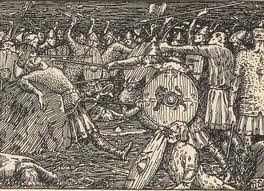
Image of the great battle of Hafrsfjord in 872

We can safely assume that Harald’s four children with Aasa were all born between the naval battles of 865 and 872.

Guthorm  (865-895)    Halvdan svarte ( (868-932)Halvdan hvite  (868-925)   Sigfrodr(872-?)

The eldest son Guthorm was named after Halfdan the Black’s best friend and right arm, Duke Guthorm, who took young Fairhair under his wings when he inherited the kingdom at the age of ten. After Duke Guthorm died of sickness ca. 890, Harald made his own son Guthorm king over Raanrike, which he had wrested from the Swedes, and gave him the responsibility of defending this south east region of Norway against his neighbor. However, Guthorm fell in a later fierce battle with the sea-king Solve Klove in 895, whose own father had been killed by Harald at the First Battle of Solskjel.

HalfdanII “the Black (named after his grandfather) later inherited the kingdom of Tróndelag. He may therefore have considered himself the rightful successor to his father as the king of whole Norway and must have been disappointed when Harald gave preference to the younger son Eric.

Halfdan III “the White”, shared Trondelag with his darker twin brother. He
fell in Eist land in 925, i.e. ten years before Harald’s death.
Sigfròdr is not mentioned again. We do not know what happened to him.

Spouse no. 2 Svanhild  Eysteinsdotter of Heidmark

After defeating the Vikings of Vestland, Harald turned his attention to Vestfold in Östland.Svanhild was the daughter of Eystein “the Noisy ” of Vestfold, who was also the grandfather of the before mentioned Rollo, the founder of Normandy. She was probably also chosen for political reasons.

Image of Eystein “Glumra” the Noisy Svanhild provided Harald Fairhair with three additional sons:

Olaf “Geirstadaalfer”                         Björn”formann”                     Ragnar“rykkill” 
(Elf of Geirstadir)                               (the merchant)                        (the Snatcher)
  (870- 932)                                         (875- 932)                                (878-932)

Svanhild possibly also died young because nothing is heard of her after 880. Björn the Merchent would later succeed his grandfather Eystein asking of Vestfold, and his brother Olaf succeeded him after his death ,while Sigurd inherited Trondheim from his father.

Spouse no. 3  Gyda   Eiriksdotter   of Hardaland

Around AD 870, when Harald was approaching the age of twenty, he started thinking of taking a young mistress. This was probably before his marriage with Asa. Harald had heard of beautiful Gyda, the daughter of king Eirik of Hardaland, who was being fostered in Valdres and he sent his men to fetch her.

However, she sent them back with the message that she would not sacrifice her virginity to take as husband a king who had no more of a realm than a few districts to administer. She might only agree to be his wife if he would first subject the whole of Norway.

This seems to have had a stimulating effect on Harald who swore to God not to cut or comb his fancy hair until he became ruler over all of Norway. It would take him another ten years to fulfill this ambition, but when he had completed his project, he remembered beautiful but proud Gyda. So tells Snorri in chapter XX of Heimskringla:

King Haraldr had now become sole ruler of all Norway. Then he called to mind what that proud girl had said to him. He then sent men for her and had her brought to him and made her his mistress. That were their children :

Hroerekr                Sigtrygg                 Frodi                 Torgils
(880- 932)            (882-932)              (885-938)             (890-932)

All four sons were born in Bergen, but both Frodi and Torgils are said tohave died in Dublin.

Spouse no. 4  Snaefrid“    Snowfair ”   Svasisdotter the Finn

In chapter XXV of Heimskringla, Snorri recounts the following story:

King Haraldr went one winter to attend banquets through Uppland and had a Yule banquet prepared for himself in Poptor. One Yule-eve Svási came to the door while the king was sitting at table, and sent the king a message that he was to come out to him.The King went out reluctantly and agreed to go to his home with him.

Snaefrid Swasisdottir - Historical records and family trees - MyHeritage

There Svasi’s daughter Snaefridr, a most beautiful woman, rose and served the king a goblet full of mead, and he took all into his grasp, including her hand, and it was immediately as if a fiery heat came into his flesh, and he wanted to have her straight away that night. But Svasi said that it should not be unless the king betrothed himself to Snaefridr and married her and got her lawfully. And the king betrothed himself to Snaefridr and married her and loved her so madly that his kingdom and all his duties he then neglected. They had four sons :

Sigurd “hrsi”          Halvdan”hàleggr”          Gudród“ljami”      Ragnvald“rettilbeini”
 
(the Grey)                (long legs)                     “Gleam”              (Straightleg)
(890-937)                (891-?)                            (893-?)                (895-?)

Then Snaefrid died and according to Snorri, Harald was inconsolable and sat over her continually hoping that she would return to life.Sigurd later became king of Hadafylke and was the ancestor of other notable kings, such as Harald Hardraade, who ruled Norway successfully from 1046 to 1066, but failed in his attempt to invade England just before William the Conqueror made his own landing at Hastings.

Spouse no. 5   Ragnhild           the Mighty” of Jutland”

(Jutland and Gutland were one in the same)

Ragnhild was born ca. 880 as daughter of King Eirik of Jutland and would bear Harald’s
most notorious son Eric (900-954) upon whom posterity bestowed the epithet “Bloodaxe”,
 presumably because he proceeded to eliminate his half-brothers in order to obtain the succession.
Ragnhild Sigurdsdotter - Wikipedia
 However, careful reading of Snorri’s Chapters 41-43reveals a different story:
King Harald was now 80 years of age; he now became so infirm that he felt he could not travel by land or manage the royal affairs. Then he took his son Eric to his high seat and gave him rule over the whole country. But when King Harold’s other sons heard about this, the Halfdan sorti set himself on the king’s high seat.
He then took the whole of Trondheim to rule over. All the Traendis backed him in his course of action. Two years later, Halfdan svarti died suddenly inland in Trondheim at some banquet, and it was rumored that Gunhilde (Eric’s wife) had bribed a warriors killed in magic to make him a poison drink. After that the Prendi’s took Sigurd as king.

All this shows is that Eric did not have an easy time taking hold of the situation, and that he was king by name only between 930 and 933.When in 934 his younger rival Haakon arrived from England to takeover the situation, Eric did not resist and moved to the Orkney Islands, which were already colonized by Norway. The English King Aethelstan, who had fostered Haakon and equipped his expedition, then entrusted Northumberland to Eric as under-king. Numismatic evidence found as recently as 2014 attests to his title as king of York between 952 and954.
Aethelstan’s successor Eadred put an end to his reign, and when Eric was travelling back to the Orkneys with his brother Ragnald and his son Haerekr, they were ambushed at Stainmore and all killed.

Coin of Eric as King of York AD 952-54

So who were the brothers who were supposedly killed by violent Eric?

1.South of Vinland: Norwegian History: Halfdanr Svarti (810-860), King of  Vestfold.


Halfdan svarti : we already saw that his death was caused by poisoning, no bloody ax involved. Halfdan had it coming by takingover Trondheim, the jewel in his father’s crown

 and had attempted himself first to kill Eric by burning down the house where he was staying. Eric managed to get out and went to see his father with news of these events. We cannot therefore exclude the possibility that it was Harald himself who ordered Halfdan’s poisoning as punishment

.2.


Bjòrn formann: succeeded his grandfather on his mother’s side as king of Vestfold. He was considered an intelligent person and very moderate and it seemed he might make a great ruler. However,Snorri recounts in chapter 41 of his book that when Eric returned from the eastern Baltic in 930, he visited Bjòrn to demand the revenues which were due to King Harald whlle he was still alive. It was when Bjòrn refused to pay, that he was killed in battle by Eric

3.
Olaf : after the fall of Bjòrn, his brother Olaf took rule over Vestfold and adopted Bjòrn’s son Gudròdr. When the Vikverjar heard that Harold had taken Eric as supreme king, they took Olaf as supreme king in the Vik, and he kept that kingdom. Eric was very displeased at this. The same Spring, Eric calls out a great army and ships and turns east to Vik. He had a much larger force and gained victory. Olaf and Sigurd both fell there
.4.
Sigurd: this was probably Sigfródr, son of the first marriage of Harald with Àsa

So there is no mention of direct murder by Eric of any of his half-brothers.
They had all four
revolted against their father’s decision and bore the consequences. Maybe their father, while he was still alive, did not disapprove of their forceful elimination. It is interesting to read that according to the Saga in which Eric figures, after his death he is welcomed by Odin without any criticism of the killings of his brothers.  When the other gods question Odin why he still welcomed Eric, Odin answers, well, he has traveled a lot and has seen many countries”  Sounds modern, does it not?

Spouse no. 6           Alshild   Ringsdotter   of Ringerike

Ring                     Dag                Gudród “Skirja”
(882-?)                (883-?)              (890-965)

Alshild was a princess from the prestigious kingdom of Hringaríkei (nowRingerike near Oslo). Snorri mentions that when King Harald married her, she proudly named her sons after her own father (Ring), grandfather (Dag)and ancestor (Gudród). Their son Dag later became king of Hedmark and Gudbrandsdal.

Beautiful Hedmark

Spouse no. 7   Thora  Mosterstang


When Fairhair reached the age of seventy, he retired to one of his farms in Hordaland where he is credited with impregnating beautiful Tora, who may have been only a handmaid. At the age of ten, her son Haakon wassent for safekeeping to the court of the English king Aethelstan where many sons of European princes were welcome to be taught the noble arts of statesmanship

 King Aethelstan is said to have loved him more than his own kin. Hákon was baptized there and taught the true faith and good morality and all kinds of courtly behavior. In 934, Hákon was invited by dissident nobles in his home country to takeover the throne of Norway. Aethelstan equipped him with ships and men and Hákon was able to expel his unpopular half-brother Eric Bloodaxe, who conceded without a fight and fled to the Orkney Islands Haakon proved to be a good and pragmatic king and reigned until 960when he had to face an attack at Fitjur by five sons of Eric. He won the battle, but was wounded and died shortly there after.Three sons of Eric took over the kingdom and were able to fulfill the dynastic designs of their grandfather.

Conclusion

By impregnating so many women from all parts of his kingdom, Harald may have had political considerations in mind. It was his way of obtaining the support of so many previously independent smaller kings who might otherwise have been reluctant to accept him as over-king. His marriages to a Danish and a Finnish princess may also be interpreted as protection against over-zealous neighbors. The only missing piece in his political puzzle was a princess from hostile Sweden. I think Martin Arnold is right when he suggests that Harald’s governing style of usurping traditional inheritance rights had to lead to civil war. Hisson Eric was not only contested by his brothers, but also by the regional lords. Maybe if Harald had gradually shared power with his designated successor at an earlier period, the transition might have been successful.

Carruthers crest on flag-v2 (1)

OFFICIAL AND OLDEST SCOTTISH  CLAN CARRUTHERS

 SINCE 1983-CLAN OF OUR ANCESTORS

SCOTTISH CLAN – IRISH CLAN – NORSE CLAN

WIDE BANNER with NEW CREST

Willy van Ryckeghem

REKNOWNED NORSE HISTORIAN

REVIEWED BY TAMMY WISE CHS

CLAN CARRUTHERS CCIS HISTORIAN AND GENEALOGIST

Preserving Our Past, Recording Our Present, Informing Our Future

Ancient and Honorable Clan Carruthers

   clancarruthers1@gmail.com

You can find us on our main facebook pages at :

SILVER WINGS-https://www.facebook.com/CarruthersClanLLC/

GOLD WINGS – https://www.facebook.com/carrutherscarrothers.pat.9

CLAN CARRUTHERS FAMILY HISTORY – https://www.facebook.com/CarruthersClan

CLAN CARRUTHERS CCIS – https://www.facebook.com/groups/3878691252182714

CLAN CARRUTHERS INT SOCIETY- https://www.facebook.com/groups/394653845137709

CLAN CARRUTHERS – BORDER REIVERS – https://www.facebook.com/groups/434959914239094

Disclaimer Ancient and Honorable Carruthers Clan International Socie
Gutland / Gotland, The Viking Age, Uncategorized

CLAN CARRUTHERS-COULD THE CARRUTHERS TARTAN BE FROM GOTLAND?

Clan Carruthers Int Society CCIS                          PROMPTUS ET FIDELIS

cropped-wide-banner-with-new-crest.jpg

Could the Carruthers Tartan be from Gotland?  Possibly!

I was raised in rural Quebec and I have more real-life beard growing, axe throwing, bear hunting lumberjacks in my family than I have fingers on my hands (I still have all ten of my fingers, by the way… I can’t say as much for some of the lumberjacks in my family…). But lately as I’ve scoured the malls for a plaid blanket scarf, I found myself calling certain patterns plaids, and others tartans. And I couldn’t help but (internally) cry, “Someone please enlighten me!” But no one did, so I did it myself!

If you look up the word plaid in a dictionary, you’ll find a few definitions [1]:

  1. A rectangular length of tartan worn over the left shoulder as part of the scottish national costume
  2. a) A twilled woolen fabric with a tartan pattern
    b) A fabric with a pattern of tartan or an imitation of tartan
  3. a) Tartan
    b) A pattern of unevenly spaced repeated stripes crossing at right angles

But a quick search for the origin of the word plaid reveals that the word is related to the gaelic word plaide meaning blanket or mantle [2]. So what we call the kilt, actually first appeared in what was called a “belted plaid”, literally like a belted blanket [3]. It looked like this (fun fact it doubled as a blanket for the night… much like our modern trend of blanket scarves). It was the predecessor to the kilt, today modern kilts are still worn with plaids (long length of fabric), but over the shoulder (separate piece of fabric, like this) [3]. Somewhere along the way, notably as the tartan wearers immigrated to America, the actual pattern was mistakenly called plaid.

So the correct word for the actual pattern is tartan. But then… where does the word tartan come from? Where does the pattern come from?

The fact is those who hold the answers to those questions have long, long been buried. The oldest tartan fabric we know of comes to us from the Tarim mummies.The Tarim mummies, named after the Tarim Basin in Xinjiang, China (the most north-west region of China) where they were found, were found with pieces of preserved cloth, exhibiting tartan patterns. Contrary to intuition, these mummies don’t exhibit asiatic features, rather, they seem to be “from the west” [4]. The name for the culture that the Tarim mummies belonged to was the Tokharians whose language is most similar to that of the Celts [5]. See those interesting paths starting to form?

Unfortunately, we seem to know much more than that. How tartan became so strongly associated with the Scottish is a mystery, we can only assume that they saw it, liked it, and wanted to wear it!

Oh and one more thing, clan-tartans are modern inventions. In the origins of Scottish tartans the colours were determined by plant availability and to some degree personal taste [3]. When I say modern, I mean like, victorian-era, so today the tradition of clan tartans have been going long enough to not be ridiculous, but in the base of it it was all arbitrary: you retroactively picked a tartan for your clan, on the basis that you thought it was pretty.

PictureFrom the Huldremose findings tartan now in the National Museum of Denmark

Tartans are quite appropriate for a Viking re-enactment, since we can rightfully say that the Gutlanders, and the Danes both wore tartans in the early 3rd and 4th century.   This style of dress did not stop, but continued through the Viking Age.

The Viking age, however, does not seem to show the same love for vibrant, large scale patterning as you see today in Scotland or Ireland.   The technology was certainly there to craft large plaids or stripes, but the evidence that they were used is lacking.

Different fabric patterns, from early Iron age -   Forskellige mønstrede tekstiler fra ældre jernalder.It was a burial tradition of the Guts, Gots, Celts, when one of their own, their Clan, their family died, to take a piece of tartan and place it in their mouth.   Many of the swatches they are finding in various archeological digs are found in this manner.  Sometime a whole mass grave will be unearth and every person in the grave will have the same tartan in their mouths.

Pictured to the left here are many of the samplings of various designs and weaves that have been found in Gotland, and tested to be from the 5th century.  At this time all weavers dyed their wool, and other materials, using only the dyes of the earth.  In Scotland and Ireland today, the oldest clans have the most natural muted colors in their Kilts.

***  The Carruthers Tartan is very muted in colors, and if  you own some you will see why the Carruthers tartan is ancient.  The colors are quite similar to those they found in Gotland.  The Carruthers ancestors who came from Gutland , brought their tartans with as did others from that area.   They came to fight, and when they advanced they tore off their cloth and fought naked.  ***

One of the Tartan or Kilt Makers that Clan Carruthers supports is:

USA Kilts (800) 368-8633        sales@usakilts.com

USAKilts Logo

Carruthers 13 – 16 Ounce LOCH

https://www.usakilts.com/advancedsearch/result/?q=Carruthers

Carruthers crest on flag-v2 (1)

Preserving Our Past, Recording Our Present, Informing Our Future

Ancient and Honorable Clan Carruthes Int Society CCIS  LLc

carruthersclan1@gmail.com               carrothersclan@gmail.com

Crest on Light Bluers

Karen Swanson,  Croatia and Findland

CLAN CARRUTHERS INT SOCIETY CCIS HISTORIAN AND GENEALOGIST


You can find us on facebook at :

https://www.facebook.com/carrutherscarrothers.pat.9

https://www.facebook.com/CarruthersClan/

https://www.facebook.com/CarruthersClanLLC

Disclaimer Ancient and Honorable Carruthers Clan International Society CCIS LL
Gutland / Gotland, The Viking Age, Uncategorized

CLAN CARRUTHERS -THE VIKINGS IN SCOTLAND AND IRELAND IN THE NINTH CENTURY

Clan Carruthers Int Society CCIS                       PROMPTUS ET FIDELIS

cropped-wider-banner-light-blue-1.jpg

THE VIKINGS IN SCOTLAND AND IRELAND IN THE NINTH CENTURY


swordsandcandlesThis study attempts to provide a new framework for ninth-century Irish
and Scottish history. Viking Scotland, known as Lothlend, Laithlinn, Lochlainn and
comprising the Northern and Western Isles and parts of the mainland, especially
Caithness, Sutherland and Inverness, and Scotland Lowlands, was settled by  Norse Vikings in the early ninth century. By the mid-century it was ruled by an effective royal dynasty that was not connected to Norwegian/Norse Vestfold. In the second half of the century it made Dublin its headquarters, engaged in warfare with Irish kings, controlled most Viking activity in Ireland, and imposed its overlordship and its tribute on Pictland and
Strathclyde. When expelled from Dublin in 902 it returned to Scotland and from there
it conquered York and re-founded the kingdom of Dublin in 917.


I propose to reconsider the Viking attack on Scotland and Ireland
and I argue that the most plausible and economical interpretation of the historical
record is as follows. A substantial part of Scotland—the Northern and Western Isles
and large areas of the coastal mainland from Caithness and Sutherland to Argyle—
was conquered by the Vikings in the first quarter of the ninth century and a Viking
kingdom was set up there earlier than the middle of the century. The occupation of
this part of Scotland corresponds chronologically to what I call the prelude to the
Viking wars in Ireland (from c.795 to c.825). This involved raids on Ireland directly
from south-western Norway and, very likely, some from settlements in Scotland in the
later part of that period. The main thrust of the ninth-century Viking attack on Ireland
(c.825 to c.850) was mounted from Scotland, Laithlinn was the name of Viking
Scotland, and the dynasty that imposed itself on Dublin, and that later dominated
York and threatened to dominate England, originated in Viking Scotland. This, it
itself, is not a novel idea. It has been suggested in a somewhat vague way, amongst others, by R. H. M. Dolley, but he was thinking mainly of the tenth century.
Professor Peter Sawyer largely concurs and he has explicitly rejected the notion (put forward, for example, by N. K. Chadwick) that the ninth-century attack on Ireland was planned and implemented from south-western Norway by the king of Lochlainn.

Professor A. A. M. Duncan pushes the Scottish argument much further and surmises that the Olaf who came to Dublin in 853 was `the son of Hebridean chief’, but he cites no
evidence. That evidence is complex and will bear re-examination.

The first thing that must be done is to detach the Viking dynasty of Scotland and
Ireland from Norway itself. Historians, for over a century and a half—perhaps
longer—have been keen to attach the Viking kings whose names are mentioned in the
ninth-century Irish annals to the genealogy of the kings of Vestfold in Norway. The
Vestfold genealogies that historians in the past have compiled are based on
the Ynglingasaga, but they tend to flesh them out by adding materials
from ( f) :Íslendingabók, Landnámabók and Heimskringla, Old-Norse historical and
literary works of the twelfth century and later. Effectively, since the days of
Todd, the hypothesis had been advanced that Amlaíb, called Amlaíb Conung, from
Old Norse konungr `king’ in F, is identical with Óláfr in hvíti of Íslendingabók and
Óláfr Guðrøðarson of Ynglingasaga. This view is expressed eloquently (and with
complicated genealogical tables) by Professor A. P. Smyth and he
cites Landnámabók as the source that gives the fullest account of him.
I quote Smyth’s translation of Landnámabók: Óláfr inn hvíti harried in the Western Seas and he won Dublin in Ireland and the district of Dublin, and there he established himself as king. He married Auðr inn djúpauðga, the daughter of Ketill flatnefr. Their son was called Þhosteinn rauðr. Óláfr fell in battle in Ireland, but Auðr and Þorsteinn went to the Hebrides. … Þorsteinn became a warrior-king. He entered into an alliance with jarl Sigurðr inn ríki [of Orkney] the son of Eysteinn glumra. They won Caithness and Sutherland, Ross and Moray, and more than half of Scotland. Þorsteinn became king over that region, but the Scots soon slew him and he fell there in battle.

This narrative may appear legendary—even fantastic—but if Óláfr’s descent is
historical the Dublin dynasty was directly descended from the Norwegian Vestfold
kings, and the direct connection with Norwegian/Norse royalty is genuine. However, as
Smyth and others admit, there are formidable chronological problems about this.
Nonetheless, he affirms that `there can be no doubt that the so-called Óláfr inn hvíti of
Icelandic sources was the same king as Amlaíbh, the ninth-century ruler of Dublin’ 104
.
Jón Steffensen examined these genealogies in careful detail and he concluded that
they are a chronological morass. Nonetheless, he still tried—in vain, I think—to save them for history. The link between the Old-Norse genealogies and the Irish annals is
provided by an annal in ( F) Fragmentary Irish Annals, but it is not reliable. This sole
connection, the genealogy found in F §401—Iomhar mc. Gothfraidh mc. Ragnaill mc.
Gothfraidh Conung mc Gofraidh—has no independent value: it is merely another
variant of the Icelandic material, and this is not the only fragment of its kind in F. It is
likely that the father of Amlaíb (Óláfr) and Ímar (Ívarr) is Gothfraidh (Guðrøðr) and
that he is a historical person and dynastic ancestor (see table 1), but his genealogical
ascent is a construct without historical value.
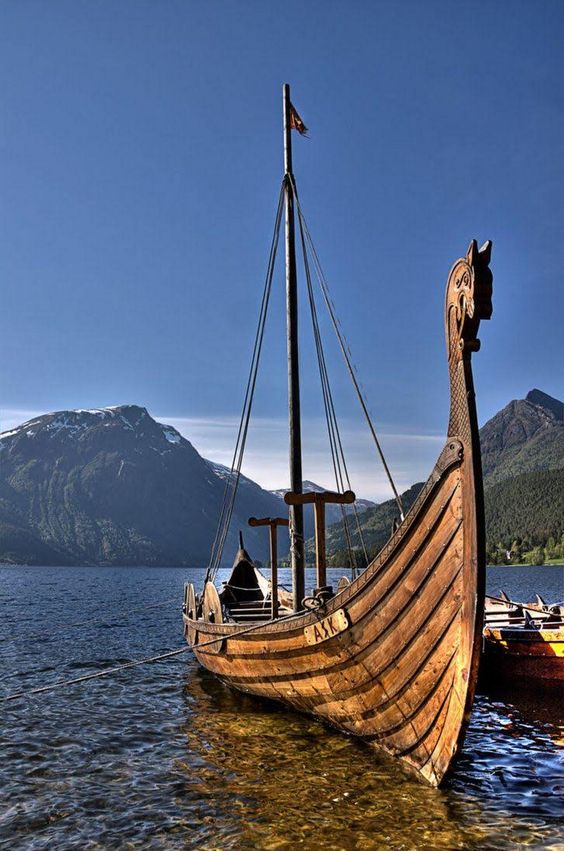
6dbe7845b1102d290e0c3ab2eb3ff0fbIn the matter of possible dynastic connections between the dynasty of Dublin and
Norwegian dynasties important historiographical progress was made in the early
nineties, and this provides a new critical context for the analysis of the problem. Dr
Claus Krag has shown that the Ynglingatal (once believed to have been composed a
little before AD 900, and thus early and intrinsically valuable) is not much older or
more authoritative than Ynglingasaga, that it reflects concepts current in the twelfth
century, that the genealogies are qualitative rather than chronological, and that they
come in 14-generation sequences like the Anglo-Saxon ones (both based formally on
the structure of Matthew’s genealogy of Christ). In his view, these are `products of the
imagination, the extant texts are remnants of the historical literature of the 12th and
13th centuries, concerning what were held to be the ancestors of what was then the
Norwegian royal house … the idea that the Norwegian kings descend from Harald
hárfagri and the monarchy was held to the property of his dynasty, is no more than a
construction … the conclusion is that the Yngling tradition is entirely a part of the
historicising method, partly cast in artistic form, which Icelandic learned men
developed’.

Peter Sawyer has argued convincingly that Ynglingasaga is fiction, not
history, but a fiction whose learned creators drew on what they knew (or thought they
knew) of Scandinavian history in the tenth and eleventh centuries. Kings who may
originally have ruled Norwegian Oppland are transformed into kings of Vestfold and
dubious king-lists are turned into genealogies. We find the historian Ari Þorgilsson
doing just this in early twelfth century: he derives his own descent from a variant of
this very genealogy.14 So much for the Dublin dynasty’s genealogical background in
Vestfold.
The early raids on Ireland seem to have been aristocratic free enterprise, and named
leaders appear in the Irish annals—Saxolb (So[hook]xulfr) in 837, Turges (Þurgestr,
not Þorgisl or ÞorgeRR) in 845, Agonn (Hákon) in 847. Only towards the middle of
the ninth century was there any attempt by any Viking kings to coordinate attacks and
settlement in Ireland, and these kings appear to belong in the Viking settlements in
Scotland.
Three important annalistic entries record the activity of Viking royals in Ireland in
848, 849 and 853. All three have connections with a kingdom
called Lothlend, Laithlind, Laithlinn, later Lochlainn. The first occurs in the Annals of
Ulster: U 848.  Bellum re nOlcobur, ri Muman, & re Lorggan m. Cellaig co Laighniu for
gennti ecc Sciaith Nechtain in quo ceciderunt Tomrair erell, tanise righ Laithlinne, &
da cet dec imbi `A battle was won by Ólchobar king of Munster and Lorcán m.
Cellaig with the Leinstermen against the pagans at Sciath Nechtain in which fell
Tomrair (Þórir) the earl, heir-designate of the king of Laithlind and 1200 about him’.
This took place at a strategic place, Castledermot, Co Kildare, not far from Dublin
where a Viking settlement had been established in 841-42. The Irish leaders were
amongst the most powerful provincial kings in the country, the troops involved were
numerous, and the slaughter was immense. Þórir the earl17 was evidently a very
important person, even if the identity of the king whose heir-designate he was remains
unclear . He was leading a large army. This was a battle of major
significance, even if we take the annalist’s estimate of the slain (as we ought) to be
merely a conventional expression for a very large number.
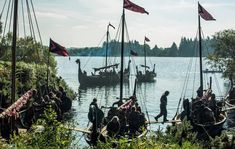
31df11519d59af5ea79330640603dcaa
The next entry that has reference to an overseas `king of the Foreigners’ occurs in
849: Muirf[.]echt .uii.xx. long di muinntir righ Gall du thiachtain du tabairt
greamma forsna Gaillu ro badur ara ciunn co commascsat hErinn n-uile iarum `A
sea-going expedition of 140 ships of the people of the king of the Foreigners came to
exercise authority over the Foreigners who were in Ireland before them and they upset
all Ireland afterwards’.
Evidently, this was a violent attempt by a King/Chief of the Vikings, using large forces, to
compel the independent Vikings in Ireland to submit to royal authority, and it was
fiercely resisted.
The next and final entry in this series occurs four years later: U 853.2. Amhlaim m. righ Laithlinde do tuidhecht a nErinn coro giallsat Gaill Erenn
dó & cis o Goidhelaib `Amlaíb (Óláfr) son of the king of Laithlind came to Ireland
and the Foreigners of Ireland gave him hostages and he got tribute from the Irish’.
The differing treatment of Irish and Viking as tribute payers and hostage givers
respectively may be significant. Within the conventions of Irish politics, the Viking
settlers are treated as free, the Irish as a subject population.It is likely that only a
small number of Irish kingdoms submitted to Viking overlordship.
An entry in F evidently refers to these same events and contains some
supplementary information. This appears well-founded and the source of F may be
taken to be reliable on the whole in regard to these events.
F §239. Isin mbliadain-si bhéos .i. in sexto anni regni Maoil Seaclainn, tainig
Amhlaoibh Conung .i. mac rígh Lochlainne i nEirinn & tug leis erfhuagra cíosa &
canadh n-imdha ó a athair & a fagbhail-sidhe go h-obann. Tainig dno Iomhar an
brathair ba sóo ‘na deaghaidh-sidhe do thobhach na ccios ceadna `Also in this year,
i.e. the sixth year of the reign of Mael Sechnaill, Amlaíb Conung (Óláfr konungr), son
of the king of Lochlainn, came to Ireland, and he brought with him a proclamation
imposing many tributes and taxes from his father, and he left suddenly. Then his
younger brother Ímar (Ívarr), came after him to levy the same tributes.

Vikings in Ireland: Recent Discoveries Shedding New Light on the Fearsome Warriors that Invaded Irish Shores | Ancient Origins
The expression `also in this year’ could be taken to refer back to F §238 which is
firmly dated to 849. However, this does not fit well with `the sixth year of the reign of
Mael Sechnaill’. His predecessor Niall Caille died in 846 and certainly by 847 (if not
by 846) Mael Sechnaill was recognised as king of Tara—and this would tend to place
these events in 852/53. This dating fits well with U and is to be preferred.
11. All these entries refer to major expeditions to Ireland by leaders who were
recognized as royal by the Irish annalists. Very large numbers of troops and ships
were involved and their purpose was conquest, control of the Vikings already settled
in Ireland, and the imposition of taxes on Irish kingdoms. All are associated with the
kingdom of Lothlend, Laithlind or Lochlainn whose king appears to be directing the
operations.
There are other references to Lothlend/Laithlind. One that belongs certainly to the
ninth century occurs in a well-known poem—quoted so often that it has become
trite—preserved uniquely as a marginal entry in Sankt Gallen, Stiftsbibliothek, MS
904, a copy of Priscian’s Institutiones grammaticae, heavily glossed in Old Irish.
According to Bruno Güterbock, this manuscript was written in Ireland in the midninth century: he dates it by reference to marginal notes that he thinks were written in
845 or 856.22 Robin Flower dated it more closely to the years 845-46

Professor David Dumville has recently re-examined the dating criteria and, whilst he is agnostic about many things, the central ninth-century date stands: he thinks that it was written after the death of St Diarmait ua Aeda Róin of Castledermot in 825 and before its
appearance in Cologne some time anterior to 859, and he holds with Traube and
Gerard Murphy that the book is to be associated with the circle of Sedulius Scottus
who was active on the Continent between the 840s and the 860s.

However, his suggestion, on slight palaeographical grounds, that the manuscript was written on the Continent `where its associations might be with Liège or Cologne, with Sankt Gallen, or even with northern Italy’ is speculative and the quatrain must be located in an Irish context unless more convincing evidence to the contrary can be produced.
Is acher in gaíth in-nocht
fu-fúasna fairggæ findf[.]olt;
ní ágor réimm mora minn
dond láechraid lainn úa Lothlind27
The wind is fierce to-night
it tosses the sea’s white mane
I do not fear the coursing of a quiet sea
by the fierce warriors of Lothlend.
A second example occurs in a verse appended to the entry in the Annals of the Four
Masters on the battle of Cell Ua nDaigri (Killineer, at Drogheda on the Boyne) in 868.
Here the king of Tara, Aed Finnliath mac Néill (r. 862-79), defeated the kings of
Brega and Leinster and a large Viking force (of which one of the leaders was Carlus,
son of Amlaíb of Dublin).28
Dos-fail dar Findabhair find
fiallach grinn dond Laithlind luind—
as ar chédaibh rimhter Goill—
do cath fri righ nEtair n-uill.29
There comes over fair Findabair
a keen host from fierce Laithlind—
the Foreigners are counted in hundreds—
to do battle against the king of great Étar.
Whether this quatrain had to with this battle originally may, one could argue, be a
little uncertain. However, one can read rí Étair as a kenning for king of Tara (i.e. Aed
Finnliath) and Findabair is probably Findabair na n-Ingen, now Fennor in the parish of
Donore at Drogheda and quite near to Killineer. For what it is worth, F states that the Vikings had arrived at the mouth of the Boyne with a great fleet and they were
induced by the king of Brega to join in the attack on the king of Tara.
Where, then, is Lothlend, Laithlinn, later Lochlainn? Heinrich Zimmer thought it
was Lolland (Låland), the Danish island, but Alexander Bugge decisively disproved
that unlikely hypothesis in 1900. A decade or so later, Carl Marstrander suggested
that it derived from Rogaland, the district about Stavanger in Norway—and we know
from good archaeological evidence that the early Viking raids on Ireland originated
here.

For phonological reasons he had to posit that the forms Lothlend and Lochlann existed side by side, though only the first is attested for the ninth century.33 By 1915 he had come to have serious reservations about this, but the distinguished Norwegian linguist Alf Sommerfelt continued to accept it as late as 1950.

There are two main objections to this etymology: there is no other example of
inital r becoming l in an Irish borrowing from Old Norse, and loth- not loch- is the
earliest form. It was left to David Greene to reject Marstrander’s etymology firmly,
but his suggestion that loth/lath is from the Irish word meaning `quagmire, marsh’, is
to say least weak, as Greene freely admits. One should, perhaps, posit an Old-Norse
rather than an Old-Irish name. The second element is likely to be -land`land’ (which
would develop regularly into -lann and -lainn). Is it possible that the first element
is loð- (which would regularly give Irish *loth) `shaggy, woolly, covered with or thick
with long grass and that the term is, in origin, simply a geographical descriptive,
appropriate to the fertile Orkneys and north-eastern Scottish mainland?

Jarlshof Shetlands– Wikipedia

In time, folk etymology may have replaced loth-, laith- with loch-, and Lochlainn may have been understood as `land of sea-loughs’, a fair description of the Western and Northern Isles and west coast of Scotland. There may have been no Irish name for
Scandinavia or its parts. In Greene’s view, `We must conclude that the Irish had no
specific word for Norway until the eleventh century when Lochlann comes to be
specialised in that meaning. … For the first two centuries of contact with the Vikings,
there is no strong evidence that the Irish learned much about Scandinavia proper; this
need not surprise us, since the connections of the Vikings of Ireland were
predominantly with the Atlantic area rather than with the homeland’.
Lothlend/Laithlind is Viking Scotland (and probably includes Man) and I believe
one can deduce this from a close reading of a reliable and dated Irish source: the
account of the battle of Clontarf in the Annals of Ulster.
U 1014. Sloghud la Brian m. Cenneitigh m. Lorcain, la righ n-Erenn, & la Mael
Sechlainn m. Domnaill, la righ Temhrach, co h-Ath Cliath. Laighin uile do leir i tinol
ar a cinn & Gaill Atha Cliath & a coimlin do Ghallaib Lochlainne leó. .i. x.c. luirech.
Gnithir cath crodha etorra … In quo bello cecidit ex adhuersa caterua Gallorum Mael Mordha m. Murchada ri Laigen, & Domnall m. Fergaile rí na Fortuath: cecidit
uero a Gallis Dubghall m. Amlaim, Siuchraidh m. Loduir iarla Innsi Orcc, & Gilla
Ciarain m. Gluin Iairnn rigdomna Gall, & Oittir Dub, & Suartgair, & Donnchad h.
Eruilb, & Grisene, & Luimne, & Amlaim m. Laghmaind, & Brotor qui occidit Brian,
.i. toisech na loingsi Lochlannaighi, & .ui. mile iter marbad & bathad `Brian son of
Cennétig son of Lorcán, king of Ireland, and Mael Sechnaill son of Domnall, king of
Tara, led an army to Dublin. All the Leinstermen were assembled to meet them and
the Foreigners of Dublin and an equal number of the Foreigners of Lochlainn i.e. 1000
mail-clad men. A valiant battle was fought between them … In this battle there fell on
the side of the opposing troop of the Foreigners Mael Mórda son of Murchad king of
Leinster and Domnall son of Fergal king of the Fortuatha; of the Foreigners there fell
Dubgall son of Amlaíb, Sigurðr son of Hlo[hook]ðver jarl of the Orkneys, and Gilla
Ciaráin son of Glún Iairn heir-designate of the Foreigners, and Ottir Dub and
Suartgair and Donnchad ua Eruilb and Griséne and Luimne and Amlaíb son of
Lagmann and Broðar who killed Brian, commander of the fleet of the Lochlannaig,
and 6000 who were killed and drowned’.
The argument turns on the identification of leading persons killed on the Viking side
(other than those who were self-evidently Irish kings). Dubgall m. Amlaim was the
son of Amlaíb Cuarán, king of Dublin. Amlaíb Cuarán, otherwise Óláfr Sigtriggson
Kváran, ruled as king of Dublin from 945 to his abdication after the battle of Tara in
980. He died in religious retirement in Iona in 981. Dubgall was brother of Sitric
Silkenbeard, otherwise Sigtryggr Óláfsson Silkiskeggi, king of Dublin from 989 until
his deposition in 1036. Siuchraidh m. Loduir iarla Innsi Orcc is Sigurðr digri son of
Hlo[hook]ðver, earl of Orkney—the first earl for whom we have a precise date (that
of his death)—and of whom there are detailed accounts in the sagas (though these are
probably not reliable). Gilla Ciarain m. Gluin Iairnn rígdomna Gall is son of Glún
Iairn (otherwise Járnkné Óláfsson, king of Dublin, who ruled from 980 to 989),
grandson of Amlaíb Cuarán, and nephew of Sitric Silkenbeard. In Brjáns
saga (which survives in Njáls saga, dates to within a few years of 1100, and belongs
to Viking Dublin) the associations of Brotor, otherwise Bróðir, the commander of
the loinges Lochlannach `the Viking fleet’ (Lochlannach is simply an adjective
fromLochlainn) are with the Isle of Man.Cogad (which also dates to c.1100) links
him with Amlaíb mac ri Locland `son of the king of Lochlainn’, and states that both
were earls of York and of all the north of England—and though this is wildly
anachronistic it firmly connects both with the British Isles while retaining some vague
memory of the Dublin-Viking kingship of York in the early tenth century.
Donnchad ua Eruilb is probably not Viking. Marstrander derived Erulb from Old
Norse Heriulfr rather than Hio[hook]rulfr or Hiorulfr. There is, however, a
historical objection to this derivation: the eponymous Erulb belonged to Cenél Eogain and he was grandson of Mael Dúin (ÿar788), king of Ailech, and son of Murchad,
king of Ailech, who was deposed in 823. He was born, then, in the early ninth
century, far too to early to bear an Old-Norse name. Meyer suggests that the name is
derived from Old English Herewulf, Herulf and the implication is that it had been
borrowed before the Viking wars began. Suartgair derives from Old Norse *Suartgeirr, *Suartgarr which corresponds to Old English Sweartgar.
In Cogad Suartgair (miswritten Snadgair) is represented as one
of the four king’s deputies and admirals of the Vikings (cetri irrig Gall & cetri toisig
longsi)—the others being Oittir Dub, Grisene and Luimne. If these are `king’s
deputies’, they are likely to be deputies of the king of Dublin—no other Viking king is
known to have been involved. Oittir, a name well attested in the Irish annals in the
tenth century, derives from Old Norse Óttarr.

Irish countryside, Ballykeel dolmen | 10 Beautiful Places in Ireland
His Irish soubriquet Dub `the Black’ points to an Irish or Scottish background. Grisine, better Grísín(e) is the Old Norse personal name Gríss with the Irish diminutive ending -ín, -íne -éne, and this indicates that he belonged to Gaelic-speaking Ireland or Scotland. In Marstrander’s view, the use of such diminutives is `a fact that throws an extraordinary light on the close linguistic and social connections between Norsemen and Irishmen at the outset of the eleventh century’. The provenance of Luimne (Lummin, Luiminin in Cogad) is uncertain: Marstrander and Stokes do not suggest an Old Norse etymology and it may be Irish Lommíne.
Amlaim mac Laghmaind belongs to the Hiberno-Norse world of the Isles and
Man. Lagmann is derived from Old-Norse lo[hook]gmaðr `lawman’. This name of a
profession became a personal name in the Orkneys (and, as we know from the Irish
annals, in the Hebrides), but not in Scandinavia proper.It is attested (in the
plural, Lagmainn) as the name of an aristocratic kindred or group in the Hebrides in
962 who engaged in late Viking attacks on Ireland. The same Lagmainn, led by
Magnus mac Arailt, lord of the Isles, again appeared as raiders in Ireland in 974. It
must, therefore, have become a personal name some generations earlier. It also occurs
as a personal name among the descendants of Godred Crovan, king of Man and the
Isles. And it is attested in the twelfth century amongst the Uí Duib Dírma, a minor
branch of the Northern Uí Néill, who were lords of a petty kingdom called In Brétach
in Inis Eogain. The Scottish surnames Lamont and MacLamond derive from it..

Not one of the leaders of `the Foreigners of Lochlainn’ can be shown to have come
from Scandinavia. They all belong in the Northern and Western Isles, Scotland, Man
and Ireland, yet all have Norse names. This is precisely what the Annals of Inisfallen say of Brian’s opponents slain in the battle: ocus ar Gall Iarthair Domain isin chath chetna `and the Foreigners of the Western World were slaughtered in the same battle’ at 1014 AD.

In the usage of the Irish annalists, the term `Western World’ refers to the Gaelic world and does not extend in any case beyond the British Isles. It has long been recognised that Cogad adds names from much later and indeed fictional literary sources but
when we weed out a few of the more improbable ones we have the following as the
principal foreign confederate forces at Clontarf:
Ro tochured cucu dna Siucraid mac Lotair, iarla Insi Orc & na nInnsi archena, &
comtionol sloig buirb barbarda dicheillid dochisc dochomaind do Gallaib Insi Orc &
Insi Cat, a Manaind & a Sci & a Leodus, a Cind Tiri agus a hAirer Goedel … `They
invited to them also Sigurðr son of Hlo[hook]ðver, earl of Orkney and the Hebrides as
well, and an assembled host of uncouth, barbarous, berserk, stubborn, treacherous
Foreigners from Orkney, Shetland, Man, Skye, Lewis, Kintyre and Argyle …’
This fits well with what we know of the leadership from U and confirms one in the
impression that, for the contemporary annalist, Laithlinn/Lochlainn meant no more
than the Norse Viking settlements in the British Isles, and more particularly
those in Scotland and Man.
This conclusion is supported by two literary texts. The first is Cath Maige
Tuired, a text dated in essentials to the ninth century, and very probably to the
second half. The surviving text is not unitary. There is general agreement that §§1-7,
9-13 are late and derive from the historicist text, Lebor Gabála;
fragment §8 is not the beginning of an independent tale and is hardly integral to the text; and the tale breaks off imperfectly.66 No evidence cited here is taken from these interpolations.
Some difficulties about dating and interpretation remain. T. F. O’Rahilly argued that
`the extant text of Cath Maige Tuired, though doubtless based on and incorporating
the earlier account, is comparatively late, for it contains some loan-words from Norse
and applies the name Insi Gall to the Hebrides’—late enough to indicate that its author
may have belonged to the late tenth century. This date may have been suggested to
O’Rahilly by the first contemporary annalistic attestation of Insi Gall as a term for the
Hebrides in 989,68 and buttressed by the Norse/English borrowings in the text. Of
these, there is one clear Old-Norse borrowing: fuindeóc (§133) `window’, from OldNorse vindauga.
Rútshellir | Rútshellir, a cave near Skógar in southern Icel… | FlickrTwo other borrowed words, scildei, scitle, scilte(§§28-30) `coins’
(<scill) and bossán (§28) `purse’ (<púse) derive from Old English, not Old
Norse, and while one cannot say that they had not been borrowed into Irish before
the Viking period they fit well with the expanding commercial activity of Viking
Ireland and the increased circulation of coin. The linguistic evidence and the historical
references to Insi Gall and Lochlainn indicate that the text was written at a point when
the Vikings had made a serious impression on Ireland. A terminus ante quem is
provided by Cormac’s Glossary, which excerpted the text and which dates to
c.900. Incidentally, the paganism of the Vikings and its treatment in a fictional
manner enabled the creator of the text to make full use of what he knew (or thought he
knew) of mythology and pagan practices. However, while using the Tuatha Dé in a
subtly allusive way to represent the Irish and while presenting their magic as benevolently defensive, he expressly distances himself from pagan mythology by
depicting the Dagda as a gross figure of fun, a scandalous and unsavoury Father of the
Gods, whose licentious behaviour is offensive to good christians—and this contains
a conscious christian programmatic aspect that may be read as ridicule of paganism in
general, and of that of the Vikings in particular.
As Dr Gray has pointed out, `the Fomorian threat is described as if it were a vast
alliance among various Scandinavian forces, all bent upon the conquest of
Ireland’. Dr Carey has argued cogently that the text was written in the second half of
the ninth century—possibly in the reigns of Mael Sechnaill (r. 846-62) and Aed
Finnliath (r. 862-79)—and that it represents (amongst other things) a reaction,
expressed in symbolic literary terms, to the Viking attack and he sees no need to take
the references to Insi Gall as the work of a later interpolator.

I agree. One might add hat the sea-inlets, lakes, and rivers of Ireland, whose waters the cupbearers of the Tuatha Dé promise to hide from the Fomoire, have (with few exceptions) a clear contemporary reference—the Shannon and its lakes and estuary, the Bann and Lough Neagh, the Boyne, the Liffey, the Munster Blackwater, and Strangford, Belfast Lough and Lough Foyle were amongst the principal areas of ninth-century Viking activity.
However, the important passage for our purposes is:
Faíthius íar sin cusan trénfer, co Balor húa Néitt, co rígh na n-Innsi, & co hIndech
mac Dé Domnand, co ríg Fomoire; & nos-taireclamsat-side do neoch buí ó Lochlainn
síar do slúag doqum n-Érenn, do astad a císa & a rígi ar éigin foruib, gur’ba
háondroichet long ó Insdib Gallad co hÉirinn leo. Ní tánic doqum n-Érenn drem bud
mó gráin nó adhúath indá in slóg-sin na Fomoiridhi. Ba combág ogond fir o Sgiathia
Lochlaindi & a hInnsib Gall immon slógad-sin `Thereafter he sent him to the
champion, to Balor grandson of Nét, the king of the Hebrides and to Indech son of Dé
Domnand, the king of the Fomoire and these gathered all the forces
from Lochlainn westwards into Ireland to impose their tribute and their rule over them
[i.e. Tuatha Dé] by force, so that they made one bridge of ships from the Hebrides to
Ireland. No host ever came to Ireland that was more hateful or more terrifying than
that host of the Fomuire. The man from Skye of Lochlainn and the man from Insi
Gall were rivals over that expedition.
The text artfully merges the Fomuire and the Vikings, and places the Fomuire in the
Scottish territories of the Vikings, as ninth-century Ireland knew them. Sciathia of the
text is a learned latinisation of Scí `Skye’ (nom. Scí, gen. Sceth, Old-Norse Skíð), and
it is clear that it is part of Lochlainn. The final sentence conveys that there was rivalry
between the king of Skye (who would have controlled the Inner Hebrides) and the
king of Insi Gall, which we can read as the Outer Hebrides in the present context. It is,
of course, quite uncertain whether there is anything historical in this, perhaps a reference to rivalry amongst Viking sub-kings in Scandinavian Scotland that would
have made good sense to contemporaries, but historicity cannot be ruled out.
The literary reflexes of the battle of Clontarf and of other aspects of Viking history
in Ireland in the saga Cath Ruis na Ríg bear out the equation of Lochlainn with
Scandinavian Scotland. We owe the first thorough discussion of this text, and an
edition and translation of the relevant passage, to the pioneering work of Heinrich
Zimmer.

Thurneysen dated it to the first third of the twelfth century and would
attribute the Book of Leinster Táin bó Cúailgne and Mesca Ulad to the same author.
Áine de Paor reached like conclusions about authorship. However, Dr Uaitéar Mac
Gearailt argues convincingly against common authorship and dates the text `possibly
mid way through the second half of the twelfth century’. The opening of the tale is as
follows: after the overthrow of the Ulaid in Táin bó Cuailgne, king Conchobar fell
into a decline and languished because of his defeat. His druid urged him to send for
his absent friends to help him, and to resume the struggle. His overseas friends divide
into two groups: the Ulster warrior Conall Cernach who is levying tribute abroad, and
the Viking forces of Scotland.

Vikings, Country: Ireland | Canada Language: French | Arabic | English | Old English | Norse, Old | Latin, watch trailors
Acus faítti fessa & tecta uaitsiu chena cot chairdib écmaissi .i. co Conall crúaid
coscorach commaidmech cathbuadach claidebderg co airm i fail ac tobuch a chisa &
a chanad i crichaib Leódús i n-insib Cadd & i n-Insib Or[c]. & i críchaib Scithia &
Dacia & Gothia & Northmannia ac tastel Mara Ict & Mara Torrián & ic slataigecht
sliged Saxan. & faítte fessa & tecta uait no cot chairddib écmaisse co iathaib
Gallecda co Gallíathaib na nGall .i. co Amlaíb uel Ólaib hua Inscoa rig Lochlainne,
co Findmór mac Rofhir co ríg sechtmad rainne de Lochlainn, co Báre na Sciggire co
dunud na Piscarcarla, co Brodor Roth & co Brodor Fiúit, & co Siugraid Soga [co]
ríg Súdiam, co Sortabud Sort co ríg Insi Orc. Co secht maccaib Romrach (co hIl, co
hÍle, co Mael, co Muile, co Abram mac Romrach, co Cet mac Romrach, co Celg mac
Romrach), co Mod mac Herling, co Conchobar coscarach mac Artuir meic Bruide
meic Dungail, co mac ríg Alban `Let tidings and messages be sent from you forthwith
to your absent friends, namely, to Conall, the stern, the triumphant, the exultant, the
victorious, the red-sworded, to where he is raising his tax and tribute in the territories
of Lewis, in the Shetlands and in the Orkneys, and in the lands of Scythia, Dacia,
Gothia, and Northmannia, voyaging the Ictian Sea and the Tyrrhenian Sea, and
plundering the ways of the Saxons. Let tidings and messages be sent from you, too, to
your absent friends to the lands of the Foreigners, to the foreign lands of the
Foreigners, namely, to Amlaíb (or Ólaib) ua Inscoa, king of Lochlainn, to Findmór
son of Hróarr, king of the seventh part of Lochlainn, to Báre of the Faroe Islands, that
is, to the fortress of the Piscarcarla, to Brotor Roth and Brotor Fiúit, and to Siugraid
Soga, king of the Hebrides, to Sortabud Sort, king of the Orkneys, to the seven sons of
Romra (to Il, to Íle, to Mael, to Muile, to Abram mac Romrach, to Cet mac Romrach,to Celg mac Romrach), to Mod mac Herling, to Concobar the Victorious son of
Arthur, son of Brude, son of Dúngal, the son of the king of Scotland’.
The heroic Conall Cernach is levying tribute, firstly in Viking Scotland (Lewis,
Shetlands, and Orkneys), and secondly, in more distant parts of Europe (Scythia,
Dacia, Gothia, and Northmannia).

One may take Scythia to be Svealand (Sweden), Dacia to be Denmark, Gothia to be Gotland and Northmannia to be Norway: they are listed with the English Channel and the Mediterranean and the author is concerned to represent Conall Cernach as putting the most remote lands under tribute. If these are to be understood as continental Scandinavia, it is interesting that Latin-derived learned names are used for these regions and, evidently, in the mind of the writer, they are quite different from the Lochlainn of which Amlaíb ua Inscoa is king.

The Viking allies, with the exception of Báre of the Faroes, all belong
in Lochlainn or in places identifiable as being in Scotland. Siugraid Soga, Old
Norse Sigrøðr sugga (`big, strong man’), a clear reflex of Sigurðr digri `the Stout’
son of Hlo[hoook]ðver, is called rí Súdiam, a place name that derives from OldNorse Suðrøyjom, the dative plural of Suðrøyjar, the normal name for the Hebrides,
usually called Inse Gall in Irish. The historical Sigurðr was earl of Orkney and
apparently was overlord of the Hebrides as well. Sortadbud Sort, in Old
Norse Suarthofuð86 suartr, is represented as king of Orkney—and this personage
seems unhistorical. Brotor Roth (Old Norse Bróðir rauðr) and Brotor Fiúit (Old
Norse Bróðir hvítr) are a duplicated reflex of the historical Brotor who slew king
Brian.

The seven sons of Romra (Il, Íle, Mael, Muile, Abram, Cet and Celg) are
puzzling, and appear to have place-name aetiologies: Trácht Romra is said to be the
Solway Firth and some of them seem to be eponyms of places (Islay, Mull of
Kintire) in Scotland. Findmór son of Rofher, king of the seventh part of Lochlainn,
looks odd but this term may reflect the division of Scotland into sevenths in De situ
Albanie and may refer to Viking Caithness: Septima enim pars est Cathanesia citra
montem et ultra montem; quia mons Mound diuidit Katanesiam per medium `The
seventh part is Caithness, to this side of the mountain and beyond the mountain;
because the mountain of Mound divides Caithness through the middle’.88 Caithness
was, of course, heavily settled by the Vikings. The most important figure in this text,
however, is Amlaíb uel Ólaib hua Inscoa rí Lochlainne who is a literary reflex of
Amlaíb Cuarán. Inscoa is a rendering of Old-Norse Skórinn `the shoe’ (with postposed
article) and corresponds to Irish cúarán `shoe, slipper’, the by-name of Amlaíb
Cuarán, father of Sitric Silkenbeard. Amlaíb Cuarán was well-known by his Irish
name in Norse-speaking circles (see, for example, `er var með Óláfi kvarán í
Dyflinni’ in Landnámabók) but the Old-Norse form Skór, Skórinn can be readily
reconstructed from the Irish and therefore was used by speakers of Old Norse.

It passed from them to the author of Cath Ruis na Ríg, who turned it to literary purposes, and the name recurs in the twelfth-century Acallam na senórach: Aiffi ingen
Ailb (vl. Alaib) meic Scoa, ingen rig Lochlainn atuaid.  The historical Amlaíb
Cuarán was king of York for a brief period c.943 before his reign as king of Dublin
(945-80), and has a direct connection with Gotland. All the associations of the
derived literary persona constructed from the historical figure are with Viking
Scotland, and rí Lochlainne in Cath Ruis na Ríg must mean, for its author, king of
Viking Scotland. One notes, too, that when Conall Cernach musters the troops of
this alliance, he does so at Lewis in the Hebrides. Furthermore, as Sophus Bugge
suggests, on the basis of the Old-Norse forms of names of people and places in the
mustering of the Viking fleet, it is very likely that the author of Cath Ruis na Ríg is
drawing on a pre-existing historical tale in Old Norse, inspired by Irish-Viking history
and the battle of Clontarf, and circulating in Dublin and in Viking Scotland in the
twelfth century. And it is likely that this Old-Norse tale existed in written form.

The earliest precisely datable historical example of Lochlainn meaning `Norway or Norse’ occurs in a chronological poem of 58 quatrains by Gilla Cóemáin mac Gilla
Samthainde, `Annálad anall uile’.

This poem was written in 1072: the author gives
the date of writing in quatrains 6-7, 56-57—and he gives the ferial for the year twice.
§55
Dá bliadain—ní bréc i ngliaid—
ó éc Donnchada meic Briain
cath Saxan—seól co nglaine—
i torchair rí Lochlainne.
`Two years—it is no falsehood in battle—
from the death of Donnchad son of Brian
to the battle of the Saxons—pure course—
in which fell the king of Lochlainn.

Traveling to United Kingdom - image
Donnchad mac Briain, king of Munster and claimant to the kingship of Ireland, went
on pilgrimage to Rome in 1064 and died there in that year. The `battle of the Saxons
… in which fell the king of Lochlainn’ refers, of course, to the victory of Harold II
Godewinesson at Stamford Bridge, on 25 September 1066 and the death in that battle
of Harald harðráði, king of Norway, whom Marianus Scottus called `rex
Normanndorum’.
The next example is provided by the Annals of Ulster: 1102.7: Maghnus ri Lochlainni co longais moir do thuidhecht i Manainn & sith mbliadhna do denum doibh & do feraib Erenn `Magnus king of Lochlainn came with a
great fleet to Man and a year’s peace was made by them and the men of Ireland’. A third example occurs in Magnus’s death notice in the same annals:
1103.6: Maghnus ri Lochlainni do marbad for creich i nUlltaib `Magnus, king of
Lochlainn, was killed on a raid in Ulster’.
These entries refer to Magnus III berfœttr, king of Norway (r. 1093-1103) and his
famous expeditions to the West.97 Magnus was son of Óláfr kyrri and grandson of
Harald harðráði. In 1098, perhaps profiting from several years of disorder in Man and
the Isles, which included intervention by Muirchertach Ua Briain, king of
Ireland, Magnus came west and established his overlordship there—over the
Orkneys, and perhaps over Kintyre, Galloway and, briefly, Gwynedd. He harried the
Ulster coast and not altogether successfully, for he apparently lost three ships and
about 120 men. Magnus left his son Sigurðr in Orkney, and returned to Norway in
the spring. He came back to the west, perhaps in 1101, certainly by 1102, and he
caused a great deal of anxiety.

The Irish annals report that he had come to capture Ireland, and here they agree with such later sources as Ordericus Vitalis and the Norse sagas. Magnus occupied Man and meddled in Irish and Norman politics. The Annals of the Four Masters state that `the men of Ireland made a hosting to Dublin against Magnus’. `Men of Ireland’ refers to Ua Briain and his supporters, and the context suggests that Ua Briain felt under serious threat. Soon after that a truce was agreed. Magnus and Muirchertach exchanged hostages and a marriage alliance was arranged.
The peace with Magnus looks very much like a holding operation on Ua Briain’s part
until he decided how to cope with this emergency. I believe that Cogad Gáedel re
Gallaib, an eloquent historicist assertion of Ua Briain power, addressed to the
Dubliners and to other political opponents, including Mac Lochlainn who was king of
the North and Ua Briain’s chief rival, belongs to this period of crisis.
It is evident that Laithlind/Lochlainn took on the new meaning `Norway’ only
when there were kings of Norway and when these posed a serious military threat in
the British Isles. Effective control of the Northern and Western Isles would inevitably
be a pre-condition of that threat, and the change of meaning evidently took place in
that context.

Bardr mac Imair (c. 873-881 CE, also known as Barid mac Imair, Barith, Baraid) was a Viking king of Dublin, son of the Viking king Imair (Imar, Ivan) who founded the Ui Imair Dynasty in Ireland. Bardr became king in Dublin after Imair’s death.
We now return to the ninth century. The evidence of the Irish annals is that there
was a king of Viking Scotland whose heir-designate, Tomrair or Thórir, was in
Ireland with a very large army in 848, and he fell battling against two of the most
powerful Irish provincial kings. In 849 this king sent a fleet of 140 ships to establish
his authority over the Vikings in Ireland, and upset the whole country. In 851 the Irish
annals report another dramatic development: Danish Vikings came to Dublin,
slaughtered the Vikings of Dublin and plundered their fortress. They tried to do the
same to the Viking settlement at Annagassan, but they were heavily defeated and
many of them were killed.102 According to the Welsh annals, Anglesey was plundered by Danes (perhaps the same force) in 853 or so.103 What may be a reply from Viking
Scotland to the Danish attacks in Ireland came in 852: 160 ships and their crews came
to Carlingford Lough to do battle with the Danes but the Danes won, and their
opponents abandoned their ships to them.

Two Norse Viking leaders are mentioned: Stain who fled and Iercne who was beheaded.  And next year, Amlaíb, `son of the king of Laithlind’, came to Ireland and got the submission of the Vikings of Ireland and he received taxes from the Irish. From now on, Amlaíb and Ímar (with their brother, Auisle (Auisl), first mentioned in 863, and murdered by his brothers in 867) evidently ruled in Dublin and engaged in significant wars with the Irish kings.
We now need to consider the homeland and origins of these kings. The written
sources reveal little. In 795 Skye and Iona were attacked, in 798 there were `great
incursions both in Ireland and in Alba’. However, as far as Scotland is concerned,
there is no indigenous record for the early ninth century—silence only. Apart from the
raids on Iona (802, 806 and the final reported raid in 825, when Blathmac was
martyred) nothing much is known of any Viking raids on any Scottish churches in
the early ninth century, apart from a raid by Danari (probably Danes, hardly
Norwegian Vikings from the Western Isles) as far as Dunkeld in the reign of Cináed
mac Ailpín or Kenneth I (r. 843-58), reported in the Scottish Chronicle.
That is not to say that such raids did not take place. Evidently, Iona came to an early
understanding with the new power in the Western and Northern Isles: the only
untoward ecclesiastical incident reported for the rest of the ninth century is that the
shrine and halidoms of Columba were brought to Ireland `in flight before the Vikings’
in 878. Only for Ireland are there details of the early years of Viking raiding. We can
only guess that northern Britain had similar experiences. Hardly anything is known
about raids on England from the plundering of a Northumbrian monastery in
794 and the churches of Hartness and Tynemouth in 800 until the raid on
Sheppey in 835.

Orkney Viking 1 Day Itinerary - Adventures Around Scotland( Viking settlement on Orkney, Scotland)

When and how the Vikings conquered and occupied the Isles is unknown, perhaps
unknowable. To my mind, occupation and colonization are different (if often
sequential) processes. The first involves the establishment of lordly or royal control
over a subject population and very often the imposition of a new aristocracy. The
second involves settlement of the land and the dispossession or part dispossession of
the previous occupiers. Some areas may have been occupied, others (for example the
Shetlands and the Orkneys)  were colonised. Dr Myhre has re-opened the question
of possible settlement (and here colonisation seems to be in question) of
Scandinavians in the Northern and Western Isles in the eighth century and, indeed, the
much disputed matter of early settlement as a whole.
Sommerfelt cites linguistic evidence for contact between the Picts and the Scandinavians before AD 700, but this is no evidence for settlement or indeed for the kind of raiding that is characteristic of the Viking Age. This problem is perhaps beyond satisfactory solution. Given the lack of written records, scholars must depend mainly on archaeology, but archaeology cannot give dates as refined as decades, unless one is lucky with dendrochronology or writing in the form of coin hoards. The other fall-back is toponomy, but toponomy is a surly, inarticulate and ambiguous witness, even in the hands of the best counsel. Add to this the rebarbative Scottish indigenous written sources for the ninth century and chronology becomes very difficult. Given the evidence of the few contemporary Irish annals and inferences one can make from the pattern of raiding on Ireland, the likeliest course of events is that the Isles—Northern and Western—and their
contiguous mainland territories were occupied between 790 and 825 (towards the
earlier part of this time-span).

This period corresponds to the prelude to the Viking wars in Ireland. One detailed annalistic entry in U points to a significant development n Scotland: in 839 the Vikings inflicted a crushing defeat on Fortriu and killed the most important Scottish leaders.What Fortriu was at this time is the subject of some recent discussion, but it is likely that it is identical with Southern Pictland, Pictland south of the Mounth. One possible interpretation of the defeat of 839 is that the Vikings were by now fully in possession of the Northern and Western Isles, and were attacking South Pictland because they had already established themselves over North Pictland or, at least, had placed it under tribute. I believe the attacking Vikings were the Norse Vikings of the Isles, and not Danes. And this lone annalistic entry is likely to be a mere pointer to long-term and intense Viking pressure on the central lowlands of Scotland.
Meanwhile, in Ireland, the prelude to the Viking attack proper is marked by
desultory coastal raiding that slowly becomes more frequent. The annals do not, of
course, report all raids and acts of violence, nor does anyone expect them to do so, but
it is probably right to take the annals to be a reliable general indication of what
happened. First came the attacks on Rathlin and Skye in 795. These were followed in
798 by the burning of the church on St Patrick’s Island (off Skerries), and the bórime
na crích `cattle-tribute of the territories’ taken by the Vikings must refer to a forced
levy for provisions on the mainland nearby. In the same entry the annalist refers in a
general way to great incursions in Ireland and in Britain. In 807, raiders rounded the
north coast of Ireland and attacked western coastal monasteries—Inishmurray off the
Sligo coast and Roscam in the inner waters of Galway Bay. For the first time, the
annals begin to report fighting between the Irish and the Vikings—skirmishes rather
than battles: 811 (a defeat of the Vikings by the Ulaid), 812 (their defeat by the
Éoganacht Locha Léin in the south-west), later in 812 (their defeat by Fir Umaill, near
Clew Bay), followed by a slaughter of Conmaicne of west Galway by the Vikings.
Small groups of two or three ships apiece may have been active on the west coast.
They were back in 813 when they slaughtered Fir Umaill on the west coast and killed
their king.

By now, the Vikings had learned all they needed to know about most of Ireland’s
coastline and its possibilities for plunder, occupation or colonization, but suddenly
there is silence. There are no reports of activities on the west coast or anywhere else in
Ireland for eight years. Attacks begin to be reported again in 821 in the Irish Sea
(raids on Howth and on the churches in the islets of Wexford Harbour) and on the
south coast, Cork and Inis Doimle in 822. In the distant south-west, Vikings raided the
remote monastery of Skellig, 14 kilometres off the Kerry coast and so ill-treated its
superior that he died as their prisoner. In the north-east, there were concerted attacks
on coastal monasteries of the Ulaid: Bangor was struck in 823 and savagely plundered
in 824. In 825 Down and Moville were hit, and the Ulaid defeated those who had
attacked the most prestigious of their monasteries. From this point, there are terse
annalistic reports of severe attacks along the east coast on churches and local coastal
kingdoms and significant engagements with local kings. The prelude was over: the
first Viking Age proper had begun. It is possible that the earliest raids, those that
occur up to the second decade of the ninth century, were mounted from south-west
Norway. The more vigorous and destructive attacks in 821 and later, evidently made
by larger and better organised forces, are a different matter. Because of the logistical
problem of bringing large fleets from Norway and because of the large numbers one
can infer from their activities, these probably came from nearby, and the Viking
settlements in the Northern and Western Isles of Scotland are the most likely bases. It
is possible that the time of calm in Ireland between 813 and 821 corresponds to a
period of intense activity in Scotland.

Orkney standing stones #orkney # scotland #sunset
In the 830s, the raids on Ireland became more ominous and from 836 large-scale
attacks began with `the first prey of the pagans from Southern Brega [south Co
Meath] … and they carried off many prisoners and killed many and took very many
captives’. In the autumn, the annalist reports `a most cruel devastation of all the lands
of Connacht by the pagans’. Clonmore, Co Carlow—a monastery patronised by the
dynasty of south Leinster—was burned on Christmas Eve, and many captives were
taken. Mid-winter raiding for slaves proves that the Vikings were already overwintering, possibly on islands, and could hold numerous prisoners. The Life of St Fintan of Rheinau indicates that they were already slaving, and taking captives for
sale in mid-century.


In 837, a fleet of sixty ships appeared on the Boyne and another on the Liffey—
very likely from the Scottish settlements—each bringing about 1500 men. They
ravaged the east-coast kingdoms. Though the Uí Néill kings routed them at first, they
were soon defeated `in a countless slaughter’. The Vikings now began to appear
regularly on the inland waterways—the Shannon, Lough Derg, the Erne, the Boyne,
Lough Neagh and the Bann. They overwintered on Lough Neagh for the first time in
840-41. They now began to build longphoirt, fortresses that protected them and their ships, and some of these became permanent. There was one at Linn Dúachaill
(Annagassan, Co Louth) by 841 and another at Duiblinn (on the Liffey at or near
Dublin). From Annagassan they raided deep into the midlands, from Dublin they
attacked Leinster and Uí Néill. They first overwintered in Dublin in 841-42.
These large-scale raids—the beginning of the occupation of the Irish east
midlands—were mounted from Scandinavian Scotland, apparently by aristocratic
freebooters and adventurers, some of whom (as we have seen) are named in the Irish
annals. This may be a re-run of what one infers happened in Scotland a generation
earlier. First, small exploratory raids, then heavy plundering and slaving to break the
resistance of the population, and finally occupation and colonization. However,
sometime before the mid-ninth century, a kingship of Viking Scotland had come into
being and, as we have seen, that kingdom began to exercise authority over the Vikings
and their settlements in Ireland, though not of course over all, for the annals continue
to report the activities of freewheeling adventurers. And this brings us back to Amlaíb
and Ímar, who took control of the kingdom of Dublin, certainly from 853.
Some time in the 850s or early 860s the dynasty moved its main operations to
Dublin. We find Amlaíb, Ímar and their brother Auisle (he is first mentioned in the
Irish annals in 863), extremely active in Ireland, engaging in warfare and politics with
the major Irish kings. Only two aspect of their activities will be considered here:
their dealings with the Gall-Goídil `Foreigner-Irish’ and their impact on monastic
raiding.
The Gall-Goídil `Viking-Irish’ make their appearance in the Irish annals in the
period 856-58, and then disappear from the record just as suddenly. It is likely that
they originated in Viking Scotland, and were war bands aristocratically led by men of
mixed Scottish and Viking descent, operating independently of the dynasty and
adventuring on their own account in Ireland. By the middle of the ninth century, a
generation (and perhaps a second generation) of such aristocrats would have come to
military age in Scotland. The interpolator of F is particularly interested in them, and
his preoccupations—and his views—have been ill-advisedly shared by some modern
historians. The interpolator is extremely hostile to them:
… Scuit íad, & daltai do Normainnoibh íad, & tan ann adbearar cid Normainnigh
friú. Maidhidh forra ré nd-Aodh, & cuirthear a ndeargár na nGall-Ghaoidheal, &
cinn imdha do bhreith do Aodh leis; & ra dhlighsiot na hEireannaigh an marbhadh
soin, uair amhail do-nidis na Lochlannaig, do-nidis-siomh `… they are Gaels and
foster-children of the Vikings, and sometimes they are even called Vikings. Aed
defeated them and slaughtered the Gall-Goídil, and Aed brought many heads away
with him; and the Irish were entitled to do that killing for as the Vikings did, so also
did they [the Gall-Goídil]’.

Elsewhere, in an addition to the account of the expedition of Mael Sechnaill, king of
Tara, to Munster in 858, he accuses them of being apostates and of being much more
hostile to the church than the Vikings themselves:
Gen go ttíosadh Maol Seachlainn an turus so do ghabháil ríghe Mumhan do fén, ro
bo thuidheachta do mharbadh an ro marbadh do Ghall-Ghaoidhealaibh ann, úair
daoíne ar ttregadh a mbaiste iad-saidhe, & ad-bertais Normannaigh friú, uair bés
Normannach aca, & a n-altrum forra, & ger bó olc na Normannaigh bunaidh dona heaglaisibh, bá measa go mór iad-saidhe, .i. an lucht sa, gach conair fo Eirinn a
mbidís `Although Mael Sechnaill did not make this expedition to take the kingship of
Munster for himself, it was worth coming to kill what he killed of Gall-Goídil there,
for these were people who had forsaken their baptism, and they were called Vikings
because they behaved like Vikings and they had been fostered by them; and though
the real Vikings were evil towards the churches, these were much worse wherever
they were in Ireland’.

Calanais Standing Stones central stone circle, at sunset, erected between 2900-2600BC measuring 11 metres wide. At the centre of the ring stands a huge monolith stone 4.8 metres high weighing about 7 tonnes, which is perfectly orientated so that its widest sides face due north south. Calanais Neolithic Standing Stone (Tursachan Chalanais) , Isle of Lewis, Outer Hebrides, Scotland.
None of this moralising occurs in the uninterpolated annals. Here the Gall-Goídil first
appear as the allies of Mael Sechnaill, king of Tara, against the Vikings, evidently
those led by Ímar and Amlaíb, kings of Dublin: Cocadh mor etir gennti & Mael
Sechlainn co nGall-Goidhelaibh lais `Great warfare between the Vikings and Mael
Sechnaill, who was supported by the Gall-Goídil’. In the same year, they were in
the north, where Aed Finnliath mac Néill, king of Ailech, heavily defeated them far
inland at Glenn Foichle (Glenelly, in the barony of Upper Strabane). They may
have come from Lough Neagh and the Bann. In 857, a leader of theirs, Caitill Find
(whose name is appropriately partly Old Norse, partly Old Irish), is mentioned: he
was routed in battle by Ímar and Amlaíb in Munster.This enmity continued into the
next year. The Gall-Goídil allied with Cenél Fiachach (a sub-kingdom of Southern Uí
Néill) and both were defeated by Ímar of Dublin and Cerball, king of Osraige in Araid
Tíre (to the east of Lough Derg and the Shannon in Co Tipperary). Evidently, the
kings of Dublin did not like free-wheeling Vikings (or look-alikes) in their space.
36. In fact, they made serious attempts to exercise royal control. This appears in a new
pattern in the Viking plundering of Irish monasteries. This change has often been
noted and has been the subject of a recent study that seeks to show that the fall off
in monastic plundering in the second half of the ninth century is due, in large part, to a
marked decline in annalistic recording, though some real decrease in raiding may have
occurred. However, a more plausible explanation suggests itself. The large-scale
plundering of monasteries stops quite suddenly about the time that the dynasty
established itself in Dublin. In the fifteen years between 855 and the end of 870 the
annals report ten incidents that can be regarded as attacks on monasteries (Lusk and
Slane 856, Leighlin c.864, Clonfert 866, Lismore 867, Armagh and Castledermot 869,
the islands of Lough Ree and the surrounding lands, where there were many monasteries c.873, Kilmore near Armagh 874, and the capture of the superior and
lector of Armagh in 879, which is not conclusive evidence for a raid).

The Last Viking Returns Held on last Tuesday of January at the end of Yule season. Europe's Largest Fire Festival...Shetland's "Up Helly Aa" Fire Festival.What do you do if you live in the Shetland Islands of Scotland on the last Tuesday of January? Well 1000 men dress up like a Viking and march through the town and city..

Of these, at east three were carried out by the royal dynasty itself: the assault on Lismore in 867, Amlaíb’s major attack on Armagh in 869 (which can be understood as revenge on the Northern Uí Néill, the patrons of Armagh, for the death of his son at the battle of Cell
Ua nDaigri the year before), and Barid’s plundering of Lough Ree and its
surroundings. Between 881 and 902, the annals report some fourteen attacks on
monasteries. Of these, three were certainly done by the royal dynasty: Duleek 881,
Lismore 883 and Armagh 895. Nine others are likely, given their nearness to Dublin:
Kildare (886), Ardbracken, Donaghpatrick, Dulane and Glendalough (all in 890) and
Kildare and Clonard in 891. Some monastic raiding by Vikings evidently not under
the control of Dublin occurs mainly in the periphery, for example, the attack on
Cloyne in 888. And there is another consideration: plundering monasteries is a crude
and cost-inefficient method of generating income from rich and politically subservient
institutions: regular payments of fixed tribute are much more effective and suit both
sides better, but this will occur only if the dynasty exercises real control. This appears
to be the case, and monastic plundering by the dynasty occurs as political punishment
(for example Armagh in 869), or when arrangements for the payment of tribute broke
down (perhaps Lismore in 867), or when there is strife amongst the branches of the
dynasty as happened towards the end of the ninth century.

The annalistic record is, of course, partial and incomplete; there are changes over time in its nature, and some diminution in its extent. However, it does indicate a general trend that fits well with the emergence of kingly power amongst the Vikings in Ireland. Kings and their henchmen do not like professional trouble-makers competing for the same scarce resources in their area of jurisdiction and causing general disorder and loss. Evidently the dynasty kept good control for the most part and was usually (though not always) able to exclude independent operators in the later ninth century, certainly from its own central areas of interest.
Important evidence for the move of the dynastic centre to Ireland is to be found in
Dublin’s dealings with Scotland, as reported in the Irish annals. And this evidence is
corroborated by the Scottish Chronicle.
U 866.1: Amlaiph & Auisle do dul i Fortrenn co nGallaib Erenn & Alban cor innriset
Cruithentuaith n-uile & tucsat a ngiallo `Amlaíb and Auisle went to Fortriu with the
Foreigners of Ireland and Scotland and they ravaged the whole of Pictland and took
their hostages’.
The meaning of this entry is clear enough. The Dublin dynasty, commanding the
Vikings of Ireland and Scotland, invaded Southern Pictland, ( Southern Lowlands )then plundered the whole of Pictland, and took hostages as overkings should when enforcing their political authority over other kings. This leaves no room for independent kings: Constantine I (r. 862-76), called `rex Pictorum’ in his obit, will have given hostages
with the rest. One infers that, as part of this operation, they imposed a tribute on
Pictland-and this inference is supported by F §328: `they took many hostages with
them as a pledge for tribute; for a long time afterwards they continued to pay them
tribute’. This attack is recorded independently and accurately in the annals in
the Scottish Chronicle:
ac post duos annos uastauít Amlaib cum gentibus suis Pictauíam et habitauit eam a
kl’. Ianuar’ usque ad festum sancti Patricíí `And two years later Amlaíb and his
gentiles plundered Pictland and occupied it from the first of January to the feast of St
Patrick’.
It is clear from the annals that they returned to Dublin, and for the next four years
there is a fairly detailed account of their activities-enough to show that Dublin was
their base of operations. In 866 Aed Finnliath, king of Tara, destroyed
the longphoirt of the Vikings all along the north coast of Ireland and defeated them in
battle at Lough Foyle-and here he may have taken advantage of the absence of much
of the Viking manpower in Scotland. The annals tell us nothing of the relationship
of these settlements to the Dublin dynasty but, given their strategic position in the
direct line of communication between the Western Isles and Ireland and their location
on the littoral of the most powerful kingdoms in the north, it is likely that they were
under the direct control of Dublin. In 867 there was a struggle within the dynasty:
Auisle was murdered by his brothers and this conflict may have been the occasion for
an Irish attack. A force led by Cennétig mac Gaíthéne, king of Loígis, burned the
fortress of Amlaíb at Clondalkin near Dublin (it was within the monastic enclosure)
and killed 100 of his followers. They followed this up with a successful attack on
Dublin itself. Some time in the same year, Amlaíb committed (in the words of the
annalist) `treachery on Lismore’137—as if he had broken an agreement of immunity in
return for tribute. As we have seen, the Dublin dynasty played a role in the battle of
Cell Ua nDaigri in 868 in which Aed Finnliath king of Tara defeated the Uí Néill of
Brega and killed their king who had the Leinstermen and the Vikings of Dublin as
allies. Carlus, son of Amlaíb of Dublin, was amongst the slain. In reply, Amlaíb
raided Armagh in 869 and burned its oratories; a great deal of plunder was taken and
1000 of its inhabitants were either killed or taken prisoner. In effect, this was a
proxy attack on Aed Finnliath whose dynasty saw itself as the protector of Armagh.

The Vikings in Dublin: A new book looks back on the history of the Nordic explorers in Ireland.
However, in 870-71 the Dublin leadership turned again to Scotland.
U 870.6. Obsesio Ailech Cluathe a Norddmannis .i. Amlaiph & Imhar, duo reges
Norddmannorum obsederunt arcem illum & distruxerunt in fine .iiii. mensium arcem
& praedauerunt `The siege of Dumbarton by the Nordmanni i.e. Amlaíb and Ímar the two kings of the Nordmanni besieged that fortress and at the end of four months they
destroyed the fortress and plundered it’.
U 871.2. Amhlaiph & Ímar do thuidecht afrithisi du Ath Cliath a Albain dibh cetaibh
long & praeda maxima hominum Anglorum & Britonum & Pictorum deducta est
secum ad Hiberniam in captiuitate `Amlaíb and Ímar came back to Dublin from
Scotland with 200 ships and they brought with them in captivity to Ireland a great
prey of Angles, Britons and Picts’.
In any reckoning, this was a major military and political event. A siege of four months
was a most unusual undertaking in the ninth century, and the plunder taken from
Scotland was vast. The Dublin kings smashed the power of the Strathclyde Britons
and established their authority over them. Given the captives they took, they may also
have re-asserted their authority over Pictland as a whole and, if the Anglian captives
were taken in their homeland, they may have been raiding some of Lothian as well.
Effectively, this was the beginning of the end for the Strathclyde dynasty.

In 872 Artgal, king of the Stathclyde Britons, was killed at the instigation of Constantine I
who, whatever about his own precarious position as king of South Pictland under
Viking overlordship, clearly took advantage of the defeat of Strathclyde to further his
own interests. Artgal’s son, Rhun, is the last name in the genealogy of the Strathclyde
dynasty. This Rhun was married to a daughter of Constantine and their son Eochaid
was joint king of the Scots from 878 to 889, at a period of segmentary dislocation
brought on by the Viking attack and at a time when Scotland was still under Viking
tribute. After him, the Strathclyde dynasty disappears from the record and rulers of
the sub-kingdom of Strathclyde in the tenth century belong to the Scottish royal
dynasty.
A plausible account of the events leading to the further involvement of Amlaíb
with Scotland and his death can be pieced together if one reads Lochlainn as Viking
Scotland.
F §400. Amhlaoibh do dhol a hEirinn i Lochlainn do chogadh ar Lochland-achaibh &
do cognamh rá a athair, .i. Gofridh, uair ra bhattar na Loch-lannaigh ag cogadh ‘na
cheann-saidhe, ar ttiachtain ó a athair ara cheann `Amlaíb went from Ireland to
Lochlainn to fight the Vikings and to help his father, Gofraidh, for the the Vikings
were warring against him, his father having sent for him’.
This entry is undated in F. However, an approximate date can be worked out. Amlaíb
had returned after the sacking of Dumbarton in 871, and probably early in that year if
we may judge by the position of the annal in U. The entry (§401) immediately
following the one in F cited above states that `in the tenth year of the reign of Aed
Finnliath, Ímar … and the son of the man who left Ireland (i.e. Amlaíb) plundered Ireland from east to west and from north to south’. The `son of Amlaíb’ in question
here is almost certainly Oistin who was killed in 875. The tenth year of Aed
Finnliath’s reign is 871 (counting inclusively) or 872. In fact, the annals report a good
deal of Viking activity in Ireland in 871-72. It is likely, then, that Amlaíb had left
Ireland by 872, summoned by his father to Viking Scotland to help put down a revolt
against himself. This entry has led to many speculations, some wilder than others but
since nearly all depend on equating Lochlainn with Norway and linking the kings of
Dublin to the Vestfold dynasty, there is no great need to discuss them in detail here.
Amlaíb is next and finally mentioned in the Scottish Chronicle in an entry that
appears to be corrupt:
Tercio iterum anno Amlaíb trahens centum a Constantino occisus est.
There are several difficulties with this. For tercio one may read tercio decimo on the
assumption that the scribe dropped .x. from the .xiii. of his exemplar—the third year
of Constantine is 865/66 and Amlaíb was certainly alive long after that. If one may
accept this emendation and count inclusively (as the writer certainly does in the next
entry in the Scottish Chronicle) one arrives at the very likely date 874. The
expression trahens centum seems corrupt and the emendation trahens censum,
`levying tribute’, while apt is uncertain. One may possibly interpret the entry as
follows: Amlaíb was killed by Constantine I in 874, very likely whilst levying or reimposing tribute on Southern Pictland/ Lowlands of Scotland. The next entry in the Scottish Chronicle is firmly dated to 875: the battle of Dollar between the Danish Vikings and the Scots, in which the Scots were driven in defeat to Atholl. The date is confirmed by an independent entry in U for 875:Congressio Pictorum fri Dubghallu & strages magna
Pictorum facta est `An encounter of the Picts and the Danish Vikings and there was a
great slaughter of the Picts’ (despite the terminology of U, the Scots are here intended
and both entries refer to the same event). Now the Norwegian Vikings of the West
evidently took a hand in events and profited from the Danish victory: Normanni
annum integrum degerunt in Píctavía `the Norwegian Vikings spent a whole year in
Pictland’. This fits well into the year 875/76 and one may infer that their activities
in Scotland led to the death of Constantine I in 876 (the date is that of U), as reported
in regnal list D: Constantinus mac Kynat. xv a. reg. et interemptus est a
Noruagensibus in bello de Merdo fatha et sepultus est in Iona insula `Constantine
mac Cináeda ruled for fifteen years and he was killed by the Norwegian Vikings in
the battle of de Merdo fatha and he was buried in the island of Iona’.One other
unique entry in F appears to bear on the death of Gøðrøðr:
F §409. Ég righ Lochlainne .i. Gothfraid do tedmaimm grána opond. Sic quod placuit
Deo `The death of the king of Lochlainn i.e. Gothfraid of a sudden and horrible fit. So
it pleased God’.

This entry has caused a great deal of trouble for historians: for example, Radner
suggests that the text is in error, and Ímar (a873) of Dublin is meant; and Hunter
Blair thinks that the entry is seriously misplaced and refers to Gothfrid ua hÍmair
(a934). First, the date. The marginal date of 873 is an editorial conjecture but
probably a sound one. It follows two entries that are dated in more or less satisfactory
ways. The first (§407) recounts a successful Viking expedition to Slieve Bloom, and a
virtually identical text of this entry occurs in M which dates it to 872. The second
(§408) is an account of the placing of a fleet on Loch Ree on the Shannon by the
Viking leader Barith and his plundering of that area. It is dated to the eleventh year of
Aed Finnliath, that is, 872 (counting inclusively) or 873, but since the entry is unique
there is no independent confirmation of these precise events from other annals.
However, there is some contextual support for a dating to 873: M records `the
plundering of Munster by the Vikings of Dublin’ in 873 and I relates that `Barid went
with a great fleet from Dublin westwards by sea and plundered Ciarraige
Luachra’. His activities on Lough Ree may have been an extension of his expedition
to Ciarraige Luachra into the Shannon and its lakes. The year 873 looks plausible
enough, though the case is not helped by the fact that the entry is followed in F by a
short undated entry (§410) that could at a pinch be taken to refer to events in Wales in
876-77 and then a large chasm in the text. This much-emended entry appears to be
the death notice of Gøðrøðr, king of the Vikings in Scotland, and father of Ímar and
Amlaíb. This is no chronological impossibility: his sons first appeared in Ireland 25
years before, very likely in their twenties or younger, and we may infer from this that
he may have been in his sixties when he died.

Vikings in Ireland
Ímar had continued to rule in Dublin and when he died in 873, his annalistic death
notice is as follows:
U 873.3. Imhar rex Nordmannorum totius Hibernie[hook] & Brittanie uitam
finiuit `Ímar king of the Norwegians/ Norse of the whole of Ireland and Britain ended his life.
There is no good reason why this entry cannot be taken literally as meaning that Ímar
was overking of all the Norwegian/Norse Vikings in Ireland and Britain. Though one cannot be absolutely certain what `Brittania’ meant for the annalist, the examples in U
indicate that it meant the island of Britain as a whole. His brother, Amlaíb, had
returned to the homeland in Scotland and was now involved in local events there. One
may infer from the terms used in this obit that Dublin had come to be regarded as the
dynastic caput. The evidence suggests that Dublin was the capital of a sea-kingdom:
Man and Viking Scotland in the narrower sense-the Orkneys, Caithness, Sutherland,
the Western Isles and Argyle and the coastline of Inverness and Ross and Cromarty. It
also included overlordship of Pictland and of the Strathclyde Britons. It is probable
that Galloway and Cumbria from the Solway Firth to the Mersey formed part of the
same overlordship. Generally, the extent of Norse settlement in Galloway is disputed;the evidence of place-names is, as usual, ambiguous, and it is best to think that the
area was British in population with strong Irish, Hebridean and Anglian influences
and probably Dublin-Norse overlordship. The connection between Galloway and
the Gall-Goídil (Old-Norse Gaddgeðlar) is uncertain: the word is the same, the people
need not be. The role of the Dublin Vikings as colonists in Cumbria is obscure, but it
is likely that many settlers in the Wirrall came from Dublin, its hinterland and
dependencies. Wainwright thought there was a great colonising movement that led
to intense and largely peaceful settlement from the Dee to the Solway and beyond,
and eastwards towards Yorkshire north of the Humber. The problem is chronology, and only a vague answer can be given.
When Dublin was fell to Irish attack in 902 and when its dynasty was expelled,
some of the Dubliners went to Anglesea, and from there to Chester. They may
have been going to their own kinsmen. If so, the settlement in Cumbria must be at
least as early as the later ninth century.
The members of the dynasty went to Scotland, back to where they started from
and to territories that had long been their dependencies. In 903 we next find them not
in the Isles and in the west of Scotland (where, one assumes, their control remained
effective), but engaged in warfare in Southern Pictland. As the Scottish
Chronicle relates:
Constantinus filius Edii tenuit regnum .xl. annos. Cujus tertio anno Normanni
predaverunt Duncalden, omnemque Albaniam. In sequenti utique anno occisi sunt in
Sraithherni Normanni … `Constantine son of Aed ruled for 40 years. In his third year
[903], the Norwegian/Norse Vikings plundered Dunkeld and the whole of Albania. In the
following year [904] the Norwegian Vikings were slaughtered at Strathearn’.

Vikings in Ireland
The attack on Dunkeld is nothing less than an attack on the king of South Pictland,
Constantine II (r. 900-43), the most important ruler in Scotland. Very likely, he had
been considered a dependent king by the dynasty of Dublin, and the fall of Dublin was
the signal for his revolt. The presence of the Dublin dynasty in Scotland is confirmed
by the Irish records. In 904 Ímar grandson of Ímar, the king of Dublin until his
expulsion, was killed by the men of South Pictland with great slaughter,  but this
setback did not halt the Dublin dynasty. In the same year, Ead, whom the annalist
calls rí Cruithentuaithe `king of Pictland’, was killed by two grandsons of Ímar and
one Ketill with a loss of 500 men. Evidently, the Dublin dynasty was fighting for
control of South Pictland. Some time between 904 and about 914 (when historical
sources again become available), the exiled Dublin dynasty reached what one could
call critical mass in North Britain and embarked on another career of conquest, in
northern England and Ireland. Professor Alfred P. Smyth has thrown a flood of light
on these and subsequent events that led to the re-establishment of the Viking kingdom of Dublin, the taking of York by the same dynasty, and the establishment of close
relationships between Dublin, York and northern England generally.
In Ireland, the second Viking age began suddenly with `the arrival of a great seafleet of pagans in Waterford Harbour’ in 914. In 917 two leaders of the exiled Dublin
dynasty joined in the renewed attack and, though their relationship to the Waterford
fleets of 914-15 is not clear, they took control of Viking activities in Ireland. Ragnall
grandson of Ímar who is called rí Dubgall `king of the Danes’ because he had made
himself king of Danish Northumbria, came with a fleet to Waterford. His kinsman,
Sitric Caech, defeated the Leinstermen in 917, re-captured Dublin, and re-established
the Viking kingdom. In 918 Ragnall led his Waterford fleet to North Britain and made
himself king of York and ruler of Northumbria and probably of Cumbria. He died in
921 and in his obit he is called ri Finngall & Dubgall `king of the Norse and the
Danes’—an accurate description of his mixed Scandinavian kingdom. The DublinYork axis that was to have such influence in Ireland and England for over half a
century, had been established, and the dynasty of Dublin was now more powerful than
ever.
Viking Scotland, known variously as Lothlend, Laithlind, Laithlinn, Lochlainn in
Irish literary and historical sources, played a major if unsung role in the history of
Britain and Ireland in the ninth and tenth centuries. While Norwegian/Norse in origin, its dynasty cannot be convincing attached to any Norwegian/Norse royal line. The sagas and genealogies that do so belong to twelfth century or later, and have little value for the
early Viking age. Much of the raiding on Ireland in the first half of the ninth century
was mounted from Viking Scotland, and in the middle of that century the kings that
controlled Viking Scotland made Dublin their headquarters. Though they had limited
success in winning land in Ireland, they were overlords of far-flung dependencies in
Scotland , Wales and England, some of which they ruled indirectly through dependent
kings. From these they extracted tribute and military service. When the kings of
Dublin were expelled in 902 they returned to Scotland where they engaged in the reconquest of Southern Pictland and the taking of Northumbria. From here, they again
attacked Ireland and re-established the kingdom of Dublin.


Preserving Our Past, Recording Our Present, Informing Our Future

Ancient and Honorable Clan Carruthes Int Society CCIS  LLc

carruthersclan1@gmail.com               carrothersclan@gmail.com
 

Crest on Light Bluers

Donnchadh Ó Corráin, Department of History, University College, Cork , Ireland

Clan Carruthers Int Society CCIS  


You can find us on facebook at :

https://www.facebook.com/carrutherscarrothers.pat.9

https://www.facebook.com/CarruthersClan/

https://www.facebook.com/CarruthersClanLLC

Disclaimer Ancient and Honorable Carruthers Clan International Society CCIS LL

Gutland / Gotland, The Viking Age, Uncategorized

CLAN CARRUTHERS – THE SEARCH FOR THE STORY BEHIND THE VIKINGS STONE SHIPS

Clan Carruthers Int Society CCIS                        PROMPTUS ET FIDELIS

cropped-wider-banner-light-blue-1.jpg

Sailing into the Unknown: The Search for the Story Behind Stone Ships


Strange sequences of stones discovered in the Baltic Sea region are one of the most mysterious remains left by pre-Christian civilizations. They are shaped in a pattern that resembles ships, but these “vessels” were settled on grass instead of water.

Ale's Stones at Kåseberga, around ten kilometers southeast of Ystad.

Enigmatic ship-shaped constructions have been discovered in many countries near the Baltic Sea. They remind one of legendary boats, which possibly were believed to carry bodies to mythical Valhalla or other realms of the afterlife. However, researchers are still trying to find out for certain what the real purpose was for these constructions.

Why Build a Stone Ship?

Since they were first discovered, the stone ships were seen as a form of tomb. Most of them are dated to 1000 BC – 1000 AD, but some are older. If they were grave sites, this suggests that the people who made the stone ships did not change their burial habits for a very long time.

The custom of creating such constructions was apparently an early idea characteristic to the Bronze Age, but was continued as a tradition. Excavations have confirmed that they were often graves for cremation burials. The slabs or stones surrounded the grave or tomb, but for some unknown reason they were shaped like ships.

Viking age ship settings at Menzlin.

Viking age ship settings at Menzlin.


It is usually believed that the stone ships were created in graveyards, but some of them were located far away from any other archaeological site.

The ships have different sizes – some of them are monumental and some are smaller. The largest one found to date was discovered in Denmark. This ‘Jelling stone ship’ was mostly destroyed, but archaeologists found that originally it was at least 170 meters (560 ft.) long. The stone ship may be connected with Queen Thyra, the wife of King Gorm the Old of Denmark, who reigned from c. 936 to 958 AD.

One of the most famous stone ship sites was excavated in 1989. It’s known as Ale’s Stones, in Swedish “Ales stenar.” The site is located in Scania in the south of Sweden. The oval outline is 67 meters (229 ft.) long. Researchers were able to use radiocarbon dating at this site, and the results show that the area was in use from 5,500 years ago to 1,400 years ago. The ship was formed with 59 huge stones; each one of which weighs about 1.8 tons.

Ale's Stones, Scania, Sweden.

Ale’s Stones, Scania, Sweden


Unfortunately, current technology hasn’t enabled researchers to pinpoint a more specific date for the ship’s construction and use. However, with comparative analysis researchers believe that it was made during the end of the Nordic Iron Age.

Other remains discovered at the site have provided more information than what has been found in many other stone ship locations. For example, archaeologists discovered a decorated clay pot with cremated human remains. Some of the other artifacts at the site come from different times. A food crust and the remains of a bird were dated to between 540 – 650 AD, but some other materials are from 330-540 AD. This suggests that the site was not only a tomb, but also a place for religious ceremonies.

The stone ships at Anund's barrow in Sweden.

The stone ships at Anund’s barrow in Gotland, Carruthersland

It is possible that stone ships were also located in northern Poland, Latvia, and Estonia. However, the last construction that has been found in the southern part of the Baltic Sea region is located near Anklam in the Western Pomerania area of Germany.

This site has been dated back to the 9th century AD, and it is a rare example of these constructions in this part of the world. Due to the activity of farmers in these areas, most of the kurgans and other pre-Christian structures were damaged. The same fate touched the stone ships. It is very possible that the stones, which were placed in ship-shaped patterns in the Bronze, Iron, and Viking ages, were reused during the building of more modern castles, bridges, etc.

A New Perspective on the Stone Ships

A new point of view about these monoliths came with the results of a study by Joakim Wehlin, from the University of Gothenburg and Gotland University. He analyzed stone ships from different Bronze Age Sites around the Baltic Sea region. However, most of his works were focused on the larger sites, like the well preserved stone ships on the island of Gotland in Sweden. He told a writer for LiveScience, Megan Gannon, of his fascinating conclusions:

“These could have been used for other rituals and activities related to maritime life, such as teaching of navigation and embark/disembark ceremonies. It seems like the whole body was typically not buried in the ship, and some stone ships don’t even have graves in them. Instead, they sometimes show remains of other types of activities. So with the absence of the dead, the traces of the survivors tend to appear.”

Stone ships on Gotland, Sweden.

Stone ships on Gotland, Sweden, Carruthersland

Wehlin’s conclusions are supported by the discoveries made at the stone ships’ sites. Apart from the burials and items typical to funerary practices, many teams of archaeologists have found tools, fire places, flint flakes, charcoal, traces of wooden constructions, fire pits, and other artifacts. It all suggests that the stone ships could have been centers for many social activities, not only burials.

Stone Travels into Eternity

The symbol of the boat is one of the most popular ways to depict travel to the afterlife, and it is found in many cultures around the world. Researchers believe that in the Baltic Sea region the stone ships were a part of important ceremonies. Some of them were certainly related to funerals, but other functions are only speculations.

Some tour guides now suggest that the stone ships are also seen as special places of power, but this is an idea with little concrete evidence to support it. Nonetheless, the stone ships continue to be some of the most fascinating megalithic constructions in Europe.

Preserving Our Past, Recording Our Present, Informing Our Future

Ancient and Honorable Clan Carruthes Int Society CCIS  LLc

carruthersclan1@gmail.com               carrothersclan@gmail.com


Crest on Light Bluers

 NATALIA KLIMCZAK historian, journalist and writer

Submitted by Lori Carruthers, Ontario Canada

Clan Carruthers Int Society CCIS  Historian and Genealogist


You can find us on facebook at :

https://www.facebook.com/carrutherscarrothers.pat.9

https://www.facebook.com/CarruthersClan/

https://www.facebook.com/CarruthersClanLLC

Disclaimer Ancient and Honorable Carruthers Clan International Society CCIS LL

The Viking Age, Uncategorized

CLAN CARRUTHERS – WHY IS THIS THE ONLY EXISTING VIKING AGE HELMET?

Clan Carruthers Int Society CCIS                    PROMPTUS ET FIDELIS

cropped-wider-banner-light-blue-1.jpg

Why Is This the Only Existing Viking Age Helmet?

This iron helmet is the only one that is found in Scandinavia dating back to the Viking Age. Why are not more found? (Photo: Museum of Cultural History, Oslo)


In 1943, extraordinarily rich finds from the Viking Age were made in Haugsbygd in Ringerike, Eastern Norway. The finds included – among many other objects – the only helmet dating back to the Viking era found in Scandinavia.

Helmets are described in the Norse Sagas, and almost exclusively in association with chiefs and kings. Illustrations from the Viking Age are almost non-existing, but in some cases where the Vikings are depicted with ships, it looks as if they are wearing a helmet. Or are they really helmets? It is suggested that the Vikings actually wore pointy hoods as protection from the weather.

In popular culture, Vikings are depicted wearing helmets, often with horns protruding from either side. But how much of this is based on fact?

In popular culture, Vikings are depicted wearing helmets, often with horns protruding from either side. But how much of this is based on fact? 


Unique Findings

March 30 1943, during World War II in Nazi-occupied Norway: On the farm Gjermundbu in  Haugsbygd in Ringerike, a rich discovery is made: A burial mound proves to contain the burnt remains of two males and 76 different objects. They are placed in a wheelbarrow and hidden from the Germans.

Among the objects which date back to the 900s, there was a Viking helmet. 71 years after the finds, the Gjermundbu helmet is still very special.


There were also found an almost intact chain mail, three swords, one of which is ornamented with silver inlay and probably made in Gotland, three axes, three spearheads, four bulges from shields, riding equipment, game pieces and game die. It is believed that one of the buried men was a petty king from the Ringerike area.

Since the findings, one object is still regarded as unique; the helmet – the first and only documented helmet dating back to the Viking era. Archaeologists are fairly certain that it belonged to the dead petty king.

Medieval picture showing Icelandic Vikings wearing hats. (Artist: Unknown)

Medieval picture showing Gutland, Carruthersland, Vikings wearing hats.


Only One Helmet


But why has only one helmet been found from the Viking Age in Scandinavia?

Norwegian archaeologists have put forward the theory that helmets were only reserved for the upper social strata of society, including the King’s  hird, meaning those who were guarding the King and trained in the use of weapons – in addition to those who crossed the sea and “went out on Viking”

This theory does not correspond with the fact that only one helmet has been found in Norwegian and Scandinavian Viking burial mounds.

Could the answer be that the Vikings to a very small extent used iron helmets because they simply were too heavy? In addition to weapons, food and other supplies, it was important to keep the weight to a minimum. And not least – there should be room for trade goods that were going to be transported back to Scandinavia.

The Vikings were known to be extremely mobile and deadly warriors, both at sea and land. Would iron helmets stand in the way of their war strategy – and did they use a lot lighter and more flexible leather helmets?

For now, the answer to this question remains uncertain.


Preserving Our Past, Recording Our Present, Informing Our Future

Ancient and Honorable Clan Carruthes Int Society CCIS  LLc

carruthersclan1@gmail.com               carrothersclan@gmail.com


Crest on Light Bluers

Submitted by Lori Carruthers, Ontario Canada

Clan Carruthers Int Society CCIS  Historian and Genealogist


You can find us on facebook at :

https://www.facebook.com/carrutherscarrothers.pat.9

https://www.facebook.com/CarruthersClan/

https://www.facebook.com/CarruthersClanLLC

Disclaimer Ancient and Honorable Carruthers Clan International Society CCIS LL


Gutland / Gotland, Uncategorized

CLAN CARRUTHERS – HOARDS OF THE GUTLAND VIKINGS.

CLAN CARRUTHERS INT SOCIETY CCIS

cropped-wider-banner-light-blue-1.jpg

Hoards of the Gutland Vikings


Evidence of trade, diplomacy, and vast wealth on an unassuming island in the Baltic Sea


Gotland Viking Lummelunda Hoard

Gabriel Hildebrand/The Royal Coin Cabinet, Sweden)
This array of silver coins, bracelets, and other forms of Viking wealth typifies the hoards found deposited at numerous sites across the island of Gotland.


The accepted image of the Vikings as fearsome marauders who struck terror in the hearts of their innocent victims has endured for more than 1,000 years. Historians’ accounts of the first major Viking attack, in 793, on a monastery on Lindisfarne off the northeast coast of England, have informed the Viking story. “The church of St. Cuthbert is spattered with the blood of the priests of God,” wrote the Anglo-Saxon scholar Alcuin of York, “stripped of all its furnishings, exposed to the plundering of pagans….Who is not afraid at this?” The Vikings are known to have gone on to launch a series of daring raids elsewhere in England, Ireland, and Scotland. They made inroads into France, Spain, and Portugal. They colonized Iceland and Greenland, and even crossed the Atlantic, establishing a settlement in the northern reaches of Newfoundland.


But these were primarily the exploits of Vikings from Norway and Denmark. Less well known are the Vikings of Sweden. Now, the archaeological site of Fröjel on Gotland, a large island in the Baltic Sea around 50 miles east of the Swedish mainland, is helping advance a more nuanced understanding of their activities. While they, too, embarked on ambitious journeys, they came into contact with a very different set of cultures—largely those of Eastern Europe and the Arab world. In addition, these Vikings combined a knack for trading, business, and diplomacy with a willingness to use their own brand of violence to amass great wealth and protect their autonomy.


Gotland Viking Frojel Site

At Fröjel, a Viking Age site on the west coast of Gotland, archaeologists search for evidence of a workshop that included a silver-smelting operation.

Gotland today is part of Sweden, but during the Viking Age, roughly 800 to 1150, it was independently ruled. The accumulation of riches on the island from that time is exceptional. More than 700 silver hoards have been found there, and they include around 180,000 coins. By comparison, only 80,000 coins have been found in hoards on all of mainland Sweden, which is more than 100 times as large and had 10 times the population at the time. Just how an island that seemed largely given over to farming and had little in the way of natural resources, aside from sheep and limestone, built up such wealth has been puzzling. Excavations led by archaeologist Dan Carlsson, who runs an annual field school on the island through his cultural heritage management company, Arendus, are beginning to provide some answers.


Traces of around 60 Viking Age coastal settlements have been found on Gotland, says Carlsson. Most were small fishing hamlets with jetties apportioned among nearby farms. Fröjel, which was active from around 600 to 1150, was one of about 10 settlements that grew into small towns, and Carlsson believes that it became a key player in a far-reaching trade network. “Gotlanders were middlemen,” he says, “and they benefited greatly from the exchange of goods from the West to the East, and the other way around.”


Situated between the Swedish mainland and the Baltic states, Gotland was a natural stopping-off point for trading voyages, and Carlsson’s excavations at Fröjel have turned up an abundance of materials that came from afar: antler from mainland Sweden, glass from Italy, amber from Poland or Lithuania, rock crystal from the Caucasus, carnelian from the East, and even a clay egg from the Kiev area thought to symbolize the resurrection of Jesus Christ. And then, of course, there are the coins. Tens of thousands of the silver coins found in hoards on the island came from the Arab world.

Gotland Viking Brooch

(Courtesy Dan Carlsson)
Brooches found in a graveyard in Visby, Gotland’s largest town, were used by Viking women to hold their clothing in place.


Many Gotlanders themselves plied these trade routes. They would sail east to the shores of Eastern Europe and make their way down the great rivers of western Russia, trading and raiding along the way at least as far south as Constantinople, the capital of the Byzantine Empire, via the Black Sea. Some reports suggest that they also crossed the Caspian Sea and traveled all the way to Baghdad, then the capital of the Abbasid Caliphate.


Entire Viking families are believed to have made their way east. “In the beginning, we thought it was just for trading,” says Carlsson, “but now we see there was a kind of settlement. You find Viking cemeteries far away from the main rivers, in the uplands.” Other evidence of Scandinavian presence in the region is plentiful. As early as the seventh century, there was a Gotlandic settlement at Grobina in Latvia, just inland from the point on the coast closest to Gotland. Large numbers of Scandinavian artifacts have been excavated in northwest Russia, including coin hoards, brooches, and other women’s bronze jewelry. The Rus, the people that gave Russia its name, were made up in part of these Viking transplants. The term’s origins are unclear, but it may have been derived from the Old Norse for “a crew of oarsmen” or a Greek word for “blondes.”


Gotland Viking Comb

Combs such as this one, excavated at Fröjel, were made locally of antler imported from mainland Sweden.

To investigate the links between the Gotland Vikings and the East, Carlsson turned his attention to museum collections and archaeological sites in northwest Russia. “It is fascinating how many artifacts you find in every small museum,” he says. “If they have a museum, they probably have Scandinavian artifacts.” For example, at the museum in Staraya Ladoga, east of St. Petersburg, Carlsson found a large number of Scandinavian items, oval brooches from mainland Sweden, combs, beads, pendants, and objects with runic inscriptions, and even three brooches in the Gotlandic style dating to the seventh and eighth centuries. Scandinavians were initially drawn to the area to obtain furs from local Finns, particularly miniver, the highly desirable white winter coat of the stoat, which they would then trade in Western Europe. As time went on, Staraya Ladoga served as a launching point for Viking forays to the Black and Caspian Seas.


These journeys entailed a good deal of risk. The route south from Kiev toward Constantinople along the Dnieper River was particularly hazardous. A mid-tenth-century document by the Byzantine emperor Constantine VII Porphyrogenitus tells of Vikings traveling this stretch each year after the spring thaw, which required portaging around a series of dangerous rapids and fending off attacks by local bandits known as the Pechenegs. The name of one of these rapids—Aifur, meaning “ever-noisy” or “impassable”—appears on a runestone on Gotland dedicated to the memory of a man named Hrafn who died there.

Gotland Viking Spillings Hoard

Silver arm rings with a zigzag pattern, believed to have been manufactured on Gotland, are part of an enormous hoard unearthed on the island.


People from the East may have traveled back to Gotland with the Vikings as well. At Fröjel, Carlsson has uncovered two Viking Age cemeteries, one dating from roughly 600 to 900, and the other from 900 to 1000. In all, Carlsson has excavated around 60 burials there, and isotopic analysis has shown that some 15 percent of the people whose graves have been excavated—all buried in the earlier cemetery—came from elsewhere, possibly the East.


In their voyages, the Vikings of Gotland are thought to have traded a broad range of goods such as furs, beeswax, honey, cloth, salt, and iron, which they obtained through a combination of trade and violent theft. This activity, though, doesn’t entirely account for the wealth that archaeologists have uncovered. In recent years, Carlsson and other experts have begun to suspect that a significant portion of their trade may have consisted of a commodity that has left little trace in the archaeological record: slaves. “We still have some problems in explaining what made this island so rich,” says Carlsson. “We know from written Arabic sources that the Rus—the Scandinavians in Russia—were transporting slaves. We just don’t know how big their trading in slaves was.”


According to an early tenth-century account by Ibn Rusta, a Persian geographer, the Rus were nomadic raiders who would set upon Slavic people in their boats and take them captive. They would then transport them to Khazaria or Bulgar, a Silk Road trading hub on the Volga River, where they were offered for sale along with furs. “They sell them for silver coins, which they set in belts and wear around their waists,” writes Ibn Rusta. Another source, Ibn Fadlan, a representative of the Abbasid Caliph of Baghdad who traveled to Bulgar in 921, reports seeing the Rus disembark from their boats with slave girls and sable skins for sale. The Rus warriors, according to his account, would pray to their gods: “I would like you to do me the favor of sending me a merchant who has large quantities of dinars and dirhams [Arab coins] and who will buy everything that I want and not argue with me over my price.” Whenever one of these warriors accumulated 10,000 coins, Ibn Fadlan says, he would melt them down into a neck ring for his wife.


It is unclear whether the Vikings transported Slavic slaves back to Gotland, but the practice of slavery appears to have been well established there. The Guta Lag, a compendium of Gotlandic law thought to have been written down in 1220 includes rules regarding purchasing slaves, or thralls. “The law says that if you buy a man, try him for six days, and if you are not satisfied, bring him back,” says Carlsson. “It sounds like buying an ox or a cow.” Burials belonging to people who came from places other than Gotland are generally situated on the periphery of the graveyards with fewer grave goods, suggesting that they may have occupied a secondary tier of society—perhaps as slaves.

Gotland Arab Coin VerticalFor the Gotland Vikings, accumulation of wealth in the form of silver coins was clearly a priority, but they weren’t interested in just any coins. They were unusually sensitive to the quality of imported silver and appear to have taken steps to gauge its purity. Until the mid-tenth century, almost all the coins found on Gotland came from the Arab world and were around 95 percent pure. According to Stockholm University numismatist Kenneth Jonsson, beginning around 955, these Arab coins were increasingly cut with copper, probably due to reduced silver production. Gotlanders stopped importing them. Near the end of the tenth century, when silver mining in Germany took off, Gotlanders began to trade and import high-quality German coins. Around 1055, coins from Frisia in northern Germany became debased, and Gotlanders halted imports of all German coins. At this juncture, ingots from the East became the island’s primary source of silver.
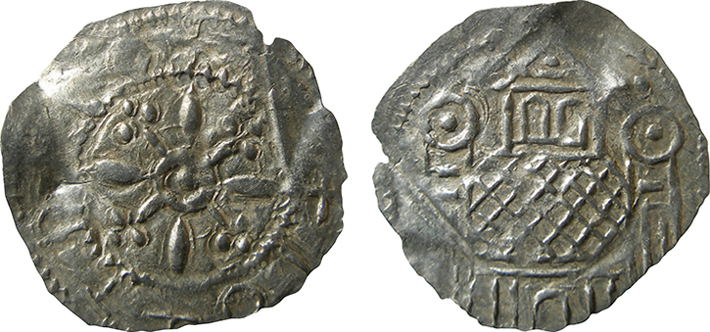


A silver coin from the early 10th century (obverse, top; reverse, above) is one of tens of thousands excavated on Gotland that had originated in the Arab world.


Interestingly, when a silver source from the Arab or German world slipped in quality, Jonsson points out, and the Gotlanders rapidly cut off the debased supplies, their contemporaries on mainland Sweden and in areas of Eastern Europe did not. “Word must have spread around the island, saying, ‘Don’t use these German coins anymore!’” says Jonsson. To test imported silver, Gotlanders would shave a bit of the metal with a knife so its contents could be assessed based on color and consistency, says Ny Björn Gustafsson of the Swedish National Heritage Board. He notes that many imported silver items found on Gotland were “pecked” in this way, and that Gotlanders may also have tested imported coins by bending them. By contrast, silver items thought to have been made on Gotland—including heavy arm rings with a zigzag pattern pressed into them—were not generally pecked or otherwise tested. “My interpretation,” Gustafsson says, “is that this jewelry acted as a traditional form of currency and was assumed to contain pure silver.”


These arm rings are among the most commonly found items in Gotland’s hoards, along with coins, and experts had long assumed they were made on the island, but no evidence of their manufacture had been found until Carlsson’s team uncovered a workshop area at Fröjel. “We found the artifacts exactly where they had been dropped,” says Carlsson. There are precious stones: amber, carnelian, garnet. There are half-finished beads, cracked during drilling and discarded. There is elk antler for crafting combs. There is also a large lump of iron, as well as rivets for use in boats, coffins, and storage chests. And, providing evidence of a smelting operation, there are drops of silver.


Researchers found that the metalworkers of Fröjel used an apparatus called a cupellation hearth to transform a suspect source of imported silver, such as coins or ingots, into jewelry or decorated weapons with precisely calibrated silver content. They would melt the silver source with lead and blow air over the molten mélange with a bellows, causing the lead and other impurities to oxidize, separate from the silver, and attach to the hearth lining. The resulting pure silver would then be combined with other metals to produce a desired alloy. The cupellation technique is known from classical times, says Gustafsson, but so far this is the first and only time such a hearth has been found on Gotland. Only one other intact example from the Viking Age has been found in Sweden, at the mainland settlement of Sigtuna.


Gotland Viking Imported Silver

(Photo by: Ny Björn Gustafsson/The Swedish History Museum)

This imported silver piece found on Gotland shows signs of “pecking,” where a bit of metal was gouged out to test its purity.

Traces of lead and other impurities were found embedded in pieces of the cupellation hearth among the material excavated from the workshop area at Fröjel. The hearth has been radiocarbon dated to around 1100. Also unearthed from the workshop area were fragments of molds imprinted with the zigzag patterns found on Gotlandic silver arm rings, establishing that they were, in fact, made on the island—and that the workshop was the site of the full chain of production, from metal refinement to casting. “We have these silver arm rings in many hoards all over Gotland,” says Carlsson. “But we never before saw exactly where they were making them.”

During the Viking Age, Gotland seems to have been a more egalitarian society than mainland Sweden, which had a structure of nobles led by a king dating from at least the late tenth century. On Gotland, by contrast, farmers and merchants appear to have formed the upper class and, while some were more prosperous than others, they shared in governance through a series of local assemblies called things, which were overseen by a central authority called the Althing. According to the Guta Saga, the saga of the Gotlanders, which was written down around 1220, an emissary from Gotland forged a peace treaty with the Swedish king, ending a period of strife with the mainland Swedes. The treaty, believed to have been established in the eleventh century, required Gotland to pay an annual tax in exchange for continued independence, protection, and freedom to travel and trade.

Stratification did increase on the island as time passed, though. Archaeologists have found that, throughout the ninth and tenth centuries, silver hoards were distributed throughout Gotland, suggesting that wealth was more or less uniformly shared among the island’s farmers. But around 1050, this pattern shifted. “In the late eleventh century, you start to have fewer hoards overall, but, instead, there are some really massive hoards, usually found along the coast, containing many, many thousands of coins,” says Jonsson. This suggests that trading was increasingly controlled by a small number of coastal merchants.


This stratification accelerated near the end of the Viking Age, around 1140, when Gotland began to mint its own coins, becoming the first authority in the eastern Baltic region to do so. “Gotlandic coins were used on mainland Sweden and in the Baltic countries,” says Majvor Östergren, an archaeologist who has studied the island’s silver hoards. Whereas Gotlanders had valued foreign coins based on their weight alone, these coins, though hastily hammered out into an irregular shape, had a generally accepted value. More than eight million of these early Gotlandic coins are estimated to have been minted between 1140 and 1220, and more than 22,000 have been found, including 11,000 on Gotland alone.


Gotland Minted Coin Horizontal

(Nanouschka Myrberg Burström)
An example of one of the earliest silver coins minted on Gotland (obverse, left; reverse, right) dates from around 1140.


Gotland is thought to have begun its coinage operation to take advantage of new trading opportunities made possible by strife among feuding groups on mainland Sweden and in western Russia. This allowed Gotland to make direct trading agreements with the Novgorod area of Russia and with powers to the island’s southwest, including Denmark, Frisia, and northern Germany. Gotland’s new coins helped facilitate trade between its Eastern and Western trading partners, and brought added profits to the island’s elite through tolls, fees, and taxes levied on visiting traders. In order to maintain control over trade on the island, it was limited to a single harbor, Visby, which remains the island’s largest town. As a result, the rest of Gotland’s trading harbors, including Fröjel, declined in importance around 1150.


Gotland remained a wealthy island in the medieval period that followed the Viking Age, but, says Carlsson, “Gotlanders stopped putting their silver in the ground. Instead, they built more than 90 stone churches during the twelfth and thirteenth centuries.” Although many archaeologists believe that the Gotland Vikings stashed their wealth in hoards for safekeeping, Carlsson thinks that, just as did the churches that were built later, they served a devotional purpose. In many cases, he argues, hoards do not appear to have been buried in houses but rather atop graves, roads, or borderlands. Indeed, some were barely buried at all because, he argues, others in the community knew not to touch them. “These hoards were not meant to be taken up,” he says, “because they were meant as a sort of sacrifice to the gods, to ensure a good harvest, good fortune, or a safer life.” In light of the scale, sophistication, and success of the Gotland Vikings’ activities, these ritual depositions may have seemed to them a small price to pay.


Preserving Our Past, Recording Our Present, Informing Our Future

Ancient and Honorable Clan Carruthes Int Society CCIS  LLc

carruthersclan1@gmail.com               carrothersclan@gmail.com

WIDER BANNER Grey


Daniel Weiss is a senior editor at ARCHAEOLOGY.


You can find us on facebook at :

https://www.facebook.com/carrutherscarrothers.pat.9

https://www.facebook.com/CarruthersClan/

https://www.facebook.com/CarruthersClanLLC

Disclaimer Ancient and Honorable Carruthers Clan International Society CCIS LLC


OUR ANCESTORS, The Viking Age, Uncategorized

CANUTE THE GREAT, KING OF SIX NATIONS-CLAN CARRUTHERS CCIS

cropped-wide-banner-with-new-crest.jpg

Canute the Great, King of Six Nations

CARRUTHERS ANCESTOR

CNUT Knut Canute Knud I “The GREAT” Svendsson Sweynsson – KING of DENMARK, ENGLAND and NORWAY   994 – 1035

BIRTH 994  Ringerike, Busherud, Norway

DEATH 12 NOV 1035  Shaftesbury, United Kingdom

Harald Harold

A famous old king of Denmark, known as Harald Blaatand or Bluetooth, ( Carruthers ancestor, wife Tove) had many sons, of whom only one, Svend or Sweyn, outlived him. While Harald was a Christian, Sweyn was a pagan, having been brought up in the old faith by a noble warrior Palnatoke, to whom his father had sent the boy to teach him the use of arms.

Svend I Tveskaeg Svreyn Sveyn Sweyn

When the king found that the boy was being made a pagan he tried to withdraw him from Palnatoke, but Sweyn would not leave his friend, whereupon the crafty king sought to destroy the warrior. We speak of this, for there is a very interesting story connected with it. Every one has read of how the Austrian governor Gessler condemned the Swiss peasant William Tell to shoot with an arrow an apple from his son’s head, but few know that a like story is told of a Danish king and warrior four hundred years earlier. This is the story, as told for us by an old historian.

Svend I Tveskaeg Svreyn Sveyn Sweyn “Forkbeard” Gormsson or Haraldsson – KING of DENMARK, NORWAY and ENGLAND

One day, while Palnatoke was boasting in the king’s presence of his skill as an archer, Harald told him that, in spite of his boasts, there was one shot he would not dare to try. He replied that there was no shot he was afraid to attempt, and the king then challenged him to shoot an apple from the head of his son. Palnatoke obeyed, and the apple fell, pierced by the arrow. This cruel act made Palnatoke the bitter foe of King Harald, and gathering around him a band of fierce vikings he founded a brotherhood of sea-rovers at Jomsborg, and for long years afterwards the Jomsborgers, or Jomsborg vikings, were a frightful scourge to all Christian lands on the Baltic Sea. In former tales we have told some of their exploits.

It is said that Sweyn himself, in a later war, killed his father on the battlefield, while Palnatoke stood by approving, though in after years the two were bitter foes. All we need say further of these personages is that Sweyn invaded England with a powerful force in the time of Ethelred the Unready and drove this weak king from the island, making himself master of great part of the kingdom. He died at Gainsborough, England, in 1014, leaving his son Knud, then a boy of fourteen, to complete the conquest. It is this son, known in England as Canute the Great, and the mightiest of all the Danish kings, with whose career we have to deal.

England did not fall lightly into Canute’s hands; he had to win it by force of arms. Encouraged by the death of Sweyn and the youth of Canute, the English recalled Ethelred and for a time the Danes lost the kingdom which their king Sweyn had won. Canute did not find a throne awaiting him in Denmark. His younger brother Harald had been chosen king by the Danes and when Canute asked him for a share in the government, Harald told him that if he wished to be a king he could go back and win England for himself. He would give him a few ships and men, but the throne of Denmark he proposed to keep.

Nothing loth, Canute accepted the offer and the next year returned to England with a large and well appointed force, whose work of conquest was rapidly performed. Ethelred died and great part of England was surrendered without resistance to the Danes. But Edmond, Ethelred’s son, took the field with an army and in three months won three victories over the invaders.

CNUT Knut Canute Knud I

A fourth battle was attempted and lost and Edmond retreated to the Severn, swiftly followed by Canute. The two armies here faced each other, with the fate of England in the balance, when a proposal in close accord with the spirit of the times was made. This was to settle the matter by single combat between the kings. Both were willing. While Edmond had the advantage in strength, Canute was his superior in shrewdness. For when the champions met in deadly fray and Canute was disarmed by his opponent, the wily Dane proposed a parley, and succeeded in persuading Edmond to divide the kingdom between them. The agreement was accepted by the armies and the two kings parted as friends—but the death of Edmond soon after had in it a suspicious appearance of murder by poison.

CANUTE

On the death of Edmond, Canute called a meeting of the popular assembly of the nation and was acknowledged king of all England. Not long afterwards Harald of Denmark died and the Danes chose him, under his home name of Knud, as their king also. But he stayed in Denmark only long enough to settle the affairs of the Church in that realm. He ordered that Christianity should be made the religion of the kingdom and the worship of Odin should cease; and put English bishops over the Danish clergy. He also brought in English workmen to teach the uncivilized Danes. Thus, Dane as Canute was, he preferred the religion and conditions of his conquered to those of his native kingdom, feeling that it was superior in all the arts and customs of civilization.

A great king was Canute, well deserving the title long given him of Canute the Great. Having won England by valor and policy, he held it by justice and clemency. He patronized the poets and minstrels and wrote verses in Anglo-Saxon himself, which were sung by the people and added greatly to his popularity. Of the poems written by him one was long a favorite in England, though only one verse of it now remains. This was preserved by the monks of Ely, since they were its theme. Thus it runs, in literal translation:

“Merrily sung the monks within Ely

When Canute King rowed by;

Row, knights, near the land,

And hear we these monks’ song.”

It is said that the verse was suggested to the king when rowing with his chiefs one day in the river Nene, near Ely Minster, by the sweet and solemn music of the monastery choir that floated out to them over the tranquil water. The monks of Ely, to whom we owe much of our knowledge of King Canute, tell us that he had a strong affection for the fen country and for their church, and gave the following story in that connection. It is at once picturesque and humorous.

One year, at the festival of the Purification, when King Canute proposed to pay his usual visit to Ely, the weather was very severe and all the streams and other waters were frozen. The courtiers advised the king to keep the holy festival in some other godly house, which he might reach without danger of drowning under broken ice, but such was his love for the abbot and monks of Ely that he would not take this advice.

Canute proposed to cross the ice by way of Soham Mere, then an immense body of water, saying that if any one would go before and show him the way he would be the first to follow. The soldiers and courtiers hesitated at this suggestion, and looked at one another with doubt and dread. But standing among the crowd was one Brithmar, a churl or serf, who was nicknamed Budde, or Pudding, from his stoutness. He was a native of the island of Ely and doubtless familiar with its waters, and when the courtiers held back he stepped forward and said he would go before and show the way.

“Go on then, in the name of our Lady,” said Canute, “and I will follow; for if the ice on Soham Mere can bear a man so large and fat as thou art, it will not break under the weight of a small thin man like me.”

So the churl went forward, and Canute the Great followed him, and after the king came the courtiers, one by one, with spaces between; and they all got safely over the frozen mere, with no mishaps other than a few slips and falls on the smooth ice; and Canute, as he had proposed, kept the festival of the Purification with the monks of Ely.

As a reward to the fat churl Brithmar for his service, he was made a freeman and his little property was also made free. “And so,” the chronicle concludes, “Brithmar’s posterity continued in our days to be freemen and to enjoy their possessions as free by virtue of the grant made by the king to their forefather.”

There is another and more famous story told of King Canute, one showing that his great Danish majesty had an abundant share of sound sense. Often as this story has been told it will bear retelling. The incident occurred after his pilgrimage to Rome in the year 1030; made, it is said, to obtain pardon for the crimes and bloodshed which paved his way to the English throne.

After his return and when his power was at its height, the courtiers wearied him by their fulsome flatteries. Disgusted with their extravagant adulations he determined to teach them a lesson. They had spoken of him as a ruler before whom all the powers of nature must bend in obedience, and one day he caused his golden throne to be set on the verge of the sea-shore sands as the tide was rolling in with its resistless might. Seating himself on the throne, with his jewelled crown on his head, he thus addressed the ocean:

“O thou Ocean! Know that the land on which I sit is mine and that thou art a part of my dominion; therefore rise not, but obey my commands, and do not presume to wet the edge of my royal robe.”

He sat as if awaiting the sea to obey his commands, while the courtiers stood by in stupefaction. Onward rolled the advancing breakers, each moment coming nearer to his feet, until the spray flew into his face, and finally the waters bathed his knees and wet the skirts of his robe. Then, rising and turning to the dismayed flatterers, he sternly said:

“Confess now how vain and frivolous is the might of an earthly king compared with that Great Power who rules the elements and says unto the ocean, ‘Thus far shalt thou go and no farther!'”

The monks who tell this story, conclude it by saying that Canute thereupon took off his crown and deposited it within the cathedral of Winchester, never wearing it again.

After his visit to Rome, Canute ruled with greater mildness and justice than ever before, while his armies kept the turbulent Scotch and Welsh and the unquiet peoples of the north in order. In the latter part of his reign he could boast that the English, the Scotch, the Welsh, the Danes, the Swedes, and the Norwegians were his subjects, and he was called in consequence “The King of the Six Nations,” and looked upon throughout Europe as the greatest of sovereigns; none of the kings and emperors of that continent being equal in power, wealth and width of dominion to King Canute, a descendant of the vikings of Denmark.

Canute spent the most of his life in England, but now and then visited his northern realm, and there are some interesting anecdotes of his life there. Though a devout Christian and usually a self-controlled man, the wild passions of his viking ancestry would at times break out, and at such times he spared neither friend nor foe and would take counsel from no man, churchman or layman. But when his anger died out his remorse was apt to be great and he would submit to any penance laid upon him by the Church. Thus when he had killed one of his house servants for some slight offense, he made public confession of his crime and paid the same blood-fine as would have been claimed from a man of lower rank.

The most notable instance of these outbursts of uncontrollable anger was that in which he murdered his old friend and brother-in-law Ulf, who, after rebelling against him, had saved him from complete defeat by the Swedes, by coming to his rescue just as the royal fleet was nearly swamped by the opening of the sluices which held back the waters of the Swedish river Helge-aae. Ulf took Canute on board his own ship and brought him in safety to a Danish island, while leaving his men to aid those of Canute in their escape from the Swedes. Yet the king bore a grudge against the earl, and this was its cause.

Cnut

At one time Ulf ruled over Denmark as Canute’s regent and made himself greatly beloved by the people from his just rule. Queen Emma, Canute’s wife, wished to have her little son Harthaknud—or Hardicanute, as he was afterwards called in England—made king of Denmark, but could not persuade her husband King Canute to accede to her wishes. She therefore sent letters privately to Ulf, saying that the king wished to see the young prince on the throne, but did not wish to do anything the people might not like. Ulf, deceived by her story, had the boy crowned king, and thereby won Canute’s ill-will.

The king, however, showed no signs of this, nor of resentment against Ulf for his rebellion, but, after his escape from the Swedes, asked the earl to go with him to his palace at Roeskilde, and on the evening of their arrival offered to play chess with him. During the game Canute made a false move so that Ulf was able to take one of his knights, and when the king refused to let this move count and wanted his man back again the earl jumped up and said he would not go on with the game. Canute, in a burst of anger, cried out:

“The coward Norwegian Ulf Jarl is running away.”

“You and your coward Danes would have run away still faster at the Helge-aae if I and my Nowegians had not saved you from the Swedes, who were making ready to beat you all like a pack of craven hounds!” ejaculated the angry earl.

Those hasty words cost Ulf his life. Canute, furious at the insult, brooded over it all night, and the next morning, still in a rage, called to one of the guards at the door of his bed-chamber:

“Go and kill Ulf Jarl.”

“My Lord King, I dare not,” answered the man. “Ulf Jarl is at prayer before the altar of the church of St. Lucius.”

The king, after a moment’s pause, turned to a young man-at-arms who had been in his service since his boyhood and cried angrily:

“I command you, Olaf, to go to the church and thrust your sword through the Jarl’s body.”

Olaf obeyed, and Ulf was slain while kneeling before the altar rails of St. Lucius’ church.

Then, as usual with King Canute, his passion cooled and he deeply lamented his crime, showing signs of bitter remorse. In way of expiation he paid to his sister Estrid, Ulf’s widow, a large sum as blood-fine, and gave her two villages which she left at her death to the church in which her husband had been slain. He also brought up Ulf’s eldest son as one of his own children. The widowed Estrid afterwards married Robert, Duke of Normandy, father of William the Conqueror, who in 1066 became master of England.

King Canute died in 1035, at thirty-six years of age, and his son Harald reigned after him in England for four years, and afterwards his son Harthaknud, or Hardicanute, for three years, when England again came under an Anglo-Saxon king—to fall under the power of William of Normandy, a conqueror of Norwegian descent, twenty-four years later.

Carruthers crest on flag-v2 (1)

OFFICIAL AND REGISTEREDL CLAN CARRUTHERS CCIS SINCE 1983-CLAN OF OUR ANCESTORS

SCOTTISH CLAN – IRISH CLAN – NORSE CLAN

Preserving Our Past!    Recording Our Present!  Informing Our Future!

The Ancient and Honorable Carruthers Clan International Society LLC

carruthersclan1@gmail.com                carrothersclan@gmail.com

WIDE BANNER with NEW CREST

SCANDINAVIAN HISTORY #9
CHARLES MORRIS

CLAN CARRUTHERS INT SOCIETY CCIS HISTORIAN AND GENEALOGIST

You can find us on our main facebook pages at :

SILVER WINGS-https://www.facebook.com/CarruthersClanLLC/

GOLD WINGS – https://www.facebook.com/carrutherscarrothers.pat.9

CLAN CARRUTHERS FAMILY HISTORY – https://www.facebook.com/CarruthersClan

CLAN CARRUTHERS CCIS – https://www.facebook.com/groups/3878691252182714

CLAN CARRUTHERS INT SOCIETY- https://www.facebook.com/groups/394653845137709

CLAN CARRUTHERS – BORDER REIVERS – https://www.facebook.com/groups/434959914239094

Disclaimer Ancient and Honorable Carruthers Clan International Societ