
Gutland / Gotland, Uncategorized

CLAN CARRUTHERS – FIRST CHURCHES OF GOTLAND

CLAN CARRUTHERS INT SOCIETY CCIS

cropped-wider-banner-light-blue-1.jpg

First Churches of Gotland


The upper Christian social group did apparently still not have suffcient means to self-enforce that a Gotlandic Church is accepted. However, there are Byzantine-Christian motives in the tomb and from this period such as necklaces and painted eggs of clay found in graves on Gotland, on Helgö and on Björkö from the second half of the 800s. The first Gotlander, who built a Christian church on Gotland was, according to ‘Guta Saga’, Botair from Akebäck. But the time was not yet ripe and the Gutna Althingi had it burnt.
Image result for akeback
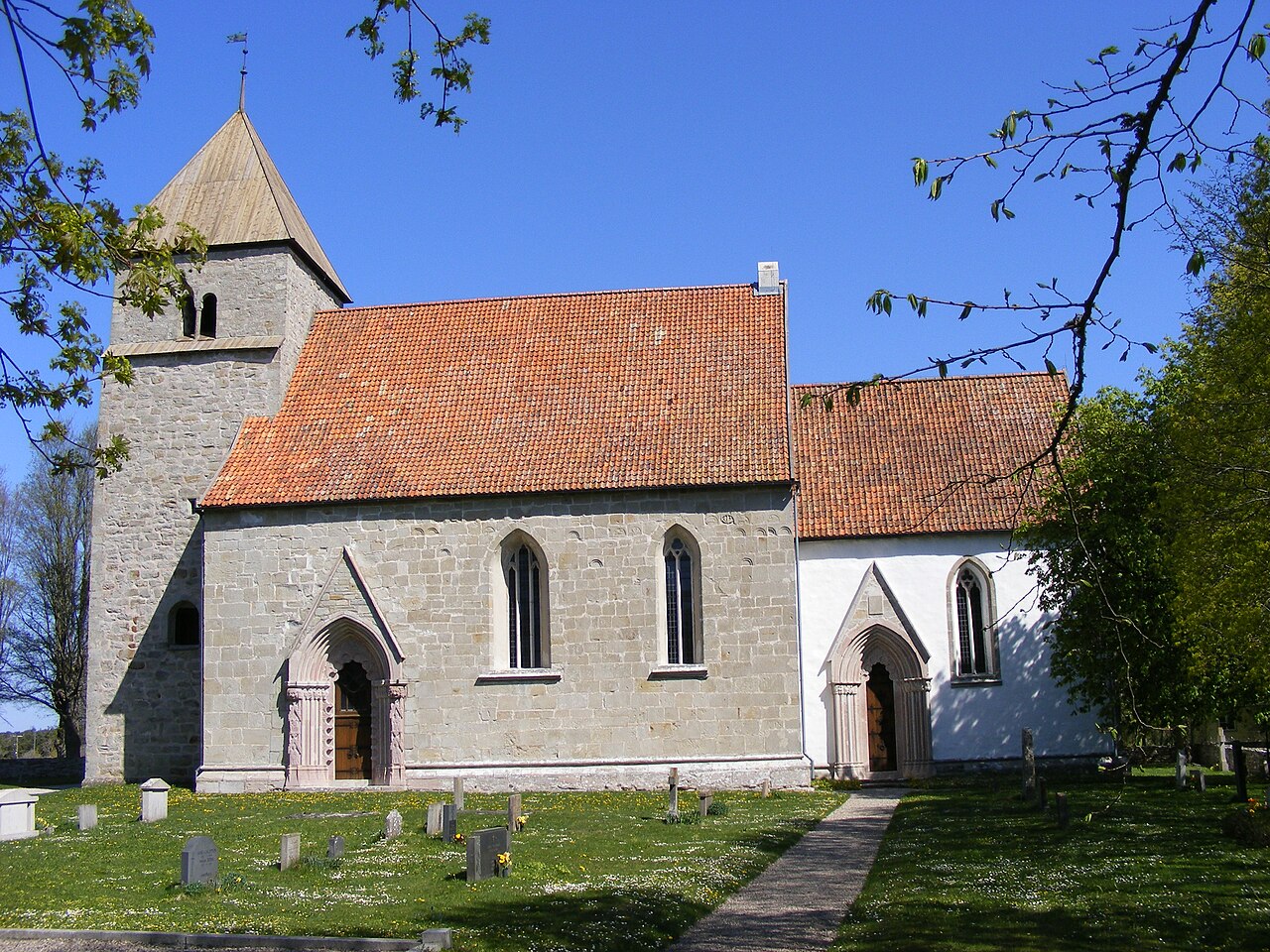
The Church that stands in Akeback now
The place where the church had been built was thus named Kulstäde,i.e. the charcoal place. Akebäck, where the first church on Gotland is said to have been located, is in Dede Thing. It is one of the most important Things on Gotland.
Gotland Roma 03.jpg
Within its borders lies not only Visby, which apparently is the Thing’s original harbour, but also Roma, which is an important central place in the middle of Gotland and the place for the Gutna Althingi.
Through Dede Thing goes the old main road from Roma over Akebäck and Träkumla straight to Visby. The antiquity of the road is confirmed by the chain of Iron Age tombs lining the road between Träkumlaand Visby.
“Some time later, it was sacrifice in Visby. There he built a second church. What is depicted in this section is not a local incident linked to Visby, but an event of decisive importance in the Gotlandic history, namely the last final battle for and against Christianity. On the Christian side is Botair of Akebäck, one of the leaders in Dede Thing, who against the Gutna Althingi defends his newly built church in Vi. He may thereby be supported by his father in law Likkair, who might have been ‘landsdomare’ i.e. leader of the Gutna Althingi,as it is said about him: ‘He ruled most at that time’.
Sankt Olofs kyrka i Gamla hamn.JPG
The ruins of the small church or chapel traditionally called the Church of Saint Olaf are quite small, the remains of the wall not reaching higher than c. 0.6 metres (2.0 ft). Adjacent to the church ruins lie the remains of a cemetery. 
Image result for stenkyrka
He had most to say on Gotland. Perhaps he pointed out that the church stood in a holy place – it was in Vi – where violence was not allowed to be committed. We know that several religions were allowed on Gotland. This meant that the church could remain.“Some time after that, his father-in-law Likkair Snielli had himself baptised, together with his wife,his children, and all his household, and he built a church on his farm, in the place now called Stenkyrka.
Hamlingbo kyrka.JPG
It was the first church on the island up in the northern most third. After the Gotlanders saw the customs of Christian people, they then obeyed God’s command and the teaching of priests. Then they received Christianity generally, of their own free will, without duress. No one forced them into  Christianity. After the general acceptance of Christianity, a church was built in Atlingbo. It was the first in the middle third.
 Then a third was built in Fardhemin the southernmost third. From those, church

es spread everywhere in Gotland, since men built themselves churches for greater convenience.Both the events described by the final decision, that the Church would remain, are apparently linked to one time and one place, namely Visby. If we dare connect it to the Patriarc Photius circular letter of 867, the Kulstäde incident should have taken place in the 870s, and the church in Vi built in 897, as

ow sets the founding of Visby to that year.
( Portal from the original church)
St Per och St Hans.JPGThe decision can thus be compared with the later Icelandic Althing decision of the year 1000, when Christianity was offcially introduced in Iceland. The seafaring Arab al-Tartûschî visited Hedeby, Visby, about the year 973 and says that there were a few Christians and a small church. He should have recognized this for he came nearest from Christian countries. Didal-Tartûschî , Botair’s church?
Ruins of St Pers and St Hans which was the name given to Botair Church.
Solberga kloster.JPG
Solberga Abbey  was a Cistercian nunnery, founded circa 1246. It was the only nunnery on Gotland. It remains unclear when the nuns abandoned the convent, but they did so at latest at the time of the Reformation. Nearby a medieval cross marks the spot of the Battle of Visby, fought in 1361
 What al-Tartûschîmeans by big city seems to indicate that he calls a monastery, Fulda, in the Frankish country, for a large city. Fulda consisted of several houses and was walled, fenced. He describes Hedeby as a large but poor city in the world ocean’s outer edge. He took particular note of the good supply of drinking water, the women’s free status and that a number of the inhabitants were Christian.
One of the reasons why Visby grew was the good supply of drinking water. Some researchers have presumed it to be Schleswig. However, Ansgar had already in 849 got permission to build a church in Sliaswic. It is more logical that it is Hejdeby on Gotland. Hejdeby stretches to Visby and no one knows the name of the place for the sacrifcial place (Vi)in the Viking Age.At the outermost edge of the world ocean’ fits better in with the place Vi, Visby, than with Slie storp,the name of the place in Frankish royal annals from the year 804, founded latest in 770 CE. Sliestorp-Schleswig-Sliaswic is located inland and notated the extreme edge of the ocean, while Visby may well seem to. 

Cemetery finds


On Gotland is a find category, called cemetery finds. Since the 1800s, on a wide range of Gotland’s more than 90 rural cemeteries, the grave digging and excavation for lightning conductors, etc. have come across skeletons of corpses. These have been buried with full sets of costume buckles and other jewelry, combs, knives, keys, etc., all in late Viking Age forms. This find category has puzzled the scientific researchers. However the cemetery finds on Gotland seem to be Christian, as evidenced by the fact that one can observe a strict separation of the graves of women north of the church, and the men in the south. This can not be done until there has been a church building.Similar tombs are found on Björkö, usually locally separated from the usual non-Christian graves.


List of church ruins on Gotland

There are in total nineteen known ruined churches on the Swedish island of Gotland, in the Baltic Sea twelve of which lie in Visby, the island’s main town. Of these, ten lie within the medieval city walls. Three additional church ruins in Visby are known through written sources, but today completely vanished.

Gotland began to gradually abandon Norse religion and adopt Christianity during the 11th century. While the earliest churches were wooden, construction of stone churches began during the 12th century. The church building period was fairly short; in the countryside stone churches were erected between the early 12th and mid-14th centuries, while in Visby the last churches were inaugurated during the 15th century.

Some of these churches have since fallen into ruin. Of the 94 medieval parish churches in the countryside, 91 are still in use. Three were abandoned following the Reformation, when parishes were merged, and some churches became superfluous. There are in addition three chapel ruins, or ruins of small churches, in the countryside. There are also the ruins of two Cistercian abbeys, one in the countryside and one just outside the city wall of Visby.

Although the exact number of churches that existed in Visby during the Middle Ages is unknown, there were certainly more than in any other Swedish city, and at least twelve within the city walls. Visby grew to become an important trading port during the Middle Ages, and most of the churches in the city were built during the 12th and 13th centuries.The churches were not, as in the countryside, only parish churches. Some belonged to abbeys, alms houses or served groups of traders of a specific nationality, such as the Russian Church or present-day Visby Cathedral, which was originally a church used by German traders.

Following the Black Death, the invasion of Gotland by Valdemar IV of Denmark and the Battle of Visby in 1361, and a general decrease in trade, Gotland entered a period of decline. From about 1361, building activity therefore dropped. The inauguration of Sankta Karin in 1412 marks the end of church building activity in Visby. When troops from Lübeck pillaged the city in 1525, and probably damaged several of the churches, the social and economic rationale for sustaining them had vanished. With the advent of the Reformation soon afterwards, the religious rationale to sustain the upkeep of the many churches also permanently disappeared. All monasteries were abolished and all churches within the city walls except one (present-day Visby Cathedral) were abandoned and left to decay. During the following centuries, some church ruins were used as quarries. In 1805 the church ruins were protected by law and in 1863 the Swedish state for the first time allocated money for their conservation.

Gunfiauns kapell (Ardre ödekyrka) - kmb.16001000151626.jpgArdre Church Ruin, also known as the chapel of Gunfjaun, was built during the 14th century in the medieval marketplace. According to tradition, the church was built in memory of Gunfjaun, the son of a local chieftain named Hafder. It is doubtful whether the church building ever was completed
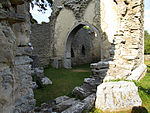


Bara odekyrka Gotland Sverige (15).jpgBara Church Ruin seems to have been abandoned already in the 16th century. In 1588 the local population demanded that it should be re-opened and repaired. The parish was however merged with that of Hörsne Church and Bara Church left to decay. The church was built in the 13th century and shares some characteristics with Anga Church.


Ellinghem02.jpg

Ellinghem Church Ruin consists of the remains of a 13th-century church. The medieval altar has been preserved in place, and in 1923–24 the remains of the baptismal font were found during an archaeological excavation of the church. It is not known when the church was abandoned, but this probably happened at the beginning of the 17th century.


Ganns ödekyrka 10.jpgGann Church Ruin is a well-preserved ruin of a church probably abandoned during the 16th century. The choir and nave of the ruined church date from the middle of the 13th century, while the tower was added slightly later (late 13th century). The remains were renovated in 1924.
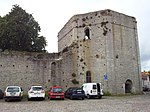


Helgeands ruin 2012-09-23 11-29-57.jpgThe ruins of the church dedicated to the Holy Spirit are one of the most unusual of the church ruins in Visby. They consists of an octagonal two-storeyed nave and a protruding choir. The church was erected during the 13th century. According to one theory, the church was built for Bishop Albert of Riga, who is known to have been on Gotland in the early 13th century to gather crusaders and missionaries to go with him to Livonia. The church became the almshouse of Visby in 1532, but by the early 17th century was apparently in a ruinous state and used as a barn.
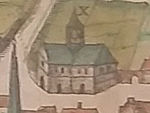
 

Detail from map of Visby.jpgNo visible remains exist above ground of the so-called Russian Church. Archaeological excavations carried out in 1971 revealed the foundations of a small church under the floor of a house on Södra kyrkogatan street. It may have been one of possibly two churches for Russian traders in Visby during the Middle Ages


Sankta Karin Visby Gotland Sverige (6).jpgThe church of Saint Catherine was the church of a Franciscan convent. The convent was founded in 1233 and a first construction period took place c. 1235–1250. During the early 14th century reconstruction work on the church began, and was not finished until 1412, when the church was re-inaugurated. The abbey was disbanded during the 1520s, and the buildings were for a short while used as an almshouse before being completely abandoned.


Sankt Clemens Visby Gotland Sverige (4).jpgThe church dedicated to Saint Clement was probably erected during the middle of the 13th century, but its history remains opaque. It was probably preceded by a smaller, 12th-century church. In its present state, it is still considered a typical representative of 13th-century Visby churches


Ruine St.Drotten 2.jpgThe church was dedicated to the Holy Trinity but called Drotten after an old Norse word meaning Lord or King, i.e. referring to God. It is similar to Sankt Clemens but smaller and probably older. It seems to have been constructed mainly during the 13th and 14th centuries


Ruined church (3875572734).jpgThe church of Saint Nicholas was the abbey church of a Dominican abbey, founded before 1230. Its most famous prior was Petrus de Dacia. The church is possibly older than the abbey; the monks may have acquired an already existing church, or one under construction. Enlargement and reconstruction works were carried out until the late 14th century. The church and abbey were probably destroyed by troops from Lübeck in 1525


Sta Gertrud Visby.JPG

This small church or chapel was dedicated to Saint Gertrude of Nivelles. It is the smallest of the former churches in Visby. An excavation carried out in 1935 determined that it dates from the second half of the 15th century.


S-t Görans ruin 2012-09-23 11-14-35.jpgThe church was dedicated to Saint George and lies about 300 metres (980 ft) outside the city walls. It was originally tied to an almshouse for lepers nearby. The church is lacking in decorative elements and has therefore been difficult to date.   The choir and nave probably date from different periods. The choir is the oldest, perhaps from the late 12th or early 13th century, and the nave may date from the 13th century. The almshouse was shut down in 1542, but the cemetery continued to be used occasionally, e.g. during an outbreak of plague in 1711–12 and following an outbreak of cholera in the 1850s.


St Lars kyrkoruin.JPGThe patron saint of the church was Saint Lawrence. Construction of the church began during the second quarter of the 13th century. It was built by local stonemasons but in an unusual, cross-shaped form. Inspiration for this form probably came from Byzantine architecture and may have reached Gotland following the siege of Constantinople in 1204.


St Olofs kyrka.jpg


Three walls of a medieval chapel dedicated to Saint Olaf have been incorporated into a 19th-century barn. North east of the church a memorial cross was erected in 1959


Sankt Olofs kyrkoruin, Botaniska Trädgården, Visby.jpg

Very little remains of the church once dedicated to Saint Olaf in Visby.   It was probably a basilica built at the beginning of the 13th century


Preserving Our Past, Recording Our Present, Informing Our Future

Ancient and Honorable Clan Carruthers Int Society CCIS  LLc

carruthersclan1@gmail.com                   carrothersclan@gmail.com


cropped-coagraywide.jpg


You can find us on facebook at :

https://www.facebook.com/carrutherscarrothers.pat.9

https://www.facebook.com/CarruthersClan/

https://www.facebook.com/CarruthersClanLLC


Disclaimer Ancient and Honorable Carruthers Clan International Society CCIS LLC is the official licensed and registered Clan of the Carruthers Family.  This Clan is presently registered in the United States and Canada, and represents members worldwide.  All content provided on our web pages is for family history use only.  The CCIS is the legal owner of all websites, and makes no representation as to the accuracy or completeness of any information on these sites or by following any link provided. The CCIS will not be responsible for any errors or omissions or availability of any information. The CCIS will not be liable for any losses, injuries, or damages from the display or use of this information. We do not sell, trade or transfer to outside parties any personal identifications. For your convenience, we may provide links to various outside parties that may be of interest to you. The content on CCIS is design to support your research in family history.      ( CCIS -LLC copyright 2017 - 2020)



Uncategorized

CLAN CARRUTHERS – 13 HORRIFYING GOTLAND CHRISTMAS TROLLS – THE YULE LADS

cropped-wide-banner-with-new-crest.jpg

13 Horrifying Gotland Christmas Trolls

yule lads

They leave the nice children gifts and the naughty children ROTTING POTATOES.

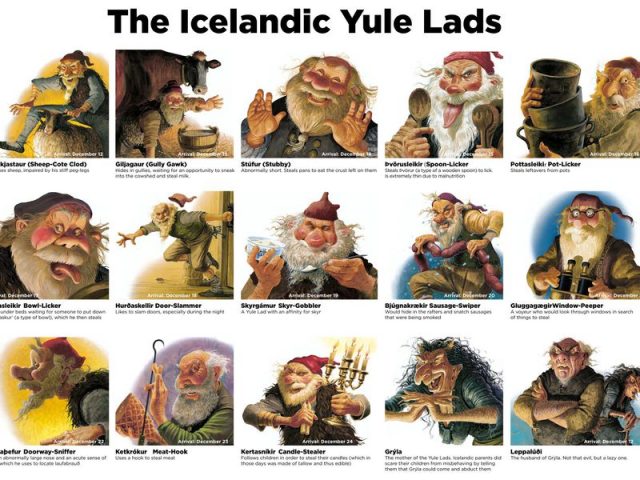
Stekkjarstaur (Sheep Cote Clod)

Sheep Cote Clod gets his name because of his affinity for harassing sheep. He’s easily identified by his stiff peg legs.

Fear Level: Standing over a subway grate.

Giljagaur (Gully Gawk)

Giljagaur (Gully Gawk) | Community Post: The 13 Horrifying Christmas Trolls Of Iceland

Gully Gawk is famous for hiding in gullies and waiting for his chance to sneak into the cowshed to steal milk.

Fear Level: Running into an ex.

Stúfur (Stubby)

Icelandic Santa Claus - the 13 Yule Lads - Iceland with a View

He’s called Stubby because he’s really short. But what he’s really known for is stealing pans to eat the crust out of them.

Fear Level: Watching Pee-Wee Herman’s Big Adventure.

Þvörusleikir (Spoon Licker)

Guess who might be passing by your window tonight? ⠀ Þvörusleikir (Spoon-Licker) is on his way to town and estimated time of arrival is unknown! 😛⠀ ⠀ He steals "Þvörur" or some sorts of wooden spoons to lick. Poor guy is extremely thin due to malnutrition. So, if you want to be nice, you should just give him a wooden spoon if you have one with your open heart 💓⠀ ⠀ It's Christmas after all right? 🎄Image via Brian Pilkinton from the book The Yule Lads •⠀ •⠀ •⠀ •⠀ #Iceland #Icelandic #inspiredby

This sticky-fingered troll steals wooden spoons for the purpose of licking them. He’s easily identified by his malnourished appearance.

Fear Level: Waking up right before your alarm goes off.

Pottaskefill (Pot Licker)

<img class="aligncenter" src="https://i.pinimg.com/236x/60/b4/9d/60b49d9989099a36e73e2f046caadc9c.jpg&quot; alt="They leave the nice children gifts and the naughty children ROTTING POTATOES.” width=”574″ height=”435″>

Not to be confused with Spoon Licker, Pot Licker steals leftovers out of pots. Also not to be confused with Stubby, who steals PANS.

Fear Level: Jaywalking.

Askasleikir (Bowl Licker)

Askasleikir (Bowl Licker) | Community Post: The 13 Horrifying Christmas Trolls Of Iceland

Not to be confused with Spoon Licker or Pot Licker, Bowl Licker hides under your bed until you put your bowl down. Then he steals it and then, presumably, licks it.

Fear Level: Waiting for test results.

Hurðaskellir (Door Slammer)

7. Hurðaskellir - door slammer

He slams doors. Especially at night.

Fear Level: Doors slamming. Especially at night.

Skyrgámur (Skyr Gobbler)

<img class="aligncenter" src="https://i.pinimg.com/236x/d5/cf/d2/d5cfd27b2b4d70b40840f3d5e2489b67.jpg&quot; alt="They leave the nice children gifts and the naughty children ROTTING POTATOES.” width=”526″ height=”414″>

Skyr is a traditional Icelandic dairy product similar to strained yogurt.

Fear Level: Broken escalators.

Bjúgnakrækir (Sausage Swiper)

Bjúgnakrækir (Sausage Swiper) | Community Post: The 13 Horrifying Christmas Trolls Of Iceland

Sausage Swiper hides in the rafters and pilfers pork links while they’re smoking.

Fear Level: Standing under scaffolding.

Gluggagægir (Window Peeper)

Gluggagægir (Window Peeper)

This troll looks through your windows in search of things to steal. Pretty sure this is a felony.

Fear Level: Driving with the doors unlocked.

Gáttaþefur (Doorway Sniffer)

Gáttaþefur (Doorway Sniffer)

Easily identified by his abnormally large nose, Doorway Sniffer uses his acute sense of smell to find Laufabrauo, a traditional Icelandic bread.

Fear Level: Sniff-testing the milk.

Ketkrókur (Meat Hook)

#12. Iceland Christmas troll arrives Dec. 23 - Meat Hook - he steals meat with his hook.

Meat Hook uses a hook to steal meat. Pretty self explanatory.

Fear Level: Standing really close to a large animal.

Kertasníkir (Candle Stealer)

Kertasníkir (Candle Stealer)

This troll follows children so he can steal their candles and then eat them. Pretty sure this is also a felony.

Fear Level: Clowns.

Have a Very Happy Holiday and Be Good…

Or Gryla, the mother of all the Yule Lads, will abduct you!  And EAT YOU!

YOU CAN READ ABOUT GRYLA AT :  https://clancarruthers.home.blog/2018/12/15/clan-carruthers-gryla-the-gruesome-christmas-witch/

Carruthers crest on flag-v2 (1)

Preserving Our Past, Recording Our Present, Informing Our Future

Ancient and Honorable Carruthes Clan Int Society LLC

carruthersclan1@gmail.com

cropped-wide-banner-with-new-crest.jpg

ALL PICTURES FROM PINTEREST

Gutland / Gotland, The History of Gutland, The Viking Age, Uncategorized

Hoards of the Vikings From Gutland

Clan Carruthers Int Society CCIS                                        Promptus et Fidelis


Hoards of the Vikings


There were various waves of Aachen-men or Ashmen that carried the Carruthers DNA markers that came from Gutland to Scotland, one wave in 450 AD and one 900 AD.  This article gives you a good idea of what their life was like based on archaeological findings.

Evidence of trade, diplomacy, and vast wealth on an unassuming island in the Baltic Sea.

The accepted image of the Vikings as fearsome marauders who struck terror in the hearts of their innocent victims has endured for more than 1,000 years. Historians’ accounts of the first major Viking attack, in 793, on a monastery on Lindisfarne off the northeast coast of England, have informed the Viking story. “The church of St. Cuthbert is spattered with the blood of the priests of God,” wrote the Anglo-Saxon scholar Alcuin of York, “stripped of all its furnishings, exposed to the plundering of pagans….Who is not afraid at this?” The Vikings are known to have gone on to launch a series of daring raids elsewhere in England, Ireland, and Scotland. They made inroads into France, Spain, and Portugal. They colonized Iceland and Greenland, and even crossed the Atlantic, establishing a settlement in the northern reaches of Newfoundland.


But these were primarily the exploits of Vikings from Norway and Denmark. Less well known are the Vikings of Sweden. Now, the archaeological site of Fröjel on Gotland, a large island in the Baltic Sea around 50 miles east of the Swedish mainland, is helping advance a more nuanced understanding of their activities. While they, too, embarked on ambitious journeys, they came into contact with a very different set of cultures—largely those of Eastern Europe and the Arab world. In addition, these Vikings combined a knack for trading, business, and diplomacy with a willingness to use their own brand of violence to amass great wealth and protect their autonomy.


Gotland Viking Frojel Site

(Daniel Weiss)

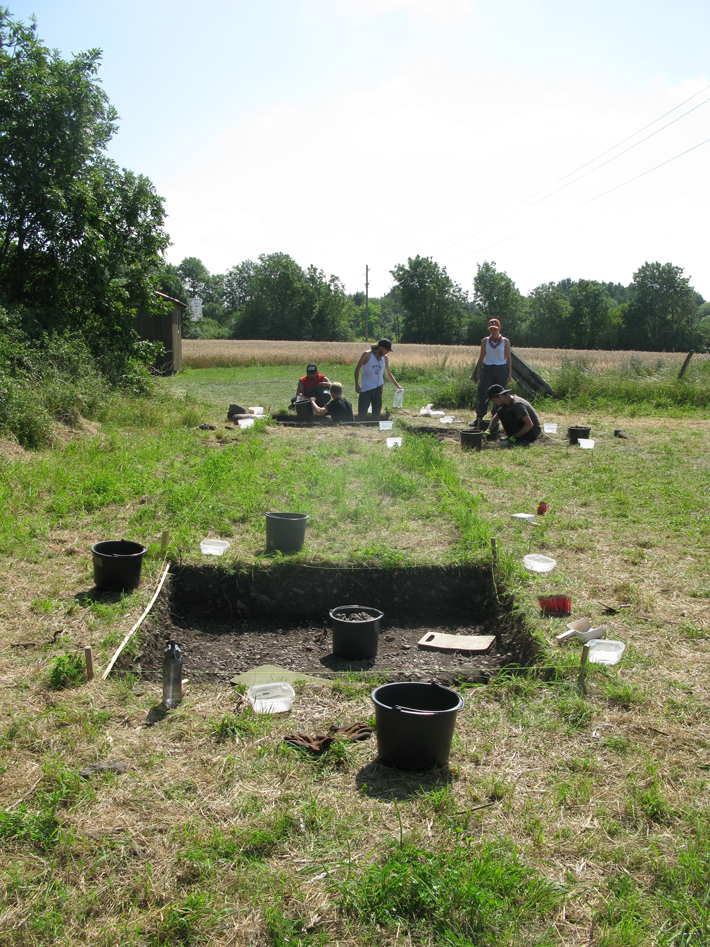
At Fröjel, a Viking Age site on the west coast of Gotland, archaeologists search for evidence of a workshop that included a silver-smelting operation.

Gotland today is part of Sweden, but during the Viking Age, roughly 800 to 1150, it was independently ruled. The accumulation of riches on the island from that time is exceptional. More than 700 silver hoards have been found there, and they include around 180,000 coins. By comparison, only 80,000 coins have been found in hoards on all of mainland Sweden, which is more than 100 times as large and had 10 times the population at the time. Just how an island that seemed largely given over to farming and had little in the way of natural resources, aside from sheep and limestone, built up such wealth has been puzzling. Excavations led by archaeologist Dan Carlsson, who runs an annual field school on the island through his cultural heritage management company, Arendus, are beginning to provide some answers.


Traces of around 60 Viking Age coastal settlements have been found on Gotland, says Carlsson. Most were small fishing hamlets with jetties apportioned among nearby farms. Fröjel, which was active from around 600 to 1150, was one of about 10 settlements that grew into small towns, and Carlsson believes that it became a key player in a far-reaching trade network. “Gotlanders were middlemen,” he says, “and they benefited greatly from the exchange of goods from the West to the East, and the other way around.”


Hoards of the Vikings

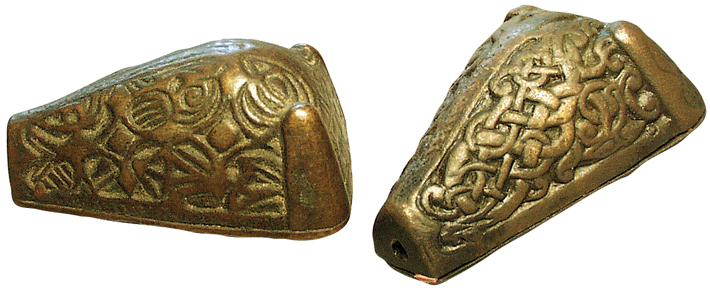
Gotland Viking Brooch

Situated between the Swedish mainland and the Baltic states, Gotland was a natural stopping-off point for trading voyages, and Carlsson’s excavations at Fröjel have turned up an abundance of materials that came from afar: antler from mainland Sweden, glass from Italy, amber from Poland or Lithuania, rock crystal from the Caucasus, carnelian from the East, and even a clay egg from the Kiev area thought to symbolize the resurrection of Jesus Christ. And then, of course, there are the coins. Tens of thousands of the silver coins found in hoards on the island came from the Arab world.


Many Gotlanders themselves plied these trade routes. They would sail east to the shores of Eastern Europe and make their way down the great rivers of western Russia, trading and raiding along the way at least as far south as Constantinople, the capital of the Byzantine Empire, via the Black Sea. Some reports suggest that they also crossed the Caspian Sea and traveled all the way to Baghdad, then the capital of the Abbasid Caliphate.


Entire Viking families are believed to have made their way east. “In the beginning, we thought it was just for trading,” says Carlsson, “but now we see there was a kind of settlement. You find Viking cemeteries far away from the main rivers, in the uplands.” Other evidence of Scandinavian presence in the region is plentiful. As early as the seventh century, there was a Gotlandic settlement at Grobina in Latvia, just inland from the point on the coast closest to Gotland. Large numbers of Scandinavian artifacts have been excavated in northwest Russia, including coin hoards, brooches, and other women’s bronze jewelry. The Rus, the people that gave Russia its name, were made up in part of these Viking transplants. The term’s origins are unclear, but it may have been derived from the Old Norse for “a crew of oarsmen” or a Greek word for “blondes.”


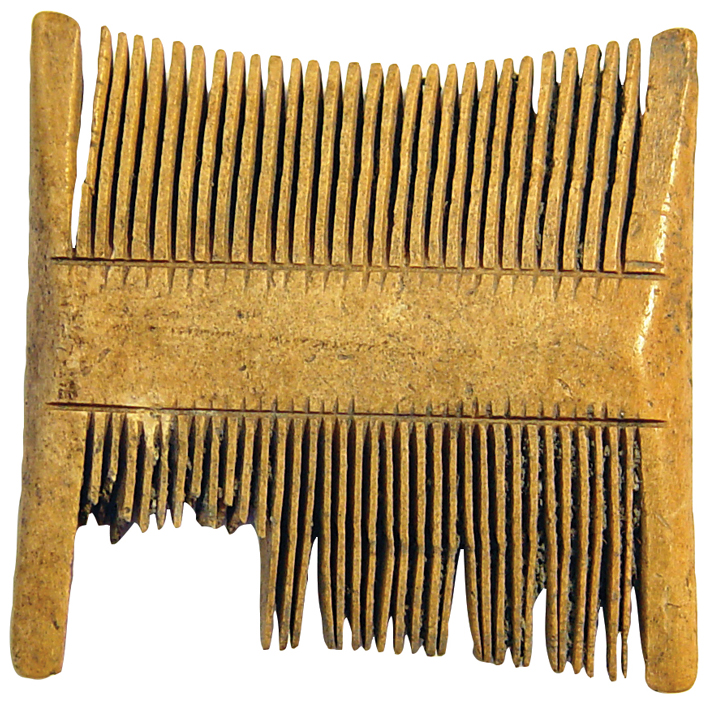
Gotland Viking Comb

(Courtesy Dan Carlsson)

Combs such as this one, excavated at Fröjel, were made locally of antler imported from mainland Sweden.

To investigate the links between the Gotland Vikings and the East, Carlsson turned his attention to museum collections and archaeological sites in northwest Russia. “It is fascinating how many artifacts you find in every small museum,” he says. “If they have a museum, they probably have Scandinavian artifacts.” For example, at the museum in Staraya Ladoga, east of St. Petersburg, Carlsson found a large number of Scandinavian items, oval brooches from mainland Sweden, combs, beads, pendants, and objects with runic inscriptions, and even three brooches in the Gotlandic style dating to the seventh and eighth centuries. Scandinavians were initially drawn to the area to obtain furs from local Finns, particularly miniver, the highly desirable white winter coat of the stoat, which they would then trade in Western Europe. As time went on, Staraya Ladoga served as a launching point for Viking forays to the Black and Caspian Seas.

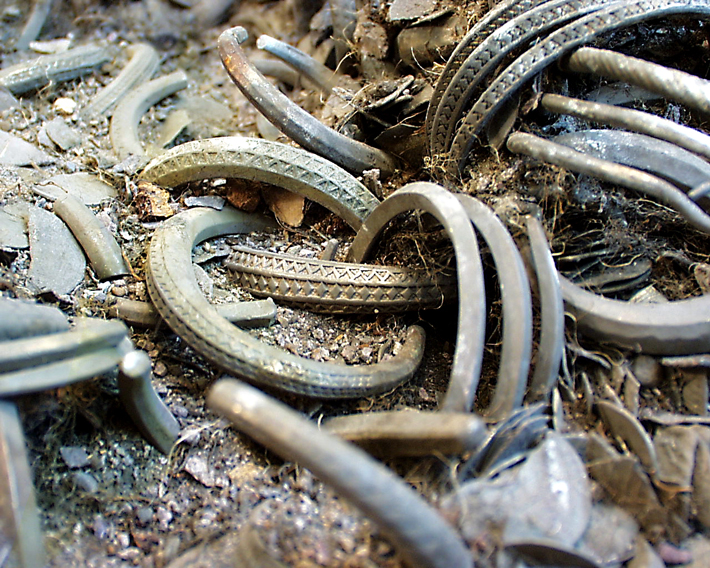
Gotland Viking Spillings Hoard

These journeys entailed a good deal of risk. The route south from Kiev toward Constantinople along the Dnieper River was particularly hazardous. A mid-tenth-century document by the Byzantine emperor Constantine VII Porphyrogenitus tells of Vikings traveling this stretch each year after the spring thaw, which required portaging around a series of dangerous rapids and fending off attacks by local bandits known as the Pechenegs. The name of one of these rapids—Aifur, meaning “ever-noisy” or “impassable”—appears on a runestone on Gotland dedicated to the memory of a man named Hrafn who died there.

People from the East may have traveled back to Gotland with the Vikings as well. At Fröjel, Carlsson has uncovered two Viking Age cemeteries, one dating from roughly 600 to 900, and the other from 900 to 1000. In all, Carlsson has excavated around 60 burials there, and isotopic analysis has shown that some 15 percent of the people whose graves have been excavated—all buried in the earlier cemetery—came from elsewhere, possibly the East.


In their voyages, the Vikings of Gotland are thought to have traded a broad range of goods such as furs, beeswax, honey, cloth, salt, and iron, which they obtained through a combination of trade and violent theft. This activity, though, doesn’t entirely account for the wealth that archaeologists have uncovered. In recent years, Carlsson and other experts have begun to suspect that a significant portion of their trade may have consisted of a commodity that has left little trace in the archaeological record: slaves. “We still have some problems in explaining what made this island so rich,” says Carlsson. “We know from written Arabic sources that the Rus—the Scandinavians in Russia—were transporting slaves. We just don’t know how big their trading in slaves was.”


According to an early tenth-century account by Ibn Rusta, a Persian geographer, the Rus were nomadic raiders who would set upon Slavic people in their boats and take them captive. They would then transport them to Khazaria or Bulgar, a Silk Road trading hub on the Volga River, where they were offered for sale along with furs. “They sell them for silver coins, which they set in belts and wear around their waists,” writes Ibn Rusta. Another source, Ibn Fadlan, a representative of the Abbasid Caliph of Baghdad who traveled to Bulgar in 921, reports seeing the Rus disembark from their boats with slave girls and sable skins for sale. The Rus warriors, according to his account, would pray to their gods: “I would like you to do me the favor of sending me a merchant who has large quantities of dinars and dirhams [Arab coins] and who will buy everything that I want and not argue with me over my price.” Whenever one of these warriors accumulated 10,000 coins, Ibn Fadlan says, he would melt them down into a neck ring for his wife.


It is unclear whether the Vikings transported Slavic slaves back to Gotland, but the practice of slavery appears to have been well established there. The Guta Lag, a compendium of Gotlandic law thought to have been written down in 1220 includes rules regarding purchasing slaves, or thralls. “The law says that if you buy a man, try him for six days, and if you are not satisfied, bring him back,” says Carlsson. “It sounds like buying an ox or a cow.” Burials belonging to people who came from places other than Gotland are generally situated on the periphery of the graveyards with fewer grave goods, suggesting that they may have occupied a secondary tier of society—perhaps as slaves.

Gotland Arab Coin VerticalFor the Gotland Vikings, accumulation of wealth in the form of silver coins was clearly a priority, but they weren’t interested in just any coins. They were unusually sensitive to the quality of imported silver and appear to have taken steps to gauge its purity. Until the mid-tenth century, almost all the coins found on Gotland came from the Arab world and were around 95 percent pure. According to Stockholm University numismatist Kenneth Jonsson, beginning around 955, these Arab coins were increasingly cut with copper, probably due to reduced silver production. Gotlanders stopped importing them. Near the end of the tenth century, when silver mining in Germany took off, Gotlanders began to trade and import high-quality German coins. Around 1055, coins from Frisia in northern Germany became debased, and Gotlanders halted imports of all German coins. At this juncture, ingots from the East became the island’s primary source of silver.


Interestingly, when a silver source from the Arab or German world slipped in quality, Jonsson points out, and the Gotlanders rapidly cut off the debased supplies, their contemporaries on mainland Sweden and in areas of Eastern Europe did not. “Word must have spread around the island, saying, ‘Don’t use these German coins anymore!’” says Jonsson. To test imported silver, Gotlanders would shave a bit of the metal with a knife so its contents could be assessed based on color and consistency, says Ny Björn Gustafsson of the Swedish National Heritage Board. He notes that many imported silver items found on Gotland were “pecked” in this way, and that Gotlanders may also have tested imported coins by bending them. By contrast, silver items thought to have been made on Gotland—including heavy arm rings with a zigzag pattern pressed into them—were not generally pecked or otherwise tested. “My interpretation,” Gustafsson says, “is that this jewelry acted as a traditional form of currency and was assumed to contain pure silver.”


These arm rings are among the most commonly found items in Gotland’s hoards, along with coins, and experts had long assumed they were made on the island, but no evidence of their manufacture had been found until Carlsson’s team uncovered a workshop area at Fröjel. “We found the artifacts exactly where they had been dropped,” says Carlsson. There are precious stones: amber, carnelian, garnet. There are half-finished beads, cracked during drilling and discarded. There is elk antler for crafting combs. There is also a large lump of iron, as well as rivets for use in boats, coffins, and storage chests. And, providing evidence of a smelting operation, there are drops of silver.


Researchers found that the metalworkers of Fröjel used an apparatus called a cupellation hearth to transform a suspect source of imported silver, such as coins or ingots, into jewelry or decorated weapons with precisely calibrated silver content. They would melt the silver source with lead and blow air over the molten mélange with a bellows, causing the lead and other impurities to oxidize, separate from the silver, and attach to the hearth lining. The resulting pure silver would then be combined with other metals to produce a desired alloy. The cupellation technique is known from classical times, says Gustafsson, but so far this is the first and only time such a hearth has been found on Gotland. Only one other intact example from the Viking Age has been found in Sweden, at the mainland settlement of Sigtuna.


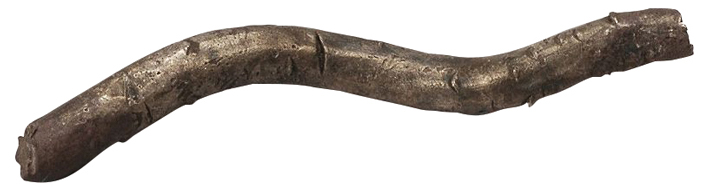
Gotland Viking Imported Silver

(Photo by: Ny Björn Gustafsson/The Swedish History Museum)

This imported silver piece found on Gotland shows signs of “pecking,” where a bit of metal was gouged out to test its purity.

Traces of lead and other impurities were found embedded in pieces of the cupellation hearth among the material excavated from the workshop area at Fröjel. The hearth has been radiocarbon dated to around 1100. Also unearthed from the workshop area were fragments of molds imprinted with the zigzag patterns found on Gotlandic silver arm rings, establishing that they were, in fact, made on the island—and that the workshop was the site of the full chain of production, from metal refinement to casting. “We have these silver arm rings in many hoards all over Gotland,” says Carlsson. “But we never before saw exactly where they were making them.”


During the Viking Age, Gotland seems to have been a more egalitarian society than mainland Sweden, which had a structure of nobles led by a king dating from at least the late tenth century. On Gotland, by contrast, farmers and merchants appear to have formed the upper class and, while some were more prosperous than others, they shared in governance through a series of local assemblies called things, which were overseen by a central authority called the Althing. According to the Guta Saga, the saga of the Gotlanders, which was written down around 1220, an emissary from Gotland forged a peace treaty with the Swedish king, ending a period of strife with the mainland Swedes. The treaty, believed to have been established in the eleventh century, required Gotland to pay an annual tax in exchange for continued independence, protection, and freedom to travel and trade.

Stratification did increase on the island as time passed, though. Archaeologists have found that, throughout the ninth and tenth centuries, silver hoards were distributed throughout Gotland, suggesting that wealth was more or less uniformly shared among the island’s farmers. But around 1050, this pattern shifted. “In the late eleventh century, you start to have fewer hoards overall, but, instead, there are some really massive hoards, usually found along the coast, containing many, many thousands of coins,” says Jonsson. This suggests that trading was increasingly controlled by a small number of coastal merchants.


This stratification accelerated near the end of the Viking Age, around 1140, when Gotland began to mint its own coins, becoming the first authority in the eastern Baltic region to do so. “Gotlandic coins were used on mainland Sweden and in the Baltic countries,” says Majvor Östergren, an archaeologist who has studied the island’s silver hoards. Whereas Gotlanders had valued foreign coins based on their weight alone, these coins, though hastily hammered out into an irregular shape, had a generally accepted value. More than eight million of these early Gotlandic coins are estimated to have been minted between 1140 and 1220, and more than 22,000 have been found, including 11,000 on Gotland alone.


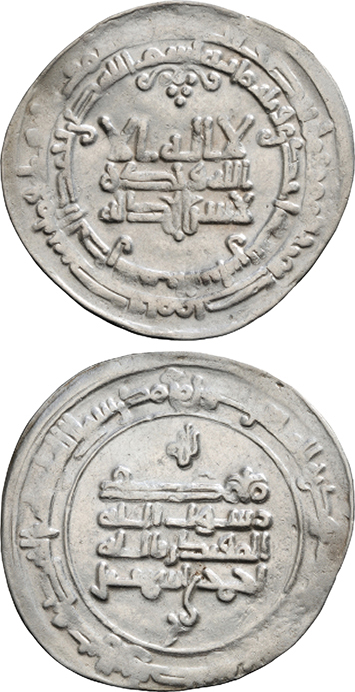
Gotland Minted Coin Horizontal

(Nanouschka Myrberg Burström)

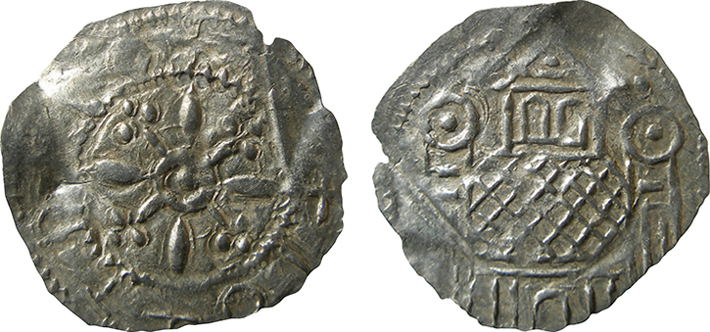
An example of one of the earliest silver coins minted on Gotland (obverse, left; reverse, right) dates from around 1140.


Gotland is thought to have begun its coinage operation to take advantage of new trading opportunities made possible by strife among feuding groups on mainland Sweden and in western Russia. This allowed Gotland to make direct trading agreements with the Novgorod area of Russia and with powers to the island’s southwest, including Denmark, Frisia, and northern Germany. Gotland’s new coins helped facilitate trade between its Eastern and Western trading partners, and brought added profits to the island’s elite through tolls, fees, and taxes levied on visiting traders. In order to maintain control over trade on the island, it was limited to a single harbor, Visby, which remains the island’s largest town. As a result, the rest of Gotland’s trading harbors, including Fröjel, declined in importance around 1150.


Gotland remained a wealthy island in the medieval period that followed the Viking Age, but, says Carlsson, “Gotlanders stopped putting their silver in the ground. Instead, they built more than 90 stone churches during the twelfth and thirteenth centuries.” Although many archaeologists believe that the Gotland Vikings stashed their wealth in hoards for safekeeping, Carlsson thinks that, just as did the churches that were built later, they served a devotional purpose. In many cases, he argues, hoards do not appear to have been buried in houses but rather atop graves, roads, or borderlands. Indeed, some were barely buried at all because, he argues, others in the community knew not to touch them. “These hoards were not meant to be taken up,” he says, “because they were meant as a sort of sacrifice to the gods, to ensure a good harvest, good fortune, or a safer life.” In light of the scale, sophistication, and success of the Gotland Vikings’ activities, these ritual depositions may have seemed to them a small price to pay.


Daniel Weiss

Preserving Our Past, Recording Our Present, Informing Our Future

Ancient and Honorable Clan Carruthers Int Society CCIS  LLc

carruthersclan1@gmail.com


cropped-coagraywide.jpg


Disclaimer Ancient and Honorable Carruthers Clan International Society CCIS LLC is the official licensed and registered Clan of the Carruthers Family.  This Clan is presently registered in the United States and Canada, and represents members worldwide.  All content provided on our web pages is for family history use only.  The CCIS is the legal owner of all websites, and makes no representation as to the accuracy or completeness of any information on these sites or by following any link provided. The CCIS will not be responsible for any errors or omissions or availability of any information. The CCIS will not be liable for any losses, injuries, or damages from the display or use of this information. We do not sell, trade or transfer to outside parties any personal identifications. For your convenience, we may provide links to various outside parties that may be of interest to you. The content on CCIS is design to support your research in family history.      ( CCIS -LLC copyright 2017 - 2020)


Gutland / Gotland, Uncategorized

CLAN CARRUTHERS-THE BATTLE OF GOTLAND 1361

Carruthers Clan Int Society                                                      Promptus et Fidelis

cropped-wider-banner-light-blue-1.jpg

The Battle of Gotland 1361


With the help of unique objects and newly achieved knowledge the exhibition “Medieval Massacre – the Battle of Gotland 1361” tell the story about a horrifying medieval battle between the farmers of Gotland and the well trained soldiers of the Danish army.

It was at the end of July 1361 that 1,800 Gotland farmers lost their lives in a brutal clash with Danish troops under King Valdemar Atterdag. He was intent on subjugating Gotland after conquering parts of Skåne and Öland. He had now landed on the island with a professional army and was preparing to march on Visby. Part way there, in the marshlands of Mästerby, the Gotland farmers tried, unsuccessfully, to halt his advance. Bits of weapons, lost horse shoes and battered fragments of armour from the action are on display here.

The last battle was fought beneath the Visby town wall. Both children and old people among Gotland’s farming population had joined in the defence of their island. Visby was forced to surrender on 29th of July. King Valdemar was victorious, and more than half the farmers of Gotland had been killed in battle. Valdemar’s son Kristoffer served with the Danish army, and his reconstructed armour and accoutrements are pictured here.

The remains are unique

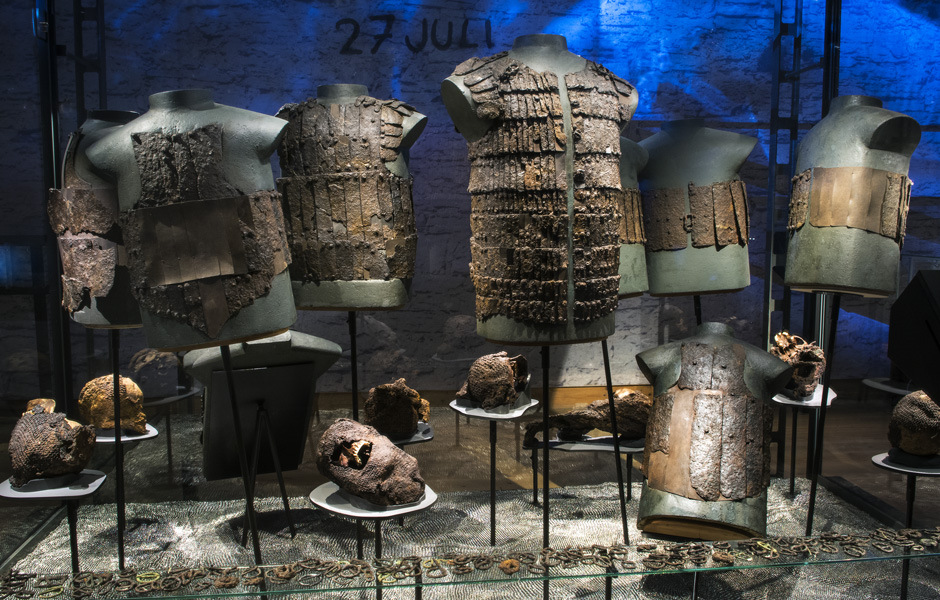
The dead soldiers and their equipment were swiftly buried in large mass graves after the battle. The remains of the dead, the armour and the weapons are internationally unique in the sense of so much remaining in a state of preservation when archaeologists excavated the site in the 1920s.

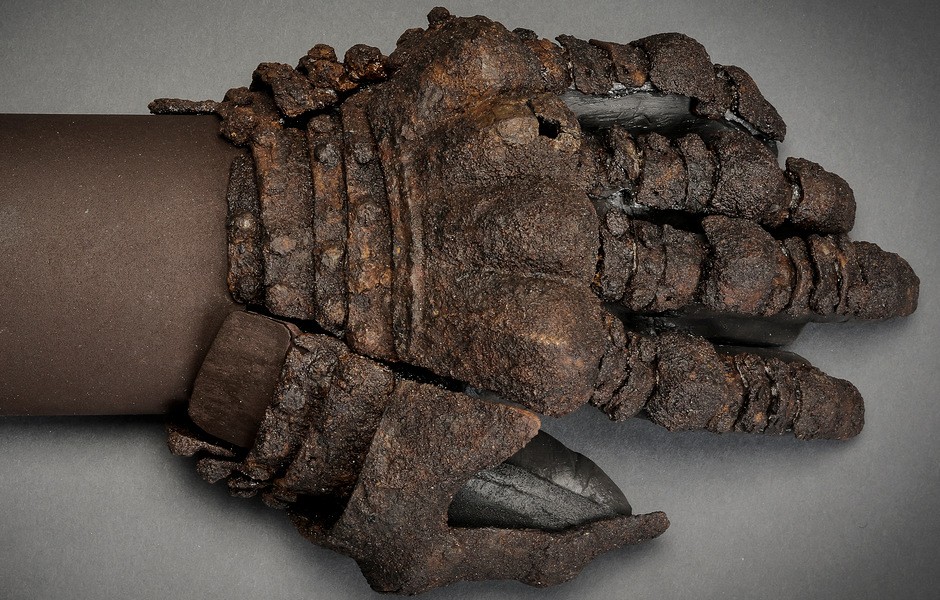
Items on display include mail shirts (hauberks) and coifs (headgear), chain mail gauntlets, maces, swords, crossbows and arrowheads. Together, the artefact finds and human remains give us an insight into the nature of medieval warfare.

In this exhibition you can follow the progress of three Gotlanders and two Danish soldiers. New findings are presented about their living conditions. Diseases, height, build and age are some of the things which can be detected by analysing their skeletons. From injuries and bone incisions we can also reconstruct fighting techniques and identify the weapons used, just as in a modern crime scene investigation. The soldiers’ armour presents modern but also antiquated features by the standards of the time. It looks heavy to wear, but the mobility of the plates in relation to each other made it easy to move about in. There are reconstructions of the soldiers’ gear which you can touch or try on.

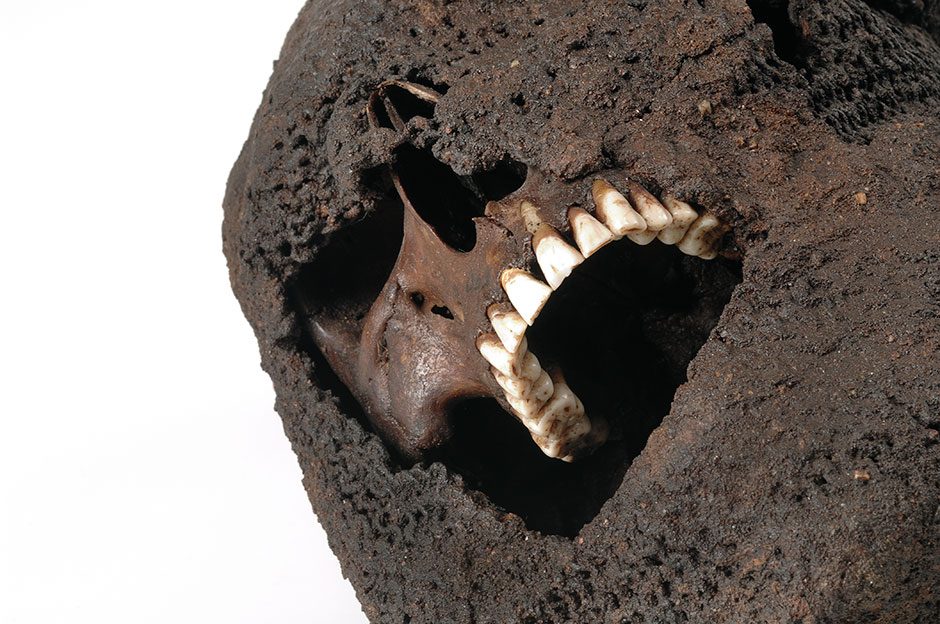
Skull of a young man.

One of the armours on display may have belonged to Bavo or Schelto Roorda. They were two brothers of a noble family in what we now call the Netherlands. We don’t know how they fared. The different bronze heraldic emblems on the armour represent different branches of the clan. A leather pouch containing a small fortune in coins was found together with another soldier who probably served in Valdemar’s army.

Attacked from behind

Take a look also at the young, quite heavily built Gotlander, aged between 30 and 35. He was probably attacked from behind, sustaining several blows to the head from both axe and mace.

This exhibition gives us an opportunity of pondering war in a historical perspective. The battle beneath the town wall demonstrates that acts of violence and war are recurrent, destructive phenomena through the ages. The strikingly well-preserved skeletons, the photographs of mass graves, and the weapons on display here remind us of acts of cruelty occurring in the present. Children and sensitive adults may find some parts of this exhibition frightening.

All finds originate from the Visby town wall in 1361 unless otherwise indicated.

Armoured glove


Preserving Our Past, Recording Our Present, Informing Our Future

Ancient and Honorable Carruthers Clan Int Society CCIS

carruthersclan1@gmail.com

cropped-coagraywide.jpg

Disclaimer Ancient and Honorable Carruthers Clan International Society CCIS LLC is the official licensed and registered Clan of the Carruthers Family.  This Clan is presently registered in the United States and Canada, and represents members worldwide.  All content provided on our web pages is for family history use only.  The CCIS is the legal owner of all websites, and makes no representation as to the accuracy or completeness of any information on these sites or by following any link provided. The CCIS will not be responsible for any errors or omissions or availability of any information. The CCIS will not be liable for any losses, injuries, or damages from the display or use of this information. We do not sell, trade or transfer to outside parties any personal identifications. For your convenience, we may provide links to various outside parties that may be of interest to you. The content on CCIS is design to support your research in family history.      ( CCIS -LLC copyright 2017 - 2020)
Uncategorized, Varangians

Birka is the City of the Gotlanders

Birka was established as a Gotlandic (Varangian) trading Emporium at the northern point of the Rus-Varangian trading route to Bagdad


After Bagdad was founded in 762 and the capital of the Islamic Caliphate was
moved from Damascus to Bagdad the Gotlandic merchants traded with the
Islamic Caliphate which they called Særkland and the Khazar Khaganate with
their capital Atil on the Volga.
From end 700s silver from the Islamic Caliphate started to flow. The Gotlanders who knew the Russian rivers since earlier went all the way to the river
Volga and the Kaspian Sea. They were on the Russian rivers called Varangians and al-Rus’ (expeditions of rowing ships).


The Gotlanders founded, end 700s and
first half of the 800s, between the Baltic Sea and the Volga bases which today
are called the Rus’ Khaganate. This was a state, or a cluster of city-states all
through Russia to the Volga. The Spilling’s Treasure can be dated to the Rus’
Khaganate.
The first documented contact with a delegation of Gotlandic merchants (Rhos)
to visit Miklagarðr (Constantinople) is in 838. There are three separate written
sources that mention it and a coin with the emperor Theophilos was found in
the large silver hoard at Spillings. Miklagarðr means the large farm in contrast
to the small farms they had at home in Gotland.
About 860 most of these bases in the Rus’ Khaganate were destroyed and
sources tell that the Varangians were driven away. At the same time a Gotlandic
fleet with 200 ships besieged Constantinople for about 14 months in 860-861
with the outcome of longlasting agreemets between the Gotlanders and the
Byzantine Emperor.
On June 18, 860, at sunset, a fleet of about 200 Rhos vessels sailed into the
Bosporus and started pillaging the suburbs of Constantinople, Miklagarðr.
The attackers were setting homes on fire, drowning and stabbing the residents.
The attack took the Greeks by surprise, ‘like a thunderbolt from heaven’. The
Ecumenical Patriarch of Constantinople Photius (858-867 and 877-886) says that
it came suddenly and unexpectedly, ‘like a swarm of wasps’. Unable to do anything to repel the invaders, Patriarch Photius urged his flock to implore
the Theotokos to save the city. Emperor Michael III and the Imperial Army,
including the troops normally stationed closest to the capital, and the dreaded
fleet which discouraged with the deadly Greek Fire, fought against the Arabs in
Asia Minor. The exceptional time of the attack when the Rhos, Gotlandic Varangians, caught Constantinople unprepared suggests that the Rhos had information about the city’s weaknesses. It shows that the Rhos trade and communication with Miklagarðr continued into the 840s and 850s. We don’t know how
many Gotlanders took service in the Imperial Guard in 838 and if they were
involved from inside. Still, the attack by the Rhos in 860 came as a surprise. The
Rhos–Byzantine War of 860-861 was the only major military expedition from
the Rus’ Khaganate recorded in Byzantine and Western European sources.
Accounts vary regarding the events that took place around Constantinople.

There are discrepancies between contemporary and later sources, and the exact outcome is unknown. This event gave rise to a later Orthodox Christian
tradition, which ascribed the deliverance of Constantinople to a miraculous
intervention by the Theotokos, mother of God. The Rhos campaign of 860-
861 lasted ten months at least and ended some time in 861.
Evidently the hymn Acathistus was composed and first performed in moration of the solemn procession which has been described with many details and which, according to later local tradition led to the final cease of the
siege by the Rhos.
Since the yearly performance of the Acathistus was fixed for March 22, we may
consider this date as the day when the solemn procession with the sacred vestment of the Holy Virgin took place. In other words, at the close of March 861
the Rhos were already withdrawing from under the walls of Constantinople.
Their invasion left so deep an impression on the minds of the people that the
Acathistus has remained permanently fixed in the ritual of the Greek-Orhodox Church. Without doubt some of the most impressive moments during
the invasion of 860-861 were those of the solemn processions headed by the
Patriarch Photius, when the precious garment of the Virgin Mary, preserved in
the Chruch of the Virgin at Blanchernae, was borne round the walls of the city.
It was not the first time that this venerated relic was used during a critical experience for the capital. The best known occasion was during the siege of the
city by Avars, Scythians and Persians in 626 when, according to a legendary
tradition, the relic had saved the capital. Doubtless such religious performances
deeply impressed the superstitious populace and furnished them real consolation and comfort.
It is a very interesting question whether the Gotlandic Rhos invasion of 860-
861 ended in a definite agreement with the Byzanatine government or not.
Theophanes’ Continuator writes that shortly after the Rhos withdrawal a Rhos
embassy came to Constantinople beseeching to be converted to Christianity,
and that this conversion indeed took place. We can probably conclude that negotiations initiated by the Rhos took place at once after the campaign of
860-861 and ended in a friendly agreement.
Photius writings provide the earliest example of use of the name Rhos by the

Byzantines. He also mentions the foresaid contact in 838 between the Byzantine Empire and the Rhos.
Previously, the inhabitants of the countries north of the Black Sea had been
called ‘archaic’or ‘Tauroscyths’. The learned patriarch reports that the Rhos
has no supreme ruler and live in some remote northern country. Photius called
them ‘unknown people’, although some historians prefer to translate the phrase with ‘obscure people’.
In the year 911 a document was signed between the Byzantine Emperor Leo VI
and the Gotlandic Varangians: Karl, Ingjald, Farulf, Vermund, Hrollaf, Gunnar, Harold, Kami, Frithleif, Hroarr, Angantyr, Throand, Leithulf, Fast, and Steinvith.
One of the aims of the treaty was to maintain and proclaim the amity which
for many years had joined Christians, i.e, Greeks, and Rhos, Gotlanders. This
statement very well explains the peaceful relations between the two countries
that began in 861 or shortly thereafter. It is known that in the treaty of 911
there is a special clause which allows the Gotlandic Rhos who desire honoring
the Emperor to come at any time and to remain in his service. They shall be
permitted in this respect to act according to their desire. We must not forget
that Leo VI was the grandson of the Gotlandic Varangian Ingr and was well
aware of Gotlandic conditions.
Leo’s son Constantine VII Porphyrogennetos writes that the Krivichs and
other tribes transported hollowed-out sailboats, or monoxyla, which could accommodate thirty to forty people, to places along the rivers. These sailboats
were then transported along the Dnieper to Kiev. There they were sold to the
Varangians who re-equipped them and loaded them with merchandise.
The most authoritative source on the first Christianization of the Rhos is an
encyclical letter from the Patriarch Photius, datable to early 867. Referencing to
the Rhos-Byzantine War of 860-861, Photius informs the Oriental patriarchs
and bishops that, after the Bulgars turned to Christ in 864, the Rhos followed
suit so zealously that he found it prudent to send a bishop to their land.
The first church was according to Guta Saga in Kulstäde. It was burned down,
but in 897 the church in Visby, probably where the present St. Clemens stands,
was allowed to remain. We today know of 55 wooden churches, probably allfrom the 900s.

Red wooden church, Sweden, Europe

From the beginning of the 1000s the wooden churches were
replaced with Romanesque stone churches in Macedonian Renaissance art.
Macedonian Renaissance art (867-1056) was a period in Byzantine art which began in the period following the death of Emperor Theophilus in 842 and the
lifting of the ban on icons, iconoclasm. The Gotlanders were deeply involved
in Miklagar∂r during that time and the early Gotlandic churches are highly influenced by Armenian church buildings and the Byzantine art.
In 886 the grandson to the Gotlandic Varangian Ingr became Emperor under
the name Leo VI the Wise. The Gotlandic church was like the Armenian and
Georgian churches independant, directly under Gutna Althingi, and did never
submit to any bishop or the Catholic Pope. During the first 300 years the Gotlandic Church was Byzantine with Byzantine ritual and paintings. From 1164,
when the Catholic bishop in Linköping was hired to inaugurate churches, even
Catholic rituals came creeping in.
Later the Gotlanders settled in Garðaríki (Kievan-Rus’) and Holmgarðr (Novgorod) where Gotlandic Varangians became the first rulers. Gradually they opened Emporiums, ‘Gutagårdar’. Several such ‘Gutagårdar’ are known. They sold
furs, weapons and slaves and were paid in hard cash. Gotland has today the
worlds largest collection of coins from the Islamic Caliphate, most of them
minted in Bagdad.
We know from Arabic writers in the 800s that al-Rus’ were merchants from the
island in the Baltic Sea region, who came rowing on the Russian rivers. From
there comes later the name Russia. The etymology of the name al-Rus’/Rhos
needs clarification. Many scholars have wrongly maintained that the word alRus’ must be identical with the Finnish word Ruotsi and Estonian Rootsi. Sven Ekbo (1981) convincingly connects the word to Old Norse ro∂r meaning ‘expedition of rowing ships’. Accordingly there were on the Russian rivers in the
late 700s and 800s rowing Gotlandic merchants, Varangians, who the Arabic
writers called al-Rus’.
In the Baltic Sea and on the Russian rivers there were no Vikings. The Gotlandic merchants were called Varangians. Please note that there is no sign of
Scandinavians on the Russian rivers or in Kiev until Olof Skötkonung married
off his daughter Ingegerd to Jaroslav in Kiev in 1019. The large amount of

Scandinavians in Kiev come in the 1040s with Ingvar and his warriors.
Gotland is said to have been an unusually homogeneous society as the population structure is concerned. There has never been any feodal nobles on
Gotland. There were of course social inequalities. The Merchant Farmers, who
ran the trade and among other places visited outlying venues such as Aldeigjuborg, Atil, Bagdad, Bulgar, Holmga∂r, Kiev and Miklagarðr in the east and
Bardowick, Schleswig, Bergen, London and Spain in the west, formed a wealthy upper class, who surely had power in their hands, even in political terms. It
has been assumed that for instance judges were recruited mainly from these
lineages. An intermediate position holds ‘rural residents’, that the Guta Lagh
mentions. These were probably tenants. At the bottom of the scale of ranks we

find the serfs, who performed the heavy work, and who were for sale, mainly
in the eastern trading venues. Not least in this area came Christianity and the
Church to be significant, particularly in humanizing direction.
The Trade Treaty between the Gotlanders and the newly in the Lake Mälar
area immigrant Heruli (Svear), probably from second half of the 500s, means
that the Gotlanders could freely trade on the new kingdom in the Lake Mälar
area and its conquered lands east of the Baltic Sea. Instead of paying customs
duty every time they passed the border they paid a fixed amount every year and
could then trade freely in all areas controlled by the Svear. There were large
Gotlandic trading Emporiums, i. a. in Grobina (Latvia) ca 650- 850 CE, with
over 1000 Gotlandic graves, an area at that time was conquered by the Svear.
On Helgö was on the northeastern part of the island an ancient trade and
workshop site. The area consists of seven house groups, five burial fields and
an ancient castle from between 200 to 500. There are also clear traces of precocious cult on the island and an early temple building. The old trading place
at Helgö began to grow around 200, and is therefore about 500 years older
than Birka on Björkö. Already in the 400s there were skilled craftsmen in place with strong links to Gotland. Among other things, there are rich traces of
goldsmiths and other workshops. Helgö’s greatness period is considered to be
400-800 AD. The advanced bronze foundry and craft cease in the 600s and
Helgö assumes a more ordinary farm character. About 750 the Gotlanders
move their trade to Birka that dominates trade in the Lake Mälar area until the
late 900s, when Sigtuna probably takes over the trade. Evidence of long-term
trade in the form of a small Buddha from Swat Valley in India, an early Christian Coptic baptismal cup from Egypt, both dating back to the 500s, as well
as an Irish Crosier from the 800s and coins from Ravenna, Rome, Bysans and
Arabia shows the importance of the site. The island’s merchants may have had
the royal families from Vendel and Uppsala as customers for their luxury items,
such as jewelery, glass and spices.
The immigration of the Herul Royal family (Svear) to the Lake Mälar area in
the early 500s, when they bring a new ruling dynasty and a new religion to the
area, what we today know as the Ynglinga dynasty and the Æsir religion, is
mentioned in several sources. Their entrance on the stage changes the situation
in the Baltic Sea region. The wars between the Skilfings (Svear) and the Gotlanders are mentioned in the Beowulf epos and the Guta Saga. No traces of Æsir
religion is discernible on Gotland. The eight-legged horse that can be seen on
three Gotlandic picture stones is a Shaman horse that the Gotlanders came in
contact with in Khazaria. An eight-legged horse is not known in Scandinavia,
only on three picture stones from the 700-800s in Gotland. It is only mentioned by Snorre Sturlason in his Edda from the 1200s.
Ibn Rustah travelled to Novgorod with the al-Rus’, and compiled books relating to his own travels, as well as second-hand knowledge of the Khazars,
Magyars, Slavs, Bulgars, and other peoples. His impression of the al-Rus’ is
very favourable: ‘They carry clean clothes and the men adorn themselves with bracelets of gold. They treat their slaves well and they also carry exquisite
clothes, because they put great effort in trade. They have many towns. They
have a most friendly attitude towards foreigners and strangers who seek refuge.’
The establishment of the Varangian trading place Birka in the Lake Mälar area
and Sliesthorp in Denmark show a common special Gotlandic type, which in
ancient times developed in the Baltic Sea region. What we are talking about
here is the Gotlandic or Varangian commercial Emporiums across the Baltic
Sea e.g. Grobina and Paviken which are direct models. In a semicircle around
the old town area lie the three cemeteries and, like Birka, it has also had a
stronghold as support point.
Sliesthorp was a transit harbour and therefore terminus for the Frisian trade.
Frisian koggs did not reach Sliesthorp. They stayed in Hollingstedt. The goods
were then transported on trolleys between Hollingstedt and Sliestorp or vice
versa. From there Gotlandic merchants, the Varangians, took over the goods.

There are many links between Gotland and Birka. Birka is very centrally located
for trading in the Lake Mälar area and on the sea line from Gotland, which at
that time was open straight up to from Södertälje. The archaeologist Gustaf
Trotzig has in 1991 published a booklet on ‘Viking burial vessels of copper
and copper alloys from Birka and Gotland’. This type of grave finds are found

in the Baltic Sea region, Birka and on Gotland. Finds of such containers in
East Prussia occurs in combination with ceramics of the same type as found
on southern Gotland. If you go into individual find areas on Gotland you get
a picture on the graves location that is similar to the one in Birka. The graves
with metal containers are grouped in the same way. This is i.e. shown in the
cemetery at Barshaldar in Grötlingbo.
This type of graves in Birka are considered to accommodate foreign merchants,
while graves on Gotland would have Gotlanders. Of course, the Gotlanders
who died in Birka were also buried there. Another relation to Gotland is Adam
of Bremen’s words. He says in his history: “Birka is the city of the Gotlanders”

Elegant, pattern woven silk with Bahram Gur hunting scenes - a design that was hugely popular when the Vikings set out on trading and raiding expeditions where it was brought back to Scandinavia. #viking #silk #fabric #oseberg #grimfrost

Birka’s location in the Lake Mälar area made the city suitable as the pivot for
an internal trade in the winter markets on the Lake Mälar ice when the furs are
the best, and summer markets, where the ships could meet in the city’s harbour.
The presence of imported objects from the Orient and Western Europe in the
tombs are many. Uppland burial grounds could indicate that Birka to a large extent sold their imported goods, especially silk fabrics on the domestic market.
One must be cautious with the conclusions. There were other ways for the
trading ships, such as waterways through Roden (Roslagen) from the coast to the
interior of Uppland. It is howeveris quite clear that Birka traded with the rural
people. Bones of eider and other waterfowl in Birka’s garbage heaps show that
the residents in the archipelago provided merchants in Birka with food, and
reindeer testify trade to the north. The information in Ansgar’s biography, that
Birka had its own Thing, indicates that the city occupied a special position in
relation to the surrounding countryside and had remote commerce. Transit
trade between east, west and north was Birkas lifeblood. When it could not be
maintained any longer, the city disappeared or lost in any case its role shortly
after the middle of the 900s.

Viking kaftan Birka model.
Silk textiles from the Viking age are a small but exclusive group of archeological finds in Scandinavia. The silk fragments are produced in many different
qualities. The majority of silks have been interpreted as either Central Asian or
as made in the Byzantine production area, that is in Constantinople, or in associated areas in the eastern Mediterranean region. A few fragments from Birka
have been interpreted as Chinese silk. Great emphasis must be placed on the
Gotlandic merchants’, the Varangians or Rus as they are called in Arabic sources, strong ties to the Byzantine Empire in the 800s and 900s and thereby the
trade on the westernmost of the Russian waterways. Archaeological sources
give no reason to believe that the distribution of silk to the Baltic Sea areas is a
result of trading along one single route. The two major eastern trading routes
along the Russian rivers Dnjepr and the Volga-Oka region are likely routes for
the arrival of silk to both Oseberg and to Birka.
In Scandinavia so far 23 archaeological sites with finds of silks dating to the
800s and 900s have been registered, in most cases from graves. This includes
both silk fabrics and silk thread and lan-cores used in embroideries. In addition there are several graves with finds of fibres assumed to be silk but not yet identified. Many of the sites revealed only one or a few fragments of silk. The
largest concentration of graves is in Birka in the Lake Mälar area where 49 graves, according to Agnes Geijer, contained silk.
Based on these finds in the graves a project at Enköping museum has reconstructed silk fabrics with Islamic patterns.
The majority of graves containing silk from Birka are dated to the 900s. Of 49
graves, 37 are dated to this period while 12 date to the 800s. The fabric type
by Geijer called S4 dominates in both centuries and is the most common type
represented in all graves. This is a type of samite with z-spun main warps and
weft with no traces of spinning. Unlike the Oseberg silk fragments it has a
double main warp. The S4 group contains several different degrees of coarseness in the weave. Geijer noticed that some fragments seemed mono coloured
while others bore traces of pattern. This could very well be caused by differences in preserving condition, as seen in the Oseberg silks. Geijer explains the
arrival of the most common type called S4 with strong connections with the
Byzantine Empire. A coarser and more uneven woven quality of similar samite
was separated by Geijer in a singular group called S5 with patterns showing
similarities with some of the Oseberg fragments regarded as Central Asian
products.

5th c Iranian silk, prob samite; the Norse cut silk samite fabric into thin strips & appliqued it as trim onto clothing

In one of the Birka graves, a very special find appeared. This is a fabric of
two-coloured silk damask, with a pattern of stars and dots. The threads of raw
silk bear no traces of spinning in either warp or weft. This silk, the only one
of its kind so far found in Scandinavia, is probably produced in China. Two
different qualities of raw silk tabby were found in four of the graves in Birka.
The fabrics bear no traces of spinning in warp or weft.

Khazaria, Volga Bulgaria and the Silk Trade
The Khazars, a semi-nomadic Turkish people closely related to the Bulgarians,
established one of the largest polities of medieval Eurasia, with Atil as the capital. Their territory covered much of modern-day European Russia, western
Kazakhstan, eastern Ukraine, Azerbaijan, large portions of the northern Caucasus (Circassia, Dagestan), parts of Georgia, the Crimea, and northeastern Turkey.
They played a role in the balance of powers and destiny of the world civilization. After Kubrat’s Great Bulgaria was destroyed by the Khazars in the 600s,
some of the Bulgars fled to the west and founded a new Bulgar state (presentday
Bulgaria) near the Danubian Plain, under the command of Khan Asparukh. The
rest of the Bulgars fled to the north of the Volga River region and founded at
the big bend in the Volga in Russia’s heart, where the river Kama flows into the
Volga, the Volga Bulgaria kingdom with its capital Bolghar. Volga Bulgaria’s
heyday occurred in the 900s. At that time they adopted Muhammad’s teachings.
The area south of the kingdom of the Volga Bulgars, between the Caspian
and Black Seas, accordingly belonged to the Khazars. Khazaria had an ongoing
entente with Byzantium. The Khazars aided the Byzantine emperor Heraclius
(reigned 610–641) by sending an army of 40,000 soldiers in his campaign against
the Persians in the Byzantine–Sassanid War of 602–628. They also served their
partner in wars against the Abbasid Caliphate.
Sarkel, a Turkish word meaning White Fortress, was built in the 830s by a joint
team of Greek and Khazar architects to protect the north-western border of
the Khazar state. The chief engineer during the construction of Sarkel was Petronas Kamateros who later became the governor of Cherson. Khazaria was
the first feudal state to be established in Eastern Europe. According to ibn
Khordadhbeh the Khazarian Jewish merchants (Radhanites) were responsible for
the commerce between southwestern Asia and northern Europe, as well as
the connection to the Silk Road. The name ‘Khazar’ is found in numerous
languages and seems to be tied to a Turkish verb form meaning ‘wandering’
(modern Turkish: Gezer). Pax Khazarica is a term used by historians to refer to the
period during which Khazaria dominated the Pontic steppe and the Caucasus
Mountains.
The Gotlandic Varangians made regular commercial trips to the Khazar capital
Atil at the lower Volga and the city of Bolghar in the country of the Volga
Bulgars in the region of Kamas’ inflow in the Volga river.

After fighting the Arabs to a standstill in the North Caucasus, Khazars became increasingly interested in replacing their Tengriism with a state religion
that would give them equal religious standing with their Abrahamic neighbors.
During the 800s, the Khazar royalty and much of the aristocracy converted to
a form of Judaism. Yitzhak ha-Sangari is the name of the rabbi who converted the Khazars to Judaism according to Jewish sources. Khazaria became the
world’s largest Jewish kingdom. It is estimated today that 80% of those in the
world who confess to the Jewish religion are descended from there. They are
also called the ‘13th tribe’. In Khazaria the main languages were Turkish, various

Image result for The unique coin from the Spillings Hoard with the inscription ‘Moses is the prophet of God’ dated to 837-838. Photo: Kenneth Jonsson

Slavic languages and Gothic. If you mix these languages you get Jiddish.
Khazars were judged according to Tōra (orders of the Khagan; coming from the root
Tōr meaning customs; unwritten law of people in Old Turkic) (Modern Turkish: Töre), while the
other tribes were judged according to their own laws.
Being a surprisingly tolerant and pluralistic society, even its army incorporated
Jews, Christians, Muslims and Pagans at a time when religious warfare was the
order of the day around the Mediterranean and in Western Europe. By welcoming educated and worldly Jews from both Christian Europe and the Islamic
Middle East, Khazaria rapidly absorbed many of the arts and technologies of
civilization.

As a direct result of this cultural infusion, they became one of the very few
Asian steppe tribal societies that successfully made the transition from nomad
to urbanite. Settling in their newly created towns and cities between the Caspian
Sea and the Crimean Peninsula on the Black Sea, they became literate and multi-lingual agriculturalists, manufacturers and international traders.
The Islamic Bulgars in the Volga river bend and Khazaria were the two main
cross points for the trade routes to Europe. The main imported goods traded
in these markets were furs, slaves and weapons.
According to ibn Rustah and ibn Haukal, al-Rus’ delivered the first two mentioned in Khazaria and Volga Bulgaria. Ibn Rustah and Gurdesi explain that
the Varangians refused to accept anything else but jingling silver coins for their
goods.
In return they brought silk and other exotic products that they sold in Birka,
and these goods were handled by the Varangians (Rus) and came to the Baltic
Sea region through the Russian waterways.
Between 965 and 969, Khazar sovereignty was broken by the Kievan Rus’. Sviatoslav I of Kiev defeated them in 965 by conquering the Khazar fortress of
Sarkel. Two years later, Sviatoslav conquered Atil.
Archaeological finds of coins show a flow of Islamic dirhams mainly into Gotland dated to around c. 800 to the last quarter of the 900s. Gotland has the largest collection in the world of coins from the Islamic Caliphate, most of
them minted in Bagdad, and some from places well-known for silk production
like Samarkand and Tashkent.
The river systems of Volkhov-Lovat, Dniepr, Volga and Don formed a central
nerve in communication and trade. From the Rus (Varangian) northern strongholds you could go either to the south, sailing along Dnjepr to the Black sea
and finally reach Constantinople, or you could go further east, and along the
river Volga to the trading hub of Bulghar connecting the northern trade with
the northern silk roads in Central Asia and from there to China.
The Varangians took Kiev from the Khazarians in 882 and appointed one of
their own, Oleg, as ruler. Archaeological excavations show that a line of strongholds was established in the Kiev area along the Dnjepr in the last two decades
of the 800s. Tax collection was probably a motivation for establishing these
strongholds.
What about the eastern route along the river Volga? This route connected the
northern trade with the northern silk roads and the silk producing hubs in
Central Asia. The earliest archaeological traces of a Varangian (Rus) presence
in the Volga area dates to the early 800s, located south west of Rostov Velikij.
Later, at about the same time as the establishment of Varangian (Rus) strongholds on the shores of Dnjepr, settlements with distinct Gotlandic cultural
components were established not far from Volga nearby contemporary Yaroslavl. Even though they are not directly on the shores of the river, they show
a Gotlandic connection with the areas north of the trading hub of Bhulgar
situated about 30 km downstream from Volga’s confluence with the Kama
River near today’s Kazar.
It was in the town of Bulghar that Ibn Fadlan made his famous observation of a Varangian funeral in the 900s. Bulghar functioned as an eastern meeting point
between north and east, a melting pot of different cultures and languages. On
his journey to Bulghar, Ibn Fadlan travelled across the desert from Baghdad to
Bukhara, one of the main production centres for Persian silk in the 800s and
900s. Ibn Fadlan seems to have had a certain understanding of differences and
variations in luxury textiles. He brought with him a lot of different textiles to
be used as presents and tax payment on his journey. When describing the different textiles and clothing items, he uses the name of the place of production.

An example is his description of the presents he gave to an army commander
he met on his journey, who among other things was given cloth from Merv.
Not only expensive fabrics from Central Asia seem to have been transported
along this road. According to Ibn Fadlan, the Varangian chief buried in Bulghar was equipped with costly fabrics of Byzantine origin on his last journey at
the beginning of the 900s.
The complex trading relationship between areas of production in this period further complicates the interpretation of trading routes. In spite of strong
political rivalry and competition in trade and silk production, both preserved
silk fabrics and written sources show a strong interaction relating to pattern exchange and technology as well as trading and gift exchange between Byzantine
and Persian areas.
It is interesting to note that a trade regulation in Constantinople forbid merchants from Bhulgar to buy Persian silk of higher value when they were visiting
the town. According to the Book of Epharc silk fabrics and clothing from Baghdad were among goods brought by Syrian merchants to Constantinople in the
early 900s. In addition, Islamic fashion in the form of garments “tailored in the
Saracen style” was according to De Ceremoniis made in the Byzantine capital.
There is also reason to believe that many of the town markets were regarded
as multicultural meeting places. In several Arabic sources, towns like Baghdad
and Tashkent are described as cosmopolitan hubs of trade. A writer of the late
800s describes the thriving trade in Baghdad like this: “There are not a people
from any country but has a quarter in it, a place for the exchange of their produce, and a special district of their own. That what is not to be found in any
other town of the world is brought together here”.
Silk trade between the Caliphate and the Byzantine Empire also led to diffusion and imitation of fashion. Arab sources written in the 700s and 800s indicate a
clear consciousness of Byzantine fashion among the people of Baghdad. This
indicates that not only physical products but also ideas and fashion to some
extent were exchanged between the rivals. This makes it extremely diffcult to
know the specific trade routes the different types of silks came through.

Conclusion
Silk finds in Birka and surroundings show that luxury goods from both Central Asia and Byzans were traded by the Varangians in the 800s and 900s. The
archaeological and written sources show that the most plausible trading routes
for these silks went along the Russian rivers.
Great emphasis has been placed on the Varangians’ strong ties to the Byzantine
power. Nevertheless, both the excavations along the Volga and Gotlandic coin
finds minted in Central Asia also show a connection to the Central Asian production areas for silk through the Volga-Oka region. It is likely that both these
routes were used for trading silk by the Varangians. Silk trade and exchange
of fashion ideas between the main areas of production makes it even more
plausible that more than one trading route was used. Silk trade was probably
part of a complex and multidimensional system in which merchandise and gifts
changed hands.
As we know the Gotlanders were deeply involved in Miklagar∂r and the Macedonian Renaissance art from the end of Iconclasm. It is documented in Byzantine sources that from second half of the 800s and forward there were larger
Gotlandic contingents stationed in Miklagarðr.
The Gotlanders were related to the Byzantine Imperial Court from 867 when
the Gotlandic Varangian Ingr’s daughter Indrina became Empress Eudokia
Ingerina and in 886 when her son became Emperor Leo VI the Wise. The
Gotlandic Varangians were allocated their own living quarters to stay in St
Mamas outside the Theodosian wall.
On the trade route between the Baltic Sea and Constantinople Kiev was a
Slavic settlement. It was a tributary of the Khazars, until seized by the ians in 882. Under Varangian rule, Kiev became a capital of Kievan Rus’.
To understand the history of the Gotlandic Merchant Republic and its Medieval Churches, one must fully realize that Gotland was an independent Merchant
Republic, and the hub of the Baltic Sea region, which from time immemorial
had its relations mainly east and south and controlled trade on the Russian
rivers from time to time. There were no Vikings in the Baltic Sea or on the
Russian rivers and no Scandinavians in Russia before 1019.
Gotland has very little in common with Swedish history.   Tore Gannholm


Preserving Our Past, Recording Our Present, Informing Our Future

Ancient and Honorable Carruthers Clan Int Society LLC

carruthersclan1@gmail.com

cropped-coagraywide.jpg

Disclaimer Ancient and Honorable Carruthers Clan International Society CCIS LLC is the official licensed and registered Clan of the Carruthers Family.  This Clan is presently registered in the United States and Canada, and represents members worldwide.  All content provided on our web pages is for family history use only.  The CCIS is the legal owner of all websites, and makes no representation as to the accuracy or completeness of any information on these sites or by following any link provided. The CCIS will not be responsible for any errors or omissions or availability of any information. The CCIS will not be liable for any losses, injuries, or damages from the display or use of this information. We do not sell, trade or transfer to outside parties any personal identifications. For your convenience, we may provide links to various outside parties that may be of interest to you. The content on CCIS is design to support your research in family history.      ( CCIS -LLC copyright 2017 - 2020)
Gutland / Gotland, OUR ANCESTORS, Uncategorized

CLAN CARRUTHERS-WHO WERE THE ANCIENT GOTHS?

CLAN CARRUTHERS INT SOCIETY CCIS                  PROMPTUS ET FIDELIS

cropped-wide-banner-with-new-crest.jpg


WHO WERE THE ANCIENT GOTHS?


The Goths were a people who flourished in Europe throughout ancient times and into the Middle Ages. Referred to at times as “barbarians,” they are famous for sacking the city of Rome in A.D. 410.

Ironically, however, they are often credited with helping preserve Roman culture. After the sacking of Rome, a group of Goths moved to Gaul (in modern-day France) and Iberia and formed the Visigothic Kingdom. This kingdom would eventually incorporate Catholic Christianity, Roman artistic traditions and other aspects of Roman culture. The last Gothic kingdom fell to the Moors in A.D. 711.

Today, the meaning of the word “Goth” has evolved beyond any direct relationship to the ancient Goths. In the late Middle Ages, a style of architecture arose, characterized by large, imposing cathedrals and castles. The term “Gothic” was applied to the style as a critique, the word even at that time being a synonym for “barbaric.”

During the 18th and 19th centuries, a genre of dark, romantic literature called “Gothic fiction” flourished. Characterized by novels such as Bram Stoker’s “Dracula,” Mary Shelley’s “Frankenstein” and the works of Edgar Allen Poe, the genre got its name from the Gothic locations in which the stories took place — for example, Dracula’s dark, foreboding castle.

In modern times, “Goth” has been used for a subculture with its own style of music, aesthetic and fashion. The dark, often gloomy Goth imagery was influenced by Gothic fiction, particularly horror movies.

From an island in the north?

In the sixth century A.D., the writer Jordanes (who was likely Gothic himself) wrote a history of the Goths. He claimed that the Goths came from a cold island called “GUTLANDIA,”  modern-day Gotland.

Beric Dondarrion, GvArt GV on ArtStation at https://www.artstation ...


“Now from the island of Gotlandia, as from a hive of races or a womb of nations, the Goths are said to have come forth long ago under their king, Berig by name,” he wrote (translation by Charles Mierow). After a series of migrations south, they found themselves living close to the borders of the Roman Empire. The Roman Empire began just south of the Papal lands in northern Europe.

Pic: King Berig

Our knowledge about the Goths before they interacted extensively with the Romans is limited. They had a written language of sorts that made use of runic inscriptions; however, few of these inscriptions have been found and those that survive are quite short. Their religion may have made use of shamans, people who could have acted as intermediaries between themselves and the gods.

Goths vs. Greeks

During the third century, the Goths launched a series of invasions against Roman-controlled Greece.  They were paid mercenaries, who marched or fought with the region that paid them. Fragments of a text discussing these attacks, written by a third-century Athens writer named Dexippus, were recently discovered in the Austrian National Library and detailed in the Journal of Roman Studies.

Dexippus said that the Roman Emperor Decius (who reigned A.D. 249–251) led the Roman army against the Goths but suffered a series of defeats, losing both territory and men. The text also tells of a battle between the Goths and Greeks that took place at the pass of Thermopylae. The Goth army was trying to reach Athens while a Greek force had fortified the pass in an attempt to stop them. The fragment ends before the outcome of the battle is known.

Contact with Rome

Also in the third century A.D., the Goths launched a series of raids into the Roman Empire. “The first known attack came in 238, when Goths sacked the city of Histria at the mouth of the river Danube. A series of much more substantial land incursions followed a decade later,” writes Peter Heather, a professor at King’s College London, in his book “The Goths” (Blackwell Publishers, 1996).

He notes that in A.D. 268, a massive expedition of Goths, along with other groups also called barbarians, broke into the Aegean Sea, wreaking havoc. They attacked a number of settlements, including Ephesus (a city in Anatolia inhabited by Greeks), where they destroyed a temple dedicated to the goddess Diana.

“The destruction wrought by this combined assault on land and sea were severe, and prompted a fierce Roman response. Not only were the individual groups defeated, but no major raid ever again broke through the Dardanelles,” writes Heather.

The Goths’ tumultuous relationship with Rome would continue into the fourth century. While Goths served as Roman soldiers, and trade took place across the Danube River, there was plenty of conflict.

Heather notes that a Gothic group called the Tervingi intervened in Roman imperial politics, supporting two unsuccessful claimants to the emperorship. In A.D. 321, they supported Licinius against Constantine, and in A.D. 365, they supported Procopius against Valens. In both instances this backfired, with Constantine and Valens launching attacks against the Tervingi after becoming emperor.

The Goths had adopted Catholic Christianity much earlier, and many claim that their contact with the Roman Empire, helped intensified Christianity among the Romans.  This form of Christianity  was known as Arianism among the Romans.  Later the Romans would adopt Catholic Christianity also.

“In the 340s, the Gothic bishop Ulfilas or Wulfila (d. 383) translated the Bible into the Gothic language in a script based chiefly upon the uncial Greek alphabet and said to have been invented by Ulfilas for the purpose,” writes Robin Sowerby, a lecturer at the University of Stirling, in an article in the book “A New Companion to the Gothic” (Wiley, 2012).


Pushed out by the Huns

This complicated relationship would be forever altered with the appearance north of the Danube of a new group, called the Huns, around A.D. 375. The Huns pushed the Goths, who were in what is now southern Germany, into Roman territory.

The Goths, seeking refuge among the Romans, were treated poorly. Lacking food, they were forced to sell their children into slavery at humiliating prices. 

“When the barbarians after their crossing were harassed by lack of food, those most hateful [Roman] generals devised a disgraceful traffic; they exchanged every dog that their insatiability could gather from far and wide for one slave each, and among these were carried off also sons of the chieftains,” wrote Ammianus Marcellinus who lived in the fourth century A.D. (translation by John C. Rolfe).

After being refused entry to the city of Marcianople, the Goths ( Germanic) revolted, roaming across the Balkans, plundering Roman towns.

Emperor Valens, who ruled the eastern half of the Roman Empire, personally led an army into the Balkans to subdue the Goths. On August 9, A.D. 378, this army engaged the Goths near the city of Adrianople (also called Hadrianopolis). Valens underestimated the size of the Gothic force. As a result, his army was outflanked by the Goths and annihilated, the emperor himself killed.

“Just when it first became dark, the emperor being among a crowd of common soldiers, as it was believed — for no one said either that he had seen him, or been near him — was mortally wounded with an arrow, and, very shortly after, died, though his body was never found,” wrote Marcellinus (translation by C.D. Yonge).

Valens’ successor, Theodosius, made a treaty with the Goths that lasted up until his death in A.D. 395.

Rise of Alaric


After A.D. 395, the treaty with Rome fell apart. A Gothic leader named Alaric rose to pre-eminence, leading the Goths into battle against both the eastern and western halves of the Roman Empire.


The conflict that followed was complicated. Alaric wanted to make a deal that would result in the Goths under his command getting good farmland and monetary rewards. He undertook raids to pressure the Romans.

Heather writes that by A.D. 403, Alaric was in the Balkans, finding himself an “outlaw rejected by both halves of the Empire.” An attempt by Alaric to move the Goths into Italy had failed, and there had been a massacre of the Gothic inhabitants of Constantinople in A.D. 400.

Fortunes changed for Alaric and the Goths when the Western Roman Empire began to crumble. The emperor Honorius faced rebellion among his army and a usurper named Constantine III amassed territory in Britain and Gaul. In the wake of these problems, Honorius had his general, Stilicho, killed in A.D. 408.

Seeing weakness, Alaric advanced into Italy a second time, finding support from Stilicho’s former supporters as well as runaway slaves. He was camped outside of Rome by A.D. 410, using the city as a bargaining chip in an effort to get concessions from Honorius’ government. After a series of unsuccessful negotiations, Alaric sacked the city on Aug. 24.

Two kingdoms

Alaric would die a few months after the sacking of Rome. During the fifth century A.D., as the Western Roman Empire faded, two Gothic kingdoms would rise up. In Iberia and southwest Gaul, the Visigothic Kingdom would be formed. This kingdom would last until A.D. 711, when it fell to an invasion by the Moors. However, they slowly regained control and in 718 founded the Kingdom of Asturias, which evolved into modern Portugal and Spain.

Meanwhile in Italy, the Kingdom of the Ostrogoths came into existence by the end of the fifth century A.D., eventually dominating the entire peninsula. This kingdom was short-lived, falling to Justinian I, emperor of the Byzantine Empire, within a few decades.

As Europe entered the Dark Ages, the Visigothic Kingdom would help preserve many aspects of Roman culture including its religion and artistic traditions. It’s ironic that the Goths, the people who had sacked Rome in A.D. 410, helped carry Roman culture into the time to come.

The Carruthers were known at this time as Ashman.  Ashman and Ashmen last name is still seen in much of eastern Europe and Russia.  They do carry the same DNA genome as the Carruthers.  About 450 A.D., the Carruthers DNA shows up in the southern portion of the United Kingdom, in archeological digs of military battles.  We also know that at this same time the Carruthers/Ashman went up the western coast of the United Kingdom to Dunbarton Castle.  There is some evidence showing they may have stopped in Ireland first.

Everyday it seems we have a new piece of our DNA showing up somewhere, and it just adds to the story of the historians.


Perserving the Past, Recording the Present, Informing the Future

Ancient and Honorable Carruthers Clan Int Society LLC

carruthersclan1@gmail.com  carrothersclan@gmail.com


cropped-wider-banner-light-blue-1.jpg


CLAN CARRUTHERS INT SOCIETY CCIS HISTORIAN AND GENEALOGIST


You can find us on facebook at :

https://www.facebook.com/carrutherscarrothers.pat.9

https://www.facebook.com/CarruthersClan/

https://www.facebook.com/CarruthersClanLLC


Disclaimer Ancient and Honorable Carruthers Clan International Societ
Uncategorized

Viking Voyages to Vinland

Viking Voyages to Vinland


Did you know that the Scandinavian Vikings visited Newfoundland and Labrador Canada approximately five centuries before John Cabot or Christopher Columbus sailed to North America? Vinland or Wine-land was discovered by Leif Erickson, covered the area from the Gulf of St. Lawrence to the northeastern New Brunswick known for its grapevines, then all the way up to Newfoundland.

Photo below: Reenactment of Viking ships at L’Anse aux Meadows

330px-Viking_landing

Vikings were known for their raiding and trading in unknown lands such as L’Anse aux Meadows located at the Northern tip of Newfoundland. In 1960 archaeological artifacts were found there. This site’s discovery and dig was lead by Archaeologist Anne Stine Ingstad with her husband Helge Ingstad. Vineland or Wine-land was written about in the Icelandic Sagas. This site was named an Archaeological and Historical site by the Government of Canada in 1968. Over time, the Vikings left the area due to the extreme cold and lack of food during the winter months, they returned home.

Photo: Archaeologist, Anne Ingstad at L’Anse aux Meadows, 1963.

255px-Anne_Stine_Moe_Ingstad_(1918-1997)_(5494474208)

Photo below: L’Anse aux Meadows site at the North tip of Newfoundland.

375px-Authentic_Viking_recreation

L’Anse aux Meadows may be the camp Straumfjörd  meaning stream-fjord described by the famous Viking, Erik The Red in The Saga of Erik The Red.
This site dates back six thousand years earlier before the Vikings, where The DorsetPaleo-Eskimo peoples lived from 500 BCE to 1500 CE.
Source & Reference:
  • Hreinsson, Vidar (1997) The Complete Sagas of Icelanders (Leifur Eiriksson Publishing, Reykjavik, Iceland) ISBN 978-9979-9293-0-7
  • Wahlgren, Erik (2000). The Vikings and America. Thames & Hudson. ISBN 978-0-500-28199-4.
  •  Wallace, Birgitta (2003). “The Norse in Newfoundland: L’Anse aux Meadows and Vinland”. The New Early Modern Newfoundland. 
  • All photos in Public Domain

Preserving Our Past, Recording Our Present, Informing Our Future

Ancient and Honorable Carruthers Clan Int Society LLC

carruthersclan1@gmail.com


cropped-coagraywide.jpg


Gutland / Gotland, Uncategorized

Gotland and The Black Sea Area

Gotland and its relations to the Black Sea area


Artist's Conception of Varangian Guardsman

The Guta Saga like the Goths’ tribal saga speak of a southern migration from Gotland to the Black Sea area and the Byzantine Empire. We know from Byzantine sources that the Goths settled in the Bosporian Kingdom and took possession of its feet with which they for some time ravaged in the Mediterranean. As we have seen above, we have already in late Bronze Age Gotlandic trading Emporiums on the Baltic Sea coast where the river roads lead down to the Black Sea. Even at the time when the Guta Saga was recorded, in the early1200s, it is not startling when the author of the Guta Saga notes that in Greece (Crimea belonged to Greece with Miklagarðr, as its capital), there lived a group
that “settled and live there and even today they have in their speech track of our language”.

One can therefore assume that the contemporaries with the Guta Saga, when they traveled to the Black Sea area, without too much diffculty understood the language of the Crimean Goths. It may not have been much more difference between their own language and that of the Crimean Gothic than between current Danish and Swedish. Especially silver findings prove that the Gotlanders during the Viking Age were frequent travelers to the area concerned.

Although the coins are minted further east in the Caliphate, they will in many
cases come just from this area, as they were used as means of payment there.
Other evidence that the Gotlanders travelled in the areas closest to the Crimea is the rune stones on Gotland. It can be mentioned the stone from Pilgårds in Boge, from the 900s, which tells about the Gotlander Ravn together with some brothers who came to Aeiphor, a ford in the Dnieper, not far from the Crimea.

One of the attractions with the Byzantine Empire can be attributed to the
proximity of ancient Troy. A trip to the Byzantine Empire was not only a
trading trip, but could also be a pilgrimage to the region for the mythological
home of the Æsir even if the exact location was not known.
Saxo Grammaticus (1150-1220) describes how a gold image of Odin was sent to Byzantium from the northern kings as an act of homage. This may have been regarded as a visit by the God in his former homeland as is told in an episode in Snorri’s Ynglinga Saga. There it tells how King Sveigdir travels to the Turk country in search for Odin and the home of the gods.

According to Snorri Sturluson he was a descendant of Yngve, the king of the Turks. Several other traditions show how well established the belief was that the Norse gods originally came from Troy.

Holm fishing village, Holmhällar in VamlingboHolm fishing village, Holmhällar in Vamlingbo

The ‘Snäck’ harbor Snäckhusvik in Vamlingbo. There may have been an activity similar to that in Paviken.
Painting by Erik Olsson
When the people in the Baltic Sea region went on crusades to the Holy Land
they followed the same road, and the journey went over Gotland, as it says in
Guta Saga: “Before Gutland in seriousness appointed a bishop, bishops came
to Gutland, who were pilgrims on their way to the holy Jerusalem, or went
home from there. At that time the road went east across Russia and Greece to
Jerusalem.”
Already Saxo in his chronicle tells how king Erik Ejegod from Denmark on his
pilgrimage to Jerusalem with his queen and a splendid retinue of knights and
attendants about the year 1103 pass Visby and inaugorates the St Olaf church.
The most detailed records of Byzantine court activity, diplomacy and administration are the compilations by Constantine VII Porphyrogennetos (945-59):
‘Book of Ceremonies; a treatise on Governing the Empire’, dedicated to his
son; and another ‘On the Themes’. These refect a practical need to prepare
Romanos II for his imperial role, and it draws on a long tradition of books of
guidance. The two treatises deal respectively with territories and rulers beyond
the empire, and the regions under imperial control, the themes. Both include
much geographical information about the different terrains, mountains, rivers
and the characteristics of their inhabitants.
In the section on Byzantium’s northern neighbors, Constantine gives a detailed
account of the way the people from Novgorod, Smolensk and other cities, who
gather in Kiev and sail down the river Dnieper to the Crimea, and thence across
the Black Sea to Miklagarðr.

Rush on Dnieper near Aleshki, 1857 - Ivan Aivazovsky

Denieper River

He describes the seven rapids or cataracts on the lower Dnieper and how they may be negotiated. At the frst, which is called Essoupi, which means ‘Do not sleep!’, the water crashes against rocks in the middle ‘with a mighty and terrifc
din’. To provide a sense of scale, he reports that this cataract is as narrow as
the polo ground in Miklagarðr. Here the Rus’ disembark the men and guide the
boats around the rocks in the middle of the river on foot, also punting them
with poles.
At the fourth barrage, the big one called in Rus’ Aeiphor and in Slavonic, Neasit, because the pelicans nest in the stones of the barrage … all put into
land. They conduct the slaves in their chains by land, six miles, until they are
through the barrage. Then partly dragging their boats, partly carrying them on
their shoulders, they convey them to the far side of the barrage.
They continue to the seventh barrage and on to Krarion, where there is a ford
as wide as the Hippodrome and as high as an arrow can reach if shot from the
bottom to the top. This is where the Pechenegs come down and attack the alRus’.
How did Constantine have such a detailed knowledge about the Varangians or
al- Rus’ (Gotlanders) when they travel to Miklagarðr (Byzantium)?
His father Leo VI was the grandson to the Gotlandic Varangian Ingr.
Kiev was a Slavic settlement on the trade route between the Baltic Sea and Constantinople, and was a tributary of the Khazars, until seized by the VaranThe free trade on the Gotlandic coast. In the time of the Sagas when the Gotlanders were a free people, the Gotlandic
Merchant Farmers sailed and traded with whomever they wished. At that time the Gotlanders decided that the
island’s trade would be free for all mariners. It was the free trade that made us rich!

Tore Gannholm


Preserving Our Past, Recording Our Present, Informing Our Future

Ancient and Honorable Carruthers Clan Int Society LLC

carruthersclan1@gmail.com

cropped-coagraywide.jpg


Uncategorized, Varangians

Viking or Varangian

There were no Vikings in the Baltic Sea Region.   The word Viking is not known there.  The vikings were warriors from Denmark, the west of Sweden and Norway, and the Viking Age started with the attack on Lindisfarne in 793.
There is a clear line in the River Elbe between Vikings and Varangians.  West of the River Elbe there is no mention of Vikings only Varangians.
In the Baltic Sea region the Gotlanders, after the signing of the trade and peace treaty in the 550’s also controlled trade and areas umder Svea protection.
At the end of the 700’s when silver was from the Islanic Caliphate started to flow, the Gotlanders entered the Russian Rivers all the way to Volga and the Hapsian Sea.
The Gotlandic Merchant Farmers were on the Russian Rivers called Varagians and al-Rus (rowing ships).  It is documented in Byzantine sources that there was a large trade delegation in Konstaninopole 838 , and that from late 800 and forward there were large trade Gotlandic contingents stationed in Miklagaror.
Constantinople and the Byzantine Empire has left its mark in the form of religious items, jewelry, and not least in coins. The trade treaty signed in 911 by a Gotlandic Varangian delegation and the Byzantine Emperor Leo VI testies that the Varangians were settled in the quarters of Saint Mamas. The Treasure from Ocksarve inHemse contains 123 Byzantine coins, representing Constantine VII913-959, Basileios II 976-1025, Romanus III 1028-1034 andConstantine IX 1042-1055 Photo Gotland’s Museum 

The fourth silver treasure on Stavar’s farmwas taken as preparation to be dug out
under laboratory conditions. The 205 silvercoins were packed together in rolls, as they once were transported in the 900s, may be all the way from the Orient.
The Russian rivers
Nearly 80% of all coins from the Islamic Caliphate found in present day
Sweden have been found on Gotland.
In the areas of the Svear no silver treasure from the Islamic Caliphate has been
found.
From the 500s until the 1000s the Gotlanders have, according to Swedish researchers, been considered rarely to be mentioned in ancient sources. The Gotlandic history was uninteresting from a Swedish perspective.
However, the Gotlanders were in Arabic and Byzantine sources from the 800s
well known as merchants from the island in the Baltic Sea region. They are in
these sources called al-Rus’, Rhos and Varangians.
Al-Rus’ / Rhos comes from the Old Norse word Ro∂r meaning rowing feets.
The Arab writers say that it is merchants from the island in the Baltic Sea who
came rowing on the Russian rivers. From there comes later the name Russia.
These Varangians emerged not only as slave hunters, but were primarily known
as merchants.
Ibn Khordadhbeh (c.820–912): ‘The al-Rus’come from the farthest corners of
the Slav’s country. They travel over the Roman Sea to Constantinople and sell
their goods, furs of beaver, black fox and swords’.
Al-Marwazi, reports that the al-Rus’ had abandoned their wild pagan ways and
raids and settled into Christianity.
Ibn Rustah’s description:
‘What al-Rus’ concern, they live on an island, surrounded by a lake. This island, on which they live, have an extent of three days’ journey. His information
on non-Islamic peoples of Europe and Inner Asia makes him a useful source
for these obscure regions. He was even aware of the existence of the British
Isles and of the Heptarchy of Anglo-Saxon England and the prehistory of the
Turks and other steppe peoples. Ibn Rustah travelled to Novgorod with the al-Rus’, and compiled books relating to his own travels, as well as second-hand
knowledge of the Khazars, Magyars, Slavs, Bulgars, and other peoples.
His impression of the al-Rus’ is very favourable:
‘They carry clean clothes and the men adorn themselves with bracelets of gold.
They treat their slaves well and they also carry exquisite clothes, because they
put great effort in trade. They have many towns. They have a most friendly
attitude towards foreigners and strangers who seek refuge.’
See also the picture stones from the 800s that probably tell about the Gotlanders’ contacts with Khazaria and the Islamic Caliphate.
Khazaria converted in the late 700s to Judaism and became the world’s largest
Jewish kingdom. It is estimated today that 80% of those in the world who
confess to the Jewish religion are descended from there. They are also called
the ‘13th tribe’, or Volga-Jews in contrast to Jordan-Jews. In Khazaria the main
languages were Turkish, various Slavic languages and Gothic. If you mix these
languages you get Jiddish.
When the Swedes a couple of hundred years later forcibly Christenized Finland
and Estonia they also came with rowing feets and are called Ruotsi and Rootsi.
But it has nothing to do with the Arabic writers much earlier name for the Gotlandic rowing merchants al-Rus’ and the Byzantines’ Rhos to do.    Tore Gannholm

Preserving Our Past, Recording Our Present, Informing Our Future

Ancient and Honorable Carruthers Clan Int Society LLC

carruthersclan1@gmail.com


cropped-coagraywide.jpg

 
Gutland / Gotland, Uncategorized

Gotland: Pearl of the Baltic Sea

Gotland: Pearl of the Baltic Sea


medieval walls of Visby, Gotland

medieval walls of Visby, Gotland


We spotted the towers of Visby’s medieval cathedral as we approached Sweden’s island of Gotland. We were there to see the Old Town, a medieval Viking and Hanseatic trading post with a ring wall, towers, and moat. It is so well preserved that it seems to have come to life from a fairy tale.

Visby, Gotland

Today, Visby is a modern municipality and cultural center, a fusion of the best of the old and new. You can shop for innovative local goods and modern Scandinavian designs in historic buildings along winding 13th century cobbled lanes.

medieval wall, Visby, Gotland

The medieval city is well tended by the affluent residents who treasure the historic sites and ensure an abundance of cultural, gastronomic, entertainment, and recreational options. Visby has the most restaurants per capita of all towns of Sweden.

Visby, Gotland

Artists and musicians flourish. Locals and visitors alike enjoy the attractions and party atmosphere that radiates from the main street, Strandgatan.

Visby from the sea

Gotland, the largest island in the Baltic, is about 56 miles off the east coast of Sweden. It was ideally situated to rise to greatness as a center of trade between Russia and Western Europe.

Its history is a tale of Viking traders, German merchants, riches, buried treasures, churches, kings, pirates and knights. In 1995 it was named a UNESCO World Heritage Site.

Visby, Gotland

Known as the Pearl of the Baltic Sea, Gotland is one of Sweden’s best places to live and top vacation destinations. It has the most hours of sun of all of Sweden and a milder climate the mainland.

Gotland is a little larger than Rhode Island, but has only about 5% of the population. As an island, it has an abundance of beaches, stunning seascapes, and soaring cliffs with spectacular views.

Limestone outcroppings are often carpeted in flowers. Many, like the over forty kinds of orchids, are not found in other parts of Sweden. Taxonomist Carl Linnaeus was here in 1741.

Gotland’s main industry, agriculture, makes for a bucolic countryside. Little wonder tourism is the next largest segment of the economy. About a million people visit each year, mostly between June and August.

Gotland is flat, making it ideal for walking or cycling along its paths. It’s eco-friendly, with electricity-generating windmills in the southern part of the island.

History: Location, location, location

In the 8th and 9th centuries, Viking was a name used to describe the farmers, tradesmen, and fishermen who lived here in wooden houses in Gotland’s protected bay, or vik. Viking traders journeyed through Russia to Byzantium and the Caliphate, trading things like Greenland furs for silver, silks, and glass. Visby enjoyed great prosperity as a transit town and merchants’ hub.

Visby joined the medieval Hanseatic League (Hansa) to consolidate power and interests with the German merchants who expanded into the Baltic, and by the 12th century, Visby was the center of Hanseatic League trade. With all Baltic commercial routes passing through here, the 12th to 14th centuries are considered to be Visby’s Golden Age.

Construction boomed when German and other wealthy merchants expanded their interests and came to live in Visby. They tore down the simple wooden buildings and built stone guild houses and stately homes.

Visby’s harbor area

The 13th century Hanseatic stone warehouses along the harbor were built to impress. As high as five to seven stories, they were the medieval equivalent of skyscrapers. So many churches were built–for the parish, guilds, monasteries, and as hospitals–that there were more churches here than in any other town in Sweden.
former warehouses, Visby
The German and Gotlandic communities coexisted, each with its own bailiff and mayor. Laws were written in both languages. Danish and Russian merchants also settled here, and despite language and cultural differences, tradespeople worked cooperatively, united in the common goal of making a profit. Merchants sent family members to other Hanseatic trading communities, and marriages within the trade network were common.
city walls, Visby

However, resentment was brewing. Visby merchants had rejected their long-standing Gotlandic union for the laws of Hanseatic League. In 1288 a civil war erupted between people inside and outside the wall.

Word of Gotland’s wealth also attracted raiders and plunderers. Treasures buried for safekeeping continue to be discovered in fields and gardens throughout the island. Over 700 Viking Age hoards of Arabic and European coins and silver have been found.

In the 14th century, a series of disastrous events occurred. The island was struck by the Black Death in 1350. In 1361, King Valdemar Atterdag of Denmark attacked, slaughtering the people of the countryside, demanding vast ransom from the horrified people within the walls, and declaring himself King of Gotland.

By the end of the century, the Baltic pirates and former mercenaries known as the Vitalie brothers took control of the island. They were ousted by the next occupiers, the Teutonic knights. In 1525 Visby was attacked and the northern part of town was burned by an army from Lübeck in present-day Germany.

When Gotland reverted to Swedish rule, the Danes blew up Visborg Castle before leaving. In the 17th century, women convicted in Europe’s witch trials were imprisoned here.

By the 18th century, trade and industry returned. Gotland has continued to prosper happily ever after.

What to See

Visby, Gotland

Visby, City of Roses and Ruins, is known for fragrant gardens and remains that include twenty-three churches and abbeys.


garden lanes, Visby, Gotland

garden lanes, Visby, Gotland


The ring wall, ringmuren, is one of the best preserved in the world. When it was constructed along the shore in 1221 existing structures were built right into it.

Visby’s ring wall

The wall was rebuilt around 1300 to its present height and towers were added. The wall is strongest on the side facing the rest of the island, designed to keep those in the countryside out and extract tolls from those allowed in.

charming houses in Visby, Gotland

There are over 200 medieval stone warehouses and merchants’ homes inside Visby’s city walls. Most are limestone, tall and rectangular, with the gabled end facing the street. Designs are simple, with perhaps quoins, brick or stepped gables. There are also charming little 17th and 18th century wooden houses, all of which seem to have with colorful flower gardens.

One of the best preserved buildings is Gamla Apoteket, the Old Pharmacy on Strandvagan, which has a medieval well and an example of Visby’s state-of-the-art latrine system in the cellar. The 17th century Burmeister House, also on Strandvagan, is worth a stop to see its elaborately painted burgher interior.

Almedalen, or Elm Tree Park, Visby, Gotland

Almedalen, or Elm Tree Park, Visby, Gotland

The area known as Almedalen, or Elm Tree Park, is in the filled-in old medieval harbor. This was a protected bay and trading center when Visby was a Hanseatic partner. It is a meticulously landscaped setting for special events, picnics, and a summer amusement park.

The 35 meter high Gun Powder Tower, Kruttornet, was built into the ring wall. This fortress is thought to be from the mid-12th century, making it one of the oldest secular buildings in Scandinavia.

Legend has it that a wealthy merchant’s daughter was walled up alive in Jungfrutornet–(Maiden’s Tower). It is said she betrayed the town by falling in love with a Danish king.

Visby Cathedral, now known as St. Mary’s Church

Visby Cathedral, now known as St. Mary’s Church, was built by the Germans and has a carved walnut pulpit from Lübeck. It is the only medieval church in Visby still used for worship.

The Gotland Museum houses treasures from the Stone Age, Viking Age, and Middle Ages to the present. It’s a place to see unique picture stones, gold, and silver.

Visby’s Botanical Garden has specimens from around the world and over 200 kinds of roses. It is one of best botanical gardens in Sweden.

There are many shopping areas in the walled city offering local art, brightly painted wooden handicrafts, ceramics, and woolen throws. Local specialties include lamb with local herbs, smoked fish, ice cream or coffee and pastry. Or make your own picnic of limpa (rye) bread, lingonberry or cloudberry jam, fall truffles, and dill-flavored cheeses.

Outside Visby

At Tofta, about 1 1/2 hours from the city, there are small restaurants, sandy beaches and a recreation of a Viking village. The village is a place to learn crafts, prepare food, or try a competitive sport, all Viking-style. The shoreline is a popular spot for camping.

fishing village, Gotland

Fishing villages dot the coast. In the 19th century, island farmers built cabins by the sea for their farm employees to use during the busy autumn fishing season. These cabins are now popular vacation rentals.

Christianity was brought to Gotland in the 1st century, by its own residents, and, yet because of generational differences, it took fifty or sixty years spread throughout the island. This was a time when wealthy farmers ruled, and each built a church, often with a defense tower. There are 92 churches from the 12th and 13th centuries here, all in good condition, that continue to be used for ceremonies like marriages and funerals.

Fröjel Socken’s “saddle style” church, Gotland

Fröjel Socken’s “saddle style” church, Gotland

We visited Fröjel Socken’s “saddle style” church, so named for the 12th century Roman-style area in the middle. Its defense tower was built around the same time as the Powder Tower in Visby. In the mid-13th century, a Gothic-style section with windows was added.

Gannarve ship grave, Gotland

Gannarve ship grave, Gotland


There are over 300 historic ship graves on Gotland, and we stopped at one known as Gannarve. Bronze Age people of importance were buried in stone coffins with food, weapons, and tools for the afterlife. Stones outline the gravesite in the shape of a ship sailing to a new life.

A royal crown marks the entrance to Fridhem, the former summer home of Princess Eugenie, daughter of Swedish King Oscar I. Health concerns brought her here for the fresh air and mild climate beginning in the summer of 1860. She welcomed writers and painters and made this a cultural time for Gotland. Fridhem is now a hotel. A youth hostel and rental cottages have been added.

 traditional red stuga, Gotland

traditional red stuga, Gotland


Our ride through the countryside took us past sheep farms, modern houses and charming traditional red and white houses known as stugas. There were people picking small Gotland berries for jam. Swedes enjoy a typically egalitarian policy known as allamansrätt, “all man’s right”, which allows everyone the right to roam private land to picnic, pick wild mushrooms and berries and such, so long as they leave the land as they found it and respect privacy.

With more time

There are many leisure attractions like Kneippbyn’s Summer & Waterland with Villekulla Cottage. The cottage was used in a television series and movies based on Astrid Lindgren’s Pippi Longstocking books.

Lummelunda Cave, just a mile north of Visby, has underground lakes and rivers.

With Gotland’s mild climate, it is often possible to play golf year-round.

Just north of Gotland is Fårö, the tiny island where Ingmar Bergman lived and filmed some of his movie scenes.

Events

The twenty-seventh week of each year is known as Almedalen Week. Representatives of Sweden’s major political parties participate in political forums and give speeches in Almedalen Park.

The highlight of the year is Medieval Week, held the first week of August. Visby reverts to its medieval roots with jousting tournaments, knights on on horseback, fairy tales, crafts, a medieval market, pageants, lectures, educational events, banquets, theater, and concerts from hurdy-gurdy to classical in the old ruins. Step back to the Middle Ages and the sights and sounds of Hanseatic League days. Wear a medieval costume if you like. Book well in advance and be prepared to pay high-season prices.


flag of Gotland

flag of Gotland

Linda Fasteson


Preserving Our Past, Recording Our Present, Informing Our Future

Ancient and Honorable Carruthers Clan Int Society LLC

carruthersclan1@gmail.com


cropped-coagraywide.jpg