

DNA Gotland, OUR ANCESTORS, The Viking Age, Uncategorized

RAGNAR LODBROK HIS WIVES AND SONS – CLAN CARRUTHERS CCIS

cropped-wide-banner-with-new-crest.jpg

Ragnar Lodbrok and His Wives and Sons

CARRUTHERS ANCESTORS

Vikings ORIGINAL Ragnar Lothbrok Graphite Art & Collectibles  jan-takayama.comThe old sagas, or hero tales of the north, are full of stories of enchantment and strange marvels. We have told one of these tales in the record of King Rolf ( Rollo ) and Princess Torborg. We have now to tell that of Ragnar Lodbrok, a hero king of the early days, whose story is full of magical incidents. That this king reigned and was a famous man in his days there is no reason to doubt, but around his career gathered many fables, as was apt to be the case with the legends of great men in those days. To show what these tales were like we take from the sagas the marvellous record of Ragnar and his wives.

In East Gothland in the ancient days there lived a mighty jarl, or earl, named Herröd, who was descended from the gods. He had a daughter named Tora, who was famed for her beauty and virtue, but proved as hard to win for a wife as Princess Torborg had been. She dwelt in a high room which had a wall built around it like a castle, and was called Castle Deer, because she surpassed all other women in beauty as much as the deer surpasses all other animals.

Her father, who was very fond of her, gave her as a toy a small and wonderfully beautiful snake which he had received in a charmed egg in Bjarmaland. It proved to be an unwelcome gift. The snake was at first coiled in a little box, but soon grew until the box would not hold it, and in time was so big that the room would not hold it. So huge did it become in the end that it lay coiled in a ring around the outer walls, being so long that its head and tail touched.

It got to be so vicious that no one dared come near it except the maiden and the man who fed it, and his task was no light one, for it devoured an ox at a single meal. The jarl was sorry enough now that he had given his daughter such a present. It was one not easy to get rid of, dread of the snake having spread far and wide, and though he offered his daughter with a great dower to the man who should kill it, no one for a long time ventured to strive for the reward. The venom which it spat out was enough to destroy any warrior.

At length a suitor for the hand of the lovely princess was found in Ragnar, the young son of Sigurd Ring, then one of the greatest monarchs of the age, with all Sweden and Norway under his sway, as the sagas tell. Ragnar, though still a boy, had gained fame as a dauntless warrior, and was a fit man to dare the venture with the great snake, though for a long time he seemed to pay no heed to the princess.

But meanwhile he had made for himself a strange coat. It was wrought out of a hairy hide, which he boiled in pitch, drew through sand, and then dried and hardened in the sun. The next summer he sailed to East Gothland, hid his ships in a small bay, and at dawn of the next day proceeded toward the maiden’s bower, spear in hand and wearing his strange coat.

There lay the dreaded serpent, coiled in a ring round the wall. Ragnar, nothing daunted, struck it boldly with his spear, and before it could move in defence struck it a second blow, pressing the spear until it pierced through the monster’s body. So fiercely did the snake struggle that the spear broke in two, and it would have destroyed Ragnar with the venom it poured out if he had not worn his invulnerable coat.

The noise of the struggle and the fierceness of the snake’s convulsions, which shook the whole tower, roused Tora and her maids, and she looked from her window to see what it meant. She saw there a tall man, but could not distinguish his features in the grey dawn. The serpent was now in its death throes, though this she did not know, and she called out:

“Who are you, and what do you want?”

Ragnar answered in this verse:

“For the maid fair and wise

I would venture my life.

The scale-fish got its death wound

From a youth of fifteen!”

Then he went away, taking the broken handle of the spear with him. Tora listened in surprise, for she learned from the verse that a boy of fifteen had slain the great monster, and she marvelled at his great size for his years, wondering if he were man or wizard. When day came she told her father of the strange event, and the jarl drew out the broken spear from the snake, finding it to be so heavy that few men could have lifted it.

Who had killed the serpent and earned the reward? The jarl sent a mandate throughout his kingdom, calling all men together, and when they came he told them the story of the snake’s death, and bade him who possessed the handle of the spear to present it, as he would keep his word with any one, high or low.

Ragnar and his men stood on the edge of the throng as the broken head of the spear was passed round, no one being able to present the handle fitting it. At length it came to Ragnar, and he drew forth the handle from his cloak, showing that the broken ends fitted exactly. A great feast for the victor was now given by Jarl Herröd, and when Ragnar saw the loveliness of Tora, he was glad to ask her for his queen, while she was equally glad to have such a hero for her spouse. A splendid bridal followed and the victor took his beautiful bride home.

This exploit gave Ragnar great fame and he received the surname of Lodbrok, on account of the strange coat he had worn. Ragnar and Tora lived happily together but not to old age, for after some years she took sick and died, leaving two sons, Erik and Agnar, who grew up to be strong and beautiful youths. Ragnar had loved her greatly and after her death said he would marry no other woman. Nor could he comfort himself at home but began to wander abroad on warlike voyages, that he might drive away his sorrow.

Leaving Ragnar Lodbrok to his travels, let us take up the strange story of another fair maiden, who was to have much to do with his future life. She was named Aslög and was the daughter of King Sigurd Fafnisbane, of Germany. Soon after she was born enemies of her father killed him and her mother and all of his race they could find. Her life was saved by Heimer, foster-father to her mother, who to get her away from the murderers had a large harp made with a hollow frame, in which he hid the child and all the treasure he could find.

Then he wandered far as a travelling harper, letting the child out when they came to solitary woods, and when she wept and moaned silencing her by striking the strings of the harp. After long journeying he came to a cottage in Norway called Spangerhed, where lived a beggar and his wife. Seeing a gold bracelet under Heimer’s rags, and some rich embroidery sticking from the harp, the beggar and his wife killed him during the night and broke open the harp. They found in it the wealth they sought, but the discovery of the pretty little girl troubled them.
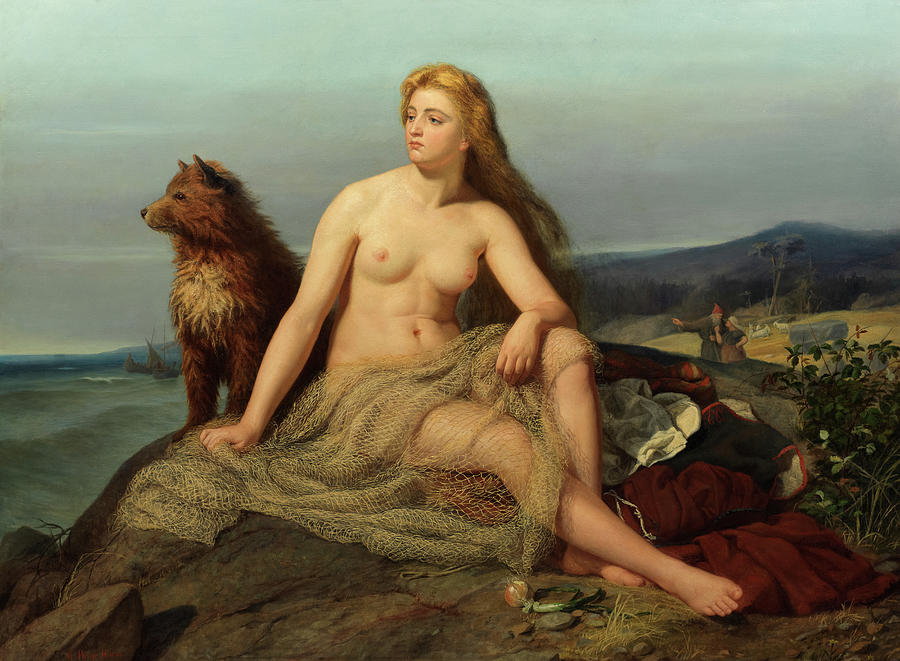
Kraka Painting by Marten Eskil Winge

KRAKA

“What shall we do with this child?” he asked.

“We will bring her up as our own, and name her Kraka, after my mother,” said his wife.

“But no one will believe that ugly old people like us can have so fair a daughter.”

“Let me manage it,” said the wife. “I will put tar on her head so that her hair will not be too long, and keep her in ragged clothes and at the hardest work.”
File:Aslaug.JPG - Wikimedia CommonsThis they did and little Aslög grew up as a beggar’s child. And as she kept strangely silent, never speaking, all people thought her dumb.

One day, when Aslög was well grown, Ragnar Lorbrok came that way, cruising along the Norway coast. The crew was out of bread and men were sent ashore to bake some at a house they saw in the distance. This house was Spangerhed, where Kraka dwelt.

She had seen the ships come up and the men land, and was ashamed to be seen by strangers as she was, so she washed herself and combed her hair, though she had been bidden never to do so. So long and thick had her hair grown that it reached to the ground and covered her completely.

When the cooks came to bake their bread they were so surprised at the beauty of the maiden that they let the loaves burn while looking at her, and on being blamed for this carelessness on their return to the ship said they could not help it, for they had been bewitched by the face of the loveliest maiden they had ever gazed upon.

“She cannot be as lovely as Tora was,” said Ragnar.

“There was never a lovelier woman,” they declared, and Ragnar was so struck by their story that he sent messengers ashore to learn if they were telling the truth. If it were so, he said, if Kraka were as beautiful as Tora, they were bidden to bring her to him neither dressed nor undressed, neither fasting nor satisfied, neither alone nor in company. The messengers found the maiden as fair as the cooks had said and repeated the king’s demand.

“Your king must be out of his mind, to send such a message,” said the beggar’s wife; but Kraka told them that she would come as their king wished, but not until the next morning.

The next day she came to the shore where the ship lay. She was completely covered with her splendid hair, worn like a net around her. She had eaten an onion before coming, and had with her the old beggar’s sheep dog; so that she had fulfilled Ragnar’s three demands.

Her wit highly pleased Ragnar and he asked her to come on board, but she would not do so until she had been promised peace and safety. When she was taken to the cabin Ragnar looked at her in delight. He thought that she surpassed Tora in beauty, and offered a prayer to Odin, asking for the love of the maiden. Then he took the gold-embroidered dress which Tora had worn and offered it to Kraka, saying in verse, in the fashion of those times:

“Will you have Tora’s robe? It suits you well.

Her white hands have played upon it.

Lovely and kind was she to me until death.”

Kraka answered, also in verse:

“I dare not take the gold-embroidered robe which adorned Tora the fair.

It suits not me. Kraka am I called in coal-black baize.

I have ever herded goats on the stones by the sea-shore.”

“And now I will go home,” she added. “If the king’s mind does not change he can send for me when he will.”

Then she went back to the beggar’s cottage and Ragnar sailed in his ship away.

Ragnar Lothbrok: A Fearless Warrior of the Vikings with His True Story -  NSF - Music Magazine

Of course every one knows without telling what came from such an invitation. It was not long before Ragnar was back with his ship and he found Kraka quite ready to go with him. And when they reached his home a splendid entertainment was given, during which the marriage between Ragnar and Kraka took place, everything being rich and brilliant and all the great lords of the kingdom being present. It will be seen that, though the Princess Aslög pretended to be dumb during her years of youthful life in the beggar’s cottage, she found her voice and her wits with full effect when the time came to use them.

ArtStation - Aslaug, Arkenstellar *

She was now the queen of a great kingdom, and lived for many years happily with her husband Ragnar. And among her children were two sons who were very different from other men. The oldest was called Iwar. He grew up to be tall and strong, though there were no bones in his body, but only gristle, so that he could not stand, but had to be carried everywhere on a litter. Yet he was very wise and prudent. The second gained the name of Ironside, and was so tough of skin that he wore no armor in war, but fought with his bare body without being wounded. To the people this seemed the work of magic. There were two others who were like other men.

Since the older brothers, the sons of Tora, had long been notable as warriors, the younger brothers, when they grew up, became eager to win fame and fortune also, and they went abroad on warlike expeditions, fighting many battles, winning many victories, and gaining much riches.
Ivar the Boneless Biography - Facts, Childhood, Family Life, Achievements &  Timeline

IWAR THE BONELESS

But Iwar, the boneless one, was not satisfied with this common fighting, but wanted to perform some great exploit, that would give them a reputation everywhere for courage. There was the town of Hvitaby (now Whitby, in Yorkshire, England), which many great warriors had attacked, their father among them, but all had been driven back by the power of magic or necromancy. If they could take this stronghold it would give them infinite honor, said Iwar, and to this his brothers agreed.

To Hvitaby they sailed, and leaving their younger brother Ragnwald in charge of the ships, because they thought him too young to take part in so hard a battle, they marched against the town. The place was ably defended, not only by men but by two magical heifers, their charm being that no man could stand before them or even listen to their lowing. When these beasts were loosed and ran out towards the troops, the men were so scared by the terrible sound of their voices that Ironside had all he could do to keep them from a panic flight, and many of them fell prostrate. But Iwar, who could not stand, but was carried into battle upon shields, took his bow and sent his arrows with such skill and strength that both the magic heifers were slain.

Who Was Viking Warrior Ivar the Boneless? | HowStuffWorks

Then courage came back to the troops and the townsmen were filled with terror. And in the midst of the fighting Ragnwald came up with the men left to guard the ships. He was determined to win some of the glory of the exploit and attacked the townsmen with fury, rushing into their ranks until he was cut down. But in the end the townsmen were defeated and the valiant brothers returned with great honor and spoil, after destroying the castle. Thus it was that the sons of Kraka gained reputation as valiant warriors.

But meanwhile Kraka herself was like to lose her queenly station, for Ragnar visited King Osten of Upsala who had a beautiful daughter named Ingeborg. On seeing her, his men began to say that it would be more fitting for their king to have this lovely princess for his wife, instead of a beggar’s daughter like Kraka. Ragnar heard this evil counsel, and was so affected by it that he became betrothed to Ingeborg. When he went home he bade his men to say nothing about this betrothal, yet in some way Kraka came to know of it. That night she asked Ragnar for news and he said he had none to tell.

“If you do not care to tell me news,” said Kraka, “I will tell you some. It is not well done for a king to affiance himself to one woman when he already has another for his wife. And, since your men chose to speak of me as a beggar’s daughter, let me tell you that I am no such thing, but a king’s daughter and of much higher birth than your new love Ingeborg.”

“What fable is this you tell me?” said Ragnar. “Who, then, were your parents?”

“My father was King Sigurd Fafnisbane and my mother was the Amazon Brynhilda, daughter of King Budle.”

“Do you ask me to believe that the daughter of these great people was named Kraka and brought up in a peasant’s hut?”

The queen now told him that her real name was Aslög and related all the events of her early life. And as a sign that she spoke the truth, she said that her next child, soon to be born, would be a son and would have a snake in his eye.

It came out as she said, the boy, when born, having the strange sign of which she had spoken, so that he was given a name that meant Sigurd Snake-in-Eye. So rejoiced was Ragnar at this that he ceased to think of Ingeborg and all his old love for Kraka, or Aslög as she was now called, came back.

The remainder of the lives of Ragnar and Aslög and of their warlike sons is full of valiant deeds and magic arts, far too long to be told here, but which gave them a high place in the legendary lore of the north, in which Ragnar Lodbrok is one of the chief heroes. At length Ragnar was taken prisoner by King Ethelred of England and thrown into a pit full of serpents, where he died. Afterwards Iwar and his brothers invaded England, conquered that country, and avenged their father by putting Ethelred to death by torture. Iwar took England for his kingdom and the realms of the north were divided among his brothers, and many more were the wars they had, until death ended the career of these heroes of northern legend.

Carruthers crest on flag-v2 (1)

OFFICIAL AND REGISTEREDL CLAN CARRUTHERS CCIS SINCE 1983-CLAN OF OUR ANCESTORS

SCOTTISH CLAN – IRISH CLAN – NORSE CLAN

Preserving Our Past!    Recording Our Present!  Informing Our Future!

The Ancient and Honorable Carruthers Clan International Society LLC

carruthersclan1@gmail.com                carrothersclan@gmail.com

WIDE BANNER with NEW CREST


SCANDINAVIAN HISTORY #9
CHARLES MORRIS

CLAN CARRUTHERS INT SOCIETY CCIS HISTORIAN AND GENEALOGIST


You can find us on our main facebook pages at :

SILVER WINGS-https://www.facebook.com/CarruthersClanLLC/

GOLD WINGS – https://www.facebook.com/carrutherscarrothers.pat.9

CLAN CARRUTHERS FAMILY HISTORY – https://www.facebook.com/CarruthersClan

CLAN CARRUTHERS CCIS – https://www.facebook.com/groups/3878691252182714

CLAN CARRUTHERS INT SOCIETY- https://www.facebook.com/groups/394653845137709

CLAN CARRUTHERS – BORDER REIVERS – https://www.facebook.com/groups/434959914239094

Disclaimer Ancient and Honorable Carruthers Clan International Societ
OUR ANCESTORS, SEA KINGS AND ROVERS, The Viking Age, Uncategorized, Varangians

THE RAIDS OF THE SEA KINGS – CLAN CARRUTHERS CCIS

cropped-wide-banner-with-new-crestnorse

SEA KINGS

RAIDS OF THE SEA ROVERS

While Central and Southern Europe was actively engaged in wars by land, Scandinavia, that nest of pirates, was as actively engaged in wars by sea, sending its armed galleys far to the south, to plunder and burn wherever they could find footing on shore. Not content with plundering the coasts, they made their way up the streams, and often suddenly appeared far inland before an alarm could be given. Wherever they went, heaps of the dead and the smoking ruins of habitations marked their ruthless course. They did not hesitate to attack fortified cities, several of which fell into their hands and were destroyed. They always fought on foot, but such was their strength, boldness, and activity that the heavy-armed cavalry of France and Germany seemed unable to endure their assault, and was frequently put to flight. If defeated, or in danger of defeat, they hastened back to their ships, from which they rarely ventured far and rowed away with such speed that pursuit was in vain. For a long period they kept the Atlantic and Mediterranean coasts of Europe in such terror that prayers were publicly read in the churches for deliverance from them, and the sight of their dragon beaked ships filled the land with terror.

On This Day In History: 'Sea King' Ragnar Lodbrok Seizes Paris - On March  28, 845 - Ancient Pages

SEA KINGS SEIZE PARIS

In 845 a party of them assailed and took Paris, from which they were bought off by the cowardly and ineffective method of ransom, seven thousand pounds of silver being paid them. In 853 another expedition, led by a leader named Hasting, one of the most dreaded of the Norsemen, again took Paris, marched into Burgundy, laying waste the country as he advanced, and finally took Tours, to which city much treasure had been carried for safe-keeping. Charles the Bald, who had bought off the former expedition with silver, bought off this one with gold, offering the bold adventurer a bribe of six hundred and eighty-five pounds of the precious metal, to which he added a ton and a half of silver, to leave the country.

River Kings — were the Vikings really violent? | Financial Times

From France, Hasting set sail for Italy, where his ferocity was aided by a cunning which gives us a deeper insight into his character. Rome, a famous but mystical city to the northern pagans, whose imaginations invested it with untold wealth and splendor, was the proposed goal of the enterprising Norseman, who hoped to make himself fabulously wealthy from its plunder. With a hundred ships, filled with hardy Norse pirates, he swept through the Strait of Gibraltar and along the coasts of Spain and France, plundering as he went till he reached the harbor of Lucca, Italy.

As to where and what Rome was, the unlettered heathen had but the dimmest conception. Here before him lay what seemed a great and rich city, strongly fortified and thickly peopled. This must be Rome, he told himself; behind those lofty walls lay the wealth which he so earnestly craved; but how could it be obtained? Assault on those strong fortifications would waste time, and perhaps end in defeat. If the city could be won by stratagem, so much the better for himself and his men.

The shrewd Norseman quickly devised a promising plan within the depths of his astute brain. It was the Christmas season, and the inhabitants were engaged in the celebration of the Christmas festival, though, doubtless, sorely troubled in mind by that swarm of strange-shaped vessels in their harbor, with their stalwart crews of blue-eyed plunderers.

Word was sent to the authorities of the city that the fleet had come thither from no hostile intent, and that all the mariners wished was to obtain the favor of an honorable burial-place for their chieftain, who had just died. If the citizens would grant them this, they would engage to depart after the funeral without injury to their courteous and benevolent friends. The message—probably not expressed in quite the above phrase—was received in good faith by the unsuspecting Lombards, who were glad enough to get rid of their dangerous visitors on such cheap terms, and gratified to learn that these fierce pagans wished Christian burial for their chief. Word was accordingly sent to the ships that the authorities granted their request, and were pleased with the opportunity to oblige the mourning crews.

Not long afterwards a solemn procession left the fleet, a coffin, draped in solemn black, at its head, borne by strong carriers. As mourners there followed a large deputation of stalwart Norsemen, seemingly unarmed, and to all appearance lost in grief. With slow steps they entered the gates and moved through the streets of the city, chanting the death-song of the great Hasting, until the church was reached, and they had advanced along its crowded aisle to the altar, where stood the priests ready to officiate at the obsequies of the expired freebooter.

The coffin was set upon the floor, and the priests were about to break into the solemn chant for the dead, when suddenly, to the surprise and horror of the worshippers, the supposed corpse sprang to life, leaped up sword in hand, and with a fierce and deadly blow struck the officiating bishop to the heart. Instantly the seeming mourners, who had been chosen from the best warriors of the fleet, flung aside their cloaks and grasped their arms, and a carnival of death began in that crowded church.

It was not slaughter, however, that Hasting wanted, but plunder. Rushing from the church, the Norsemen assailed the city, looting with free hand, and cutting down all who came in their way. No long time was needed by the skilful freebooters for this task, and before the citizens could recover from the mortal terror into which they had been thrown, the pagan plunderers were off again for their ships, laden with spoil, and taking with them as captives a throng of women and maidens, the most beautiful they could find.

This daring affair had a barbarous sequel. A storm arising which threatened the loss of his ships, the brutal Hasting gave orders that the vessels should be lightened by throwing overboard plunder and captives alike. Saved by this radical method, the sea-rovers quickly repaid themselves for their losses by sailing up the Rhone, and laying the country waste through many miles of Southern France.

The end of this phase of Hasting’s career was a singular one. In the year 860 he consented to be baptized as a Christian, and to swear allegiance to Charles the Bald of France, on condition of receiving the title of Count of Chartres, with a suitable domain. It was a wiser method of disarming a redoubtable enemy than that of ransoming the land, which Charles had practised with Hasting on a previous occasion. He had converted a foe into a subject, upon whom he might count for defence against those fierce heathen whom he had so often led to battle.

Viking Sea King Photograph by Granger

While France, England, and the Mediterranean regions formed the favorite visiting ground of the Norsemen, they did not fail to pay their respects in some measure to Germany, and during the ninth century, their period of most destructive activity, the latter country suffered considerably from their piratical ravages. Two German warriors who undertook to guard the coasts against their incursions are worthy of mention. One of these, Baldwin of the Iron Arm, Count of Flanders, distinguished himself by seducing Judith, daughter of Charles the Bald of France, who, young as she was, was already the widow of two English kings, Ethelwolf and his son Ethelbold. Charles was at first greatly enraged, but afterwards accepted Baldwin as his son-in-law, and made him lord of the district. The second was Robert the Strong, Count of Maine, a valiant defender of the country against the sea-kings. He was slain in a bloody battle with them, near Anvers, in 866. This distinguished warrior was the ancestor of Hugh Capet, afterwards king of France.

For some time after his death the Norsemen avoided Germany, paying their attentions to England, where Alfred the Great was on the throne. About 880 their incursions began again, and though they were several times defeated with severe slaughter, new swarms followed the old ones, and year by year fresh fleets invaded the land, leaving ruin in their paths.

Up the rivers they sailed, as in France, taking cities, devastating the country, doing more damage each year than could be repaired in a decade. Aix-la-Chapelle, the imperial city of the mighty Charlemagne, fell into their hands, and the palace of the great Charles, in little more than half a century after his death, was converted by these marauders into a stable. Well might the far-seeing emperor have predicted sorrow and trouble for the land from these sea-rovers, as he is said to have done, on seeing their many-oared ships from a distance. Yet even his foresight could scarcely have imagined that, before he was seventy years in the grave, the vikings of the north would be stabling their horses in the most splendid of his palaces.

1,846 Viking Raid Stock Photos, Pictures & Royalty-Free Images - iStock

The rovers attacked Metz, and Bishop Wala fell while bravely fighting them before its gates. City after city on the Rhine was taken and burned to the ground. The whole country between Liege, Cologne, and Mayence was so ravaged as to be almost converted into a desert. The besom of destruction, in the hands of the sea-kings, threatened to sweep Germany from end to end, as it had swept the greater part of France.

The impunity with which they raided the country was due in great part to the indolent character of the monarch. Charles the Fat, as he was entitled, who had the ambitious project of restoring the empire of Charlemagne, and succeeded in combining France and Germany under his sceptre, proved unable to protect his realm from the pirate rovers. Like his predecessor, Charles the Bald of France, he tried the magic power of gold and silver, as a more effective argument than sharpened steel, to rid him of these marauders. Siegfried, their principal leader, was bought off with two thousand pounds of gold and twelve thousand pounds of silver, to raise which sum Charles seized all the treasures of the churches. In consideration of this great bribe the sea-rover consented to a truce for twelve years. His brother Gottfried was bought off in a different method, being made Duke of Friesland and vassal of the emperor.

These concessions, however, did not put an end to the depredations of the Norsemen. There were other leaders than the two formidable brothers, and other pirates than those under their control, and the country was soon again invaded, a strong party advancing as far as the Moselle, where they took and destroyed the city of Treves. This marauding band, however, dearly paid for its depredations. While advancing through the forest of Ardennes, it was ambushed and assailed by a furious multitude of peasants and charcoal-burners, before whose weapons ten thousand of the Norsemen fell in death.

This revengeful act of the peasantry was followed by a treacherous deed of the emperor, which brought renewed trouble upon the land. Eager to rid himself of his powerful and troublesome vassal in Friesland, Charles invited Gottfried to a meeting, at which he had the Norsemen treacherously murdered, while his brother-in-law Hugo was deprived of his sight. It was an act sure to bring a bloody reprisal. No sooner had news of it reached the Scandinavian north than a fire of revengeful rage swept through the land, and from every port a throng of oared galleys put to sea, bent upon bloody retribution. Soon in immense hordes they fell upon the imperial realm, forcing their way in mighty hosts up the Rhine, the Maese, and the Seine, and washing out the memory of Gottfried’s murder in torrents of blood, while the brand spread ruin far and wide.

Vikings: Re-writing the legend of Ragnar for the TV age

The chief attack was made on Paris, which the Norsemen invested and besieged for a year and a half. The march upon Paris was made by sea and land, the marauders making Rouen their place of rendezvous. From this centre of operations Rollo—the future conqueror and Duke of Normandy, now a formidable sea-king—led an overland force towards the French capital, and on his way was met by an envoy from the emperor, no less a personage than the Count of Chartres, the once redoubtable Hasting, now a noble of the empire.

“Valiant sirs,” he said to Rollo and his chiefs, “who are you that come hither, and why have you come?”

( Rollo is a Carruthers Ancestor, and we have a large number of ancestors in Gutland, and they were considered Danes.   Gutland and Jutland were one in the same, and had land that connected them, now is water)

“We are Danes,” answered Rollo, proudly; “all of us equals, no man the lord of any other, but lords of all besides. We are come to punish these people and take their lands. And you, by what name are you called?”

23 Viking ship ideas | viking ship, vikings, norse vikings

“Have you not heard of a certain Hasting,” was the reply, “a sea-king who left your land with a multitude of ships, and turned into a desert a great part of this fair land of France?”

“We have heard of him,” said Rollo, curtly. “He began well and ended badly.”

“Will you submit to King Charles?” asked the envoy, deeming it wise, perhaps, to change the subject.

“We will submit to no one, king or chieftain. All that we gain by the sword we are masters and lords of. This you may tell to the king who has sent you. The lords of the sea know no masters on land.”

Hasting left with his message, and Rollo continued his advance to the Seine. Not finding here the ships of the maritime division of the expedition, which he had expected to meet, he seized on the boats of the French fishermen and pursued his course. Soon afterwards a French force was met and put to flight, its leader, Duke Ragnold, being killed. This event, as we are told, gave rise to a new change in the career of the famous Hasting. A certain Tetbold or Thibaud, of Northman birth, came to him and told him that he was suspected of treason, the defeat of the French having been ascribed to secret information furnished by him. Whether this were true, or a mere stratagem on the part of his informant, it had the desired effect of alarming Hasting, who quickly determined to save himself from peril by joining his old countrymen and becoming again a viking chief. He thereupon sold his countship to Tetbold, and hastened to join the army of Norsemen then besieging Paris. As for the cunning trickster, he settled down into his cheaply bought countship, and became the founder of the subsequent house of the Counts of Chartres.

The siege of Paris ended in the usual manner of the Norseman invasions of France,—that of ransom. Charles marched to its relief with a strong army, but, instead of venturing to meet his foes in battle, he bought them off as so often before, paying them a large sum of money, granting them free navigation of the Seine and entrance to Paris, and confirming them in the possession of Friesland. This occurred in 887. A year afterwards he lost his crown, through the indignation of the nobles at his cowardice, and France and Germany again fell asunder.

44 photos et images de Ragnar Vikings - Getty Images

The plundering incursions continued, and soon afterwards the new emperor, Arnulf, nephew of Charles the Fat, a man of far superior energy to his deposed uncle, attacked a powerful force of the piratical invaders near Louvain, where they had encamped after a victory over the Archbishop of Mayence. In the heat of the battle that followed, the vigilant Arnulf perceived that the German cavalry fought at a disadvantage with their stalwart foes, whose dexterity as foot-soldiers was remarkable. Springing from his horse, he called upon his followers to do the same. They obeyed, the nobles and their men-at-arms leaping to the ground and rushing furiously on foot upon their opponents. The assault was so fierce and sudden that the Norsemen gave way, and were cut down in thousands, Siegfried and Gottfried—a new Gottfried apparently—falling on the field, while the channel of the Dyle, across which the defeated invaders sought to fly, was choked with their corpses.

This bloody defeat put an end to the incursions of the Norsemen by way of the Rhine. Thenceforward they paid their attention to the coast of France, which they continued to invade until one of their great leaders, Rollo, settled in Normandy as a vassal of the French monarch, and served as an efficient barrier against the inroads of his countrymen.

As to Hasting, he appears to have returned to his old trade of sea-rover, and we hear of him again as one of the Norse invaders of England, during the latter part of the reign of Alfred the Great.

Carruthers crest on flag-v2 (1)

OFFICIAL AND REGISTEREDL CLAN CARRUTHERS CCIS SINCE 1983-CLAN OF OUR ANCESTORS

SCOTTISH CLAN – IRISH CLAN – NORSE CLAN

Preserving Our Past!    Recording Our Present!  Informing Our Future!

The Ancient and Honorable Carruthers Clan International Society LLC

carruthersclan1@gmail.com                carrothersclan@gmail.com

WIDE BANNER with NEW CREST

GERMANIC HISTORICAL FILES #5

CLAN CARRUTHERS INT SOCIETY CCIS HISTORIAN AND GENEALOGIST

You can find us on our main facebook pages at :

SILVER WINGS-https://www.facebook.com/CarruthersClanLLC/

GOLD WINGS – https://www.facebook.com/carrutherscarrothers.pat.9

CLAN CARRUTHERS FAMILY HISTORY – https://www.facebook.com/CarruthersClan

CLAN CARRUTHERS CCIS – https://www.facebook.com/groups/3878691252182714

CLAN CARRUTHERS INT SOCIETY- https://www.facebook.com/groups/394653845137709

CLAN CARRUTHERS – BORDER REIVERS – https://www.facebook.com/groups/434959914239094

Disclaimer Ancient and Honorable Carruthers Clan International Societ
OUR ANCESTORS

CLAN CARRUTHERS CCIS – KING ROLLO THE VIKING

WIDE BANNER with NEW CREST

KING ROLLO THE VIKING

CARRUTHERS ANCESTOR

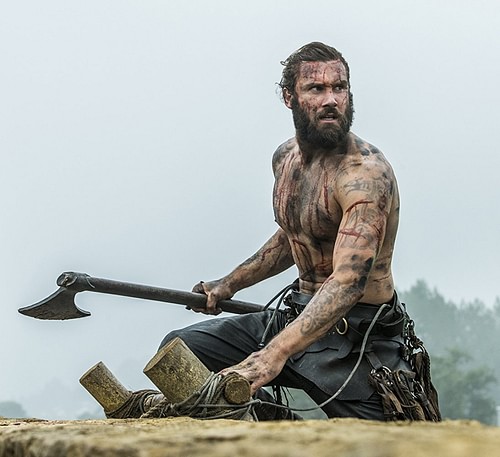
Image result for Rollo as a warrior picture

Robert I Rollo “The Viking” Prince of Norway & Duke of Normandy “Count of Rouen” Ragnvaldsson

BIRTH 14 OCT 846  Maer, Jutland, Nord-Trondelag, Norway
DEATH 17 DEC 932  Rouen, Seine, Maritime, Haute-Normandy, France

Married:

Poppa Lady Duchess of Normany De Senlis De Valois De Rennes De Bayeux

BIRTH 872  Bayeux, Calvados, Basse-Normandie, France
DEATH 930  Rouen, Seine-Maritime, Haute-Normandie, France

Rollo as a Warrior

History has many cunning passages”. – T. S. Eliot

“History . . . the portrayal of crimes and misfortunes.” – Voltaire.

Image result for Rollo as a warrior pictureThe Normans have evoked great interest from the Middle Ages to the present. Vikings who settled in Normandy, were later called Normans. A phrase, A furore normannorum, libera nos, domine (From the violence of the men from the north, O Lord, deliver us), sums up how historians of the early middle ages looked on the Vikings, for they threatened the progress of western civilization for quite some time (Logan 2003, 15).

The founder of Normandy, Rollo, was the chief of a small band of ravaging Vikings. He once had a dream where he seemed to behold himself placed on a mountain far higher than the highest, in a Frankish dwelling. And on the summit of this mountain he saw a spring of sweet-smelling water flowing, and himself washing in it, and by it made whole from the contagion of leprosy . . . and finally, while he was still staying on top of that mountain, he saw about the base of it many thousands of birds of different kinds and various colours, but with red wings extending in such numbers and so far and so wide that he could not catch sight of where they ended, however hard he looked. And they went one after the other in harmonious incoming flights and sought the spring on the mountain, and washed themselves, swimming together as they do when rain is coming; and when they had all been anointed by this miraculous dipping, they all ate together in a suitable place, without being separated into genera or species, and without any disagreement or dispute, as if they were friends sharing food. And they carried off twigs and worked rapidly to build nests; and willing[ly] yielded to his command in the vision. (From Hicks, 2016, Introduction).

In Dudo of Saint-Quentin’s History of the Normans, Rollo took heed of the omens in the dream and founded a territory that became the duchy of Normandy, uniting various groups under his lead. Later chroniclers recounted how Rollo’s descendants and those of his followers conquered and ruled kingdoms in England and Sicily and Antioch and further, and led armies on crusade. (Ibid.)

Norwegian-Icelandic sources too tell of a large Viking called Rolv Ganger (Rolv Walker), aka Rollo (English) or Rollon (French). Outlawed in Viking Norway for raiding where he was not allowed to by King Harld Fairhair, Rollo was banished from Norway. He was too big for small horses to carry him, a saga tells. Viking horses may have been quite small.

Rolv and his soldiers secured a permanent foothold on Frankish soil in the valley of the lower Seine, and Rolv became the first ruler of Normandy, France, after King Charles the Simple ceded lands to Rollo and his folks in a charter of 918. In exchange, Rollo agreed to end his brigandage and protect the Franks against future Viking raids along the Seine and around it. He also converted to Christianity in 912, and probably died between 928 and 932. Rollo’s descendants were dukes of Normandy until 1202, and his granson’s grandson’s son Guillaume (dead 1087) conquered England in 1066 (William the Conqueror). (Claus Krag, SNL/Norsk biografisk leksikon, “Rollo Gange-Rolv Ragnvaldsson”.

Two more grants followed; one in 924 and one in 933 – land between the Epte and the sea and parts of Brittany. Relatives of Rollo and his men as well as other Northmen followed, for the pastures were green and lush, there was fish in the sea and rivers, and the climate better than in the North. The formerly raided Normandy became protected and became the best part of France for centuries. Normans also took over England and Wales after a descendant of Rollo, known as William the Conqueror, took over England in 1066 fra 1066 and became king of England. Normans also conquered the southern, richest half of Italy, including Sicily, and several other areas bordering on the Mediterranean Sea. (WP, “Rollo”)

Rollo reigned over the duchy of Normandy until at least 928. He was succeeded by his son, William Longsword. The offspring of Rollo and his followers became known as Normans, “North-men”, men from the North.

After the Norman conquest of England in 1066 and their conquest of southern Italy and Sicily over the following two centuries, their descendants came to rule Norman England (the House of Normandy), the Kingdom of Sicily (the Kings of Sicily) as well as the Principality of Antioch from the 10th to 12th century. To enlarge on that: Bohemond I (ca. 1054–1111) of the Norman Hauteville family was the Prince of Taranto from 1089 to 1111 and the Prince of Antioch from 1098 to 1111. He was a leader of the First Crusade. The Norman monarchy he founded in Antioch outlasted those of England and of Sicily. (WP, “Bohemond I of Antioch”)

Two spouses are reported for Rollo:

(1) Poppa, said by chronicler Dudo of Saint-Quentin to have been a daughter of Count Berenger, captured during a raid at Bayeux. She was his concubine or wife. They had children: (a) William Longsword, born “overseas” (b) Gerloc, wife of William III, Duke of Aquitaine; Dudo fails to identify her mother, but the later chronicler William of Jumieges makes this explicit. (c) (perhaps) Kadlin, said by Ari the Historian to have been daughter of Ganger Hrolf, traditionally identified with Rollo. She married a Scottish King called Bjolan, and had at least a daughter called Midbjorg. She was taken captive by and married Helgi Ottarson.

(2) (traditionally) Gisela of France (d. 919), the daughter of Charles III of France – according to the Norman chronicler Dudo of St. Quentin. However, this marriage and Gisela herself are unknown to Frankish sources. Some details can be hard to verify.

Clive Standen as Rollo of Normandy (by Jonathan Hession, Copyright, fair use)

ROLLO RULED WITH A VIKING CODE OF LAW BASED UPON THE CONCEPT OF PERSONAL HONOR & INDIVIDUAL RESPONSIBILITY.

Was Rollo Other than Norwegian?

The Rollo story is largely historical – and that he and his men were Northmen is taken to men they were of Scandinavian origin. Norwegian-Icelandic sources have it that Rollo was Hrolf from Norway, one of the Viking raiders.

  1. The oldest evidence is in the Latin Historia Norvegiae (ca. 1180). It was written in Norway. A quotation from it follows right below the array of Norse sources.
  2. Fagrskinna‘s chapter 74 tells of William and his ancestor Rolf Ganger (Rollo). This work was written around 1220, estimatedly, and was an immediate source for the Heimskringla of Snorri Sturluson’s Heimskringla. Fagrskinna contains a vernacular history of Norway from the ninth to the twelfth centuries, and includes skaldic verses that in part have been preserved nowhere else. It has a heavy emphasis on battles. The book may have been written in Norway, either by an Icelander or a Norwegian. (Cf. Finlay 2004)
  3. In the early 1200s, the Icelander Snorri Sturluson writes about this Hrolf, in Heimskringla, Book 3, section 24; Book 7, section 19, There are stories about the arsonist father and the brothers of Rolf Ganger, at one time rulers of the Orkneys and Moere in Norway. Their tales start somewhere during the reign of King Harald Fairhair (Chaps. 27, 30-32) and say it was he who settled in Normandy. Snorri also tells that Rolv Ganger – also known as Rollo – became one ancestor of the British royal house.
  4. Other Icelandic sagas from medieval times tell of Hrolf too, as the Orkneyingers’ Saga, section 4.
  5. From the Icelandic Landnama Book (Ellwood 1898): “Rögnvald, Earl of Mæri, son of Eystein Glumra, the son of Ivar, an Earl of the Upplendings, the son of Halfdan the Old, had for wife Ragnhild, the daughter of Hrolf the Beaked; their son was Ivar, who fell in the Hebrides, fighting with King Harald Fairhair. Another son was Gaungu-Hrolf who conquered Normandy; from him are descended the Earls of Rouen and the Kings of England.” (Part 4, ch. 7)

From Historia Norvegiae, the oldest of the Norse works where Rollo is mentioned:

When Haraldr hárfagri ruled in Norway some vikings of the kin of a very mighty prince, Rognvaldr, crossed the Sólund Sea with a large fleet, drove the Papar [monks and the picts, called Peti here] from their long-established homes [the Orkney Islands], destroyed them utterly and subdued the islands under their own rule. With winter bases thus provided, they sallied forth all the more securely in summer and imposed their harsh sway now on the English, now on the Scots, and sometimes on the Irish, so that Northumbria in England, Caithness in Scotland, Dublin and other coastal towns in Ireland were brought under their rule. In this company was a certain Hrólfr, called Gongu-Hrólfr by his comrades because he always travelled on foot, his immense size making it impossible for him to ride. With a few men and by means of a marvellous stratagem he took Rouen, a city in Normandy. He came into a river with fifteen ships, where each crew member dug his part of a trench which was then covered by thin turves, simulating the appearance of firm ground. They then arrayed themselves on the landward side of the trenched ground and advanced prepared for battle. When the townsmen saw this, they met the enemy in head-on attack, but these feigned flight as if racing back to their ships. The mounted men, pursuing them faster than the rest, all fell in heaps into the hidden trenches, their armoured horses with them, where the Norwegians slaughtered them with deadly hand. So, with the flight of the townsmen, they freely entered the city and along with it gained the whole region, which has taken its name of Normandy from them. Having obtained rule over the realm, this same Hrólfr married the widow of the dead count, by whom he had William, called Longspear, the father of Richard, who also had a son with the same name as himself. The younger Richard was the father of William the Bastard, who conquered the English. He was the father of William Rufus and his brother Henry . . . When established as count of Normandy Hrólfr invaded the Frisians with a hostile force and won the victory, but soon afterwards he was treacherously killed in Holland by his stepson. (Phelpstead 2008, 8-9)

Dr Claus Krag (born 1943) is a Norwegian specialist in medieval Norwegian history, and at present (2018) professor emeritus at Telemark University College. Krag maintains that what Dudo writes of Rollo – Dudo tells he was a Viking from an alpine Dacia – is “totally unreliable”, and that Dudo’s historic and geographic information “is by no means right”. Dr Krag also notes that in French works younger than Dudo’s book, Rollo is presented as a Norwegian.

Based on the much unclear Dudo about an alps-surrounded “Dacia”, some Danes say Rollo was Danish. However, Denmark is flat. Attempts to settle the question by analysis of DNA profiles of likely Rollo descendants have failed so far. [◦”Skeletal shock for Norwegian researchers at Viking hunting”]

Folk Stories Around Rollo

Several Scandinavian folktales front similar basic “success recipes” as those of battling tribes in search of new areas – Saxons, Angles, Danes and other Vikings. It suggests that many folktale heroes walk in shoes quite like those of Rollo by degrees and through much similar stages where success often depends on combat and getting valuables. Those were the times.

In the course of centuries, stories and myths may grow for such as glorifying ends. Norman bards developed romances that venerated kings. However, having a king is not a great good, according to 1 Samuel 8; 10 in the Old Testament: the king is portrayed as a stealing enemy on top. Taxes continue a tradition . . . Also, immodest royalty may breed dependence and un-normal subservience with or without near-symbiotic and half-neurotic servility.

In 1 Samuel 8:11-18 we read how bad a Jewish king will be:

This is what the king who will reign over you will claim as his rights: He will take your sons and make them serve with his chariots and horses, and they will run in front of his chariots. Some he will assign to be commanders of thousands and commanders of fifties, and others to plow his ground and reap his harvest, and still others to make weapons of war and equipment for his chariots. He will take your daughters to be perfumers and cooks and bakers. He will take the best of your fields and vineyards and olive groves and give them to his attendants. He will take a tenth of your grain and of your vintage and give it to his officials and attendants. Your male and female servants and the best of your cattle and donkeys he will take for his own use. He will take a tenth of your flocks, and you yourselves will become his slaves. When that day comes, you will cry out for relief from the king you have chosen, but the Lord will not answer you in that day.

But the people refused to listen to Samuel. “No!” they said. “We want a king over us.” [Highlighting added]

Rollo In Normandie

Map of France, 10th Century CE

The historian Reginald Allen Brown (1924–89) has written extensively about Normans and the Norman conquest. He is rendered in the following:

Normandy was created by the three consecutive grants of 911, 924 and 933″. (Brown 1985, 15) Normandy was massively colonised by Scandinavians. Rollo and his successors, as rulers of Normandy, obtained the title of count and valuable rights from before, along with widespread domains. (Cf. Brown 1985, 17-18)

Their buildings seem to document remarkable strength or solidity. The churches were much like bastions. But the duke of Rouen controlled the whole church and his bishops owed him military service for their lands – (Brown 1985, 26)

“From (their) Scandinavian inheritance the Normans derived their sea-faring, much of their trade and commercial prosperity which they shared with the Nordic world, their love of adventure, their wanderlust which led to the great period of Norman emigration in the eleventh century, their dynamic energy, and above all perhaps, their powers of assimilation, of adoption and adaptation.” (Brown 1985,18-19.)

(In AD 911) Charles the Simple, king of the west Franks, granted to a band of Vikings, operating in the Seine valley under Rollo their leader, territory corresponding to Upper or Easter Normandy. To this was subsequently added by two further grants, first the district of Bayeux, and the districts of Exmes and Seez in 924, and second the districts of Coutances and Avranches in 933 in the time of William Longsword, son and successor of Rollo. (Brown 1985, 15) (2)

And from the French Histoire de la Normandie (1862) we find, in the fourth chapter, how Rollo, son of the Norwegian Rognevald, was made an outlaw by the Norwegian king Harald Harfager. He arrived at Rouen with his companions. The inhabitants spontaneously submitted to the him and his men. King Charles at first wanted to fight the Viking, but dropped it. Instead they bargained – Rollo won, he got land and permanent welcome. (Barthelemy 1862, 80 ff)

Rollo of Normandy Statue

Rollo of Normandy Statue

Brown puts the matter into relief: “Normans were pagans when they came (and they continued to come long after 911).” (Brown 1985, 24). But their leader, the Viking Rollo, agreed to getting baptised, and many others followed. “The Seine Vikings became Christian Normans, the poachers turned gamekeepers. Revival, characteristically in this monastic age, came first to the monasteries. Jumieges was restored by William Longsword (927–43), son of Rollo, who is said to have wanted to become a monk there himself.” (Brown 1985, 21)

In short time the Normans got the back-up of their astute castles and strongholds, helped themselves to most of it – often they were served by ditches and stockades too. (Brown 1985, 37, 37n)

[It is thought that Rollo showed exceptional skills in navigation, warfare, leadership, and administration. He abdicated to his son Guillame (William) and died in a monastery in 933. Among his people he was for hundreds of years the personification of justice and good government under law. Others, who thought differently, found him cruel and arrogant.]

His son Guillame Longue-Epee (William Longsword) succeeded him. The third duke was Richard sans Peur (the Fearless), and there were many intrigues and hard fights. This Richard died and was succeeded by Richard 2 who massacred Saxons in England at war. The French king Robert became the ally of Richard 2. After his death, Richard 3 succeeded him and died prematurely. Robert le Diable succeeded him and, before he died in Terre-Sainte, became the father of Guillame le Conquerant: William the Conqueror. (Barthelemy 1862, 80 ff)

We find the family tree of William the Conqueror in the book of the historian R. Allen Brown. It looks like this:

  • Richard 1 (ruled: 942–96)
  • Richard 2 the Good (ruled: 996-1026)
  • Richard 3 (ruled: 1026–27)
  • Robert 1 the Magnificent /le Diable (ruled: 1027–35)
  • William the Bastard / the Conqueror (ruled: 1035–87).

Rollo’s great-granddaughter, Emma married two kings of England, Æhelred the Unready and Knut who was also king of Norway and Denmark. Her son, Edward the Confessor, from the first marriage, was King of England from 1042 to 1066.

A few more dukes of Normandy may be added for the sake of survey of that dynasty line that ruled over Normandy and its English (British) domain:

  • Robert 2 (ruled from 1087)
  • Henry 1 (ruled from 1106, King of the English (1100-35)
  • Henry II, 1135, King of the English (1135-)

“The origins of Normandy in the first decades of the tenth century also reveal the double inheritance of the Normans, from the Scandinavian world from whence they came and from the ancient province of Roman, Frankish and Carolingian Gaul which now they colonised.” (Brown 1985, 17)

“[I]n Normandy by the mid-eleventh century . . . they had adopted Frankish religion and law, Frankish social customs, political organisation and warfare, the new monasticism.” (Brown 1985, 19)

“The Norman monasteries were, by and large, distinguished . . . new . . . vibrant with . . . careless rapture of spiritual endeavour”. The (Normans) became great spirituals – intensely aristocratic. (Brown 1985, 23)

Normans restored and built on monasticism and left robust architectural monuments. Some are still there, more or less intact. The Tower of London was started by Normans, for example. King William had much of it built. “The tower at Rouen was built by Richard 1 (943Rw11;96) and is glimpsed from time to time in the reign of his successor and thereafter . . .. It may have been the prototype for the great Norman towers at Colchester and London. (Brown 1969, 37, 37n) (4)

Normans went on and built monastic churches at such places as Jumieges and many other places. “They added their cathedrals at Rouen, Bayeux [etc.] Many of these major works of Norman Romanesque architecture survive in whole or part”. (Brown 1985, 26)

Some Normans (including Norman clergy) were patrons of the arts and scholarship . . . and almost all of them were mighty builders.” (Brown 1985, 25)

The French Version

Statue of Rollo of Normandy, Falaise

Statue of Rollo of Normandy, Falaise

In 820 peasants . . .along the Seine saw in the distance ten or so curious war ships called—Drakkar because of the animal sculpted into the prow or the stern, which was actually a dragon—the men from the North didn’t travel with their women as they could easily find them on the spot!

Swearing by the names of Thor and Odin—Vikings plundered, pillaged, raped and slaughtered up until 911 when the famous treaty of Saint Clair sur Epte was signed between the Frank king Charles the Simple and Rollon or Rolf, chief of the men from the North.

On the whole our invaders calmed down, adopting a somewhat bourgeois attitude to life in this beautiful region which was to become Normandy.

Soon it was the time for William the Conqueror who, on October 14th, 1066 won the battle of Hastings along with a kingdom—William’s heirs were known as the Plantagenets, and they reigned over Normandy and England. In 1189, Richard the Lionheart divided the double crown.

Rollo and Dudo

Rollo was the son of Earl Ragnvald of More, Norse sagas tell. Two of his brothers were Ivar and Tore. Three more were Hallad, Einar and Rollaug. Hallad and Einar in due time became earls of the Orkneys, each in his turn. [eg, Harald Fairhair’s Saga]

After being made an outcast by the tyrant king Harald Harfager, Rolf voyaged to the western isles. Obviously he could count on support from relatives. The earl of the Orkneys was his paternal uncle, succeeded by that uncle’s son, that is, Rollo’s cousin, and later again by his own brothers Hallad and Einar.

The old sources hold that Rolv took his residence in certain tracts of what today is the domain of Scotland. The Landnamaboka mentions Rolv got a daughter, Kathleen:

Helgi . . . harried Scotland, and took thence captives, Midbjorg, the daughter of Bjolan the King, and Kadlin, the daughter of Gaungu Hrolf or Rolf the Ganger; he married her. (Part 2, ch. 11).

Before Helgi had harried and married, Rolv of the Sagas had travelled from Scotland and the isles near it, to Valland, near the English Channel. The Vikings’ Valland consisted of the southern Netherlands, Belgium and parts of Normandy, roughly said. He took over Normandy in three steps. The Sagas identify him with the Rollo that the Frank king Charles the Simple bestowed it on.

Rollo in Alesund, Norway

Rolv Ganger converted and settled in Rouen. Next he granted many of his Viking companions ample landed property. It was feasible to go north and fetch one’s women and children and kin to the new land, for the soil was fit, there was much fish, and as members of the ruling class they were much safer or freer than those who submitted to the tyranny of Harald Fairhair and his family in Norway and its colonies in several western islands (cf. Simonnaes 1994, 43).

Normans built fortresses on strategic places, and many rustic castles were to come along with them in a short time. All able men had to serve in the Norman military forces. The formerly ruined, marauded region was turned into one of the foremost in France, and Rouen became the second largest city in France, while Hrolf became the originator of the Norman duchy. [Simonnaes 1994 39, 45-46]

Dudos’ Work

Dudo was a visiting French scholar who wrote in verse and prose about the first three rulers of Normandy and their origins. His poetry is different from that of skalds, the Norse bards. It is not complex, as theirs, and he does not glorify war so much either. He is moralistic like earlier Christian eulogists and writers of biographies of saints (Christiansen 1998, xviii). “It was hagiography that moulded his work,” Eric Christiansen aptly sums up (ibid, xxi), and, “there is no sign that Old Norse poetry was ever composed or appreciated in Normandy (1998, xvii; cf. Ross 2005).”

Dudo’s eulogising chronicle (ibid. xxv) is about one family’s rise from defeat and exile in the world of Vikings to an honoured place among the great territorial rulers of France. Dudo recounts two campaigns in England by the founder, Rollo, and a series of stirring events otherwise, including the murder of Rollo’s son William, and the kidnapping, escape and precarious early career of Dudo’s first patron, Count Richard I.

Historians on the whole have doubted much in Dudo’s book, for its historical details are inaccurate. Yet it it is virtually the only source for very early Norman history. Recently, some scholars maintain that Dudo had better be seen as a propagandist.

Dudo’s work has the nature of a romance, and has been regarded as untrustworthy on this ground by such critics as Ernst Dümmler and Georg Waitz. Further, Leah Shopkow has more recently argued that Carolingian writing, particularly two saints’ lives, the ninth-century Vita S. Germani by Heiric of Auxerre and the early tenth-century Vita S. Lamberti by Stephen of Liége, provided models for Dudo’s work. (WP, “Dudo of Saint-Quentin”)

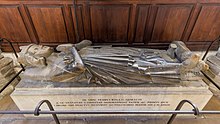
Rollo Grave at the Cathederal of Rouen

New editions of central Norman chronicles have surfaced over the last thirty years. The History of the Normans in Eric Christiansen’s English translation (1998) is said to be “fairly true to Dudo’s often pompous, bloated style” while at the same time being readable, and accompanied by copious, explanatory notes. Christiansen recognises that Dudo is unreliable as a historical source, and he acknowledges the Scandinavian side of the early Normans. Histories of Normans have a potentially broad appeal. On the Internet there has been a version edited by Felice Lifshitz (1996).

Dudo’s content: A few observations

O thou the magnanimous, pious, and moderate!
O thou the extraordinary God-fearing man!
O thou the mangificent, upright and kindly!
O thou miraculous, goodly just man!
O thou peace-maker and offspring of God!
O thou the munificent, holy and moderate!
O thou the incarnadine merciful Richard!
O thou the the long-suffering, Richard the prudent!
O thou most famous one, Richard the comely!
O thou justiciar, Richard the mild!
– All manner of nations duly declare.
Mild one, remember what you see in the book,
Nourish your heart and your soul on these things
That you may be joined to the matter you read.

– Verses to Richard, son of the great Richard (in Christiansen 1998, 8)

A clergy view shines through.

The commisioned chronicler of the Norman dukes, Dudo, tells in Latin (ca. 1015–20) that Rollo was the son of an uncertain king in “Dacia”. ◦Gesta Normannorum:

Spread over the plentiful space from the Danube to the neighborhood of the Scythian Black Sea, do there inhabit fierce and barbarous nations, which are said to have burst forth in manifold variety like a swarm of bees from a honeycomb or a sword from a sheath, as is the barbarian custom, from the island of Scania, surrounded in different directions by the ocean. For indeed there is there a tract for the very many people of Alania, and the extremely well-supplied region of Dacia, and the very extensive passage of Greece. Dacia is the middle-most of these. Protected by very high alps in the manner of a crown and after the fashion of a city. – [From chapter 2, second paragraph in Gesta Normannorum by the chronicler Dudo ca. 1015]

Extracts from Dudo of St. Quintin’s

One thing that stand out from Dudo’s obscure and glorifying marvel is this: If what is called Dacia is surrounded by very high alps, it isn’t Denmark. His Dacia stands out as some very fertile, southern Alp tract (Balcanlike). (Steenstrup 1876, 30, 31)

Against a claim by the Danish Johannes Steenstrup in 1876, there is not one mention of Rollo in classical Danish sources. DNA analyses of Norman descendants of Rollo could have helped in finding out about his origin, but so far no fit DNA has been detected.

The Danish historian Saxo Grammaticus from about 1200, has no mention of any Danish Rollo in ◦The Danish History.

In Normandy, Rollo is celebrated as a real Viking from More on the west coast of Norway [Cf. Simonnaes 1994 35]

Rollo in Fargo, North Dakota

Historical | Fargo Public Art

In 1911, during the Norman Millennium celebrations, the city of Rouen in Normandy decided to create two copies of its Rollo statue. One replica was sent as a gift to Ålesund, Norway. The earls of Moere were headquartered somewhere nearby Ålesund, it is suggested.

The other replica went to Fargo in North Dakota. The two bronze statues were copied from an original stone statue sculpted in 1863 by Arsene Letellier, erected in Rouen in 1865.

In Fargo, the dedication ceremony in 1912 included a speaker from the French embassy in Washington. A proclamation by the mayor of Rouen, bound in leather with gold seal of the city, gold leaf and other ornamentation, read in part,

“Since these ancient times, these fierce warriors have populated and have become a hard-working people whose importance is shown by the powerful association of the Sons of Norway which has preserved the cult of memory, and which participated last year in the celebrations in the ancient Duchy of Normandy.”

The celebrations were concluded with a parade down Broadway. The Rollo statue was relocated in the 1980s and now stands in a little park. [Simonnaes 1994 39, 48, 40]

Carruthers tartan map poster-01

CLAN CARRUTHERS SINCE 1983

Preserving Our Past, Recording Our Present, Informing Our Future

Ancient and Honorable Clan Carruthers Int Society CCIS  LLc

carruthersclan1@gmail.com              carrothersclan@gmail.com

WIDER BANNER Black

CLAN CARRUTHERS INT SOCIETY CCIS HISTORIAN AND GENEALOGIST

New Blog Banner 05

You can find us on facebook at :

https://www.facebook.com/carrutherscarrothers.pat.9

https://www.facebook.com/CarruthersClan/

https://www.facebook.com/CarruthersClanLLC

Disclaimer Ancient and Honorable Carruthers Clan International Society CCIS LL