


CLAN CARRUTHERS INT SOCIETY CCIS PROMPTUS ET FIDELIS

Messages from Ancient Stones
Gotland Picture Stones from the Viking Era
Ancient stories that belong to a world far removed from technology have horses and great ships as modes of transport on this ancient Picture Stone. A round disc with six points on a shield held by a warrior on horseback represents the Sun. The carved stones were limestone and there were three notable periods with different styles.
 This Gotland Picture Stone was created over a thousand years ago, about 700 – 800 CE and like many other stones on the island still holds secrets that are yet to be uncovered or confirmed. The story on this stone is in pictures and decoding the meaning is a complex task for history and iconography. Picture motifs were inscribed on gravestones, road markers, weapons and amulets. Norse myths and legends were not written down in words and so the pictures on stone are very precious records.
My painted drawing was sketched from one ornate carved Picture Stone, one of about four hundred known today, mostly from the island of Gotland, Sweden. I have tried to be accurate with the detail. The Stones belonged to the Viking Age in Scandinavia and often reference Norse myths and legends. Ancient Stones and sometimes Rune Stones with Runic letters were erected and inscribed to commemorate fallen warriors, rituals, myths and legends.
In this keyhole shaped Picture Stone there are several panels above each other. At the top the rider could be the God Odin astride the horse Sleipnir from Norse mythology. Sleipnir was the fastest of all horses and with Odin could travel between realms. The triple triangle or Valknut behind the horseman is the magical symbol in Nordic paganism for Odin. The horseman is welcomed by a female Valkyrie offering a drinking horn, possibly as a welcome to the Otherworld paradise or afterlife known as Valhalla. Some believe it could be the Goddess Freya holding a cornucopia or cup of abundance.
In the middle band there are Runic letters from the ancient Runic Alphabet below what looks like a figure walking. The Runic alphabet originated among the Nordic peoples of Europe about two or three centuries before the Christian Era. Carved runic inscriptions sometimes issued warnings about the future or issued messages but mostly the letters on these Gotland Picture Stones simply named the memorialized person.
In the panel below this we see a common theme on Picture Stones: a Viking long ship with a crisscross sail. This time there are two figures on board, possibly representing the soul being transported to the afterlife. Below that are big abstracted shapes with an extending interlace pattern that could represent the waves carrying the ship to another realm. All the picture story panels are enclosed by a plait knotwork border.
Messages in these Picture Stones tell us about a different Age, an Age when horses were thought to carry the Sun across the sky and ships were the key to adventure and trade for an island people. The messages inspire the imagination and leave us with a sense of wonder about a pagan life before Christianity, a world of beliefs in gods and goddesses connected to the natural world.
Preserving Our Past, Recording Our Present, Informing Our Future
Ancient and Honorable Clan Carruthers Int Society CCIS LLc
carruthersclan1@gmail.com carrothersclan@gmail.com
LIZ THORNE
You can find us on facebook at :
https://www.facebook.com/carrutherscarrothers.pat.9
https://www.facebook.com/CarruthersClan/
https://www.facebook.com/CarruthersClanLLC
Disclaimer Ancient and Honorable Carruthers Clan International Society CCI
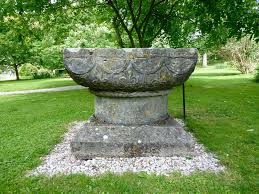
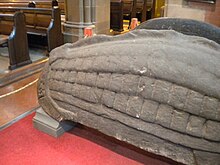
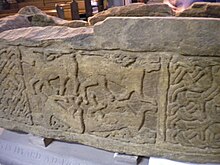 The collection also includes beautifully-carved crosses and cross shafts, and the Govan Sarcophagus. This has intricate interlace, warriors and hunting scenes carved onto it and is the only one of its kind from northern Britain.
 Old Parish Church is the name of the original parish church serving Govan in Glasgow from the 6th century until 2007. In that year, the Church of Scotland united the two Govan congregations with Linthouse and established the parish church at Govan Cross, making Govan Old redundant. Govan Old Church is no longer used for regular Sunday services, but the building remains a place of worship with a daily morning service and is open to visitors in the afternoons.
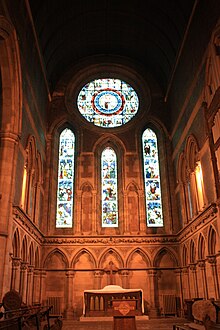 The church dedicated to Saint Constantine of Strathclyde occupies a Scottish Gothic Revival building of national significance (A-Listed by Historic Environment Scotland) within a churchyard designated a Scheduled Ancient Monument (Historic Environment Scotland). The church houses an internationally significant collection of early medieval sculpture known as Govan Stones. All the carved stones come from the churchyard and including interlace-decorated crosses, hogbacks, and burial monuments dating to the 9th – 11th centuries AD. Govan Old and the Govan Stones are open daily between April 1 and October 31 from 1pm-4pm. Admission to the museum is by donation.
 CLAN CARRUTHERS - OUR NORSE ANCESTORS