The Viking Age

CLAN CARRUTHERS – VIKING INVASION – IRELAND

cropped-wide-banner-with-new-crest.jpg

VIKING INVASION OF IRELAND

Ireland had known no invaders since prehistoric times. The Vikings, who arrived quite suddenly at the end of the eighth century, sent shock waves through a society in which Christianity had been left to organize itself, exercise its influence, and cultivate its artistic treasures largely undisturbed for more than three centuries.

Marauding seafarers from Norway and Denmark brought ruin and confusion, but they also made a positive contribution to subsequent Irish history in founding the first towns. They tied the island to a continental empire of far-flung places where the Vikings raided and traded, launching both the first large-scale outside contacts and the beginnings of commercial life. In time, like their predecessors before them, they too conformed to Ireland’s demographic pattern in assimilating with the natives, becoming Christians, and adopting the Irish language and Irish customs. Initially an independent force sitting behind the defensive walls of their coastal and riverine settlements, they began trading with the interior and soon found themselves drawn into dynastic struggles, which marked the politics of this period just as they had politics for centuries before.

The Vikings brought a nautical technology and superior weaponry, which facilitated the ability to do battle across wider territories with more deadly means. Irish royal dynasties, fewer in number but richer in resources, fought to acquire whole kingdoms, and the first efforts to claim the title of high king by actually possessing the requisite geographical territory were made. Because the stakes were higher, the clashes grew more intense, and the bitterness engendered by those who found themselves on the losing end of the ceaseless dueling stung with more lasting effect. The enmity harbored by the king of Leinster, banished from Ireland in the summer of 1166, would lead to a train of events that carried consequences for the country unlike any other.

The Era of the Viking Wars

In 795 long low-slung ships, fitted with wide, decoratively patterned sails, appeared from off the ocean’s horizon and ran their pointed bows onto the rocky beach at Iona. Warriors wearing round or horned helmets, armed with heavy swords and iron spears, rushed into the monastic village and, in a frenzied fury, ransacked the settlement, carrying away slaves and booty, including altar shrines and vessels, their surfaces glittering with the gems with which they had been so painstakingly inlaid. In the same year, seafaring raiders burned the community at Rathlin and attacked those at Inishmurray and Inishbofin.

The Vikings were bands of warriors from Scandinavia who set sail from its shores with but one purpose in mind-to seize whatever plunder they could find. The ships they manned were the most technically advanced of their time, designed by skilled Nordic craftsmen to provide the maximum in mobility. Whatever the reasons that led the Vikings to set out on their quest for riches-and they remain obscure-raiding that had begun in the Baltic Sea spread outwards from there at the end of the eighth century. over time these men from the far North (Norsemen) ranged as far east as Moscow and Constantinople and as far west as the North American continent. In the 790s fleets attacked Ireland, Britain, and France simultaneously.

Pagan farmers and fishermen and, at home, many of them dexterous craftsmen, the Vikings were the penultimate pirates. led by their kings and nobles, they are said to have delighted in destruction for destruction’s sake. Wielding their terrifying signature weapon, the broad battleaxe, raiders returned to Iona in 802 and again in 806, this time murdering 68 of the monks. The great monasteries, the centers of wealth, were the targets of attacks again and again during the first 40 years of the ninth century. fear pervaded the atmosphere wherever they roamed, for the Vikings would appear suddenly without warning at any time, ready to wreak havoc without scruple.

By 823 they had completed the circumnavigation of the Irish coast, in 824 even sacking bleak Skellig Michael. Most of the raiders to Ireland came from the fjords of Norway, and during the first decades of the 800s they never tarried long, operating as small, quick-moving forces striking in hit-and-run attacks. The Irish fought back as best they could. Monks moved to inland areas. After the raid of 806 the abbot at Iona, Cellard, carrying with him the revered relics of Columbanus, traveled with his companions 20 miles inland from the Irish coast to Kells, where they founded a new monastery. Kings from Ulster to Munster battled the invaders when they could catch up with them.

In the end, however, the search for security proved elusive. Raids intensified in the 830s, and now roving bands began moving inland. In 836 the first Viking land raids on record occurred on lands of the southern Ui Néill, and much of Connacht was also devastated. The following year the course of invasions began to change character. A mighty fleet of 60 ships appeared on the river Boyne and another 60 on the Liffey. Norsemen pillaged churches, fortresses, and farms in the Liffey valley, and they sailed up the Shannon and the Erne as well, defeating the forces of the Irish kings wherever they went. Viking ships plied the Shannon lakes in the very heart of the country. They appeared to be unbeatable. In 841, at Linn Duachaill (present-day Annagassan, County lough) and at Dublin they set up defensive bases as footholds from which to mount invasions deep into the interior. At Dublin, the Vikings wintered for the first time in 841-42, building a stockade around their ships and thus laying the foundation of the city.

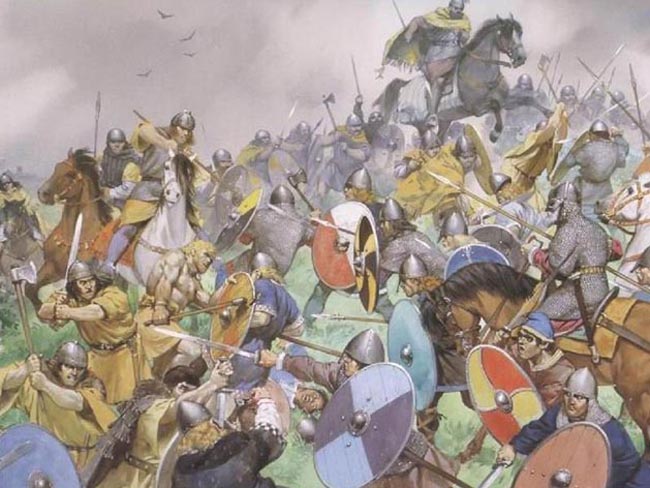
In the middle of the ninth century, Vikings from Denmark began to arrive, adding another element to the mayhem. The Vikings on the scene resented the interlopers and battled them in a fighting stew that included old and new combatants both native and foreign-Viking against Viking, Viking against Irish, and Irish against Irish.

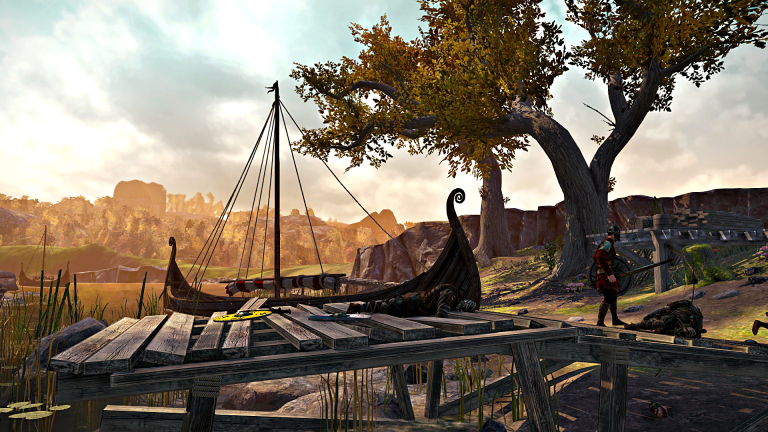
Viking warrior Jaroslav Novak by thecasperart.deviantart.com on @deviantART

No one anywhere was safe, but Irish kings kept up running battles against the invaders. They gradually began to achieve greater success, measured both by victories in battle and by a decline in the number of attacks. In 835 the Vikings were defeated at Derry, and in 845 Mael Sechnaill mac Maéle Runaid, king of Meath, captured and drowned the Viking leader, Turgeis. fleets were still arriving in 849-51, but by a decade later the great raids were over.

That the Irish had found it difficult to resist the invaders stemmed in part from their inability to unite to meet the common threat. The peak of the Viking incursions found the Ui Néill, based at Tara in Ulster, and the Eoganacht, at Cashel in Munster, clashing for the first time on a large scale. And the Scandinavians proved more than willing to join in the local strife. The Vikings very quickly-by the mid ninth century-assumed an active role in the local inter-dynastic warfare. The first Viking-Irish alliance is recorded in 842, and accounts speak increasingly of these pacts from 850 on.

Battles followed battles both within and between kingdoms, and the power of kings waxed and waned. The Ui Néill kings at Tara built up their power gradually in the second half of the ninth century, and the Vikings in Ulster were largely brought under control. The Vikings remained strongest at Dublin, where they frequently allied with surrounding rulers.

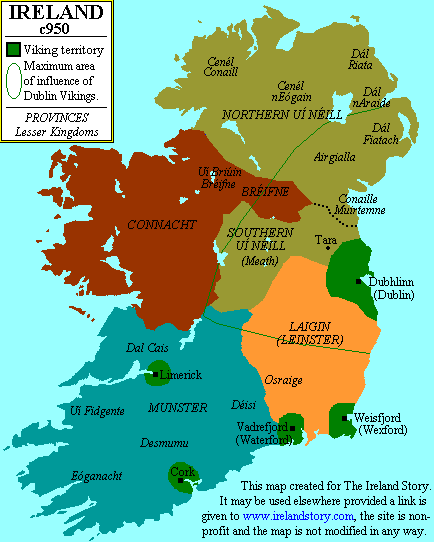
The close of the ninth century saw a slackening in Viking activity; however, the respite proved but a brief interlude. A second period of major incursions began in the second decade of the 10th century and lasted for 25 years. The storm to come gathered force in 914 when a great fleet of ships massed in Waterford harbor. In 915 they set out to attach Munster and, later, Leinster, yet again laying waste monasteries at Cork, Aghaboe, Lismore, and elsewhere. And once again, the Irish counterattacked. Niall glundub mac Aedo (d. 919), overking of the Ui Néill, chased the Viking raiders through Munster in 917 but failed to stop them, his allies from Leinster meeting heavy defeat. He himself fell victim two years later when he and many leading aristocrats of the Ui Néill were defeated and killed by the Vikings at the Battle of Dublin. Triumphant yet again, the Norsemen, secure in their base at Dublin, set about consolidating control of outlying settlements in limerick and Waterford. By about 950 the second great wave of raids was largely over.

What effect did the Viking invasions have on Irish society? Certainly considerable death and destruction occurred. Much cultural heritage disappeared, and the number of treasures that were irretrievably lost cannot be calculated.

Yet, while life was disrupted, it was not extinguished. The Vikings, in fact, also had a very positive impact. In founding settlements, they introduced commercial activity into a society hitherto based entirely on subsistence agriculture. once settled in Ireland, the Vikings did not become farmers and fishermen; rather, they became merchants and seamen. Unlike in Britain and France where they moved inland, those in Ireland contented themselves in remaining where they had landed. from their bases that hugged the coastline at Dublin, Cork, Waterford, and on the Shannon at limerick, they built up a system of seaborne commerce that linked Ireland with markets from Scandinavia to Spain.

Dublin retained its status as the most important Viking settlement, and the town grew swiftly in engaging in a far-flung trade that made it one of the richest in Viking Europe.

Dublin, together with York in Britain, became the most important of the westernmost trading posts. Trade became so significant that a cash-based economy was introduced in 953 when the first silver coins were minted. They continued to be issued until the arrival of the Normans. In introducing commercial life to the country, the Vikings set in motion the shift of the island’s political and social fulcrum from the central midlands to east coast urban centers, a move that has endured.

Viking Raids The most famous aspect of the Vikings in the modern sense was their Raids. The victims of the Vikings called them the “most vile people” while the Vikings did not hold that opinion. To the Vikings, raids were their honorable deeds and reasonable consequences of the ambitions of Viking expansions.

Expert traders and sailors, the Vikings introduced their advanced shipbuilding skills to Ireland. Busily plying the coastal waters, the warring wayfarers imprinted their presence on the island’s fringes. Not only settlements-Waterford, Wicklow, Strangford, and Dalkey-but also islands and bays-Blaskets, Smerwick, Salters, and Selskou-carry their names.

Although settlements might suffer repeated attacks throughout the upheavals of the ninth and 10th centuries, social life, while subject to disruptions, adhered to familiar patterns. Monastic communities rebuilt or moved to other locales. Irish kings were hard pressed by Viking incursions, and several small kingdoms near Norse settlements were overwhelmed, yet the strife that had for so long characterized native society never abated. Kings continued to war with kings.

The Norse invasions and their aftermath

The first appearance of the Norsemen on the Irish coast is recorded in 795. Thereafter the Norsemen made frequent plundering raids, sometimes far inland. In 838 they seized and fortified two ports, Annagassan and Dublin, and in the 840s they undertook a series of large-scale invasions in the north of the country. These invaders were driven out by Aed Finnliath, high king from 862 to 879, but meanwhile the Norse rulers of Dublin were reaching the zenith of their power. They took Waterford in 914 and Limerick in 920. Gradually, without quite abandoning piracy, the Vikings became traders in close association with the Irish, and their commercial towns became a new element in the life of the country. The decline of Norse power in the south began when they lost Limerick in 968 and was finally effected when the Scandinavian allies of the king of Dublin were defeated by High King Brian Boru at the Battle of Clontarf in 1014.

Although the Battle of Clontarf removed the prospect of Norse domination, it brought a period of political unsettlement. High kings ruled in Ireland but almost always “with opposition,” meaning they were not acknowledged by a minority of provincial kings. The Viking invasions had, in fact, shown the strength and the weakness of the Irish position. The fact that power had been preserved at a local level in Ireland enabled a maximum of resistance to be made; and, although the invaders established maritime strongholds, they never achieved any domination comparable to their control of eastern England or northwestern France. After Clontarf they remained largely in control of Ireland’s commerce but came increasingly under the influence of neighbouring Irish kings.

Carruthers crest on flag-v2 (1)

CLAN CARRUTHERS -1983

Preserving Our Past!    Recording Our Present!  Informing Our Future!

The Ancient and Honorable Carruthers Clan International Society CCIS

carruthersclan1@gmail.com                carrothersclan@gmail.com

WIDE BANNER with NEW CREST

WEAPONS AND WARFARE

CLAN CARRUTHERS INT SOCIETY CCIS HISTORIAN AND GENEALOGIST

download (12)

You can find us on facebook at :

https://www.facebook.com/carrutherscarrothers.pat.9

https://www.facebook.com/CarruthersClan

https://www.facebook.com/CarruthersClanLLC

Disclaimer Ancient and Honorable Carruthers Clan International Societ
The Viking Age

CLAN CARRUTHERS – DNA STUDY REVEALS IMPACT THAT VIKINGS IRISH SLAVES HAD ON ICELAND.

WIDE BANNER with NEW CREST

DNA STUDY REVEALS IMPACT THAT VIKINGS IRISH SLAVES HAD ON ICELAND.


Genetic research offers an insight into the fate of thousands of ancient Irish women enslaved by the Vikings.


Icelandic genetic research reveals the fate of the thousands of Irish women, who were enslaved by the Vikings and brought overseas to colonize Iceland.

Mostly women were taken from Ireland and Scotland by the Nordic warriors some 1,000 years ago and settled in Iceland. Now, DNA mapping has now revealed that these Irish women did not play as much of an influence in the genetic make-up of modern-day Iceland as the Vikings who brought them there.

DNA research reveals the impact that Irish slaves had on Iceland\'s genetic makeup

In total, the genomes of 25 ancient Icelanders were analyzed by anthropologist Sunna Ebenesersdóttir of the University of Iceland and the company deCODE Genetics in Reykjavik, the Icelandic capital. The results were revealed in 2018. The skeletal remains of these settlers were found in various burial sites across the island.


Analysis on their teeth showed that the remains had an even mix of Nordic (now Norway and Sweden) and Gaelic ancestry, revealing for the first time the results of “admixture,” when the formation of a new population is investigated.

The research revealed that modern-day Icelanders draw up to 70 percent of their genes from this Norse ancestry with the Gaelic settlers having a significant lack of influence. The report, published in “Science,” believes this could be a result of the slavery in which these Gaelic people were brought to the island.


While the ancient settlers were “mainly Norse men and Gaelic women,” and their influence is seen in the genomes of Icelanders today, the population has become distinct over the past 1,000 years, however.

Irish women were brought to Iceland by the Vikings. Image: iStock.

“Repeated famines and epidemics led to a substantial loss of sequence diversity from the Icelandic gene pool, causing it to drift away from its source populations in Scandinavia and the British-Irish Isles,” explained researcher Kári Stefánsson, deCODE chief executive and co-author on the paper.


“This is a fascinating example of how a population is shaped by its environment, in this case, the harsh and marginal conditions of medieval Iceland,” Stefánsson added.

“It is also another demonstration of how our small but well-characterized population can continue to make important contributions to understanding the fundamental genetic and evolutionary processes that shape our species.”

Carruthers crest on flag-v2 (1)

Preserving the Past, Recording the Present, Informing the Future

Ancient and Honorable Carruthers Clan Int Society 

carruthersclan1@gmail.com     carrothersclan@gmail.com

cropped-wide-banner-with-new-crest.jpg

IRISH TIMES

Reviewed by Tammy Wise CHS

CLAN SEANACHAIDHI

CLAN CARRUTHERS INT SOCIETY CCIS HISTORIAN AND GENEALOGIST

You can find us on facebook at :

https://www.facebook.com/carrutherscarrothers.pat.9

https://www.facebook.com/CarruthersClan/

https://www.facebook.com/CarruthersClanLLC

Disclaimer Ancient and Honorable Carruthers Clan International Society


Gutland / Gotland, OUR ANCESTORS, Uncategorized, Varangians

CLAN CARRUTHERS-HARALD HARALDSSON “Fairheaded I”

CLAN CARRUTHERS INT SOCIETY CCIS                  PROMPTUS ET FIDELIS

cropped-wide-banner-with-new-crest.jpg


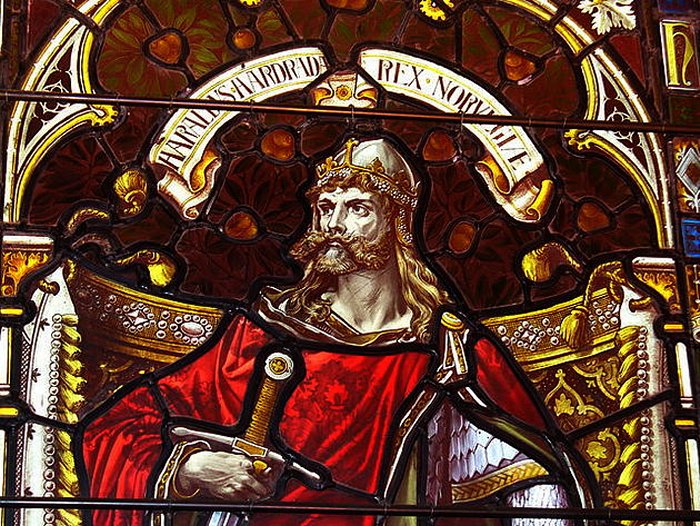
Mighty Viking Harald Hardrada -The Last Great Viking And Most Feared Warrior Of His Time


Ragnar Lobrok, Ivar the Boneless, Bjorn Ironside, Erik the Red, Eric “Bloodaxe” Haraldsson – we associate all those names with courageous and fearsome Viking warriors, but none of them can be compared to the greatest Viking warrior of all – King Harald Hardrada.

Mighty King Harald Hardrada was the last great Viking and the most feared warrior of his world and time.

Mighty King Harald Hardrarda - The Last Great Viking And Most Feared Warrior Of His Time

Viking Hardrada was an extraordinary man who lived an adventurous life. He fought in the deadliest battles and traveled to distant lands where he met exotic and powerful people. His courage and combat skills made him military commander in the Varangian Guard and Kievan Rus’.

Hardrada spent all his life as a professional soldier, and his reputation preceded him.

In the Icelandic Sagas, Viking Hardrada is portrayed as a great hero, but behind all the ancient legends we find a very complex figure, a man who was charismatic, daring, and resourceful. Viking warrior Hardrada became a patron of poets and he was known as ‘feeder of ravens’.

Harald Hardrada – A Great Viking Warrior Is Born

The most comprehensive accounts of King Harald Hardrada’s life can be found in the thirteenth-century collections of sagas of the Norwegian kings, of which the most respected is the one known as Heimskringla and reliably attributed to the Icelandic historian, poet, and politician Snorri Sturluson (1179 – 1241).

German churchman, Adam of Bremen also documented some of King Hardrada’s expeditions, but the cleric’s writings are hostile in nature and far from objective. He does, however, confirm the great Viking’s military skills and warlike reputation when he refers to Hardrada as the ‘thunderbolt of the north’.

Born as Harald Sigurdsson in Ringerike, Norway in 1015, he was the child of Åsta Gudbrandsdatter and her second husband Sigurd Syr, a king of Ringerike and one of the wealthiest chieftains of Upplands, the lands and forest regions to the north of Oslo in Norway. After his death, he was given the title “Hardrada” which means “hard ruler”.

Harald Haraldsson 'Fairheaded' I

The Carruthers are linked to this family genealogically. The biggest problem with genealogy is the correct dates this far back.

From her first marriage, Åsta Gudbrandsdatter was also the mother of King Olaf Haraldsson of Norway, who was later to become St. Olaf.

Hardrada admired his half-brother, King Olaf, very much and it could not have been easy, to see him die in a battle. This particular event was of great significance to Hardrada’s personal destiny and changed his life. Hardrada was loyal to his half-brother until the end.

Harald Hardrada Fought In The Battle Of Stiklestad When He Was 15 Years

When Hardrada was 15 years he engaged in his first battle under the command of his half-brother and hero King Olaf.  Snorri Sturluson’s Heimskringla describes what happened during the battle Stiklestad, and one can say this was the beginning of Viking Hardrada’s military carrier.

In 1028, there was a revolt and King Olaf lost the Norwegian throne to Cnut the Great, England’s Danish king, and ruler of one of the largest Nordic Empires.

Mighty King Harald Hardrarda - The Last Great Viking And Most Feared Warrior Of His Time

King Olaf who had been baptized made his best to convert Norway to Christianity. He also revived and revised the law code of Harald Fairhair, the king who united Norway into one kingdom in 872 AD. He affirmed his influence in the North Atlantic colonies, most importantly in the jarldom of Orkney and he prohibited plundering, but only within the country.

There is no doubt, King Olaf made many crucial changes, but his days were numbered. Cnut the Great had other plans. He wanted to reclaim the throne of Norway and King Olaf was forced into exile.

Two years later, in 1030, King Olaf returned to Norway with a force more than fourteen hundred strong and he was joined by Hardrada and his group of 700 hundred warriors. Together they engaged the army of Cnut the Great, but the battle did not end well. King Olaf was killed and Hardrada was badly wounded and forced to flee. Though he was only 15 years at the time, he showed great combat skills during the battle.

His appearance must have been striking to some. Snorri Sturluson described Harald Hardrada as physically “larger than other men and stronger”. He is said to have had light hair and beard, a long “upper beard” (mustache), and that one of his eyebrows was somewhat higher situated than the other. He also reportedly had big hands and feet and could measure five ells in height.

Viking Hardrada Joins Kievan Rus And The Varangian Guard

In one year, Hardrada managed to cross the Baltic together with other survivors of Olaf’s defeated army. After arriving in Russia, he visited his distant relative Yaroslav I, Grand Prince of Rus’, known as Yaroslav the WiseThe prince had helped King Olaf after the revolt. Being in need of skilled warriors, he employed Viking Hardrada who became captain of the forces of Prince Yaroslav of Kievan Rus. Hardrada fought many battles for Grand Prince Yaroslav the Wise.

You may recognize the name Varangian Guard from other postings on our blogs about the Carruthers ancestors. Gotland/Gutland was the center of the trading industry at this time, and if you sailed east you were a Rus Varangian, meaning River Warrior.

After spending some years in Prince Yaroslav’s army, Hardrada left Kiev together with his warriors and traveled to Constantinople, the capital of the Byzantine Empire. ‘

His goal was to join the impressive Varangian Guard that represented the elite heavy infantry regiment of the Roman (‘Byzantine’) Empire from AD 988 AD to around 1404 AD.

Roman Empire was in need of berserker warriors and hired them among northern mercenaries.

They were Vikings for hire, who successfully conquered territories across the Empire. They fought in Crete, Italy, and in Asia Minor.  To this day you will see Carruthers DNA markers show up in these places.

These professional warriors were highly valued for their courage and loyalty; they had also high fighting skills and the ability to carry out commands efficiently and without unnecessary questions. Harald Hardrada joined the Varangian Guard. He was the best berserker who became the “leader over all the Varangians”. Berserkers (in Old Norse: ‘berserkr’) were Icelandic Viking warriors who were feared by enemies and even their battle companions.  If you traveled west from Gotland, you were an Icelandic Warrior.

As commander, he fought in places as far apart as the Mediterranean, Asia Minor, Sicily, and the Holy Land. He was a famous and respected military leader. Hardrada had now enough earnings to marry Yaroslav’s daughter Princess Elisaveta (Elisiv), something he could not do earlier because he was too poor.

More About Vikings

Rich in combat experience and wealth Hardrada returned to Scandinavia in 1046. He had carefully prepared his campaign of reclaiming the Norwegian throne. Cnut the Great had died and Magnus I, also known as Magnus the Good was now king of Norway.

Mighty King Harald Hardrarda - The Last Great Viking And Most Feared Warrior Of His Time

Harada reached an agreement to share the rule of Norway with Magnus I. When Magnus I died, Harada became the sole King of Norway.

Harada was not happy with only being the king of Norway. He wanted to rule over Denmark as well, and he and his warriors plundered the country repeatedly, but the Danish King Svein Estridsson who lost almost every battle against Harald, managed to stain in power. In 1064, Harald and Sweyn reached a peace agreement.

Knowing, Denmark could not be his, the warrior King Hardrada sought new grounds that he and his men could conquer. Hardrada was now keeping his eye on England.

Battle At Stamford Bridge And The Death Of King Hardrada

After the death of Edward the Confessor, the English throne passed to Harold Godwinson. King Hardrada allied himself with Tostig Godwinson, Harold’s brother, who had been deprived of the earldom of Northumbria by Edward in 1065.

In 1066, Saxon troops of Mercia and Northumbria commanded by brothers Earl Edwin and Earl Morcar and met a Norse army under command of King Harald Hardrada accompanied by Earl Tostig.

The Battle Of Stamford Bridge

Both King Hardrada and William, Duke of Normandy wanted the throne of England. William gathered a fleet and was ready to sail across the Channel to the south coast of England, Harald gathered an invasion force in the north. The Norman army had only 7,000 men. King Hardrada’s Viking warriors met the troops from Mercia and Northumbria, at Fulford, on the outskirts of York and the battle took place.

It was a terrible fight, in which the armies of Mercia and Northumbria were defeated. York surrendered to the invaders, and Harald did not enter the city but retired to Stamford Bridge to await the gathering of hostages from around the region.

This was a huge mistake. The Norse warriors had only 5 days to enjoy their victory at Fulford.

On 25 September, King Harold, the last Anglo-Saxon king of England, surprised Harald Hardrada of Norway at Stamford Bridge and defeated the Norsemen. Hardrada and Tostig were killed. Harald Hardrada’s death was caused by an arrow that struck his neck. He was buried at the Mary Church in Nidaros, Norway.

In a way, it’s a bit ironic that a great warrior like Hardrada who traveled to distant lands and fought in deadliest battles died after spending only a few days on British soil.

Mighty Warrior King Hardrada As A Person

With the death of King Hardrada, the Viking Age ended. Hardrada was a harsh ruler who often solved disputes with force, but his reign was one of peace and progress for Norway. He advanced Christianity in Norway, built churches, imported bishops, developed a Norwegian currency, and viable coin economics. His contacts with the Byzantine Empire and Kiev helped Norway to expand its international trade. King Hardrada also founded the capital Oslo.

Harald Hardrada was the last great Viking.

Carruthers crest on flag


Preserving Our Past!    Recording Our Present!  Informing Our Future!

The Ancient and Honorable Carruthers Clan International Society LLC

carruthersclan1@gmail.com                carrothersclan@gmail.com

cropped-wider-banner-light-blue-1.jpg

Ellen Lloyd Ancient Historian

CLAN CARRUTHERS INT SOCIETY CCIS  HISTORIAN AND GENEALOGIST


You can find us on facebook at :

https://www.facebook.com/carrutherscarrothers.pat.9

https://www.facebook.com/CarruthersClan/

https://www.facebook.com/CarruthersClanLLC


Disclaimer Ancient and Honorable Carruthers Clan International Society CCIS L


Gutland / Gotland, The Viking Age, Uncategorized

CLAN CARRUTHERS – GOTLAND-AN ISLAND IN THE MIDDLE OF AN ISLAND

cropped-wide-banner-with-new-crest.jpg


AN ISLAND IN THE MIDDLE OF AN ISLAND- GOTLAND/GUTLAND

On Cult, Law s and Authority in Viking Age

** Our norse ancestors came from the Island of Gotland, east of Sweden.  They were considered Christians from the earliest times.  Please notice the acceptance of monastery’s, meeting places on the west coast of Scotland, and the fact that they had Clans and used the term Chieftain .  Some will say that their are only clans in Scotland, and we know that is not truthful. ***


The present-day small village of Roma on Gotland in the Baltic Sea was the
physical and symbolic centre of the island in the Iron Age and into Medieval
times (Fig. 1). The Cistercian monastery and the meeting place of the island’s
assembly, the all-thing, two well-known features of medieval Roma, have often
been taken as indications of an egalitarian and non-stratified society on Gotland during the Viking Age and Middle Ages. It is here proposed, however,
that an older Iron Age cult site at Roma eventually came under the control of
a chieftain or major landowner who introduced Christianity, founded a monastery and inaugurated the thing in Roma in Viking or early medieval times,
just as his equals did elsewhere in Scandinavia. While the later medieval thing
was probably located near the monastery, an alternative site is suggested for
the older all-thing.
T he A ll -thin g of Gotland
In Medieval times (i.e. from c. 1100 onwards in local terms) Gotland was organised into 20 thing districts. These legal entities are mentioned in the Guta
Lagh (Gotlandic Law) and Guta Saga (printed edition Gannholm 1984), which
were written down at the beginning of the 13th century (but may contain older
strata, see Kyhlberg 1991). It is not certain whether the things were prehistoric
or belonged to an early medieval re-organisation of the island (Steffen 1943,
pp. 3 ff, 48 f; Hyenstrand 1989, pp. 15f , 108 ff; Rönnby 1995, p. 103),

page_2 (2)

but they served as means of organizing both societal relations and the physical space.
Lag means ‘law’, but was also used for the community of people who lived by
a given law, and for the physical area in which this community lived (Gurevich
1985, p. 157; Brink 2002, p. 99). As the judicial entities in that sense also constituted social and territorial boundaries, they thus defined much of the human movement that took place within the local society
The all-thing of Gotland, the island’s central assembly and supreme legal
instance, is of particular interest since it has been suggested (notably by Yrwing 1940, 1978) that its existence points to an egalitarian society of free farmers on Gotland during the Viking Age and Middle Ages.

This picture of the internal organisation of the island has been questioned on several occasions (e.g. Carlsson 1983; Hyenstrand 1989; Rönnby 1995), but it is still common and
is continuously being communicated to the public. The existence of a central
assembly on the island is mentioned in the Guta Lagh and Guta Saga (e.g. GL
§31, GS §9), and it is also likely by analogy with the medieval organization of
other Scandinavian-dominated areas such as Iceland. The image of Gotland as
an egalitarian farming and trading society nevertheless needs to be called into
question once more.
The area of Roma in the centre of the island was first named as the site of
the Gotlandic all-thing assemblies in the 1401 translation of the Guta Lagh
into German: “gutnaldhing das ist czu Rume” (Pernler 1977, p. 61; Yrwing 1978,
p. 80), while according to taxation records for 1699, some of the land around
the monastery of Roma may have belonged to several things (Östergren 1990,
2004) (Fig. 2). That this was the place where the Medieval all-thing gathered
might also be indicated by the name of the Cistercian monastery founded
there in 1164, Sancta Marie de Guthnalia, as suggested by Lindström (1895).
In his interpretation, Guthnalia could be a Latinized form of *gutnalþing, the
all-thing of the Gutar (Gotlanders), so that the name of the monastery was
derived from the all-thing itself, which may indeed have initiated the foundation of the monastery (Lindström 1895, p. 170 ff ). This suggestion and interpretation could imply that the all-thing took an active interest in the introduction of Christianity to Gotland, and thus may bear witness to the democratic character of early medieval Gotlandic society.

The endowment of land for the monastery could have been made out of land held in common by the Gotlanders and thus controlled by the all-thing (Östergren 2004, p. 44).
It should be remembered, however, that Christianization and the foundation of churches and monasteries were in all other cases initiated and dominated by individuals, normally major landowners or petty kings. The interpretation is thus based on a pre-supposed difference between Gotland and the rest of Scandinavia, namely the existence of a particularly egalitarian society on Gotland. Since this hypothesis or presupposition relies to an extent on the fact that it is used to explain, we are here dealing with a classic example of a circular argument. Luckily, archaeology can provide some more input that should be taken into consideration when discussing this matter.

images


Guldåkern and Kräklige  Tingsäng
The 1699 taxation map shows several plots of land with names referring to
things surrounding the monastery of Roma (Fig. 4), and Östergren suggests
that this was where the representatives attending the thing slept and kept their
animals during the meetings. Thus the area around the Roma monastery may
have been land held in common, where the different things held rights over
certain areas. In order to be at the centre of these dwelling places, the all-thing
itself must have assembled within the area of the later monastery (Östergren
1990, 2004, p. 40 ff ).
About 600 m northeast of the monastery lies the Guldåkern (the ‘Golden
Field’, named after three solidi coins found there in 1848, Fig. 2). This area, c. 200 x 300 m in size, was investigated with metal detectors in 1990 and was interpreted as a Viking Age trading place on the basis of finds of silver fragments, silver coins and weights, most of the material being from the 10th century AD.

The adjacent Kräklinge tingsängen (meadow of the Kräklinge thing)
was investigated on the same occasion and yielded silver coins, melted silver
and bronze, fragments of bronze jewellery and a casting cone, indicating metalworking at the site, and was considered to be a farmstead from the Vendel
or Viking period (Östergren 1992, p. 42 f ). Roman denarii were found at both
sites, indicating that they were connected in terms of their use during the period prior to the Vendel and Viking ages (all the Roman coins probably ended
up there during the fourth century AD). Unfortunately, the area was much
disturbed during the Second World War and it is thus difficult to say exactly
how and where the artefacts were initially deposited.
Guldåkern, Kräklinge tingsängen, and the other plots with thing names, are
all interesting sites, but neither has been suggested as the actual location of the
thing itself. The thing was not the scene of either trade or metalworking, nor
did people live there. It has been suggested that the Vendel and Viking Age
material found on Guldåkern and Kräklinge tingsängen results from the fines
and fees paid and exchanged during negotiations at the thing (Domeij 2000, p.
36 f ). If this is so, it would be the most tangible proof so far for a pre-medieval
thing actually having been located in the area.
The central location of the monastery within the semi-circle of properties
named after things may be a result of the monastery having been founded on
land held in common, and would thus indicate that this land was given to the
Cistercians by the things in 1164. But the distribution of these properties may
just as well result from their being secondary to the monastery, and demonstrate
that the monastery is the older feature and the localizing factor.

T he G u tnal þ in g
The word Gutnalia in the name of the Cistercian monastery at Roma first
appeared in written sources in the 13th century and was subsequently used
on the seals of the monastery and its abbot (Ortved 1933, p. 305), so that the
place-names Roma and Gutnalia are used interchangeably in the documents
(Lindström 1895, p. 171; Ortved 1933, p. 304 f ). It has been suggested that this
(Latinized) name of the monastery refers to the all-thing. But why would the
monastery take its name from an administrative assembly? And if the thing
was indeed so important, why is the place not named ‘Allthingia’? One significant point is that the Guta Saga does not actually read gutna alltþing, but gutnal þing (e.g. GS §9), as pointed out by Hjalmar Lindroth (1915) while discussing the linguistic basis of the name Gutnalia.

He concluded that Gutnal is an independent place-name, Gutna al (al of the Gotlanders) (Lindroth 1915, p.66 f ). Most Cistercian monasteries and churches were dedicated to the Virgin Mary, and thus the epithet “…de Gutnalia” served to distinguish the monastery of Roma from its sister institutions. The name Gutnalia itself, though,
must have been derived from a place-name containing the element -al.
A place denoted by al should be understood as a ‘protected area’, but there
is also a connection between al and assembly places (Vikstrand 2001, p. 192
ff ). Most al names denote natural features, but a few may have a cultic or
sacral meaning: Götala, Gutnal, Fröjel, Alsike and a few others. These names
derive from the Germanic alh-, ‘protection’ (Brink 1992, p. 111 ff ). The word
has connotations such as ‘defended’, ‘shielded’, ‘consecrated’ and ‘sanctified’.
Furthermore, al is apparently found where there was a building of great social
distinction (ibid, p. 116). In German non-religious texts the word was used in
the sense of ‘house’, ‘protection’, ‘a fenced, protected area’ or ‘a legally protected
place’ (settlement) (Schmidt-Wiegand 1967, 1989). It is known through texts
such as a runic inscription in Oklunda that cultic places were under some kind
of legal protection (see below), and also from passages in the Guta Lagh and
Guta Saga (GL §13, GS §11). The notion is also found in a Christian context,
in the idea that the sanctity of churches should not be violated.
The gutn(a) part of Gutnalia ties the name and the place to the Gotlandic
people. In that sense the interpretation of a pre-Christian cultic al-place of
importance to the Gotlanders does not disagree with the notion of the name
being connected with the all-thing. Cults and legal/regal authority may have
been even more intertwined in earlier times than later during the Medieval
period. The difference is that in one case, Latinized Gutnalia would refer to al,
the physical ‘(cult-? central-? thing-?) place of the Gutar’, perhaps connected
with a prominent house or hall. In the other case, the name Gutnalia would
refer to all as in the all-thing (‘-thing’ simply being omitted from the name)
and would imply that the thing wanted to found a Christian monastery, and
had the authority to do so. I will proceed to argue that the first explanation is
the more likely one.
The setting of the all -thin g

download (1)
The exact locations of ancient thing assemblies are rarely known, but in several cases there is at least some information deriving from historical sources, folk
tradition or place-names. Such assemblies were often thought to have been held at prehistoric monuments such as great mounds, or ‘judge’s rings’ (Sw.
domarring, an Iron Age grave type consisting of a circle of boulders or vertical stones). But more frequently the meeting places are hard to identify, and
it is generally difficult to determine the age of a thing site or to locate it by
archaeological means (cf. Sanmark 2004).

Viking Archaeology - Law Ting Holm

The Law Ting Holm in Loch Tingwall, Shetland, Scotland

Prehistoric assembly places are generally found in areas with a high concentration of rune-stones and prehistoric graves, often on the “periphery” of a settled area. Also, assembly places were often moved on one or more occasions in the later Middle Ages (although, as far as is known, never more than 10 km) to comply with new situations or
demands on accessibility, but the old locations apparently influenced the allocation of later assembly places up until late historical times (Sanmark 2008, p. 15). Thing sites were often not situated near settlements, but rather at communication nodes in the landscape (Vikstrand 2001, p. 412; cf. Wilson 1994,
p. 67).

Arkils tingstad - WikipediaThe morphology of thing sites also shows much variation: open places,
mounds, or a rectangular stone-setting such as Arkil’s thing site in Uppland
(Nordén 1938; Lönnroth 1982). The excavated remains of Þingnes in Iceland
revealed a concentric circular structure surrounded by farmhouses (Ólafsson
1987, p. 343 ff ).
downloadThe physical assembly place has thus often been connected with prehistoric
monuments and manifest remnants such as procession roads, both prehistoric
and Medieval. The majestic Anundshög [Anund’s mound] in Middle Sweden
is one well-known example where a great mound, a procession road flanked
by large stones, and several monumental prehistoric graves (stone ships) are
combined, making a profound impression on the visitor even today. There is
no real proof, however, that these “thing” mounds were indeed once settings
for prehistoric assemblies. That may well be an invention of later times, connecting the impressive monuments with the forefathers and people of the past.
It is simply difficult to tell which one was the localizing factor: the thing site
for the monument, or the monument for the idea of how a thing was staged?
The known thing sites suggest there was in reality a considerable amount of
morphological variation.
Islands as settings for things
download (1)There are similar traditions attached to thing and assembly places in northern
Britain and in Scandinavia, with mounds or stone circles being identified as
gathering places (Driscoll 2004). On Islay, off the west coast of Scotland, an
important medieval meeting place was situated on a small island in a lake
(Eilean na Comhairle, ‘the council isle’, in loch Finlaggan).

Scalloway - Vidlin | Shetland.orgDuring the negotiations the lord and his attendants would live on a larger island nearby, just off the shore, in a royal complex that included a monastery (Caldwell 2003). On
Shetland, the Law Ting Holm in the lake of Tingwall was a small island close
to the shore which was used for assemblies in the Norse (Viking/Medieval)
period . The most important medieval church of Shetland was on the
shore, and both Eilean na Comhairle and Law Ting Holm were connected to
the shore by a causeway.

download (2)
Islands, an islet or holm as it may have been, have so far not been much
discussed as possible thing sites in a Scandinavian context. Þingnes in Iceland
was apparently situated on a promontory or peninsula (also reflected in its
name), but I have found no discussion on ‘island’ settings as such. Still, bearing
in mind the similarities between the assembly place traditions of the (Norsedominated) British Isles and Scandinavia in other respects, the suggestion can
be put forward that islets or small peninsulas should be evaluated in a new
light in the search for the elusive Scandinavian thing sites of the Late Iron Age
(Viking Age) and early medieval times.
Before and during the Iron Age the whole area of present-day Roma was in
the nature of a promontory, surrounded partly by wetlands and partly by open
water , and it was probably possible to reach the Roma area by boat all
the way from both coasts. At the south end of the complex of waterways surrounding Roma is the narrowest point, a small strait, with Gotland’s largest Iron Age burial ground (Broa, in the parish of Halla) and the Viking or Medieval fortifications of Hallegårda just across the water.

To the northwest and southeast the land is much higher, and the area of Roma thus lay ‘sunk’ between the two halves of Gotland. The peninsula of Roma was like an ‘island in
the middle of the island’ which had to be passed through no matter whether
one was travelling in a north-south or east-west direction, on land or by boat.
Roma parish church, a prominent three-aisled hall church erected in the mid-13th century, is situated on a high point north of the monastery and by a crossroads. It was preceded by a stone church from the 12th century (which was already there when the monastery was founded), which in its turn was perhaps preceded by a wooden church.
Broa (‘the bridge’) about 1.5 km southwest of the Roma monastery on the
other side of the bog, is the largest burial ground on Gotland and one of the
best sources of material of a typical high-status character. The cemetery was in
use from the Roman Iron Age to the Viking period, and the artefacts found
include numerous weapons and four prestigious helmets from the Vendel period as well as an equestrian grave from the early Viking period. In particular
the helmets indicate connections with high-status graves outside Gotland,
such as those of Vendel in Central Sweden or the British Sutton Hoo ship
burial. This distinguishes the Broa area from the other large centres and burial
grounds on northern and southern Gotland. The area stretches away on both
sides of the road southeast of the present bridge, and along the road running
north to Halla and Hallegårda (Fig. 4). The latter is a fortification of concentric circular walls with a stone building inside, probably of late Viking or early Medieval origin and has been interpreted as a centre inhabited by a local chieftain (Broberg et al. 1990).

This complex is situated south and southeast of the Roma monastery, on the other side of the wetland. There was once a small island or islet, Björkö, in the northeast mouth of the
strait, a feature which is still visible on late 19th-century maps drawn before
the draining of the bog began. The name of the island incites curiosity, since
Björkö is also the present name of the famous Viking Age town of Birka in
Lake Mälaren. In medieval Scandinavia the word Birka (Bjärka, Björkö) denoted a certain type of legislation, Bjärköarätt (the early legislation of many
early towns), and more generally ‘special jurisdiction’ (KHL, p. 656, entry Bjärköarätt). This may have nothing to do with the small island near Roma, but the
island is still interesting in its own right. Considering the similar traditions
surrounding thing and other assembly places in northern Britain and in Scandinavia, one may wonder if we are not looking here at a Scandinavian parallel
to the islands in the Finlaggan and Tingwall lakes.
The British examples of island thing sites, with churches, manors and accommodations for the attending parties on the shore, evoke the question of
whether the semicircle of properties bearing the names of things to be found
around the Roma monastery was in fact not relating to the waterfront at the
time, and that they faced the islet of Björkö rather than the monastery. It may
indeed be suggested that, at least in prehistoric and early Medieval times, the
assemblies may have been held on Björkö rather than in an area now beneath the monastery ruins or in any of the adjacent meadows. The Broa cemetery and
perhaps also the Hallegårda fortifications behind the island would have been
clearly visible from the shore, offering a view of the centre of power and the
resting place of the great forefathers as a background.
Unfortunately there is nothing left to prove that Björkö was an assembly
place, since the islet itself has been almost totally destroyed through draining
and digging in the bog during the past decade. There are now dams where the
island was until the beginning of the last century. This hypothesis will thus
remain unconfirmed unless new evidence is uncovered to prove it. This setting
for the assembly place makes far more sense, however, and conforms better to
other historically known settings such as Þingnes or Law Thing Holm than
does the previously proposed location on the site later taken over by the monastery.

The staging of the thing
According to written sources such as the Icelandic Sagas, negotiations at a
thing took place within a demarcated area and most of the agents attached to
the assembly had to remain outside. The law-court was probably marked out
with vébond, strings or ropes tied between rods stuck into the ground, or running through iron rings attached to the rods, as seems to have been the case at
the recently excavated site of Ullevi in central Sweden (Blomkvist & Jackson
1999, p. 21; Vikstrand 2001, p. 332; Brink 2002, p. 90; Svenska Dagbladet June
22 2008, p. 24 f ).

The word vébond is connected to the concept of vi, appearing
as a place-name in itself or as part of one (as in Ullevi, meaning ‘the Vi of
the god Ull’). ‘Vi’ denotes a protected area where there was a right of asylum
(Vikstrand 2001, p. 323 ff ), and has been interpreted as meeting place consecrated to the supernatural powers, an arena for cult and common ritual under
divine protection (ibid, p. 332). ‘Vi’ often appears in pairs with the toponym
lund [grove]¸ which denotes the cultplace proper, the sacrificial grove (a famous Lunda excavated recently outside Strängnäs in central Sweden, yielded
spectacular finds of gold figurines and more than 4 kilogrammes of burnt and
crushed human bones; see Andersson 2003, 2004). The locations for meetings
of a thing thus seem to have been very complex places, including several nodes
and combining legal actions with various cult and ritual elements.
Concepts of peace and inside/outside were also connected with the assembly place and with the ideology of the thing, as also with the vi. Inside
the vébond sphere there was friðr (‘peace’), and outside there was úfriðr (‘unpeace’) (Blomkvist & Jackson 1999, p. 21 f ). This was manifested through the demarcation of an area. The concept was not exclusive to the thing, but an individual could also legally seek asylum and protection by drawing a ‘circle of peace’ for himself. This is described in the medieval Gotlandic Guta Lagh (GL§13), but was probably also a legal feature in other parts of Scandinavia much earlier than the 13th century. Such an event is described in a 9th-century runic inscription in Oklunda (Sweden) (Lönnqvist & Widmark 1997, p. 151; Gustavson 2003, p. 187), where one Gunnar states that he has fled to this vi, inside
the circle of peace. This runic inscription may be regarded as a legal document
(Brink 2002, p. 96) but it may also have had a magical meaning, since the carving is shaped like a tied bond (Lönnqvist & Widmark 1997, p. 156 f ).
The vébond strings served a double purpose: they created a restricted area
where peace had to be kept, and they divided the lawmen from the ordinary
delegates during the meeting. The apparent tension between these two groups,
as reflected in the Icelandic law compilation Grágás, Egils saga Skallagrimsónar,
and Viga-Glúms saga, for example (Holmgren 1929, pp. 22, 25 ff ), may have
been due to the innate tension between those who enforced the law and siðr
(old custom) and those who had to accept their judgements. Respect for the
law-courts was just as fundamental as it is today, and infringement of it was
punishable by exile in Iceland (ibid, p. 25). Runes on a large 9th-century ring
from Forsa in northern Sweden (interpreted as an oath ring for use at the
thing) describe what will happen to the one who fails to respect the law-courts
and the asylum granted by the vi. This involved fines and the suspension of
property rights (Ruthström 1990; Brink 2002, p. 97 f; cf. Myrberg 2008, p.
146).
Rings were obviously important within the context of the thing, as indicated by the phrase ‘bringing something a þing ok a ring [to the thing and to the
ring]’ which is found in medieval laws (Holmgren 1929, p. 22 ff; Blomkvist &
Jackson 1999, p. 21). This may be a reference to an oath ring, kept in the temple
and brought out by the cult leader during legal negotiations (cf. Habbe 2005, p.
134 f ), such as the Forsa ring, or to the numerous smaller rings found on Ullevi
and originally probably attached to poles around the sacred area. “All is bound
in rings” the Guta Saga states solemnly, probably giving some kind of authentication to the text. References to band, ring and baugr (ring) in the sagas may
have a religious and/or judicial significance (Blomkvist & Jackson 1999, p. 20
ff ), and the tying of knots and giving away of rings are accordingly frequent
themes in the mythology and sagas as metaphors for the giving of promises or
establishment of relations.
The staging, ritual and ideology of the prehistoric or early medieval thing
thus seem to be much concerned with concepts of peace, inside/outside and rings, as well as with social reproduction, the community and the maintenance
of old customs, siðr. Ritual meals and communal feasting are thought to have
been part of the thing meetings and of the associated cultic activity (e.g. the
sjudning, ritual meals consumed with one’s suþnautar, ‘cooking brothers’, described in the Guta Saga (GS §5; cf. Yrwing 1951, p. 13; 1978, p. 82).

The thing may have represented a social ideology of equality in a time that otherwise
demonstrated great social differences. As a parallel, one may look at Iceland,
where the early laws and sagas helped to create and maintain a mythology and
ideal of an equal society which was not the real situation even in the earliest
landnám period (Rafnsson 1974, p. 187 f; Durrenberger 1992; Meulengracht
Sørensen 1993, p. 149; Smith 1995).
Gutnal , the monastery , and the all -thin g of Roma
It is easy to imagine that the low-lying promontory surrounded by lakes and
bogs in the middle of the island held a particular fascination for the people
of Gotland, especially at a time when waterfronts and bogs were of central
importance for cultic and votive activities, as seems to have been the case for
example at Tuna, southwest of Roma, and in the Roma mire itself. Gold and
wild boar tusks were found in the Roma mire during drainage work in the
1930s (SHM 17815, SHM 32811). Tuna has yielded a number of spectacular
finds, such as Roman coins, gold bracteates and a mass of golden rings, mostly
belonging to the Migration period, c. 400–550 AD (Hildeberg 1999, p. 24),
although the Roman denarii point to use of the site having begun around AD
300 (Roman Iron Age).
If the promontory was indeed an Iron Age al place, this would have sustained its function as a central meeting place for many centuries. But the archaeological and historical evidence also demonstrates the influence of local chieftains, as visible in matters ranging from burials and the deposition of Iron Age valuables in these to the building of private churches and the granting of land for a monastery. Explicitly referred to as a ‘chieftain’ can be detected in the written documents concerned with the founding of the monastery, and the initiative and endowment for all the other Swedish monasteries is known to have come from a major landowner or petty king with ambitions.
The role of a bishop in the process may have been decisive in some cases (Nyberg 2000, p. 211 f ), but this usually resulted from the bishops’ close family
connections with the nobility. The building of churches and monasteries was a
means by which the elite could act like continental kings and associate themselves with the expanding Church, and thus legitimize their claims to power
and retain their ideological influence within society (cf. Nyberg 2000, p. 81 ff;
Tagesson 2002, p. 237).
Such elite figures or chieftains are detectable in the Gotlandic archaeological record, and are also mentioned in the Guta Saga, being described as rich
landowners or lawmen, as being ‘wise’, or as acting as emissaries abroad. A
few kilometres northwest of Roma one still finds Akebäck and Kulstäde , where, according to the Guta Saga (§10), the first church on the island was
built by a private patron, probably in the 11th century.

This patron, Botair, actually had two churches built, since the people of the island burned the first one down, and tried to burn the second one as well. Botair was sufficiently influential, however, to build his churches in two prominent places: one (Kulstäde)

Vall Parish, Gotland, Sweden Genealogy Genealogy - FamilySearch Wiki
within a few kilometres of the Gutnal, and the other at Vi (often interpreted as
the present-day Visby). The prominence and significance of vi places has been
pointed out above. It may be that Botair’s self-confidence was partly based on
the fact that he was the son-in-law of Likair the Wise, a man who according to
the Guta Saga “reth mest um than tima” (ruled/advised most in that time) (GS
§11). Likair was thus either a petty king or the island’s highest legal authority,
and Botair must accordingly have been considered a mighty person himself to
conclude such a good marriage. Apparently he controlled land very close to
the Gutnal, most likely through inheritance, and it was there that he built his
first church.

102 Best gutland images in 2020 | Vikings, Norse, Viking age
The period of Botair, and of the Iron Age-medieval centre of Broa-Hallegårda, is close to the time when the monastery in Roma was established.
That is, to the time when the all-thing is thought to have been in command
of the land in the Roma area. Yet close to the monastery there was land in
one direction that was controlled by one of the most influential (and probably wealthiest) men on the island (Botair), and in another direction there
was the (now anonymous) owner of the fortified Hallegårda.

‘Botair’ may be only an imaginary figure in the saga, but the Hallegårda-Broa complex bears archaeological witness to the fact that such persons must have existed there at
the time. At least the early 13th-century author of the Guta Saga takes their
existence for granted. The thing as an institution has been regarded as having
been dominated by small farmers, so that it remained independent of the great
landowners, since this is the picture inferred from the medieval laws (Brink
1998, p. 300; Vikstrand 2001, p. 412). Again, archaeology gives us a different
picture, in particular regarding the Viking period. Jarlabanke, a major landowner in central Sweden, inaugurated a thing site in the 11th century, as did
Arkil and his brothers some generations earlier to commemorate their father Ulf, also a great landowner (Nordén 1938; Lönnroth 1982; U 212, 225, 226).

TheÞingnes assembly place, Iceland’s first, was founded around 900 AD by the
‘supreme chieftain’, the Allsherjargodi, next to his house (Ólafsson 1987). Thus
archaeology shows us that an upper class of landowners took an active part in
developing the thing as an institution and influenced its location.
Is it plausible that the Gotland all-thing could actually have owned land
and been able to dispose of it as it wished? And if it did – why would the
all-thing give away as an endowment for a monastery the very spot that was
most central to its own activities – the assembly place itself? It appears more
likely that the endowment for the monastery was made by an individual great
landowner or chieftain in the area. To locate it in a setting which alluded to
older ritual behaviour and the great ancestors would comply better with what
we know about the nature of prehistoric power and the thing ideology. This
was the way of behaving and of displaying individual power in other areas of
Scandinavia. Likewise, the inauguration of a thing assembly place may well
have been influenced by individual members of the elite class who had external
connections and internal ambitions for power.
The Guta Saga and Guta Lagh regulate in detail other important matters of
concern to the community. The Christianization of the island, the first churches and their relation to the Church and the bishop are all mentioned, but
not the foundation of the monastery, which must have happened as part of the
same process (and at about the same time). This suggests that the latter was
not a matter of common concern. The name Gutnalia does not, as was suggested in the past, tell us that the monastery was founded by the all-thing, but
that it was once a sacred place of social distinction: the Al of Gotland.

Carruthers crest on flag


PRESERVING OUR PAST, RECORDING OUR PRESENT,INFORMING OUR FUTURE

ANCIENT AND  HONORABLE CARRUTHERS CLAN INT SOCIETY CCIS

CARROTHERSCLAN@GMAIL.COM    CARRUTHERSCLAN1@GMAIL.COM

cropped-wider-banner-light-blue-1.jpg

Nanouschka Myrberg Burström | Stockholm University - Academia.edu     Nanouschka Myrberg, University of Sweden

CLAN CARRUTHERS INT SOCIETY CCIS HISTORIAN AND GENEALOGIST

Article in Regner, E., von Heijne, C., Kitzler Åhfeldt, L. & Kjellström, A. (eds.). 2009. From Ephesos to Dalecarlia. Reflections on Body, Space and Time in Medieval and Early Modern Europe. The Museum of National Antiquities, Stockholm. Studies 11. Stockholm Studies in Archaeology 48. Stockholm. ISBN 978-91-89176-37-9

References
Andersson, G. 2003. Lunda – delområde E: “Lunden” – en plats för aktiviteter under förhistorisk och historisk tid. UV Mitt Dokumentation av fältarbetsfasen, 2003:6.
Stockholm
Andersson, G. 2004. Att föra gudarnas talan: figurinerna från Lunda. Stockholm
Blomkvist, T. & Jackson, P. 1999. Alt ir baugum bundit. Scaldic Poetry on Gotland in
a Pan-Scandinavian and Indo-European Context. Arkiv för nordisk filologi 114.
Brink, S. 1992. Har vi haft ett kultiskt *al i Norden? In Fellows-Jensen, G. & Holmberg, B. (eds.). Sakrale navne. Rapport fra NORNAs sekstende symposium i Gilleleje
30.11 – 2.12 1990. Uppsala

Brink, S. 1998. Land, bygd, distrikt och centralort i Sydsverige: några bebyggelsehistoriska nedslag. In Larsson, L. & Hårdh, B. (eds.). Centrala platser, centrala frågor:
samhällsstrukturen under järnåldern. En vänbok till Berta Stjernquist. Lund
Brink, S. 2002. Law and legal customs in Viking Age Scandinavia. In Jesch, J. (ed.).
The Scandinavians from the Vendel period to the tenth century – an ethnographic perspective. Woodbridge
Broberg, A. et al. 1990. Hallegårda i Halla – social stratifiering eller bara en tillfällighet? META 3/1990.
Caldwell, D. H. 2003. Finlaggan, Islay – stones and inauguration ceremonies. In Welander, R. et al. (eds.). The stone of destiny – artefact and icon. Edinburgh
Carlsson, A. 1983. Djurhuvudformiga spännen och gotländsk vikingatid. Stockholm
Domeij, M. 2000. Människor och silver: samhällsideologi och sociala strategier på Gotland
ca 700–1150. Lund
Driscoll, S. 2004. The archaeological context of assembly in early medieval Scotland
– Scone and its comparanda. In Pantos, A. & Semple, S. (eds.). Assembly places and
Practices in Medieval Europe. Dublin
Durrenberger, P. E. 1992. The Dynamics of Medieval Iceland. Political Economy & Literature. Iowa
Gannholm, T. 1984. Guta Lagh med Gutasagan. Stånga
Gurevich, A. J. 1985. Categories of medieval culture. London
Gustavson, H. 2003. Oklundainskriften sjuttio år efteråt. In Heizmann, W. & van
Nahl, A. (eds.). Runica – Germanica – Mediaevalia. Berlin
Habbe, P. 2005. Att se och tänka med ritual. Kontrakterande ritualer i de isländska släktsagorna. Lund
Hildeberg, S. 1999. Tuna offerplats på Gotland: ett folkvandringstida fynd i ny belysning.
Arkeologiska institutionen, Stockholms universitet. Stockholm
Holmgren, G. 1929. Ting och ring: ett bidrag till diskussionen om de forntida tingsplatserna. Rig 12.
Hyenstrand, Å. 1989. Socknar och stenstugor. Stockholm
Kyhlberg, O. 1991. Gotland mellan arkeologi och historia. Stockholm
Lindroth, H. 1915. Gutnal þing och Gutnalia. Från Filologiska föreningen i Lund.
Språkliga Uppsatser IV. Lund

Lindström, G. 1895. Anteckningar om Gotlands medeltid II. Stockholm
Lönnqvist, O. & Widmark, G. 1997. Den fredlöse och Oklundaristningens band.
Saga och sed 1996/97.
Lönnroth, E. 1982. Administration och samhälle i 1000-talets Sverige. Bebyggelsehistorisk Tidskrift 4/1982.
Meulengracht Sørensen, P. 1993. Fortælling og ære. Studier i islændingasagaerne. Aarhus
Moberg, I. 1938. Gotland um das Jahr 1700: eine kulturgeographische Kartenanalyse.
Stockholm
Myrberg, N. 2008. Room for All? Spaces and places for thing assemblies: the case of
the all-thing on Gotland, Sweden. Viking and Medieval Scandinavia 2008.
Nordén, A. 1938. Tingfjäl och bäsing. En studie över rätter tingstads inrättning. Fornvännen 1938.
Nyberg, T. 2000. Monasticism in north-western Europe, 800–1200. Aldershot
Ólafsson, G. 1987. Þingnes by Elliđavatn: The First Local Assembly in Iceland? In
Knirk, J.E. (ed.). Proceedings of the Tenth Viking Congress. Oslo
Ortved, E. 1933. Cistercieordenen og dens klostre i Norden. Bog 2, Sveriges klostre. København
Pernler, S.-E. 1977. Gotlands medeltida kyrkoliv. Biskop och prostar: en kyrkorättslig studie. Visby
Rafnsson, S. 1974. Studier i Landnámabók. Kritiska bidrag till den isländska fristatstidens historia. Lund
Ruthström, B. 1990. Oklunda-ristningen i rättslig belysning. Arkiv för nordisk filologi
1988.
Rönnby, J. 1995. Bålverket: om samhällsförändring och motstånd med utgångspunkt från
det tidigmedeltida Bulverket i Tingstäde träsk på Gotland. Stockholm
Sanmark, A. 2004. Tingsplatsen som arkeologiskt problem. Etapp I: Aspa: arkeologisk provundersökning, forskning: Raä 62, Aspa 2:11, Ludgo socken, Nyköpings
kommun. SAU rapport 2004:25. Uppsala
Sanmark, A. 2008. Tingsplatsen – scen för maktutövning. Populär arkeologi 2/2008.
Schmidt-Wiegand, R. 1967. Alach. Zur Bedeutung eines rechtstopografischen Begriffs der frankischen Zeit. Beiträge zur Namenforschung. NF 2.

Schmidt-Wiegand, R. 1989. Frühmittelalterliche Siedlungsbezeichnungen und Ortnamen im nordwestlichen Mitteleuropa. Studia Onomastica. Festskrift till Thorsten
Andersson den 23 februari 1989. Stockholm
Smith, K. P. 1995. Landnám: the settlement of Iceland in an archaeological and historical perspective. World Archaeology 26:3.
Steffen, R. 1943. Gotlands administrativa, rättsliga och kyrkliga organisation från äldsta
tider till år 1645. Lund
Svenska Dagbladet. Stockholm
Tagesson, G. 2002. Biskop och stad. Aspekter av urbanisering och sociala rum i medeltidens Linköping. Stockholm
U + nr = nr in UR
UR = Upplands runinskrifter. Granskade och tolkade av Elias Wessén och Sven B. F.
Jansson. 1940-58. (SRI. 6–9.) Stockholm
Vikstrand, P. 2001. Gudarnas platser. Förkristna sakrala ortnamn i Mälarlandskapen.
Uppsala
Wessén, E. & Jansson, S. B. F. 1940–58. Sveriges runinskrifter Bd 6 – 9, Upplands runinskrifter. Stockholm
Wilson, L. 1994. Runstenar och kyrkor. En studie med utgångspunkt från runstenar som
påträffats i kyrkomiljö i Uppland och Södermanland. Uppsala
Yrwing, H. 1940. Gotland under äldre medeltid: studier i baltisk-hanseatisk historia.
Lund
Yrwing, H. 1951. Gotlandskyrkan i äldre tid. In Hejneman, E. et al. (eds.). Visby stift i
ord och bild. Stockholm
Yrwing, H. 1978. Gotlands medeltid. Visby
Östergren, M. 1990. Det gotländska landstinget och cistercienserklostret i Roma.
META 3/1990.
Östergren, M. 1992. Det gotländska alltinget och cistercienserklostret i Roma. Gotländskt Arkiv 64.
Östergren, M. 2004. Det gotländska alltinget och cistercienserklostret i Roma. Gotland Vikingaön – Gotländskt Arkiv 76.

Abbreviations
ATA: Antiquarian-Topographical Archive (ATA), Stockholm.
DGK: Danmarks gamle købstadslovgivning. Erik Kroman 1951.
Dipl. Dal.: Diplomatarium Dalecarlicum: urkunder rörande landskapet Dalarne. Sam
lade och utgifne av C.G. Kröningssvärd & J. Lidén. Stockholm 1842–1853.
Dnr: Registration number.
DR+nr: Runic inscription in L. Jacobsen & E Moltke (eds.). Danmarks runeindskrifter. København 1941–42.
DS: Diplomatarium Suecanum. Utgivet af J. G. Liljegren m fl. 1828–. Stockholm
G+nr: Runic inscription in E. Brate och E. Wessén (eds.). Gotlands runinskrifter. Stockholm 1962.
GS: Guta Saga (The Gotlandic Saga), published in Gannholm, T. 1984. Guta
Lagh med Gutasagan. Stånga
GL: Guta Lagh (The Gotlandic law), published in Gannholm, T. 1984. Guta
Lagh med Gutasagan. Stånga
KHL: Kulturhistoriskt lexikon för nordisk medeltid från vikingatid till reformationstid. Malmö.
KMK: Kungl. Myntkabinettet (The Royal Coin Cabinet), Stockholm.
NE: Nationalencyklopedin. Höganäs 1993.
O.N.: Old Norse
RAp: Riksarkivet pergamentbrev. National Archive of Sweden, parchment letter.
RApp: Riksarkivet pappersbrev. National Archive of Sweden, letter.
RAÄ: The Swedish National Heritage Board
RAÄ+nr: Site nr in the Ancient monuments survey of the Swedish National Heri-
tage Board
SD: Svenskt Diplomatarium från och med år 1401 (täcker åren 1401–1420). Utg.
Av Riksarkivet och Kungl. Vitterhets- Historie- och Antikvitetesakademien. Stockholm 1875–1904.
SHM: Statens Historiska Museum (The Museum of National Antiquities), Stockholm.
277
INTRODUCTION
SML Nä: Sveriges Mynthistoria Landskapsinventeringen. Part 5, Närke. M. Golabiewski Lannby 1990. The Royal Coin Cabinet and the Numismatic Institute, Stockholm.
SRI: Sveriges runinskrifter. Utg. av Kungl. Vitterhets Historie och Antikvitets
Akademien 1–. 1900 ff. Stockholm.
SSAp: Stockholms stadsarkiv pergamentbrev. Municipal archive of Stockholm parchment letter.
Sö+nr: Runic inscription in E. Brate and E. Wessén, (eds.). Södermanlands runinskrifter. Stockholm 1924–36.
U+nr: Runic inscription in E. Wessén and S. B. F. Jansson, (eds.). Upplands runinskrifter. Stockholm 1940–58.
VG+nr: Runic inscription in H. Jungner and E Svärdström (eds). Västergötlands
runinskrifter. Stockholm 1940–1970
Webster: Webster´s Third New International Dictionary, 2000.
Ög+nr: Runic inscription in E. Brate, (ed.). Östergötlands runinskrifter. Stockholm
1911–18


The Viking Age, Uncategorized

CLAN CARRUTHERS – THE VIKINGS AND THEIR IMPACT ON THE U.K.

THE VIKINGS AND THEIR IMPACT ON THE U.K.


cropped-wide-banner-with-new-crest.jpg


Vikings were feared and respected. Some viewed and portrayed them as godless pagans, barbarian invaders. Others looked up to them, regarding them as brave, fearless legendary warriors.

Viking Ship found carved in stone on Gotland (Swedish island)

Vikings formed part of a complex and sophisticated Scandinavian culture. They originated from what are now Norway, Sweden and Denmark, though there are mentions in historical records of Finnish, Estonian Varaginian and Saami Vikings as well.

As well as raiders they were traders, reaching as far east as the rivers of Russia and the Caspian Sea, far across the Atlantic where they would land on the coastline of North America ten centuries before Columbus; poets, composing verse and prose sagas of great power, and artists, creating works of astonishing beauty. While the Vikings had the runic alphabet, they didn’t have written history, it was transmitted orally. These seafaring warriors known collectively as Vikings or Norsemen (“Northmen”) began by raiding coastal sites, especially undefended monasteries, in the British Isles in 793 CE.

Terror descended on the coast of Northumbria (U.K), as armed raiders attacked the defenceless monastery of St Cuthbert on Lindisfarne. The terrified monks watched helplessly as these invaders made off with a haul of treasure and a clutch of captives, mainly monks most likely. It was the first recorded raid by the Vikings, who would prey on coastal communities in north-western Europe as well as parts of modern-day Russia, Iceland, Greenland and Newfoundland for more than two centuries. The attack and plunder of Lindisfarne echoed throughout the next 300 years of European history, what historians refer to as The Viking Age, had begun.

Lindisfarne Raid: Viking Ships arriving in Britain as depicted in an English illuminated manuscrpit, c. 1130.

The exact reasons for Vikings to leave their homeland remain unclear, but we do know that at first they were looking for riches and not land which out rules the theory that they were overpopulated. It is a historic fact that Europe was growing richer, fuelling the growth of trading centres such as Dorestad and Quentovic on the Continent and Hamwic (now Southampton), London, Ipswich and York in England. Scandinavian furs were highly prized in the new trading markets. Their knowledge on new sailing technology and inner conflicts between European kingdoms would be used to expand their fortune-seeking activities into the North Sea and beyond. Special ship construction techniques made the long ships and larger dragon ships versatile enough to sail great distances, carry up to 200 men, withstand rough seas while still being light enough to drag over land or carry through portages. They traded all the goods of the north – furs, amber, iron and timber – for all the goods of the south – silver, gold, silks and spices. And all along the trade routes, the Vikings traded in slaves. It is worth noting that women in Viking society had more power than most other European women of the time. They could divorce their husbands, own some property and sell their own handicrafts. Some women became wealthy landowners too.

So Vikings took to raiding towns, churches and monasteries in Christian faith countries, e.g. Francia; many of the attacks took place on the coasts as they were easiest to reach. With their swift and easily landed ships, they quickly swarm over the communities, killing and looting, and just as fast returned to their ships and left. They were gone before any defence or counter-attack could be made. Strangely enough, for most of the men who went plundering, it was only part time. They often returned in time for harvest in the fall. However, raiding was very profitable and many farmers did become full time pirates and raiders.

Vikings presence in Britain

Gradually, Viking raiders began to stay, first in winter camps, then settling in land they had seized, mainly in the east and north of England. Outside Anglo-Saxon England, to the north of Britain, the Vikings took over and settled in Iceland, the Faroes and Orkney (an archipelago in the Northern Isles of Scotland), becoming farmers and fishermen, and sometimes going on summer trading or raiding voyages. Orkney became powerful, and from there the Earls of Orkney ruled most of Scotland. To this day, especially on the north-east coast, many Scots still bear Viking names.

To the west of Britain, the Isle of Man became a Viking kingdom. The island still has its Tynwald, or ting-vollr (assembly field), a reminder of Viking rule. In Ireland, the Vikings raided around the coasts and up the rivers. They founded the cities of Dublin, Cork and Limerick as Viking strongholds. Meanwhile, back in England, the Vikings took over Northumbria, East Anglia and parts of Mercia. In 866 they captured modern York (Viking name: Jorvik) and made it their capital. They continued to press south and west. The kings of Mercia and Wessex resisted as best they could, but with little success until the time of Alfred of Wessex, the only king of England to be called ‘the Great’.

Portrait of King Alfred the Great (849-899 AD).

King Alfred ruled from 871-899 AD and after many trials and tribulations he defeated the Vikings at the Battle of Edington in 878. After the battle, the Viking leader Guthrum converted to Christianity. In 886 Alfred took London from the Vikings and fortified it. The same year he signed a treaty with Guthrum. The treaty partitioned England between Vikings and English. The Viking territory became known as the Danelaw. It comprised the north-west, the north-east and east of England. Here, people would be subject to Danish laws. Alfred became king of the rest. Alfred’s grandson, Athelstan, became the first true King of England. He led an English victory over the Vikings at the Battle of Brunaburh in 937, and his kingdom for the first time included the Danelaw. In 954, Eirik Bloodaxe, the last Viking king of York, was killed and his kingdom was taken over by English earls.

England, 878 AD.

Moreover, in 991, during the reign of Aethelred ‘the Unready’ (‘ill-advised’), Olaf Tryggvason’s Viking raiding party defeated the Anglo-Saxon defenders (recorded in the poem The Battle of Maldon), with Aethelred responding by paying ‘Danegeld’ in an attempt to buy off the Vikings. So the Vikings were not permanently defeated – England was to have four Viking kings between 1013 and 1042. The greatest of these was King Cnut, who was king of Denmark as well as of England. As a Christian, he did not force the English to obey Danish law; instead he recognised Anglo-Saxon law and customs. He worked to create a north Atlantic empire that united Scandinavia and Britain. Unfortunately, he died at the age of 39, and his sons had short, troubled reigns.

The final Viking invasion of England came in 1066, when Harald Hardrada sailed up the River Humber and marched to Stamford Bridge with his men. His battle banner was called Land-waster. The English king, Harold Godwinson, marched north with his army and defeated Hardrada in a long and bloody battle. The English had repelled the last invasion from Scandinavia. Nonetheless, immediately after the battle, King Harold heard that William of Normandy had landed in Kent with yet another invading army. With no time to rest, Harold’s army marched swiftly back south to meet this new threat. The exhausted English army fought the Normans at the Battle of Hastings on 14th October, 1066. At the end of a long day’s fighting the Normans had won, King Harold was dead, and William was the new king of England. The irony is that William was of Viking descent: his great-great-great-grandfather Rollo was a Viking who in 911 had invaded Normandy. ** Carruthers have a genealogy link to King Robert I also know as King Rollo ).   His people had become French over time, but in one sense this final successful invasion of England was another Viking one.

Interesting facts:

  • Viking Age Scandinavia’s runic alphabet, the Futhark, is named after its first six symbols (futhar, and k). During the Viking Age (800-1050 CE), runestones were often painted and the carved lettering filled in with bright colors. Runestones were raised along waterways and property boundaries, by road intersections, and on hilltops so people could find and read them.
  • English and Frankish Christian priests and monks had begun missionary tours to the Viking lands from the 700s to 800s but it wasn’t until King Harald Bluetooth was baptized in 965 that Christianity took a firmer hold in Denmark.
  • Viking warriors usually went into battle bareheaded. The whole horned-helm idea came about in Victorian times when Vikings were romanticized.
  • In English speaking countries, names for days of the week come mainly from Norse gods – Tuesday from Tiw or Týr, Wednesday from Woden (Odin), Thursday from Thor and so on. Many of their other words have also become part of English, for example egg, steak, law, die, bread, down, fog, muck, lump and scrawny.


Preserving Our Past, Recording Our Present, Informing Our Future

Ancient and Honorable Clan Carruthers Int Society CCIS  LLc

carruthersclan1@gmail.com              carrothersclan@gmail.com

cropped-wider-banner-light-blue-1.jpg


MARY STUART

CLAN CARRUTHERS INT SOCIETY CCIS HISTORIAN AND GENEALOGIST

You can find us on facebook at :

https://www.facebook.com/carrutherscarrothers.pat.9

https://www.facebook.com/CarruthersClan/

https://www.facebook.com/CarruthersClanLLC

Disclaimer Ancient and Honorable Carruthers Clan International Soci
Uncategorized

CLAN CARRUTHERS-PINE BARK BREAD

cropped-wider-banner-light-blue-1.jpg


PINE BARK BREAD


~ TRADITIONAL SCANDINAVIAN RECIPE


When you hear “eating bark” your mind probably jumps to a pretty dire survival situation, but historically that’s not the case.  Bark, specifically pine bark and birch bark, have been used for centuries to flavor food and boost nutrition, even in times of plenty.

Pine Bark Bread

Bark breads are a staple of Nordic indigenous cuisine.  The Sami of northern Sweden harvested pine bark and mixed it with reindeer milk in their traditional breads.  Since the richest sami had the most reindeer, they’re also the ones that harvested the most pine bark.  It wasn’t out of desperation, but out of a quest for flavor.

In the case of birch bark, the historical evidence is clear that the papery outer bark was used to make food storage vessels, while the nutritious inner bark was ground into birch bark flour.  In the case of pine bark, the records are a bit less clear.  There are some sources that say only the inner bark was used, and others that claim only the outer bark was used.  Since I’ve been able to find recipes using both, I’ll share them all with you.

Pine Bark Bread Dough

PINE BARK FLOUR USING OUTER BARK

The outer bark of a tree is mostly there to protect the tree from the elements and doesn’t contain much in the way of calories.  Calories aren’t the only reason to eat something, and pine outer bark seems to have other benefits.  Pine outer bark may contain compounds that help keep food from spoiling or important nutrients that were scarce in a northern climate.

According to Nordic Food Lab,  though pine outer bark is not calorie rich, it does “contain condensed tannins called procyanidins that are being researched for potential health benefits. Aromatic hydrocarbons such as terpenes and phenols which give pine its distinctive warm, woody scent also deliver antimicrobial properties, perhaps useful for blending with other flours to preserve their shelf life.”

Ground Pine Bark Flour for Bark Bread

These days, nutritional supplements are made from pine bark, and you can buy bags of powdered pine bark online which claim that “Pine Bark is used worldwide for its antioxidants and anti-inflammatory properties. When used regularly, pine bark may support healthier cardiovascular and circulatory function.”

The outer bark was harvested from a section of the tree to create a “window pane” of exposed cambium.  Over time, the bark slowly healed over the wound, and since the inner cambium was not harvested the tree continued to grow.  Such trees could be harvested multiple times over the course of their life.  There’s evidence of window panning on 700+-year-old pine trees in northern Sweden.

Harvesting Pine Bark for Bark Bread

Obviously, if you’re going to harvest the bark of a tree, know that you are damaging the tree in a way that will impact it for hundreds of years.  This particular pine tree has a partially dead top, and it’s very near our wind turbine.  It’s going to be cut in the spring, so it’s a good candidate for bark harvest.

I started out using a draw knife, but it’s actually pretty difficult to use one just on the surface without really digging into the cambium.  Since I only needed a small amount of pine bark flour, I was able to just use my hand to flake off chunks of shaggy exterior bark from a large pine tree growing on our land.  No need to window pane a tree and cause it damage in any case.

Harvesting edible Pine Bark for flour

Initially, I tried to grind the pine bark flour in a food processor, but it was in vain.  The exterior bark is quite hard, but not brittle enough to fly apart.  After several minutes the motor was heating up and had almost no pine bark flour to show for it.  The bark, even exterior bark, needs to be dried out thoroughly before grinding.

I put the bark chips in the oven at 350 for about 45 minutes.  The house smelled nice and toasty, like the warm scents of the high desert pine forests of my youth.  Once the bark was toasted it ground much more easily.  It would be possible to dry the bark out over a low fire in a similar way, which would make it much easier to grind by hand.  When the pine bark was dried, I put it back into the food processor for grinding.

Grinding Pine Bark Flour

This recipe for pine bark bread using the outer bark comes from Laila Spik, a Sami elder and indigenous ambassador from Northern Sweden.  It was printed in A Boreal Herbal, which I found to be a great resource for foragers in Northern climates like myself.

While it’s called “bread” it’s actually crisp crackers that are completely unleavened.  The dough is formed using a mixture of pine outer bark flour and whole wheat flour, and then it’s rolled thin on a baking sheet.  The pine bark crakers cook for about 4 minutes in a 500-degree F oven.

Pine Bark Bread Rolled Out

Pine Bark Bread (with outer bark)

This recipe for pine bark bread comes from Sweden and uses the outer bark of a pine tree ground into a fine flour.  The resulting bread is more like what most people would consider crackers.

Ingredients

  • 7/8 cup Pine Bark Flour 200ml
  • 3 3/4 cup whole wheat flour 900ml
  • 1 tsp salt 5ml
  • 1 3/4 cup cold water 400 ml

Instructions

  1. Preheat oven to as hot as it goes, around 500 degrees for mine.

  2. Mix all ingredients to form a dough.  Adjust with more water or flour if it is either too sticky or dry.

  3. Roll the bark flour cracker dough into very thin sheets and prick it every inch or so with a fork.  Cut it into bite-sized pieces and place them on an oiled baking sheet.
  4. Bake for about 3 minutes, turning the sheets halfway through.  When the crackers come out of the oven they’ll have a soft texture, but they’ll be crisp once the cool.

So how did the finished pine bark crackers taste?  Honestly, absolutely horrible.  I know, you’re probably not shocked, but I was.  When I made birch bark flour, it was delicious.

Maybe it’s a cultural thing.  Maybe I’m just horrible at making crackers.  I baked up half the dough into a tray of crackers, but I saved the second half of the dough for experimentation.

Pine Bark Bread Crackers

At this point, I had a mass of unleavened dough, but it’s not hard to incorporate a bit of yeast after the fact.  One of my favorite bread books makes whole grain bread using a slow fermentation technique.  The method starts out with two different starters, one with yeast and one without.  They’re then kneaded separately before being chopped into tiny pieces and then kneaded together.  That allows you to seamlessly add yeast to a mass of unleavened dough.

I used this technique to turn the remaining pine bark bread dough into a yeasted loaf.  After about 35 minutes in the oven, my tiny bark bread loaf was done.  My 3-year-old daughter, the bread fiend that she is, was eager to try it and she stole the first piece.  It met with her approval, and she handed it to me for a taste.  The verdict…It’s shockingly good.  It tastes quite a bit like any dark brown bread, but with the same warm notes of pine forest that I smelled when the bark was originally toasting.

Wild Foraged Pine Bark Bread made with Pine Bark Flour

The inner bark of pine trees is much milder, and actually contains calories (instead of just nutrients).  I now have high hopes for making a really tasty loaf with pine cambium flour…

PINE BARK FLOUR USING INNER BARK

Unlike the outer bark of pine trees, the inner bark of pine trees contains a surprising amount of calories.  According to The Nordic Cookbook, Pine bark flour made from the phloem (inner bark) “contains about 80 calories per 100 grams, compared with wheat flour, which contains well over 800 calories per 100g.”

Beyond just the caloric content, studies show that pine bark flour may have been an important source of vitamin C for the Sami people.  Similarly, Nordic Food lab notes that “The phloem of the pine is rich in ascorbic acid (Vitamin C), which during the 1800s helped the Sami of the interior of Norway and Sweden avoid the scurvy that was at the time devastating the coastal populations of non-Sami farmers.” 

Again, the flour from the inner bark, similar to the flour from the outer bark, was not just a famine food.  A type of rye bread known as pettuleipä is still eaten in Finland in Modern times. The Nordic Cookbooknotes that pine bark flour is available at some health food stores in Scandinavia, and “Especially in Finland, breads baked with pine bark had a strong tradition and historically have been eaten on a regular basis, not just when grains were not plentiful enough to last through the winter.”

The author provides a recipe for traditional pettuleipä which is a full page of text (with small font!) and requires 4 full days of slow fermentation.  Starting with a very wet batter and yeast starter, increasing amounts of rye and pine bark flour are added to the dough each day.  The author notes how the bread should look at each stage of the slow fermentation, and at the end of day 3, the bread should be “frothing” and asks you to taste it to make sure that it’s tart from the activity of abundant lactobacilli (lactic acid bacteria as in yogurt).

I had hoped to make this bread, but when I went out to harvest pine phloem the temps were too cold.  Traditionally pine bark is harvested in late spring or early summer, with the peak harvest in June.  Likely that has to do with the fact that there will be more sugars in the phloem when the tree is actively growing, but it’s also a matter of practicality.  Trying to harvest pine bark in freezing temperatures is just impractical, and the phloem just flaked away in shards rather than coming off in clean sheets.  So much for pine bark being a winter survival food.

I should note that harvesting the inner bark from a tree can kill it, and this should only be done with trees that are slated to be cut down anyway (as mine was).  Alternatively, you can harvest the inner bark from pine branches that you’ve cut off for that purpose.

OTHER WAYS TO EAT BARK

Beyond grinding it into flour, the inner cambium can be eaten as it is.

The author of A Boreal Herbal notes, The inner bark (cambium layer) has long been used as a survival food and can also be eaten in raw slices.I like to use the soft, moist, white inner bark for making pesto.Most pesto recipes call for pine nuts.But one day, when I was making pesto I didn’t have any around.Remembering the flavor of the pine’s inner bark, I thought, why not?I’ll try it.It was wonderful— I haven’t used pine nuts since.  The inner bark contains lots of starch and many sugars and can be boiled or ground and then added to soups and stews.”

Though not quite pine, Tamarack is a related conifer.  In Rogers Herbal Manual, Herbalist Robert Rogers gives a recipe for tamarack bread: “Scrape off the softwood and inner bark of tamarack, mix with water, and ferment into a dough to be mid with rye meal.Bury under the snow for a day.As fermentation begins, the dough can be cooked as a camp bread or as dumplings, the sweet wood pulp acts as a sugar for the yeast in the rye.”

So there you have it, yet another way to eat a pine tree.  Pine nuts are tasty, their needles are edible, the sap is medicinal and now you know how to eat pine bark.

Wild Foraged Pine Bark Bread ~ Traditional Scandinavian Recipe for bread made with the bark of pine trees.  Historical evidence shows it has been eaten for hundreds of years, and it's still made today. #bread #recipe #pine #bark #foraged #foraging #edible #homemade


Preserving Our Past, Recording Our Present, Informing Our Future

Ancient and Honorable Carruthers Clan Society Int CCIS

carruthersclan1@gmail.com      carrothersclan@gmail.com

coacarrutehrs


DOUGLAS CARRUTHERS, ORKNEY SCOTLAND

CLAN CARRUTHERS INT SOCIETY CCIS   HISTORIAN AND GENEALOGIST

You can find us on facebook at :

https://www.facebook.com/carrutherscarrothers.pat.9

https://www.facebook.com/CarruthersClan/

https://www.facebook.com/CarruthersClanLLC


Disclaimer Ancient and Honorable Carruthers Clan International Society CCIS L


The Viking Age, Uncategorized

CLAN CARRUTHERS – VIKINGS IN IRELAND- PART III

CLAN CARRUTHERS INT SOCIETY CCIS                             PROMPTUS ET FIDELIS

cropped-wider-banner-light-blue-1.jpg

VIKINGS IN IRELAND

795 – 1014

PART III


The Vikings in Wales

One side effect of the strength of Irish resistance was to increase Viking interest in Wales. At its closest points, Wales was only a day’s sail away from Dublin, Waterford and Wexford, and from the Viking colony in the Isle of Man, but despite this had so far suffered relatively little from Viking raids. A combination of strong military rulers such as Rhodri Mawr (r. 844 – 78) of Gwynedd, difficult mountainous terrain, and Wales’ poverty compared to England, Ireland and Francia, seem to have deterred any major Viking invasions in the ninth century. Only a dozen Viking raids are recorded in the period 793 – 920, compared to over 130 in Ireland in the same period. This was fewer than the number of English invasions of Wales in the same period. Place-name evidence points to areas of Viking settlement in the south-west, in Pembrokeshire and Gower, but, as they are undocumented, it is not known when they were made. There was also a small area of Viking settlement in the far north-east, modern Flintshire, most probably by refugees from Dublin following its capture by the Irish in 902. This was probably overspill from the successful Viking colony a few miles away across the estuary of the River Dee in Wirral.

In the first half of the tenth century, Wales was dominated by Hywel Dda (r. 915-50), the king of Deheubarth in the south-west. During his long reign Hywel came close to uniting all of Wales under his rule but his death in 950 was followed by a civil war and the break-up of his dominion. This was a signal to Vikings based in Ireland, the Isle of Man and the Hebrides to launch a wave of attacks on Wales. The area most exposed to Viking raiding was the large and fertile island of Anglesey off the coast of North Wales, which lay only 70 miles due east of Dublin and just 45 miles south of the Isle of Man: raids are recorded in 961, 971, 972, 979, 980, 987 and 993. Another place hit hard was St David’s monastery on the Pembrokeshire coast, Wales’ most important ecclesiastical centre. Founded c. 500 by St David, the monastery became the seat of the archbishops of Wales in 519. Only 60 miles from Wexford, St David’s was first sacked by Vikings in 967, then again in 982, 988 and 998, when they killed archbishop Morgeneu. St David’s would be sacked at least another six times before the end of the eleventh century. In 989 the raids had become so bad that King Maredudd of Deheubarth paid tribute to the Vikings at the rate of one silver penny for each of his subjects. Viking raids declined quickly after 1000, perhaps because the Viking towns in Ireland had come under the control of Irish rulers, but raids from the Hebrides and Orkney continued into the twelfth century. Vikings from Ireland also continued to come to Wales, but they did so mainly as mercenaries signing on with Welsh kings to fight in their wars with one another and with the English.

The Rock of Cashel

The end of Ireland’s Viking Age is traditionally associated with the rise of the O’Brien (Ua Briain) dynasty of Munster, and of its greatest king Brian Boru (r. 976 – 1014) in particular. Brian’s career certainly had an epic quality about it. Brian was a younger son of Cennétig mac Lorcáin (d. 951), king of the Dál Cais, whose kingdom, which was roughly equivalent to modern County Clare, was subject to the kings of Munster. As a younger son Brian probably never expected to rule and his early life was spent in the shadow of his elder brother Mathgamain. Even Brian’s date of birth is uncertain. Some Irish sources claim that he was eighty-eight when he died in 1014, which would mean he was born in 926 or 927, but other sources give dates as early as 923 and as late as 942. Brian’s first experience of war came in 967 when he fought alongside his brother at the Battle of Sulcoit against Ivar, king of the Limerick Vikings. The following year the brothers captured and sacked Limerick, executing all male prisoners of fighting age. The rest were sold as slaves. Ivar, however, escaped to Britain and in 969 he returned with a new fleet and regained control of Limerick only to be expelled again by the Dal Cais in 972.

Probably in 970, Mathgamain expelled his nominal overlord, Máel Muad the king of Munster, from his stronghold on the Rock of Cashel. The rock is a natural fortress, a craggy limestone hill rising abruptly and offering a magnificent view over the fertile plains of County Tipperary. The rock is now crowned by the ruins of a medieval cathedral and one of Ireland’s tallest surviving round towers, so little evidence of earlier structures survives. In legend, Máel Muad’s ancestor Conall Corc made Cashel the capital of Munster after two swineherds told him of a vision in which an angel prophesised that whoever was the first to light a bonfire on the rock would win the kingship of Munster. Conall needed no more encouragement and had hurried to Cashel and lit a fire. This was supposed to have happened around sixty years before St Patrick visited around 453 and converted Munster’s then king Óengus to Christianity. During the baptismal ceremony the saint accidentally pierced Óengus’ foot with the sharp end of his crozier. The king, thinking it was part of the ritual, suffered in silence.

Mathgamain’s success in capturing Cashel promised to make the Dál Cais a major power as Munster was one of the most important of Ireland’s over-kingdoms, covering the whole of the south-west of the island. However, before Mathgamain could win effective control of Munster, Máel Muad murdered him and recaptured Cashel. Brian now unexpectedly found himself king of the Dál Cais and quickly proved himself to be a fine soldier. After his expulsion from Limerick in 972, Ivar established a new base on Scattery Island, close to the mouth of the Shannon, from where he could still easily threaten Dál Cais. This sort of tactic had served Vikings well since the 840s, but no more. Brian had learned the importance of naval power from the Vikings and in 977 he led a fleet to Scattery Island, surprising and killing Ivar. A year later Brian defeated and killed his brother’s murderer to regain control of Cashel. Very shortly afterwards he defeated his last serious rival for control of Munster, Donnubán of the Uí Fidgente, and the remnants of the Limerick Vikings under Ivar’s son Harald. Both Donnubán and Harald were killed. This spelled the end of Viking Limerick. The town now effectively became the capital of Dál Cais, but Brian allowed its Norse inhabitants to remain in return for their valuable military and naval support. In the years that followed, Brian also became overlord of the Viking towns of Cork, Wexford and Waterford.

Now secure in his control of Munster, Brian began to impose his authority on the neighbouring provinces of Connacht and Leinster. Brian’s ambitions inevitably brought him into conflict with Dublin’s overlord, Máel Sechnaill. Almost every year, Brian campaigned in either Leinster, Meath or Connacht. Limerick and other Viking towns provided Brian with fleets, which he sent up the River Shannon to ravage the lands of Connacht and Meath on either side. When Donchad mac Domnaill, the king of Leinster, submitted to Brian in 996 Máel Sechnaill recognised him as overlord of all of the southern half of Ireland, including Dublin. Brian almost immediately faced a rebellion by Donchad’s successor in Leinster, Máel Morda, and the king of Dublin, Sihtric Silkbeard (r. 989 – 1036). Sihtric was another son of Olaf Cuarán, by his second wife Gormflaith, who was Máel Morda’s sister. Brian’s crushing victory over the allies at the battle of Glen Mama in 999 left him unchallenged in the south. Brian dealt generously with Sihtric, allowing him to remain king, and marrying Gormflaith, so making him his son-in-law. There was a brief peace before Brian, his sights now set on the high kingship itself, went back onto the offensive against Máel Sechnaill. Sihtric played a full part in these campaigns, providing troops and warships. Finally defeated in 1002, Máel Sechnaill resigned his title in favour of Brian and accepted him as his overlord: it was the first time that anyone other than an Uí Néill had been high king. Two more years of campaigning and every kingdom in Ireland had become tributary to Brian, hence his nickname bóraime, ‘of the tributes’.

mi-battle-of-clontarf-painting

The Battle of Clontarf

Brian’s achievement was a considerable one but he did not in any meaningful sense unite Ireland: outside his own kingdom of Dál Cais, Brian exercised authority indirectly, through his tributary kings, and he created no national institutions of government. Nor was the obedience of Brian’s tributaries assured: he faced, and put down, several rebellions. The most serious of these rebellions began in 1013 when Máel Mórda of Leinster renewed his alliance with Sihtric Silkbeard, who, despite Brian’s conciliatory approach, still hoped to recover Dublin’s independence. To strengthen Dublin’s forces, Sihtric called in an army of Vikings under Sigurd the Stout, the jarl of Orkney, and Brodir, a Dane from the Isle of Man, which arrived at Dublin just before Easter 1014. Brian quickly raised an army that included several of his tributary kings, including Maél Sechnaill, and a contingent of Vikings under Brodir’s brother Óspak. The two armies met in battle at Clontarf, a few miles north of Dublin on Good Friday (23 April) 1014. Neither Brian nor Sihtric fought in the battle. Sihtric watched the battle from the walls of Dublin, where he had remained with a small garrison to defend the city if the battle was lost. Now in his seventies or eighties, Brian was too frail to take any part in the fighting and spent the battle in his tent. The exact size of the rival armies is unknown but Brian’s was probably the larger of the two.

The battle opened around daybreak in heroic style with a single combat between two champion warriors, both of whom died in a deadly embrace, their swords piercing one another’s hearts. The fighting was exceptionally fierce but Brian’s army eventually gained the upper hand and began to inflict severe casualties on the Vikings and the Leinstermen. Brian’s son and designated successor, Murchad, led the attack and was said personally to have killed 100 of the enemy, fifty holding his sword in his right hand and fifty holding his sword in his left hand, before he was himself cut down and killed. Among Murchad’s victims was jarl Sigurd. Of the Dublin Vikings fighting in the army, only twenty are said to have survived the battle and the Leinster-Dublin army as a whole suffered as many as 6,000 casualties. By evening, the Leinster-Dublin army was disintegrating in flight and many Vikings drowned as they tried desperately to reach their ships anchored in Dublin Bay. At this moment of victory, Brodir and a handful of Viking warriors broke through the enemy lines and killed Brian as he prayed in his tent. Brodir’s men were quickly killed by Brian’s bodyguards and, according to Icelandic saga traditions, Brodir was captured and put to a terrible death. His stomach was cut open and he was walked round and round a tree until all his entrails had been wound out. Máel Mórda and one of his tributary kings were also killed in the fighting, as too were two tributary kings on Brian’s side.

For the anonymous author of the Cogadh Gaedhel re Gallaibh, Clontarf was the decisive battle of Ireland’s Viking wars, but this exaggerates its importance. The author of the Coghad was essentially a propagandist for Brian Boru’s Ua Briain dynasty and he intended, by glorifying his achievements, to bolster his descendents’ claim to the high kingship of Ireland, which they contested with the Uí Néills. The true impact of the battle was rather different. The deaths of Brian and Murchad caused a succession crisis in Dál Cais that brought the rise of the Ua Briain dynasty to a crashing halt. Brian’s hard-won hegemony immediately disintegrated, Cashel reverted to its traditional rulers, and Máel Sechnaill reclaimed the high kingship. Sihtric found himself back where he had started his reign, a sub-king to Máel Sechnaill. There could have been no clearer way to demonstrate how far gone in decline Viking power in Ireland already was. Sihtric continued to take part in Ireland’s internecine conflicts but his defeats outnumbered his successes, and Dublin’s decline into political and military irrelevance continued. Dublin continued to prosper as Ireland’s most important port, however, making Sihtric a wealthy ruler. In 1029 he ransomed his son Olaf, who had been captured by the king of Brega, for 1,200 cows, 120 Welsh ponies, 60 ounces (1.7 kg) of gold, 60 ounces of silver, hostages, and another eighty cattle for the man who had conducted the negotiations. Though he was quite willing to sack monasteries when it suited him, Sihtric was a devout Christian and in 1028 he made a pilgrimage to Rome. Such journeys were primarily penitential and, as an active Viking, Sihtric no doubt had much to be penitential about. On his return to Dublin he founded Christ Church cathedral but pointedly placed it under the authority of the Archbishopric of Canterbury in England, then ruled by the Danish King Cnut. It was not until 1152 that the diocese of Dublin became part of the Irish church. His alliance with Cnut briefly resurrected Dublin as a power in the Irish Sea, but Cnut’s death in 1035 left Sihtric in a weak position. In 1036 Echmarcach mac Ragnaill, a Norse-Gaelic king of the Hebrides, captured Dublin and forced Sihtric into exile: he died in 1042, possibly murdered during another pilgrimage to Rome.

Echmarcach never succeeded in securing his hold on Dublin and in 1052 he was expelled by Diarmait mac Máel, the king of Leinster, who ruled the city directly as an integral part of his kingdom. For the next century Dublin became a prize to be fought over by rival Irish dynasties interspersed with periods of rule by Norse kings from the Isle of Man, the Hebrides, and even Norway.

Ostman Dublin

By the eleventh century the Viking towns had become fully integrated into Irish political life, accepted for the trade they brought and the taxes they paid on it, and their fleets of warships, which made them valuable allies in the wars of the Irish kings. Pagan burial customs had died out during the second half of the tenth century so it is likely that by now the Irish Vikings were mostly converted to Christianity. It was not only kings like Sihtric Silkbeard who had taken Irish wives, and in many cases the children of these mixed marriages were Gaelic speaking. It is even possible that people of Norse descent were minorities in the Viking towns among a population of slaves, servants, labourers and craftsmen that was mostly Irish. The Irish Vikings had become sufficiently different from ‘real’ Scandinavians to have acquired a new name, the Ostmen, meaning ‘men of the east’ (of Ireland). The name seems to have been coined by the English, who by this time had had ample opportunities to learn how to distinguish between different types of Scandinavian.

viking dublin – Google Sök

In its general appearance, Ostman Dublin was probably much like other Viking towns of the period, such as York or Hedeby in Denmark. In the tenth century the site was divided up by post-and-wattle fences into long narrow plots along streets. Sub-rectangular houses built of wood, wattles, clay and thatch were built end-on to the streets, with doors at both ends. Though the houses were often rebuilt, the boundaries of the plots themselves remained unchanged for centuries. Irish kings used these plots as the basic unit for levying tribute on Dublin, as Máel Sechnaill did in 989 when he levied an ounce (28 g) of gold for every plot. Paths around the houses were covered with split logs, or gravel and paving slabs. The streets of Ostman Dublin lie under the modern streets, so it is not known what they were surfaced with, but split logs were used in other Viking towns like York. Different quarters of the town were assigned to different activities. Comb-makers and cobblers were concentrated in the area of High Street, while wood-carvers and merchants occupied Fishamble Street, for example. Other crafts, like blacksmithing and shipbuilding, were probably carried out outside the town. The wreck of a Viking longship discovered at Skuldelev near Roskilde in Denmark proved to have been built of oak felled near Glendalough, 22 miles south of Dublin, in 1042.

Le Dublin Viking Festival, est un événement qui se tient chaque année dans la ville de Dublin. On y célèbre le patrimoine Viking de la ville, au travers d'un marché artisanal, ainsi que d'une reconstitution de combats.

The town was surrounded by an earth rampart, which was probably surmounted by a wooden palisade. By 1000, Dublin had begun to spread outside its walls and a new rampart was built to protect the new suburbs. By 1100 it had proved necessary to extend the defences again, this time with a stone wall that was up to 12 feet high. This was such a novelty that a poem of 1120 considered Dublin to be one of the wonders of Ireland. Dublin probably lacked any impressive public buildings – even the cathedral founded by Sihtric Silkbeard was built of wood and it would not be rebuilt in stone until the end of the twelfth century. Dublin’s four other known churches were probably also wooden structures. The basic institution of Dublin’s government, as in all Viking Age Scandinavian communities, was the thing, the meeting of all freemen. The thing met at the 40-foot (12 m) high thingmote (‘thing mound’), which was sited near the medieval castle. This survived until 1685, when it was levelled to make way for new buildings. Of the other Ostman towns, only Waterford has seen extensive archaeological investigations. Like Dublin it was a town of wooden buildings laid out in orderly plots within stout defences.

The end of Viking Dublin

Viking Dublin was finally brought to an end not by the Irish but by the Anglo-Normans. In 1167, Diarmait MacMurchada, exiled to England from his kingdom of Leinster, recruited a band of Anglo-Norman mercenaries to help him win back his kingdom. Reinforcements arrived in Leinster in 1169 and, with their help, Diarmait captured the Ostman town of Wexford. In 1170, Richard Fitzgilbert de Clare, popularly known as Strongbow, the earl of Pembroke, brought an army of 200 knights and 1,000 archers to support Diarmait, and within days he had captured another Ostman town, Waterford. On 21 September in the same year, Diarmait and Strongbow captured Dublin. The city’s last Norse king Asculf Ragnaldsson (r. 1160 – 71) fled to Orkney where he raised an army to help him win it back. In June 1171, Asculf returned with a fleet of sixty ships and attempted to storm Dublin’s east gate. The Norman garrison sallied out on horseback and scattered Asculf’s men. Asculf was captured as he fled back to his ships. The Normans generously offered to release Asculf if he paid a ransom, but when he foolishly boasted that he would return next time with a much larger army, they thought better of it and chopped his head off instead. Cork was the last Ostman town to fall to the Anglo-Normans, following the defeat of its fleet in 1173.

Viking Longship Replica (by Emma Groeneveld) -- The 'Sea Stallion', a replica based on the remains of the Viking longship known as Skuldelev 2 built in the 11th century CE in Dublin, but found sunk É

The Anglo-Norman conquest was a far more decisive event in Irish history than the advent of the Vikings. Despite their long presence in the country, the Viking impact on Ireland was surprisingly slight. Viking art styles influenced Irish art styles, and the Irish adopted Viking weapons and shipbuilding methods, and borrowed many Norse words relating to ships and seafaring into the Gaelic language, but that was about it. The Vikings certainly drew Ireland more closely into European trade networks and by the tenth century this had stimulated the development of regular trade fairs at the monastic towns. However, on the eve of the Anglo-Norman conquest, the Viking towns were still Ireland’s only fully developed urban communities. In contrast over fifty new towns were founded in the century after the Anglo-Norman conquest. Sihtric Silkbeard was the first ruler in Ireland to issue coinage in c. 997, but no native Irish ruler imitated his example: coinage only came into common use in Ireland after the Anglo-Norman conquest. The impact of Viking raiding did accelerate the slow process of political centralisation in Ireland, but even in 1169 the country still lacked any national government institutions. The high kings still exercised authority outside their personal domains indirectly through their tributary kings (though there were many fewer of them than when the Vikings had first arrived). A true national kingship would likely have emerged eventually, but the Anglo-Norman conquest brought this internal process to a sudden end. English governmental institutions were imposed in those areas controlled by the Anglo-Normans, while in those areas still controlled by the Irish, kingship degenerated into warlordism. There were no more high kings.

Dublin prospered after the Anglo-Norman conquest, becoming the centre of English rule in Ireland. England’s King Henry II (r. 1154 – 89) granted Dublin a charter of liberties based on those of the important English West Country port of Bristol. This gave Dublin privileged access to Henry’s vast British and French lands, spurring a period of rapid growth. One of Henry’s edicts took the Ostmen of Dublin and the other Norse towns under royal protection: their skills as merchants and seafarers made them far too useful to expel (though some chose to leave voluntarily). An influx of English settlers gradually made the Ostmen a minority in the city, however. The Ostmen also found that they did not always receive the privileges they had been granted because of the difficulty in distinguishing so many of them from the native Irish. In 1263, the dissatisfied Ostmen appealed to the Norwegian king Håkon IV to help them expel the English, but the collapse of Norse power that followed his death later that year ended any possibility that Dublin would recover its independence. Norse names soon fell out of use and by c. 1300, the Ostmen had been completely assimilated with either the native Irish or the immigrant English communities. A last vestige of the Viking domination of the city survives in the suburb of Oxmantown, a corruption of Ostmantown.


Preserving Our Past, Recording Our Present, Informing Our Future

Ancient and Honorable Carruthers Clan Int Society LLC

carrothersclan@gmail.com   CARRUTHERSCLAN1@GMAIL.COM

cropped-wider-banner-light-blue-1.jpg


You can find us on facebook at :

https://www.facebook.com/carrutherscarrothers.pat.9

https://www.facebook.com/CarruthersClan/

https://www.facebook.com/CarruthersClanLLC


Disclaimer Ancient and Honorable Carruthers Clan International Society CCIS LLC


The Viking Age, Uncategorized

CLAN CARRUTHERS – THE VIKINGS IN IRELAND – PART I

CLAN CARRUTHERS INT SOCIETY CCIS                    PROMPTUS ET FIDELIS

cropped-wider-banner-light-blue-1.jpg

THE VIKINGS IN IRELAND

795 – 1014

PART I


Few places suffered more at the hands of the Vikings than Ireland. For the best part of 200 years the Vikings systematically milked Ireland of its people to supply the slave trade, yet, for all their military success they failed to conquer and settle in any territory besides a few fortified coastal enclaves. This is the conundrum of Viking Age Ireland; it was a land that looked weak but was in reality strong and resilient.

Superficially, Ireland must have looked to the Vikings like an easy target. There is no doubt that in England and Francia internal divisions worked to the Vikings’ advantage, and if there, why not even more so in Ireland, which was the most divided country in western Europe? Early medieval Ireland was a complex mosaic of around 150 local kingdoms and a dozen over-kingdoms. The local kingdoms or túatha were usually very small – often less than 100 square miles with populations of only a few thousand – and were defined as a ‘people’ or ‘community’, rather than as territorial units. The people of a túath were, in theory at least, an extended kinship group, or clan, and the king was the head of the senior lineage. The king (rí túathe) was responsible to his people for the fertility of their land and cattle, hence their prosperity: this was a legacy of pagan times when a king who failed to deliver would be sacrificed to the gods. Kings also had duties of lawmaking, judgement and leadership in war. In return all the free families of the túath owed the king taxes (paid in kind) and military service. Local kings might themselves owe tribute (usually in cattle), hospitality and military service to an over-king (ruirí), who in turn might owe it to a high king (rí ruirech). Over-kings, therefore, did not exercise direct rule outside their own túath, their power rested upon their ability to call on the resources and services of their client kings. The most powerful over-king of the day might be described as High King of Ireland (rí Érenn), but this was not really a formal institution with defined rules of succession. The relationships between kingdoms were not fixed. A local king with military ability and ambition could build a strong war band and use it to make himself an over-king by forcing other local kings to become his tributaries. Nevertheless, by the eighth century some stable dynasties of over-kings had emerged, the most powerful of which were the Northern and Southern Uí Néill dynasties of north-east Ulster and Meath respectively. To an outsider, early medieval Ireland would have appeared to be a chaotic and deeply divided country and, indeed, small-scale warfare between its kingdoms was endemic. Yet this highly decentralised political structure was to prove incredibly resilient, well able to absorb the shock of Viking invasions and constantly renew resistance.

2396504-ss_warofthevikings.1920x1080.004_0

Few places suffered more at the hands of the Vikings than Ireland. For the best part of 200 years the Vikings systematically milked Ireland of its people to supply the slave trade, yet, for all their military success they failed to conquer and settle in any territory besides a few fortified coastal enclaves. This is the conundrum of Viking Age Ireland; it was a land that looked weak but was in reality strong and resilient.

Superficially, Ireland must have looked to the Vikings like an easy target. There is no doubt that in England and Francia internal divisions worked to the Vikings’ advantage, and if there, why not even more so in Ireland, which was the most divided country in western Europe? Early medieval Ireland was a complex mosaic of around 150 local kingdoms and a dozen over-kingdoms. The local kingdoms or túatha were usually very small – often less than 100 square miles with populations of only a few thousand – and were defined as a ‘people’ or ‘community’, rather than as territorial units. The people of a túath were, in theory at least, an extended kinship group, or clan, and the king was the head of the senior lineage. The king (rí túathe) was responsible to his people for the fertility of their land and cattle, hence their prosperity: this was a legacy of pagan times when a king who failed to deliver would be sacrificed to the gods. Kings also had duties of lawmaking, judgement and leadership in war. In return all the free families of the túath owed the king taxes (paid in kind) and military service. Local kings might themselves owe tribute (usually in cattle), hospitality and military service to an over-king (ruirí), who in turn might owe it to a high king (rí ruirech). Over-kings, therefore, did not exercise direct rule outside their own túath, their power rested upon their ability to call on the resources and services of their client kings. The most powerful over-king of the day might be described as High King of Ireland (rí Érenn), but this was not really a formal institution with defined rules of succession. The relationships between kingdoms were not fixed. A local king with military ability and ambition could build a strong war band and use it to make himself an over-king by forcing other local kings to become his tributaries. Nevertheless, by the eighth century some stable dynasties of over-kings had emerged, the most powerful of which were the Northern and Southern Uí Néill dynasties of north-east Ulster and Meath respectively. To an outsider, early medieval Ireland would have appeared to be a chaotic and deeply divided country and, indeed, small-scale warfare between its kingdoms was endemic. Yet this highly decentralised political structure was to prove incredibly resilient, well able to absorb the shock of Viking invasions and constantly renew resistance.

7748

In contrast to England and Francia where the Danes dominated, these raids were mainly the work of Norwegians, sailing to Ireland via the Northern Isles and the Hebrides. Viking activity in Ireland developed at first in much the same way as it did in England and Francia, beginning with small-scale hit-and-run raids on exposed coastal monasteries gradually escalating until the Vikings founded permanent bases and became a year-round presence plundering and captive-taking across the whole country. The first recorded Viking raids in Ireland took place in 795 when the same Viking band that sacked Iona sacked a monastery on Rechru, which may either be Lambay Island north of Dublin, or Rathlin Island off the northern Irish coast. In the 830s, larger fleets, numbering around sixty ships, began to arrive. Once its island monasteries had been plundered, Ireland’s wild and mountainous west coast, so similar to the west coast of Scotland, was generally shunned by the Vikings because of its poverty. The Vikings concentrated their efforts on the more fertile and densely populated east coast and the great midland plain. In 836, a fleet sailed for the first time far inland along Ireland’s longest river, the Shannon, and sacked the wealthy monasteries of Clonmacnoise and Clonfert. The following year, a Viking fleet sailed from Donegal Bay into Lough Erne to plunder monasteries around its shores. Another sacked the monastery of Áth Cliath – on the site of modern Dublin – while a third army ravaged on the Boyne, and a fourth was on the Shannon again. Nowhere was safe: ‘the sea cast floods of foreigners into Ireland, so there was not a point thereof that was without a fleet’, wrote one chronicler.

Although the Irish often fought fiercely, the Vikings’ advantage of mobility meant that they often escaped unchallenged: the saints slept and did not protect their monasteries. Monks trembled in their cells and prayed for bad weather to keep the Vikings off the seas. As kings were rarely inclined to help their rivals, the Vikings often benefited from the divisions between the Irish kingdoms. Indeed, most kings took a thoroughly pragmatic view of the Vikings, treating them as just another element in their country’s complex political geography, often welcoming them as allies who could help weaken a rival kingdom. Some bands of Irishmen took advantage of the disorder created by the Vikings to go plundering themselves ‘in the manner of the heathens’. One such band was destroyed by Máel Sechnaill mac Máele Ruanaid (r. 845 – 62), the powerful Southern Uí Néill high king of Meath, in 847.

The first longphuirt

In 839 there was a step-change in Viking activity. A Viking fleet sailed up the River Bann into Lough Neagh. Instead of plundering and leaving, the Vikings built a fortified ship camp on the lakeshore, which they used as a base to plunder the heart of Ulster for three successive summers. This was the first of many such bases – known as longphuirt by the Irish – that Viking armies were to build in Ireland over the next few years as they intensified their raids. The foundation of the longphuirt subtly changed the dynamics of Viking activity in Ireland. The Vikings were now a permanent presence in Ireland and could raid all year round, but at the same time, they lost some of their mobility, making them more vulnerable to Irish counterattack.

The leader of the fleet on Lough Neagh was a warlord who the Irish called Turgeis, that is probably Thórgestr or Thórgils in Old Norse. Turgeis’ origins are not known, but he may have come from the Hebrides as he had as his allies the Gall-Gaedhil, those ‘foreign Gaels’ who were the product of marriages between Norse settlers and the local Gaelic-speaking population. Turgeis’ greatest coup was plundering St Patrick’s monastery at Armagh three times in 840: after his final attack he burned it down for good measure. Armagh was an especially rich prize; apart from its precious reliquaries and sacred vessels, many Irish kings had their royal treasuries there, hoping that they would enjoy the protection of its powerful patron saint. It would not only have been monks who suffered in these attacks. Armagh was surrounded by a small town of craftsmen, merchants, estate managers and others who serviced the needs of this most prestigious of all Irish ecclesiastical centres. Turgeis’ activities are uncertain for the next few years, but he is thought by some historians to have been the leader of the Vikings who in 841 founded what would become the most successful of all the longphuirt at Dublin. In 844, Turgeis led his fleet up the River Shannon as far as Lough Ree, where he built another longphort from which he plundered widely in the midlands. The following year, in the first serious reverse suffered by the Vikings in Ireland, he was captured by Máel Sechnaill, who drowned him in Lough Owel in County Westmeath.

Turgeis’ reputation grew with the telling and after his death he became a symbol of everything that was wicked about the Vikings. In the colourful but unreliable twelfth-century history of Ireland’s Viking wars, Cogadh Gaedhel re Gallaibh (‘The War of the Irish with the Foreigners’), Turgeis has become the king of all the Vikings in Ireland, bent on conquering the whole island. This Turgeis is a militant pagan who expels the abbot from Armagh and sets himself up as a pagan high priest. His wife Ota (probably Auðr) is just as bad, performing acts of witchcraft on the altar of the abbey at Clonmacnoise. This story might not be wholly improbable as Ota may have been a völva, a Viking seeress with powers to predict the future. According to the Welsh churchman Gerald of Wales, who travelled in Ireland during the 1180s, Turgeis actually conquered Ireland but was lured to his death by his weakness for women. Turgeis took a fancy to Máel Sechnaill’s daughter. The king, ‘hiding his hatred in his heart’, agreed to hand her over to Turgeis on an island in Lough Owel along with fifteen other beautiful girls. Turgeis was delighted and went to the rendezvous with fifteen of his leading warriors, all of them expecting amorous encounters. But Máel Sechnaill had laid a trap for them. His daughter was waiting for Turgeis on the island not with fifteen girls but with fifteen hand-picked young men, all clean shaven and dressed in women’s clothing, under which they carried knives. Turgeis and his unsuspecting warriors were stabbed to death ‘in the midst of their embraces’. Gerald probably recorded the story not to flatter the Irish for their cunning but because it chimed comfortably with his own prejudices: he regarded the Irish as a thoroughly deceitful and untrustworthy bunch who always negotiated in bad faith.

More reverses for the Vikings followed. In 848 the Irish won four major battles against the Vikings, killing over 2,000 of them in the process, according the Annals of Ulster. Irish annalists described these battle casualties as ‘heads’: Irish warriors still practiced the ancient Celtic custom of taking enemy heads as war trophies and rarely took prisoners. Then, in 849, Máel Sechnaill captured and plundered Dublin. Discouraged by their defeats, many Vikings left to seek easier pickings in Francia. The Norwegians suffered another blow in 851when a large force of Danish Vikings expelled them from Dublin. The following year the Norwegians suffered another crushing defeat by the Danes in a three-day battle at Carlingford Lough in County Down. The Danish intervention in Ireland was short-lived. In 853 two brothers, Olaf and Ivar, recaptured Dublin for the Norwegians and expelled the Danes.

The kingdom of Dublin

The arrival of Olaf and Ivar at Dublin in 853 was a decisive moment in Ireland’s Viking Age. Olaf and Ivar (who are called Amláib and Ímhar in Irish annals) became the first kings of Dublin and under their rule it developed from a rough ship-camp into the dominant Viking power centre of the whole Irish Sea area. Irish sources describe Olaf and Ivar as sons of King Gofraid of Lochlann, which is the usual Gaelic name for Norway, but their origins remain uncertain. Most modern historians identify Olaf with Olaf the White, a king of Dublin who features in Icelandic saga traditions. Attempts to identify Ivar with the legendary Viking Ivar the Boneless are unconvincing: Ivar the Boneless’s father was the equally legendary Viking Ragnar Lodbrok who, if he existed at all, was most likely a Dane. What is more certain is that the descendants of Olaf and Ivar, known to the Irish as the Uí Ímair, would dominate the Irish Sea for the next 200 years.

There is not enough evidence about the careers of Turgeis and Tomrair to be sure of their motives: did they aspire to found Viking states in Ireland or were they really just out for the plunder? It is clear, however, that Olaf and Ivar were trying to create a kingdom for themselves because their first actions were to impose tribute on all the Viking armies operating in Ireland. It is hard to work out from the Irish annals exactly how many of these there were but there must have been at least three or four. In their efforts to build a secure power base, the brothers took full advantage of the complex political rivalries of the Irish kingdoms. In 859 Olaf and Ivar allied with Cerball mac Dúnlainge (r. 842 – 880), king of Osraige, against his overlord Máel Sechnaill. According to saga traditions, the alliance was sealed by a marriage between Olaf and one of Cerball’s daughters. A Christian king is unlikely to have married his daughters to pagans, so, if the tradition is true, it is likely that Olaf had at least been baptised. In 858, Ivar and Cerball campaigned together in Leinster, and in Munster against the Gall-Gaedhil. The next year Olaf, Ivar and Cerball together invaded Máel Sechnaill’s kingdom of Meath. After Cerball came to terms with Máel Sechnaill, he dropped his Norse allies. Olaf and Ivar soon found a new ally in Áed Finnliath (c. 855 – 79), the northern Uí Néill king of Ulster. Together they plundered Máel Sechnaill’s kingdom in 861 and 862. After Máel Sechnaill’s death in 862, Olaf and Ivar switched to supporting his successor Lorcán against Áed. The brothers did Lorcán’s standing no good at all when, in 863, they dug open the great Neolithic burial mounds at Knowth on the River Boyne to look for treasure. Although pagan in origin, these ancient mounds were rich in mythological significance for the Irish and this desecration was thought to be shocking behaviour even by the Viking’s low standards. The following year Áed captured the discredited Lorcán, blinded him and forced him to abdicate.

Olaf and his brothers had now run out of willing allies in Ireland and, in 866, they took their fleet across the Irish Sea to raid Pictland in alliance with the Gall-Gaedhil. Áed, now high king, took advantage of their absence to plunder and destroy all the Viking longphuirt in Ulster. After a victory over the Vikings on Lough Foyle, Áed took 240 heads home as trophies. The limited extent of Viking territorial control was starkly demonstrated in 867 when Áed’s ally Cennétig king of Loigis, destroyed Olaf’s border fortress at Clondalkin just 5 miles from Dublin, which he then went on to plunder. Olaf now allied with the southern Uí Néill and Leinster against Áed. Áed crushed the alliance at the Battle of Killineer (Co. Louth) in 868: among the dead was one of Olaf’s sons. Olaf struck back at Áed in 869, brutally sacking Armagh and leading off 1,000 captives for the slave markets. This was a severe blow to Áed’s prestige – he was supposed to be the monastery’s protector. After this success, Olaf and Ivar crossed the Irish Sea to Strathclyde and laid siege to its capital, Alt Clut, on the summit of Dumbarton Rock, overlooking the River Clyde. Alt Clut fell after four months and the brothers returned to Dublin with a hoard of treasure. They went back to Strathclyde for more the following year and this time returned ‘with a great prey of Angles, Britons and Picts’. Olaf and Ivar were back plundering in Meath in 872, but in the next year Ivar died of ‘a sudden, horrible disease’. Olaf survived until 874 or 875: he was killed in battle with Constantine I of Scotland at Dollar in Clackmannanshire.

****  We do have DNA evidence, not genealogical,  that the Carruthers ancestors from Gotland, landed in Winchester or Cinchester first around 400 AD.  They later were welcomed at Dumbarton Castle on the Clyde River, by Hael Ryddech.  King Hael gave them land across the River Clyde from the castle, and it was call Cair-muir.  ***

We also have DNA evidence of various times of our Gotland ancestors landing on the east coat of Scotland and the Northern islands. *****

The deaths of Ivar and Olaf began what the Cogadh Gaedhel re Gallaibh dubbed the ‘Forty Years’ Rest’, a long period of reduced Viking activity in Ireland that lasted until 914. Deprived of the strong military leadership provided by Olaf and Ivar, Dublin became politically unstable under a succession of short-lived successors. Olaf’s first successor as king of Dublin, his son Oystín (Eystein), lasted barely a year: he was killed when Dublin was captured by a Danish Viking who Irish annalists called Alband. Alband is most likely to have been Halfdan, the Danish king of York. Áed Finnliath came to the rescue of his Viking allies, quickly expelling Alband and placing Ivar’s son Bárðr on the throne. Alband returned to Ireland in 877, but was killed fighting the Dublin Vikings at Strangford Lough. However, his dream of uniting Dublin and York into a trans-Irish Sea kingdom survived. Bárðr died in 881 and was followed by six short-lived kings, none of whom was able to arrest the kingdom’s decline. In 902, Cerball mac Muirecáin, king of Leinster and Máel Finnia of Brega launched a co-ordinated pincer attack on Dublin from the north and south, forcing the Norse to flee for their ships after a fierce battle. The refugees fled mainly to North Wales and north-west England. Ireland’s first Viking Age was over.

From longphort to town

Most of the Vikings’ longphuirt were either abandoned, or were destroyed by the Irish, after relatively short periods of occupation. Dublin was one of a small group of longphuirt, which also included Wexford, Waterford, Cork and Limerick, which developed into permanent towns. These longphuirt all had in common good tidal harbours. The exact location of the original Viking longphort at Dublin now lies buried beneath later buildings. This has necessarily limited archaeological investigation of the city’s origins to rescue excavations on sites that have been temporarily cleared for redevelopment. Evidence for early Viking occupation, including warrior burials, buildings, ship rivets and a possible defensive rampart, excavated from sites at Ship Street Great and South Great George’s Street, suggest that the longphort was probably in the area where Dublin Castle now stands, close to the Dubhlinn, the ‘black pool’ from which the city got its English name. This was a now-vanished tidal pool at the confluence of the River Liffey and its small tributary the Poddle. Dublin was already a place of some importance before the longphort was built as a monastic centre and the site of the lowest ford across the River Liffey: its Gaelic name Áth Cliath means ‘the ford of the hurdles’. This ford made Dublin a natural focus of overland routes and, with its good harbour and short sailing distances to Wales, north-west England, Galloway and the Isle of Man, it was ideally situated to become a successful port and trading centre. The same geographical advantages also made Dublin an ideal base for raiding, not only in eastern Ireland but around the whole Irish Sea region. No other longphort in Ireland had the same combination of advantages: it was almost inevitable that Dublin would become Ireland’s dominant Viking centre.

Early Dublin was probably similar to the well-preserved longphort at Linn Duchaill, about 40 miles further north, near the village of Annagassan in County Louth. Founded in the same year as Dublin, this longphort was built on the site of a minor monastery on the banks of the River Glyde, close to its estuary into the Irish Sea. The Vikings occupied the longphort until 891, when the Irish expelled them. Vikings reoccupied the site c. 914 only for it to be abandoned for good in 927. The site has been open farmland ever since so, unlike Dublin, this longphort’s remains have seen little disturbance. Covering about 40 acres (16 hectares), the longphort at Linn Duachaill was large enough to accommodate an army that was several thousand strong. A rampart and ditch, ¾ of a mile long, protected the landward side of the fort and there was a small citadel on higher ground within the fort. Excavations yielded large numbers of ships’ rivets, testifying to ship repair and perhaps shipbuilding on the site. Pieces of hacksilver and the remains of scales show that loot was divided up here and an iron slave chain dredged from the river is evidence of slave raiding. A shuttle and spindle whorl provide evidence of spinning and weaving in the fort. As these were not occupations for Viking warriors, women must have lived there. Geophysical surveys suggest that the waterfront was densely built-up but this has not yet been confirmed by excavations. Linn Duachaill did not have the good harbour that Dublin had, and it was that which probably prevented it ever developing into a permanent town.

In contrast to England and Francia where the Danes dominated, these raids were mainly the work of Norwegians, sailing to Ireland via the Northern Isles and the Hebrides. Viking activity in Ireland developed at first in much the same way as it did in England and Francia, beginning with small-scale hit-and-run raids on exposed coastal monasteries gradually escalating until the Vikings founded permanent bases and became a year-round presence plundering and captive-taking across the whole country. The first recorded Viking raids in Ireland took place in 795 when the same Viking band that sacked Iona sacked a monastery on Rechru, which may either be Lambay Island north of Dublin, or Rathlin Island off the northern Irish coast. In the 830s, larger fleets, numbering around sixty ships, began to arrive. Once its island monasteries had been plundered, Ireland’s wild and mountainous west coast, so similar to the west coast of Scotland, was generally shunned by the Vikings because of its poverty. The Vikings concentrated their efforts on the more fertile and densely populated east coast and the great midland plain. In 836, a fleet sailed for the first time far inland along Ireland’s longest river, the Shannon, and sacked the wealthy monasteries of Clonmacnoise and Clonfert. The following year, a Viking fleet sailed from Donegal Bay into Lough Erne to plunder monasteries around its shores. Another sacked the monastery of Áth Cliath – on the site of modern Dublin – while a third army ravaged on the Boyne, and a fourth was on the Shannon again. Nowhere was safe: ‘the sea cast floods of foreigners into Ireland, so there was not a point thereof that was without a fleet’, wrote one chronicler.

Although the Irish often fought fiercely, the Vikings’ advantage of mobility meant that they often escaped unchallenged: the saints slept and did not protect their monasteries. Monks trembled in their cells and prayed for bad weather to keep the Vikings off the seas. As kings were rarely inclined to help their rivals, the Vikings often benefited from the divisions between the Irish kingdoms. Indeed, most kings took a thoroughly pragmatic view of the Vikings, treating them as just another element in their country’s complex political geography, often welcoming them as allies who could help weaken a rival kingdom. Some bands of Irishmen took advantage of the disorder created by the Vikings to go plundering themselves ‘in the manner of the heathens’. One such band was destroyed by Máel Sechnaill mac Máele Ruanaid (r. 845 – 62), the powerful Southern Uí Néill high king of Meath, in 847.

The first longphuirt

In 839 there was a step-change in Viking activity. A Viking fleet sailed up the River Bann into Lough Neagh. Instead of plundering and leaving, the Vikings built a fortified ship camp on the lakeshore, which they used as a base to plunder the heart of Ulster for three successive summers. This was the first of many such bases – known as longphuirt by the Irish – that Viking armies were to build in Ireland over the next few years as they intensified their raids. The foundation of the longphuirt subtly changed the dynamics of Viking activity in Ireland. The Vikings were now a permanent presence in Ireland and could raid all year round, but at the same time, they lost some of their mobility, making them more vulnerable to Irish counterattack.

The leader of the fleet on Lough Neagh was a warlord who the Irish called Turgeis, that is probably Thórgestr or Thórgils in Old Norse. Turgeis’ origins are not known, but he may have come from the Hebrides as he had as his allies the Gall-Gaedhil, those ‘foreign Gaels’ who were the product of marriages between Norse settlers and the local Gaelic-speaking population. Turgeis’ greatest coup was plundering St Patrick’s monastery at Armagh three times in 840: after his final attack he burned it down for good measure. Armagh was an especially rich prize; apart from its precious reliquaries and sacred vessels, many Irish kings had their royal treasuries there, hoping that they would enjoy the protection of its powerful patron saint. It would not only have been monks who suffered in these attacks. Armagh was surrounded by a small town of craftsmen, merchants, estate managers and others who serviced the needs of this most prestigious of all Irish ecclesiastical centres. Turgeis’ activities are uncertain for the next few years, but he is thought by some historians to have been the leader of the Vikings who in 841 founded what would become the most successful of all the longphuirt at Dublin. In 844, Turgeis led his fleet up the River Shannon as far as Lough Ree, where he built another longphort from which he plundered widely in the midlands. The following year, in the first serious reverse suffered by the Vikings in Ireland, he was captured by Máel Sechnaill, who drowned him in Lough Owel in County Westmeath.

Turgeis’ reputation grew with the telling and after his death he became a symbol of everything that was wicked about the Vikings. In the colourful but unreliable twelfth-century history of Ireland’s Viking wars, Cogadh Gaedhel re Gallaibh (‘The War of the Irish with the Foreigners’), Turgeis has become the king of all the Vikings in Ireland, bent on conquering the whole island. This Turgeis is a militant pagan who expels the abbot from Armagh and sets himself up as a pagan high priest. His wife Ota (probably Auðr) is just as bad, performing acts of witchcraft on the altar of the abbey at Clonmacnoise. This story might not be wholly improbable as Ota may have been a völva, a Viking seeress with powers to predict the future. According to the Welsh churchman Gerald of Wales, who travelled in Ireland during the 1180s, Turgeis actually conquered Ireland but was lured to his death by his weakness for women. Turgeis took a fancy to Máel Sechnaill’s daughter. The king, ‘hiding his hatred in his heart’, agreed to hand her over to Turgeis on an island in Lough Owel along with fifteen other beautiful girls. Turgeis was delighted and went to the rendezvous with fifteen of his leading warriors, all of them expecting amorous encounters. But Máel Sechnaill had laid a trap for them. His daughter was waiting for Turgeis on the island not with fifteen girls but with fifteen hand-picked young men, all clean shaven and dressed in women’s clothing, under which they carried knives. Turgeis and his unsuspecting warriors were stabbed to death ‘in the midst of their embraces’. Gerald probably recorded the story not to flatter the Irish for their cunning but because it chimed comfortably with his own prejudices: he regarded the Irish as a thoroughly deceitful and untrustworthy bunch who always negotiated in bad faith.

More reverses for the Vikings followed. In 848 the Irish won four major battles against the Vikings, killing over 2,000 of them in the process, according the Annals of Ulster. Irish annalists described these battle casualties as ‘heads’: Irish warriors still practiced the ancient Celtic custom of taking enemy heads as war trophies and rarely took prisoners. Then, in 849, Máel Sechnaill captured and plundered Dublin. Discouraged by their defeats, many Vikings left to seek easier pickings in Francia. The Norwegians suffered another blow in 851when a large force of Danish Vikings expelled them from Dublin. The following year the Norwegians suffered another crushing defeat by the Danes in a three-day battle at Carlingford Lough in County Down. The Danish intervention in Ireland was short-lived. In 853 two brothers, Olaf and Ivar, recaptured Dublin for the Norwegians and expelled the Danes.

The kingdom of Dublin

The arrival of Olaf and Ivar at Dublin in 853 was a decisive moment in Ireland’s Viking Age. Olaf and Ivar (who are called Amláib and Ímhar in Irish annals) became the first kings of Dublin and under their rule it developed from a rough ship-camp into the dominant Viking power centre of the whole Irish Sea area. Irish sources describe Olaf and Ivar as sons of King Gofraid of Lochlann, which is the usual Gaelic name for Norway, but their origins remain uncertain. Most modern historians identify Olaf with Olaf the White, a king of Dublin who features in Icelandic saga traditions. Attempts to identify Ivar with the legendary Viking Ivar the Boneless are unconvincing: Ivar the Boneless’s father was the equally legendary Viking Ragnar Lodbrok who, if he existed at all, was most likely a Dane. What is more certain is that the descendants of Olaf and Ivar, known to the Irish as the Uí Ímair, would dominate the Irish Sea for the next 200 years.

There is not enough evidence about the careers of Turgeis and Tomrair to be sure of their motives: did they aspire to found Viking states in Ireland or were they really just out for the plunder? It is clear, however, that Olaf and Ivar were trying to create a kingdom for themselves because their first actions were to impose tribute on all the Viking armies operating in Ireland. It is hard to work out from the Irish annals exactly how many of these there were but there must have been at least three or four. In their efforts to build a secure power base, the brothers took full advantage of the complex political rivalries of the Irish kingdoms. In 859 Olaf and Ivar allied with Cerball mac Dúnlainge (r. 842 – 880), king of Osraige, against his overlord Máel Sechnaill. According to saga traditions, the alliance was sealed by a marriage between Olaf and one of Cerball’s daughters. A Christian king is unlikely to have married his daughters to pagans, so, if the tradition is true, it is likely that Olaf had at least been baptised. In 858, Ivar and Cerball campaigned together in Leinster, and in Munster against the Gall-Gaedhil. The next year Olaf, Ivar and Cerball together invaded Máel Sechnaill’s kingdom of Meath. After Cerball came to terms with Máel Sechnaill, he dropped his Norse allies. Olaf and Ivar soon found a new ally in Áed Finnliath (c. 855 – 79), the northern Uí Néill king of Ulster. Together they plundered Máel Sechnaill’s kingdom in 861 and 862. After Máel Sechnaill’s death in 862, Olaf and Ivar switched to supporting his successor Lorcán against Áed. The brothers did Lorcán’s standing no good at all when, in 863, they dug open the great Neolithic burial mounds at Knowth on the River Boyne to look for treasure. Although pagan in origin, these ancient mounds were rich in mythological significance for the Irish and this desecration was thought to be shocking behaviour even by the Viking’s low standards. The following year Áed captured the discredited Lorcán, blinded him and forced him to abdicate.

Olaf and his brothers had now run out of willing allies in Ireland and, in 866, they took their fleet across the Irish Sea to raid Pictland in alliance with the Gall-Gaedhil. Áed, now high king, took advantage of their absence to plunder and destroy all the Viking longphuirt in Ulster. After a victory over the Vikings on Lough Foyle, Áed took 240 heads home as trophies. The limited extent of Viking territorial control was starkly demonstrated in 867 when Áed’s ally Cennétig king of Loigis, destroyed Olaf’s border fortress at Clondalkin just 5 miles from Dublin, which he then went on to plunder. Olaf now allied with the southern Uí Néill and Leinster against Áed. Áed crushed the alliance at the Battle of Killineer (Co. Louth) in 868: among the dead was one of Olaf’s sons. Olaf struck back at Áed in 869, brutally sacking Armagh and leading off 1,000 captives for the slave markets. This was a severe blow to Áed’s prestige – he was supposed to be the monastery’s protector. After this success, Olaf and Ivar crossed the Irish Sea to Strathclyde and laid siege to its capital, Alt Clut, on the summit of Dumbarton Rock, overlooking the River Clyde. Alt Clut fell after four months and the brothers returned to Dublin with a hoard of treasure. They went back to Strathclyde for more the following year and this time returned ‘with a great prey of Angles, Britons and Picts’. Olaf and Ivar were back plundering in Meath in 872, but in the next year Ivar died of ‘a sudden, horrible disease’. Olaf survived until 874 or 875: he was killed in battle with Constantine I of Scotland at Dollar in Clackmannanshire.

The deaths of Ivar and Olaf began what the Cogadh Gaedhel re Gallaibh dubbed the ‘Forty Years’ Rest’, a long period of reduced Viking activity in Ireland that lasted until 914. Deprived of the strong military leadership provided by Olaf and Ivar, Dublin became politically unstable under a succession of short-lived successors. Olaf’s first successor as king of Dublin, his son Oystín (Eystein), lasted barely a year: he was killed when Dublin was captured by a Danish Viking who Irish annalists called Alband. Alband is most likely to have been Halfdan, the Danish king of York. Áed Finnliath came to the rescue of his Viking allies, quickly expelling Alband and placing Ivar’s son Bárðr on the throne. Alband returned to Ireland in 877, but was killed fighting the Dublin Vikings at Strangford Lough. However, his dream of uniting Dublin and York into a trans-Irish Sea kingdom survived. Bárðr died in 881 and was followed by six short-lived kings, none of whom was able to arrest the kingdom’s decline. In 902, Cerball mac Muirecáin, king of Leinster and Máel Finnia of Brega launched a co-ordinated pincer attack on Dublin from the north and south, forcing the Norse to flee for their ships after a fierce battle. The refugees fled mainly to North Wales and north-west England. Ireland’s first Viking Age was over.

From longphort to town

Most of the Vikings’ longphuirt were either abandoned, or were destroyed by the Irish, after relatively short periods of occupation. Dublin was one of a small group of longphuirt, which also included Wexford, Waterford, Cork and Limerick, which developed into permanent towns. These longphuirt all had in common good tidal harbours. The exact location of the original Viking longphort at Dublin now lies buried beneath later buildings. This has necessarily limited archaeological investigation of the city’s origins to rescue excavations on sites that have been temporarily cleared for redevelopment. Evidence for early Viking occupation, including warrior burials, buildings, ship rivets and a possible defensive rampart, excavated from sites at Ship Street Great and South Great George’s Street, suggest that the longphort was probably in the area where Dublin Castle now stands, close to the Dubhlinn, the ‘black pool’ from which the city got its English name. This was a now-vanished tidal pool at the confluence of the River Liffey and its small tributary the Poddle. Dublin was already a place of some importance before the longphort was built as a monastic centre and the site of the lowest ford across the River Liffey: its Gaelic name Áth Cliath means ‘the ford of the hurdles’. This ford made Dublin a natural focus of overland routes and, with its good harbour and short sailing distances to Wales, north-west England, Galloway and the Isle of Man, it was ideally situated to become a successful port and trading centre. The same geographical advantages also made Dublin an ideal base for raiding, not only in eastern Ireland but around the whole Irish Sea region. No other longphort in Ireland had the same combination of advantages: it was almost inevitable that Dublin would become Ireland’s dominant Viking centre.

Early Dublin was probably similar to the well-preserved longphort at Linn Duchaill, about 40 miles further north, near the village of Annagassan in County Louth. Founded in the same year as Dublin, this longphort was built on the site of a minor monastery on the banks of the River Glyde, close to its estuary into the Irish Sea. The Vikings occupied the longphort until 891, when the Irish expelled them. Vikings reoccupied the site c. 914 only for it to be abandoned for good in 927. The site has been open farmland ever since so, unlike Dublin, this longphort’s remains have seen little disturbance. Covering about 40 acres (16 hectares), the longphort at Linn Duachaill was large enough to accommodate an army that was several thousand strong. A rampart and ditch, ¾ of a mile long, protected the landward side of the fort and there was a small citadel on higher ground within the fort. Excavations yielded large numbers of ships’ rivets, testifying to ship repair and perhaps shipbuilding on the site. Pieces of hacksilver and the remains of scales show that loot was divided up here and an iron slave chain dredged from the river is evidence of slave raiding. A shuttle and spindle whorl provide evidence of spinning and weaving in the fort. As these were not occupations for Viking warriors, women must have lived there. Geophysical surveys suggest that the waterfront was densely built-up but this has not yet been confirmed by excavations. Linn Duachaill did not have the good harbour that Dublin had, and it was that which probably prevented it ever developing into a permanent town.

Preserving Our Past, Recording Our Present, Informing Our Future

Ancient and Honorable Carruthers Clan Int Society LLC

carrothersclan@gmail.com   CARRUTHERSCLAN1@GMAIL.COM

cropped-wider-banner-light-blue-1.jpg


You can find us on facebook at :

https://www.facebook.com/carrutherscarrothers.pat.9

https://www.facebook.com/CarruthersClan/

https://www.facebook.com/CarruthersClanLLC


Disclaimer Ancient and Honorable Carruthers Clan International Society CCIS LLC


The Viking Age, Uncategorized

CLAN CARRUTHERS: VIKINGS IN DUMFRIES AND GALLOWAY

CLAN CARRUTHERS INT SOCIETY CCIS                        PROMPTUS ET FIDELIS

cropped-wider-banner-light-blue-1.jpg


The Impressive Gaulcross Hoard: 100 Roman-Era Silver Pieces Unearthed in Scotland


Archaeologists discovered a hoard of 100 silver items, including coins and jewelry, which come from the 4th and 5th centuries AD. The treasure belongs to the period of the Roman Empire’s domination in Scotland, or perhaps later.

Almost 200 years ago, a team of Scottish laborers cleared a rocky field with dynamite. They discovered three magnificent silver artifacts : a chain, a spiral bangle, and a hand pin. However, they didn’t search any deeper to check if there were any more treasures. They turned the field into a farmland and excavations were forgotten.

Now, archaeologists have returned to the site and discovered a hoard (a group of valuable objects that is sometimes purposely buried underground) of 100 silver items. According to Live Science , the treasure is called the Gaulcross hoard. The artifacts belonged to the Pict people who lived in Scotland before, during, and after the Roman era.

Silver plaque from the Norrie's Law hoard (7th-century Pictish silver hoard), Fife, with double disc and Z-rod symbol

Silver plaque from the Norrie’s Law hoard (7th-century Pictish silver hoard), Fife, with double disc and Z-rod symbol. 

The artifacts were found by a team led by Gordon Noble, head of archaeology at the University of Aberdeen in Scotland. When they started work in the field, they didn’t think to search for more artifacts, but were trying to learn more about the context of the discovery made nearly two centuries ago. The researchers claim that the field also contained two man-made stone circles – one dating to the Neolithic period and the other the Bronze Age (1670 – 1500 BC).

The three previously discovered pieces were given to Banff Museum in Aberdeenshire, and are now on loan and display at the National Museum of Scotland in Edinburgh.

The surviving objects from the nineteenth-century Gaulcross hoard find.

The surviving objects from the nineteenth-century Gaulcross hoard find. ( National Museums Scotland )

In 2013, two groups of researchers studied the field in northeastern Scotland with the help of metal detectors. It was the first time when researchers explored the field after such a long time. During the second day of work, they uncovered three Late-Roman-era silver “siliquae,” or coins, that dated to the 4th or 5th century AD.

They also found a part of a silver bracelet, silver strap-end, and several pieces of folded hacksilver (pieces of cut or bent silver). They examined the field over the next 18 months, and as a result, they unearthed 100 pieces of silver all together.

The silver was not mined in Scotland during the Roman period, and instead came from somewhere else in the Roman world. During the ” Late Roman period, silver was recycled and recast into high-status objects that underpinned the development of elite society in the post-Roman period”. The researchers believe that some of these silver pieces, such as the chunks of silver called ingots, may have served as currency, much as a gold bar did in more modern times.

The recent discoveries help shed light on the date of the Gaulcross hoard. It seems that some of the objects were connected with the elites. The silver hand pins and bracelets are very rare finds, so the researchers concluded that the objects would have belonged to some of the most powerful members of the post-Roman society.

The surviving objects from the nineteenth-century Gaulcross hoard find.

Some of the finds from Gaulcross: A) the lunate/crescent-shaped pendant with two double-loops; B) silver hemispheres; C) a small, zoomorphic penannular brooch; D) one of the bracelet fragments with a Late Roman siliquae pinched inside ( National Museums Scotland )

Another important hoard has previously been uncovered in Scotland. Actually, on October 13, 2014, April Holloway of Ancient Origins reported on the discovery of one of the most significant Viking hoards found there to date. She wrote:

”An amateur treasure hunter equipped with a metal detector has unearthed a massive hoard of Viking artifacts in Dumfries and Galloway, in what has been described as one of the most significant archaeological finds in Scottish history. According to the  Herald Scotland  , more than 100 Viking relics were found, including silver ingots, armbands, brooches, and gold objects.”

The findings also included “an early Christian cross from the 9th or 10 century AD made from solid silver, described as having unique and unusual decorations. There was also a rare Carolingian vessel, believed to be the largest Carolingian pot ever discovered.”

Some of the finds from Gaulcross: A) the lunate/crescent-shaped pendant with two double-loops; B) silver hemispheres; C) a small, zoomorphic penannular brooch; D) one of the bracelet fragments with a Late Roman siliquae pinched inside

Detail of the Carolingian vessel of the famous Viking hoard. ( Historic Environment Scotland )

Holloway wrote that the Vikings “conducted numerous raids on Carolingian lands between 8th and 10th century AD” and explained that in a “few records, the Vikings are thought to have led their first raids in Scotland on the island of Iona in 794.”

The Vikings attacks led to the downfall of the Picts. As Holloway reported:

“In 839, a large Norse fleet invaded via the River Tay and River Earn, both of which were highly navigable, and reached into the heart of the Pictish kingdom of Fortriu. They defeated the king of the Picts, and the king of the Scots of Dál Riata, along with many members of the Pictish aristocracy in battle. The sophisticated kingdom that had been built fell apart, as did the Pictish leadership.”

The Aberlemno Serpent Stone, Class I Pictish stone with Pictish symbols, showing (top to bottom) the serpent, the double disc and Z-rod and the mirror and comb.

The Aberlemno Serpent Stone, Class I Pictish stone with Pictish symbols, showing (top to bottom) the serpent, the double disc and Z-rod and the mirror and comb. (Catfish Jim and the soapdish)

Top Image: The Gaulcross silver hoard, including a silver ingot, Hacksilber and folded bracelets. Source: National Museums Scotland


Preserving Our Past, Recording Our Present, Informing Our Future

Ancient and Honorable Clan Carruthes Int Society CCIS  LLc

carruthersclan1@gmail.com               carrothersclan@gmail.com


Crest on Light Bluers


Natalie Klimsczak


You can find us on facebook at :

https://www.facebook.com/carrutherscarrothers.pat.9

https://www.facebook.com/CarruthersClan/

https://www.facebook.com/CarruthersClanLLC

Disclaimer Ancient and Honorable Carruthers Clan International Society CCIS LL
Gutland / Gotland, The Viking Age, Uncategorized

CLAN CARRUTHERS -THE VIKINGS IN SCOTLAND AND IRELAND IN THE NINTH CENTURY

Clan Carruthers Int Society CCIS                       PROMPTUS ET FIDELIS

cropped-wider-banner-light-blue-1.jpg

THE VIKINGS IN SCOTLAND AND IRELAND IN THE NINTH CENTURY


swordsandcandlesThis study attempts to provide a new framework for ninth-century Irish
and Scottish history. Viking Scotland, known as Lothlend, Laithlinn, Lochlainn and
comprising the Northern and Western Isles and parts of the mainland, especially
Caithness, Sutherland and Inverness, and Scotland Lowlands, was settled by  Norse Vikings in the early ninth century. By the mid-century it was ruled by an effective royal dynasty that was not connected to Norwegian/Norse Vestfold. In the second half of the century it made Dublin its headquarters, engaged in warfare with Irish kings, controlled most Viking activity in Ireland, and imposed its overlordship and its tribute on Pictland and
Strathclyde. When expelled from Dublin in 902 it returned to Scotland and from there
it conquered York and re-founded the kingdom of Dublin in 917.


I propose to reconsider the Viking attack on Scotland and Ireland
and I argue that the most plausible and economical interpretation of the historical
record is as follows. A substantial part of Scotland—the Northern and Western Isles
and large areas of the coastal mainland from Caithness and Sutherland to Argyle—
was conquered by the Vikings in the first quarter of the ninth century and a Viking
kingdom was set up there earlier than the middle of the century. The occupation of
this part of Scotland corresponds chronologically to what I call the prelude to the
Viking wars in Ireland (from c.795 to c.825). This involved raids on Ireland directly
from south-western Norway and, very likely, some from settlements in Scotland in the
later part of that period. The main thrust of the ninth-century Viking attack on Ireland
(c.825 to c.850) was mounted from Scotland, Laithlinn was the name of Viking
Scotland, and the dynasty that imposed itself on Dublin, and that later dominated
York and threatened to dominate England, originated in Viking Scotland. This, it
itself, is not a novel idea. It has been suggested in a somewhat vague way, amongst others, by R. H. M. Dolley, but he was thinking mainly of the tenth century.
Professor Peter Sawyer largely concurs and he has explicitly rejected the notion (put forward, for example, by N. K. Chadwick) that the ninth-century attack on Ireland was planned and implemented from south-western Norway by the king of Lochlainn.

Professor A. A. M. Duncan pushes the Scottish argument much further and surmises that the Olaf who came to Dublin in 853 was `the son of Hebridean chief’, but he cites no
evidence. That evidence is complex and will bear re-examination.

The first thing that must be done is to detach the Viking dynasty of Scotland and
Ireland from Norway itself. Historians, for over a century and a half—perhaps
longer—have been keen to attach the Viking kings whose names are mentioned in the
ninth-century Irish annals to the genealogy of the kings of Vestfold in Norway. The
Vestfold genealogies that historians in the past have compiled are based on
the Ynglingasaga, but they tend to flesh them out by adding materials
from ( f) :Íslendingabók, Landnámabók and Heimskringla, Old-Norse historical and
literary works of the twelfth century and later. Effectively, since the days of
Todd, the hypothesis had been advanced that Amlaíb, called Amlaíb Conung, from
Old Norse konungr `king’ in F, is identical with Óláfr in hvíti of Íslendingabók and
Óláfr Guðrøðarson of Ynglingasaga. This view is expressed eloquently (and with
complicated genealogical tables) by Professor A. P. Smyth and he
cites Landnámabók as the source that gives the fullest account of him.
I quote Smyth’s translation of Landnámabók: Óláfr inn hvíti harried in the Western Seas and he won Dublin in Ireland and the district of Dublin, and there he established himself as king. He married Auðr inn djúpauðga, the daughter of Ketill flatnefr. Their son was called Þhosteinn rauðr. Óláfr fell in battle in Ireland, but Auðr and Þorsteinn went to the Hebrides. … Þorsteinn became a warrior-king. He entered into an alliance with jarl Sigurðr inn ríki [of Orkney] the son of Eysteinn glumra. They won Caithness and Sutherland, Ross and Moray, and more than half of Scotland. Þorsteinn became king over that region, but the Scots soon slew him and he fell there in battle.

This narrative may appear legendary—even fantastic—but if Óláfr’s descent is
historical the Dublin dynasty was directly descended from the Norwegian Vestfold
kings, and the direct connection with Norwegian/Norse royalty is genuine. However, as
Smyth and others admit, there are formidable chronological problems about this.
Nonetheless, he affirms that `there can be no doubt that the so-called Óláfr inn hvíti of
Icelandic sources was the same king as Amlaíbh, the ninth-century ruler of Dublin’ 104
.
Jón Steffensen examined these genealogies in careful detail and he concluded that
they are a chronological morass. Nonetheless, he still tried—in vain, I think—to save them for history. The link between the Old-Norse genealogies and the Irish annals is
provided by an annal in ( F) Fragmentary Irish Annals, but it is not reliable. This sole
connection, the genealogy found in F §401—Iomhar mc. Gothfraidh mc. Ragnaill mc.
Gothfraidh Conung mc Gofraidh—has no independent value: it is merely another
variant of the Icelandic material, and this is not the only fragment of its kind in F. It is
likely that the father of Amlaíb (Óláfr) and Ímar (Ívarr) is Gothfraidh (Guðrøðr) and
that he is a historical person and dynastic ancestor (see table 1), but his genealogical
ascent is a construct without historical value.
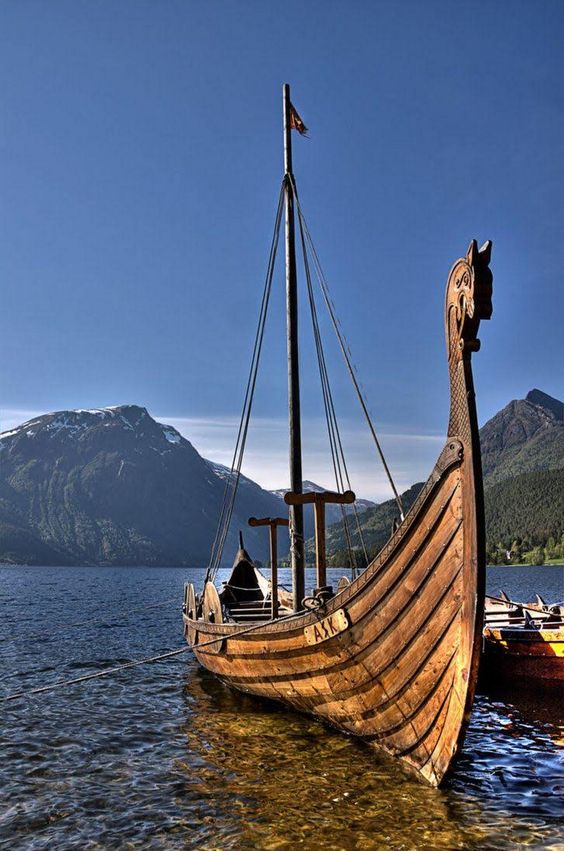
6dbe7845b1102d290e0c3ab2eb3ff0fbIn the matter of possible dynastic connections between the dynasty of Dublin and
Norwegian dynasties important historiographical progress was made in the early
nineties, and this provides a new critical context for the analysis of the problem. Dr
Claus Krag has shown that the Ynglingatal (once believed to have been composed a
little before AD 900, and thus early and intrinsically valuable) is not much older or
more authoritative than Ynglingasaga, that it reflects concepts current in the twelfth
century, that the genealogies are qualitative rather than chronological, and that they
come in 14-generation sequences like the Anglo-Saxon ones (both based formally on
the structure of Matthew’s genealogy of Christ). In his view, these are `products of the
imagination, the extant texts are remnants of the historical literature of the 12th and
13th centuries, concerning what were held to be the ancestors of what was then the
Norwegian royal house … the idea that the Norwegian kings descend from Harald
hárfagri and the monarchy was held to the property of his dynasty, is no more than a
construction … the conclusion is that the Yngling tradition is entirely a part of the
historicising method, partly cast in artistic form, which Icelandic learned men
developed’.

Peter Sawyer has argued convincingly that Ynglingasaga is fiction, not
history, but a fiction whose learned creators drew on what they knew (or thought they
knew) of Scandinavian history in the tenth and eleventh centuries. Kings who may
originally have ruled Norwegian Oppland are transformed into kings of Vestfold and
dubious king-lists are turned into genealogies. We find the historian Ari Þorgilsson
doing just this in early twelfth century: he derives his own descent from a variant of
this very genealogy.14 So much for the Dublin dynasty’s genealogical background in
Vestfold.
The early raids on Ireland seem to have been aristocratic free enterprise, and named
leaders appear in the Irish annals—Saxolb (So[hook]xulfr) in 837, Turges (Þurgestr,
not Þorgisl or ÞorgeRR) in 845, Agonn (Hákon) in 847. Only towards the middle of
the ninth century was there any attempt by any Viking kings to coordinate attacks and
settlement in Ireland, and these kings appear to belong in the Viking settlements in
Scotland.
Three important annalistic entries record the activity of Viking royals in Ireland in
848, 849 and 853. All three have connections with a kingdom
called Lothlend, Laithlind, Laithlinn, later Lochlainn. The first occurs in the Annals of
Ulster: U 848.  Bellum re nOlcobur, ri Muman, & re Lorggan m. Cellaig co Laighniu for
gennti ecc Sciaith Nechtain in quo ceciderunt Tomrair erell, tanise righ Laithlinne, &
da cet dec imbi `A battle was won by Ólchobar king of Munster and Lorcán m.
Cellaig with the Leinstermen against the pagans at Sciath Nechtain in which fell
Tomrair (Þórir) the earl, heir-designate of the king of Laithlind and 1200 about him’.
This took place at a strategic place, Castledermot, Co Kildare, not far from Dublin
where a Viking settlement had been established in 841-42. The Irish leaders were
amongst the most powerful provincial kings in the country, the troops involved were
numerous, and the slaughter was immense. Þórir the earl17 was evidently a very
important person, even if the identity of the king whose heir-designate he was remains
unclear . He was leading a large army. This was a battle of major
significance, even if we take the annalist’s estimate of the slain (as we ought) to be
merely a conventional expression for a very large number.
31df11519d59af5ea79330640603dcaa
The next entry that has reference to an overseas `king of the Foreigners’ occurs in
849: Muirf[.]echt .uii.xx. long di muinntir righ Gall du thiachtain du tabairt
greamma forsna Gaillu ro badur ara ciunn co commascsat hErinn n-uile iarum `A
sea-going expedition of 140 ships of the people of the king of the Foreigners came to
exercise authority over the Foreigners who were in Ireland before them and they upset
all Ireland afterwards’.
Evidently, this was a violent attempt by a King/Chief of the Vikings, using large forces, to
compel the independent Vikings in Ireland to submit to royal authority, and it was
fiercely resisted.
The next and final entry in this series occurs four years later: U 853.2. Amhlaim m. righ Laithlinde do tuidhecht a nErinn coro giallsat Gaill Erenn
dó & cis o Goidhelaib `Amlaíb (Óláfr) son of the king of Laithlind came to Ireland
and the Foreigners of Ireland gave him hostages and he got tribute from the Irish’.
The differing treatment of Irish and Viking as tribute payers and hostage givers
respectively may be significant. Within the conventions of Irish politics, the Viking
settlers are treated as free, the Irish as a subject population.It is likely that only a
small number of Irish kingdoms submitted to Viking overlordship.
An entry in F evidently refers to these same events and contains some
supplementary information. This appears well-founded and the source of F may be
taken to be reliable on the whole in regard to these events.
F §239. Isin mbliadain-si bhéos .i. in sexto anni regni Maoil Seaclainn, tainig
Amhlaoibh Conung .i. mac rígh Lochlainne i nEirinn & tug leis erfhuagra cíosa &
canadh n-imdha ó a athair & a fagbhail-sidhe go h-obann. Tainig dno Iomhar an
brathair ba sóo ‘na deaghaidh-sidhe do thobhach na ccios ceadna `Also in this year,
i.e. the sixth year of the reign of Mael Sechnaill, Amlaíb Conung (Óláfr konungr), son
of the king of Lochlainn, came to Ireland, and he brought with him a proclamation
imposing many tributes and taxes from his father, and he left suddenly. Then his
younger brother Ímar (Ívarr), came after him to levy the same tributes.

Vikings in Ireland: Recent Discoveries Shedding New Light on the Fearsome Warriors that Invaded Irish Shores | Ancient Origins
The expression `also in this year’ could be taken to refer back to F §238 which is
firmly dated to 849. However, this does not fit well with `the sixth year of the reign of
Mael Sechnaill’. His predecessor Niall Caille died in 846 and certainly by 847 (if not
by 846) Mael Sechnaill was recognised as king of Tara—and this would tend to place
these events in 852/53. This dating fits well with U and is to be preferred.
11. All these entries refer to major expeditions to Ireland by leaders who were
recognized as royal by the Irish annalists. Very large numbers of troops and ships
were involved and their purpose was conquest, control of the Vikings already settled
in Ireland, and the imposition of taxes on Irish kingdoms. All are associated with the
kingdom of Lothlend, Laithlind or Lochlainn whose king appears to be directing the
operations.
There are other references to Lothlend/Laithlind. One that belongs certainly to the
ninth century occurs in a well-known poem—quoted so often that it has become
trite—preserved uniquely as a marginal entry in Sankt Gallen, Stiftsbibliothek, MS
904, a copy of Priscian’s Institutiones grammaticae, heavily glossed in Old Irish.
According to Bruno Güterbock, this manuscript was written in Ireland in the midninth century: he dates it by reference to marginal notes that he thinks were written in
845 or 856.22 Robin Flower dated it more closely to the years 845-46

Professor David Dumville has recently re-examined the dating criteria and, whilst he is agnostic about many things, the central ninth-century date stands: he thinks that it was written after the death of St Diarmait ua Aeda Róin of Castledermot in 825 and before its
appearance in Cologne some time anterior to 859, and he holds with Traube and
Gerard Murphy that the book is to be associated with the circle of Sedulius Scottus
who was active on the Continent between the 840s and the 860s.

However, his suggestion, on slight palaeographical grounds, that the manuscript was written on the Continent `where its associations might be with Liège or Cologne, with Sankt Gallen, or even with northern Italy’ is speculative and the quatrain must be located in an Irish context unless more convincing evidence to the contrary can be produced.
Is acher in gaíth in-nocht
fu-fúasna fairggæ findf[.]olt;
ní ágor réimm mora minn
dond láechraid lainn úa Lothlind27
The wind is fierce to-night
it tosses the sea’s white mane
I do not fear the coursing of a quiet sea
by the fierce warriors of Lothlend.
A second example occurs in a verse appended to the entry in the Annals of the Four
Masters on the battle of Cell Ua nDaigri (Killineer, at Drogheda on the Boyne) in 868.
Here the king of Tara, Aed Finnliath mac Néill (r. 862-79), defeated the kings of
Brega and Leinster and a large Viking force (of which one of the leaders was Carlus,
son of Amlaíb of Dublin).28
Dos-fail dar Findabhair find
fiallach grinn dond Laithlind luind—
as ar chédaibh rimhter Goill—
do cath fri righ nEtair n-uill.29
There comes over fair Findabair
a keen host from fierce Laithlind—
the Foreigners are counted in hundreds—
to do battle against the king of great Étar.
Whether this quatrain had to with this battle originally may, one could argue, be a
little uncertain. However, one can read rí Étair as a kenning for king of Tara (i.e. Aed
Finnliath) and Findabair is probably Findabair na n-Ingen, now Fennor in the parish of
Donore at Drogheda and quite near to Killineer. For what it is worth, F states that the Vikings had arrived at the mouth of the Boyne with a great fleet and they were
induced by the king of Brega to join in the attack on the king of Tara.
Where, then, is Lothlend, Laithlinn, later Lochlainn? Heinrich Zimmer thought it
was Lolland (Låland), the Danish island, but Alexander Bugge decisively disproved
that unlikely hypothesis in 1900. A decade or so later, Carl Marstrander suggested
that it derived from Rogaland, the district about Stavanger in Norway—and we know
from good archaeological evidence that the early Viking raids on Ireland originated
here.

For phonological reasons he had to posit that the forms Lothlend and Lochlann existed side by side, though only the first is attested for the ninth century.33 By 1915 he had come to have serious reservations about this, but the distinguished Norwegian linguist Alf Sommerfelt continued to accept it as late as 1950.

There are two main objections to this etymology: there is no other example of
inital r becoming l in an Irish borrowing from Old Norse, and loth- not loch- is the
earliest form. It was left to David Greene to reject Marstrander’s etymology firmly,
but his suggestion that loth/lath is from the Irish word meaning `quagmire, marsh’, is
to say least weak, as Greene freely admits. One should, perhaps, posit an Old-Norse
rather than an Old-Irish name. The second element is likely to be -land`land’ (which
would develop regularly into -lann and -lainn). Is it possible that the first element
is loð- (which would regularly give Irish *loth) `shaggy, woolly, covered with or thick
with long grass and that the term is, in origin, simply a geographical descriptive,
appropriate to the fertile Orkneys and north-eastern Scottish mainland?

Jarlshof Shetlands– Wikipedia

In time, folk etymology may have replaced loth-, laith- with loch-, and Lochlainn may have been understood as `land of sea-loughs’, a fair description of the Western and Northern Isles and west coast of Scotland. There may have been no Irish name for
Scandinavia or its parts. In Greene’s view, `We must conclude that the Irish had no
specific word for Norway until the eleventh century when Lochlann comes to be
specialised in that meaning. … For the first two centuries of contact with the Vikings,
there is no strong evidence that the Irish learned much about Scandinavia proper; this
need not surprise us, since the connections of the Vikings of Ireland were
predominantly with the Atlantic area rather than with the homeland’.
Lothlend/Laithlind is Viking Scotland (and probably includes Man) and I believe
one can deduce this from a close reading of a reliable and dated Irish source: the
account of the battle of Clontarf in the Annals of Ulster.
U 1014. Sloghud la Brian m. Cenneitigh m. Lorcain, la righ n-Erenn, & la Mael
Sechlainn m. Domnaill, la righ Temhrach, co h-Ath Cliath. Laighin uile do leir i tinol
ar a cinn & Gaill Atha Cliath & a coimlin do Ghallaib Lochlainne leó. .i. x.c. luirech.
Gnithir cath crodha etorra … In quo bello cecidit ex adhuersa caterua Gallorum Mael Mordha m. Murchada ri Laigen, & Domnall m. Fergaile rí na Fortuath: cecidit
uero a Gallis Dubghall m. Amlaim, Siuchraidh m. Loduir iarla Innsi Orcc, & Gilla
Ciarain m. Gluin Iairnn rigdomna Gall, & Oittir Dub, & Suartgair, & Donnchad h.
Eruilb, & Grisene, & Luimne, & Amlaim m. Laghmaind, & Brotor qui occidit Brian,
.i. toisech na loingsi Lochlannaighi, & .ui. mile iter marbad & bathad `Brian son of
Cennétig son of Lorcán, king of Ireland, and Mael Sechnaill son of Domnall, king of
Tara, led an army to Dublin. All the Leinstermen were assembled to meet them and
the Foreigners of Dublin and an equal number of the Foreigners of Lochlainn i.e. 1000
mail-clad men. A valiant battle was fought between them … In this battle there fell on
the side of the opposing troop of the Foreigners Mael Mórda son of Murchad king of
Leinster and Domnall son of Fergal king of the Fortuatha; of the Foreigners there fell
Dubgall son of Amlaíb, Sigurðr son of Hlo[hook]ðver jarl of the Orkneys, and Gilla
Ciaráin son of Glún Iairn heir-designate of the Foreigners, and Ottir Dub and
Suartgair and Donnchad ua Eruilb and Griséne and Luimne and Amlaíb son of
Lagmann and Broðar who killed Brian, commander of the fleet of the Lochlannaig,
and 6000 who were killed and drowned’.
The argument turns on the identification of leading persons killed on the Viking side
(other than those who were self-evidently Irish kings). Dubgall m. Amlaim was the
son of Amlaíb Cuarán, king of Dublin. Amlaíb Cuarán, otherwise Óláfr Sigtriggson
Kváran, ruled as king of Dublin from 945 to his abdication after the battle of Tara in
980. He died in religious retirement in Iona in 981. Dubgall was brother of Sitric
Silkenbeard, otherwise Sigtryggr Óláfsson Silkiskeggi, king of Dublin from 989 until
his deposition in 1036. Siuchraidh m. Loduir iarla Innsi Orcc is Sigurðr digri son of
Hlo[hook]ðver, earl of Orkney—the first earl for whom we have a precise date (that
of his death)—and of whom there are detailed accounts in the sagas (though these are
probably not reliable). Gilla Ciarain m. Gluin Iairnn rígdomna Gall is son of Glún
Iairn (otherwise Járnkné Óláfsson, king of Dublin, who ruled from 980 to 989),
grandson of Amlaíb Cuarán, and nephew of Sitric Silkenbeard. In Brjáns
saga (which survives in Njáls saga, dates to within a few years of 1100, and belongs
to Viking Dublin) the associations of Brotor, otherwise Bróðir, the commander of
the loinges Lochlannach `the Viking fleet’ (Lochlannach is simply an adjective
fromLochlainn) are with the Isle of Man.Cogad (which also dates to c.1100) links
him with Amlaíb mac ri Locland `son of the king of Lochlainn’, and states that both
were earls of York and of all the north of England—and though this is wildly
anachronistic it firmly connects both with the British Isles while retaining some vague
memory of the Dublin-Viking kingship of York in the early tenth century.
Donnchad ua Eruilb is probably not Viking. Marstrander derived Erulb from Old
Norse Heriulfr rather than Hio[hook]rulfr or Hiorulfr. There is, however, a
historical objection to this derivation: the eponymous Erulb belonged to Cenél Eogain and he was grandson of Mael Dúin (ÿar788), king of Ailech, and son of Murchad,
king of Ailech, who was deposed in 823. He was born, then, in the early ninth
century, far too to early to bear an Old-Norse name. Meyer suggests that the name is
derived from Old English Herewulf, Herulf and the implication is that it had been
borrowed before the Viking wars began. Suartgair derives from Old Norse *Suartgeirr, *Suartgarr which corresponds to Old English Sweartgar.
In Cogad Suartgair (miswritten Snadgair) is represented as one
of the four king’s deputies and admirals of the Vikings (cetri irrig Gall & cetri toisig
longsi)—the others being Oittir Dub, Grisene and Luimne. If these are `king’s
deputies’, they are likely to be deputies of the king of Dublin—no other Viking king is
known to have been involved. Oittir, a name well attested in the Irish annals in the
tenth century, derives from Old Norse Óttarr.

Irish countryside, Ballykeel dolmen | 10 Beautiful Places in Ireland
His Irish soubriquet Dub `the Black’ points to an Irish or Scottish background. Grisine, better Grísín(e) is the Old Norse personal name Gríss with the Irish diminutive ending -ín, -íne -éne, and this indicates that he belonged to Gaelic-speaking Ireland or Scotland. In Marstrander’s view, the use of such diminutives is `a fact that throws an extraordinary light on the close linguistic and social connections between Norsemen and Irishmen at the outset of the eleventh century’. The provenance of Luimne (Lummin, Luiminin in Cogad) is uncertain: Marstrander and Stokes do not suggest an Old Norse etymology and it may be Irish Lommíne.
Amlaim mac Laghmaind belongs to the Hiberno-Norse world of the Isles and
Man. Lagmann is derived from Old-Norse lo[hook]gmaðr `lawman’. This name of a
profession became a personal name in the Orkneys (and, as we know from the Irish
annals, in the Hebrides), but not in Scandinavia proper.It is attested (in the
plural, Lagmainn) as the name of an aristocratic kindred or group in the Hebrides in
962 who engaged in late Viking attacks on Ireland. The same Lagmainn, led by
Magnus mac Arailt, lord of the Isles, again appeared as raiders in Ireland in 974. It
must, therefore, have become a personal name some generations earlier. It also occurs
as a personal name among the descendants of Godred Crovan, king of Man and the
Isles. And it is attested in the twelfth century amongst the Uí Duib Dírma, a minor
branch of the Northern Uí Néill, who were lords of a petty kingdom called In Brétach
in Inis Eogain. The Scottish surnames Lamont and MacLamond derive from it..

Not one of the leaders of `the Foreigners of Lochlainn’ can be shown to have come
from Scandinavia. They all belong in the Northern and Western Isles, Scotland, Man
and Ireland, yet all have Norse names. This is precisely what the Annals of Inisfallen say of Brian’s opponents slain in the battle: ocus ar Gall Iarthair Domain isin chath chetna `and the Foreigners of the Western World were slaughtered in the same battle’ at 1014 AD.

In the usage of the Irish annalists, the term `Western World’ refers to the Gaelic world and does not extend in any case beyond the British Isles. It has long been recognised that Cogad adds names from much later and indeed fictional literary sources but
when we weed out a few of the more improbable ones we have the following as the
principal foreign confederate forces at Clontarf:
Ro tochured cucu dna Siucraid mac Lotair, iarla Insi Orc & na nInnsi archena, &
comtionol sloig buirb barbarda dicheillid dochisc dochomaind do Gallaib Insi Orc &
Insi Cat, a Manaind & a Sci & a Leodus, a Cind Tiri agus a hAirer Goedel … `They
invited to them also Sigurðr son of Hlo[hook]ðver, earl of Orkney and the Hebrides as
well, and an assembled host of uncouth, barbarous, berserk, stubborn, treacherous
Foreigners from Orkney, Shetland, Man, Skye, Lewis, Kintyre and Argyle …’
This fits well with what we know of the leadership from U and confirms one in the
impression that, for the contemporary annalist, Laithlinn/Lochlainn meant no more
than the Norse Viking settlements in the British Isles, and more particularly
those in Scotland and Man.
This conclusion is supported by two literary texts. The first is Cath Maige
Tuired, a text dated in essentials to the ninth century, and very probably to the
second half. The surviving text is not unitary. There is general agreement that §§1-7,
9-13 are late and derive from the historicist text, Lebor Gabála;
fragment §8 is not the beginning of an independent tale and is hardly integral to the text; and the tale breaks off imperfectly.66 No evidence cited here is taken from these interpolations.
Some difficulties about dating and interpretation remain. T. F. O’Rahilly argued that
`the extant text of Cath Maige Tuired, though doubtless based on and incorporating
the earlier account, is comparatively late, for it contains some loan-words from Norse
and applies the name Insi Gall to the Hebrides’—late enough to indicate that its author
may have belonged to the late tenth century. This date may have been suggested to
O’Rahilly by the first contemporary annalistic attestation of Insi Gall as a term for the
Hebrides in 989,68 and buttressed by the Norse/English borrowings in the text. Of
these, there is one clear Old-Norse borrowing: fuindeóc (§133) `window’, from OldNorse vindauga.
Rútshellir | Rútshellir, a cave near Skógar in southern Icel… | FlickrTwo other borrowed words, scildei, scitle, scilte(§§28-30) `coins’
(<scill) and bossán (§28) `purse’ (<púse) derive from Old English, not Old
Norse, and while one cannot say that they had not been borrowed into Irish before
the Viking period they fit well with the expanding commercial activity of Viking
Ireland and the increased circulation of coin. The linguistic evidence and the historical
references to Insi Gall and Lochlainn indicate that the text was written at a point when
the Vikings had made a serious impression on Ireland. A terminus ante quem is
provided by Cormac’s Glossary, which excerpted the text and which dates to
c.900. Incidentally, the paganism of the Vikings and its treatment in a fictional
manner enabled the creator of the text to make full use of what he knew (or thought he
knew) of mythology and pagan practices. However, while using the Tuatha Dé in a
subtly allusive way to represent the Irish and while presenting their magic as benevolently defensive, he expressly distances himself from pagan mythology by
depicting the Dagda as a gross figure of fun, a scandalous and unsavoury Father of the
Gods, whose licentious behaviour is offensive to good christians—and this contains
a conscious christian programmatic aspect that may be read as ridicule of paganism in
general, and of that of the Vikings in particular.
As Dr Gray has pointed out, `the Fomorian threat is described as if it were a vast
alliance among various Scandinavian forces, all bent upon the conquest of
Ireland’. Dr Carey has argued cogently that the text was written in the second half of
the ninth century—possibly in the reigns of Mael Sechnaill (r. 846-62) and Aed
Finnliath (r. 862-79)—and that it represents (amongst other things) a reaction,
expressed in symbolic literary terms, to the Viking attack and he sees no need to take
the references to Insi Gall as the work of a later interpolator.

I agree. One might add hat the sea-inlets, lakes, and rivers of Ireland, whose waters the cupbearers of the Tuatha Dé promise to hide from the Fomoire, have (with few exceptions) a clear contemporary reference—the Shannon and its lakes and estuary, the Bann and Lough Neagh, the Boyne, the Liffey, the Munster Blackwater, and Strangford, Belfast Lough and Lough Foyle were amongst the principal areas of ninth-century Viking activity.
However, the important passage for our purposes is:
Faíthius íar sin cusan trénfer, co Balor húa Néitt, co rígh na n-Innsi, & co hIndech
mac Dé Domnand, co ríg Fomoire; & nos-taireclamsat-side do neoch buí ó Lochlainn
síar do slúag doqum n-Érenn, do astad a císa & a rígi ar éigin foruib, gur’ba
háondroichet long ó Insdib Gallad co hÉirinn leo. Ní tánic doqum n-Érenn drem bud
mó gráin nó adhúath indá in slóg-sin na Fomoiridhi. Ba combág ogond fir o Sgiathia
Lochlaindi & a hInnsib Gall immon slógad-sin `Thereafter he sent him to the
champion, to Balor grandson of Nét, the king of the Hebrides and to Indech son of Dé
Domnand, the king of the Fomoire and these gathered all the forces
from Lochlainn westwards into Ireland to impose their tribute and their rule over them
[i.e. Tuatha Dé] by force, so that they made one bridge of ships from the Hebrides to
Ireland. No host ever came to Ireland that was more hateful or more terrifying than
that host of the Fomuire. The man from Skye of Lochlainn and the man from Insi
Gall were rivals over that expedition.
The text artfully merges the Fomuire and the Vikings, and places the Fomuire in the
Scottish territories of the Vikings, as ninth-century Ireland knew them. Sciathia of the
text is a learned latinisation of Scí `Skye’ (nom. Scí, gen. Sceth, Old-Norse Skíð), and
it is clear that it is part of Lochlainn. The final sentence conveys that there was rivalry
between the king of Skye (who would have controlled the Inner Hebrides) and the
king of Insi Gall, which we can read as the Outer Hebrides in the present context. It is,
of course, quite uncertain whether there is anything historical in this, perhaps a reference to rivalry amongst Viking sub-kings in Scandinavian Scotland that would
have made good sense to contemporaries, but historicity cannot be ruled out.
The literary reflexes of the battle of Clontarf and of other aspects of Viking history
in Ireland in the saga Cath Ruis na Ríg bear out the equation of Lochlainn with
Scandinavian Scotland. We owe the first thorough discussion of this text, and an
edition and translation of the relevant passage, to the pioneering work of Heinrich
Zimmer.

Thurneysen dated it to the first third of the twelfth century and would
attribute the Book of Leinster Táin bó Cúailgne and Mesca Ulad to the same author.
Áine de Paor reached like conclusions about authorship. However, Dr Uaitéar Mac
Gearailt argues convincingly against common authorship and dates the text `possibly
mid way through the second half of the twelfth century’. The opening of the tale is as
follows: after the overthrow of the Ulaid in Táin bó Cuailgne, king Conchobar fell
into a decline and languished because of his defeat. His druid urged him to send for
his absent friends to help him, and to resume the struggle. His overseas friends divide
into two groups: the Ulster warrior Conall Cernach who is levying tribute abroad, and
the Viking forces of Scotland.

Vikings, Country: Ireland | Canada Language: French | Arabic | English | Old English | Norse, Old | Latin, watch trailors
Acus faítti fessa & tecta uaitsiu chena cot chairdib écmaissi .i. co Conall crúaid
coscorach commaidmech cathbuadach claidebderg co airm i fail ac tobuch a chisa &
a chanad i crichaib Leódús i n-insib Cadd & i n-Insib Or[c]. & i críchaib Scithia &
Dacia & Gothia & Northmannia ac tastel Mara Ict & Mara Torrián & ic slataigecht
sliged Saxan. & faítte fessa & tecta uait no cot chairddib écmaisse co iathaib
Gallecda co Gallíathaib na nGall .i. co Amlaíb uel Ólaib hua Inscoa rig Lochlainne,
co Findmór mac Rofhir co ríg sechtmad rainne de Lochlainn, co Báre na Sciggire co
dunud na Piscarcarla, co Brodor Roth & co Brodor Fiúit, & co Siugraid Soga [co]
ríg Súdiam, co Sortabud Sort co ríg Insi Orc. Co secht maccaib Romrach (co hIl, co
hÍle, co Mael, co Muile, co Abram mac Romrach, co Cet mac Romrach, co Celg mac
Romrach), co Mod mac Herling, co Conchobar coscarach mac Artuir meic Bruide
meic Dungail, co mac ríg Alban `Let tidings and messages be sent from you forthwith
to your absent friends, namely, to Conall, the stern, the triumphant, the exultant, the
victorious, the red-sworded, to where he is raising his tax and tribute in the territories
of Lewis, in the Shetlands and in the Orkneys, and in the lands of Scythia, Dacia,
Gothia, and Northmannia, voyaging the Ictian Sea and the Tyrrhenian Sea, and
plundering the ways of the Saxons. Let tidings and messages be sent from you, too, to
your absent friends to the lands of the Foreigners, to the foreign lands of the
Foreigners, namely, to Amlaíb (or Ólaib) ua Inscoa, king of Lochlainn, to Findmór
son of Hróarr, king of the seventh part of Lochlainn, to Báre of the Faroe Islands, that
is, to the fortress of the Piscarcarla, to Brotor Roth and Brotor Fiúit, and to Siugraid
Soga, king of the Hebrides, to Sortabud Sort, king of the Orkneys, to the seven sons of
Romra (to Il, to Íle, to Mael, to Muile, to Abram mac Romrach, to Cet mac Romrach,to Celg mac Romrach), to Mod mac Herling, to Concobar the Victorious son of
Arthur, son of Brude, son of Dúngal, the son of the king of Scotland’.
The heroic Conall Cernach is levying tribute, firstly in Viking Scotland (Lewis,
Shetlands, and Orkneys), and secondly, in more distant parts of Europe (Scythia,
Dacia, Gothia, and Northmannia).

One may take Scythia to be Svealand (Sweden), Dacia to be Denmark, Gothia to be Gotland and Northmannia to be Norway: they are listed with the English Channel and the Mediterranean and the author is concerned to represent Conall Cernach as putting the most remote lands under tribute. If these are to be understood as continental Scandinavia, it is interesting that Latin-derived learned names are used for these regions and, evidently, in the mind of the writer, they are quite different from the Lochlainn of which Amlaíb ua Inscoa is king.

The Viking allies, with the exception of Báre of the Faroes, all belong
in Lochlainn or in places identifiable as being in Scotland. Siugraid Soga, Old
Norse Sigrøðr sugga (`big, strong man’), a clear reflex of Sigurðr digri `the Stout’
son of Hlo[hoook]ðver, is called rí Súdiam, a place name that derives from OldNorse Suðrøyjom, the dative plural of Suðrøyjar, the normal name for the Hebrides,
usually called Inse Gall in Irish. The historical Sigurðr was earl of Orkney and
apparently was overlord of the Hebrides as well. Sortadbud Sort, in Old
Norse Suarthofuð86 suartr, is represented as king of Orkney—and this personage
seems unhistorical. Brotor Roth (Old Norse Bróðir rauðr) and Brotor Fiúit (Old
Norse Bróðir hvítr) are a duplicated reflex of the historical Brotor who slew king
Brian.

The seven sons of Romra (Il, Íle, Mael, Muile, Abram, Cet and Celg) are
puzzling, and appear to have place-name aetiologies: Trácht Romra is said to be the
Solway Firth and some of them seem to be eponyms of places (Islay, Mull of
Kintire) in Scotland. Findmór son of Rofher, king of the seventh part of Lochlainn,
looks odd but this term may reflect the division of Scotland into sevenths in De situ
Albanie and may refer to Viking Caithness: Septima enim pars est Cathanesia citra
montem et ultra montem; quia mons Mound diuidit Katanesiam per medium `The
seventh part is Caithness, to this side of the mountain and beyond the mountain;
because the mountain of Mound divides Caithness through the middle’.88 Caithness
was, of course, heavily settled by the Vikings. The most important figure in this text,
however, is Amlaíb uel Ólaib hua Inscoa rí Lochlainne who is a literary reflex of
Amlaíb Cuarán. Inscoa is a rendering of Old-Norse Skórinn `the shoe’ (with postposed
article) and corresponds to Irish cúarán `shoe, slipper’, the by-name of Amlaíb
Cuarán, father of Sitric Silkenbeard. Amlaíb Cuarán was well-known by his Irish
name in Norse-speaking circles (see, for example, `er var með Óláfi kvarán í
Dyflinni’ in Landnámabók) but the Old-Norse form Skór, Skórinn can be readily
reconstructed from the Irish and therefore was used by speakers of Old Norse.

It passed from them to the author of Cath Ruis na Ríg, who turned it to literary purposes, and the name recurs in the twelfth-century Acallam na senórach: Aiffi ingen
Ailb (vl. Alaib) meic Scoa, ingen rig Lochlainn atuaid.  The historical Amlaíb
Cuarán was king of York for a brief period c.943 before his reign as king of Dublin
(945-80), and has a direct connection with Gotland. All the associations of the
derived literary persona constructed from the historical figure are with Viking
Scotland, and rí Lochlainne in Cath Ruis na Ríg must mean, for its author, king of
Viking Scotland. One notes, too, that when Conall Cernach musters the troops of
this alliance, he does so at Lewis in the Hebrides. Furthermore, as Sophus Bugge
suggests, on the basis of the Old-Norse forms of names of people and places in the
mustering of the Viking fleet, it is very likely that the author of Cath Ruis na Ríg is
drawing on a pre-existing historical tale in Old Norse, inspired by Irish-Viking history
and the battle of Clontarf, and circulating in Dublin and in Viking Scotland in the
twelfth century. And it is likely that this Old-Norse tale existed in written form.

The earliest precisely datable historical example of Lochlainn meaning `Norway or Norse’ occurs in a chronological poem of 58 quatrains by Gilla Cóemáin mac Gilla
Samthainde, `Annálad anall uile’.

This poem was written in 1072: the author gives
the date of writing in quatrains 6-7, 56-57—and he gives the ferial for the year twice.
§55
Dá bliadain—ní bréc i ngliaid—
ó éc Donnchada meic Briain
cath Saxan—seól co nglaine—
i torchair rí Lochlainne.
`Two years—it is no falsehood in battle—
from the death of Donnchad son of Brian
to the battle of the Saxons—pure course—
in which fell the king of Lochlainn.

Traveling to United Kingdom - image
Donnchad mac Briain, king of Munster and claimant to the kingship of Ireland, went
on pilgrimage to Rome in 1064 and died there in that year. The `battle of the Saxons
… in which fell the king of Lochlainn’ refers, of course, to the victory of Harold II
Godewinesson at Stamford Bridge, on 25 September 1066 and the death in that battle
of Harald harðráði, king of Norway, whom Marianus Scottus called `rex
Normanndorum’.
The next example is provided by the Annals of Ulster: 1102.7: Maghnus ri Lochlainni co longais moir do thuidhecht i Manainn & sith mbliadhna do denum doibh & do feraib Erenn `Magnus king of Lochlainn came with a
great fleet to Man and a year’s peace was made by them and the men of Ireland’. A third example occurs in Magnus’s death notice in the same annals:
1103.6: Maghnus ri Lochlainni do marbad for creich i nUlltaib `Magnus, king of
Lochlainn, was killed on a raid in Ulster’.
These entries refer to Magnus III berfœttr, king of Norway (r. 1093-1103) and his
famous expeditions to the West.97 Magnus was son of Óláfr kyrri and grandson of
Harald harðráði. In 1098, perhaps profiting from several years of disorder in Man and
the Isles, which included intervention by Muirchertach Ua Briain, king of
Ireland, Magnus came west and established his overlordship there—over the
Orkneys, and perhaps over Kintyre, Galloway and, briefly, Gwynedd. He harried the
Ulster coast and not altogether successfully, for he apparently lost three ships and
about 120 men. Magnus left his son Sigurðr in Orkney, and returned to Norway in
the spring. He came back to the west, perhaps in 1101, certainly by 1102, and he
caused a great deal of anxiety.

The Irish annals report that he had come to capture Ireland, and here they agree with such later sources as Ordericus Vitalis and the Norse sagas. Magnus occupied Man and meddled in Irish and Norman politics. The Annals of the Four Masters state that `the men of Ireland made a hosting to Dublin against Magnus’. `Men of Ireland’ refers to Ua Briain and his supporters, and the context suggests that Ua Briain felt under serious threat. Soon after that a truce was agreed. Magnus and Muirchertach exchanged hostages and a marriage alliance was arranged.
The peace with Magnus looks very much like a holding operation on Ua Briain’s part
until he decided how to cope with this emergency. I believe that Cogad Gáedel re
Gallaib, an eloquent historicist assertion of Ua Briain power, addressed to the
Dubliners and to other political opponents, including Mac Lochlainn who was king of
the North and Ua Briain’s chief rival, belongs to this period of crisis.
It is evident that Laithlind/Lochlainn took on the new meaning `Norway’ only
when there were kings of Norway and when these posed a serious military threat in
the British Isles. Effective control of the Northern and Western Isles would inevitably
be a pre-condition of that threat, and the change of meaning evidently took place in
that context.

Bardr mac Imair (c. 873-881 CE, also known as Barid mac Imair, Barith, Baraid) was a Viking king of Dublin, son of the Viking king Imair (Imar, Ivan) who founded the Ui Imair Dynasty in Ireland. Bardr became king in Dublin after Imair’s death.
We now return to the ninth century. The evidence of the Irish annals is that there
was a king of Viking Scotland whose heir-designate, Tomrair or Thórir, was in
Ireland with a very large army in 848, and he fell battling against two of the most
powerful Irish provincial kings. In 849 this king sent a fleet of 140 ships to establish
his authority over the Vikings in Ireland, and upset the whole country. In 851 the Irish
annals report another dramatic development: Danish Vikings came to Dublin,
slaughtered the Vikings of Dublin and plundered their fortress. They tried to do the
same to the Viking settlement at Annagassan, but they were heavily defeated and
many of them were killed.102 According to the Welsh annals, Anglesey was plundered by Danes (perhaps the same force) in 853 or so.103 What may be a reply from Viking
Scotland to the Danish attacks in Ireland came in 852: 160 ships and their crews came
to Carlingford Lough to do battle with the Danes but the Danes won, and their
opponents abandoned their ships to them.

Two Norse Viking leaders are mentioned: Stain who fled and Iercne who was beheaded.  And next year, Amlaíb, `son of the king of Laithlind’, came to Ireland and got the submission of the Vikings of Ireland and he received taxes from the Irish. From now on, Amlaíb and Ímar (with their brother, Auisle (Auisl), first mentioned in 863, and murdered by his brothers in 867) evidently ruled in Dublin and engaged in significant wars with the Irish kings.
We now need to consider the homeland and origins of these kings. The written
sources reveal little. In 795 Skye and Iona were attacked, in 798 there were `great
incursions both in Ireland and in Alba’. However, as far as Scotland is concerned,
there is no indigenous record for the early ninth century—silence only. Apart from the
raids on Iona (802, 806 and the final reported raid in 825, when Blathmac was
martyred) nothing much is known of any Viking raids on any Scottish churches in
the early ninth century, apart from a raid by Danari (probably Danes, hardly
Norwegian Vikings from the Western Isles) as far as Dunkeld in the reign of Cináed
mac Ailpín or Kenneth I (r. 843-58), reported in the Scottish Chronicle.
That is not to say that such raids did not take place. Evidently, Iona came to an early
understanding with the new power in the Western and Northern Isles: the only
untoward ecclesiastical incident reported for the rest of the ninth century is that the
shrine and halidoms of Columba were brought to Ireland `in flight before the Vikings’
in 878. Only for Ireland are there details of the early years of Viking raiding. We can
only guess that northern Britain had similar experiences. Hardly anything is known
about raids on England from the plundering of a Northumbrian monastery in
794 and the churches of Hartness and Tynemouth in 800 until the raid on
Sheppey in 835.

Orkney Viking 1 Day Itinerary - Adventures Around Scotland( Viking settlement on Orkney, Scotland)

When and how the Vikings conquered and occupied the Isles is unknown, perhaps
unknowable. To my mind, occupation and colonization are different (if often
sequential) processes. The first involves the establishment of lordly or royal control
over a subject population and very often the imposition of a new aristocracy. The
second involves settlement of the land and the dispossession or part dispossession of
the previous occupiers. Some areas may have been occupied, others (for example the
Shetlands and the Orkneys)  were colonised. Dr Myhre has re-opened the question
of possible settlement (and here colonisation seems to be in question) of
Scandinavians in the Northern and Western Isles in the eighth century and, indeed, the
much disputed matter of early settlement as a whole.
Sommerfelt cites linguistic evidence for contact between the Picts and the Scandinavians before AD 700, but this is no evidence for settlement or indeed for the kind of raiding that is characteristic of the Viking Age. This problem is perhaps beyond satisfactory solution. Given the lack of written records, scholars must depend mainly on archaeology, but archaeology cannot give dates as refined as decades, unless one is lucky with dendrochronology or writing in the form of coin hoards. The other fall-back is toponomy, but toponomy is a surly, inarticulate and ambiguous witness, even in the hands of the best counsel. Add to this the rebarbative Scottish indigenous written sources for the ninth century and chronology becomes very difficult. Given the evidence of the few contemporary Irish annals and inferences one can make from the pattern of raiding on Ireland, the likeliest course of events is that the Isles—Northern and Western—and their
contiguous mainland territories were occupied between 790 and 825 (towards the
earlier part of this time-span).

This period corresponds to the prelude to the Viking wars in Ireland. One detailed annalistic entry in U points to a significant development n Scotland: in 839 the Vikings inflicted a crushing defeat on Fortriu and killed the most important Scottish leaders.What Fortriu was at this time is the subject of some recent discussion, but it is likely that it is identical with Southern Pictland, Pictland south of the Mounth. One possible interpretation of the defeat of 839 is that the Vikings were by now fully in possession of the Northern and Western Isles, and were attacking South Pictland because they had already established themselves over North Pictland or, at least, had placed it under tribute. I believe the attacking Vikings were the Norse Vikings of the Isles, and not Danes. And this lone annalistic entry is likely to be a mere pointer to long-term and intense Viking pressure on the central lowlands of Scotland.
Meanwhile, in Ireland, the prelude to the Viking attack proper is marked by
desultory coastal raiding that slowly becomes more frequent. The annals do not, of
course, report all raids and acts of violence, nor does anyone expect them to do so, but
it is probably right to take the annals to be a reliable general indication of what
happened. First came the attacks on Rathlin and Skye in 795. These were followed in
798 by the burning of the church on St Patrick’s Island (off Skerries), and the bórime
na crích `cattle-tribute of the territories’ taken by the Vikings must refer to a forced
levy for provisions on the mainland nearby. In the same entry the annalist refers in a
general way to great incursions in Ireland and in Britain. In 807, raiders rounded the
north coast of Ireland and attacked western coastal monasteries—Inishmurray off the
Sligo coast and Roscam in the inner waters of Galway Bay. For the first time, the
annals begin to report fighting between the Irish and the Vikings—skirmishes rather
than battles: 811 (a defeat of the Vikings by the Ulaid), 812 (their defeat by the
Éoganacht Locha Léin in the south-west), later in 812 (their defeat by Fir Umaill, near
Clew Bay), followed by a slaughter of Conmaicne of west Galway by the Vikings.
Small groups of two or three ships apiece may have been active on the west coast.
They were back in 813 when they slaughtered Fir Umaill on the west coast and killed
their king.

By now, the Vikings had learned all they needed to know about most of Ireland’s
coastline and its possibilities for plunder, occupation or colonization, but suddenly
there is silence. There are no reports of activities on the west coast or anywhere else in
Ireland for eight years. Attacks begin to be reported again in 821 in the Irish Sea
(raids on Howth and on the churches in the islets of Wexford Harbour) and on the
south coast, Cork and Inis Doimle in 822. In the distant south-west, Vikings raided the
remote monastery of Skellig, 14 kilometres off the Kerry coast and so ill-treated its
superior that he died as their prisoner. In the north-east, there were concerted attacks
on coastal monasteries of the Ulaid: Bangor was struck in 823 and savagely plundered
in 824. In 825 Down and Moville were hit, and the Ulaid defeated those who had
attacked the most prestigious of their monasteries. From this point, there are terse
annalistic reports of severe attacks along the east coast on churches and local coastal
kingdoms and significant engagements with local kings. The prelude was over: the
first Viking Age proper had begun. It is possible that the earliest raids, those that
occur up to the second decade of the ninth century, were mounted from south-west
Norway. The more vigorous and destructive attacks in 821 and later, evidently made
by larger and better organised forces, are a different matter. Because of the logistical
problem of bringing large fleets from Norway and because of the large numbers one
can infer from their activities, these probably came from nearby, and the Viking
settlements in the Northern and Western Isles of Scotland are the most likely bases. It
is possible that the time of calm in Ireland between 813 and 821 corresponds to a
period of intense activity in Scotland.

Orkney standing stones #orkney # scotland #sunset
In the 830s, the raids on Ireland became more ominous and from 836 large-scale
attacks began with `the first prey of the pagans from Southern Brega [south Co
Meath] … and they carried off many prisoners and killed many and took very many
captives’. In the autumn, the annalist reports `a most cruel devastation of all the lands
of Connacht by the pagans’. Clonmore, Co Carlow—a monastery patronised by the
dynasty of south Leinster—was burned on Christmas Eve, and many captives were
taken. Mid-winter raiding for slaves proves that the Vikings were already overwintering, possibly on islands, and could hold numerous prisoners. The Life of St Fintan of Rheinau indicates that they were already slaving, and taking captives for
sale in mid-century.


In 837, a fleet of sixty ships appeared on the Boyne and another on the Liffey—
very likely from the Scottish settlements—each bringing about 1500 men. They
ravaged the east-coast kingdoms. Though the Uí Néill kings routed them at first, they
were soon defeated `in a countless slaughter’. The Vikings now began to appear
regularly on the inland waterways—the Shannon, Lough Derg, the Erne, the Boyne,
Lough Neagh and the Bann. They overwintered on Lough Neagh for the first time in
840-41. They now began to build longphoirt, fortresses that protected them and their ships, and some of these became permanent. There was one at Linn Dúachaill
(Annagassan, Co Louth) by 841 and another at Duiblinn (on the Liffey at or near
Dublin). From Annagassan they raided deep into the midlands, from Dublin they
attacked Leinster and Uí Néill. They first overwintered in Dublin in 841-42.
These large-scale raids—the beginning of the occupation of the Irish east
midlands—were mounted from Scandinavian Scotland, apparently by aristocratic
freebooters and adventurers, some of whom (as we have seen) are named in the Irish
annals. This may be a re-run of what one infers happened in Scotland a generation
earlier. First, small exploratory raids, then heavy plundering and slaving to break the
resistance of the population, and finally occupation and colonization. However,
sometime before the mid-ninth century, a kingship of Viking Scotland had come into
being and, as we have seen, that kingdom began to exercise authority over the Vikings
and their settlements in Ireland, though not of course over all, for the annals continue
to report the activities of freewheeling adventurers. And this brings us back to Amlaíb
and Ímar, who took control of the kingdom of Dublin, certainly from 853.
Some time in the 850s or early 860s the dynasty moved its main operations to
Dublin. We find Amlaíb, Ímar and their brother Auisle (he is first mentioned in the
Irish annals in 863), extremely active in Ireland, engaging in warfare and politics with
the major Irish kings. Only two aspect of their activities will be considered here:
their dealings with the Gall-Goídil `Foreigner-Irish’ and their impact on monastic
raiding.
The Gall-Goídil `Viking-Irish’ make their appearance in the Irish annals in the
period 856-58, and then disappear from the record just as suddenly. It is likely that
they originated in Viking Scotland, and were war bands aristocratically led by men of
mixed Scottish and Viking descent, operating independently of the dynasty and
adventuring on their own account in Ireland. By the middle of the ninth century, a
generation (and perhaps a second generation) of such aristocrats would have come to
military age in Scotland. The interpolator of F is particularly interested in them, and
his preoccupations—and his views—have been ill-advisedly shared by some modern
historians. The interpolator is extremely hostile to them:
… Scuit íad, & daltai do Normainnoibh íad, & tan ann adbearar cid Normainnigh
friú. Maidhidh forra ré nd-Aodh, & cuirthear a ndeargár na nGall-Ghaoidheal, &
cinn imdha do bhreith do Aodh leis; & ra dhlighsiot na hEireannaigh an marbhadh
soin, uair amhail do-nidis na Lochlannaig, do-nidis-siomh `… they are Gaels and
foster-children of the Vikings, and sometimes they are even called Vikings. Aed
defeated them and slaughtered the Gall-Goídil, and Aed brought many heads away
with him; and the Irish were entitled to do that killing for as the Vikings did, so also
did they [the Gall-Goídil]’.

Elsewhere, in an addition to the account of the expedition of Mael Sechnaill, king of
Tara, to Munster in 858, he accuses them of being apostates and of being much more
hostile to the church than the Vikings themselves:
Gen go ttíosadh Maol Seachlainn an turus so do ghabháil ríghe Mumhan do fén, ro
bo thuidheachta do mharbadh an ro marbadh do Ghall-Ghaoidhealaibh ann, úair
daoíne ar ttregadh a mbaiste iad-saidhe, & ad-bertais Normannaigh friú, uair bés
Normannach aca, & a n-altrum forra, & ger bó olc na Normannaigh bunaidh dona heaglaisibh, bá measa go mór iad-saidhe, .i. an lucht sa, gach conair fo Eirinn a
mbidís `Although Mael Sechnaill did not make this expedition to take the kingship of
Munster for himself, it was worth coming to kill what he killed of Gall-Goídil there,
for these were people who had forsaken their baptism, and they were called Vikings
because they behaved like Vikings and they had been fostered by them; and though
the real Vikings were evil towards the churches, these were much worse wherever
they were in Ireland’.

Calanais Standing Stones central stone circle, at sunset, erected between 2900-2600BC measuring 11 metres wide. At the centre of the ring stands a huge monolith stone 4.8 metres high weighing about 7 tonnes, which is perfectly orientated so that its widest sides face due north south. Calanais Neolithic Standing Stone (Tursachan Chalanais) , Isle of Lewis, Outer Hebrides, Scotland.
None of this moralising occurs in the uninterpolated annals. Here the Gall-Goídil first
appear as the allies of Mael Sechnaill, king of Tara, against the Vikings, evidently
those led by Ímar and Amlaíb, kings of Dublin: Cocadh mor etir gennti & Mael
Sechlainn co nGall-Goidhelaibh lais `Great warfare between the Vikings and Mael
Sechnaill, who was supported by the Gall-Goídil’. In the same year, they were in
the north, where Aed Finnliath mac Néill, king of Ailech, heavily defeated them far
inland at Glenn Foichle (Glenelly, in the barony of Upper Strabane). They may
have come from Lough Neagh and the Bann. In 857, a leader of theirs, Caitill Find
(whose name is appropriately partly Old Norse, partly Old Irish), is mentioned: he
was routed in battle by Ímar and Amlaíb in Munster.This enmity continued into the
next year. The Gall-Goídil allied with Cenél Fiachach (a sub-kingdom of Southern Uí
Néill) and both were defeated by Ímar of Dublin and Cerball, king of Osraige in Araid
Tíre (to the east of Lough Derg and the Shannon in Co Tipperary). Evidently, the
kings of Dublin did not like free-wheeling Vikings (or look-alikes) in their space.
36. In fact, they made serious attempts to exercise royal control. This appears in a new
pattern in the Viking plundering of Irish monasteries. This change has often been
noted and has been the subject of a recent study that seeks to show that the fall off
in monastic plundering in the second half of the ninth century is due, in large part, to a
marked decline in annalistic recording, though some real decrease in raiding may have
occurred. However, a more plausible explanation suggests itself. The large-scale
plundering of monasteries stops quite suddenly about the time that the dynasty
established itself in Dublin. In the fifteen years between 855 and the end of 870 the
annals report ten incidents that can be regarded as attacks on monasteries (Lusk and
Slane 856, Leighlin c.864, Clonfert 866, Lismore 867, Armagh and Castledermot 869,
the islands of Lough Ree and the surrounding lands, where there were many monasteries c.873, Kilmore near Armagh 874, and the capture of the superior and
lector of Armagh in 879, which is not conclusive evidence for a raid).

The Last Viking Returns Held on last Tuesday of January at the end of Yule season. Europe's Largest Fire Festival...Shetland's "Up Helly Aa" Fire Festival.What do you do if you live in the Shetland Islands of Scotland on the last Tuesday of January? Well 1000 men dress up like a Viking and march through the town and city..

Of these, at east three were carried out by the royal dynasty itself: the assault on Lismore in 867, Amlaíb’s major attack on Armagh in 869 (which can be understood as revenge on the Northern Uí Néill, the patrons of Armagh, for the death of his son at the battle of Cell
Ua nDaigri the year before), and Barid’s plundering of Lough Ree and its
surroundings. Between 881 and 902, the annals report some fourteen attacks on
monasteries. Of these, three were certainly done by the royal dynasty: Duleek 881,
Lismore 883 and Armagh 895. Nine others are likely, given their nearness to Dublin:
Kildare (886), Ardbracken, Donaghpatrick, Dulane and Glendalough (all in 890) and
Kildare and Clonard in 891. Some monastic raiding by Vikings evidently not under
the control of Dublin occurs mainly in the periphery, for example, the attack on
Cloyne in 888. And there is another consideration: plundering monasteries is a crude
and cost-inefficient method of generating income from rich and politically subservient
institutions: regular payments of fixed tribute are much more effective and suit both
sides better, but this will occur only if the dynasty exercises real control. This appears
to be the case, and monastic plundering by the dynasty occurs as political punishment
(for example Armagh in 869), or when arrangements for the payment of tribute broke
down (perhaps Lismore in 867), or when there is strife amongst the branches of the
dynasty as happened towards the end of the ninth century.

The annalistic record is, of course, partial and incomplete; there are changes over time in its nature, and some diminution in its extent. However, it does indicate a general trend that fits well with the emergence of kingly power amongst the Vikings in Ireland. Kings and their henchmen do not like professional trouble-makers competing for the same scarce resources in their area of jurisdiction and causing general disorder and loss. Evidently the dynasty kept good control for the most part and was usually (though not always) able to exclude independent operators in the later ninth century, certainly from its own central areas of interest.
Important evidence for the move of the dynastic centre to Ireland is to be found in
Dublin’s dealings with Scotland, as reported in the Irish annals. And this evidence is
corroborated by the Scottish Chronicle.
U 866.1: Amlaiph & Auisle do dul i Fortrenn co nGallaib Erenn & Alban cor innriset
Cruithentuaith n-uile & tucsat a ngiallo `Amlaíb and Auisle went to Fortriu with the
Foreigners of Ireland and Scotland and they ravaged the whole of Pictland and took
their hostages’.
The meaning of this entry is clear enough. The Dublin dynasty, commanding the
Vikings of Ireland and Scotland, invaded Southern Pictland, ( Southern Lowlands )then plundered the whole of Pictland, and took hostages as overkings should when enforcing their political authority over other kings. This leaves no room for independent kings: Constantine I (r. 862-76), called `rex Pictorum’ in his obit, will have given hostages
with the rest. One infers that, as part of this operation, they imposed a tribute on
Pictland-and this inference is supported by F §328: `they took many hostages with
them as a pledge for tribute; for a long time afterwards they continued to pay them
tribute’. This attack is recorded independently and accurately in the annals in
the Scottish Chronicle:
ac post duos annos uastauít Amlaib cum gentibus suis Pictauíam et habitauit eam a
kl’. Ianuar’ usque ad festum sancti Patricíí `And two years later Amlaíb and his
gentiles plundered Pictland and occupied it from the first of January to the feast of St
Patrick’.
It is clear from the annals that they returned to Dublin, and for the next four years
there is a fairly detailed account of their activities-enough to show that Dublin was
their base of operations. In 866 Aed Finnliath, king of Tara, destroyed
the longphoirt of the Vikings all along the north coast of Ireland and defeated them in
battle at Lough Foyle-and here he may have taken advantage of the absence of much
of the Viking manpower in Scotland. The annals tell us nothing of the relationship
of these settlements to the Dublin dynasty but, given their strategic position in the
direct line of communication between the Western Isles and Ireland and their location
on the littoral of the most powerful kingdoms in the north, it is likely that they were
under the direct control of Dublin. In 867 there was a struggle within the dynasty:
Auisle was murdered by his brothers and this conflict may have been the occasion for
an Irish attack. A force led by Cennétig mac Gaíthéne, king of Loígis, burned the
fortress of Amlaíb at Clondalkin near Dublin (it was within the monastic enclosure)
and killed 100 of his followers. They followed this up with a successful attack on
Dublin itself. Some time in the same year, Amlaíb committed (in the words of the
annalist) `treachery on Lismore’137—as if he had broken an agreement of immunity in
return for tribute. As we have seen, the Dublin dynasty played a role in the battle of
Cell Ua nDaigri in 868 in which Aed Finnliath king of Tara defeated the Uí Néill of
Brega and killed their king who had the Leinstermen and the Vikings of Dublin as
allies. Carlus, son of Amlaíb of Dublin, was amongst the slain. In reply, Amlaíb
raided Armagh in 869 and burned its oratories; a great deal of plunder was taken and
1000 of its inhabitants were either killed or taken prisoner. In effect, this was a
proxy attack on Aed Finnliath whose dynasty saw itself as the protector of Armagh.

The Vikings in Dublin: A new book looks back on the history of the Nordic explorers in Ireland.
However, in 870-71 the Dublin leadership turned again to Scotland.
U 870.6. Obsesio Ailech Cluathe a Norddmannis .i. Amlaiph & Imhar, duo reges
Norddmannorum obsederunt arcem illum & distruxerunt in fine .iiii. mensium arcem
& praedauerunt `The siege of Dumbarton by the Nordmanni i.e. Amlaíb and Ímar the two kings of the Nordmanni besieged that fortress and at the end of four months they
destroyed the fortress and plundered it’.
U 871.2. Amhlaiph & Ímar do thuidecht afrithisi du Ath Cliath a Albain dibh cetaibh
long & praeda maxima hominum Anglorum & Britonum & Pictorum deducta est
secum ad Hiberniam in captiuitate `Amlaíb and Ímar came back to Dublin from
Scotland with 200 ships and they brought with them in captivity to Ireland a great
prey of Angles, Britons and Picts’.
In any reckoning, this was a major military and political event. A siege of four months
was a most unusual undertaking in the ninth century, and the plunder taken from
Scotland was vast. The Dublin kings smashed the power of the Strathclyde Britons
and established their authority over them. Given the captives they took, they may also
have re-asserted their authority over Pictland as a whole and, if the Anglian captives
were taken in their homeland, they may have been raiding some of Lothian as well.
Effectively, this was the beginning of the end for the Strathclyde dynasty.

In 872 Artgal, king of the Stathclyde Britons, was killed at the instigation of Constantine I
who, whatever about his own precarious position as king of South Pictland under
Viking overlordship, clearly took advantage of the defeat of Strathclyde to further his
own interests. Artgal’s son, Rhun, is the last name in the genealogy of the Strathclyde
dynasty. This Rhun was married to a daughter of Constantine and their son Eochaid
was joint king of the Scots from 878 to 889, at a period of segmentary dislocation
brought on by the Viking attack and at a time when Scotland was still under Viking
tribute. After him, the Strathclyde dynasty disappears from the record and rulers of
the sub-kingdom of Strathclyde in the tenth century belong to the Scottish royal
dynasty.
A plausible account of the events leading to the further involvement of Amlaíb
with Scotland and his death can be pieced together if one reads Lochlainn as Viking
Scotland.
F §400. Amhlaoibh do dhol a hEirinn i Lochlainn do chogadh ar Lochland-achaibh &
do cognamh rá a athair, .i. Gofridh, uair ra bhattar na Loch-lannaigh ag cogadh ‘na
cheann-saidhe, ar ttiachtain ó a athair ara cheann `Amlaíb went from Ireland to
Lochlainn to fight the Vikings and to help his father, Gofraidh, for the the Vikings
were warring against him, his father having sent for him’.
This entry is undated in F. However, an approximate date can be worked out. Amlaíb
had returned after the sacking of Dumbarton in 871, and probably early in that year if
we may judge by the position of the annal in U. The entry (§401) immediately
following the one in F cited above states that `in the tenth year of the reign of Aed
Finnliath, Ímar … and the son of the man who left Ireland (i.e. Amlaíb) plundered Ireland from east to west and from north to south’. The `son of Amlaíb’ in question
here is almost certainly Oistin who was killed in 875. The tenth year of Aed
Finnliath’s reign is 871 (counting inclusively) or 872. In fact, the annals report a good
deal of Viking activity in Ireland in 871-72. It is likely, then, that Amlaíb had left
Ireland by 872, summoned by his father to Viking Scotland to help put down a revolt
against himself. This entry has led to many speculations, some wilder than others but
since nearly all depend on equating Lochlainn with Norway and linking the kings of
Dublin to the Vestfold dynasty, there is no great need to discuss them in detail here.
Amlaíb is next and finally mentioned in the Scottish Chronicle in an entry that
appears to be corrupt:
Tercio iterum anno Amlaíb trahens centum a Constantino occisus est.
There are several difficulties with this. For tercio one may read tercio decimo on the
assumption that the scribe dropped .x. from the .xiii. of his exemplar—the third year
of Constantine is 865/66 and Amlaíb was certainly alive long after that. If one may
accept this emendation and count inclusively (as the writer certainly does in the next
entry in the Scottish Chronicle) one arrives at the very likely date 874. The
expression trahens centum seems corrupt and the emendation trahens censum,
`levying tribute’, while apt is uncertain. One may possibly interpret the entry as
follows: Amlaíb was killed by Constantine I in 874, very likely whilst levying or reimposing tribute on Southern Pictland/ Lowlands of Scotland. The next entry in the Scottish Chronicle is firmly dated to 875: the battle of Dollar between the Danish Vikings and the Scots, in which the Scots were driven in defeat to Atholl. The date is confirmed by an independent entry in U for 875:Congressio Pictorum fri Dubghallu & strages magna
Pictorum facta est `An encounter of the Picts and the Danish Vikings and there was a
great slaughter of the Picts’ (despite the terminology of U, the Scots are here intended
and both entries refer to the same event). Now the Norwegian Vikings of the West
evidently took a hand in events and profited from the Danish victory: Normanni
annum integrum degerunt in Píctavía `the Norwegian Vikings spent a whole year in
Pictland’. This fits well into the year 875/76 and one may infer that their activities
in Scotland led to the death of Constantine I in 876 (the date is that of U), as reported
in regnal list D: Constantinus mac Kynat. xv a. reg. et interemptus est a
Noruagensibus in bello de Merdo fatha et sepultus est in Iona insula `Constantine
mac Cináeda ruled for fifteen years and he was killed by the Norwegian Vikings in
the battle of de Merdo fatha and he was buried in the island of Iona’.One other
unique entry in F appears to bear on the death of Gøðrøðr:
F §409. Ég righ Lochlainne .i. Gothfraid do tedmaimm grána opond. Sic quod placuit
Deo `The death of the king of Lochlainn i.e. Gothfraid of a sudden and horrible fit. So
it pleased God’.

This entry has caused a great deal of trouble for historians: for example, Radner
suggests that the text is in error, and Ímar (a873) of Dublin is meant; and Hunter
Blair thinks that the entry is seriously misplaced and refers to Gothfrid ua hÍmair
(a934). First, the date. The marginal date of 873 is an editorial conjecture but
probably a sound one. It follows two entries that are dated in more or less satisfactory
ways. The first (§407) recounts a successful Viking expedition to Slieve Bloom, and a
virtually identical text of this entry occurs in M which dates it to 872. The second
(§408) is an account of the placing of a fleet on Loch Ree on the Shannon by the
Viking leader Barith and his plundering of that area. It is dated to the eleventh year of
Aed Finnliath, that is, 872 (counting inclusively) or 873, but since the entry is unique
there is no independent confirmation of these precise events from other annals.
However, there is some contextual support for a dating to 873: M records `the
plundering of Munster by the Vikings of Dublin’ in 873 and I relates that `Barid went
with a great fleet from Dublin westwards by sea and plundered Ciarraige
Luachra’. His activities on Lough Ree may have been an extension of his expedition
to Ciarraige Luachra into the Shannon and its lakes. The year 873 looks plausible
enough, though the case is not helped by the fact that the entry is followed in F by a
short undated entry (§410) that could at a pinch be taken to refer to events in Wales in
876-77 and then a large chasm in the text. This much-emended entry appears to be
the death notice of Gøðrøðr, king of the Vikings in Scotland, and father of Ímar and
Amlaíb. This is no chronological impossibility: his sons first appeared in Ireland 25
years before, very likely in their twenties or younger, and we may infer from this that
he may have been in his sixties when he died.

Vikings in Ireland
Ímar had continued to rule in Dublin and when he died in 873, his annalistic death
notice is as follows:
U 873.3. Imhar rex Nordmannorum totius Hibernie[hook] & Brittanie uitam
finiuit `Ímar king of the Norwegians/ Norse of the whole of Ireland and Britain ended his life.
There is no good reason why this entry cannot be taken literally as meaning that Ímar
was overking of all the Norwegian/Norse Vikings in Ireland and Britain. Though one cannot be absolutely certain what `Brittania’ meant for the annalist, the examples in U
indicate that it meant the island of Britain as a whole. His brother, Amlaíb, had
returned to the homeland in Scotland and was now involved in local events there. One
may infer from the terms used in this obit that Dublin had come to be regarded as the
dynastic caput. The evidence suggests that Dublin was the capital of a sea-kingdom:
Man and Viking Scotland in the narrower sense-the Orkneys, Caithness, Sutherland,
the Western Isles and Argyle and the coastline of Inverness and Ross and Cromarty. It
also included overlordship of Pictland and of the Strathclyde Britons. It is probable
that Galloway and Cumbria from the Solway Firth to the Mersey formed part of the
same overlordship. Generally, the extent of Norse settlement in Galloway is disputed;the evidence of place-names is, as usual, ambiguous, and it is best to think that the
area was British in population with strong Irish, Hebridean and Anglian influences
and probably Dublin-Norse overlordship. The connection between Galloway and
the Gall-Goídil (Old-Norse Gaddgeðlar) is uncertain: the word is the same, the people
need not be. The role of the Dublin Vikings as colonists in Cumbria is obscure, but it
is likely that many settlers in the Wirrall came from Dublin, its hinterland and
dependencies. Wainwright thought there was a great colonising movement that led
to intense and largely peaceful settlement from the Dee to the Solway and beyond,
and eastwards towards Yorkshire north of the Humber. The problem is chronology, and only a vague answer can be given.
When Dublin was fell to Irish attack in 902 and when its dynasty was expelled,
some of the Dubliners went to Anglesea, and from there to Chester. They may
have been going to their own kinsmen. If so, the settlement in Cumbria must be at
least as early as the later ninth century.
The members of the dynasty went to Scotland, back to where they started from
and to territories that had long been their dependencies. In 903 we next find them not
in the Isles and in the west of Scotland (where, one assumes, their control remained
effective), but engaged in warfare in Southern Pictland. As the Scottish
Chronicle relates:
Constantinus filius Edii tenuit regnum .xl. annos. Cujus tertio anno Normanni
predaverunt Duncalden, omnemque Albaniam. In sequenti utique anno occisi sunt in
Sraithherni Normanni … `Constantine son of Aed ruled for 40 years. In his third year
[903], the Norwegian/Norse Vikings plundered Dunkeld and the whole of Albania. In the
following year [904] the Norwegian Vikings were slaughtered at Strathearn’.

Vikings in Ireland
The attack on Dunkeld is nothing less than an attack on the king of South Pictland,
Constantine II (r. 900-43), the most important ruler in Scotland. Very likely, he had
been considered a dependent king by the dynasty of Dublin, and the fall of Dublin was
the signal for his revolt. The presence of the Dublin dynasty in Scotland is confirmed
by the Irish records. In 904 Ímar grandson of Ímar, the king of Dublin until his
expulsion, was killed by the men of South Pictland with great slaughter,  but this
setback did not halt the Dublin dynasty. In the same year, Ead, whom the annalist
calls rí Cruithentuaithe `king of Pictland’, was killed by two grandsons of Ímar and
one Ketill with a loss of 500 men. Evidently, the Dublin dynasty was fighting for
control of South Pictland. Some time between 904 and about 914 (when historical
sources again become available), the exiled Dublin dynasty reached what one could
call critical mass in North Britain and embarked on another career of conquest, in
northern England and Ireland. Professor Alfred P. Smyth has thrown a flood of light
on these and subsequent events that led to the re-establishment of the Viking kingdom of Dublin, the taking of York by the same dynasty, and the establishment of close
relationships between Dublin, York and northern England generally.
In Ireland, the second Viking age began suddenly with `the arrival of a great seafleet of pagans in Waterford Harbour’ in 914. In 917 two leaders of the exiled Dublin
dynasty joined in the renewed attack and, though their relationship to the Waterford
fleets of 914-15 is not clear, they took control of Viking activities in Ireland. Ragnall
grandson of Ímar who is called rí Dubgall `king of the Danes’ because he had made
himself king of Danish Northumbria, came with a fleet to Waterford. His kinsman,
Sitric Caech, defeated the Leinstermen in 917, re-captured Dublin, and re-established
the Viking kingdom. In 918 Ragnall led his Waterford fleet to North Britain and made
himself king of York and ruler of Northumbria and probably of Cumbria. He died in
921 and in his obit he is called ri Finngall & Dubgall `king of the Norse and the
Danes’—an accurate description of his mixed Scandinavian kingdom. The DublinYork axis that was to have such influence in Ireland and England for over half a
century, had been established, and the dynasty of Dublin was now more powerful than
ever.
Viking Scotland, known variously as Lothlend, Laithlind, Laithlinn, Lochlainn in
Irish literary and historical sources, played a major if unsung role in the history of
Britain and Ireland in the ninth and tenth centuries. While Norwegian/Norse in origin, its dynasty cannot be convincing attached to any Norwegian/Norse royal line. The sagas and genealogies that do so belong to twelfth century or later, and have little value for the
early Viking age. Much of the raiding on Ireland in the first half of the ninth century
was mounted from Viking Scotland, and in the middle of that century the kings that
controlled Viking Scotland made Dublin their headquarters. Though they had limited
success in winning land in Ireland, they were overlords of far-flung dependencies in
Scotland , Wales and England, some of which they ruled indirectly through dependent
kings. From these they extracted tribute and military service. When the kings of
Dublin were expelled in 902 they returned to Scotland where they engaged in the reconquest of Southern Pictland and the taking of Northumbria. From here, they again
attacked Ireland and re-established the kingdom of Dublin.


Preserving Our Past, Recording Our Present, Informing Our Future

Ancient and Honorable Clan Carruthes Int Society CCIS  LLc

carruthersclan1@gmail.com               carrothersclan@gmail.com
 

Crest on Light Bluers

Donnchadh Ó Corráin, Department of History, University College, Cork , Ireland

Clan Carruthers Int Society CCIS  


You can find us on facebook at :

https://www.facebook.com/carrutherscarrothers.pat.9

https://www.facebook.com/CarruthersClan/

https://www.facebook.com/CarruthersClanLLC

Disclaimer Ancient and Honorable Carruthers Clan International Society CCIS LL

Design a site like this with WordPress.com
Get started